Sengoku Seki was an industry: smiths organized under their tutelary Kasuga shrine, arming the war bands of central Japan. Magoroku Kanemoto’s sanbonsugi and the finest Kanesada work prove quality survived inside mass production.
 NihontoWatchNihontoWatch
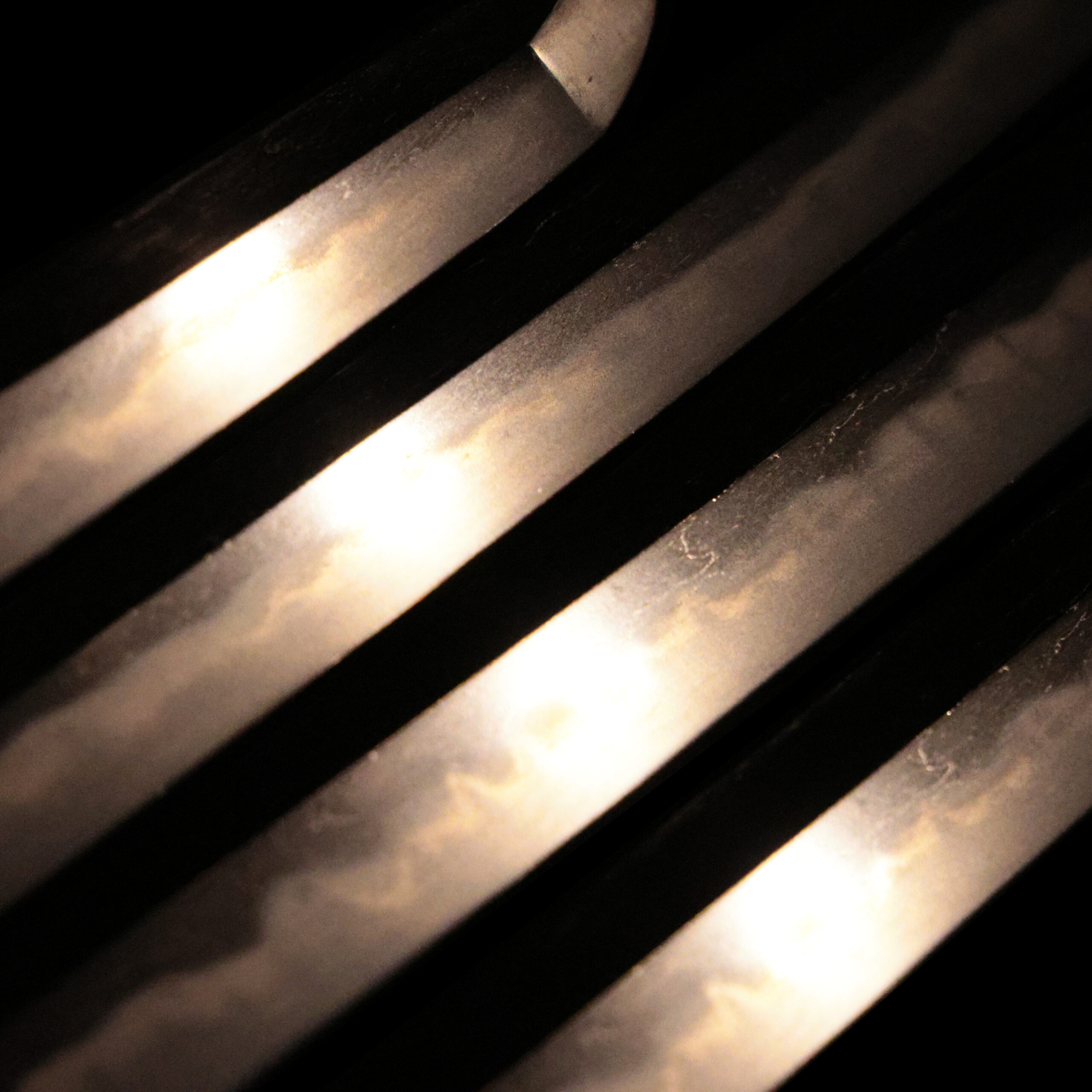
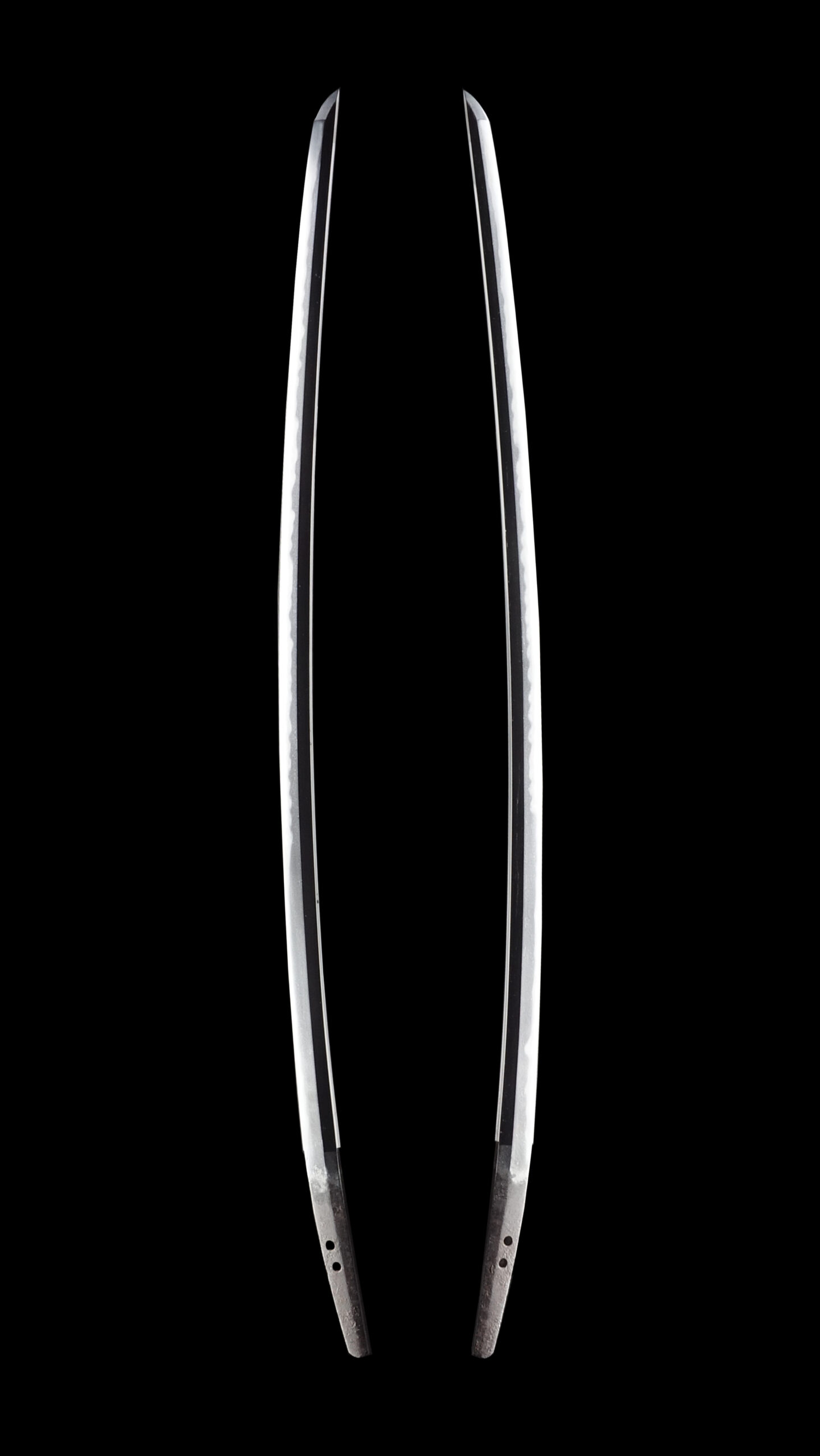
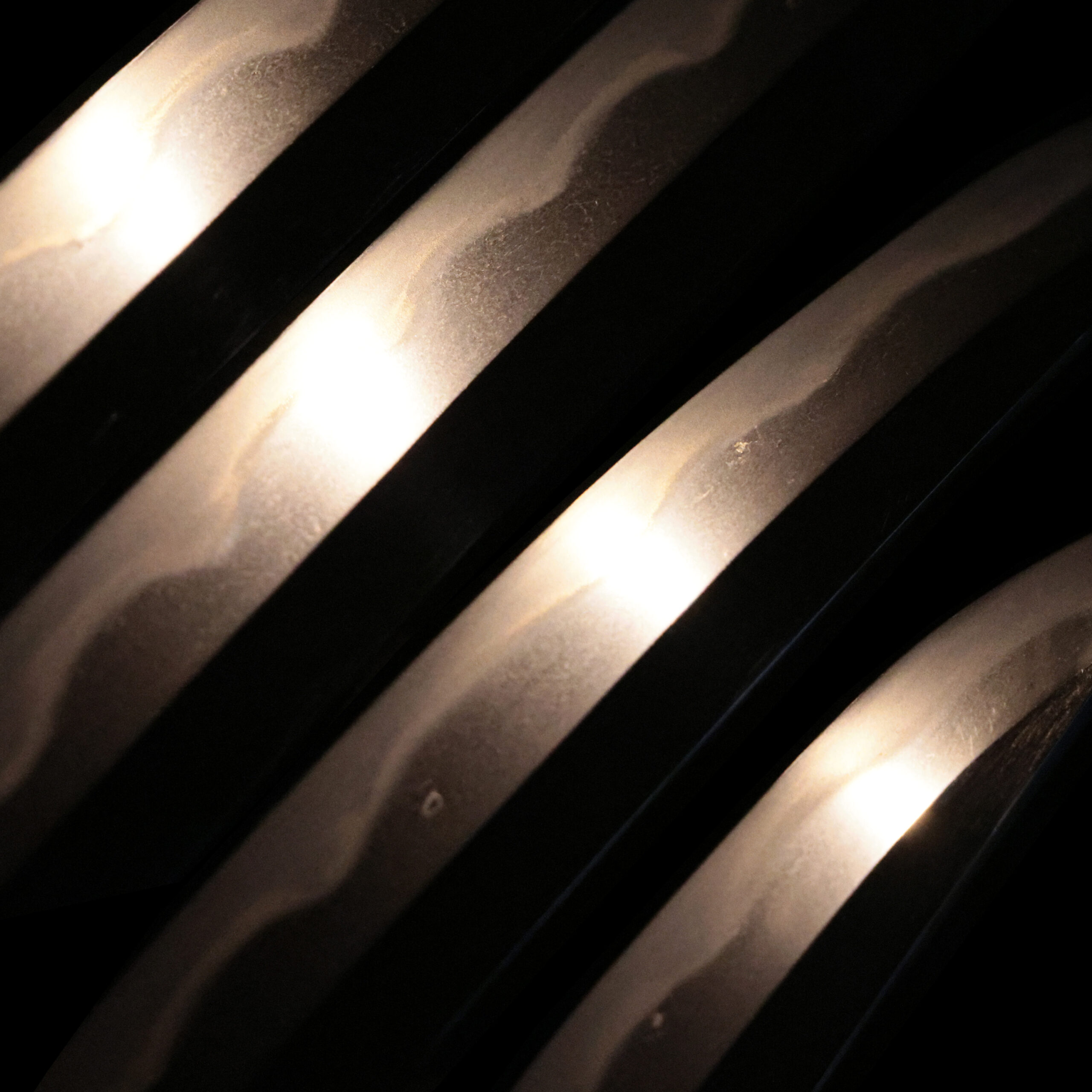
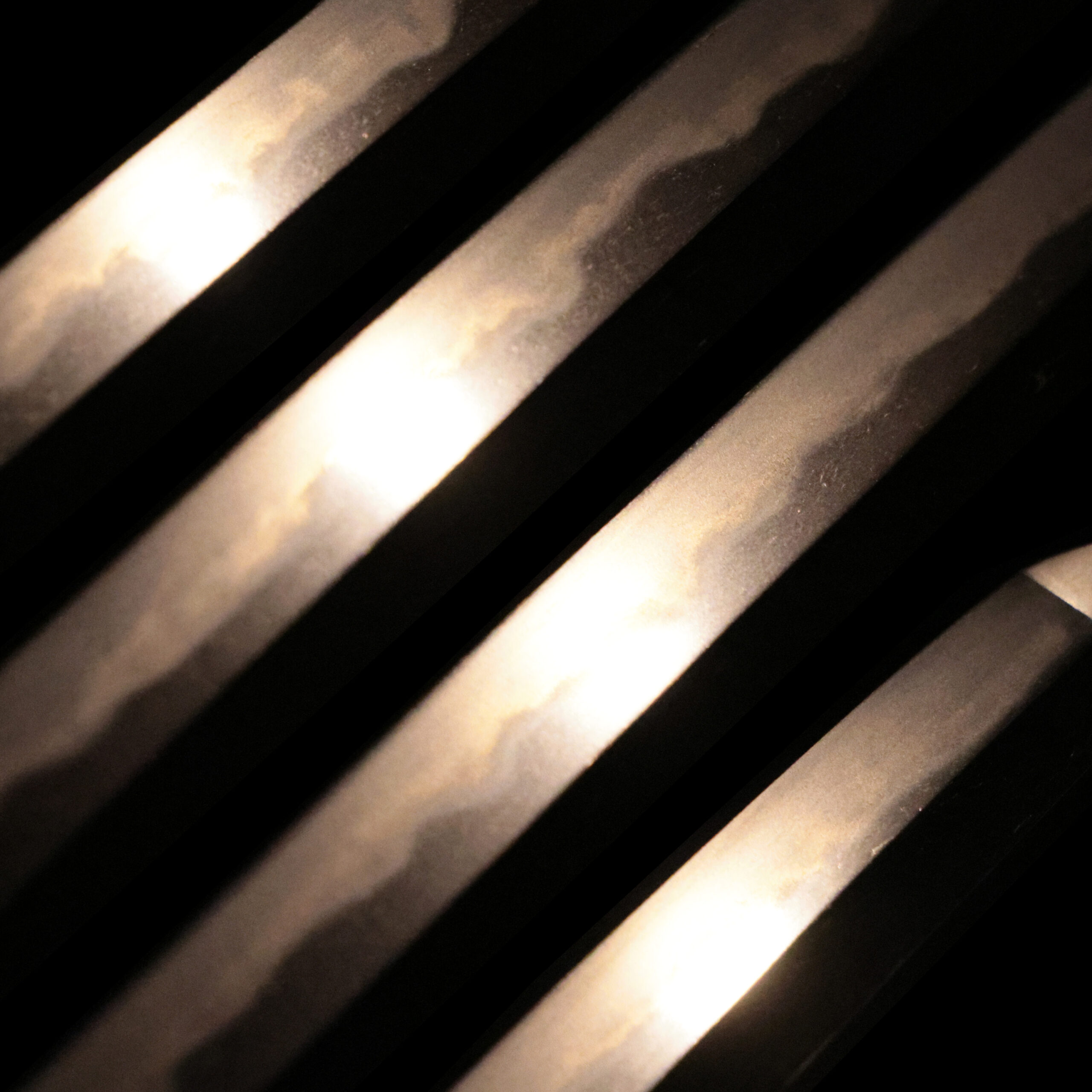
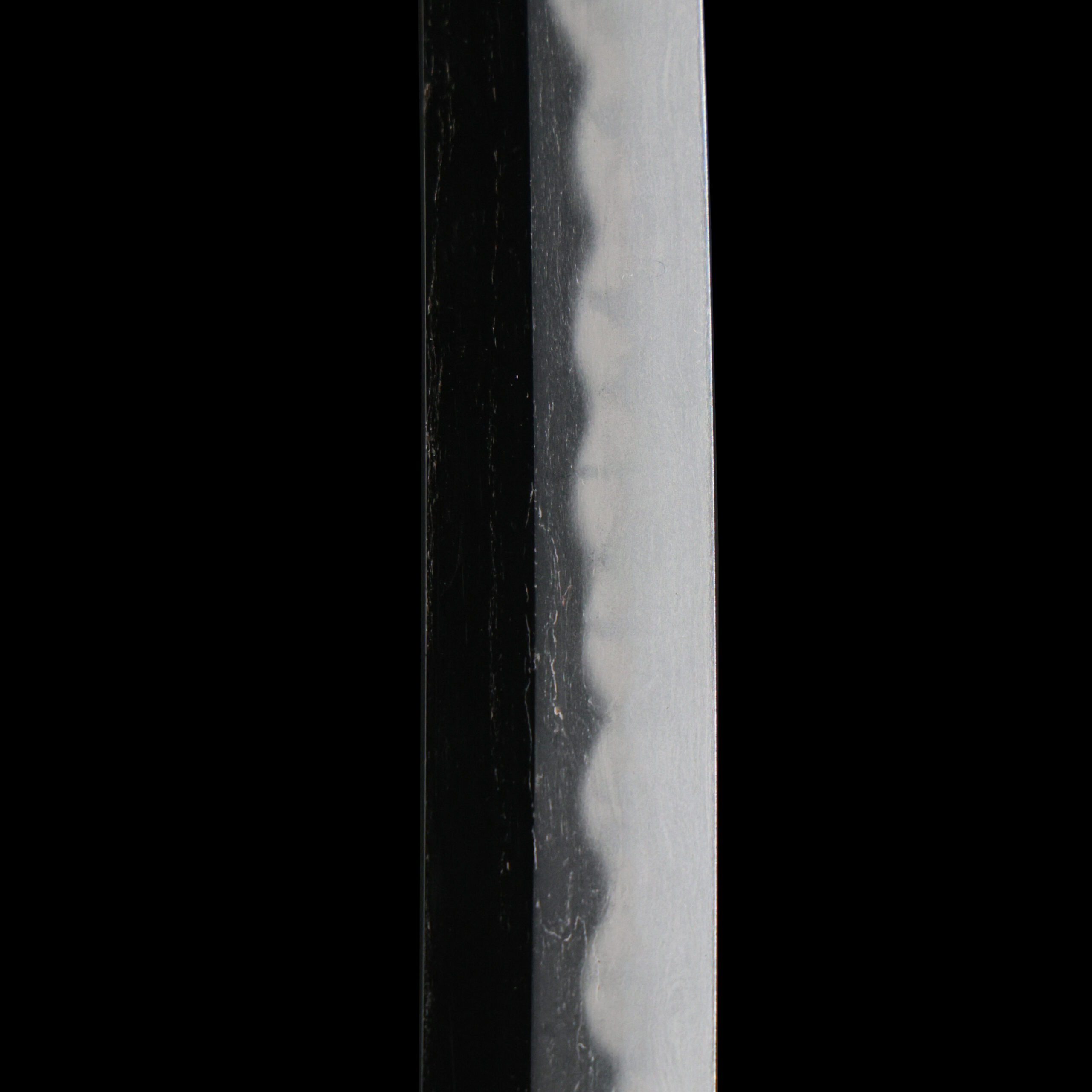
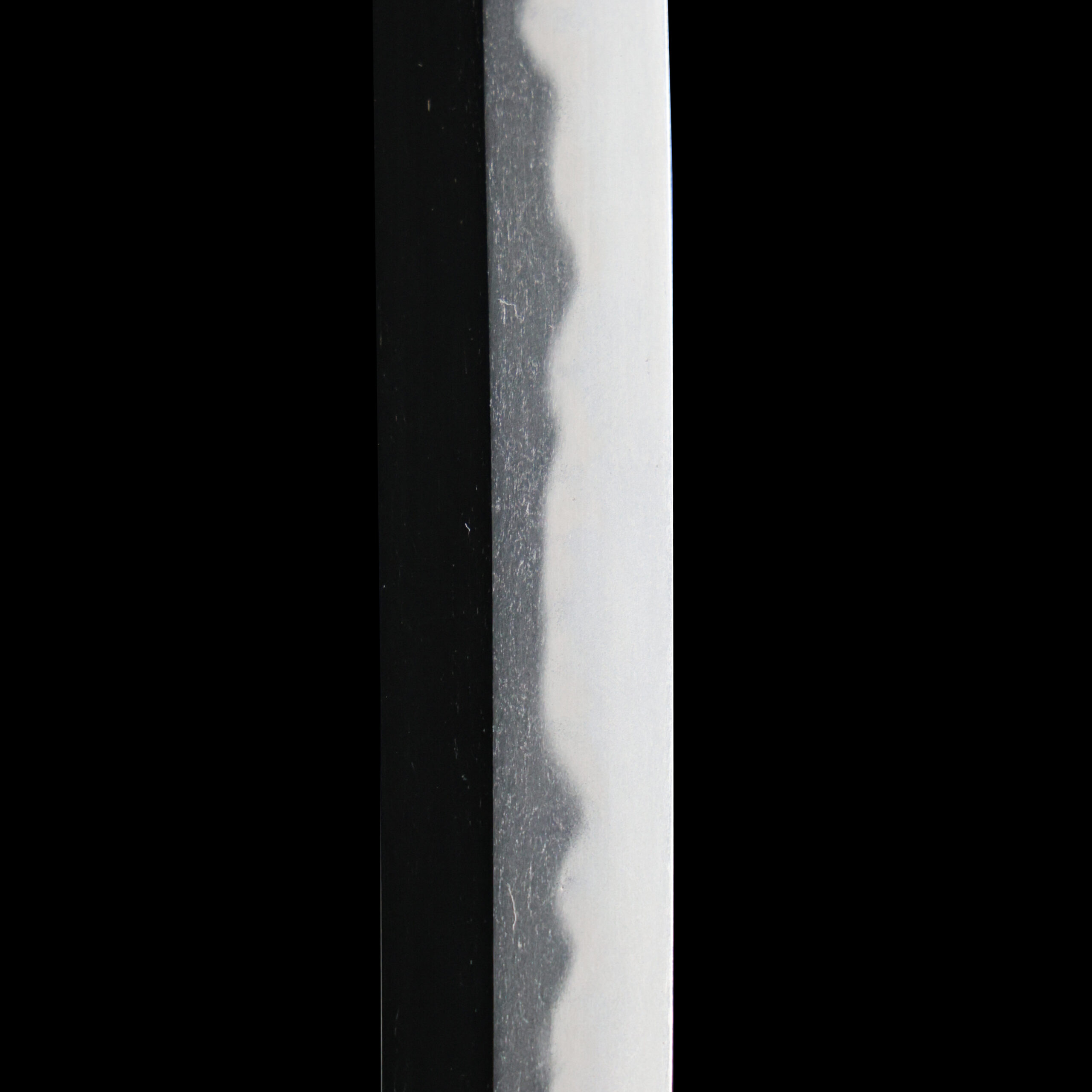
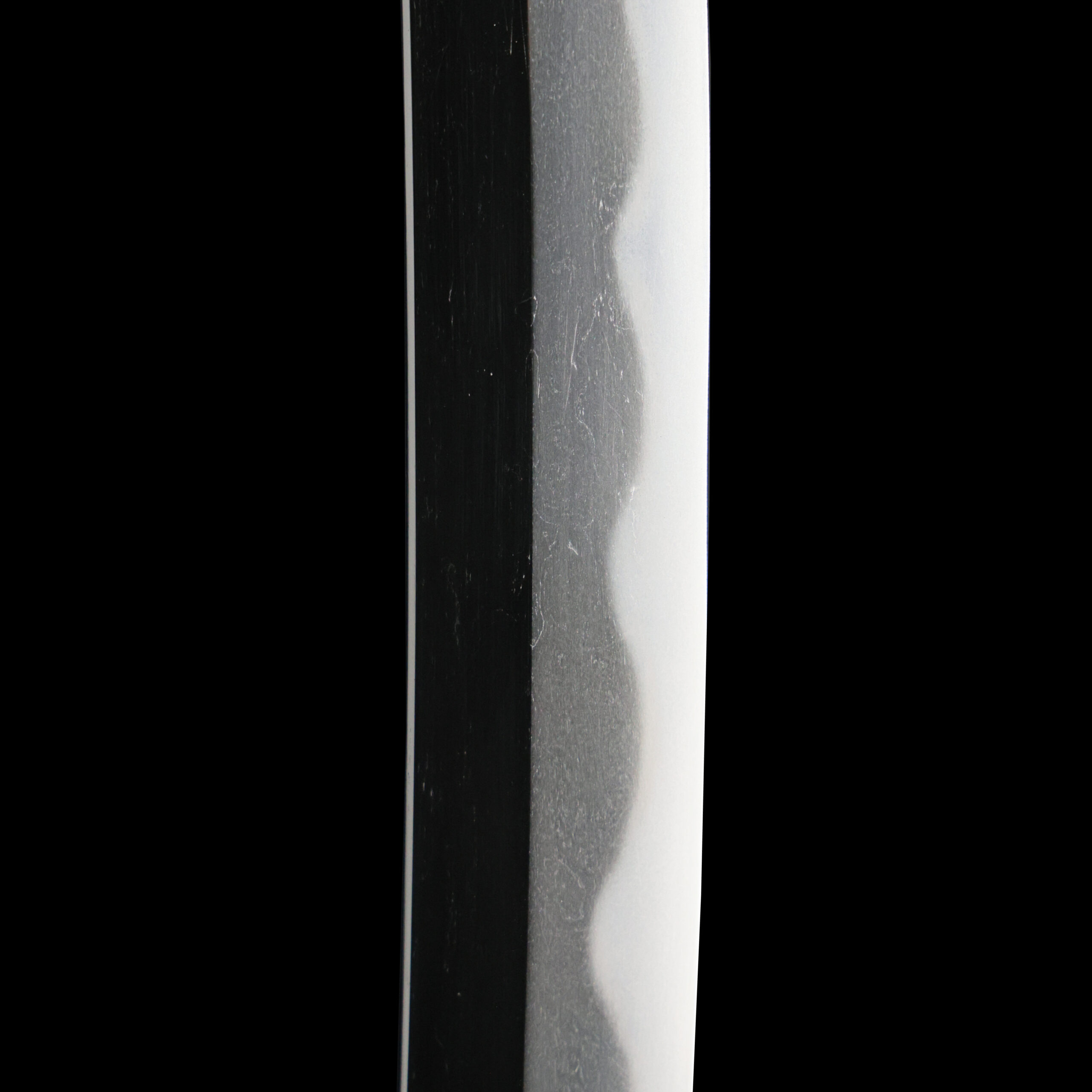
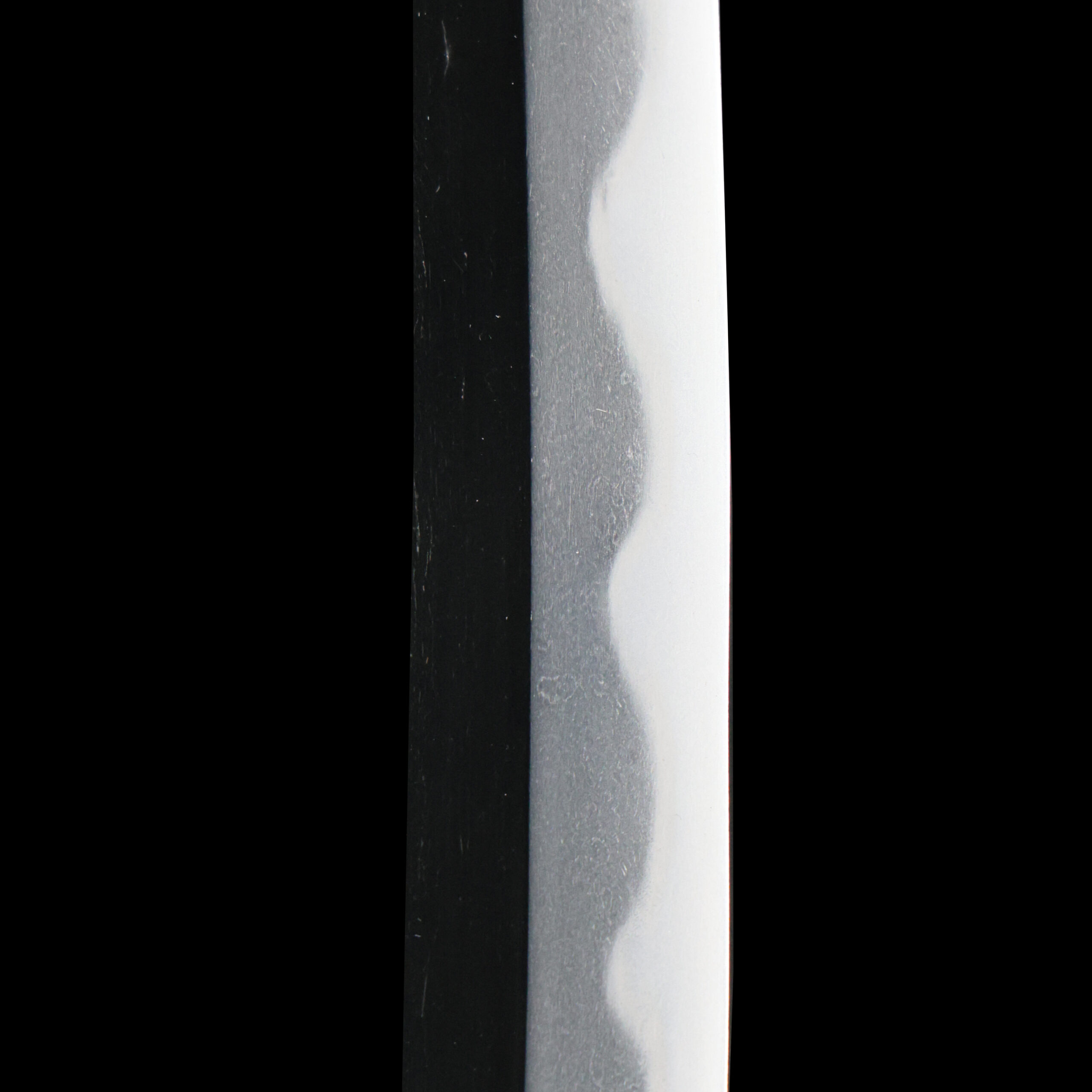
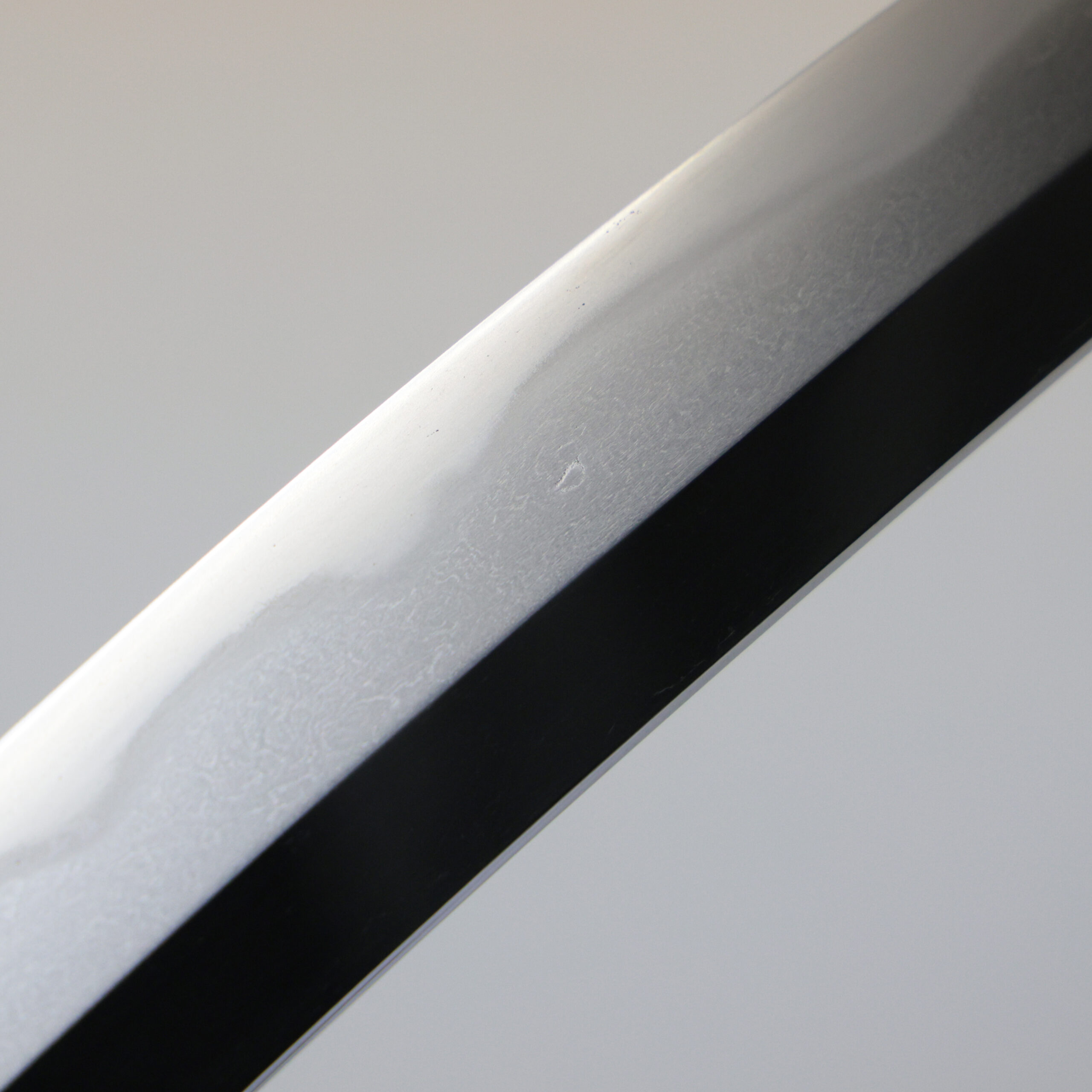
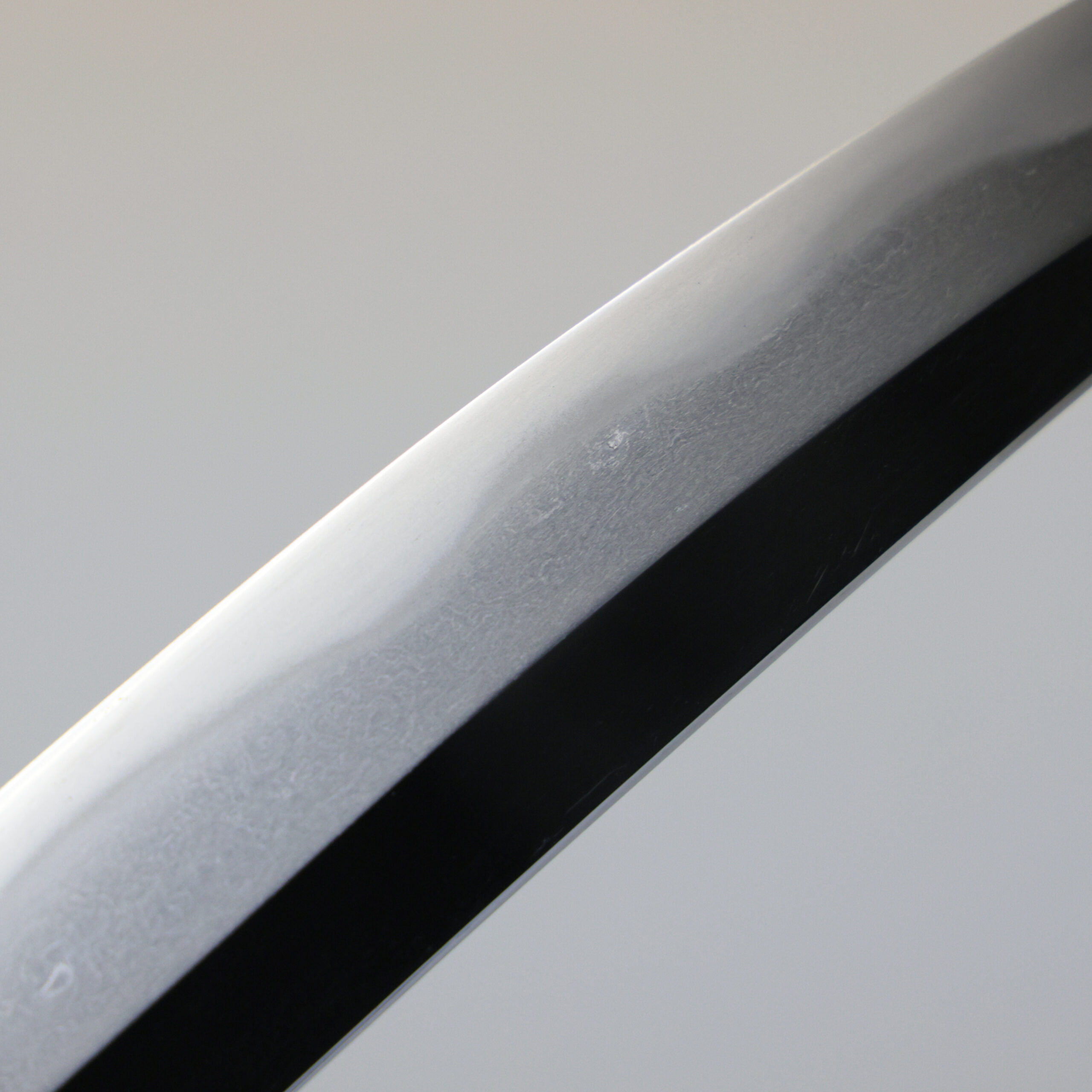
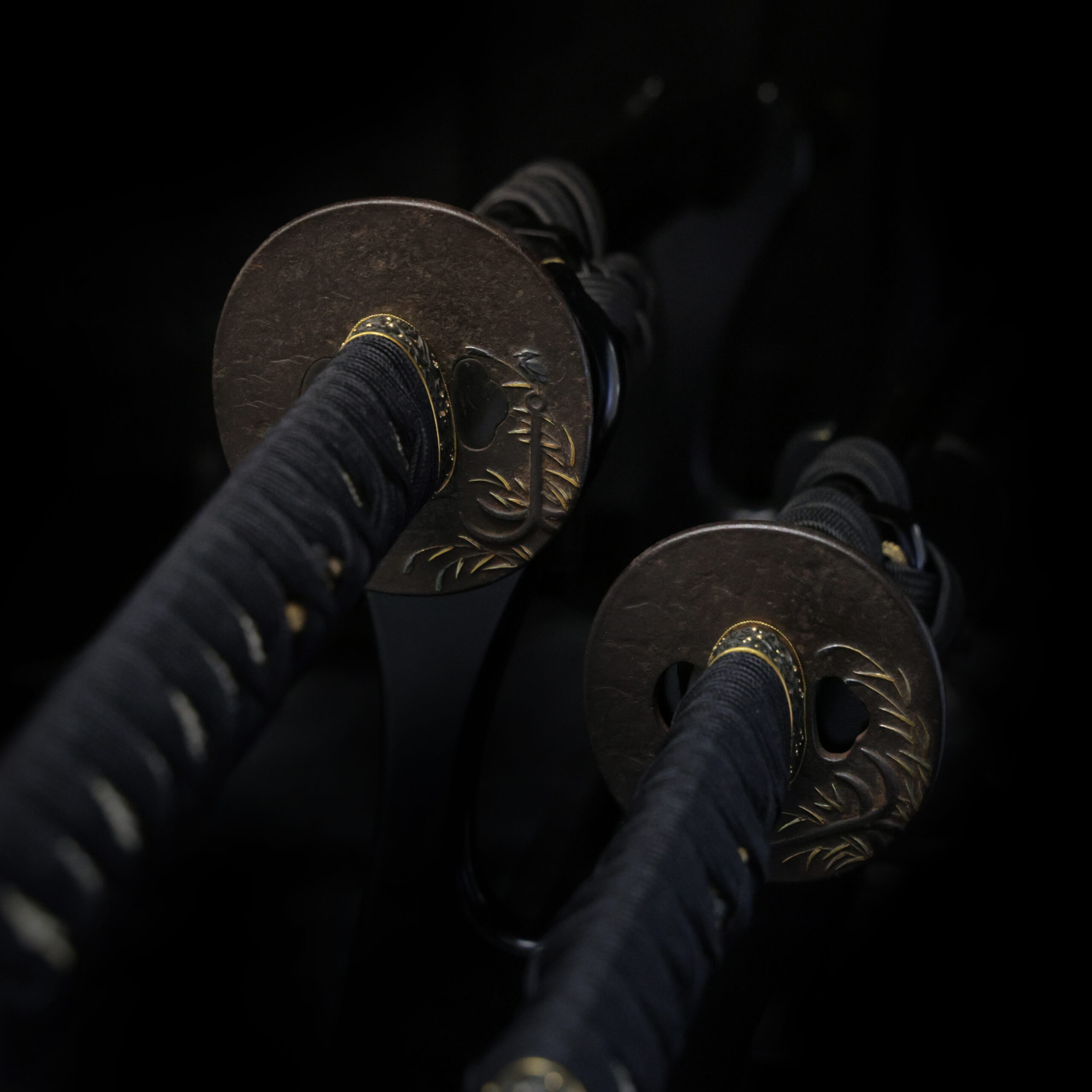
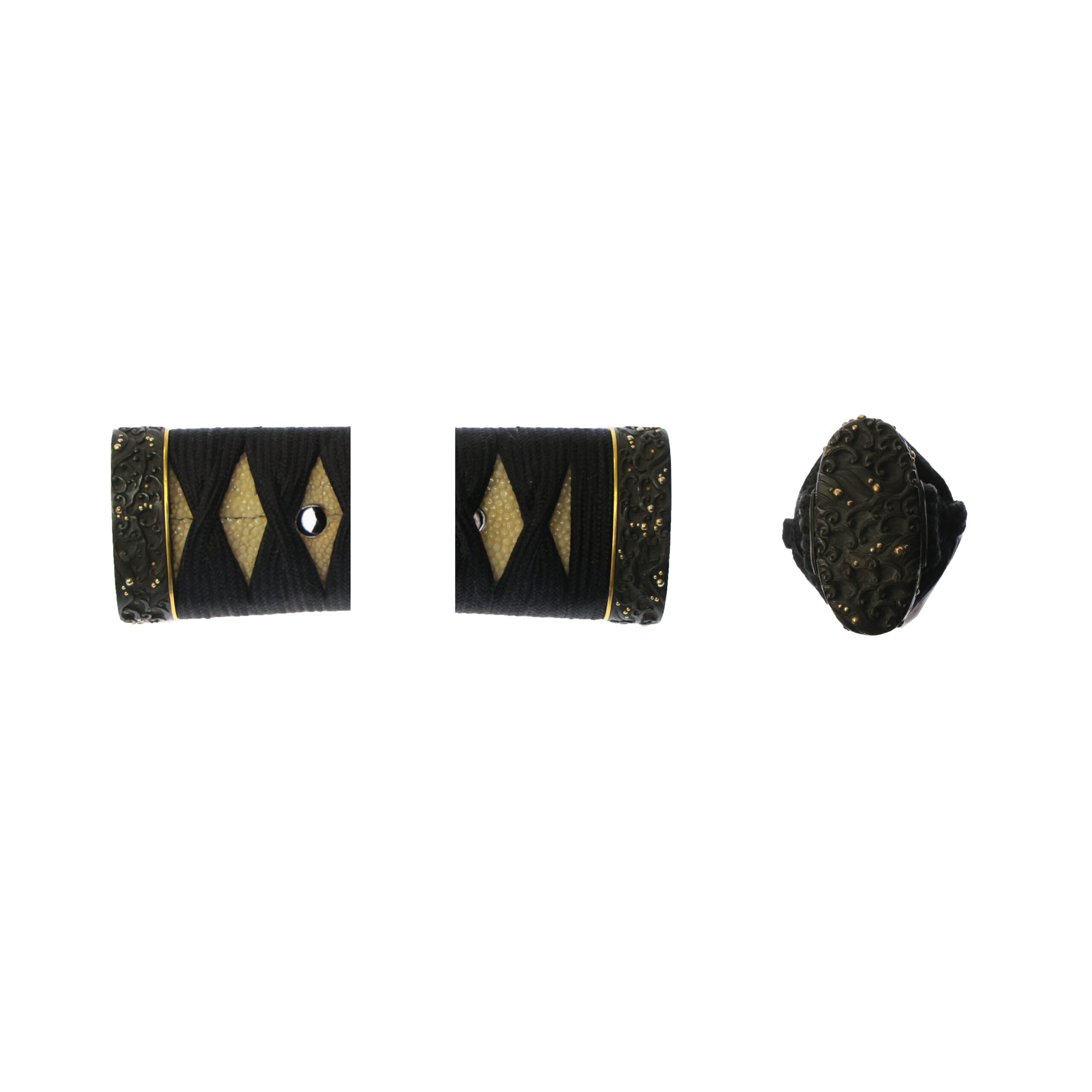
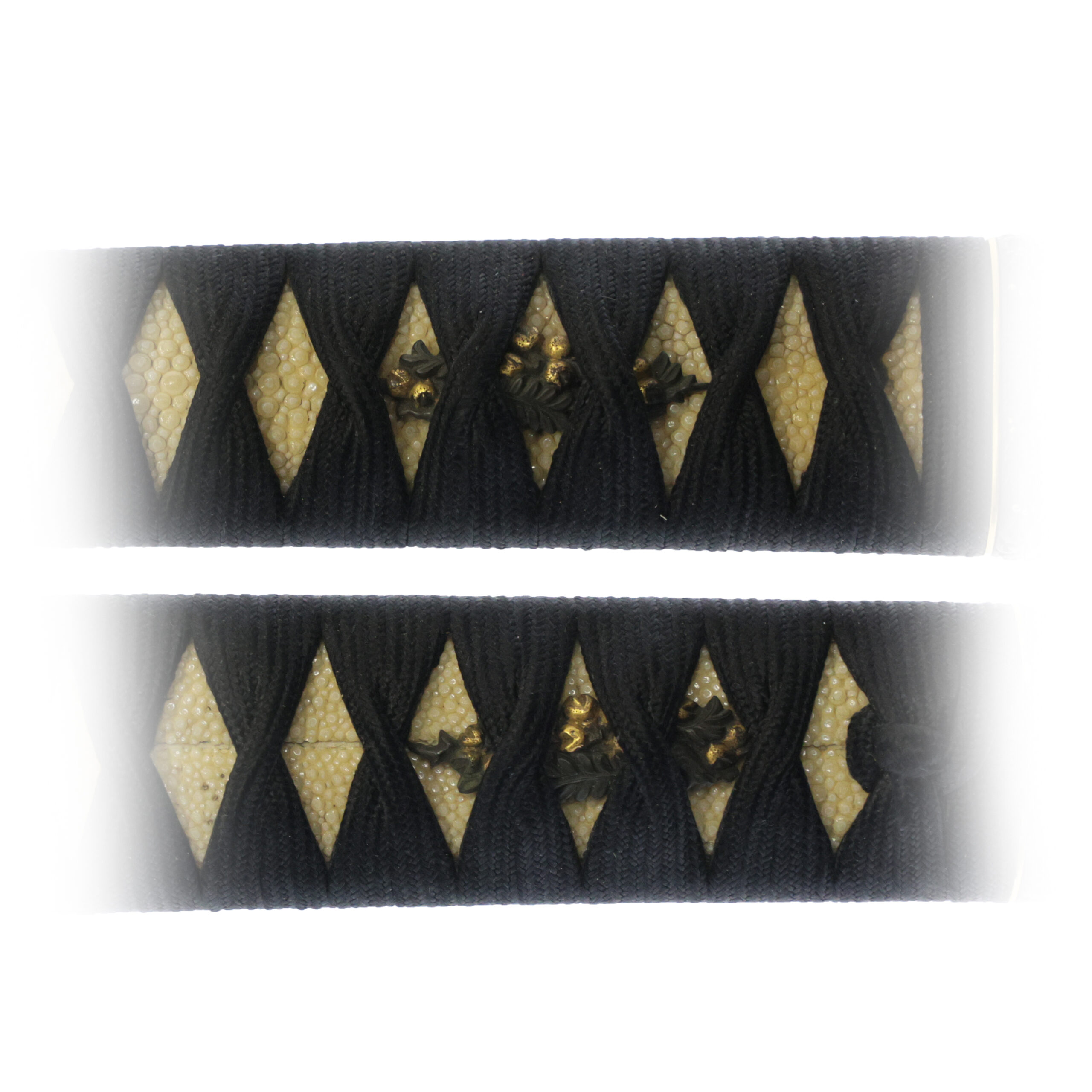
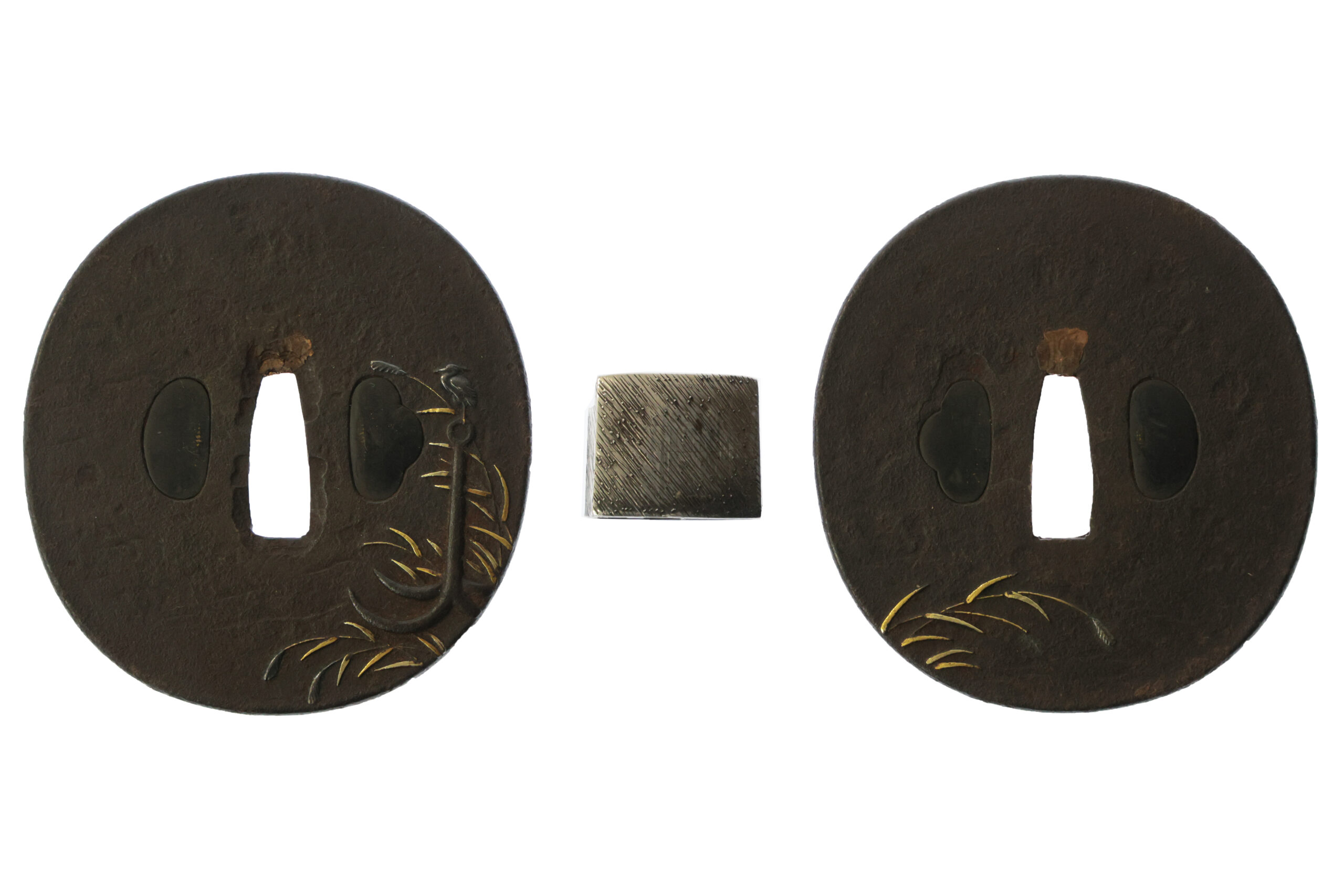
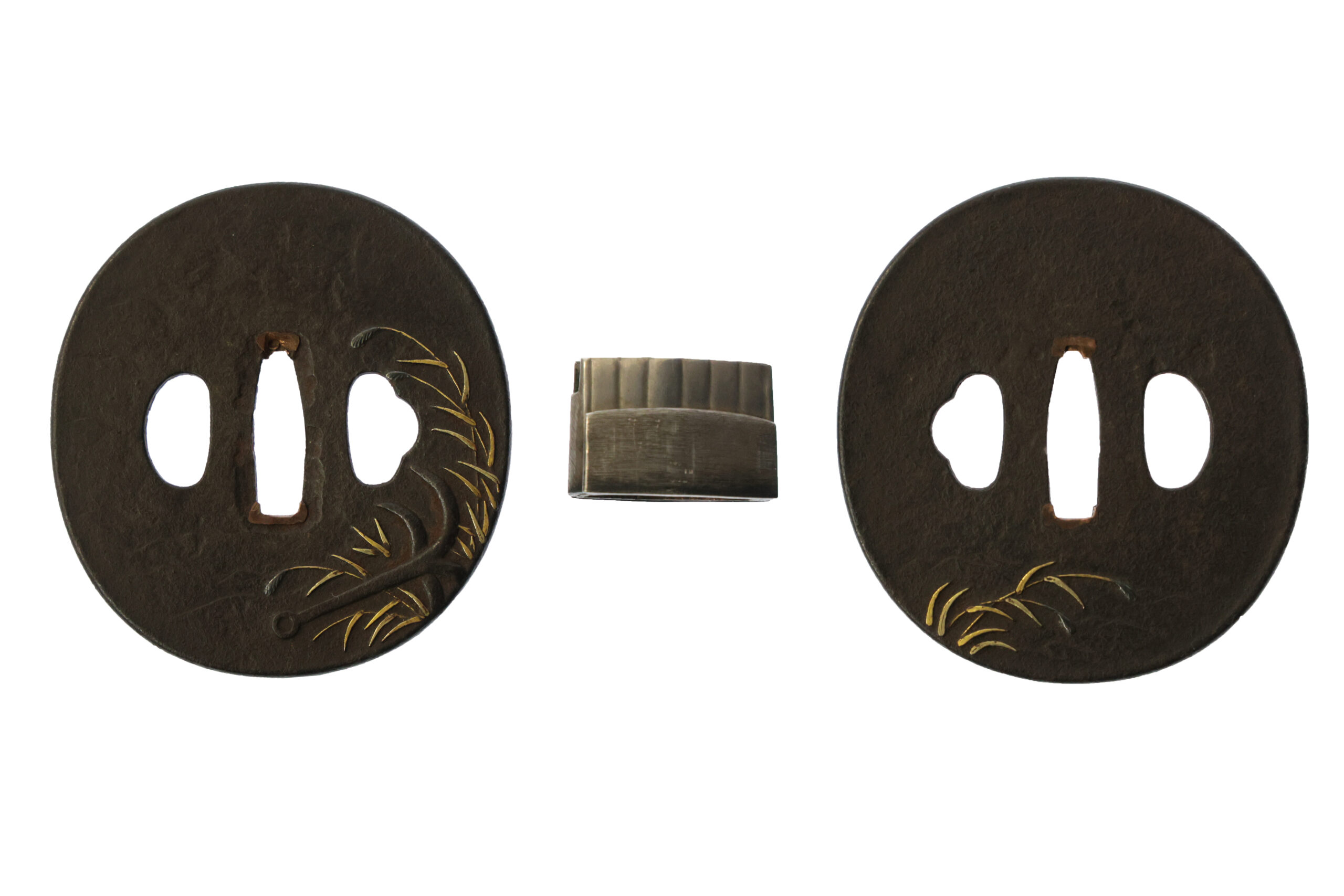
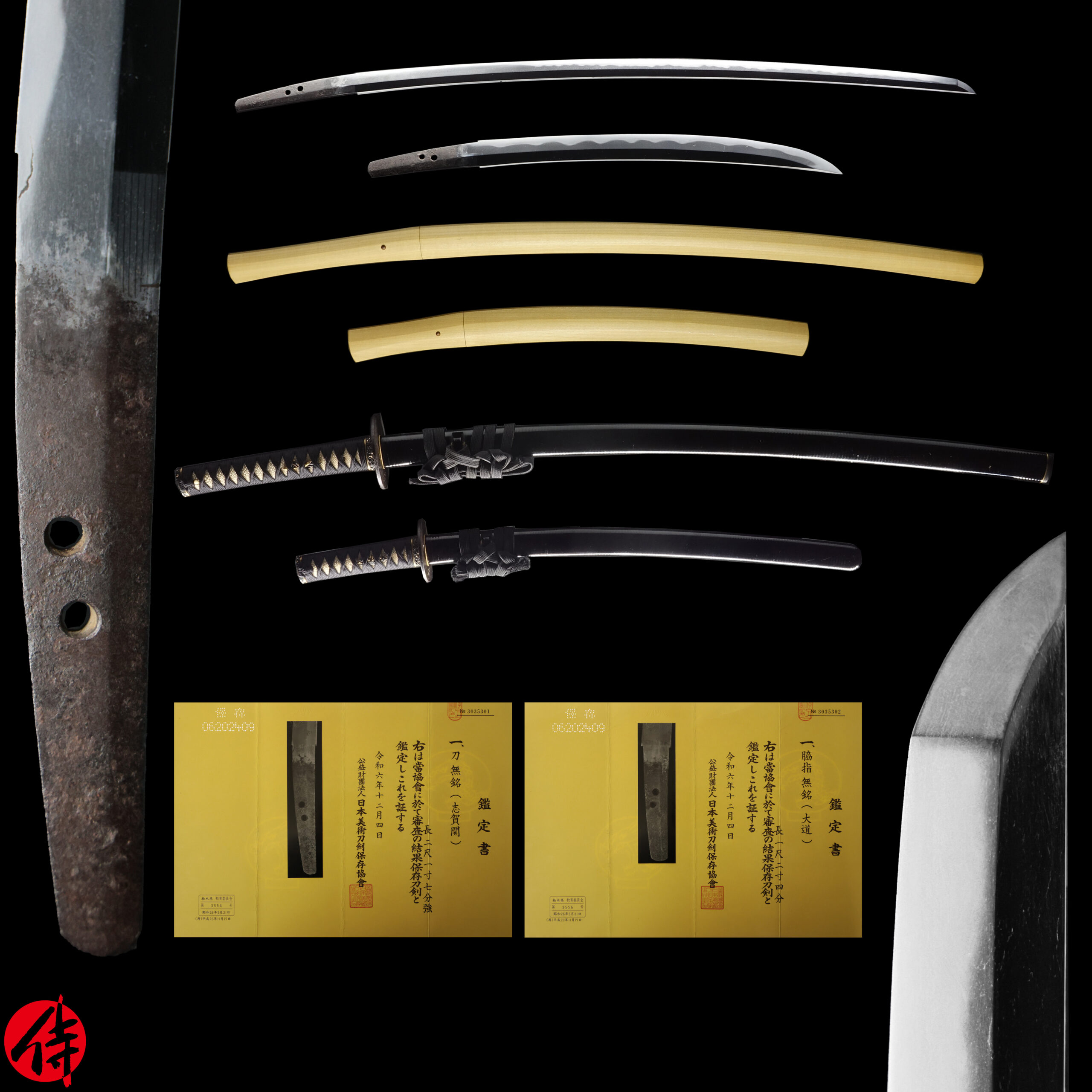
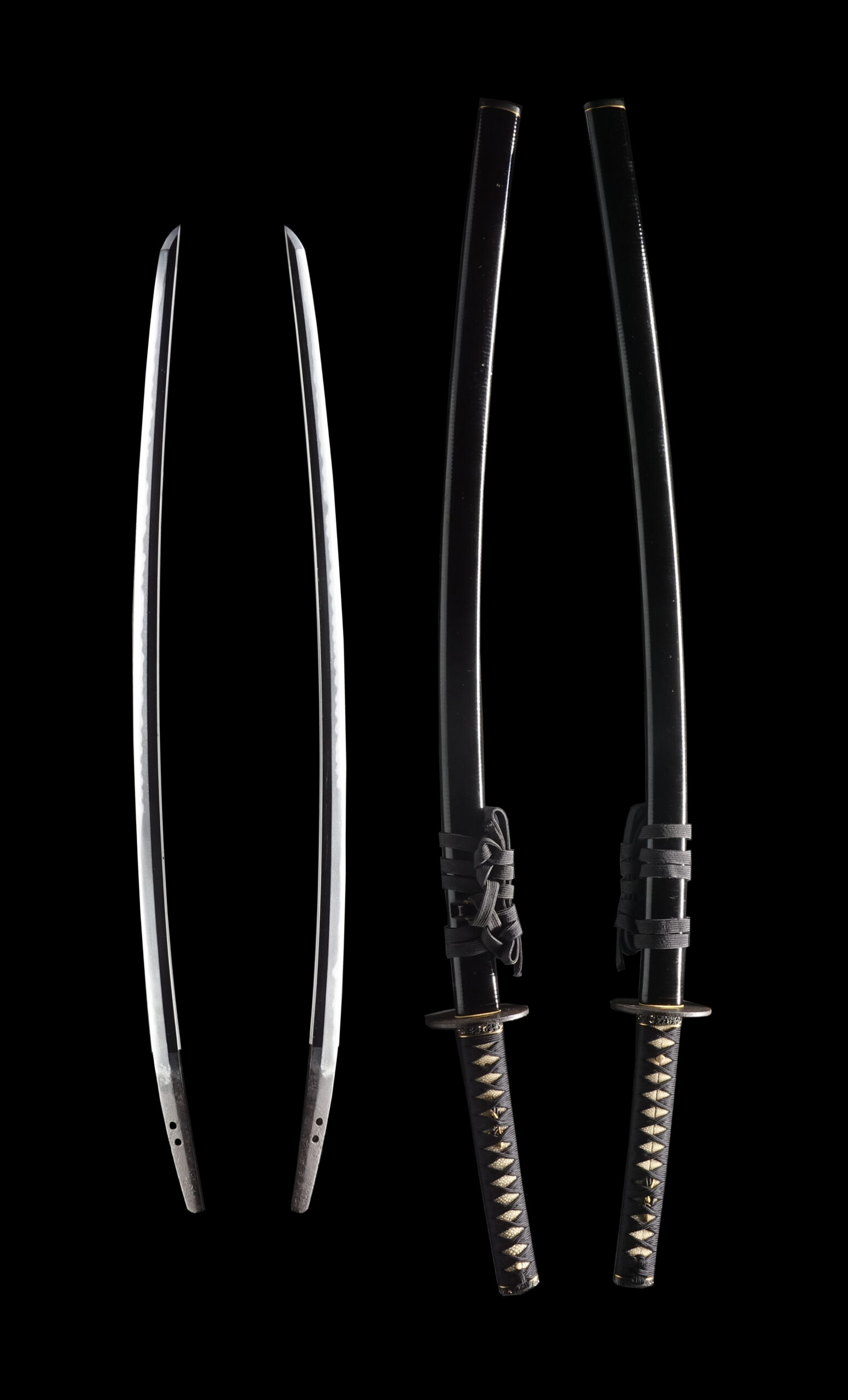
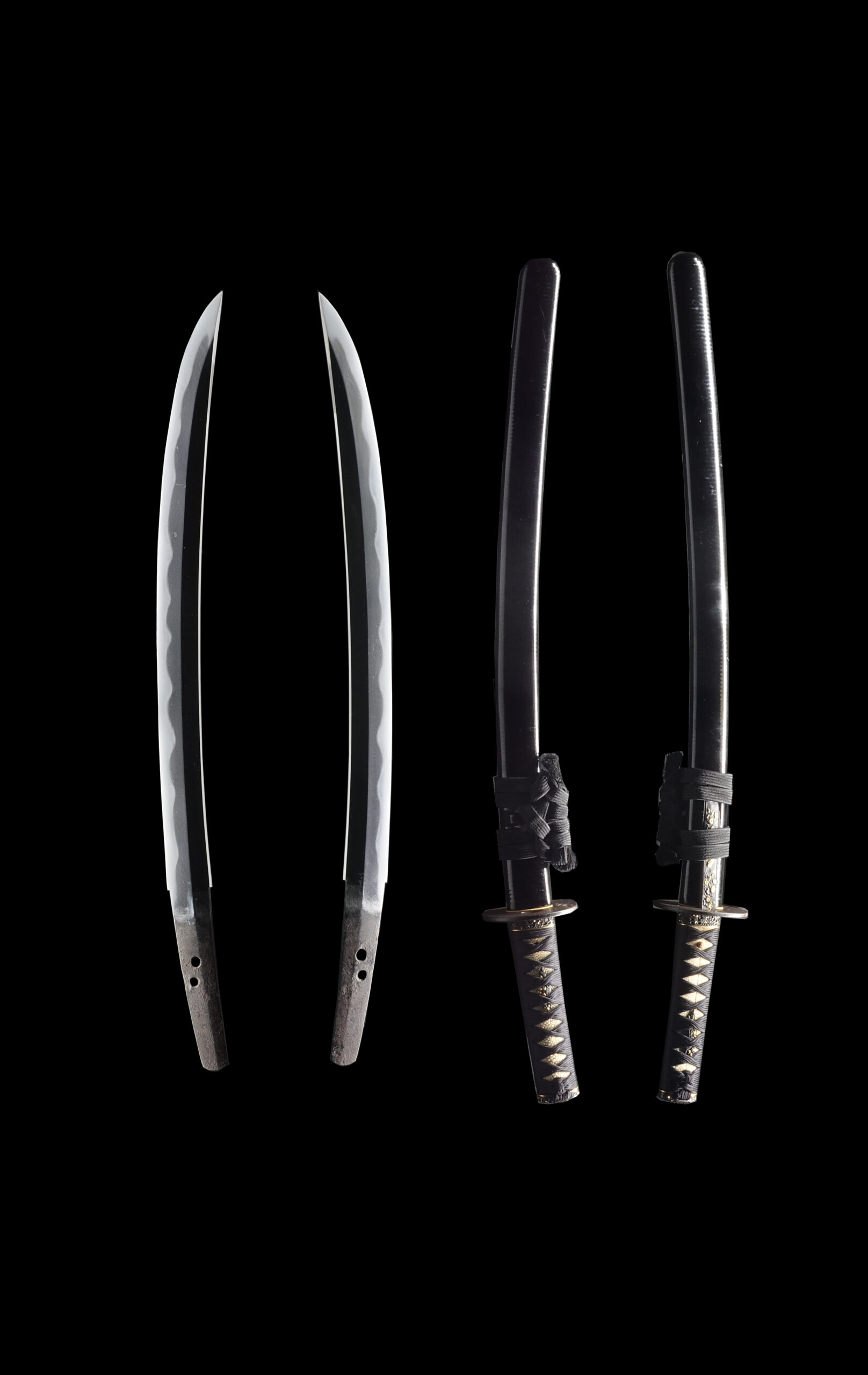
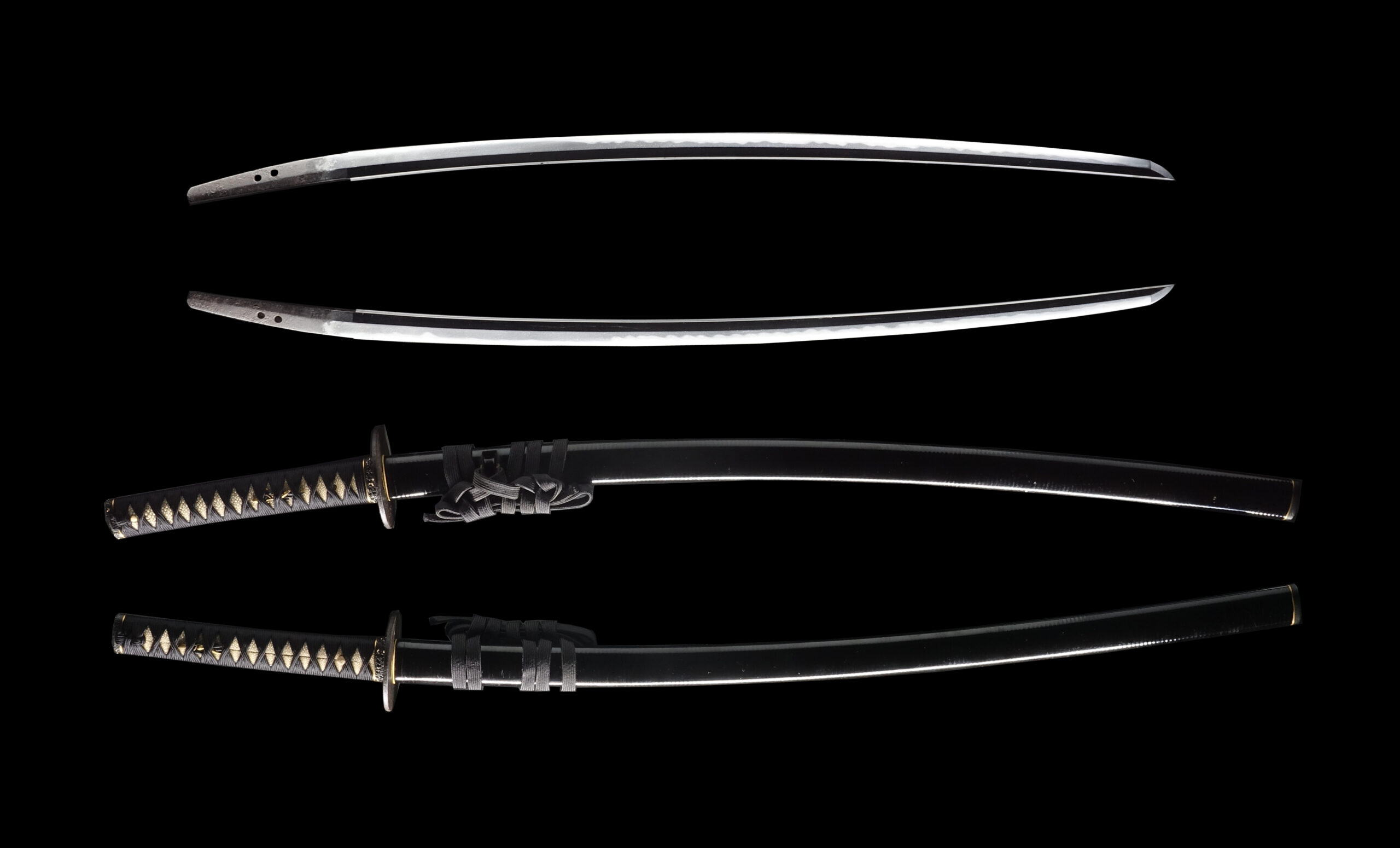
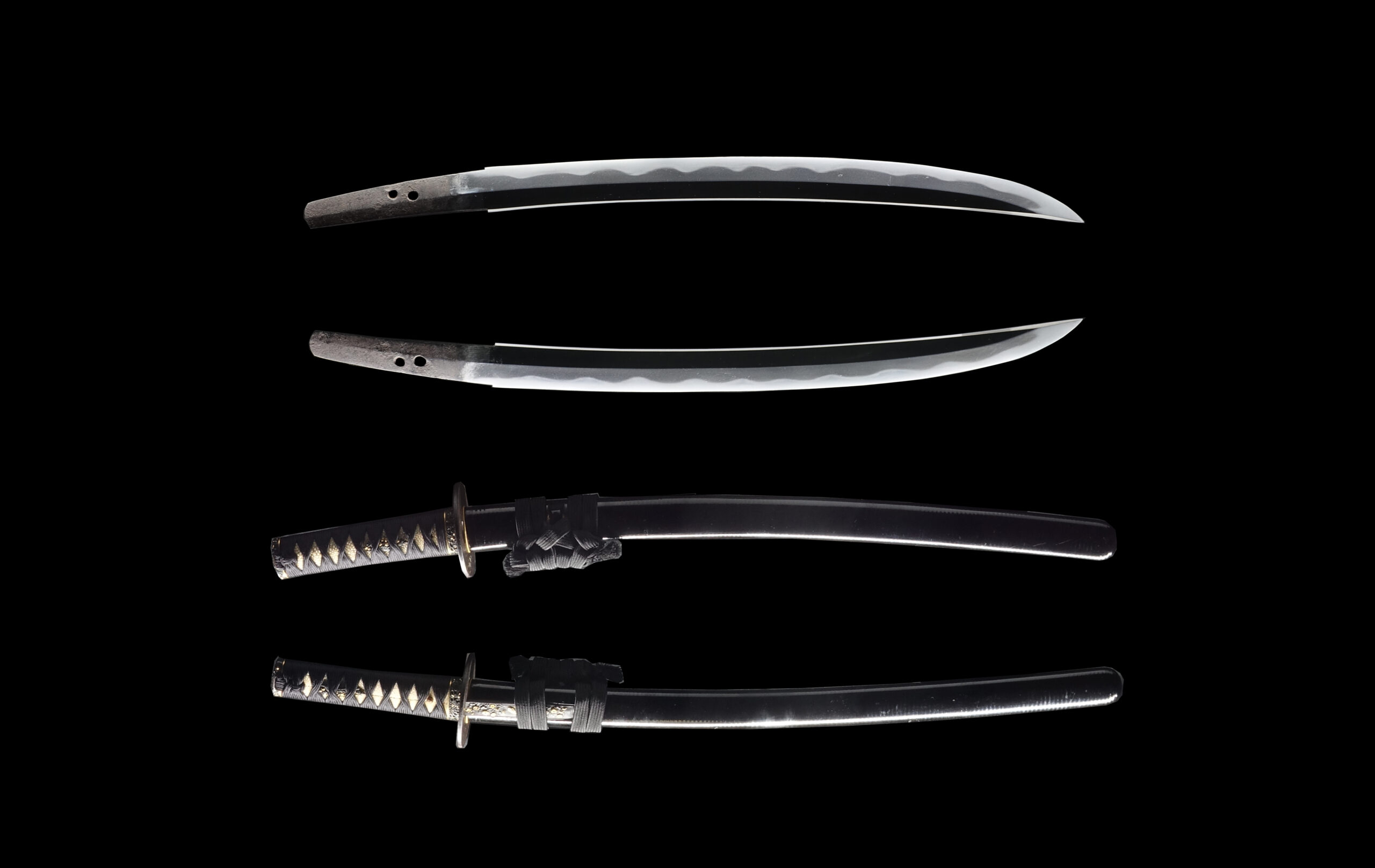
–Katana This blade is attributed to Shiga Seki. Shiga Seki were a group of swordsmiths, originally from Mino province(Shiga prefecture) but moved to Shiga city in Owari province (today’s Nagoya) during the mid-Muromachi period. And they prospered until the late Muromachi period. Based on the appraisal of NBTHK, we believe this blade was forged about 500 years ago (the Mid-Late Muromachi period). Their style are very close to Mino style swords called MINO-DEN. -Wakizashi This blade is attributed to Daido (大道), who was active during the late Muromachi period in Mino province (today’s Gifu prefecture). While the certificate doesn’t mention its age, we made a phone call to NBTHK and confirmed that they estimated the age of this blade around the late Muromachi period. A few swordsmiths used Daido as their maker’s name during the late Muromachi-Edo period. Among Daido, the most famous Daido is Mutsu No Kami Daido (陸奥守大道). He signed as Kanemichi, forging swords in Mino province(Gifu prefecture), and moved to Kyoto in 1569. And he received the name 大(Dai) from the emperor Ogimachi for his excellent swordsmanship. And he changed his name to Dai-Kanemichi. Mino Province Mino Province is one of the most famous and historical sword-forging sites. There were so many schools forging blades during the Samurai period. The swordsmiths who resided in Mino province developed particular sword-forging tradition called MINO-DEN. Its characteristic is the TOGARI(Pointed shapes protruding from the Hamon ) in a classic straight line and random temper line with some white Utsuri. MINO-DEN had its origin from YAMATO-DEN in the late KAMAKURA period(1280-1330). It flourished in the MUROMACHI period(1333-1573) and continued until the EDO period(1603-1868). MINO-DEN especially prospered during Sengoku Jidai(Warring State period) due to the high demand for weapons. And the location of Mino province beat others. Akechi Mitsuhide controlled Mino province, and Nobunaga Oda ruled Owari province, and Tokugawa Ieyasu was the lord of Suruga (Neighboring areas). There was high demand from those powerful feudal lords and their retainers. Furthermore, so many wars occurred between the Kanto region and the Kyoto area. Mino was located in the middle, making feudal lords feel convenient to order swords from MINO-DEN. The blades forged in MINO provinces also had the reputation of its practical design and sharpness. Many feudal lords demanded swords forged in the Mino province. What is Daisho? Daisho is a pair of two Japanese swords Samurai carried. During the Edo period, having Daisho in public places was considered social status for Samurai. Furthermore, Samurai were required to wear them under the law back then. Daisho is written as 大=Big and 小=Small. Dai part means Katana, and Sho part means Wakizashi. We are confident you would find this pair of Daisho Koshirae gorgeous. Appraisal These Katana and Wakizashi blades are appraised as a Hozon Token (保存刀剣) . They were issued by NBTHK (Nihon Bijutsu Touken Hozon Kyokai:日本美術刀剣保存協会). These authentication papers were only given to authentic Japanese swords well preserved and high quality with artistic value. *Please keep in mind that there are a couple of Kitae Kizu on the Katana and Wakizashi. –Katana Jimon(Jihada) –Katana -Wakizashi Fuchi-Kashira The theme of these Fuchi-Kashira is the hatō-zu motif (波濤図), a traditional Japanese design depicting turbulent ocean waves. The wave motif symbolizes the dynamic and ever-changing power of nature, as well as resilience, strength, and the ability to overcome adversity. Such patterns were favored in sword fittings because the movement of water was seen as a metaphor for a Samurai’s unyielding spirit and determination. Tsuka and Menuki The theme of this katana’s menuki is horsetail (土筆, tsukushi). This plant endures the harshness of winter and sends up new shoots in spring, making it a well-known seasonal symbol of the season. Possessing remarkable vitality, it continues to grow even after being cut. Tsukushi has also long been enjoyed in Japan as a wild edible plant. Historically, it is said that during the Edo period there were vendors known as Tsukushi-uri (土筆売り), who sold horsetail in the spring. The plant also appears in various haiku (俳句), where it is used to evoke the atmosphere of the season. As such, this motif conveys a vivid sense of the arrival of spring. As for the wakizashi’s menuki, it likely depicts a loquat (枇杷, biwa). Since ancient times, all parts of the loquat—its leaves, fruit, and seeds—have been used for medicinal purposes, and it has therefore been associated with beliefs in its healing properties. In decorative art, it is often represented as a branch bearing abundant fruit, as seen in this design. The image of golden fruits hanging in clusters symbolizes prosperity and abundance, while its medicinal associations convey wishes for longevity and good health. For these reasons, the loquat motif has long been regarded as an auspicious design, widely used in textiles such as kimono and obi, as well as in ceramics. Tsuba and Habaki The tsuba of both the katana and wakizashi are estimated to depict susuki (薄/芒, Japanese pampas grass). This plant has traditionally been offered to the gods and was also believed to serve as an amulet to ward off evil spirits. In Japan, susuki is one of the Aki no Nanakusa (秋の七草, “Seven Flowers of Autumn”), a group of plants that symbolize the autumn season. Its inclusion in this group reflects how deeply familiar and culturally significant this plant has been to the Japanese people for centuries. Kozuka The motif on the Wakizashi’s fuchi-kashira is believed to depict ominaeshi (Patrinia scabiosaefolia), one of the Aki-no Nanakusa (秋の七草), or the Seven Flowers of Autumn. These seven traditional autumn plants include: bush clover (hagi), pampas grass (susuki), arrowroot (kuzu), dianthus (nadeshiko), ominaeshi, boneset (fujibakama), and bellflower (kikyo). These plants are often depicted growing in close proximity, evoking an atmospheric and melancholic beauty. At the same time, they symbolize the transience of life and the poetic sadness of passing time—an aesthetic deeply rooted in classical Japanese culture. The term Aki-no Nanakusa was coined by the poet Yamanoue no Okura (山上憶良), whose works appear in the Manyōshū (万葉集), the oldest existing collection of Japanese poetry, compiled in the 8th century. His poems gave rise to the cultural recognition of these seven plants as emblematic of the autumn season in Japan. In addition, the design also features a pair of quails (鶉, uzura), a classic motif in waka and haiku poetry that evokes the seasonal atmosphere of autumn. Saya The Saya of this Katana and Wakizashi are called Kizamizaya (刻み鞘). Also it is covered with black lacquer. Due to its high waterproof effect, lacquer has been used since ancient times in Asia. The blade of a Japanese sword is made of iron, and moisture is the greatest enemy of iron. For the purpose of carrying the blade without degrading it, people devised a method of coating the scabbard with lacquer. To prevent not only moisture but also rain and snow from penetrating the inside of the scabbard, it was necessary to apply multiple layers of lacquer. The Nushi (塗師, lacquerers) was born precisely because advanced techniques were required to handle the complicated processes. *These scabbard shows some light signs of wear. Please refer to the photos for further details. Authentication Paper They authenticated the Katana & Wakizashi on December 4th in the 6th year of Reiwa (2024). They appraised them as a Hozon Touken, the blade worth preserving for Japanese society. Registration Number The Board of Education in Tochigi prefecture issued a registration paper for this Katana blade and Wakizashi blade.
Offered by Samurai Museum

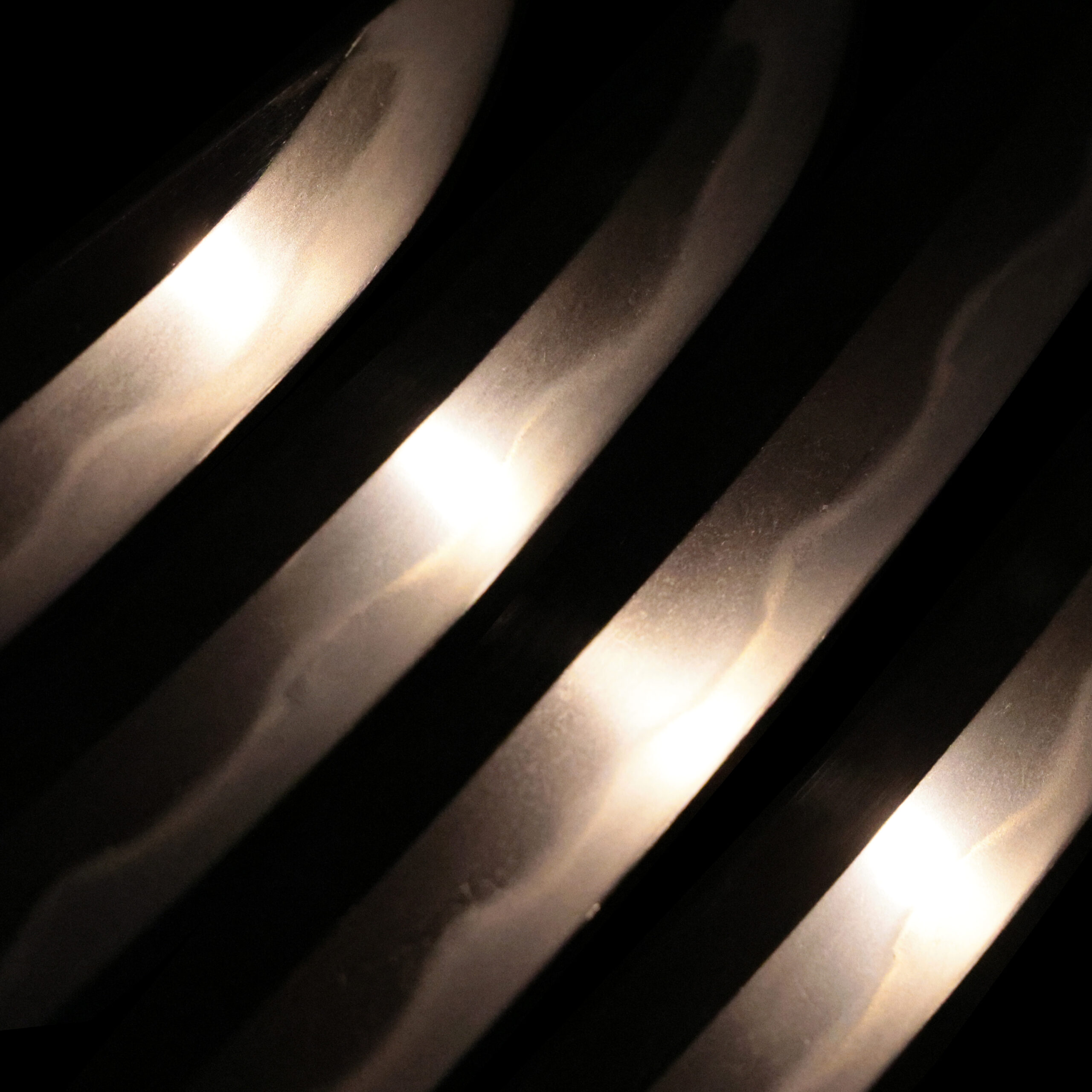
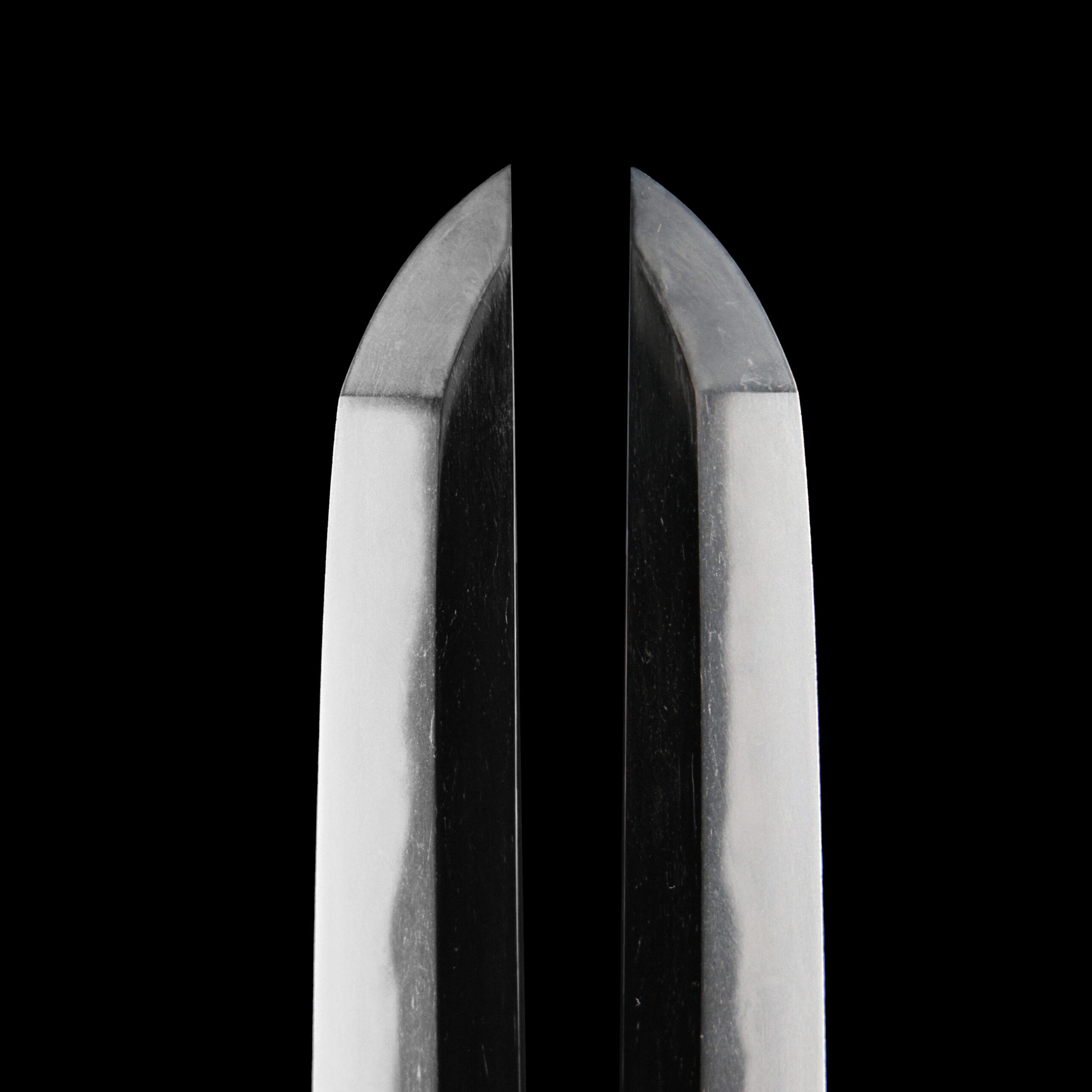
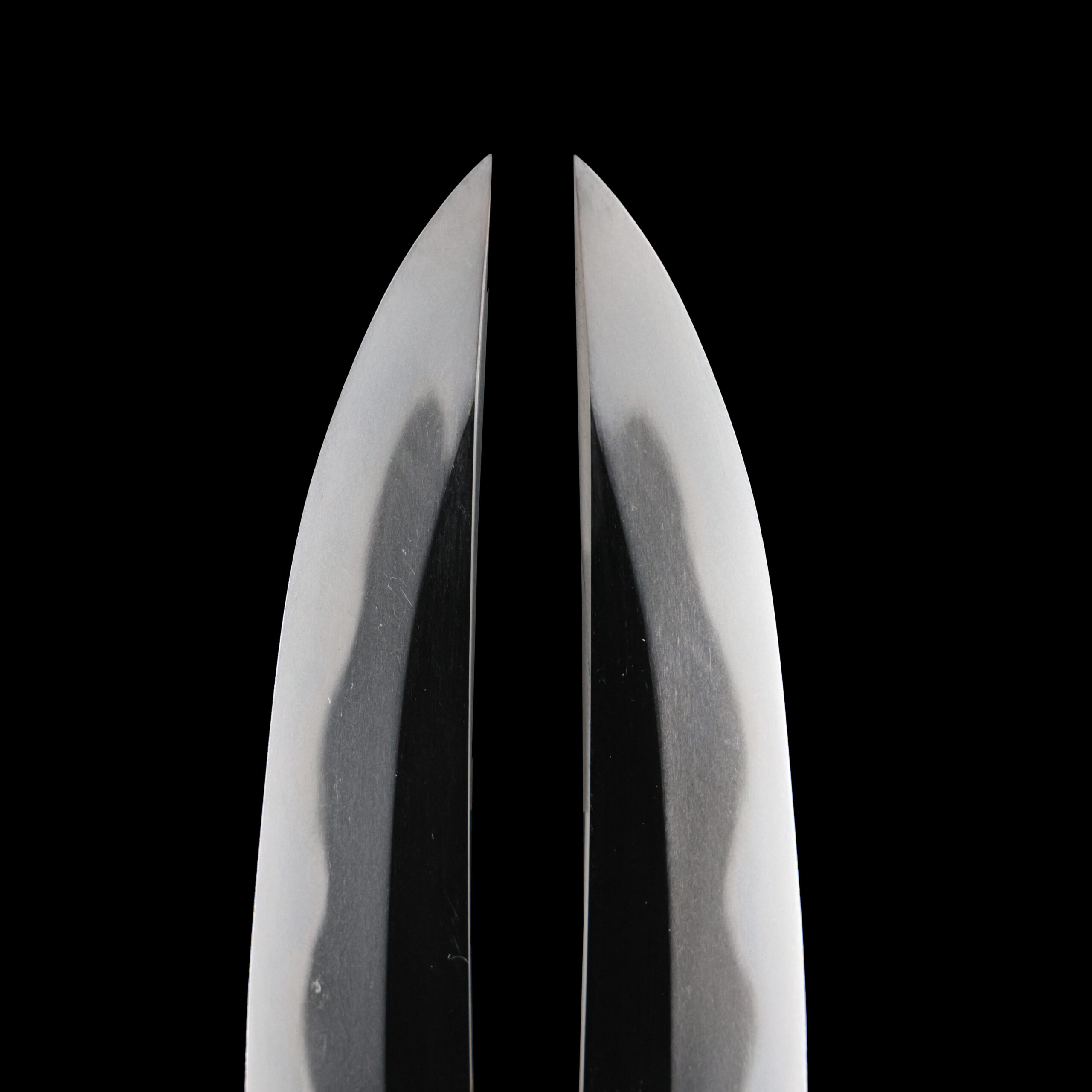
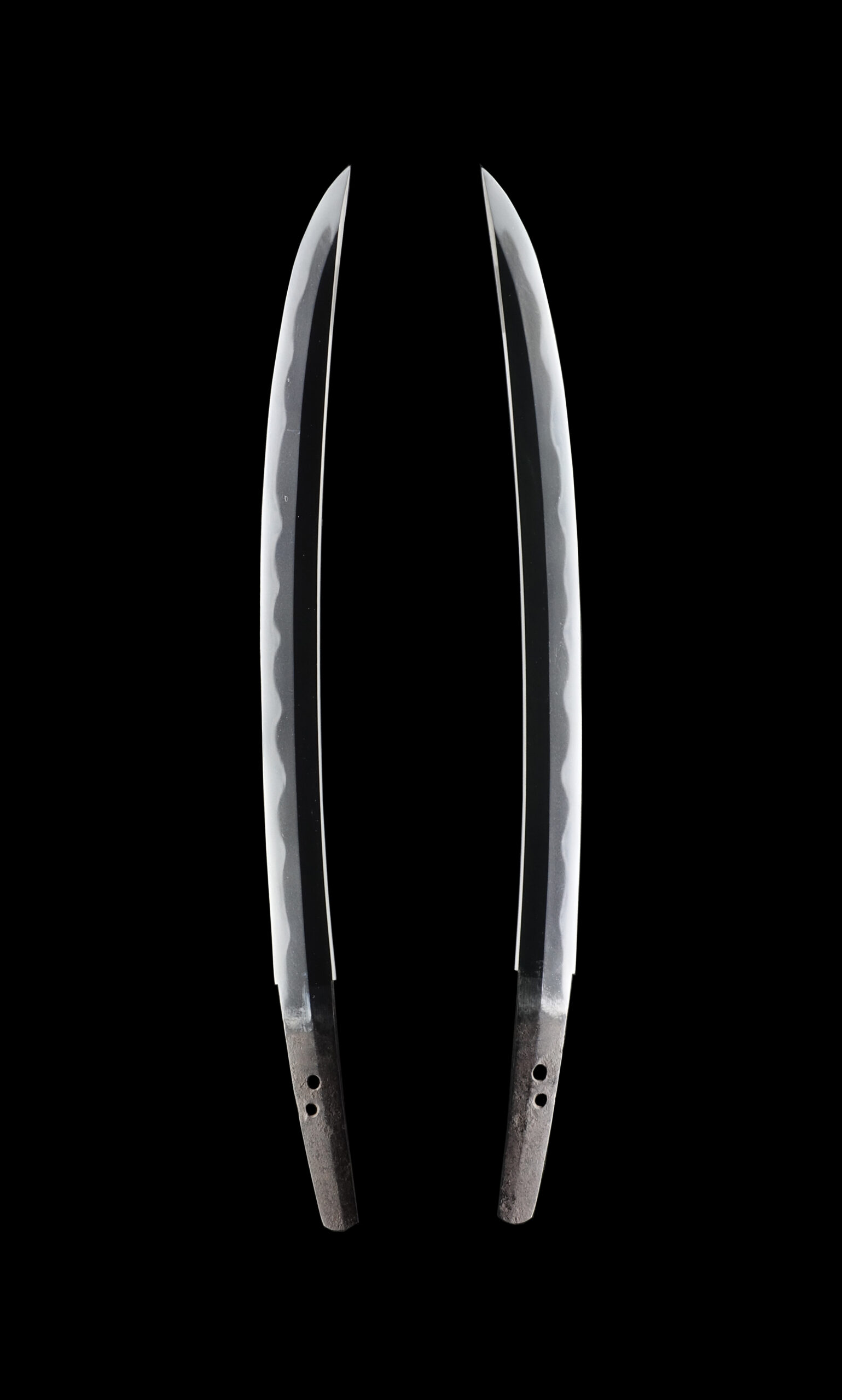
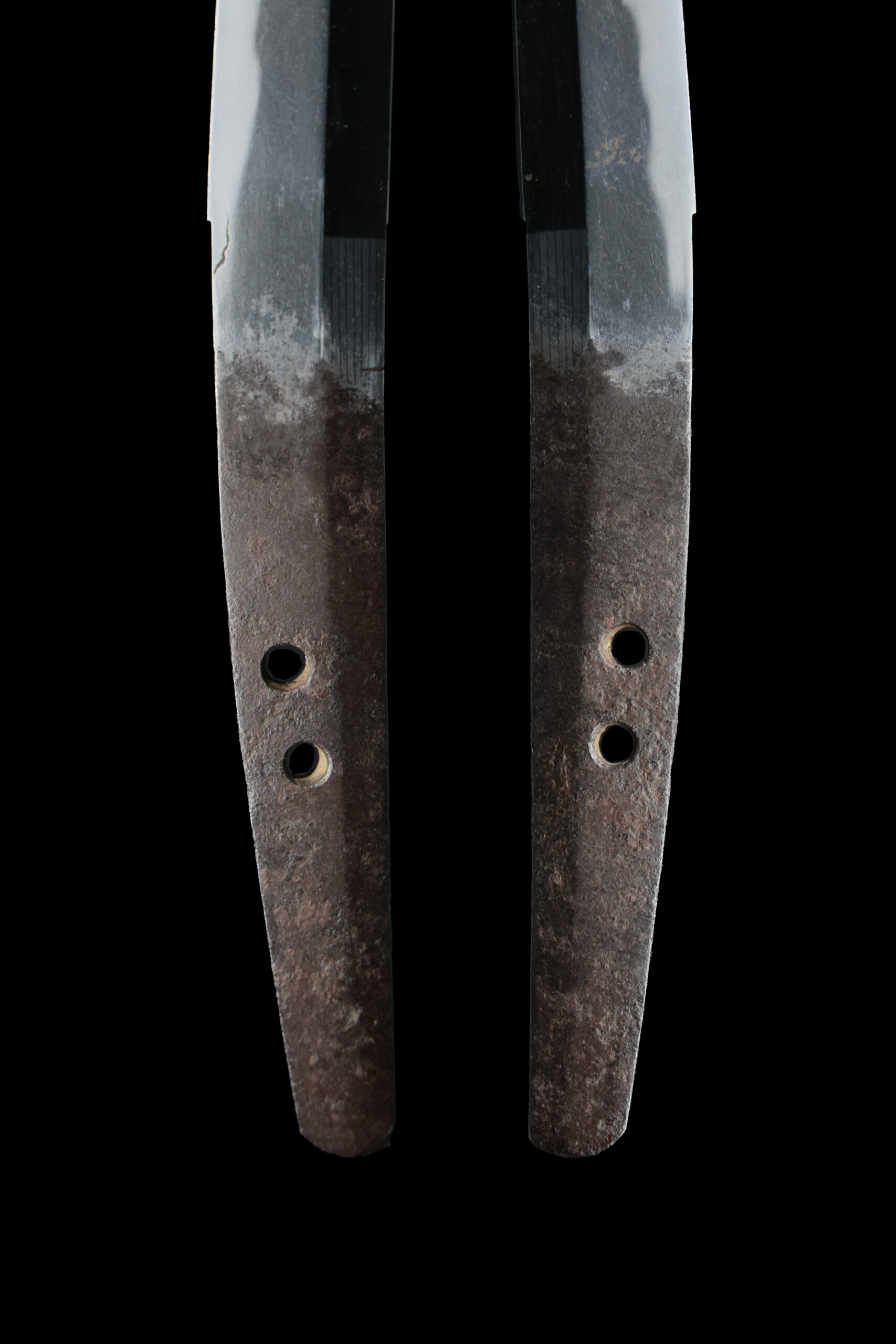
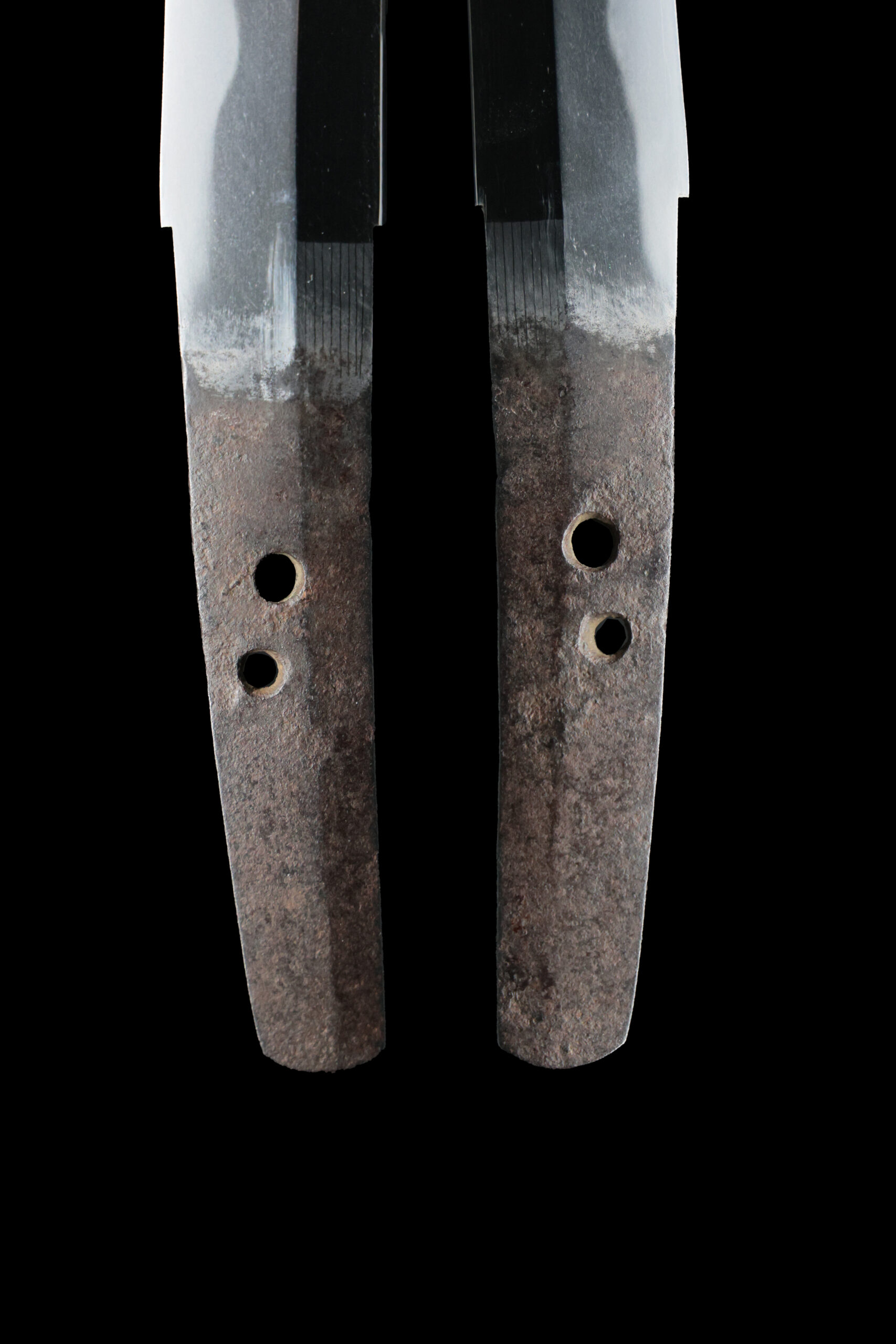
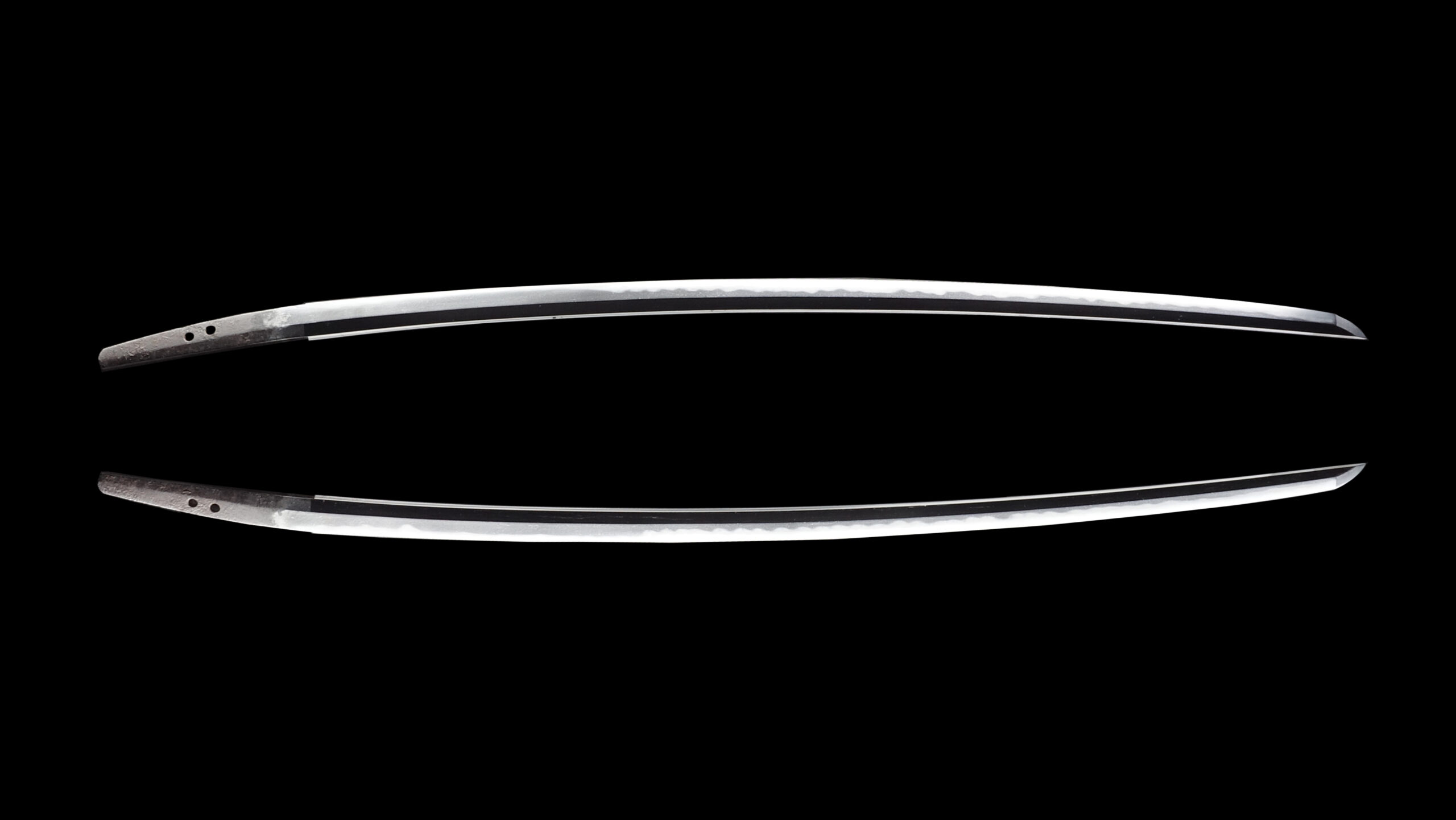
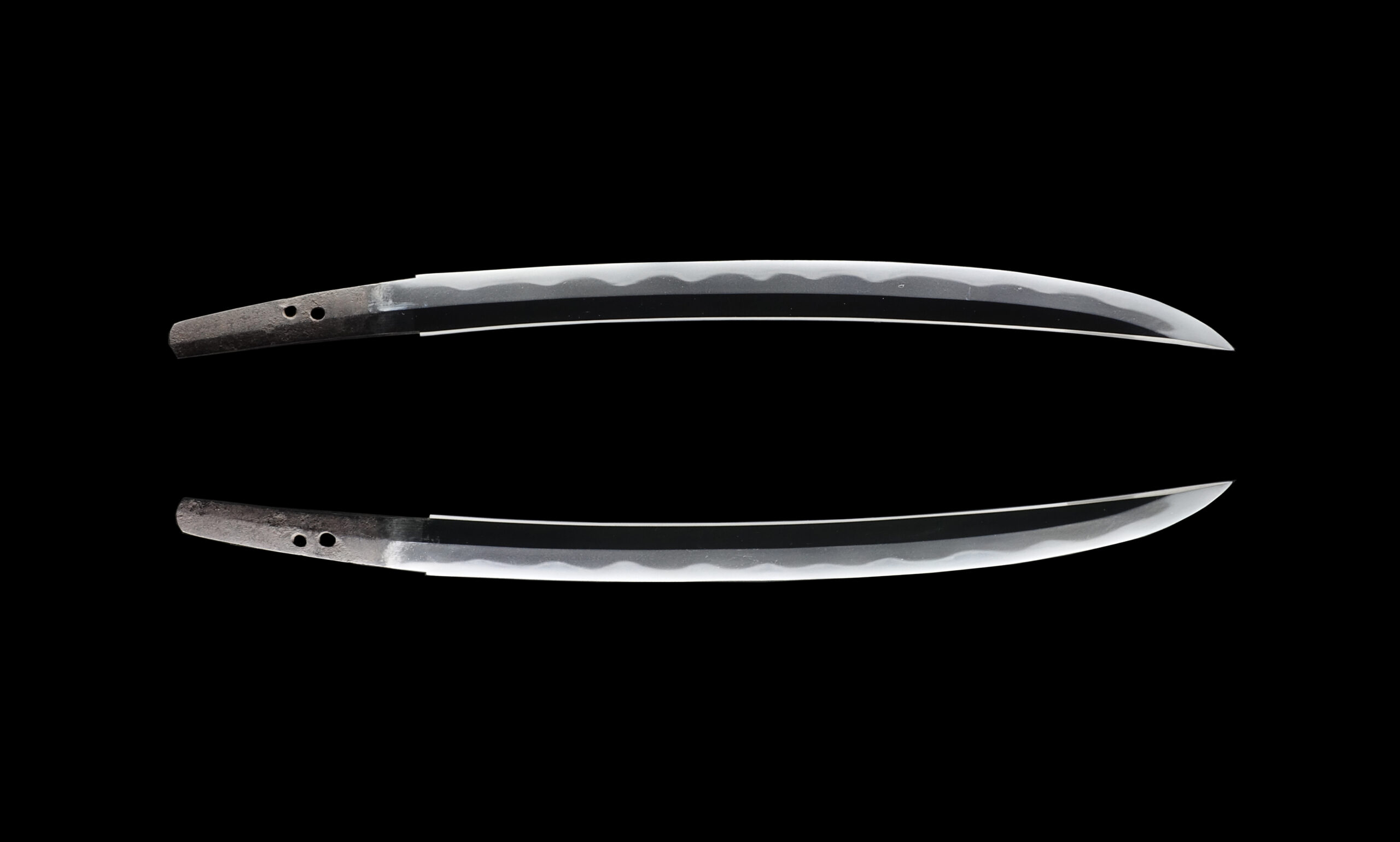
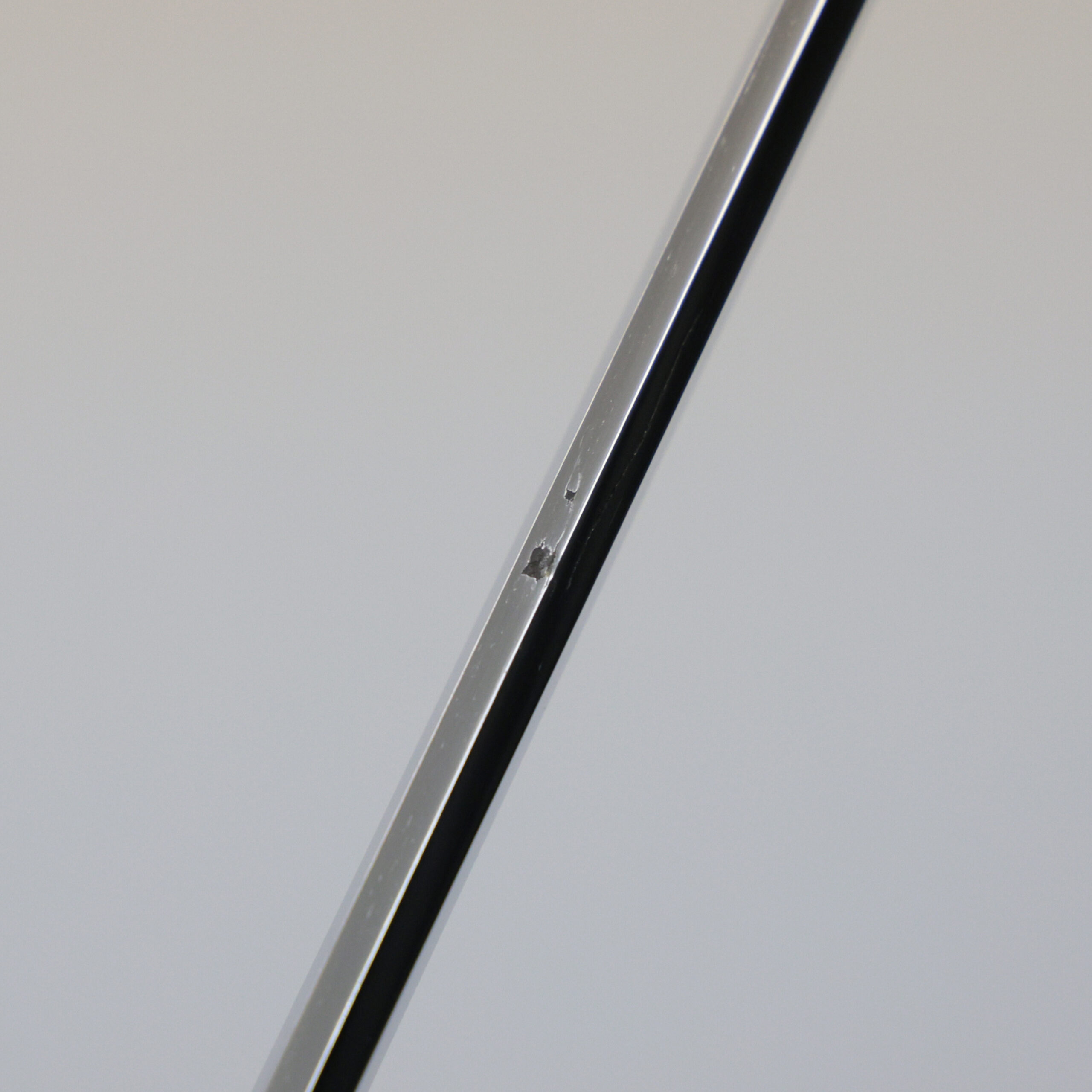
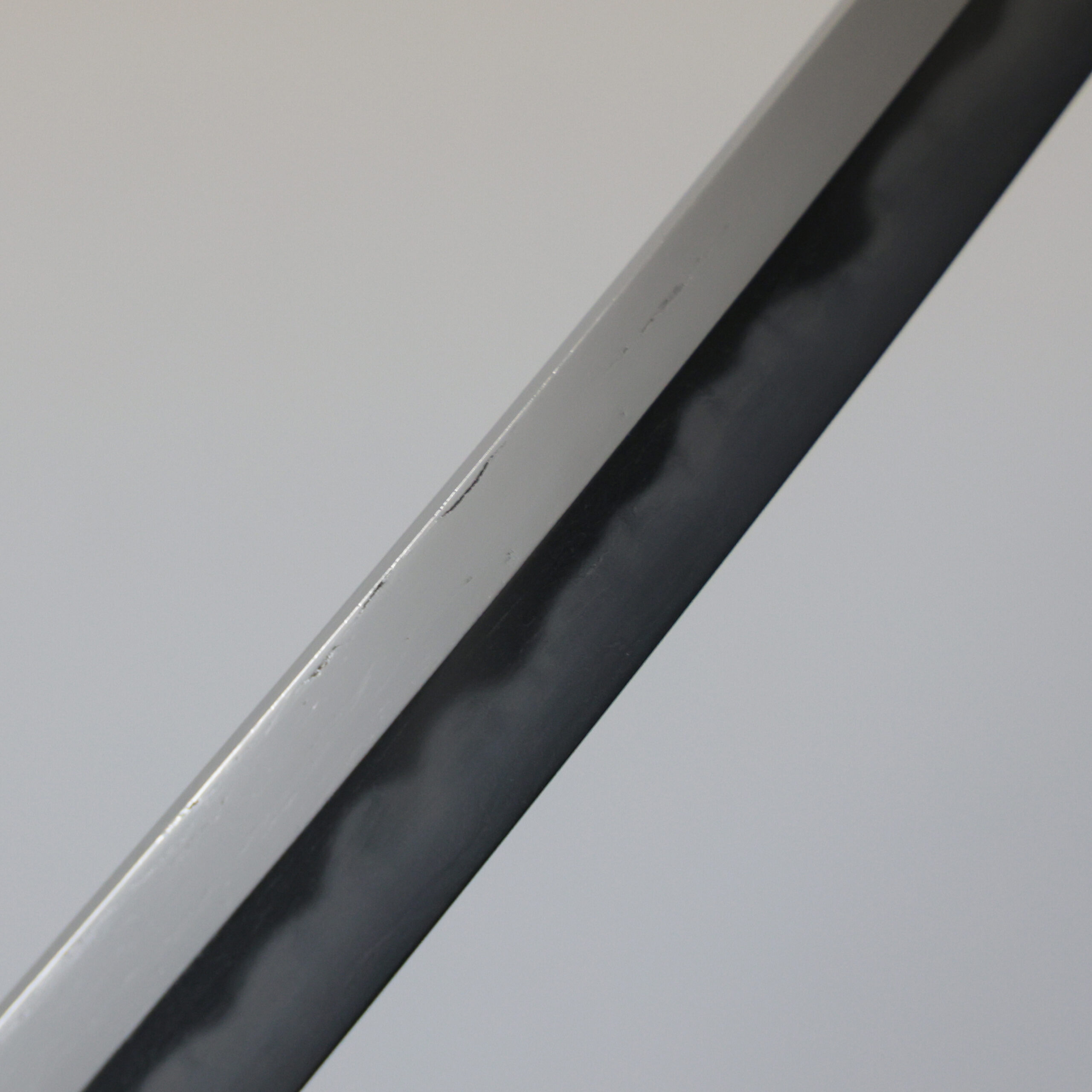
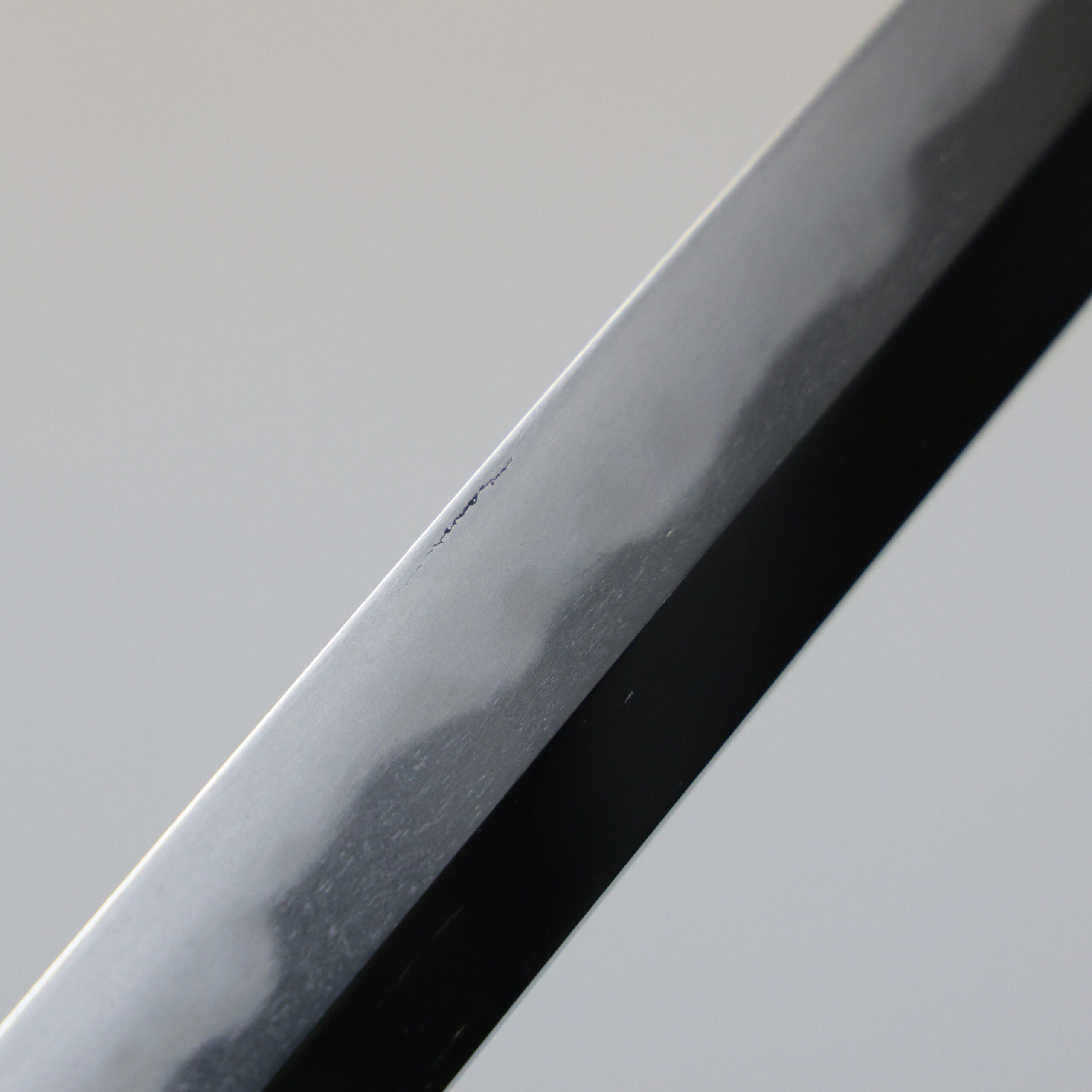
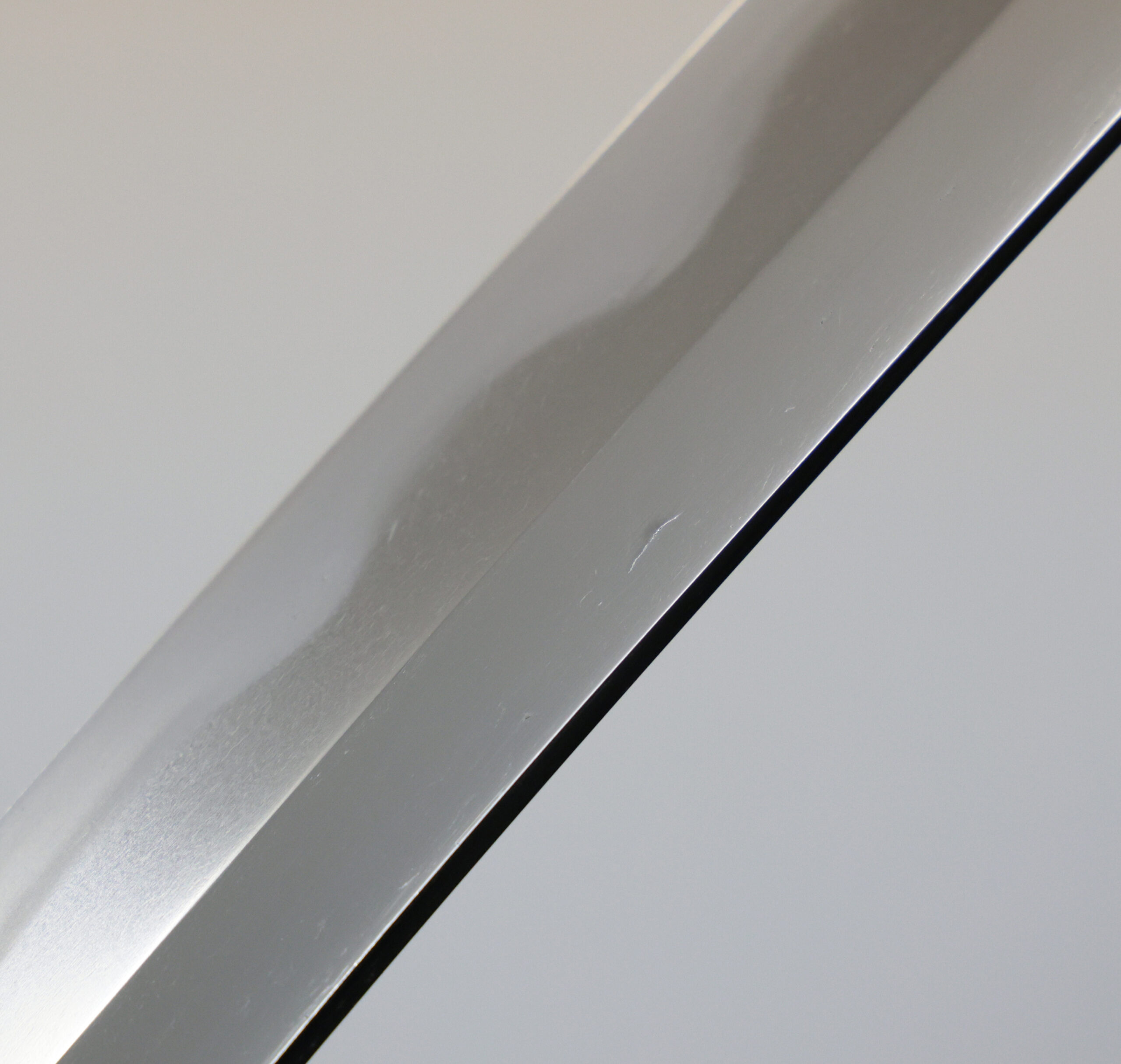
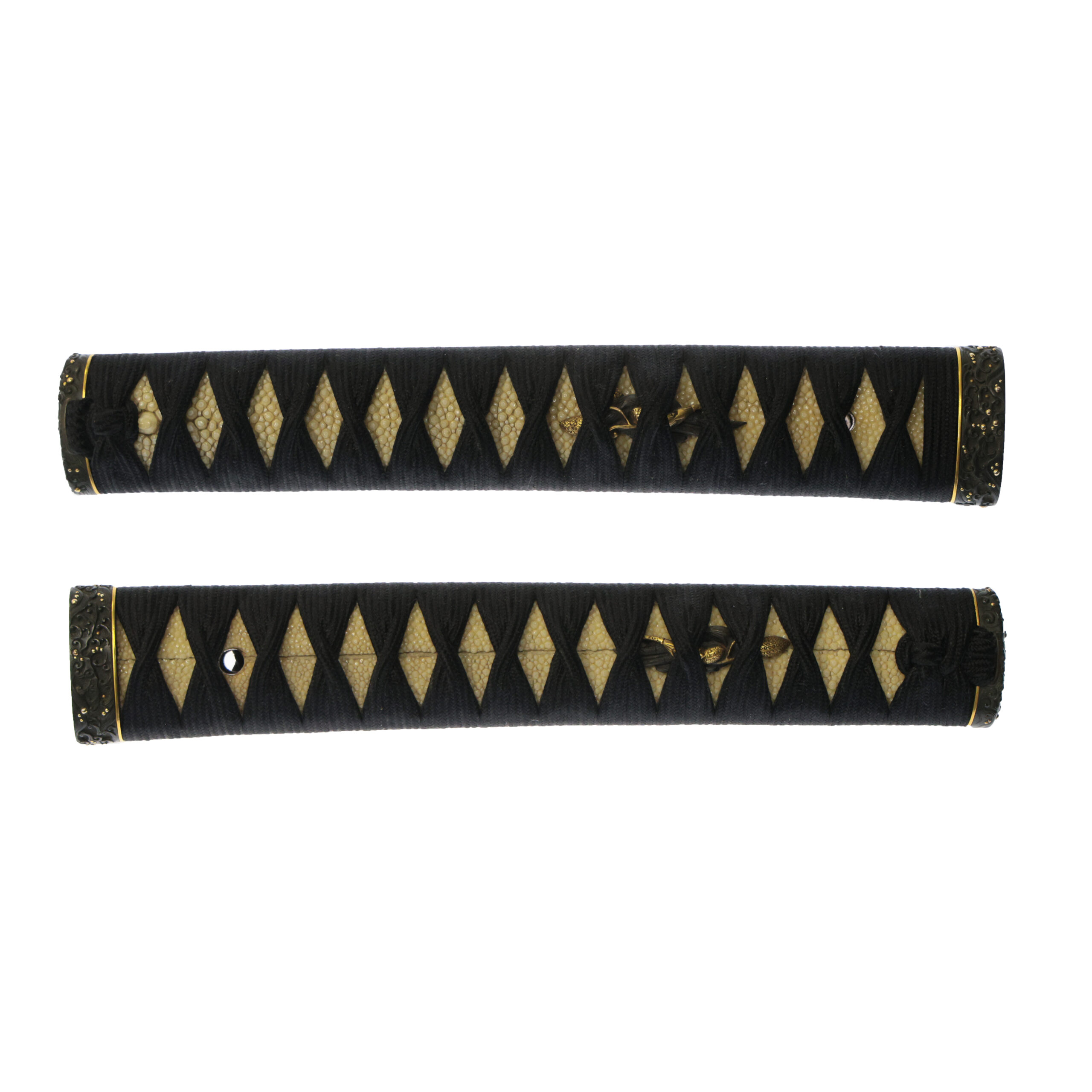
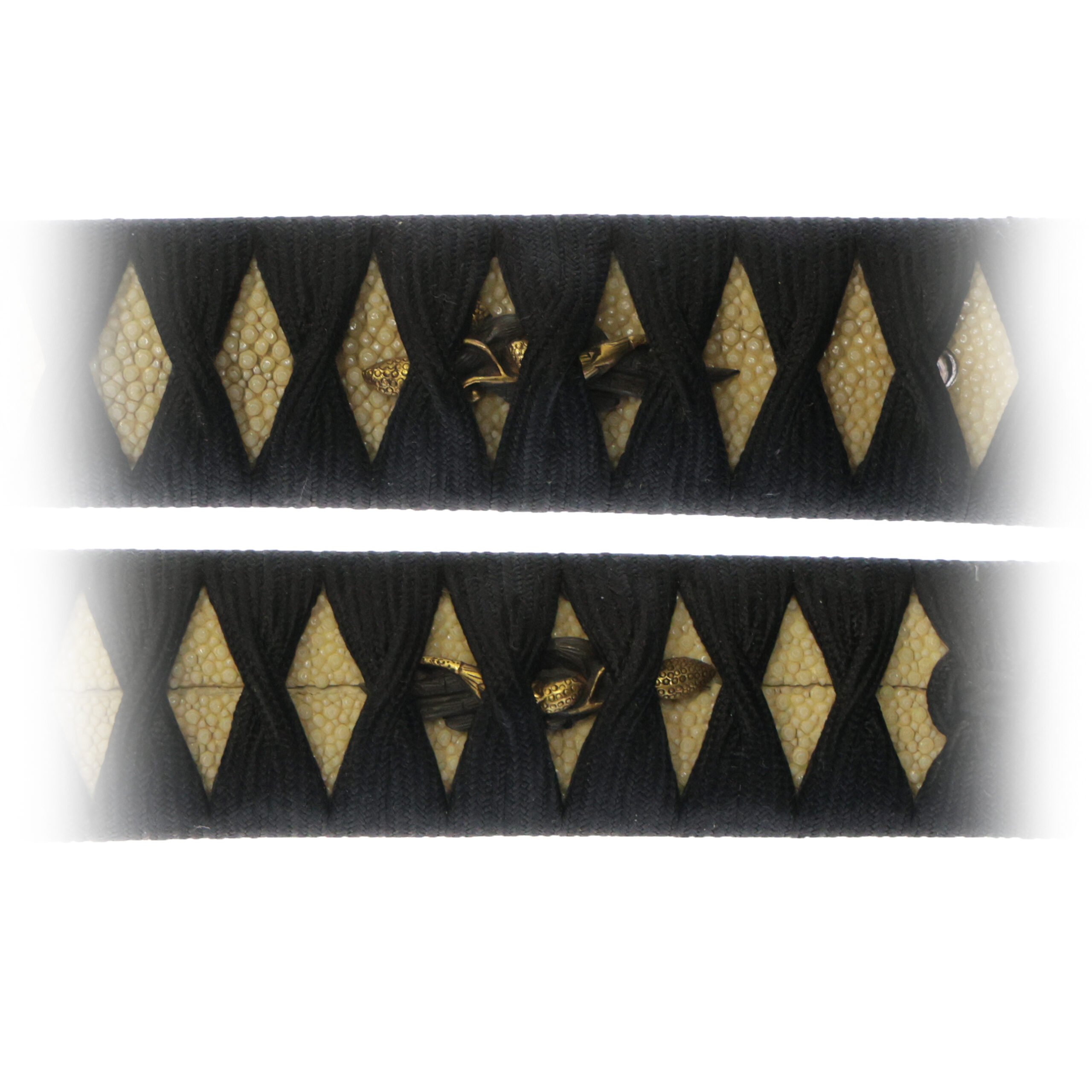
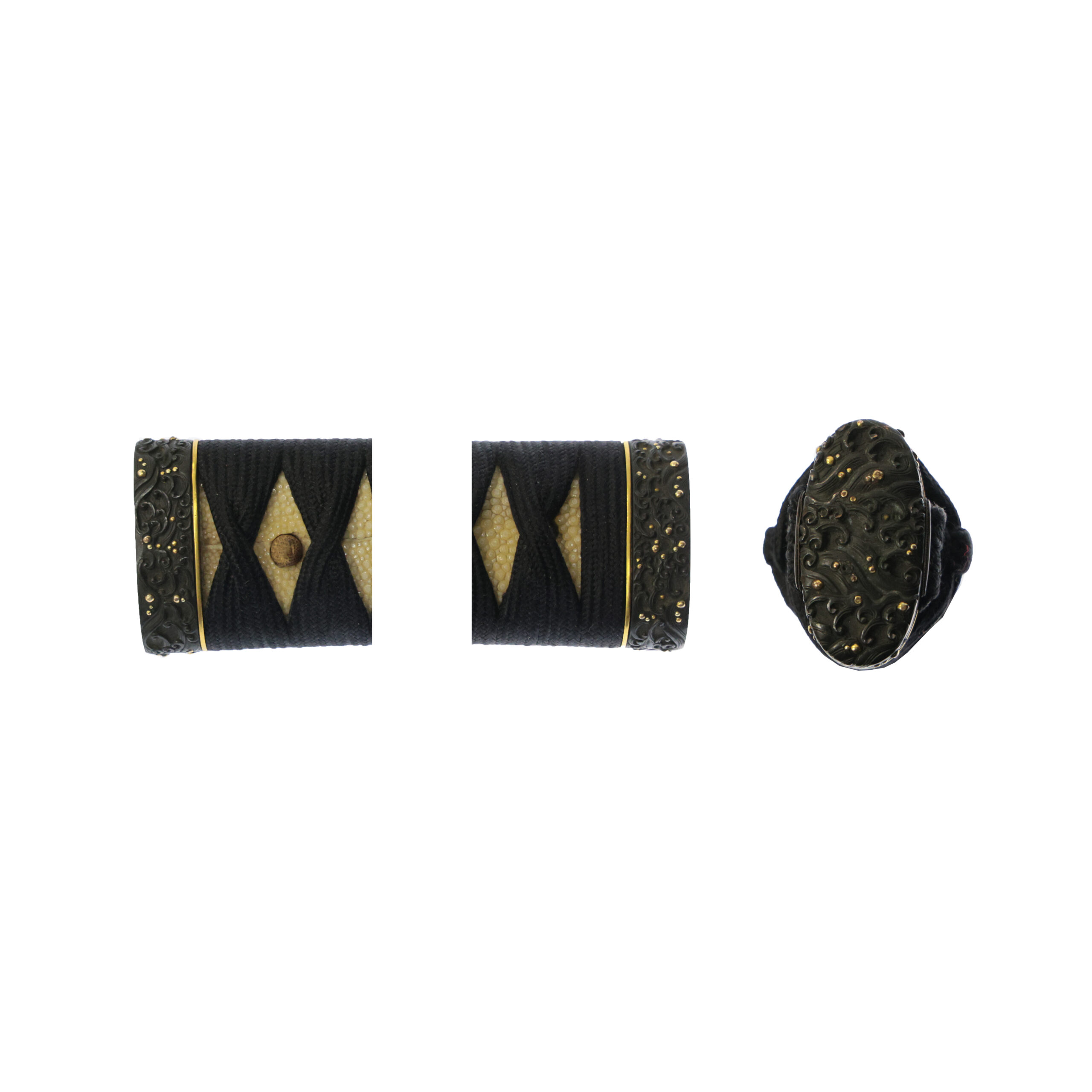
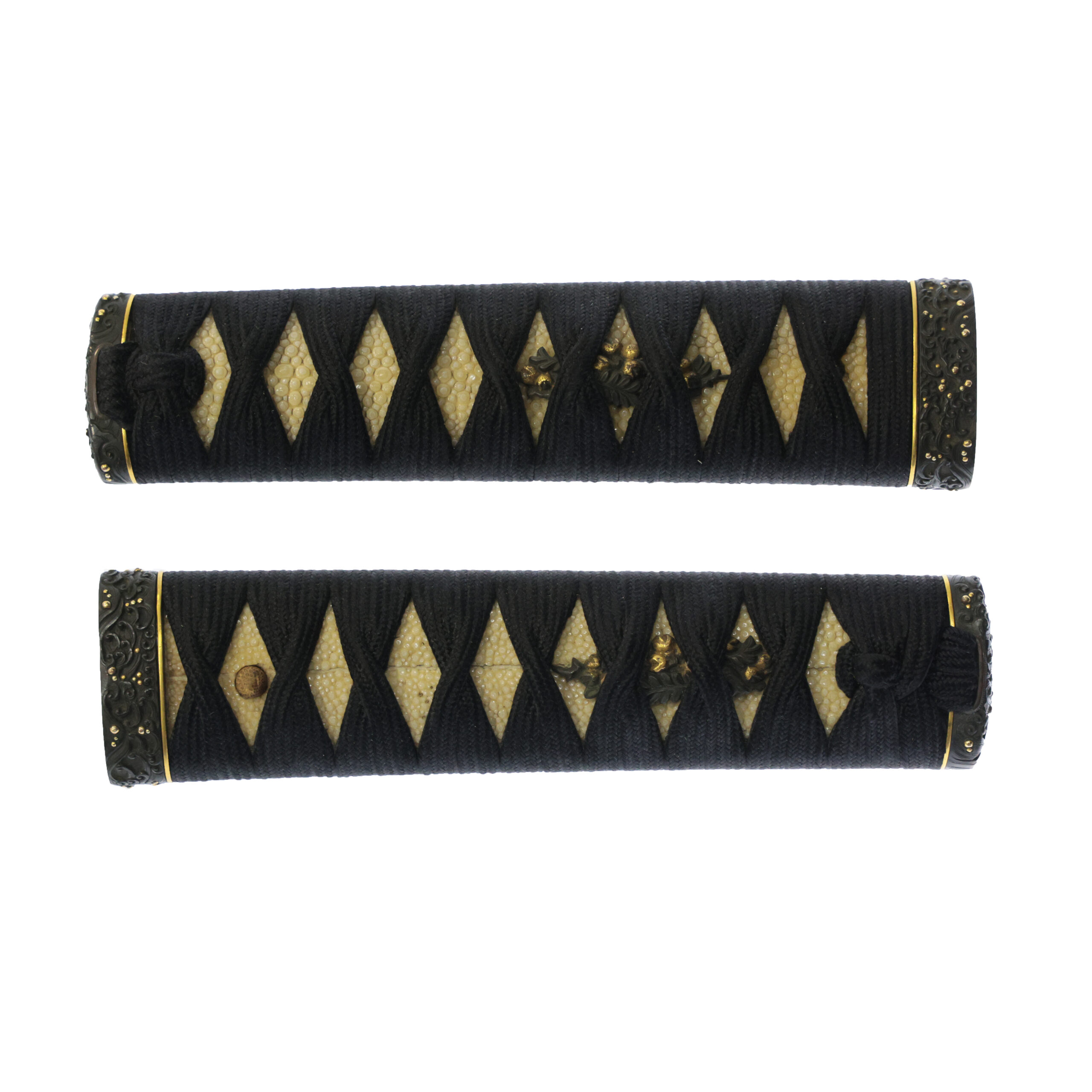
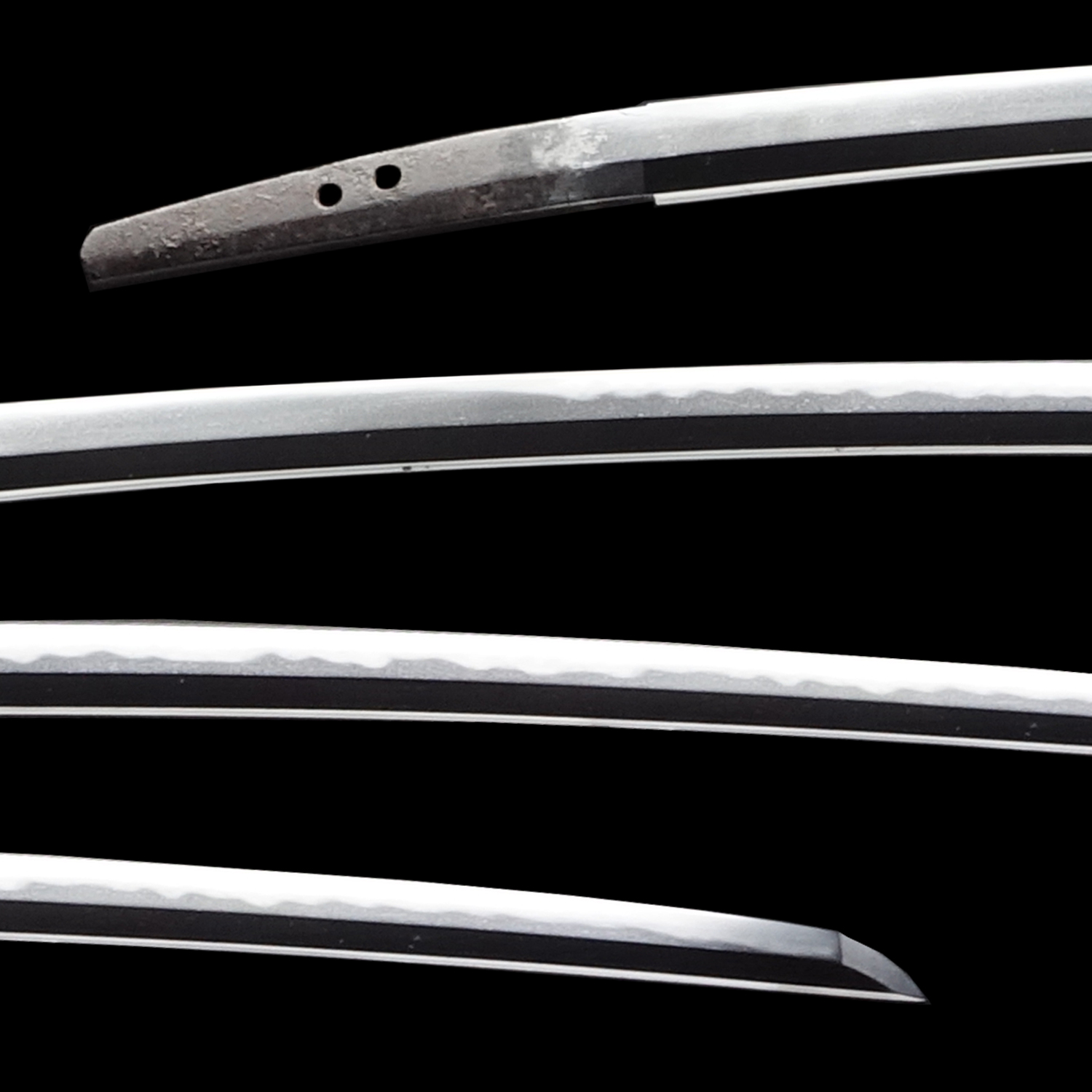
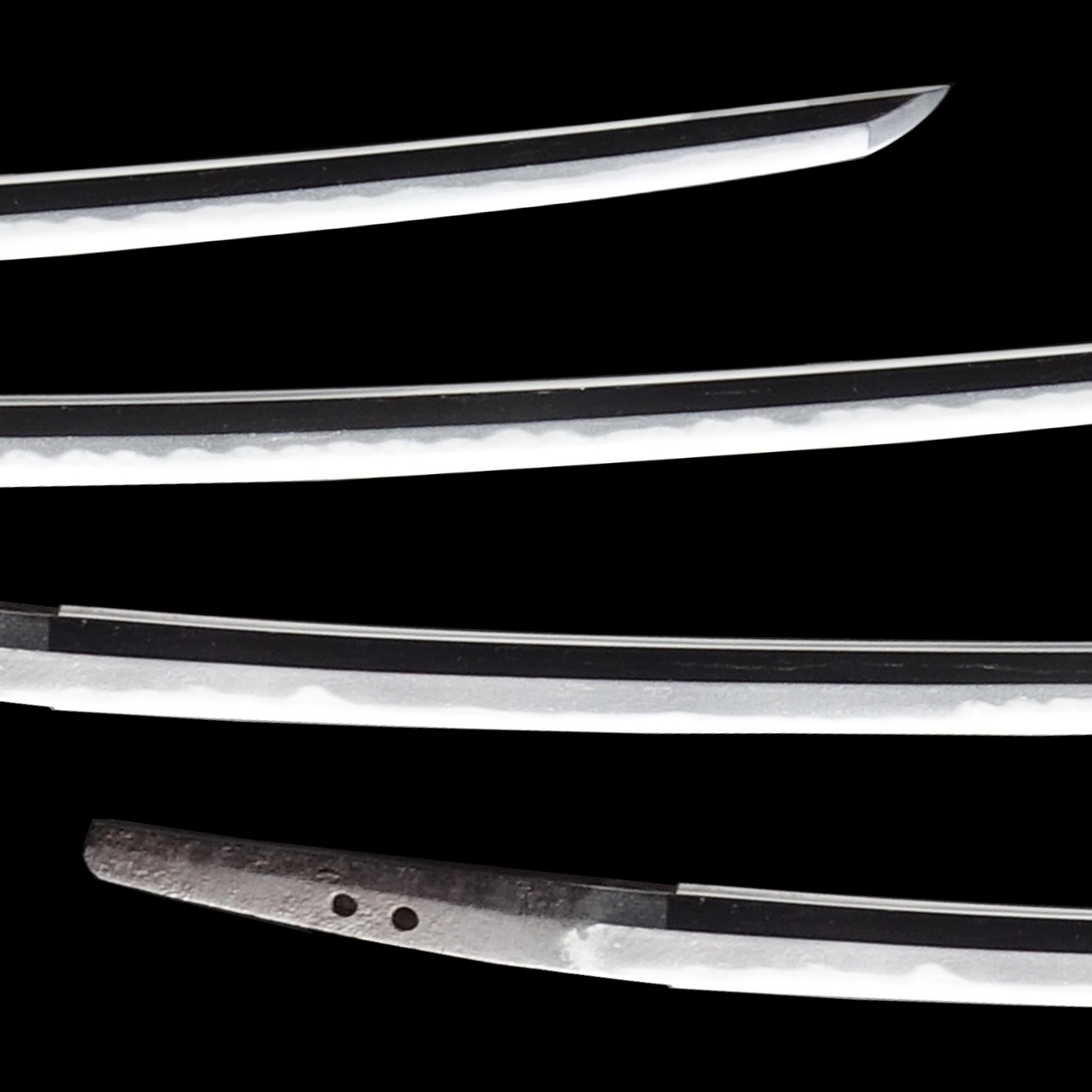
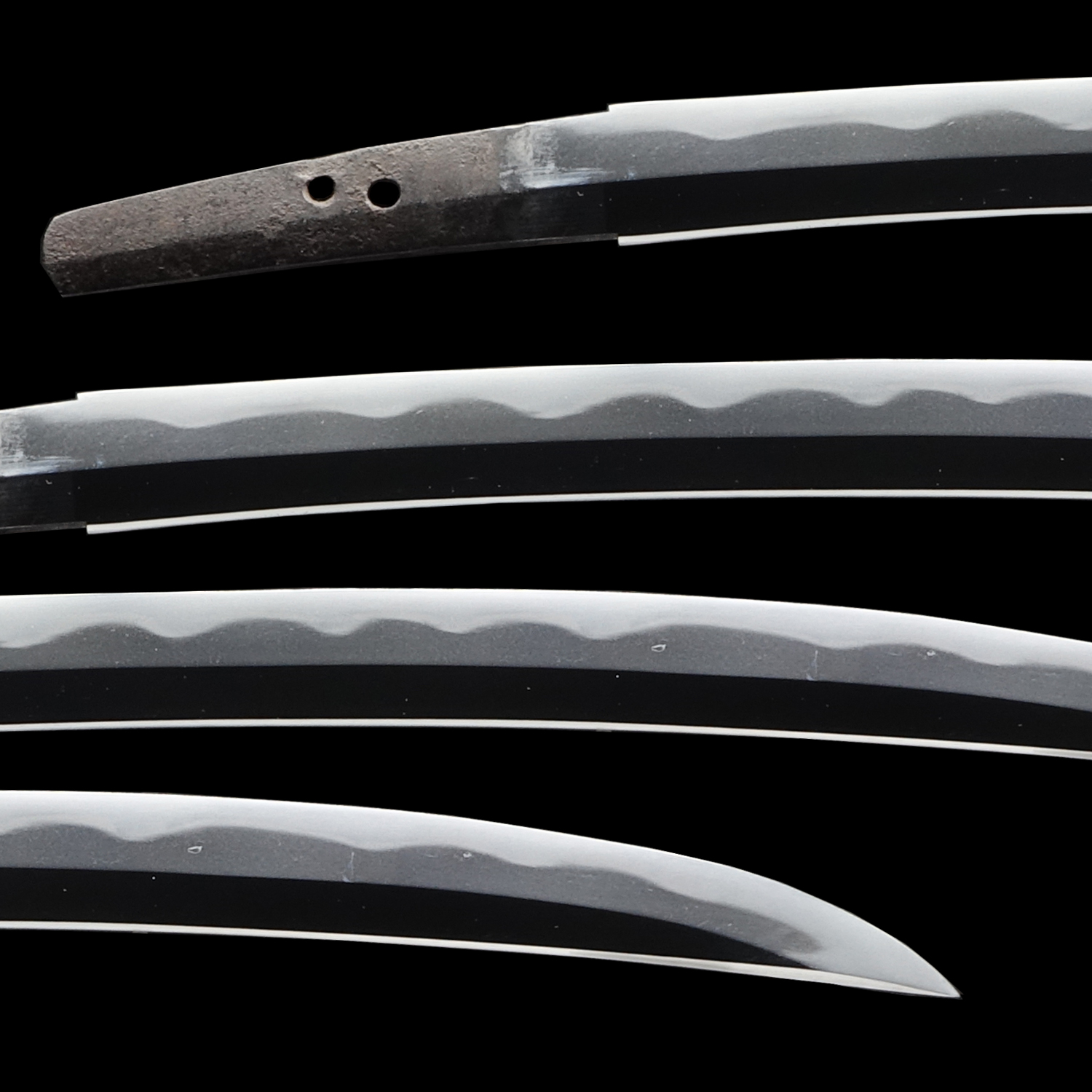
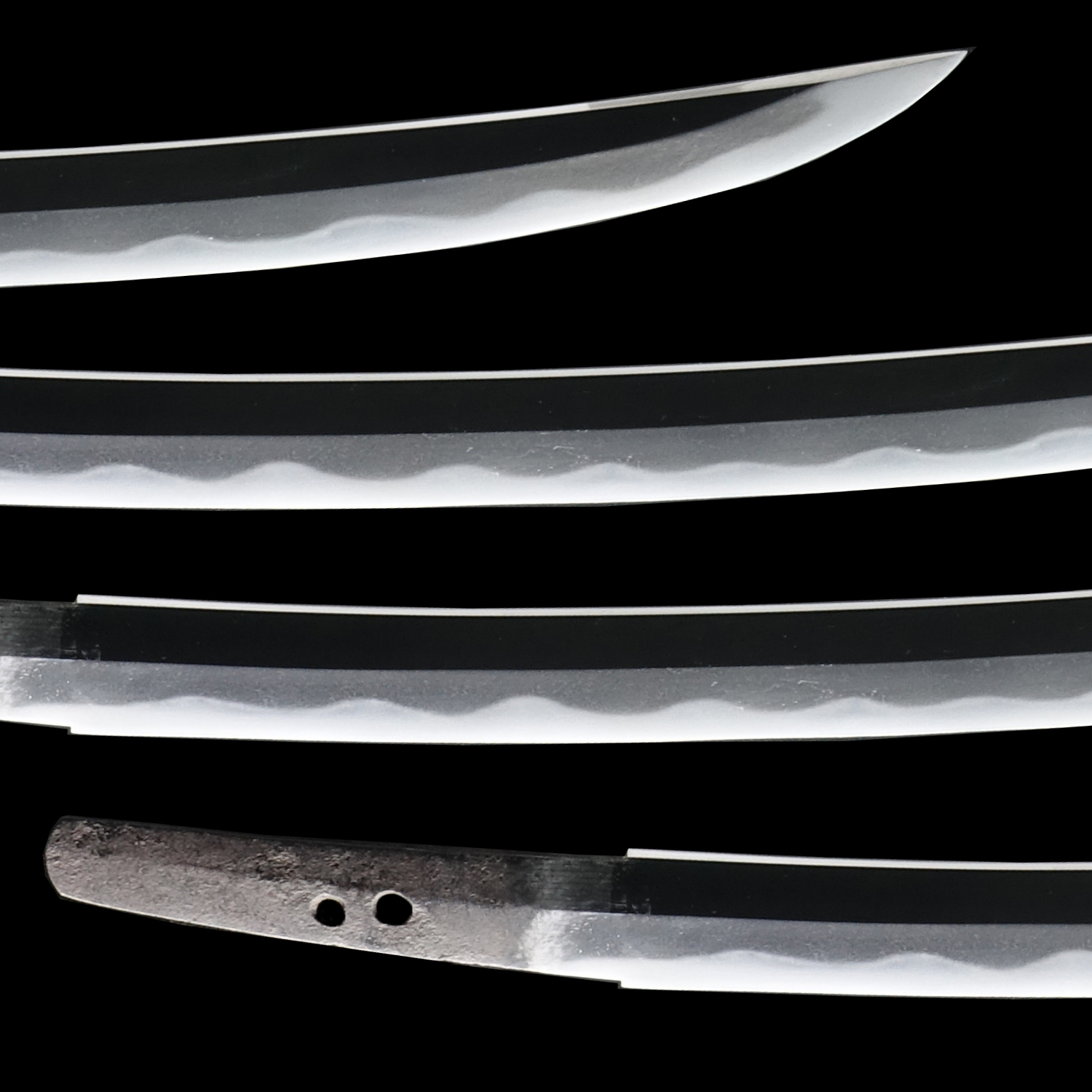
Mino-den · Mino
129 pieces on the market now
Seki (関), in Mino Province, grew from two roots set down in the Nanbokuchō period and rose to become the great center of mass sword production in the late medieval age. The published sources trace the wellspring of Mino swordmaking to Kinju (whose name the commentary also reads Kaneshige), counted since antiquity among the Masamune Jittetsu, the ten disciples of Sōshū Masamune, and to Kaneuji of the Shizu line; the Kokon Meizukushi records Kinju as a native of Tsuruga in Echizen who "crossed over to Seki and resided there," carrying the Sōshū-den manner east. Beneath that Sagami inheritance lay a Yamato foundation, legible in the Tegai descent of the Seki Zensada line through Kaneyoshi, so that the Mino-den the Seki workshops forged stands as a fusion of Yamato grain and Sōshū activity in nie. From this Nanbokuchō founding the name multiplied across the Muromachi period into Sue-Seki, the last and largest body of the tradition; its representative masters at the close of the old-sword age were Magoroku Kanemoto, famed for the sanbonsugi, and Izumi no Kami Kanesada, the smith called Nosada, while the Kanefusa, Ujifusa and Daidō hands worked beside them and the move of Wakasa no Kami Ujifusa to Kiyosu carried the Mino body to the threshold of Owari shintō. A common Mino vocabulary binds the Seki body, however widely its members range. The forging is an itame that stands and runs to masame, often mixed with mokume and nagare, over which rises the cool whitish shirake-utsuri of Mino steel rather than the bright midare-utsuri of Bizen; this pale, standing jigane is the constant tell the judges read first, present alike on Kinju's Nanbokuchō katana, Kaneyoshi's Ōei tachi and Nosada's late-Muromachi blades. Over it the smiths temper gunome into which the pointed togariba of Mino enters, with ko-nie clinging to a tight nioiguchi, ashi and yō, and sunagashi streaming through; the bōshi answers in midare-komi turning to a pointed or jizō-cast ko-maru swept with hakikake. From this shared grammar the individual hands diverge.
Kanemoto fixed the regular three-cedar sanbonsugi of pointed teeth; Kanefusa devised the rounded-head, constricted-waist "Kanefusa midare"; Kinju and the early founders held a calmer, rounder gunome away from the restless Shizu line, their work laid with thicker ji-nie and dry, standing grain. The late masters carried the manner to a higher finish: Nosada wove togariba among rounder forms for a broader temper than Kanemoto's one-sided file, and turned at times to a slender Rai-styled suguha with a hidden gunome; Kaneyoshi held instead to a cool ito-suguha, the disciplined Yamato face of late Seki, lightly broken with ko-gunome. A collector seeks Seki because it is the connoisseur's ground for reading Mino-den across a vast body of signed and attributed work. The kantei runs through the jigane first: the standing, masame-leaning itame and the whitish shirake separate a Seki blade from Bizen and Yamashiro, after which the pointed togariba, the dry nie, and the pointed or jizō bōshi confirm the province; the discriminations the judges draw, Kinju held apart from Shizu by his rounder gunome, Nosada parted from Kanemoto by his breadth, give the eye its anchors. Within the school the standing of the best members is settled: Magoroku Kanemoto for the sanbonsugi, Nosada whom the swordbooks call simply "an excellent master" and the most accomplished of the several Kanesada hands, and the early Kinju as a rare and precious founding name, his record running through the Jūyō tier with the signed pieces few and the long blades attributed den. Signature works carry real provenance: a Kinju tantō presented to the Tokugawa shogunal house in 1679, a Nosada katana borne by a chief retainer of the Kii Tokugawa and a tachi forged for the father of Takeda Shingen, a Kaneyoshi tachi transmitted in the Chikuzen Kuroda family. Beyond connoisseurship, Seki's blades earned a battlefield reputation for cutting; the full hiraniku and stout build of the Sue-Seki katana, made to sever, set the wazamono standing that made Mino the working sword of its age. Learn more →
| Smith | Era | Designated |
|---|---|---|
| Kinju金重 | 1340-1346 | 42 |
| Kaneyuki金行 | 1350-1352 | 10 |
| Kanekore兼之 | 1504-1555 | 7 |
| Kanenori兼法 | 1579-1615 | 5 |
| Nagasada永貞 | 1862-1866 | 5 |
Mino in the Muromachi period
Sengoku Seki was an industry: smiths organized under their tutelary Kasuga shrine, arming the war bands of central Japan. Magoroku Kanemoto’s sanbonsugi and the finest Kanesada work prove quality survived inside mass production.
Certifies a genuine blade worth preserving: a signature confirmed correct, or, if unsigned, an era, province, and school that the NBTHK can reliably identify.
The NBTHK (Nihon Bijutsu Tōken Hozon Kyōkai, the Society for the Preservation of Japanese Art Swords) is a public-interest incorporated foundation founded in 1948 and supervised by Japan’s Agency for Cultural Affairs (Bunkachō); it is based at the Japanese Sword Museum in Tokyo. Its expert panels physically examine each submitted work (shinsa) and issue a certificate (kanteishō) ranking it by artistic and historical merit. NBTHK papers are the most widely recognized standard of authentication for Japanese swords and fittings.
NBTHK official siteReturns/exchanges limited to defects caused by shipping (except willful misconduct or gross negligence by the company); customers must contact within 72 hours of receiving the product.
¥1,890,000