Sengoku Seki was an industry: smiths organized under their tutelary Kasuga shrine, arming the war bands of central Japan. Magoroku Kanemoto’s sanbonsugi and the finest Kanesada work prove quality survived inside mass production.
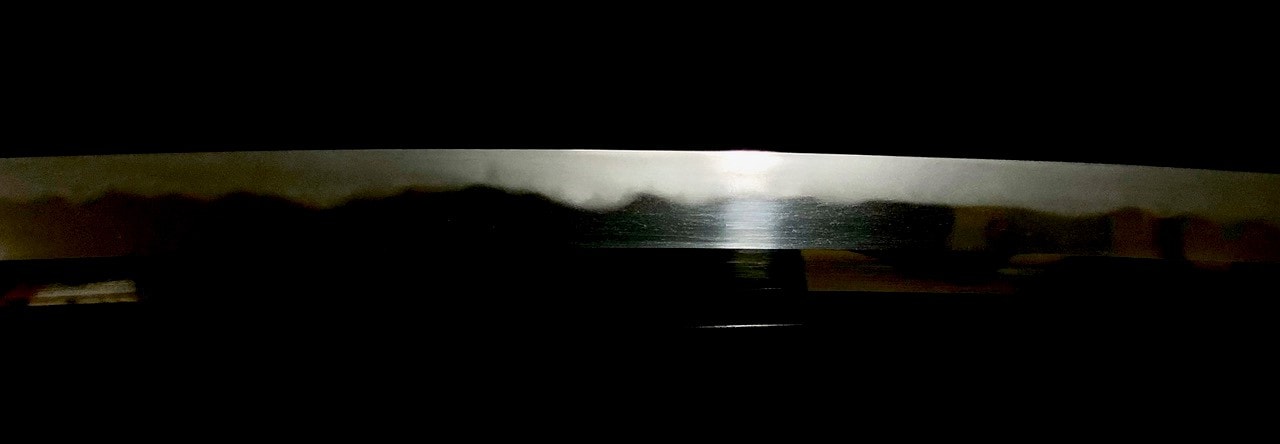
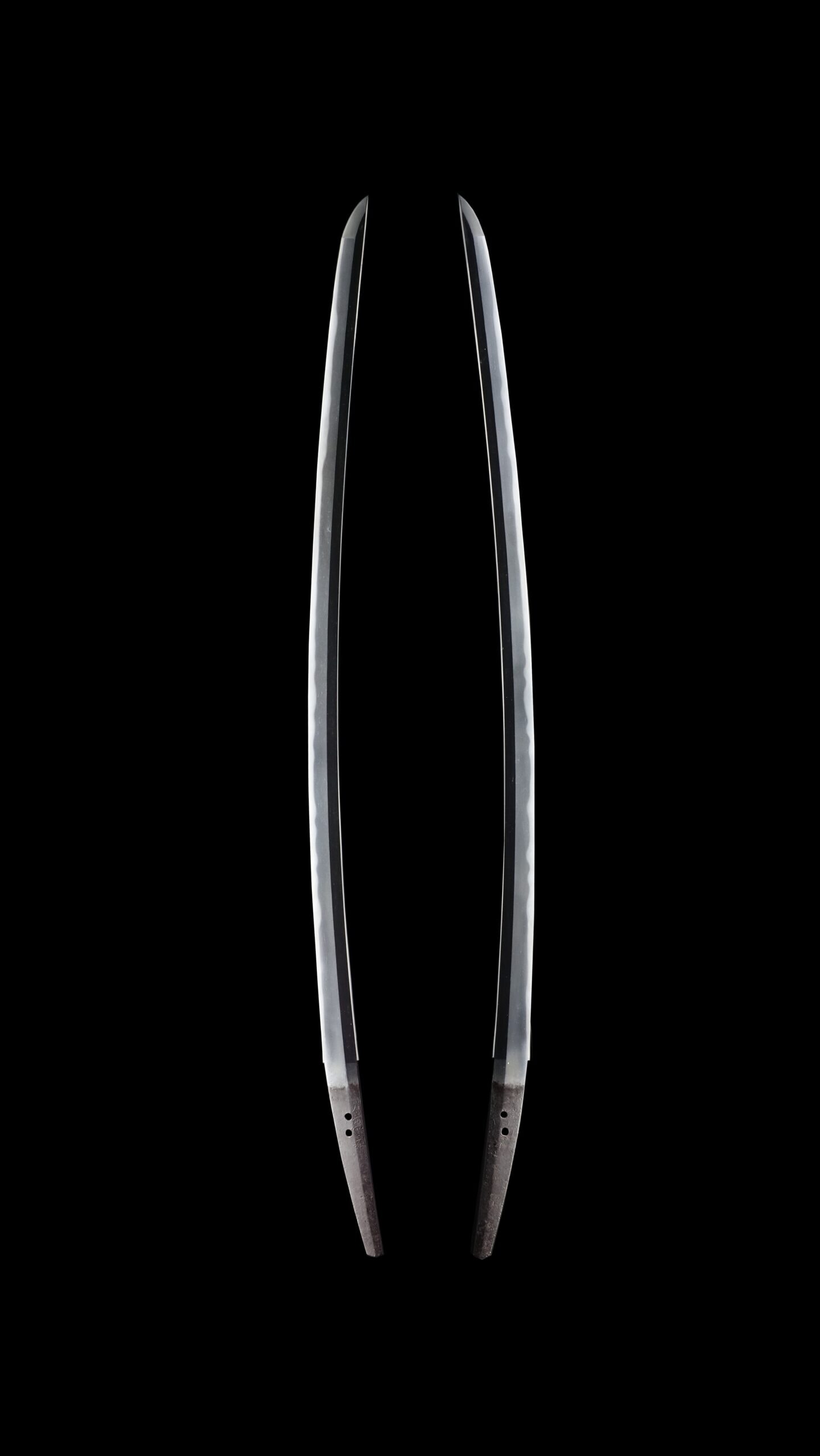
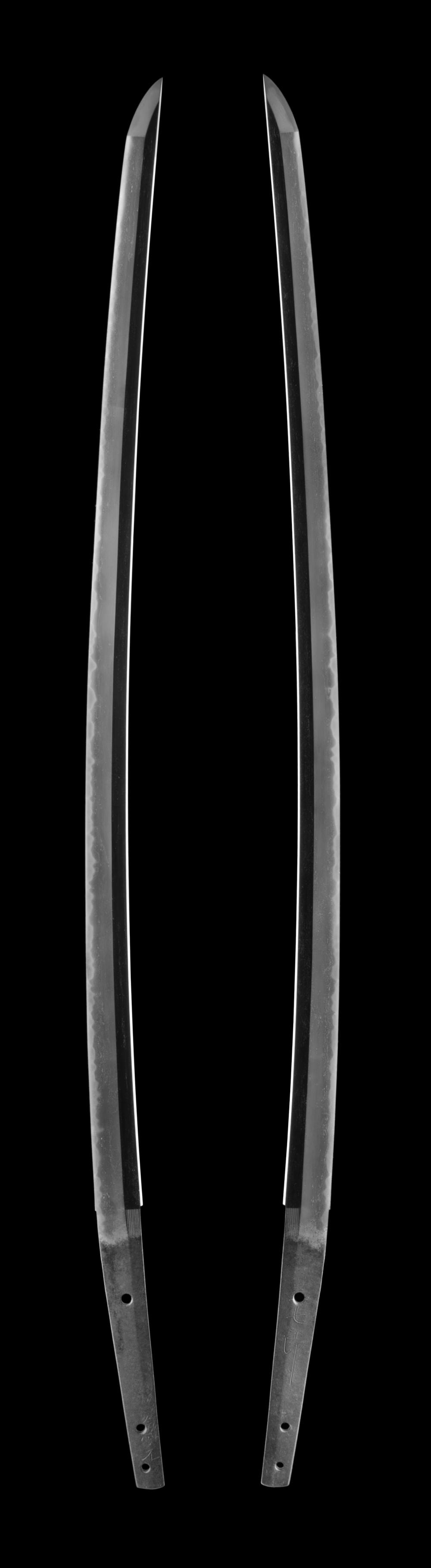
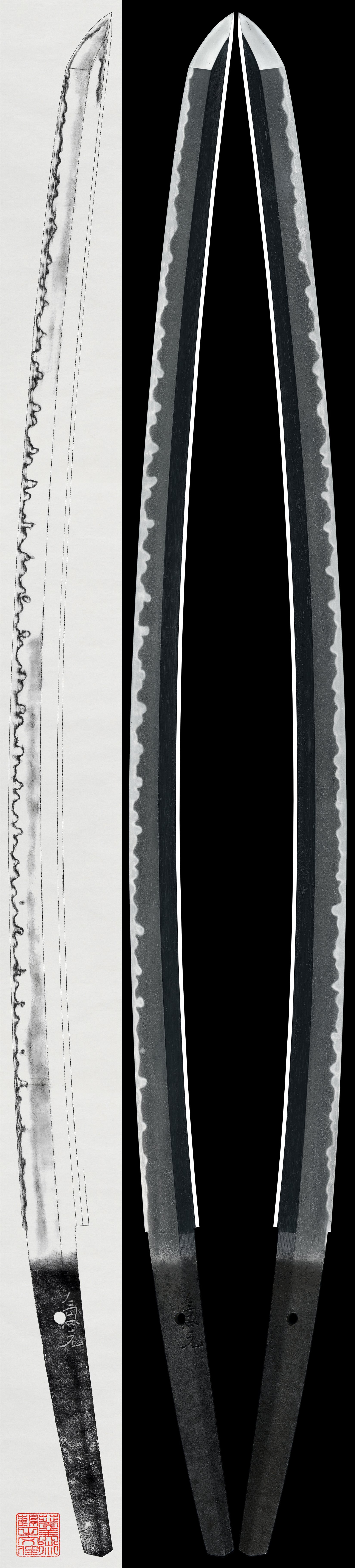
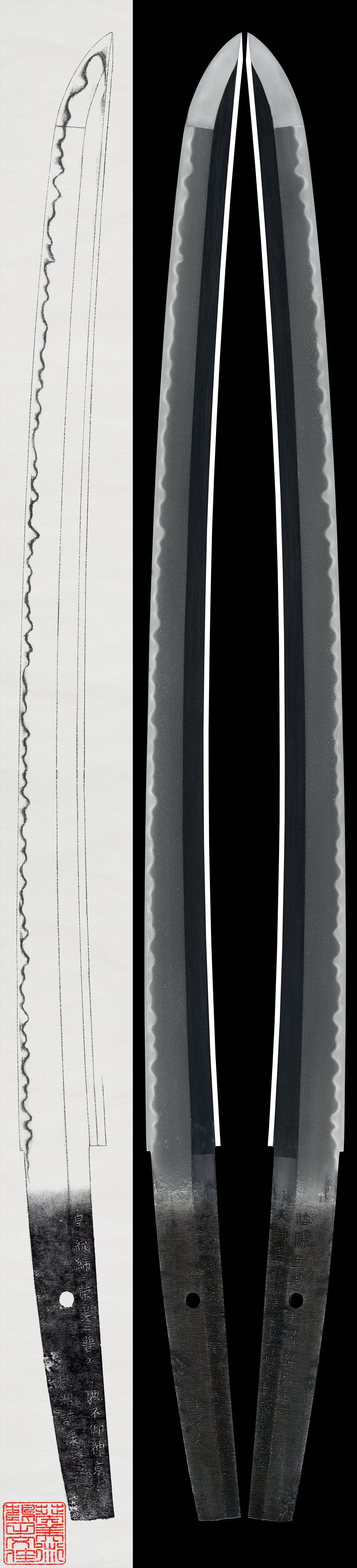
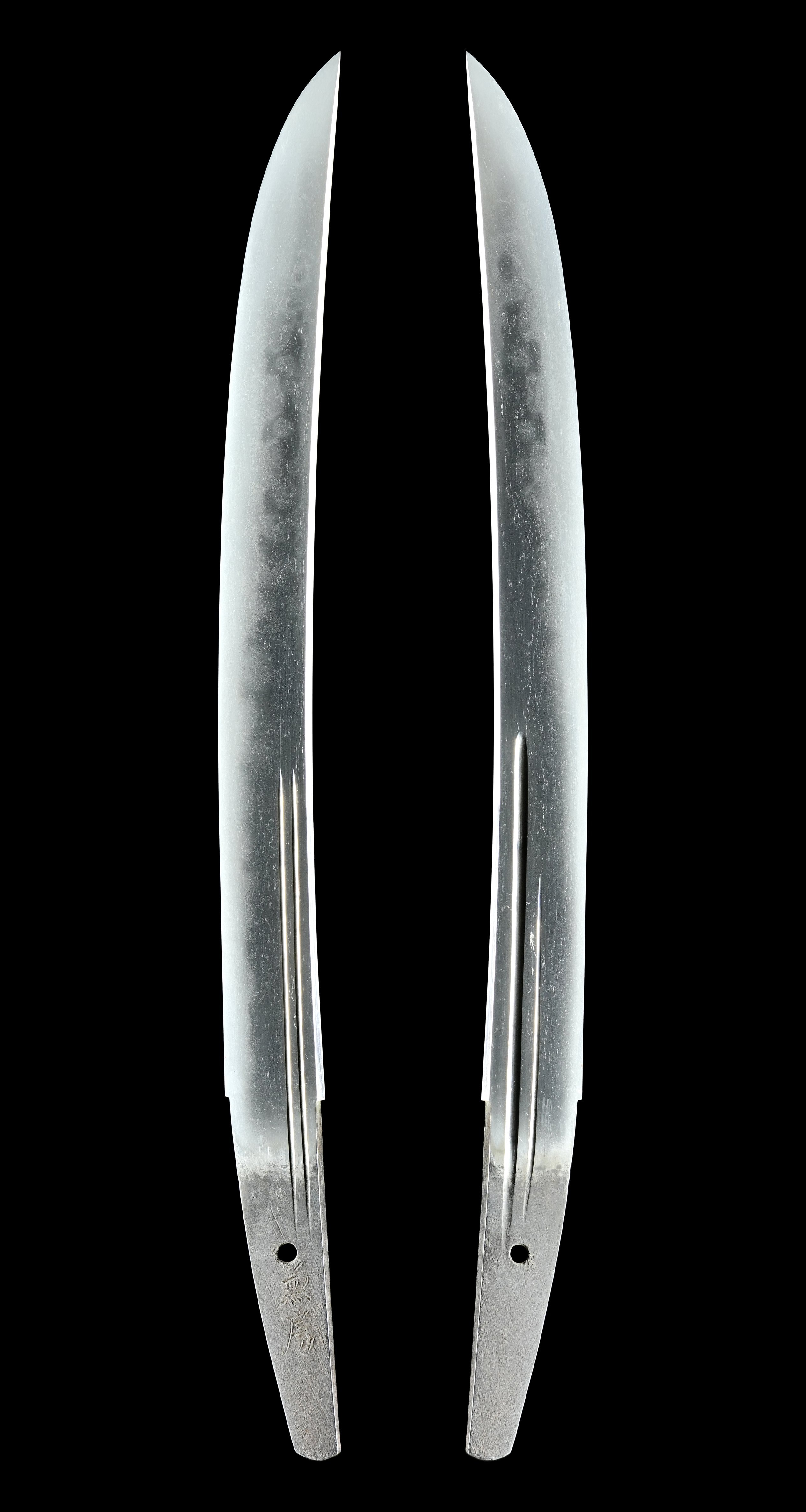
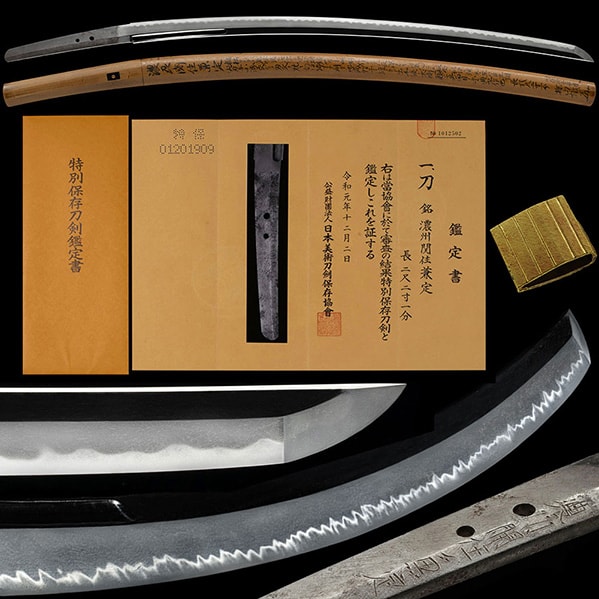
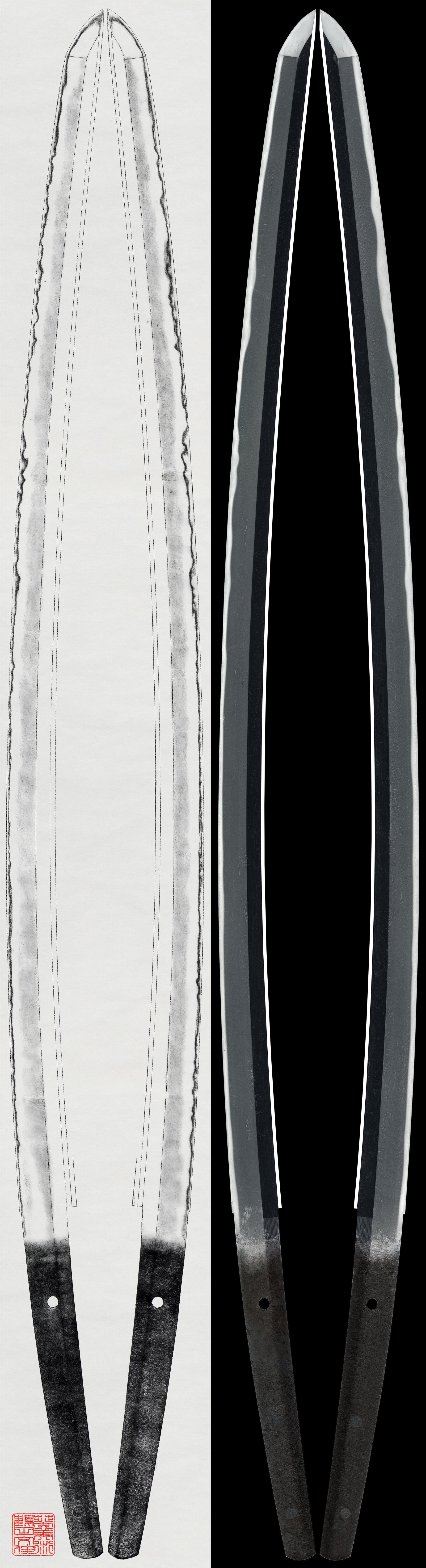
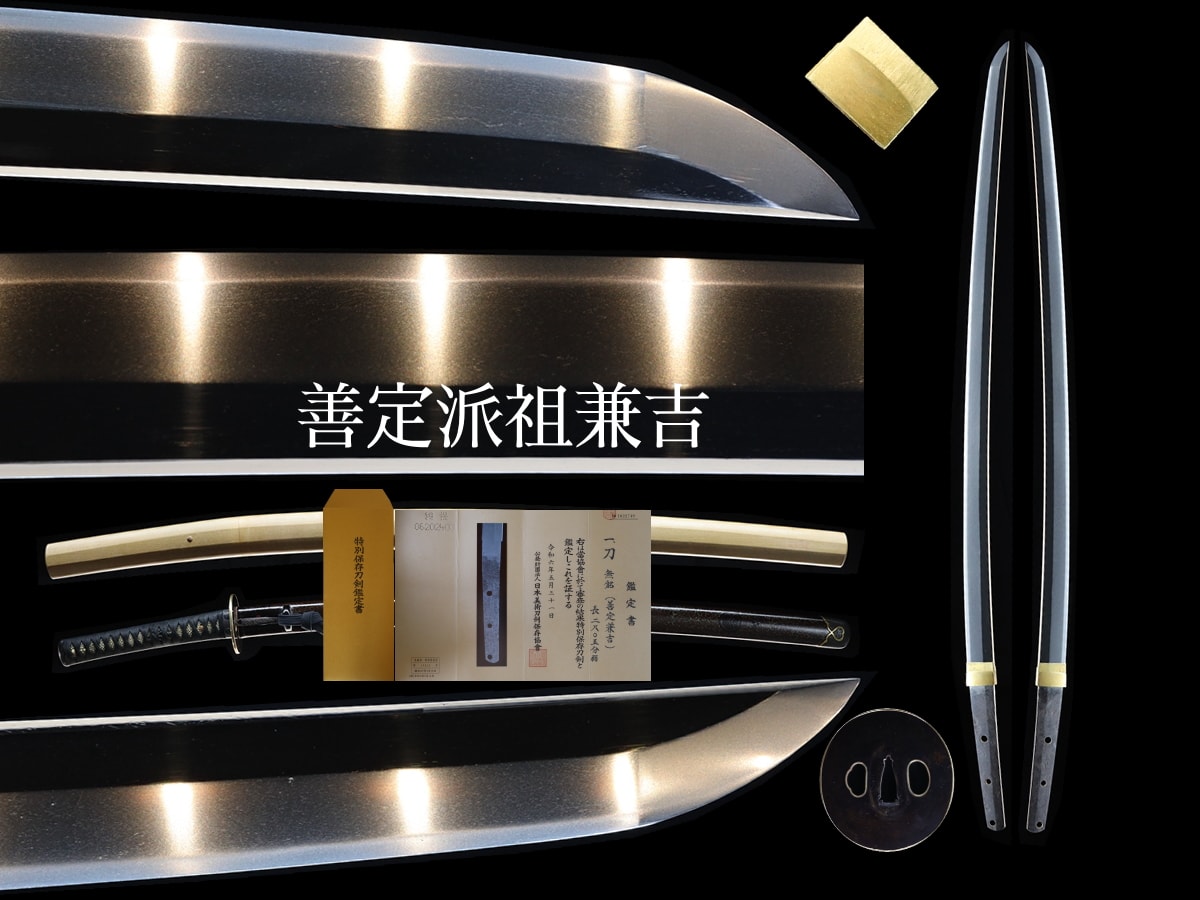
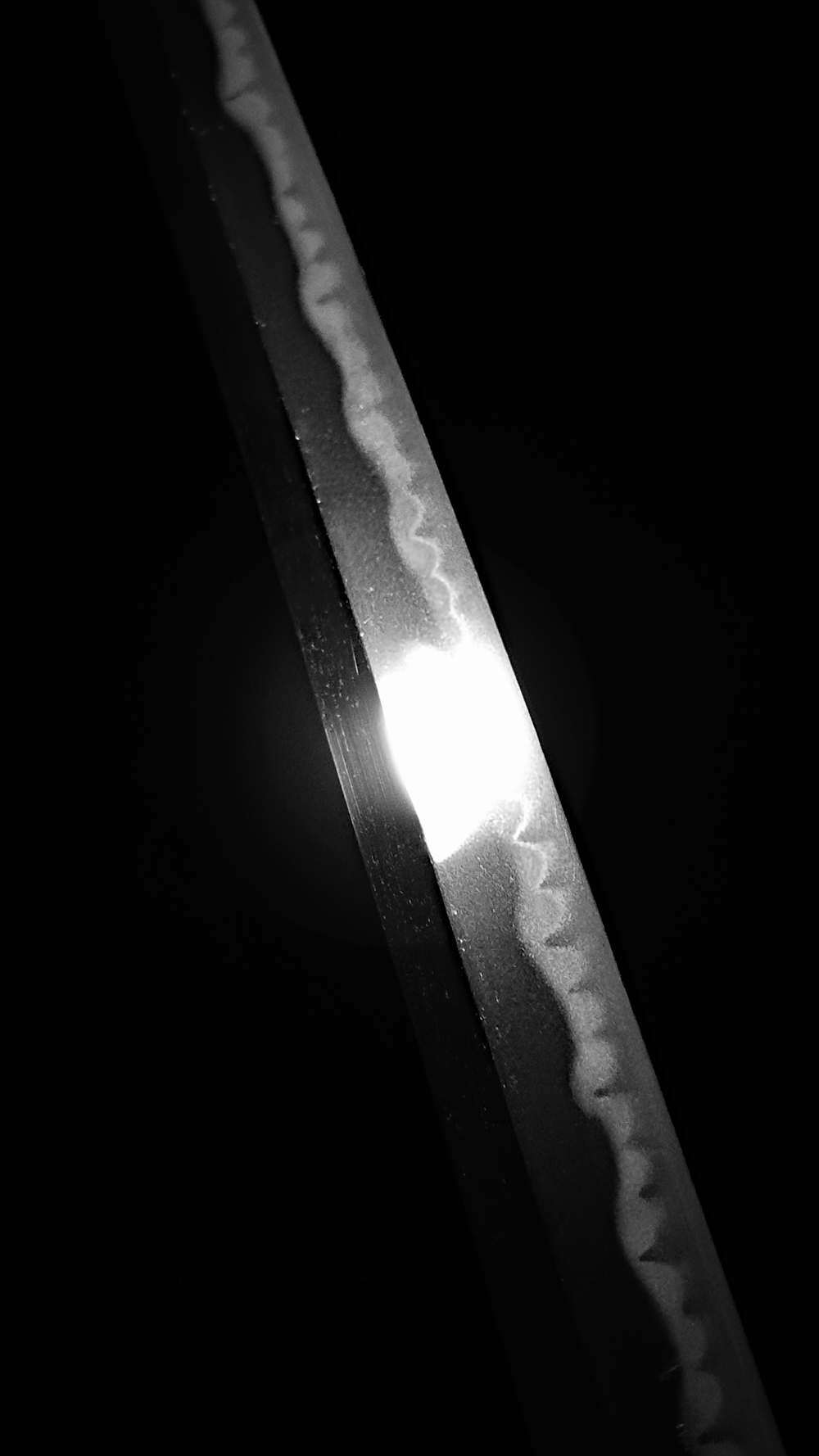
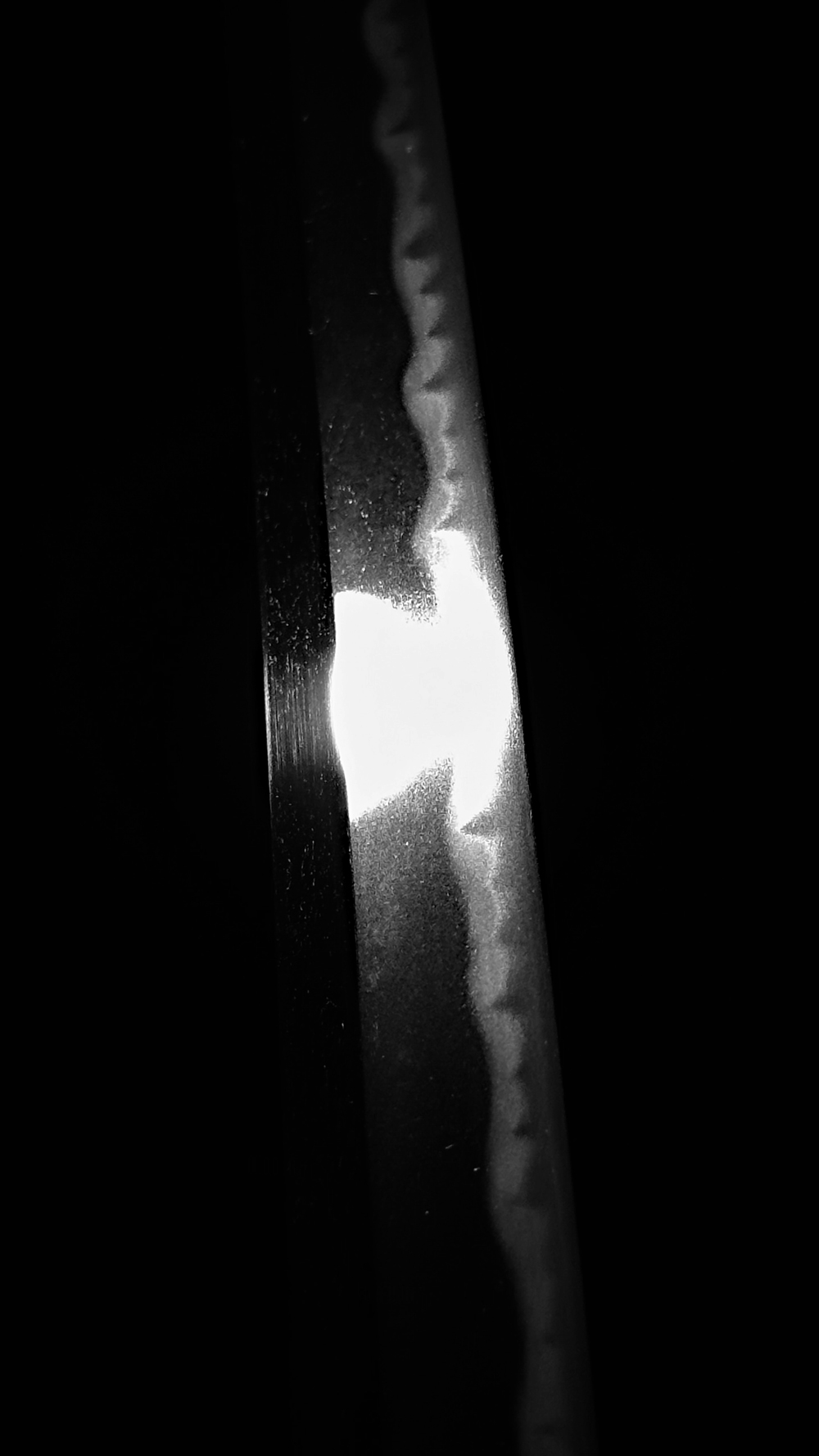
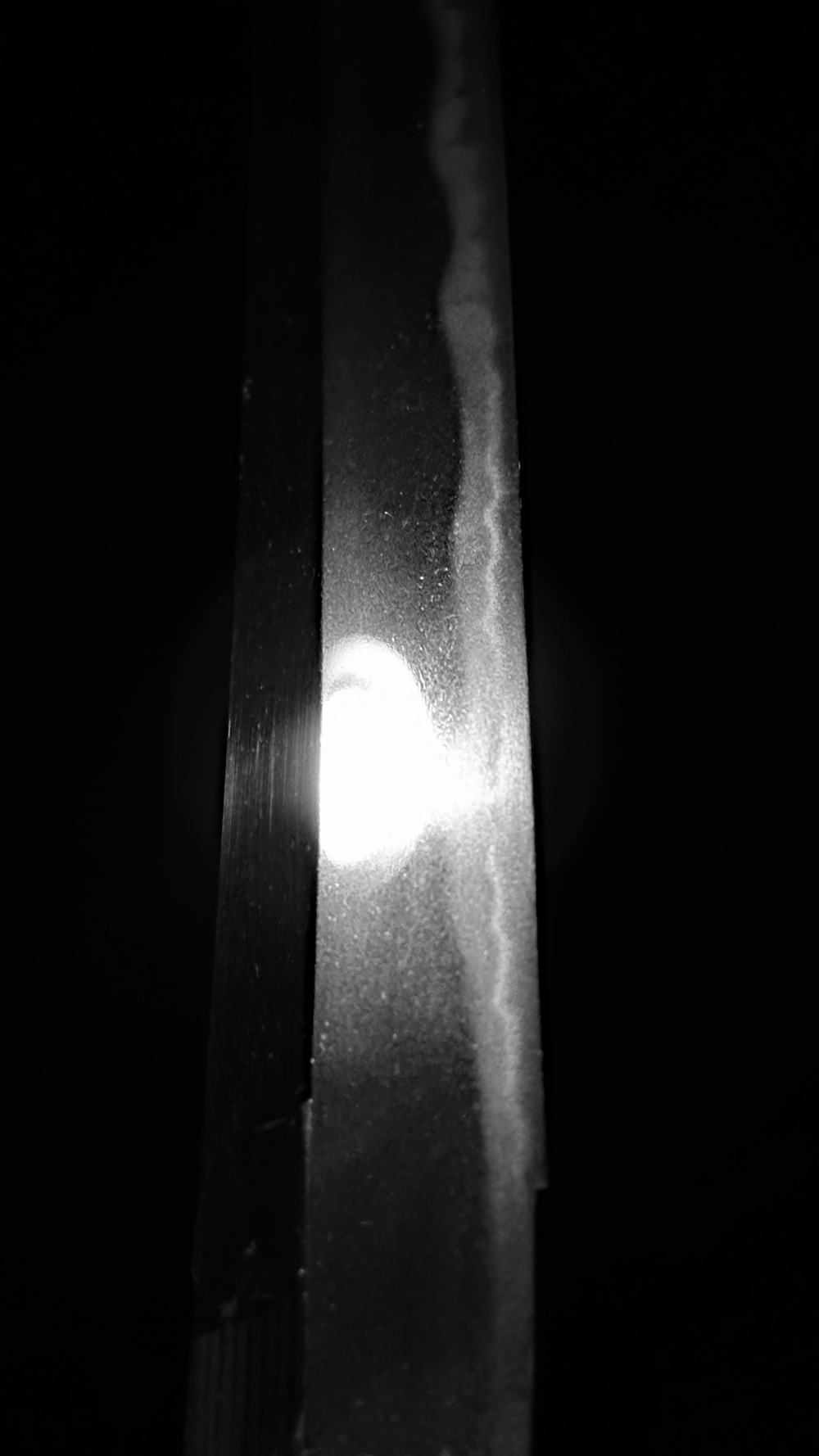
This katana is attributed to Magoroku Kanemoto, a leading smith of the late Muromachi period in Mino province. It features his characteristic 'Sanbonsugi' hamon with varying heights of gunome and togari-ba. The blade comes with a black lacquer渦巻塗鞘 uchigatana koshirae and an NBTHK Tokubetsu Hozon certificate.
 NihontoWatch
mei · Taiei (1521-1528) · nagasa 69.7cm · sori 1.8cm

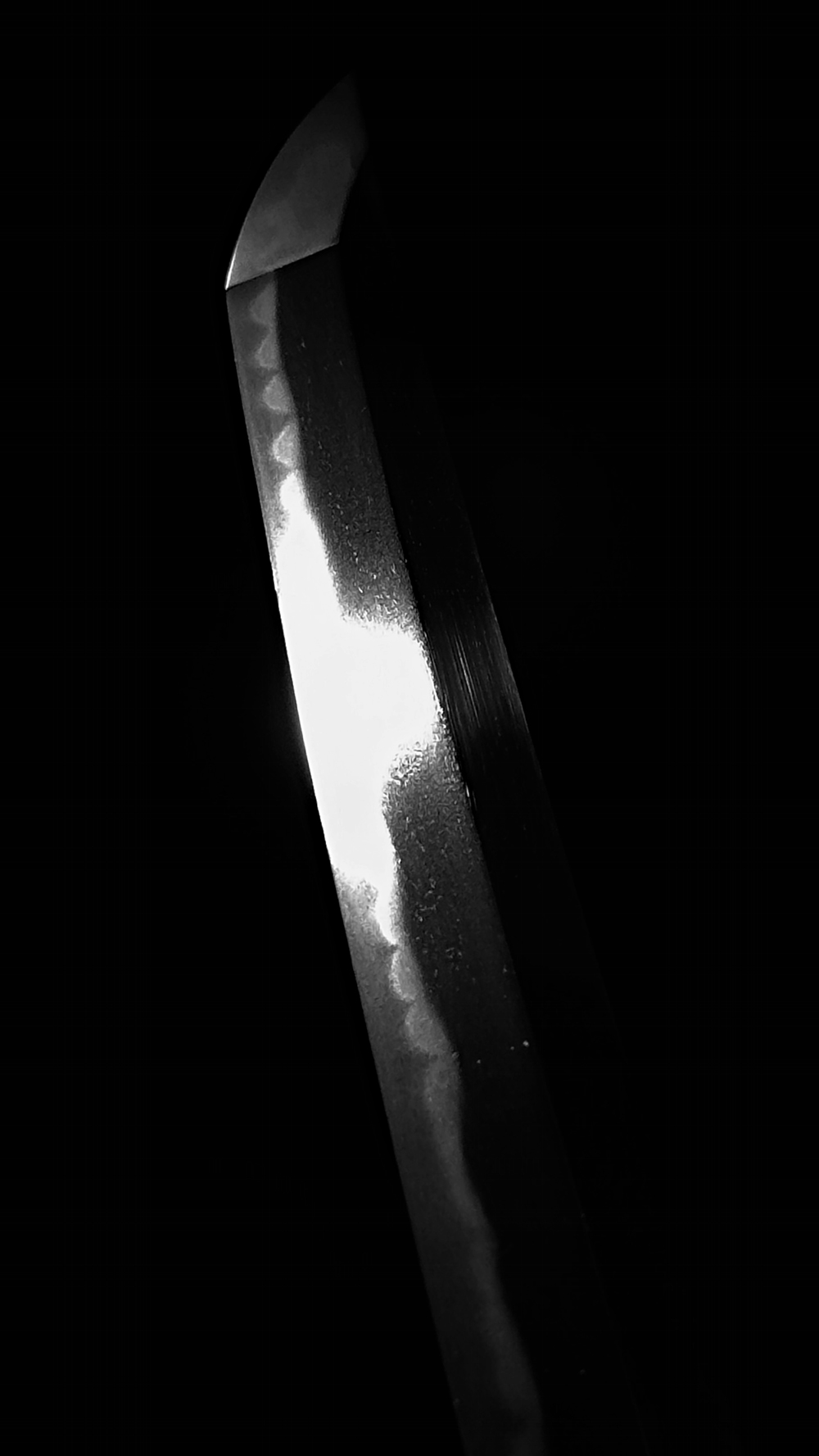
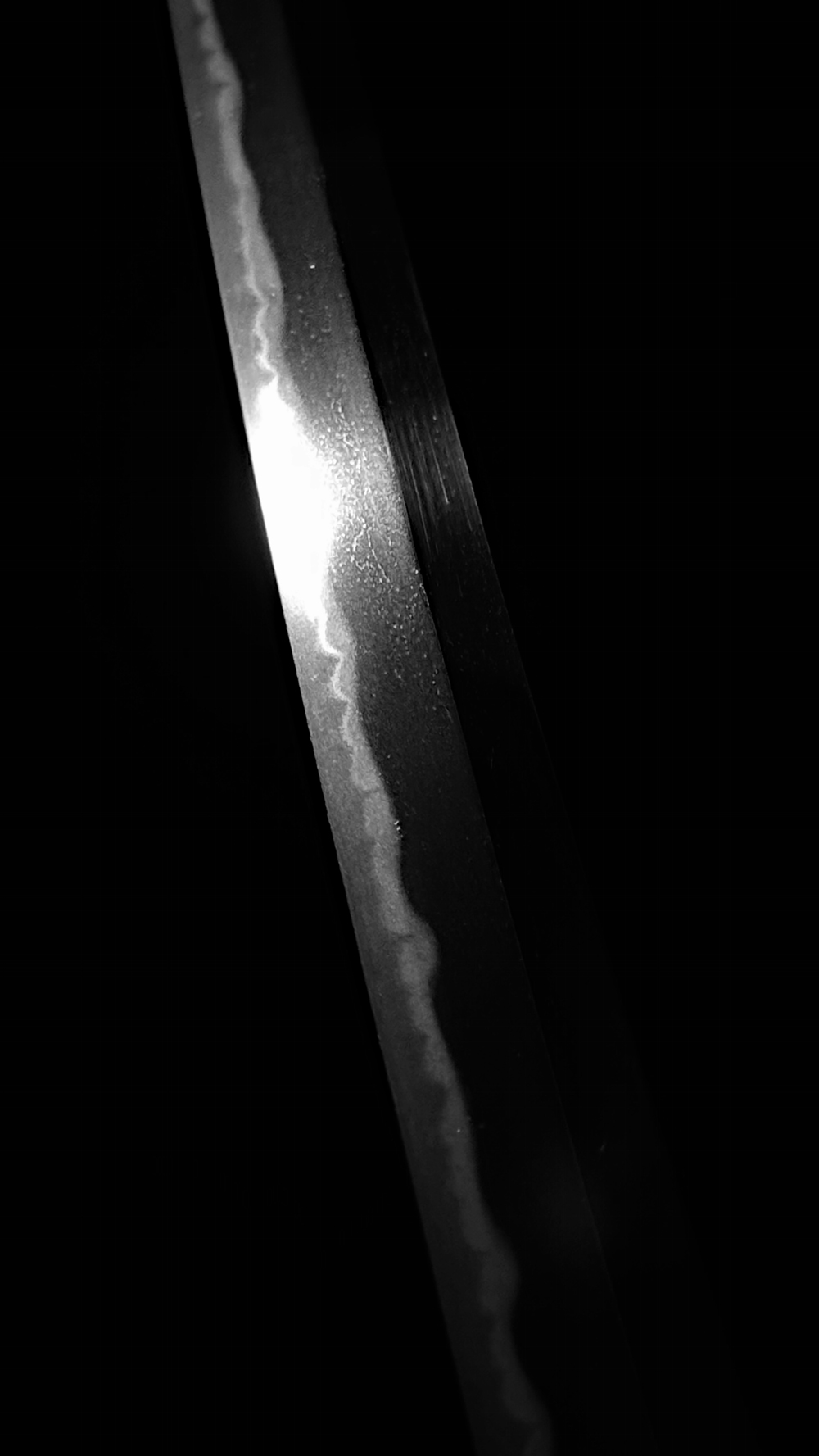
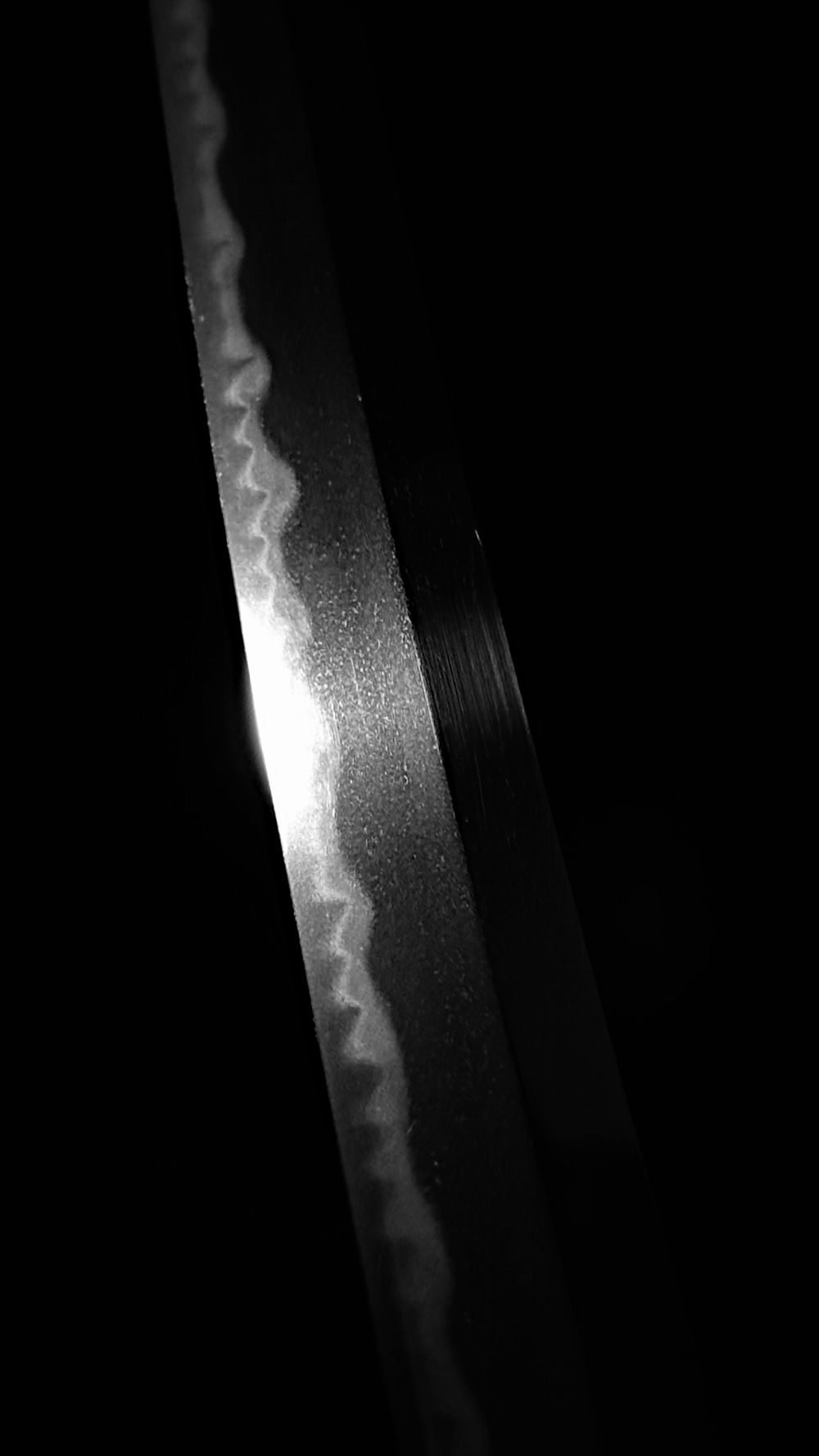
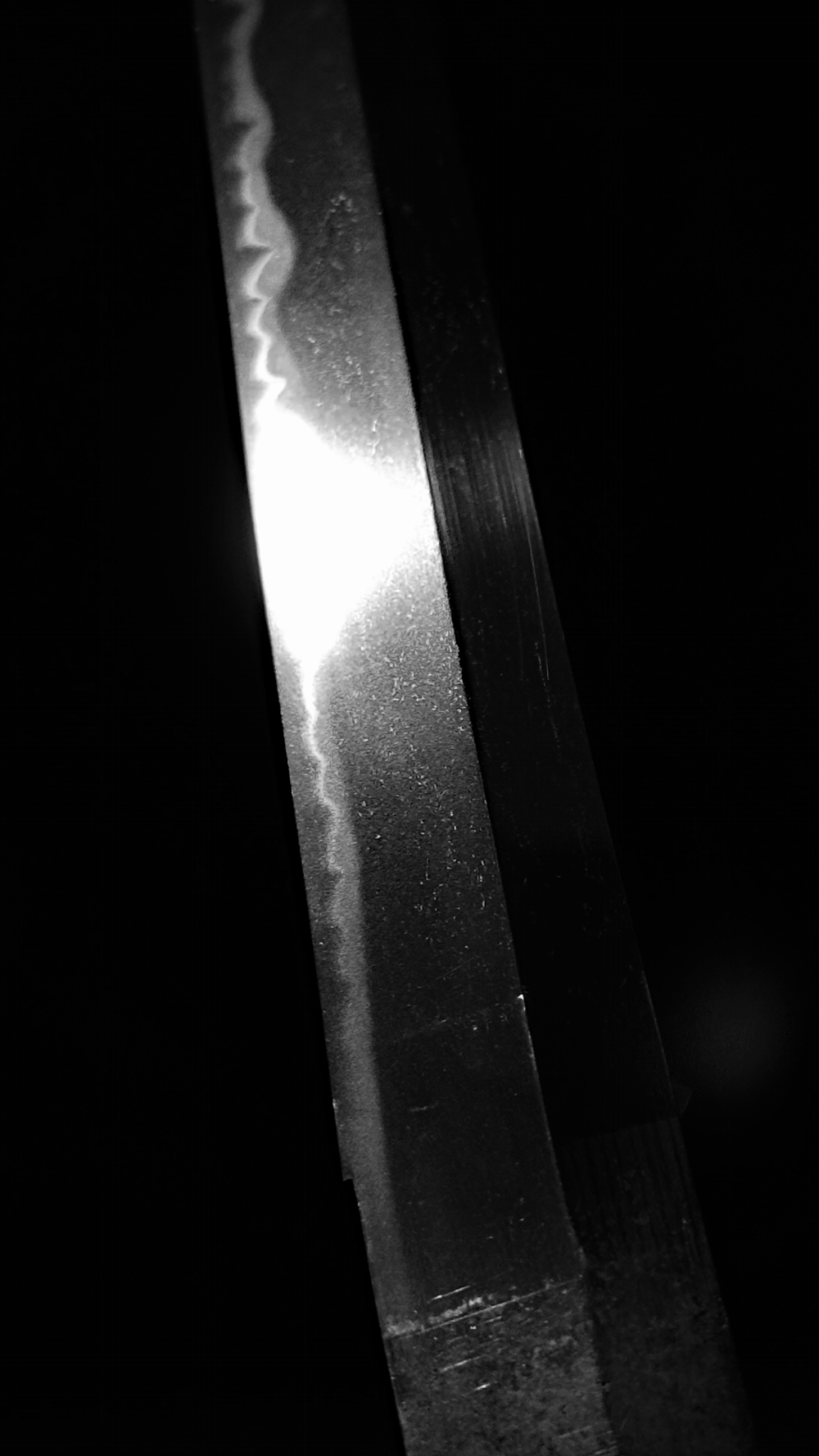


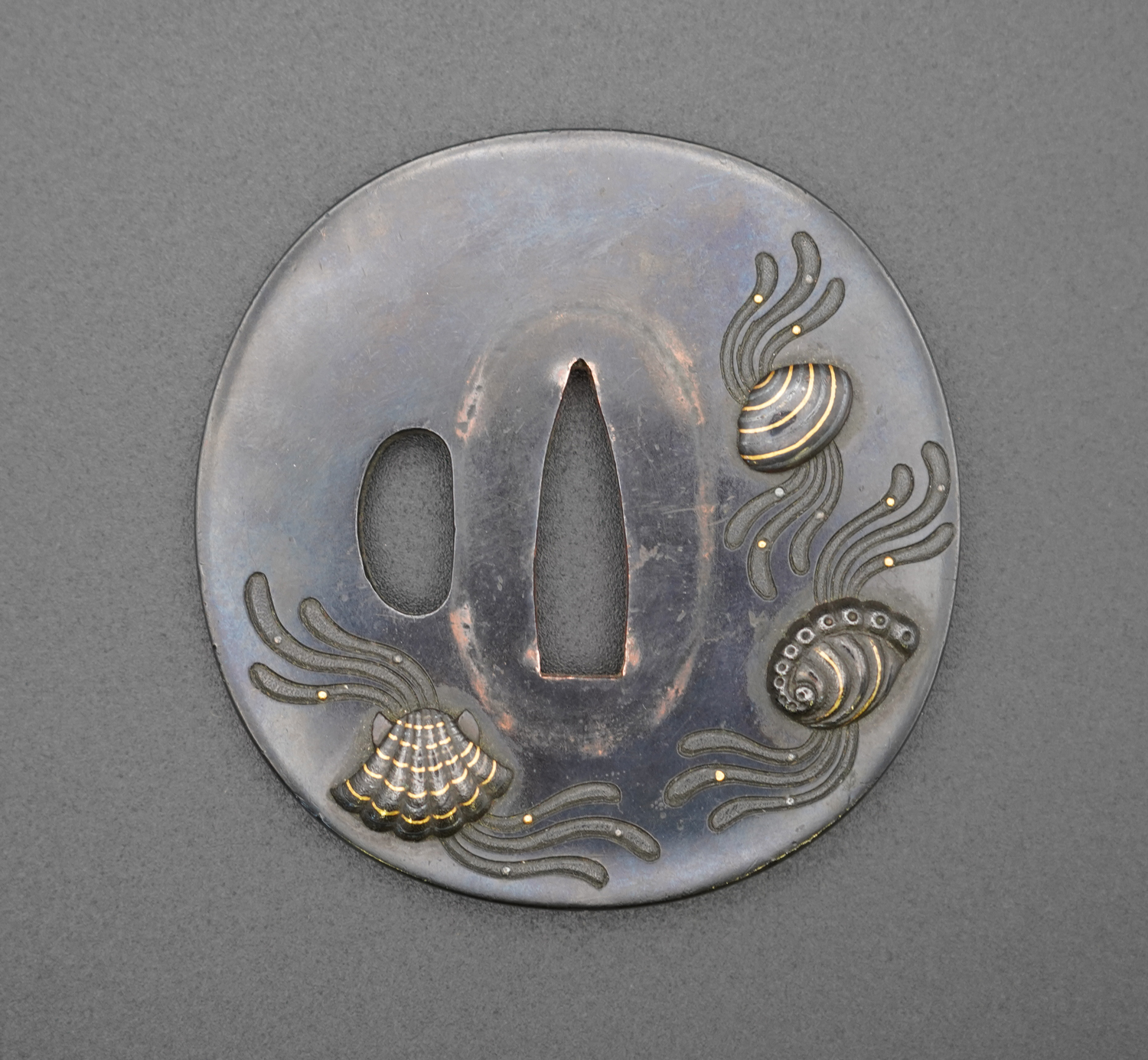
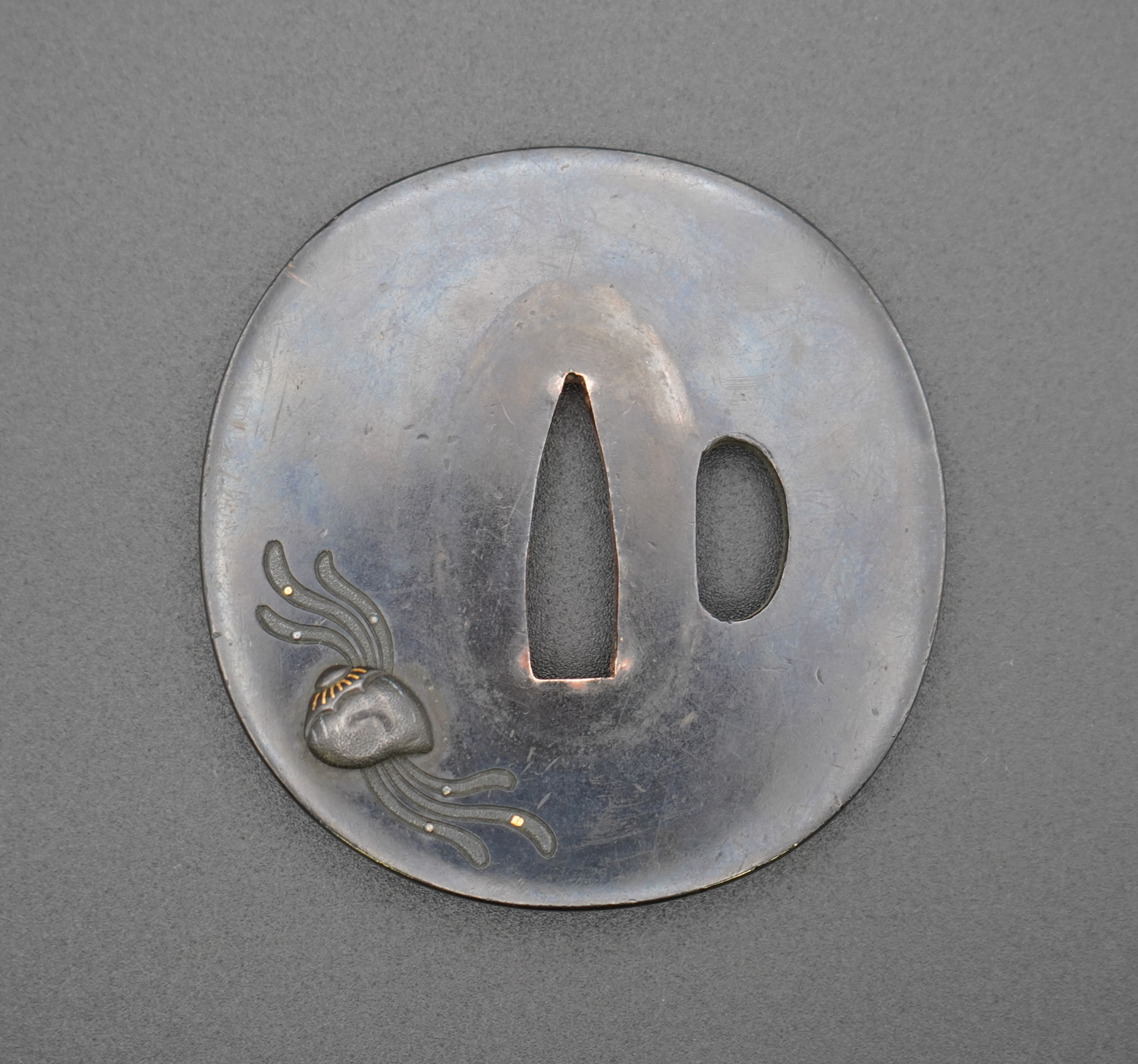
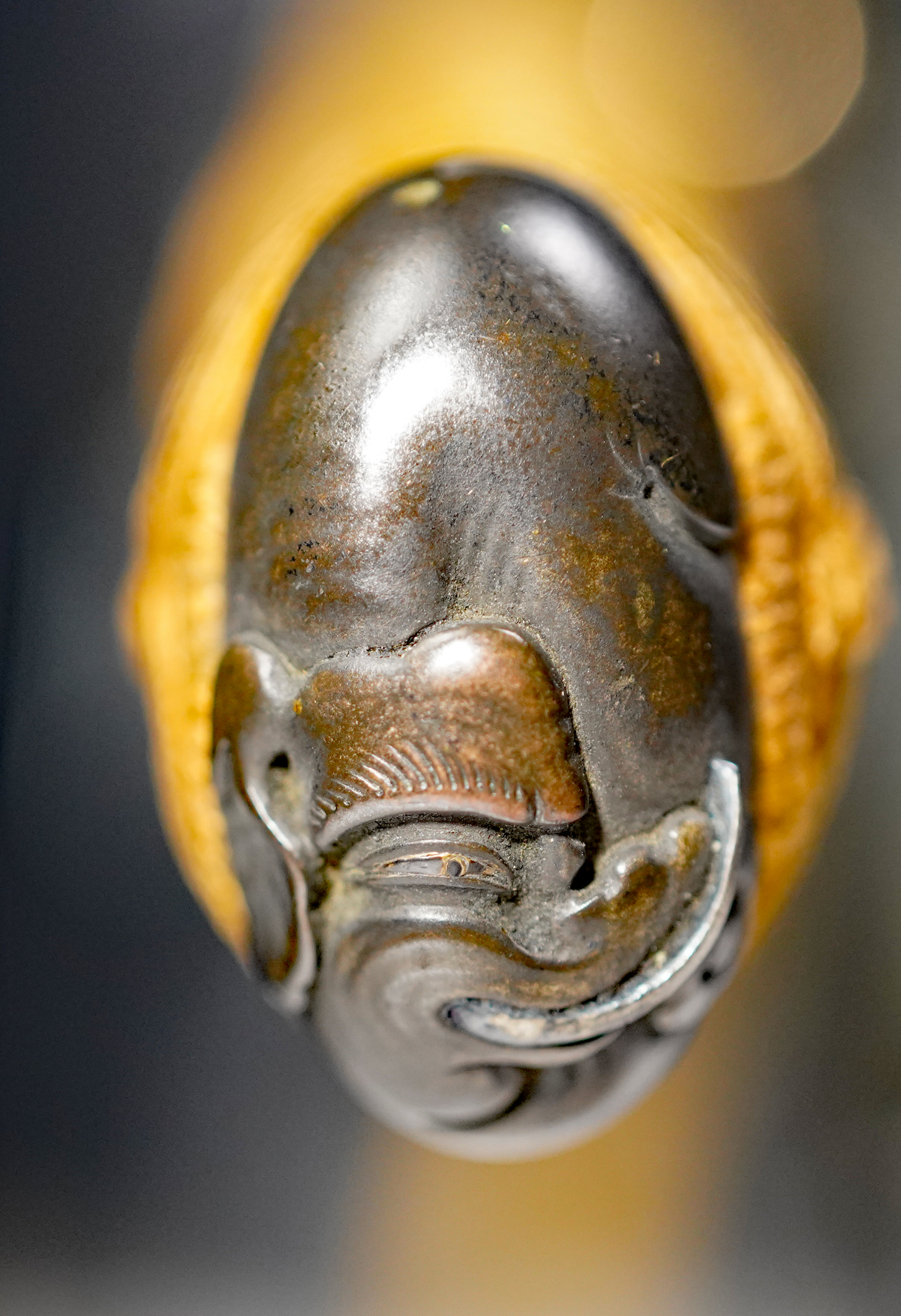
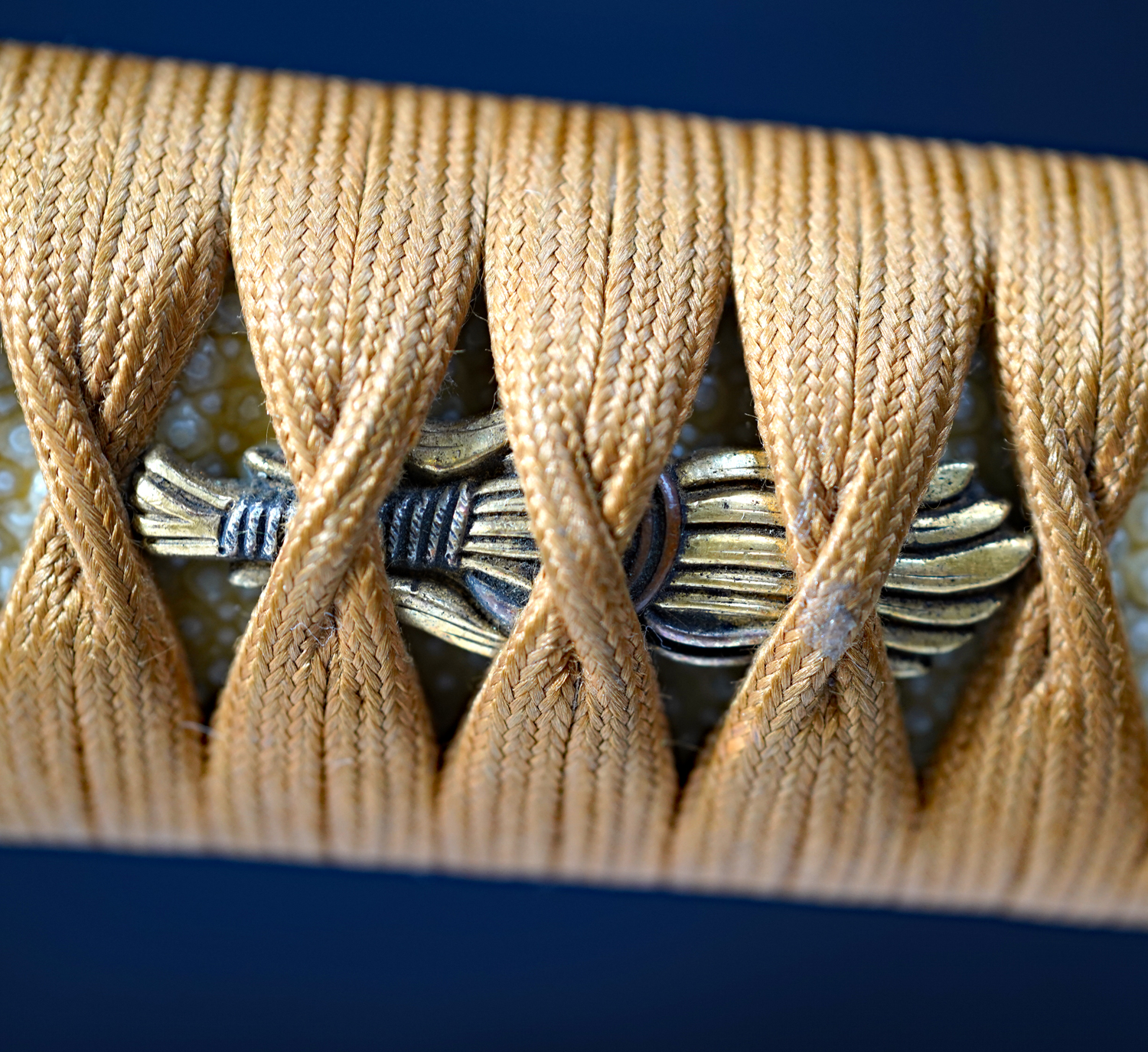
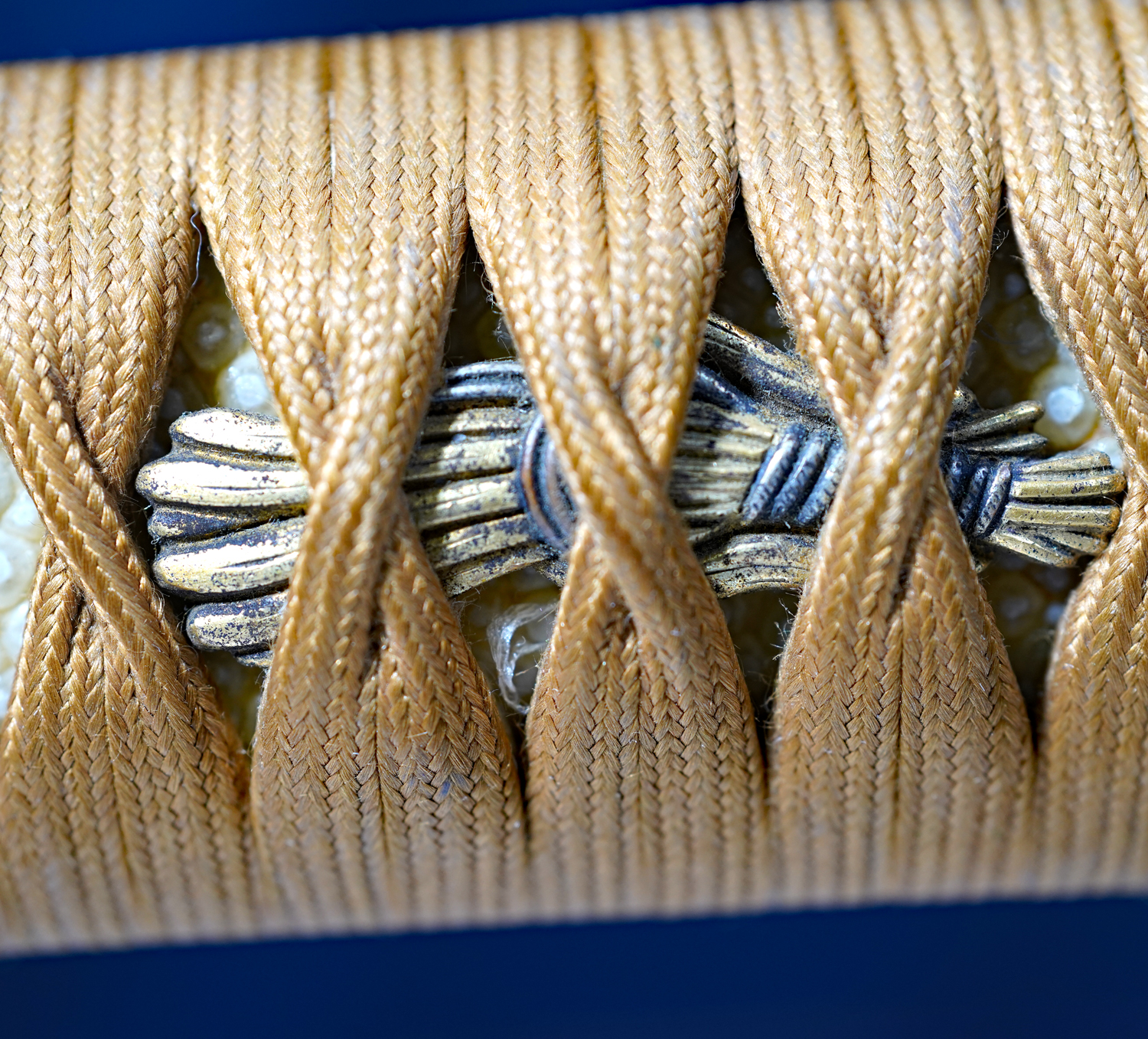
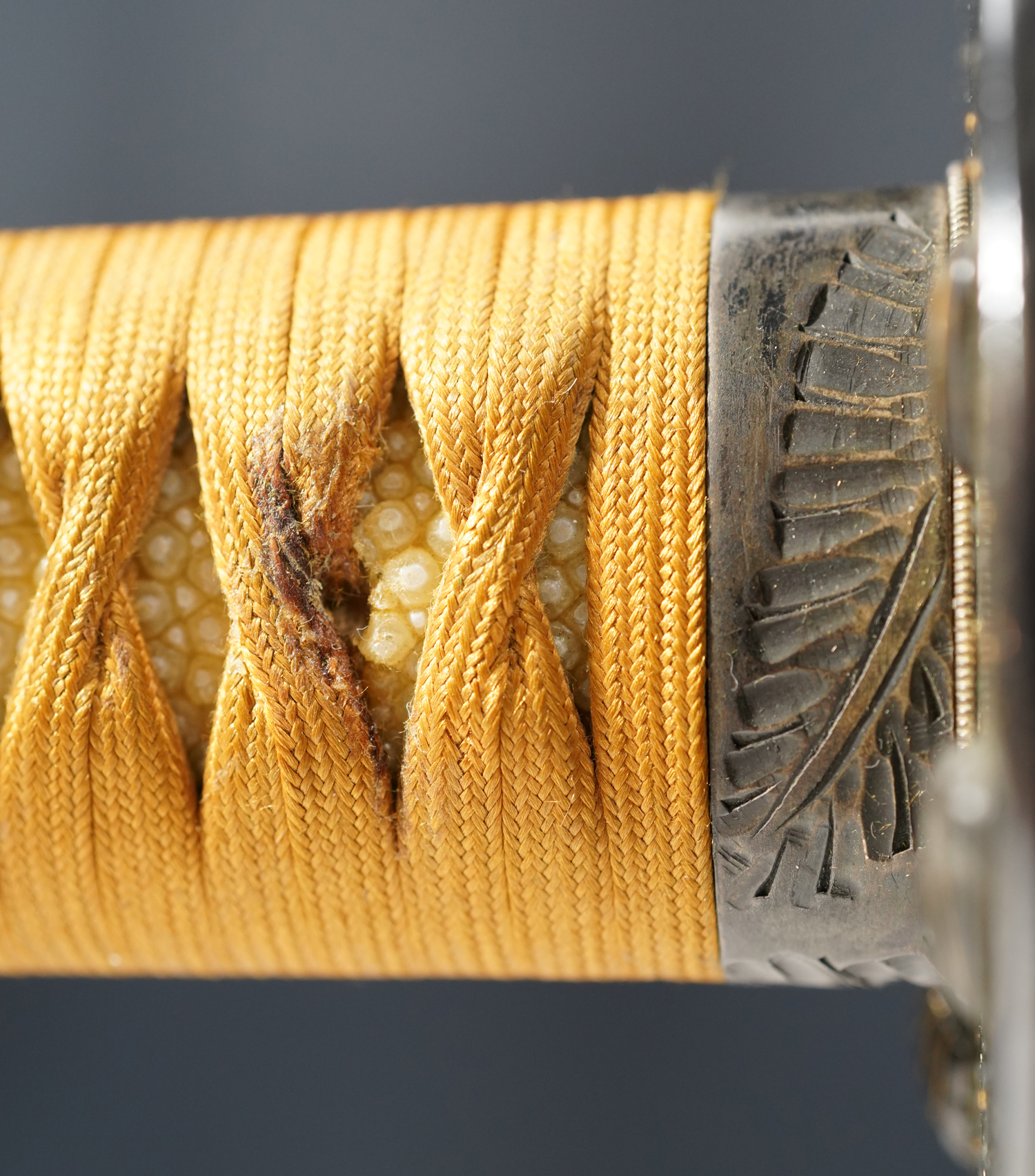
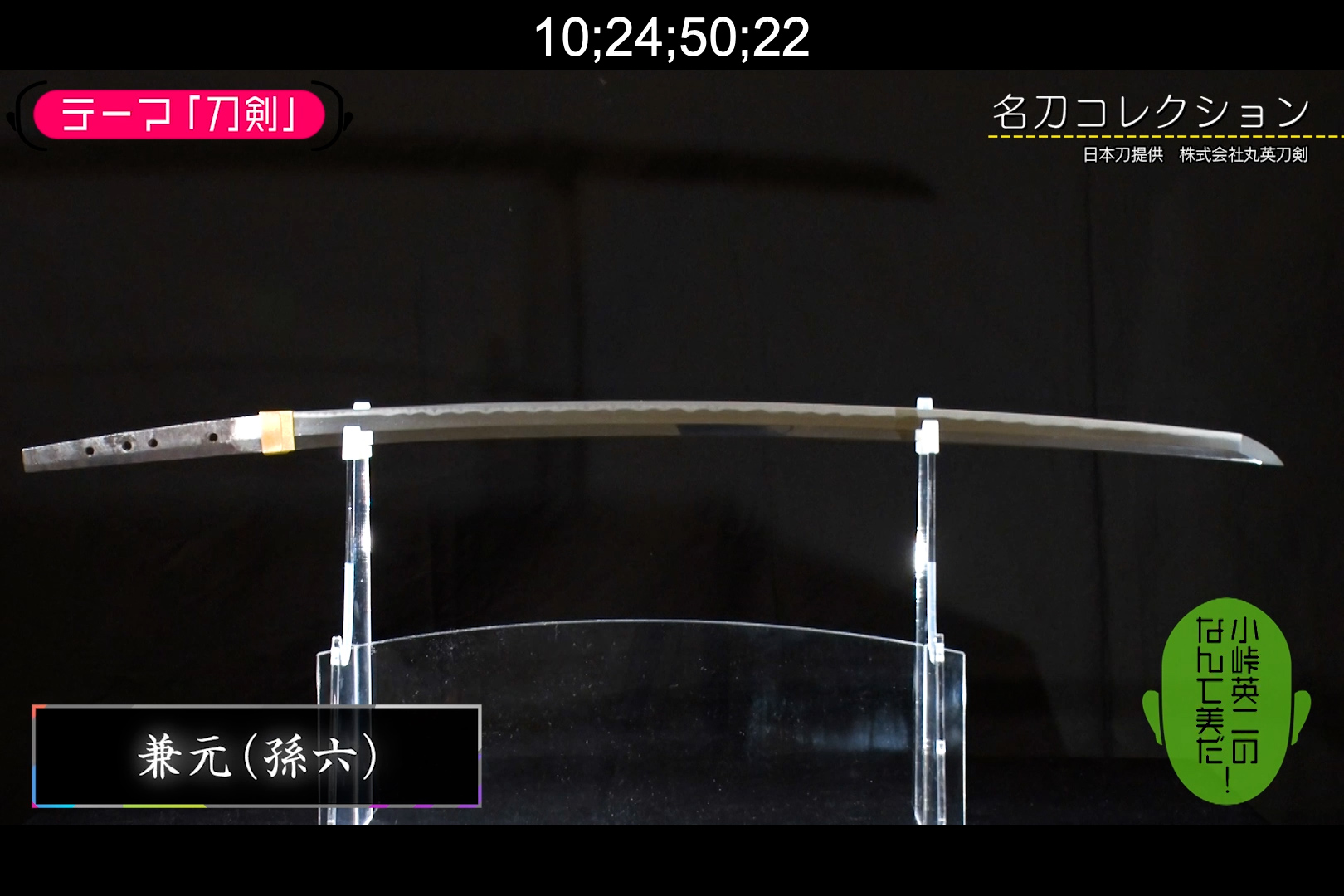
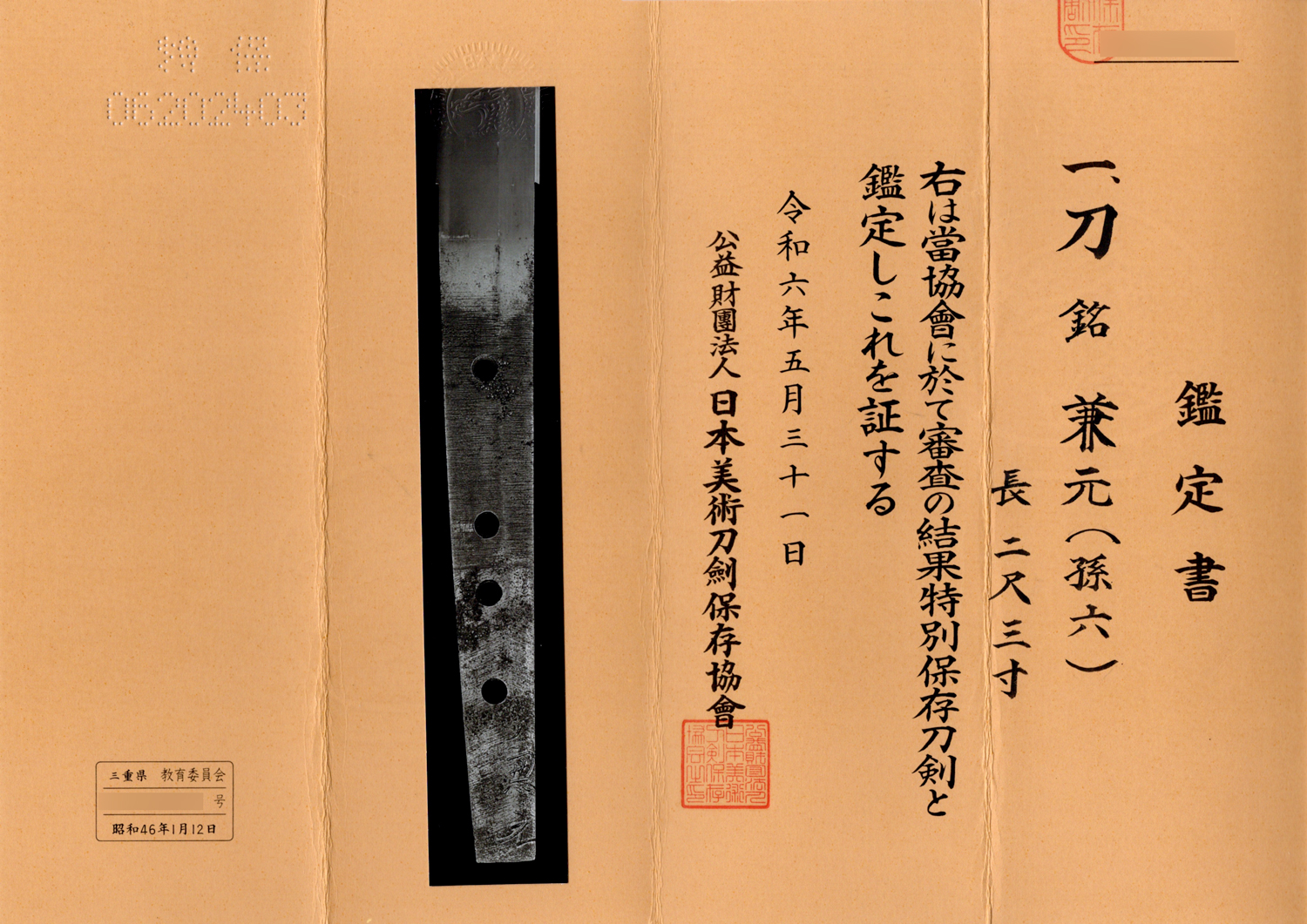
Sue-Seki / Akasaka (Mino), Kanemoto line · Mino · around 1521-1528
Fujishiro Jo-jo saku · Tōken Taikan top 14%
8 pieces on the market now
Among the Mino smiths of the late Muromachi period the published sources name Kanemoto, beside Kanesada, as one of the two representatives of the Seki tradition. The name was carried by several generations, but it is the second, the smith the world singles out as Magoroku Kanemoto, who is held the most technically accomplished, and whose bold two-character signed blades fix the kantei. He worked at Akasaka in Mino, where the family used Magoroku as its hereditary common name; the long signatures reading "Nōshū Akasaka-jū Kanemoto" with dates in the Meiō and Eishō years anchor the first generation, while the niji-mei pieces are read as this prized second hand. There are no examined two-character signed examples bearing a date, so the published commentary places his attribution on the manner of the signature and on the temper rather than on a year-mark, and frankly notes that distinguishing the generations is not yet settled.
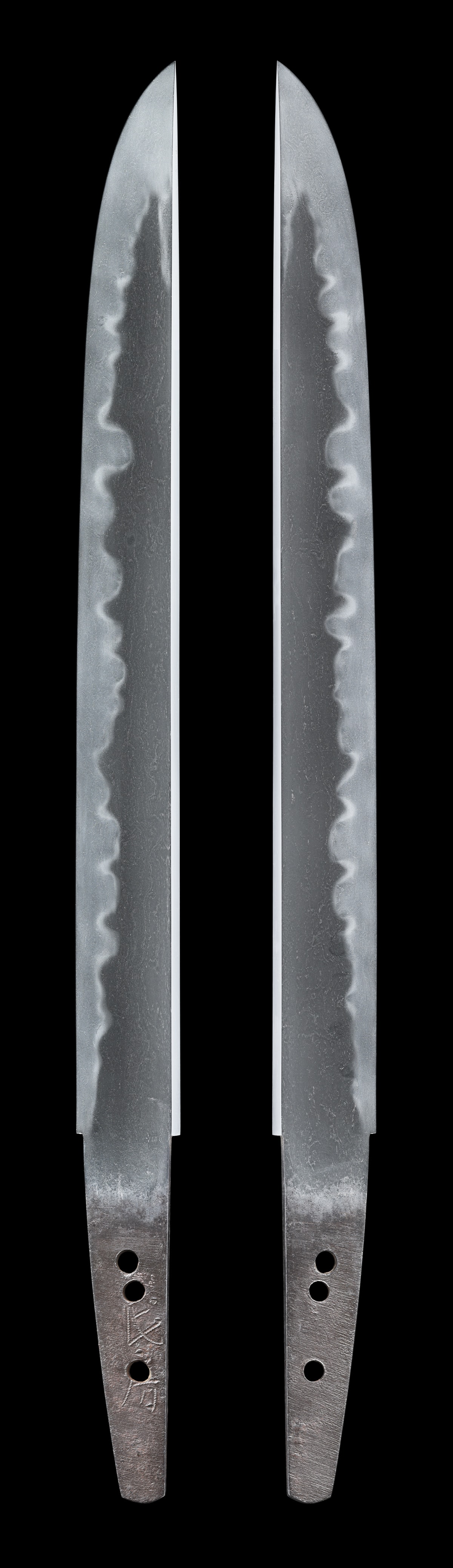
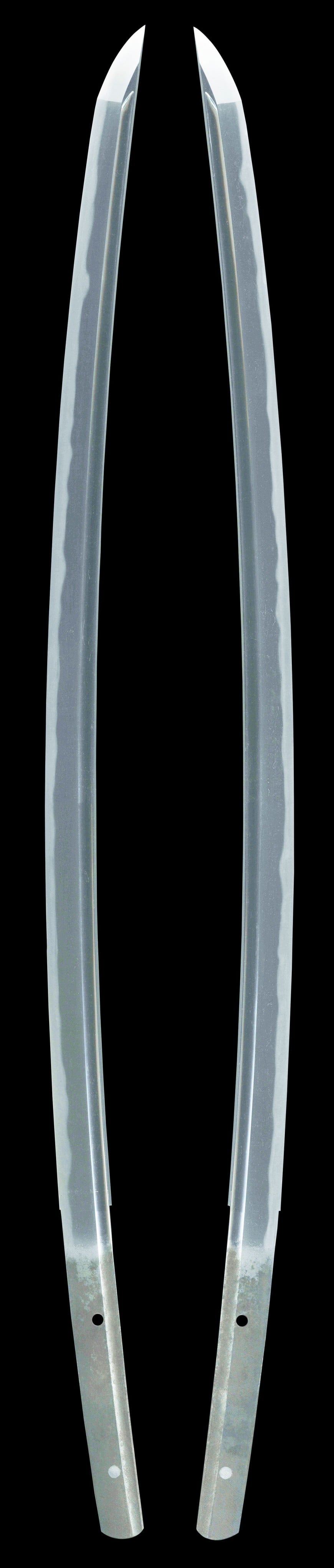
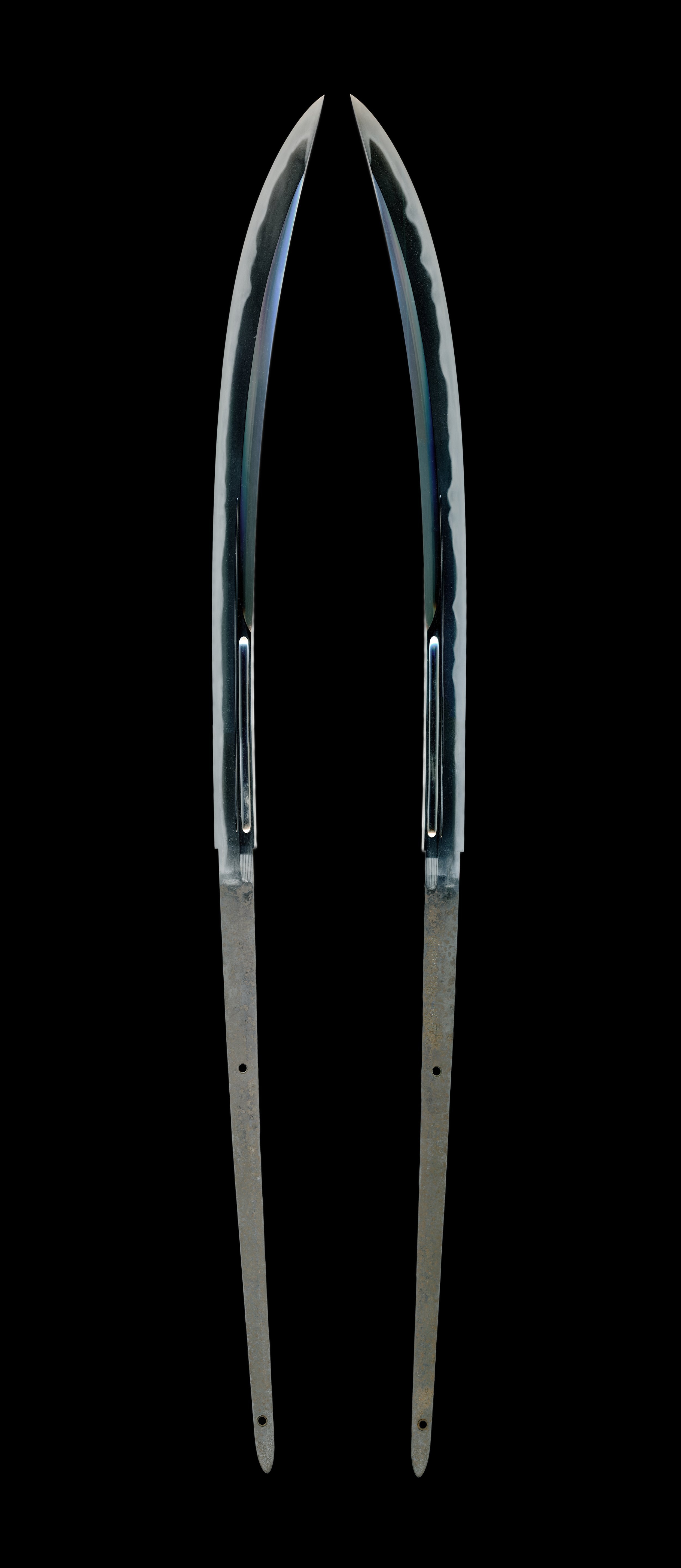
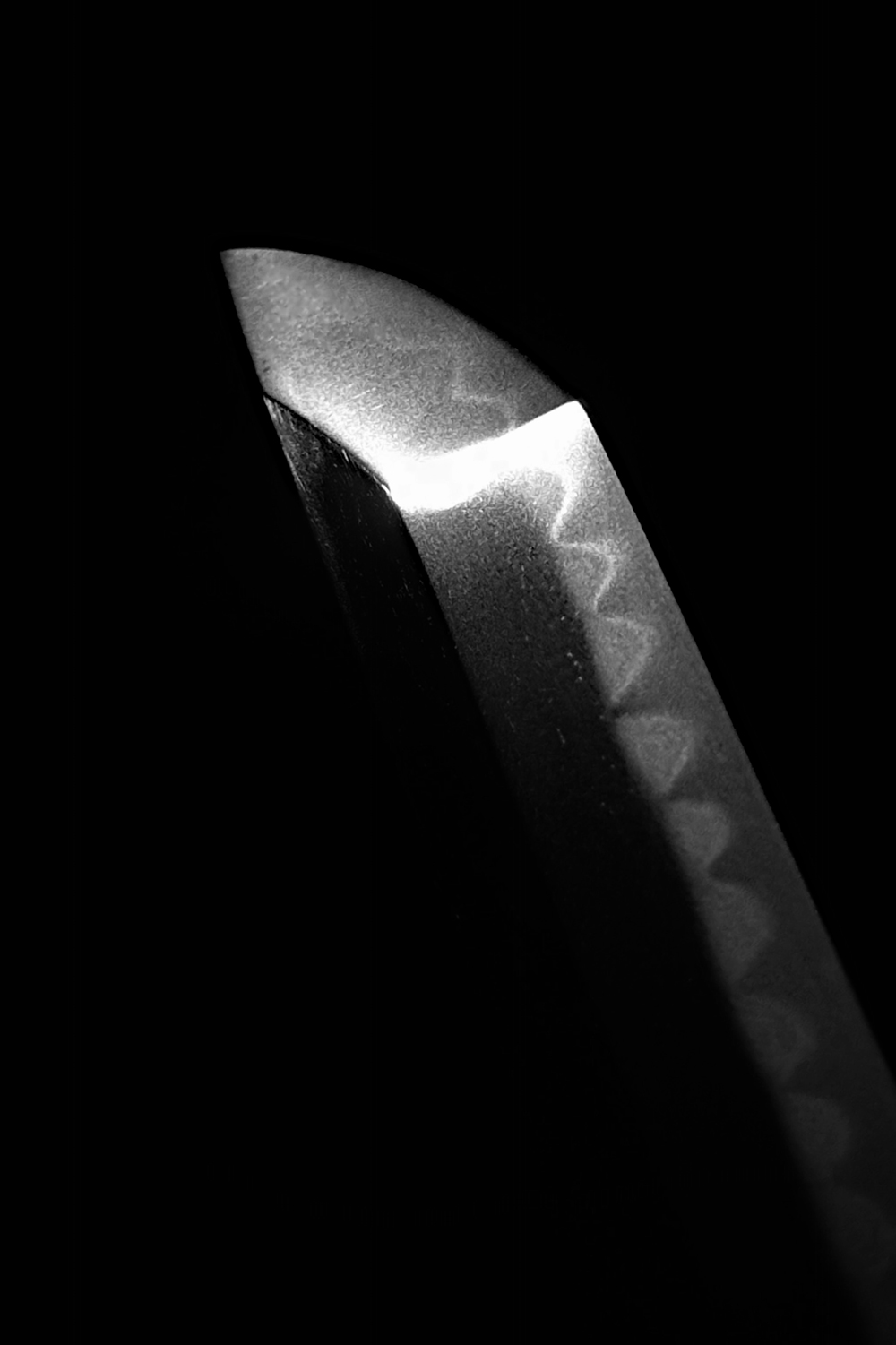
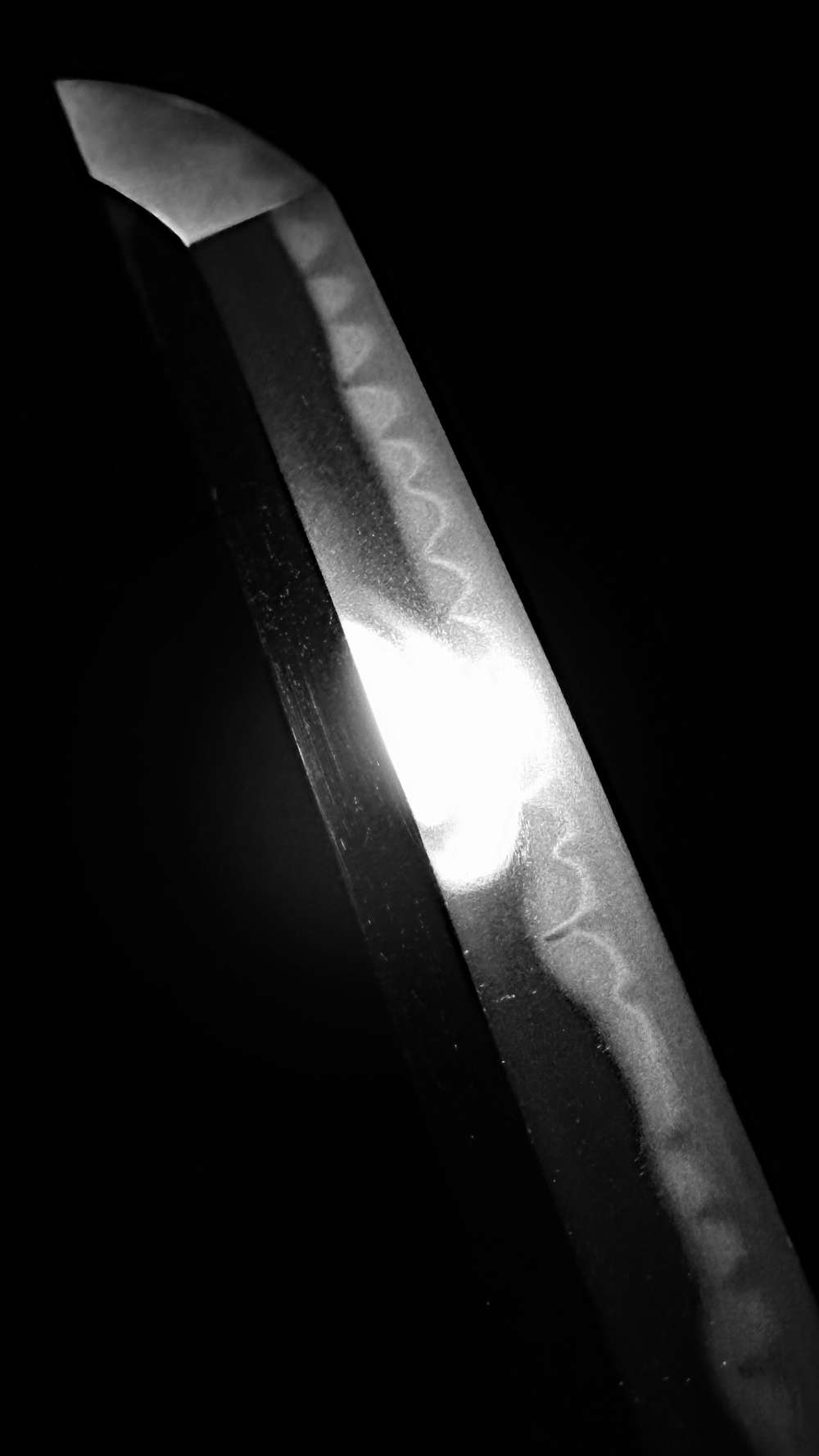
His hand is read first in the hamon. The tell is sanbon-sugi, the togariba (three-cedar) temper he is credited with originating, a run of pointed gunome forged in linked clusters. What the judges return to, blade after blade, is that the second generation does not rule it into uniform threes: "the heads of the gunome become rounded in places, showing change, and the hallmark is that the pattern is not standardized"[[c:1]]. The temper rises and falls in a cursive, gyōsō line, breaking from threes into the "twos, fours and fives" the commentary calls nihonsugi, yonhonsugi and gohonsugi[[c:2]], where the later generations of the line grow sharp-angled and geometric. Ashi enter well, the nioiguchi is nioi-dominant and bright, sunagashi runs through, and on his finest blades kinsuji, yubashiri and tobiyaki gather; one published entry singles a katana out as "an especially cursive, freely irregular sanbon-sugi, the most among works of this same hand"[[c:3]].
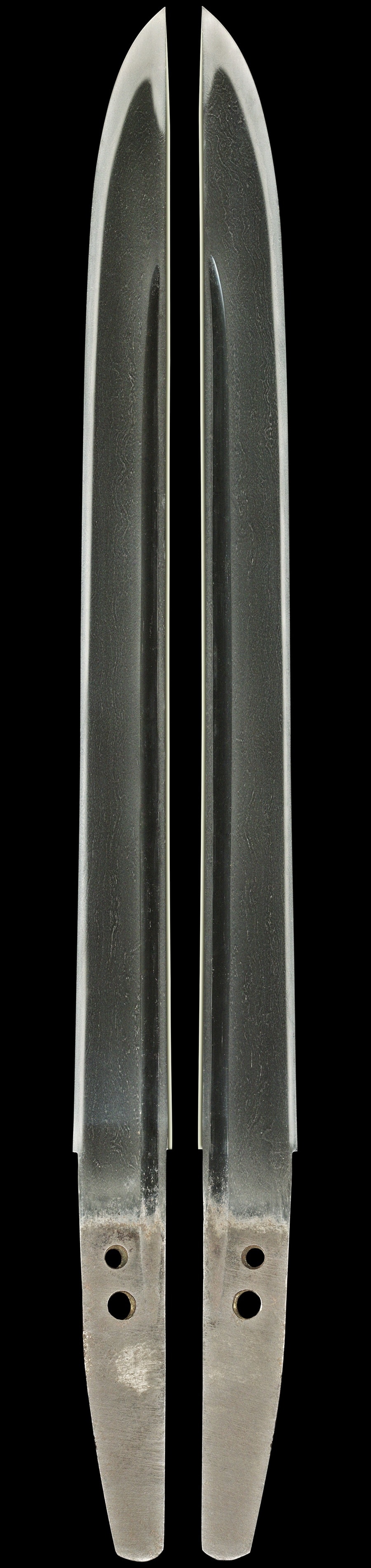
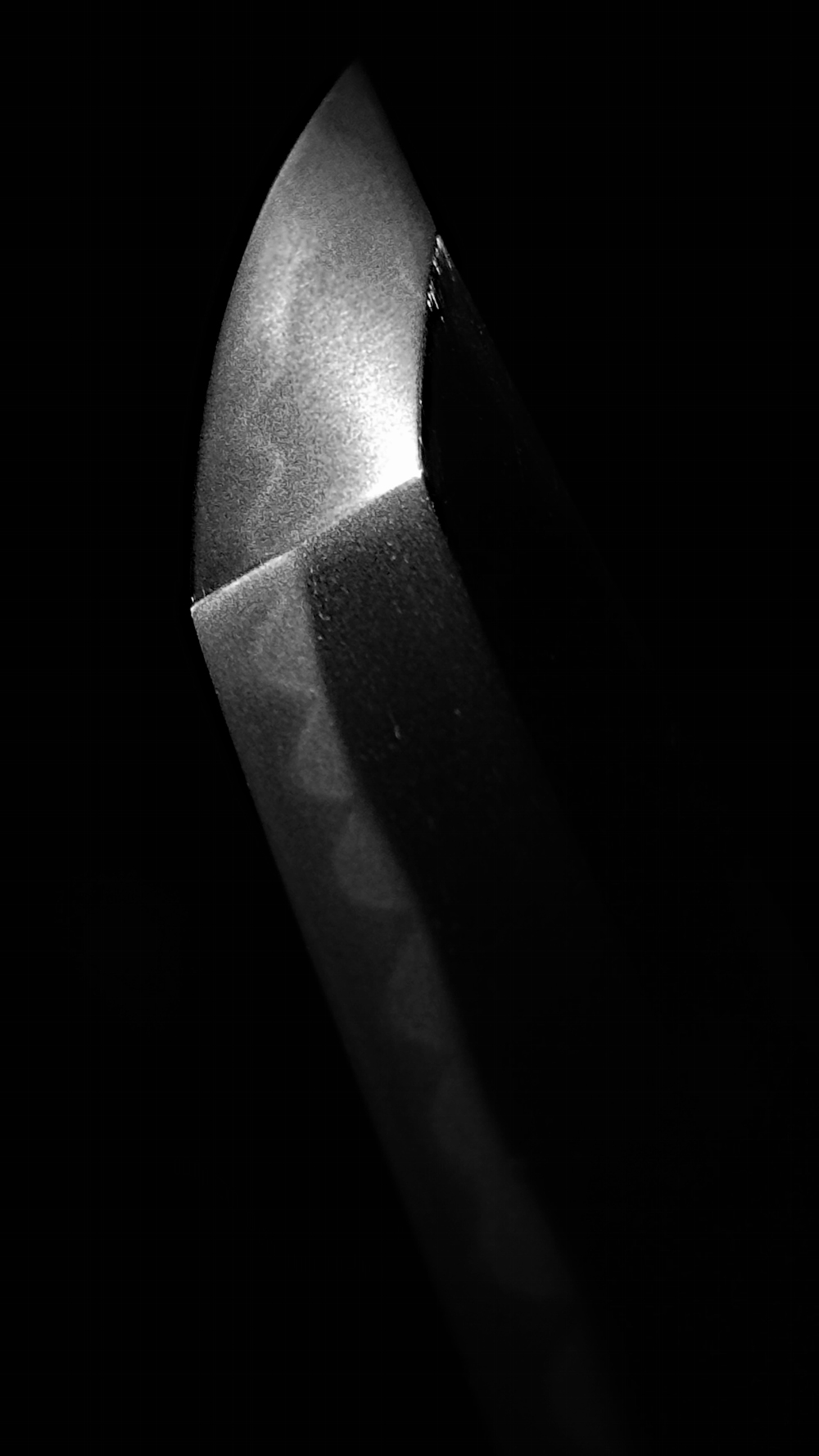
The jigane is the Mino constant beneath that temper. It is an itame mixed with mokume, flowing and standing a little with a masame-leaning tendency, fine ji-nie adhering and chikei entering, over which rises the whitish shirake-utsuri of Seki steel, the misty reflection that marks a Mino blade. The bōshi answers the edge: it runs in midare-komi to a jizō-like small round, the return often leaning, with hakikake at the point. The sugata is robust and practical, a Sue-Seki sword made for use: shinogi-zukuri katana of somewhat wide body with strong sakizori and an extended chū-kissaki, and hira-zukuri tantō with mitsu-mune and uchizori.
Not every blade keeps the sanbon-sugi. A small group leaves it for a quiet suguha, which the commentary treats as proof of range rather than the norm; of one katana it remarks that "Kanemoto tempers a suguha, rare for him"[[c:4]], and dates such as Daiei 7 and Kyōroku 2 on these pieces supply the scarce year-marks that documentation otherwise lacks. One suguha tantō is judged a Rai-utsushi, an emulation of Kyoto work that "evokes Kaneyuki"[[c:5]], elegant in shape and in ji and ha; the published note adds that a tell of the smiths working in this Rai manner is the leaning bōshi, which the blade shows. Carvings are uncommon in his work, and bonji in particular are rare, recorded on a single wakizashi.
What sets the second generation apart is therefore drawn from his own work, not from a borrowed comparison: the rounded, cursive sanbon-sugi that refuses to become a template, the bright nioiguchi over a Seki jigane, and the leaning jizō bōshi. The published commentary repeatedly places him at the head of the Sue-Seki smiths, calling individual blades typical yet outstanding work of Magoroku Kanemoto, and reading the geometric, ruled sanbon-sugi as the mark of the later generations he stands before. His blades are valued as much for their integrity as for their flamboyance; the steel is bright and clear, and the robust health of many surviving pieces is noted as a virtue in its own right.
Fujishiro grades him Jō-jō saku. None of his blades carries the highest cultural designations or the Tokubetsu Jūyō rank; his record on the NBTHK rolls runs through the Jūyō Tōken rank, twenty-seven blades in number, with one of his katana, the so-called Aoki Kanemoto said to have cut down Magara Masataka at the Battle of Anegawa, designated Jūyō Bijutsuhin, and a further two katana held in the Imperial collection. His provenance reads as a roll of warrior houses that prized a cutting blade: the Echizen Matsudaira, the Yagyū family, Tani Tateki, and Makishima Kenmotsu Akishige, whose ownership is recorded in the gold-inlaid inscription that gives one katana the name Sasatsuyu Kanemoto. Because almost nothing in this body of work sits in the locked tiers, a signed Magoroku Kanemoto is among the more attainable of the genuinely famous koto names, yet a fine, soundly preserved niji-mei example with documented provenance comes to market only from time to time, and is a notable thing for a collector to encounter when it does.
Where Kanemoto stands among comparable artisans: across all of nihontō, and within tradition, era, and period. The tiers (Foremost · Leading · Major · Notable) weigh official designations from the NBTHK and Japan's Agency for Cultural Affairs, together with historical honors of lasting repute such as the Sansaku and Meibutsu-chō.
Select a lens to see how it's measured.
Years he was demonstrably active, proven by signed-and-dated blades
Mino-den · Mino
29 pieces on the market now
Kanemoto (兼元) worked at Akasaka in Mino Province, and the line takes its place among the smiths of the late Muromachi period whom the NBTHK registers under the Mino-den tradition centered on Seki. The setsumei place the family within the Sue-Seki (Sue-Mino) milieu, naming Kanemoto alongside Kanesada as the two leading figures of the province in this era; one tantō note instead pairs the name with Kaneshiba, and another with Izumi no Kami Kaneshige, marking the company the line kept. The name passed through successive generations, and the records repeatedly state that distinguishing each generation has not been definitively settled. Dated long signatures reading "Nōshū Akasaka-jū Kanemoto" survive from the Meiō, Bunki, Daiei, Kyōroku, and Eishō eras, while two-character signatures bear no date. The first generation is documented through pieces dated Meiō 6, 8, 9, and 10, all giving the Akasaka residence; the most accomplished hand, and the one the world singles out under the sobriquet "Magoroku Kanemoto," is the second generation. The shared vocabulary of the line is the sanbonsugi (three-cedar) gunome, a sequence of linked pointed crests that rise and fall in groups. The ground is Mino-den through and through: itame-hada mixed with mokume and flowing masame, tending toward standing grain (hada-dachi), with fine ji-nie, chikei, and a whitish shirake-utsuri that the setsumei call out again and again. The temper mixes togariba (pointed elements) and gunome, is nioi-dominant with ko-nie, and runs sunagashi, kinsuji, and occasional tobiyaki; the bōshi is typically midare-komi turning in ko-maru, often described as Jizō-like with hakikake or a falling kaeri. The chief means of separating the second generation from the later line is regularity: as the generations descend, the pointed crests grow sharply angular and standardized, whereas Magoroku's sanbonsugi is deliberately uneven, the gunome heads rounded in places, and the pattern shifts freely into nihonsugi, yonsugi, and gosugi groupings of two, four, and five. The records describe this as a gyōsō (cursive, free) manner.
The first generation, by contrast, does not emphasize sanbonsugi at all, favoring gunome mixed with gunome-chōji and at times yubashiri and tobiyaki; both generations also made suguha, and one tantō is an uncommon Rai-utsushi in elegant straight temper that evokes Kaneyuki. For kantei, the line is read through the standing Mino grain, the shirake-utsuri, and above all the irregular sanbonsugi, with the leaning bōshi a noted point: the records observe that the honka model and these blades share a bōshi that falls over. Named and documented works recur across the register. A naginata dated Kyōroku 1 (1528) carries the full Akasaka signature and is valued as documentary source material, dated two-character pieces being scarce. A katana bearing a kinzōgan inscription on the reverse is known as "Sasatsuyu Kanemoto" and is recorded in the hands of Makishima Kenmotsu Akishige, of the same clan as Furuta Kosukezaemon. The "Aoki Kanemoto," a second-generation work, is said to be the sword with which Aoki Ichishige, a retainer of Tokugawa Ieyasu, killed Magara Masataka of the Asakura side at the Battle of Anegawa in Genki 1 (1570). A further katana carries a Genna 1 (1615) kinzōgan cutting-test inscription by Nakagawa Saheita reading "two bodies," and one suguha katana descended in the Echizen Matsudaira family. Two katana signed Kanemoto sit in the Imperial Collection (Gyobutsu). Across these works the line is registered as the cutting-edged representative of Sue-Seki, its hand recognized wherever the three-cedar temper runs uneven over standing Mino steel. Learn more →
| Smith | Era | Designated |
|---|---|---|
| Kanemoto兼元 | 1521-1528 | 30 |
| Kanemoto兼元 | 1532-1555 | 0 |
| Kanemoto兼元 | 1573-1592 | 0 |
| Kanemoto兼元 | 1592-1596 | 0 |
| Kanemoto兼元 | 1818-1830 | 0 |
Mino in the Muromachi period
Sengoku Seki was an industry: smiths organized under their tutelary Kasuga shrine, arming the war bands of central Japan. Magoroku Kanemoto’s sanbonsugi and the finest Kanesada work prove quality survived inside mass production.
A Hozon-certified blade judged to show notably superior workmanship and a better state of preservation. The bar is higher: re-tempered blades and most unsigned Muromachi/Edo works are excluded.
The NBTHK (Nihon Bijutsu Tōken Hozon Kyōkai, the Society for the Preservation of Japanese Art Swords) is a public-interest incorporated foundation founded in 1948 and supervised by Japan’s Agency for Cultural Affairs (Bunkachō); it is based at the Japanese Sword Museum in Tokyo. Its expert panels physically examine each submitted work (shinsa) and issue a certificate (kanteishō) ranking it by artistic and historical merit. NBTHK papers are the most widely recognized standard of authentication for Japanese swords and fittings.
NBTHK official siteFor cooling-off, contact us within 3 days including the day you received the item, and ship it so that it arrives within 8 days. After 8 days a return cannot be accepted. Returning an item after 8 days will be treated as a buy-back.
Price on request
This katana is attributed to Magoroku Kanemoto, a leading smith of the late Muromachi period in Mino province. It features his characteristic 'Sanbonsugi' hamon with varying heights of gunome and togari-ba. The blade comes with a black lacquer渦巻塗鞘 uchigatana koshirae and an NBTHK Tokubetsu Hozon certificate.
NihontoWatchmei · Taiei (1521-1528) · nagasa 69.7cm · sori 1.8cm
Sue-Seki / Akasaka (Mino), Kanemoto line · Mino · around 1521-1528
Fujishiro Jo-jo saku · Tōken Taikan top 14%
8 pieces on the market now
Among the Mino smiths of the late Muromachi period the published sources name Kanemoto, beside Kanesada, as one of the two representatives of the Seki tradition. The name was carried by several generations, but it is the second, the smith the world singles out as Magoroku Kanemoto, who is held the most technically accomplished, and whose bold two-character signed blades fix the kantei. He worked at Akasaka in Mino, where the family used Magoroku as its hereditary common name; the long signatures reading "Nōshū Akasaka-jū Kanemoto" with dates in the Meiō and Eishō years anchor the first generation, while the niji-mei pieces are read as this prized second hand. There are no examined two-character signed examples bearing a date, so the published commentary places his attribution on the manner of the signature and on the temper rather than on a year-mark, and frankly notes that distinguishing the generations is not yet settled.
His hand is read first in the hamon. The tell is sanbon-sugi, the togariba (three-cedar) temper he is credited with originating, a run of pointed gunome forged in linked clusters. What the judges return to, blade after blade, is that the second generation does not rule it into uniform threes: "the heads of the gunome become rounded in places, showing change, and the hallmark is that the pattern is not standardized"[[c:1]]. The temper rises and falls in a cursive, gyōsō line, breaking from threes into the "twos, fours and fives" the commentary calls nihonsugi, yonhonsugi and gohonsugi[[c:2]], where the later generations of the line grow sharp-angled and geometric. Ashi enter well, the nioiguchi is nioi-dominant and bright, sunagashi runs through, and on his finest blades kinsuji, yubashiri and tobiyaki gather; one published entry singles a katana out as "an especially cursive, freely irregular sanbon-sugi, the most among works of this same hand"[[c:3]].
The jigane is the Mino constant beneath that temper. It is an itame mixed with mokume, flowing and standing a little with a masame-leaning tendency, fine ji-nie adhering and chikei entering, over which rises the whitish shirake-utsuri of Seki steel, the misty reflection that marks a Mino blade. The bōshi answers the edge: it runs in midare-komi to a jizō-like small round, the return often leaning, with hakikake at the point. The sugata is robust and practical, a Sue-Seki sword made for use: shinogi-zukuri katana of somewhat wide body with strong sakizori and an extended chū-kissaki, and hira-zukuri tantō with mitsu-mune and uchizori.
Not every blade keeps the sanbon-sugi. A small group leaves it for a quiet suguha, which the commentary treats as proof of range rather than the norm; of one katana it remarks that "Kanemoto tempers a suguha, rare for him"[[c:4]], and dates such as Daiei 7 and Kyōroku 2 on these pieces supply the scarce year-marks that documentation otherwise lacks. One suguha tantō is judged a Rai-utsushi, an emulation of Kyoto work that "evokes Kaneyuki"[[c:5]], elegant in shape and in ji and ha; the published note adds that a tell of the smiths working in this Rai manner is the leaning bōshi, which the blade shows. Carvings are uncommon in his work, and bonji in particular are rare, recorded on a single wakizashi.
What sets the second generation apart is therefore drawn from his own work, not from a borrowed comparison: the rounded, cursive sanbon-sugi that refuses to become a template, the bright nioiguchi over a Seki jigane, and the leaning jizō bōshi. The published commentary repeatedly places him at the head of the Sue-Seki smiths, calling individual blades typical yet outstanding work of Magoroku Kanemoto, and reading the geometric, ruled sanbon-sugi as the mark of the later generations he stands before. His blades are valued as much for their integrity as for their flamboyance; the steel is bright and clear, and the robust health of many surviving pieces is noted as a virtue in its own right.
Fujishiro grades him Jō-jō saku. None of his blades carries the highest cultural designations or the Tokubetsu Jūyō rank; his record on the NBTHK rolls runs through the Jūyō Tōken rank, twenty-seven blades in number, with one of his katana, the so-called Aoki Kanemoto said to have cut down Magara Masataka at the Battle of Anegawa, designated Jūyō Bijutsuhin, and a further two katana held in the Imperial collection. His provenance reads as a roll of warrior houses that prized a cutting blade: the Echizen Matsudaira, the Yagyū family, Tani Tateki, and Makishima Kenmotsu Akishige, whose ownership is recorded in the gold-inlaid inscription that gives one katana the name Sasatsuyu Kanemoto. Because almost nothing in this body of work sits in the locked tiers, a signed Magoroku Kanemoto is among the more attainable of the genuinely famous koto names, yet a fine, soundly preserved niji-mei example with documented provenance comes to market only from time to time, and is a notable thing for a collector to encounter when it does.
Where Kanemoto stands among comparable artisans: across all of nihontō, and within tradition, era, and period. The tiers (Foremost · Leading · Major · Notable) weigh official designations from the NBTHK and Japan's Agency for Cultural Affairs, together with historical honors of lasting repute such as the Sansaku and Meibutsu-chō.
Select a lens to see how it's measured.
Years he was demonstrably active, proven by signed-and-dated blades
Mino-den · Mino
29 pieces on the market now
Kanemoto (兼元) worked at Akasaka in Mino Province, and the line takes its place among the smiths of the late Muromachi period whom the NBTHK registers under the Mino-den tradition centered on Seki. The setsumei place the family within the Sue-Seki (Sue-Mino) milieu, naming Kanemoto alongside Kanesada as the two leading figures of the province in this era; one tantō note instead pairs the name with Kaneshiba, and another with Izumi no Kami Kaneshige, marking the company the line kept. The name passed through successive generations, and the records repeatedly state that distinguishing each generation has not been definitively settled. Dated long signatures reading "Nōshū Akasaka-jū Kanemoto" survive from the Meiō, Bunki, Daiei, Kyōroku, and Eishō eras, while two-character signatures bear no date. The first generation is documented through pieces dated Meiō 6, 8, 9, and 10, all giving the Akasaka residence; the most accomplished hand, and the one the world singles out under the sobriquet "Magoroku Kanemoto," is the second generation. The shared vocabulary of the line is the sanbonsugi (three-cedar) gunome, a sequence of linked pointed crests that rise and fall in groups. The ground is Mino-den through and through: itame-hada mixed with mokume and flowing masame, tending toward standing grain (hada-dachi), with fine ji-nie, chikei, and a whitish shirake-utsuri that the setsumei call out again and again. The temper mixes togariba (pointed elements) and gunome, is nioi-dominant with ko-nie, and runs sunagashi, kinsuji, and occasional tobiyaki; the bōshi is typically midare-komi turning in ko-maru, often described as Jizō-like with hakikake or a falling kaeri. The chief means of separating the second generation from the later line is regularity: as the generations descend, the pointed crests grow sharply angular and standardized, whereas Magoroku's sanbonsugi is deliberately uneven, the gunome heads rounded in places, and the pattern shifts freely into nihonsugi, yonsugi, and gosugi groupings of two, four, and five. The records describe this as a gyōsō (cursive, free) manner.
The first generation, by contrast, does not emphasize sanbonsugi at all, favoring gunome mixed with gunome-chōji and at times yubashiri and tobiyaki; both generations also made suguha, and one tantō is an uncommon Rai-utsushi in elegant straight temper that evokes Kaneyuki. For kantei, the line is read through the standing Mino grain, the shirake-utsuri, and above all the irregular sanbonsugi, with the leaning bōshi a noted point: the records observe that the honka model and these blades share a bōshi that falls over. Named and documented works recur across the register. A naginata dated Kyōroku 1 (1528) carries the full Akasaka signature and is valued as documentary source material, dated two-character pieces being scarce. A katana bearing a kinzōgan inscription on the reverse is known as "Sasatsuyu Kanemoto" and is recorded in the hands of Makishima Kenmotsu Akishige, of the same clan as Furuta Kosukezaemon. The "Aoki Kanemoto," a second-generation work, is said to be the sword with which Aoki Ichishige, a retainer of Tokugawa Ieyasu, killed Magara Masataka of the Asakura side at the Battle of Anegawa in Genki 1 (1570). A further katana carries a Genna 1 (1615) kinzōgan cutting-test inscription by Nakagawa Saheita reading "two bodies," and one suguha katana descended in the Echizen Matsudaira family. Two katana signed Kanemoto sit in the Imperial Collection (Gyobutsu). Across these works the line is registered as the cutting-edged representative of Sue-Seki, its hand recognized wherever the three-cedar temper runs uneven over standing Mino steel. Learn more →
| Smith | Era | Designated |
|---|---|---|
| Kanemoto兼元 | 1521-1528 | 30 |
| Kanemoto兼元 | 1532-1555 | 0 |
| Kanemoto兼元 | 1573-1592 | 0 |
| Kanemoto兼元 | 1592-1596 | 0 |
| Kanemoto兼元 | 1818-1830 | 0 |
Mino in the Muromachi period
Sengoku Seki was an industry: smiths organized under their tutelary Kasuga shrine, arming the war bands of central Japan. Magoroku Kanemoto’s sanbonsugi and the finest Kanesada work prove quality survived inside mass production.
A Hozon-certified blade judged to show notably superior workmanship and a better state of preservation. The bar is higher: re-tempered blades and most unsigned Muromachi/Edo works are excluded.
The NBTHK (Nihon Bijutsu Tōken Hozon Kyōkai, the Society for the Preservation of Japanese Art Swords) is a public-interest incorporated foundation founded in 1948 and supervised by Japan’s Agency for Cultural Affairs (Bunkachō); it is based at the Japanese Sword Museum in Tokyo. Its expert panels physically examine each submitted work (shinsa) and issue a certificate (kanteishō) ranking it by artistic and historical merit. NBTHK papers are the most widely recognized standard of authentication for Japanese swords and fittings.
NBTHK official siteFor cooling-off, contact us within 3 days including the day you received the item, and ship it so that it arrives within 8 days. After 8 days a return cannot be accepted. Returning an item after 8 days will be treated as a buy-back.
Price on request