NihontoWatchNihontoWatch
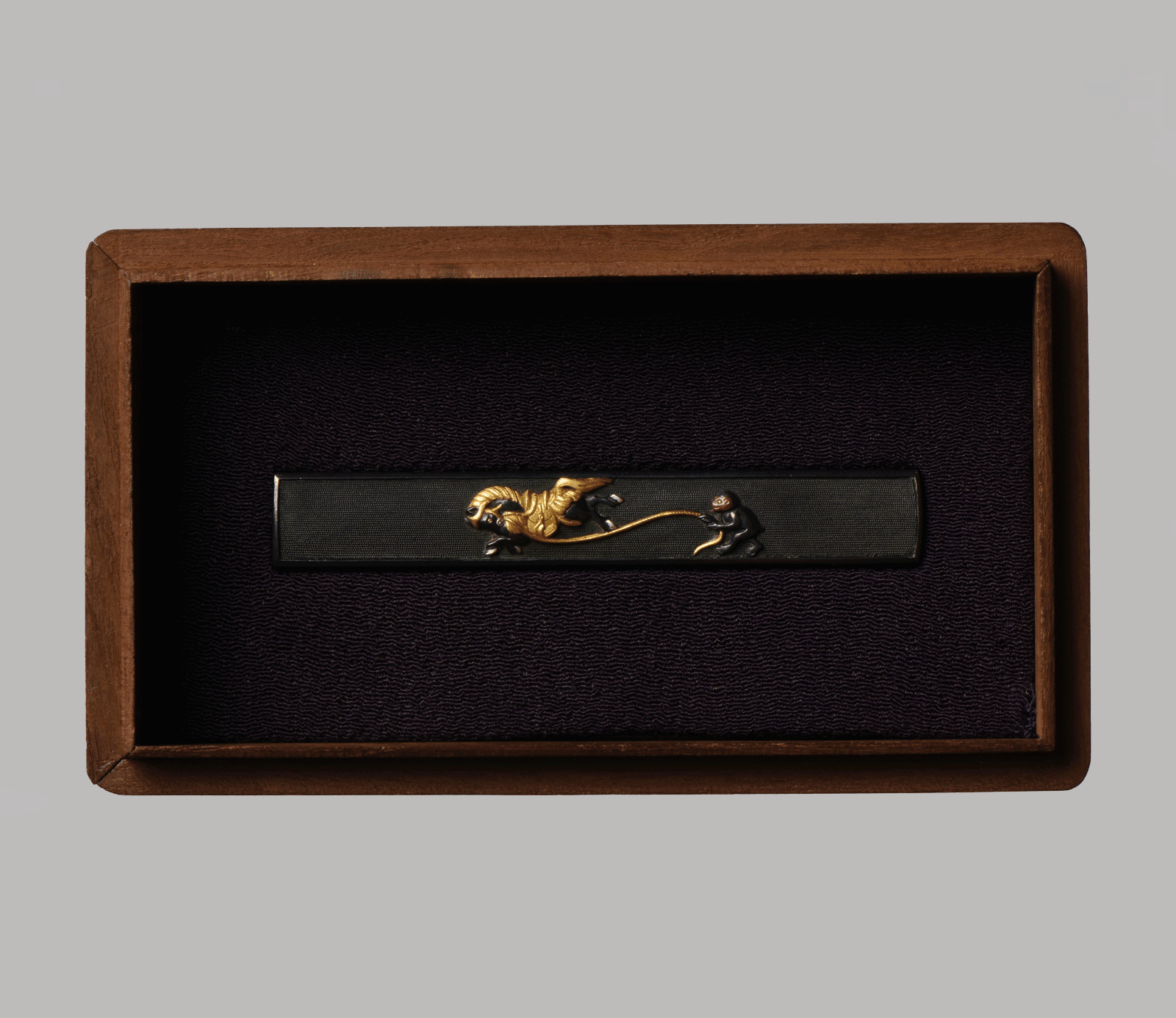
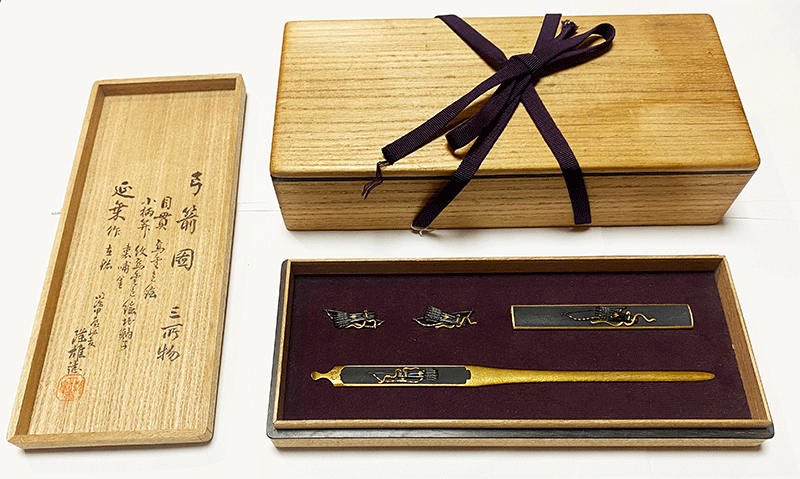
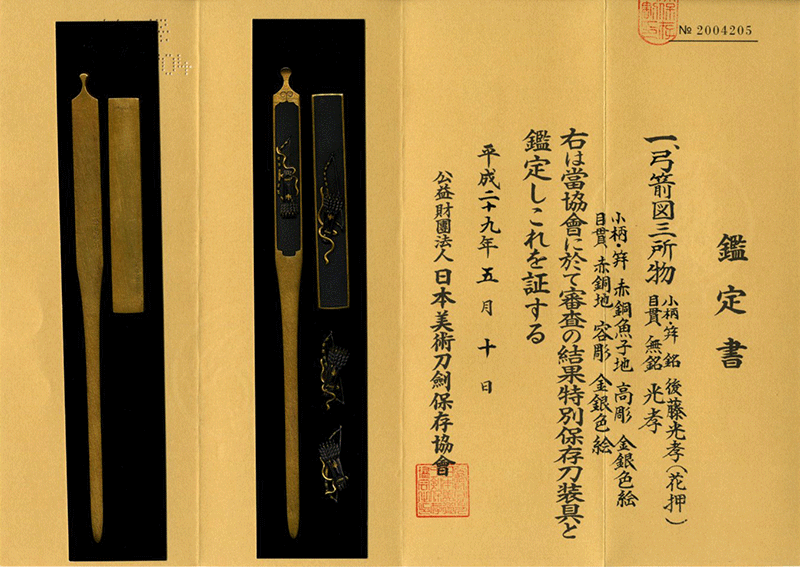
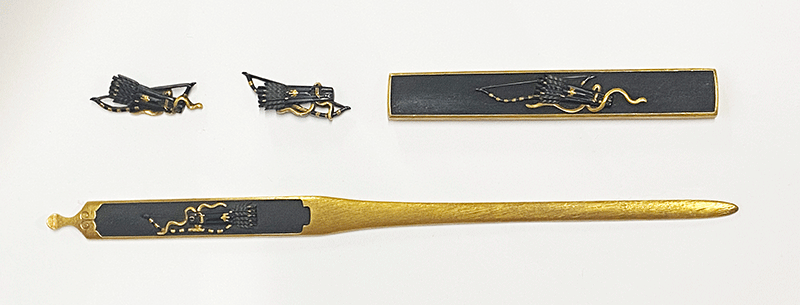
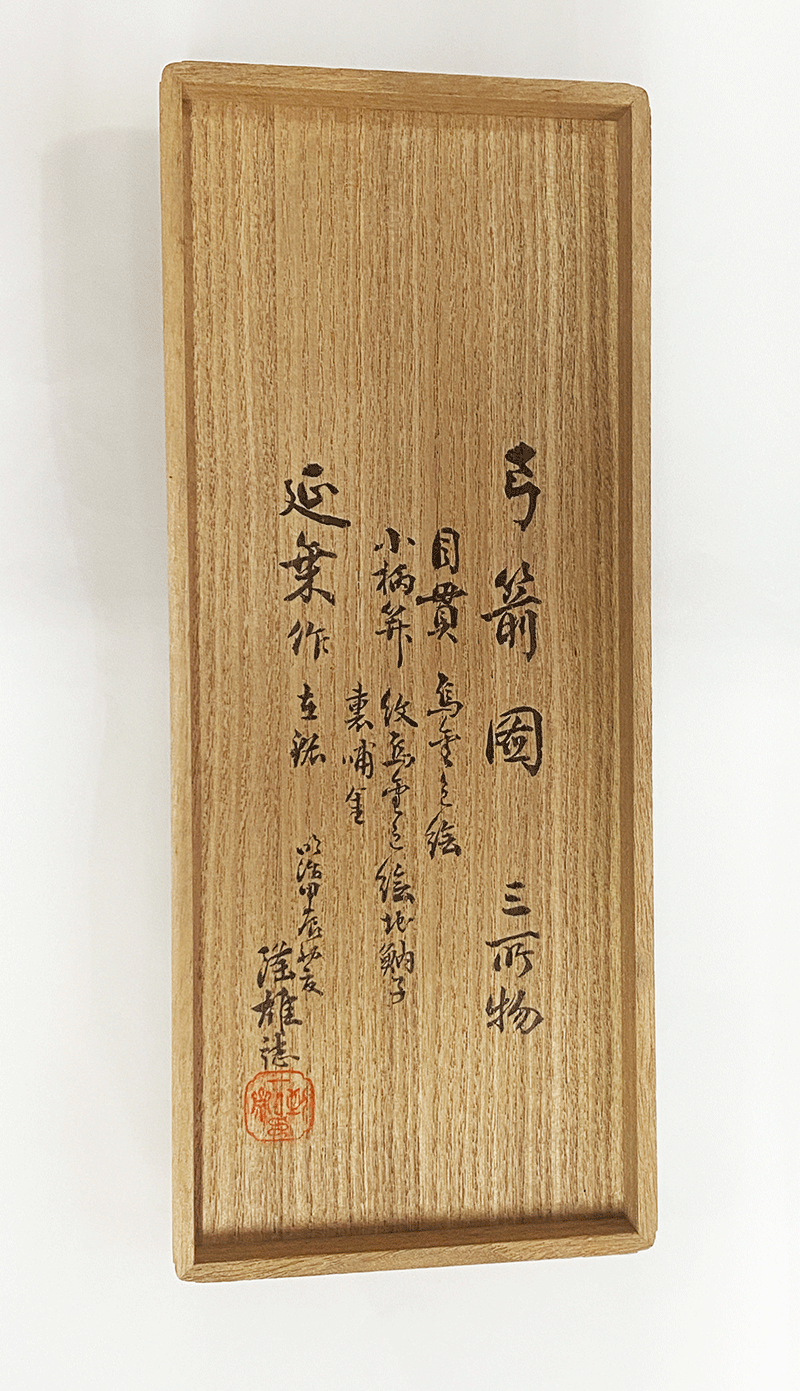
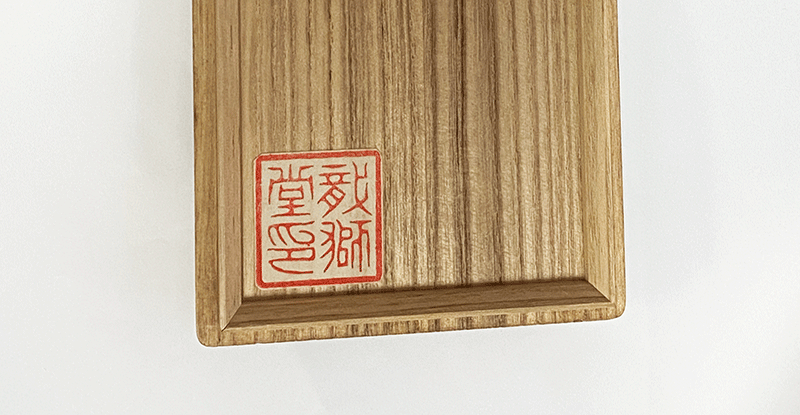
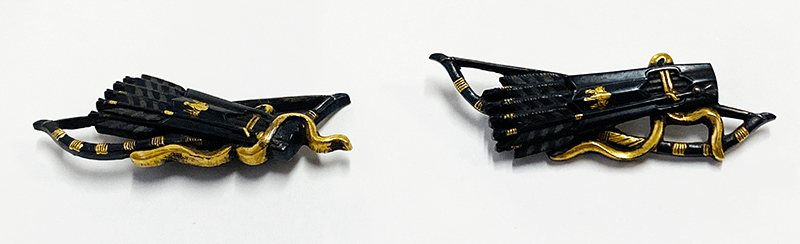
後藤宗家十三代延乗光孝作、三所物の特別保存刀装具指定作品。 延乗光孝(1722-1784)は享保七年に後藤宗家十二代寿乗光理の嫡男として生まれ、寛保二年(1742)十三代目を継いだ。本作は光孝自身銘の三所物で、明治時代、一代で史上最大の刀装具コレクションを築いた神戸の実業家、光村利藻が旧蔵した所謂龍獅堂コレクションの一つである。総数四千点を超えた同コレクションはその多くが後藤一乗をはじめとする門派や町彫金工で構成されており、後藤宗家のコレクションは貴重である。光村箱に池田隆雄の箱書が付されている。
NihontoWatchOffered by Iida Koendo
This piece has sold
Get an email when a new Goto Enjo (13th gen) piece hits the market.

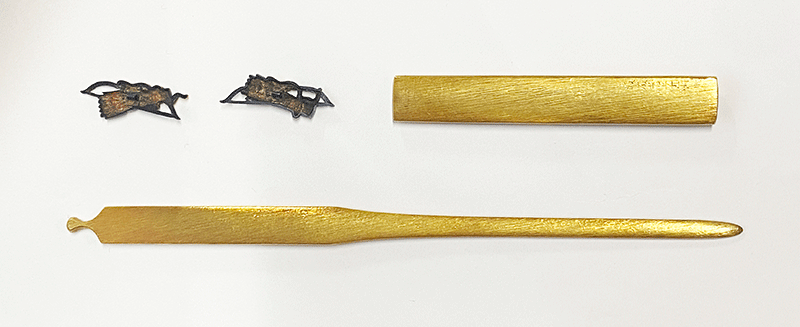
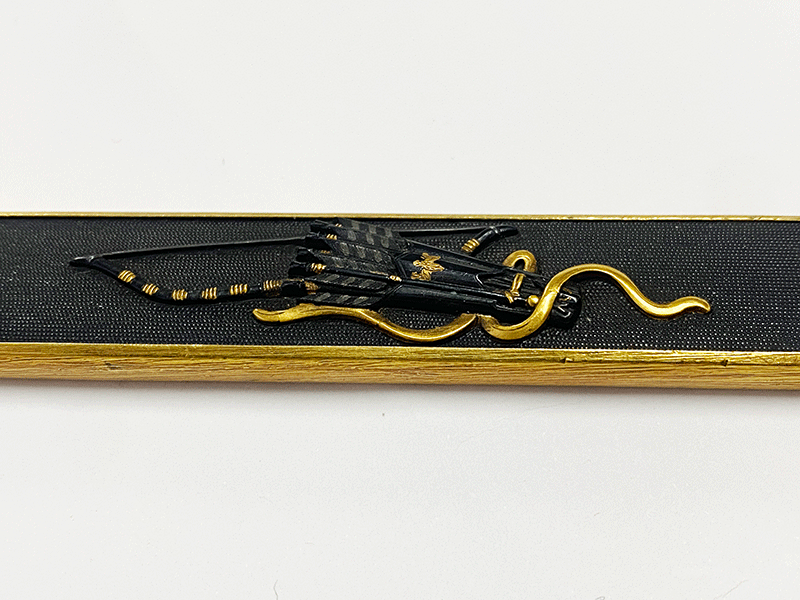
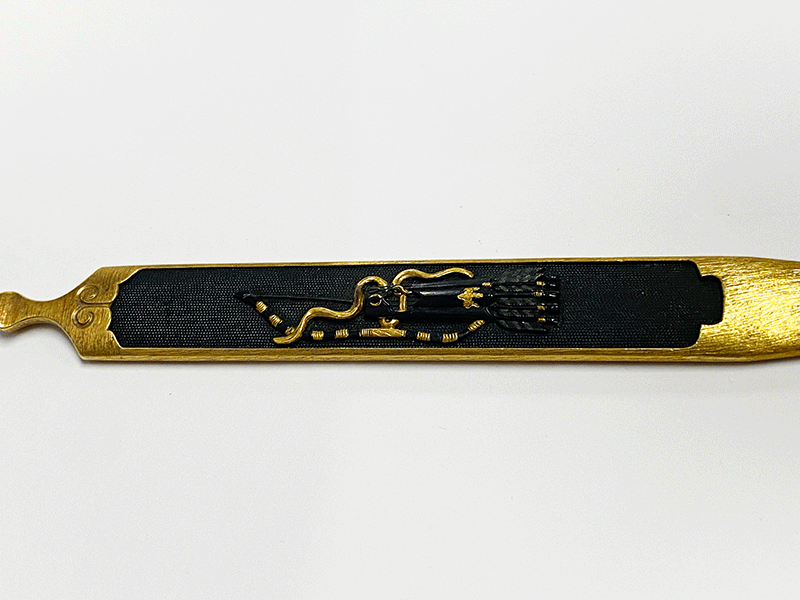
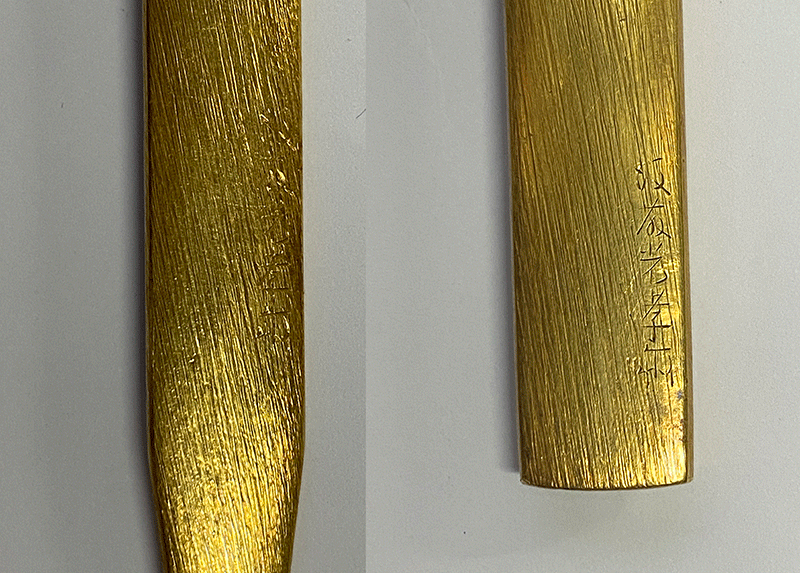
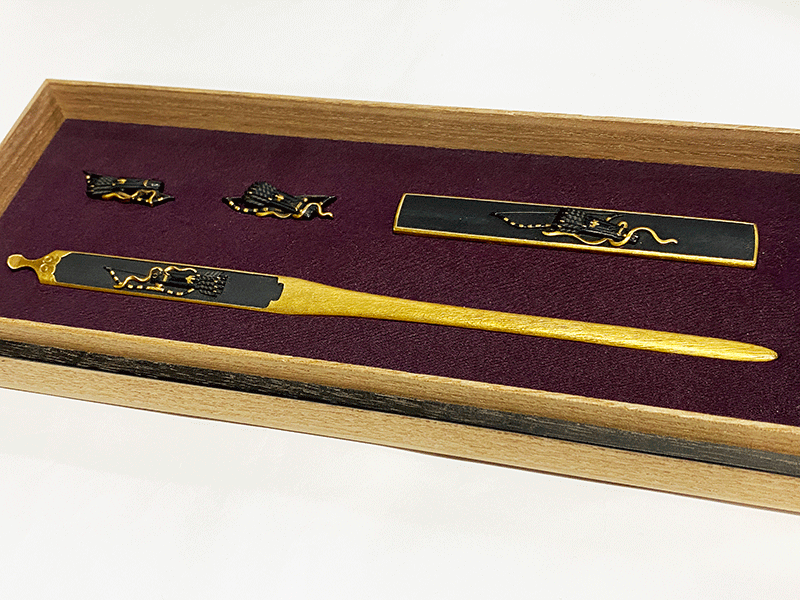
Goto Enjo (13th gen)
Edo
Signed
Tokuho (NBTHK)
As written by the shop
Iebori · Yamashiro · around 1722-1784
4 pieces on the market now
Gotō Mitsutaka, called Enjō, was the thirteenth head of the main Gotō house. He was the eldest son of the twelfth master Jujō Mitsumasa and was born in Kyōhō 7 (1722); his childhood name was Kameichi, later Mitsunari, and his common name Gennojō. When his father died in Kanpō 2 (1742) he succeeded as thirteenth head and took the name Shirobei Mitsutaka. The published sources note that his tenure was the second longest in the line, after the tenth master Renjō, so that he was active over a long span.
Of his own work the sources write that it is mostly mitokoromono, sets of kozuka, kōgai and menuki, and that "his production of tsuba is small"[[c:1]]. His manner keeps strictly to the tradition of the Gotō house and carries on its technique, and his repeated subjects are the house canon: the Kurikara dragon, dancing cranes, horses, tigers and the treasure motifs. The usual plate is shakudō with an even nanako-ji, carved in takabori or set with gold crests (kinmon), the backs gilt, and the menuki carved in the round, often in solid gold. Ten designated works carry his own signature, Gotō Mitsutaka with a kaō, and an eleventh is a full gold set of crawling dragons attributed to him by the sixteenth master Mitsuakira.
The signed works of his twenties are named precisely. A mitokoromono of paired oxen in shakudō alone, the two animals vivid and full of movement, carries an early self-signature, and the sources call it "a spirited masterpiece of Mitsutaka in his twenties"[[c:2]]. A set of dancing cranes in takabori with gold and silver colour, its carving and colour exact and its condition beyond reproach, is signed in the same early hand on the gilt back plate, "an upright and excellent work of Mitsutaka in his twenties"[[c:3]]. A rooster set with parent birds and chicks, two on each menuki, five on the kōgai and seven on the kozuka, is called steady and careful in its high relief and colour.
His later sets show the same house hand at greater density. The twelve zodiac animals, three to each piece, keep composure within movement, and the sources add that while Gotō work is generally said to use few chisel strokes, "this work shows many strokes and a minute carving technique, a carefully made piece"[[c:4]]. A lion set shows the beast from many angles, full in its modelling, and the sources call it "a masterpiece of Mitsutaka through which the lion's very breath seems to pass"[[c:5]]. On a set of the dream-eating baku, dynamic yet unhurried, they write that "this composed dignity is the true strength of the Gotō house"[[c:6]]. A Genji set of the Yūgao chapter, the ox-cart wound with evening-glory vines in finely worked jet-black shakudō, and a matched set of tigers in gold crests, "a work that, with direct expression, shows in full the tradition and formality of the Gotō iebori"[[c:7]], complete the record of his own hand.
His tsuba are few but fine. A lion tsuba sets five lions in gold crests on shakudō nanako with a gold rim, clean and of high tone, and the sources note that the Gotō house, long given to mitokoromono, had made tsuba and fittings sets from about the time of Renjō. A daishō pair with phoenixes in applied gold, with gold rims and fine gold joins on the reverse, they call "a celebrated tsuba fitting exactly a formal daishō koshirae in black lacquer"[[c:8]].
Mitsutaka was also a certifying head of the house, and a large part of the record that carries his name is the work of earlier masters he appraised. His kiwame-mei, the master's name with Mitsutaka and his kaō, stand on works judged to be by Sōjō, Eijō, Kenjō, Sokujō, Tokujō and Kōjō, among them a Sokujō tsuba with thirty lions on one plate, a Kenjō set of Kumagai and Atsumori, and a Kōjō set of twenty-three rhinoceroses that Mitsutaka himself made up into mitokoromono. Some carry his origami as well, one of the Hōreki years for a value of two hundred kan. These works are designated under his kiwame and are his as appraiser, not as maker. His own signed pieces, ten at the Jūyō rank, are in private hands with no recorded institutional holder; a signed Enjō set in good condition comes to market only from time to time.
Where Goto Enjo stands among comparable artisans: across all of nihontō, and within tradition, era, and period. The tiers (Foremost · Leading · Major · Notable) weigh official designations from the NBTHK and Japan's Agency for Cultural Affairs, together with historical honors of lasting repute such as the Sansaku and Meibutsu-chō.
Select a lens to see how it's measured.
Iebori · Yamashiro
Phase: Goto Main Line後藤宗家· 1573–1900
309 pieces on the market now
| Smith | Era | Designated |
|---|---|---|
| Goto Joshin後藤乗真 | 1512-1562 | 68 |
| Goto Yujo後藤祐乗 | 1440-1512 | 41 |
| Goto Sojo後藤宗乗 | 1461-1538 | 56 |
| Goto Kenjo後藤顕乗 | 1586-1663 | 46 |
| Goto Teijo後藤程乗 | 1603-1673 | 42 |
A Hozon-certified blade judged to show notably superior workmanship and a better state of preservation. The bar is higher: re-tempered blades and most unsigned Muromachi/Edo works are excluded.
The NBTHK (Nihon Bijutsu Tōken Hozon Kyōkai, the Society for the Preservation of Japanese Art Swords) is a public-interest incorporated foundation founded in 1948 and supervised by Japan’s Agency for Cultural Affairs (Bunkachō); it is based at the Japanese Sword Museum in Tokyo. Its expert panels physically examine each submitted work (shinsa) and issue a certificate (kanteishō) ranking it by artistic and historical merit. NBTHK papers are the most widely recognized standard of authentication for Japanese swords and fittings.
NBTHK official siteFor returns at the customer's convenience, please notify us within two days of the item's arrival. Items that have been altered cannot be accepted. Return shipping is at the customer's expense. Costs other than the item price (bank transfer fees, cash-on-delivery fees, etc.) cannot be refunded. Items delivered overseas cannot be returned or refunded.