War at home and trade abroad made Muromachi Bizen the busiest forge region in Japan: a century of Sengoku demand after the Ōnin War, and export missions to Ming China carrying blades by the tens of thousands.
 NihontoWatchNihontoWatch
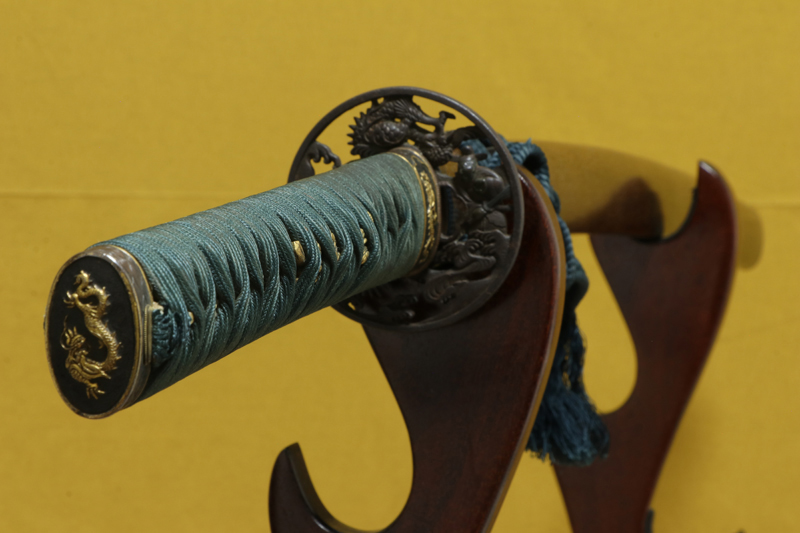
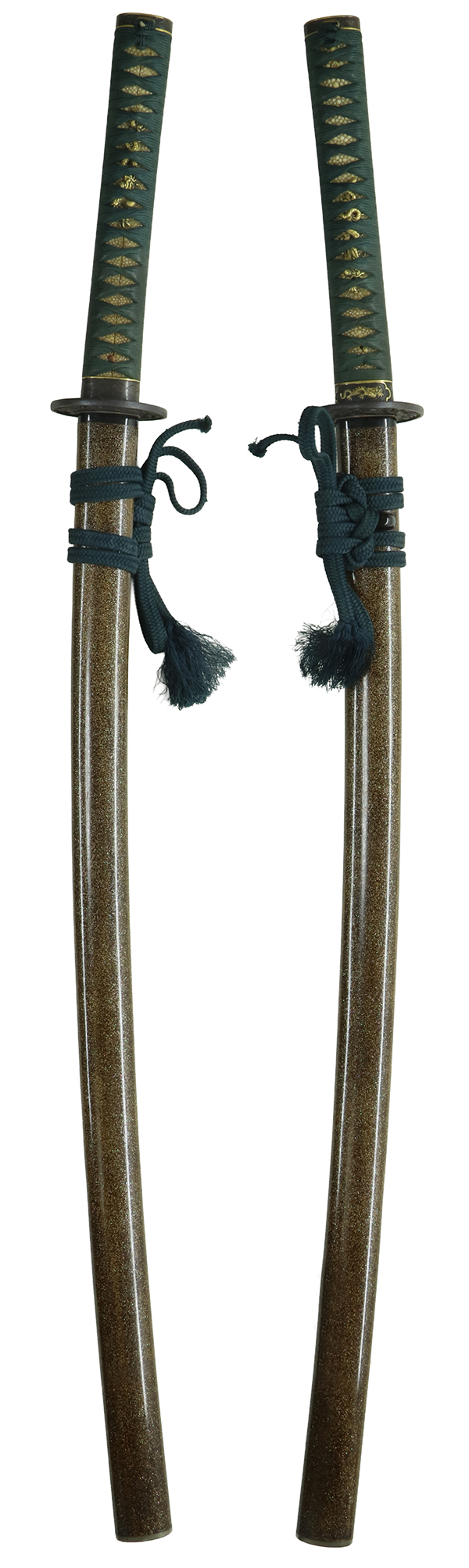
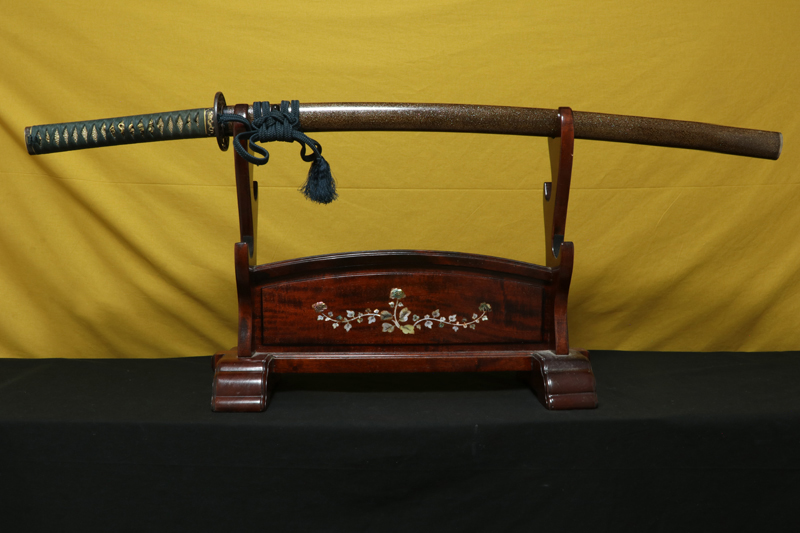
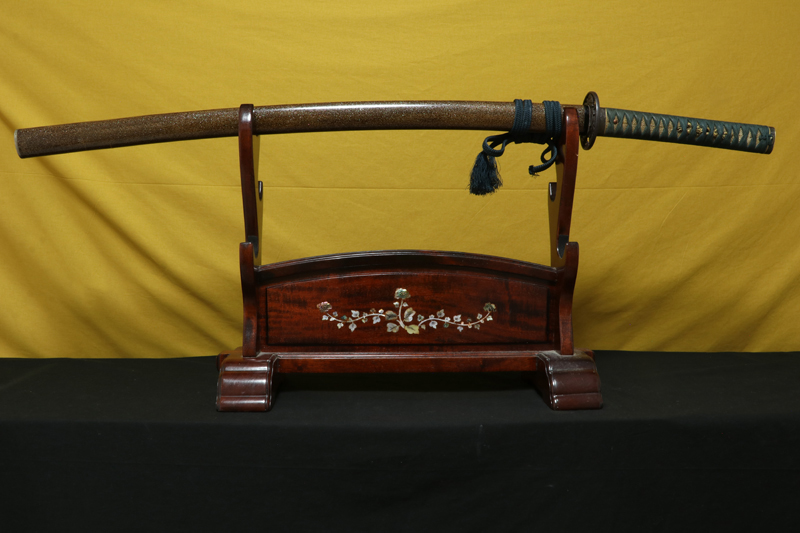
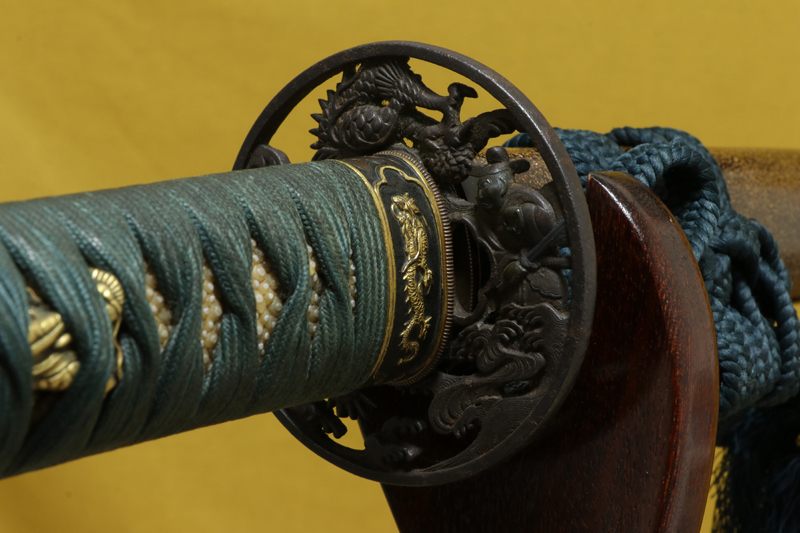
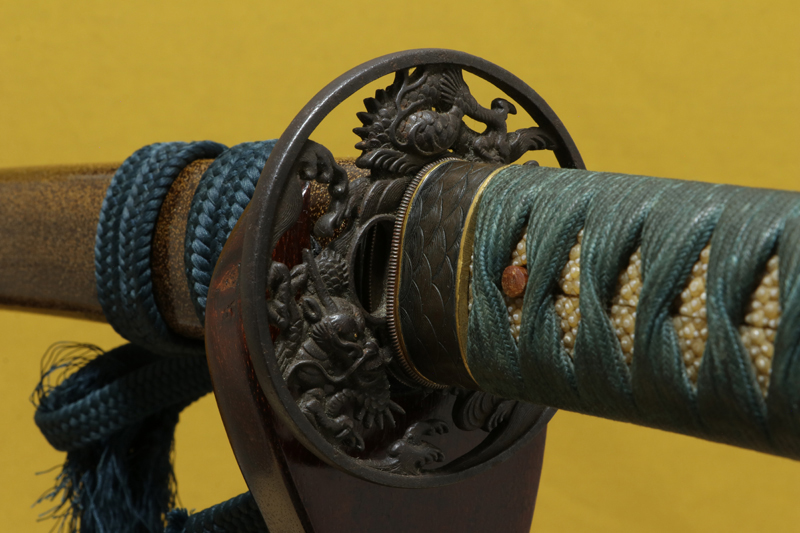
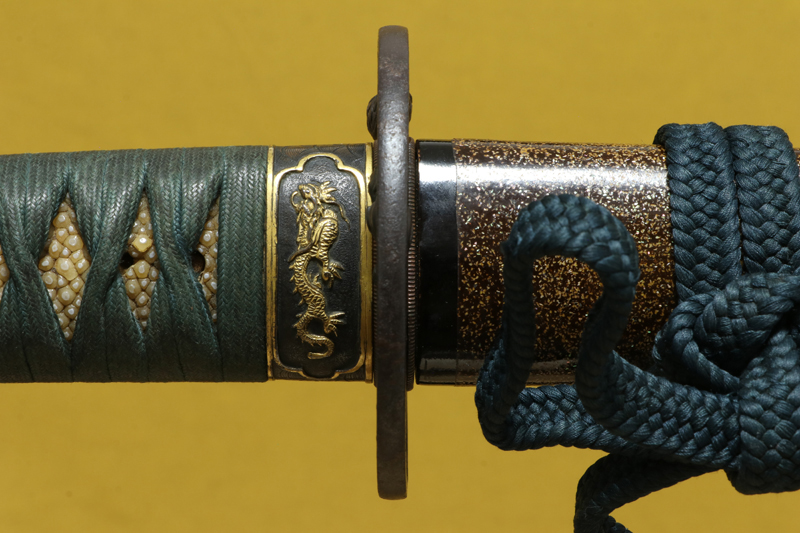
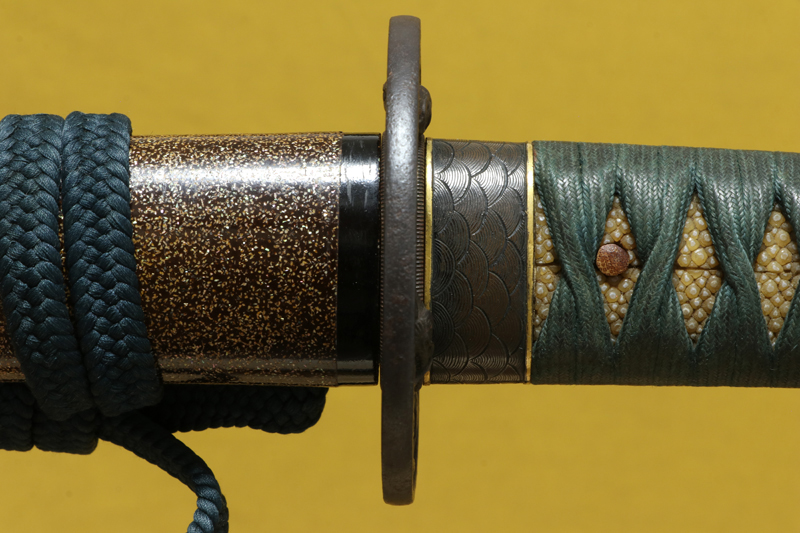
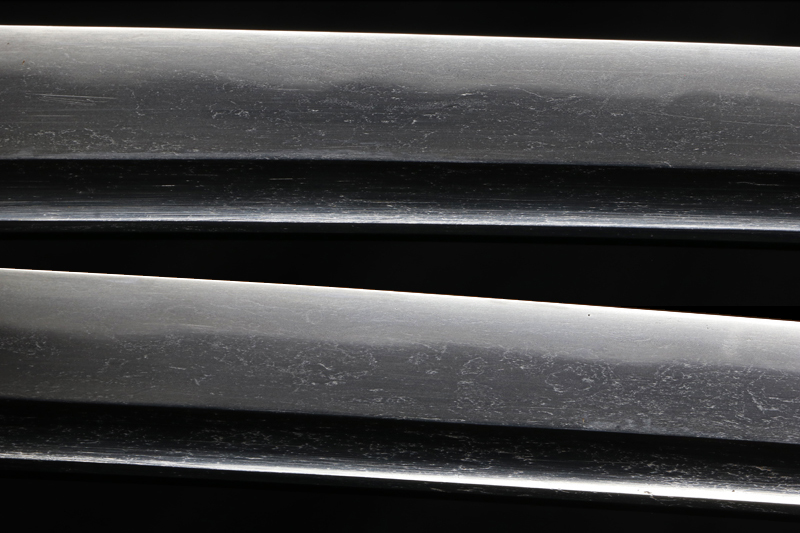
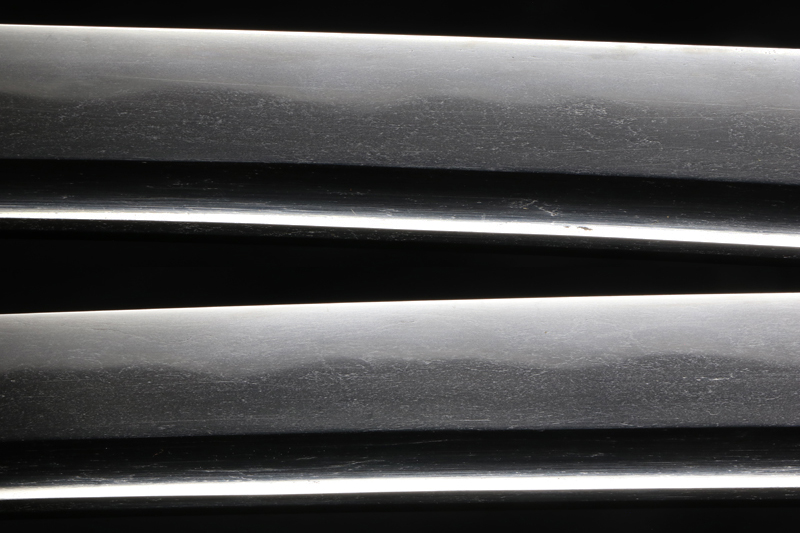
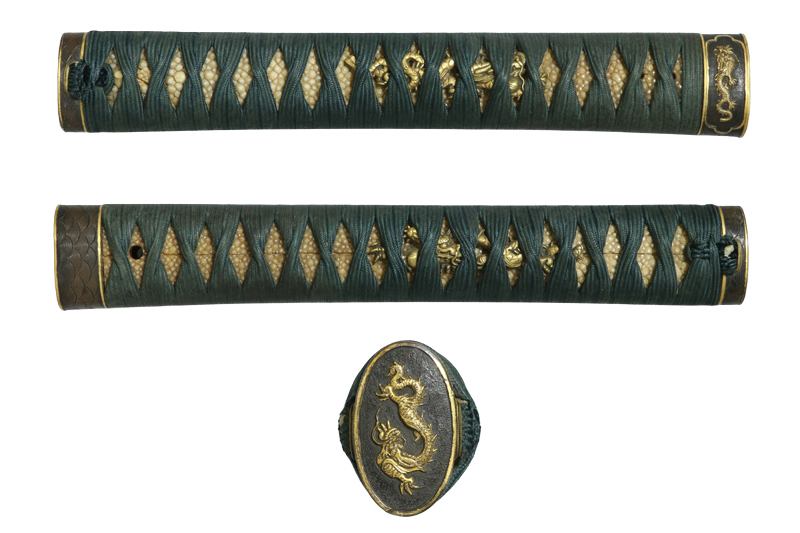
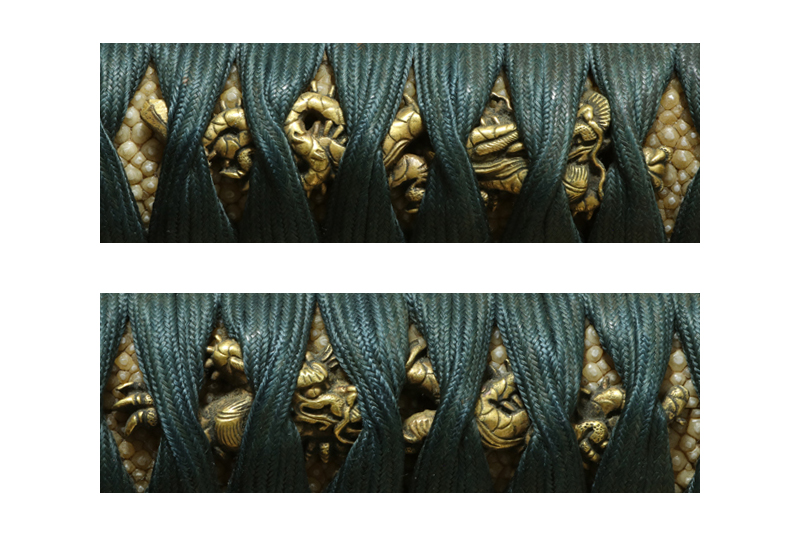
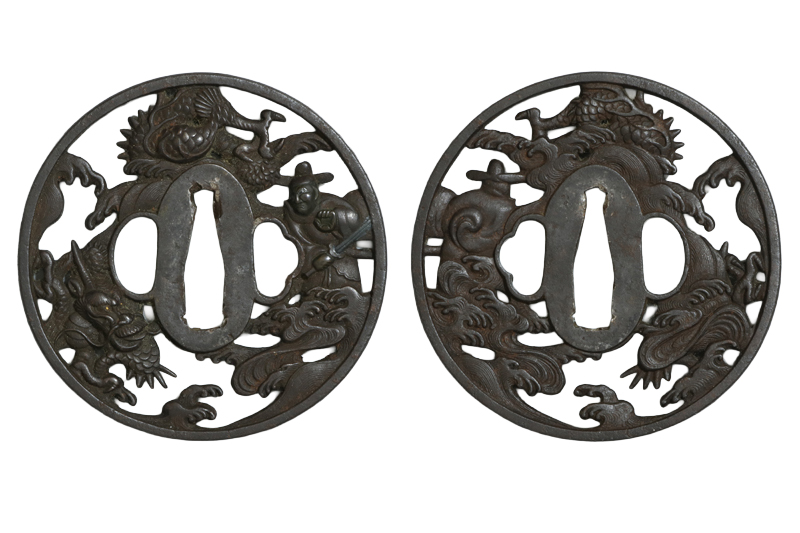
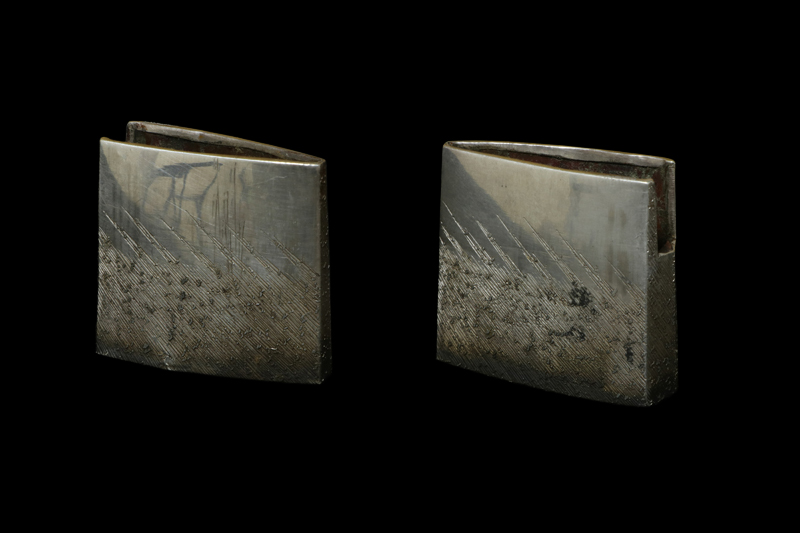
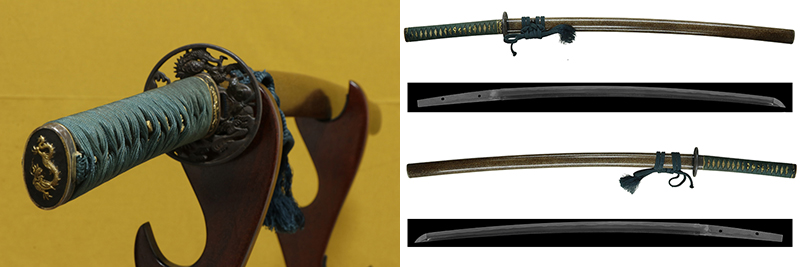
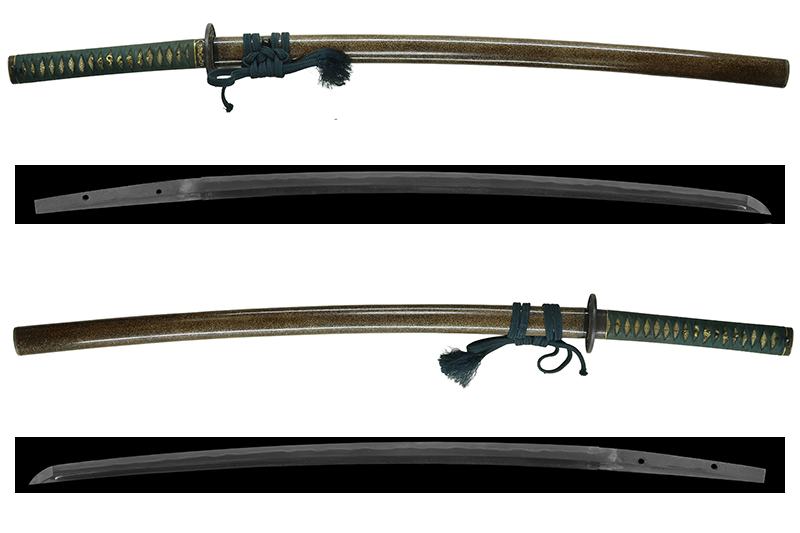
Mumei Koto (Den Sue Bizen) with Koshirae This is an unsigned Koto-period sword with a nagasa of 75.2 cm, believed to be a late Muromachi period Sue Bizen work. The blade features itame-hada with bo-utsuri and a gunome-midare hamon; despite being an old polish, the jigane and ha are generally in good condition. It comes with a luxurious Edo period koshirae featuring dragon-themed kanagu and a brown ishime-nuri saya with kai-chirashi. This is a piece that will be exciting to have appraised by the NBTHK, and it is recommended for appreciation and collection. It can also be considered for Iaido use by taller practitioners. Sword figure Shinogi-zukuri with iori-mune, standard mihaba and kasane, torii-sori, and a chu-kissaki. The nakago is suriage by 10 cm with sujikai yasurime, and the nakagojiri is cut ichimonji. Carving The horimono is a kata-chiri bo-hi that terminates in kaki-nagashi near the nakagojiri. Jigane The jigane is itame-hada mixed with ko-itame, hadadachi, with ji-nie, and bo-utsuri is visible. Hamon The hamon is gunome with ashi, ko-nie along the habuchi with sunagashi, and kinsuji activity within the ha. The boshi is midare-komi and turns back in ko-maru. Detailed This piece is an unsigned Koto-period sword. Although it has been suriage by about 10 cm, it still retains a nagasa of 75.2 cm, and it is believed that it was originally a long tachi. From the characteristics of the jigane and hamon, it is considered to be a work of the Bizen Osafune school of the late Muromachi period, so-called Sue Bizen. The blade is a magnificent piece with hadadachi itame-hada, bo-utsuri, and a gunome-midare hamon in ko-nie-deki. Because it is an old polish, there is some cloudiness, but the jigane and ha can be well appreciated, and the condition is generally good. Also, while the actual weight is heavy, the nakago is long, so the balance is good and it feels light in the hand. The koshirae is from the Edo period, and the kanagu are unified with a dragon motif. The saya is an elaborate piece finished in brown ishime-nuri with kai-chirashi, and it is a high-quality item that has high value even as a koshirae alone. This sword is a piece with a promising future that I would definitely like you to submit for NBTHK appraisal. Also, because it is a long sword with a nagasa of 75.2 cm, I recommend it as a shinken for Iaido for taller practitioners. It is an attractive, long Koto-period sword that is impressive to look at and recommended not only for appreciation and collection but also for Iaido. Koshirae Habaki: Suaka-ji gin-seki single-piece koshi-yujo. Tsuba: Tetsu-ji, design of waves and dragon. Fuchikashira: Shakudo-ji, design of waves and dragon. Menuki: Kin-ji, design of dragon. Kojiri: Solid silver, polished surface. Tsuka: Same is maki-same with oya-tsubu, tsuka-ito is pure silk nando-iro in moro-hineri-maki. Saya: Brown ishime-tsuya with aogai-chirashi. Condition of blade Polish: It is an old polish, but generally good. Flaws: There are no flaws that would be considered defects.
Offered by Giheiya


Machine translation of the shop's Japanese ·
Machine translation from the shop's Japanese · may contain errors ·
Bizen-den · Bizen
185 pieces on the market now
No single workshop in the history of Japanese swordmaking grew larger or lasted longer than Osafune, the riverside village in Bizen Province whose name became, across three centuries, a byword for the province's mainline. Its de facto founder was Mitsutada (光忠), working at Osafune in the middle Kamakura period; tradition makes him the son of Chikatada, and the genealogies derive his line from the Ko-Bizen Masatsune group already settled in the village. His blades, bold and imposing with a jigane so refined the sources say it can at a glance suggest Kyoto work, were treasured from old as the swords of commanders, and from his hand the school spread immediately: his sons Nagamitsu (長光) and Sanenaga (眞長), his grandson Kagemitsu (景光), and outward through pupils and collaterals until, by the late Kamakura years, Osafune was less a family than an industry. The line is conventionally read as a three-generation spine, Mitsutada founding it, Nagamitsu setting its classical standard, Kagemitsu bringing both temper and forging to their finished form before handing the manner to his pupil Chikakage (近景), whose echo of the master is so close that signed Kagemitsu blades are sometimes read as Chikakage daimei. What binds the membership is a shared steel before any shared temper. The forging is itame mixed with mokume, tightening on the finest blades into a dense ko-itame; fine ji-nie adheres, chikei enter, and over all of it stands the midare-utsuri that anchors even the most Kyoto-like jigane back to Bizen. On that floor the founding generation tempers a flamboyant choji-midare mixed with gunome: Mitsutada's tadpole-headed kawazuko-choji, Nagamitsu's round-topped plump choji, the deep nioi with ko-nie, the bright nioiguchi. From here the school divides by hand and by era. Sanenaga draws the calm pole, a gentle chu-suguha of tightened nioiguchi; Kagemitsu completes the slanting, square-shouldered kataochi-gunome over a suguha base, the family's last great Kamakura invention, carried on by his close kinsman Kagemasa (景政). The Nanbokucho generation then turns toward Soshu-den: Kanemitsu (兼光), fourth master of the mainline, pioneers a broad notare and is read, with Chogi (長義), as the head of Soden-Bizen, the Bizen wing that worked Soshu nie into a jigane that still throws a Bizen utsuri.
Chogi is called the most un-Bizen of Bizen smiths, his ear-shaped mimigata his tell; around him Nagashige (長重), Yoshikage (義景), Tomomitsu (倫光) and Kanenaga (兼長) press the Soshu side by degrees, while Motoshige (元重), of a separate Hatakeda descent, carries an Aoe-tinged squared, slanting ha. Two generations later the Oei revival returns to Kamakura: Yasumitsu (康光) and Morimitsu (盛光), the twin pillars of Oei-Bizen, revive the tachi shape and the choji temper over a wide-waisted koshibiraki-gunome, both finishing in the pointed rosoku-no-shin (candle-wick) boshi that gives the late date away. For the collector the school is a school of discriminations, and to kantei it is to read those fine partitions. The constant midare-utsuri over a bright ko-itame fixes the province; the boshi then sorts the maker, Mitsutada's pointed midare-komi against Nagamitsu's composed ko-maru Sansaku turn, Kagemitsu's contained return, the candle-wick tongue of Oei. Within a single phase the calls turn on a half-step: Nagamitsu's plump crests against Sanenaga's cooler nioiguchi, Kagemasa's freer play against Kagemitsu's tighter order, Nagashige read out of Chogi by a nie that surpasses his brother's. The standing of the best is matched by their patrimony. Mitsutada, Nagamitsu and Kagemitsu each hold National Treasures and stand at the head of Fujishiro's Sai-jo saku; their named blades, the Daihannya Nagamitsu, the Kogaryu Kagemitsu, the O-Kanemitsu, passed through Nobunaga, Ieyasu, Uesugi Kenshin and the great daimyo houses. Because Nagamitsu and the Nanbokucho masters signed and survived in number, Osafune offers what most peerage names cannot, a deep field of Tokubetsu Juyo and Juyo work that a patient collector may still realistically hold. Through every register the same hand declares itself: the bright steel, the vivid reflection, and a temper that runs, across three centuries, as the spine of Bizen. Learn more →
| Smith | Era | Designated |
|---|---|---|
| Mitsutada光忠 | 1238-1239 | 59 |
| Nagamitsu長光 | 1274-1304 | 254 |
| Kagemitsu景光 | 1303-1336 | 142 |
| Sanenaga眞長 | 1299-1309 | 68 |
| Kanemitsu兼光 | 1323-1370 | 235 |
Bizen in the Muromachi period
War at home and trade abroad made Muromachi Bizen the busiest forge region in Japan: a century of Sengoku demand after the Ōnin War, and export missions to Ming China carrying blades by the tens of thousands.
Within 3 days of the item's arrival, we offer a refund or an exchange. Return shipping and the bank transfer fee for the refund are at the customer's expense.