NihontoWatch MonNihontoWatchBETA
MarketEncyclopedia
NihontoWatch Mon

NihontoWatchBETA

Market
Encyclopedia
Overview·Kantei·Designations·Provenance·Blade Forms·Signatures·School
OverviewKanteiDesignationsProvenanceBlade FormsSignaturesSchool
  1. Schools
  2. Enju
  3. Kunitoki

Enju Kunitoki

國時

Jūyō
Vol. 28, No. 121 · Tachi

Enju Kunitoki

國時

7 ranked works

ProvinceHigoEraKenji (1275–1278)PeriodKamakuraSchoolEnjuTraditionYamashiro-denTypeSwordsmithCodeKUN1292
2Jūyō Bunkazai
2Jūyō Bijutsuhin
3Jūyō Tōken

Overview

Kunitoki is a smith of the school, working in the Kikuchi district of Province at the very end of the period and into the . The published sources set the school's origin plainly: "the founder of the school was Kunimura" (肥後国延寿派の始祖は国村), a man recorded as a grandson of Kuniyuki of Kyōto. From that Yamashiro descent the line takes its temperament, working broadly in the manner and noted for skill in . Around Kunimura a cluster of named smiths arose almost at once, Kunitoki, Kuniyoshi, Kunisuke, Kunitai and Kuninobu, and Kunitoki is counted among the first generation, traditionally given as Kunimura's son or younger brother. Two of his signed are Important Cultural Properties, one held at Kakegawa Shrine in Kōchi and one at the Wakayama -gū, and a third signed survives with its two-character , so his is one of the better-documented hands in a school whose members the judges otherwise find hard to tell apart.

His characteristic work is read on a slender or an of standard proportions, the surviving signed keeping a high -zori, a , and a thick chisel cut into the tang. The temper is the constant: a base, most often a , into which small and enter, with and , well laid, and on the signed a slight tendency toward . It is a quiet line by intention. The published commentary draws the school's hand as close to its Yamashiro parent but more reserved, observing that "compared with work the and are somewhat weaker" (来物に比しては地刃がやや弱く) and that the commonly carries little activity and a subdued . Against that baseline one blade stands out, the signed transmitted in the Date family, which the judges single out because "within the the are frequently prominent" (直刃の中に互の目が頻りにめだち) and the internal activity is comparatively rich.

The carries the school's signature as surely as the temper. Over a well-packed that tends to flow, at times mixing in ō-hada, lie fine and , and across the stands a whitish rather than the bright clove reflection of . This cooler, mistier reflection is the , the feature the school carries down from its -Yamashiro line, and it appears on his signed and his attributed work alike. Where the forging tightens into a closely knit with thick the result is, in the words of one entry, unmistakably well made. Over that the runs straight to a small round and returns shallowly, with faint on the calmer pieces.

His record divides cleanly by register. The signed work, the Date-family and the gold-inlaid , carries his personal touches, the frequent riding the , and on the a devotional carving program, set above a beside the . The other face is the attributed to him as a representative Enju hand, dignified in shape, deep in with thick , the subdued. On the gold-inlaid , inscribed in with his name and a futatsu-dō cutting test, the judges affirm the workmanship as a typical style of the late yet caution that "there are, on the contrary, no decisive points by which it should be determined as Kunitoki" (国時と特に断定すべき見どころは寧ろ掴めない). The name itself continued through successive generations into the period, so the generation of a given blade is read from its make rather than its signature.

What sets the Kunitoki apart from his neighbours is exactly what the published sources name. He is held apart from the brighter, stronger Yamashiro hand of true by the cooler and the somewhat softer and the judges describe; his temper, they write, is the kind that "tends toward a subdued impression." Yet within his own school, where the smiths share a quiet and little individual character, his comparatively abundant and give him a recognizable place, and the published commentary calls one of his a "reminiscent of the school" (来派をおもわせる). He stands among the founding generation of a Kyūshū line that carried the Yamashiro manner south, a calm and well-forged hand at the head of the tradition.

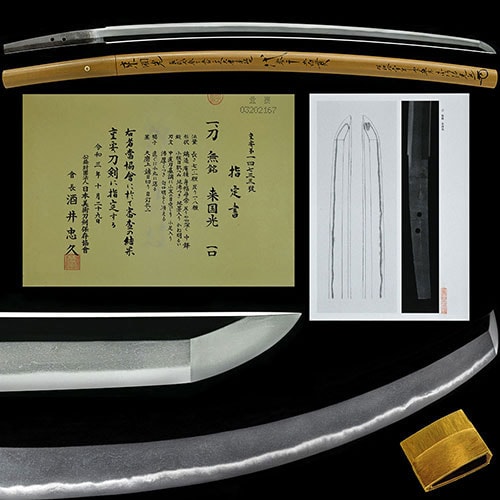
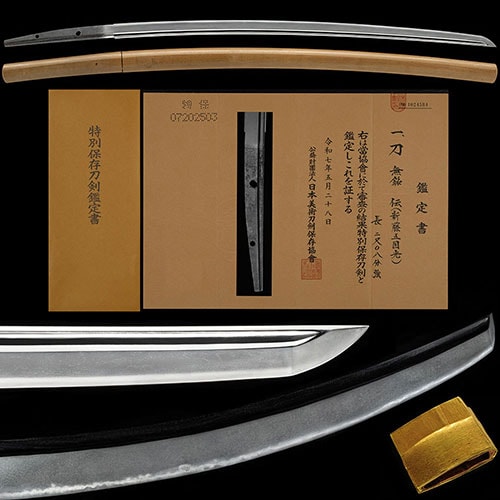
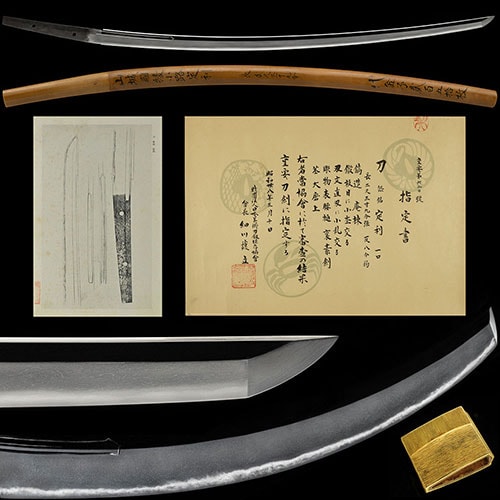
For the collector he is a rare early name with a clear documentary trail. He has no National Treasures; his record runs instead through two Important Cultural Properties, a at Kakegawa Shrine and a at the Wakayama -gū, the prewar Jūyō Bijutsuhin, and a small number of blades, signed, gold-inlaid and . Several pieces carry and connoisseur provenance: a signed transmitted in the Date family, accompanied by a gold okukakeji mounting, and an with a Kōchū of Kyōhō 6 valuing it at 700 . His blades are now preserved in long-held collections and public institutions, the Sano Art Museum among them. Only three of his works fall in the and tiers, so a signed Kunitoki comes to light only seldom, and a privately held example is a notable thing for a collector to encounter, a document of how the manner took root in Kyūshū.

Kantei

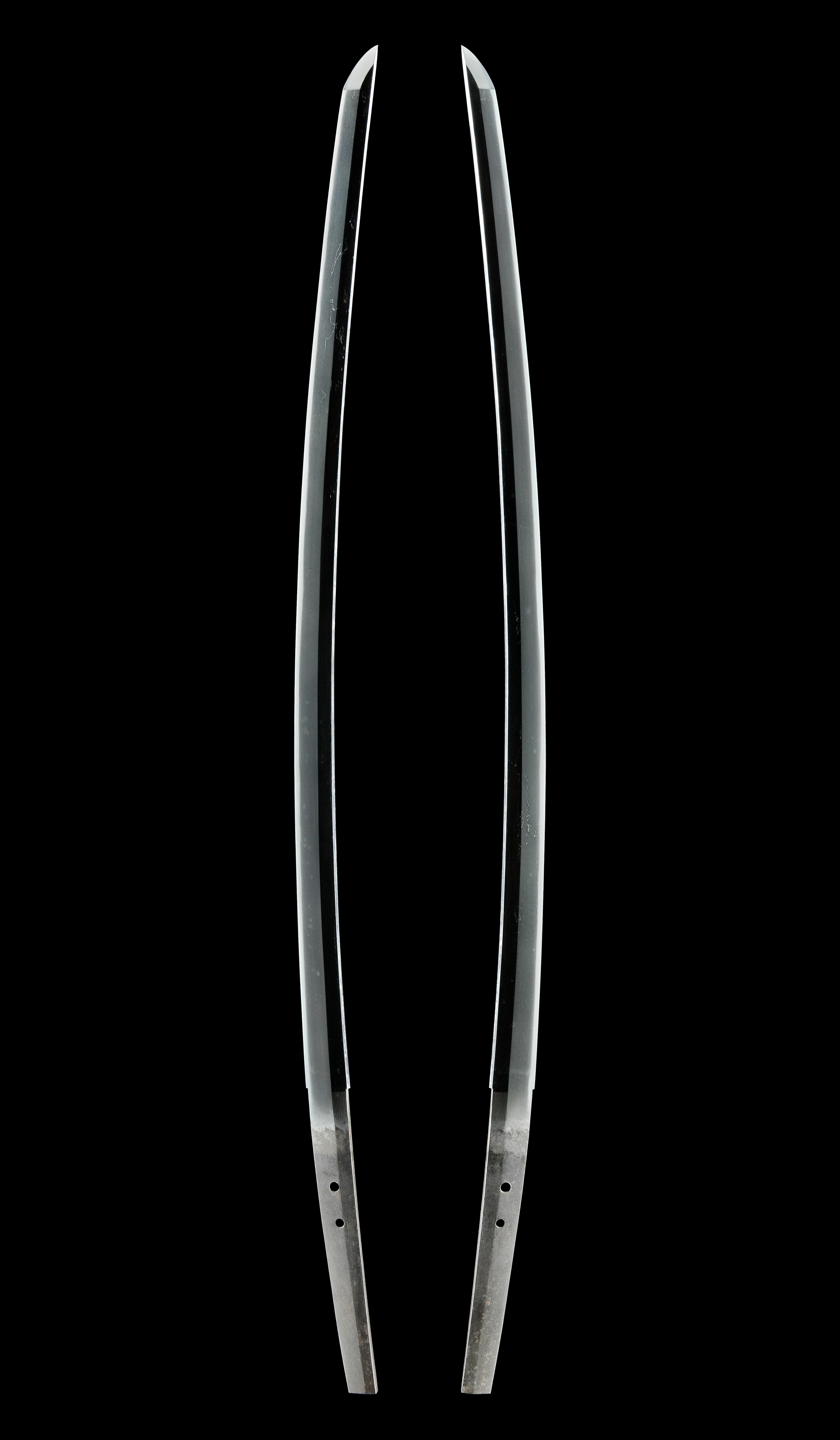
one Enju hand read by register: the signed tachi and gold-inlaid katana that carry his personal touches (the frequent gunome within the suguha, bonji and soe-hi carving) set against the o-suriage mumei katana attributed to him as representative Higo Enju, a quiet Rai-derived chu-suguha on a shirake-utsuri ground

Kunitoki is a smith of the school, working in the Kikuchi district of Province at the very end of the period and into the . The line traces to Taro Kunimura, held to be a grandson of Kuniyuki of Kyoto, so the school works broadly in the manner, and Kunitoki is named among its representative hands beside Kuniyoshi, Kunisuke, Kunitai and Kuninobu. His recognized work is a slender or an on a well-packed that tends to flow, with fine , and a whitish , over which he tempers a quiet into which small , and enter, the running straight to a small round. The published sources describe the Enju hand as close to but with the and somewhat weaker, the showing little activity and a subdued ; against that baseline his signed Date-family is singled out for the frequent and unusually rich activity within its . Because individual differences among smiths are slight, the judges affirm his works from era and school more than from a personal tell, and they note that the name Kunitoki continued through successive generations down into the period.

Diagnostic discriminators

unique vs the quiet Enju baseline (suguha with little activity)

Observation by phase

The signed work, with its richer activity (the Date-family tachi)

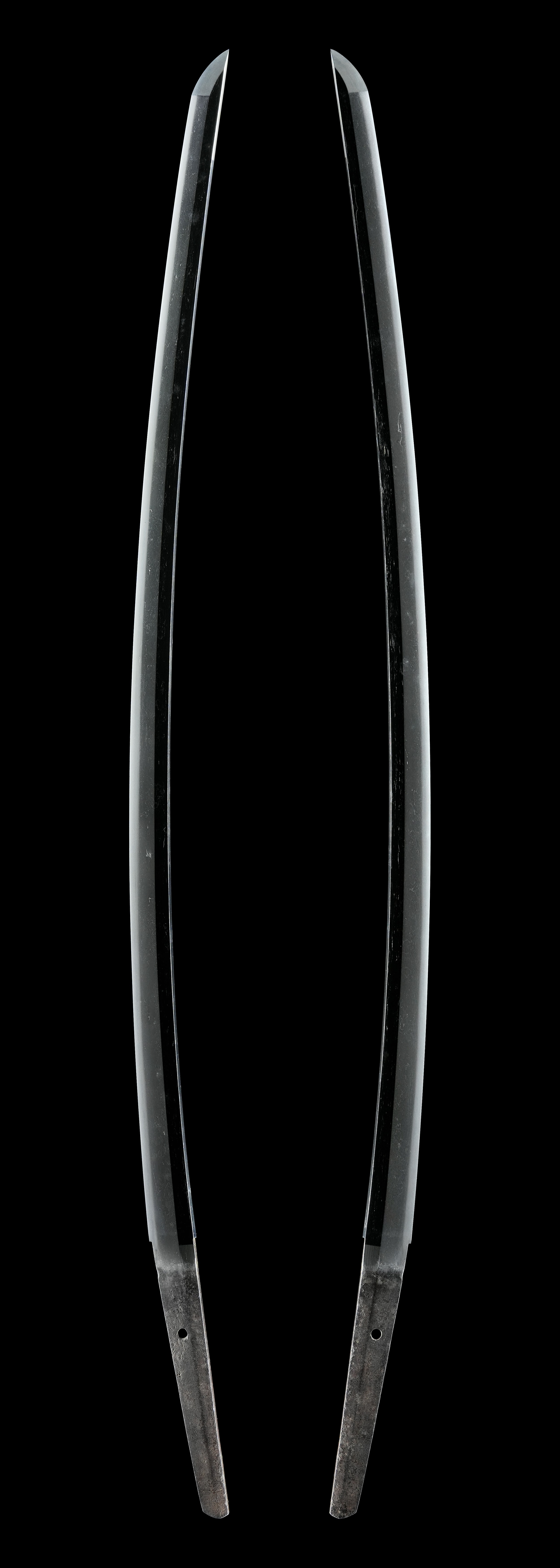
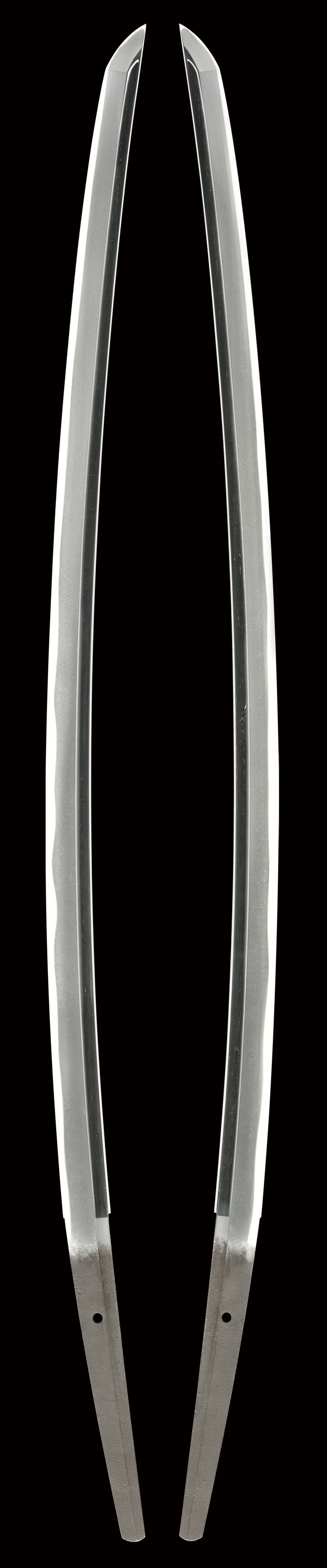
The clearest record of his own hand is the signed , slender with a high and a , the with a large two-character signature cut in a somewhat thick chisel. The ground is an with areas of flowing grain, mixed in places with o-, carrying and a whitish . The temper is a into which small enter, with , a slight tendency toward , , and the staining in places, the straight to a small round with a short turnback. At the base he carves above a beside the . The published sources read the Enju hand as broadly but quieter, the commonly subdued with little activity; against that, this Date-family is singled out for the frequent prominence of within the and its comparatively abundant activity. The gold-inlaid extends the signed register into a broad mixed with and over a tending to flow.

Sugata 姿
Jigane 地鉄
Hamon 刃文
Bōshi 帽子

The o-suriage mumei katana (representative Higo Enju attribution)

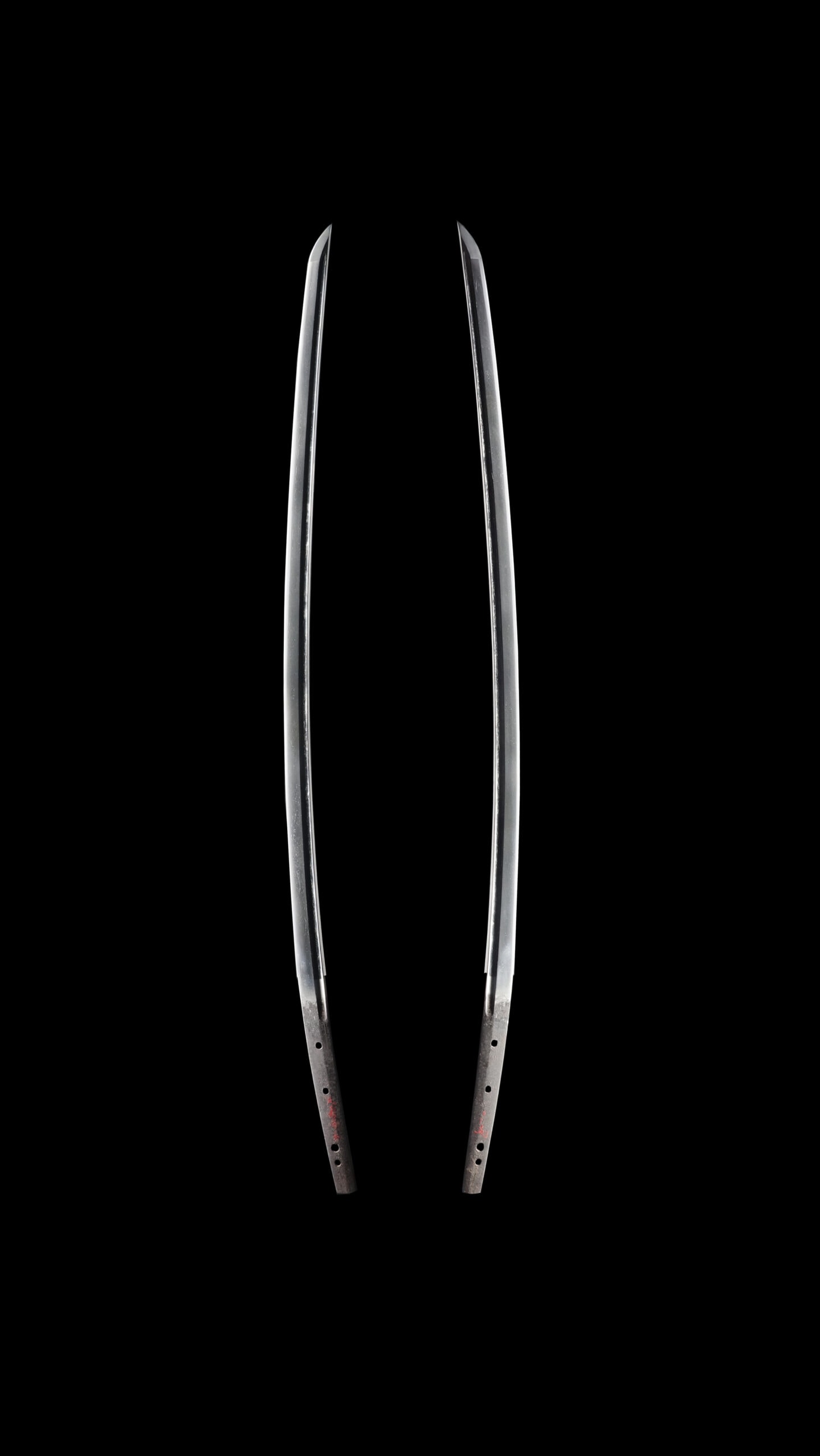
The other face of his record is the attributed to him as a representative Enju hand. The shape is of standard width and point, with a shallow and slight even though greatly shortened, a . The ground is a well-packed that rises a little, with fine and thick fine and a whitish cast, the forging unmistakably well made. The temper is a into which a small enters, the laid deeply with thick , the subdued, with faint and and ; the tends to a small round and returns shallowly. The published sources affirm this as -reminiscent of the late , dignified in shape and well-forged, while in the gold-inlaid they caution that the workmanship is a representative style and there are no decisive points by which it should be determined as Kunitoki alone, so the attribution rests on era and school. One such carries an by Kochu valuing it at 700 .

Sugata 姿
Jigane 地鉄
Hamon 刃文
Bōshi 帽子
Scholarship

The published sources set the Enju school's origin with Enju Taro Kunimura in Kikuchi, Higo, traditionally a grandson of Rai Kuniyuki, and record that the school worked broadly in the Rai manner but with ji and ha somewhat weaker than true Rai, the suguha commonly quiet and the nioiguchi subdued. They note that the name Kunitoki recurs through successive generations from the very end of Kamakura into the Muromachi period, so a given blade's generation must be read from its make.

On the gold-inlaid Juyo katana the published sources affirm a representative Enju style of the late Kamakura, yet caution that there are no decisive points by which it should be determined as Kunitoki specifically, so the attribution rests on era and school rather than on a personal feature.

Designations

Kokuhō—
Jūyō Bunkazai2
Jūyō Bijutsuhin2
Gyobutsu—
Tokubetsu Jūyō—
Jūyō Tōken3

Elite Standing

0.24 across 7 designated works

Top 10% among smiths

Provenance

5 documented provenances across certified works by Kunitoki

Provenance Standing

2 works held in elite collections across 5 documented provenances

Top 48% among smiths

Raw score: 1.99 / 10

Blade Forms

Distribution across 7 ranked works

Signatures

Signature types across 7 ranked works

Currently Available

Enju School

Other artisans of the Enju school

  1. 1.Kunimura國村15designated
  2. 2.Kuniyasu國泰17designated
  3. 3.Kunitoki國時1 for sale32designated
  4. 4.Kunisuke國資3 for sale22designated
  5. 5.Kuniyoshi國吉1 for sale22designated
  6. 6.Kuninobu國信7designated
  7. 7.Kunishige國重2designated
  8. 8.Kunitomo國友1designated
  9. 9.Kunishige国重1designated
  10. 10.Koreyoshi是吉1designated
  11. 11.Kunimoto國元1designated
  12. 12.Kunitsuna國綱2designated