Sengoku Seki was an industry: smiths organized under their tutelary Kasuga shrine, arming the war bands of central Japan. Magoroku Kanemoto’s sanbonsugi and the finest Kanesada work prove quality survived inside mass production.
 NihontoWatchNihontoWatch
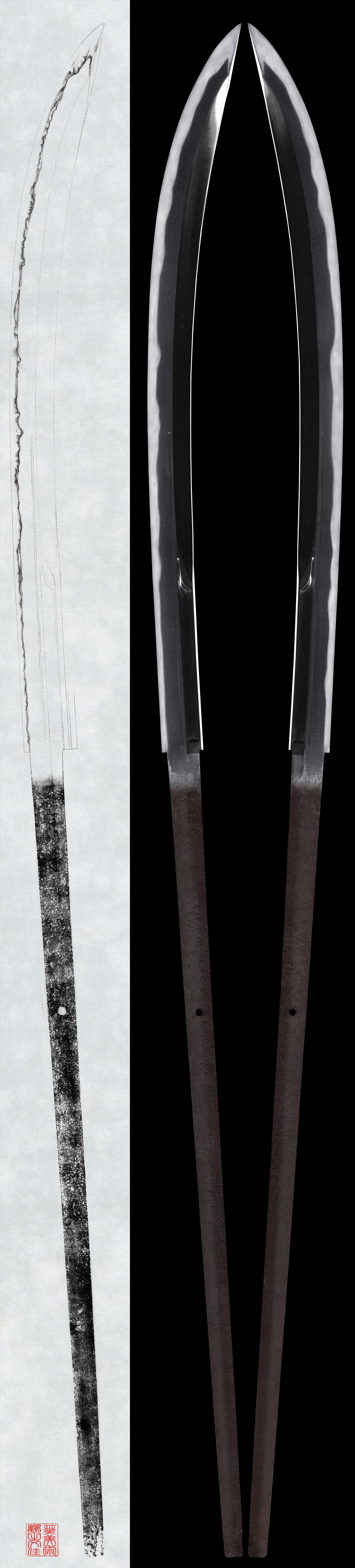
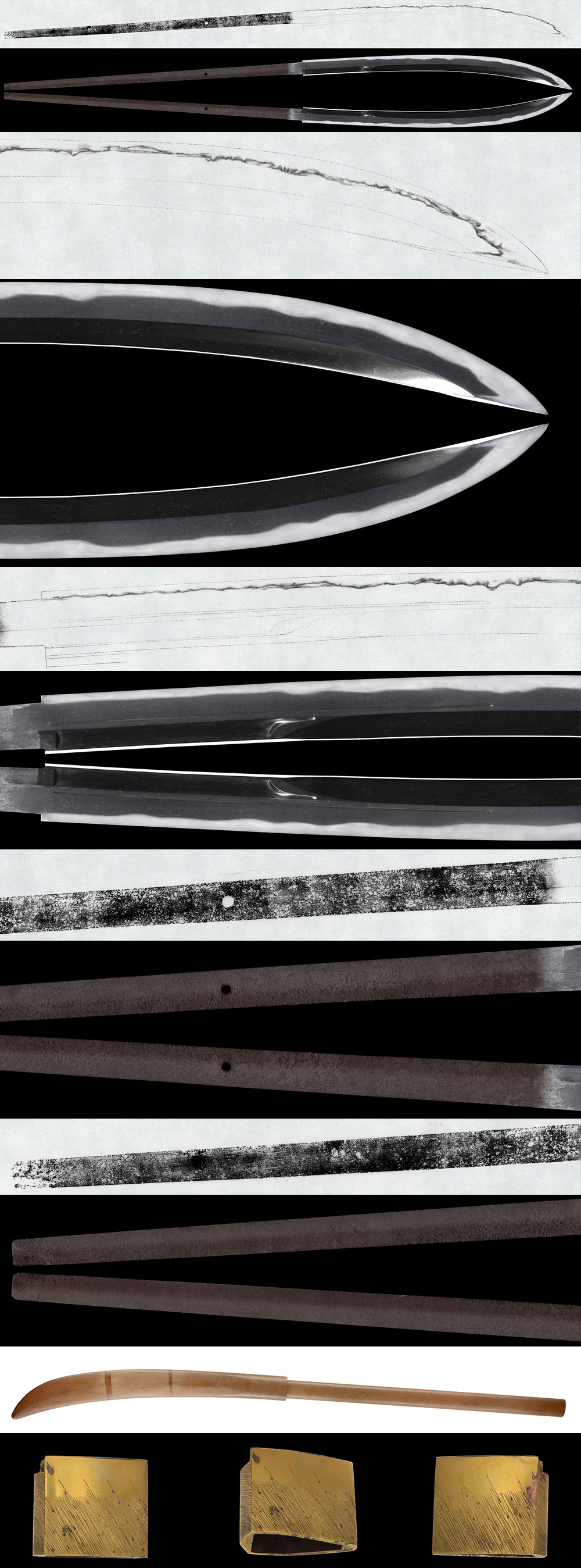
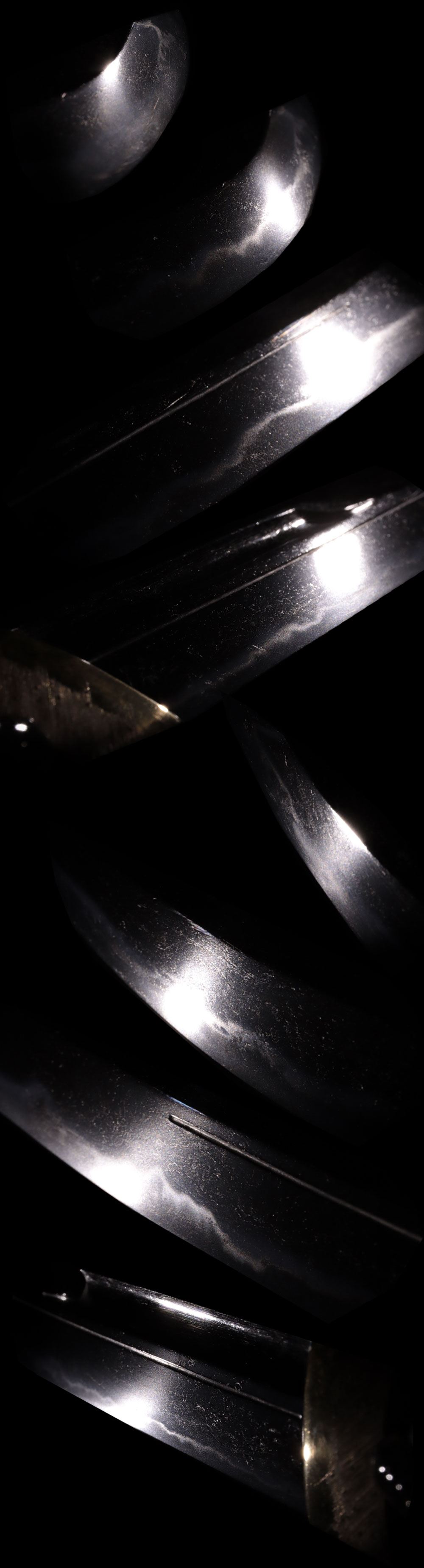
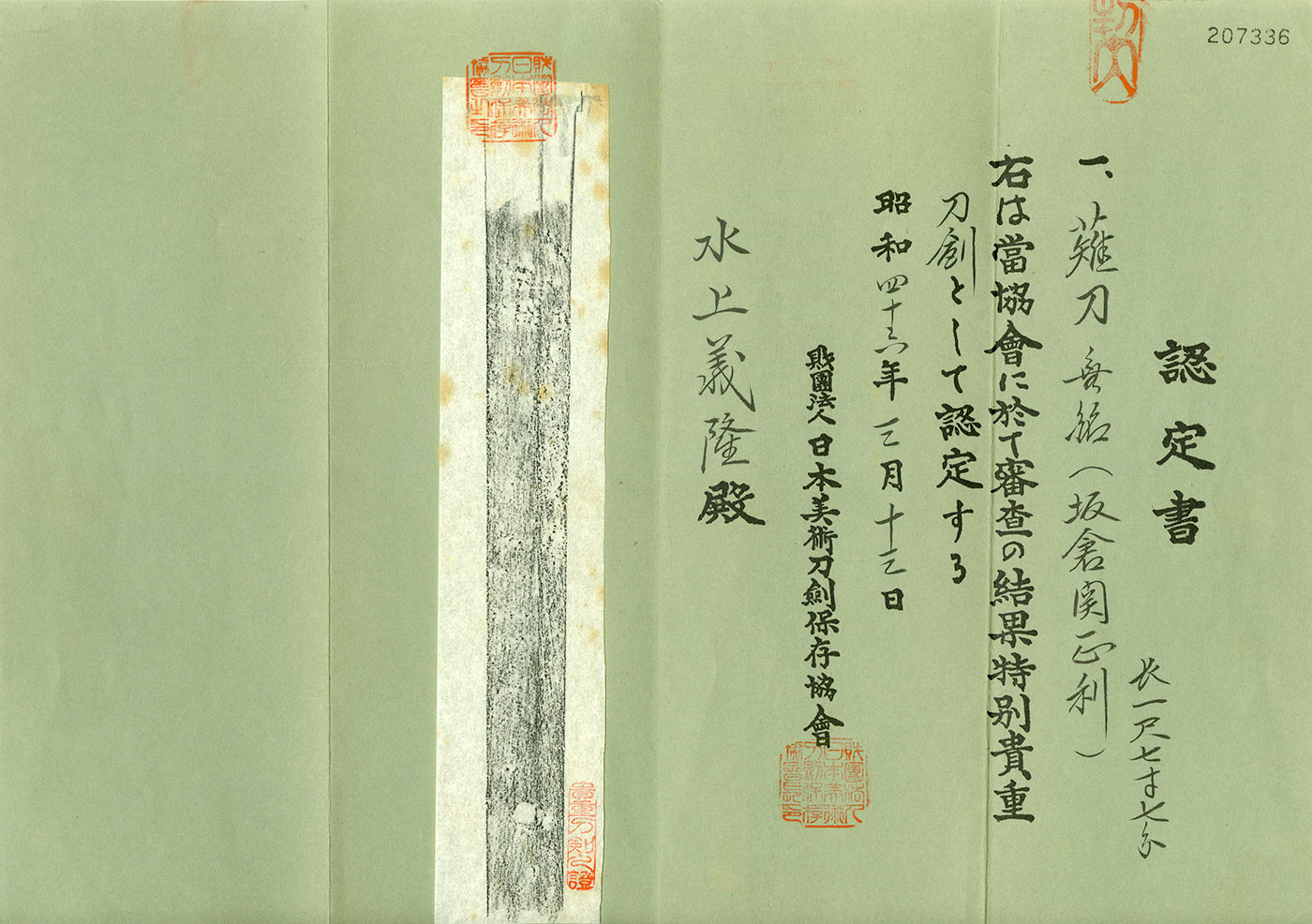
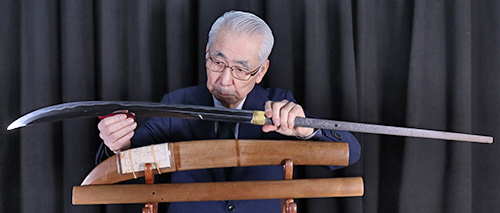
Our company classifies the quality of a swordsmith's work as Saijo-saku, Jojo-saku, Jo-saku, and Futsu-saku. The quality of this work is ranked as Jo-saku for a Mumei (Itakura Seki Masatoshi). Polished. Sword weight: 995 grams. Taihai: A long Naginata with Ubu nakago, featuring a solid mihaba and kasane. Jitetsu: Ko-itame hada well-grained, with some areas becoming hadatachi, resulting in a well-kneaded jitetsu. Hamon: Nie-deki gunome midare with angular gunome midare, returning with a sharp point at the saki. Tokucho: This work is Mumei but has been appraised as Sakakura Seki Masatoshi, and it is a Naginata with good taihai. A word from Aoi Art: This is a solid Naginata work appraised as Itakura Seki Masatoshi. It is a sturdy piece with a thick kasane. The Sakakura Seki were swordsmiths who began production around the Oei era in the early Muromachi period and continued until the end of the Muromachi period. I believe it is an excellent work featuring gunome midare. There is a slight thin rust on the mune. It is a Naginata from around the Eisho era of the Muromachi period; such works are few, and I highly recommend this high-quality piece. Tokubetsu Kicho Token. Aoi Art Kanteisho. Zenshin Oshigata.
Auction status: live on sword-auction.com.
NihontoWatchOffered by Aoi Art
Sakakura Seki Masatoshi is a name with Jūyō-designated work, and we couldn’t find current papers for this piece. Treat the name as unproven until papers say otherwise. Its older green papers are largely disavowed by the NBTHK today. — Hoshi Ask me first
1 on the market

As written by the shop
Machine translation from the shop's Japanese · may contain errors ·
Mino-den · Mino · around 1504-1521
Tōken Taikan top 49%
1 piece on the market now
Where Masatoshi stands among comparable artisans: across all of nihontō, and within tradition, era, and period. The tiers (Foremost · Leading · Major · Notable) weigh official designations from the NBTHK and Japan's Agency for Cultural Affairs, together with historical honors of lasting repute such as the Sansaku and Meibutsu-chō.
Select a lens to see how it's measured.
Mino-den · Mino
1 piece on the market now
| Smith | Era | Designated |
|---|---|---|
| Masatoshi正利 | 1504-1521 | 1 |
| Masatoshi正俊 | 1487-1489 | 1 |
Mino in the Muromachi period
Sengoku Seki was an industry: smiths organized under their tutelary Kasuga shrine, arming the war bands of central Japan. Magoroku Kanemoto’s sanbonsugi and the finest Kanesada work prove quality survived inside mass production.
This work carries older NBTHK “Kichō”-era papers, which the NBTHK no longer issues and largely disavows today. To confirm the attribution, submission to an official Japanese examination body (such as the NBTHK or NTHK) for modern certification could be considered.
If you wish to return an item, please notify us within 3 days of receipt. After this period we cannot accept cancellations. Please ship the return to us within 5 business days. Cancellation is conditional on the item being kept in the same condition as at the time of sale, so please handle it with care.