The twentieth century nearly killed the craft twice: wartime distortion, then the occupation ban. The NBTHK’s founding in 1948 and licensed forging from 1953 rebuilt the sword as an art, crowned by Living National Treasures and the mukansa rank.
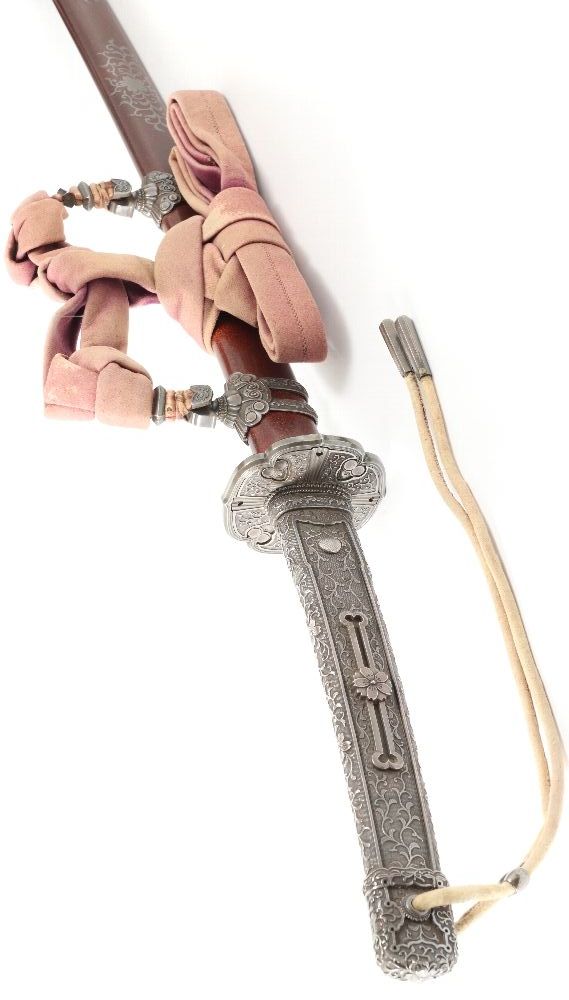
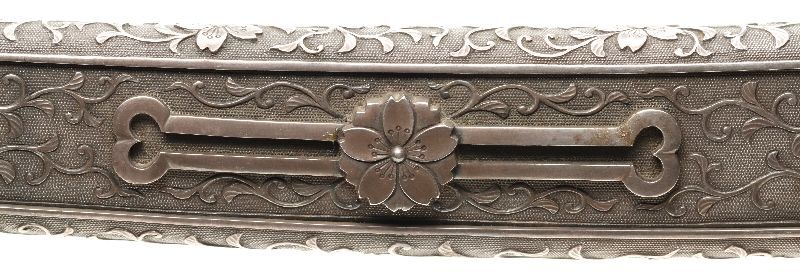
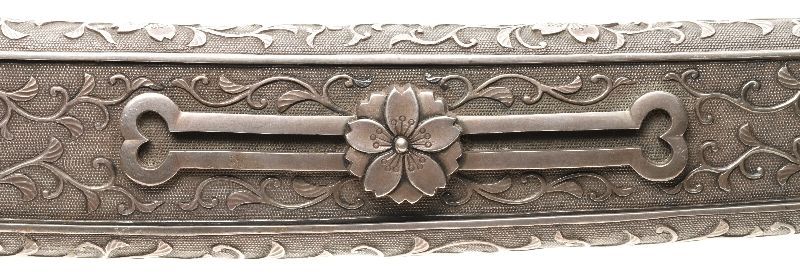
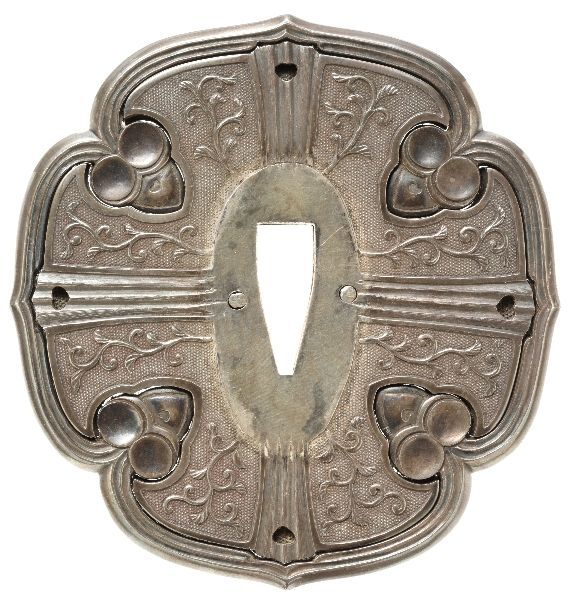
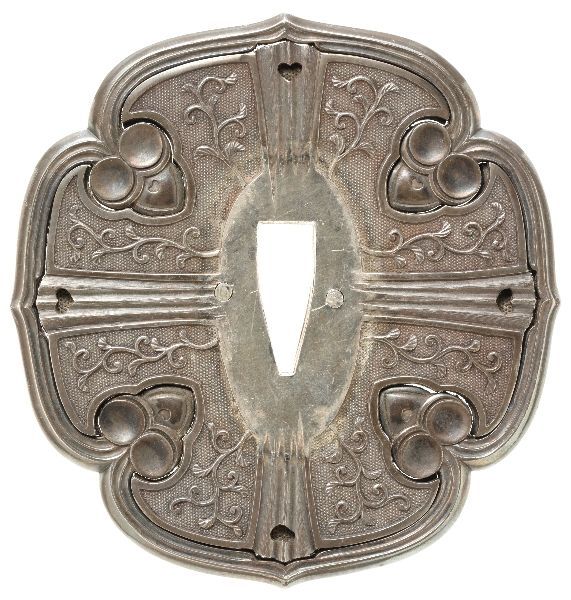
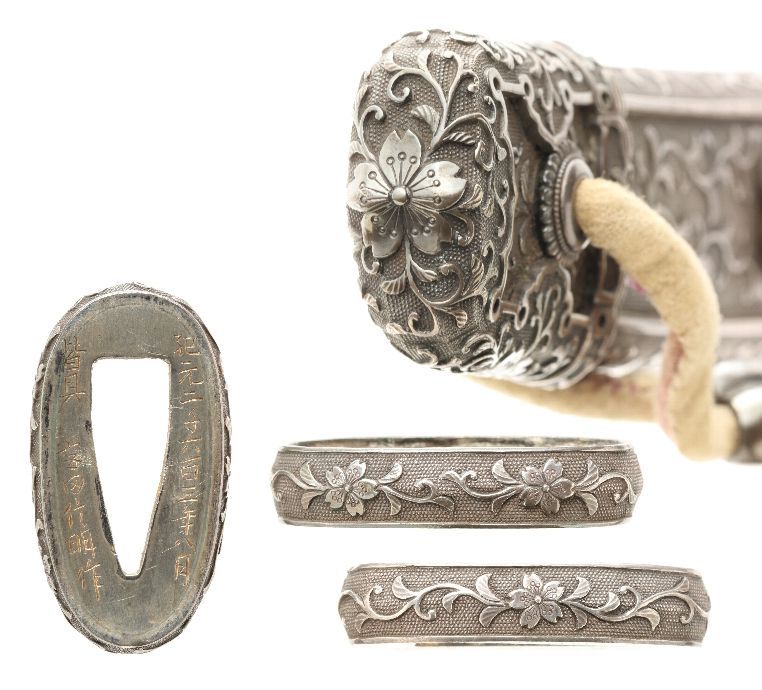
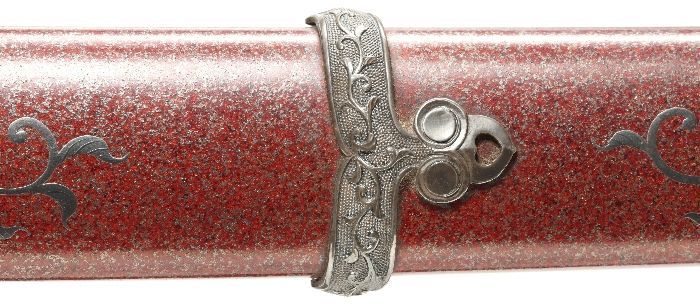
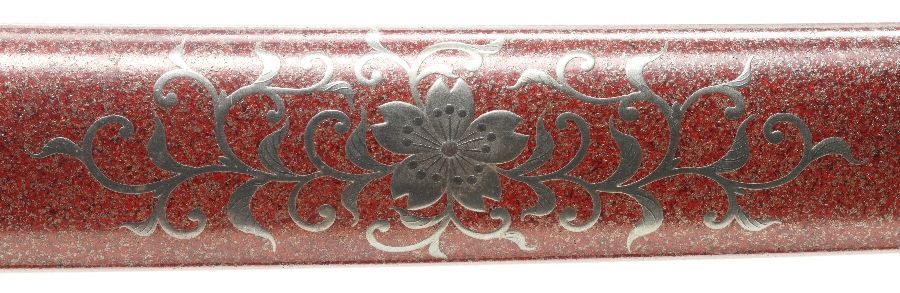
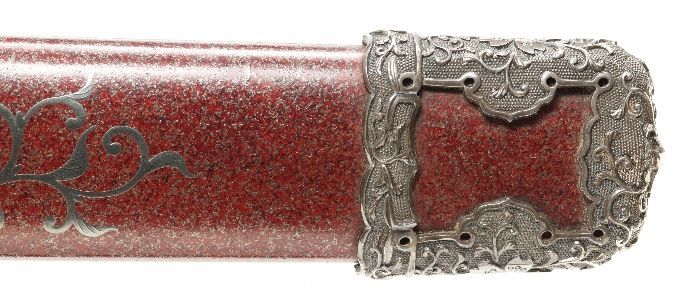
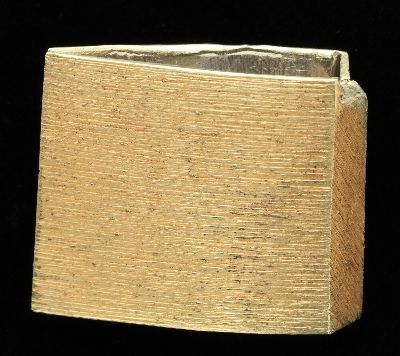
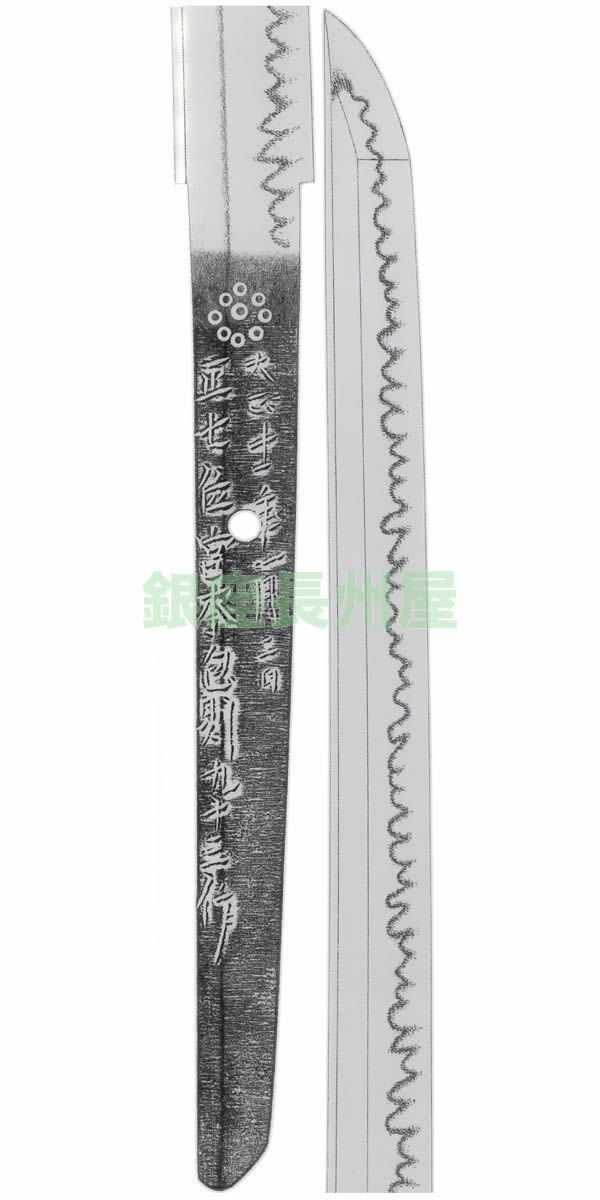
宮本包則(みやもとかねのり)は天保元年伯耆国竹田村大柿の生まれ。長じて刀鍛冶を目指し長舩祐包に入門。業成って包則の工銘を授かり、因州池田家に仕えている。後に鳥取藩の要職にあった荒尾氏に見出されて京の有栖川宮の知遇を得、三条堀川に鍛冶場を設けている。明治を迎えて多くの刀工が職を離れたが、廃刀令以降も作刀の需要があり、殊に宮中や皇族、軍人からの注文が多く、また、明治十八年の伊勢神宮式年遷宮では御神剣の献納を勤め、同三十九年に帝室技芸員(注1)に任じられている。 この太刀は、腰反り穏やかに先伏しごころの小鋒に結んだ古備前を思わせる細身で上品な姿。緻密に処理された板目に小板目を複合した地鉄は細やかな地景が入り、地沸が叢付き湯走り状あるいは淡い飛焼となって地を装い、所々に乱れ映りが現れて地相も古調。刃文は、区下焼込みから始まる逆ごころの小互の目丁子で、帽子も乱れ込んで先尖りごころに返る。匂口柔らか味のある焼刃は、刃境にほつれが濃密に掛かり、その一部は金線稲妻となって光り、殊に地中の肌目に働いて流れ込み、焼頭に添って連続する筋状の景色を生み出して迫力がある。匂で透明感のある刃中には小足が盛んに射し、物打辺りではこれが刃肌となって刃中を彩る。未だ浅い錆色の茎には、九曜紋(注2)が刻され、「正七位」の官位が切り添えられている。 拵は、宮中での儀式の際に備えられる毛抜形太刀。桜唐草図銀無垢地の総金具は宮田信明の手になるもので、時を経て渋く落ち着きのある色調の鞘に独特の紫黒化した銀地金具が調和している。総金具の彫口は精巧で、粒の小さく揃った魚子地を背景に濃密に彫り出された唐草がくっきりと浮かび上がり、その所々に桜が配され、目貫は拵様式の呼称にも採られている毛抜に八重桜が品位高く彫り表されている。流れるような曲線からなる構成が美しい鞘の盛上蒔絵も品位高く、加えて傷みがなく、手厚く保存されてきたことを示している。宮田信明は船田一琴に学んだ信久の子で、明治二十一年の生まれ。江戸期の技術を近代に継続させた金工である。 注1...皇室により美術工芸作家の保護と制作の奨励を目的として設けられた、現在の人間国宝に相当する制度。 注2...九曜紋は、包則を見出した恩人荒尾千葉介の家紋であり、大正八、 九年の作に刻されている(『帝室技芸員宮本包則刀六十撰』参照)。
Kanenori包則
Offered by Choshuya
This piece has sold
Get an email when a new Kanenori piece hits the market.


Hoki · around 1861-1864
3 pieces on the market now
Shōwa to the present: destruction and revival
The twentieth century nearly killed the craft twice: wartime distortion, then the occupation ban. The NBTHK’s founding in 1948 and licensed forging from 1953 rebuilt the sword as an art, crowned by Living National Treasures and the mukansa rank.
A Hozon-certified blade judged to show notably superior workmanship and a better state of preservation. The bar is higher: re-tempered blades and most unsigned Muromachi/Edo works are excluded.
The NBTHK (Nihon Bijutsu Tōken Hozon Kyōkai, the Society for the Preservation of Japanese Art Swords) is a public-interest incorporated foundation founded in 1948 and supervised by Japan’s Agency for Cultural Affairs (Bunkachō); it is based at the Japanese Sword Museum in Tokyo. Its expert panels physically examine each submitted work (shinsa) and issue a certificate (kanteishō) ranking it by artistic and historical merit. NBTHK papers are the most widely recognized standard of authentication for Japanese swords and fittings.
NBTHK official siteIf, due to our fault, the item differs significantly from its proper condition, the item may be returned. Cooling-off is within one week of the item's arrival.