KOSHIRAE
This is truly a gem of Gendaito!
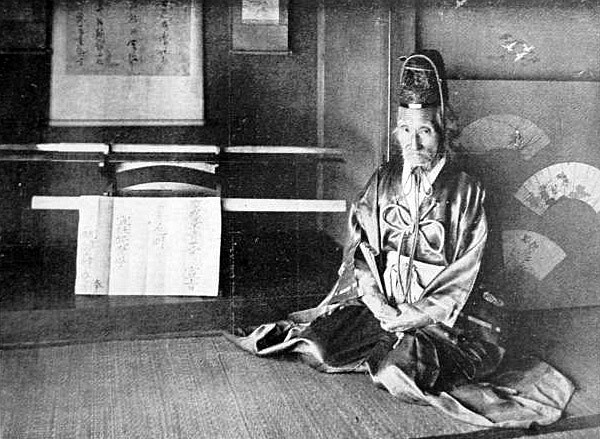
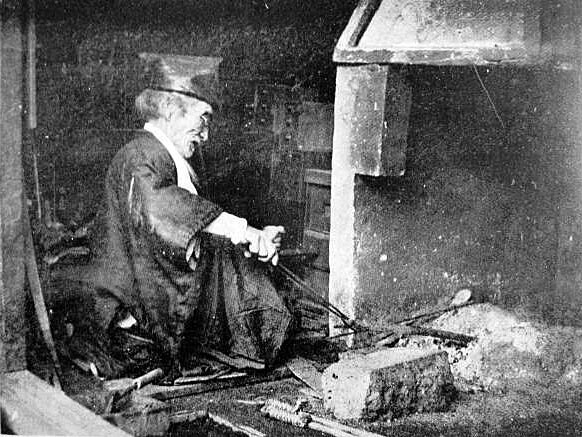
Miyamoto Kanenori 1830-1926. Real name Miyamoto Shigahiko, surname Suguwara. Kanenori is a Josaku rated smith who lived in an incredible time. He witnessed firsthand Japan’s transition from the era of feudal lords to a modern world. His works span over 60 years transitioning through Shinshinto, Meji and Taisho eras.
Kanenori was born 1830 in Ô-kaki Takeda village, Hoki province and was the son of a brewer in. He had aspirations of becoming a sword smith even at an early age. In 1851, at 21 years of age he entered an apprenticeship with Bizen Yokoyama Sukekane. It was Sukekane who gave him the “Kane” (包) character.
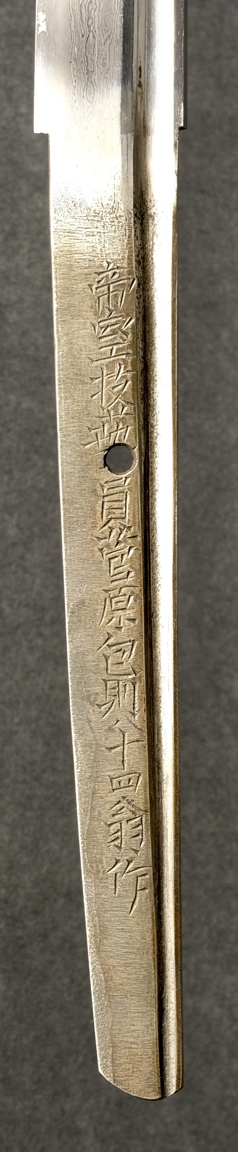
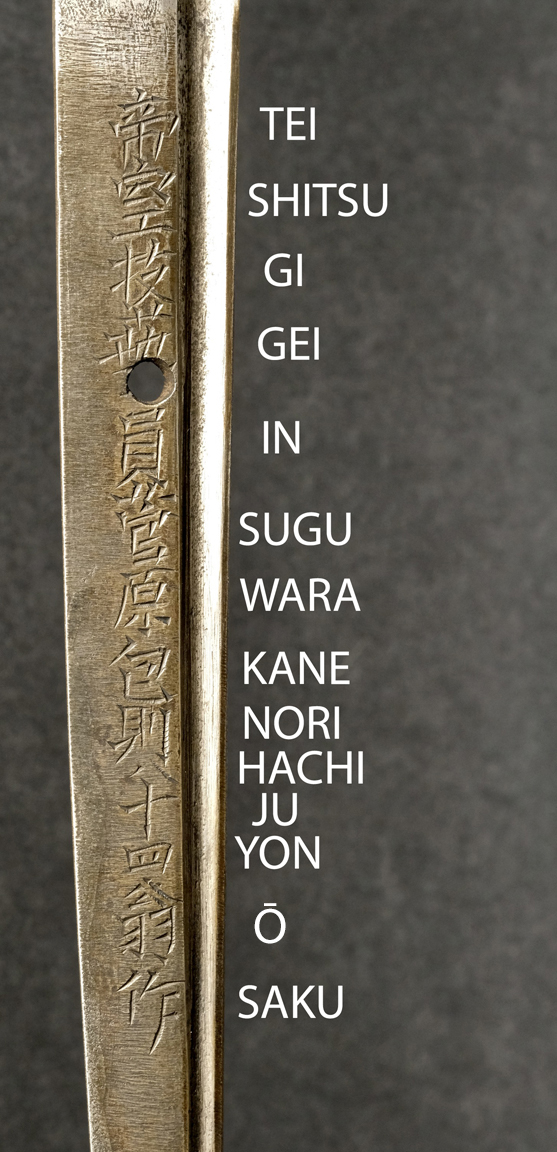
Kanenori attained a couple of prestigious titles beginning in 1866 when Prince Arisugawa Taruhito (1835-1895) granted him the honorary title Noto no Kami. In Meiji 39 (1906) he became a teishitsu-gigei ́in (帝室技芸員), a title or rank that was introduced to preserve traditional arts and crafts not to be lost in the modernizing Japan. Teishitsu-gigei ́in was the forerunner of the modern Ningen-kokuhō or Living National Treasure. There were only two smiths to ever receive this title, Minamoto Kanenori and Gassan Sadakazu.
He became hired swordsmith of Chiba-no-suke ARAO, the chief retainer in Ansei 3(1856). He offered his sword to Kômyô Ten-nô (in same year). In 1868, he visited and stayed Inariyama Tsurugi-ishi, then created the tachi of Meiji Ten-nô, offering swords of Inari-sha shrine and others.
For a short time after Haitōrei Edict of 1867, he temporarily returned to his hometown and manufactured farm tools.
After Meiji 18 (1885), he created and offered tachis, hokos, kabura etc to offer Ise jingü’s dedication of new shrine. He copied and created Shô-sô-in treasure swords with Hioki Kanetsugu and Ishido Kazumitsu. He was appointed to create several swords, such as Atsuta Jingû shrine goshinpô tachi, Yasukuni Jingû shrine kens “御宝剣”, Iyo shô-kon-sha kens “御宝剣”, etc.
He created many omamori-gatana guardian swords for Kô-zoku imperial families and the nobility. With the help of Imperial Japan army minister Terachi Masatake, by the U.K. army minister demand, he created hakashi “佩刀”, swords worn by the aristocracy or the Shogun.
Kanenori worked in Tōkyō as well as in Tottori in Inaba province, in Kurayoshi in Hōki province, and in Kyōto. He was proficient in many styles including sanbonsugi-like gunome or gunome in the style of Bizen Kanemitsu, also chōji-midare and saka-chōji-midare. Again, he was rated Jō-saku.
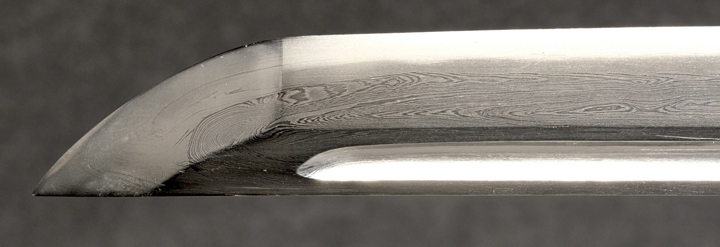
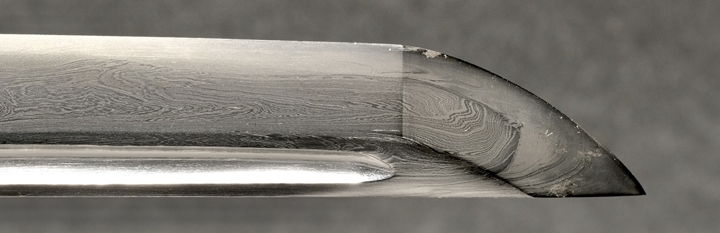
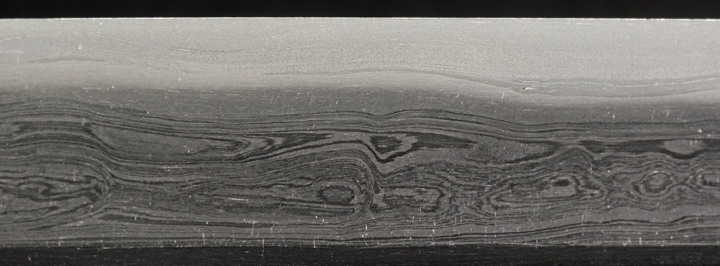
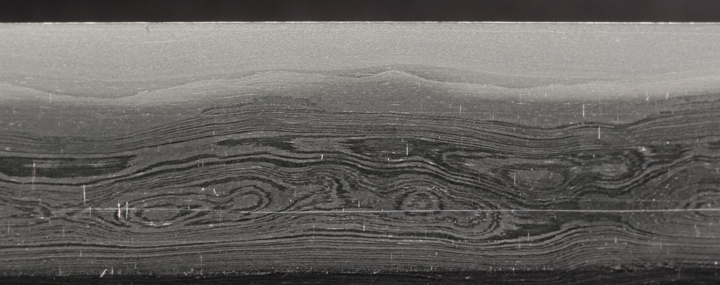
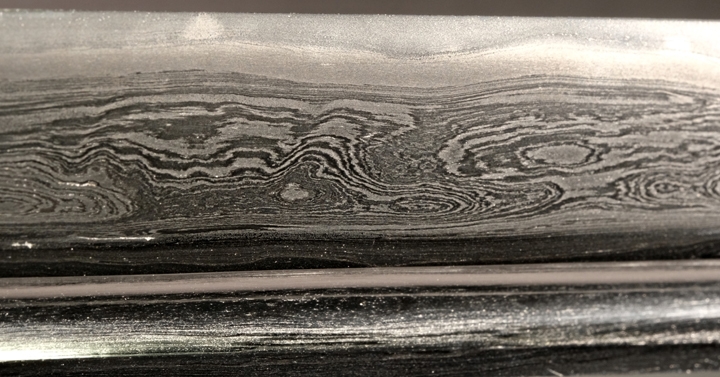
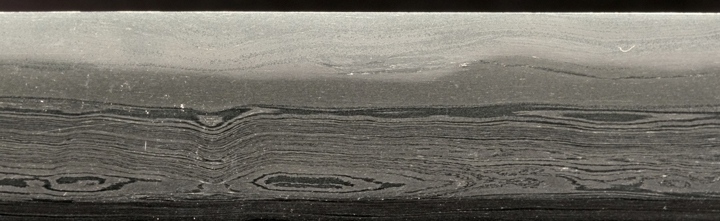
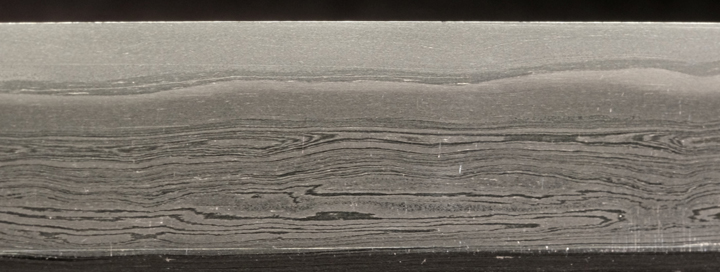
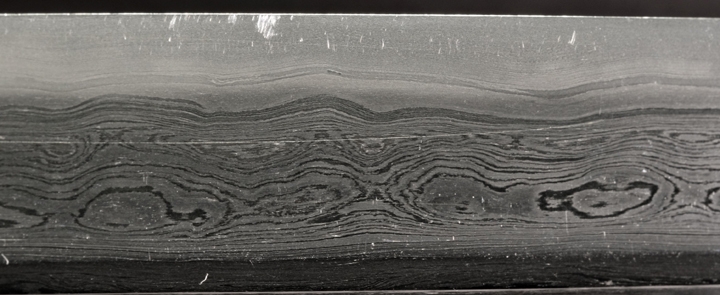
*Kanenori specialized in a very flamboyant or ostentatious jihada known as Hadamono, Hatatatsu or Yukumo-gitai (clustered clouds). The additional names for this hada were used as hadamono had a negative connotation. The hada looks like O-Itame / O-Masame and resembles the matsukawa hada of Norishige.
This hada was Kanenori’s forte, though others made similar works. Apparently, these hatatatsu or hadamono blades were more than just pretty. According to Yoshikawa Kentaro they were superior for use in frigid temperatures. He wrote that swords produced in this hadamono style had more flexibility and strength than blade with a finer forged jihada.
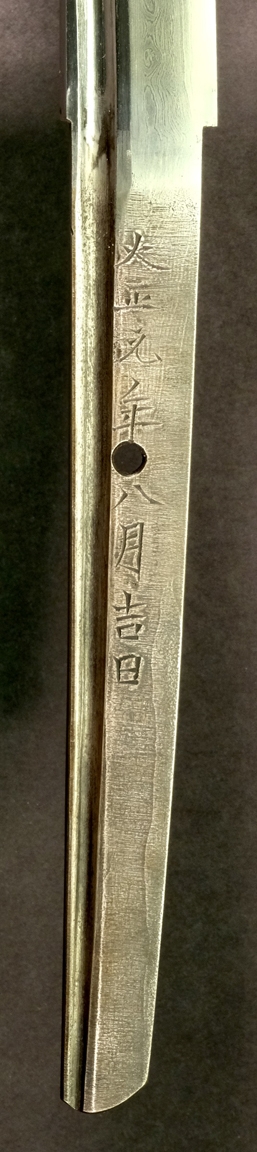
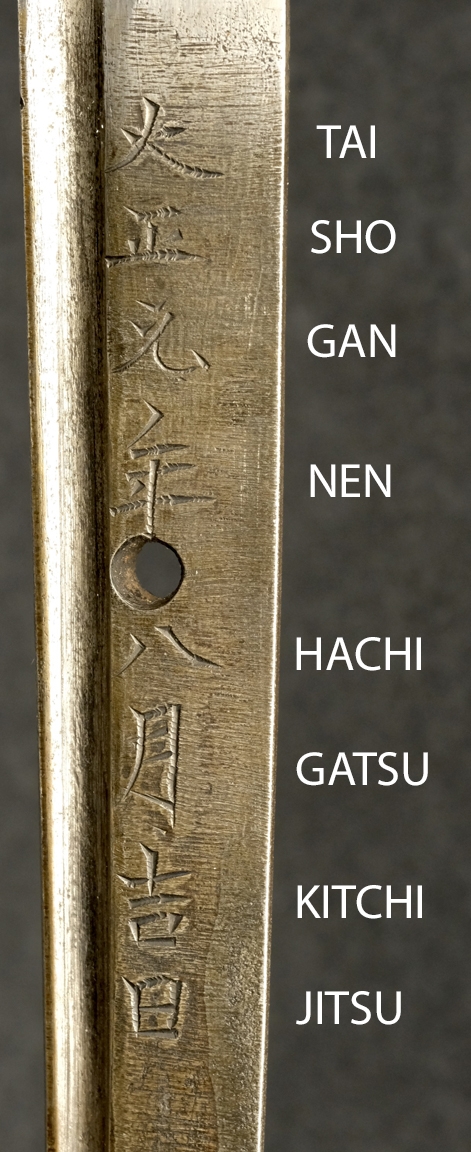
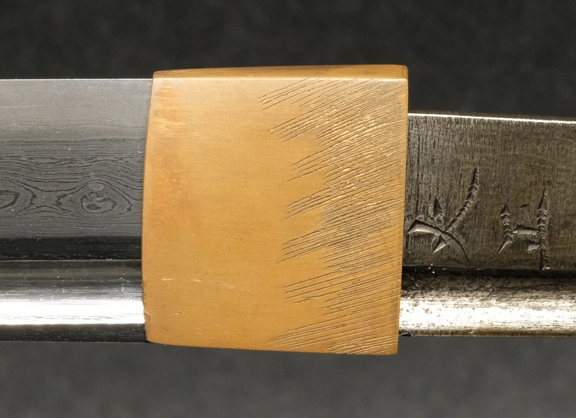
This is a long katana with a nearly 30” (76cm) nagasa. It is Ubu-ba. There are Kaki-toshi Bo-hi bilaterally The nakago is dated Taisho Gannen or the first year of the Taisho era (1912). It prominently features Kanenori’s famous Hatatatsu hada described above (see photos). The ubu nakago has one mekugi ana and is finished with kiri yasurime. There are a few hike-kizu or surface scratches, hada ware and a few very small tarnished/oxidized spots. There are no serious or fatal flaws. The habaki is a one-piece copper “cat-scratch”.
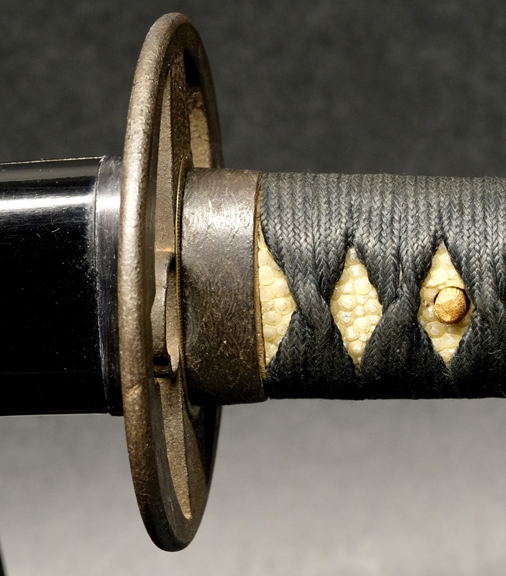
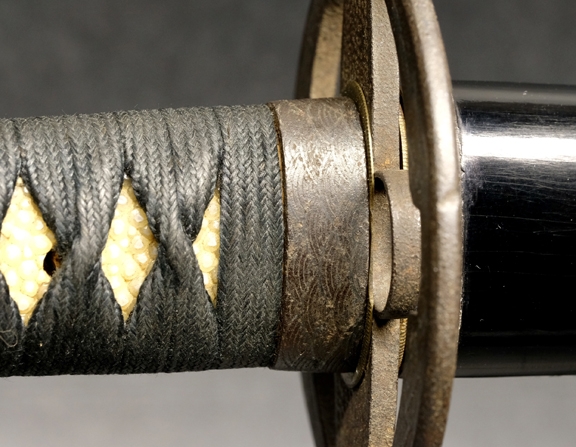
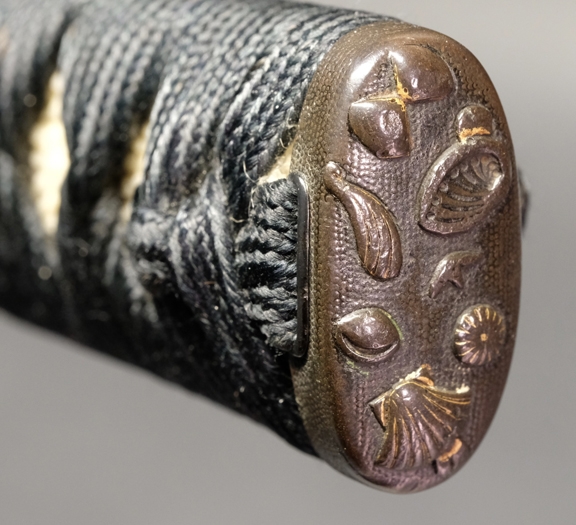
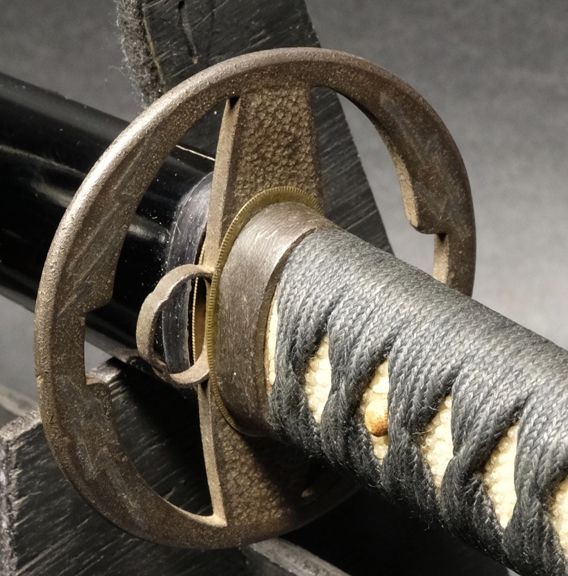
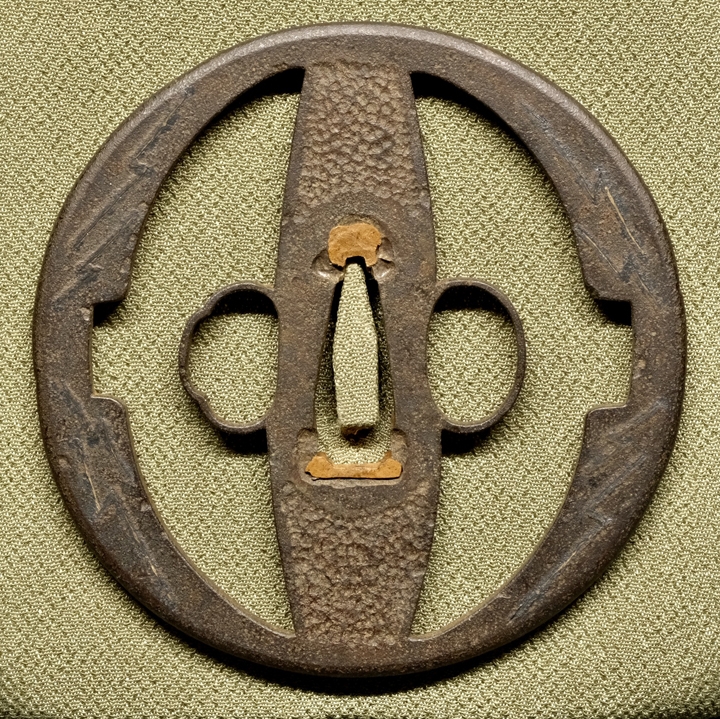
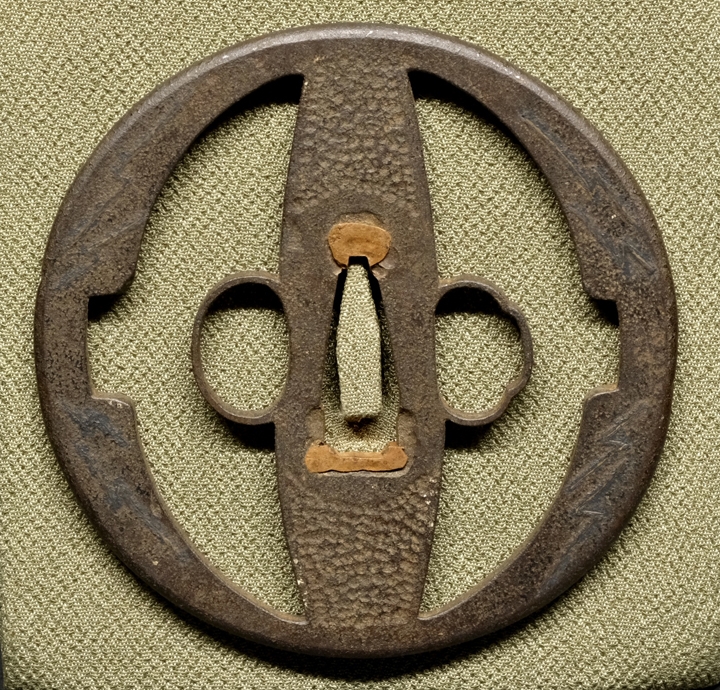
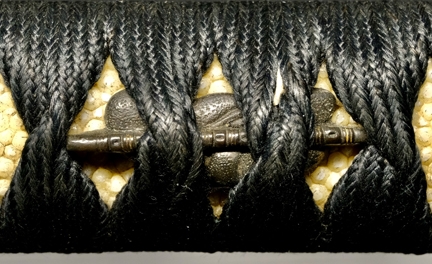
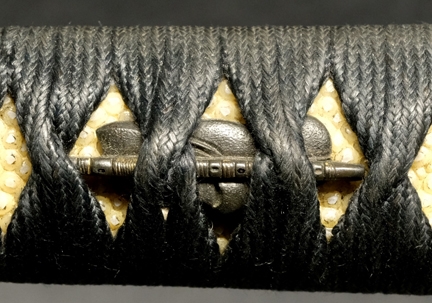
The Koshirae begins with a black lacquer saya which has wood or horn kurigata and koiguchi. There is a small crack in the seam of the saya right at the koiguchi. The tsuka has an iron fuchi. The kashira is a warm brown shakudo depicting shells. Menuki depict Saihai or military batons. The tsuba is iron sukashi the sukashi cut outs are hats. The iron seems to be well forged and there are hammer marks as well as lighting bolts carved in takabori on the surface of the plate.









 NihontoWatch