The craft survived the Meiji ban and the occupation’s near-extinction, and rebuilt itself deliberately: licensed forging from 1953, traditional methods required by law, Living National Treasures, and the mukansa rank above judgment.
 NihontoWatchNihontoWatch
Sugawara Kanenori was born in Hoki, and from an early age aspired to be a swordsmith, entering the school of Yokoyama Sukekane. He first used the mei "Miyamoto Noto no Kami Kanenori," and after moving to the capital, he became a Teishitsu Gigeiin and signed as "Teishitsu Gigeiin Sugawara Kanenori" and "Teishitsu Gigeiin Miyamoto Kanenori." His hamon include nioi-deki gunome choji or sakasa-choji, and there are also hada-mono works; he passed away in Taisho 15. His production spanned 60 years. This work is hira-zukuri, iori-mune, with a nakago that is somewhat long compared to the dimensions, and features horimono of sho-chiku-bai on the omote and a bonji with gomahashi on the ura. The ji-tetsu is a tightly packed ko-itame appearing muji-fu, but with fine ji-nie, and the hamon is nie-gachi consisting mainly of gunome with rounded heads mixed with kataochi and ko-notare; the boshi goes toward the tip returning in jizo-fu, with a deep yaki-sage and mune-yaki, and the ha-saki is mixed with sunagashi, becoming a strong nie with hakikake at the point. The koshirae is black-lacquered with kiku-mon and kiri-mon, as well as gold makie of chrysanthemums. From the sho-chiku-bai carving and the "kotobuki" character on the nakago, it is thought that this may be a work for some kind of celebration.
NihontoWatchKanenori包則
Offered by Shoubudou
2 on the market

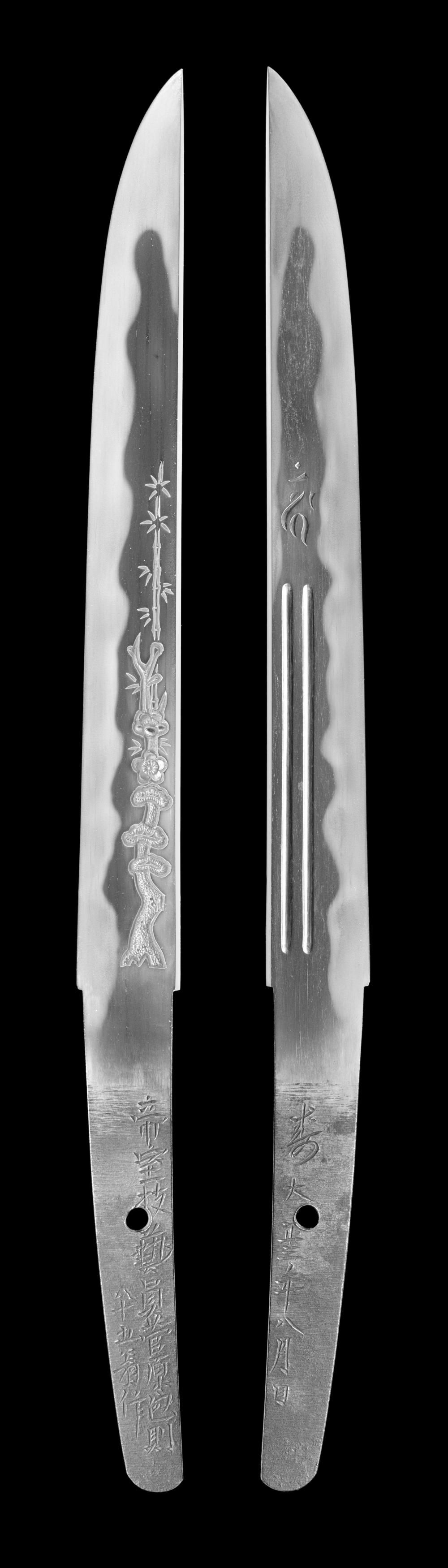
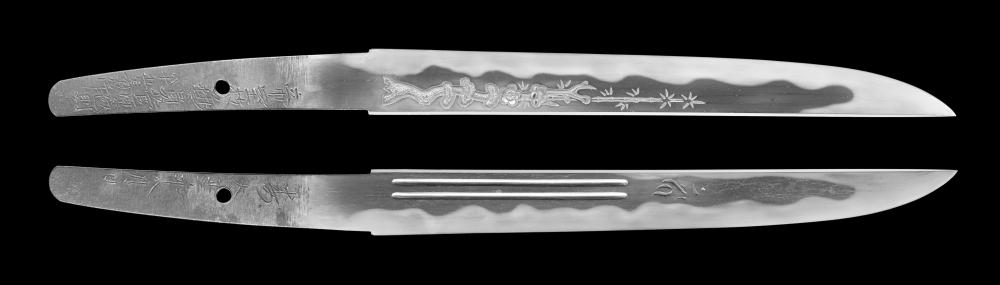
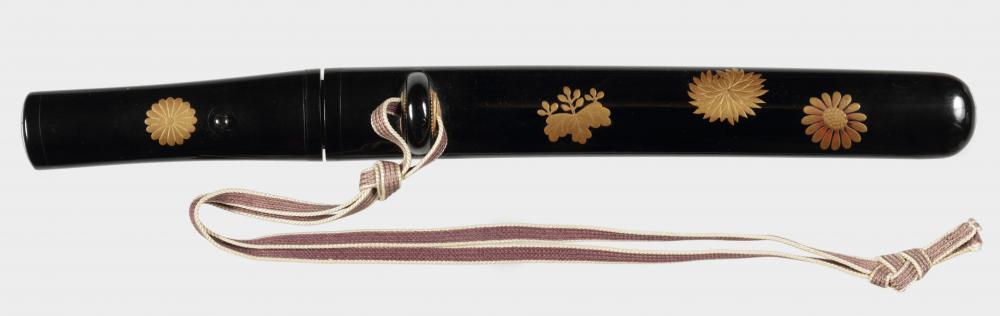
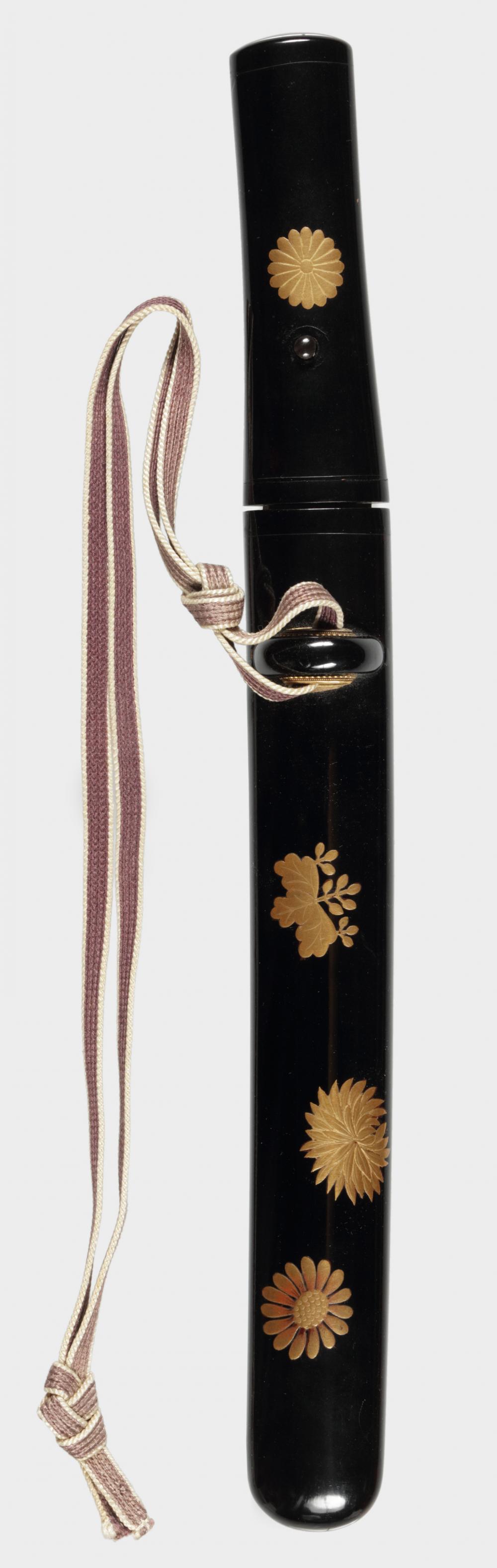
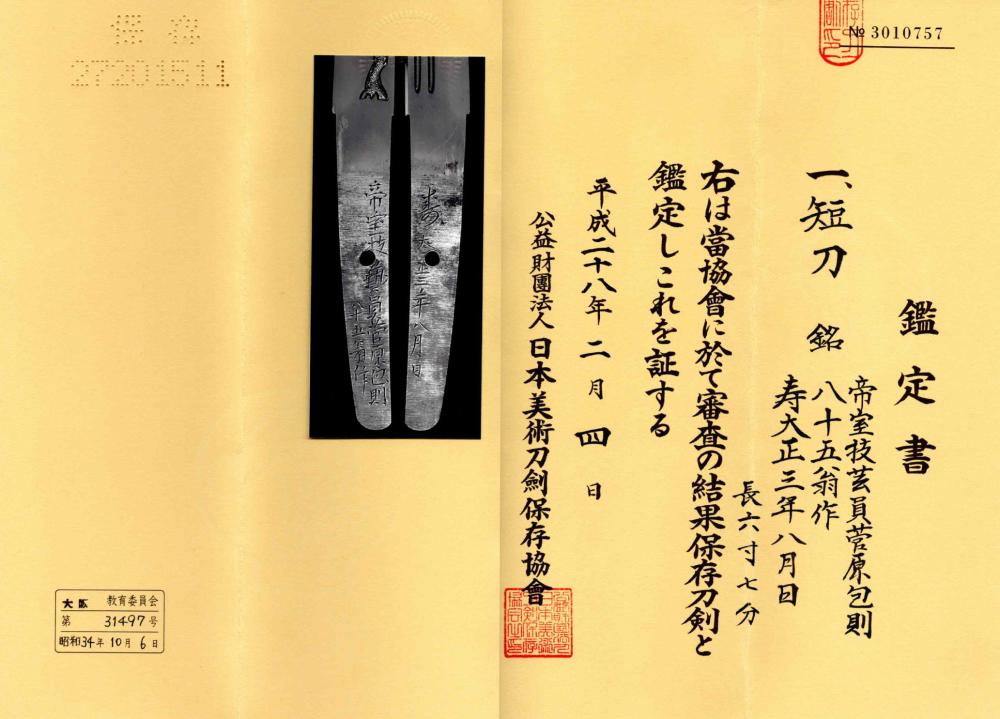
As written by the shop
Machine translation from the shop's Japanese · may contain errors ·
Hoki · around 1861-1864
2 pieces on the market now
The modern era (1868 to today)
The craft survived the Meiji ban and the occupation’s near-extinction, and rebuilt itself deliberately: licensed forging from 1953, traditional methods required by law, Living National Treasures, and the mukansa rank above judgment.
Certifies a genuine blade worth preserving: a signature confirmed correct, or, if unsigned, an era, province, and school that the NBTHK can reliably identify.
The NBTHK (Nihon Bijutsu Tōken Hozon Kyōkai, the Society for the Preservation of Japanese Art Swords) is a public-interest incorporated foundation founded in 1948 and supervised by Japan’s Agency for Cultural Affairs (Bunkachō); it is based at the Japanese Sword Museum in Tokyo. Its expert panels physically examine each submitted work (shinsa) and issue a certificate (kanteishō) ranking it by artistic and historical merit. NBTHK papers are the most widely recognized standard of authentication for Japanese swords and fittings.
NBTHK official sitePlease contact us by phone within 3 days of the item's arrival and ship it back the next day. The postage and security service fees are the customer's responsibility.
¥600,000