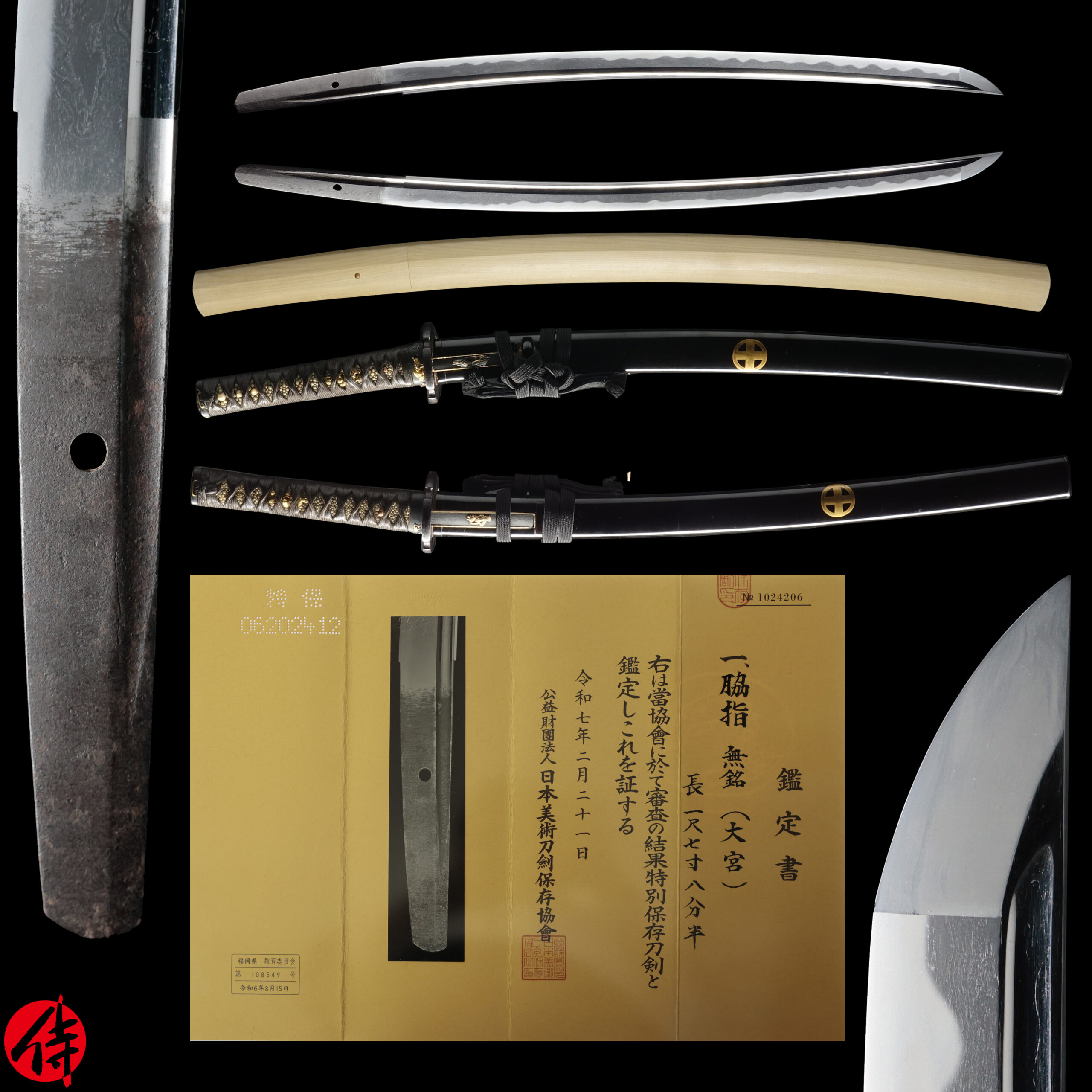
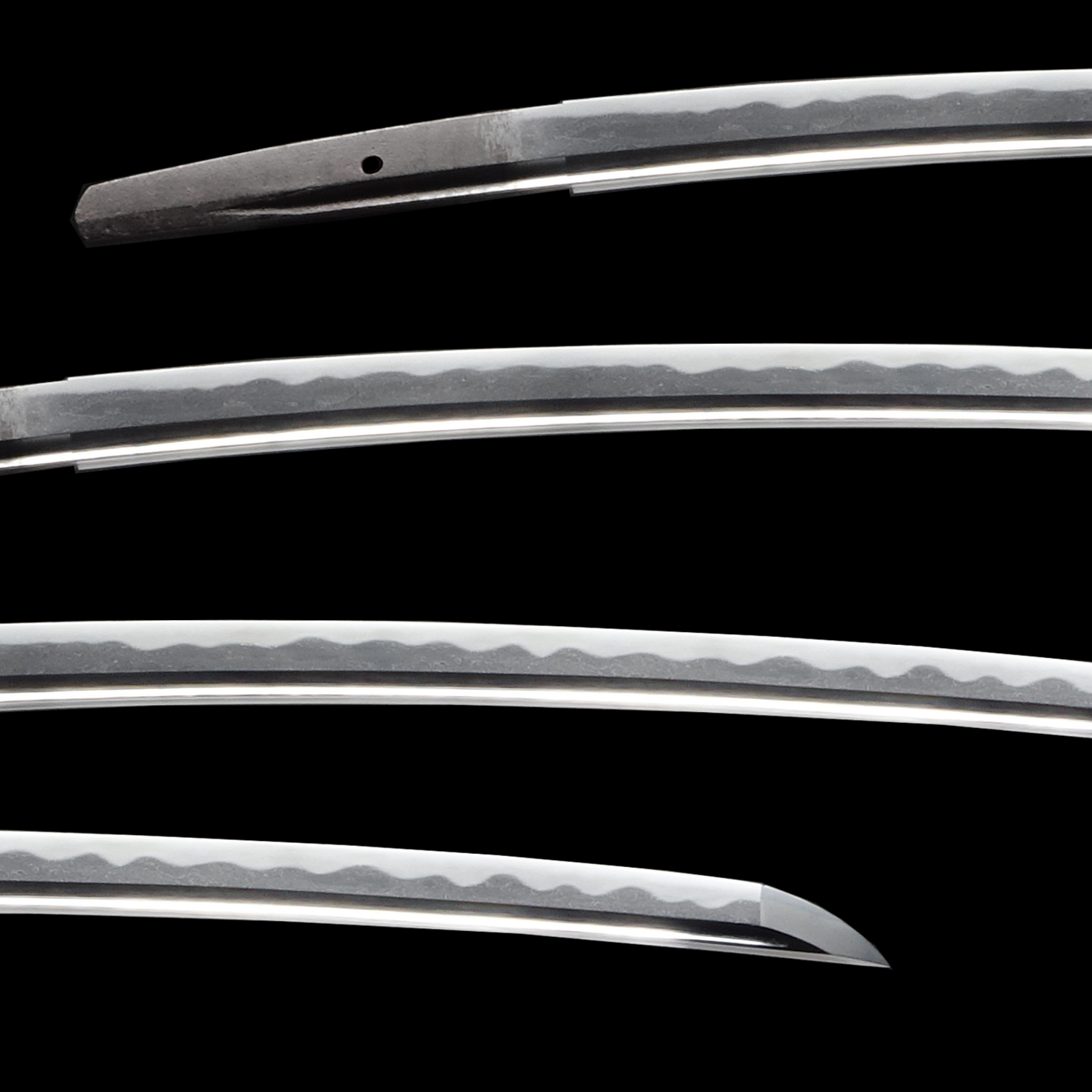
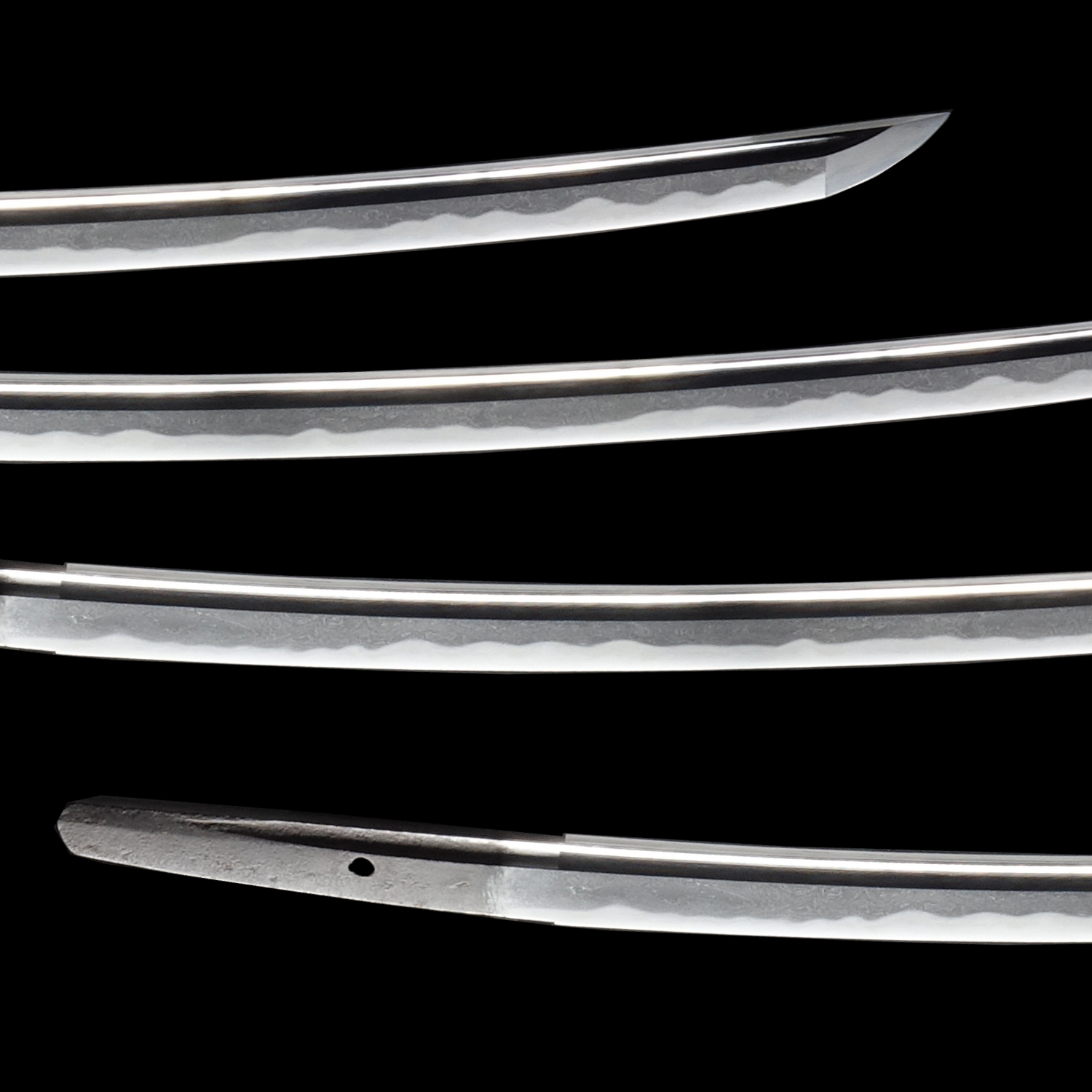
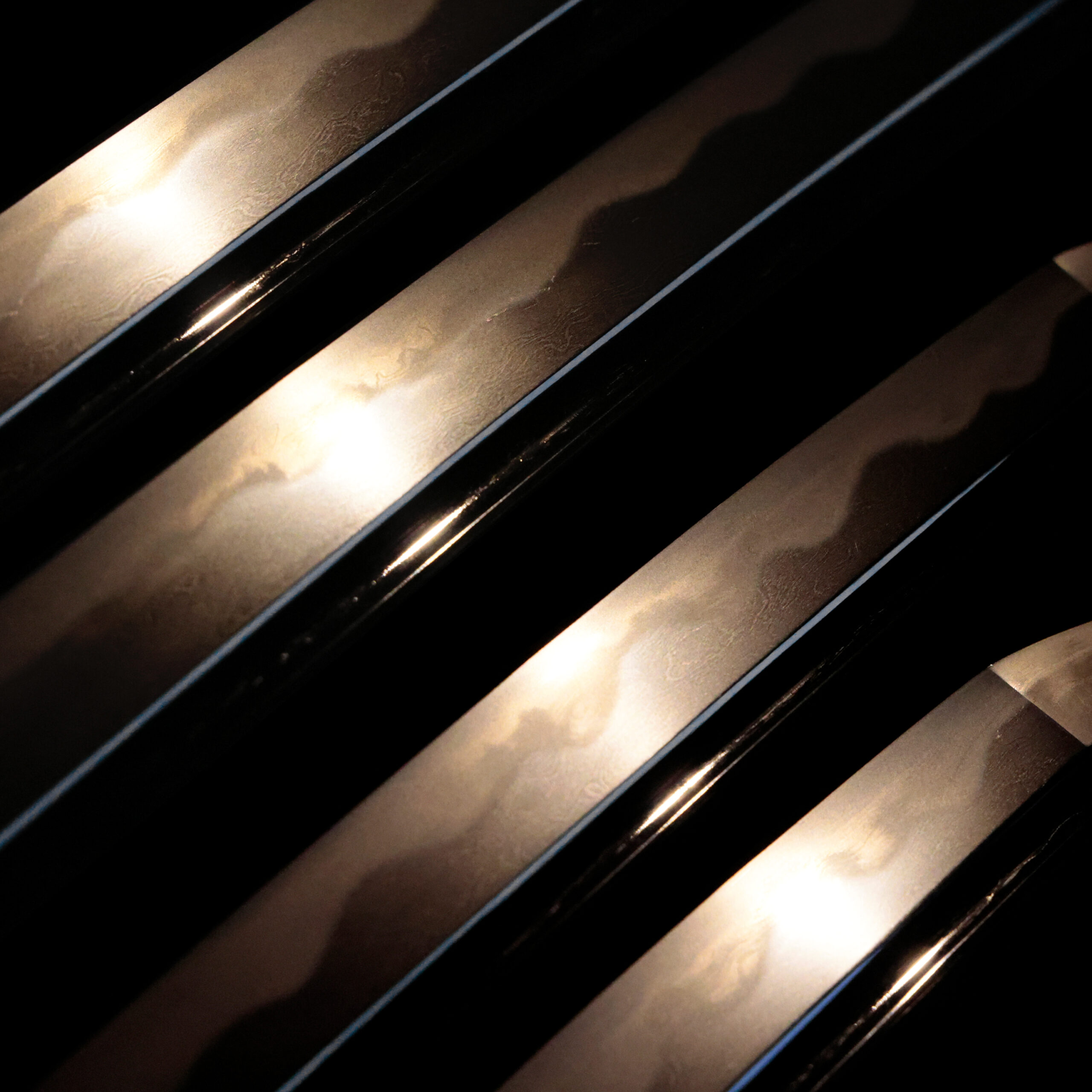
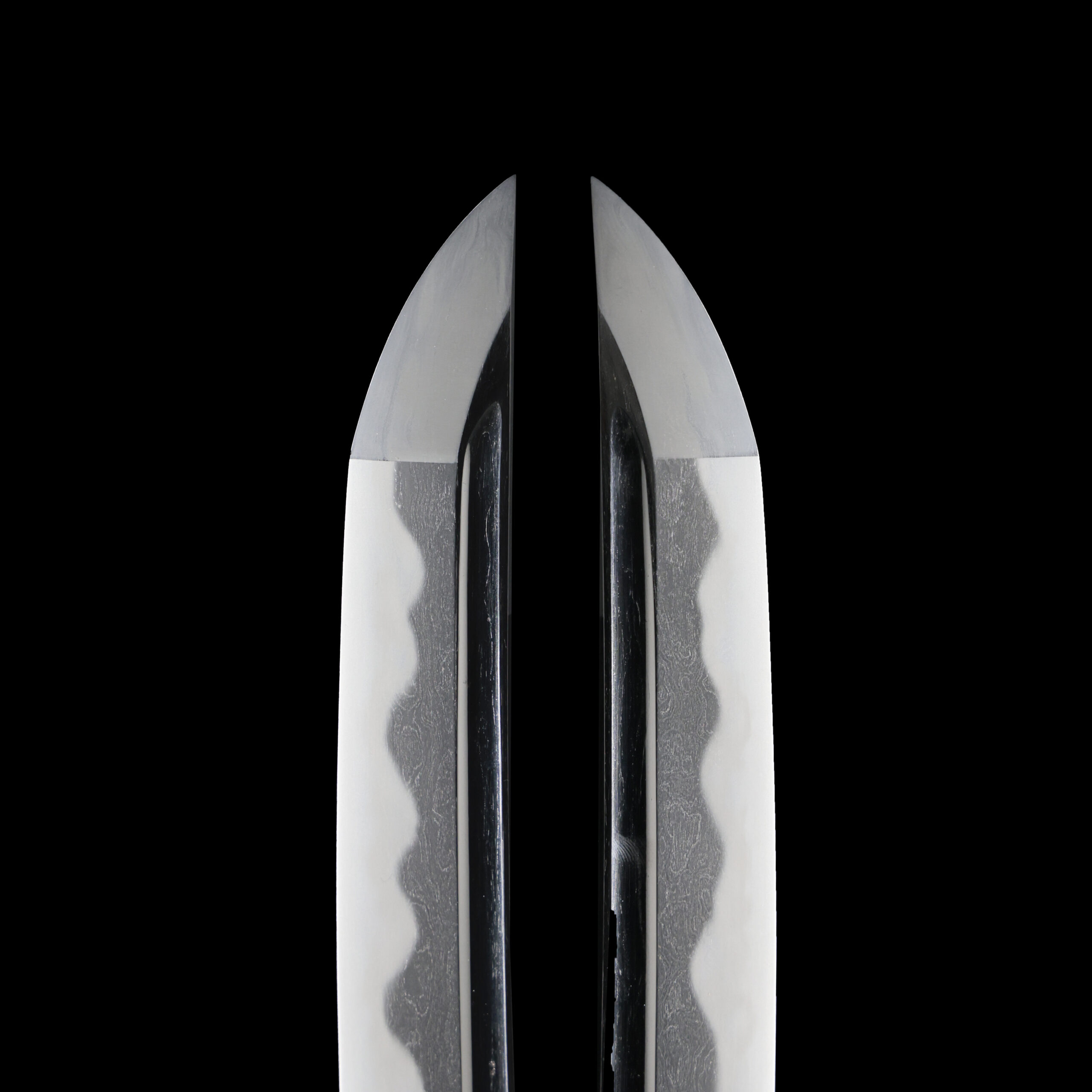
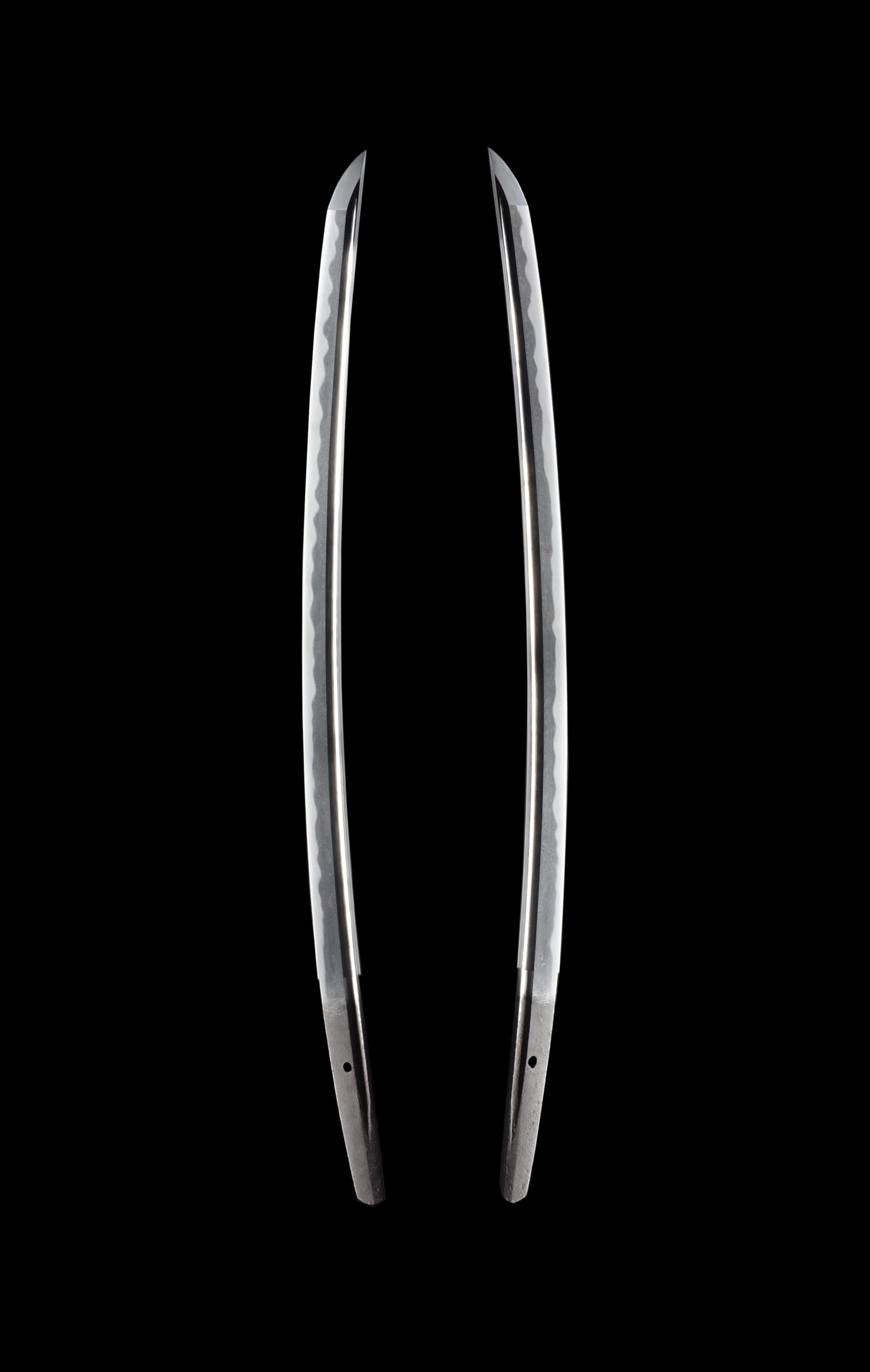
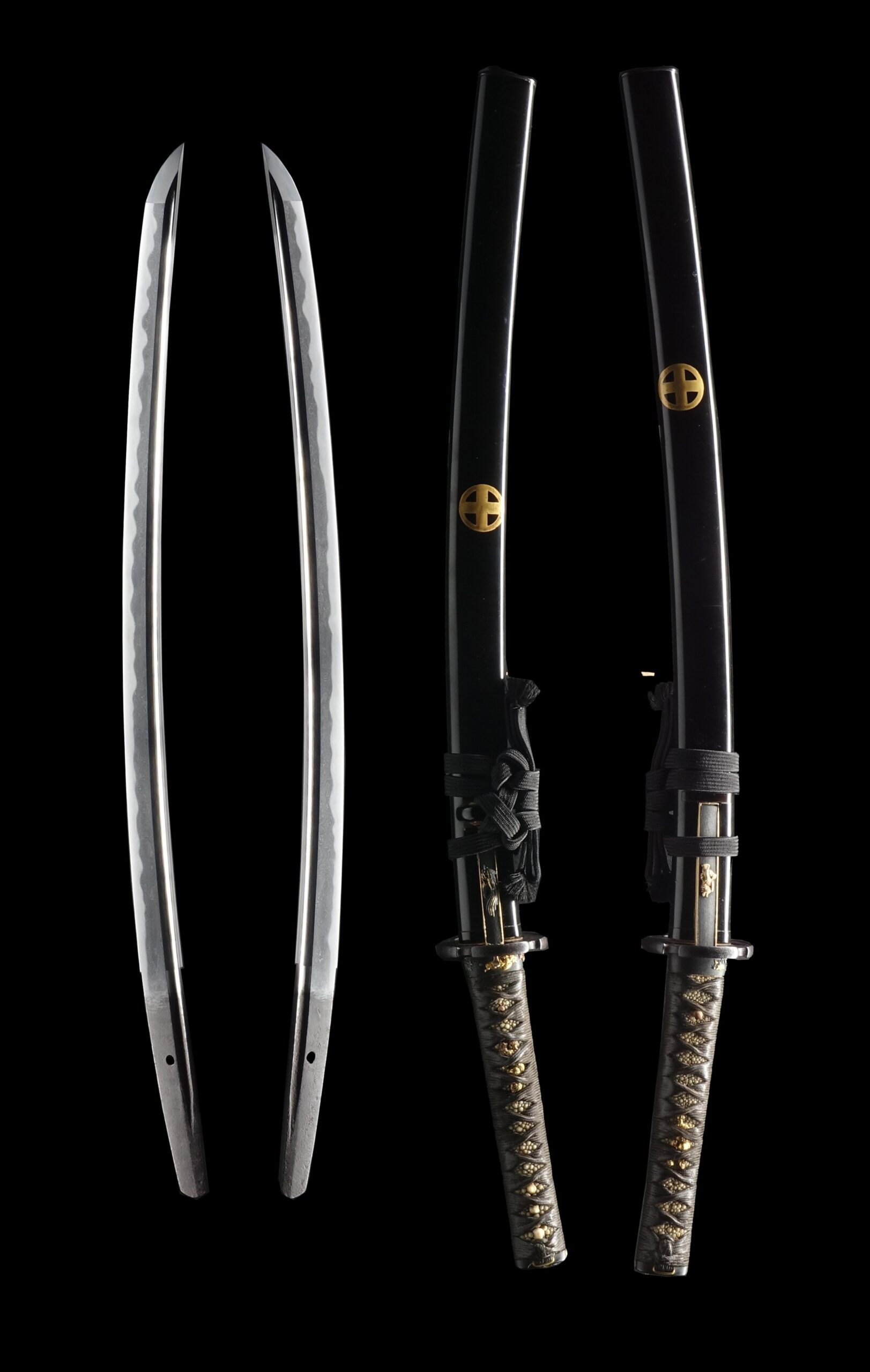
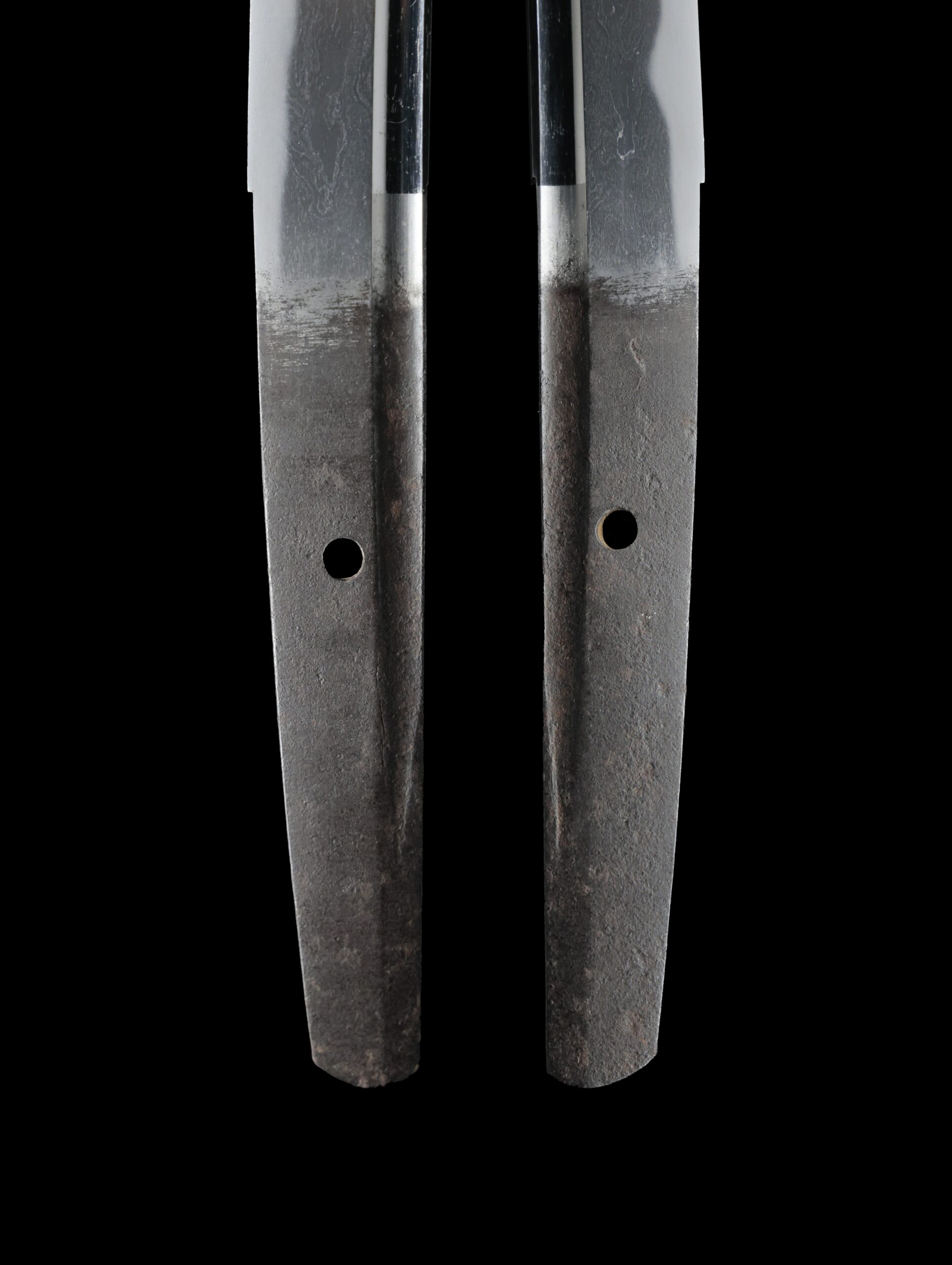
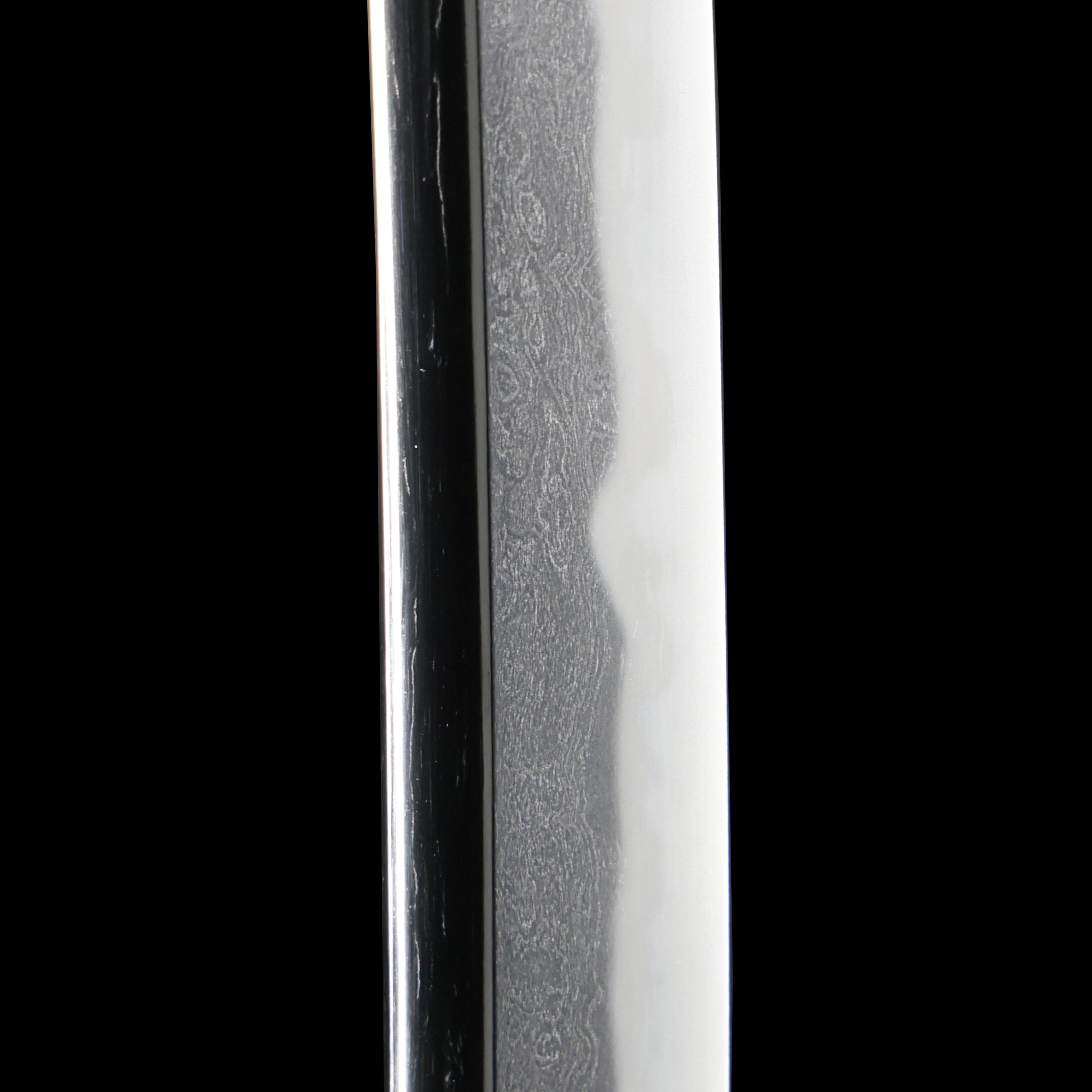
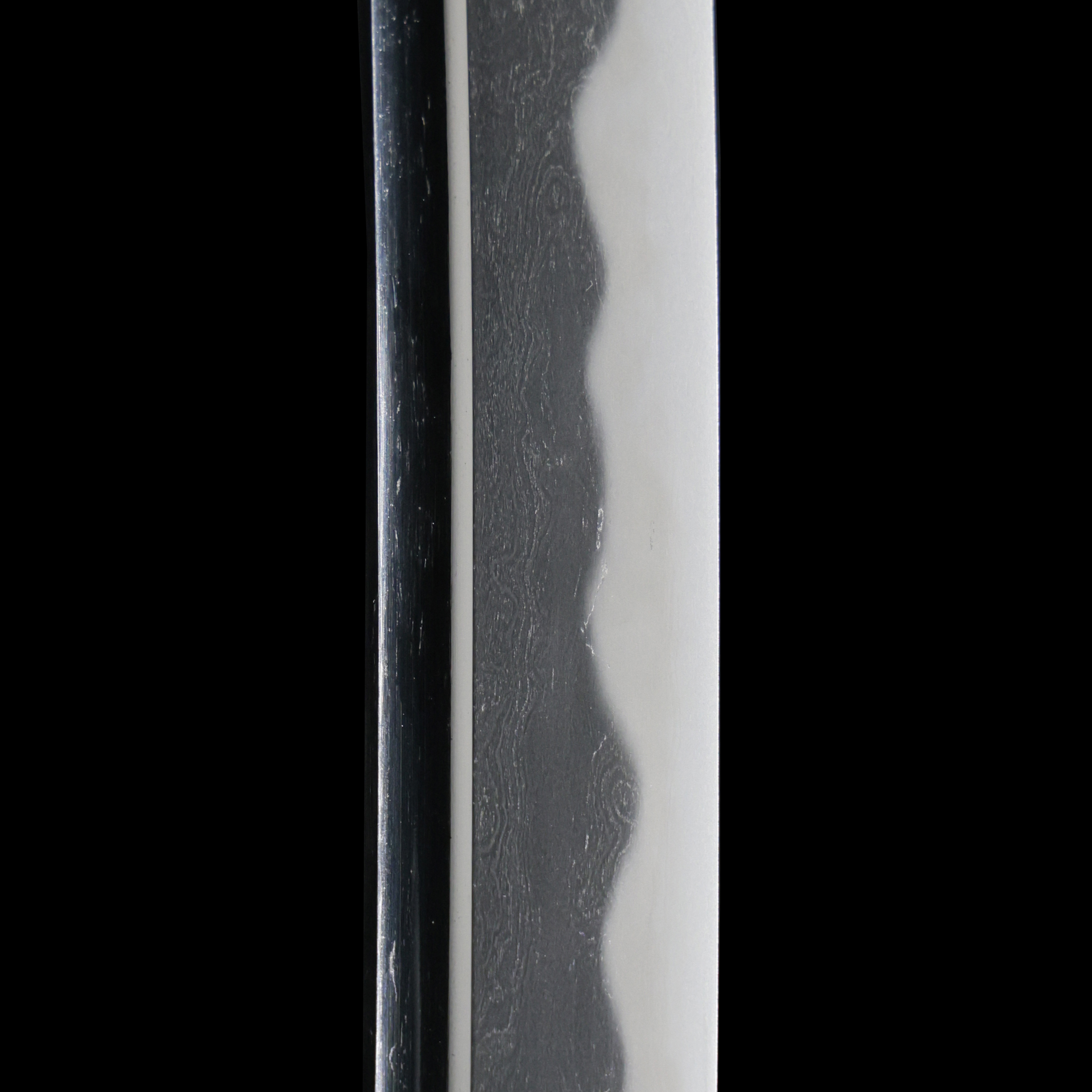
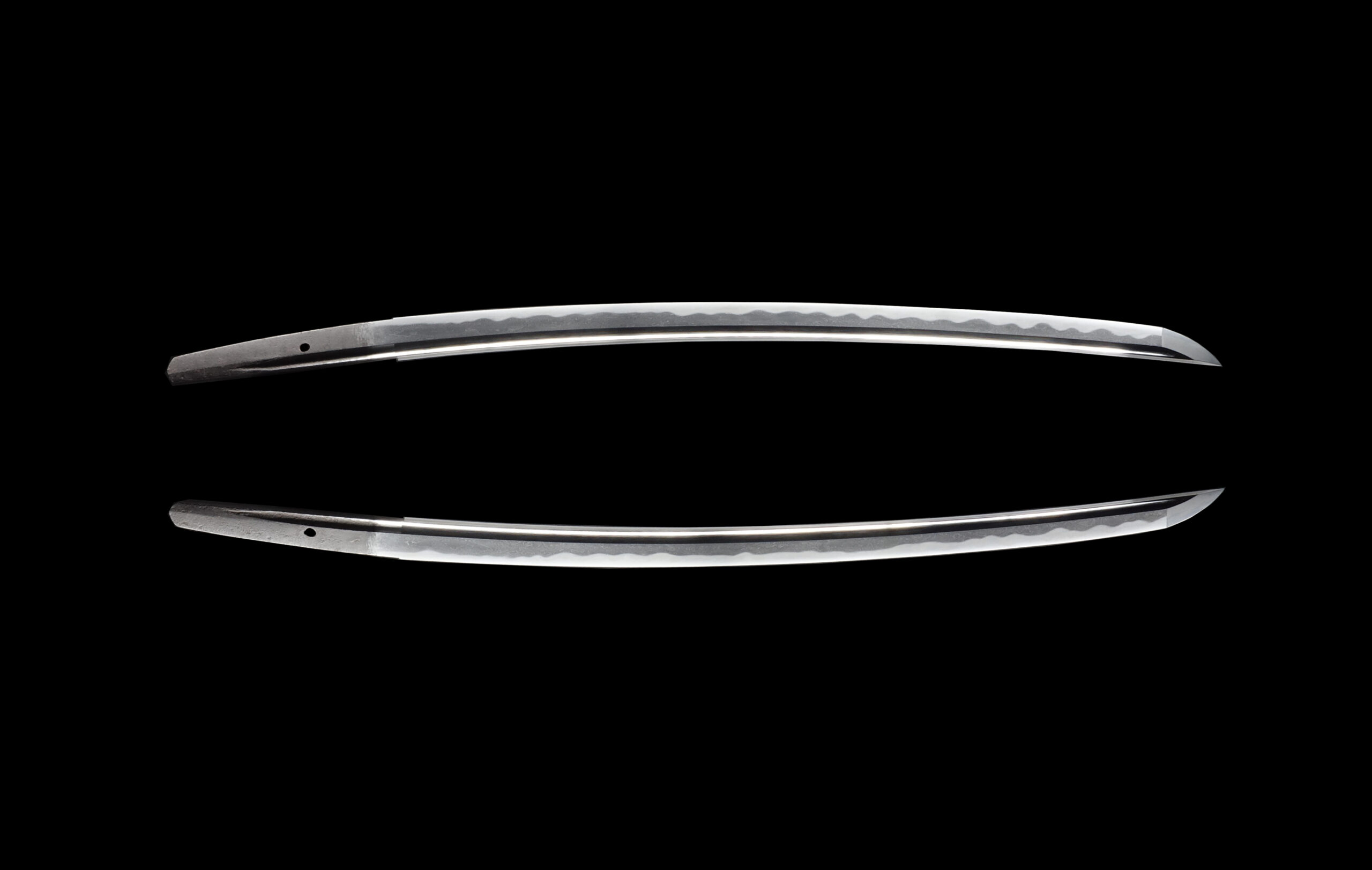
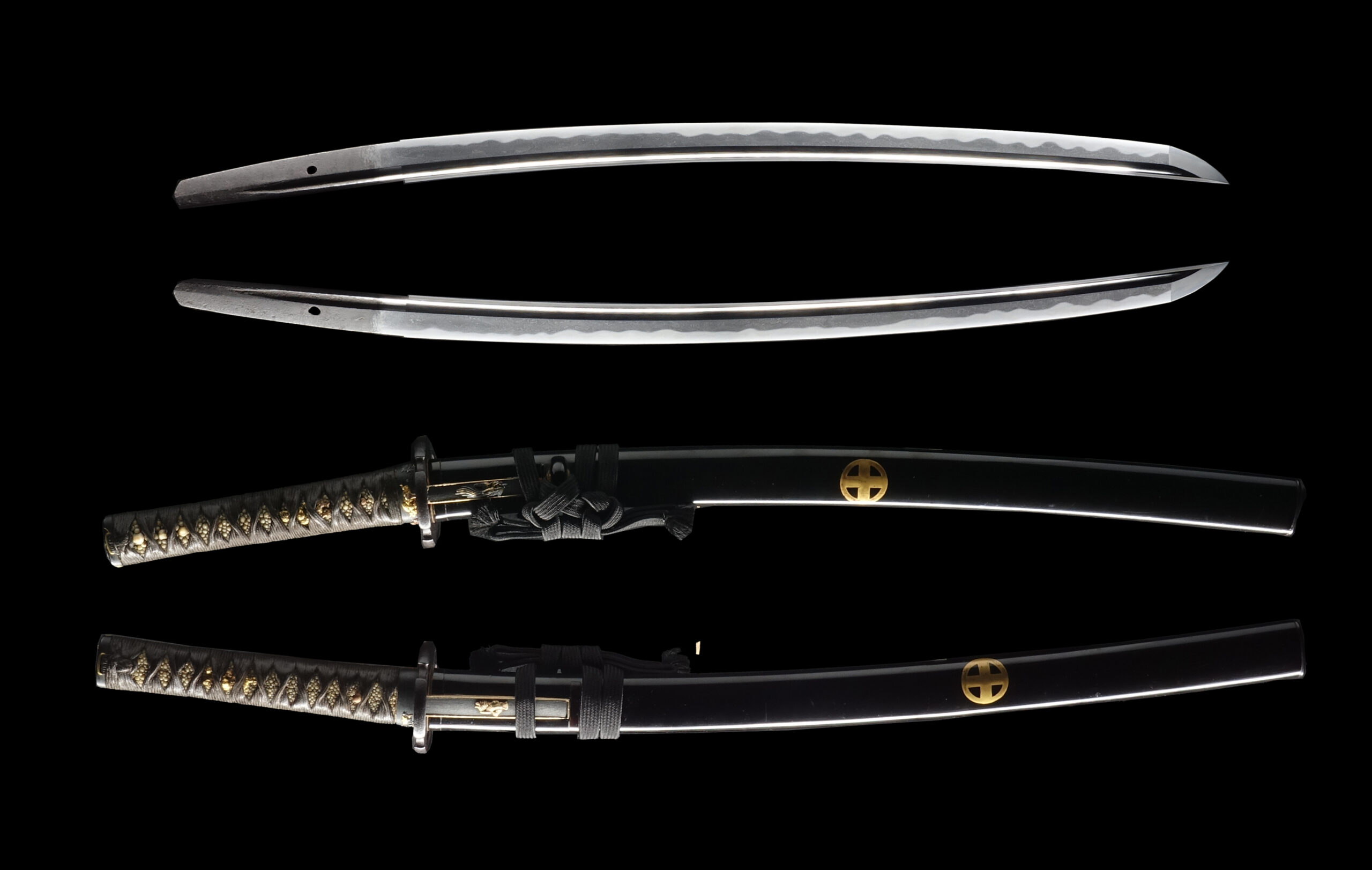
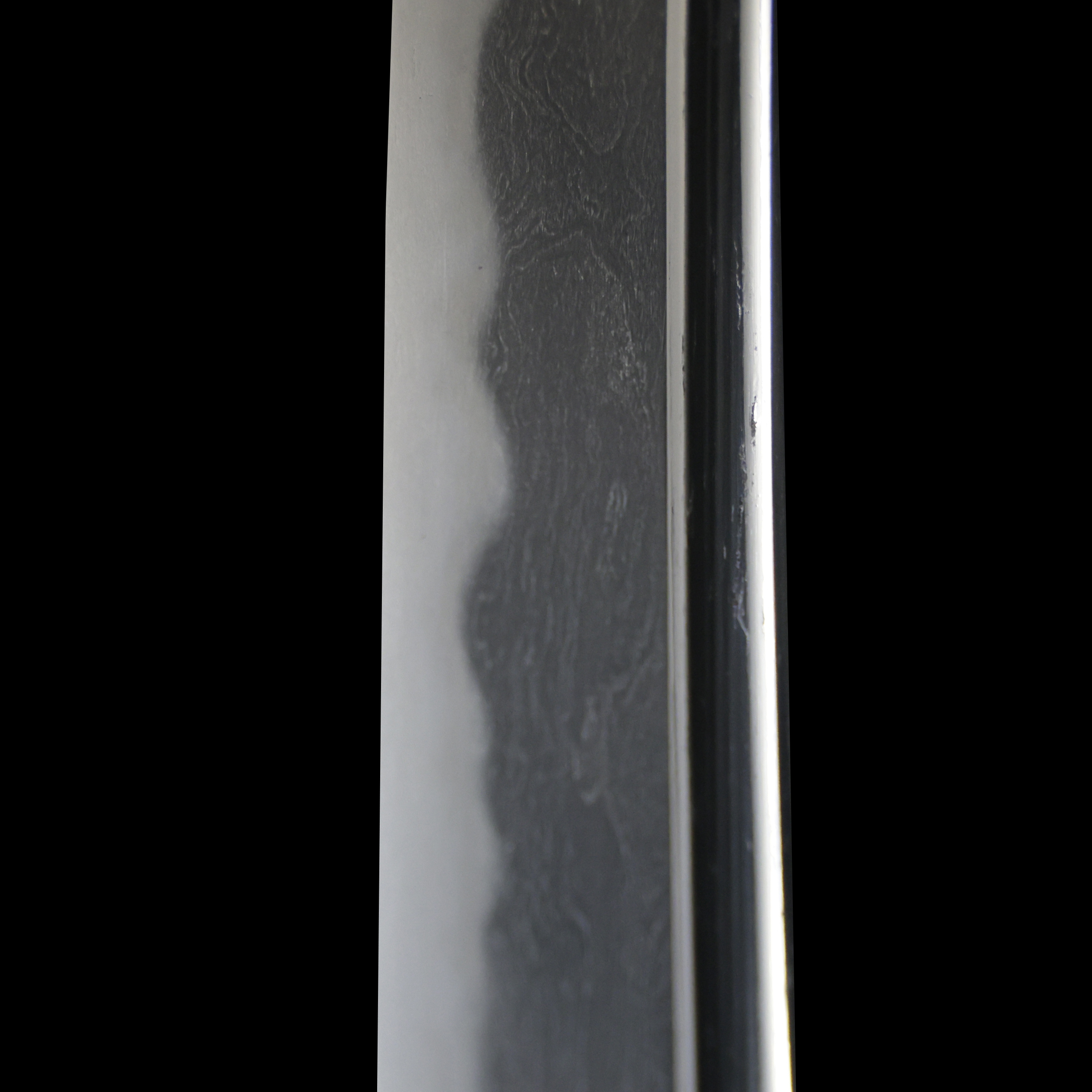
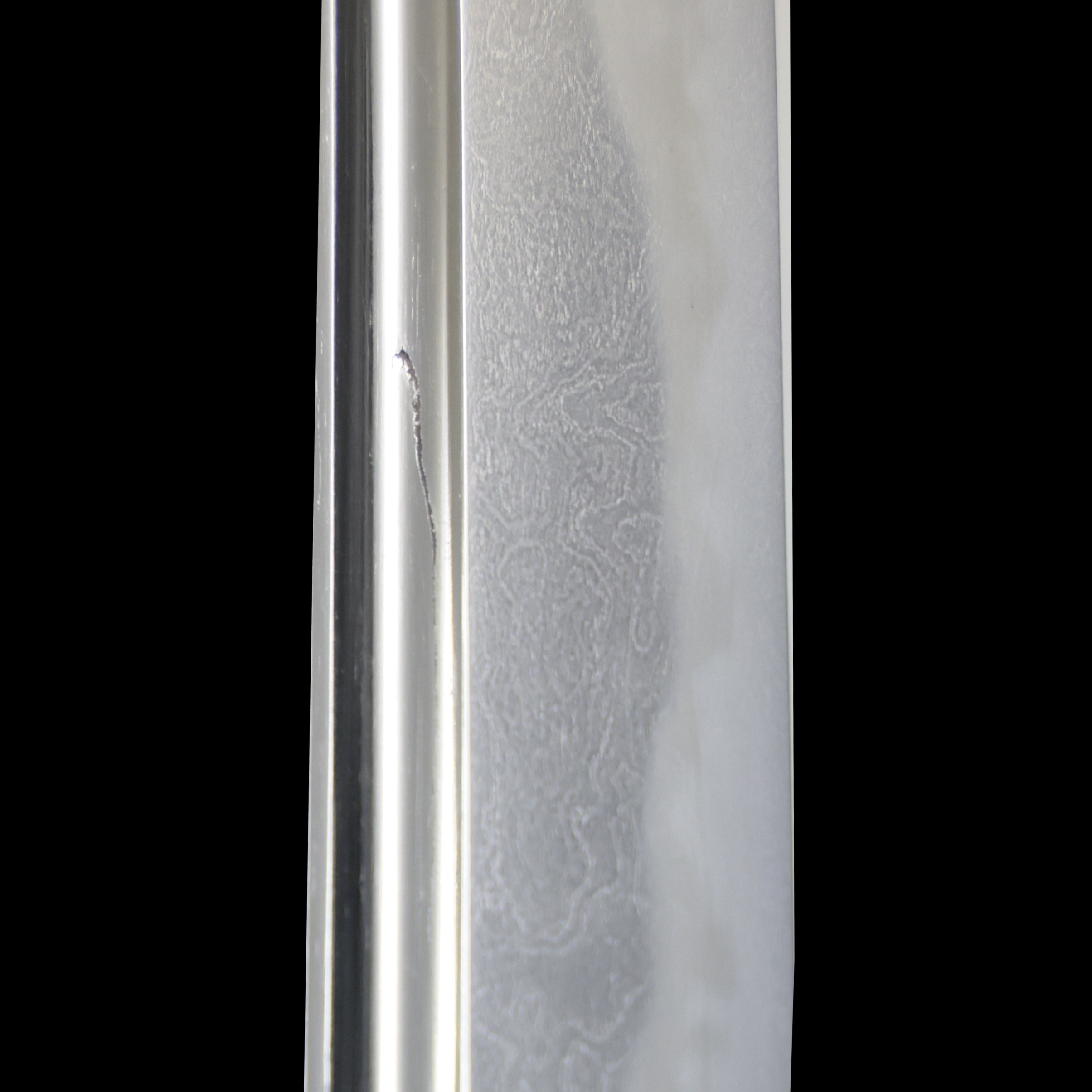
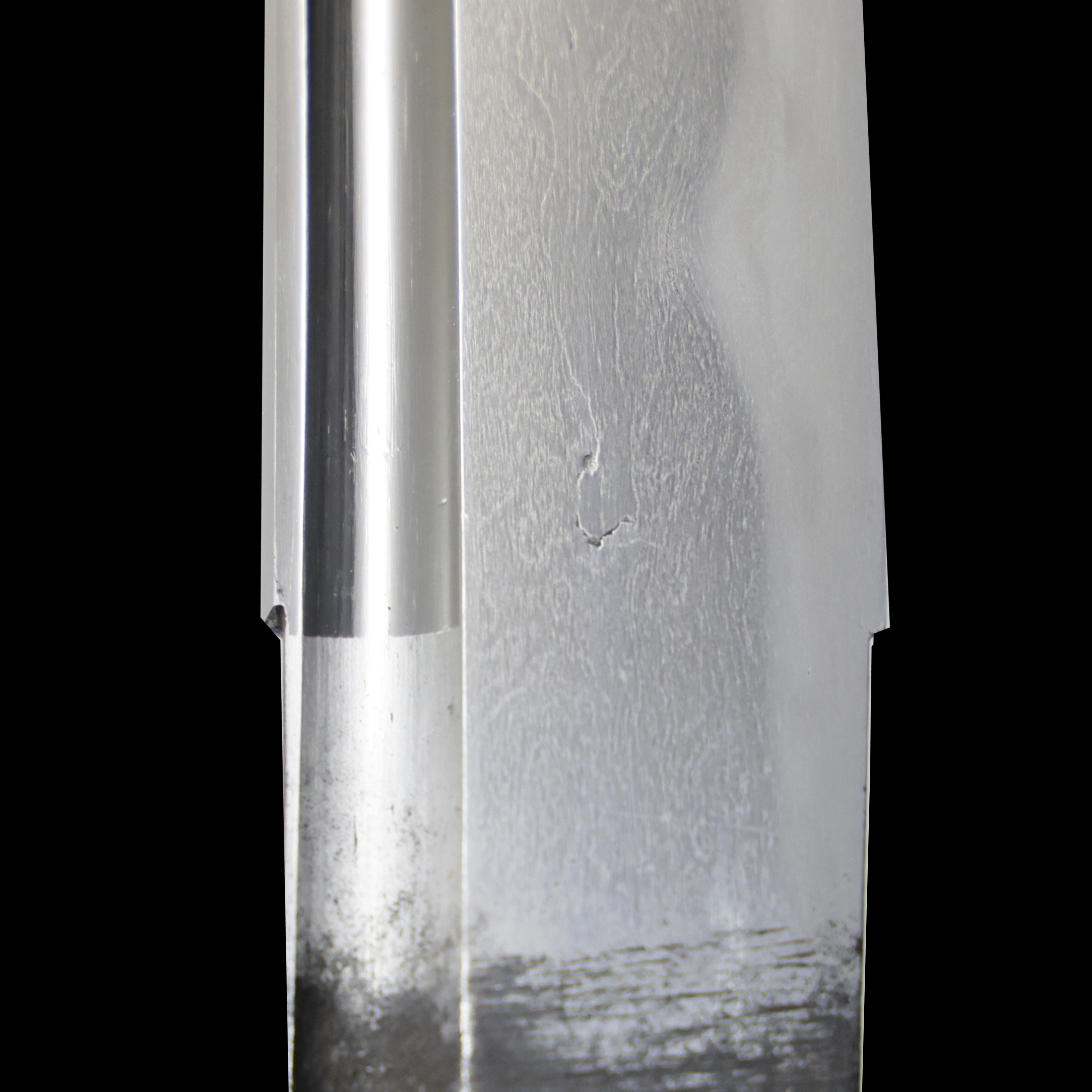
Sixty years of war between two courts drove blades long and broad, and Osafune met the demand: Kanemitsu and Chōgi led forges serving the provincial warriors who did the fighting, while Sōshū influence arrived with the armies to create Sōden-Bizen.
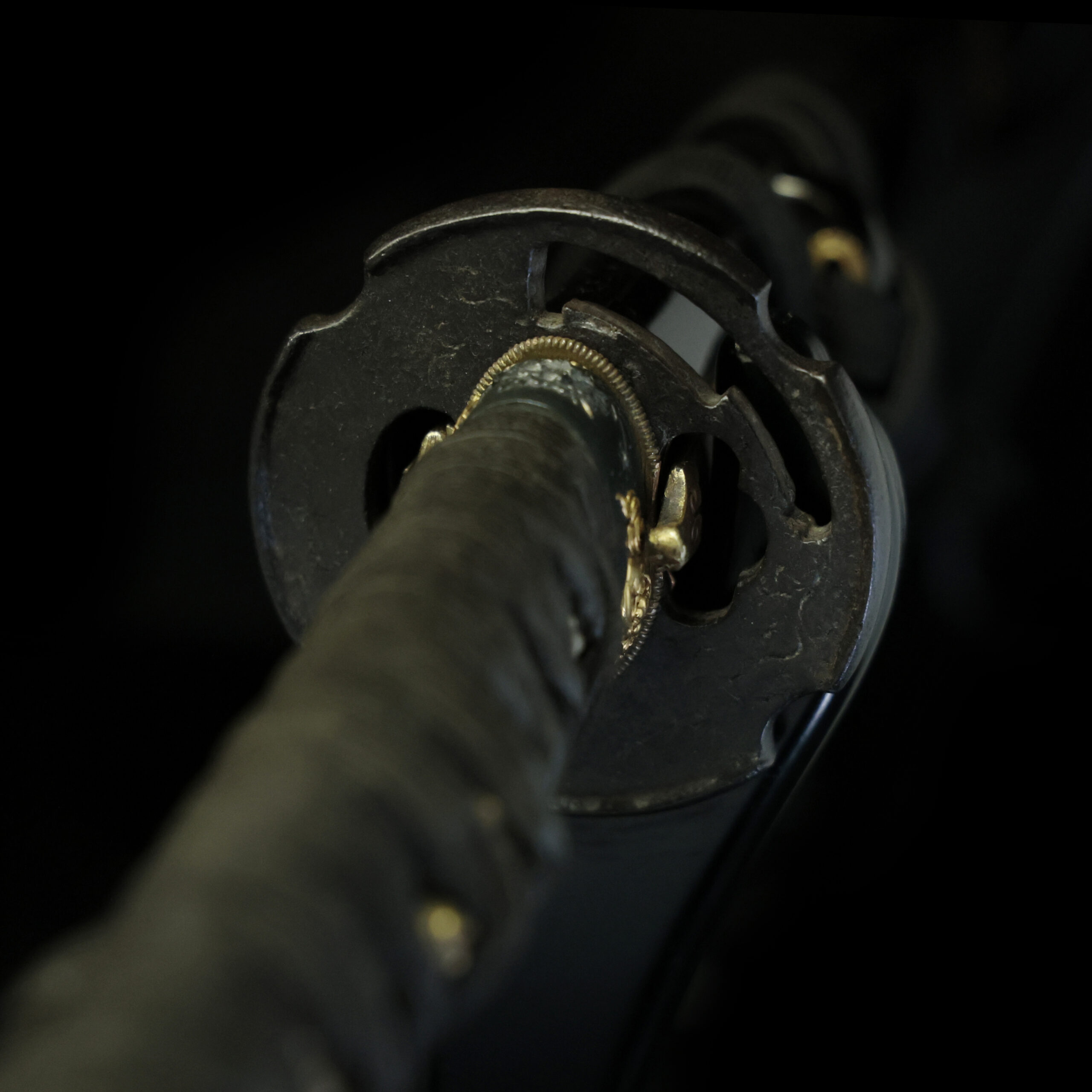
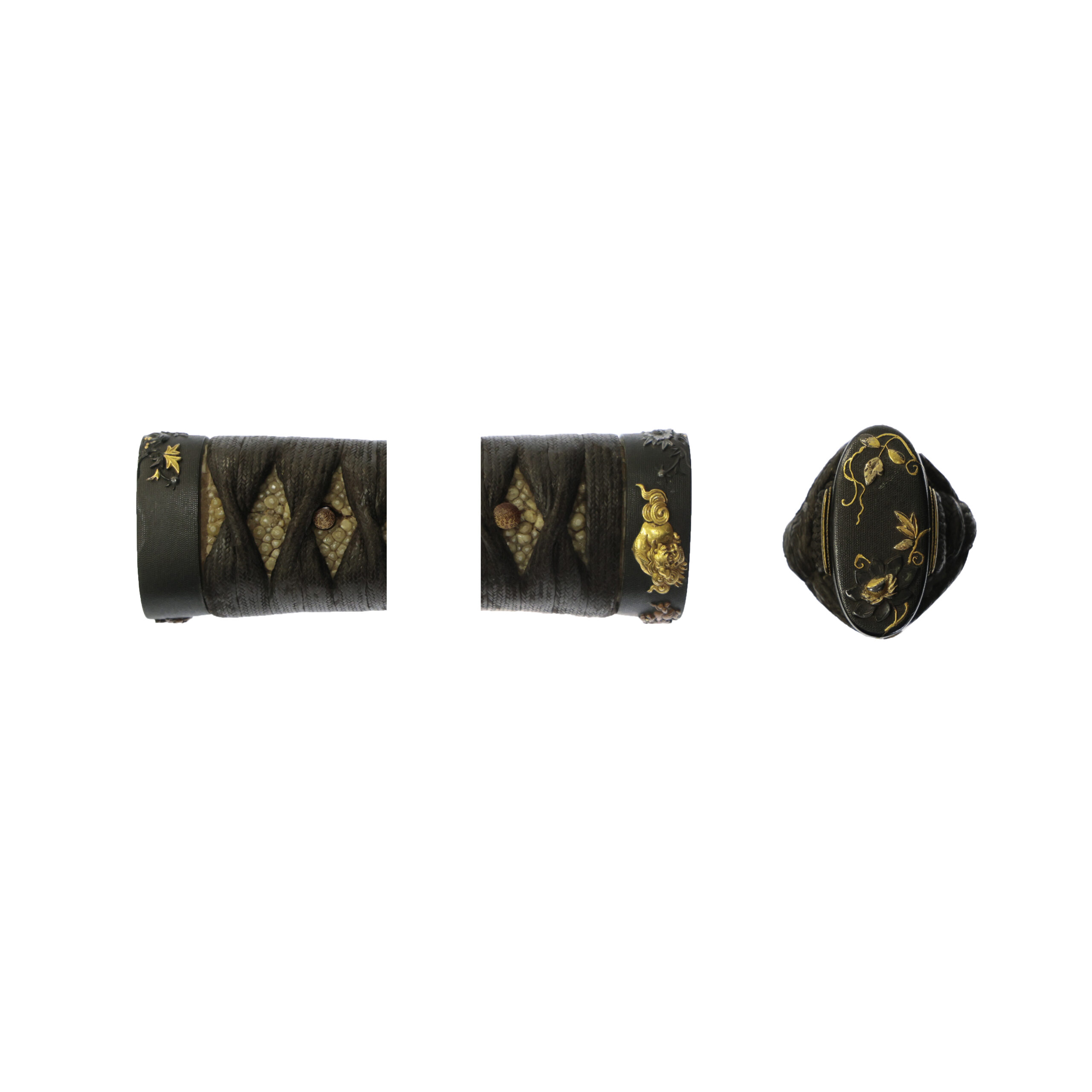
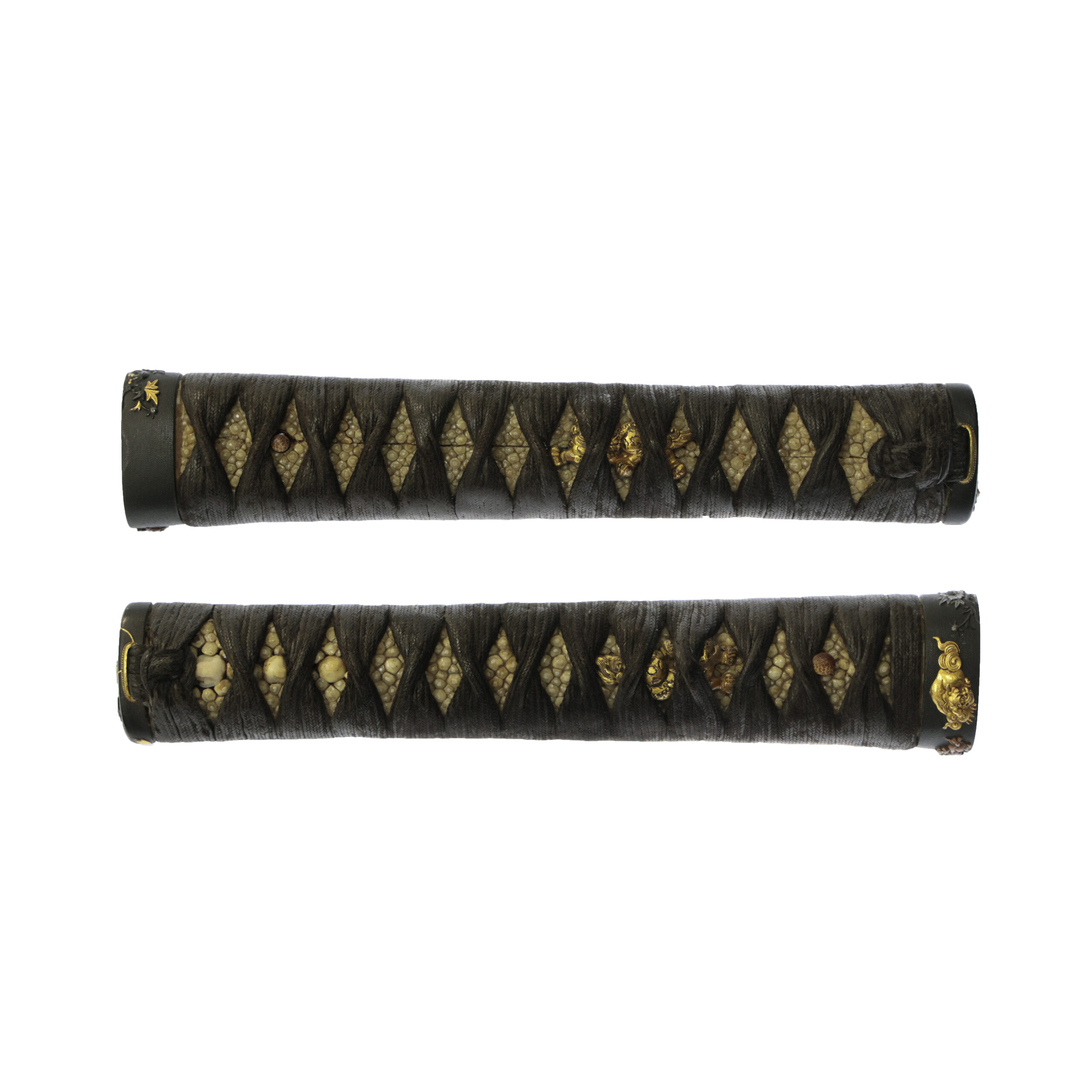
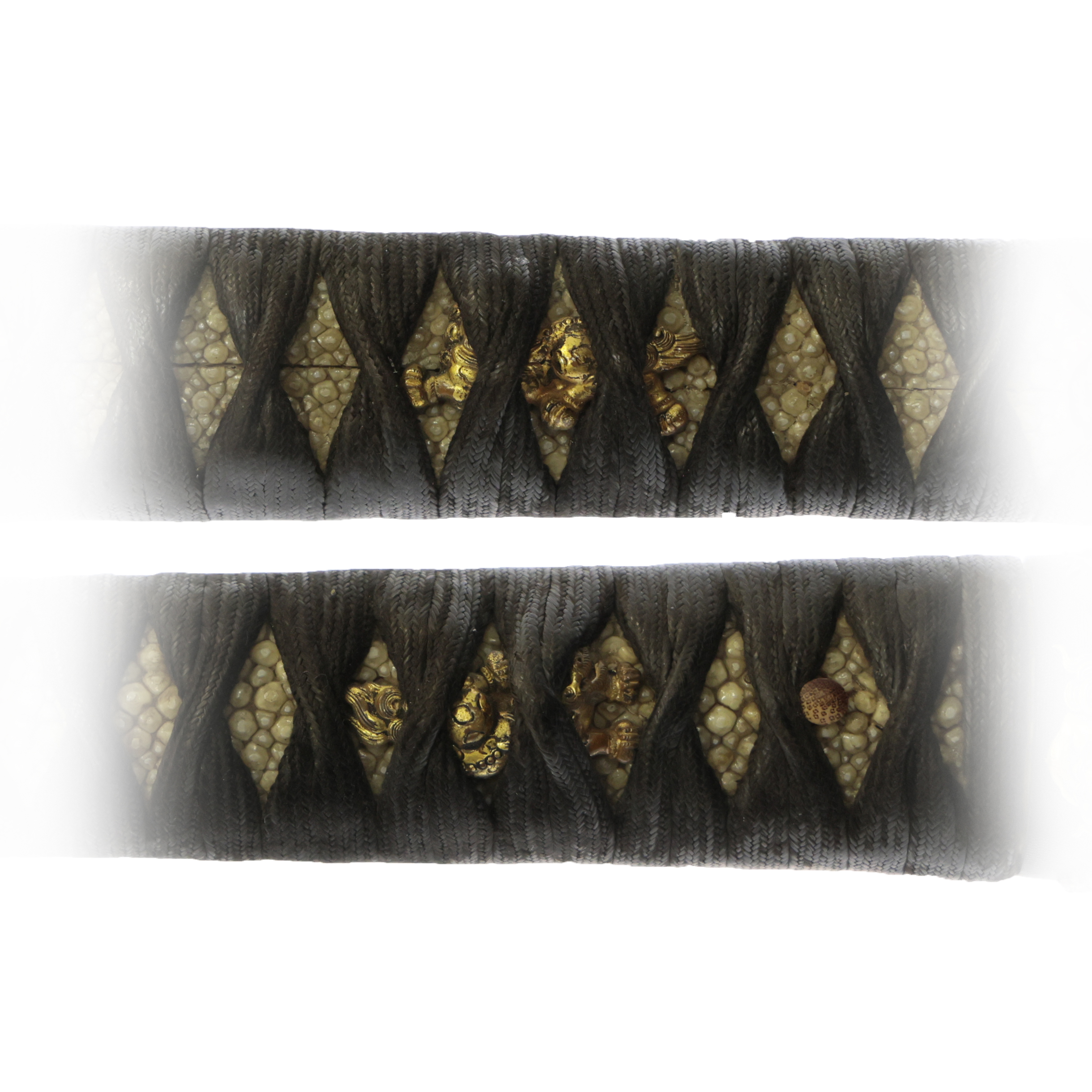
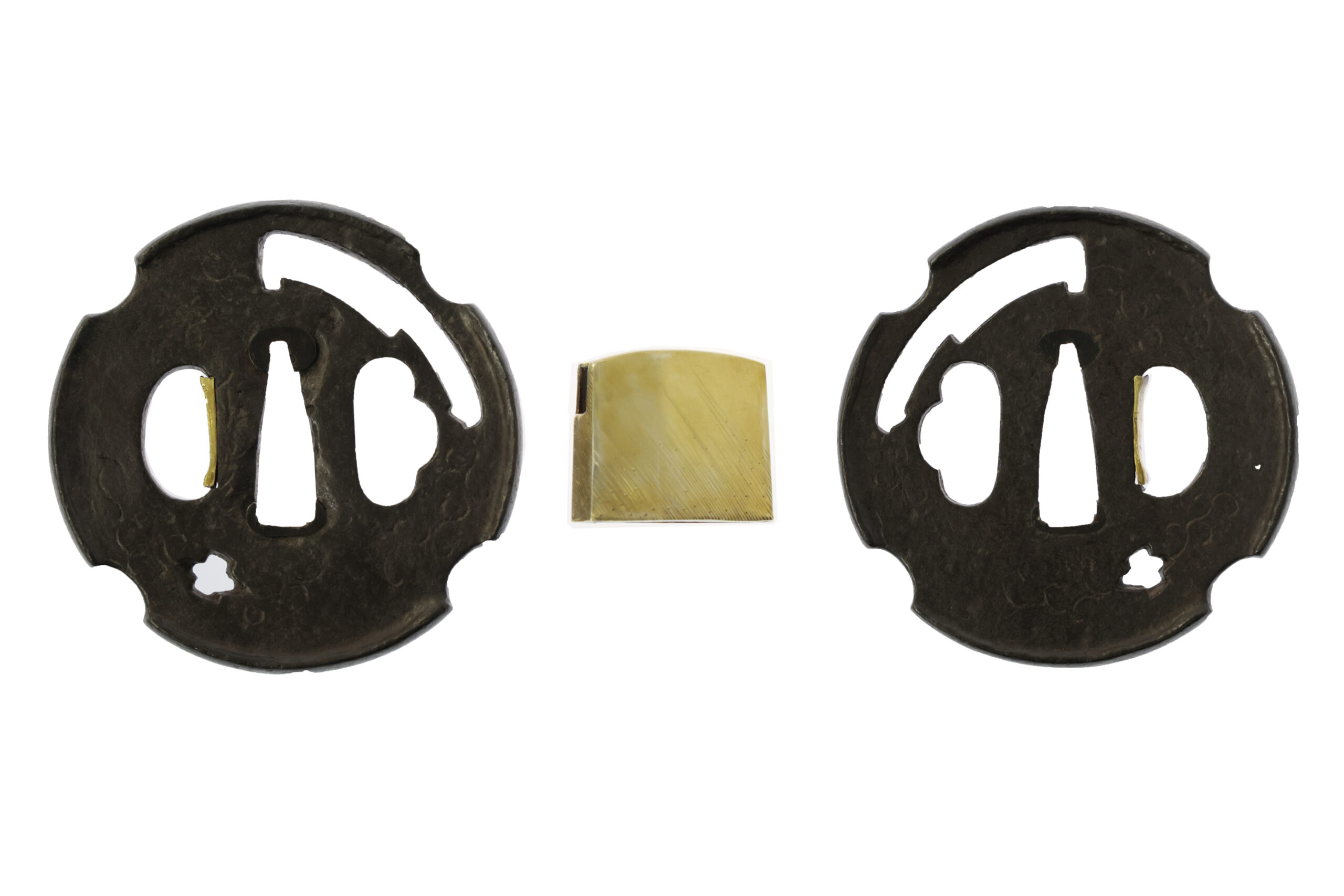
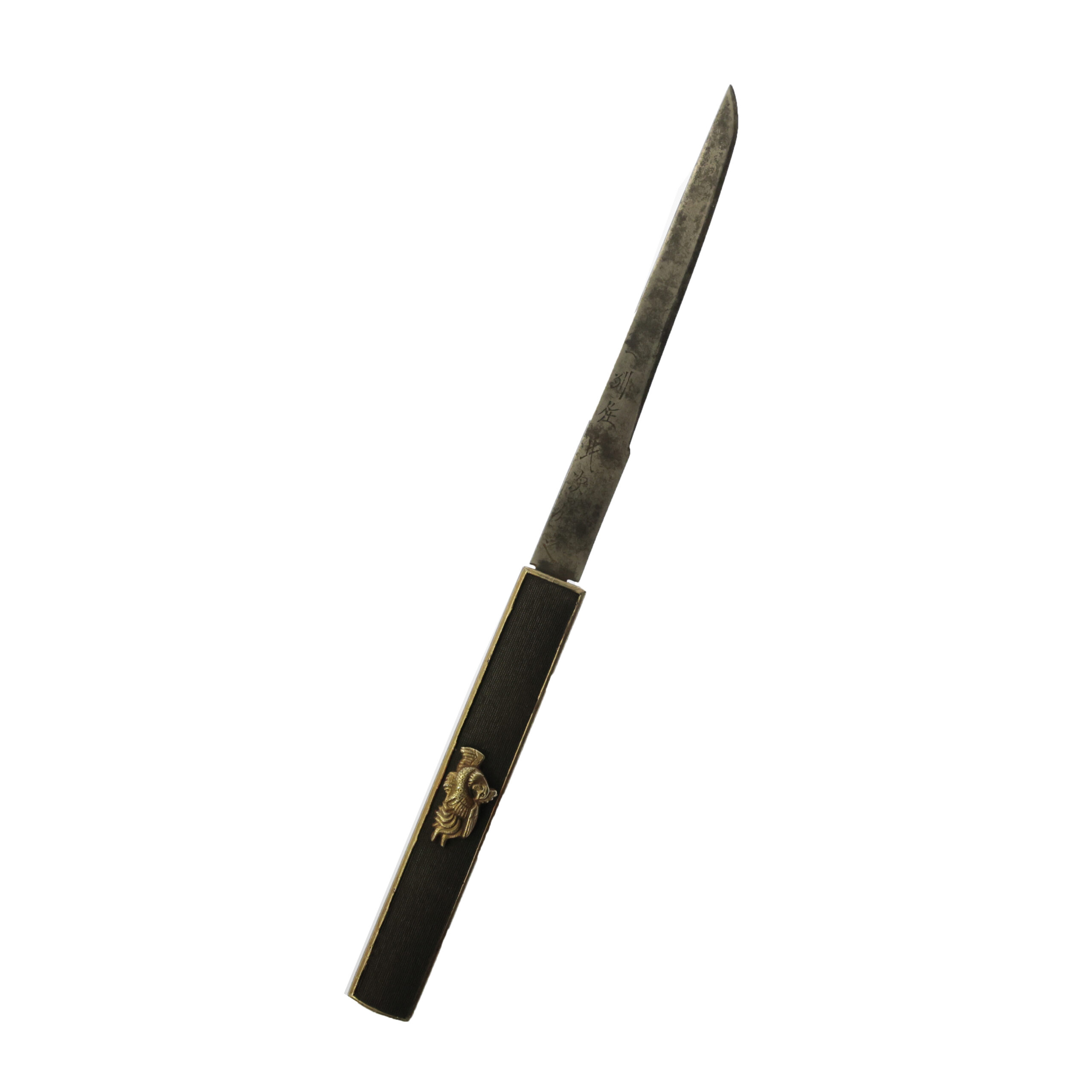
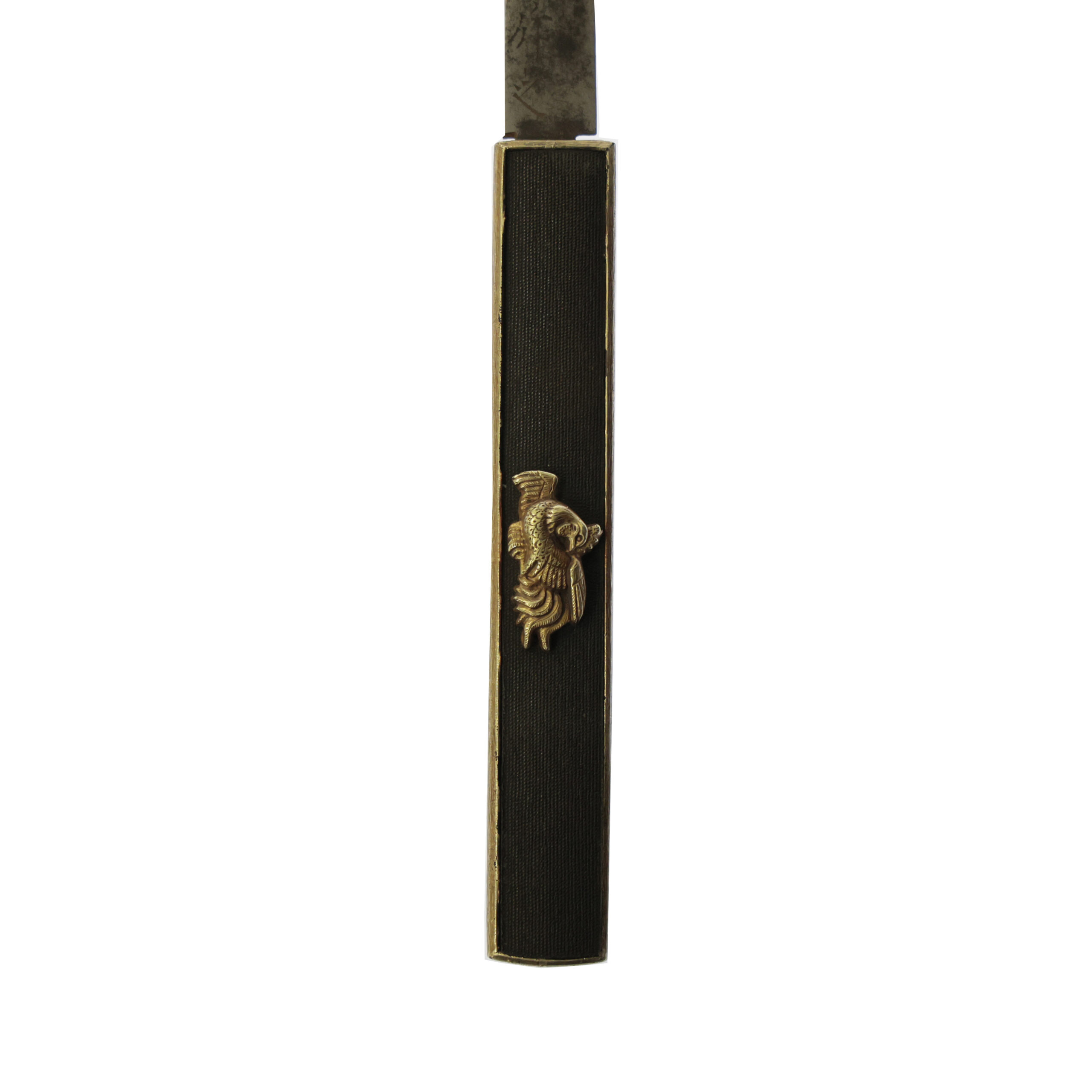
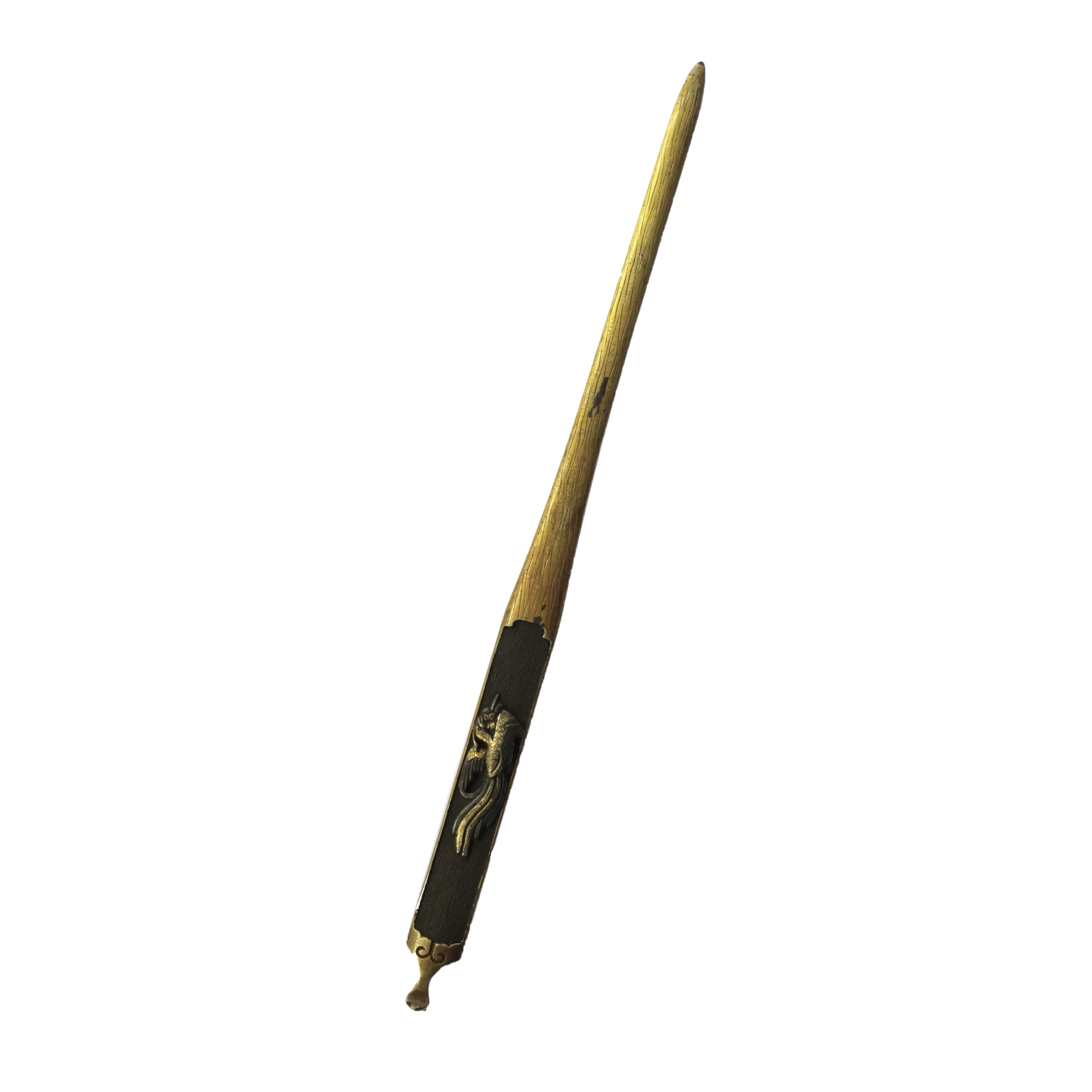
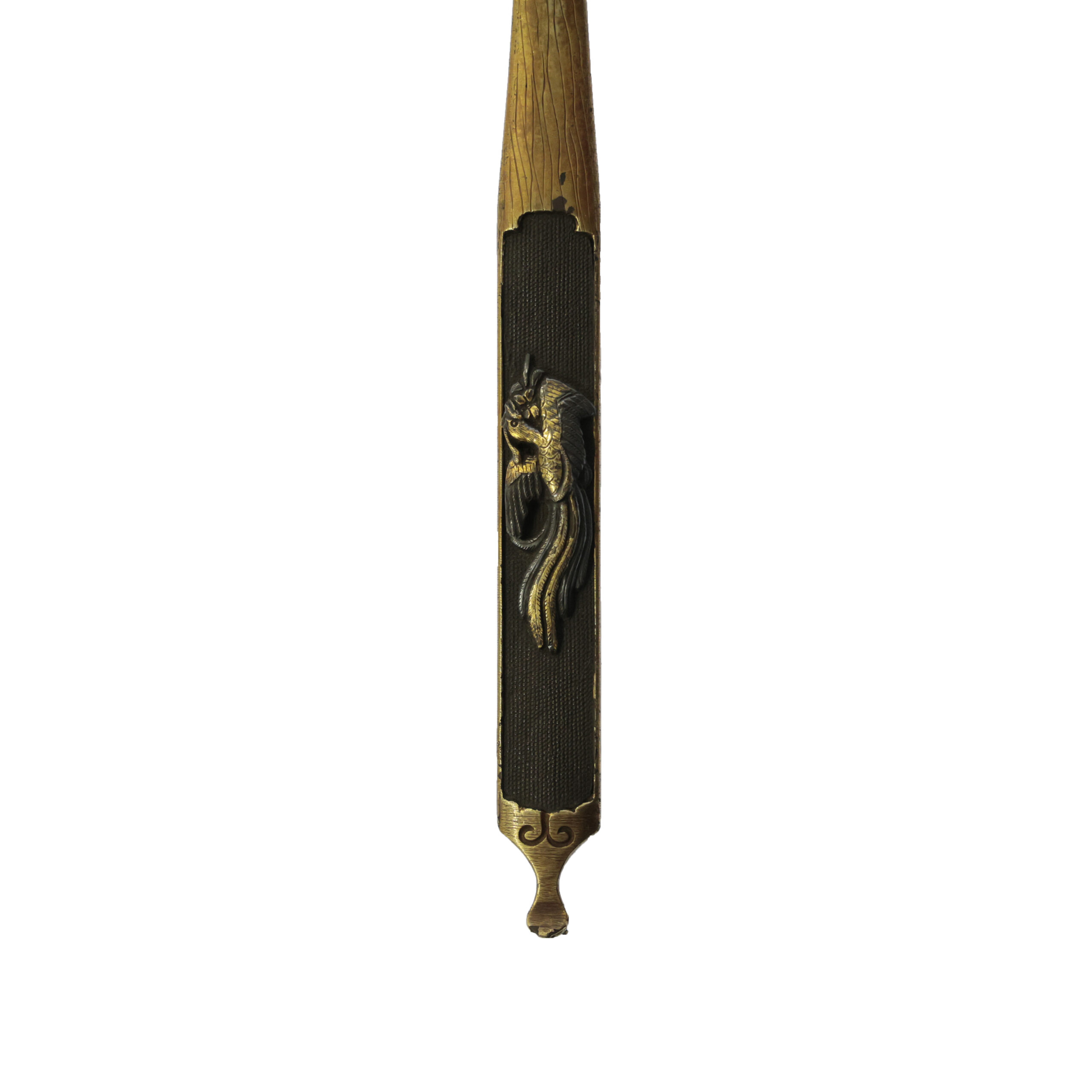
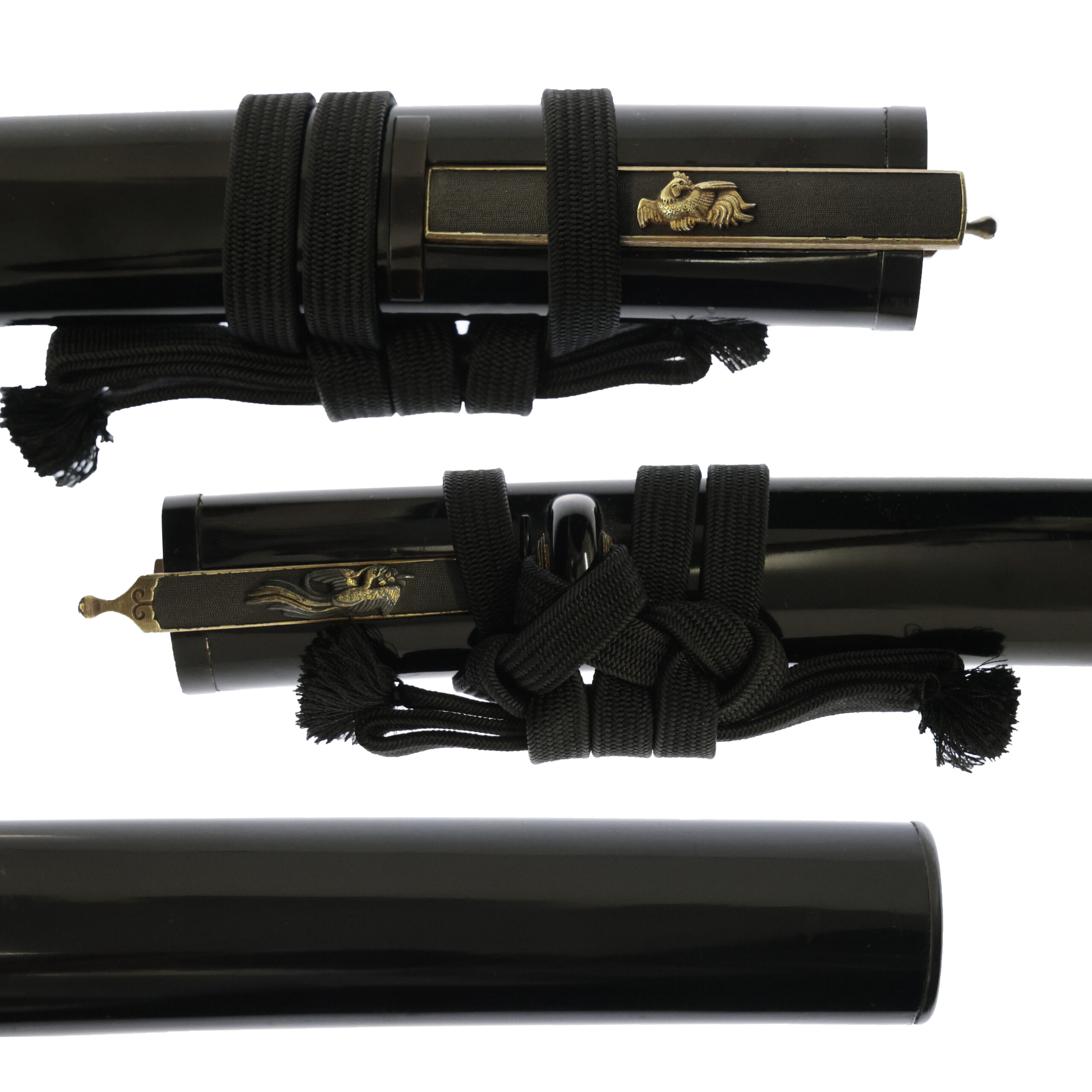
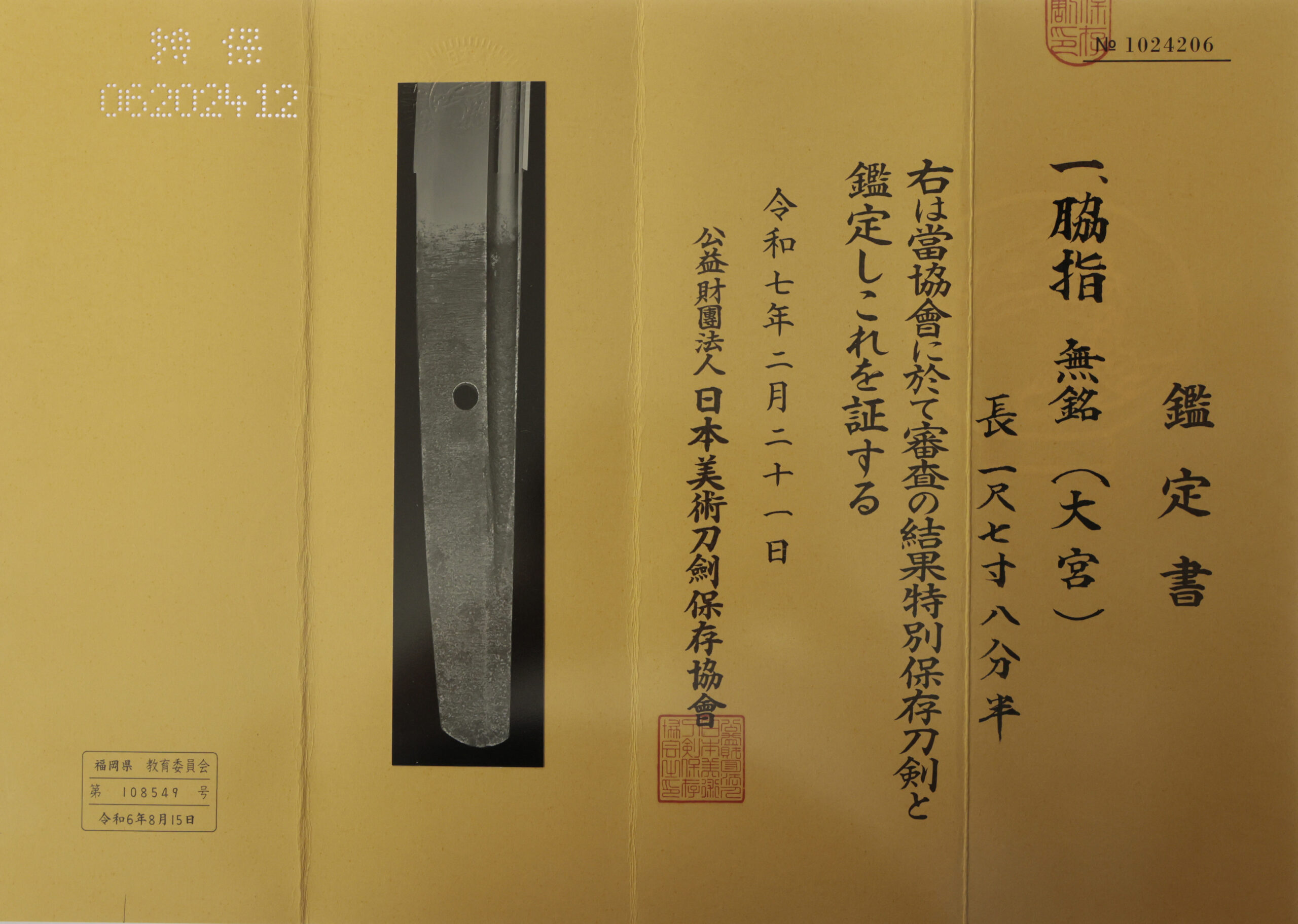
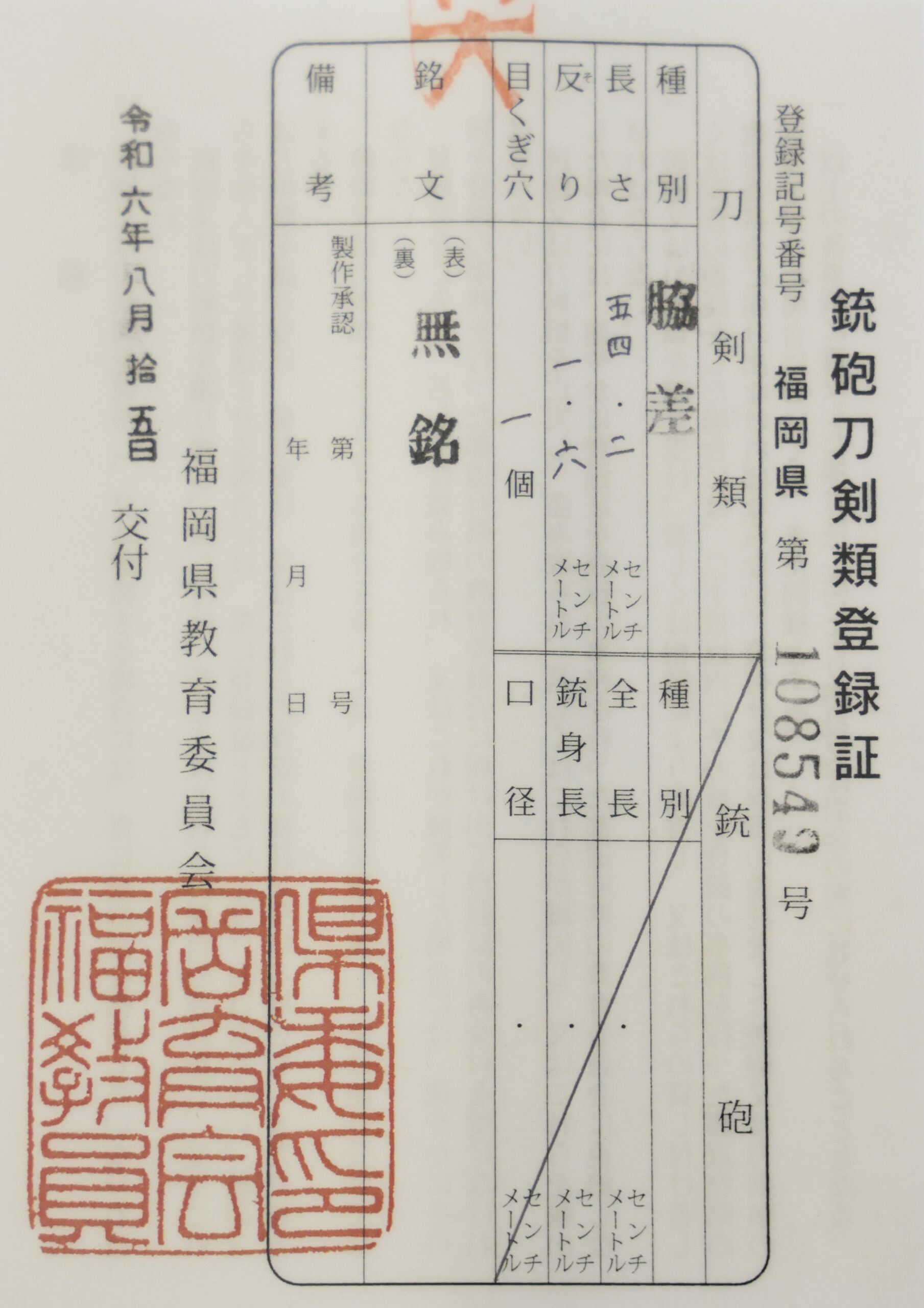
This blade is attributed to Omiya (大宮), a prestigious school that was especially active during the mid-late Nanbokucho period (mid-late 14th century). Omiya school was one of the many branches of Osafune school (headquarters). The swordsmiths who belonged to this school resided in Omiya village in today’s Okayama prefecture. It is said that Omiya school was founded by Kunimori (国盛) during the late Kamakura period. According to one theory, Kunimori was originally from Yamashiro province(today’s Kyoto) and moved to Omiya village in Bizen province. Omiya school was active at the same time as Kanemitsu school, one of the most famous branches among Osafune schools. Kanetmisu invented the unique Japanese sword-forging technique called Soden Bizen, which is a combination of SOSHU Den and BIZEN DEN. And the swordsmiths who belonged to Omiya school also mastered this technique. The swords forged in Soden Bizen were very popular among Samurai back then. Other famous figures who were from Omiya school are Morikage, Moritsugu, and Morishige. It was common to have Mori (盛) letters in their maker’s names. This History of Bizen Osafune School It is said that Osafune school was founded by Mitsutada (光忠), who was active during the mid-Kamakura period. Bizen Osafune school was the biggest one of all other schools in Bizen province, and they received many orders from feudal lords or renowned Samurai. They were called Osafunemono and beloved by Samurai warriors. Among the swordsmiths who belonged to this school, Nagamitsu, Sanenaga, and Kagemitsu are known as Osafune Sansaku, the three renowned Osafune swordsmiths. There are also four other prominent swordsmiths who were from Bizen Osafune school. They are called Osafune Shiten-no, the four masters of Osafune school. Their names are Nagamitsu, Kanemitsu, Nagayoshi, and Motoshige. BIZEN is located near the Chugoku Mountains, where iron sands, one of the essential materials for making Japanese swords, were abundant. Furthermore, BIZEN swordsmiths had close access to Yoshi River, where they could find water and charcoal. This geological location contributed to the swordsmiths forging high-quality refined blades. We presume BIZEN was quite active in sword-forging from ancient times. It is said that BIZEN DEN was created by groups of swordsmiths there during the late Heian era (Late 12th century ). These ancient swordsmiths in Bizen province are called Ko-Bizen (Old Bizen) swordsmiths. By inheriting the sword forging techniques from Ko-Bizen swordsmiths, the Bizen Osafune school flourished from the mid-Kamakura period. This blade is appraised as a Tokubetsu Hozon Token(特別保存刀剣) issued by NBTHK(Nihon Bijutsu Touken Hozon Kyokai:日本美術刀剣保存協会). *Please keep in mind that there is a couple of Kitae Kizu and small chip on the blade. Fuchi-Kashira The motif of the Fuchi-Kashira is Shishi-botan (獅子牡丹, the lion and the peony), which is a combination of Karajishi (唐獅子, lion) and Botan (牡丹, peony). While lions have been known as the “king of beasts”, peonies have also been called the “king of flowers.” Therefore, this combination motif has been favored since ancient times. The Shishi (獅子) means a lion in Japanese, and the Karajishi is a lion brought from the continent to Japan in the Toh period (唐, Tang dynasty, 618-907). The Karajishi typically has curly hair for its head, neck, body, and tail, as seen on this work. In Buddhism, the Karajishi is regarded as a symbol of wisdom, and Monju Bosatu (文殊菩薩, Manjushri Bodhisattva) rides lions. According to a theory, the Karajishi is the origin of Komainu (狛犬, stone guardian dogs that exorcize evil spirits). It shows this animal motif has been familiar to Japanese people since ancient times. There is a Houwa (法話, Buddhist monks tell the story of Buddhism in an easy-to-understand manner) that treats the Karajishi and this flower. The lion is called the king of the beasts. However, even this invincible animal has only one fear: a bug in the lion’s body. This pest grows in the lion’s hair and eventually breaks the skin and bites the flesh. Nevertheless, it dies if it is exposed to the night dew of a peony. Therefore, the lion rests under peony flowers at night, looking for a haven. The design of these sword mountings might have been quoted from this story. Tsuka and Menuki The design of the Menuki features a Karajishi (唐獅子, lion dog) holding a temari (手鞠, decorative handball). One theory traces this motif to an ancient Chinese courtship custom, in which a woman would present a handball to a man as a proposal. If the man accepted it, the engagement was sealed—much like the modern custom of offering an engagement ring. The Karajishi typically has curly hair for its head, neck, body, and tail, as seen on this work. In Buddhism, the Karajishi is regarded as a symbol of wisdom, and Monju Bosatu (文殊菩薩, Manjushri Bodhisattva) rides lions. According to a theory, the Karajishi is the origin of Komainu (狛犬, stone guardian dogs that exorcize evil spirits). It shows this animal motif has been familiar to Japanese people since ancient times. Tsuba and Habaki This tsuba is crafted from iron in a slightly rounded, irregular circular shape (丸変形, maru-henkei). The design features an openwork motif of a hatchet (鉈, nata), a traditional Japanese tool used for woodcutting and farming. Such sukashi (透かし彫り, openwork) designs were not only decorative but also carried symbolic meaning, often reflecting the daily life, beliefs, or aspirations of the samurai who wore them. Kozuka This kozuka (small utility knife fitting) features a design of Niwatori (鶏: rooster and hen) . In ancient times, this bird was used for rituals to offer to gods. It is said this is why the chicken pattern was incorporated into family crests. As this bird tells the arrival of morning, people regard it as the Ake-no Tori (明けの鳥, bird of the dawn). Also, chickens have been treated as auspicious birds because they sing at first in the new year. In another theory, there is a wordplay: Yoikoto-wo “Tori”komu (良いことを取り込む, “take” good things). This Tori (取り) and Tori (鳥, bird) are associated based on the common pronunciation. Some people believe that this bird would bring a plentiful harvest or success in business. This Menuki design might have been chosen due to these ideas. Kougai This item is an antique Kougai (笄), which was used to arrange or fix the hairstyle of Samurai. The Kougai is usually stored in the Kougai Hitsu. The Kozuka (小柄) is often stored at the other side of the scabbard. Houou (鳳凰, Fenghuang) is designed for this Kougai. Houou is a member of four fantasy animals which is called “Shirei (四霊)” with Kirin (麒麟, Qilin), Kame (亀, Turtle) and Ryu (龍, Dragon) and it is a god beast looks like a combination of chicken and peacock. It was considered an auspicious sign in ancient China, and it was believed that Houou would show up when the brilliant emperor appeared. People appreciate its graceful shape in Japan. Saya The design on the scabbard features a circle enclosing the character “十” (jū, meaning “ten”), which is drawn in a way that resembles a brushstroke. In ancient China, the cross-shaped “十” symbol was regarded as a talisman to ward off misfortune and invite good fortune. For example, people would stamp this mark on steamed rice cakes before eating them, as a ritual for protection. This custom was later introduced to Japan and became popular during the Kamakura period (1185–1333). Authentication Paper They authenticated the blade on February 21st in the 7th year of Reiwa (2025). They appraised it as Tokubetsu Hozon Touken, the blade especially worth preserving for Japanese society.
Omiya School大宮派
Offered by Samurai Museum
This piece has sold
6 on the market
Get an email when new Omiya School work hits the market.


Bizen-den · Bizen
6 pieces on the market now
The Omiya school (大宮) of Bizen traces its name and its blood to Kyoto, not to the Bizen heartland where it eventually settled. The published sources follow the line back to a remote ancestor, Kunimori, who is said to have left Inokuma Omiya in Yamashiro province and moved into Bizen during the Kamakura period, around the Bun'o years. With him the group carried a Yamashiro sensibility into the province of choji, and that transplanted origin remains the key to everything the school later became. Works by the earliest Omiya hands, Kunimori and Sukemori, survive in extremely small numbers, so the line first comes clearly into view at the close of the Kamakura period and then flowers through the height of the Nanbokucho era. Several names recur across these generations, among them Morishige, whose name passed down successive smiths from the late Kamakura into the Muromachi period; but the figure who left by far the largest body of work, and the highest reputation[[c:1]], is Morikage, who worked at Osafune and cut long, dated signatures such as Bishu Osafune Morikage across the Oan, Joji, Eiwa and Kakei years. What binds these smiths into a recognizable group is a particular blend, a temper that reads as Soden-Bizen yet is built differently from the clove-flower of mainstream Osafune. The jigane is the constant beneath the range: a standing itame mixed with mokume, the grain tending to open, with fine ji-nie, chikei entering, patches of jifu in the steel, and a Bizen midare-utsuri that rises on signed and mumei blades alike. Upon that ground the school sets a midare in which gunome, choji and an angular, pointed tendency intermingle, with ashi and yo entering well, nioi deepening to ko-nie, and fine sunagashi and kinsuji running through the ha. The recurring tells are a Yamashiro-tinged ji carrying that strong nie, and a boshi running midare-komi to a small round or a pointed turnback with hakikake. Within this shared vocabulary the hands diverge.
Morikage tends to a ko-notare base with somewhat angular crests and a subdued, shizumi nioiguchi rather than a showy temper, while his range stretches from that quiet register to a suguha the commentary likens to Aoe and the Unrui smiths[[c:2]]. Morishige favors a bold, opened-waist gunome, the koshi-hiraki pattern mixed with choji into flamboyant undulations. The breadth itself is a school trait, the published sources describing the Omiya saku-iki as wide, taking in notare-dominant work, florid choji-gunome midare, angular gunome, and the Aoe-manner suguha at its quiet edge. To kantei an Omiya blade is to read this fusion of Yamashiro-den refinement and Bizen-den flamboyance, then to separate it from its larger Osafune neighbors. The bright midare-utsuri and the nie-strong ji hold the school apart from Kanemitsu, whose temper undulates more broadly, and from the box-shaped large midare of Chogi, though the kinship to Chogi is real and acknowledged in the commentary, which places Morikage's workmanship beside it[[c:3]]. The school is often overshadowed by those two names, which makes the distinguishing read the more useful: the standing itame with its utsuri, the angular pointed elements, and the comparatively restrained nioiguchi. Morikage stands at the front rank of Nanbokucho Soden-Bizen and carries a Jo-jo saku grade in Fujishiro; his provenance runs through the daimyo houses, the Nabeshima of Hizen, the Uesugi, the Date and the Hisamatsu-Matsudaira, with a piece recorded in Honma's inventory of the Imperial collection. A modern scholarly question hangs over the name itself, the published sources recording a theory, now widely entertained, that the long-signature Morikage may belong to an Osafune collateral line connected to Chikakage and Yoshikage, and that the smiths who cut bold, large two-character signatures may be the true Omiya hands; the matter is left open. By the late Muromachi the distinctive Omiya traits fade, the Shinkuro generation of Morishige showing no difference from the general Sue-Bizen type, evidence that the subsidiary line was at last absorbed into the dominant Osafune school, a trajectory that gives the group its documentary value for the study of how Bizen's lesser lineages were drawn into the mainstream. Learn more →
| Smith | Era | Designated |
|---|---|---|
| Morikage盛景 | 1356-1390 | 93 |
| Morikage盛景 | 1299-1302 | 6 |
| Norifusa則房 | 1199-1201 | 0 |
| Tsugumori次盛 | 1278-1288 | 0 |
| Tomomori友盛 | 1156-1159 | 0 |
Bizen in the Nanbokuchō period
Sixty years of war between two courts drove blades long and broad, and Osafune met the demand: Kanemitsu and Chōgi led forges serving the provincial warriors who did the fighting, while Sōshū influence arrived with the armies to create Sōden-Bizen.
A Hozon-certified blade judged to show notably superior workmanship and a better state of preservation. The bar is higher: re-tempered blades and most unsigned Muromachi/Edo works are excluded.
The NBTHK (Nihon Bijutsu Tōken Hozon Kyōkai, the Society for the Preservation of Japanese Art Swords) is a public-interest incorporated foundation founded in 1948 and supervised by Japan’s Agency for Cultural Affairs (Bunkachō); it is based at the Japanese Sword Museum in Tokyo. Its expert panels physically examine each submitted work (shinsa) and issue a certificate (kanteishō) ranking it by artistic and historical merit. NBTHK papers are the most widely recognized standard of authentication for Japanese swords and fittings.
NBTHK official siteReturns/exchanges limited to defects caused by shipping (except willful misconduct or gross negligence by the company); customers must contact within 72 hours of receiving the product.