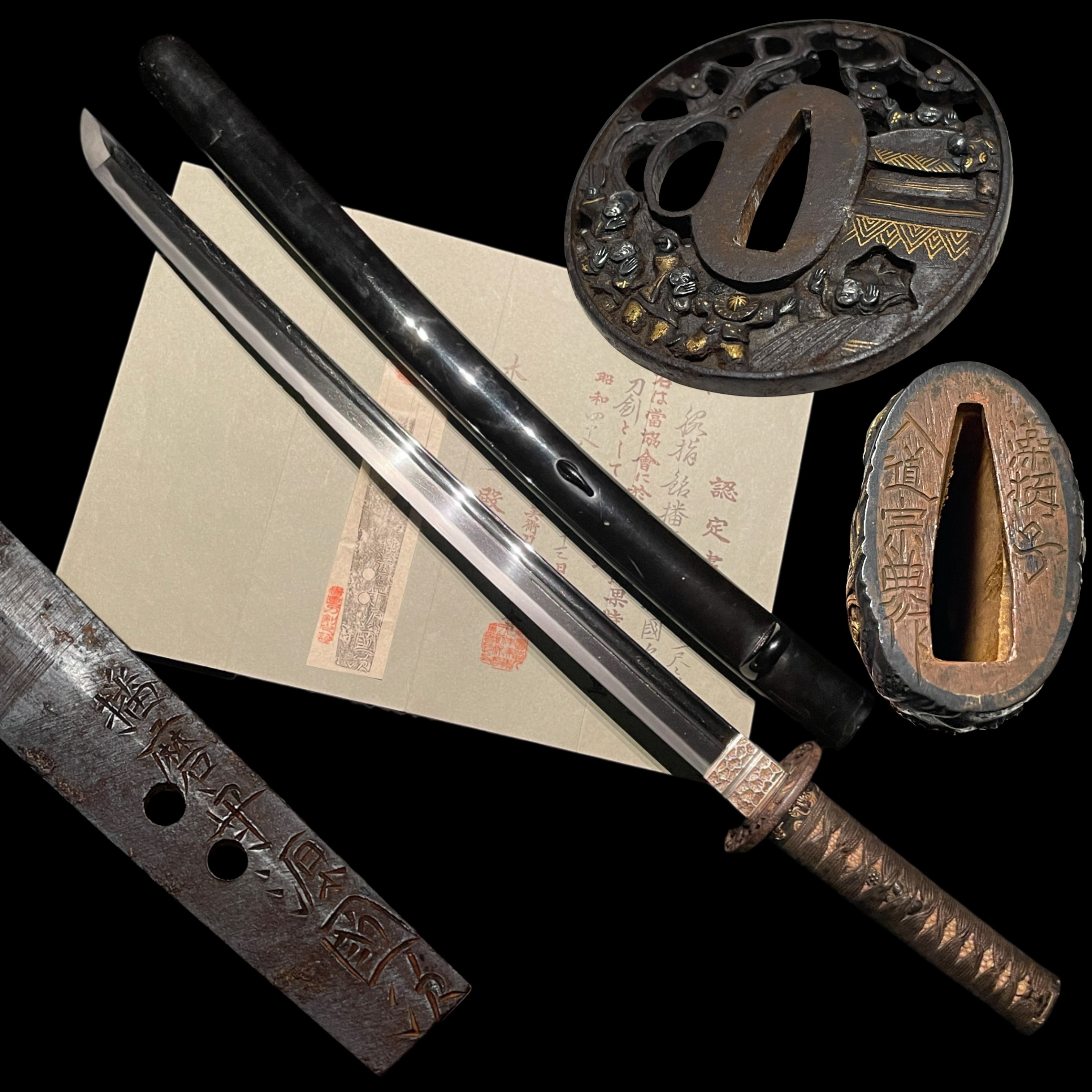
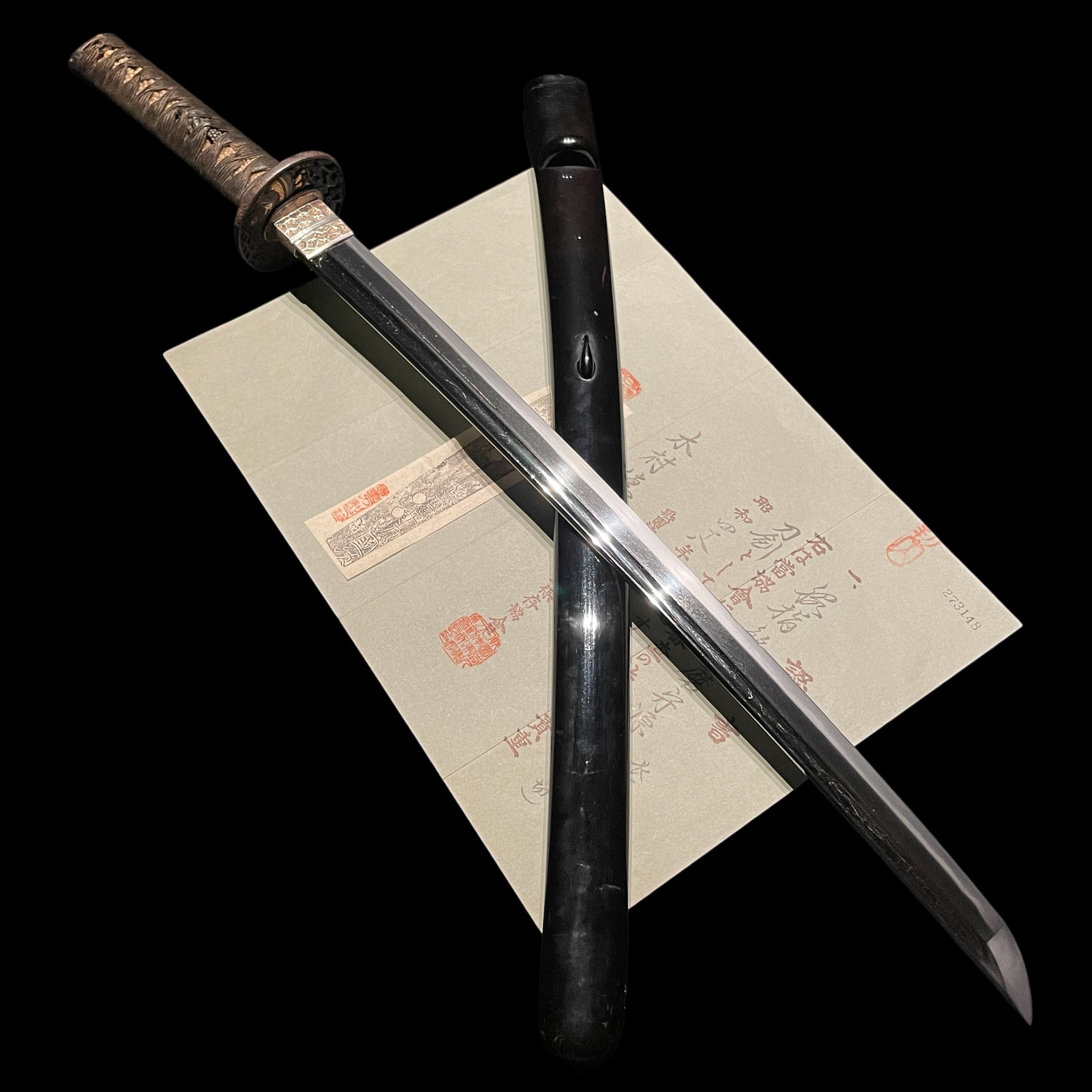
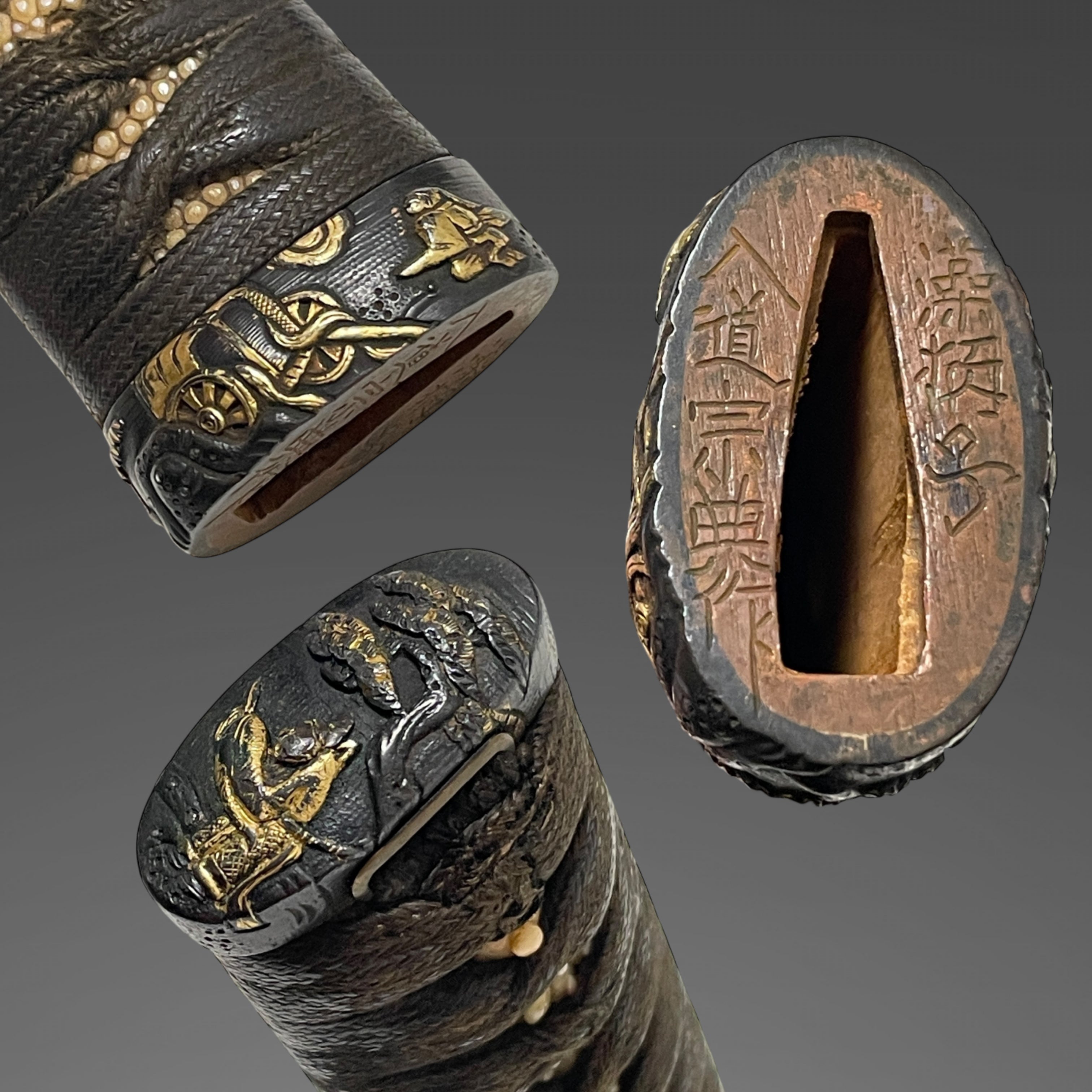
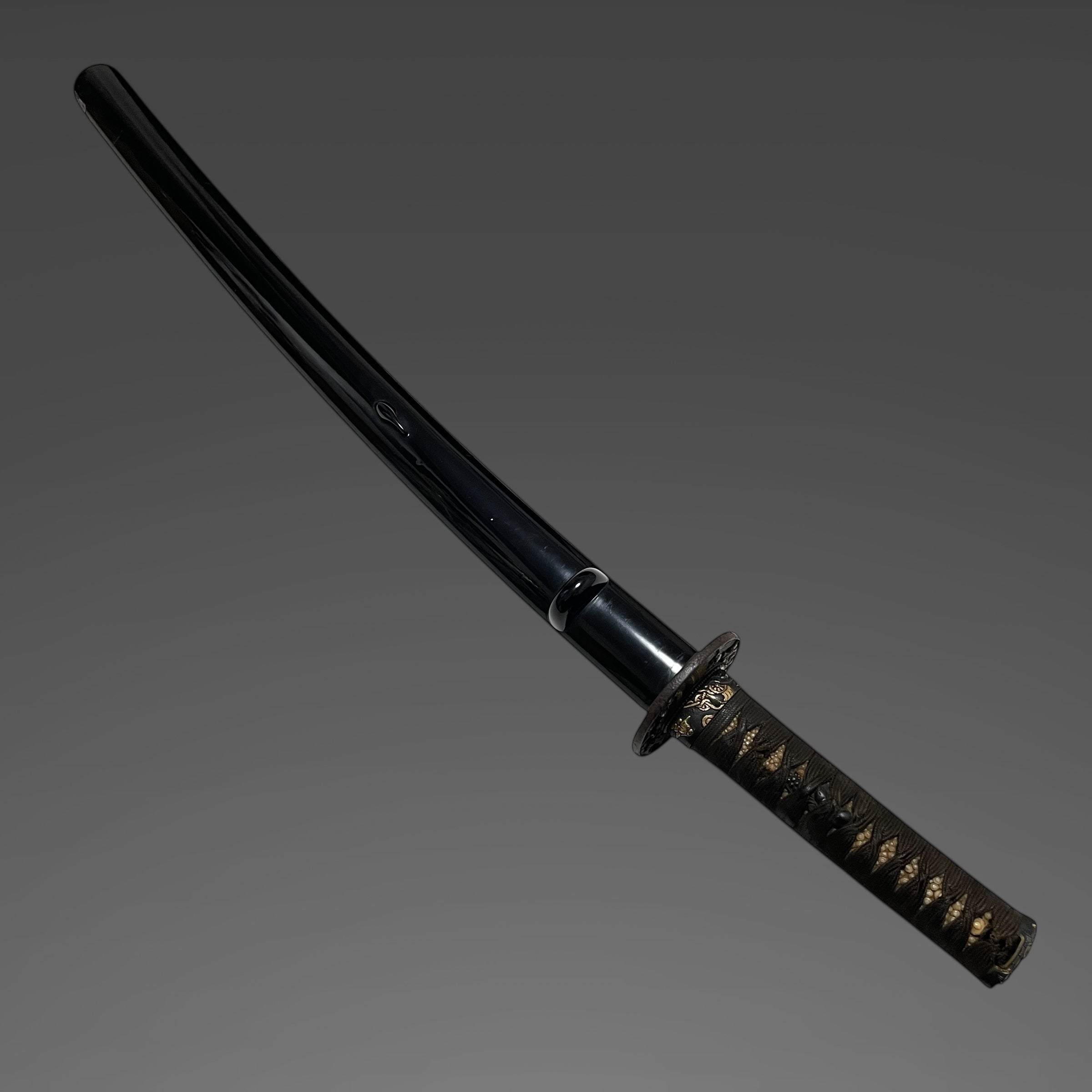
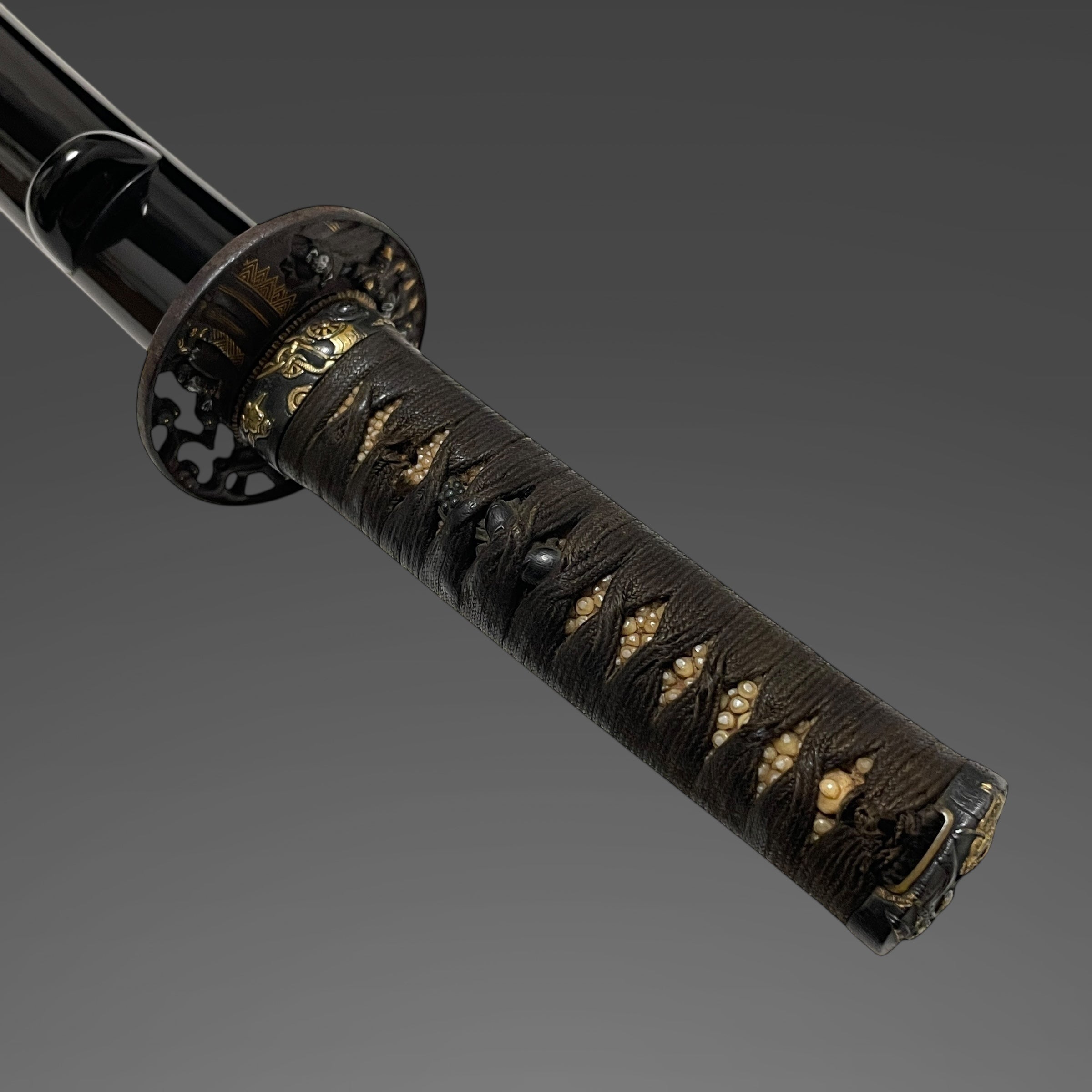
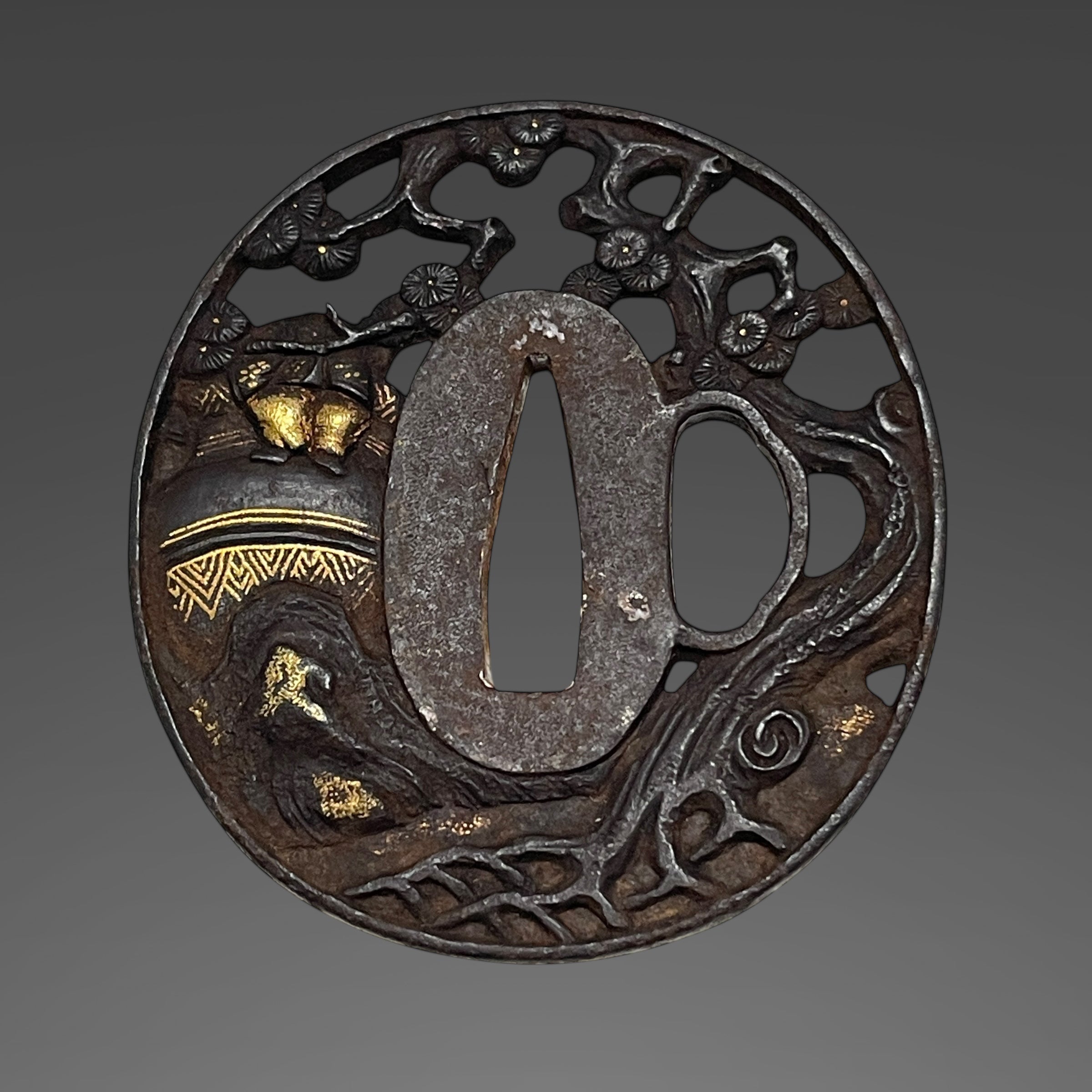
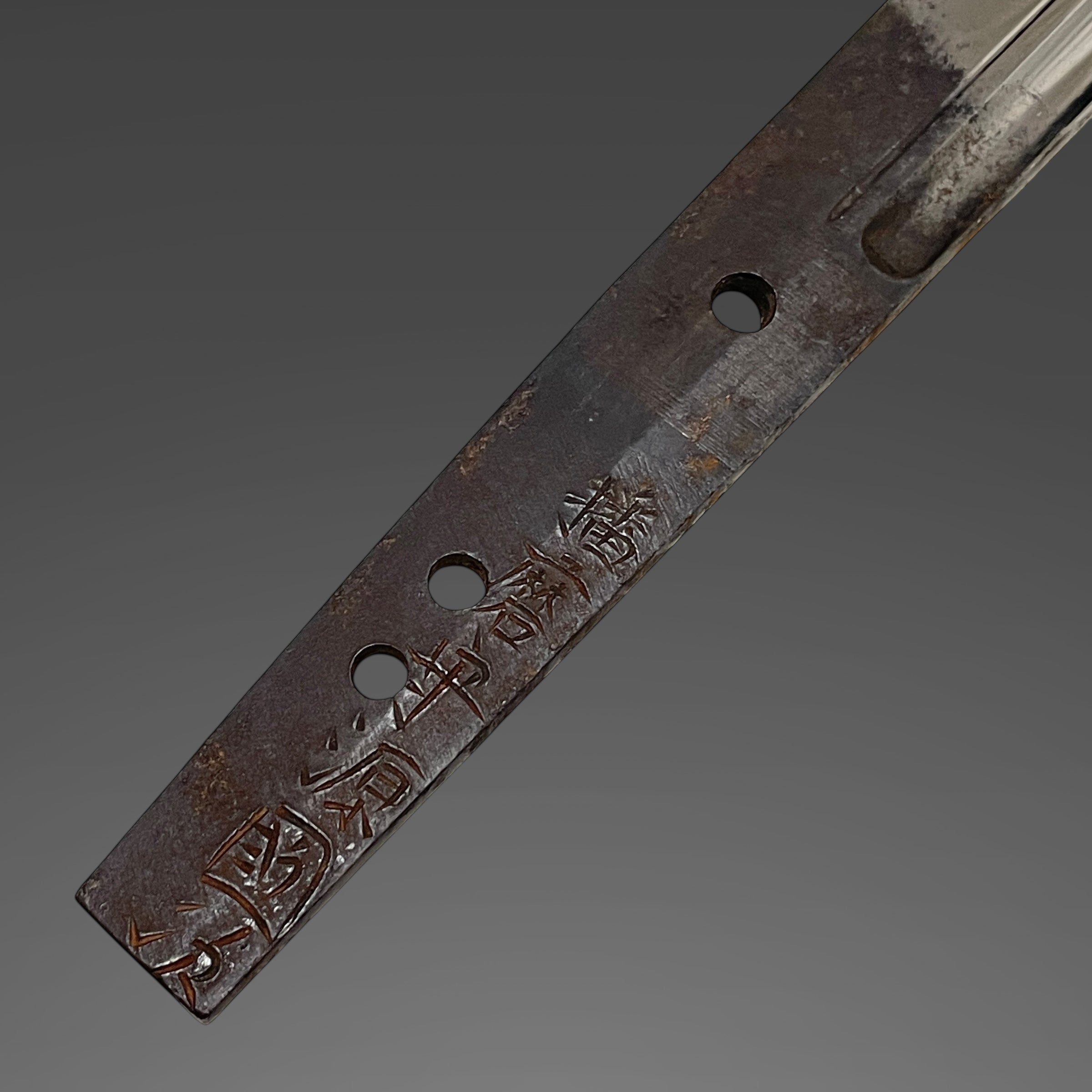
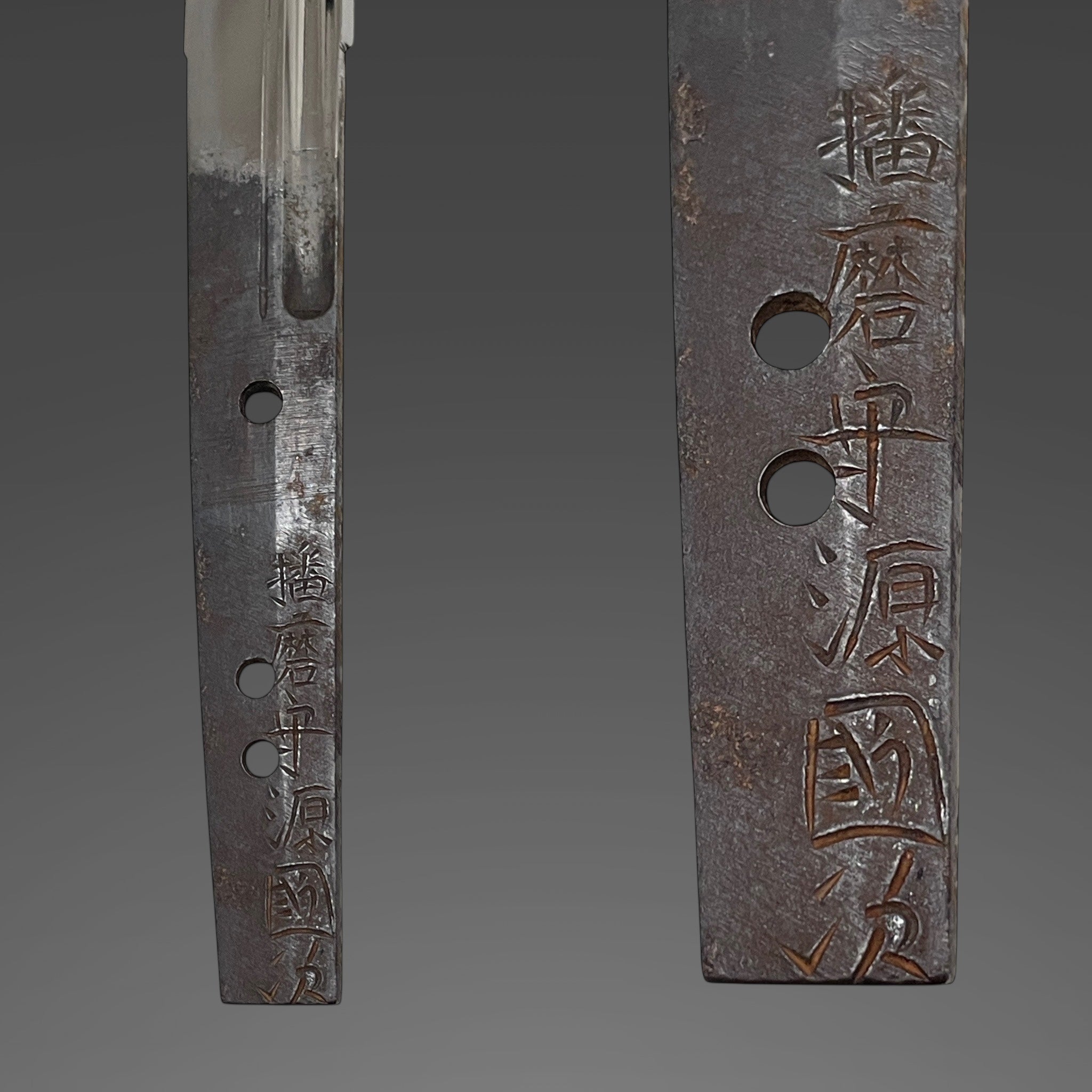
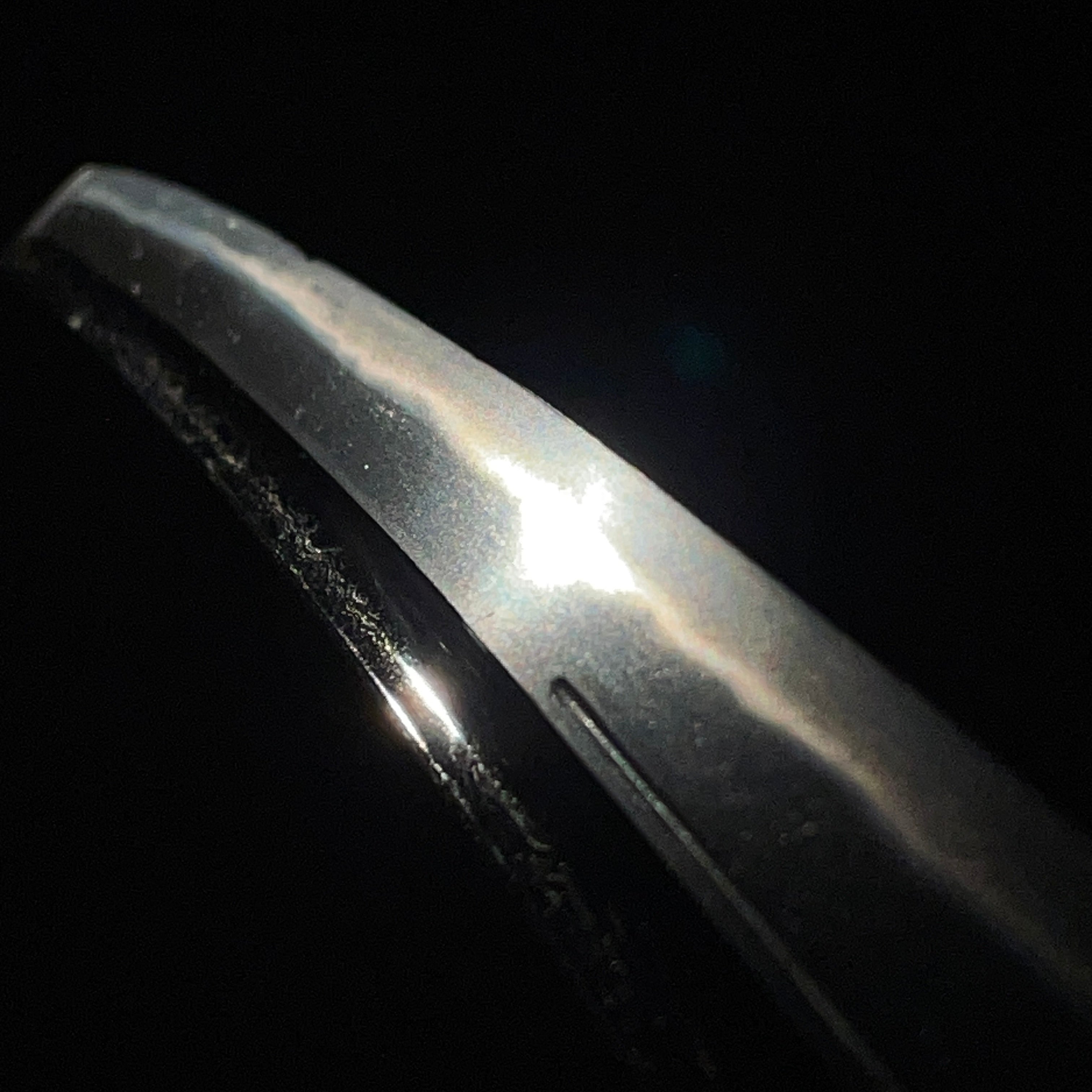
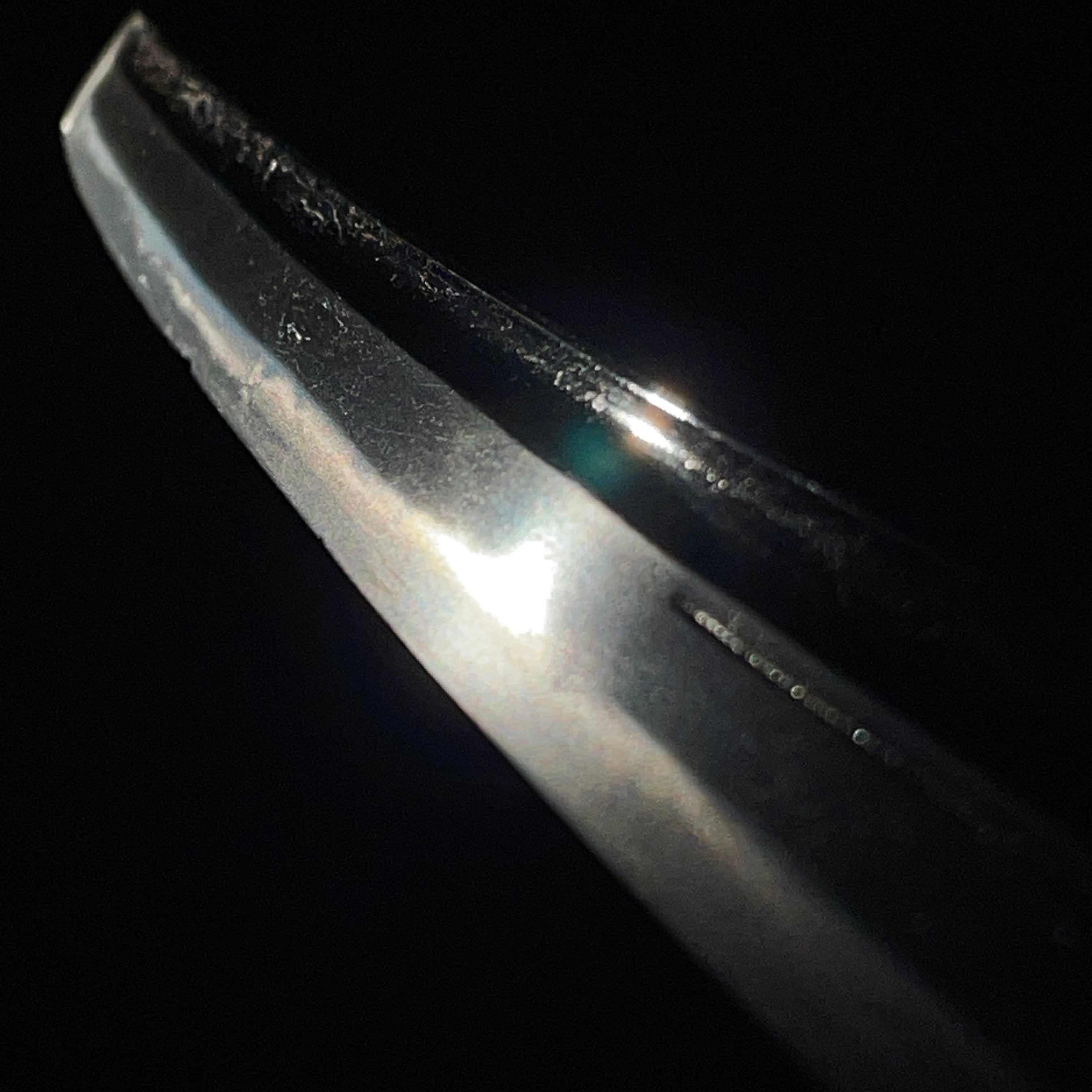
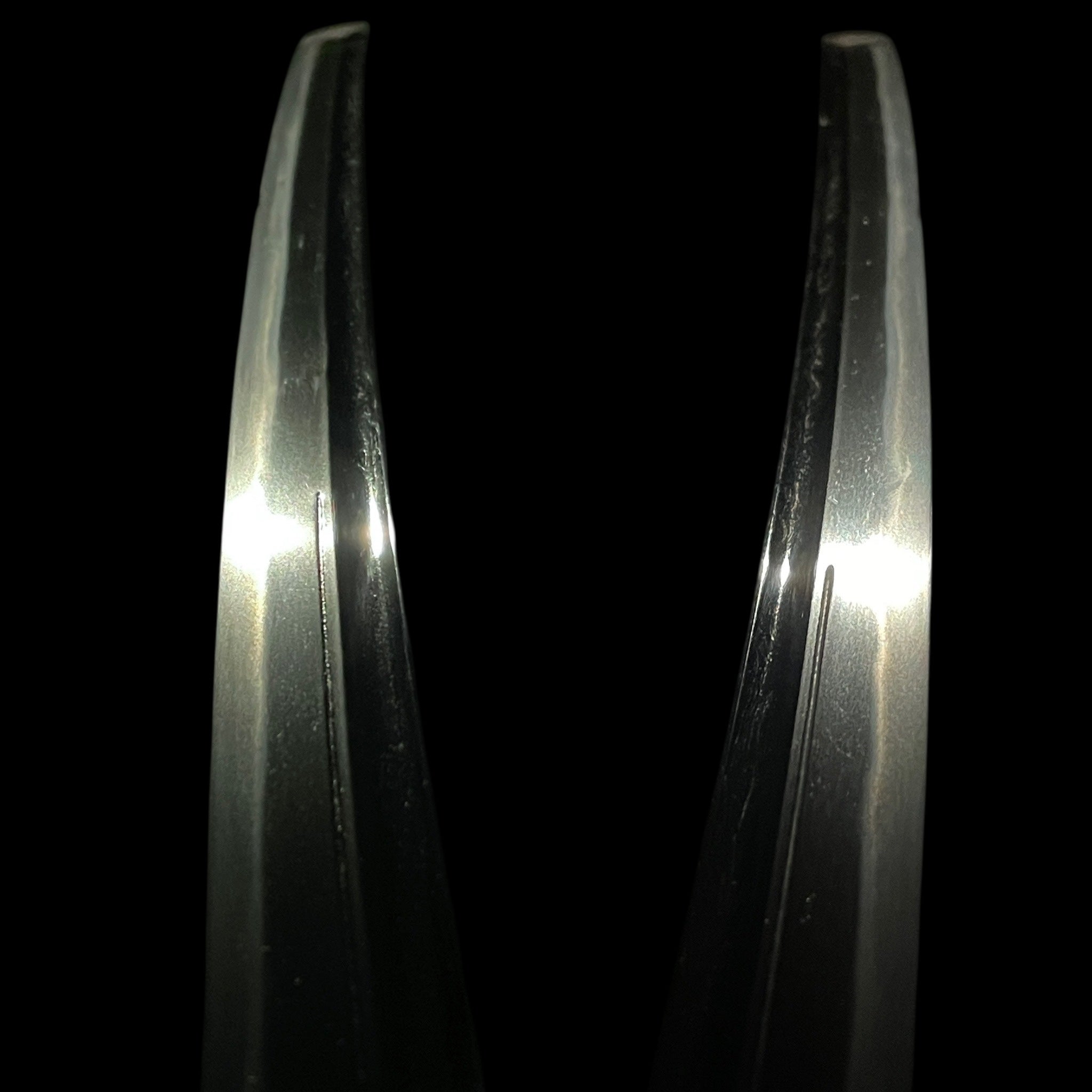
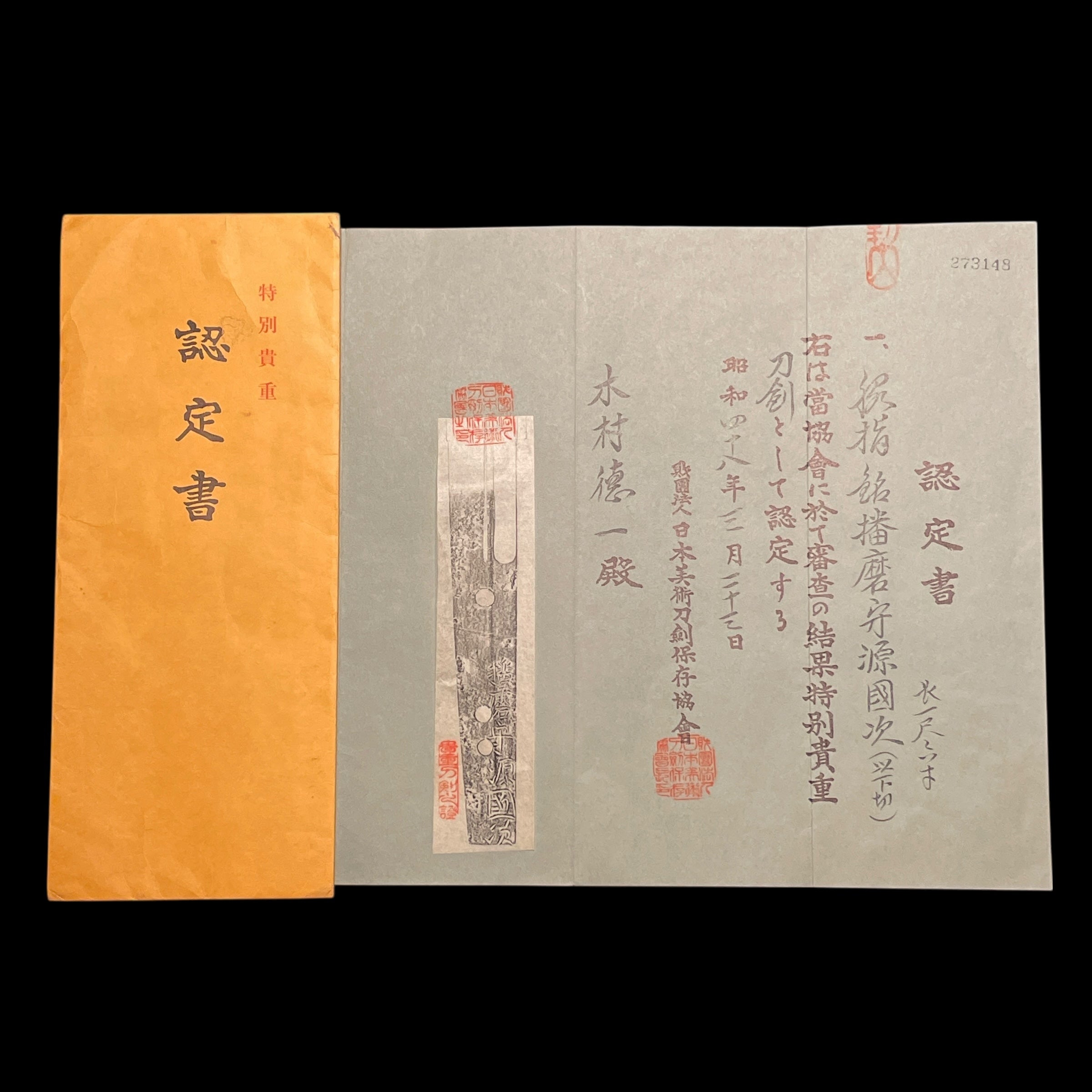
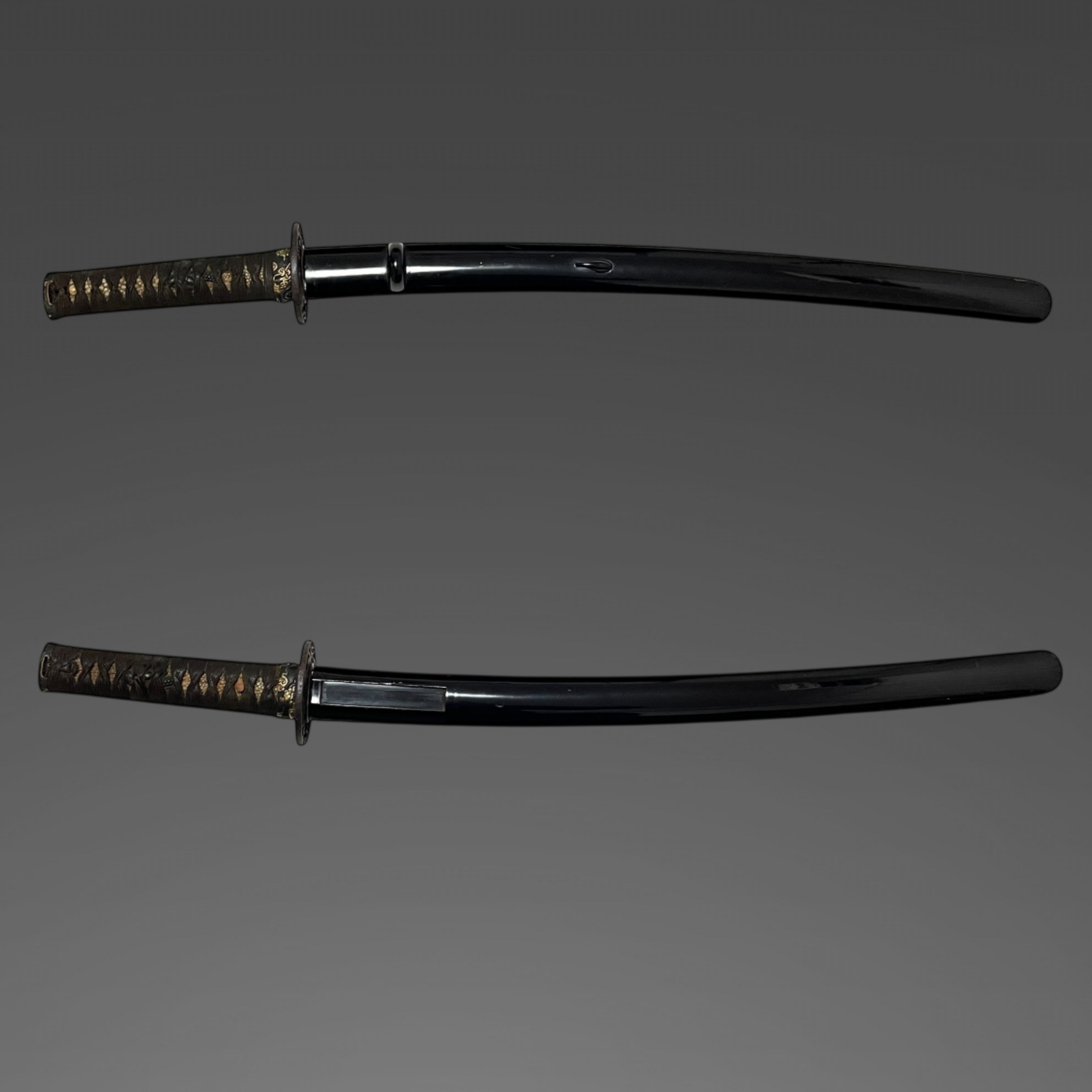
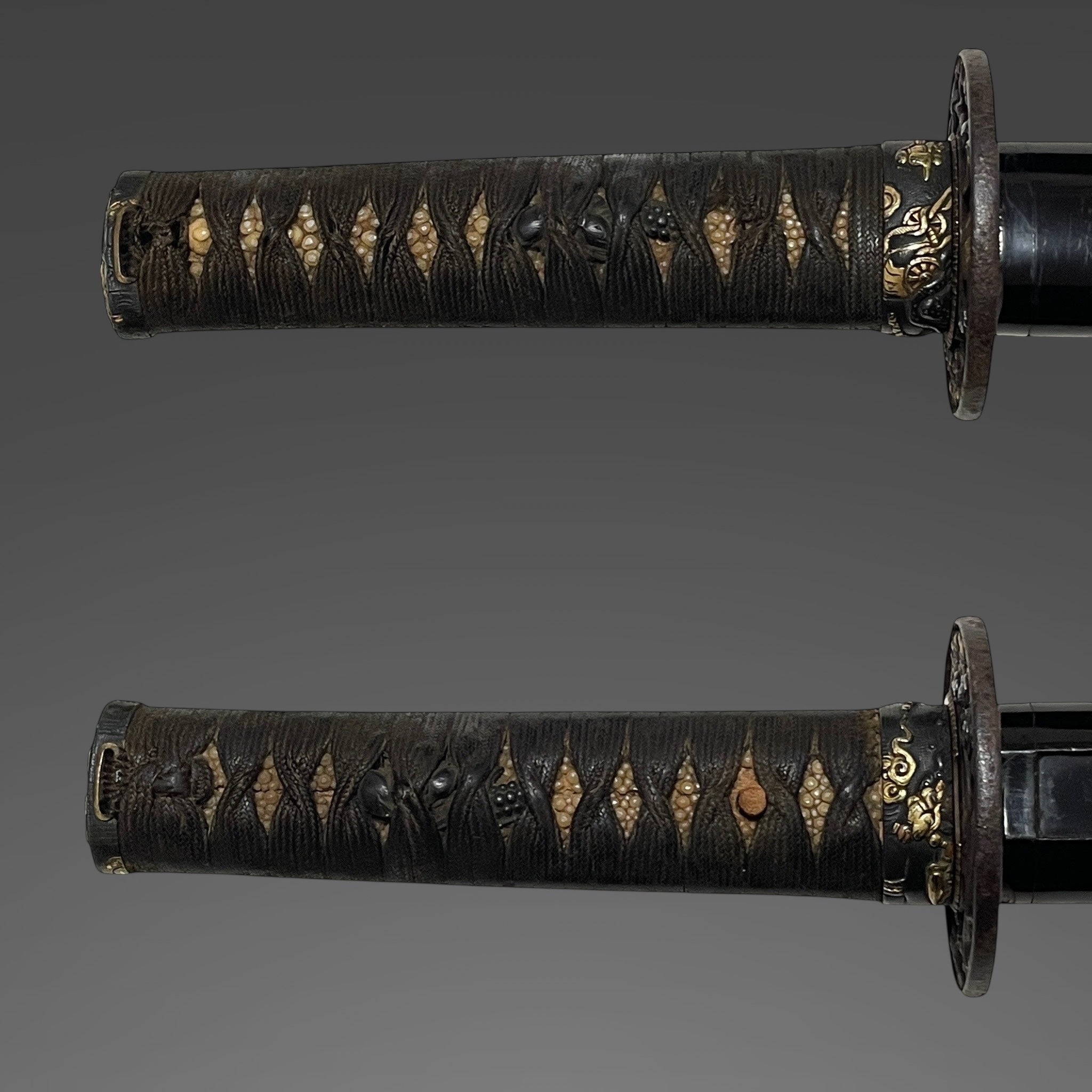
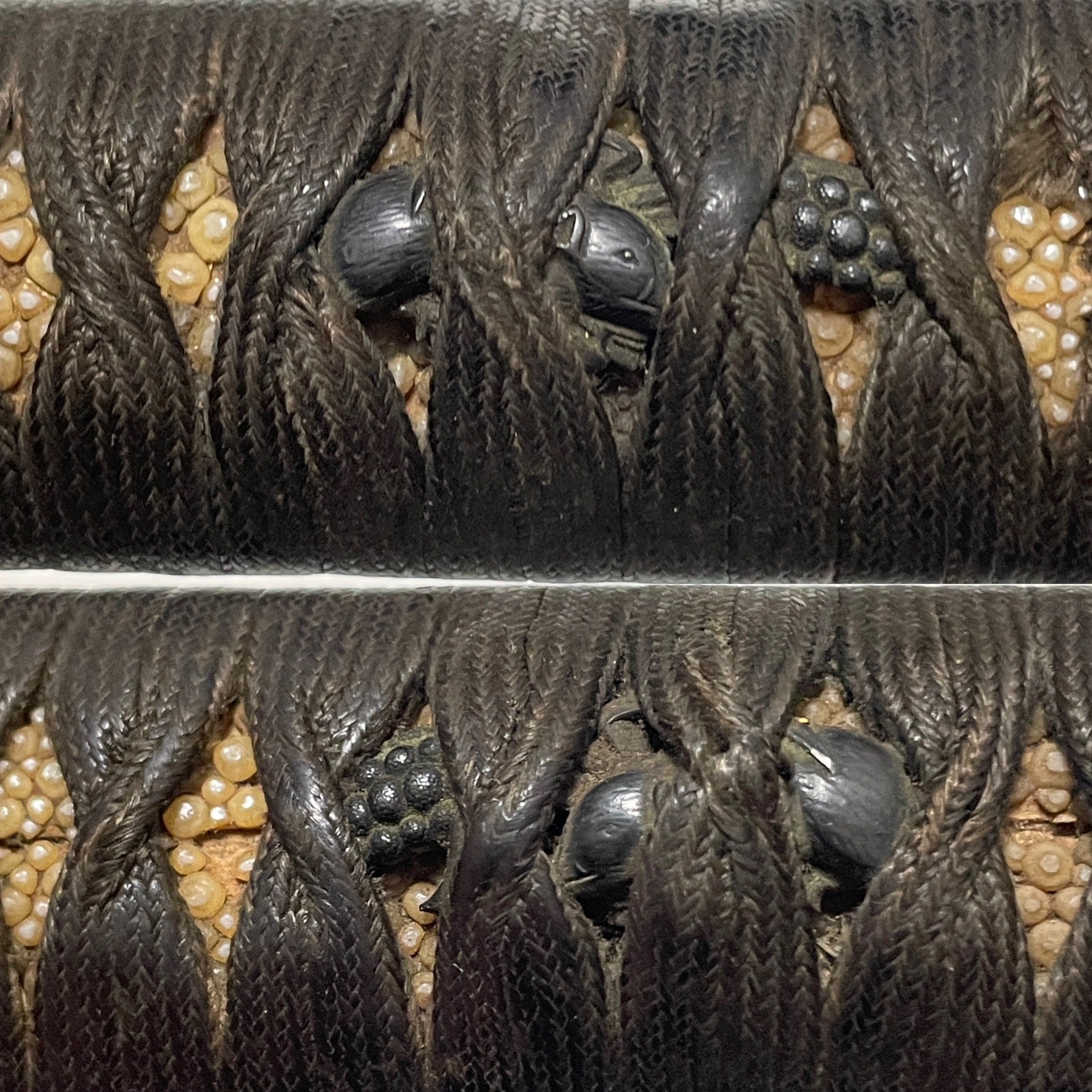
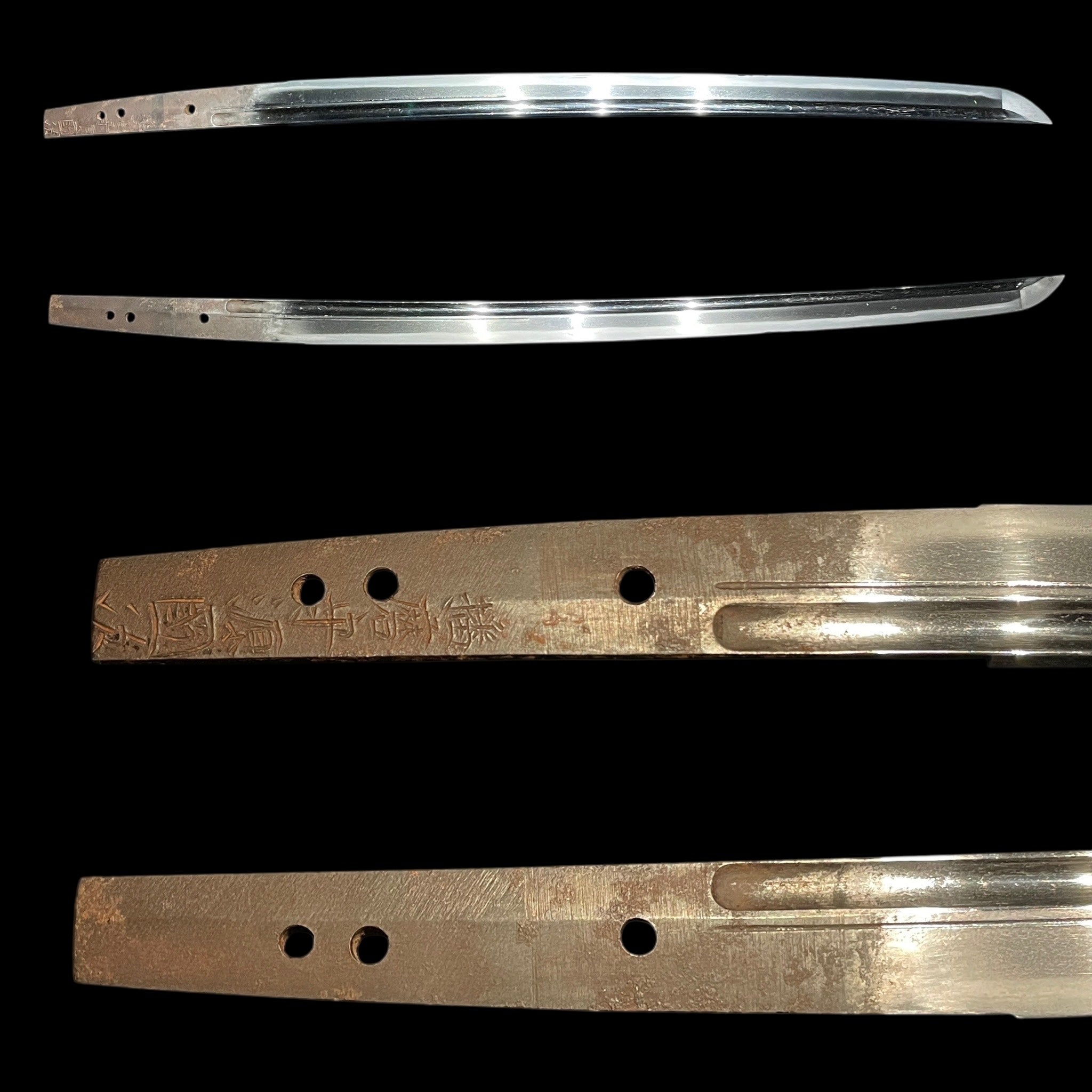
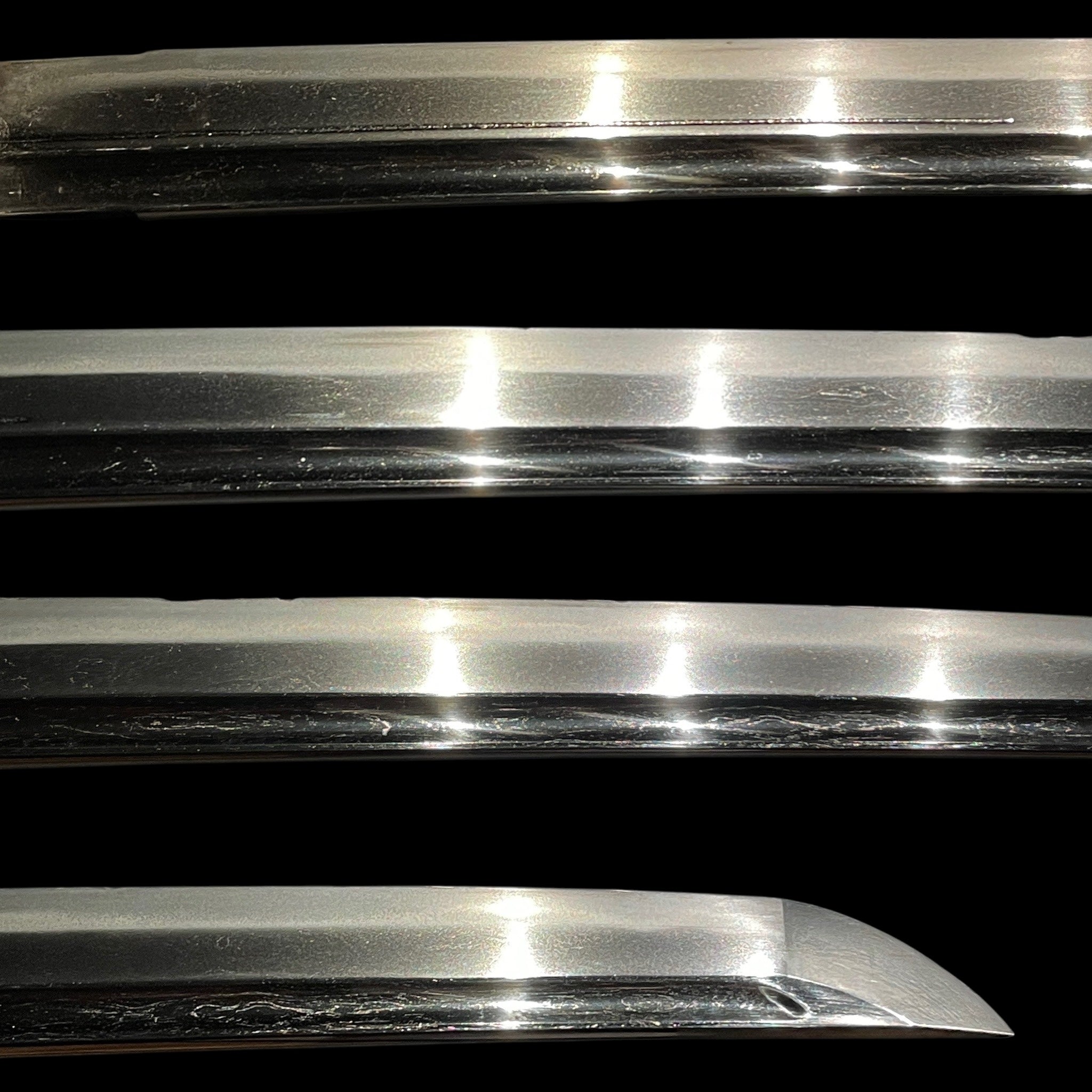
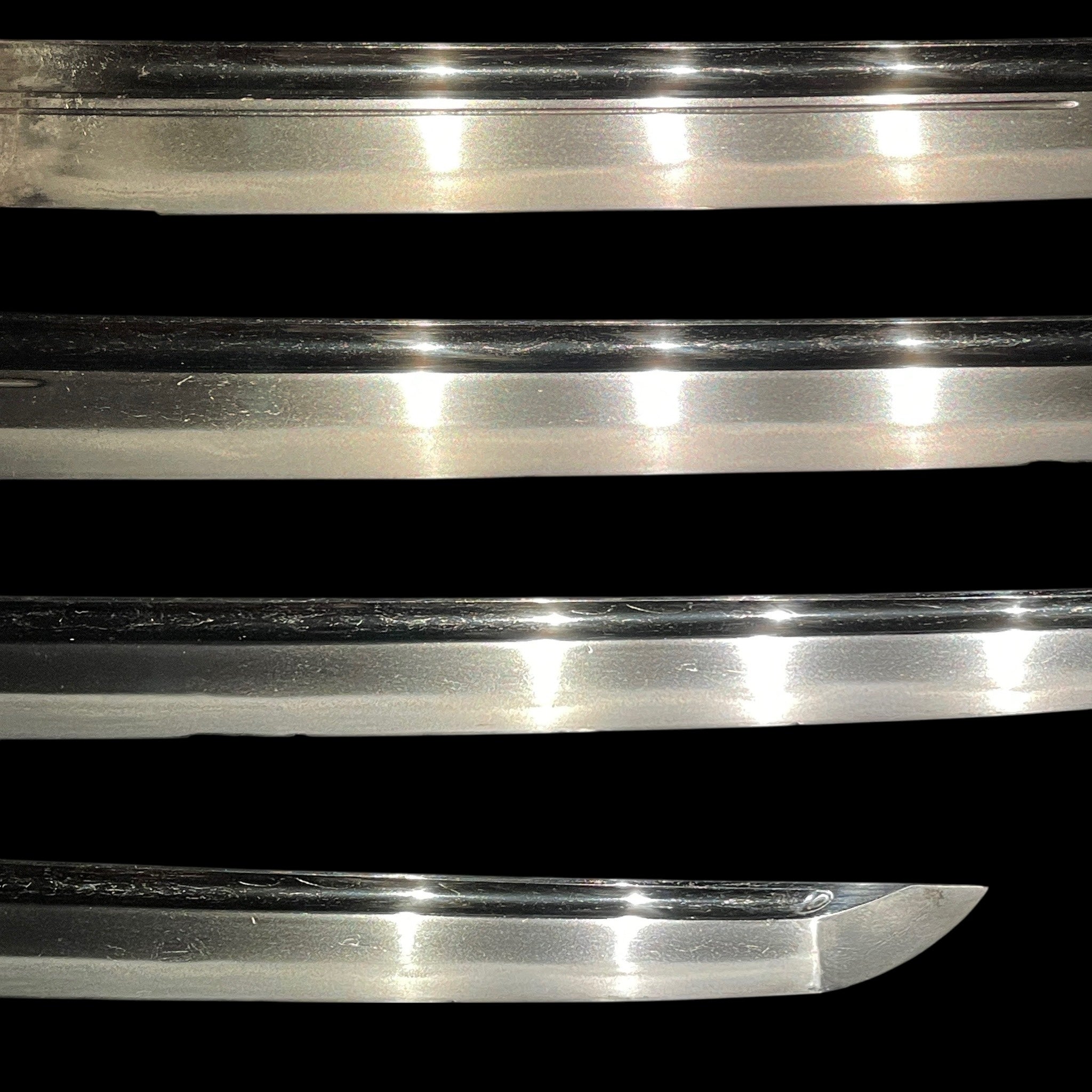
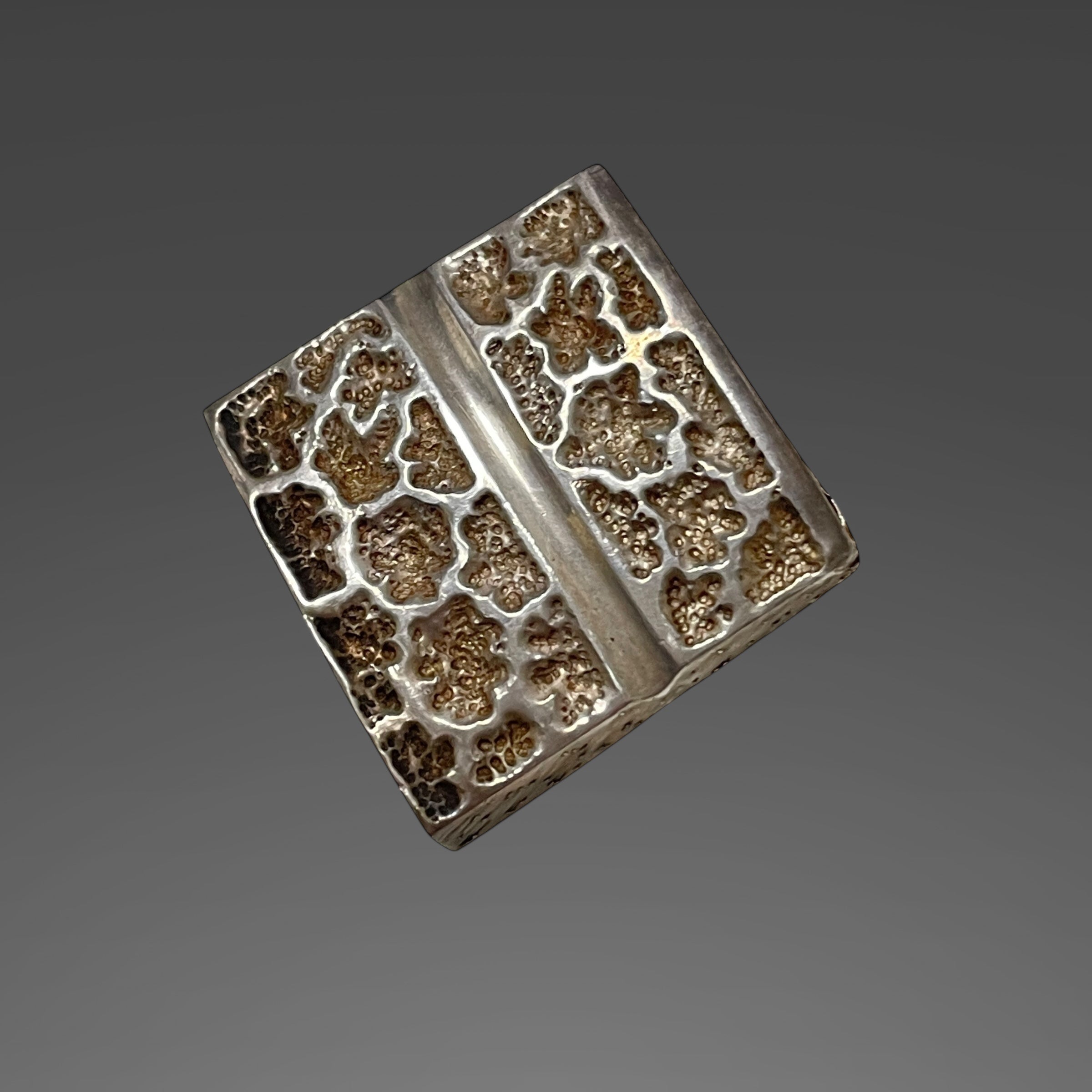
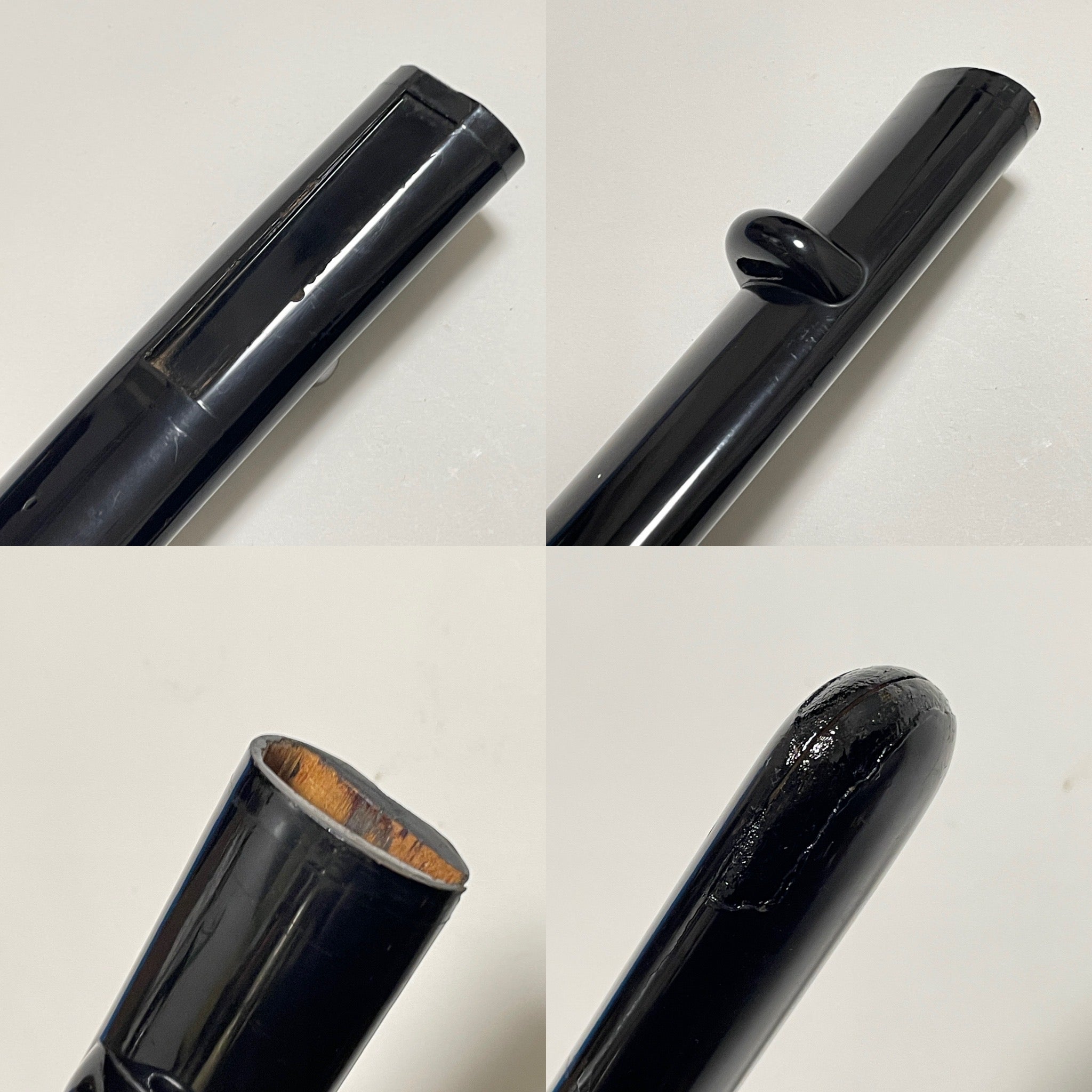
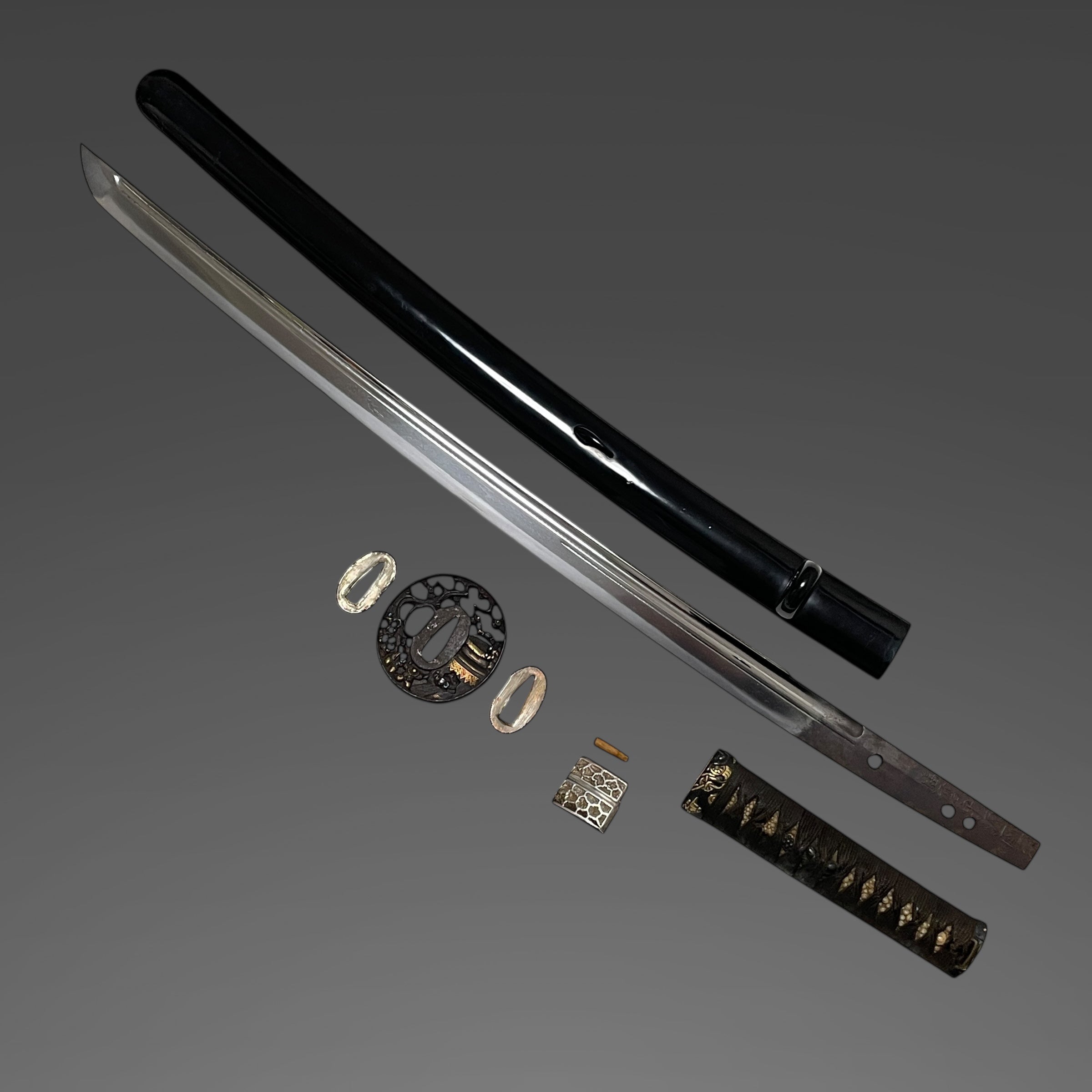
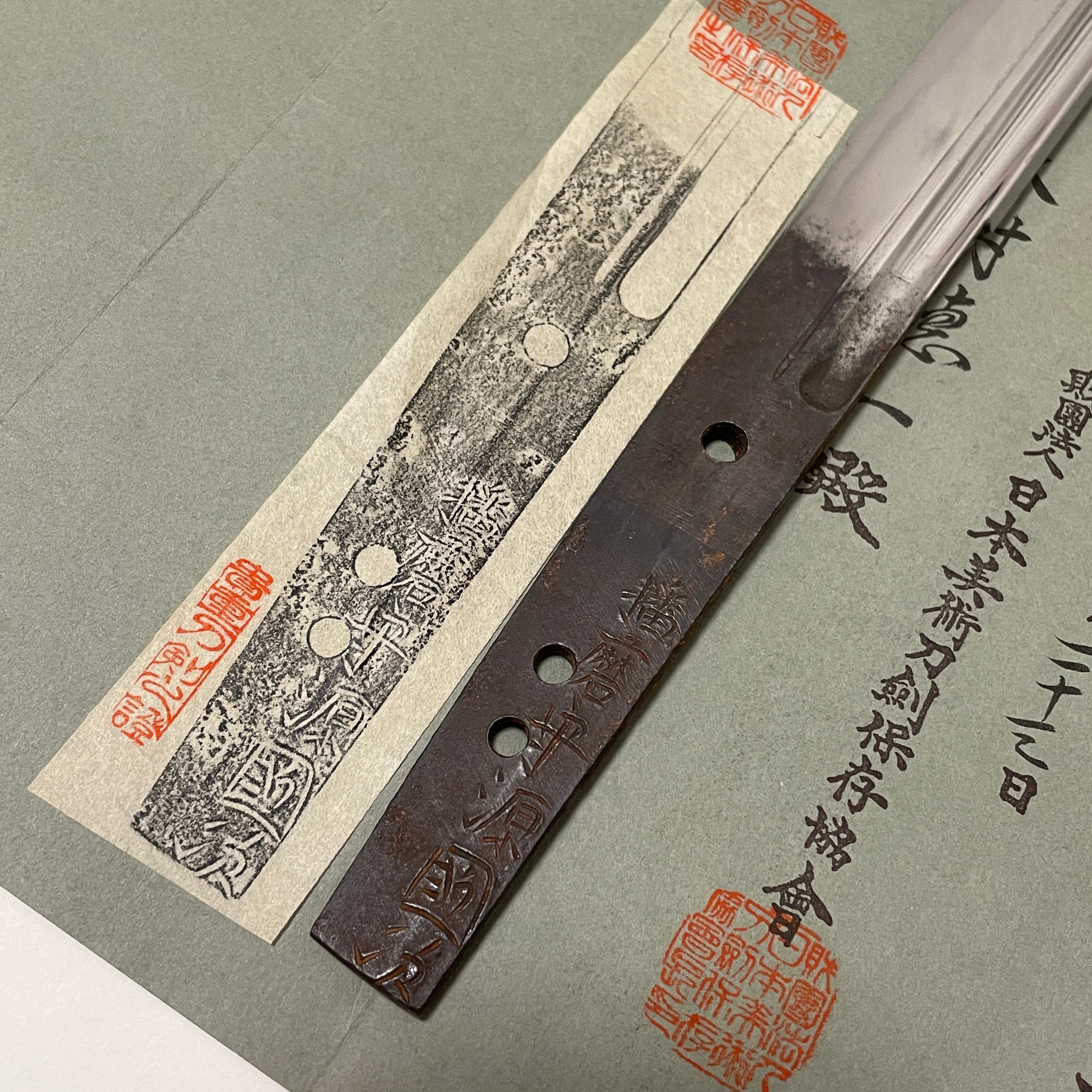
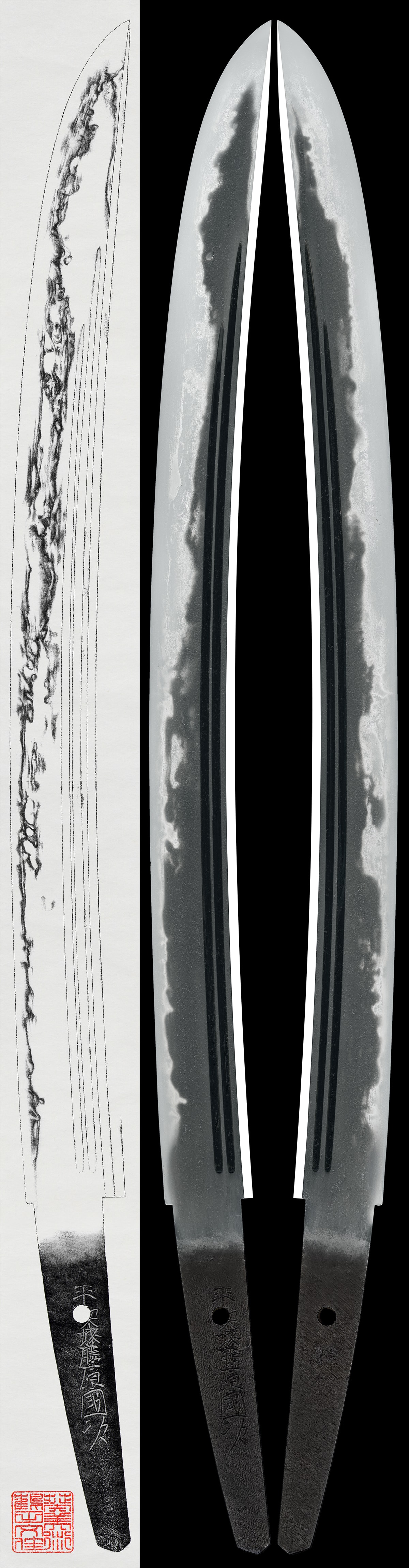
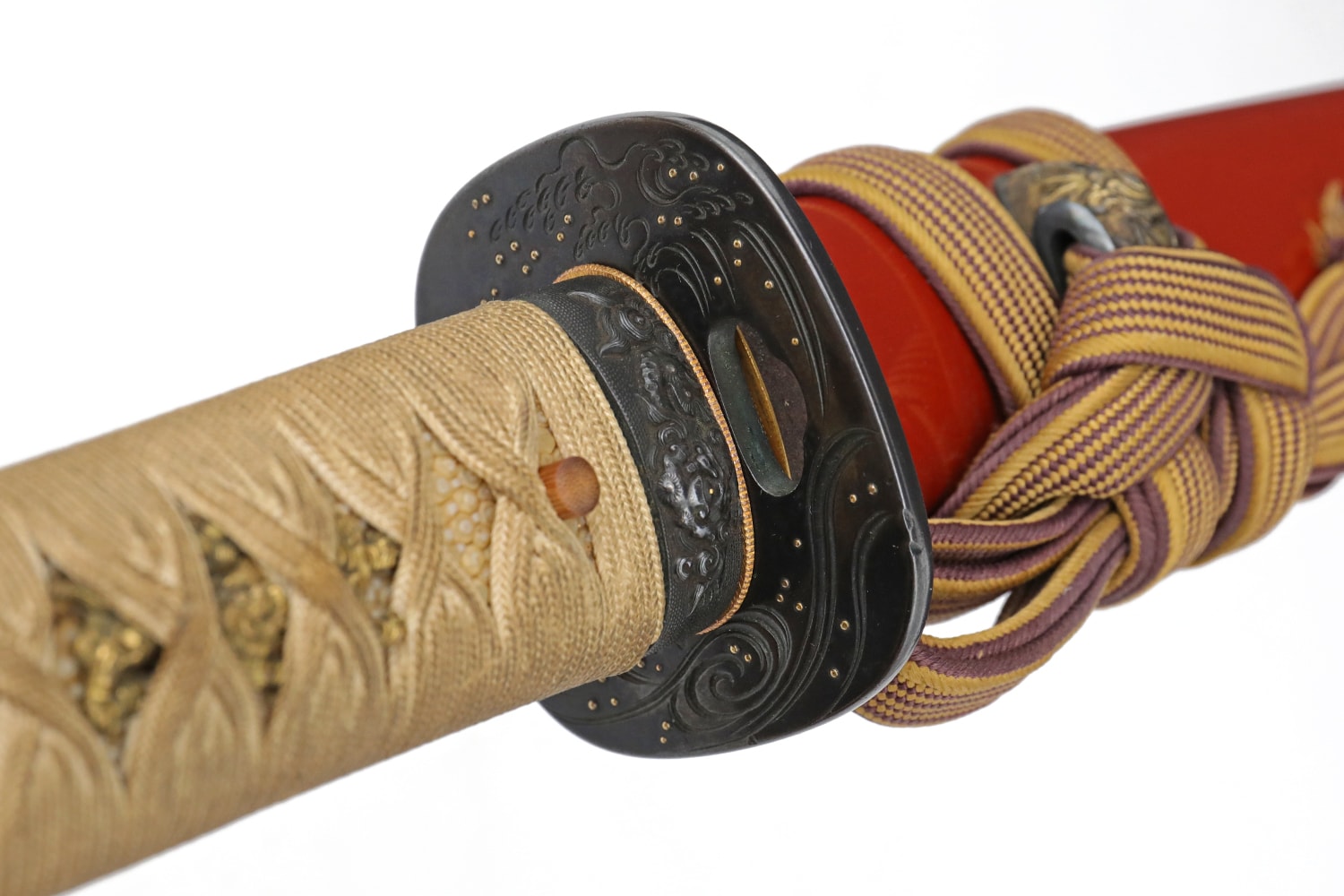
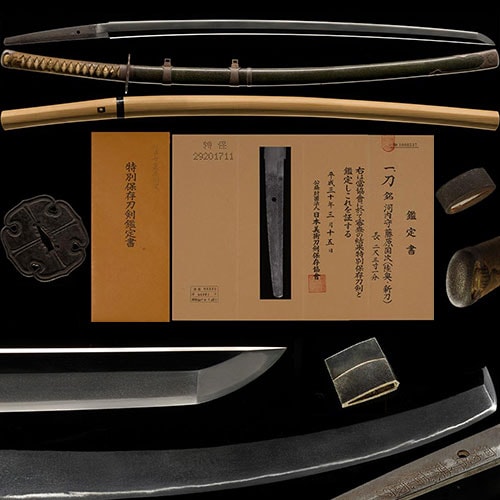
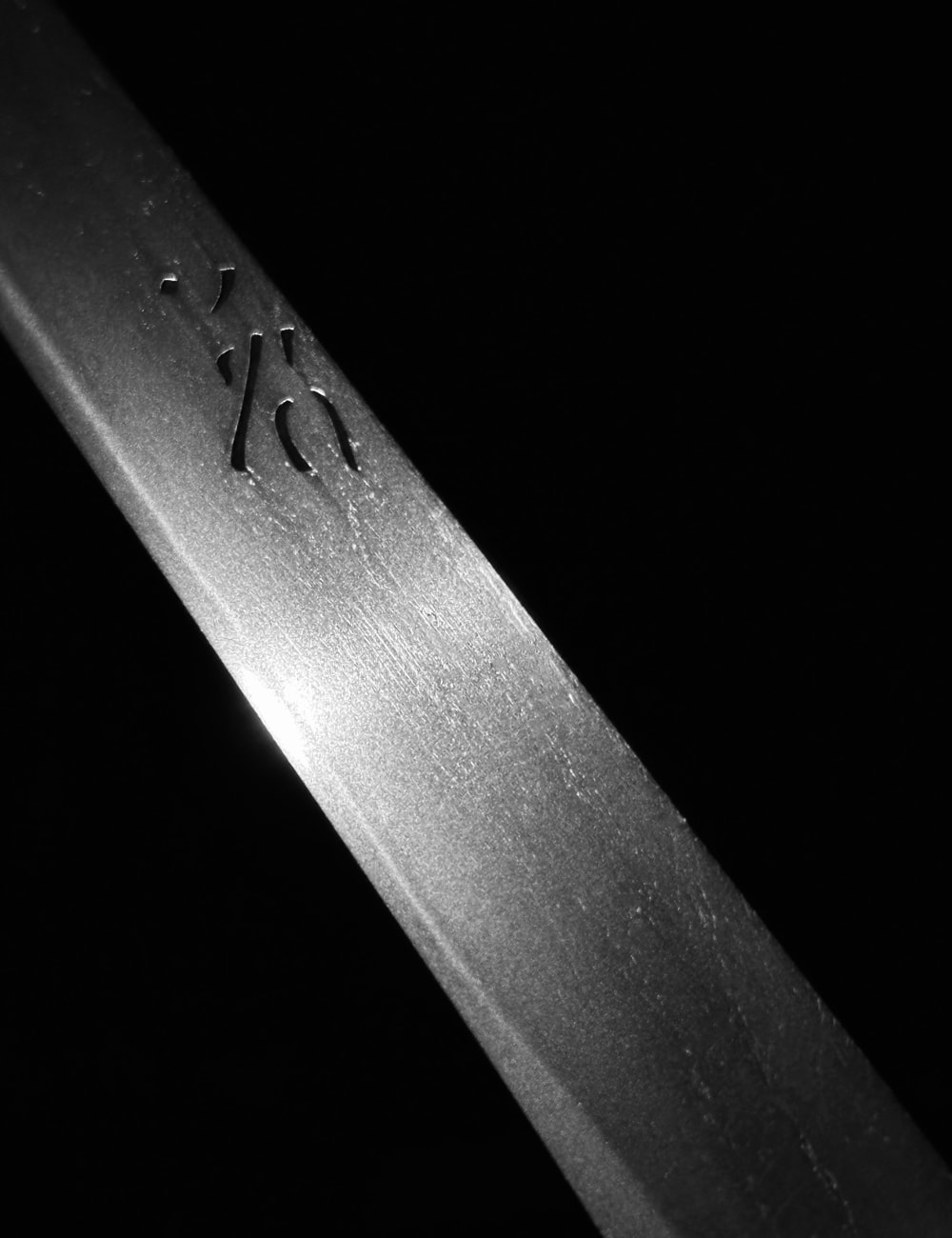
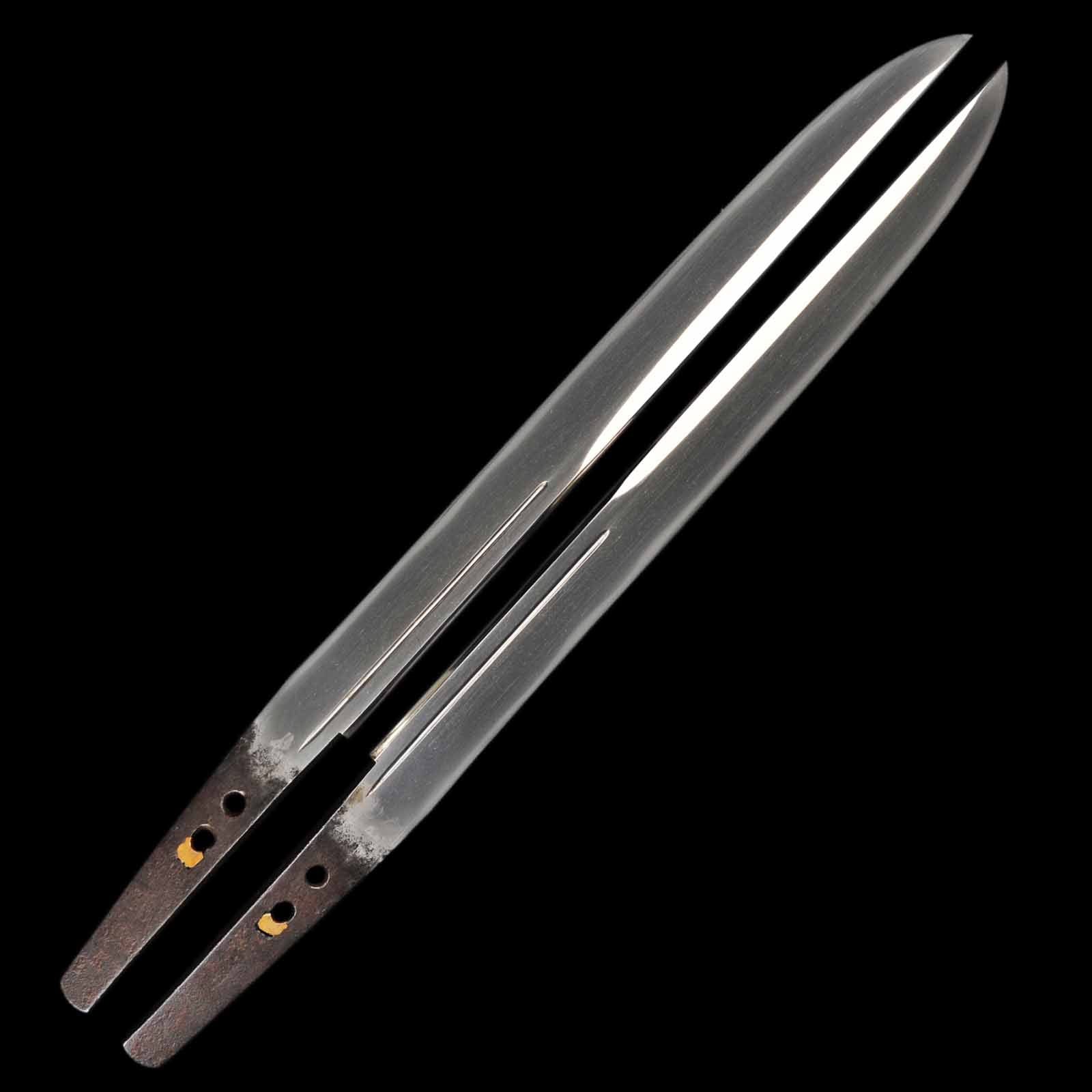
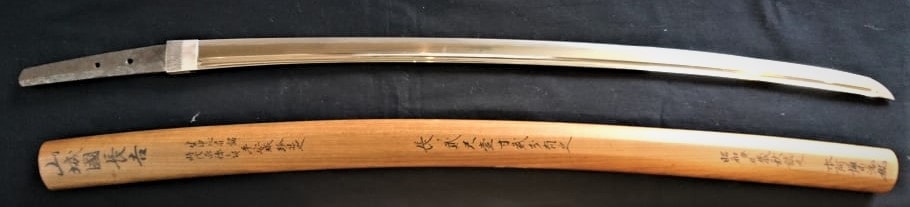
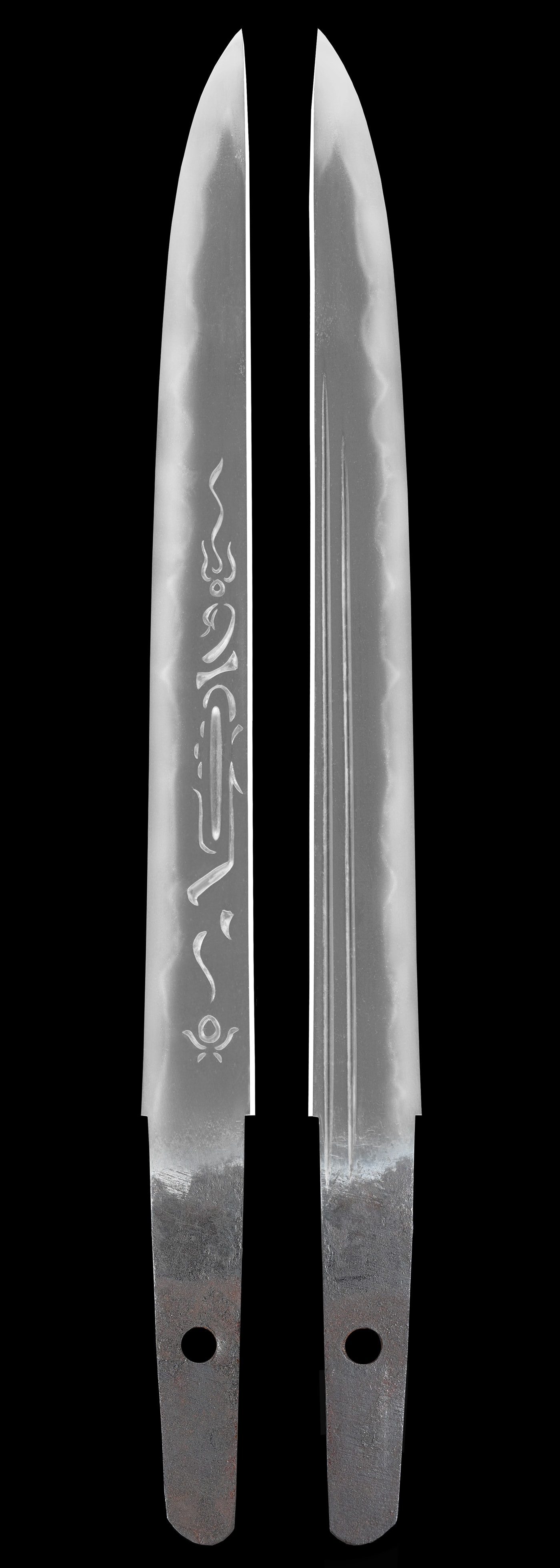
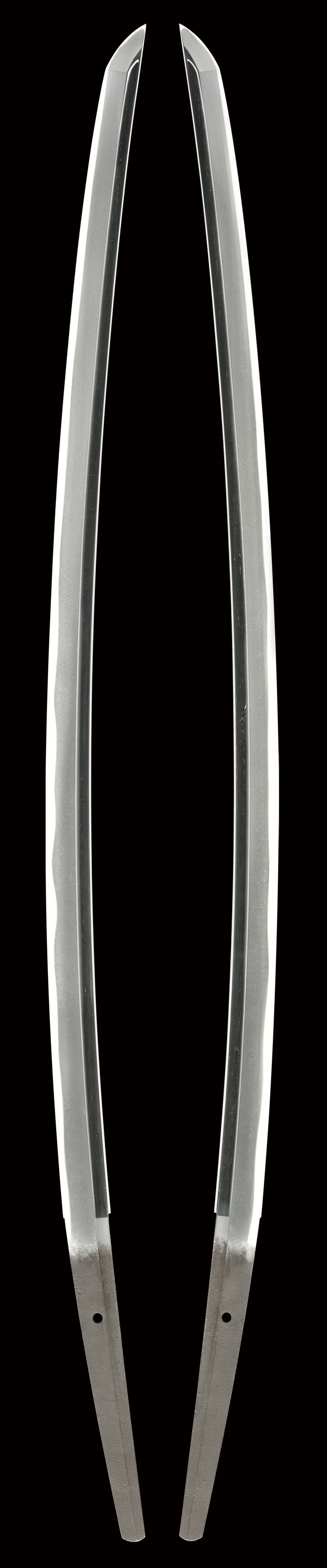
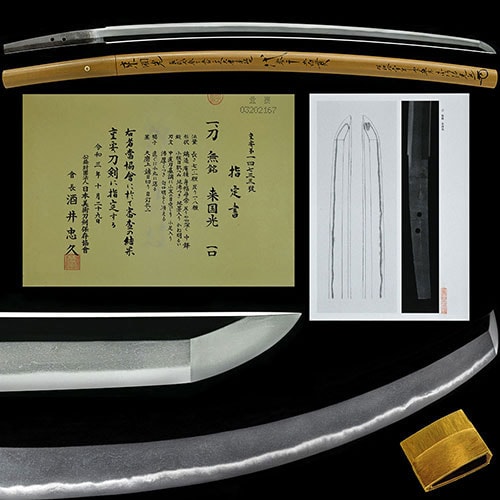
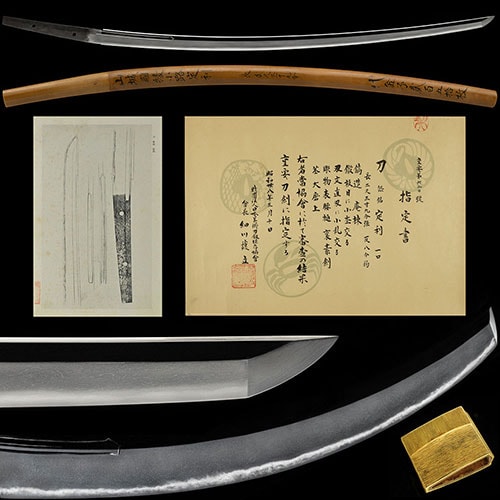
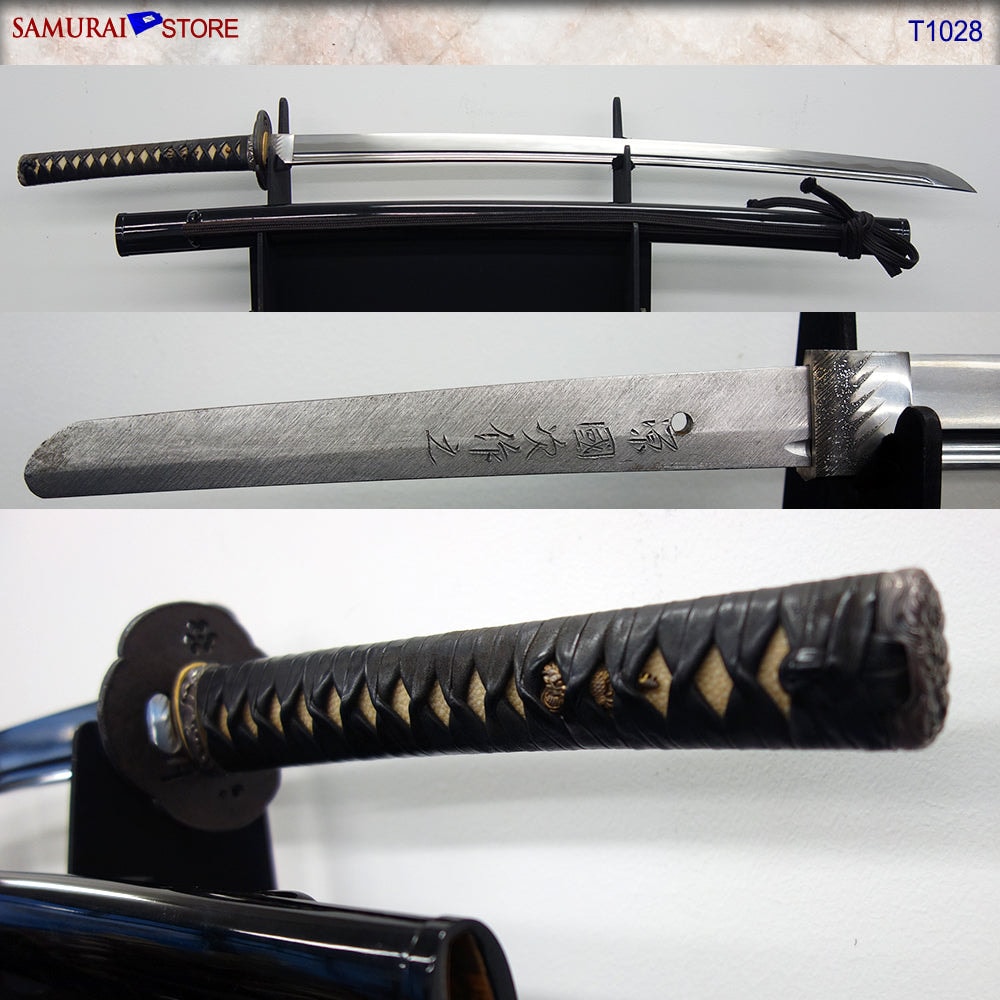
This is a wakizashi signed by Harimanokami Kunitsugu. The blade has a Hakobore. The cover is signed Mogarashi Nyudo Soten saku and features a silver cover Ganseki Habaki and a menuki with a boar.
mei · Keian (1648-1652) · nagasa 48.3cm · sori 0.6cm


Yamashiro-den · Yamashiro · around 1648-1652
Fujishiro Jo saku · Tōken Taikan top 49%
2 pieces on the market now
Where Kunitsugu stands among comparable artisans: across all of nihontō, and within tradition, era, and period. The tiers (Foremost · Leading · Major · Notable) weigh official designations from the NBTHK and Japan's Agency for Cultural Affairs, together with historical honors of lasting repute such as the Sansaku and Meibutsu-chō.
Select a lens to see how it's measured.
Yamashiro-den · Kyoto
15 pieces on the market now
The Heianjō school (平安城) of swordsmiths represents the principal lineage of Kyōto sword production during the Muromachi period. "Heianjō" is the classical name for Kyōto (Heian-kyō), and the school's smiths — resident in the Sanjō district of the capital — signed variously with the 平安城 (Heianjō) and 三条 (Sanjō) prefixes, a usage that has often caused them to be confused with the far earlier Sanjō school of Munechika. Learn more →
| Smith | Era | Designated |
|---|---|---|
| Nagayoshi長吉 | 1469-1492 | 15 |
| Yoshinori吉則 | 1469-1487 | 3 |
| Nagayoshi長吉 | 1449-1452 | 0 |
| Nobusada信貞 | 1346-1370 | 0 |
| Yoshinaga吉長 | 1381-1384 | 0 |
We could not find an authenticity certificate on the seller’s listing. Japanese swords and fittings are normally papered by the NBTHK (or the NTHK). Without one, the attribution is the seller’s own assessment and has not been independently verified — treat it with caution and ask the dealer about certification before buying.
Swords are non-returnable (blades cannot be re-imported to Japan). Insured shipping; damage/loss claims reported within 5 days of receipt. Cancellation fee 10% before shipment; not possible after shipment.
This is a wakizashi signed by Harimanokami Kunitsugu. The blade has a Hakobore. The cover is signed Mogarashi Nyudo Soten saku and features a silver cover Ganseki Habaki and a menuki with a boar.
mei · Keian (1648-1652) · nagasa 48.3cm · sori 0.6cm


Yamashiro-den · Yamashiro · around 1648-1652
Fujishiro Jo saku · Tōken Taikan top 49%
2 pieces on the market now
Where Kunitsugu stands among comparable artisans: across all of nihontō, and within tradition, era, and period. The tiers (Foremost · Leading · Major · Notable) weigh official designations from the NBTHK and Japan's Agency for Cultural Affairs, together with historical honors of lasting repute such as the Sansaku and Meibutsu-chō.
Select a lens to see how it's measured.
Yamashiro-den · Kyoto
15 pieces on the market now
The Heianjō school (平安城) of swordsmiths represents the principal lineage of Kyōto sword production during the Muromachi period. "Heianjō" is the classical name for Kyōto (Heian-kyō), and the school's smiths — resident in the Sanjō district of the capital — signed variously with the 平安城 (Heianjō) and 三条 (Sanjō) prefixes, a usage that has often caused them to be confused with the far earlier Sanjō school of Munechika. Learn more →
| Smith | Era | Designated |
|---|---|---|
| Nagayoshi長吉 | 1469-1492 | 15 |
| Yoshinori吉則 | 1469-1487 | 3 |
| Nagayoshi長吉 | 1449-1452 | 0 |
| Nobusada信貞 | 1346-1370 | 0 |
| Yoshinaga吉長 | 1381-1384 | 0 |
We could not find an authenticity certificate on the seller’s listing. Japanese swords and fittings are normally papered by the NBTHK (or the NTHK). Without one, the attribution is the seller’s own assessment and has not been independently verified — treat it with caution and ask the dealer about certification before buying.
Swords are non-returnable (blades cannot be re-imported to Japan). Insured shipping; damage/loss claims reported within 5 days of receipt. Cancellation fee 10% before shipment; not possible after shipment.