Around 1800 Suishinshi Masahide argued in his writings that the craft must return to the old masters’ methods: the fukkotō revival. His greatest successor Naotane worked convincingly in Bizen and Sōshū manners that had been dead for centuries.
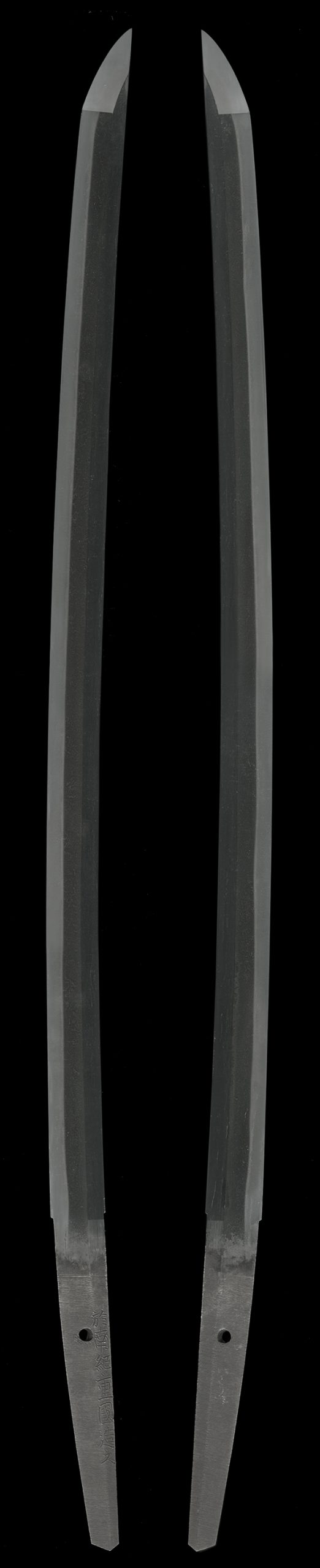
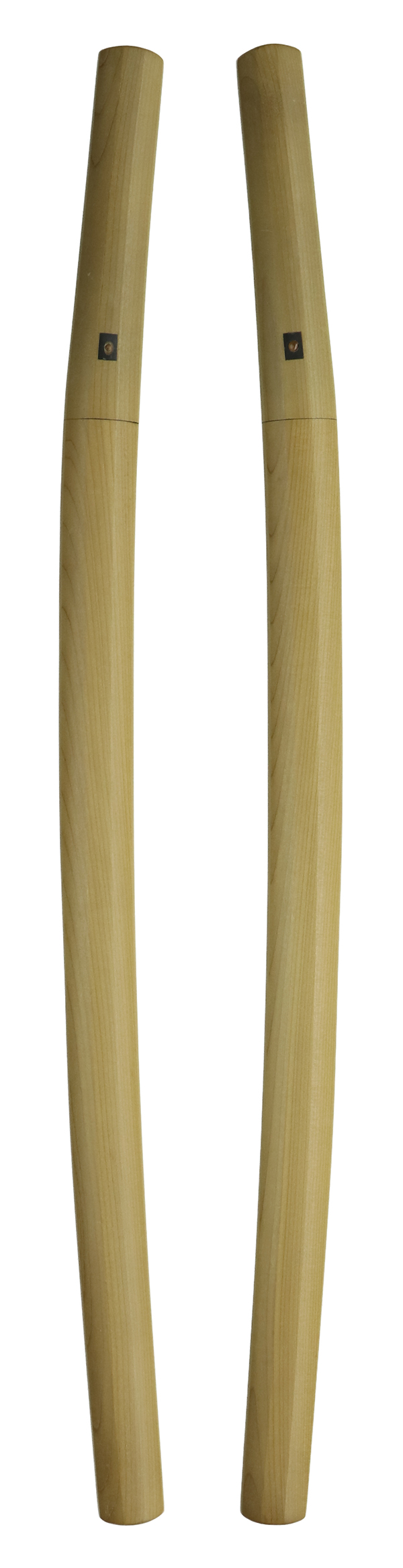
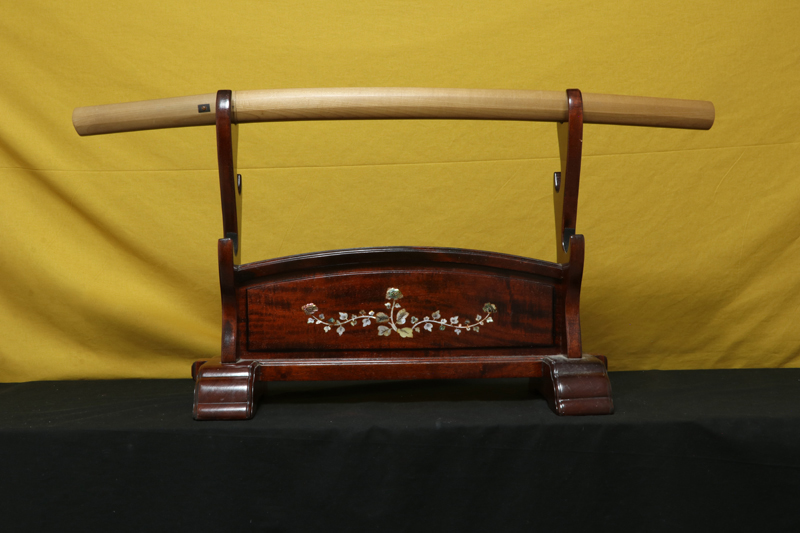
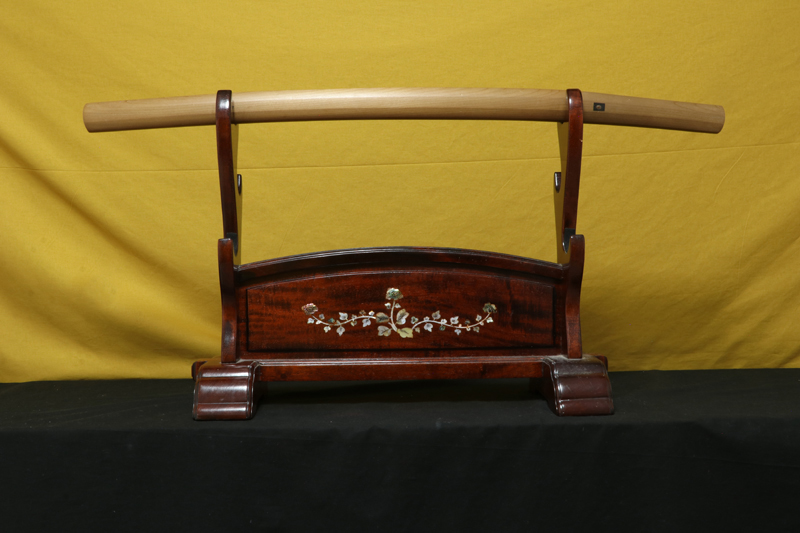
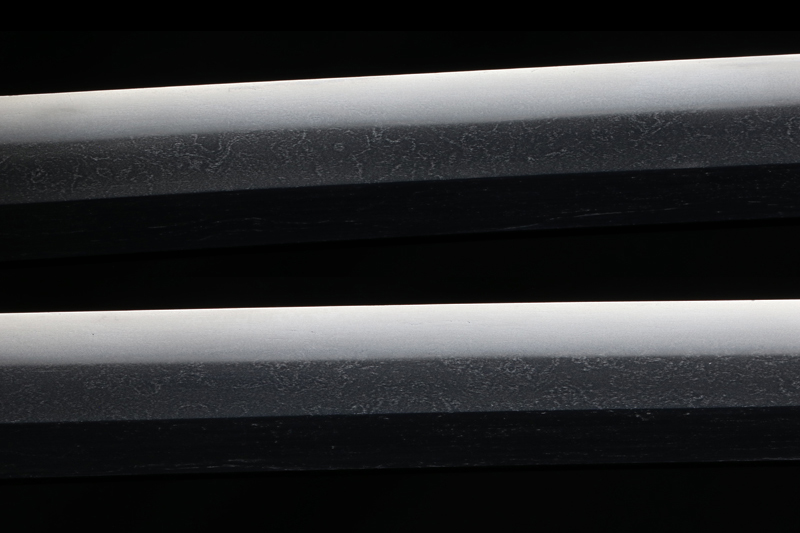
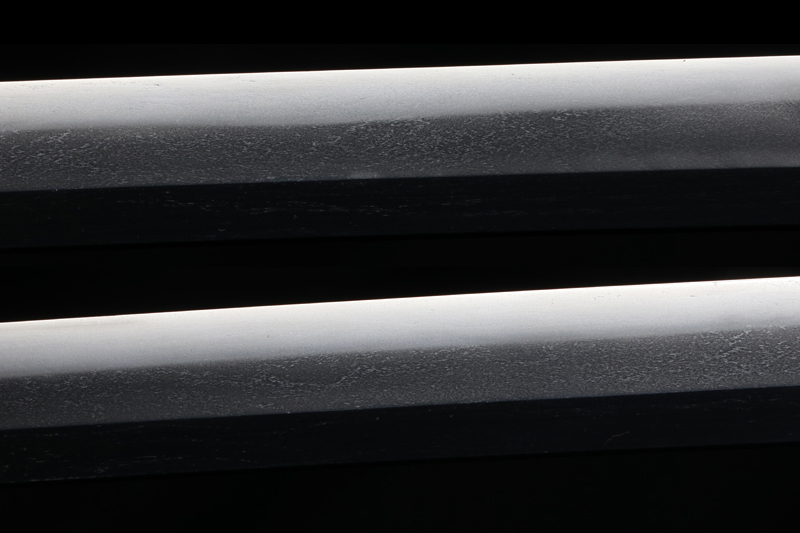
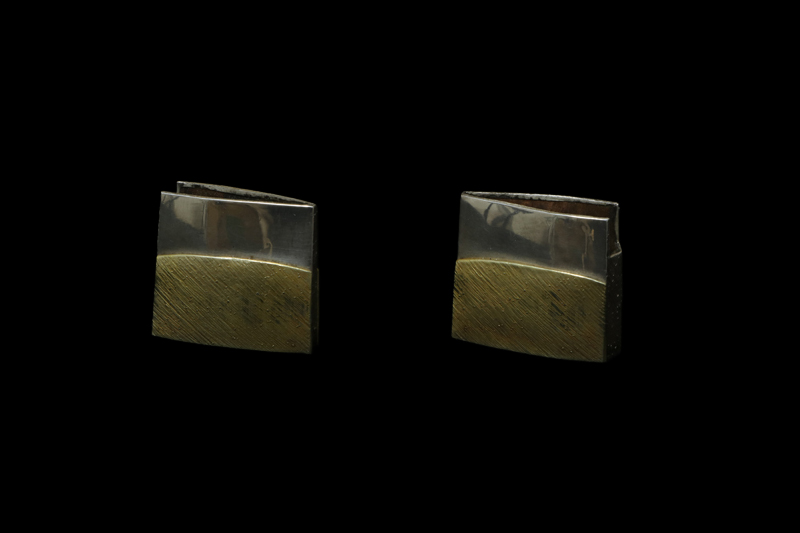
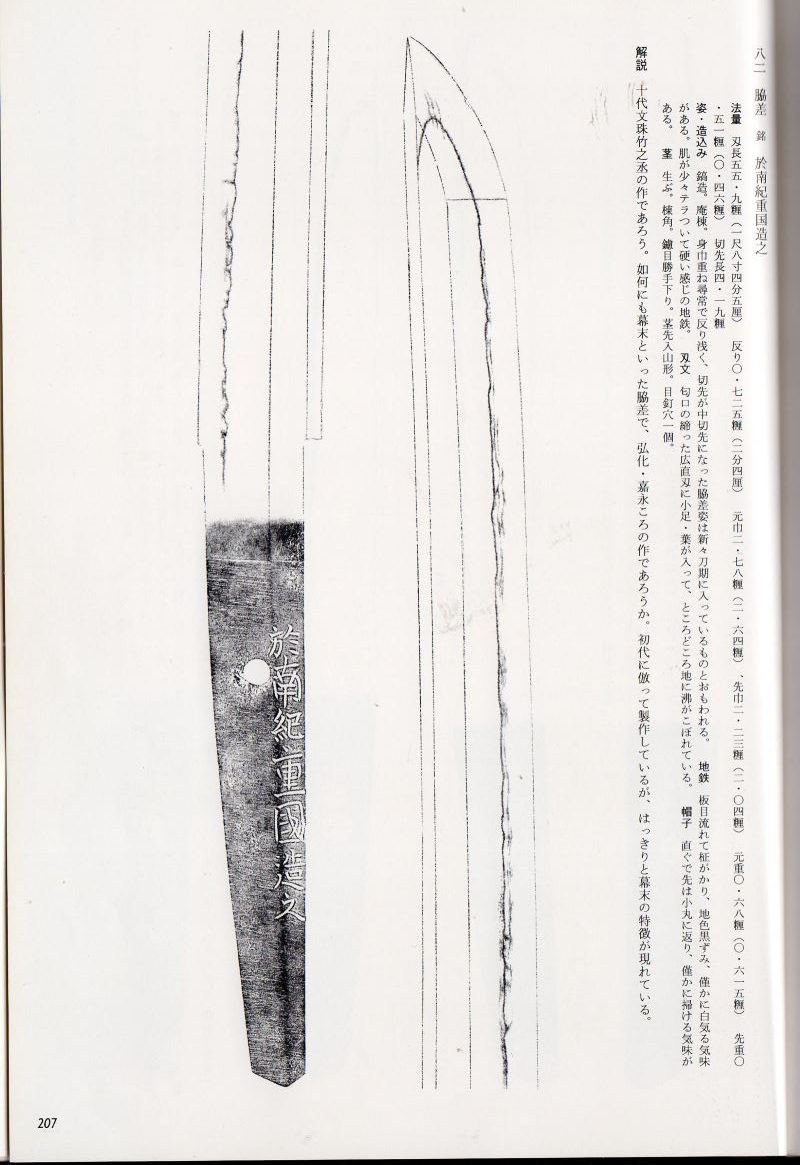
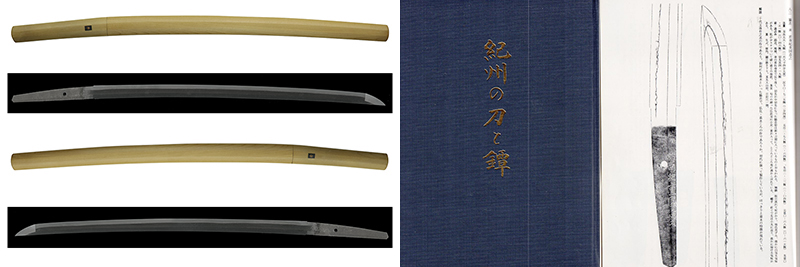
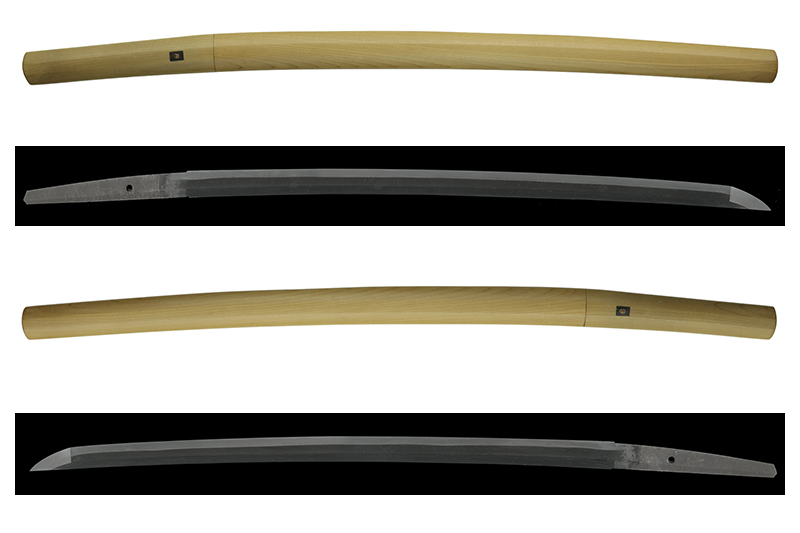
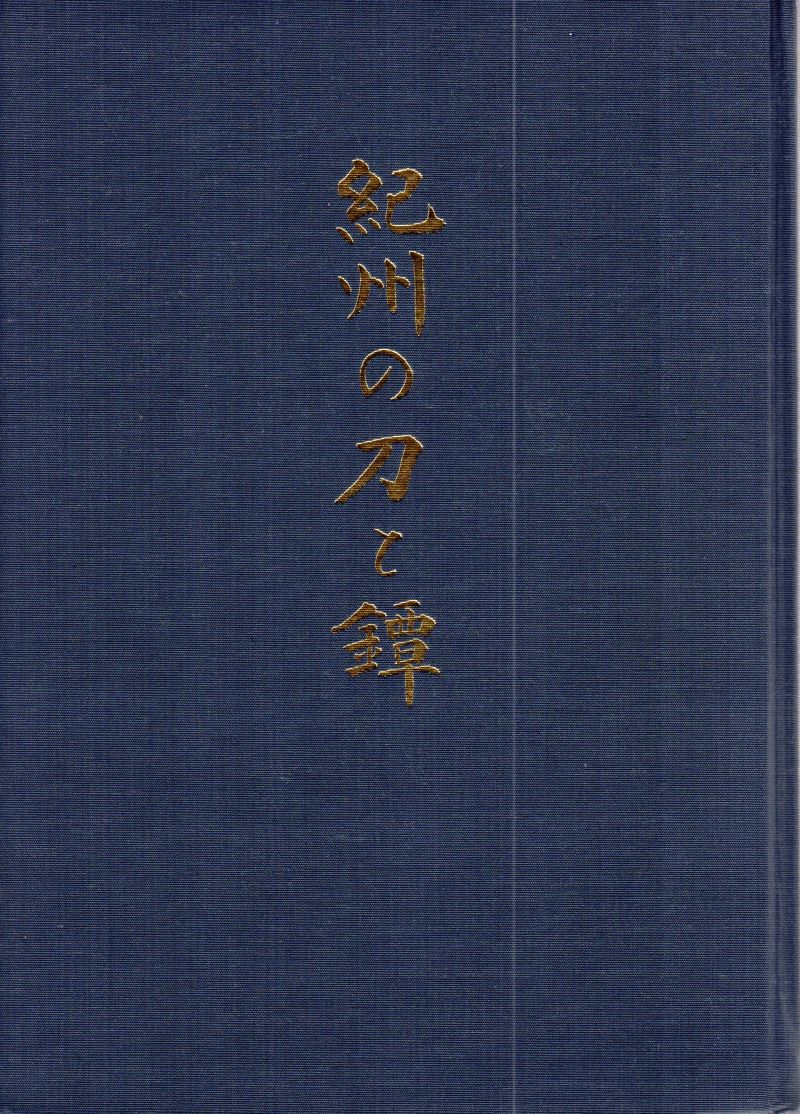
Published in Kishu no Katana to Tsuba (Swords and Tsuba of Kishu) Oite Nanki Shigekuni tsukuru kore(10th Generation Shigekuni) with Shirosaya. 南紀重國は、初代が徳川家康・頼宣に仕えた紀州藩の御用刀匠で、その銘跡は明治時代の十一代まで続きました。 本作は十代・文珠竹乃丞重國の脇差で、流れごころのある板目肌に広直刃を焼いています。 『紀州の刀と鐔』所載品であり、現在確認されている十代重國唯一の現存作です。 資料的・歴史的価値ともに極めて高い、非常に貴重な一振りです。 Nanki Shigekuni was the official swordsmith lineage of the Kishu Domain, beginning with the first generation, who served Tokugawa Ieyasu and Yorinobu. The lineage continued through the eleventh generation in the Meiji period. This wakizashi was made by the 10th-generation Shigekuni, Monju Jono. It features a flowing itame-hada and a wide suguha hamon. Published in Kishu no Katana to Tsuba (Swords and Tsuba of Kishu), this is the only currently known surviving work by the 10th-generation Shigekuni. It is an exceptionally rare and important sword of great historical and documentary value. 「刀姿 sword figure」 鎬造り庵棟、身幅重尋常、反浅くり中鋒。茎は生で筋違い鑢がかかる、茎尻は入山形。 Shinogi-zukuri with an iori-mune, standard mihaba and thickness, shallow curvature, and a chu-kissaki. The nakago is ubu with sujikai yasurime, and the nakago-jiri is iriyamagata. 「地鉄 jigane」 地鉄は板目肌が流れて柾がかり、地色黒ずみ、僅かに白気、ねっとりと強い地肌。 The jitetsu is a flowing itame-hada tending toward masame, with a darkish color and slight shirake, displaying a dense, strong, and well-forged texture. 「刃紋 hamon」 刃紋は匂口の締った広直刃に小足が入り、刃縁砂流しかかり、刃中は葉が入り金筋が働く。釯子は直に入り僅かに掃き掛け小丸に返る。 The hamon is a wide suguha with a tight nioiguchi, with ko-ashi entering the temper line and sunagashi along the habuchi. Within the ha, yo and kinsuji are active. The boshi enters straight, with slight hakikake, and turns back in a ko-maru. 「特徴 detailed」 初代南紀重國は、もとは文珠四郎と称し、のちに九郎三郎重國と名乗った紀州藩の御用刀匠です。大和国手掻派の刀工・文珠四郎重次の子孫と伝えられています。 徳川家康に招かれて駿府に赴き、家康の死後はその十男・徳川頼宣に仕えました。元和5年(1619年)、頼宣の紀州移封に伴い、重國も和歌山へ移住しました。 南紀重國の作風には、相州伝の名工に倣った華やかな乱れ刃と、祖先から受け継いだ大和伝の直刃があり、幅広い作域を誇ります。日光東照宮に伝わる南紀重國の刀には国宝指定品もあり、江戸時代初期を代表する名工の一人として高く評価されています。 南紀重國は、江戸初期の初代から明治時代の十一代まで作品が確認されており、近年では昭和期の重國の作例も見つかっています。 本作は、十代・文珠竹乃丞重國の作になる脇差です。流れごころのある板目肌が柾がかり、広直刃を焼いた一振りです。 さらに本作は『紀州の刀と鐔』の所載品であり、現在その存在が確認されている十代重國唯一の現存作です。 十代重國の作刀を今日に伝える極めて貴重な一振りであり、紀州刀の系譜を研究するうえでも非常に高い資料的価値を有しています。 希少性・歴史的価値ともに特筆すべきこの脇差を、ぜひコレクションに加えてください。 The first-generation Nanki Shigekuni was originally known as Monju Shiro and later took the name Kuro Saburo Shigekuni. He served as an official swordsmith of the Kishu Domain and is said to have descended from Monju Shiro Shigetsugu, a swordsmith of the Tegai school of Yamato Province. Shigekuni was invited to Sunpu by Tokugawa Ieyasu. After Ieyasu’s death, he entered the service of Ieyasu’s tenth son, Tokugawa Yorinobu. In 1619, when Yorinobu was transferred to Kishu, Shigekuni accompanied him and settled in Wakayama. The works of Nanki Shigekuni display a remarkably broad range of styles, including flamboyant midare-ba inspired by renowned masters of the Soshu tradition, as well as suguha in the Yamato tradition inherited from his ancestors. A sword by Nanki Shigekuni preserved at Nikko Toshogu Shrine has been designated a National Treasure, and he is highly regarded as one of the leading swordsmiths of the early Edo period. Works bearing the Shigekuni name are known from the first generation in the early Edo period through the eleventh generation in the Meiji period. In recent years, examples attributed to a Shigekuni of the Showa period have also been discovered. This wakizashi was made by the tenth-generation Shigekuni, Monju Jono. It features an itame-hada with a flowing, masame-like character and a wide suguha hamon. Of particular importance, this wakizashi is published in Kishu no Katana to Tsuba (“Swords and Tsuba of Kishu”) and is the only currently known surviving work by the tenth-generation Shigekuni. It is an exceptionally rare sword preserving the work of this otherwise virtually unknown generation and is also of great documentary and scholarly value for the study of the Kishu swordsmith lineage. With its exceptional rarity and historical significance, this wakizashi would make an important addition to any serious collection. 「拵 Koshirae」 ハバキ(habaki) :素銅地銀着二重。 鞘(saya) :白鞘。 「刀剣の状態 condition of blade」 研:良好です。 傷:欠点に成るような傷は有りません。
Monju School文珠派
Offered by Giheiya


As written by the shop
Yamato-den · Yamato
13 pieces on the market now
The setsumei of the Monju (文珠) line all gather around a single figure: Shigekuni (重国), the smith better known by the appellation Nanki Shigekuni (南紀重国). The records describe him as originally of Yamato Province and a late offshoot of the Tegai group (Tegai-ha)[[c:1]], whose common name was Kurōsaburō. During the Keichō era (1596 to 1615) he entered the service of Tokugawa Ieyasu and forged at Sunpu, in present-day Shizuoka; then in Genna 5 (1619), when Ieyasu's tenth son Tokugawa Yorinobu was transferred to Kii Wakayama, Shigekuni accompanied him and settled at the foot of Mt. Meikō (also read Myōkō). The mei themselves carry the school name: one wakizashi is signed "Kishū Meikōzan Monju Kurōsaburō Shigekuni,"[[c:2]][[c:3]] fixing the Monju appellation to this Kii workshop. The corpus belongs almost wholly to the Momoyama and early Edo (shintō) period, with dated works ranging across Genna 7 and 8 (1621 to 1622). One Gyōbutsu entry raises the question of a smith named Kunimune, a close relative who remained at Sunpu, and a later setsumei speaks of a "second generation onward," so the records permit a Monju succession without resolving its members. A shared technical vocabulary runs through every blade, and the setsumei consistently divide Shigekuni's hand into two modes. The forging is a flowing itame-hada, mixed with mokume and inclined to masame and nagare, tending to stand (hada-dachi), with thick ji-nie and frequent chikei over a bright, clear steel.
In the Sōshū-den mode the temper is a midareba of ko-notare mixed with gunome, angular and yahazu-like elements, deep nioi, strong nie that breaks down into nie-kuzure, and conspicuous kinsuji and sunagashi; the records read this manner as a private study of the high Sagami masters, naming Gō Yoshihiro above all, with Masamune and Sadamune also invoked. In the Yamato-den mode the temper is a suguha, at times shallow notare, carrying hotsure, kuichigai-ba, and nijūba along the habuchi, which the setsumei tie directly to the Tegai inheritance and the manner of Kanenaga. The bōshi across both modes turns yakizume or ko-maru with vigorous hakikake; hira-zukuri and shōbu-zukuri wakizashi show pronounced sakizori, often carved with bonji, suken, and naginata-hi. The records present these as two facets of one hand rather than competing lineages. For kantei, the setsumei name several recurring markers: the bright, clear quality of both ji and ha held up as Shigekuni's hallmark, the pronounced sakizori of his hira- and shōbu-zukuri wakizashi, kinsuji that coil into a whirlpool configuration within the temper, and the large original mekugi-ana met among Kii-domain works. One Sōshū-den katana is judged close in character to Batetsu (馬徹) and treated as a likely model for that smith, raising its documentary weight; another work's "Monju-style" midare is said to anticipate the hadori tendencies of the second generation. The blades carry firm provenance: a wakizashi made to the command of Matsudaira Shima no Kami Shigenari, a piece commissioned by the domain elder Kageyama Tosa-no-kami Munenobu, and a sword inscribed for Yorinobu's retainer Tsuzuki Tōichi, alongside a katana recorded in Honma's inventory of the Imperial collection. The setsumei note that nearly all of Shigekuni's Sōshū-den blades survive suriage, so the ubu examples gathered here are repeatedly singled out as research material. Across the records the Monju name stands as the Kii continuation of a Yamato root, carried into the shintō age in the service of the Kii Tokugawa house. Learn more →
| Smith | Era | Designated |
|---|---|---|
| Shigekuni重國 | 1596-1630 | 59 |
| Shigekuni重國 | 1655-1673 | 3 |
| Kanetsugu包次 | 1596-1615 | 0 |
| Kanekura包藏 | 1624-1644 | 0 |
| Kaneari包有 | 1681-1684 | 0 |
The Shinshintō revival
Around 1800 Suishinshi Masahide argued in his writings that the craft must return to the old masters’ methods: the fukkotō revival. His greatest successor Naotane worked convincingly in Bizen and Sōshū manners that had been dead for centuries.
Within 3 days of the item's arrival, we offer a refund or an exchange. Return shipping and the bank transfer fee for the refund are at the customer's expense.