Edo was the sword’s age of connoisseurship: the Hon’ami appraisers, the shogunal register of famous blades of 1719, and a thriving literature turned the sword into an object of study even as it ceased to be drawn in war.
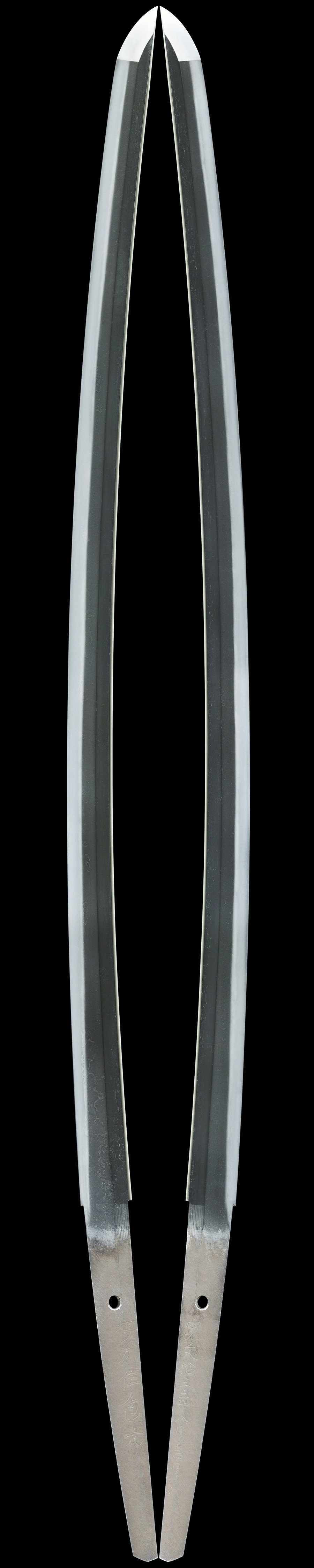
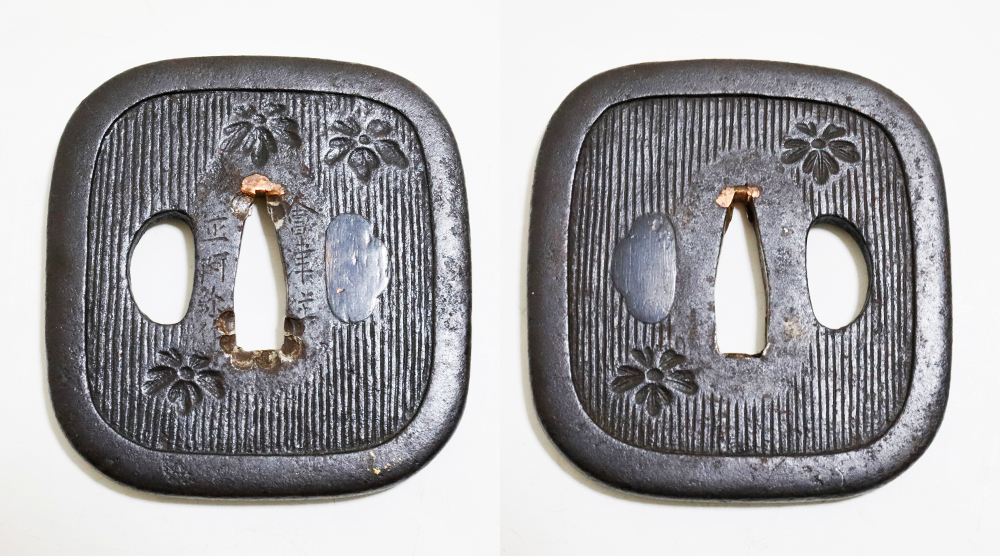
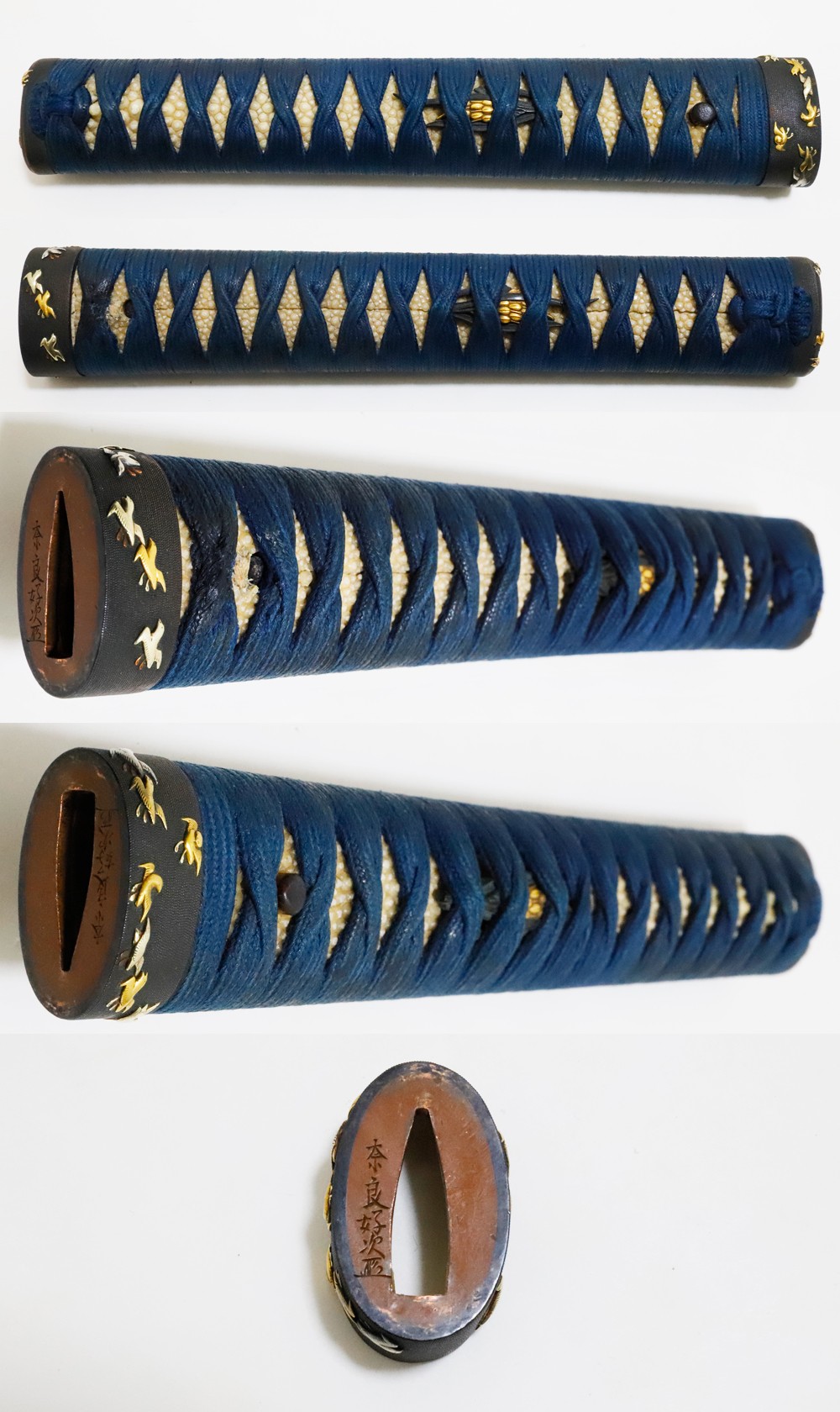
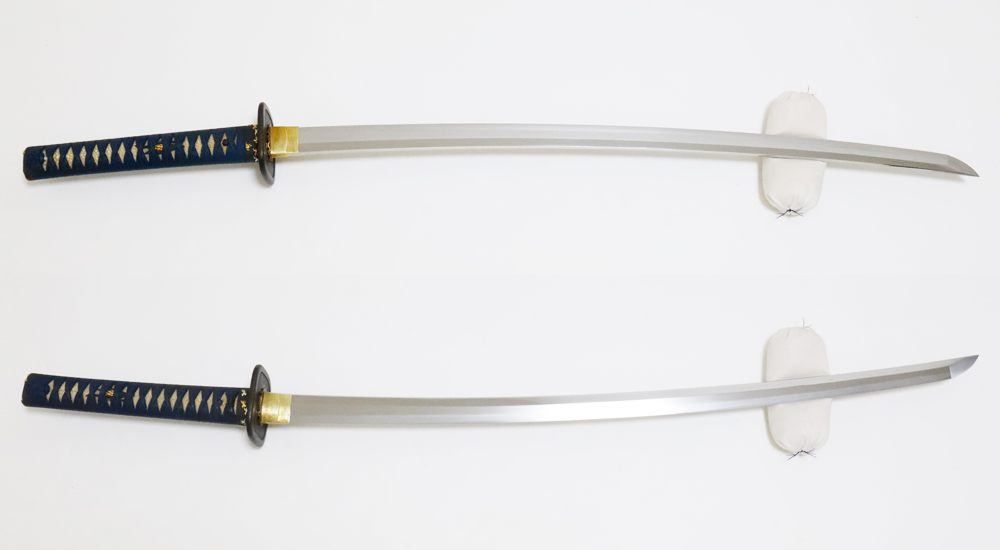
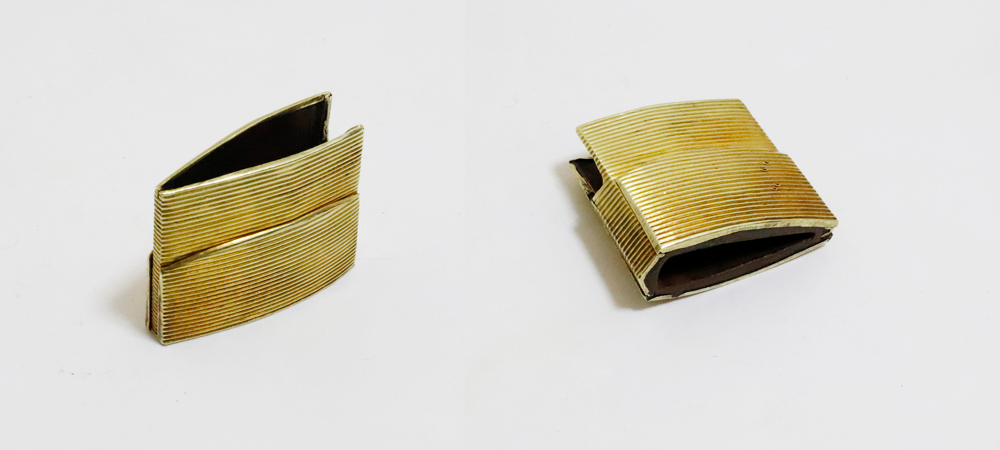
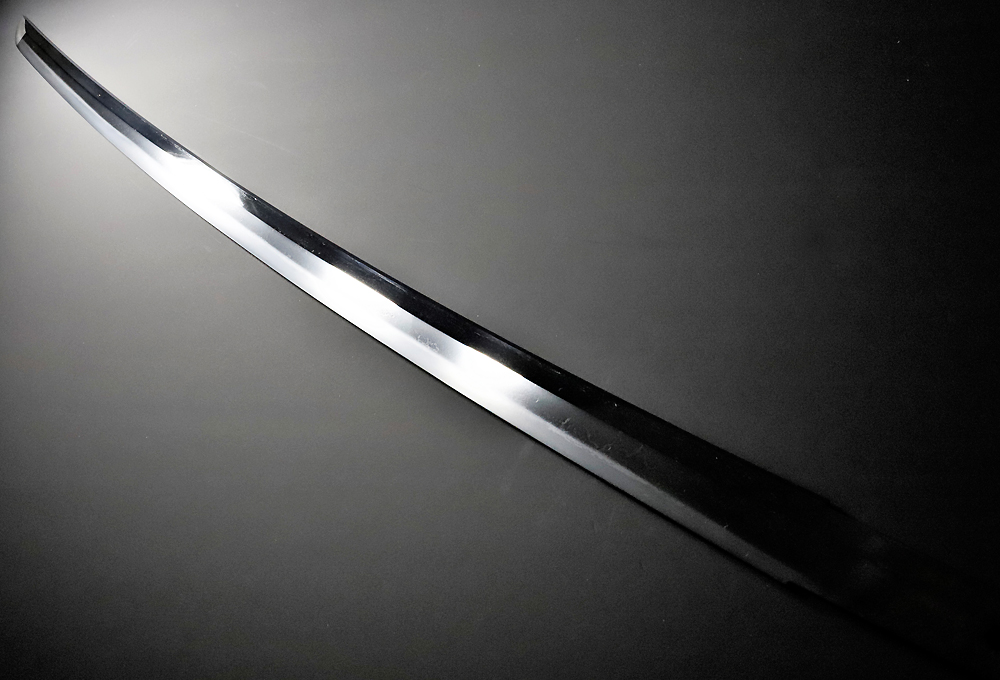
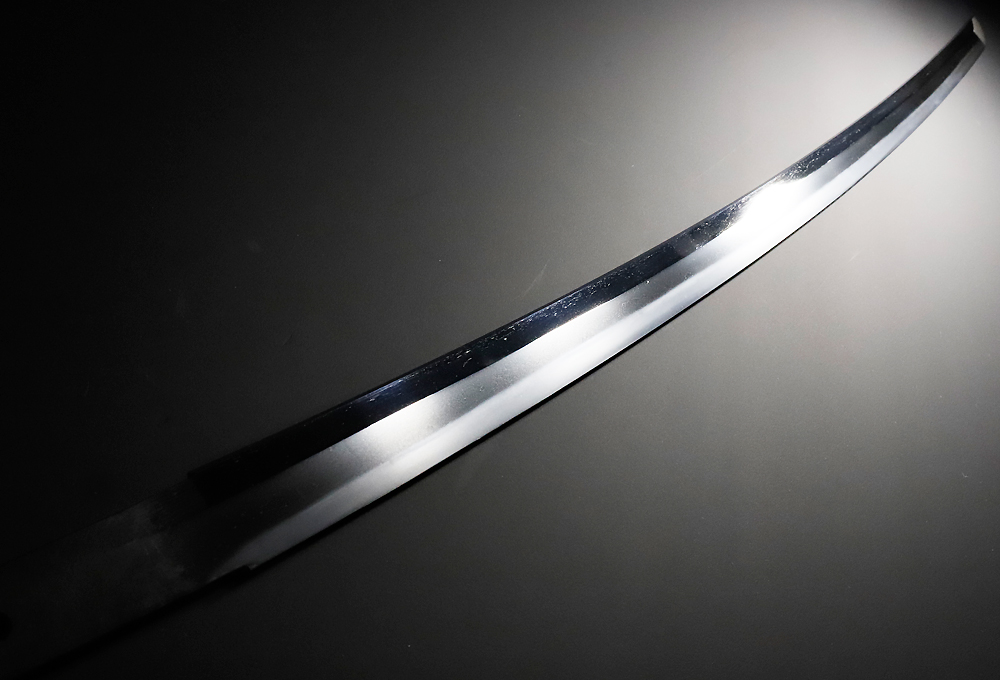
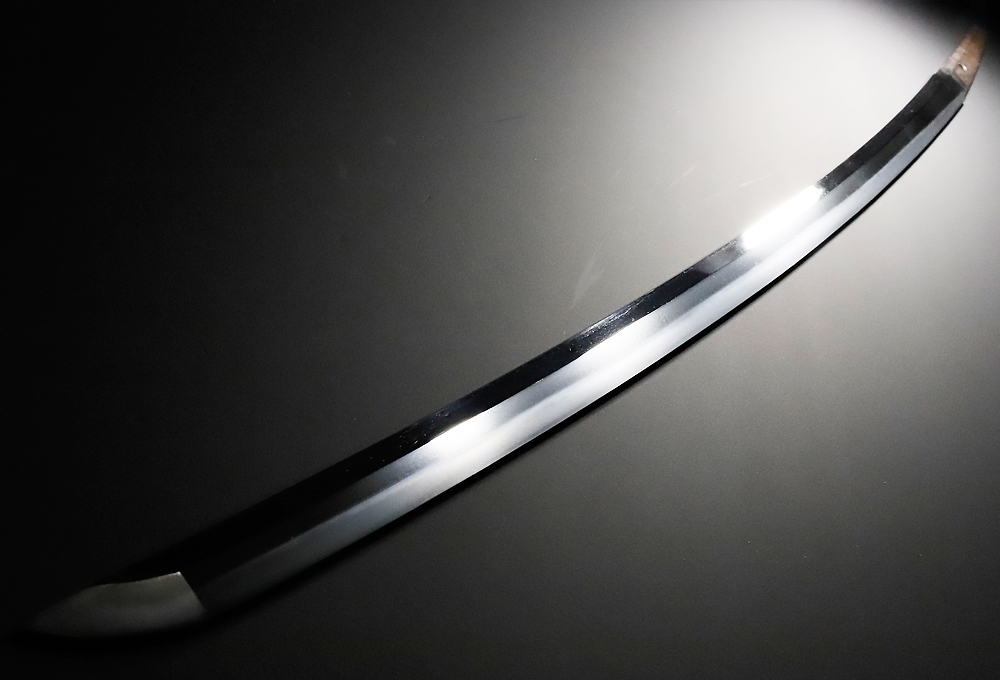
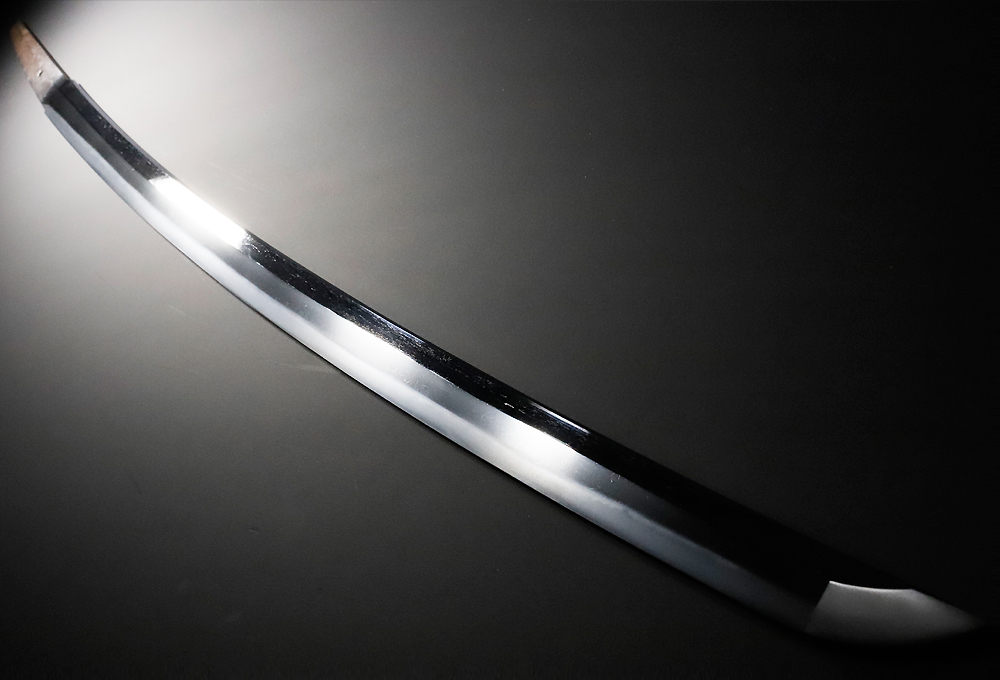
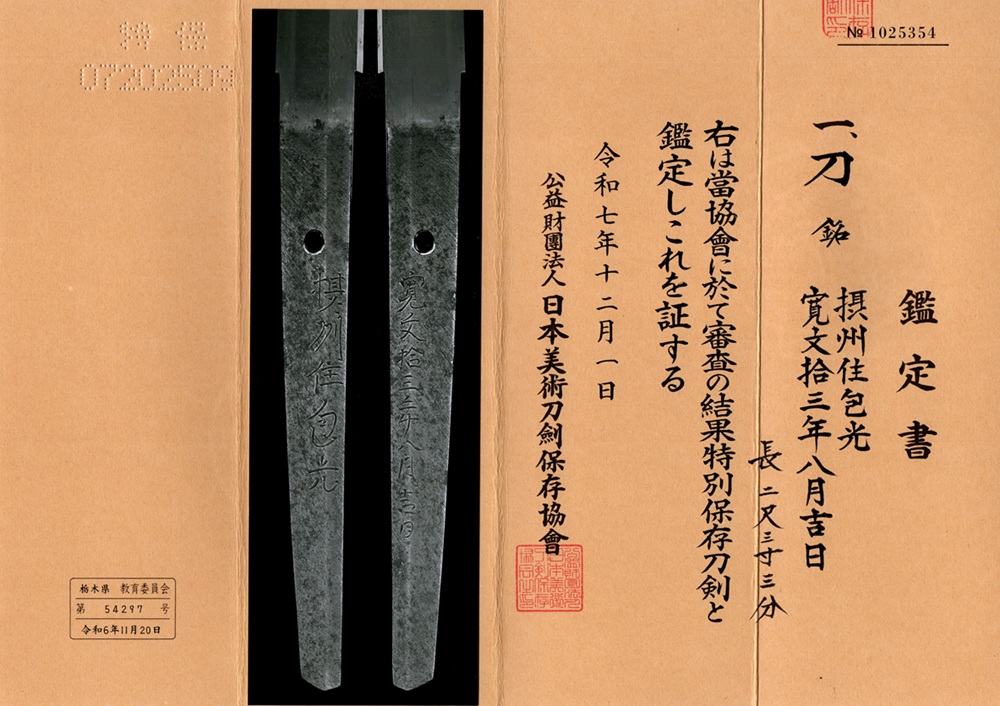
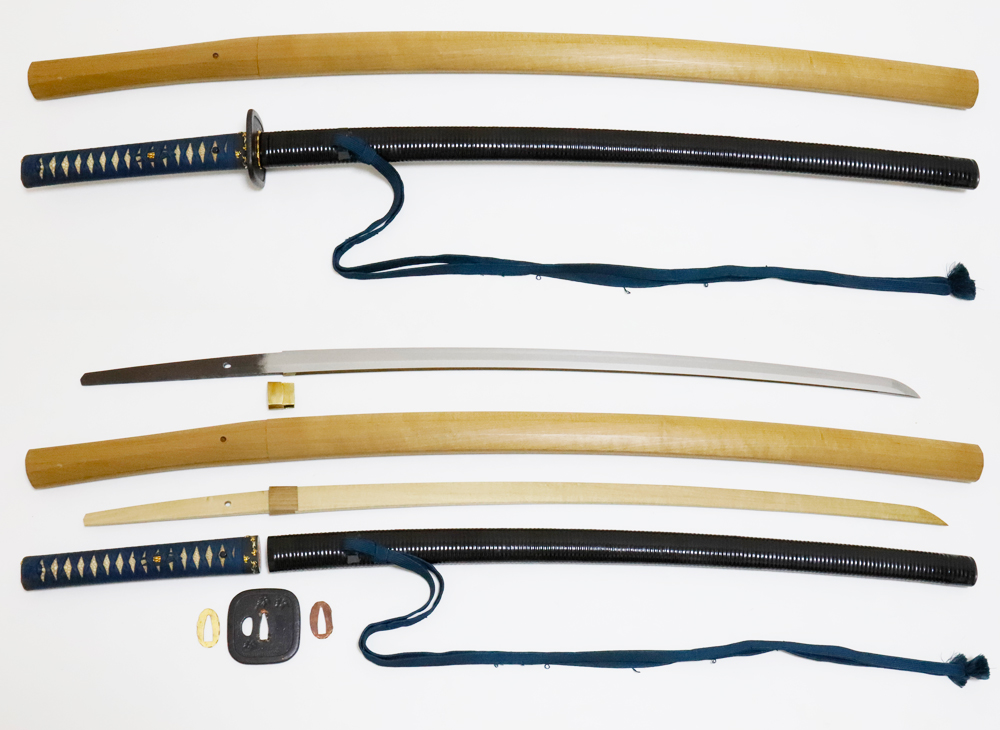
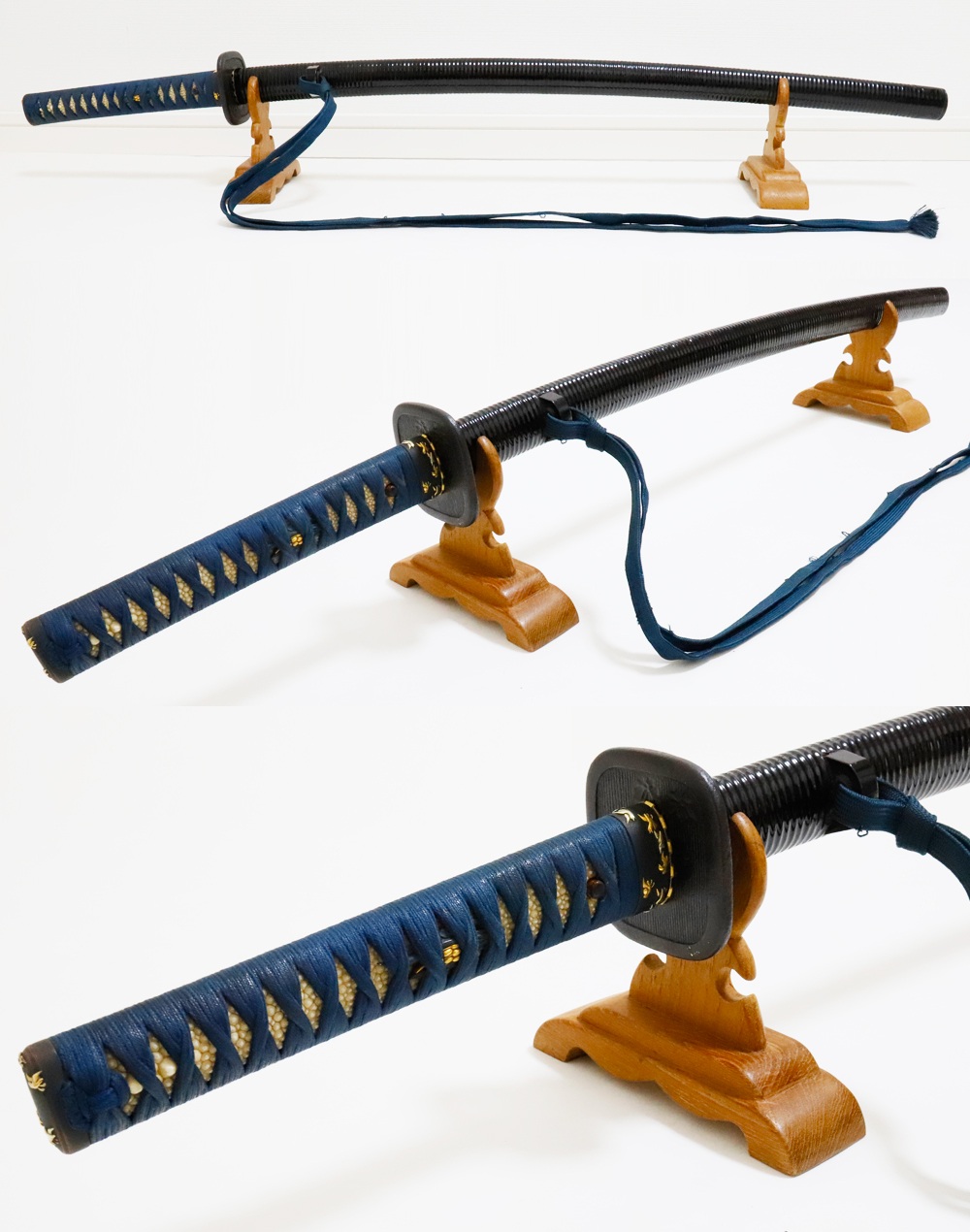
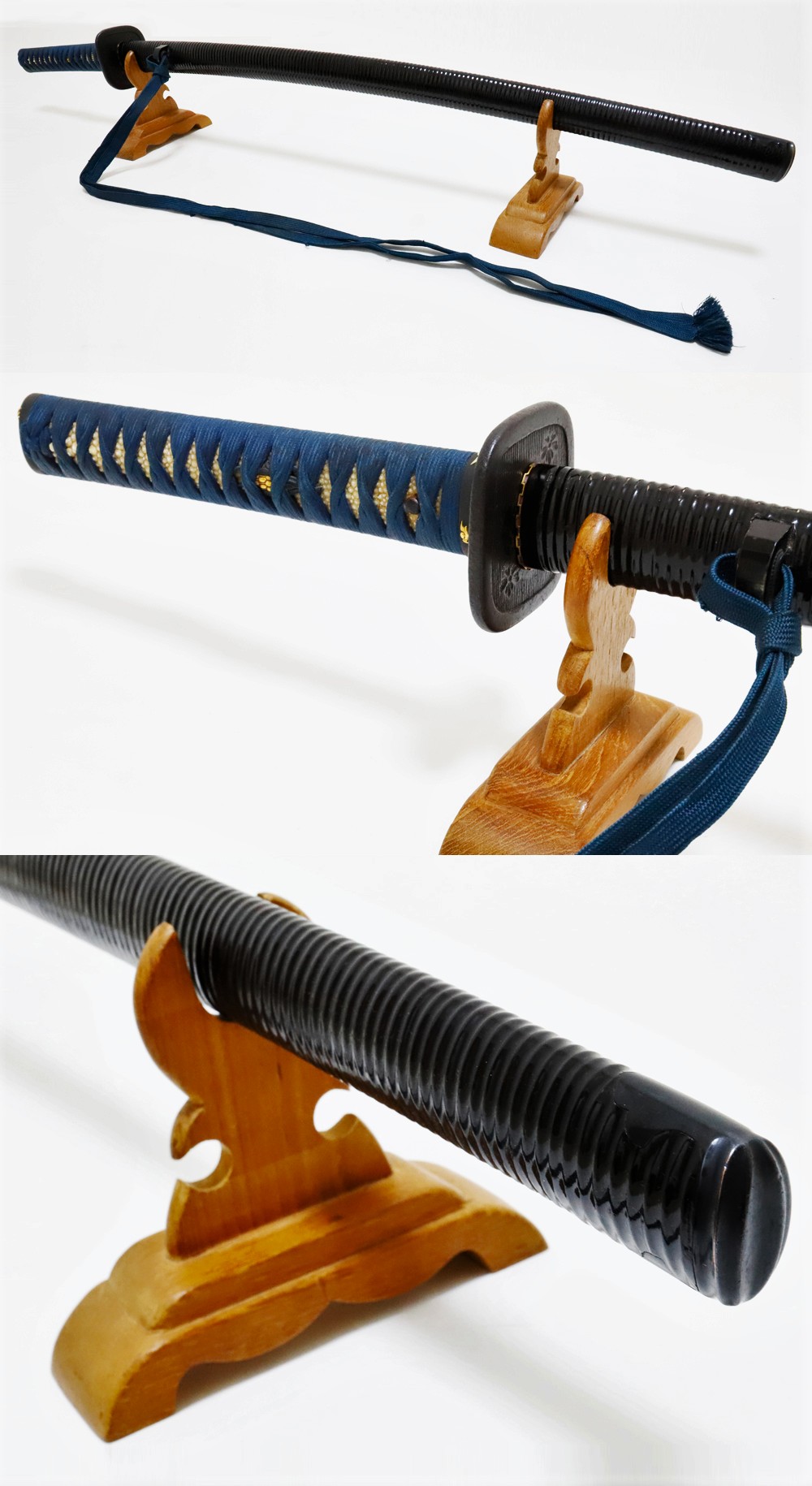
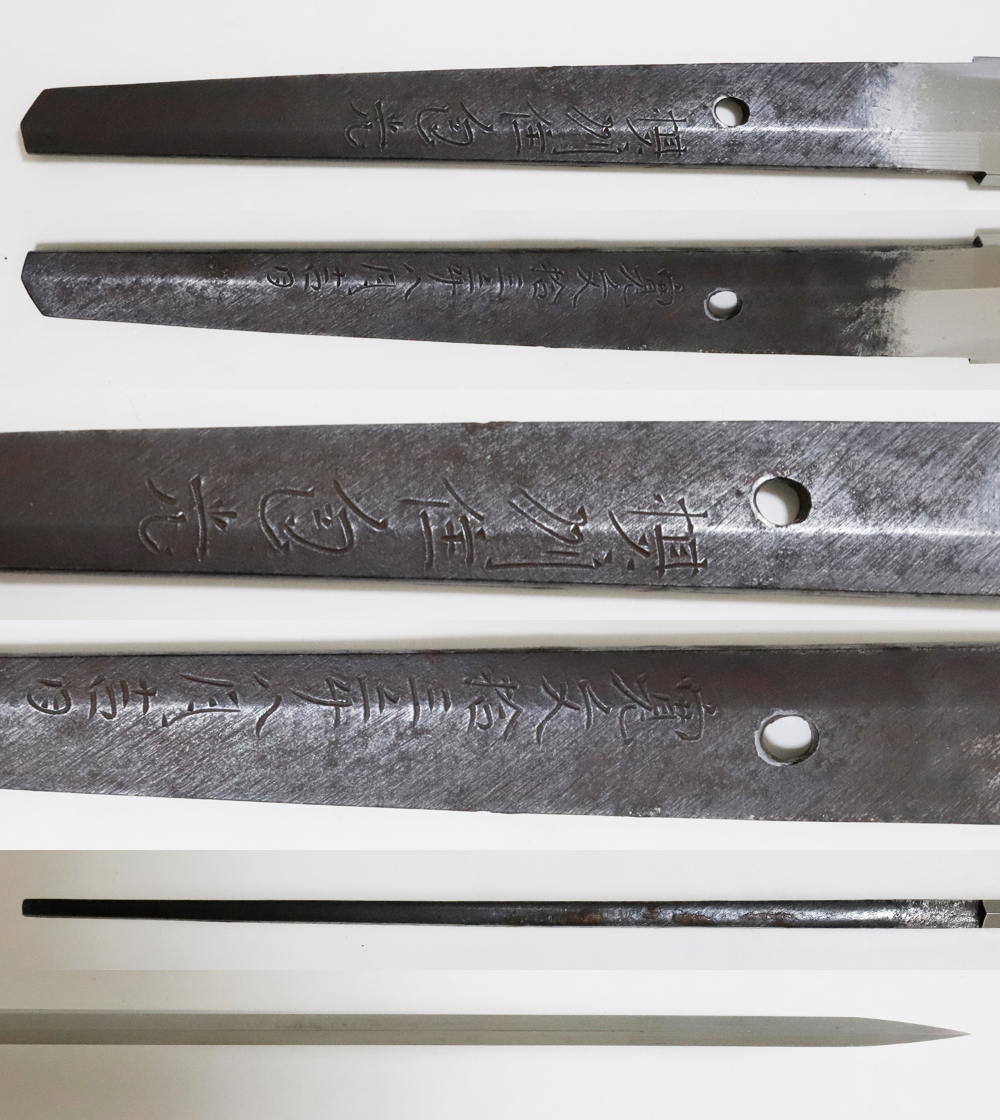
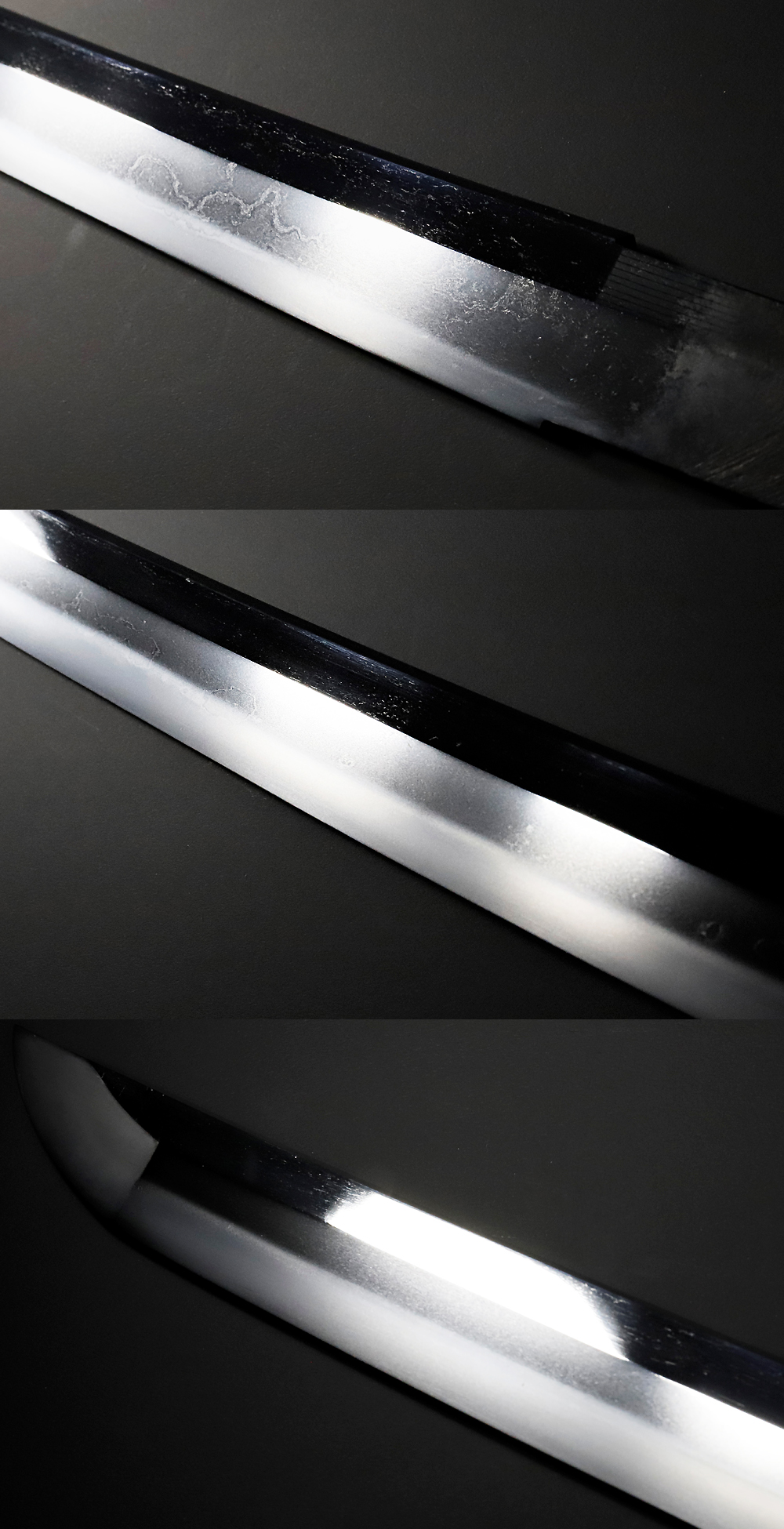
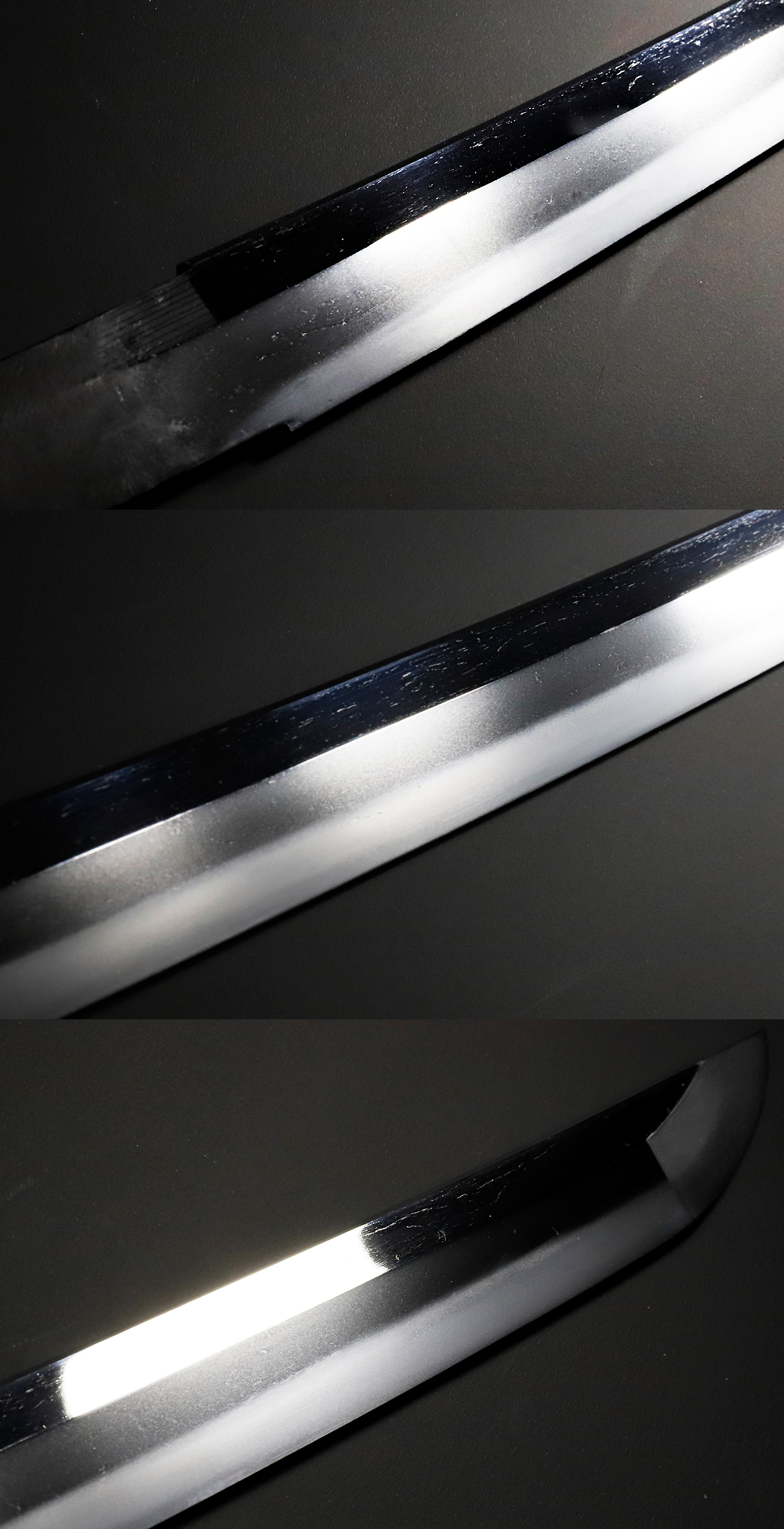
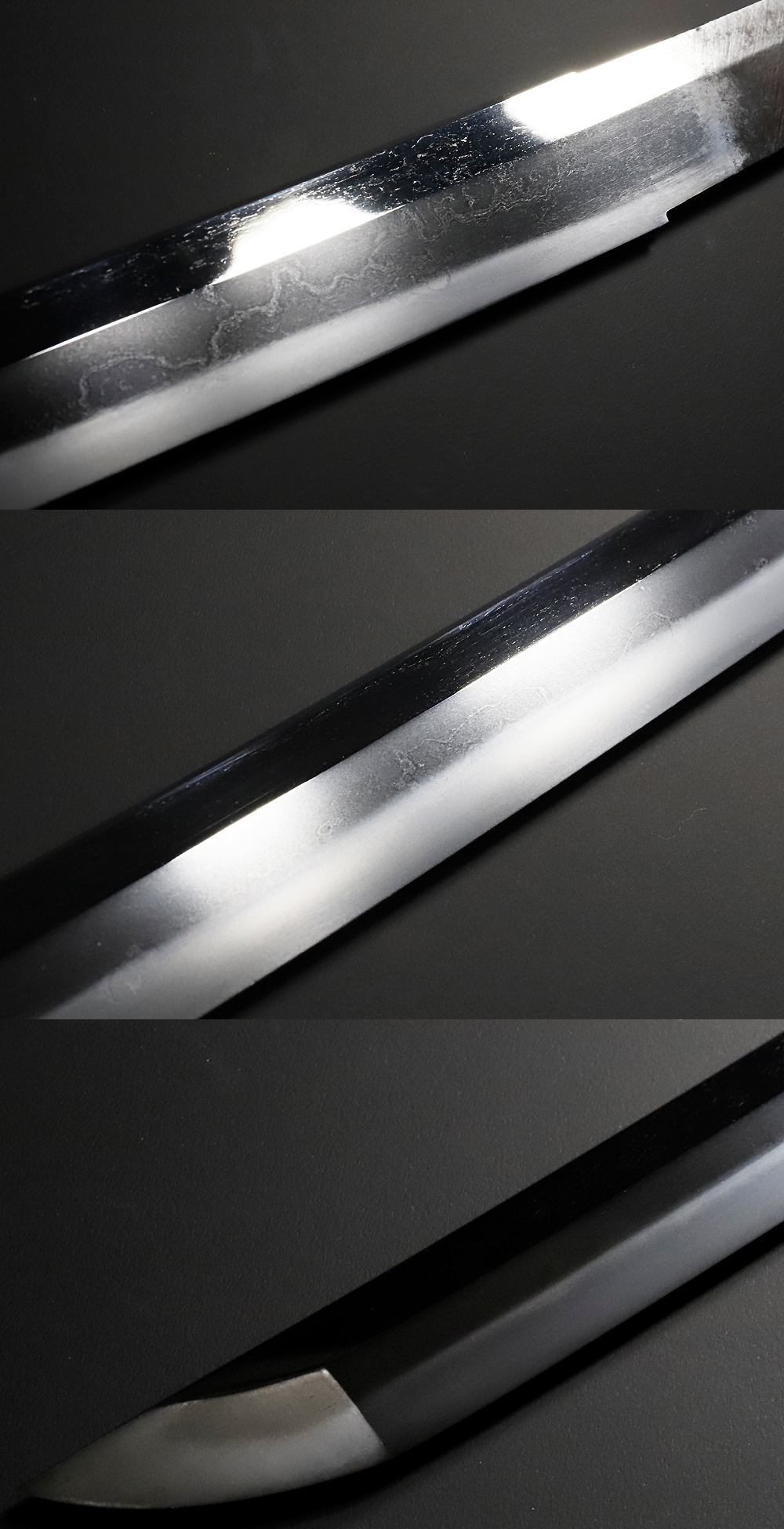
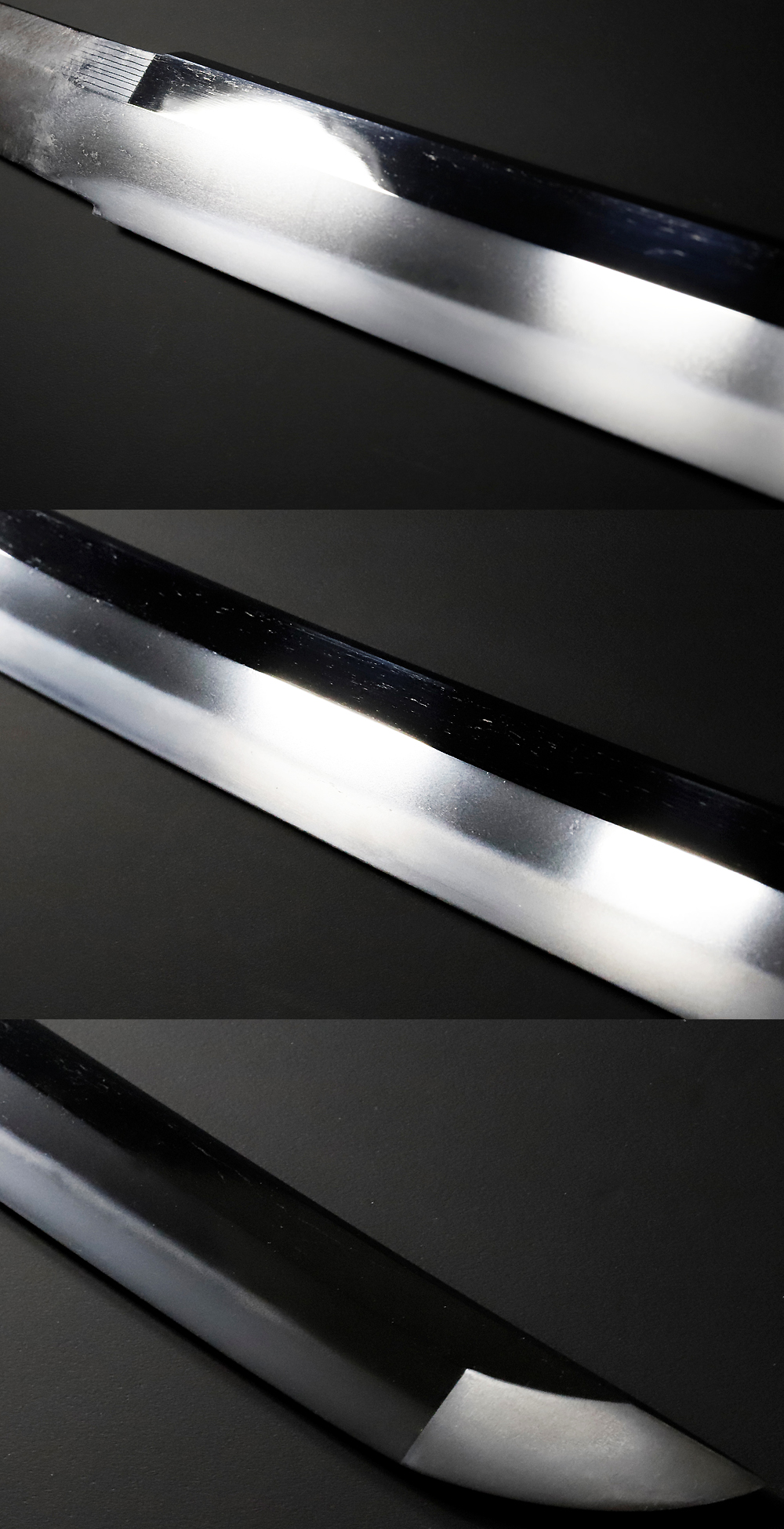
This katana by Kanemitsu, identified as Monju Shiro Kanemitsu, is a valuable work dated August 1673. It features a graceful sugata with a wide body and sufficient kasane, and a straight hamon with frequent ko-ashi. The blade comes with a high-quality black lacquered koshirae with a thousand-line carved saya.
 NihontoWatch
mei · Monju · Shinto · nagasa 70.8cm · sori 1.8cm

Yamashiro · around 1661-1673
The Edo period (1615 to 1868)
Edo was the sword’s age of connoisseurship: the Hon’ami appraisers, the shogunal register of famous blades of 1719, and a thriving literature turned the sword into an object of study even as it ceased to be drawn in war.
A Hozon-certified blade judged to show notably superior workmanship and a better state of preservation. The bar is higher: re-tempered blades and most unsigned Muromachi/Edo works are excluded.
The NBTHK (Nihon Bijutsu Tōken Hozon Kyōkai, the Society for the Preservation of Japanese Art Swords) is a public-interest incorporated foundation founded in 1948 and supervised by Japan’s Agency for Cultural Affairs (Bunkachō); it is based at the Japanese Sword Museum in Tokyo. Its expert panels physically examine each submitted work (shinsa) and issue a certificate (kanteishō) ranking it by artistic and historical merit. NBTHK papers are the most widely recognized standard of authentication for Japanese swords and fittings.
NBTHK official siteDomestic: items may be returned within 7 days in original condition for a full refund (buyer covers transport). Overseas orders: no-refunds, no-returns.
This katana by Kanemitsu, identified as Monju Shiro Kanemitsu, is a valuable work dated August 1673. It features a graceful sugata with a wide body and sufficient kasane, and a straight hamon with frequent ko-ashi. The blade comes with a high-quality black lacquered koshirae with a thousand-line carved saya.
NihontoWatchmei · Monju · Shinto · nagasa 70.8cm · sori 1.8cm
Yamashiro · around 1661-1673
The Edo period (1615 to 1868)
Edo was the sword’s age of connoisseurship: the Hon’ami appraisers, the shogunal register of famous blades of 1719, and a thriving literature turned the sword into an object of study even as it ceased to be drawn in war.
A Hozon-certified blade judged to show notably superior workmanship and a better state of preservation. The bar is higher: re-tempered blades and most unsigned Muromachi/Edo works are excluded.
The NBTHK (Nihon Bijutsu Tōken Hozon Kyōkai, the Society for the Preservation of Japanese Art Swords) is a public-interest incorporated foundation founded in 1948 and supervised by Japan’s Agency for Cultural Affairs (Bunkachō); it is based at the Japanese Sword Museum in Tokyo. Its expert panels physically examine each submitted work (shinsa) and issue a certificate (kanteishō) ranking it by artistic and historical merit. NBTHK papers are the most widely recognized standard of authentication for Japanese swords and fittings.
NBTHK official siteDomestic: items may be returned within 7 days in original condition for a full refund (buyer covers transport). Overseas orders: no-refunds, no-returns.

