NihontoWatch Mon

NihontoWatch

Market
Encyclopedia
Kantei
NihontoWatch Mon

NihontoWatch

Market
Encyclopedia
Kantei

Description

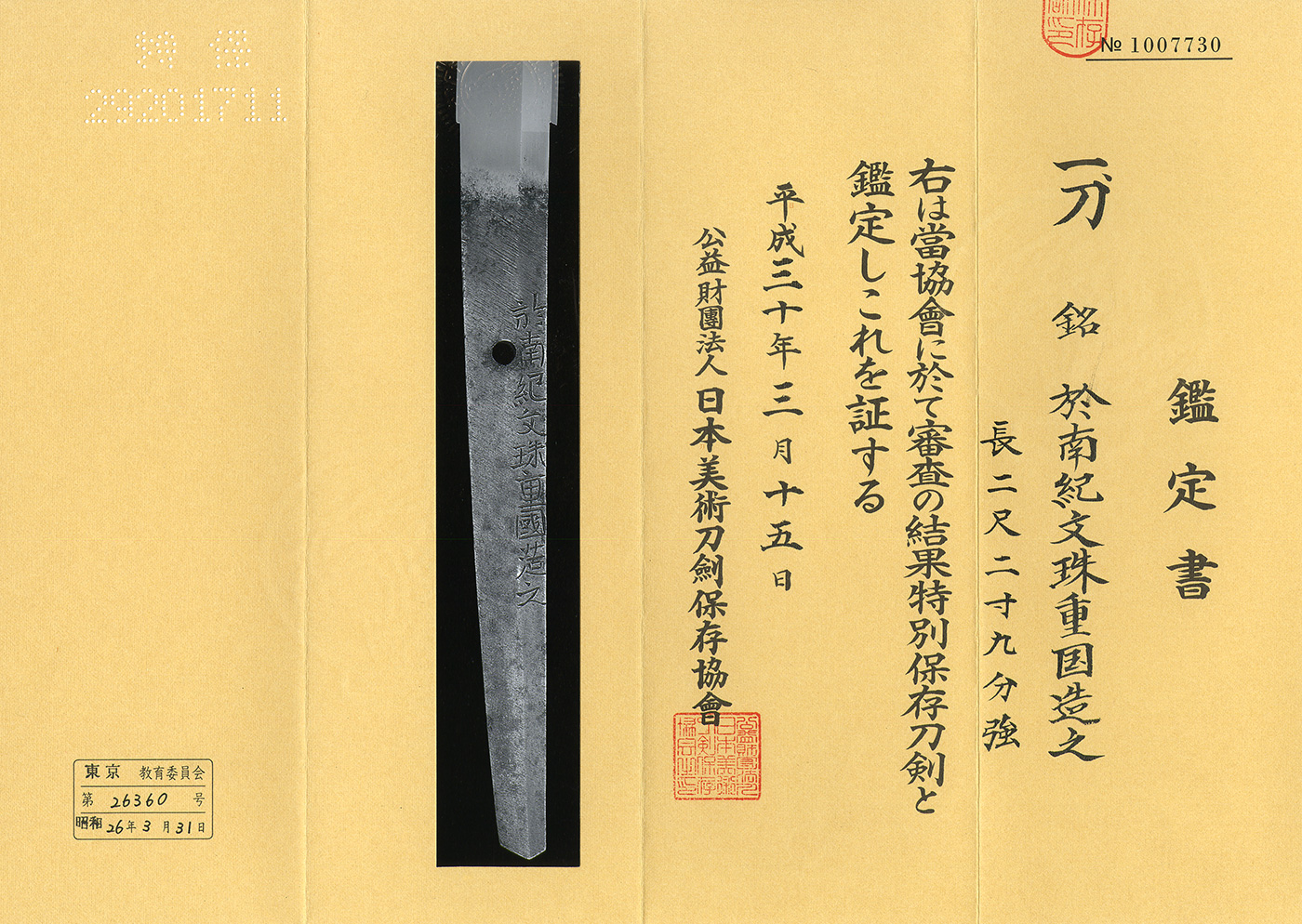
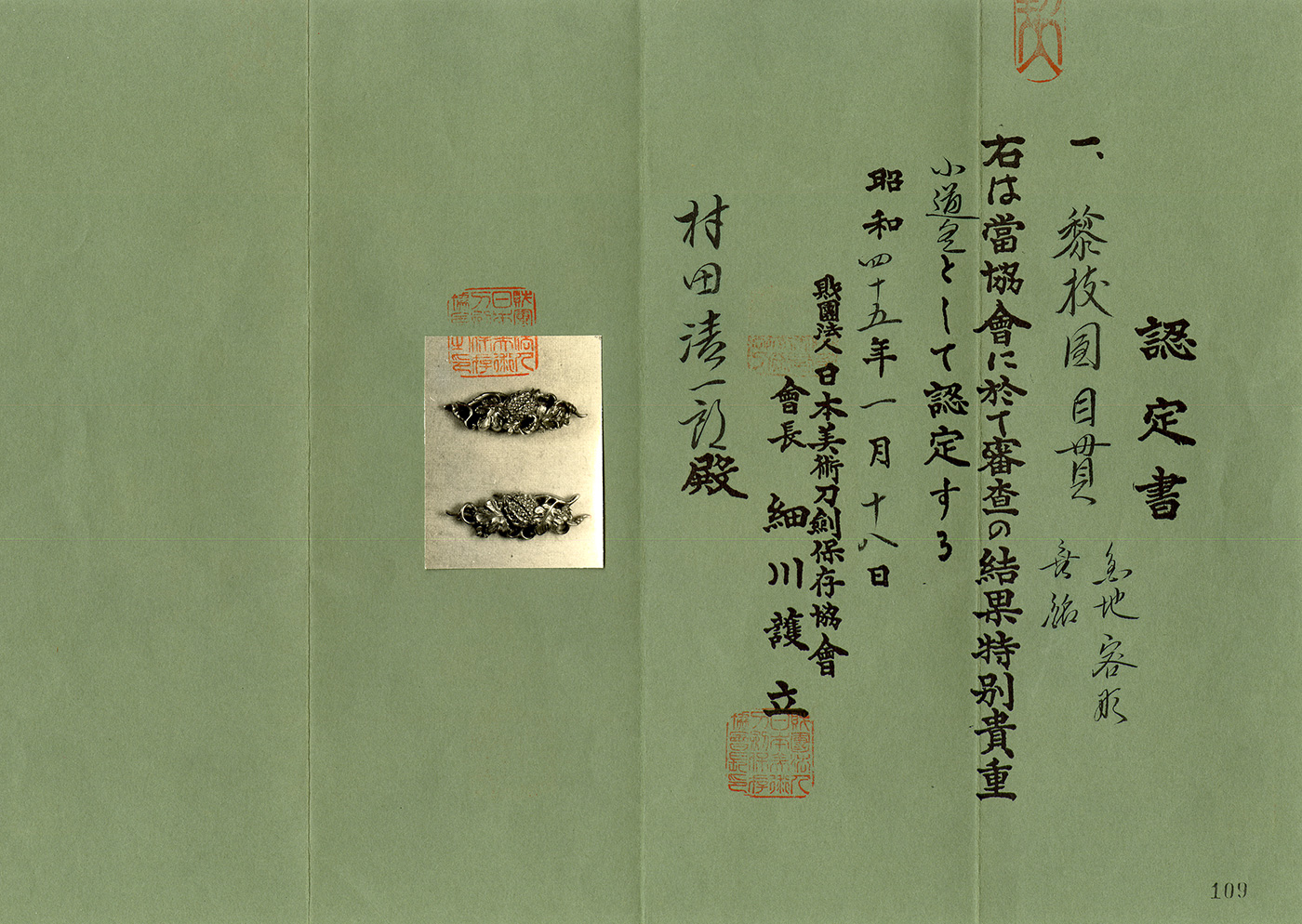
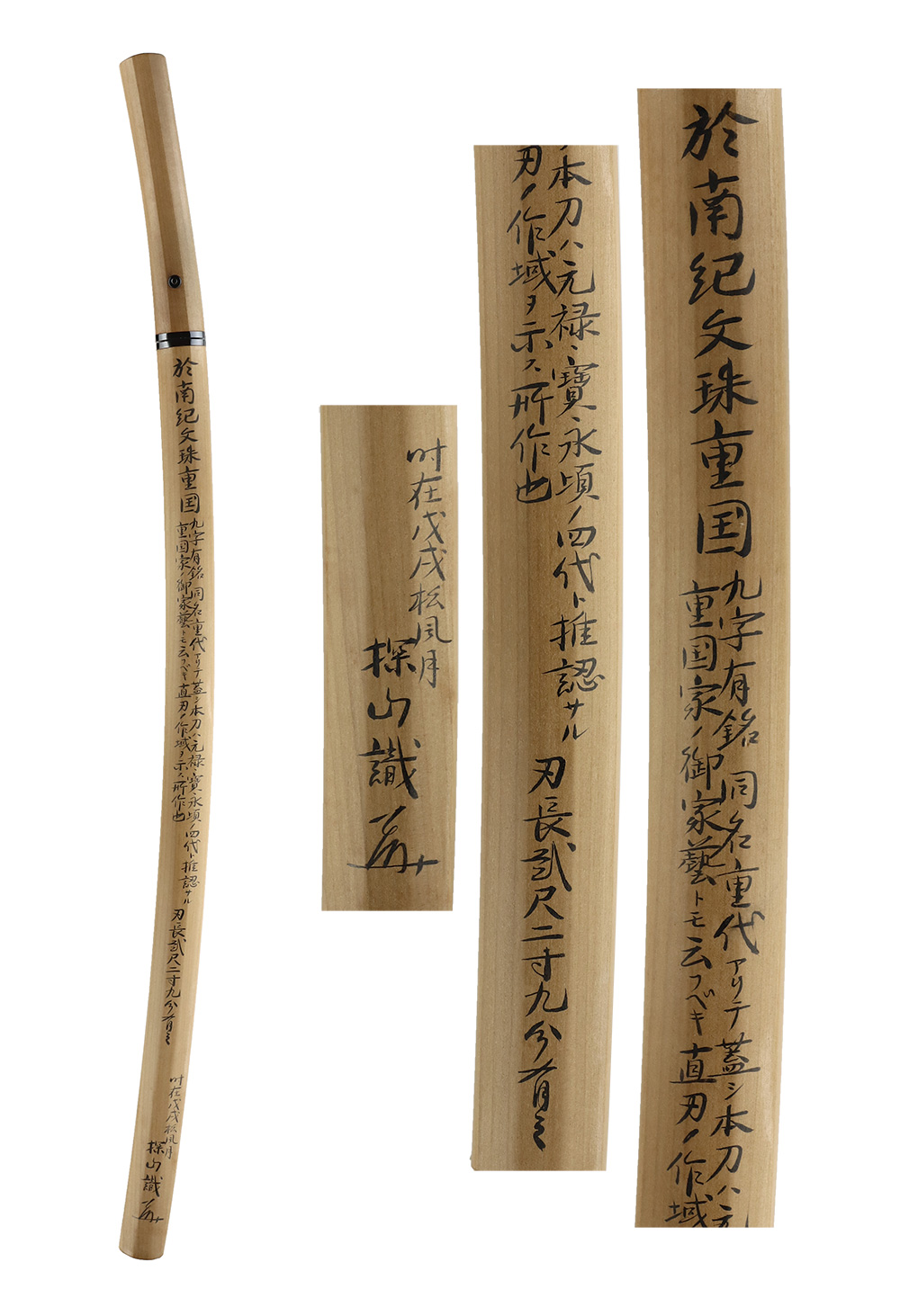
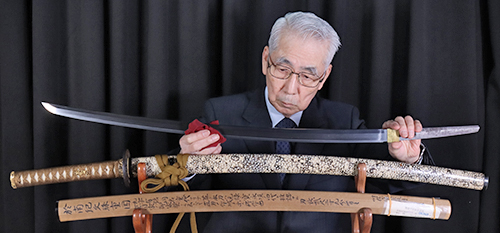
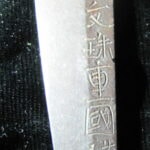
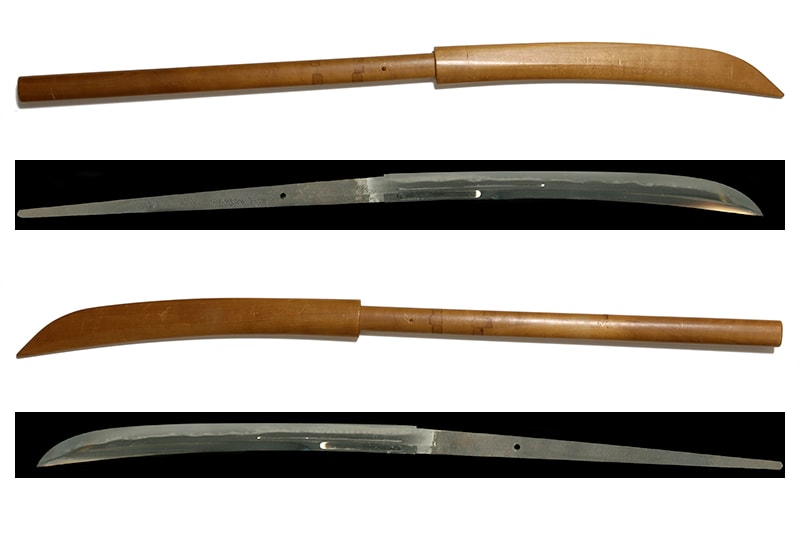
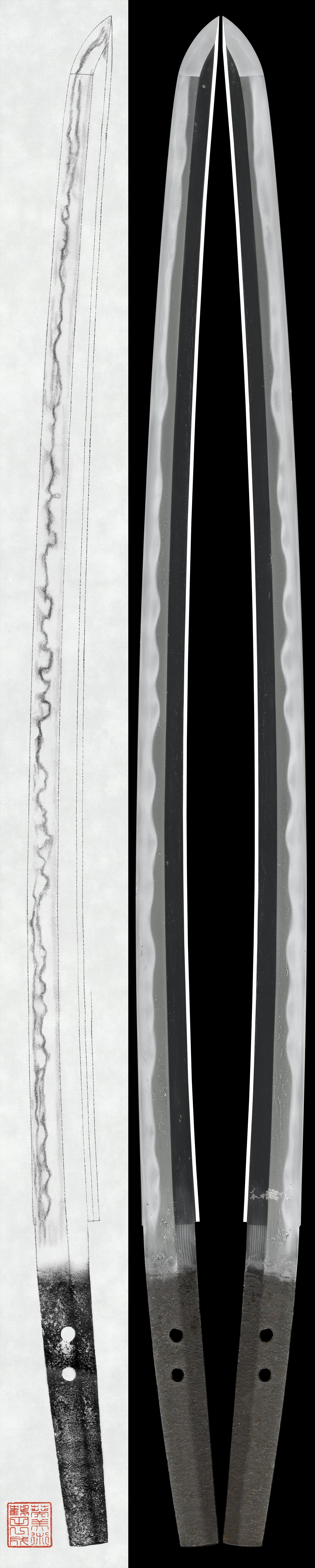
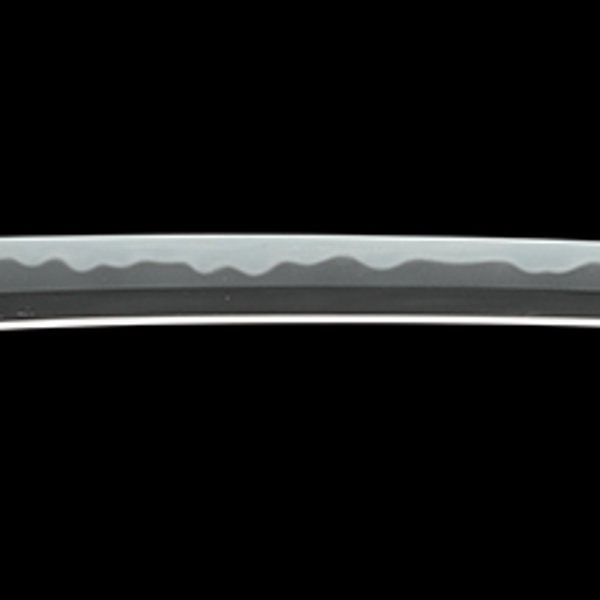
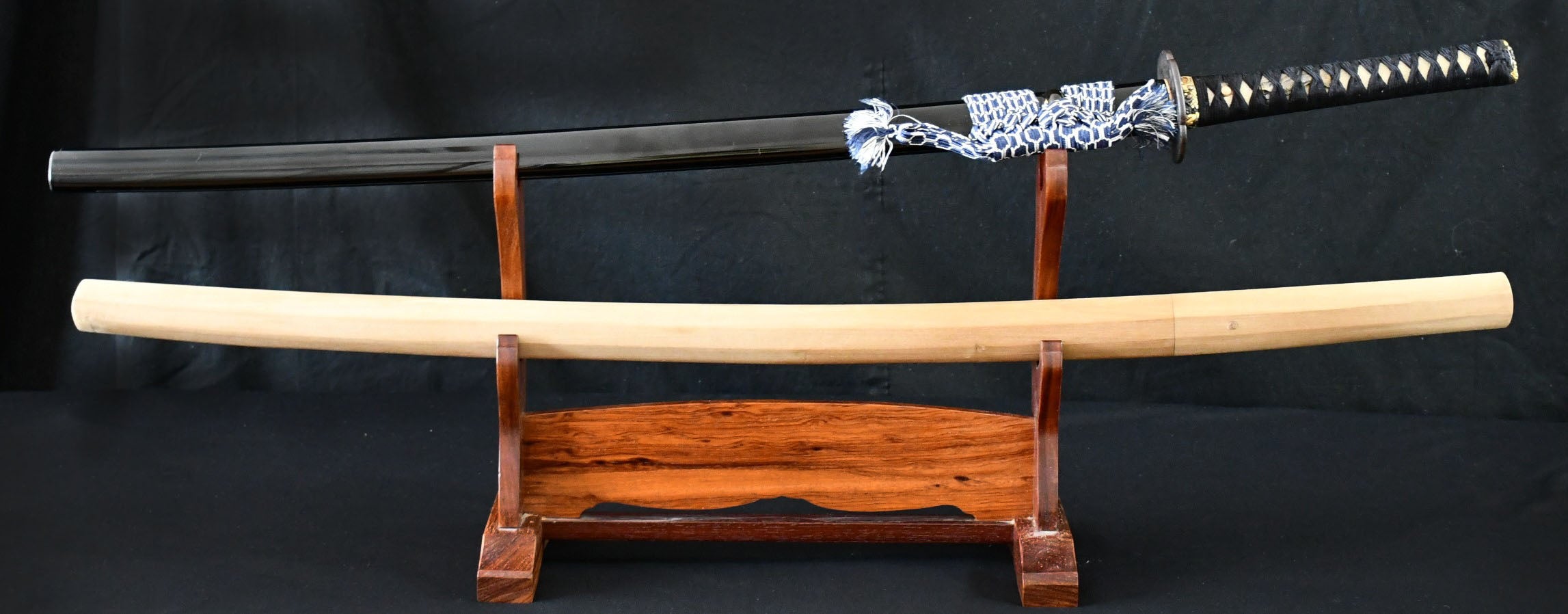
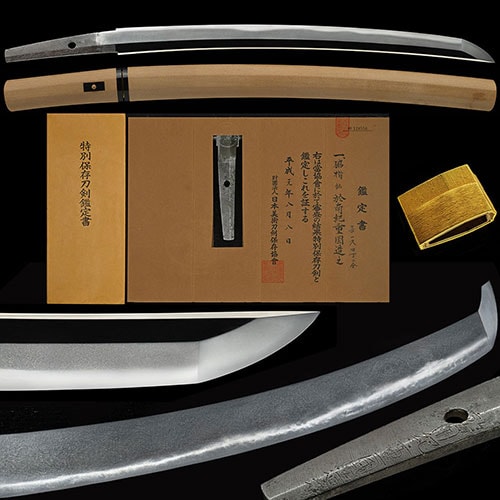
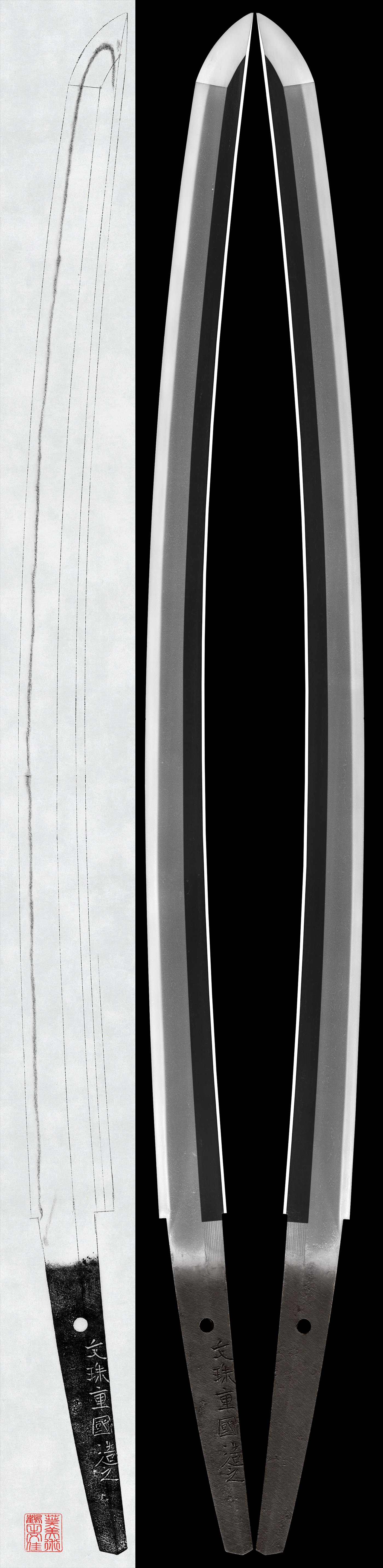
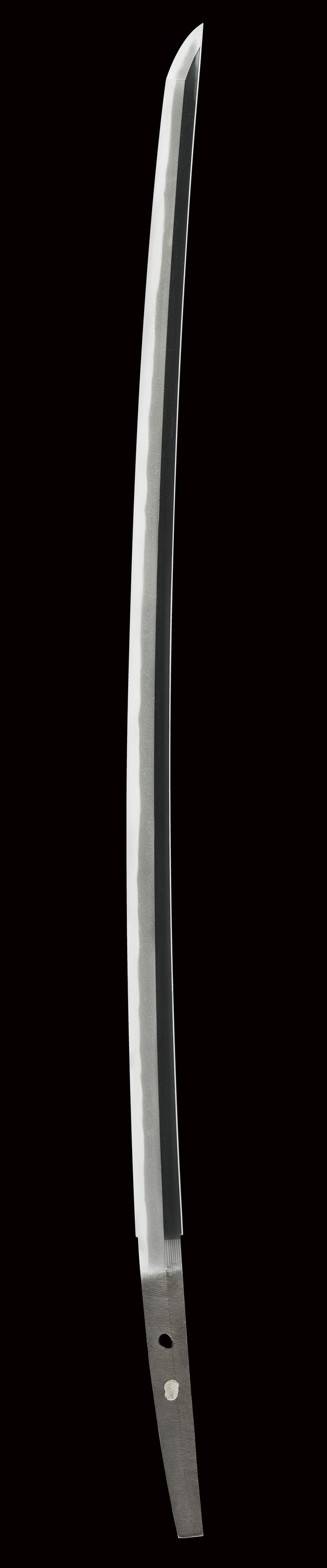
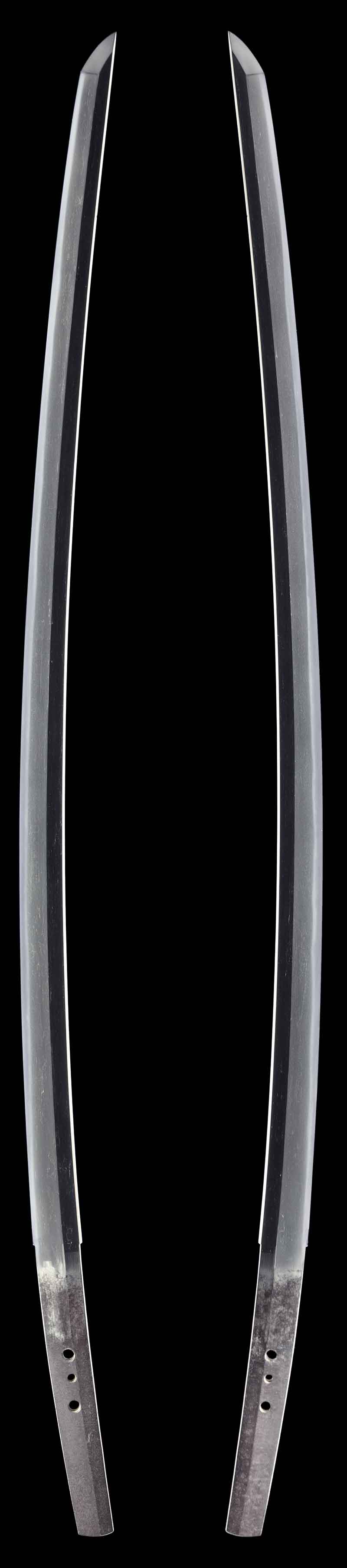
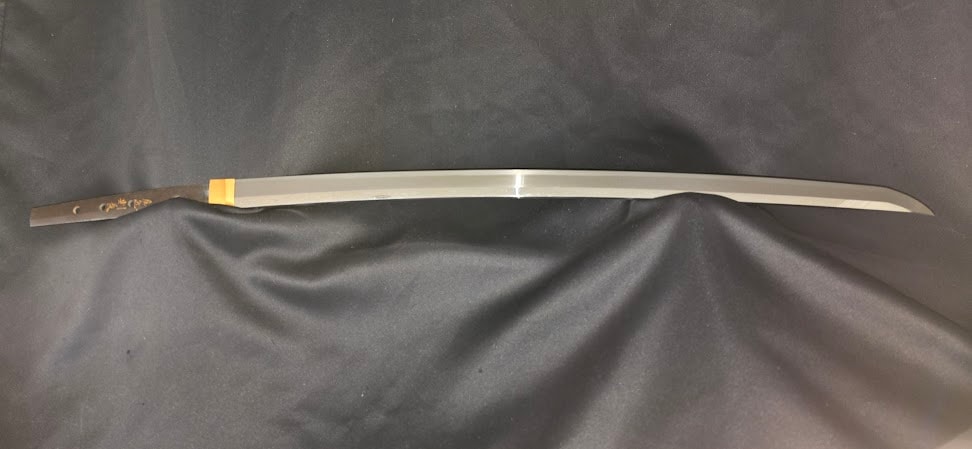
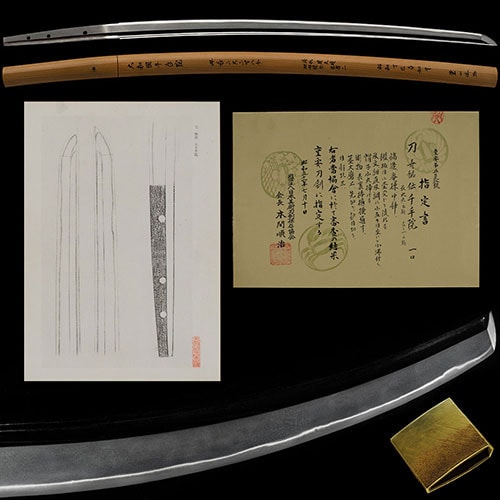
This is a katana made by Shigekuni of Nanki Monju school during the Shinto period. The blade features a suguha hamon and a shape that was popular around the Genroku period. It comes with koshirae and has been certified as Tokubetsu Hozon by NBTHK.

NihontoWatch MonNihontoWatch
MarketEncyclopediaKantei
Swords›Yamato-den›Monju›Katana: Shigekuni of Nanki Monju Made This (NBTHK Tokubetsu Hozon Token)
katana
Monju School

mei · Monju · Shinto · nagasa 69.4cm · sori 1.8cm

SOLD
Monju School — 1 of 8
Monju School — 2 of 8
Monju School — 3 of 8
Monju School — 4 of 8
Monju School — 5 of 8
Monju School — 6 of 8
Monju School — 7 of 8
Monju School — 8 of 8
1 / 8
1 / 8
Monju School — 1 of 8Monju School — 2 of 8Monju School — 3 of 8Monju School — 4 of 8Monju School — 5 of 8Monju School — 6 of 8Monju School — 7 of 8Monju School — 8 of 8
Measurements & details
Smith
Monju School
Type
Katana
School
Monju
Period
Shinto
Signature
Signed
Measurements
Nagasa 69.4cmSori 1.8cmMotohaba 2.79cmSakihaba 1.86cmKasane 0.65cmWeight 680g
Description
About the school

Monju

文珠

Yamato-den · Yamato

22 pieces on the market now

›

The setsumei of the Monju (文珠) line all gather around a single figure: Shigekuni (重国), the smith better known by the appellation Nanki Shigekuni (南紀重国). The records describe him as originally of Yamato Province and a late offshoot of the Tegai group (Tegai-ha)[[c:1]], whose common name was Kurōsaburō. During the Keichō era (1596 to 1615) he entered the service of Tokugawa Ieyasu and forged at Sunpu, in present-day Shizuoka; then in Genna 5 (1619), when Ieyasu's tenth son Tokugawa Yorinobu was transferred to Kii Wakayama, Shigekuni accompanied him and settled at the foot of Mt. Meikō (also read Myōkō). The mei themselves carry the school name: one wakizashi is signed "Kishū Meikōzan Monju Kurōsaburō Shigekuni,"[[c:2]][[c:3]] fixing the Monju appellation to this Kii workshop. The corpus belongs almost wholly to the Momoyama and early Edo (shintō) period, with dated works ranging across Genna 7 and 8 (1621 to 1622). One Gyōbutsu entry raises the question of a smith named Kunimune, a close relative who remained at Sunpu, and a later setsumei speaks of a "second generation onward," so the records permit a Monju succession without resolving its members. A shared technical vocabulary runs through every blade, and the setsumei consistently divide Shigekuni's hand into two modes. The forging is a flowing itame-hada, mixed with mokume and inclined to masame and nagare, tending to stand (hada-dachi), with thick ji-nie and frequent chikei over a bright, clear steel.

In the Sōshū-den mode the temper is a midareba of ko-notare mixed with gunome, angular and yahazu-like elements, deep nioi, strong nie that breaks down into nie-kuzure, and conspicuous kinsuji and sunagashi; the records read this manner as a private study of the high Sagami masters, naming Gō Yoshihiro above all, with Masamune and Sadamune also invoked. In the Yamato-den mode the temper is a suguha, at times shallow notare, carrying hotsure, kuichigai-ba, and nijūba along the habuchi, which the setsumei tie directly to the Tegai inheritance and the manner of Kanenaga. The bōshi across both modes turns yakizume or ko-maru with vigorous hakikake; hira-zukuri and shōbu-zukuri wakizashi show pronounced sakizori, often carved with bonji, suken, and naginata-hi. The records present these as two facets of one hand rather than competing lineages. For kantei, the setsumei name several recurring markers: the bright, clear quality of both ji and ha held up as Shigekuni's hallmark, the pronounced sakizori of his hira- and shōbu-zukuri wakizashi, kinsuji that coil into a whirlpool configuration within the temper, and the large original mekugi-ana met among Kii-domain works. One Sōshū-den katana is judged close in character to Batetsu (馬徹) and treated as a likely model for that smith, raising its documentary weight; another work's "Monju-style" midare is said to anticipate the hadori tendencies of the second generation. The blades carry firm provenance: a wakizashi made to the command of Matsudaira Shima no Kami Shigenari, a piece commissioned by the domain elder Kageyama Tosa-no-kami Munenobu, and a sword inscribed for Yorinobu's retainer Tsuzuki Tōichi, alongside a katana held in the Imperial collection. The setsumei note that nearly all of Shigekuni's Sōshū-den blades survive suriage, so the ubu examples gathered here are repeatedly singled out as research material. Across the records the Monju name stands as the Kii continuation of a Yamato root, carried into the shintō age in the service of the Kii Tokugawa house. Learn more →


5 recorded smiths65 designated works
Leading smiths
SmithEraDesignated
Shigekuni重國1596-163059
Shigekuni重國1655-16733
Kanetsugu包次1596-16150
Kaneari包有1681-16840
Kaneyasu包保1661-16730
Explore the Monju school →

Historical context

Under the Tokugawa peace the daishō became a regulated uniform, and demand gathered in the castle towns, above all Edo itself. The craft split two ways: brilliant display work for connoisseurs, and tested blades whose cutting results were sometimes inlaid in gold.

The Edo period (1615 to 1868) →

Warning — certificate not found

We could not find an authenticity certificate on the seller’s listing. Japanese swords and fittings are normally papered by the NBTHK (or the NTHK). Without one, the attribution is the seller’s own assessment and has not been independently verified — treat it with caution and ask the dealer about certification before buying.

Seller
A
Aoi Art
🇯🇵Ships from Japan
›
✓Verified dealeraoijapan.com
✓Ships worldwide✓English supportWire transferPayPalCredit card
Return policy

If you wish to return an item, please notify us within 3 days of receipt. After this period we cannot accept cancellations. Please ship the return to us within 5 business days. Cancellation is conditional on the item being kept in the same condition as at the time of sale, so please handle it with care.

View all of Aoi Art’s listings→View this item on the dealer’s site→

Previously sold — Monju School

Giheiya
Tokuho
Katana - Tokuho - by Monju School - Tokubetsu Hozon Token: Kishu Monju Shigekuni - 1 Shaku 1 Sun, with ShirasayaKatana - Tokuho - by Monju School - Tokubetsu Hozon Token: Kishu Monju Shigekuni - 1 Shaku 1 Sun, with Shirasaya
Sold

Katana

ByMonju School
SOLD
Japanese Sword Books and Tsuba
Tokuho
Wakizashi - Tokuho - by Monju School - Ko-wakizashi Signed by Monju Shigekuni, Tokubetsu Hozon PaperWakizashi - Tokuho - by Monju School - Ko-wakizashi Signed by Monju Shigekuni, Tokubetsu Hozon Paper
Sold

Wakizashi

ByMonju School
SOLD
Choshuya
Wakizashi - by Monju School - Mei O Nanki Shigekuni Tsukuru KoreWakizashi - by Monju School - Mei O Nanki Shigekuni Tsukuru Kore
Sold

Wakizashi

ByMonju School
SOLD
Tokyo Sword
Yari - by Monju School - Monju Kaneshige - Ginnanho StyleYari - by Monju School - Monju Kaneshige - Ginnanho Style
Sold

Yari

ByMonju School
SOLD
Toushin
Wakizashi - by Monju School - Mutsu no Kami KaneyasuWakizashi - by Monju School - Mutsu no Kami Kaneyasu
Sold

Wakizashi

ByMonju School
SOLD
Toushin
Yari - by Monju School - Mutsu no kami KaneyasuYari - by Monju School - Mutsu no kami Kaneyasu
Sold

Yari

ByMonju School
SOLD
Aoi Art
Wakizashi - by Monju School - Mumei (Monju)Wakizashi - by Monju School - Mumei (Monju)
Sold

Wakizashi

ByMonju School
SOLD
Samurai Museum
Hozon
Tanto - Hozon - by Monju School - Antique Japanese Sword Tanto Attributed to Monju NBTHK Hozon CertificateTanto - Hozon - by Monju School - Antique Japanese Sword Tanto Attributed to Monju NBTHK Hozon Certificate
Sold

Tantō

ByMonju School
SOLD

More from the Monju school

View all →
Eirakudo
Tokuho
Katana - Tokuho - by Monju Shigekuni - Nanki Shigekuni - Tokubetsu Hozon TokenKatana - Tokuho - by Monju Shigekuni - Nanki Shigekuni - Tokubetsu Hozon Token

Katana

ByMonju Shigekuni
¥5,500,000
Choshuya
Katana - by Monju Shigekuni - Shigekuni made in Nanki (Ryowazamono)Katana - by Monju Shigekuni - Shigekuni made in Nanki (Ryowazamono)

Katana

ByMonju Shigekuni
Ask
Iida Koendo
Jūyō
Katana - Jūyō - by Monju Shigekuni - Nanki ShigekuniKatana - Jūyō - by Monju Shigekuni - Nanki Shigekuni

Katana

ByMonju Shigekuni
¥9,900,000
Choshuya
Tokuho
Katana - Tokuho - by Monju Kaneyasu - Mutsu no Kami Kaneyasu (Wazamono)Katana - Tokuho - by Monju Kaneyasu - Mutsu no Kami Kaneyasu (Wazamono)

Katana

ByMonju Kaneyasu
¥1,200,000
Nakano Kosen
Hozon
Wakizashi - Hozon - by Monju Kaneyasu - KanehoWakizashi - Hozon - by Monju Kaneyasu - Kaneho

Wakizashi

ByMonju Kaneyasu
¥770,000
Toyuukai
Tokuho
Wakizashi - Tokuho - by Monju School - Mutsuno-Kami KaneyasuWakizashi - Tokuho - by Monju School - Mutsuno-Kami Kaneyasu

Wakizashi

ByMonju School
¥2,000,000
Tokka Biz
Hozon
Katana - Hozon - by Monju Kaneyasu - Mutsu no Kami Kaneyasu (Hidari Mutsu)Katana - Hozon - by Monju Kaneyasu - Mutsu no Kami Kaneyasu (Hidari Mutsu)

Katana

ByMonju Kaneyasu
¥650,000
Toyuukai
Tokuho
Wakizashi - Tokuho - by Monju School - Mutsuno-kami Kaneyasu - Tokubetsu Hozon CertificateWakizashi - Tokuho - by Monju School - Mutsuno-kami Kaneyasu - Tokubetsu Hozon Certificate

Wakizashi

ByMonju School
¥500,000

More from the Yamato tradition

View all →
Aoi Art
Tokuho
Yari - Tokuho - by Senjuin School - Senjuin SakuYari - Tokuho - by Senjuin School - Senjuin Saku

Yari

BySenjuin School
Starting Bid¥280,000
Tsuruginoya
Jūyō
Katana - Jūyō - by Tegai Kanenaga - Tegai KanenagaKatana - Jūyō - by Tegai Kanenaga - Tegai Kanenaga

Katana

ByTegai Kanenaga
¥7,500,000
Aoi Art
Tokuho
Tachi - Tokuho - by Shikkake School - Unsigned (Shikkake)Tachi - Tokuho - by Shikkake School - Unsigned (Shikkake)

Tachi

ByShikkake School
Starting Bid¥1,550,000
Goushuya
Tokujū
Katana - Tokuju - by Satsuma Yasuyo - Tokubetsu Juyo Token (One-Leaf Aoi Mon) Shume no Kami Ichihei Fujiwara Ason Yasuyo, Made in Satsushu Kirei-gun on an Auspicious Day in March, Kyoho 12Katana - Tokuju - by Satsuma Yasuyo - Tokubetsu Juyo Token (One-Leaf Aoi Mon) Shume no Kami Ichihei Fujiwara Ason Yasuyo, Made in Satsushu Kirei-gun on an Auspicious Day in March, Kyoho 12

Katana

BySatsuma Yasuyo
Ask
Toushin
Tokuho
Tanto - Tokuho - by Tegai Kanekiyo - Mumei (Tegai Kanekiyo) - 4-377Tanto - Tokuho - by Tegai Kanekiyo - Mumei (Tegai Kanekiyo) - 4-377

Tantō

ByTegai Kanekiyo
¥770,000
Tokka Biz
Hozon
Katana - Hozon - by Mihara School - Mumei MiharaKatana - Hozon - by Mihara School - Mumei Mihara

Katana

ByMihara School
¥650,000
Choshuya
Jūyō
Katana - Jūyō - by Shikkake School - O-suriage Mumei, Attributed to ShikkakeKatana - Jūyō - by Shikkake School - O-suriage Mumei, Attributed to Shikkake

Katana

ByShikkake School
¥3,600,000
Touken Komachi
Tokuho
Katana - Tokuho - by Tegai Kanenaga - Katana in ShirasayaKatana - Tokuho - by Tegai Kanenaga - Katana in Shirasaya

Katana

ByTegai Kanenaga
¥3,000,000

Swords

  • Katana
  • Wakizashi
  • Tantō
  • Tachi
  • Naginata
  • Yari

Fittings

  • Tsuba
  • Fuchi-Kashira
  • Kozuka
  • Menuki

Armor

  • Kabuto
  • Samurai Armor

By Certification

  • Tokujū
  • Jūyō
  • Tokuho
  • Hozon

Resources

  • Dealer Directory
  • Artist Directory
  • The Daily Kantei
  • Glossary
  • Browse All
Nihontowatch© 2026
TermsPrivacyCookiesAbout

Description

This is a katana made by Shigekuni of Nanki Monju school during the Shinto period. The blade features a suguha hamon and a shape that was popular around the Genroku period. It comes with koshirae and has been certified as Tokubetsu Hozon by NBTHK.

NihontoWatch MonNihontoWatch
MarketEncyclopediaKantei
Swords›Yamato-den›Monju›Katana: Shigekuni of Nanki Monju Made This (NBTHK Tokubetsu Hozon Token)
katana
Monju School

mei · Monju · Shinto · nagasa 69.4cm · sori 1.8cm

SOLD
Monju School — 1 of 8
Monju School — 2 of 8
Monju School — 3 of 8
Monju School — 4 of 8
Monju School — 5 of 8
Monju School — 6 of 8
Monju School — 7 of 8
Monju School — 8 of 8
1 / 8
1 / 8
Monju School — 1 of 8Monju School — 2 of 8Monju School — 3 of 8Monju School — 4 of 8Monju School — 5 of 8Monju School — 6 of 8Monju School — 7 of 8Monju School — 8 of 8
Measurements & details
Smith
Monju School
Type
Katana
School
Monju
Period
Shinto
Signature
Signed
Measurements
Nagasa 69.4cmSori 1.8cmMotohaba 2.79cmSakihaba 1.86cmKasane 0.65cmWeight 680g
Description
About the school

Monju

文珠

Yamato-den · Yamato

22 pieces on the market now

›

The setsumei of the Monju (文珠) line all gather around a single figure: Shigekuni (重国), the smith better known by the appellation Nanki Shigekuni (南紀重国). The records describe him as originally of Yamato Province and a late offshoot of the Tegai group (Tegai-ha)[[c:1]], whose common name was Kurōsaburō. During the Keichō era (1596 to 1615) he entered the service of Tokugawa Ieyasu and forged at Sunpu, in present-day Shizuoka; then in Genna 5 (1619), when Ieyasu's tenth son Tokugawa Yorinobu was transferred to Kii Wakayama, Shigekuni accompanied him and settled at the foot of Mt. Meikō (also read Myōkō). The mei themselves carry the school name: one wakizashi is signed "Kishū Meikōzan Monju Kurōsaburō Shigekuni,"[[c:2]][[c:3]] fixing the Monju appellation to this Kii workshop. The corpus belongs almost wholly to the Momoyama and early Edo (shintō) period, with dated works ranging across Genna 7 and 8 (1621 to 1622). One Gyōbutsu entry raises the question of a smith named Kunimune, a close relative who remained at Sunpu, and a later setsumei speaks of a "second generation onward," so the records permit a Monju succession without resolving its members. A shared technical vocabulary runs through every blade, and the setsumei consistently divide Shigekuni's hand into two modes. The forging is a flowing itame-hada, mixed with mokume and inclined to masame and nagare, tending to stand (hada-dachi), with thick ji-nie and frequent chikei over a bright, clear steel.

In the Sōshū-den mode the temper is a midareba of ko-notare mixed with gunome, angular and yahazu-like elements, deep nioi, strong nie that breaks down into nie-kuzure, and conspicuous kinsuji and sunagashi; the records read this manner as a private study of the high Sagami masters, naming Gō Yoshihiro above all, with Masamune and Sadamune also invoked. In the Yamato-den mode the temper is a suguha, at times shallow notare, carrying hotsure, kuichigai-ba, and nijūba along the habuchi, which the setsumei tie directly to the Tegai inheritance and the manner of Kanenaga. The bōshi across both modes turns yakizume or ko-maru with vigorous hakikake; hira-zukuri and shōbu-zukuri wakizashi show pronounced sakizori, often carved with bonji, suken, and naginata-hi. The records present these as two facets of one hand rather than competing lineages. For kantei, the setsumei name several recurring markers: the bright, clear quality of both ji and ha held up as Shigekuni's hallmark, the pronounced sakizori of his hira- and shōbu-zukuri wakizashi, kinsuji that coil into a whirlpool configuration within the temper, and the large original mekugi-ana met among Kii-domain works. One Sōshū-den katana is judged close in character to Batetsu (馬徹) and treated as a likely model for that smith, raising its documentary weight; another work's "Monju-style" midare is said to anticipate the hadori tendencies of the second generation. The blades carry firm provenance: a wakizashi made to the command of Matsudaira Shima no Kami Shigenari, a piece commissioned by the domain elder Kageyama Tosa-no-kami Munenobu, and a sword inscribed for Yorinobu's retainer Tsuzuki Tōichi, alongside a katana held in the Imperial collection. The setsumei note that nearly all of Shigekuni's Sōshū-den blades survive suriage, so the ubu examples gathered here are repeatedly singled out as research material. Across the records the Monju name stands as the Kii continuation of a Yamato root, carried into the shintō age in the service of the Kii Tokugawa house. Learn more →

5 recorded smiths65 designated works
Leading smiths
SmithEraDesignated
Shigekuni重國1596-163059
Shigekuni重國1655-16733
Kanetsugu包次1596-16150
Kaneari包有1681-16840
Kaneyasu包保1661-16730
Explore the Monju school →

Historical context

Under the Tokugawa peace the daishō became a regulated uniform, and demand gathered in the castle towns, above all Edo itself. The craft split two ways: brilliant display work for connoisseurs, and tested blades whose cutting results were sometimes inlaid in gold.

The Edo period (1615 to 1868) →

Warning — certificate not found

We could not find an authenticity certificate on the seller’s listing. Japanese swords and fittings are normally papered by the NBTHK (or the NTHK). Without one, the attribution is the seller’s own assessment and has not been independently verified — treat it with caution and ask the dealer about certification before buying.

Seller
A
Aoi Art
🇯🇵Ships from Japan
›
✓Verified dealeraoijapan.com
✓Ships worldwide✓English supportWire transferPayPalCredit card
Return policy

If you wish to return an item, please notify us within 3 days of receipt. After this period we cannot accept cancellations. Please ship the return to us within 5 business days. Cancellation is conditional on the item being kept in the same condition as at the time of sale, so please handle it with care.

View all of Aoi Art’s listings→View this item on the dealer’s site→

Previously sold — Monju School

Giheiya
Tokuho
Katana - Tokuho - by Monju School - Tokubetsu Hozon Token: Kishu Monju Shigekuni - 1 Shaku 1 Sun, with ShirasayaKatana - Tokuho - by Monju School - Tokubetsu Hozon Token: Kishu Monju Shigekuni - 1 Shaku 1 Sun, with Shirasaya
Sold

Katana

ByMonju School
SOLD
Japanese Sword Books and Tsuba
Tokuho
Wakizashi - Tokuho - by Monju School - Ko-wakizashi Signed by Monju Shigekuni, Tokubetsu Hozon PaperWakizashi - Tokuho - by Monju School - Ko-wakizashi Signed by Monju Shigekuni, Tokubetsu Hozon Paper
Sold

Wakizashi

ByMonju School
SOLD
Choshuya
Wakizashi - by Monju School - Mei O Nanki Shigekuni Tsukuru KoreWakizashi - by Monju School - Mei O Nanki Shigekuni Tsukuru Kore
Sold

Wakizashi

ByMonju School
SOLD
Tokyo Sword
Yari - by Monju School - Monju Kaneshige - Ginnanho StyleYari - by Monju School - Monju Kaneshige - Ginnanho Style
Sold

Yari

ByMonju School
SOLD
Toushin
Wakizashi - by Monju School - Mutsu no Kami KaneyasuWakizashi - by Monju School - Mutsu no Kami Kaneyasu
Sold

Wakizashi

ByMonju School
SOLD
Toushin
Yari - by Monju School - Mutsu no kami KaneyasuYari - by Monju School - Mutsu no kami Kaneyasu
Sold

Yari

ByMonju School
SOLD
Aoi Art
Wakizashi - by Monju School - Mumei (Monju)Wakizashi - by Monju School - Mumei (Monju)
Sold

Wakizashi

ByMonju School
SOLD
Samurai Museum
Hozon
Tanto - Hozon - by Monju School - Antique Japanese Sword Tanto Attributed to Monju NBTHK Hozon CertificateTanto - Hozon - by Monju School - Antique Japanese Sword Tanto Attributed to Monju NBTHK Hozon Certificate
Sold

Tantō

ByMonju School
SOLD

More from the Monju school

View all →
Eirakudo
Tokuho
Katana - Tokuho - by Monju Shigekuni - Nanki Shigekuni - Tokubetsu Hozon TokenKatana - Tokuho - by Monju Shigekuni - Nanki Shigekuni - Tokubetsu Hozon Token

Katana

ByMonju Shigekuni
¥5,500,000
Choshuya
Katana - by Monju Shigekuni - Shigekuni made in Nanki (Ryowazamono)Katana - by Monju Shigekuni - Shigekuni made in Nanki (Ryowazamono)

Katana

ByMonju Shigekuni
Ask
Iida Koendo
Jūyō
Katana - Jūyō - by Monju Shigekuni - Nanki ShigekuniKatana - Jūyō - by Monju Shigekuni - Nanki Shigekuni

Katana

ByMonju Shigekuni
¥9,900,000
Choshuya
Tokuho
Katana - Tokuho - by Monju Kaneyasu - Mutsu no Kami Kaneyasu (Wazamono)Katana - Tokuho - by Monju Kaneyasu - Mutsu no Kami Kaneyasu (Wazamono)

Katana

ByMonju Kaneyasu
¥1,200,000
Nakano Kosen
Hozon
Wakizashi - Hozon - by Monju Kaneyasu - KanehoWakizashi - Hozon - by Monju Kaneyasu - Kaneho

Wakizashi

ByMonju Kaneyasu
¥770,000
Toyuukai
Tokuho
Wakizashi - Tokuho - by Monju School - Mutsuno-Kami KaneyasuWakizashi - Tokuho - by Monju School - Mutsuno-Kami Kaneyasu

Wakizashi

ByMonju School
¥2,000,000
Tokka Biz
Hozon
Katana - Hozon - by Monju Kaneyasu - Mutsu no Kami Kaneyasu (Hidari Mutsu)Katana - Hozon - by Monju Kaneyasu - Mutsu no Kami Kaneyasu (Hidari Mutsu)

Katana

ByMonju Kaneyasu
¥650,000
Toyuukai
Tokuho
Wakizashi - Tokuho - by Monju School - Mutsuno-kami Kaneyasu - Tokubetsu Hozon CertificateWakizashi - Tokuho - by Monju School - Mutsuno-kami Kaneyasu - Tokubetsu Hozon Certificate

Wakizashi

ByMonju School
¥500,000

More from the Yamato tradition

View all →
Aoi Art
Tokuho
Yari - Tokuho - by Senjuin School - Senjuin SakuYari - Tokuho - by Senjuin School - Senjuin Saku

Yari

BySenjuin School
Starting Bid¥280,000
Tsuruginoya
Jūyō
Katana - Jūyō - by Tegai Kanenaga - Tegai KanenagaKatana - Jūyō - by Tegai Kanenaga - Tegai Kanenaga

Katana

ByTegai Kanenaga
¥7,500,000
Aoi Art
Tokuho
Tachi - Tokuho - by Shikkake School - Unsigned (Shikkake)Tachi - Tokuho - by Shikkake School - Unsigned (Shikkake)

Tachi

ByShikkake School
Starting Bid¥1,550,000
Goushuya
Tokujū
Katana - Tokuju - by Satsuma Yasuyo - Tokubetsu Juyo Token (One-Leaf Aoi Mon) Shume no Kami Ichihei Fujiwara Ason Yasuyo, Made in Satsushu Kirei-gun on an Auspicious Day in March, Kyoho 12Katana - Tokuju - by Satsuma Yasuyo - Tokubetsu Juyo Token (One-Leaf Aoi Mon) Shume no Kami Ichihei Fujiwara Ason Yasuyo, Made in Satsushu Kirei-gun on an Auspicious Day in March, Kyoho 12

Katana

BySatsuma Yasuyo
Ask
Toushin
Tokuho
Tanto - Tokuho - by Tegai Kanekiyo - Mumei (Tegai Kanekiyo) - 4-377Tanto - Tokuho - by Tegai Kanekiyo - Mumei (Tegai Kanekiyo) - 4-377

Tantō

ByTegai Kanekiyo
¥770,000
Tokka Biz
Hozon
Katana - Hozon - by Mihara School - Mumei MiharaKatana - Hozon - by Mihara School - Mumei Mihara

Katana

ByMihara School
¥650,000
Choshuya
Jūyō
Katana - Jūyō - by Shikkake School - O-suriage Mumei, Attributed to ShikkakeKatana - Jūyō - by Shikkake School - O-suriage Mumei, Attributed to Shikkake

Katana

ByShikkake School
¥3,600,000
Touken Komachi
Tokuho
Katana - Tokuho - by Tegai Kanenaga - Katana in ShirasayaKatana - Tokuho - by Tegai Kanenaga - Katana in Shirasaya

Katana

ByTegai Kanenaga
¥3,000,000

Swords

  • Katana
  • Wakizashi
  • Tantō
  • Tachi
  • Naginata
  • Yari

Fittings

  • Tsuba
  • Fuchi-Kashira
  • Kozuka
  • Menuki

Armor

  • Kabuto
  • Samurai Armor

By Certification

  • Tokujū
  • Jūyō
  • Tokuho
  • Hozon

Resources

  • Dealer Directory
  • Artist Directory
  • The Daily Kantei
  • Glossary
  • Browse All
Nihontowatch© 2026
TermsPrivacyCookiesAbout
NihontoWatch Mon

NihontoWatch

Market
Encyclopedia
Kantei
NihontoWatch Mon

NihontoWatch

Market
Encyclopedia
Kantei