三人の天下人が戦国の世紀を終わらせ、刀は新しい秩序の道具となった。1588年の刀狩は刀を武士の標章とし、名刀は条約のごとく家々の間を行き交い、鑑定は以後この境で古刀と新刀を分かつ。
 NihontoWatchNihontoWatch
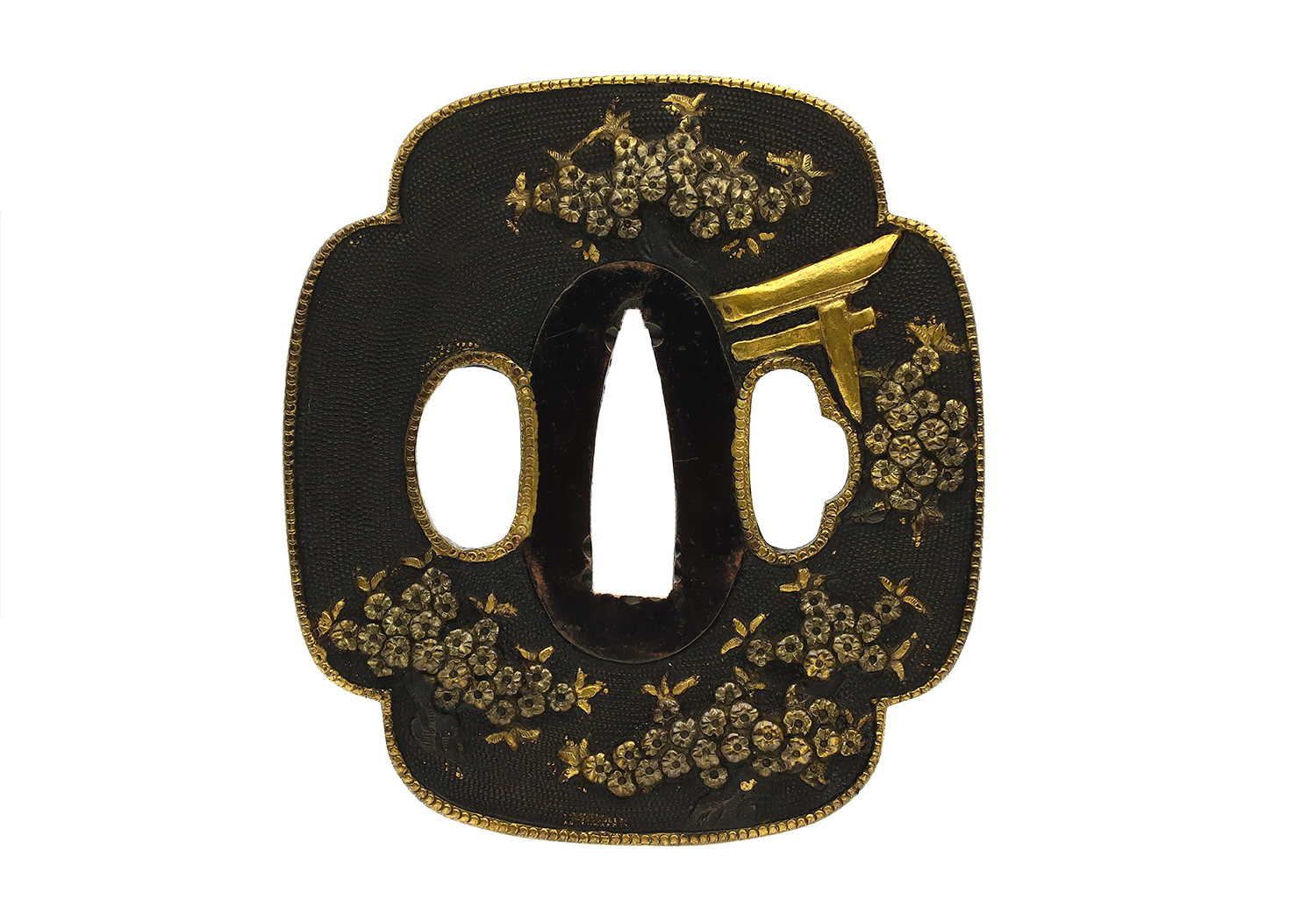
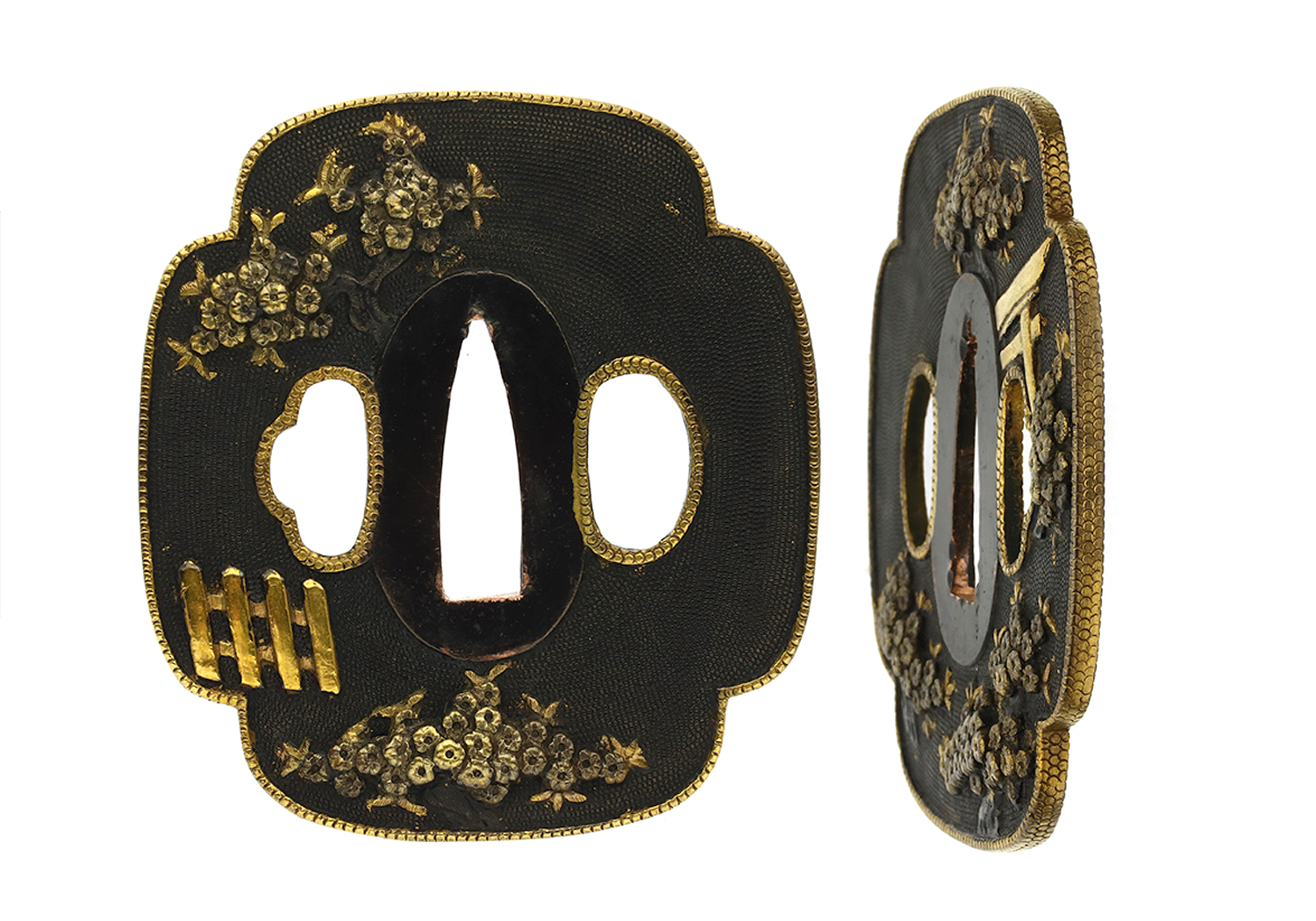
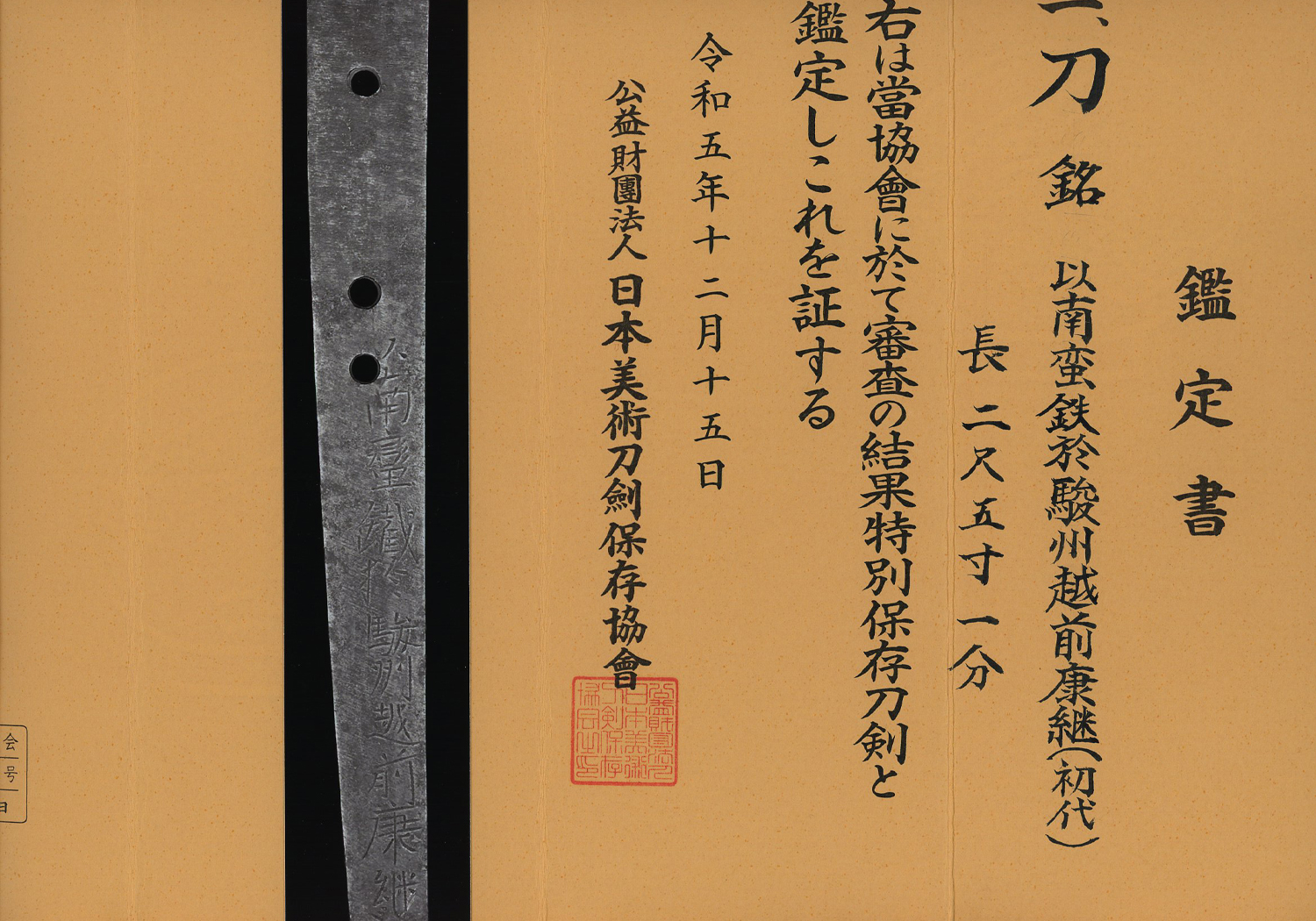
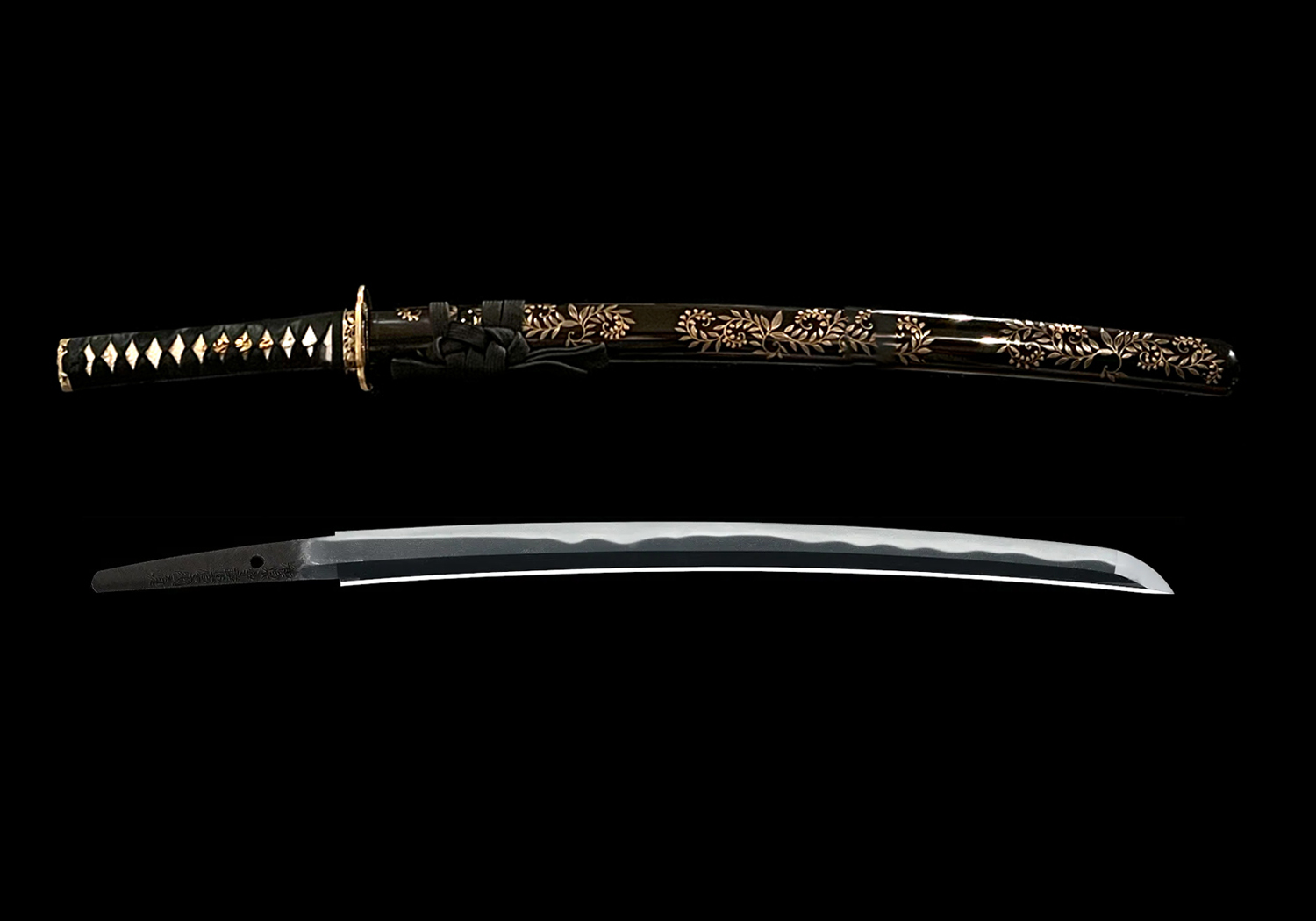
Nihonto.com is pleased to present this fantastic daisho set of swords made by two of the most important Shintô smiths, Shodai Yasutsugu (first generation) and Shodai Kunisada (first generation). Both of these smiths are rated as JoJo saku by Fujishiro. This means top, top class smiths. There is only one rank above this designation. The story of the Yasutsugu (康継) lineage starts with the first generation, Ichizaemon (市左衛門), who is believed to have been born around the middle of the sixteenth century. His place of birth was in Shimosaka (下坂) of Shiga-gun in the province of Omi. Omi is next to Mino and contains Lake Biwa. Yasutsugu (康継) was born into a sword making family headed by his father, Hironaga (廣長), reputed to be the last descendent of Yamato no Kuni Senjuin (大和国千手院). Though his father was from Omi, he was trained in the Mino (美濃) tradition. Yasutsugu’s (康継) early training was in the Senjuin style of Yamato (大和) as well as the Mino (美濃) tradition. His first signature was Echizen Ju Shimosaka (越前住下坂). Later he started experimenting with the Sôshû (相州) tradition and he became adept in all three traditions. During the Bunroku era (1592-1596) he received the title of Higo Daijô (肥後大掾) About this time or around the beginning of the Keicho era (1596) he moved to Echizen Province and settled in Fukui. Throughout Japanese history, many swordsmiths flourished when they came under the patronage and protection of the local feudal lords. Yasutsugu (康継) was one such swordsmith. Whether by chance or intent, he became noticed and supported by Matsudaira Hideyasu (松平秀廉), who was the third son of Tokugawa Ieyasu (徳川家康). Hideyasu (秀廉) was the Daimyo of Echizen province and as such was in a position to be of great help to Yasutsugu (康継). As has often been the case throughout history who one knows is often as important, or more important, that what one knows. There were several contemporary swordsmiths of greater skill than Yasutsugu (康継) (i.e. Umetada (埋忠), Hankei (繁慶),Kunihiro (国広)), but because of the patronage of Matsudaira Hideyasu (松平秀廉), Yasutsugu (康継) became known to Tokugawa Ieyasu (徳川家康) and Tokugawa Hidetada (徳川秀忠), the first two Tokugawa Shoguns. By the fifth year of Keicho (1600) Yasutsugu (康継) was well established in Echizen (越前). His patronage by Hideyasu (秀廉) secured his livelihood and allowed him the freedom to produce swords in a variety of styles. About this time, using the Echizen (no) Kuni Shimosaka (越前下坂) signature and the Higo Daijo Fujiwara Shimosaka Echizen (no) Ju (肥後大掾藤原越前住) signature, he began to produce utsushi-mono (reproductions) of famous Soshu-den (相州伝) works of Masamune (正宗) and Sadamune (貞宗) as well as Awataguchi Yoshimitsu (粟田口吉光) and others. One may ask why would Yasutsugu (康継) make reproductions (a nice word for forgeries) of these famous smiths. The answer is that he was probably asked (ordered?) to by his sponsors, Hideyasu, Ieyasu, and Hidetada. We must remember that throughout Japanese history and up until today, gift giving is an integral part of the Japanese culture. In those days, especially, a very appropriate gift or reward for service was a sword. The more famous the sword the better. For the Tokugawa family, swords made by Yoshimitsu (吉光) and his descendants were thought to be especially auspicious. Of course, there was a finite number of “real” ones around to be used as gifts. Therefore, it was necessary to “create” a few extra from time to time. The recipient was probably fully aware that the sword was not the “real thing”. It truly was the thought that counted especially since it was not uncommon for the same sword to be re-gifted back to the donor at some suitable future date. Around the 11th or 12th year of this same period of Keicho (1606-1607), Yasutsugu’s (康継) fame reached the point that he was called to Edo (Tokyo) to share his forging skills with Tokugawa Ieyasu (徳川家康). About this time Yasutsugu (康継) was given the privilege of using the character “Yasu” (康) from Tokugawa Ieyasu’s (徳川家康) name. Thus, from that point on, he changed his name to Yasutsugu (康継). About the same time (some feel it was a few years later) he was given the additional privilege of carving the Hollyhock crest (Aoi mon) on his blades. These privileges were given in perpetuity to Yasutsugu and his descendants. Thus the Yasutsugu (康継) swordsmiths became the kaji of the Tokugawa Family. The first generation Yasutsugu (康継) was also adept at the art of saiha, the re-tempering of blades that had lost their tempered edge in a fire. Since this was the end of the Sengoku Jidai (the age of the country at war) there were still battles being fought and many important blades were being damaged. This was especially true after the summer and winter campaigns at Osaka Castle in 1615. Many of the famed Meibutsu-cho owned by the Toyotomi family were damaged in the burning of the Osaka castle and were re-tempered by Yasutsugu (康継). One also cannot but help to notice that many of the blades by the first generation Yasutsugu (康継) contain wonderful, skillfully done carvings (horimono) on the blades. While it is believed that Yasutsugu (康継) carved his own early blades, the most famous and beautiful of the carvings on his blades were done by the famous Kinai family of carvers. They were skilled in carving a variety of subjects on swords. Yasutsugu (康継) worked in Echizen and Edo as was the custom with the Tokugawa family in those days. It was much like the practice of Sankin Kodai (alternate year attendance) that was required of the Daimyo of the country. He died in seventh year of Genna (1621) probably in his 70’s. The typical forging characteristics of the first generation Yasutsugu are as follows: SUGATA: Shodai Yasutsugu made katana, wakizashi, and tantô in many styles. His original works were most often made in typical Keicho-Shinto style with wide mihaba (width), extended nagasa (length), marked sori(curvature), and often with an extended bôshi (point). He was also famous for making blades in the style of the koto Sôshû school. Of his katana, shinoji-zukuri are the most common. Occasionally we find a blade in katakiriba-zukuri. The mune is usually iori-mune, but there is an occasional mitsu-mune blade. Wakizashi can be found in shinogi-zukuri, ukubi-zukuri, o-hira-zukuri, shobu-zukuri, and kata-kiriba zukuri. His tantô are most often hira-zukuri, but he did use other styles as in the wakizashi. Generally, his blades give the feeling of great strength as in the Nanbokucho period. JIHADA: He is most famous for tight itame hada mixed with some mokume hada. There is always masame hada present in the shinogi-ji. The Yasutsugu school is famous for what has been called Echizen gane or hadadachi-gokoro. This hada consists of the tight itame/mokume mentioned above with the presence of shirake or whitish patches in the steel structure that are mixed with the real color of a darker hue. HAMON: Yasutsugu made temper lines in various styles. His nioi-guchi tends to be somewhat rough and unclear with an abundance of nie in the habuchi. His blades show sunagashi, kinsuji, uchinoke, hakikake, and nijuba. There are frequent cases when the nie is very coarse which adds to the overall feeling of “disorderliness” for which he was famous. Of course, he also made tantô with hoso-suguba where the nie is extremely fine and the nioi line is as wide as possible. HORIMONO: His swords contain the usual types such as ken, and bonji. Swords are also encountered with the engravings of plum branches and bamboo. It is generally thought that while he did some carvings by his own hand, most of the carvings on his blades were done by the famous Kinai family who were specialists in carving horimono. BÔSHI: Generally, Yasutsugu’s bôshi has an undulating pattern (notare) with a somewhat pointed tip. The kaeri (turnback) is always long, extending below the yokote. This is an important kantei point. The pattern of the temper in the bôshi can vary from quiet to hakikake. NAKAGO: The nakago is kaku-mune and the tip is slender. The jiri (butt) can be kengyo, iri yama gata, or kuri in shape. The yasurime (filings) are katte-sagari (slanting) and sujikai (oblique). The nakago is kaku-mune and the tip is slender. MEI: The following are most common signatures used by Yasutsugu: ECHIZEN (no) KUNI SHIMOSAKA 越前国下坂 HIGO DAIJO FUJIWARA SHIMOSAKA ECHIZEN JU 肥後大掾藤原越前住 HIGO DAIJO ECHIZEN YASUTSUGU 肥後大掾 越前康継 HIGO DAIJO FUJIWARA ECHIZEN YASUTSUGU 肥後大掾藤原越前康継 ECHIZEN (no) KUNI JU YASUTSUGU 越前国住康継 MOTTE NANBANTETSU OITE BUSHU EDO ECHIZEN YASUTSUGU 持南蛮鐡於武州江戸越前康継* The katana of this beautiful daisho is a long katana by the first generation Yasutsugu. It is signed 以南蛮鉄駿州越前康継. This is read “Motte Nanbantestu Sunshû Echizen Yasutsugu”. This means made in Suruga (Sunshû) out of foreign steel by Yasutsugu of Echizen Province. This is where it gets very interesting. I wondered why it does not have the Hollyhock above Yasutsugu’s signature then I did some research and found out that “Sunshû” is short for the Province of Suruga which is where the first Tokugawa Shôgun, Tokugawa Ieyasu lived after he retired as Shôgun. This would indicate that this sword was made by Shodai Yasutsugu for Ieyasu or someone within Ieyasu’s close inner circle. It would have been rude to put the hollyhock leaf on a sword you were giving to Ieyasu or someone in his inner circle because that was part of Ieyasu’s personal mon and he was the person who allowed Yasutsugu and his descendants to use in on blades they made. Ieyasu retired to Sunpu in Suruga in 1605 and he died in 1616. That means this Yasutsugu dates somewhere between 1605 and 1615. It was possibly made for Ieyasu for the Osaka castle campaign which took place from November 8, 1614 to May–June 1615. Even though this blade has been shortened by 3-4 inches, it’s cutting edge still measures 76.2 cm or 30 inches and it still bears the full signature at the bottom of the tang. The moto-haba (width at the base of the blade) is 3.07 cm or 1.21 inches and the saki-haba (width at the beginning kissaki) is 2.0 cm or 0.8 inches. The kasane (thickness of the blade) is 0.8 cm or 0.3 inches. The sori of this blade (curvature) is in the middle of the blade (torii sori) and it measures 1.05 cm or 0.4 inches. The hada (grain of the steel caused by the folding process) for which Yasutsugu is most famous is known as Echizen-gane, i.e. a tight a itame hada mixed with some mokume hada. There is always masame hada present in the shinogi-ji. To my eye this sword looks like Yasutsugu went back to his roots of the Yamato school when he made this sword. The suguha hamon and the really strong masame in the shinogi-ji coupled with the Yamashiro style suguha with a wide nie deki evokes kotô Yamato work. The hamon (temper) is a beautiful wide suguha running the length of the blade and continuing into the bôshi (tip) of the blade. The hamon in the bôshi almost covers the entire bôshi but it makes a o-maru kaeri (wide turn-back) and continues down the mune (back edge) of the blade for what looks like a relatively short distance. When you examine the blade more closely, however, you will see spots of the hamon showing up here and there on the mune until you get the bottom third of the blade. In that area about 8 inches above the habaki you will see some outstanding areas of temper that continue in a cloud-like pattern on and off until you reach the habaki. This appears on the omote (front) side of the blade almost exclusively. Whether this was done intentionally or by accident, we may never know, but it is outstanding to behold. All in all, this is a great blade with what is potentially a wonderful history. It is in excellent condition and comes as part of a daisho of swords. The wakizashi is an outstanding blade by another famous swordsmith of the Shintô era, Izumi no Kami Kunisada (also known as Oya Kunisada) the father of Inoue Shinkai. Both blades are in a very attractive set of daisho koshirae with fittings done in traditional Mino style. Oya Kunisada (国貞) was born in Tensho 18 (1590) in Hyuga province, present day Miyazaki prefecture. He became a student of the famous smith, Horikawa Kunihiro (堀川国広). It is commonly believed that since he was only twenty-five years old when Kunihiro died, both he and Kawachi no Kami Kunisuke (河内守国助) came under the tutelage of Echigo no Kami Kunitomo (越後守国儔). His early signature and work style resembles that of Kunitomo (国儔) who was a senior student to him in the Horikawa Kunihiro (堀川国広) school. It is thought that he moved to Osaka in Genna 7 (1621) and once there he founded the Osaka Shinto School. His early swords show features in common with the Kunihiro school. After he moved to Osaka, Kunisada established his own style, which became known as the Osaka Shinto school. He received the title of Izumi no Kami (和泉守) in Genna 9 (1623) and he passed away in Keian 5 (1652). He is known to have become a monk in his last days and he used the name of Dowa. Kunisada (国貞) is also famous for being the father of Inoue Shinkai (井上真改). Inoue Shinkai (井上真改) is one of the most famous smiths of the Shinto period and was known as the Masamune of Osaka. When Shinkai (真改) first began signing swords, he signed them Inoue Izumi no Kami Kunisada (井上 和泉守国貞) that was very similar to his father’s signature. For that reason, we call the first generation Kunisada, “Oya Kunisada” meaning the “parent Kunisada”. SUGATA: His works are mostly katana and wakizashi in shinogi-zukuri. There are also kanmuri–otoshi-zukuriand hira-zukuri wakizashi. Rarely, there are also tanto of standard proportions. JITETSU: His kitae generally has the appearance of nashiji as his ko-itame hada shows its very tight grain formations. There are some in which the hada is a well-refined ko-mokume like the stripes of chirimen (crepe paper). Occasionally there is one that gives the appearance of very well executed o-itame hada. Often the shinogi ji has a tinge of masame and the ji-nie is often thick and profuse. The burnished surface of the shinogi-ji is dark and looks like the surface of a mirror. This feature is called Osaka tetsu or Osaka gane. HAMON: His hamon overall consists of deep nioi admirably sprinkled with fine nie grains. There are various types such as suguba, notare, gunome midare, o-midare, and so on When it is midare, there are frequently works in which a hamon of gunome with maru kashira (round heads) are arranged in 3’s, 4’s, 5’s, and 6’s. The tone of his hamon resembles those of Kunitomo. In all of them the nie and nioiare lively. The hamon always starts in suguha yakidashi that becomes notare and almost always shows some tobiyaki in the monouchi area up to where the boshi turns back. BÔSHI: His bôshi, which in most cases is in ko-maru, is characterized by its slight widening in the middle. It usually ends in a short kaeri, but on occasion it will return in an extremely long kaeri becoming almost mune-yaki. HORIMONO: There are frequently horimono. In fact, Kunisada is known for the greatest number of examples of works with horimono in the Horikawa School. It is especially frequent in wakizashi and tanto. There is horimono of the Sadamune style engraved on tanto. NAKAGO: The mune is ko-maru, and as for the saki, the works of his younger years are a shallow kurijiri, but as he aged, they gradually became slender and in a ha-agari kurijiri shape. The yasurime is o-sujikai all the way up to the hamachi. MEI: After the second year of Shoho (1645), his mei of IZUMI NO KAMI KUNISADA was chiseled in sosho script (grass writing). This is regarded as his Dowa-mei, that is, Kunisada’s mei after he entered the priesthood. IZUMI NO KAMI FUJIWARA KUNISA OITE OSAKA IZUMI NO KAMI FUJIWARA KUNISDA Some of the examples of his mei before he received the “Izumi no Kami” title are as follows: KUNISADA (very early mei) FUJIWARA KUNISADA SESSHU OSAKA JU FUJIWARA KUNISADA SESSHU JU FUJIWARA KUNISADA The wakizashi of this great daisho is a beautiful blade signed IZUMI NO KAMI FUJIWARA KUNISADA (和泉守藤原国貞). It has a nagasa (length of the cutting edge) of 45.5 cm or 17.875 inches. The moto-haba (width at the base of the blade) is 2.89 cm or 1.14 inches and the saki-haba (width at the beginning kissaki) is 2.1 cm or 0.83 inches. The kasane(thickness of the blade) is 0.78 cm or 0.3 inches. The shallow sori of this blade (curvature) is in the middle of the blade (torii sori) and it measures 1.0 cm or 0.4 inches. The nakago is ubu (unshortened) and it has only one mekugi ana (hole for the mekugi pin). The overall sugata (shape) of the sword is typical of the Kanbun (1661) era style with a shallow torii sori and a slightly robust and stretched kissaki. The jigane (grain of the steel) is a beautiful itame with areas of mokume and there looks to be slight evidence of masame hada in the shinogi ji. The hamon is an irregular notare midare with a very vivid and robust habuchi of intense nie that spill over into the hada in the form of ji-nie and areas of tobiyaki. The hamon begins at the hamachi as a upwardly slanting suguha (straight) that quickly develops into the wide midare. It becomes even more active and wide as it approaches the monouchi area. It even touches and slightly crosses over the shinogi in a couple of areas. This is one of the characteristics of both this smith and his son, Inoue Shinkai. This wakizashi is in excellent polish and comes with a shakudo habaki bearing a family mon. It is accompanied by NBTHK Tokubetsu Hozon papers which attest to its quality and authenticity. It is in flawless condition and comes as part of a daisho of swords. The katana is an outstanding blade by another famous swordsmith of the Shintô era, Shodai Yasutsugu with potential connections to Tokugawa Ieyasu. Both blades are in a very attractive set of daisho koshirae done in traditional Mino style.
NihontoWatch
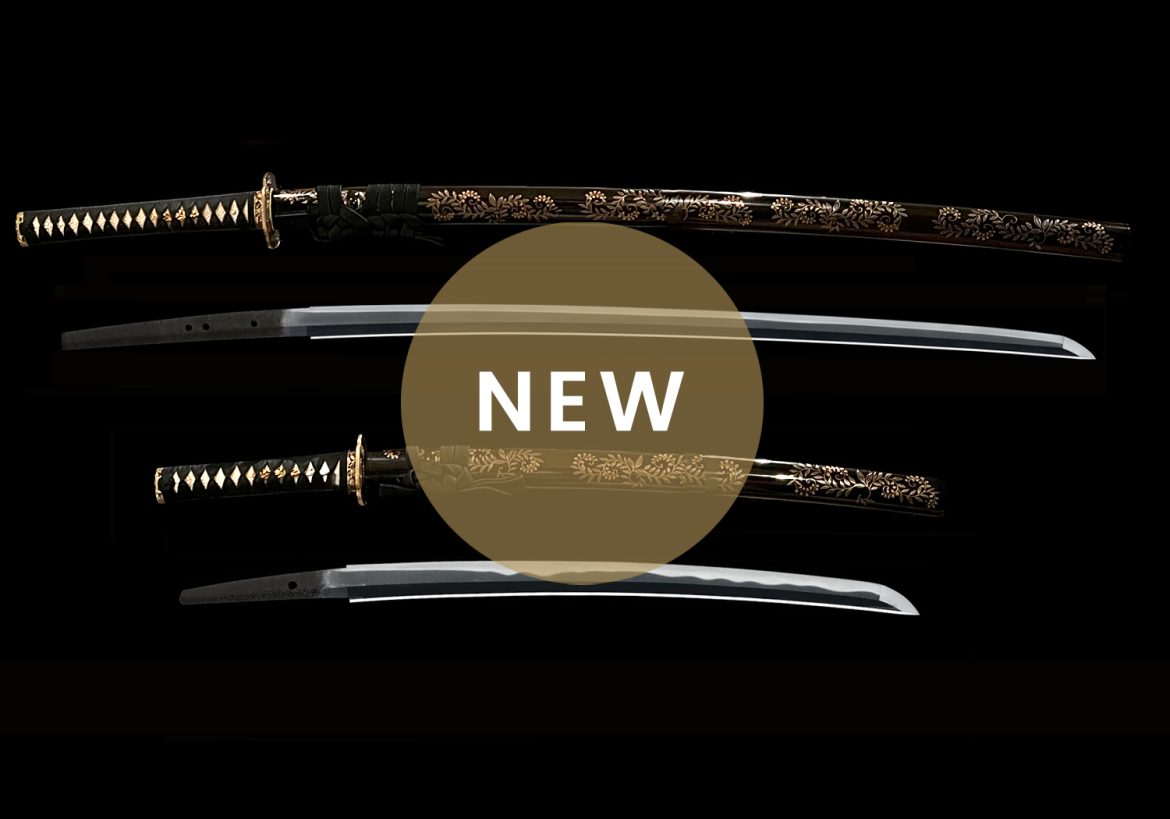
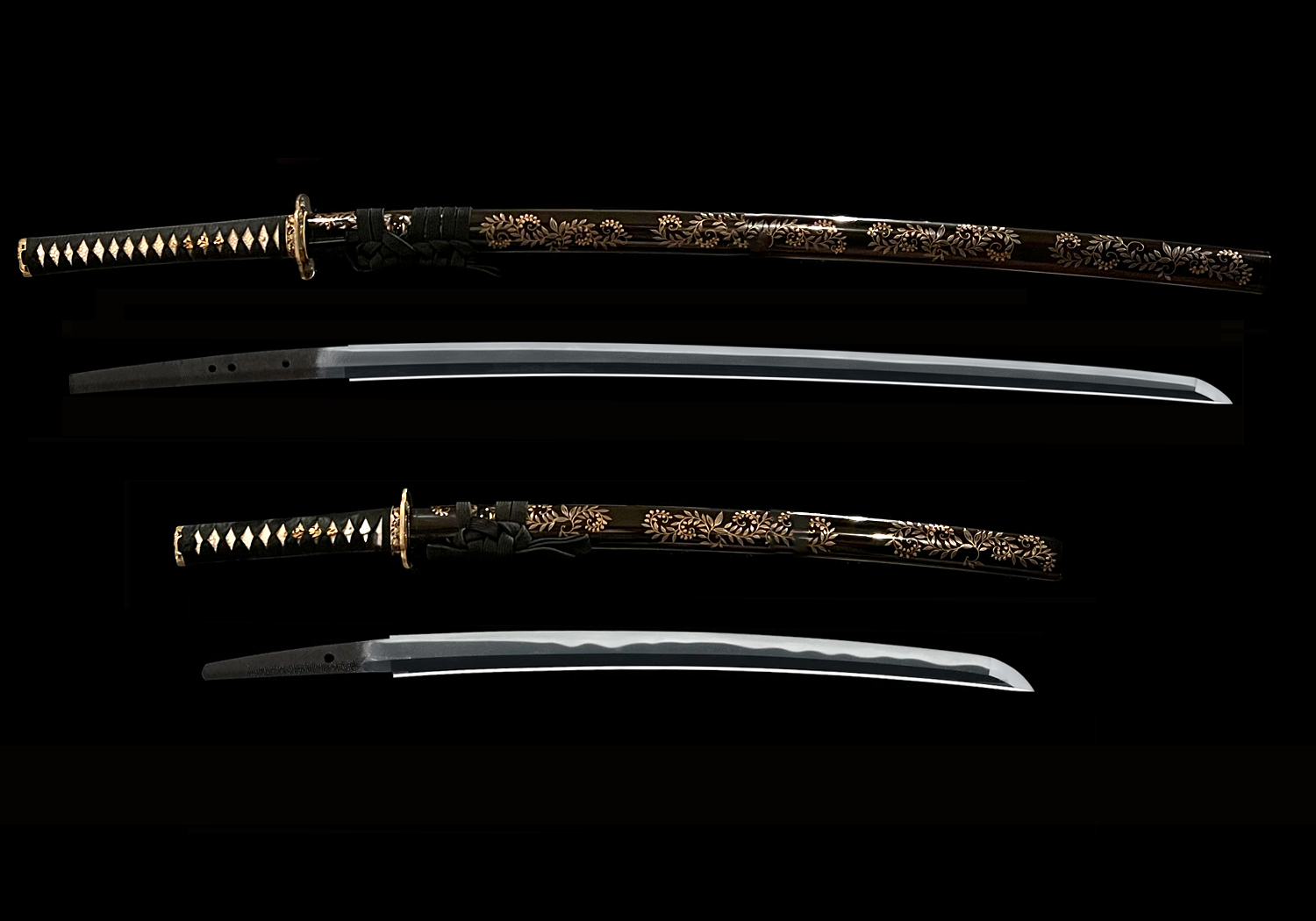
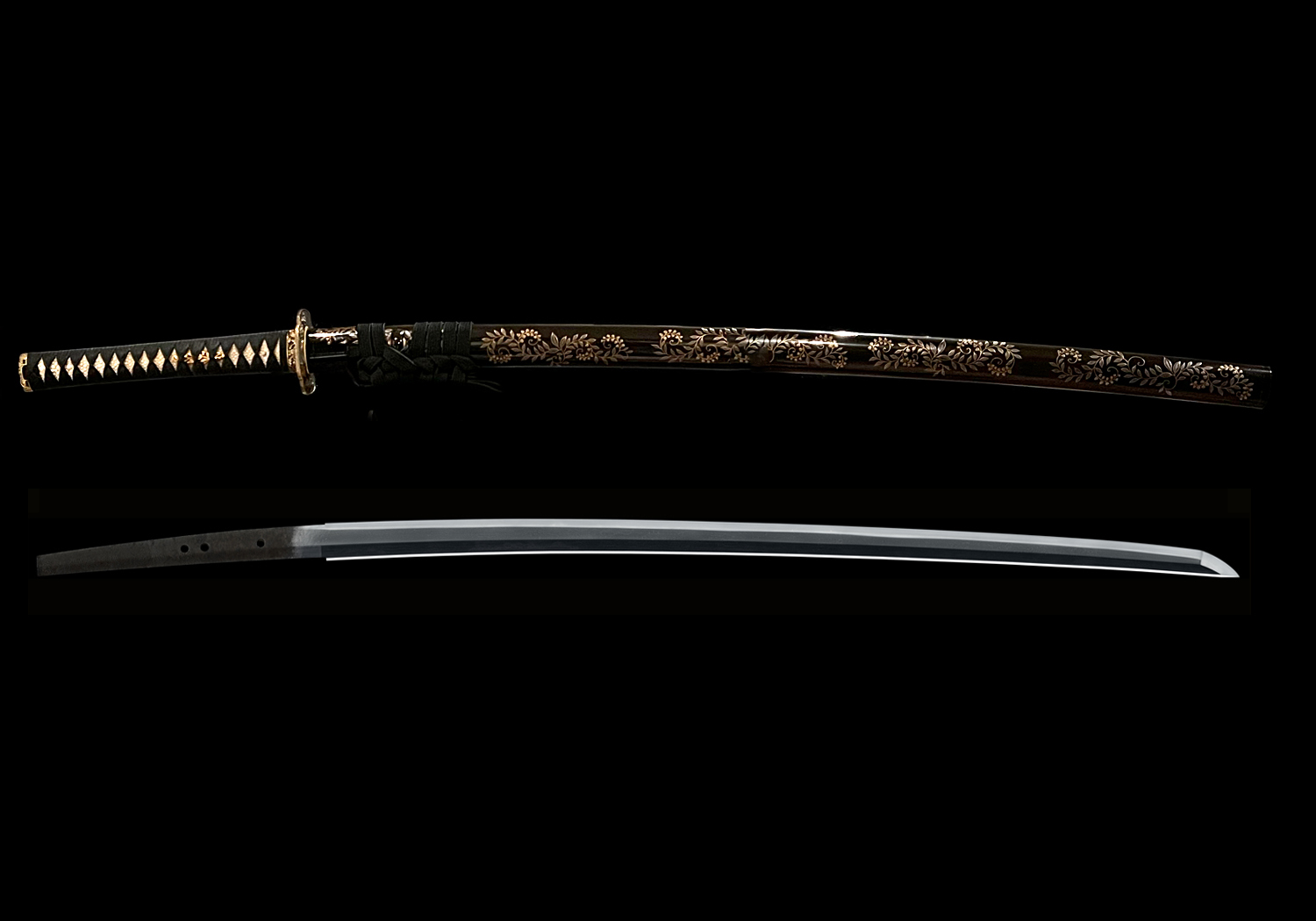
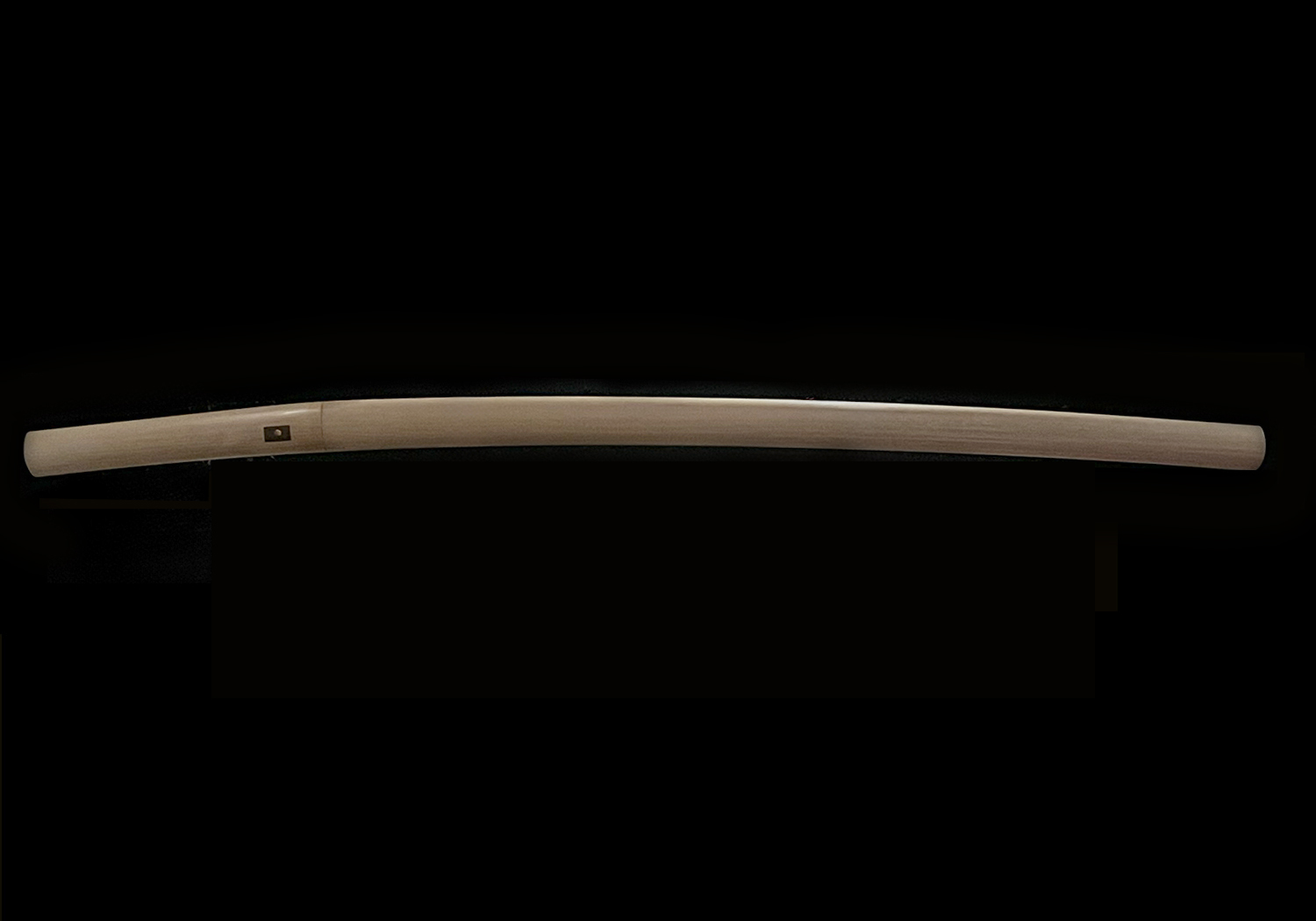
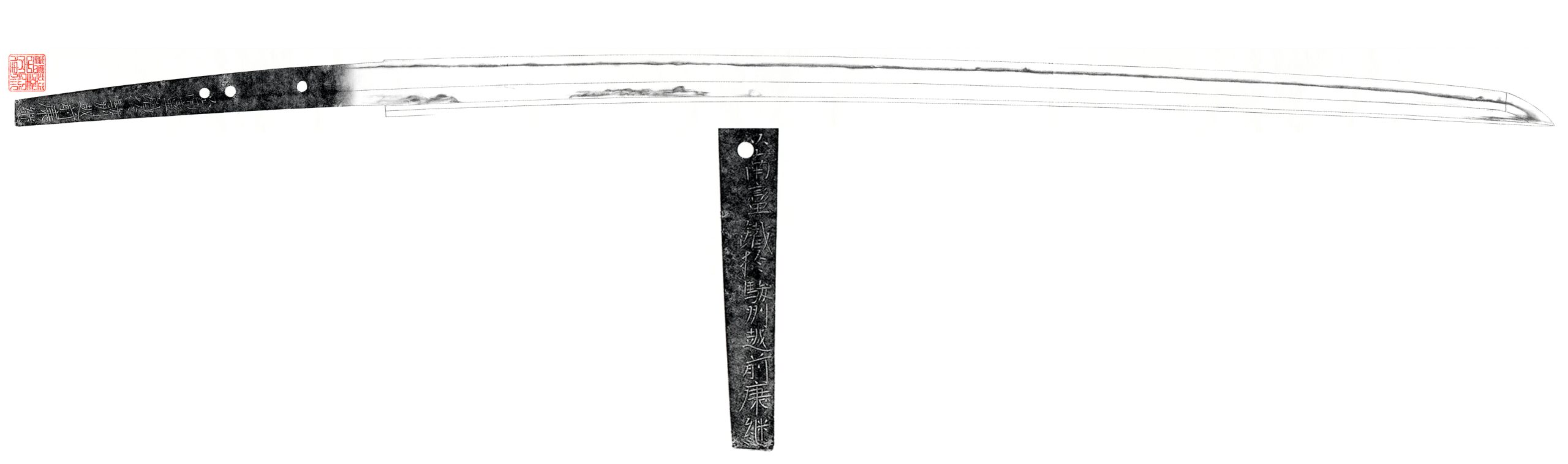
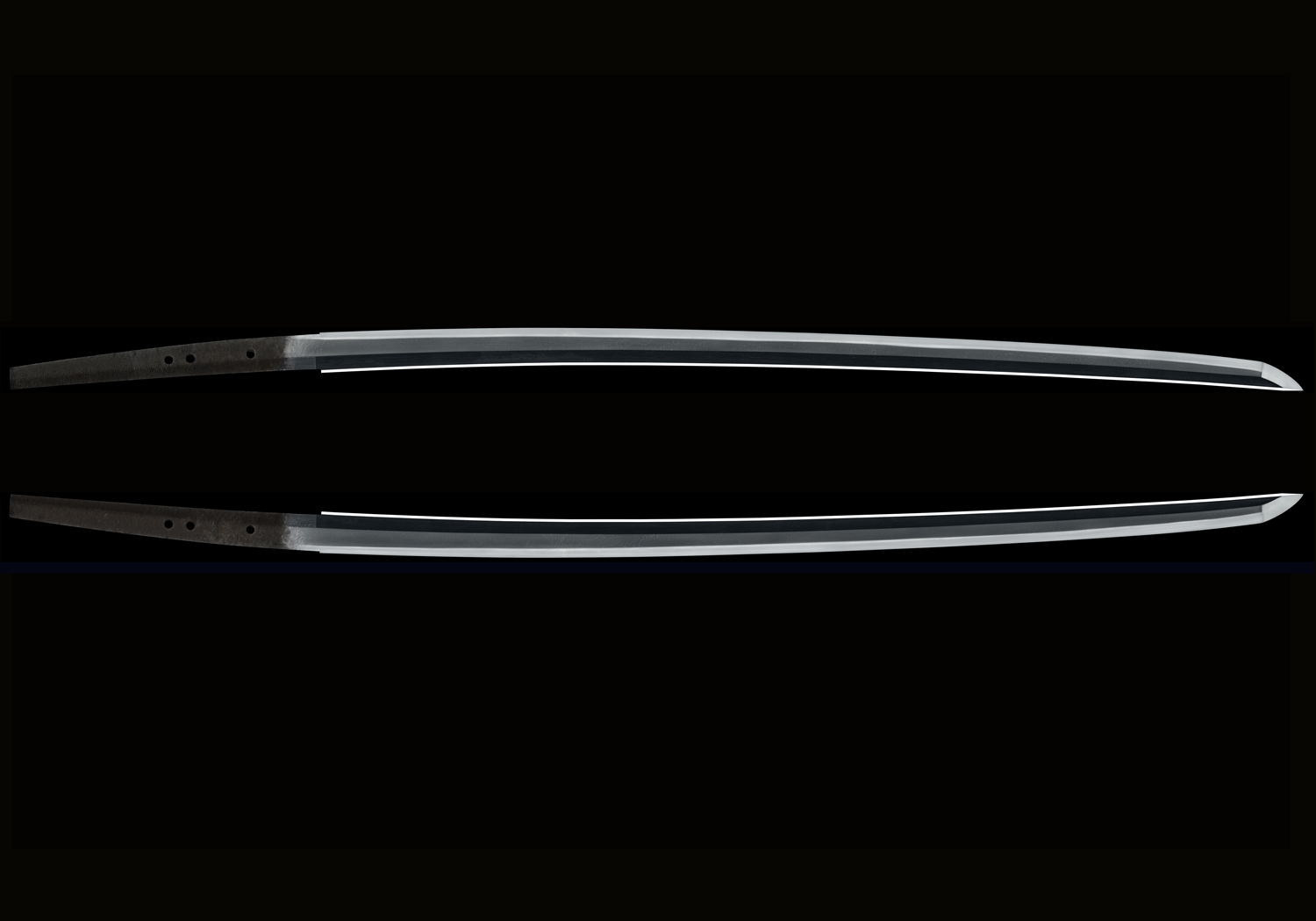
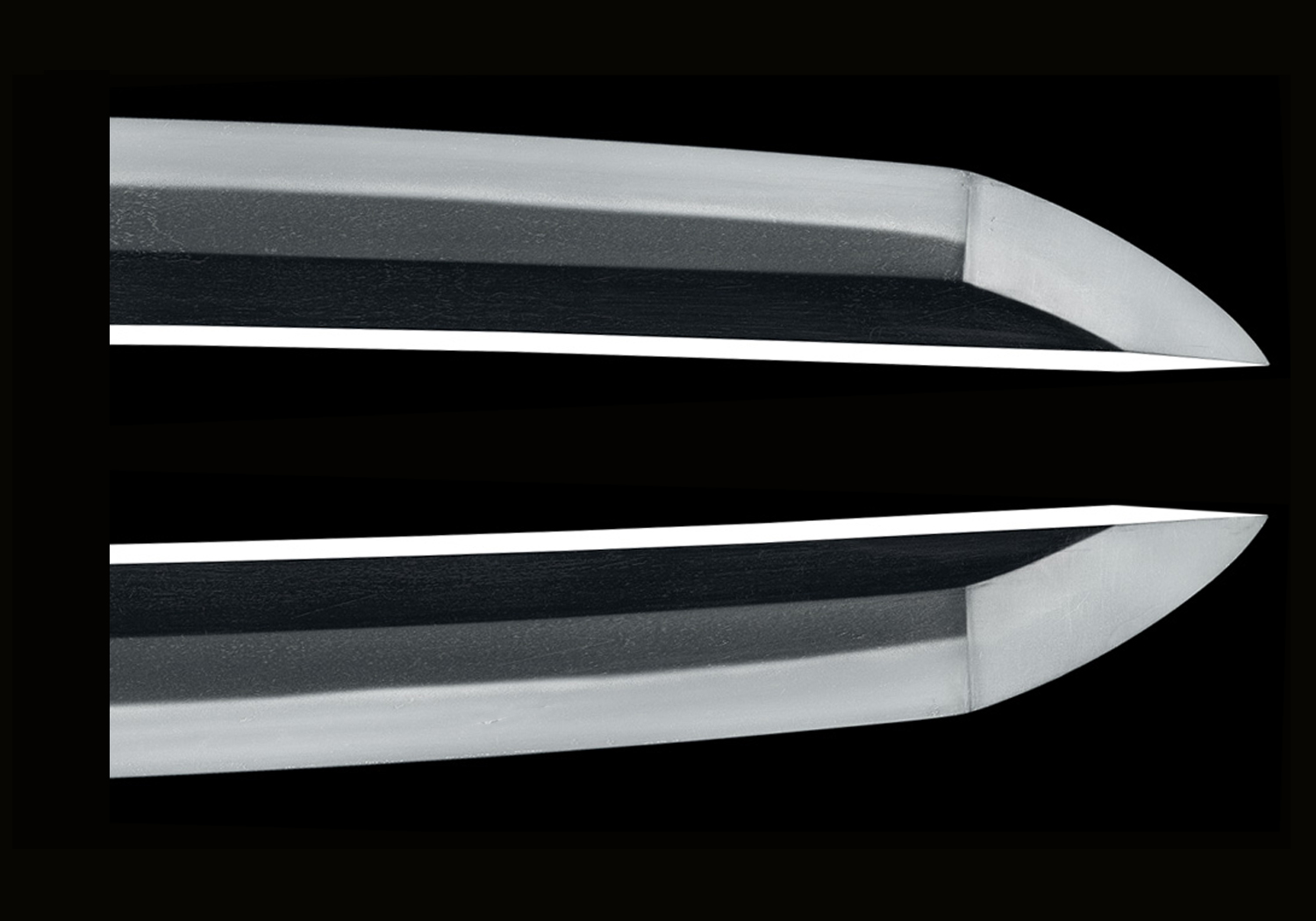
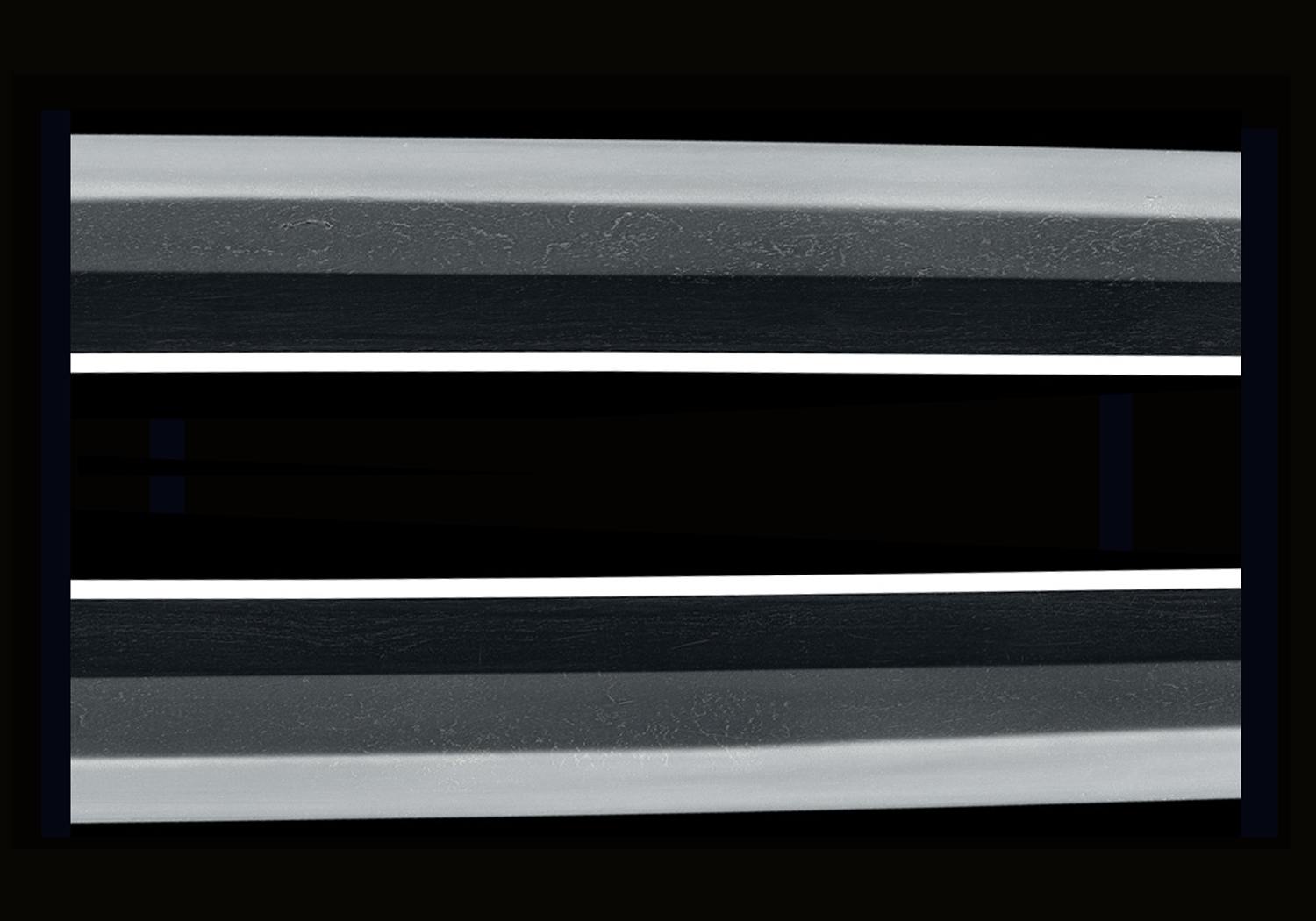
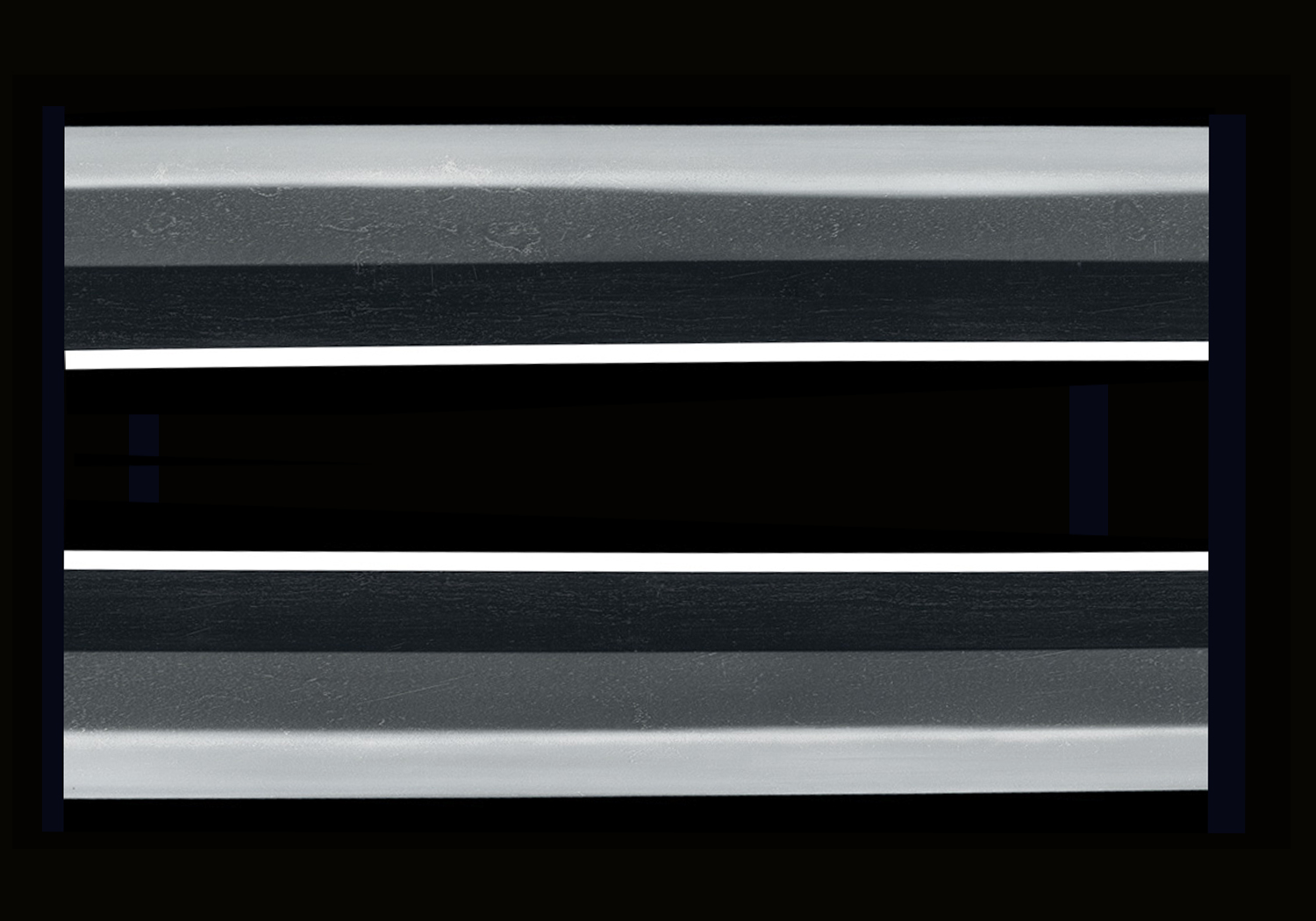
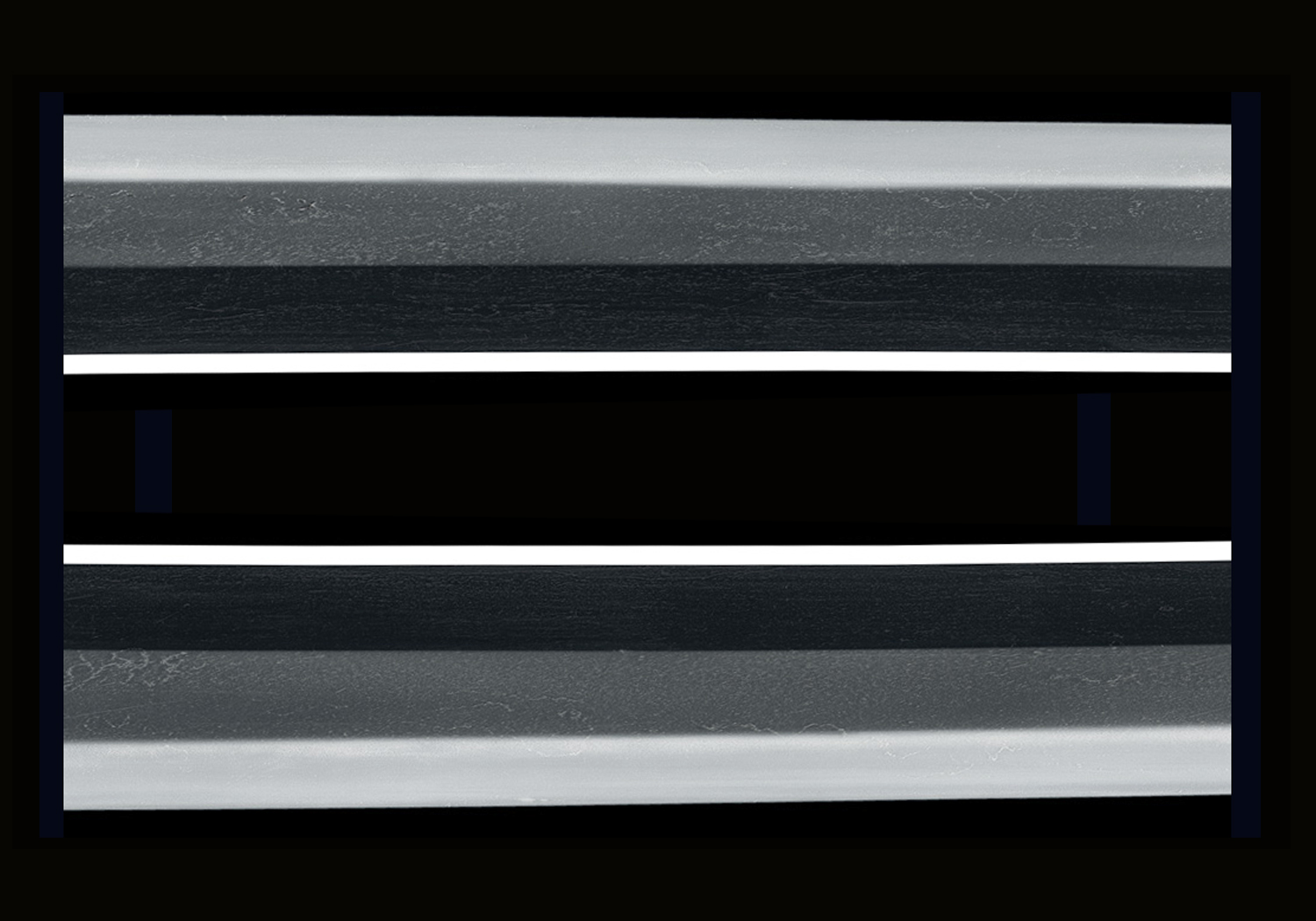
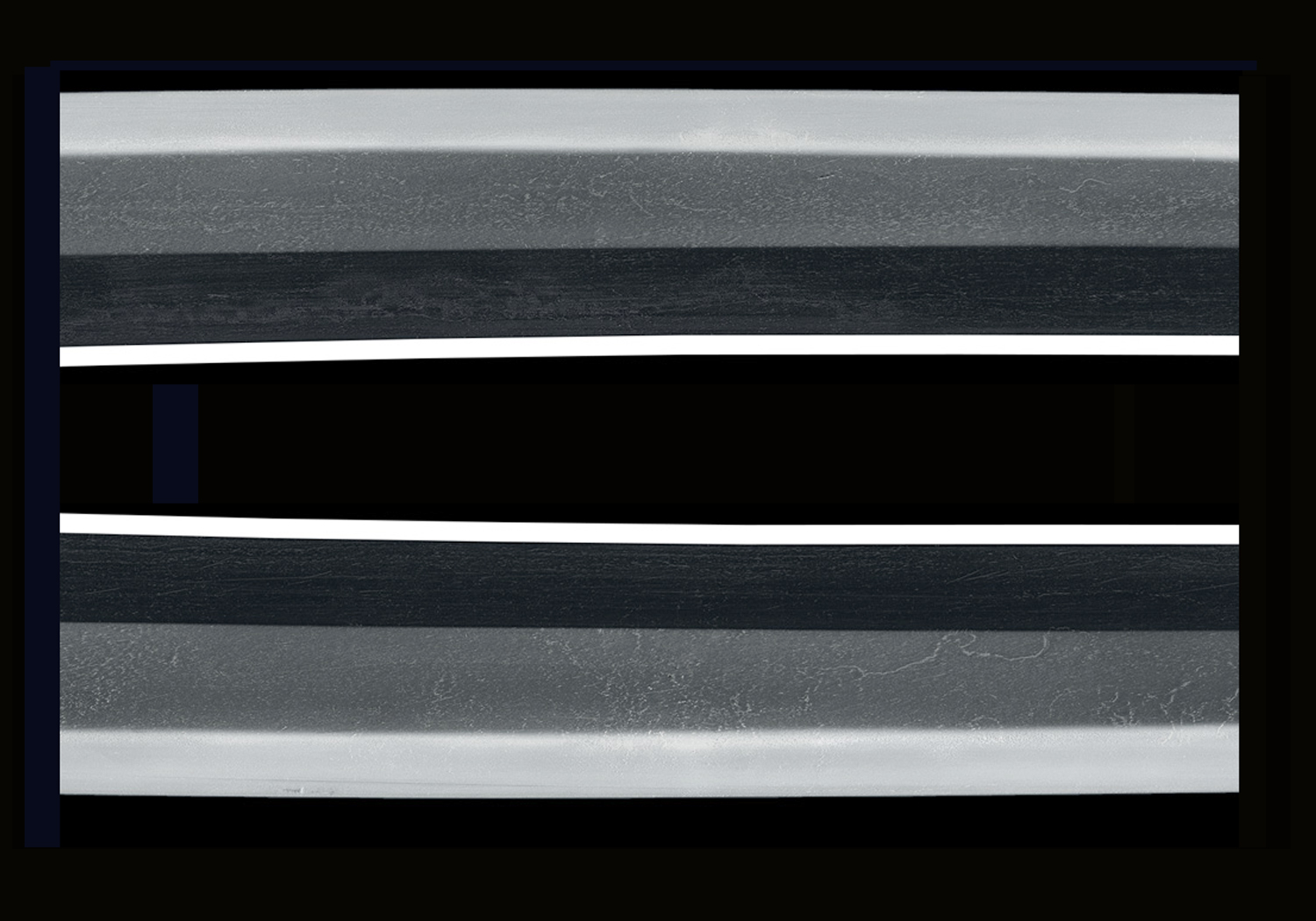
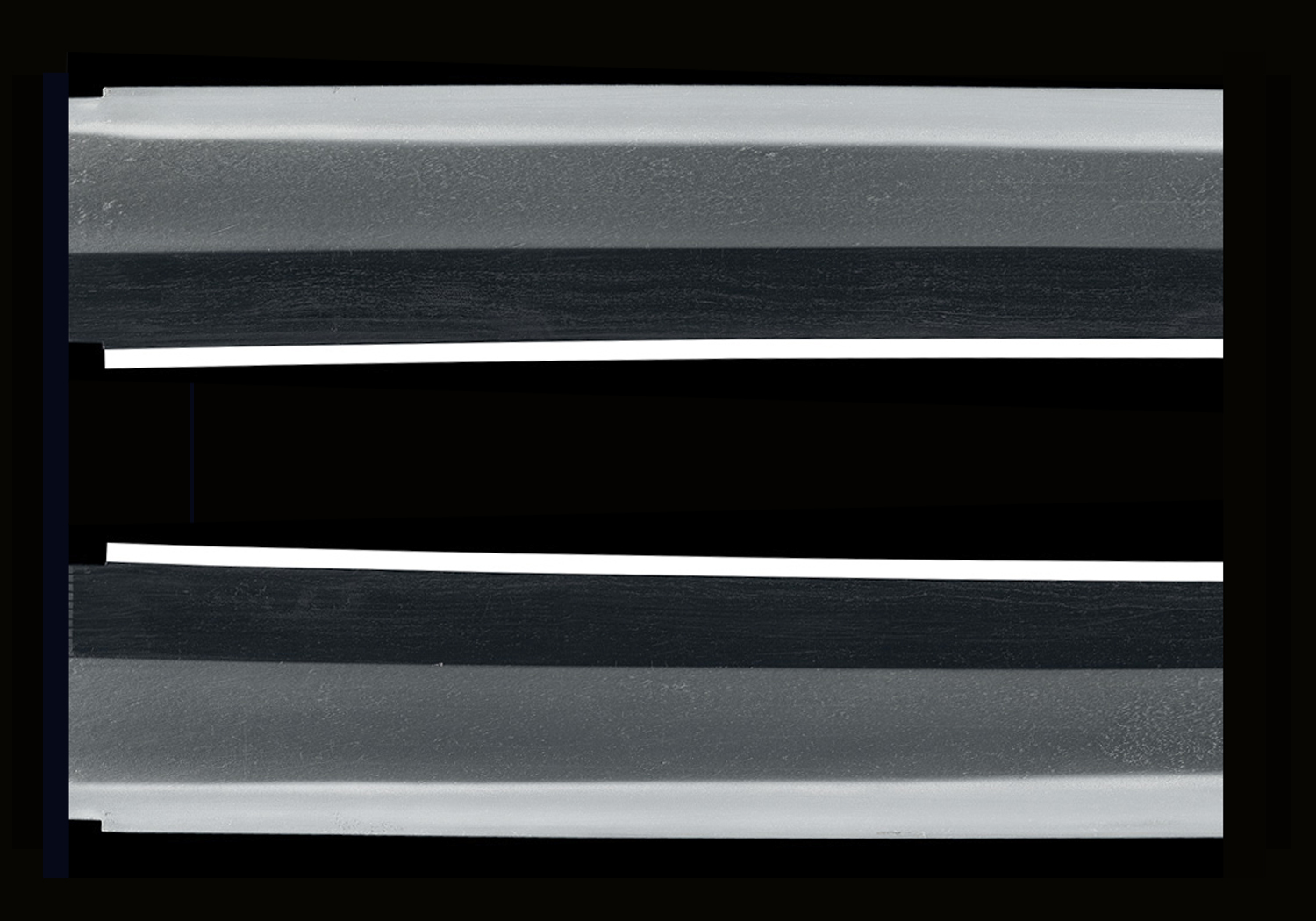
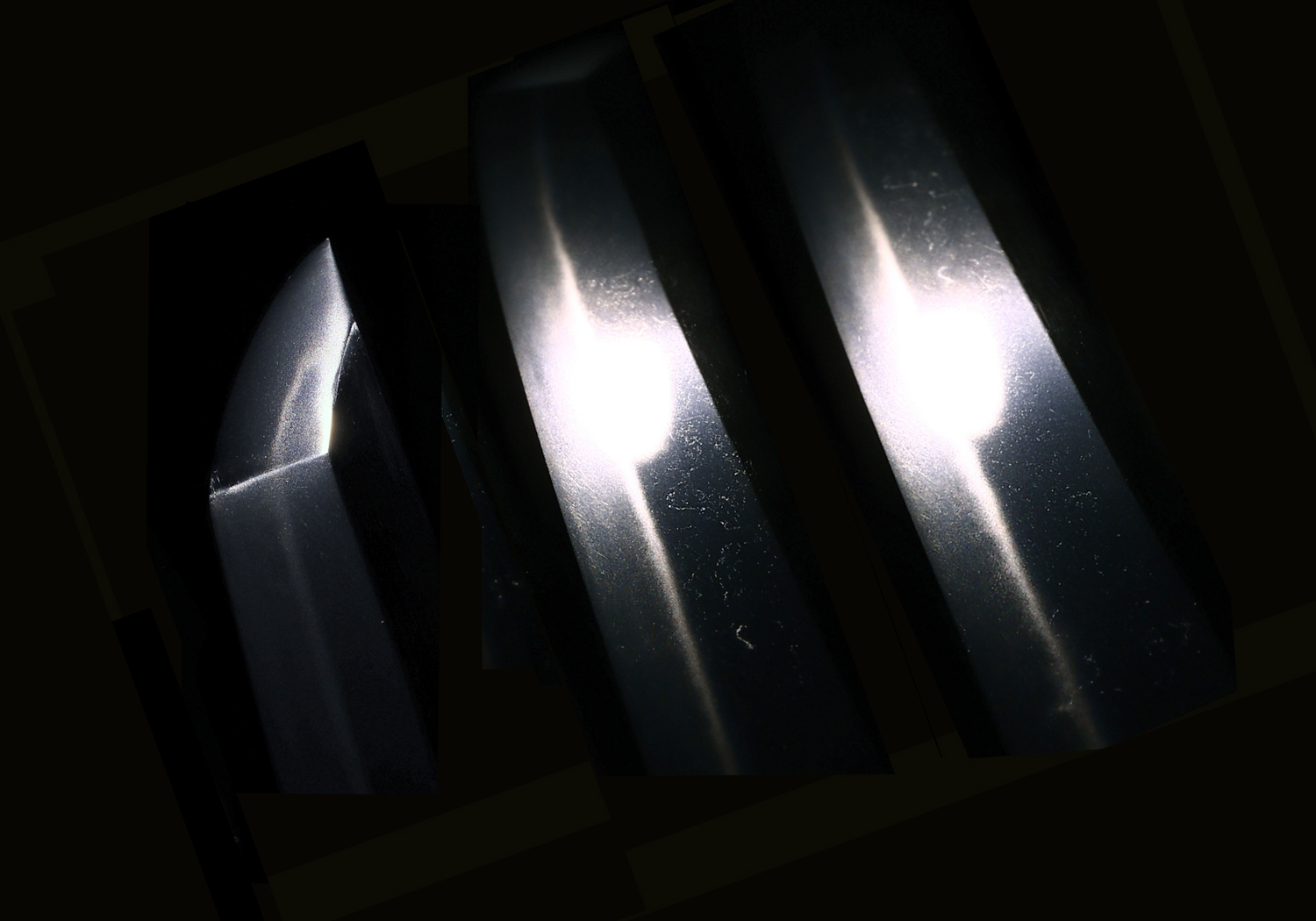
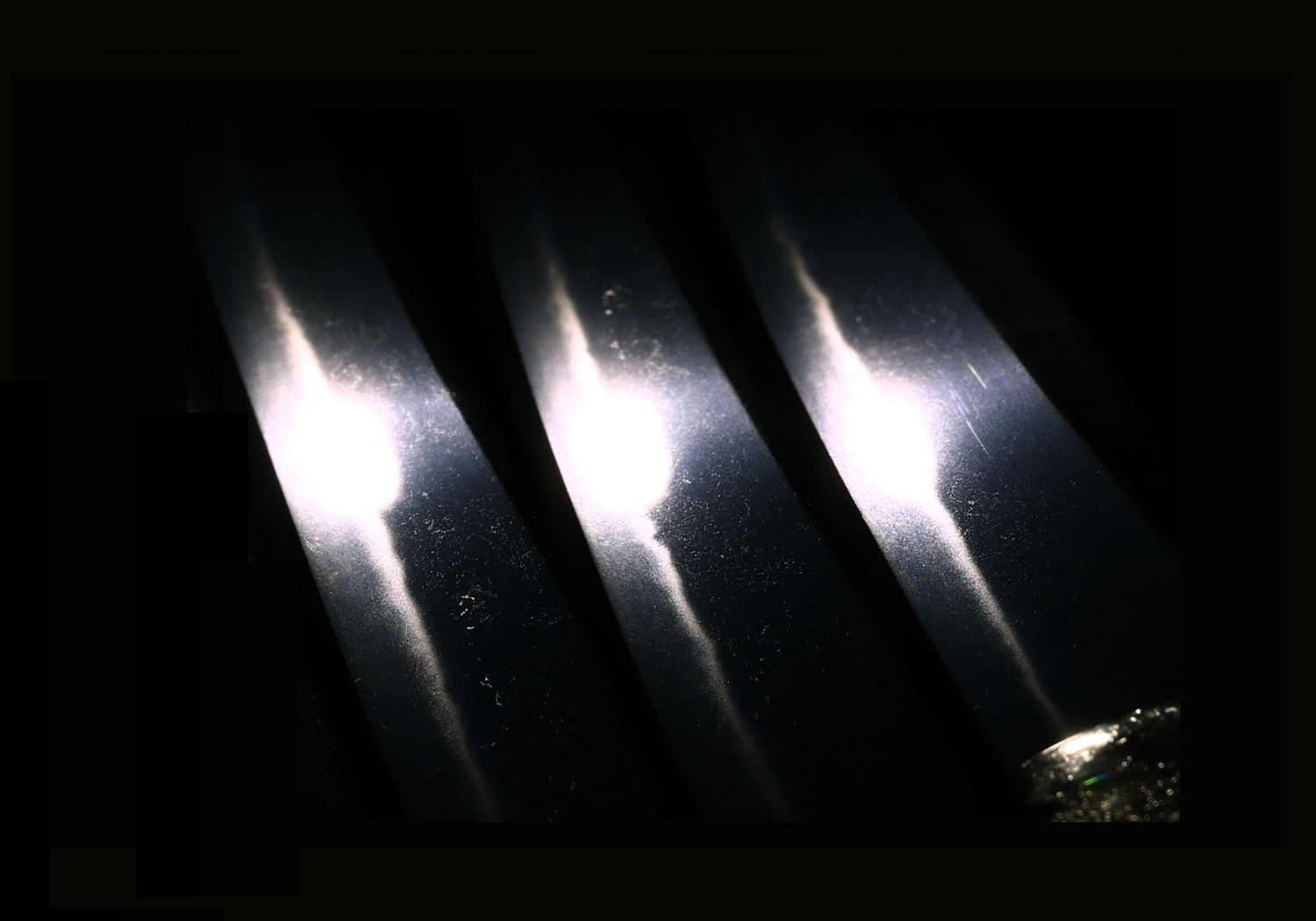
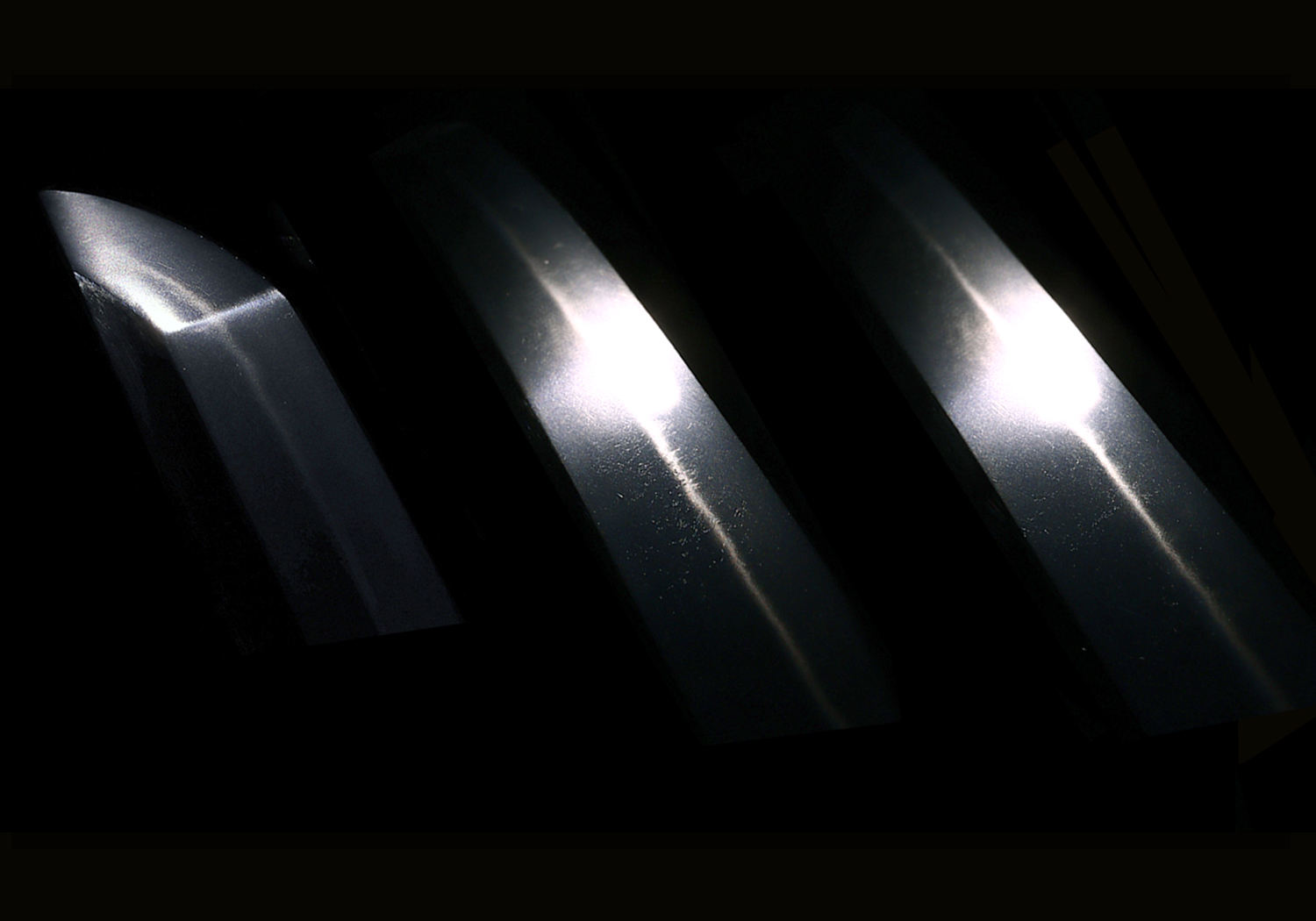
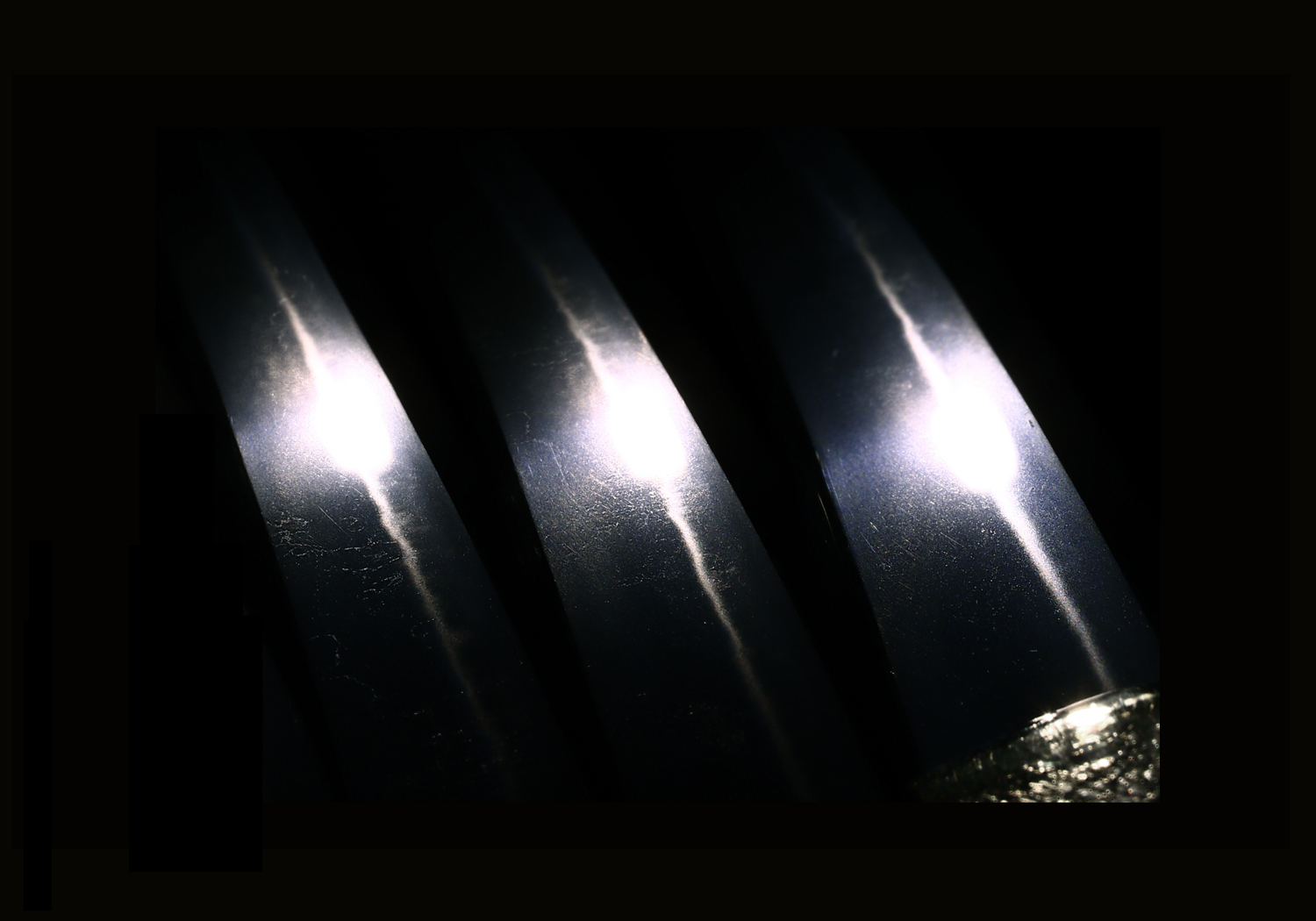
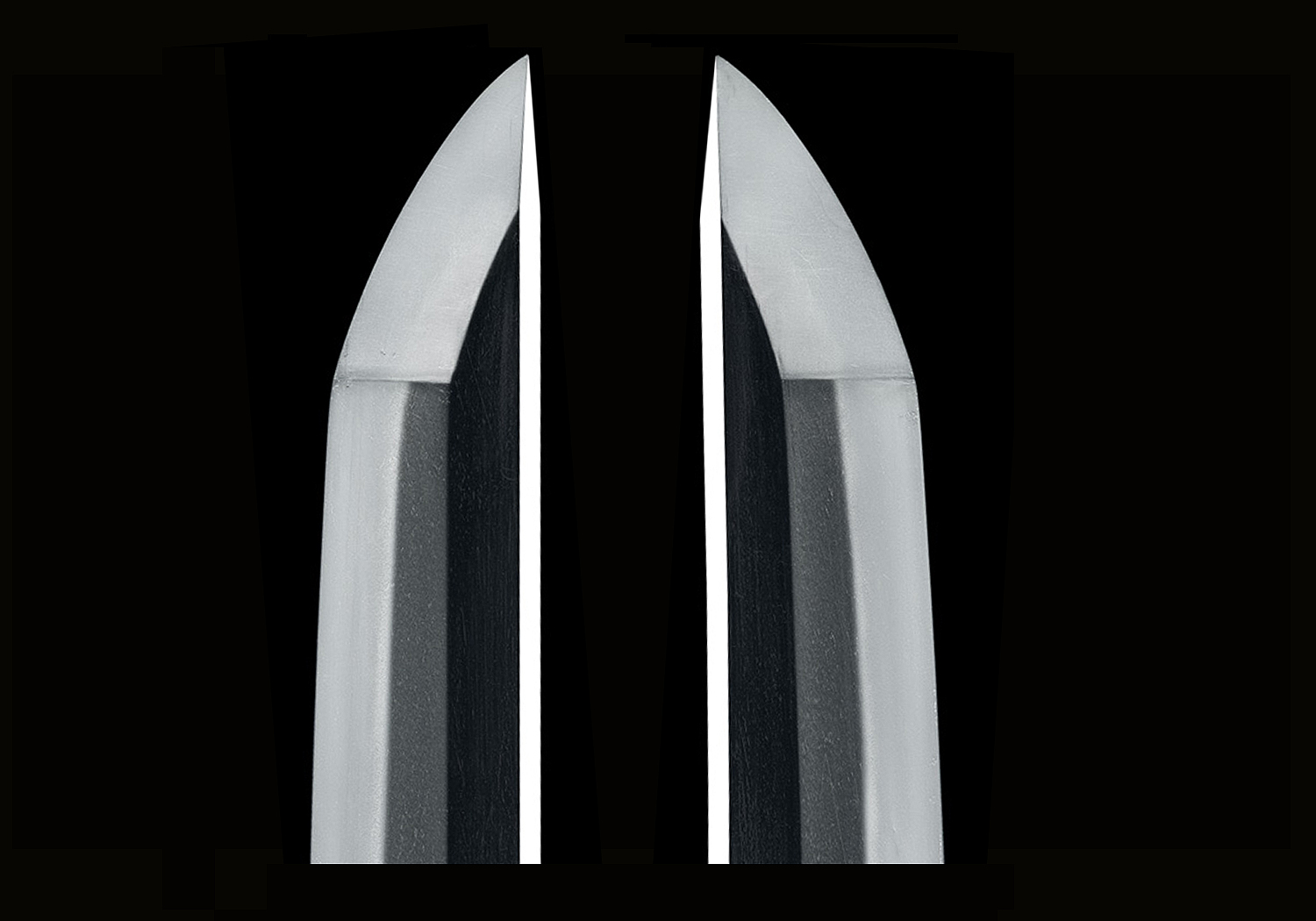
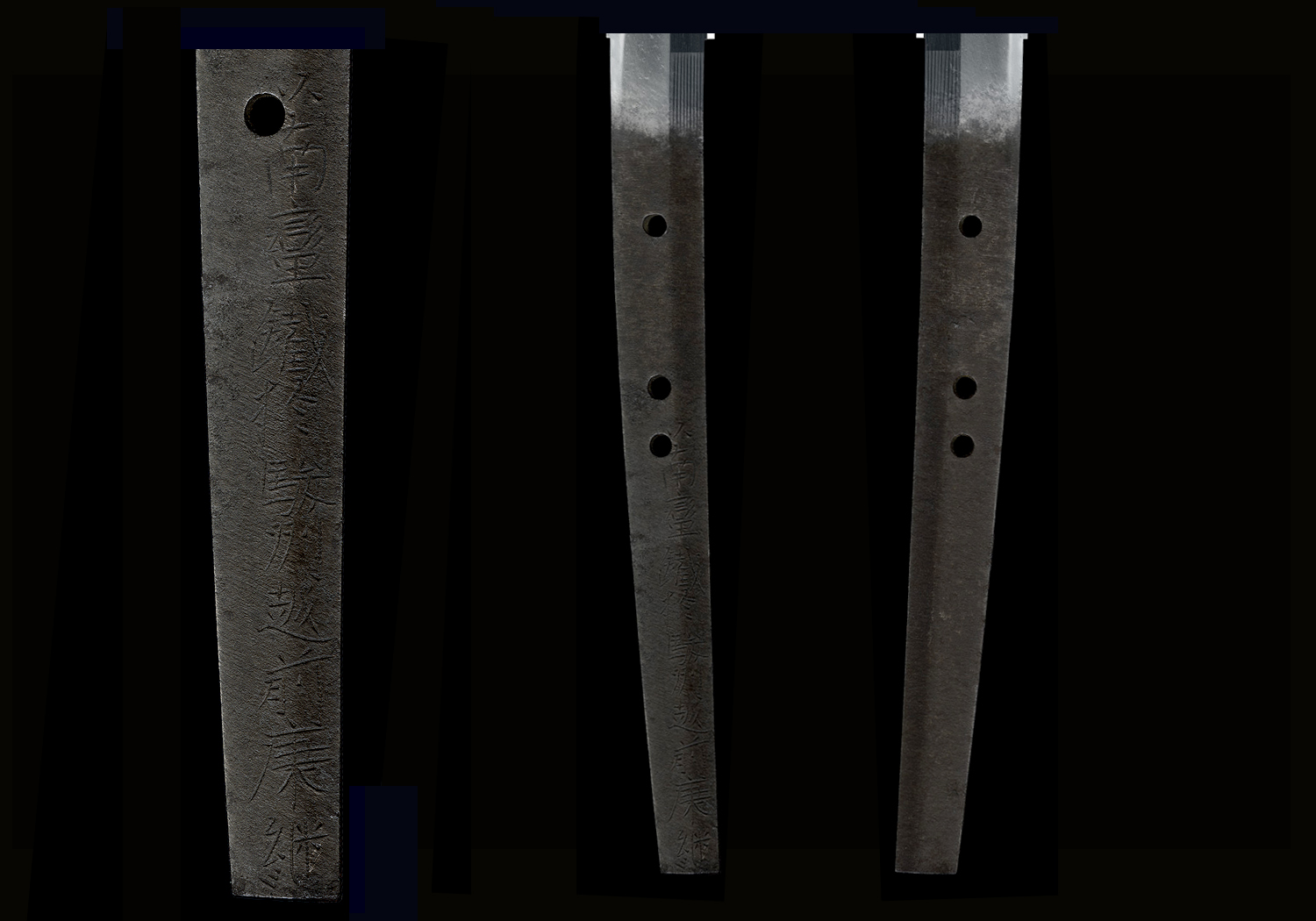
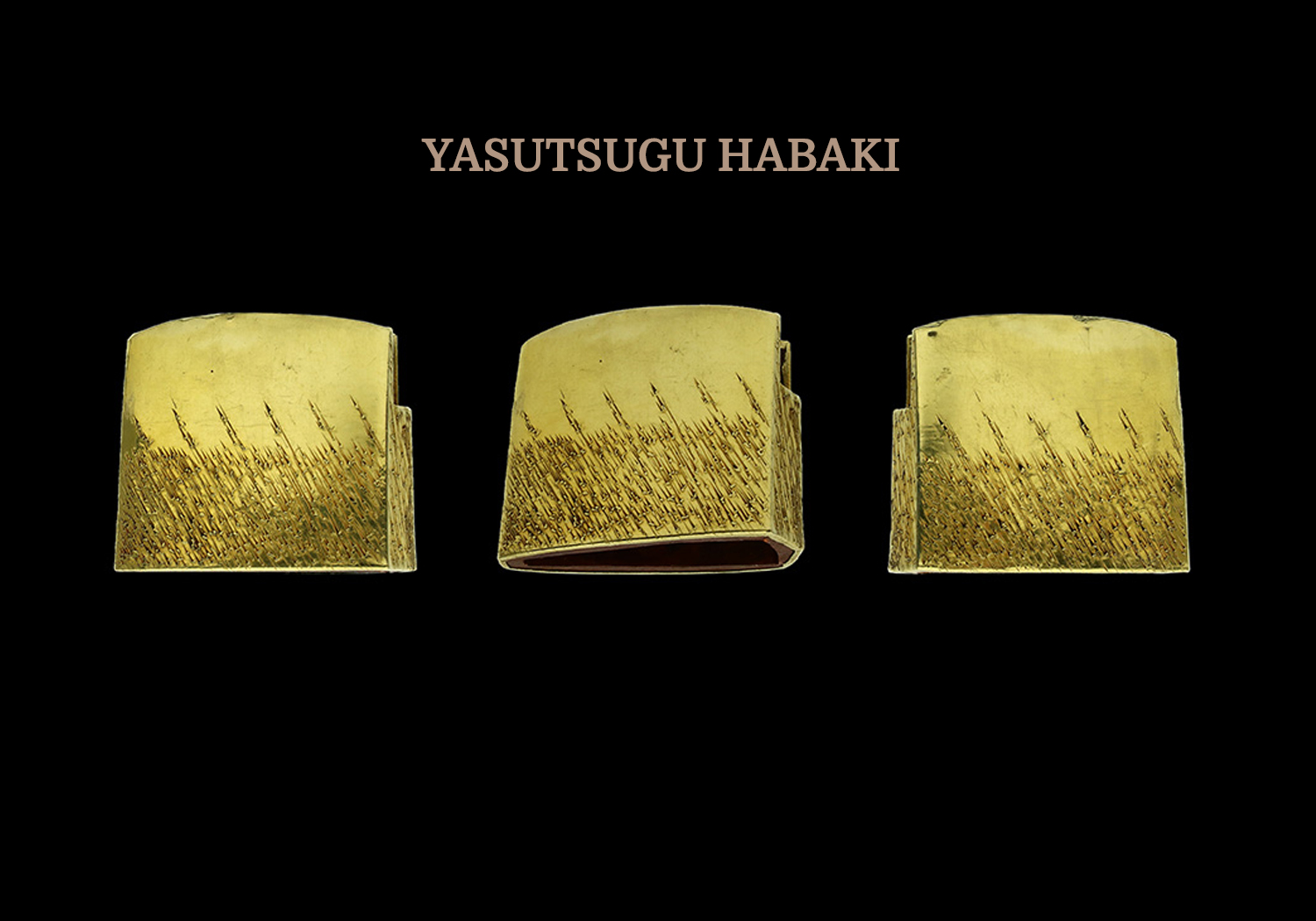
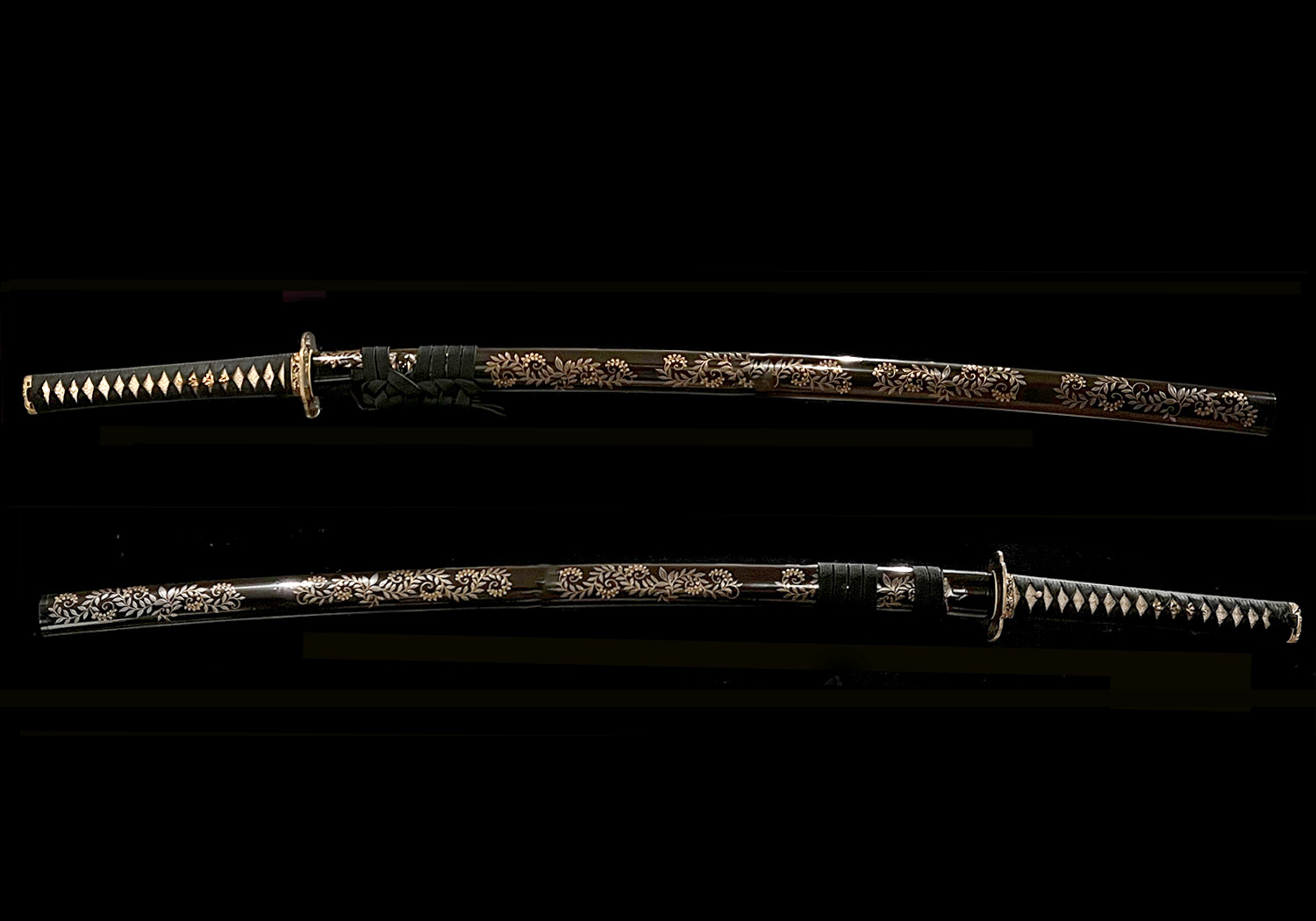
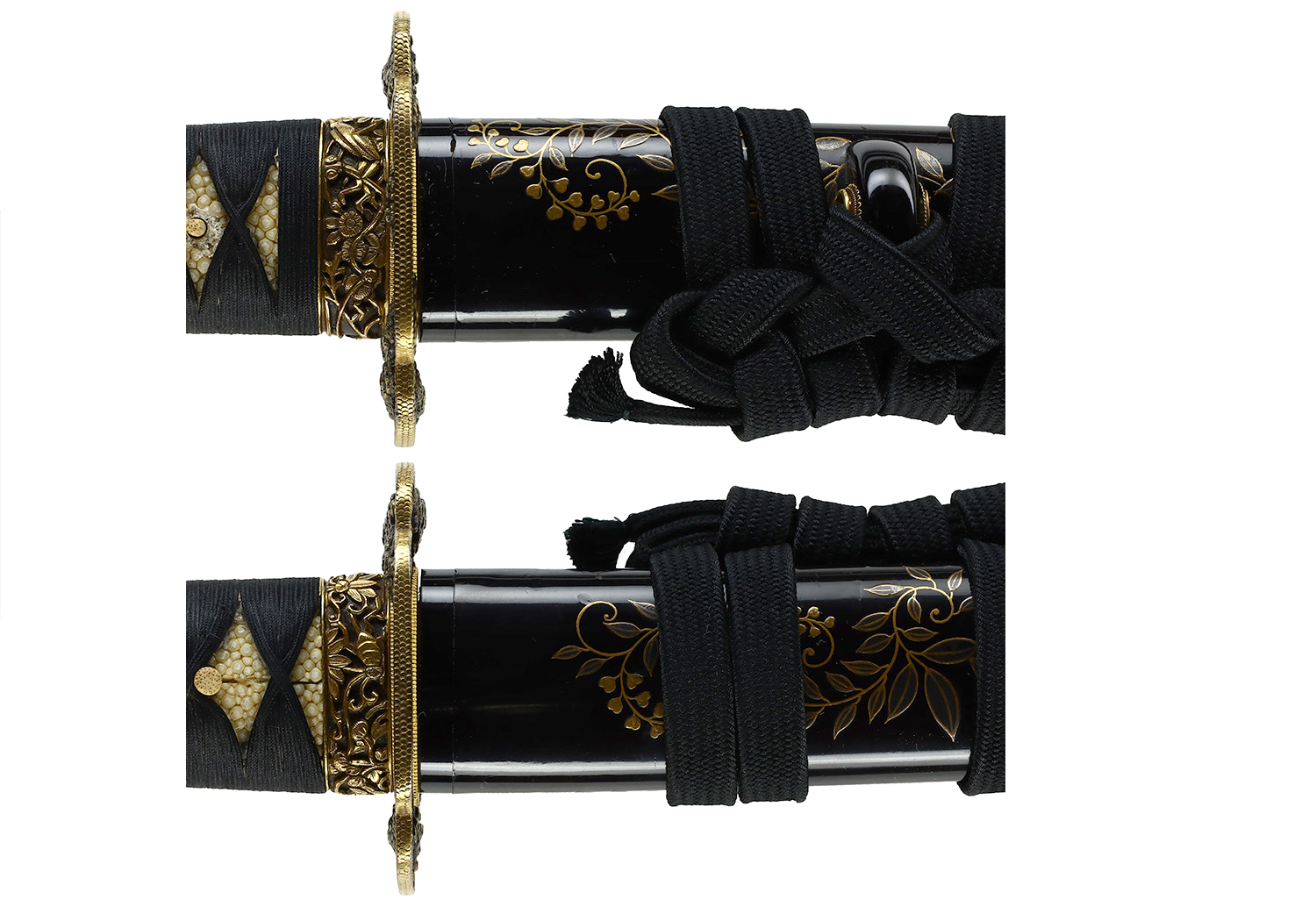
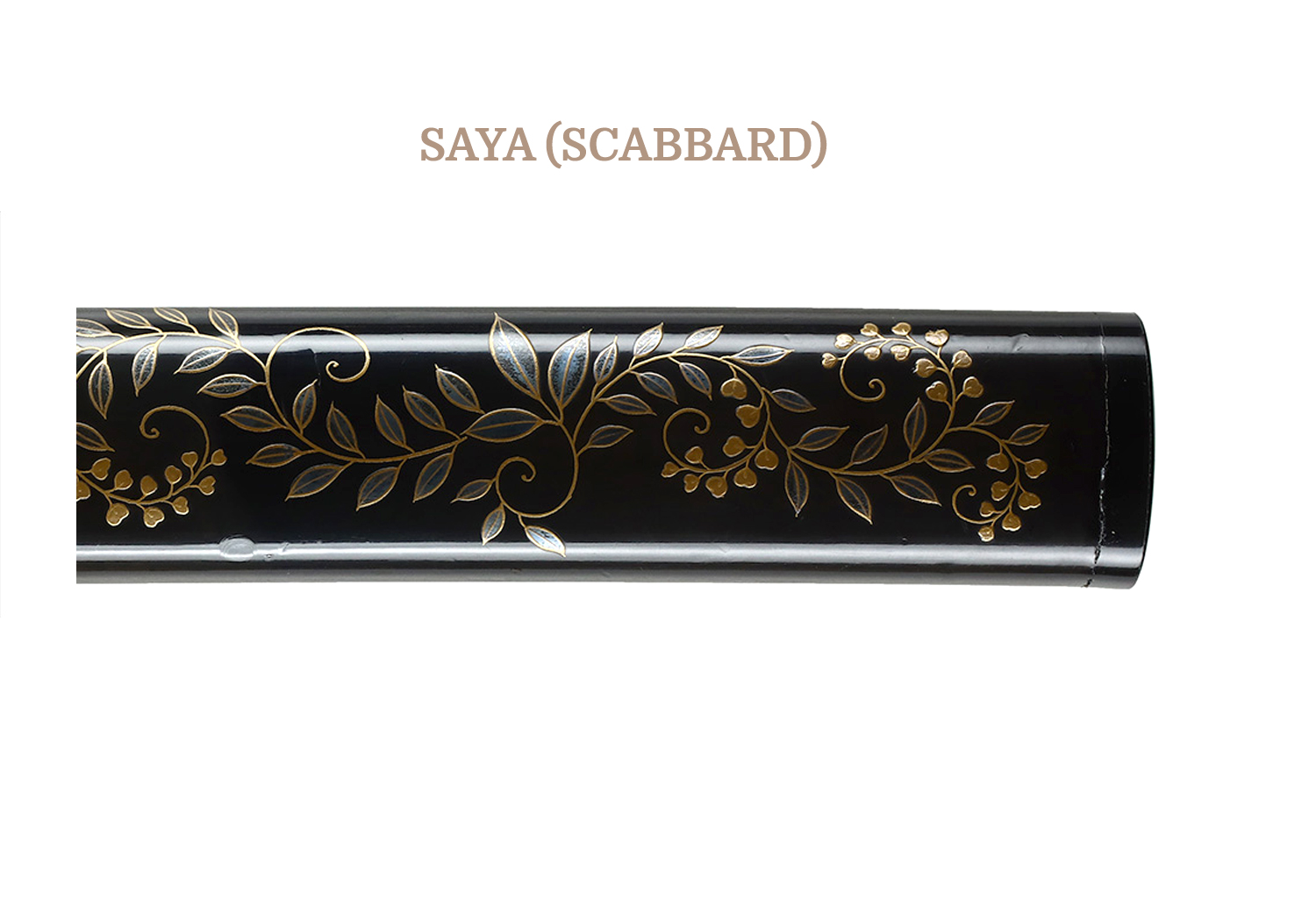
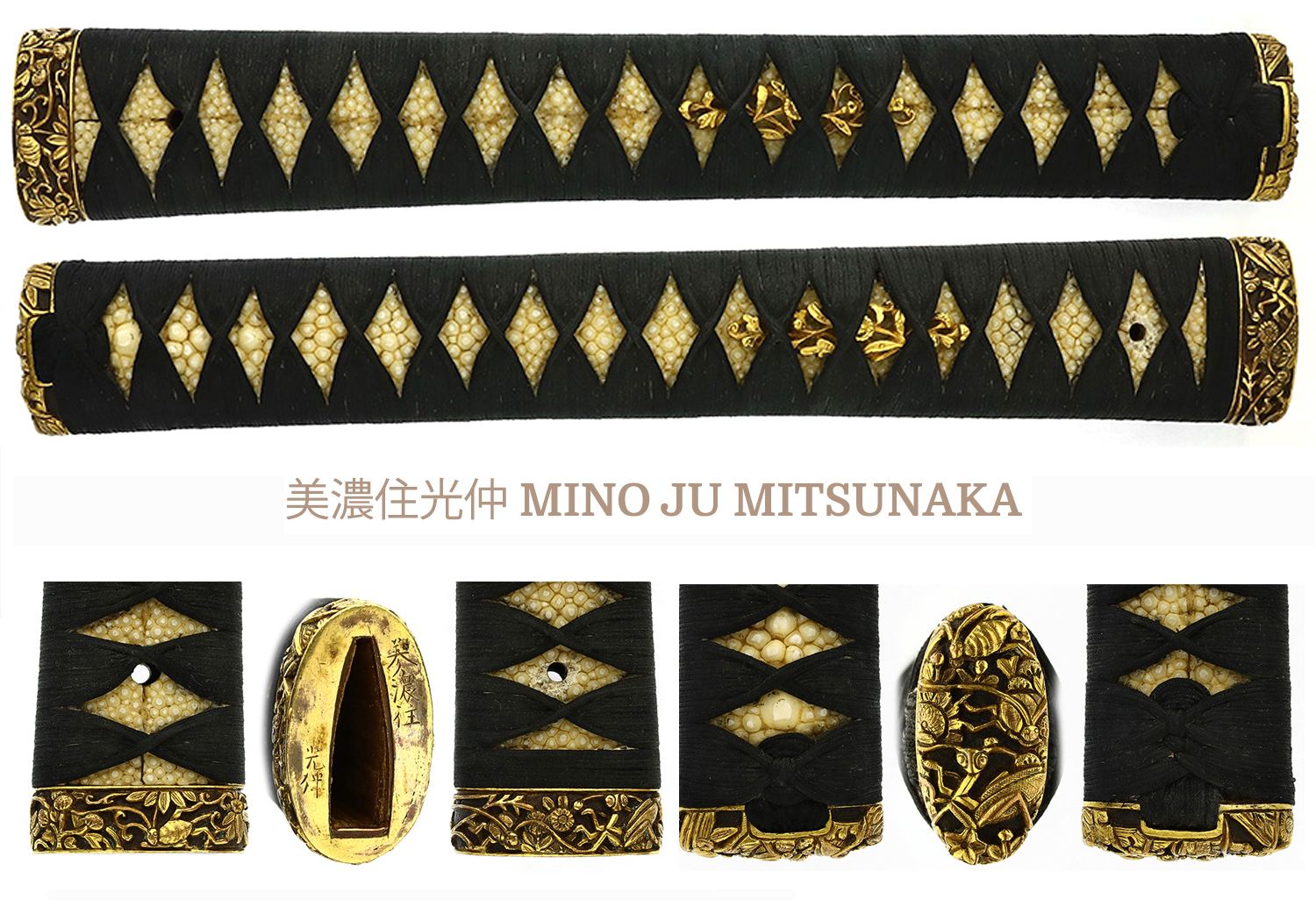
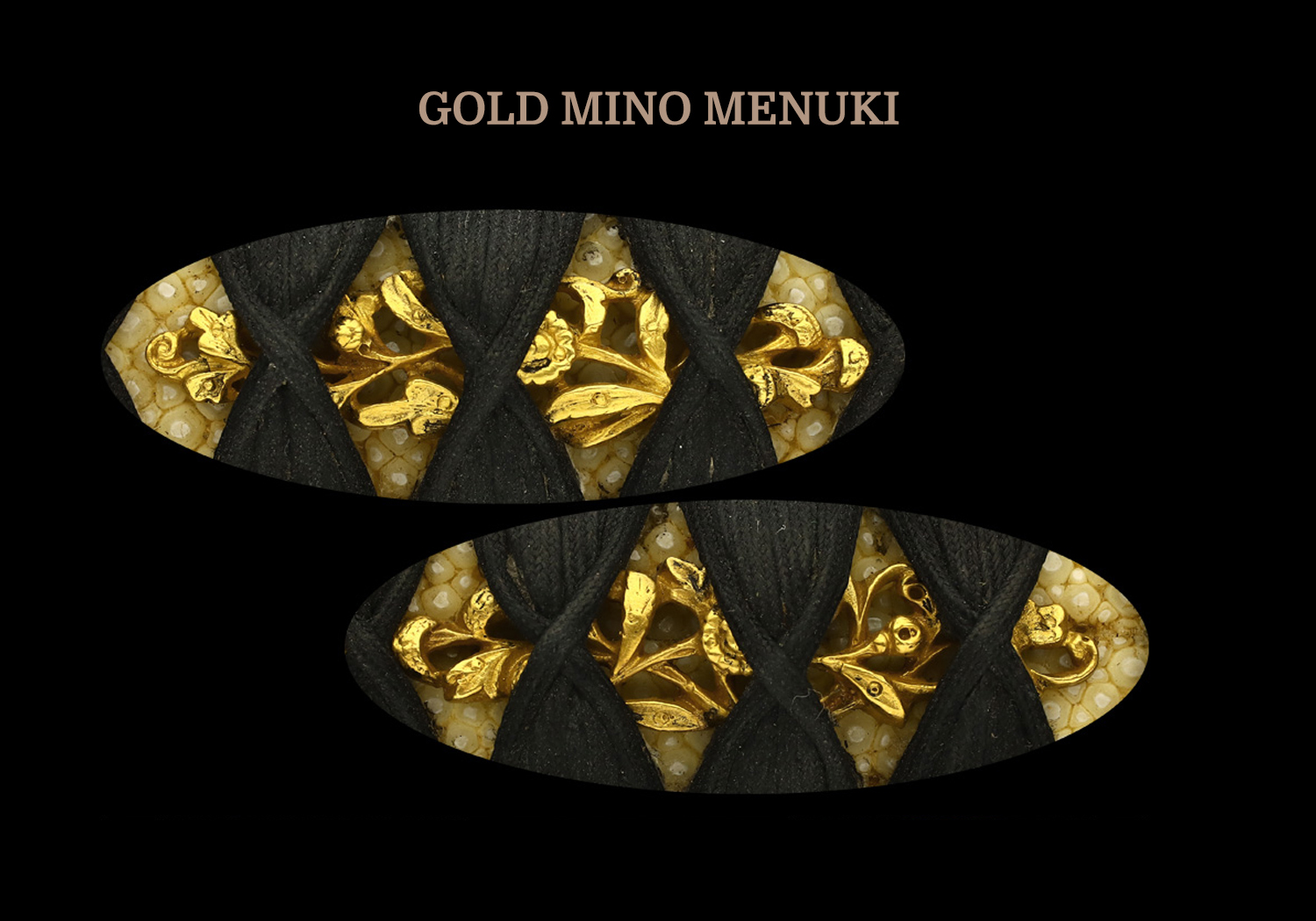
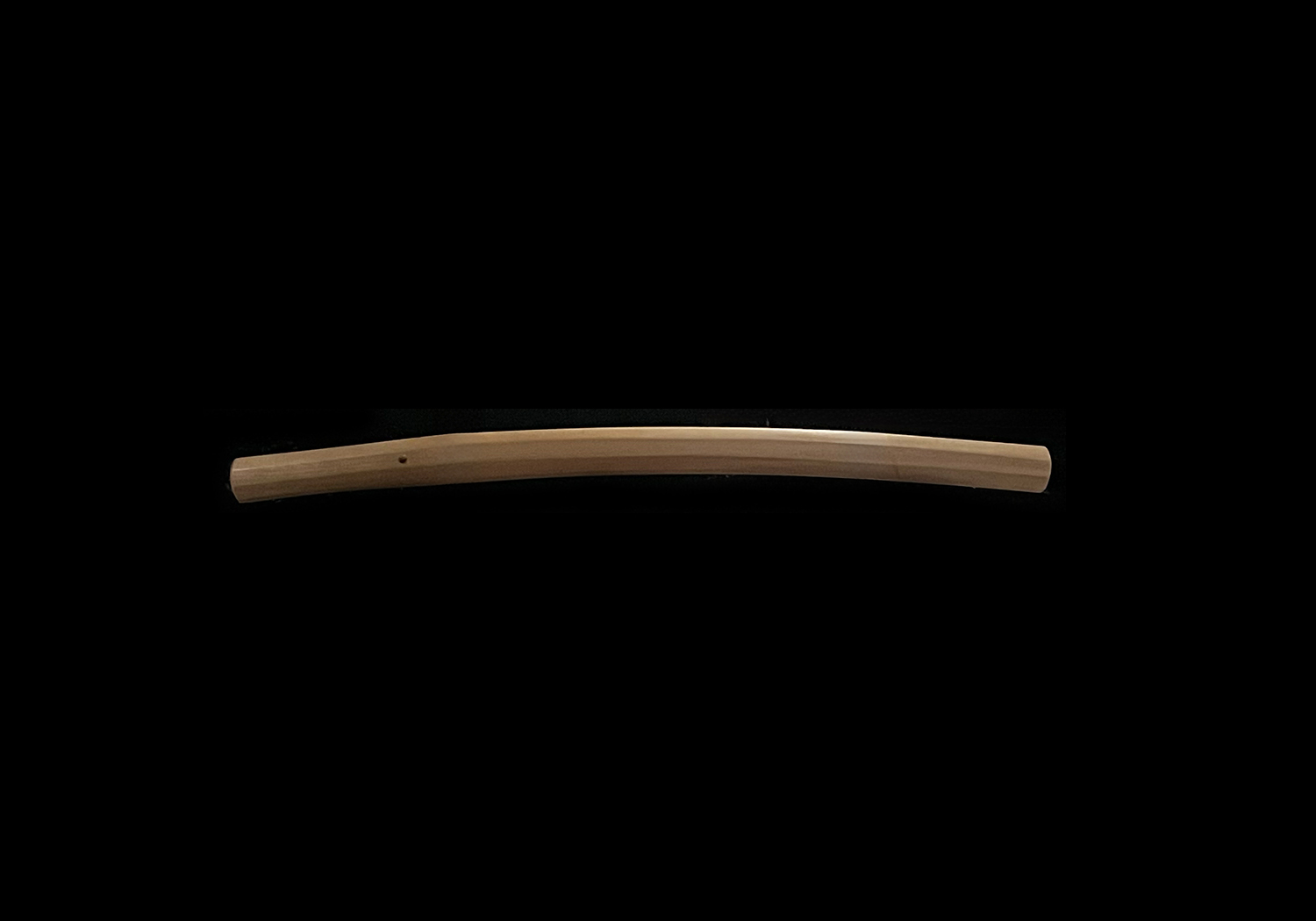
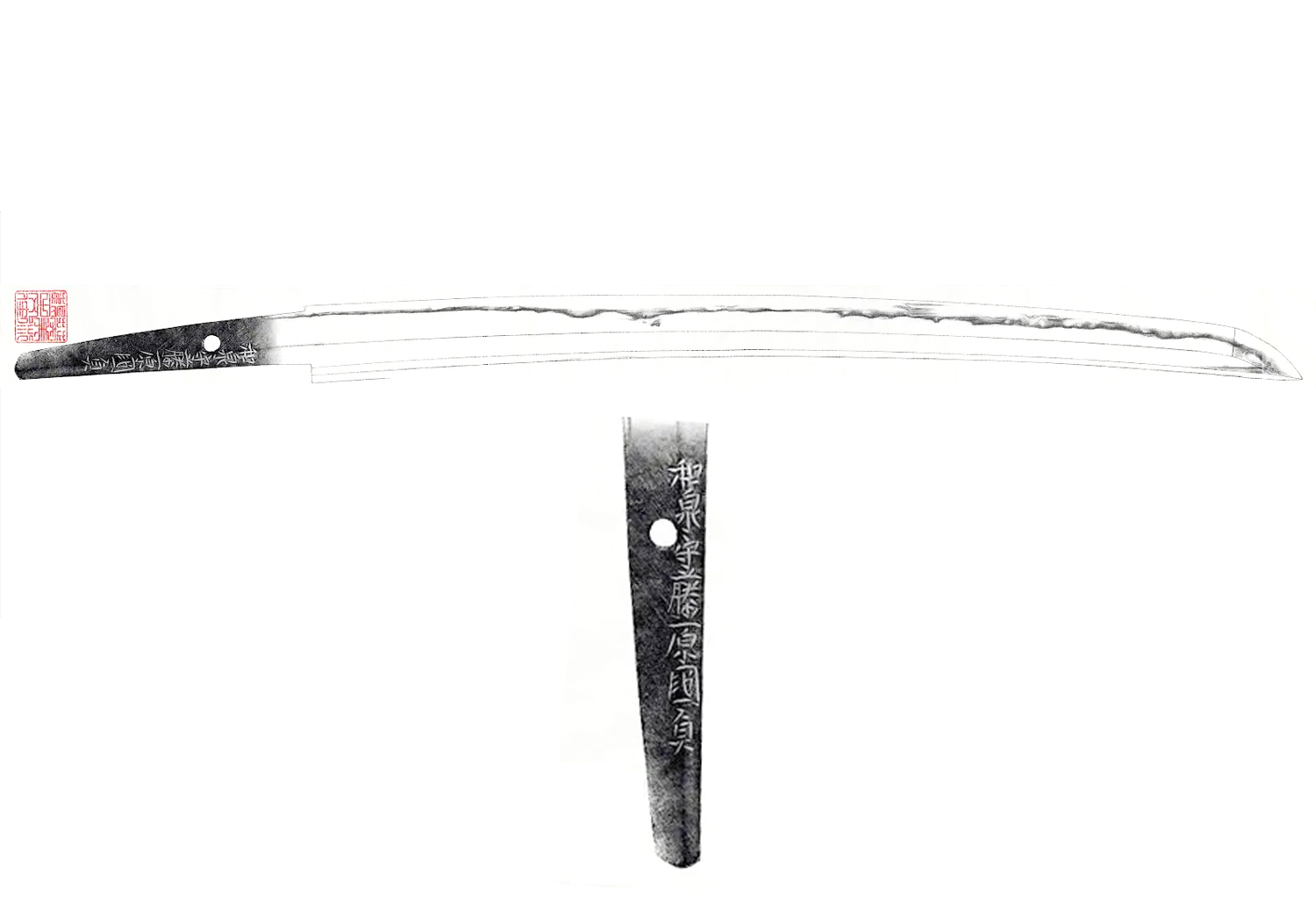
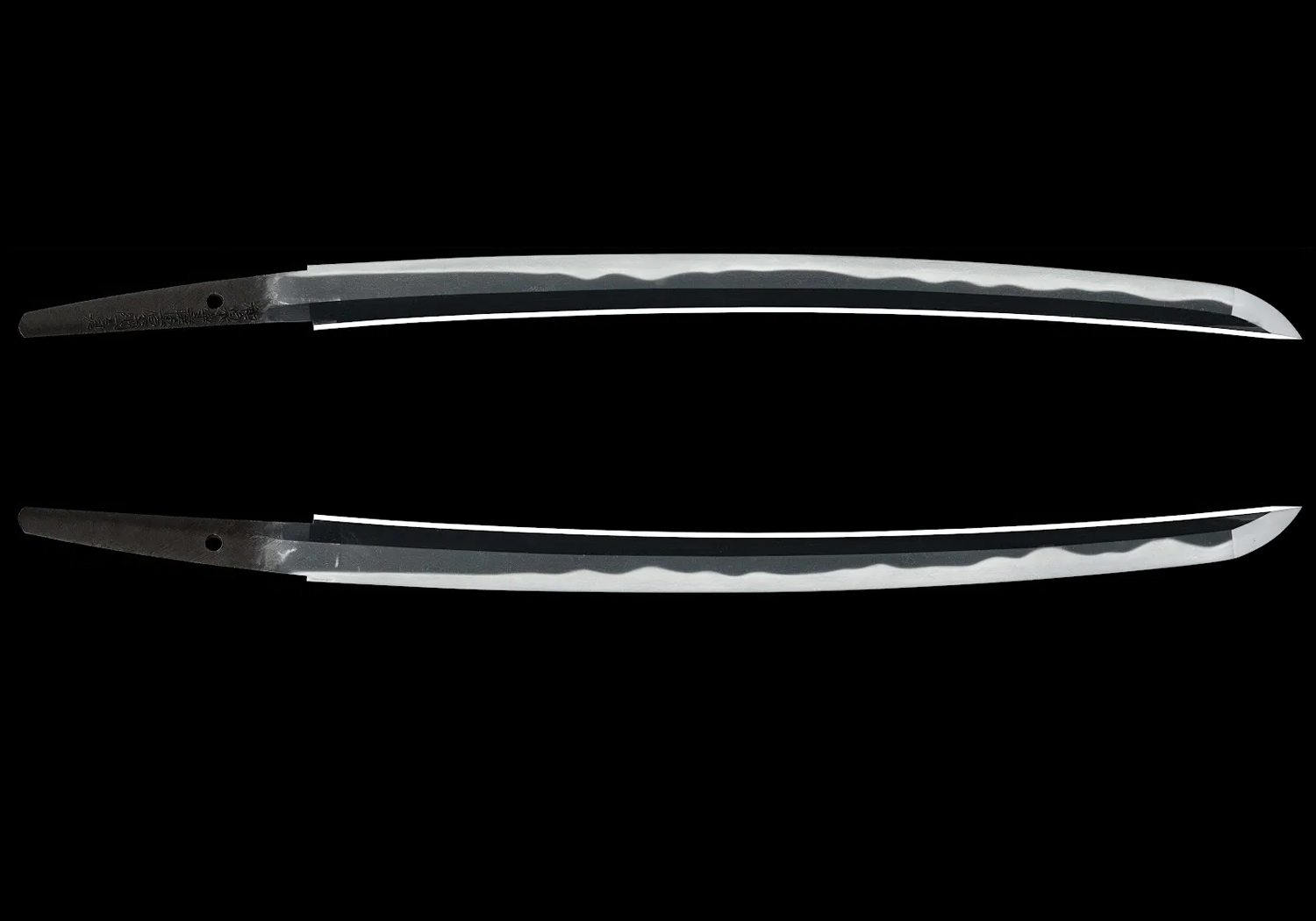
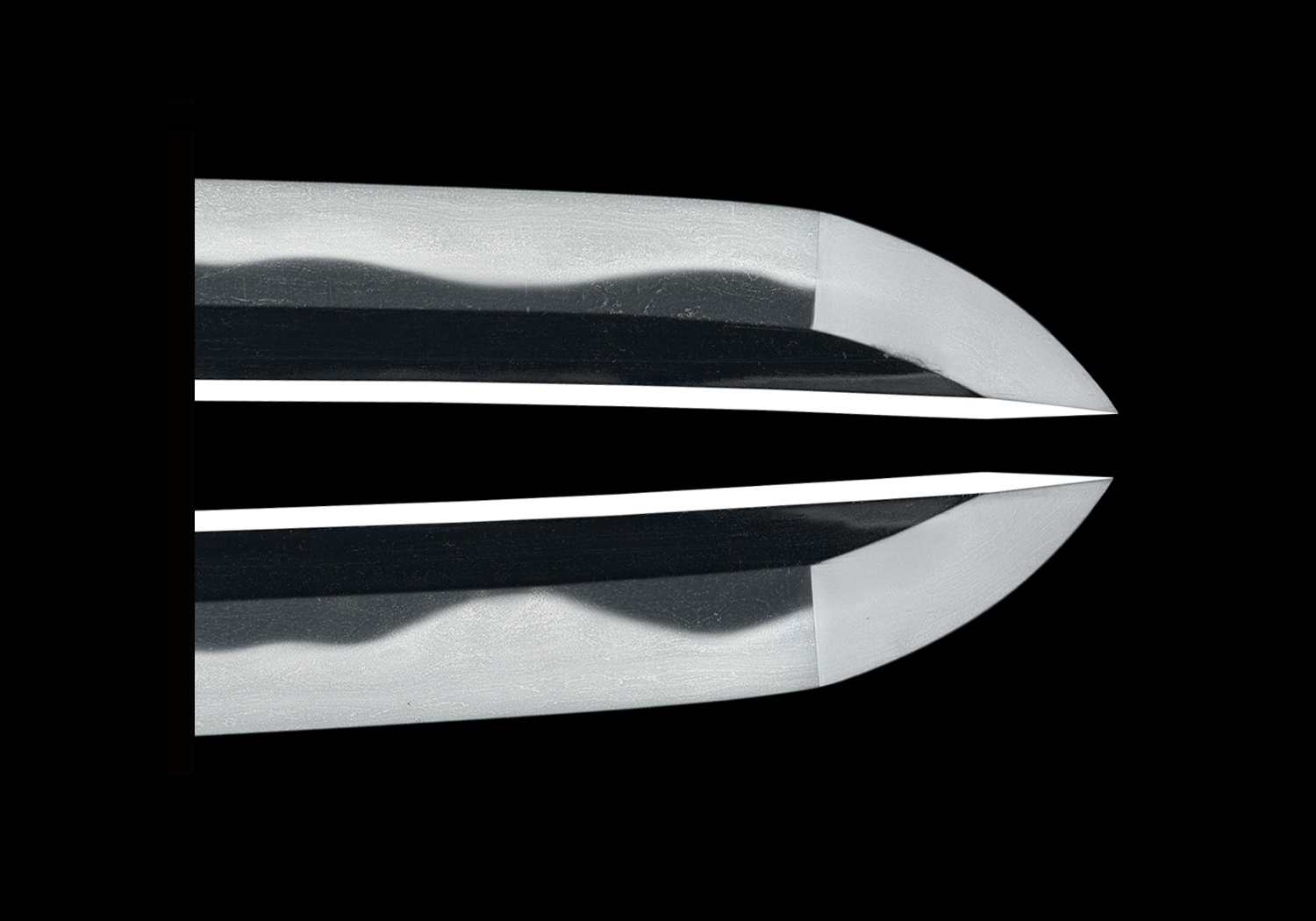
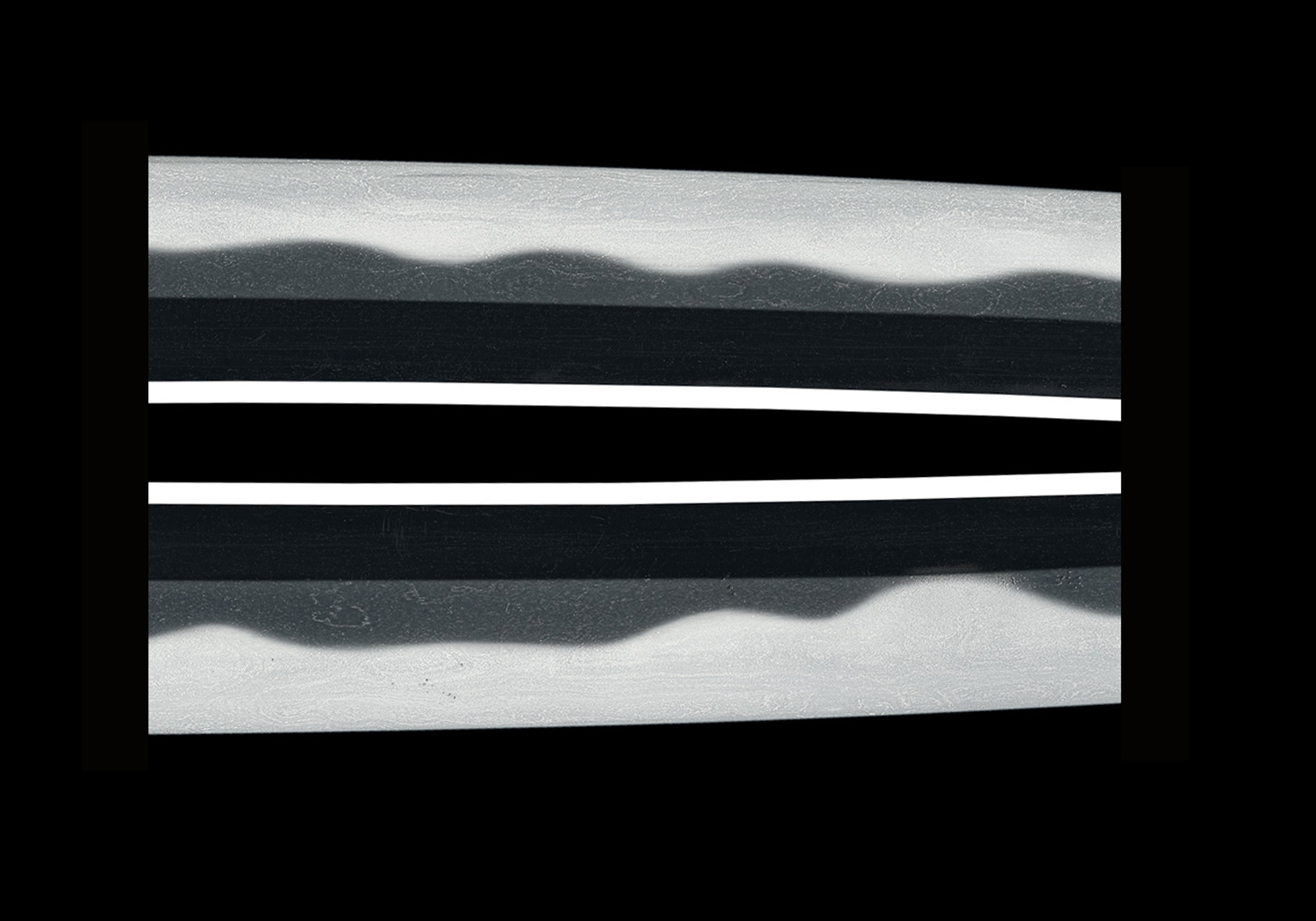
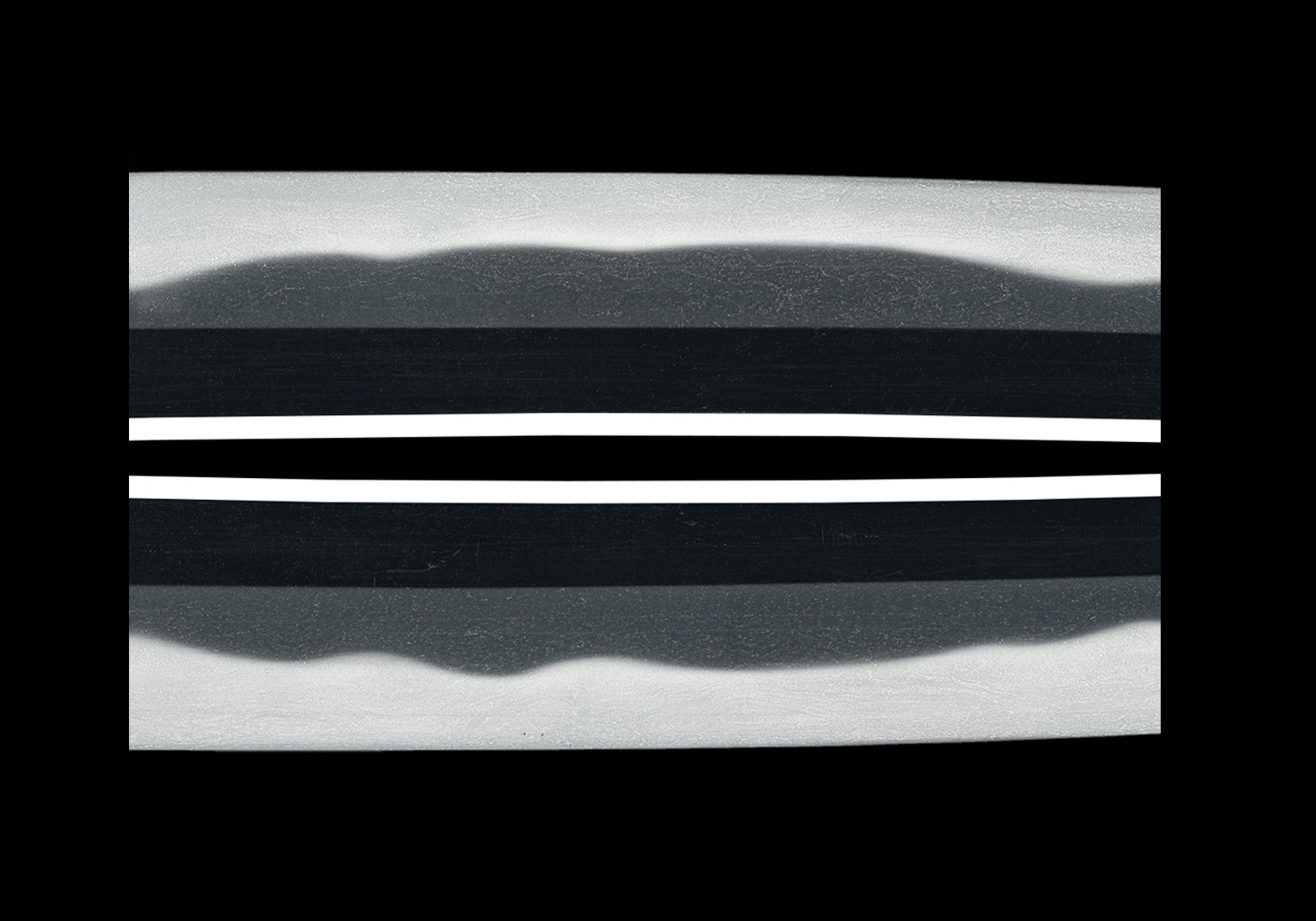
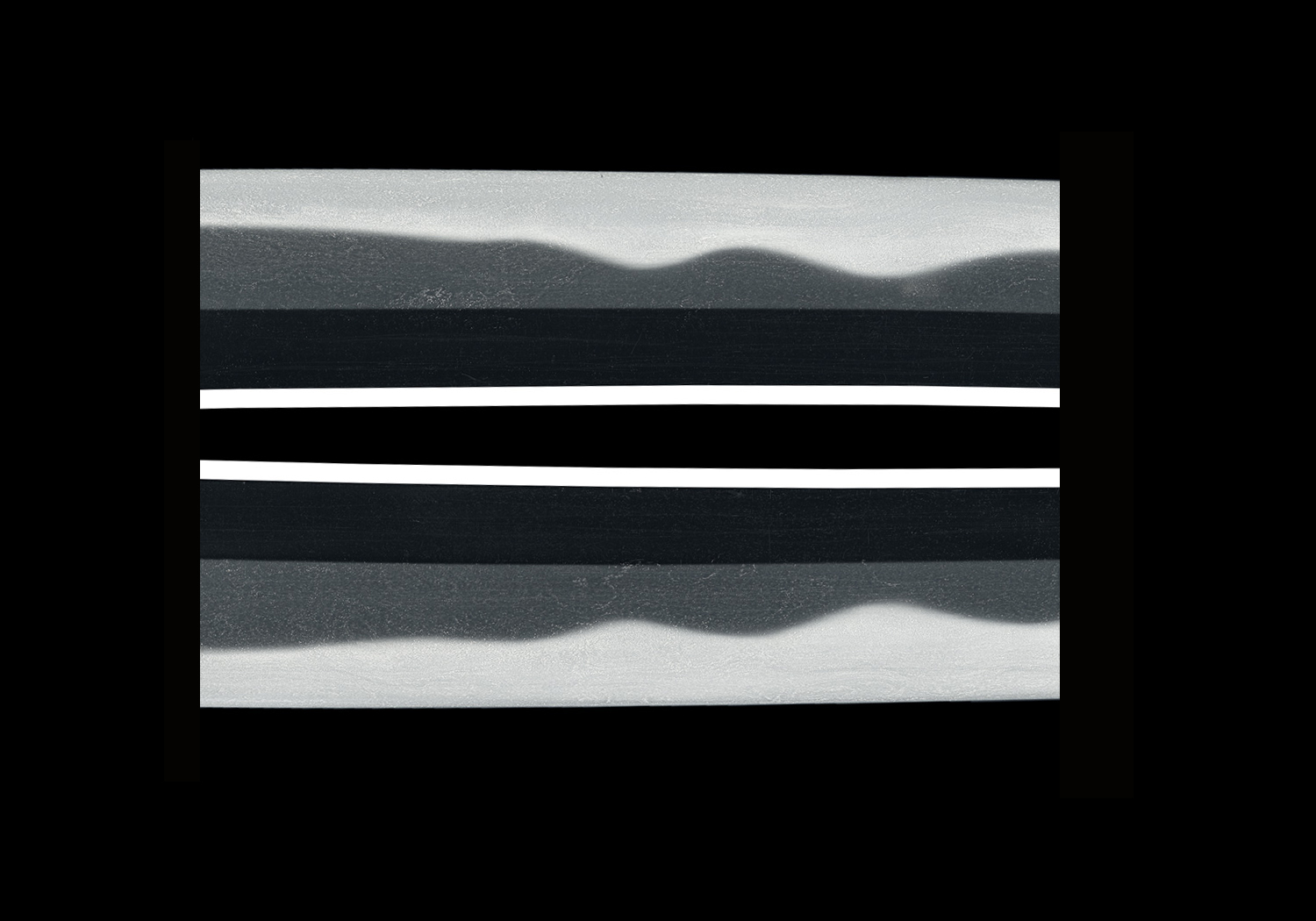
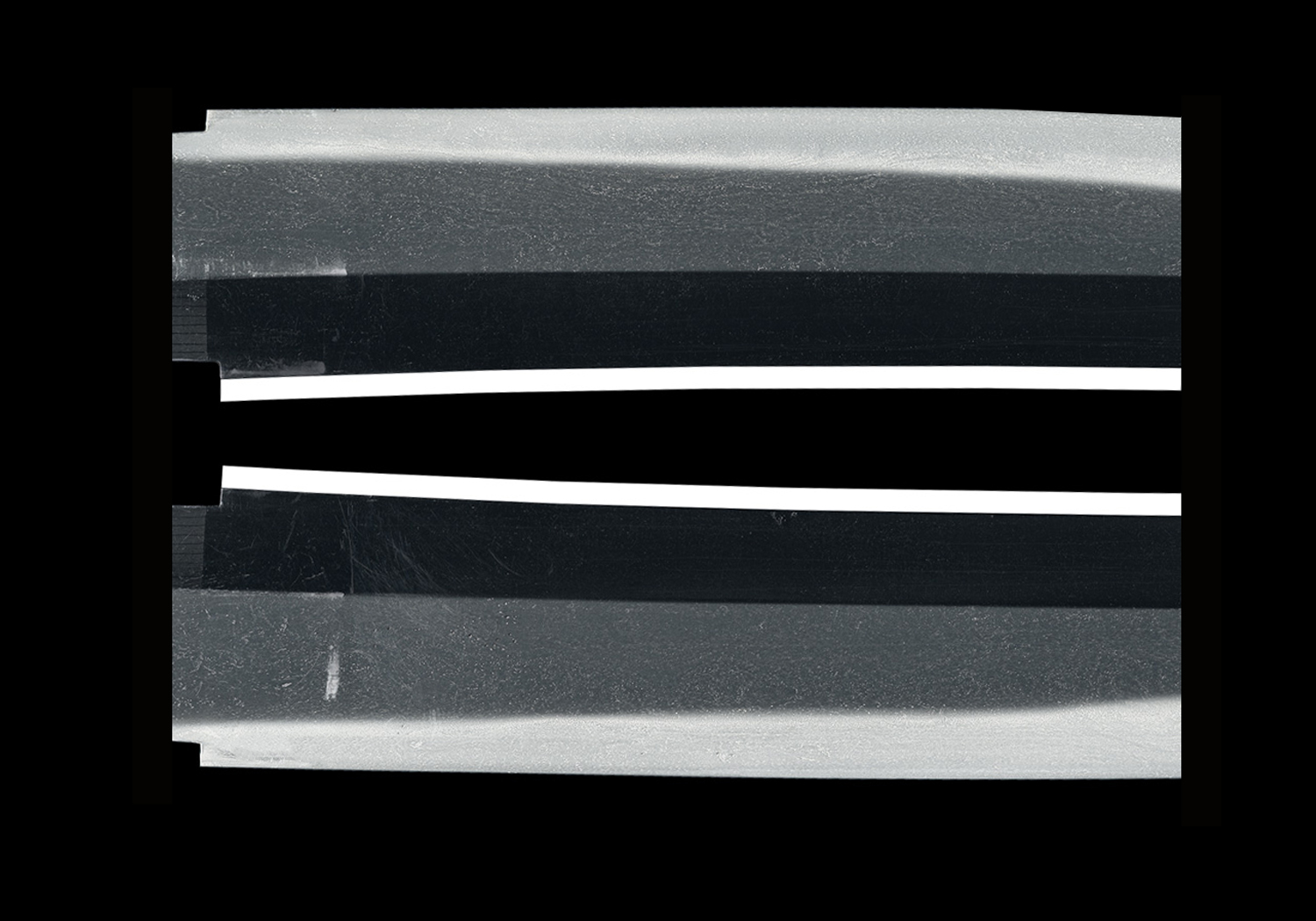
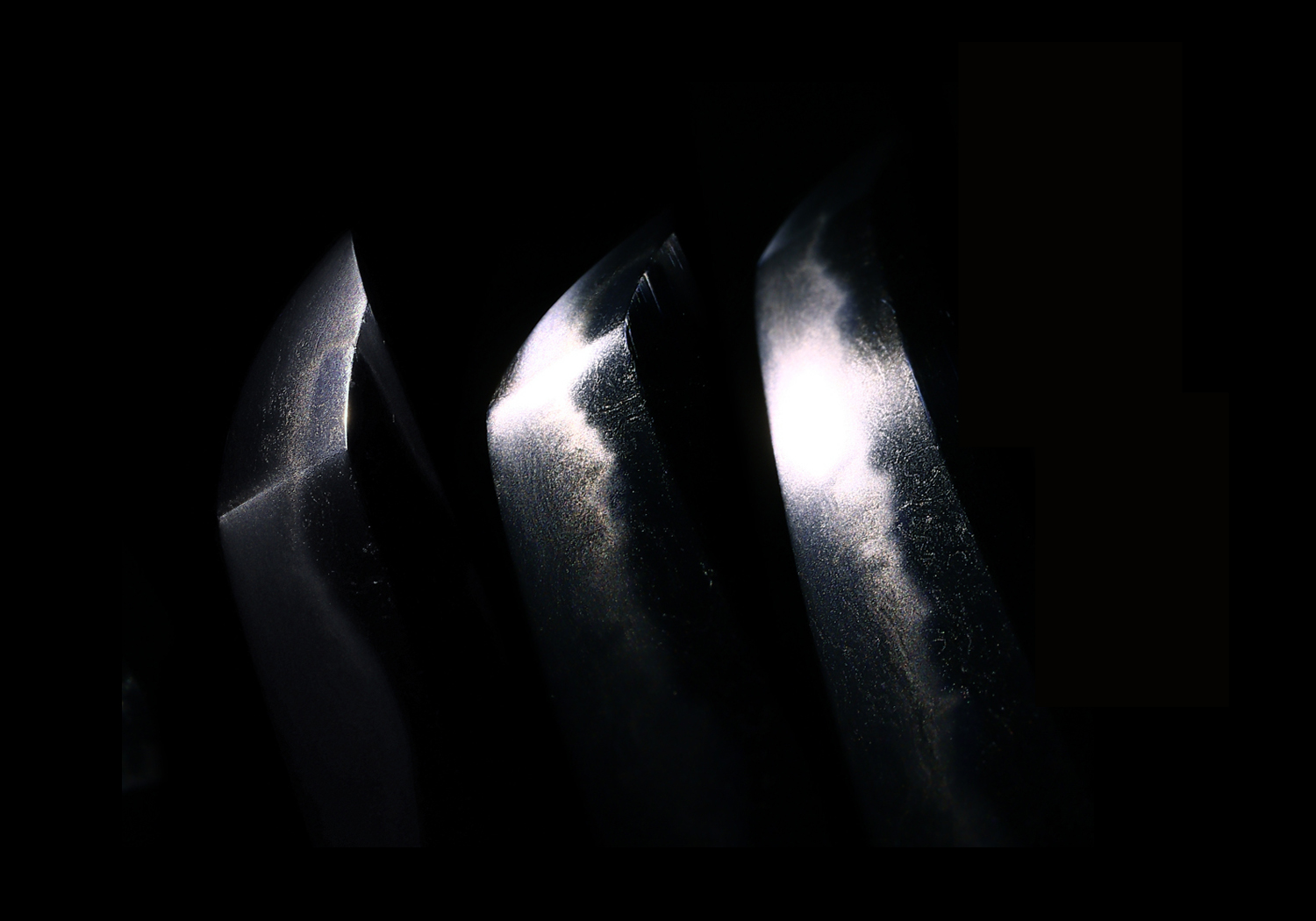
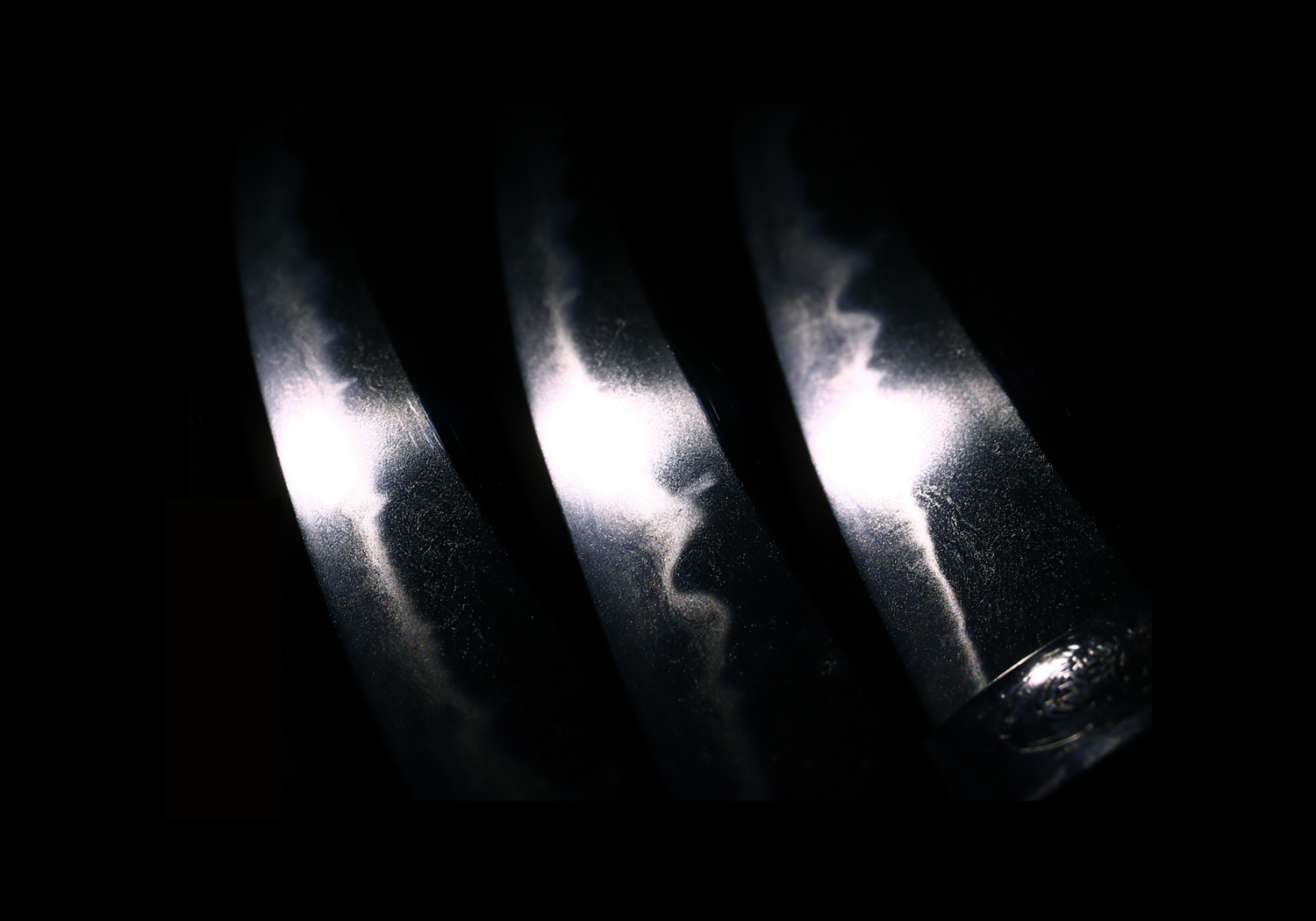
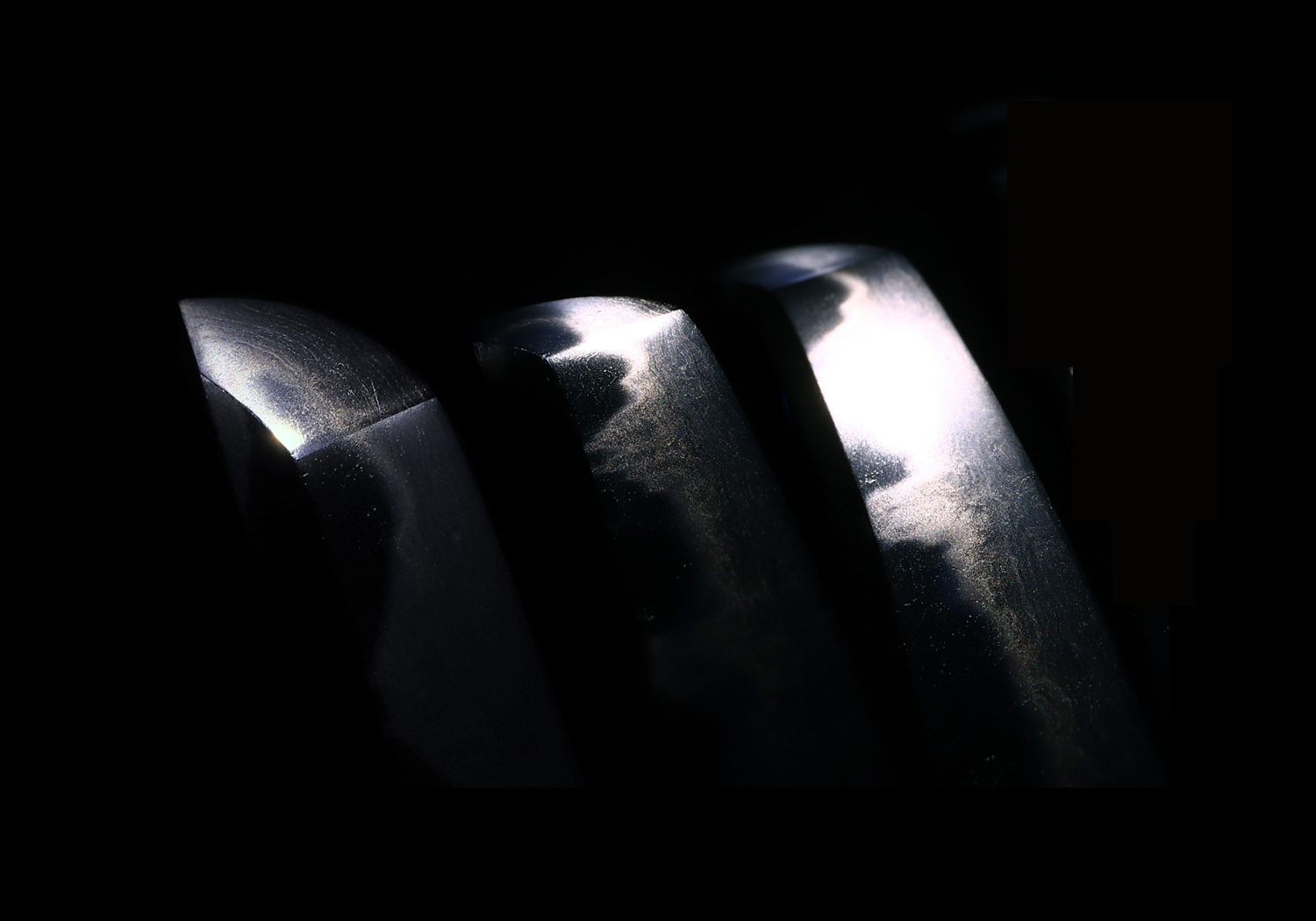
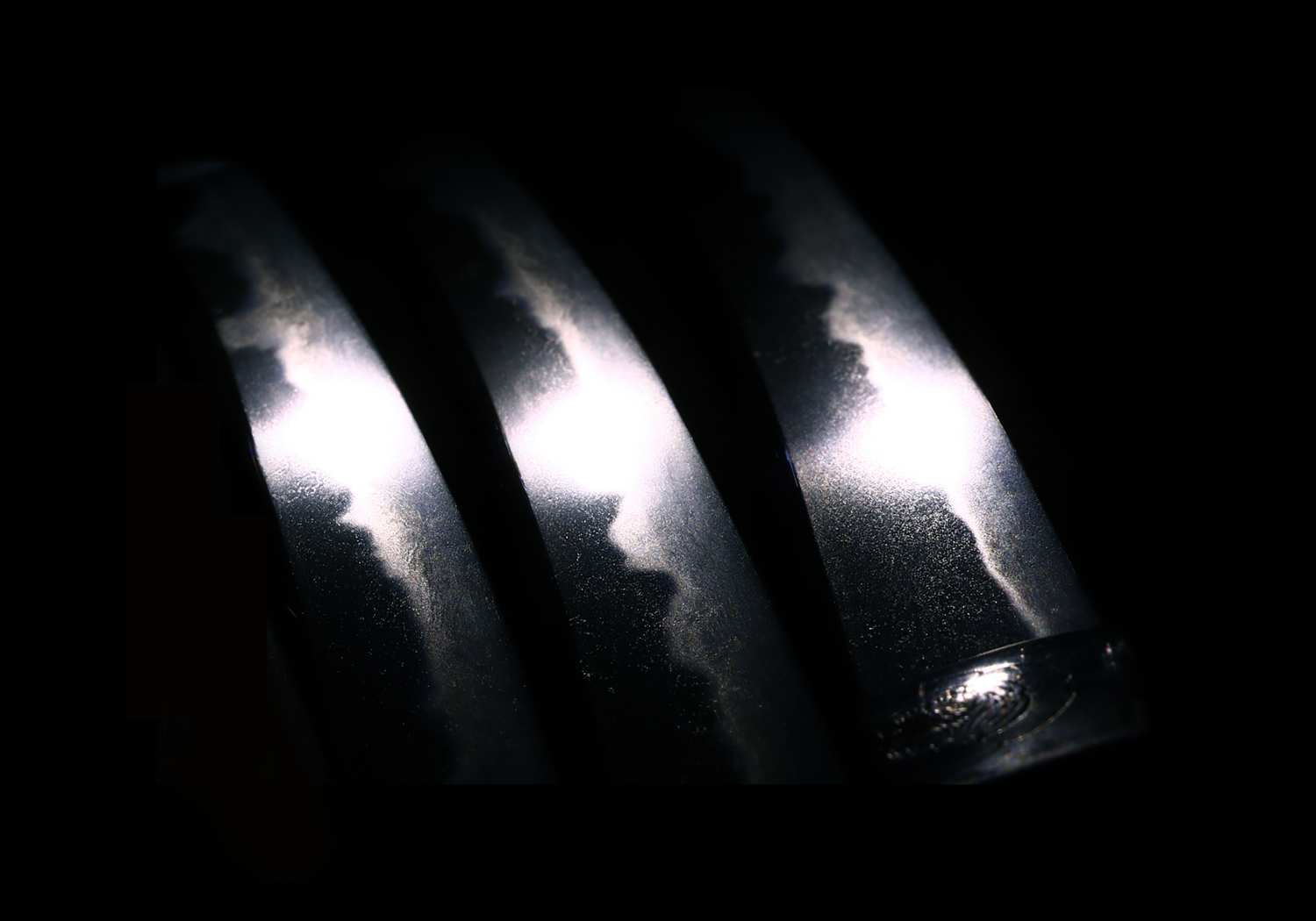
Echizen Shimosaka (Yasutsugu) · 武蔵 · 1596-1615頃
藤代 上々作 · 刀剣大鑑 上位5%
現在3点販売中
初代康継は近江国坂田郡下坂郷の出身で下坂市左衛門と称し、越前に移住して結城秀康に仕え、初期には「肥後大掾下坂」と銘した。慶長十年の末から十一年の初めにかけて江戸に召され、家康・秀忠両将軍の御前で鍛刀し、その褒賞として「康」の一字と葵紋を茎に切ることを許されて康継と改名した。説明書はこの経歴をほぼ同文で繰り返し、「世に康継を「葵下坂」[[c:8]]「御紋康継」と称するのはこれに因る」と記す。以後、将軍家の御抱工として越前と江戸を一年おきに勤務し、元和七年(一六二一)に歿した。
その茎は当代に類がない。葵紋は銘の上に切られる下賜の紋であって銘そのものではなく、これに材料の添銘が併う。説明書に「彼は南蛮鉄の処理法にだけ、当時唯一人、堂々と以南蛮鉄と切添えている」[[c:9]]という。隔年勤務もそのまま銘に残り、「本国打には「越前住」[[c:10]]と切り、江戸打には「於武州江戸」と切添えている」。大御所家康の駿府滞在中の鍛刀は「駿州打」と称して珍重され、現存は数口、刀は長大のものが多く、地鉄が精美で焼刃の穏やかなものと、地鉄が荒びて焼刃のさかんに乱れたものの二様に分かれると説かれる。その一口は「駿府御分物之一」、すなわち家康が秀忠・義直・頼宜・頼房にかたみ分けした内の一口で、紀州徳川家に伝来した。指定七十六口のうち七十四口が在銘、無銘は一口に過ぎず、慶長の年紀や金象嵌の截断銘が優品の銘に併う。
作風はまず地鉄に立つ。鍛えは板目に杢が目立って交じって肌立ちごころとなり、地沸厚く、地景細かに入り、かねが黒みをおびる。説明書はこれを「越前がねの特色」と名指す。刃文は浅いのたれ・中直刃調を基調に小互の目が連れて交じり、小足頻りに入り、葉を交え、沸厚く、荒めの沸がむらにつき、金筋・砂流しかかり、棟焼・飛焼さかんに、時に皆焼風となり、匂口は沈みごころとなる。帽子は浅くのたれて先が尖りごころに三品風を呈し、掃きかけて返りを長く焼く。姿は身幅広く元先の幅差少なく、重ね厚く反り浅い慶長新刀体配で、平造脇指は幅広寸延びとなる。説明書はこの出来口を「初代康継の典型的な作域」[[c:5]]と呼ぶ。彫物は彫口深く力強く、不動三体仏・倶利迦羅・梵字・素剣などが多く、記内ら越前彫物師の手と読まれる。
作域は時期と目的とで分かれる。下賜以前の作は稀で、「肥後大掾下坂銘の刀は現存が少なく数口を数えるに過ぎない」[[c:11]]とされ、いずれも比較的おだやかによく整った穏やかな作風を示す。初期銘は同国の貞国・兼法と非常に似通い、その極めは銘振りによる。他方の極が写し物である。大坂落城の折に焼失した太閤御物の多くを再刃したことから様々な名物写しを試み、「中でも貞宗写しを最も得意としている」[[c:12]]。切刃・安宅・梅竹・獅子の各貞宗写しのほか、本阿弥光徳の刀絵図にのみ遺る若江正宗、宗近の海老名小鍛冶(再刃の本歌は今日徳川美術館に現存)、吉光の鯰尾藤四郎・親子藤四郎の写し、長谷部写しと思われる皆焼の作が遺る。本間による御物台帳には名物骨喰藤四郎を模した薙刀直しの脇指が所載され、裏に「骨喰吉光摸」と添銘し、台帳は慶長末年乃至元和初年頃の作で焼ける前の写しと見て、「初代写し物中の傑出の一口」[[c:7]]と評する。その評価は明快で、「地、刃の出来は、彼独自の作風を示しており、徒らに模倣していないところに特色がある」[[c:13]]。本科の焼失した今日、写しそのものが特に貴重とされる。表裏の出来が極端に異なる「児の手柏」も他の越前新刀にまま見られるが、彼の作はそのお手本というべき出来と評される。
短刀は稀で、「初二代通しても短刀の製作は極めて少ない」[[c:14]]。その一口は地刃が古作則重をほうふつさせ、龍乗不動の彫は同工中この一口のみという。嫡子二代康継は父風を忠実に継ぎ、「継」の字形以外では殆ど区別し難いと評され、永く江戸三代とされてきた著名な脇指は「二代康継の代銘による初代康継の作であるという説が有力視されている」[[c:15]]。二代の後、家は江戸・越前の両下坂家に分かれ、同名は幕末まで両地に栄えた。
藤代の極めは上々作。指定は七十六口、内訳は重要文化財二口・重要美術品十五口・特別重要刀剣十二口・重要刀剣四十六口、それに本間による御物台帳所載の骨喰写し一口である。伝来は三十二口に録され、後援者本多飛騨守成重の所持銘が優品に多く、特重の獅子貞宗写しには本多家定紋付きの生ぶの拵が附属する。結城秀康の次男松平忠昌が大坂夏の陣の初陣に帯びた号「風雷神」の刀は久しく越前松平家に伝来し、駿府御分物の一刀は紀州徳川家に、その他は尾張徳川黎明会・三井高公・榎本武揚らの手を経た。中川清秀の孫中川左平太の金象嵌截断銘も特重二口に残る。国宝はなく重要文化財も僅かであり、市場に現れ得るのは在銘の特重・重刀級の刀・脇指で、折々見かけ得るが、名物写しや駿州打、本多家所持銘の優品が現れることは稀で、現れれば刮目すべき一口となる。
康繼の位置づけを、日本刀全体および伝法・時代・時期ごとに示します。各区分(随一・屈指・有数・著名)は、NBTHK および文化庁による指定に加え、三作や名物帳などの歴史的栄誉を加味したものです。
各項目を選ぶと評価方法が表示されます。
在銘年紀作が示す、確実に活動していた年代
新刀 · 越前
現在39点販売中
茎にきられた黒い鉄こそ、この一門の最も確かな標である。鍛えは板目に杢が目立って交じり、刃寄り棟寄りに流れて肌立ち、地沸厚く、地景細かに入って、かねが総じて黒みをおびる。説明書はこれを繰り返し「越前がねの特色」と名指し、初代康継から重高・貞国・貞次に至るまで終始変わらぬ見どころとする。この一団は近江国坂田郡下坂郷を本貫とし、新刀初頭の越前にあって「下坂」を商標として用いた幾人かの鍛冶の集まりであって、説明書は一人の刀工とみるよりは一団とみるのが妥当とし、初期は康継をその代表者とする。初代康継は下坂市左衛門と称して越前に移り結城秀康に仕え、初め肥後大掾下坂と銘した。慶長十年から十一年にかけて江戸に召され、家康・秀忠両将軍の御前で鍛刀した褒賞として「康」の一字と三つ葉葵紋を茎にきることを許されて康継と改名し、葵下坂・御紋康継の名はこれに発する。以後は将軍家の御抱工として越前と江戸を隔年に勤め、本国打には越前住、江戸打には於武州江戸と切り添え、南蛮鉄を以南蛮鉄と添えた。肥後大掾藤原下坂の康継前銘は貞国・兼法・国康らと鏨運びも筆意も酷似し、今日なお銘振りによってしか分かち得ぬほど近い。 この一門の手は静かで、同時代の備前・美濃の華やかな新刀の多くに対置される。刃文は浅いのたれ・中直刃を基調に小互の目を連れて交え、小足・葉入り、沸厚く、荒めの沸がむらにつき、本工らしいばさけを生じて、金筋・砂流しが長くかかり、棟焼・飛焼さかんに、時に皆焼風となり、匂口は沈みごころとなる。帽子は浅くのたれて先尖りごころに三品風を呈し、掃きかけて長く返る。姿は身幅広く元先の幅差少なく重ね厚め反り浅い慶長新刀体配で、平造脇指は幅広寸延びとなる。彫物がいま一つの恒常で、彫口深く力強い越前彫・記内彫が一門の手を示し、不動三体仏・倶利迦羅・梵字・護摩箸・素剣を巧みに彫る。記内ら越前の彫物師の手によるこの深い浮彫は、説明書が地方の特色と名指すものである。一門が最も称えられる作域は相州写しであって、初代・二代ともに大坂落城に焼失した名物の再刃を試み、中でも貞宗写しを最も得意とし、各写しに自らの作風を加えて徒らに模倣せぬところに特色がある。手は系統と目的とで分かれ、貞国は直刃を得意として地がつんで精美に、貞次は越前関の系譜を引いて丁子の目立つ明るい現れを示し、重高は茎尻を栗尻とする点で一門の剣形と分かたれる。 収集家がこの一門の作に向かうべき所以は、その見分けやすさにある。黒く肌立った越前がね、ばさけた刃縁、縞がかる砂流し、長く掃きかける小丸の返り、そして深い記内彫が併さって、写した古作によってではなく一門自らの語法によって読まれる。中心に立つのは初代康継で、駿府滞在中の駿州打や名物写しを残し、駿府御分物の一刀は紀州徳川家に、号風雷神の刀は越前松平家に伝来した。嫡子二代康継は父風を忠実に継ぎ、継の字形以外では殆ど区別し難く、晩年は初代に劣らぬ域に達した。二代の後、家は江戸三代を右馬助、越前家を四郎右衛門が継いで両系に分かれ、同名は幕末まで両地に栄えた。江戸三代は鍛えがつんで綺麗に、匂口は明るく、直ぐの焼出しを置いて法城寺一派など当時の江戸物に近づく。後援者本多飛騨守成重の立葵紋が貞次や康継一門の優品に多くきられ、截断銘がその伝来を彩る。藤代は上々作から上作に位し、一門は名だたる蔵伝よりも在銘の指定刀を通して出会われる。市に現れるのは葵紋を切った在銘の康継、あるいは下坂貞国・貞次・重高の在銘作であって、根気をもって待てば折にふれ世に現れ、現れれば家康の葵紋下賜に発する越前下坂の確かな一口となる。 詳しく見る →
桃山時代
三人の天下人が戦国の世紀を終わらせ、刀は新しい秩序の道具となった。1588年の刀狩は刀を武士の標章とし、名刀は条約のごとく家々の間を行き交い、鑑定は以後この境で古刀と新刀を分かつ。
保存刀剣のうち、出来が一層優れ、保存状態も良好と認められたものです。再刃や、室町・江戸期の多くの無銘作は対象外となり、保存刀剣より高い基準が課されます。
日本美術刀剣保存協会(NBTHK)は、1948年に設立され、文化庁の監督を受ける公益財団法人で、東京・刀剣博物館に本部を置きます。専門の審査員が出品作を直接審査し、美術的・歴史的価値に応じた鑑定書を発行します。NBTHKの鑑定書は、日本刀および刀装具の真正性を示す最も広く認知された基準です。
NBTHK公式サイトThree-day inspection period and seven-day return period; buyer notifies by email within three days of receipt, no reason needed; full refund once item returned undamaged and unaltered.