 NihontoWatchNihontoWatch
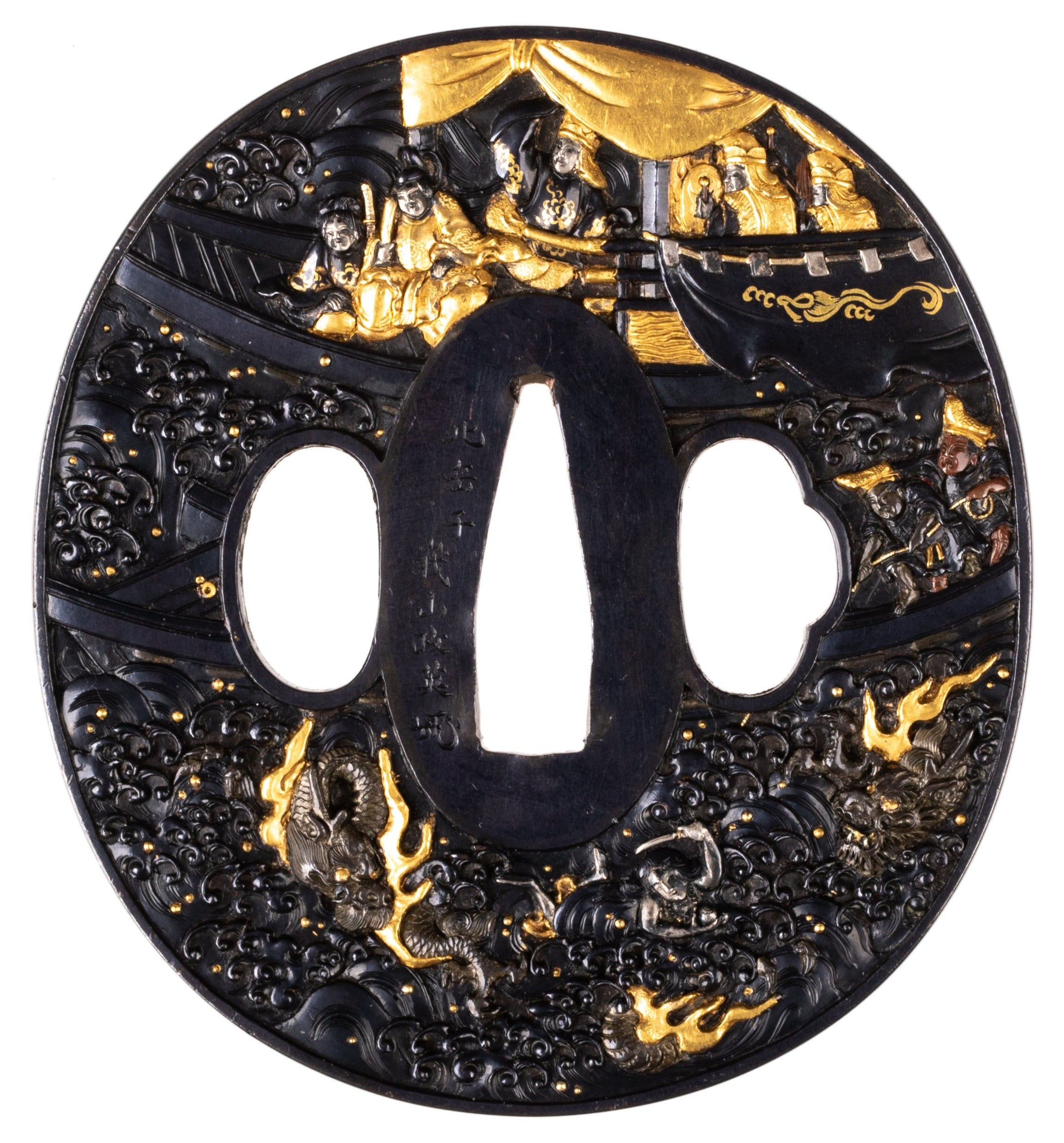
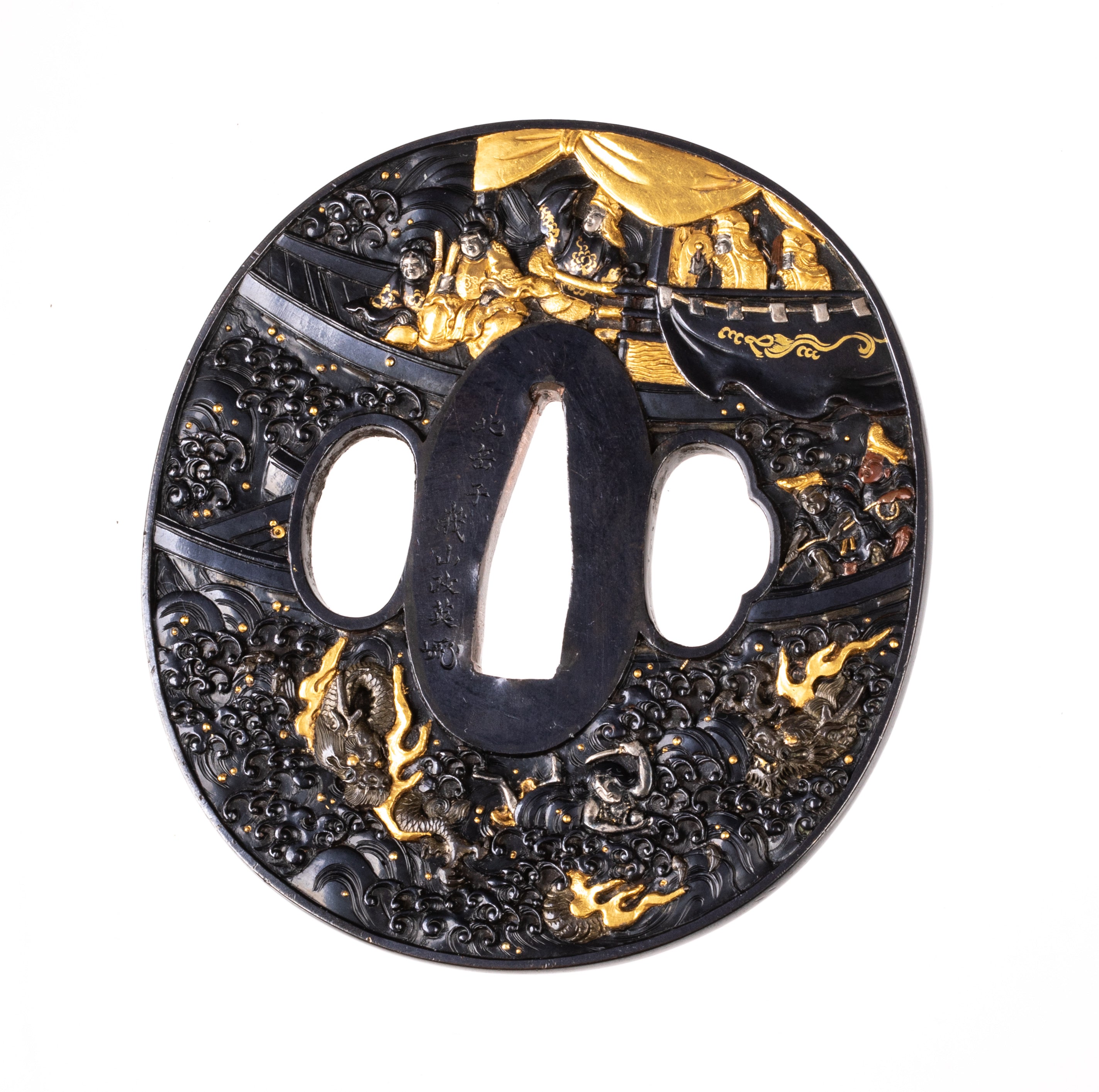
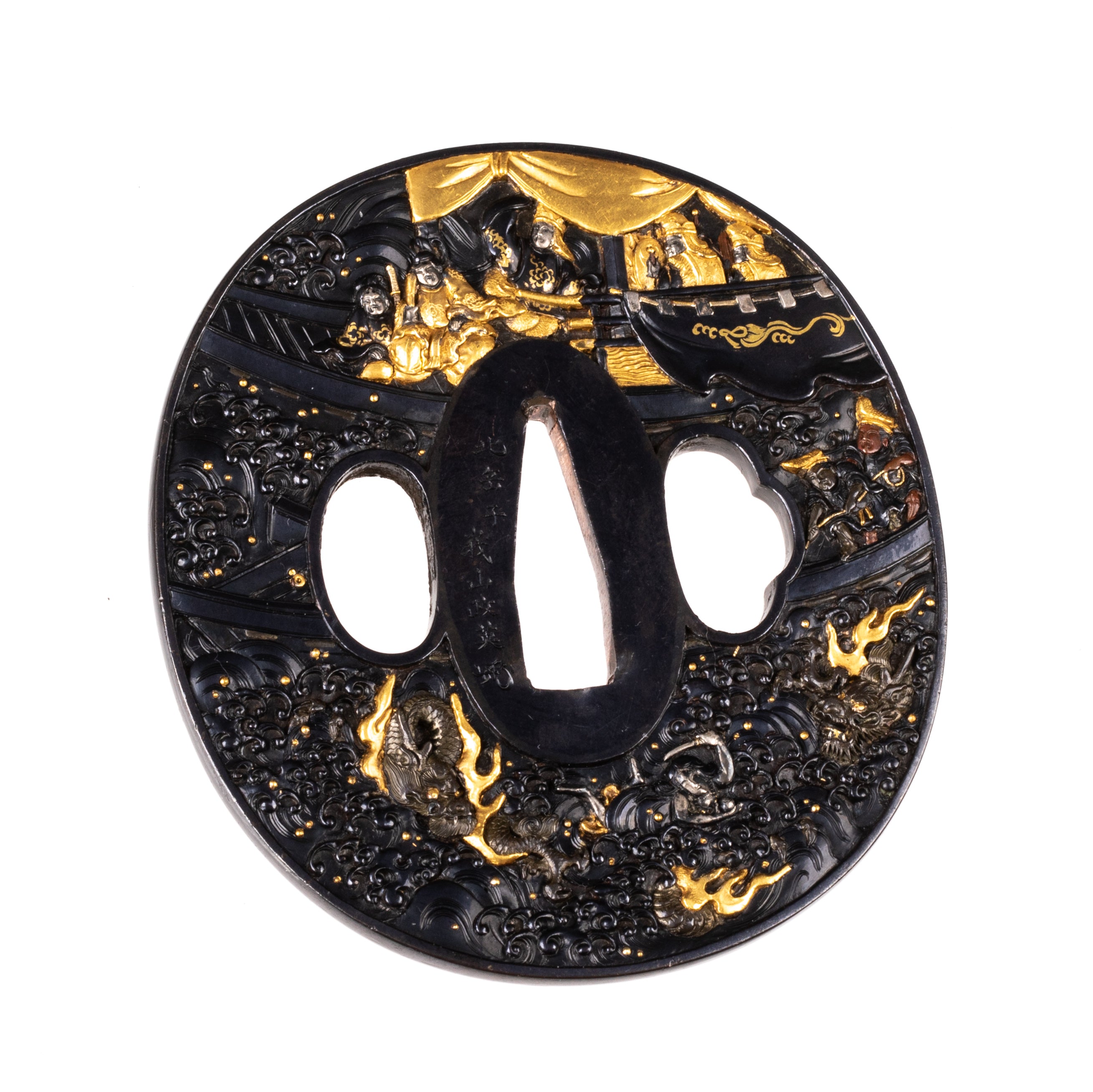
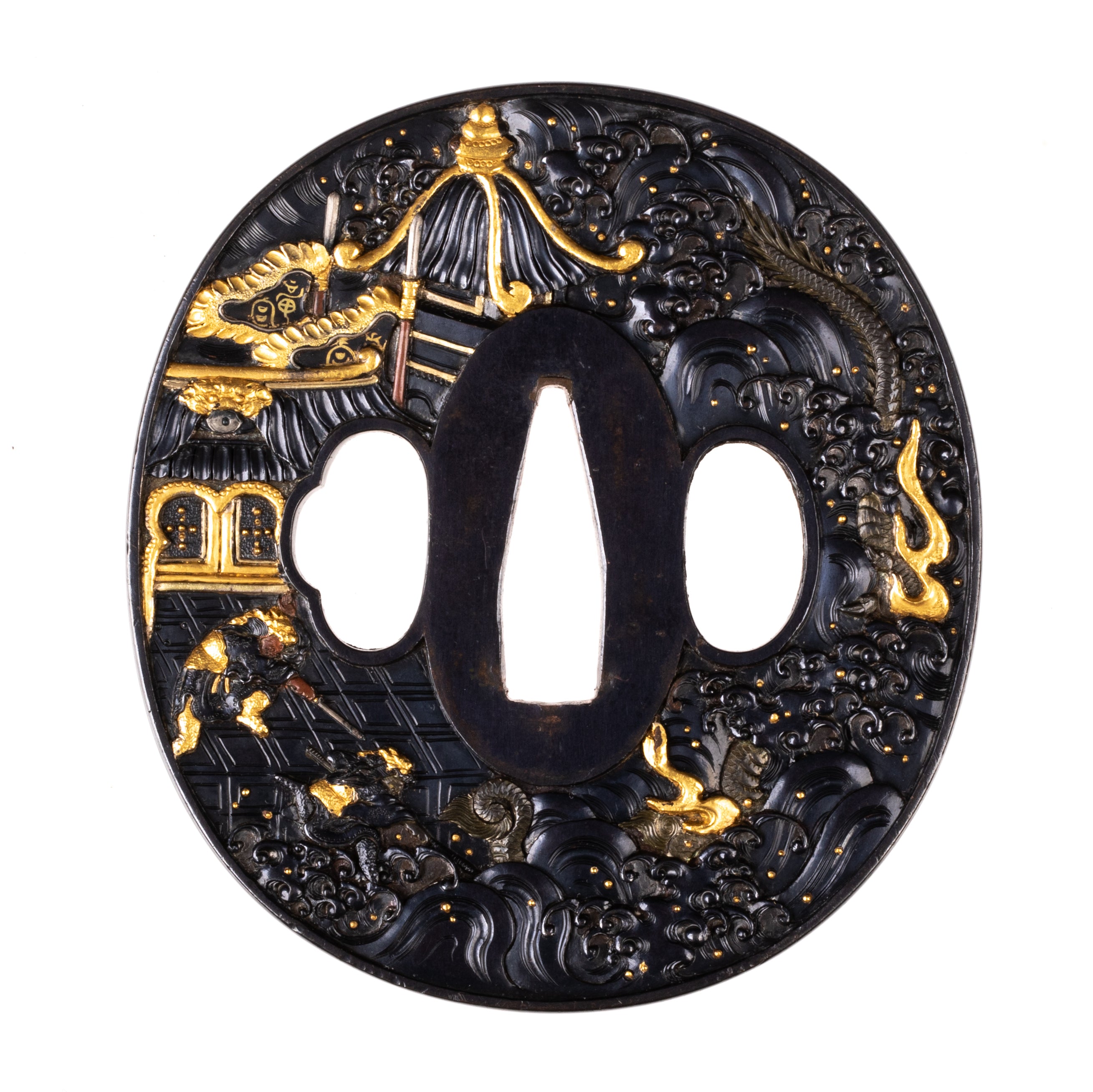
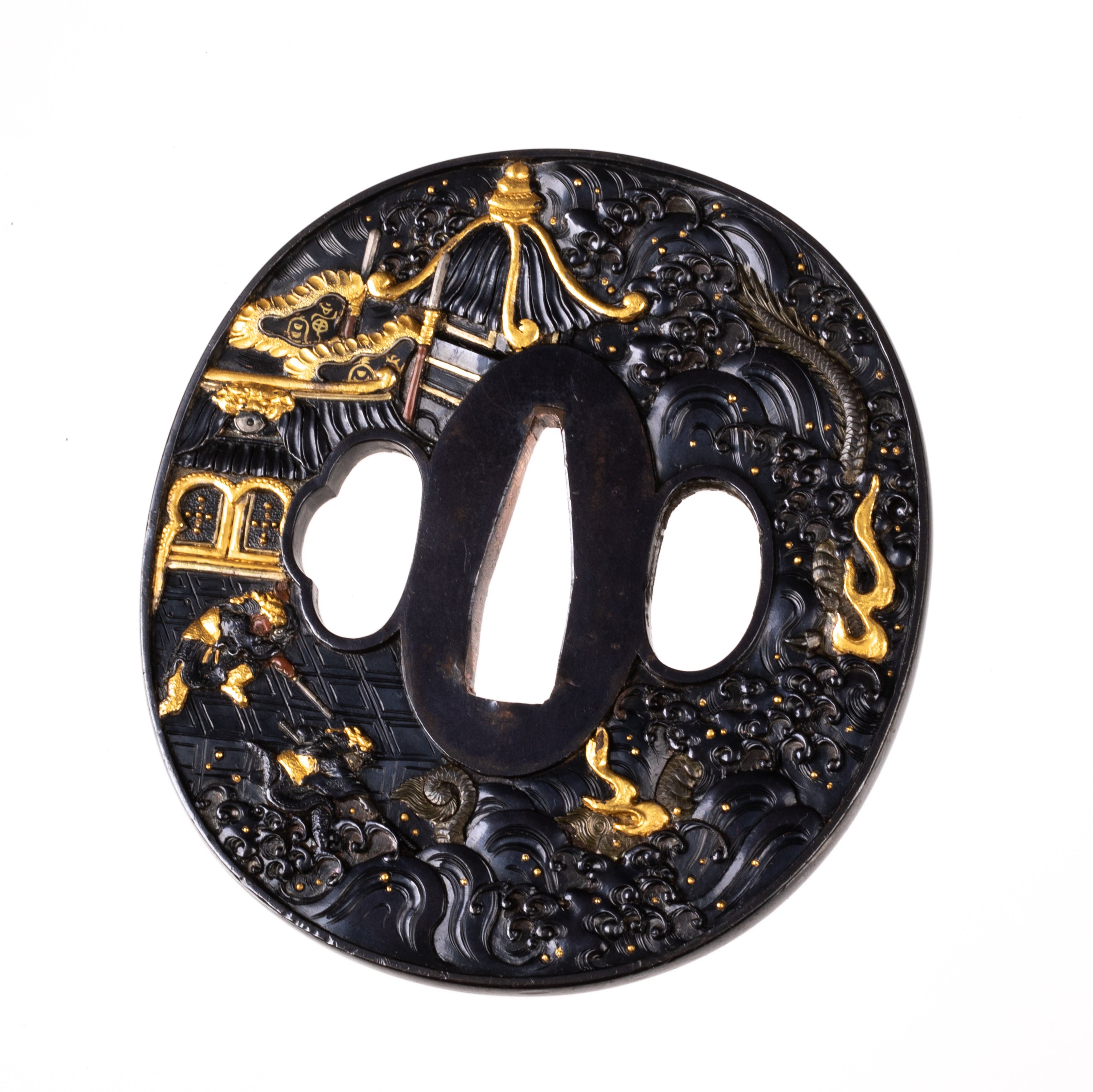
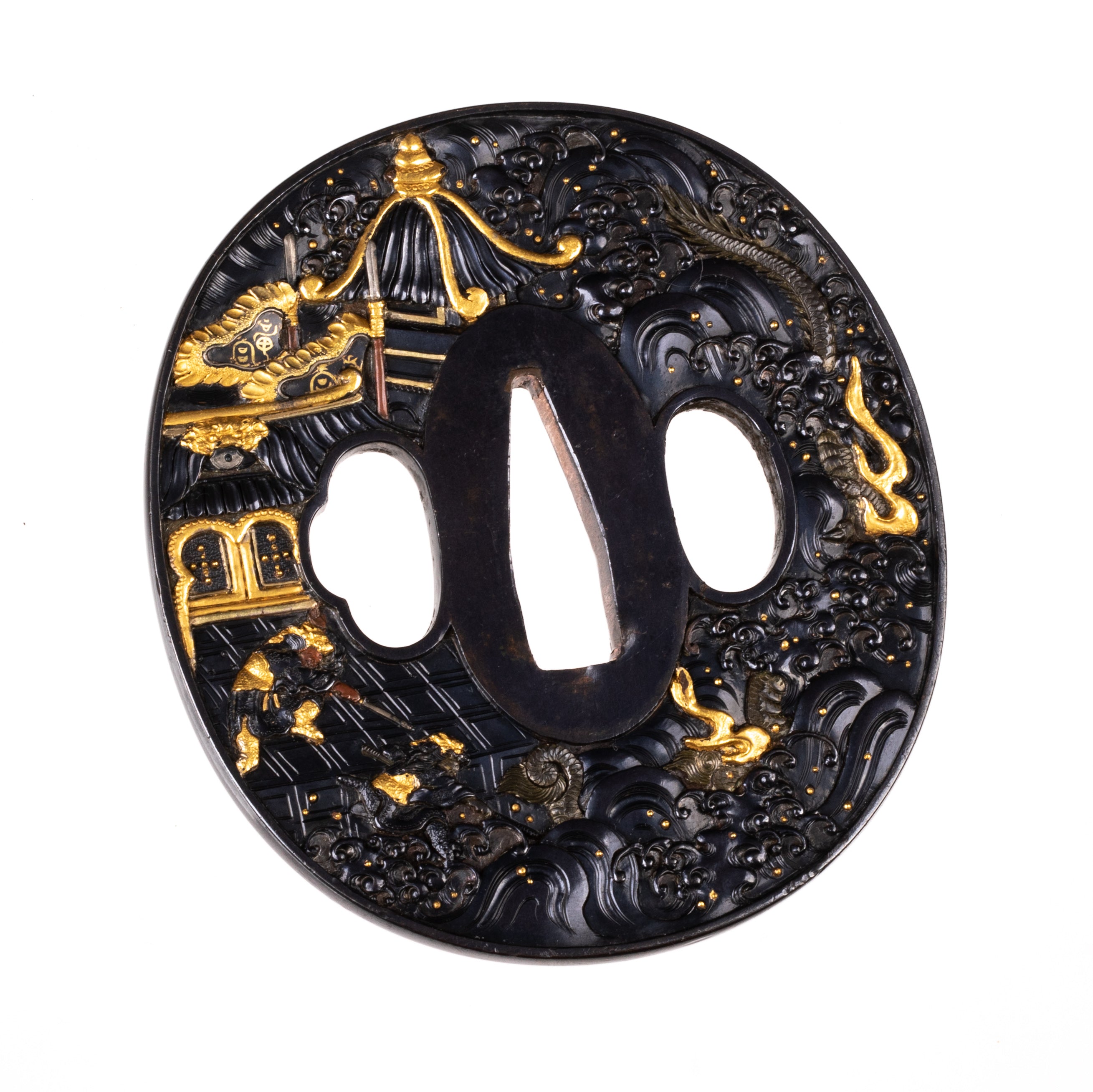
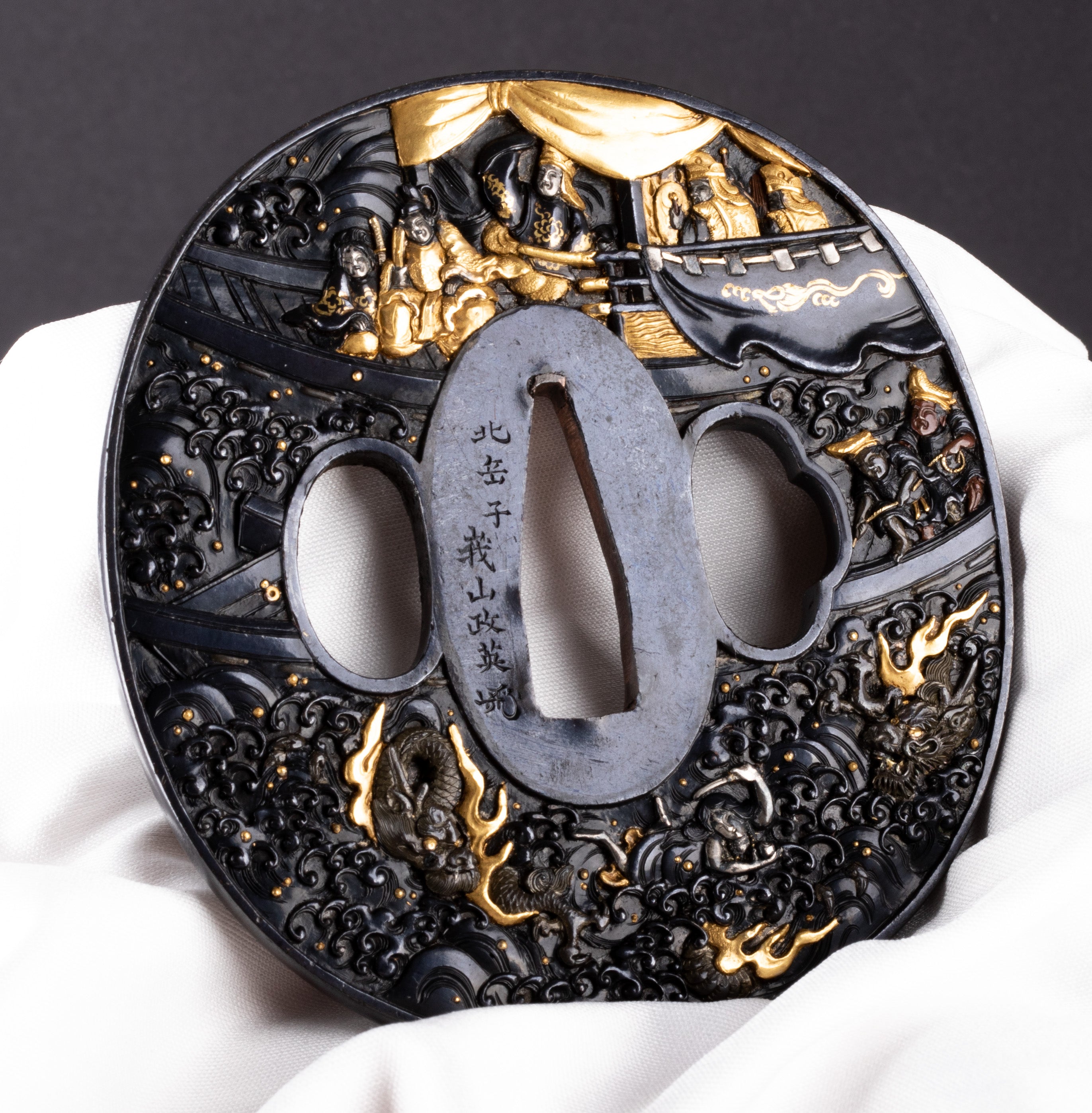
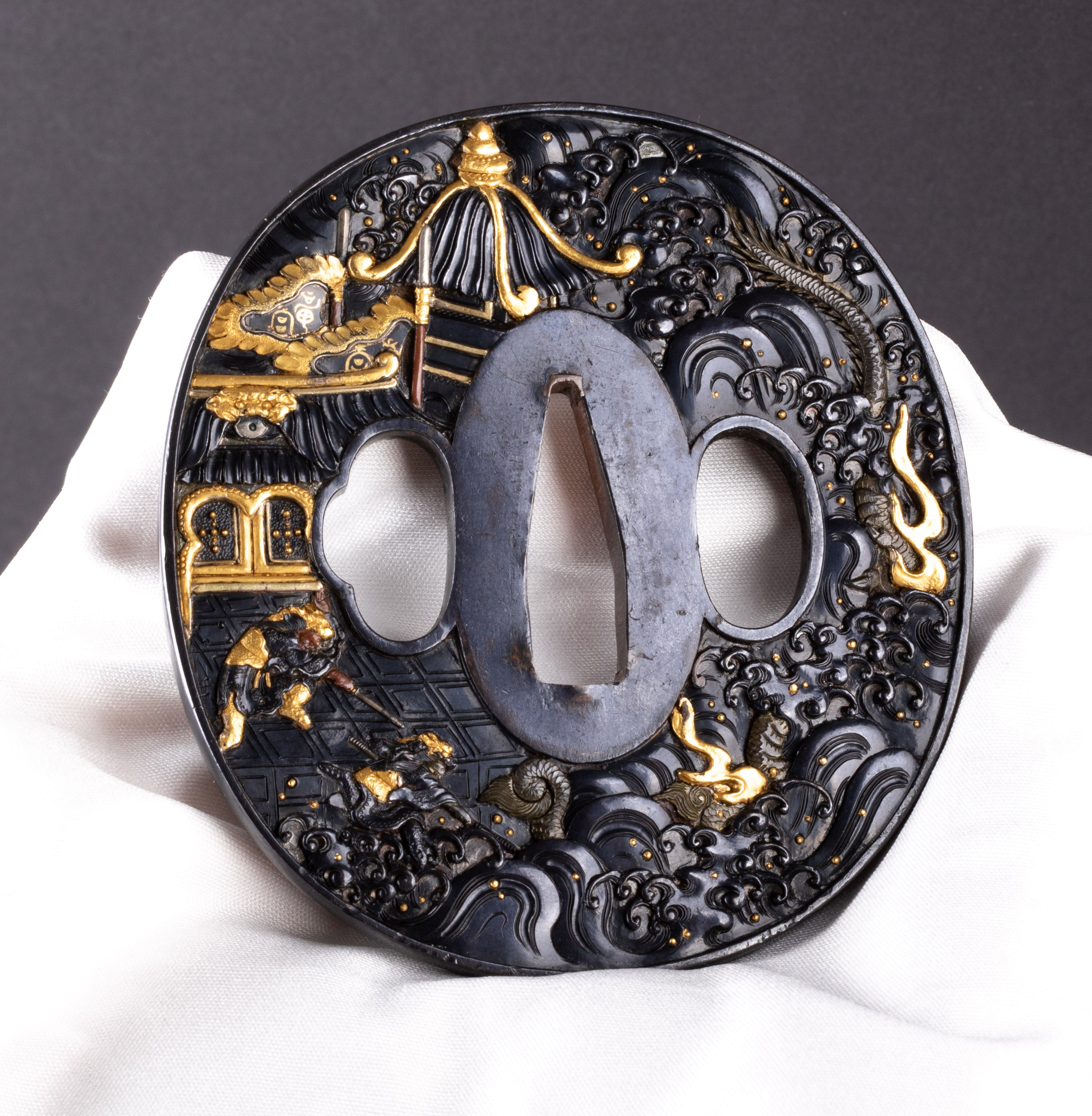
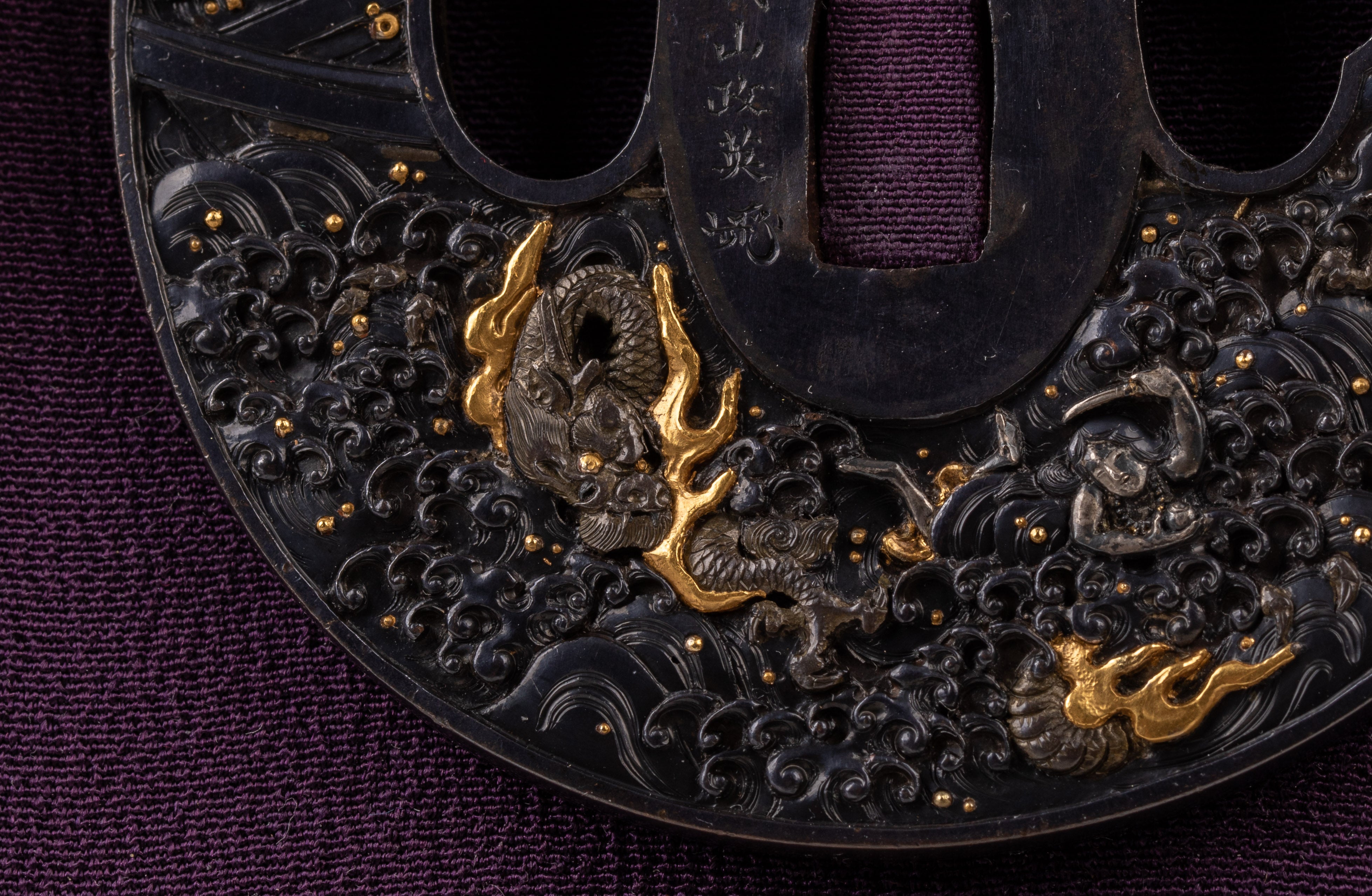
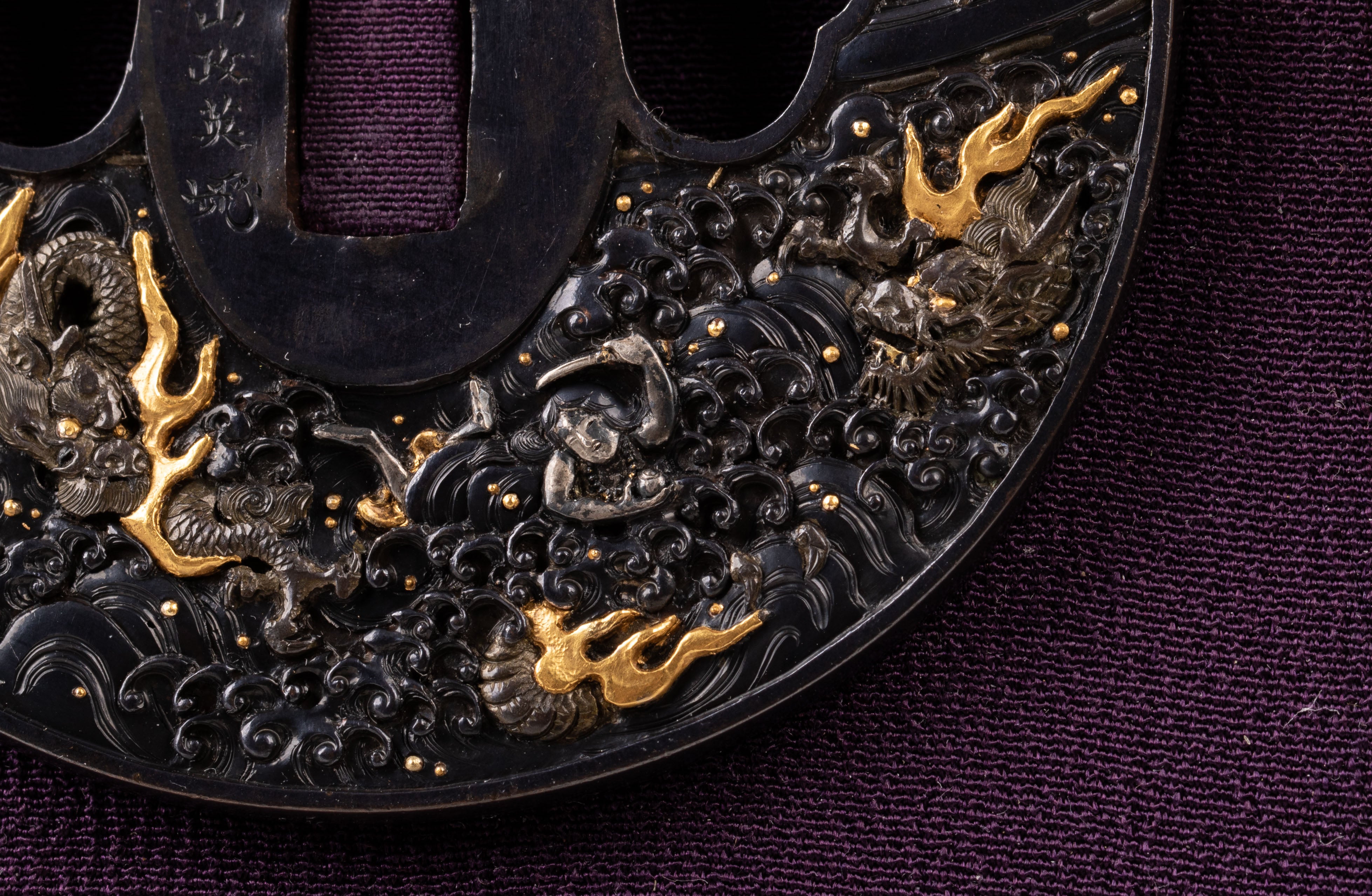
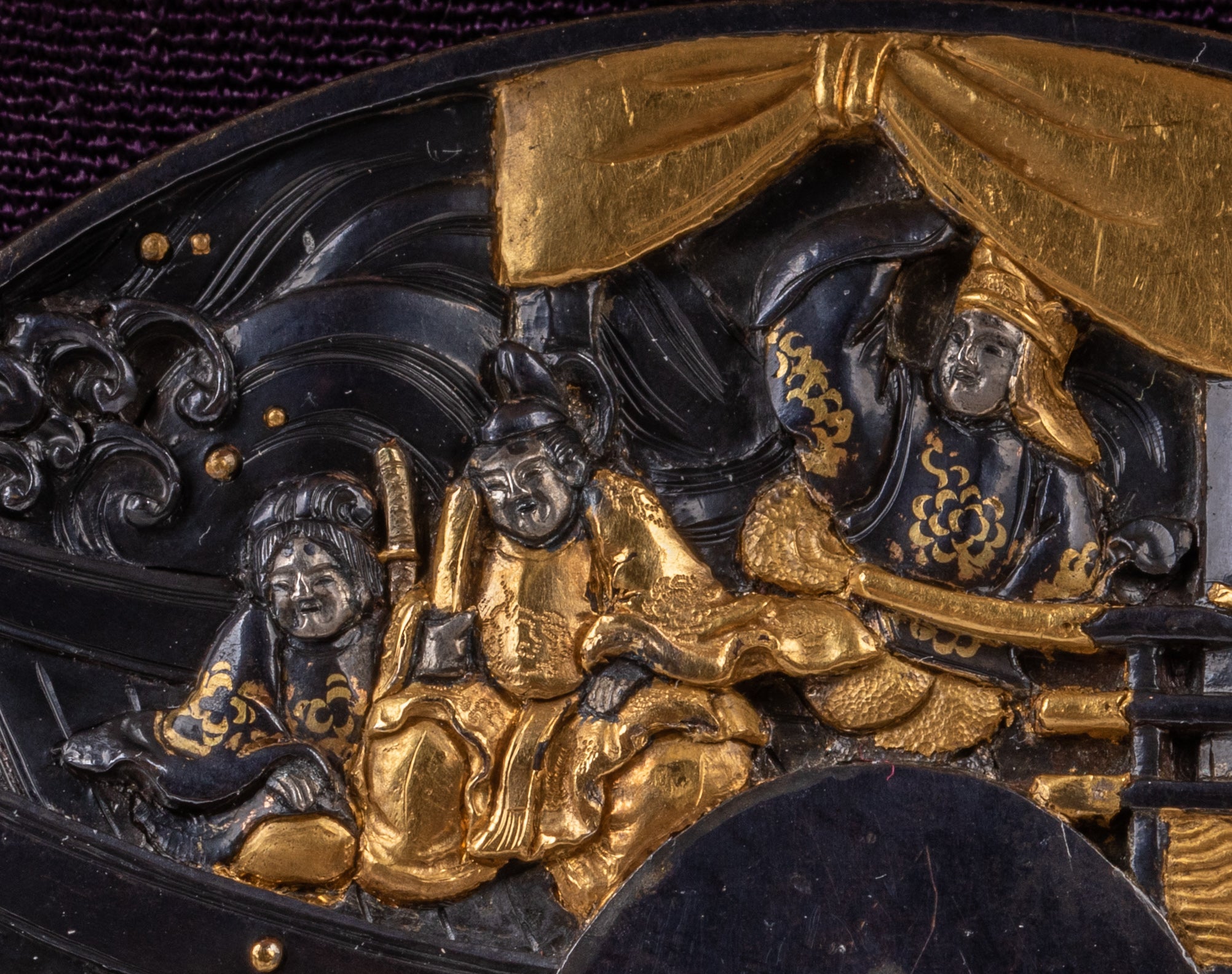
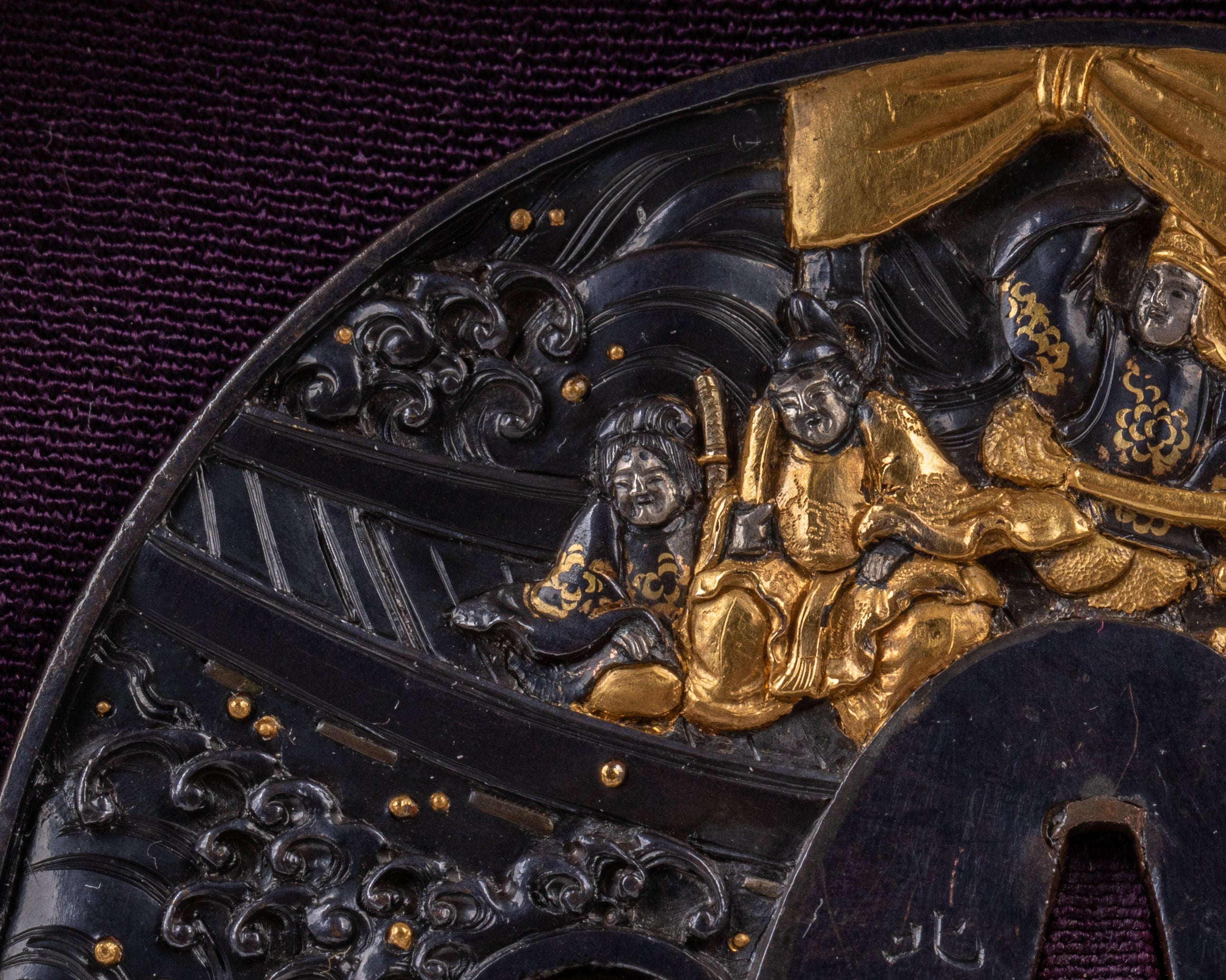
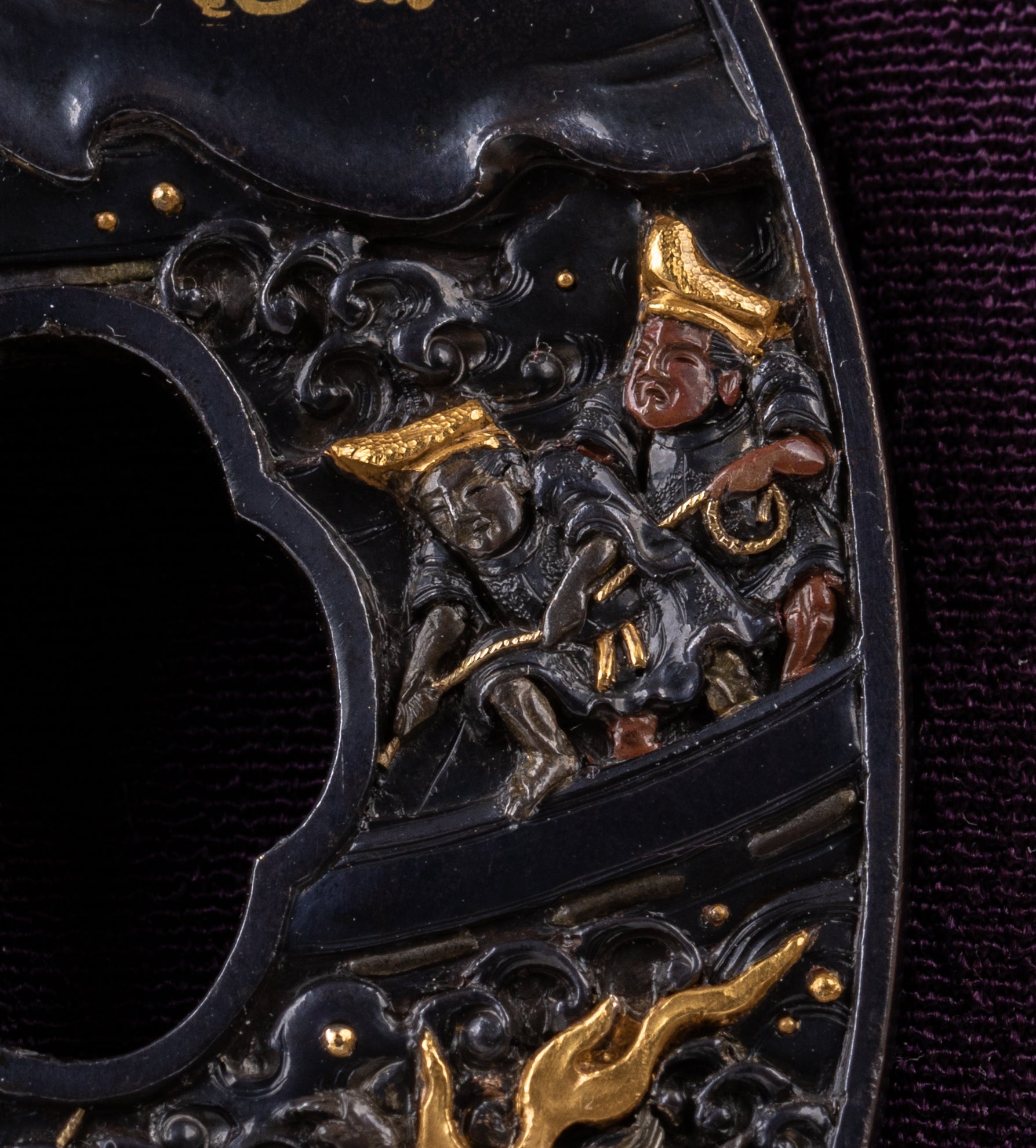
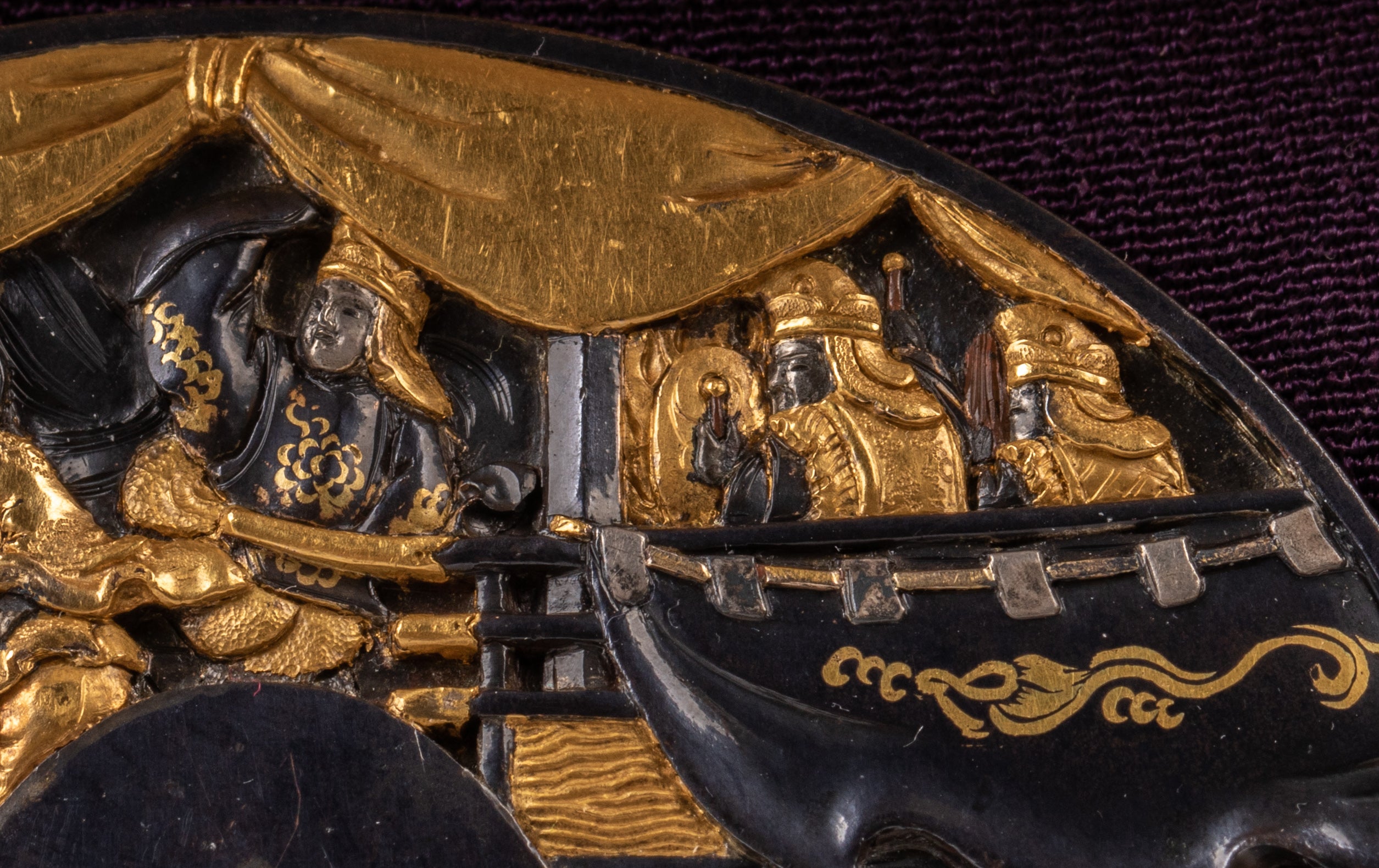
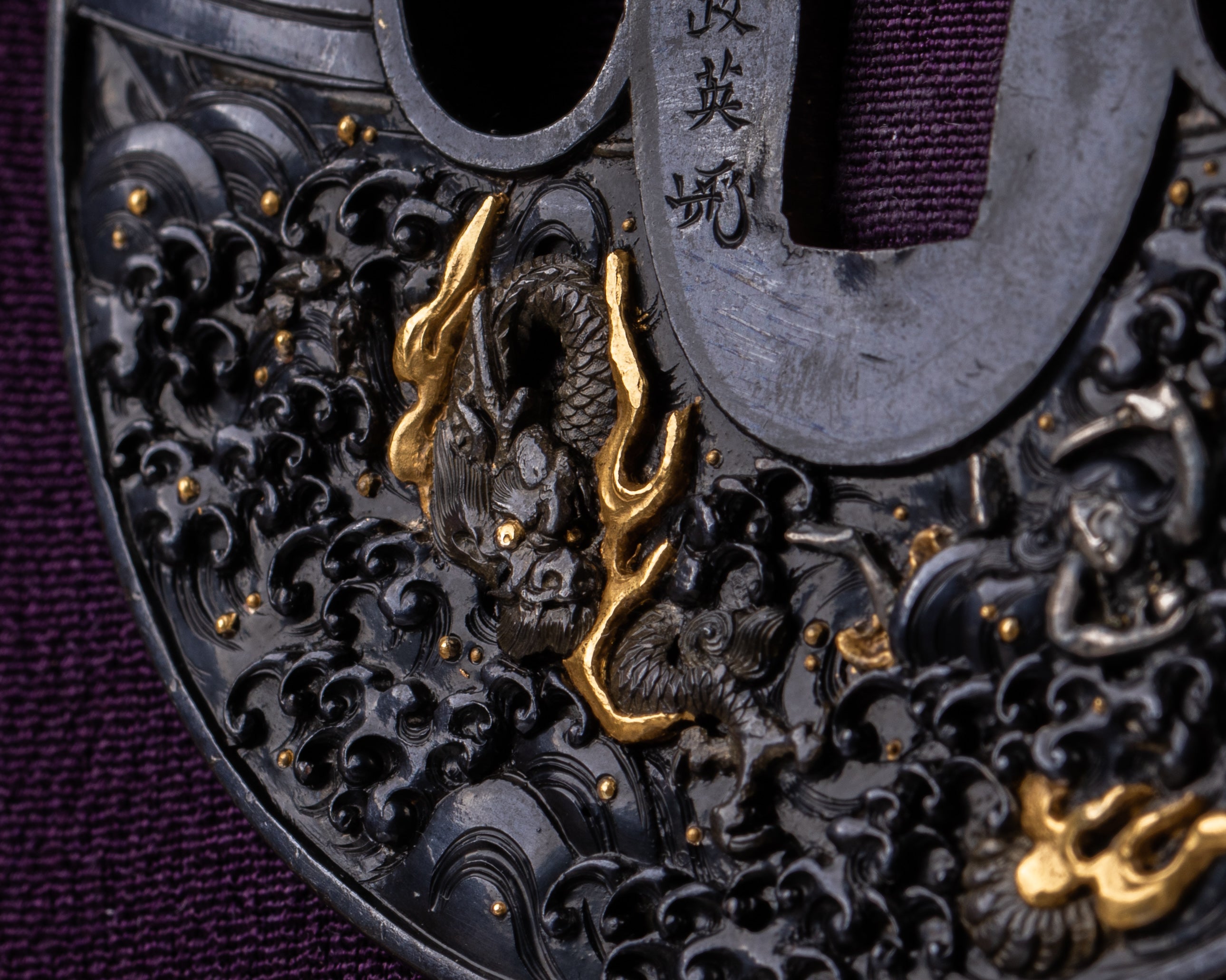
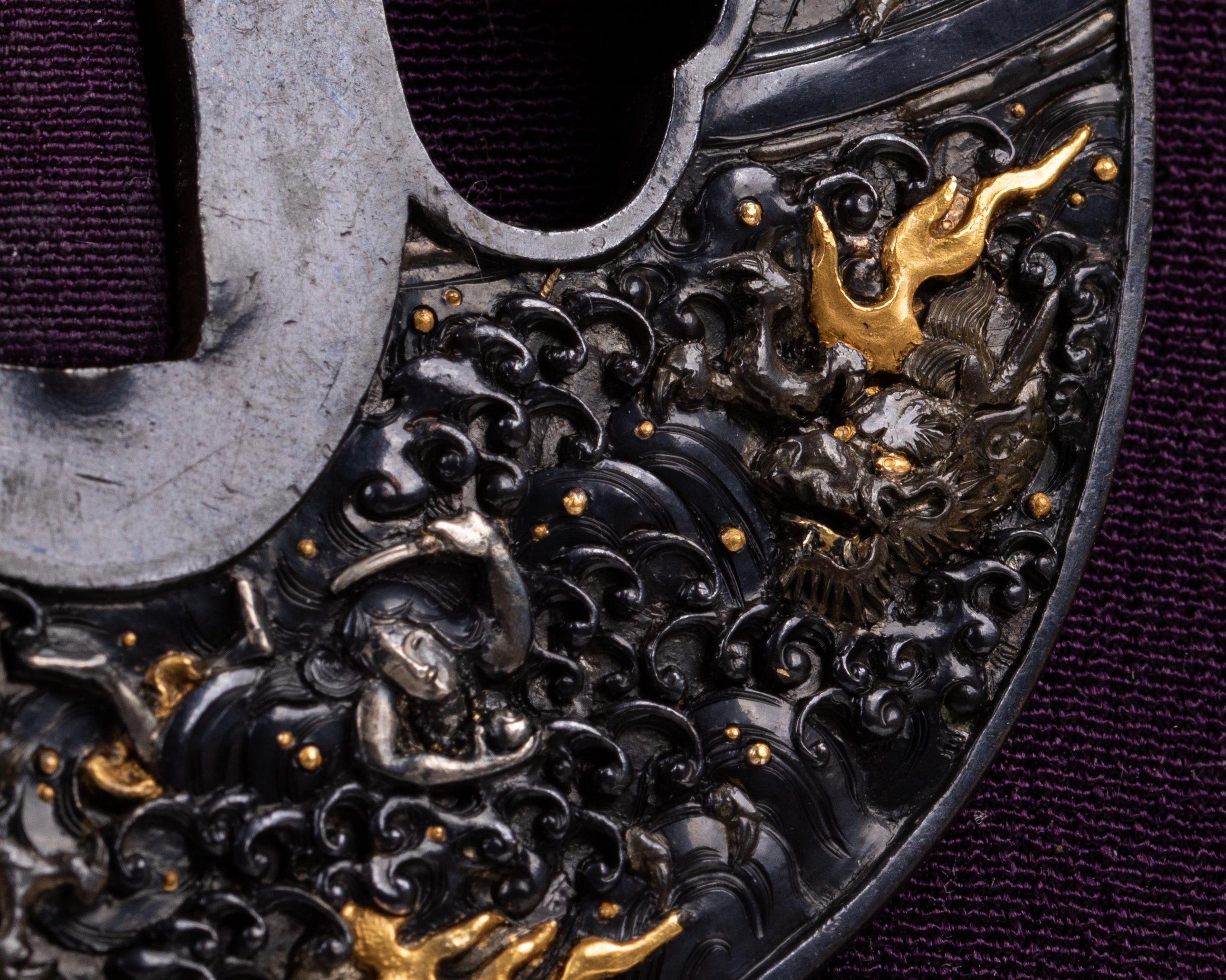
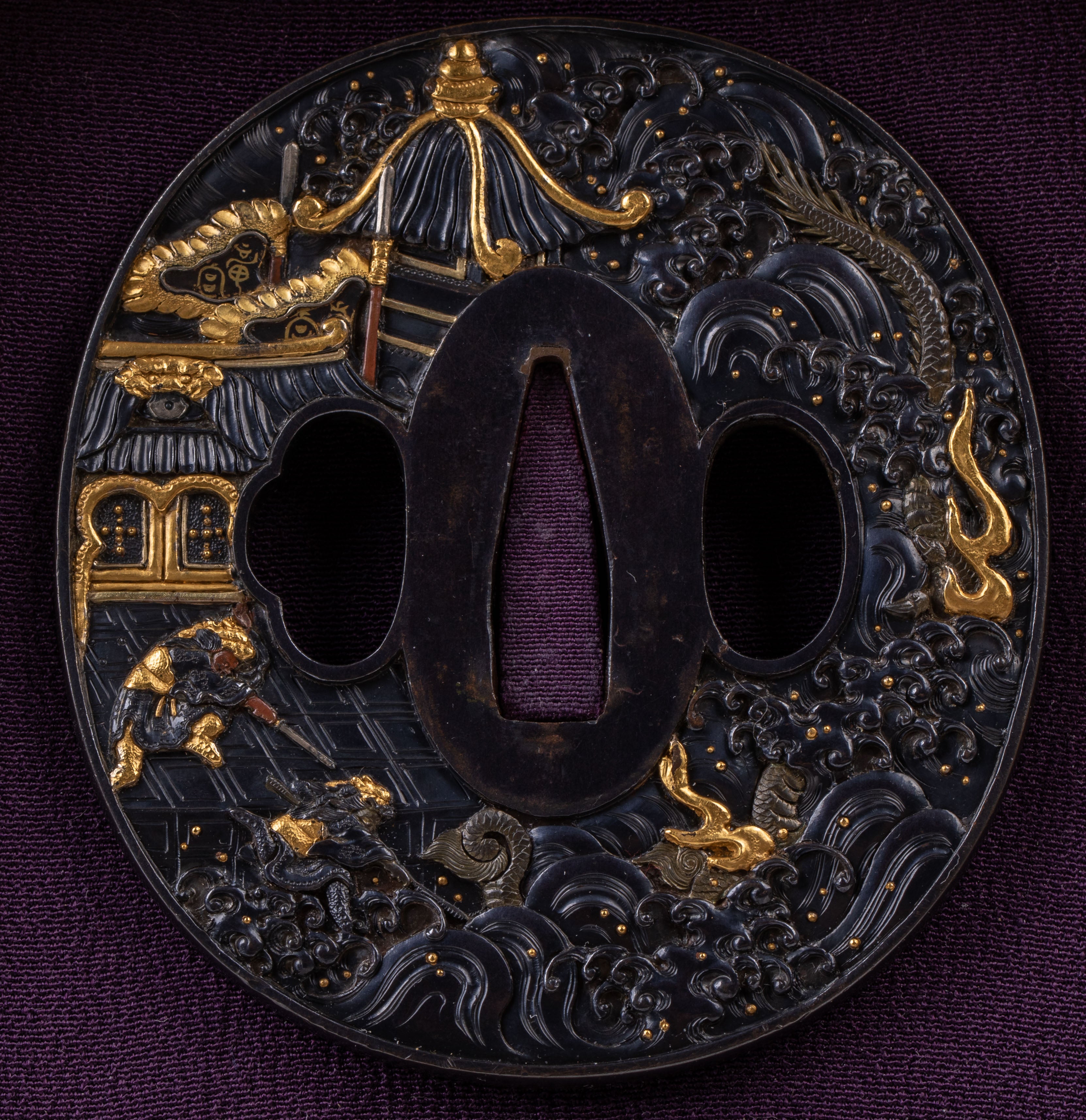
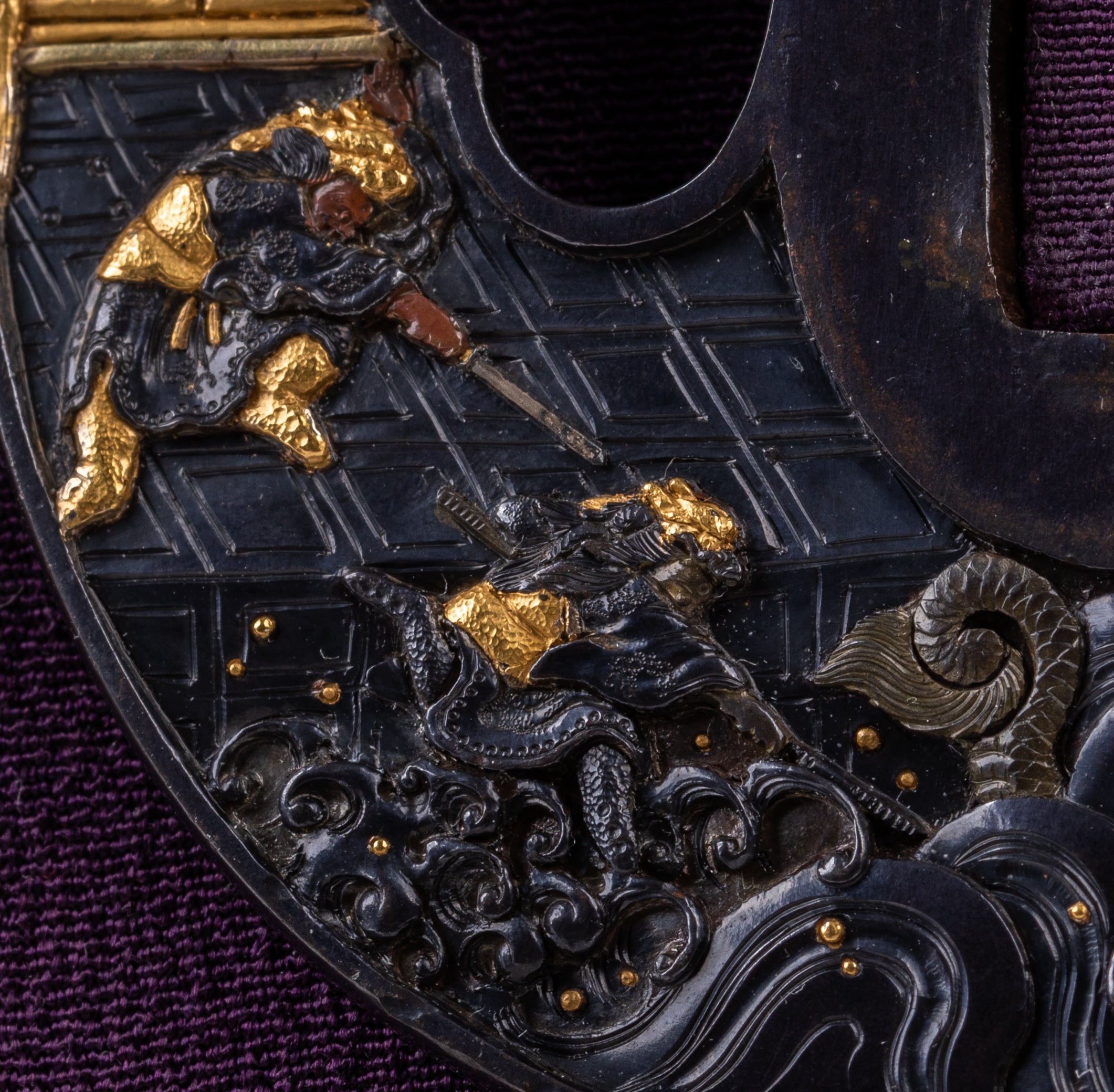
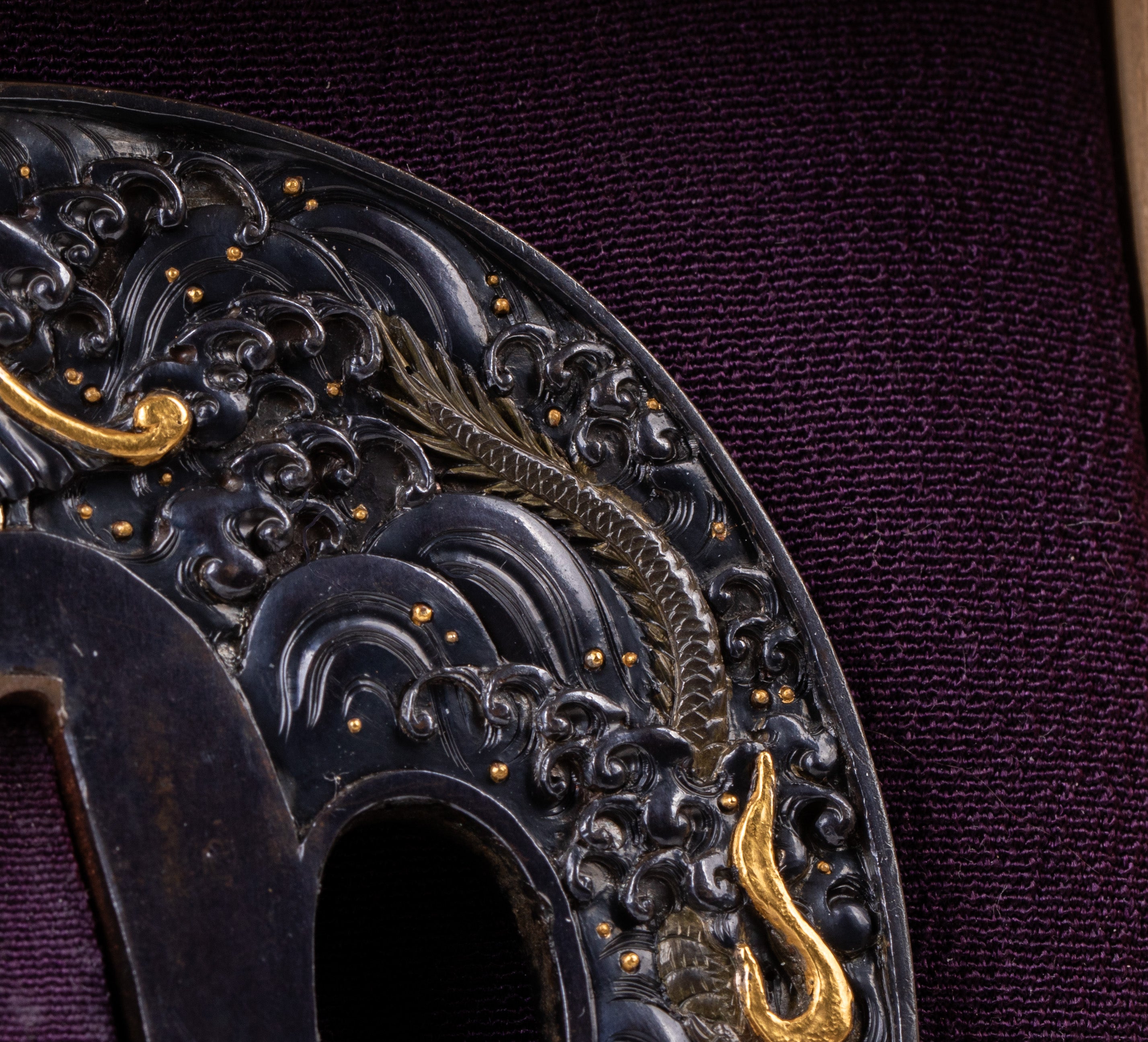
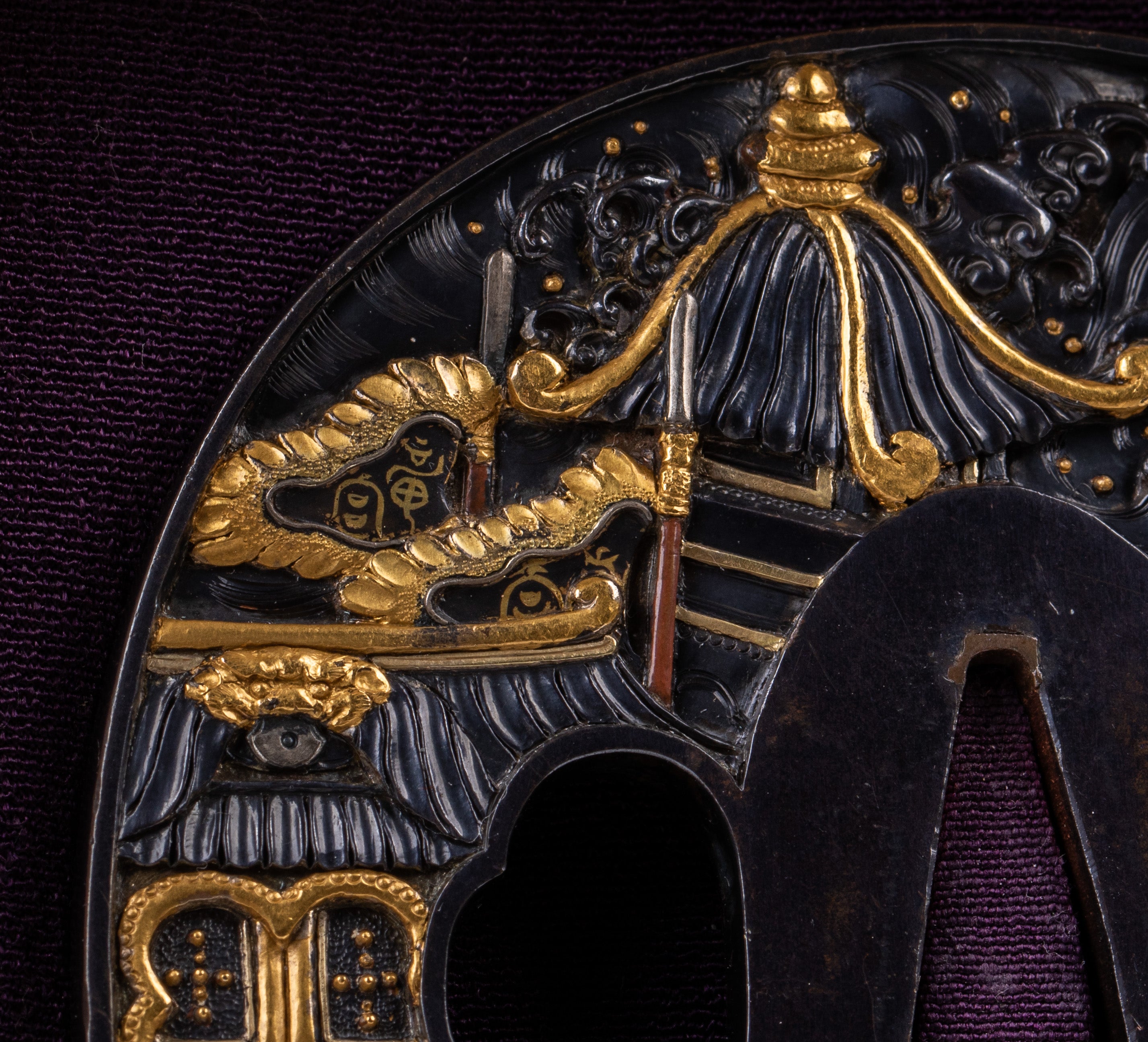
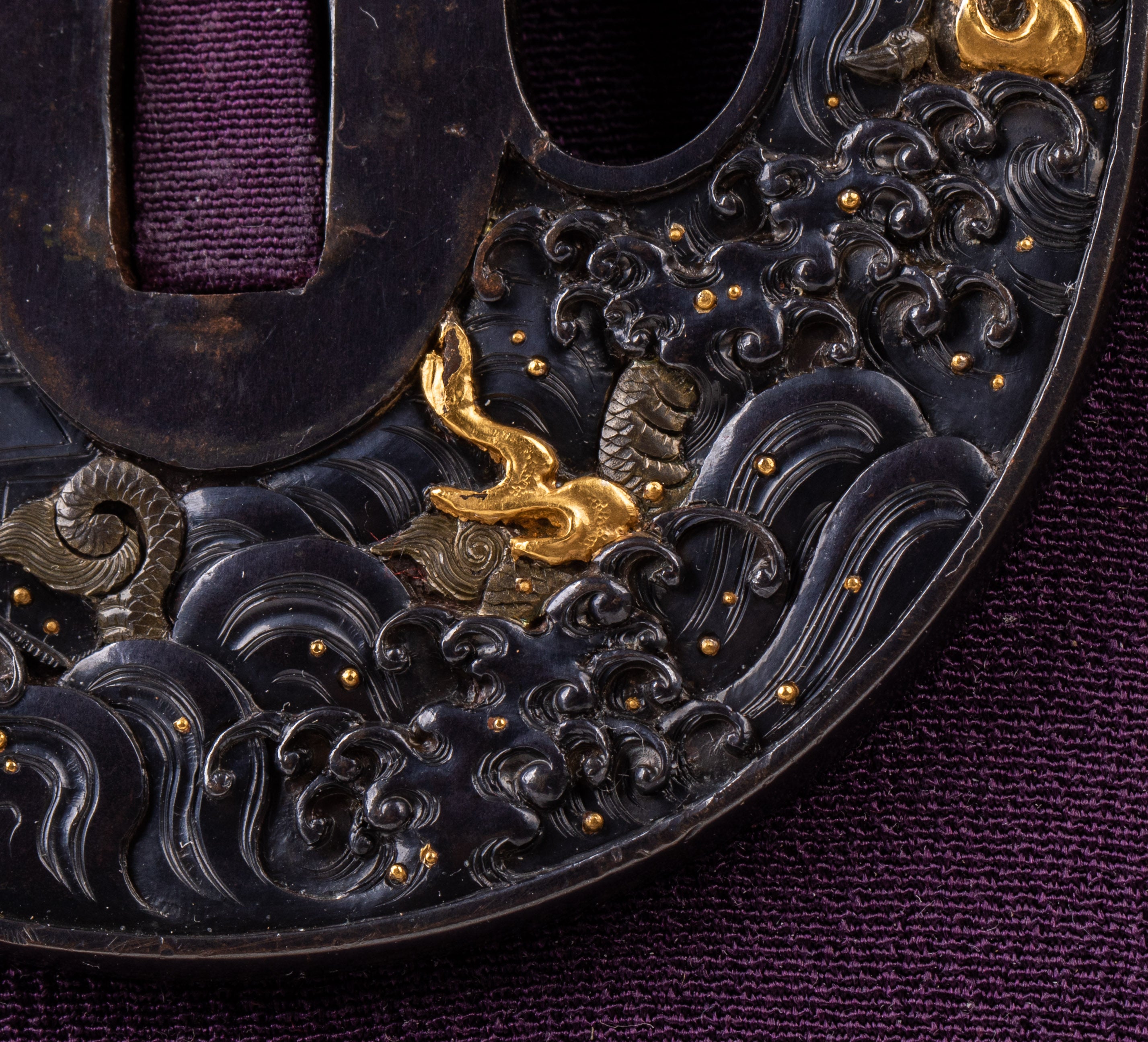
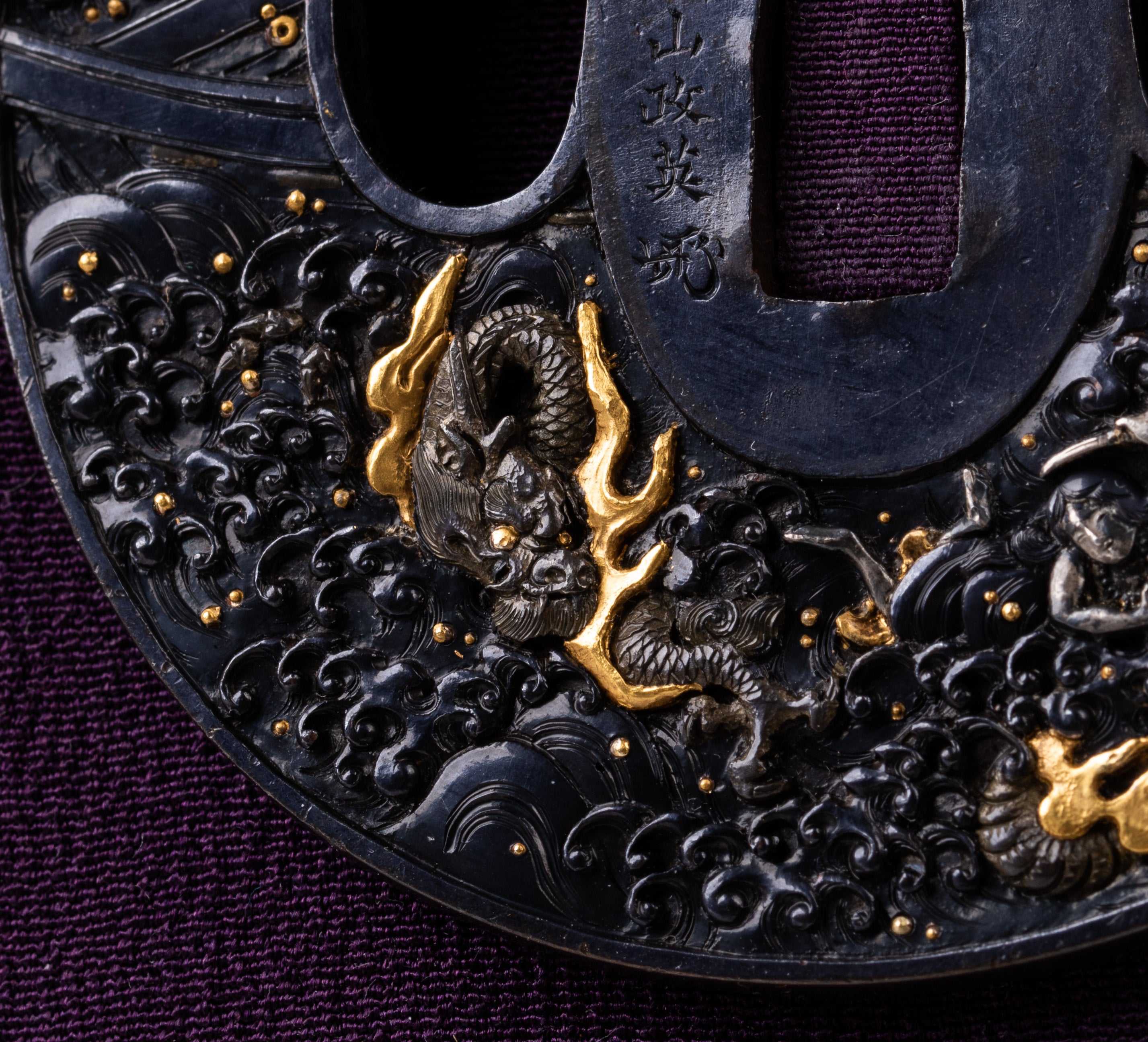
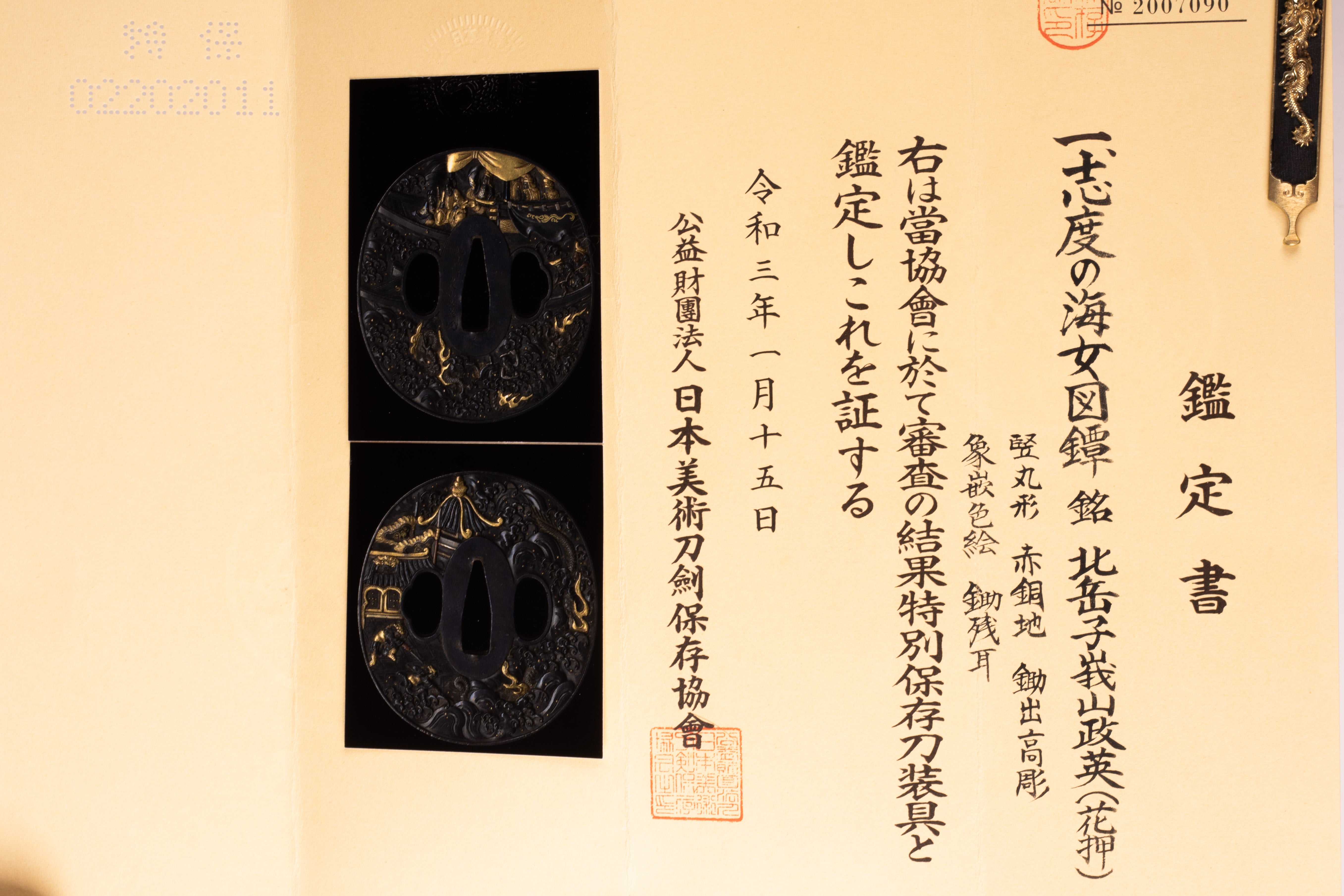
Shakudo tsuba signed "Hokugakushi Gasan Masahide" with Kao with NBTHK Tokubetsu Hozon Tosogu. Decorated with the story of Ama, a beautiful tale of a mother that sacrifices her life for the prosperity of her son. Not much is known by this artist other than that he was active around 1850. There are few of his works recorded, including two tsuba in the collection of Museum of Fine Arts in Boston. Both with the same style of waves and similar dragons as the one presented. However it seems that this particular piece is of higher quality than any other work of this craftsman I was able to find. This tsuba might not represent the prevailing style of the times it was made, with every single millimeter of the piece covered with huge amounts of detail. To the point that it looks like a full size canvas not a small metal plate. I fairly believe that this was a conscious choice of the craftsman, who wanted to show devotion to the theme by making this tsuba as challenging and time consuming as possible. He was making a sacrifice that corresponded with the one from the story. I am sorry if I am not able to properly convey my thoughts here, however I hope that they can be understood to some degree. This tsuba depicts the story of Ama, a female diver who managed to retrieve the stolen jade from a Dragon King. It is a somewhat complicated story of a mother that sacrifices her life for the prosperity of her son, who in turn prays for his mother, allowing her to become a dragon herself. It is a beautiful tale of the relationship between mother and son. While this is a popular Noh story, it is extremely rare to see this motive on sword fittings. I believe this is one of very few themes on sword fittings that we can relate to so strongly today. Here is a full version of the story, however please keep in mind that there are many versions so a lot of details may vary. According to the story, the younger sister of court minister Fujiwara no Fuhito traveled to China to marry Chinese Emperor
NihontoWatch
金工 · 1670頃
正秀の位置づけを、日本刀全体および伝法・時代・時期ごとに示します。各区分(随一・屈指・有数・著名)は、NBTHK および文化庁による指定に加え、三作や名物帳などの歴史的栄誉を加味したものです。
各項目を選ぶと評価方法が表示されます。
金工
現在5点販売中
野村派は江戸に拠点を置いた金工の一流であり、江戸時代中期を中心に活動した。説示において「江戸野村派の上手」[[c:3]]と称される野村正秀をはじめ、同派の中核をなす師弟の系譜として野村正道(正道、別称・正道)の名が繰り返し記される。正道の門人として最も多くの指定作を残す津尋甫(大津八左衛門)は、江戸銀座四丁目辺に住し、享保七年(一七二二)頃より宝暦十二年(一七六二)の歿年まで活動したことが説示に明記されている。正道から尋甫へと連なる師承の軸が、同派の中心的な伝系を構成する。 野村派の共通した作風は、赤銅魚子地を基調とし、高彫を主技法とする力強い写実表現に集約される。説示には「写実に徹した作が多く」[[c:4]]「作風は力強く且つ写生的」[[c:5]]との評が繰り返し見られ、海老・猛禽・百合・小禽といった動植物の題材が一貫して取り上げられている。柏樹に猛禽を配した縁頭の図柄は「極めて迫力があり、傑作がある」[[c:6]]と評され、海老の描写については「人の目を驚かすものがあり、すべて生物の作に秀れている」[[c:7]]と記されるなど、自然の生態を直截に捉える観察眼が同派の最大の特質として位置づけられる。技法面では、赤銅高彫のほか、金色絵・据文・色絵による多彩な金属表現が施され、素銅や金を用いた立体的な意匠が構成に奥行きを与えている。一部の作品には後藤家の作風との関連が指摘され、「後藤風の格調高さに加えて、彫口に尋甫ならではの力強さ、斬新さが看取される」[[c:8]]と説示に記される。また『加納夏雄彫金談』の「紋模様際立って鮮麗なり」[[c:9]]との引用が、同派の精緻にして鮮明な彫技を裏づけている。作品形態は縁頭が最も多く、鐔・小柄・三所物がこれに次ぐ。 野村派の意義は、後藤家に範を仰ぎつつも、写実に徹した独自の表現領域を確立した点にある。十二支図三所物のように「後藤上代の作に範をとった」[[c:10]]構成においても、説示は「尋甫ならではの力強さ、斬新さ」[[c:11]]を看取しており、伝統的な格式と独創的な写生精神との融合が同派の本領として評価されている。縁頭の作に「特に傑出したものが多い」[[c:12]]とされ、柏樹猛禽図や百合花図の諸作が繰り返し傑作と称されるように、野村派は赤銅魚子地高彫という技法的基盤のうえに、力強い造形と鋭い彫法をもって江戸金工の一角に確固たる地位を占めている。 詳しく見る →
保存刀装具のうち、出来・保存状態が一層優れ、銘文や作風に資料的価値の高いものと認められたものです。
日本美術刀剣保存協会(NBTHK)は、1948年に設立され、文化庁の監督を受ける公益財団法人で、東京・刀剣博物館に本部を置きます。専門の審査員が出品作を直接審査し、美術的・歴史的価値に応じた鑑定書を発行します。NBTHKの鑑定書は、日本刀および刀装具の真正性を示す最も広く認知された基準です。
NBTHK公式サイトInspection period (per the shop's shipping policy): after receiving the item, each customer has two weeks for inspection. In that time you may decide to return it, and the item will be refunded in full. Shipping costs are not refunded. Returns (per the shop's refund policy): the policy lasts 30 days; once 30 days have passed since purchase, no refund or exchange is possible. To be eligible for a return, the item must be in the same condition in which it was received and in its original packaging. Customized products cannot be returned. In certain situations only a partial refund is granted. Return shipping is at the customer's expense, and shipping costs are non-refundable.