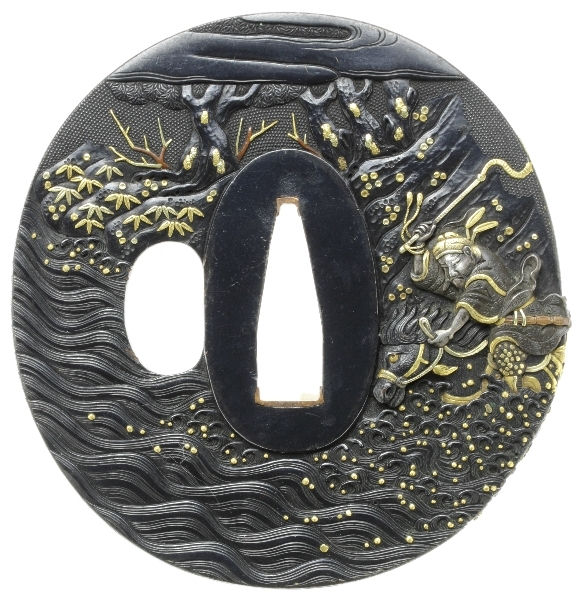
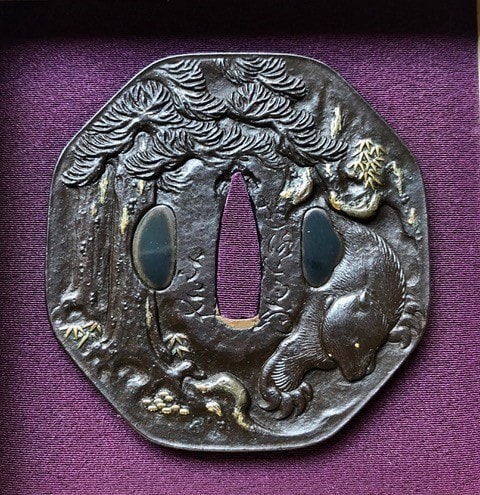
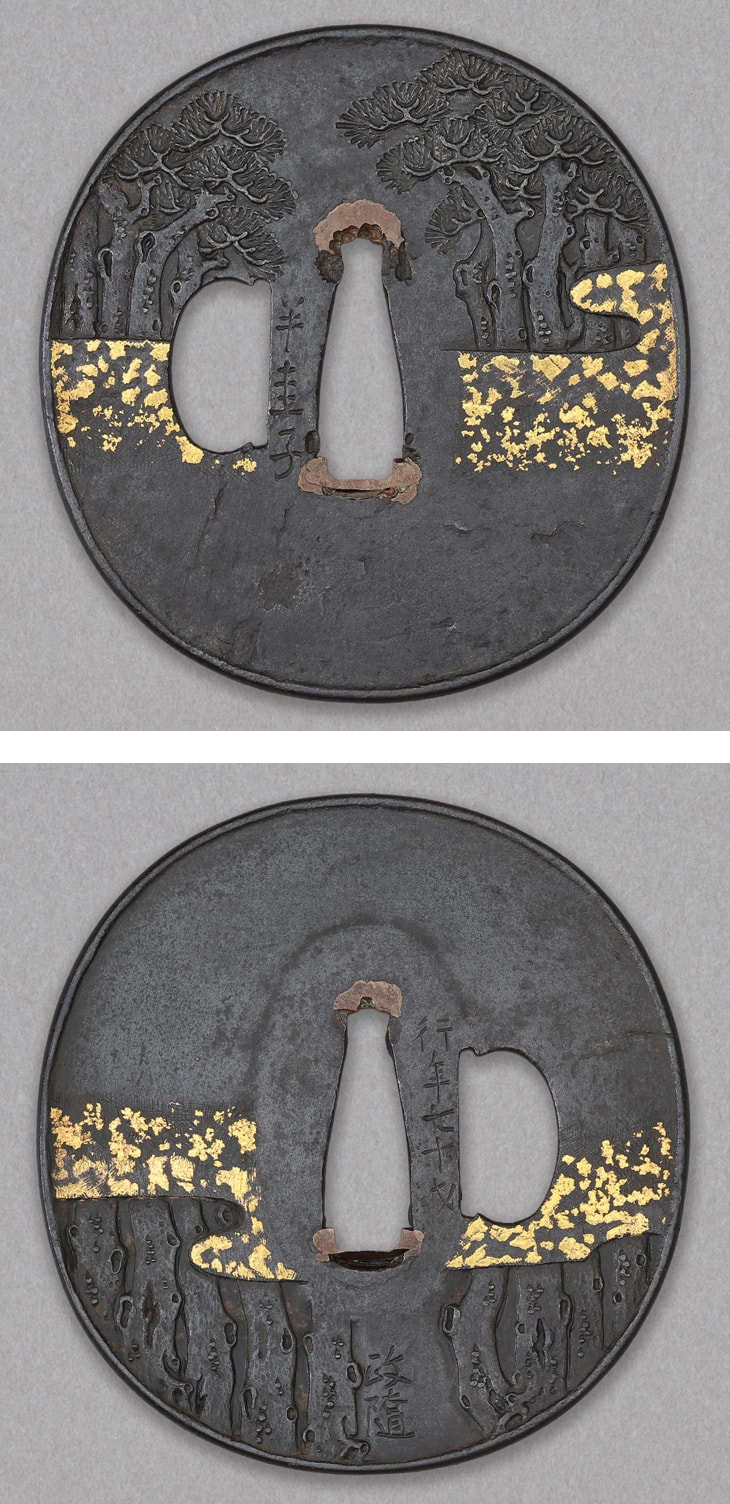
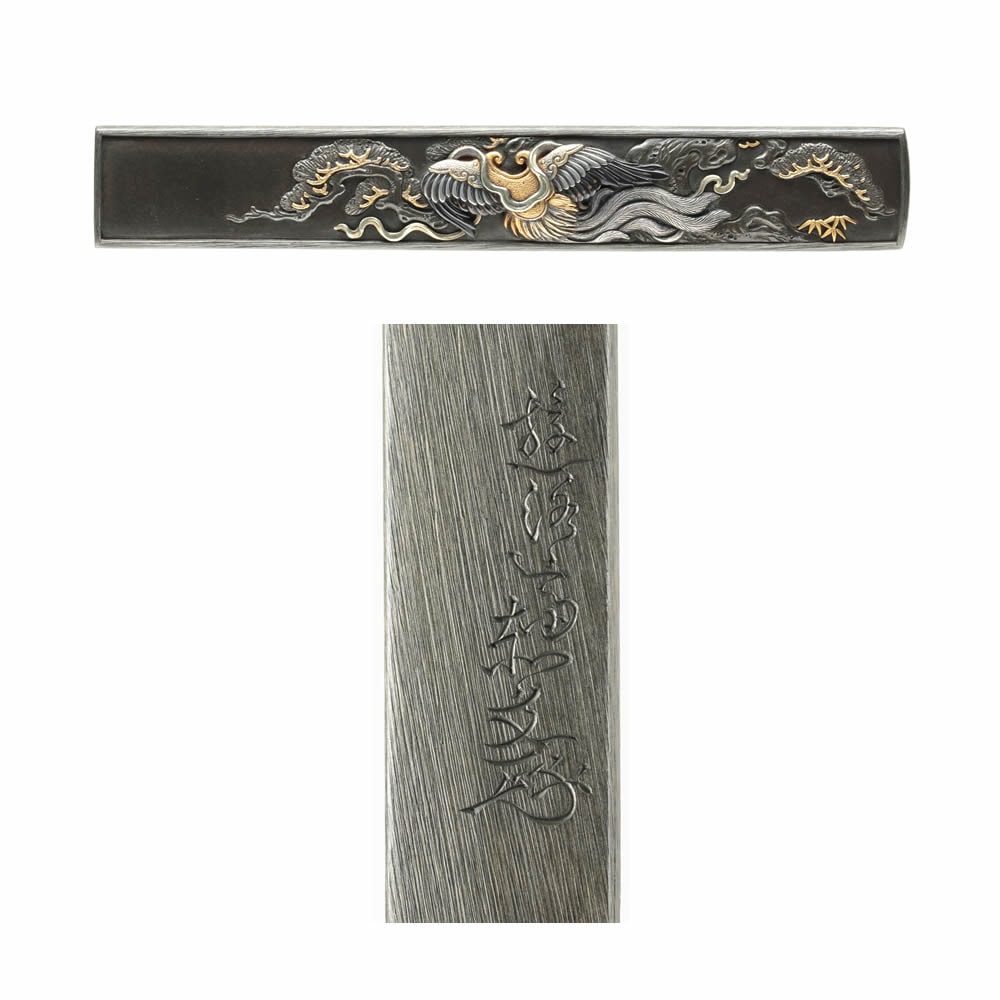
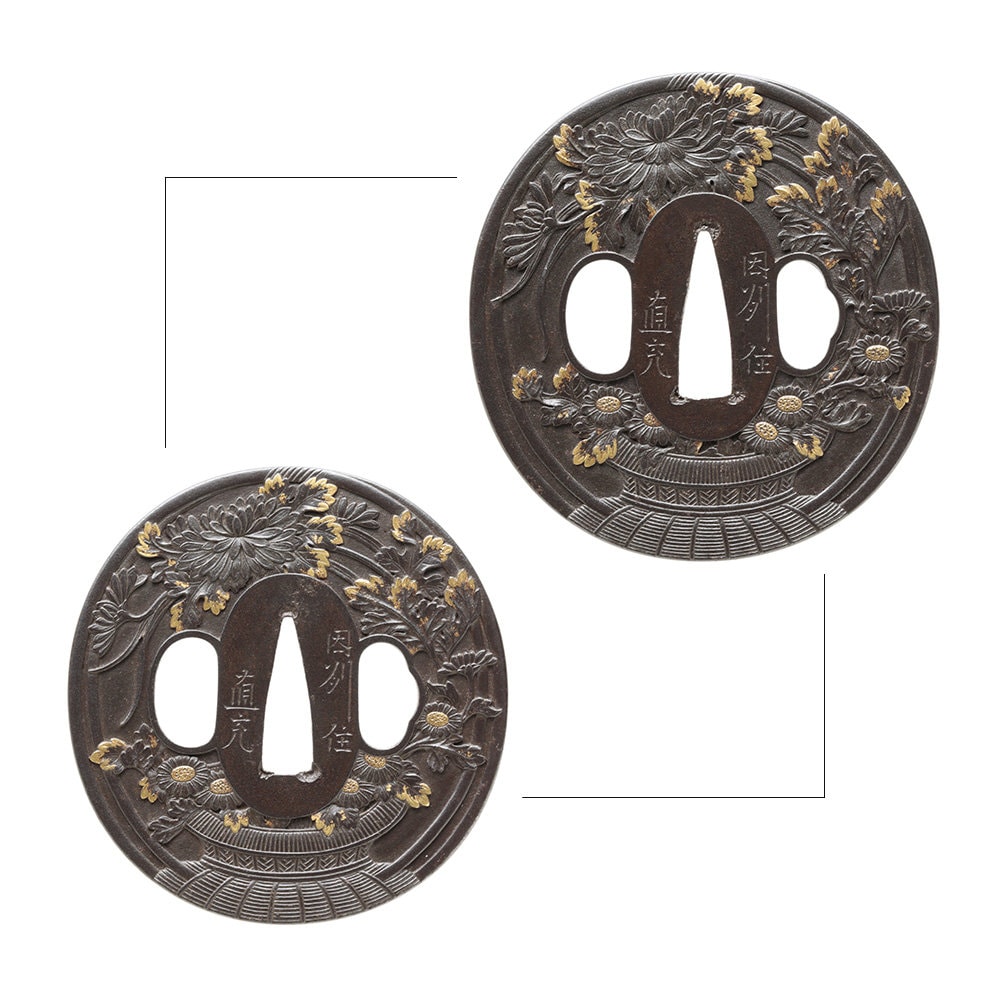
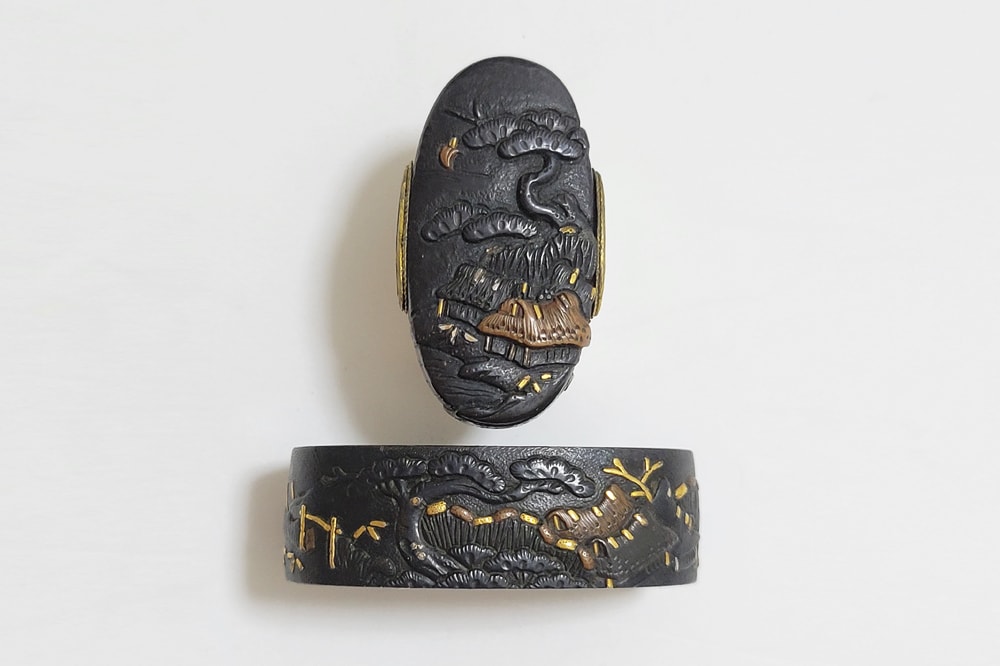
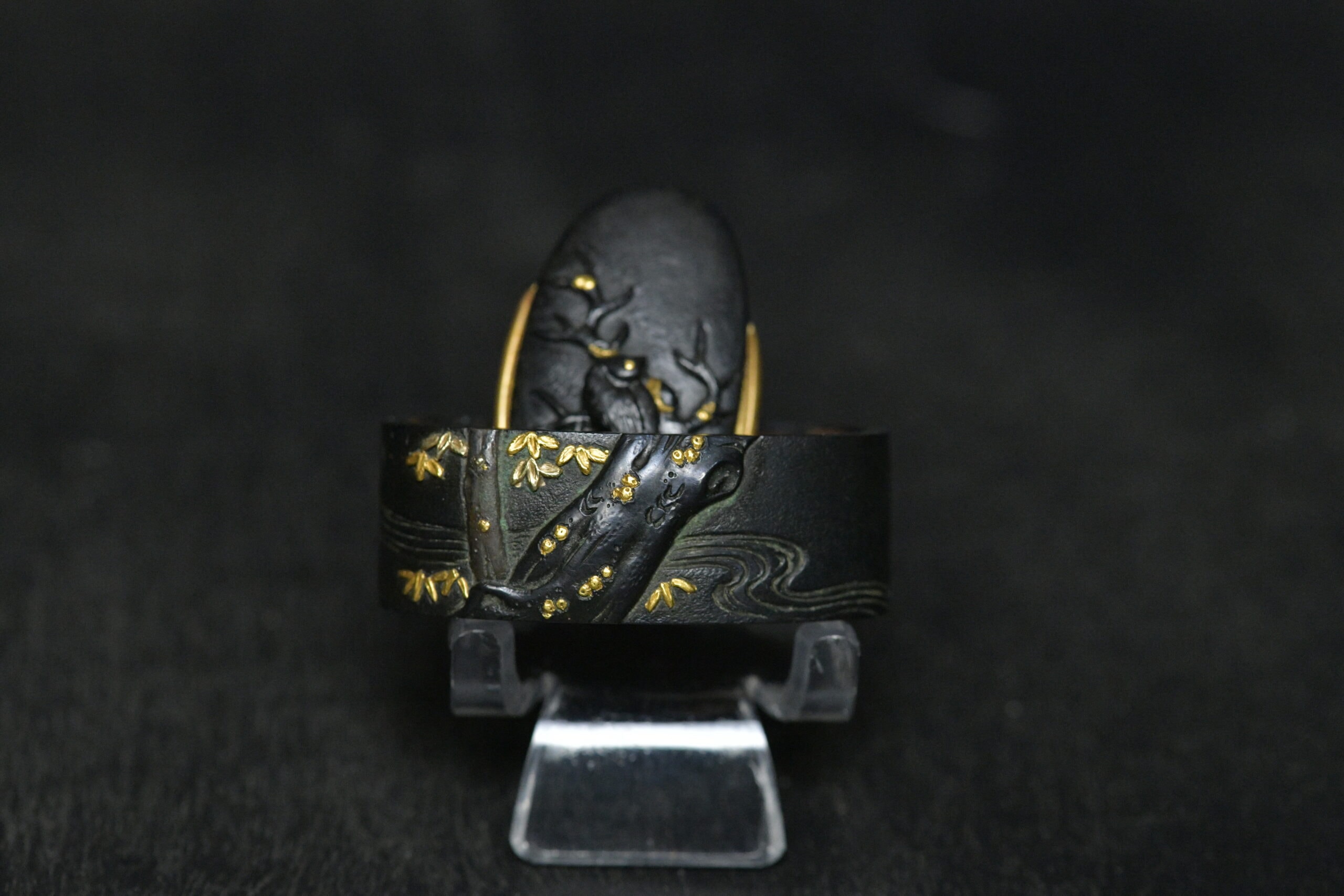
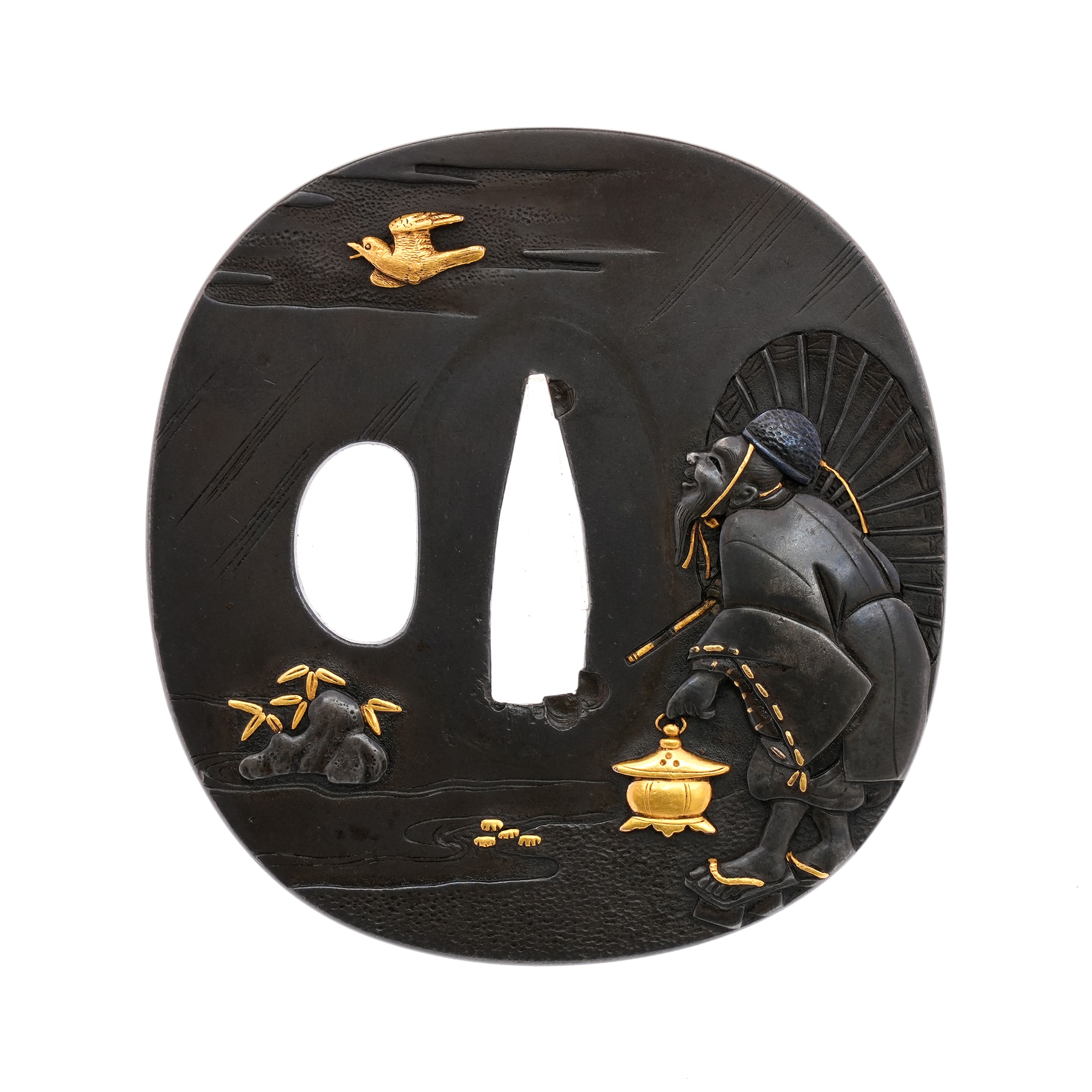
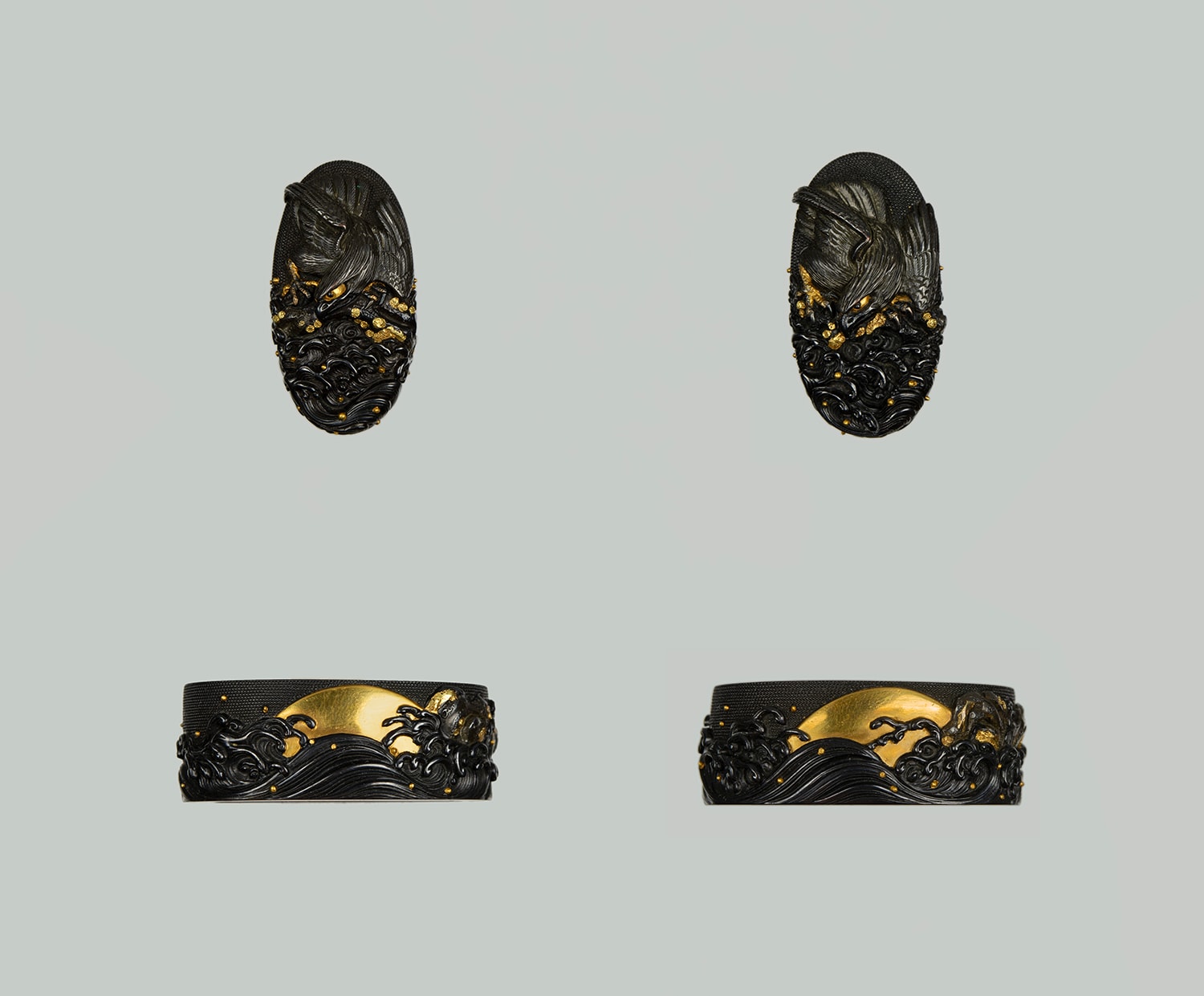
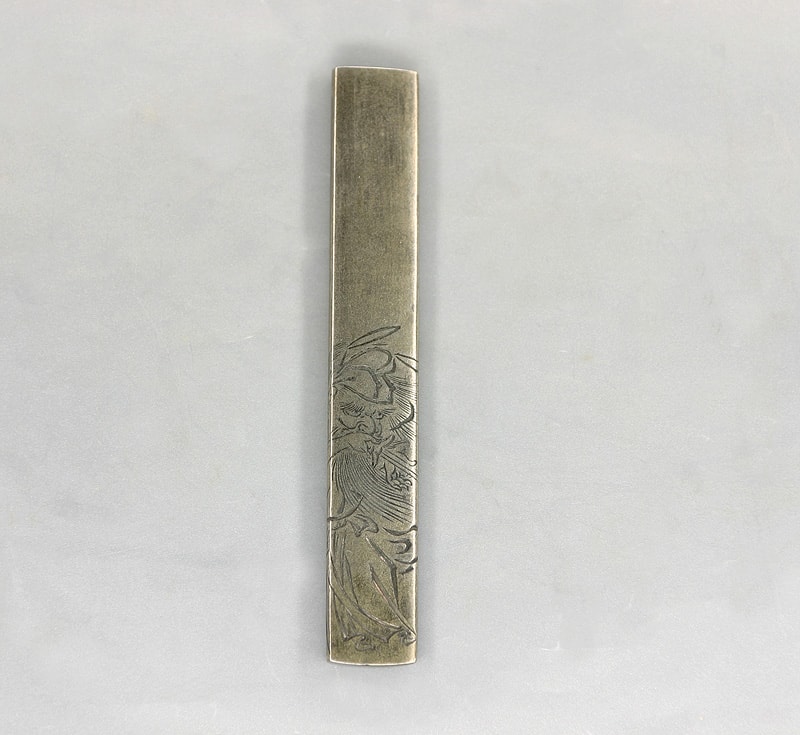
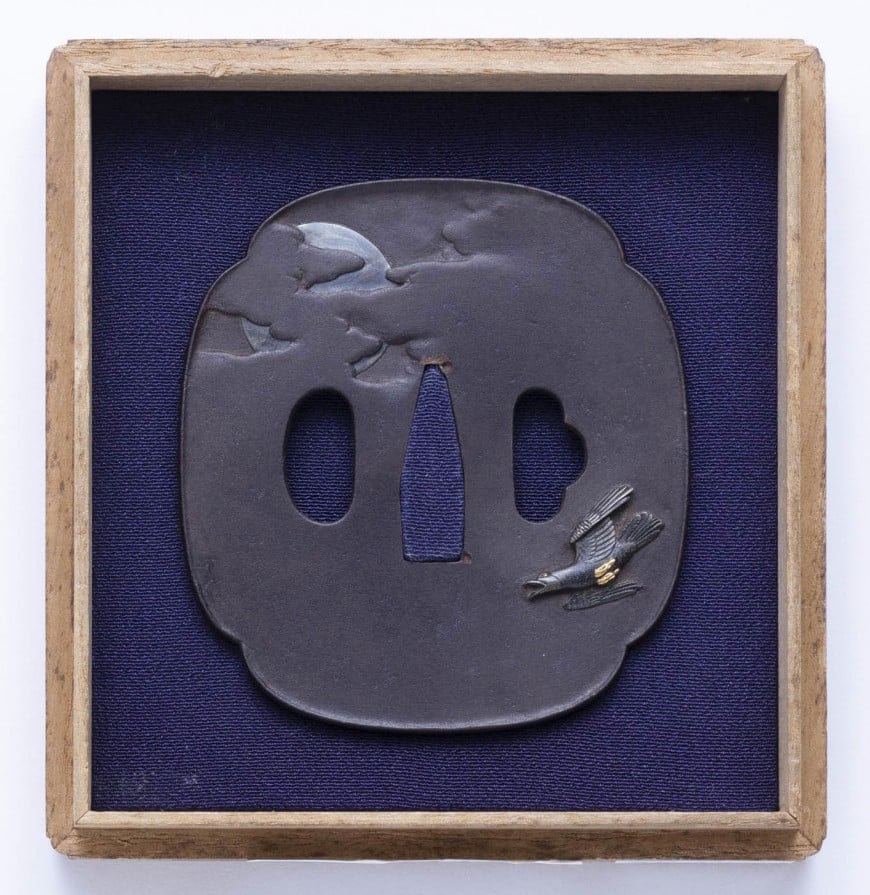
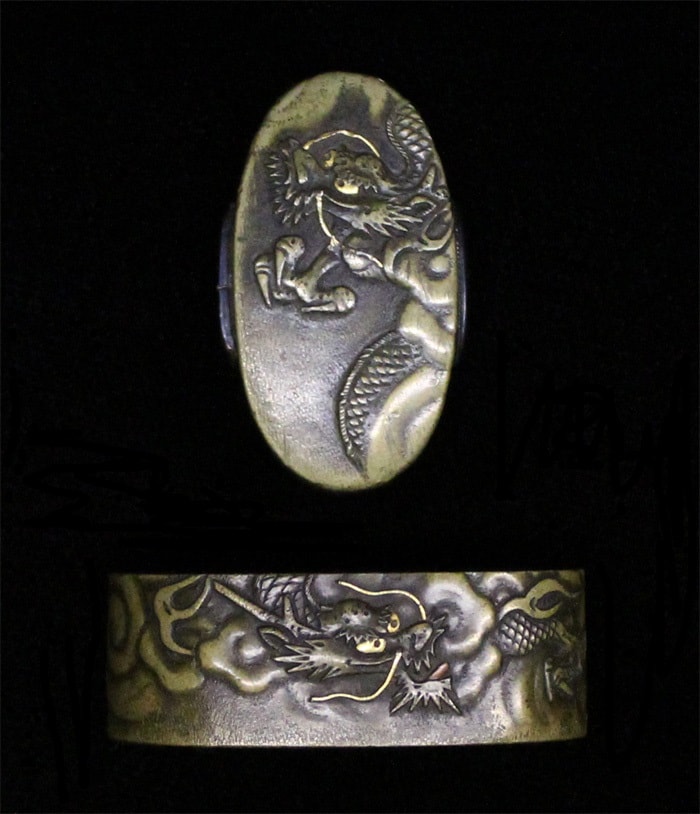
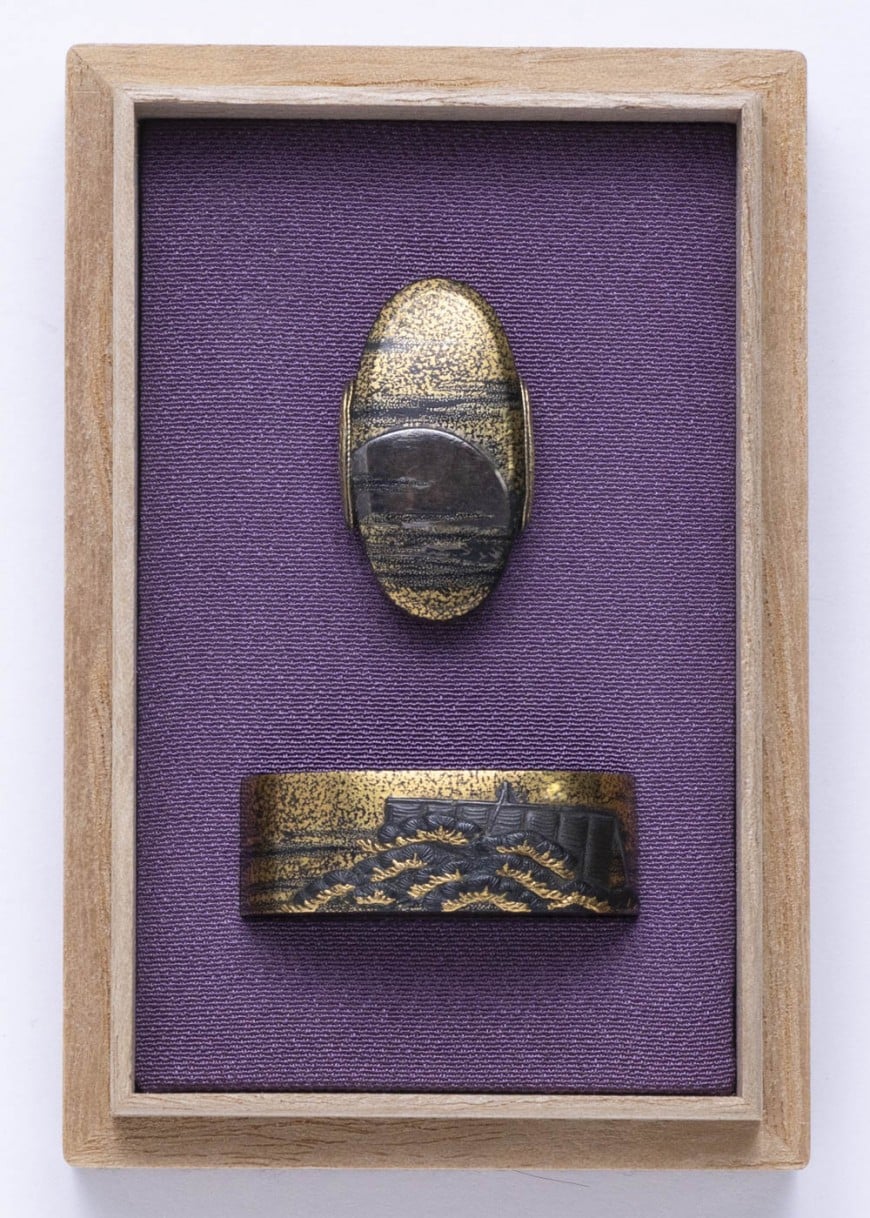
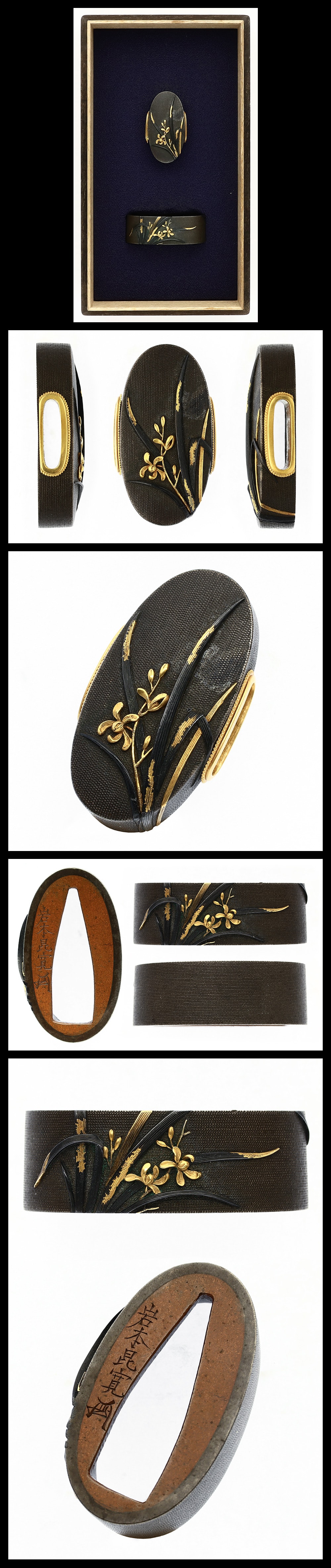
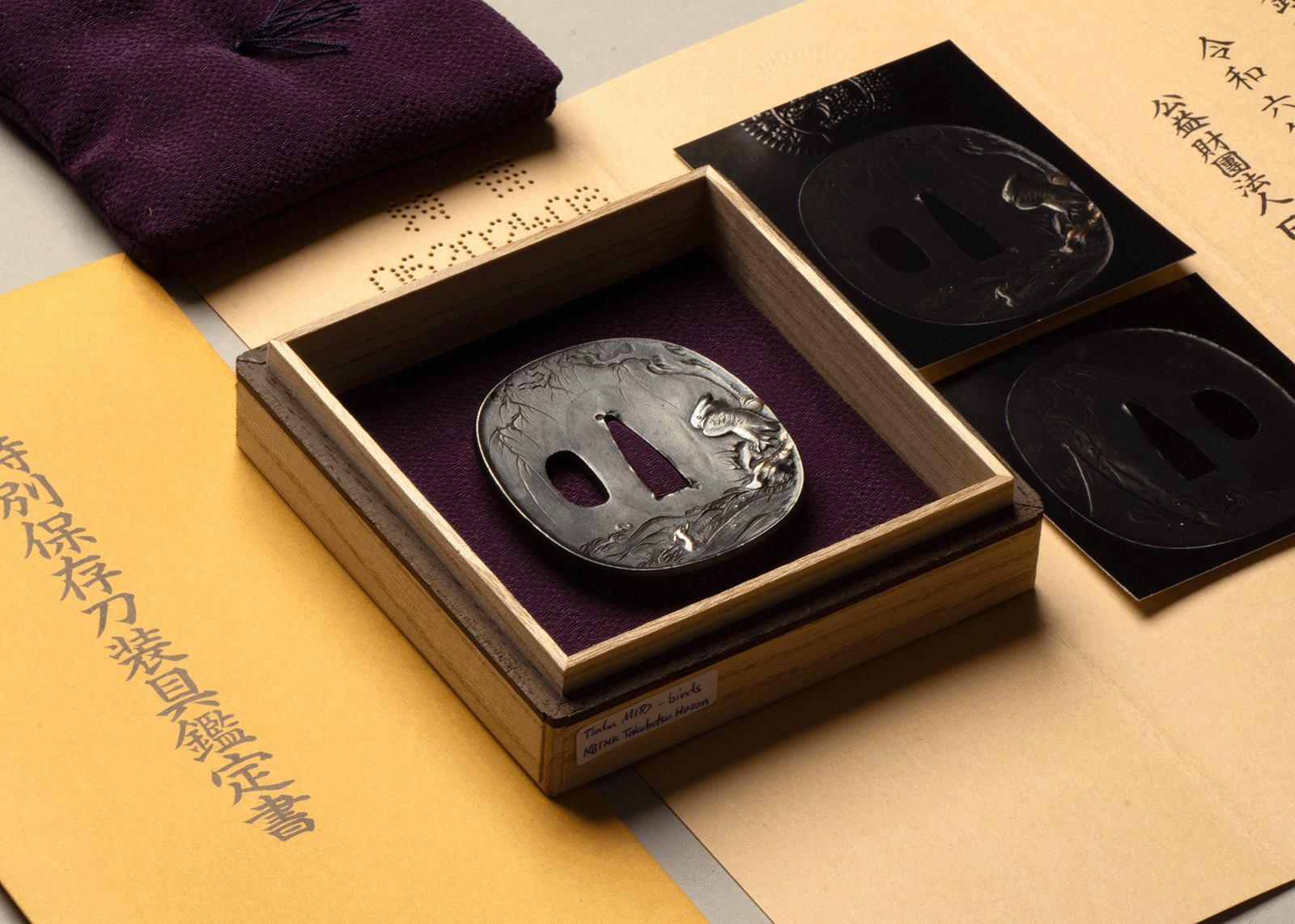
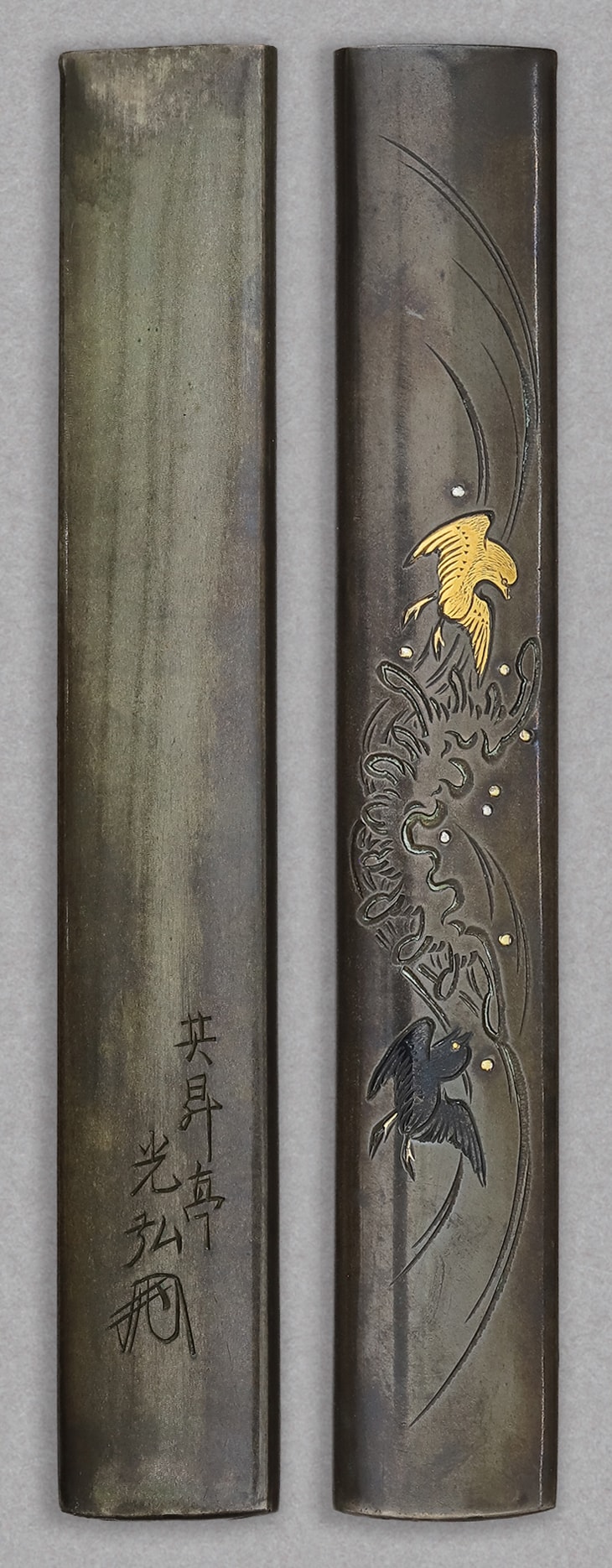
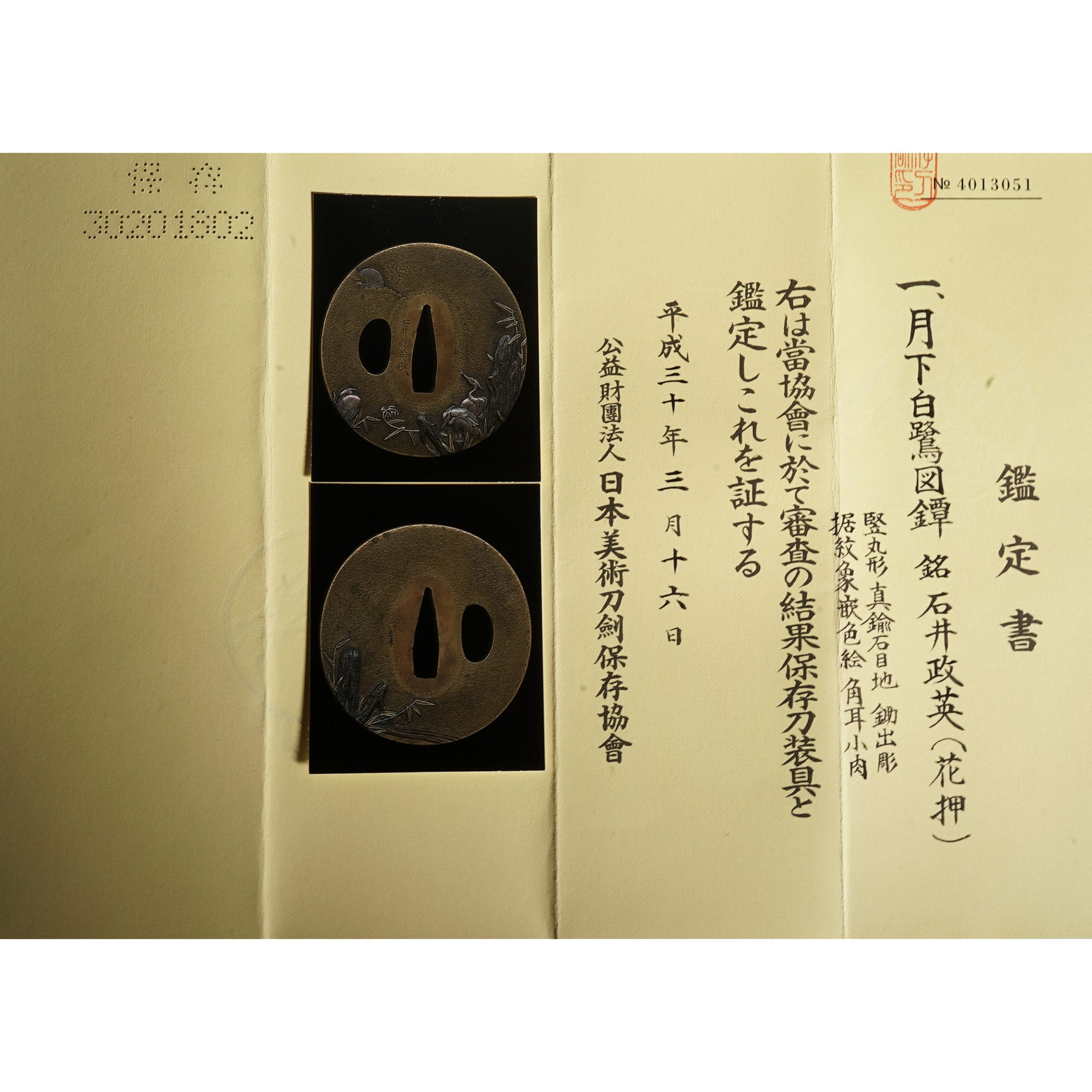
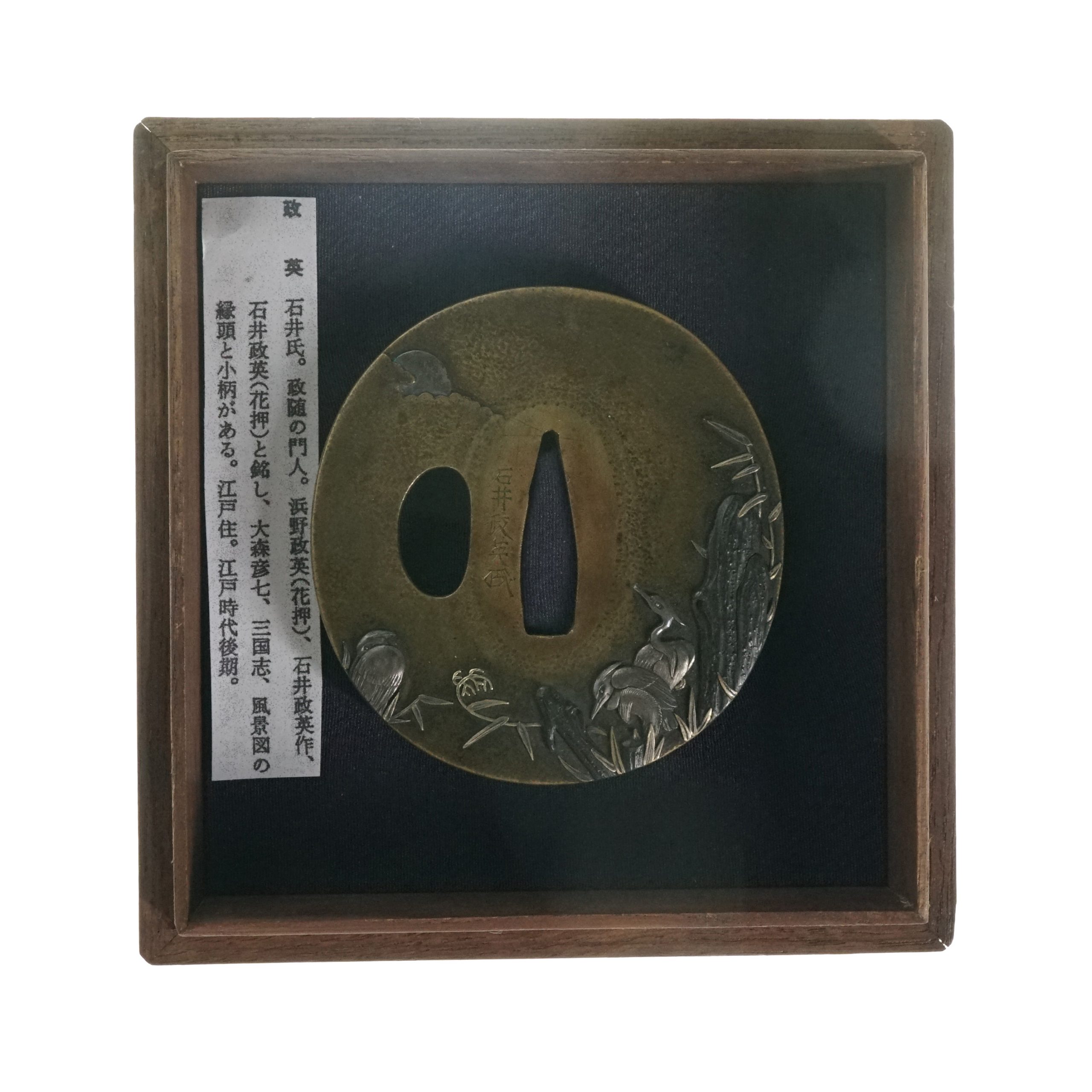
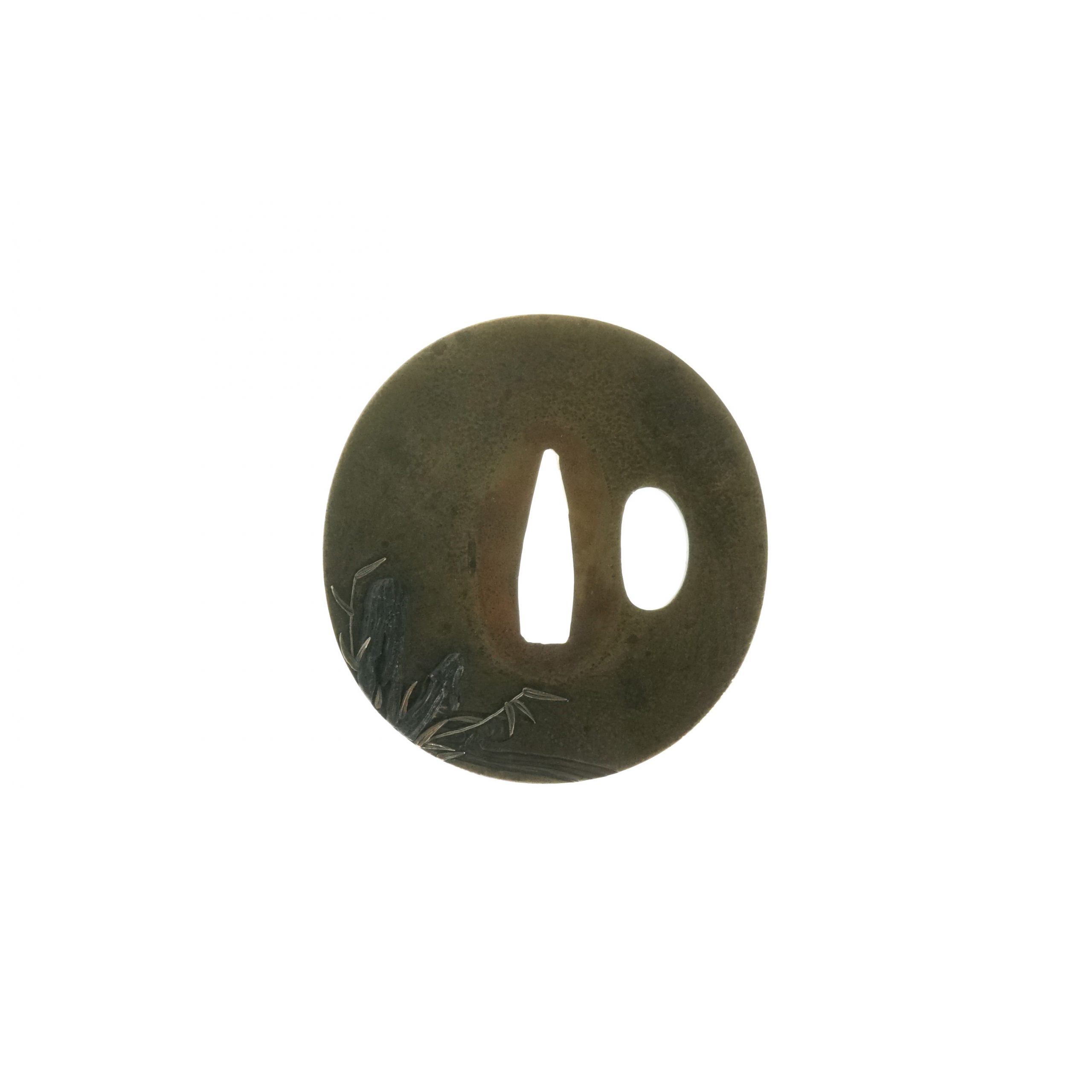
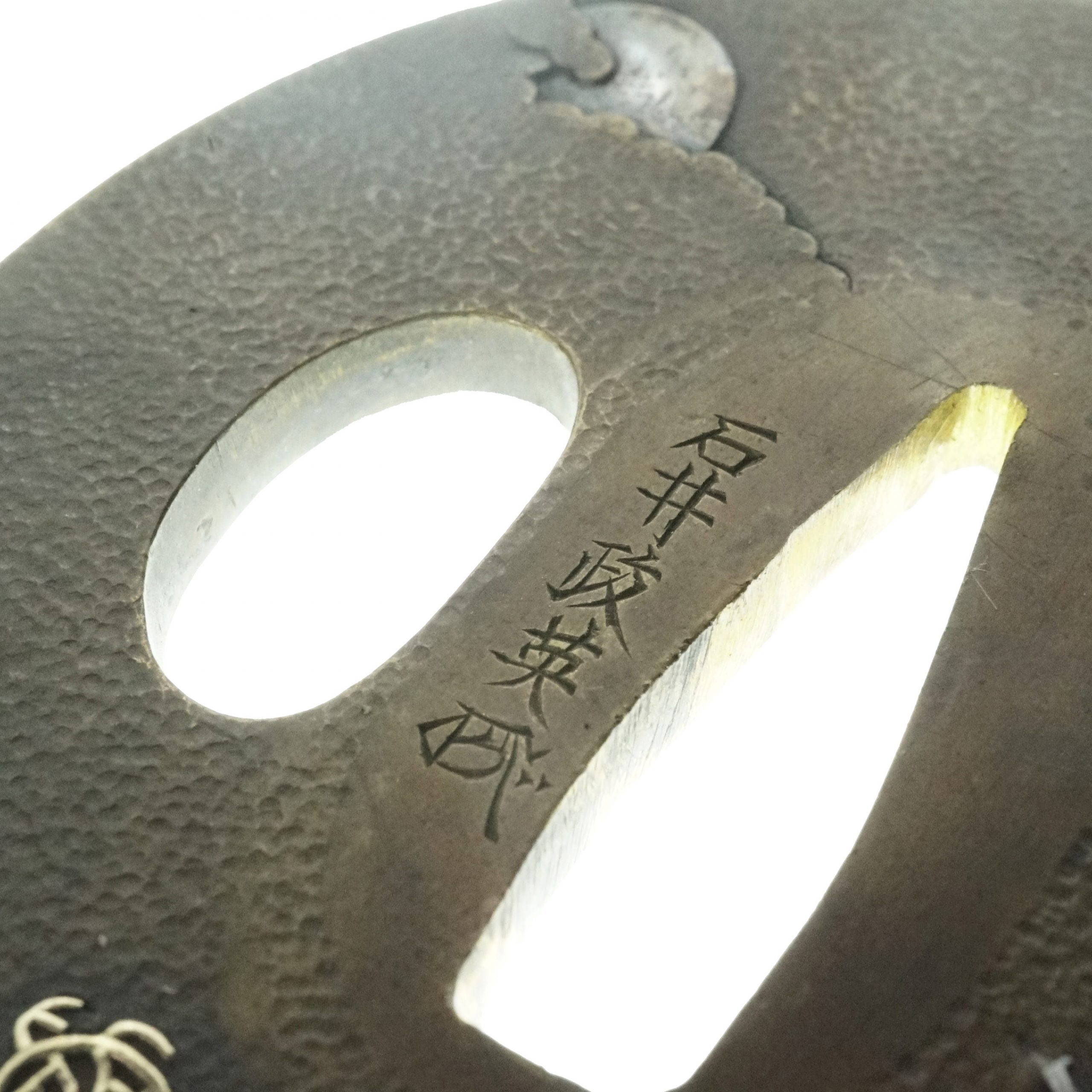
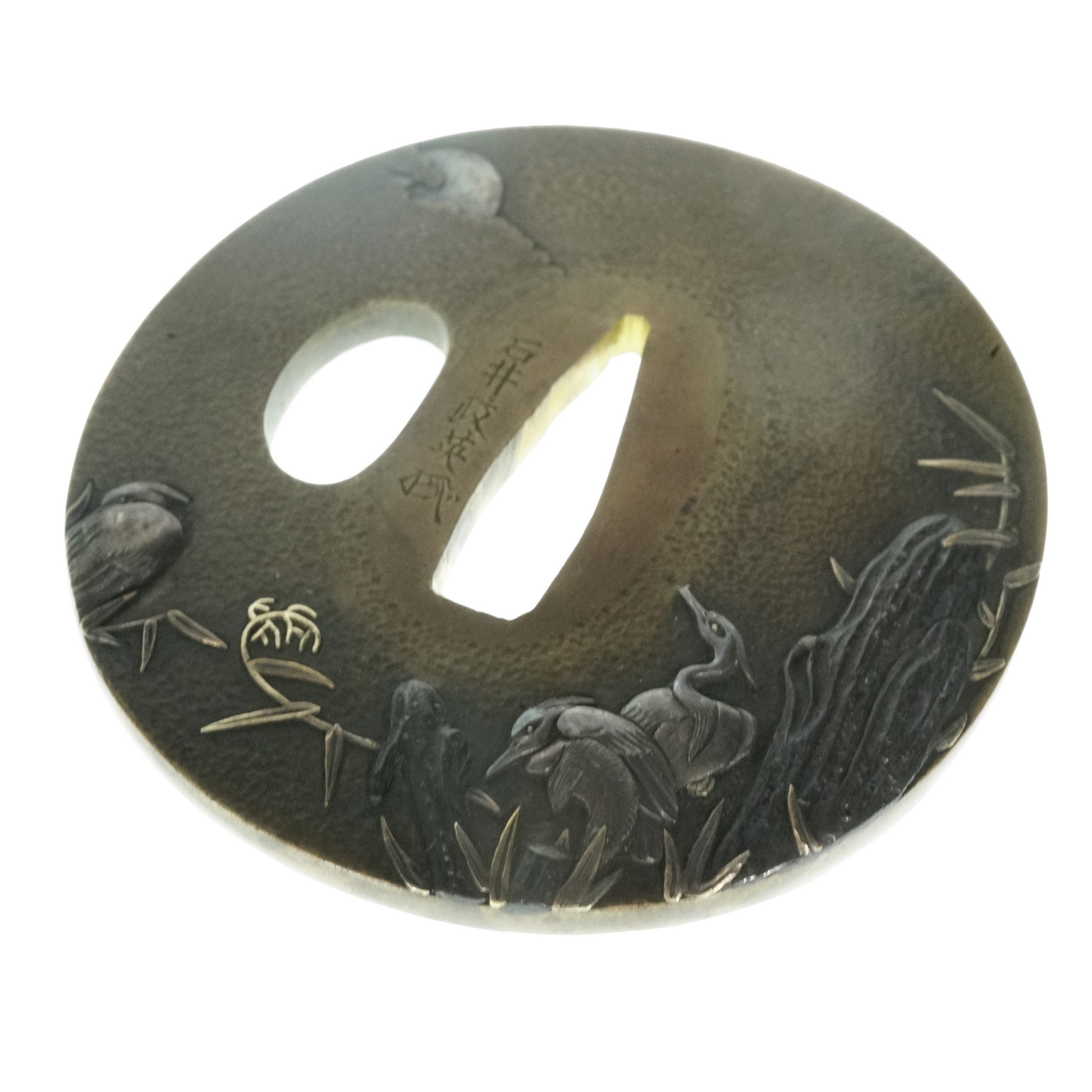
作品名:月下白鷺図(げっかしらさぎず) 【解説】 真鍮地(しんちゅうじ)を用いた竪丸形の鐔です。「月下」は文字通り月明かりの下を指し、「白鷺」は古来よりその清廉な白い羽と優美な姿から、陶磁器をはじめ様々な工芸品の画題として愛されてきました。本作では、月を見上げながら羽を休める白鷺の姿が描かれています。刀装具において「月」は秋の象徴でもあり、静まり返った秋の夜長を彷彿とさせる情景です。白鷺や草花の写実的な彫り口は実に見事で、作者の技量の高さが伺える逸品といえます。 作者の石井政秀(いしい まさひで)は、浜野派の開祖である浜野政随(はまの しょうずい)の門人で、江戸で活躍した名工です。鐔のほか、小柄や縁頭などの優れた作品を遺しています。 本作は日本美術刀剣保存協会(NBTHK)により「保存刀装具」に認定されています。 ※アンティーク品のため、状態については写真にて詳細をご確認ください。 【鐔(つば)とは】 鐔は日本刀の拳を守るための護具であると同時に、武士の美意識を象徴する重要な装飾品でもありました。特に鐔の表側は、登城の際や街を歩く際に他者の目に触れる部分であるため、意匠を凝らした華やかな細工が多く見られます。 【刀装具の魅力】 日本刀には鐔、目貫、縁頭といった様々な装身具(刀装具)が備わっています。これらは単なる武器の部品ではなく、持ち主の個性や信念、教養を示すものでした。現代で例えるならば、スマートフォンの装飾に近い感覚かもしれません。 ぜひ細部まで拡大してご覧ください。鉄や銅、赤銅、四分一といった素材に、金・銀・素銅などの象嵌を施す日本の伝統的な彫金技術の粋が詰まっています。鐔一枚をとっても、その造形や重厚感は千差万別です。刀本体と共に時代を生き抜いてきたこれらの刀装具は、美術品として刀剣に劣らぬ価値を持っており、刀装具にこだわることこそが真の「数寄者(目利き)」への第一歩と言えるでしょう。 【鑑定書について】 鑑定:日本美術刀剣保存協会(NBTHK) 保存刀装具鑑定書 日本美術刀剣保存協会は、日本で最も権威のある刀剣鑑定機関の一つです。本作は平成30年(2018年)3月16日に「保存刀装具」として認定されました。ご購入者様にはこの鑑定書原本をお付けいたします。ご希望があれば、鑑定書の内容を英訳したPDFファイルを作成することも可能です。 【運営:サムライミュージアム】 東京・新宿に位置するサムライミュージアムでは、侍の歴史に関する貴重な資料を展示しております。当オンラインショップでは、日本刀、甲冑、伝統工芸品など、日本の職人技が光るアンティーク品を厳選して取り扱っております。 【お支払い方法】 Stripe(クレジットカード)、PayPal、Apple Pay、Google Payをご利用いただけます。その他の決済方法をご希望の場合はお問い合わせください。日本円(JPY)のほか、米ドル(USD)、豪ドル(AUD)、ユーロ(EUR)、英ポンド(GBP)での決済が可能です。 【配送について】 通常、日本郵便のEMS(国際スピード郵便)にて発送いたします。お届けまで通常5〜14日ほどお時間をいただきます。 ※カナダ、オーストラリアへのお届けは、現在DHLを利用しております。EMSまたはDHLを利用可能な地域への発送は「送料無料」にて承ります。その他の配送業者をご希望の場合はご相談ください。発送後、追跡番号をメールにてお知らせいたします。
 NihontoWatch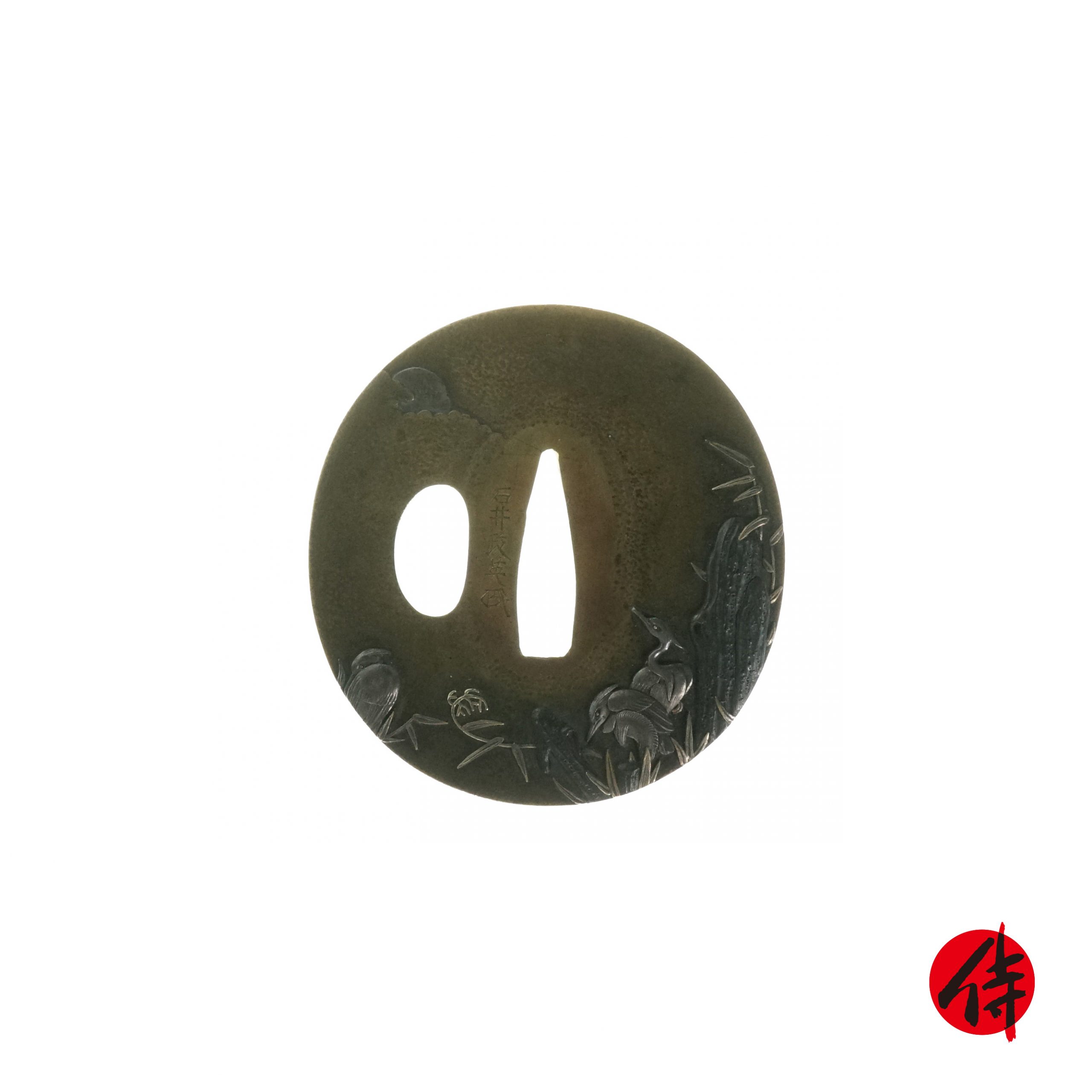
浜野派
江戸
在銘
保存 (NBTHK)
町彫 · Edo
現在30点販売中
浜野派は江戸時代中期に奈良利寿の門人であった浜野政隨を祖とする装剣金工の一派である。政隨は通称を太郎兵衛といい、奈良四天王の一人として高名を馳せ、江戸金工名譜に「世に雷鳴す」と評される逸材であった。乙柳軒・味墨・閑径・驪風堂・遊壺亭・穐峰斎・半圭子・一瞬庵など多くの別号を有し、多数の門人を育成して町彫の主要な門流を形成し一家をなした。四代正信は乙柳軒味墨の号を継承し、政隨の伝統を継承している。また越後村上出身の桂野赤文は、青年時代に出府して浜野家に学び、のちに遊洛斎の号を用いたことから京都での修業も推測され、庄内藩酒井家の抱え工として活躍した。 浜野派の技術は大胆な高肉彫・鋤出彫・肉合彫・片切彫等あらゆる技法に長じており、その技量は極めて高く評価される。政隨の作には金銀の芋継地に容彫で韋駄天疾駆鬼を表したものや、金無垢地に銀と赤銅の置金を施した容彫で仁王像を表したものがあり、肉取りが巧みで量感に富み、題材の力強さを見事に表現している。その彫口には後藤上代の作を範としたとみられる落ち着きある品格が備わっている。四代正信の作には虫尽総金具の大小拵があり、銀四分一の石目地に高彫と据文色絵を施した各種の虫の図が揃っており、華麗かつ入念な仕上がりを示している。 桂野赤文の作風は土屋安親を手本として研鑽を積んだことが知られ、鐔を多く制作し、鉄と赤銅の地金に高肉彫形式で色絵を施すことを得意とした。片切彫・肉合彫・象嵌等の技法も用い、銘文には郷里越後の書家亀田鵬斎流の草書体を用いている。波千鳥図鐔では安親を手本とした題材を鉄地に鋤出による高肉彫で堂々と表し、千鳥の眼と足にのみ金銀の象嵌を施して画面全体に締まりと動きを与えている。柔軟な鏨使いながらも力強さを感じさせるその彫口は赤文独特のものであり、桂野家史に「生気躍動」「巧緻」と評されるその作風を顕示している。 詳しく見る →
銘が正しい、または無銘でも年代・流派を指摘でき、美術工芸的価値が認められる、保存に値する真正の刀装具と鑑定されたものです。
日本美術刀剣保存協会(NBTHK)は、1948年に設立され、文化庁の監督を受ける公益財団法人で、東京・刀剣博物館に本部を置きます。専門の審査員が出品作を直接審査し、美術的・歴史的価値に応じた鑑定書を発行します。NBTHKの鑑定書は、日本刀および刀装具の真正性を示す最も広く認知された基準です。
NBTHK公式サイトReturns/exchanges limited to defects caused by shipping (except willful misconduct or gross negligence by the company); customers must contact within 72 hours of receiving the product.
作品名:月下白鷺図(げっかしらさぎず) 【解説】 真鍮地(しんちゅうじ)を用いた竪丸形の鐔です。「月下」は文字通り月明かりの下を指し、「白鷺」は古来よりその清廉な白い羽と優美な姿から、陶磁器をはじめ様々な工芸品の画題として愛されてきました。本作では、月を見上げながら羽を休める白鷺の姿が描かれています。刀装具において「月」は秋の象徴でもあり、静まり返った秋の夜長を彷彿とさせる情景です。白鷺や草花の写実的な彫り口は実に見事で、作者の技量の高さが伺える逸品といえます。 作者の石井政秀(いしい まさひで)は、浜野派の開祖である浜野政随(はまの しょうずい)の門人で、江戸で活躍した名工です。鐔のほか、小柄や縁頭などの優れた作品を遺しています。 本作は日本美術刀剣保存協会(NBTHK)により「保存刀装具」に認定されています。 ※アンティーク品のため、状態については写真にて詳細をご確認ください。 【鐔(つば)とは】 鐔は日本刀の拳を守るための護具であると同時に、武士の美意識を象徴する重要な装飾品でもありました。特に鐔の表側は、登城の際や街を歩く際に他者の目に触れる部分であるため、意匠を凝らした華やかな細工が多く見られます。 【刀装具の魅力】 日本刀には鐔、目貫、縁頭といった様々な装身具(刀装具)が備わっています。これらは単なる武器の部品ではなく、持ち主の個性や信念、教養を示すものでした。現代で例えるならば、スマートフォンの装飾に近い感覚かもしれません。 ぜひ細部まで拡大してご覧ください。鉄や銅、赤銅、四分一といった素材に、金・銀・素銅などの象嵌を施す日本の伝統的な彫金技術の粋が詰まっています。鐔一枚をとっても、その造形や重厚感は千差万別です。刀本体と共に時代を生き抜いてきたこれらの刀装具は、美術品として刀剣に劣らぬ価値を持っており、刀装具にこだわることこそが真の「数寄者(目利き)」への第一歩と言えるでしょう。 【鑑定書について】 鑑定:日本美術刀剣保存協会(NBTHK) 保存刀装具鑑定書 日本美術刀剣保存協会は、日本で最も権威のある刀剣鑑定機関の一つです。本作は平成30年(2018年)3月16日に「保存刀装具」として認定されました。ご購入者様にはこの鑑定書原本をお付けいたします。ご希望があれば、鑑定書の内容を英訳したPDFファイルを作成することも可能です。 【運営:サムライミュージアム】 東京・新宿に位置するサムライミュージアムでは、侍の歴史に関する貴重な資料を展示しております。当オンラインショップでは、日本刀、甲冑、伝統工芸品など、日本の職人技が光るアンティーク品を厳選して取り扱っております。 【お支払い方法】 Stripe(クレジットカード)、PayPal、Apple Pay、Google Payをご利用いただけます。その他の決済方法をご希望の場合はお問い合わせください。日本円(JPY)のほか、米ドル(USD)、豪ドル(AUD)、ユーロ(EUR)、英ポンド(GBP)での決済が可能です。 【配送について】 通常、日本郵便のEMS(国際スピード郵便)にて発送いたします。お届けまで通常5〜14日ほどお時間をいただきます。 ※カナダ、オーストラリアへのお届けは、現在DHLを利用しております。EMSまたはDHLを利用可能な地域への発送は「送料無料」にて承ります。その他の配送業者をご希望の場合はご相談ください。発送後、追跡番号をメールにてお知らせいたします。
NihontoWatch浜野派
江戸
在銘
保存 (NBTHK)
町彫 · Edo
現在30点販売中
浜野派は江戸時代中期に奈良利寿の門人であった浜野政隨を祖とする装剣金工の一派である。政隨は通称を太郎兵衛といい、奈良四天王の一人として高名を馳せ、江戸金工名譜に「世に雷鳴す」と評される逸材であった。乙柳軒・味墨・閑径・驪風堂・遊壺亭・穐峰斎・半圭子・一瞬庵など多くの別号を有し、多数の門人を育成して町彫の主要な門流を形成し一家をなした。四代正信は乙柳軒味墨の号を継承し、政隨の伝統を継承している。また越後村上出身の桂野赤文は、青年時代に出府して浜野家に学び、のちに遊洛斎の号を用いたことから京都での修業も推測され、庄内藩酒井家の抱え工として活躍した。 浜野派の技術は大胆な高肉彫・鋤出彫・肉合彫・片切彫等あらゆる技法に長じており、その技量は極めて高く評価される。政隨の作には金銀の芋継地に容彫で韋駄天疾駆鬼を表したものや、金無垢地に銀と赤銅の置金を施した容彫で仁王像を表したものがあり、肉取りが巧みで量感に富み、題材の力強さを見事に表現している。その彫口には後藤上代の作を範としたとみられる落ち着きある品格が備わっている。四代正信の作には虫尽総金具の大小拵があり、銀四分一の石目地に高彫と据文色絵を施した各種の虫の図が揃っており、華麗かつ入念な仕上がりを示している。 桂野赤文の作風は土屋安親を手本として研鑽を積んだことが知られ、鐔を多く制作し、鉄と赤銅の地金に高肉彫形式で色絵を施すことを得意とした。片切彫・肉合彫・象嵌等の技法も用い、銘文には郷里越後の書家亀田鵬斎流の草書体を用いている。波千鳥図鐔では安親を手本とした題材を鉄地に鋤出による高肉彫で堂々と表し、千鳥の眼と足にのみ金銀の象嵌を施して画面全体に締まりと動きを与えている。柔軟な鏨使いながらも力強さを感じさせるその彫口は赤文独特のものであり、桂野家史に「生気躍動」「巧緻」と評されるその作風を顕示している。 詳しく見る →
銘が正しい、または無銘でも年代・流派を指摘でき、美術工芸的価値が認められる、保存に値する真正の刀装具と鑑定されたものです。
日本美術刀剣保存協会(NBTHK)は、1948年に設立され、文化庁の監督を受ける公益財団法人で、東京・刀剣博物館に本部を置きます。専門の審査員が出品作を直接審査し、美術的・歴史的価値に応じた鑑定書を発行します。NBTHKの鑑定書は、日本刀および刀装具の真正性を示す最も広く認知された基準です。
NBTHK公式サイトReturns/exchanges limited to defects caused by shipping (except willful misconduct or gross negligence by the company); customers must contact within 72 hours of receiving the product.