 NihontoWatchNihontoWatch
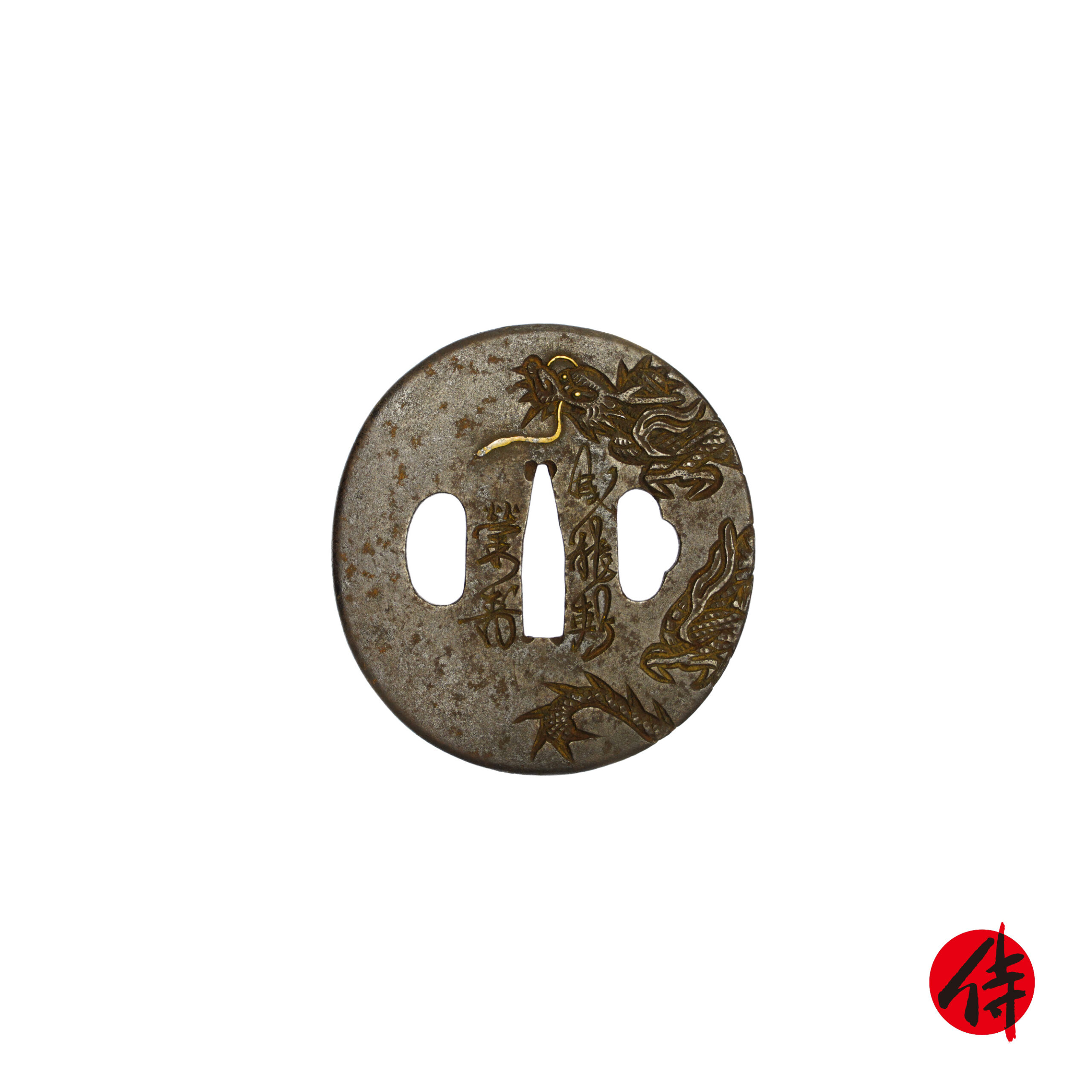
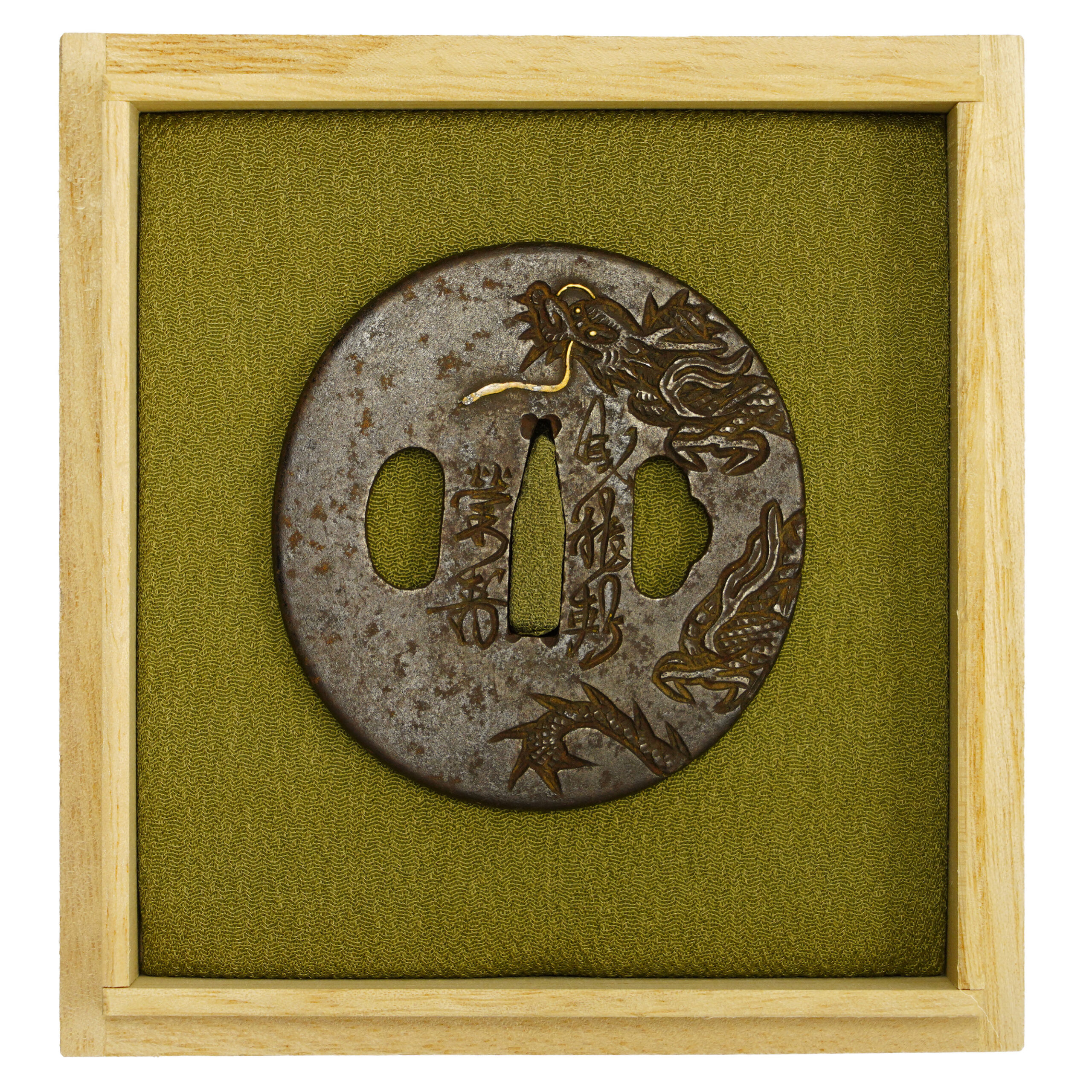
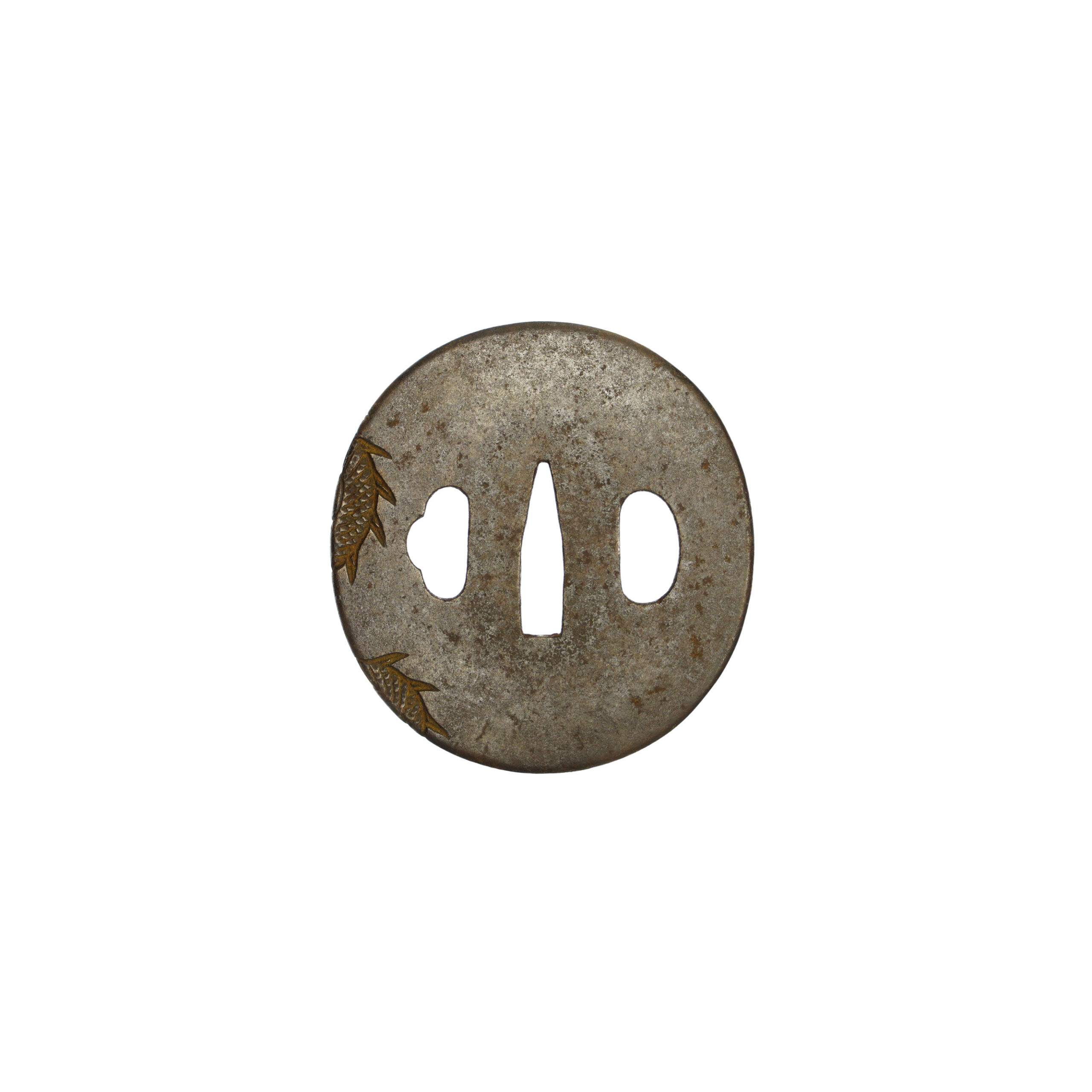
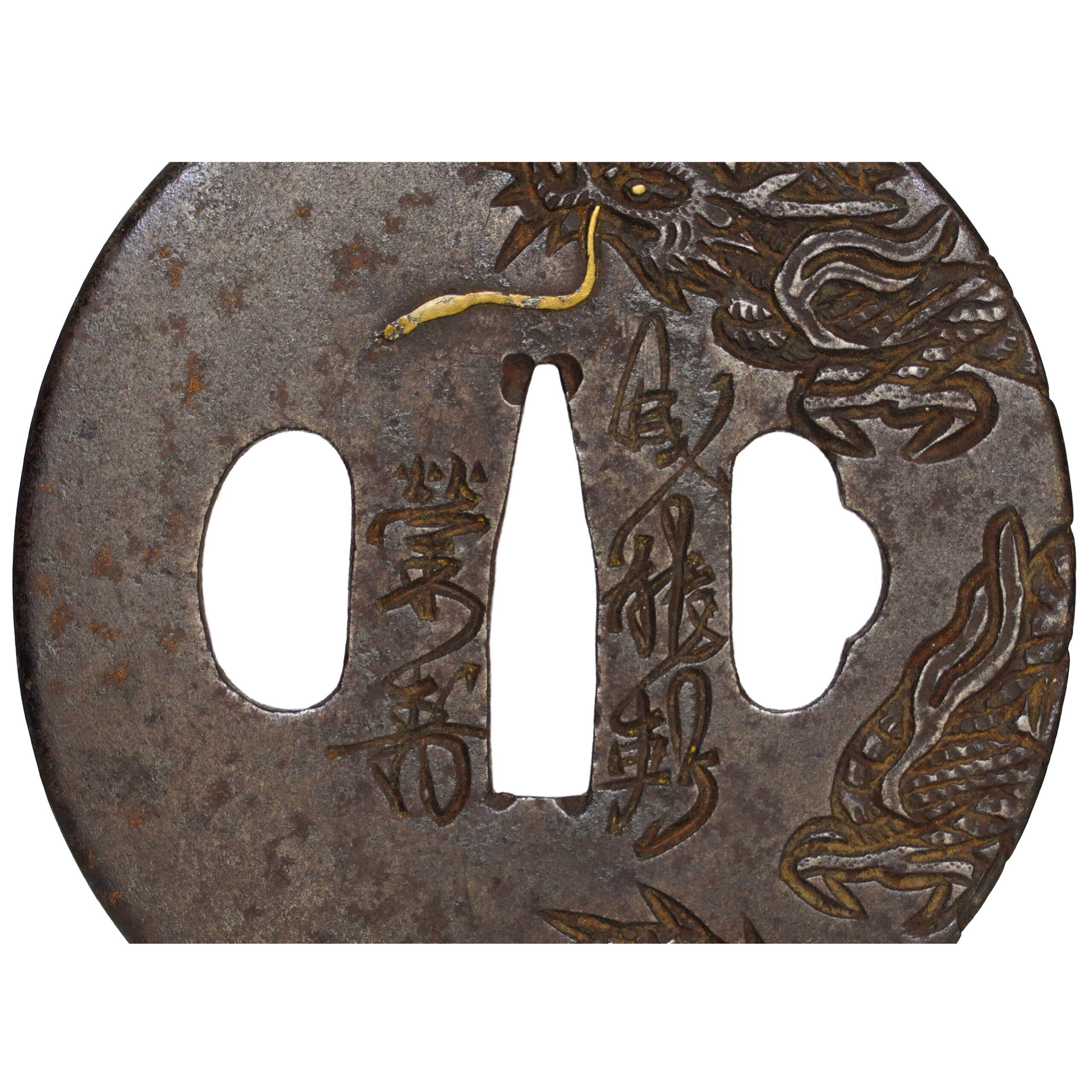
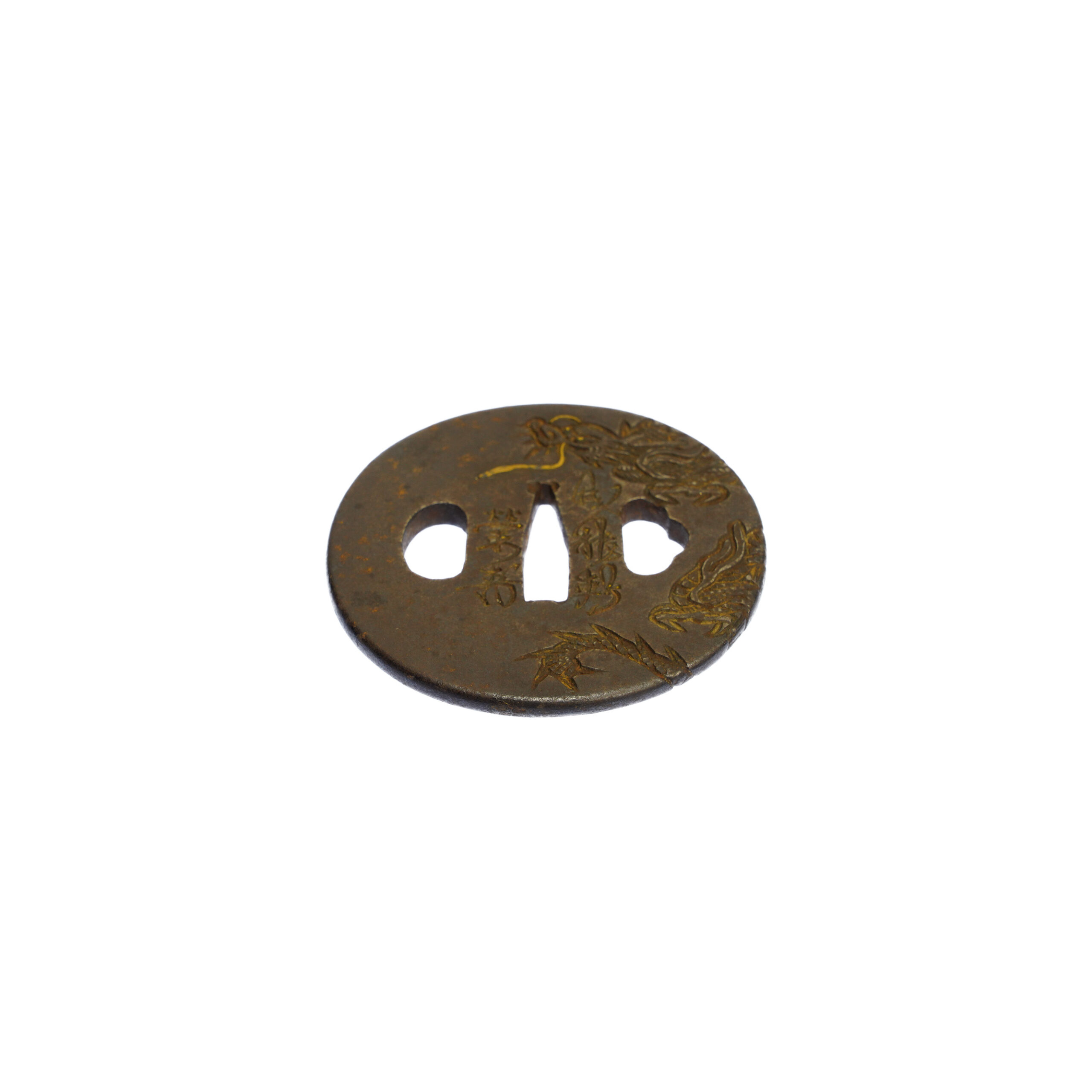
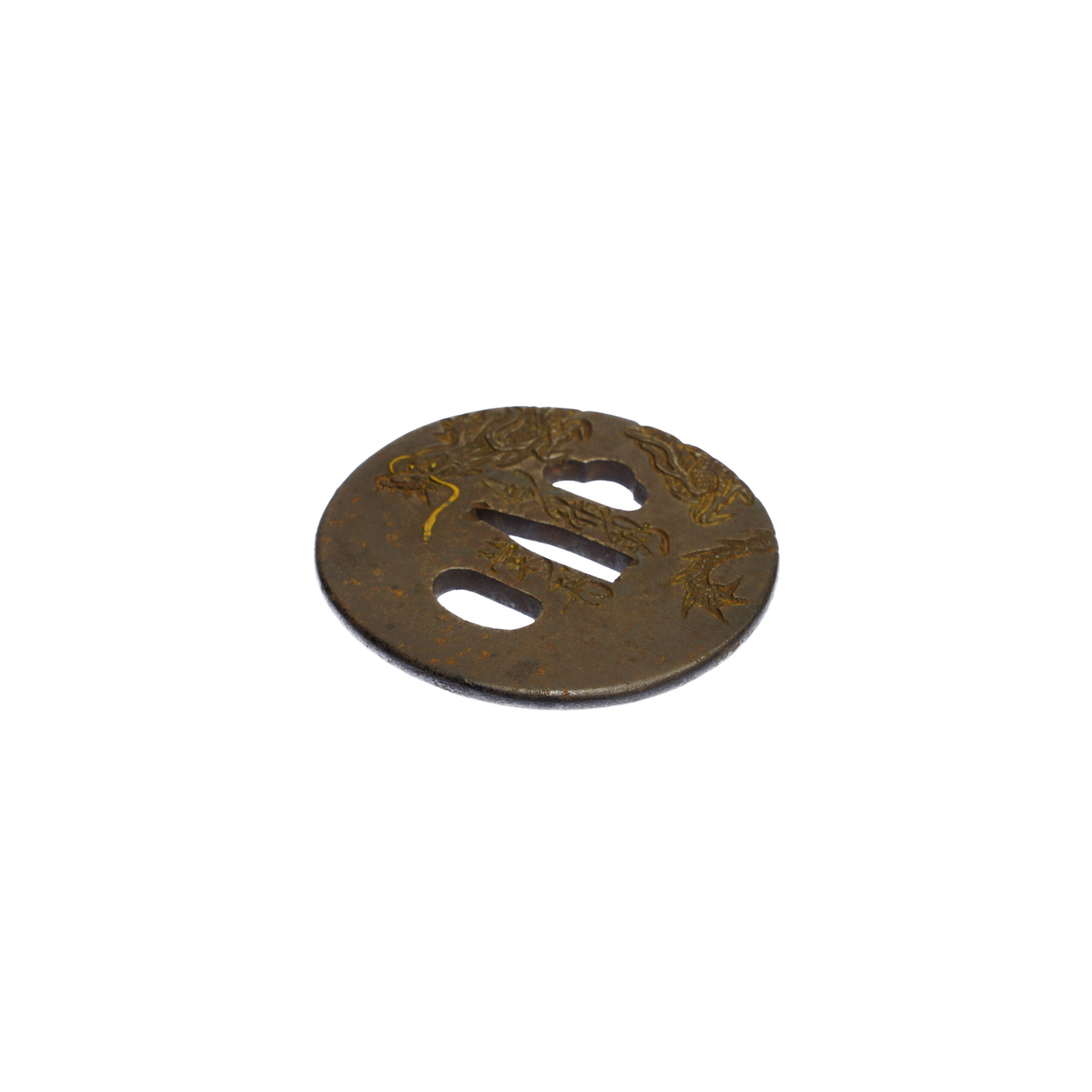
The figure of a dignified dragon is engraved on this Tsuba. Golden paint is applied to its eyes and mustache. The gigantic body of this dragon does not fit on the front screen and continues to the backside. You would even feel the power of this dragon as if it would jump out of the screen. Initially, the dragon is an imaginary creature found in ancient foreign traditions or myths. Furthermore, it is regarded as a symbolic beast of auspicious signs. Its body is likened to nine animals: antlers are deer, the head is a camel, eyes are demons, the neck is a snake, the belly is the Mizuchi (蛟, a mythical animal in Japan that looks like a snake and has a horn and four legs), scales are fish, claws are falcons, palms are tigers, and ears are cows. It was thought that the dragon would reign at the top of all animals because of its odd-looking appearance. The dragon design is often seen in sword mountings. It means lots of Samurai favored this beast motif. If you focus on the center of this Tsuba, you will find an engraved inscription. It is written as follows: 成龍軒 榮寿 (Seiryuken Eiju). The character 龍 means dragon in Japanese. He was active in the Edo period and lived in Settsu-no Kuni (摂津国, part of today’s Osaka and Hyogo prefecture). It is said he was good at carving dragons, as his name suggests. We hope you would enjoy this tasteful work.
NihontoWatch
栄寿
天明〜寛政(1781-1801)
摂津
在銘
販売店の記載のまま
町彫 · 摂津
現在3点販売中
町彫 · 山城
現在17点販売中
鉄元堂は京都に拠点を置いた町彫金工の一派であり、江戸時代中期に岡本源兵衛敏行によって創始された。初代は鉄屋伝兵衛国治に師事し、工名を尚茂と称した。後年入道剃髪して正楽の号を用いた。安永九年(一七八〇)に没。一宮長常・大月光興と共に「京都金工の三傑」に数えられる高名な金工である。正楽には初・二代があり、宝暦から寛政にかけて活躍したとされ、二代は尚房の名で作品を遺している。この京都金工の圏域には、二条に住した細野惣左衛門政守——元禄三年や享保三年の年紀作が遺る——や、後藤就乗門下の山崎一賀(仁左衛門、同名数代あり)も含まれ、それぞれ独自の作風を展開した。 鉄元堂の作風を最も特徴づけるのは、鉄の圧倒的な掌握力である。説示に繰り返し「主として鉄を用い、鉄を巧みにこなす作者として定評が高い」[[c:2]]「鉄を自由にこなす」[[c:3]]「鉄を扱わせれば追随を許さない」[[c:4]]と記されるように、鉄地の扱いにおいて比類なき名声を得た。正楽は鉄磨地あるいは石目地を基調とし、鋤出から高彫に連繋する彫法によって作品に深みと量感を与える。要所には金・銀・赤銅・四分一・素銅・真鍮といった色金の象嵌色絵を丹念に施し、「難儀といわれる鉄への色金象嵌」[[c:5]]を綿密な出来映えに仕上げる技は「鉄元堂にして成し得る」[[c:6]]と称される独壇場であった。題材は写生に基づく人物図を最も得意とし、夕立人物図は「最も得意とした画題」[[c:7]]として同図の作品が数多く知られる。韃靼人と洋犬の異国情緒ある図、南蛮人図、帰樵図、還城楽図、風神大仏図など、力強い鏨力と豊かな動勢をもって描出されている。一方、細野政守は四分一や赤銅の地金に毛彫・片切彫と各種色金の平象嵌を駆使し、京の町の賑やかさや農作業の風景を画面一杯に展開する独自の細密画世界を築いた。山崎一賀は後藤家の作風を踏襲しつつも彫・色絵に濃やかさを加え、赤銅魚子地に高彫色絵の格調高い作品を制作した。 鉄元堂は京都町彫金工のなかでも鉄物の上手として独自の地位を占める。初代正楽の鐔は「地鉄もしっとりとした潤いを見せ」[[c:8]]「流石に鉄元堂にして成しえる出来映え」[[c:9]]と評され、鉄地の質感から象嵌に至るまで一貫して卓抜した技量を示す。夕立図では大小の鐔と縁頭に種々の場景を配して物語的な展開を見せ、韃靼人図では天明二年の年紀を有する作品が初・二代の研究において「資料的にも価値が高い」[[c:10]]と注記される。草摺曳図目貫に見られる金と赤銅の芋継地という古風な造込みは、後藤祐乗を意識した古雅な作風をも正楽が自在にこなしたことを示す。鐔が初代、小柄が二代という大小揃の存在は、「鉄物の上手、象嵌技術にも秀れると定評通りの作風」[[c:11]]が世代を超えて継承されたことの証左である。京都金工の一群のなかで、鉄元堂の系譜は刀装具史において独自の位置を占めている。 詳しく見る →
Returns/exchanges limited to defects caused by shipping (except willful misconduct or gross negligence by the company); customers must contact within 72 hours of receiving the product.