NihontoWatch Mon

NihontoWatch

マーケットオークション
事典
NihontoWatch Mon

NihontoWatch

マーケットオークション
事典

説明

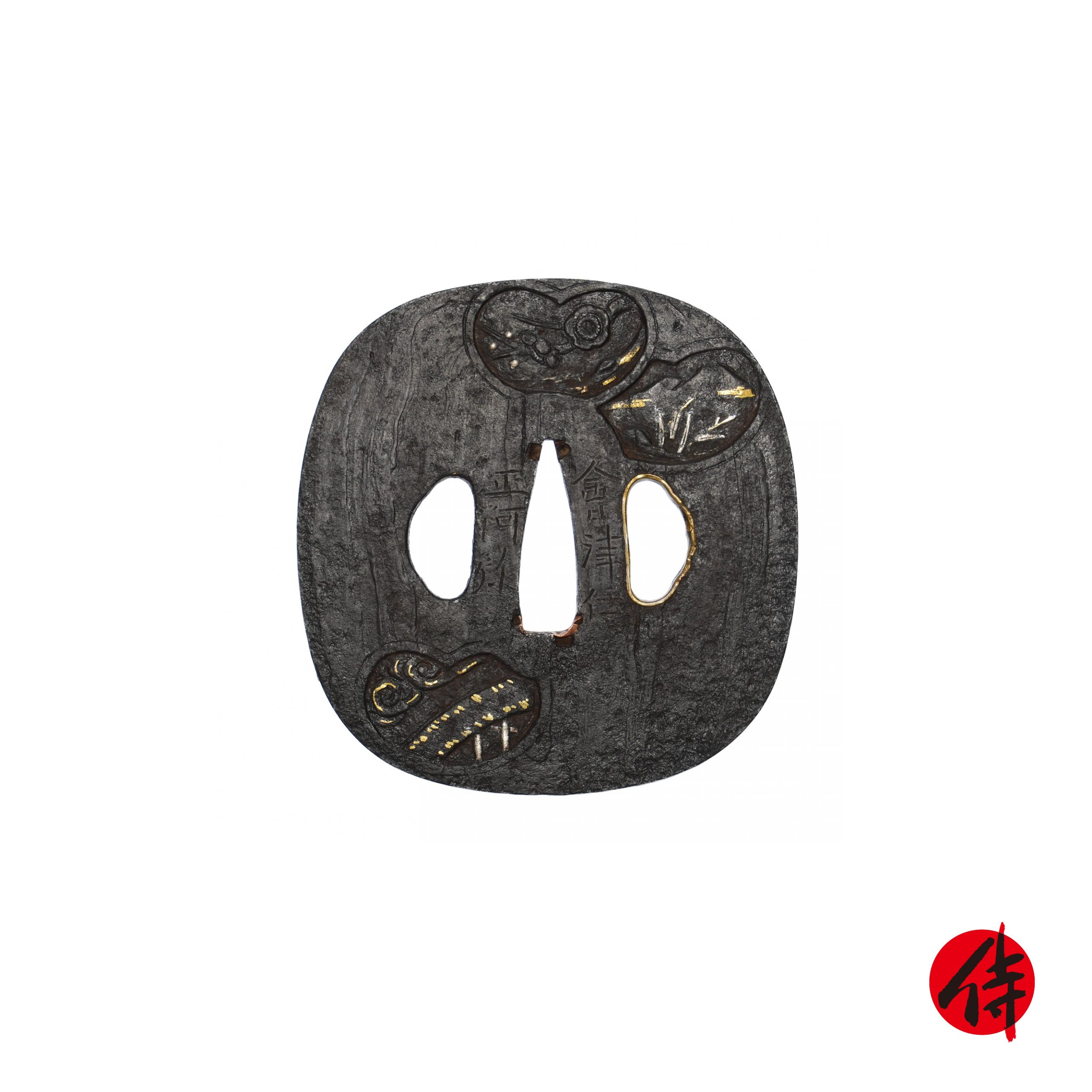
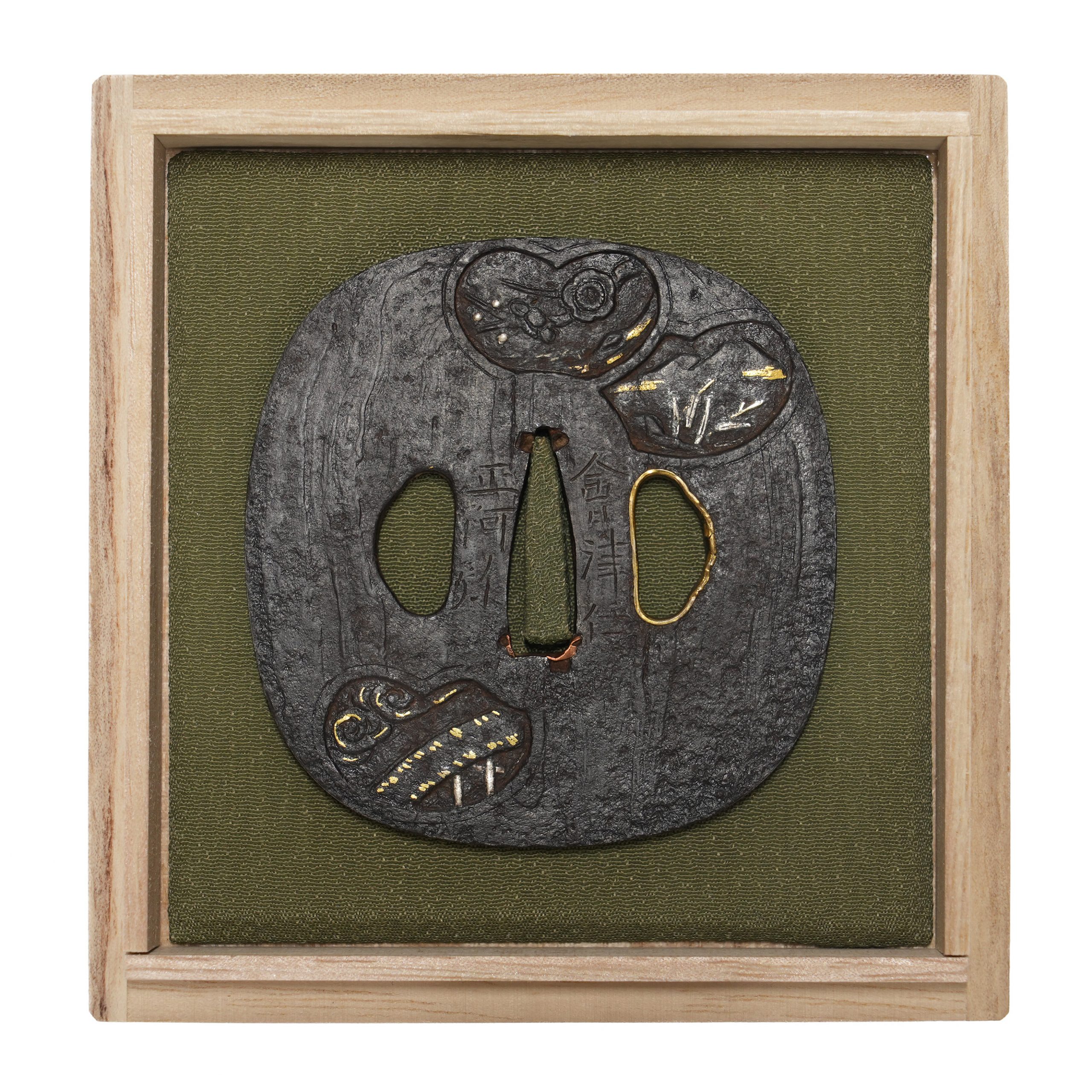
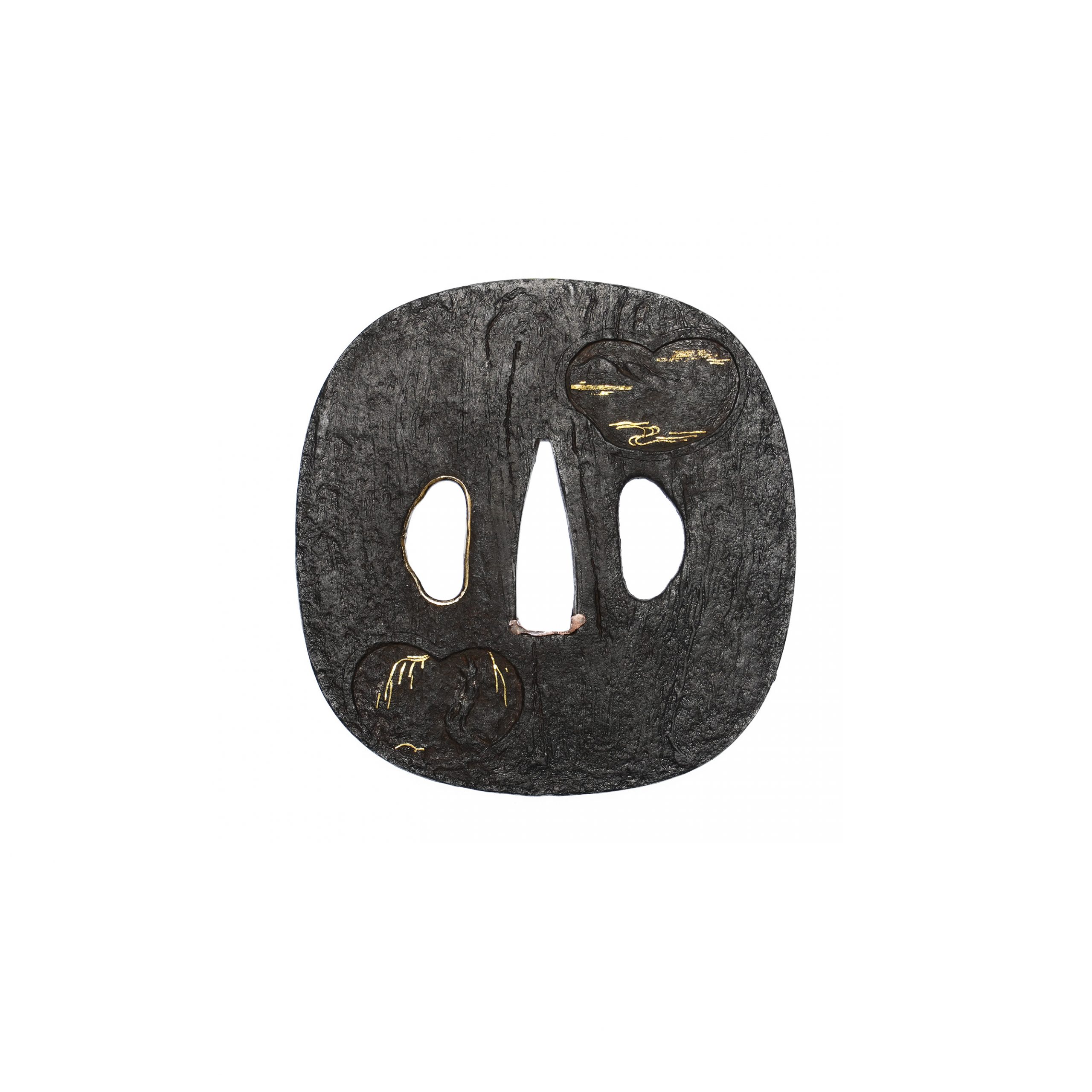
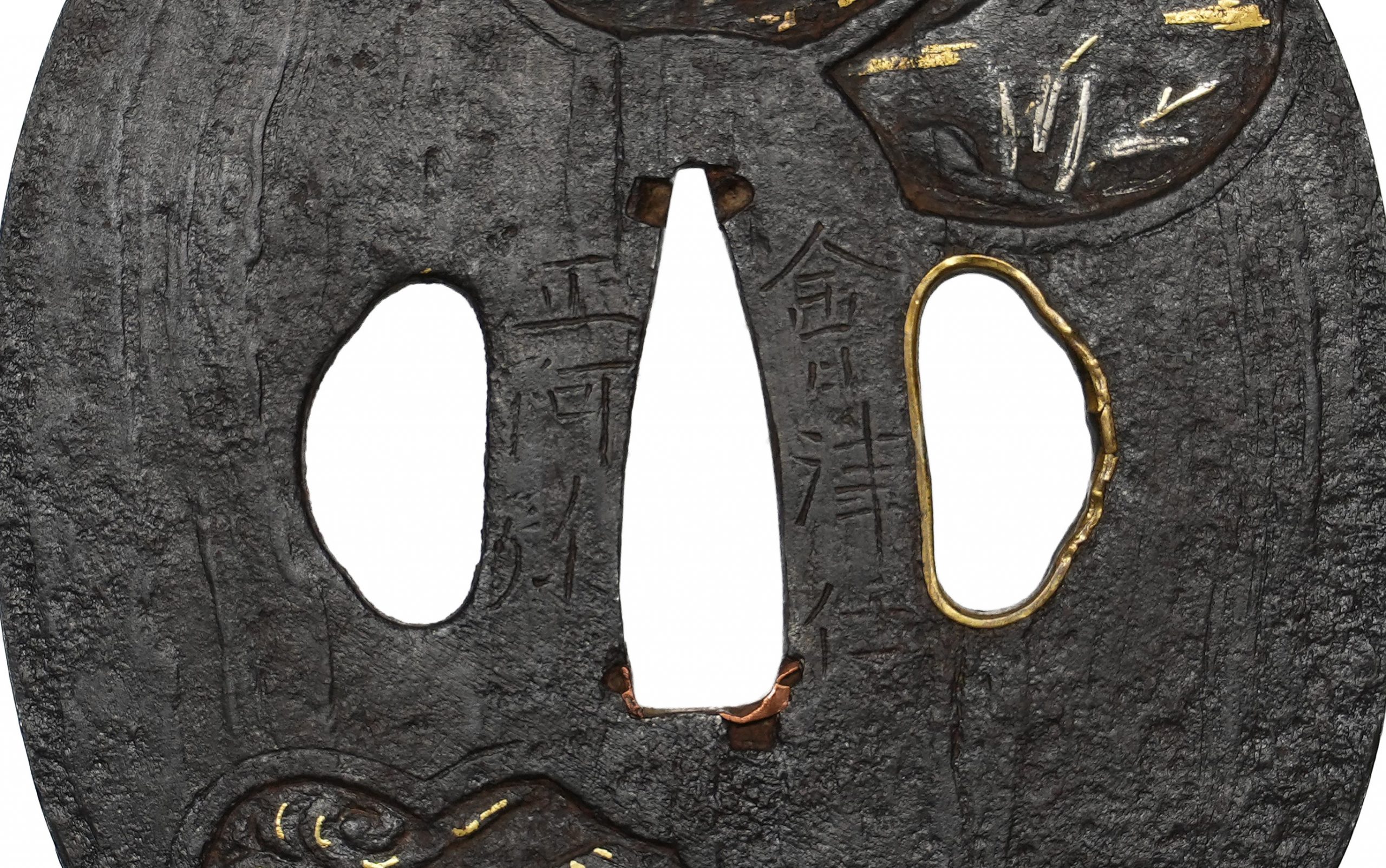
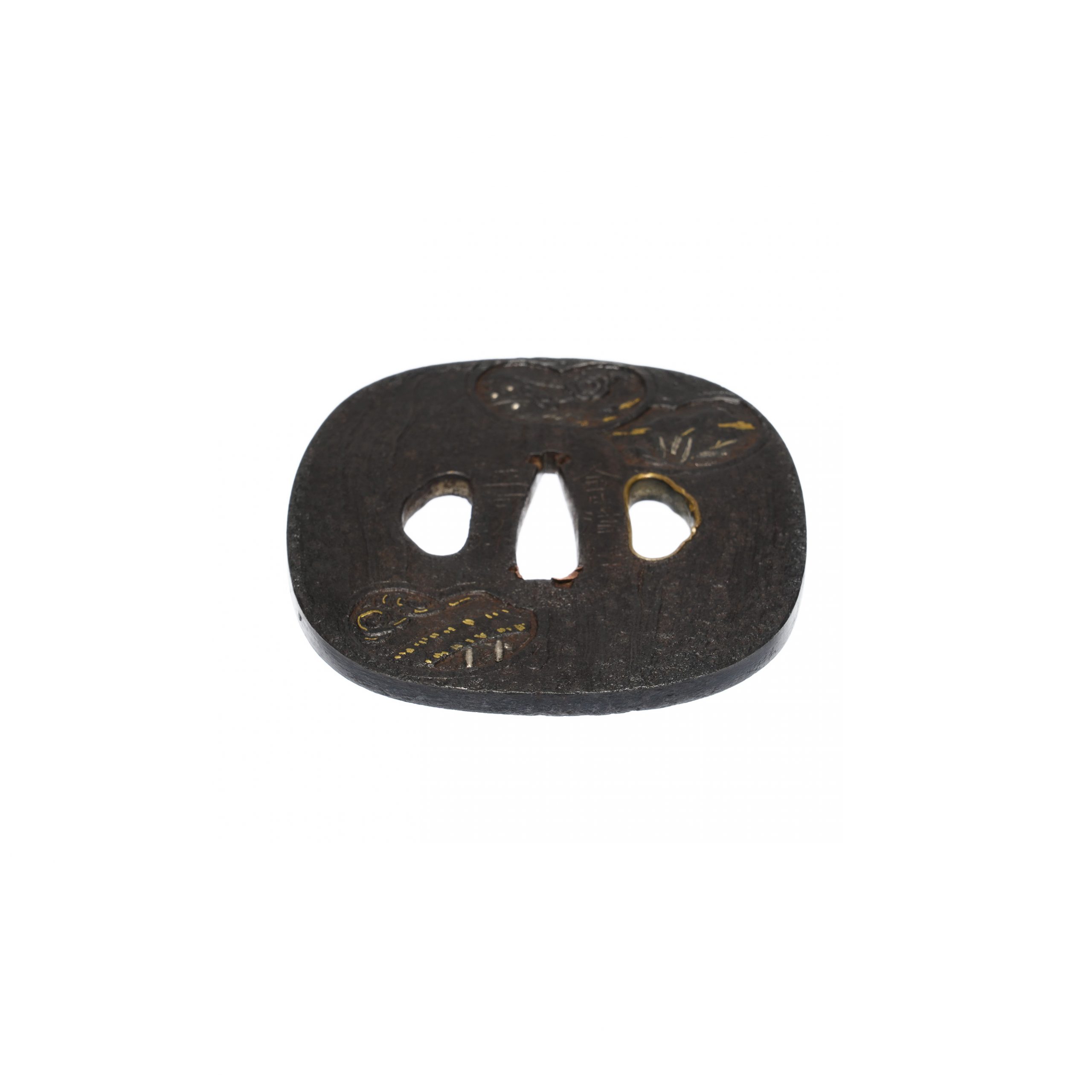
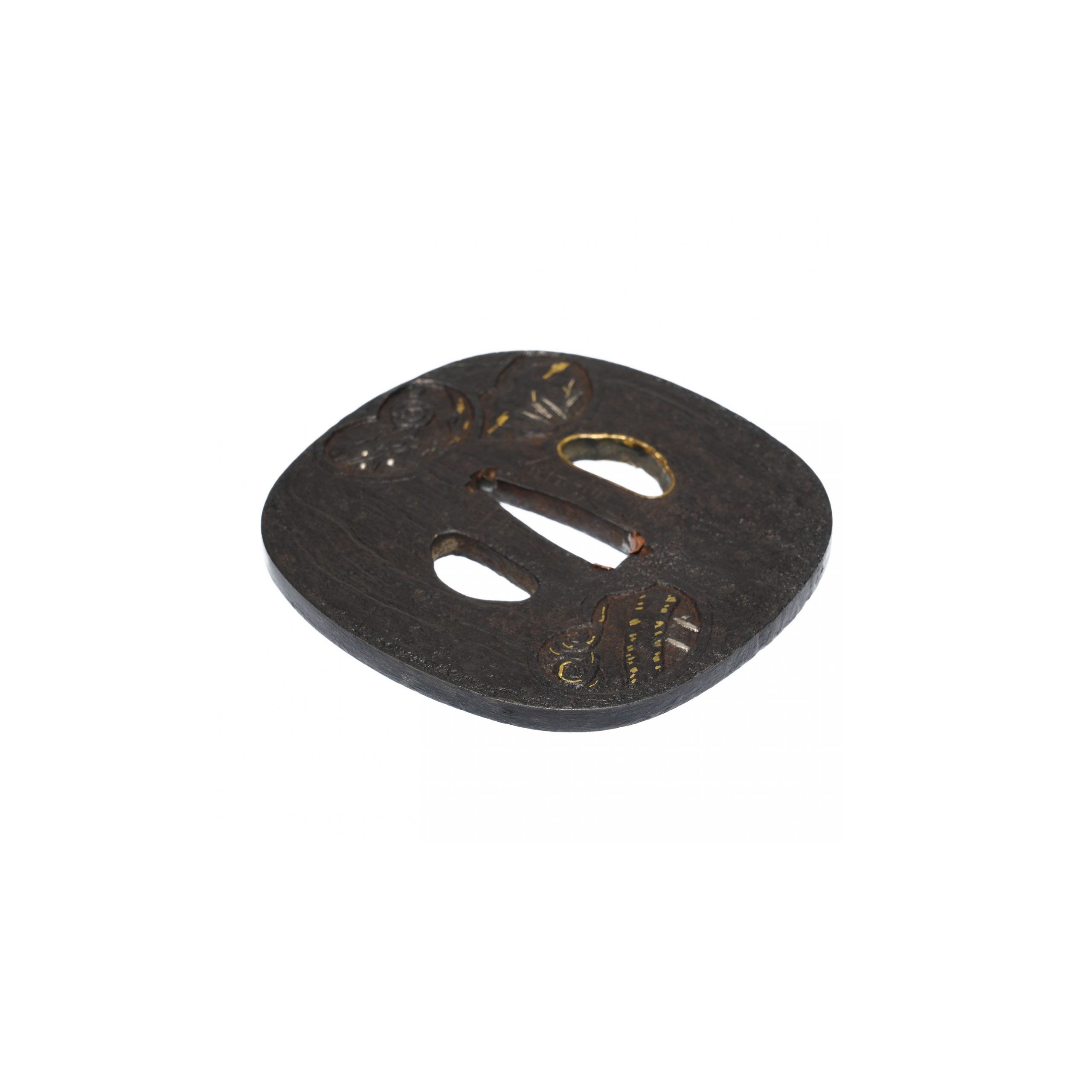
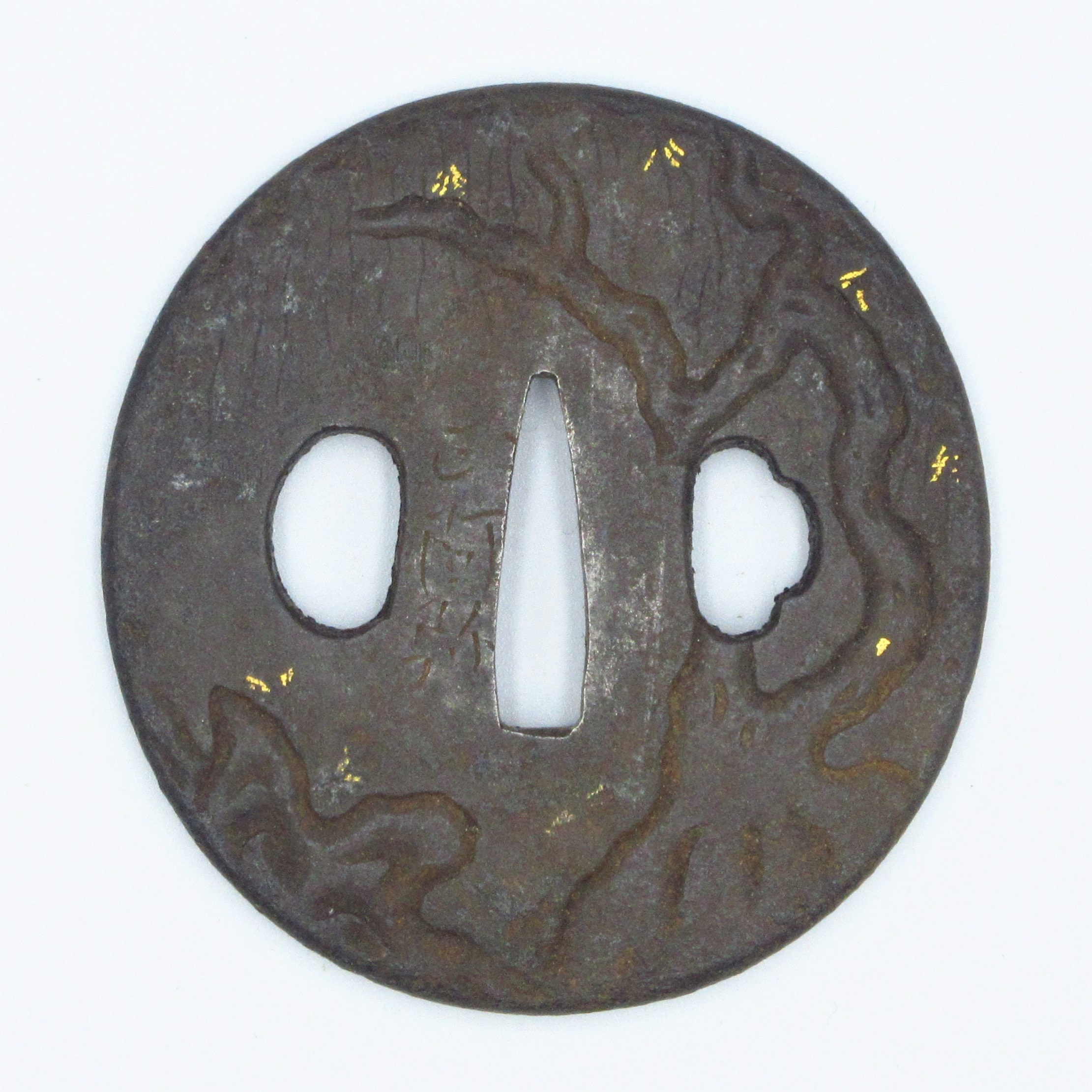
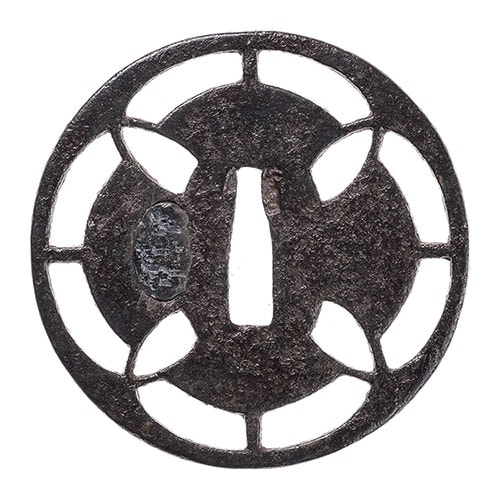
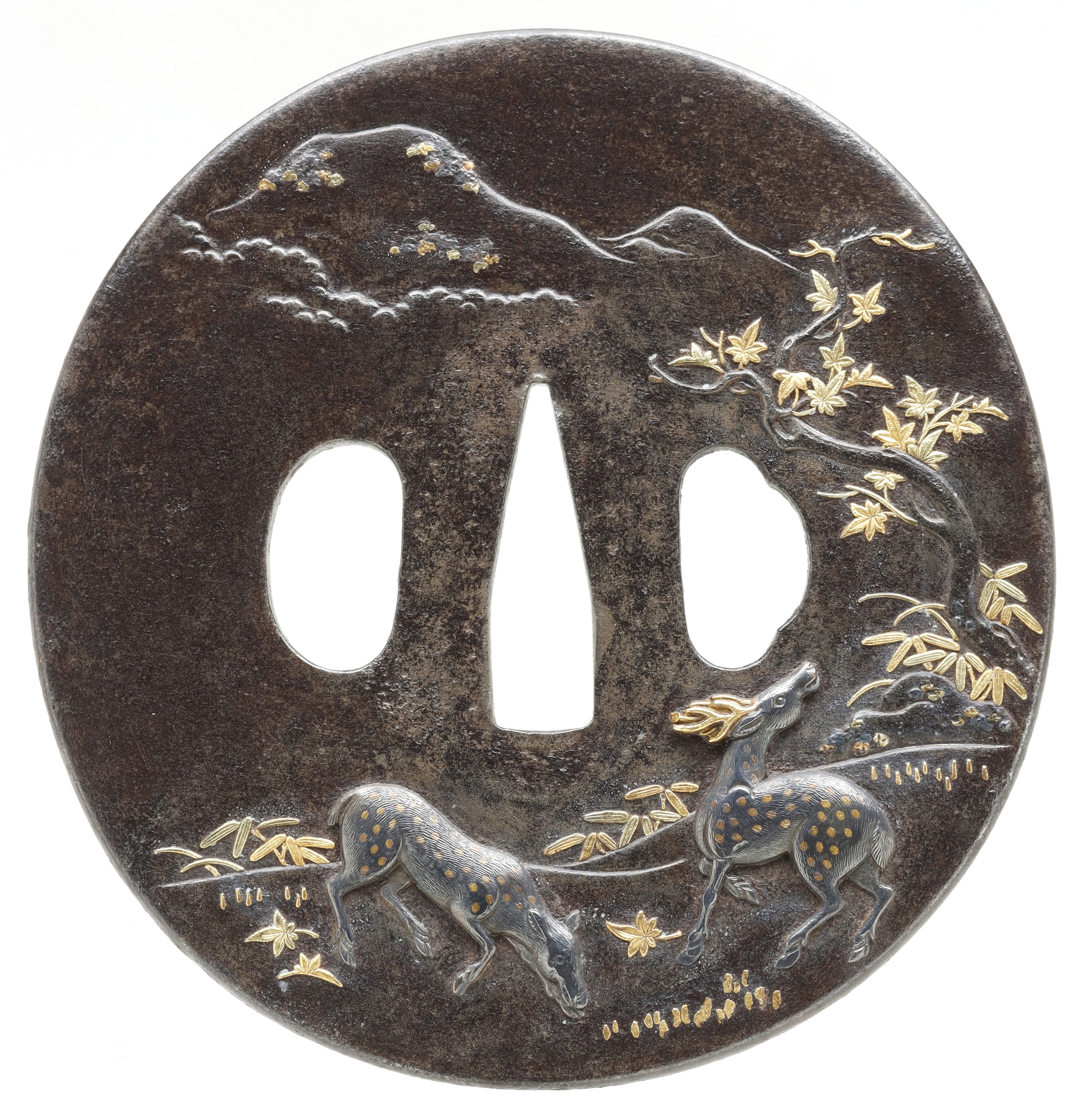
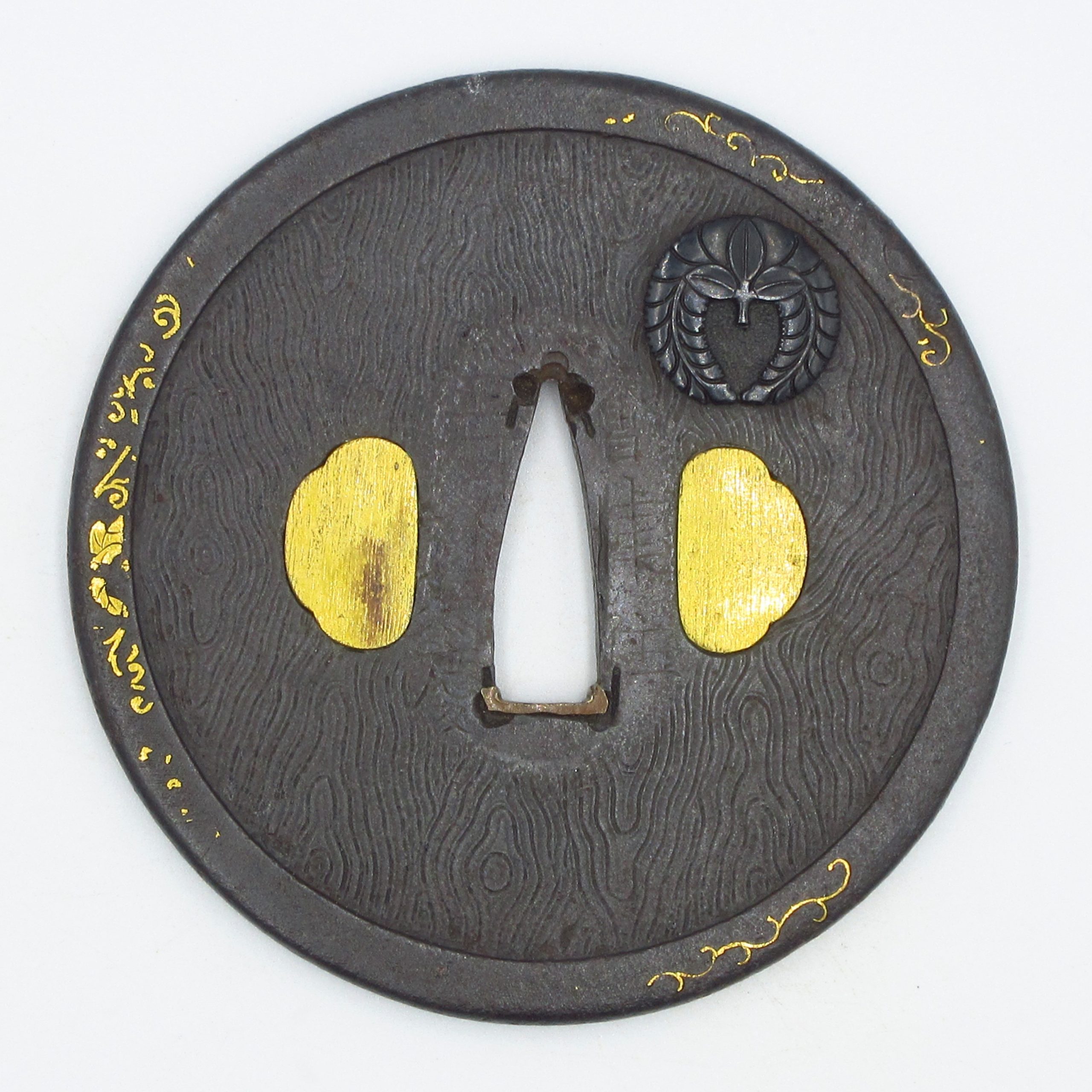
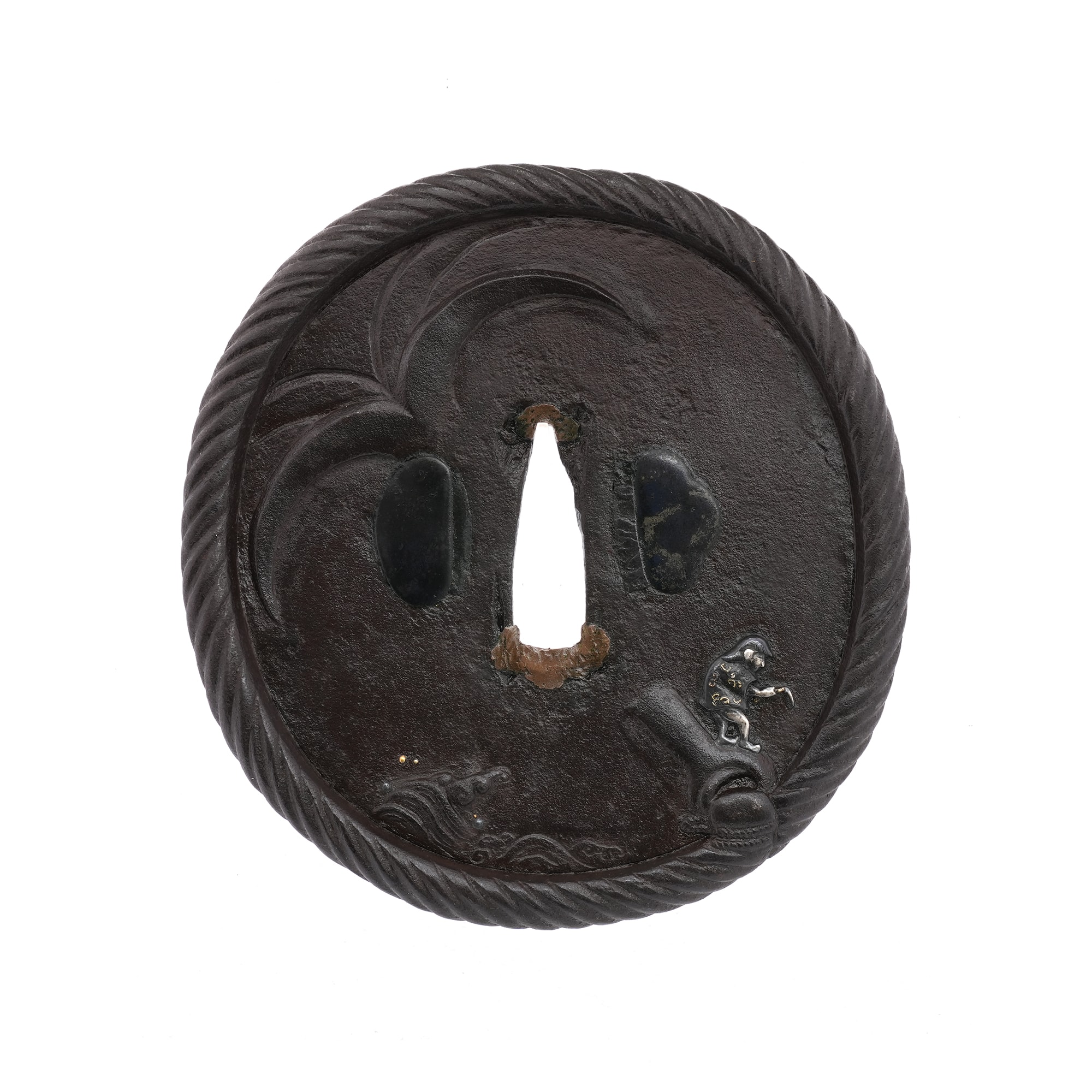
Title: Shoami-style, Landscapes Description This is an antique Tsuba made from iron. Its Kougai hole is framed with gold-colored metal; it makes an ornamental look for this work. It might have also been to protect the Kougai from damages when it was stored in that space. This Tsuba’s design is a combination of different landscapes. You would find Japanese apricot blossoms and water-weeds at the upper side of the front, and a bridge is seen at the bottom. Mountains and the river, big tree are depicted at the backside. If this work was produced in the Aizu as engraved in the inscription, these themes might have been referred to as the scenery in this area. According to the signature, this Tsuba was made by the Shoami (正阿弥) school’s maker. It is said that the production of this style’s Tsubas was from the Muromachi period (1336-1573) to the Edo period. A theory says the Shoami school originated in Kyoto prefecture, and in various places and each era, there were many craftsmen who called themselves the Shoami school. The Akita Shoami, the Aizu Shoami, and the Iyo Shoami exceedingly prospered among this school. Now please look at again this Tsuba’s signature. You see that it is written as 会津住正阿弥. Aizu was located in the Mutsu-no Kuni (陸奥国, today’s Fukushima, Miyagi, Iwate, and Aomori prefecture). This area was one of the regions that the Tsuba production was flourished. *As this item is an antique, please check each photo and ensure its condition. What is Tsuba? Tsuba is the hand-guard of the Japanese sword. High-class Samurai wore his katana sword with its beautiful sword mountings such as Tsuba. Tsuba’s front design tends to be more decorative as this part was often seen by other Samurais when he was walking on the streets. Why is it that the sword mounting was important for Samurai? The sword mountings of the Japanese sword have many kinds of decorations such as handguards (Tsuba), sword hilt (Menuki), pommel (Fuchi Kashira). The Japanese sword worked as a weapon and as an object to show who he was. For example, it shows their personalities and beliefs. You could say that it is like decorations for smartphones today. We recommend you zoom in on the pictures of the sword fittings. When you do so, you can see the skill of Japanese metal engraving techniques. They are mainly made of iron and copper with inlays of gold, silver, and bronze. When it comes to handguard (Tsuba), each one has a different outline and weight. These sword fittings that have lived with Japanese swords of the same age might be worth as much as the Japanese swords. They are inconspicuous parts of the Japanese sword. Nevertheless, if you are knowledgeable or particular about it, you will become a connoisseur of the Samurai. 【About us】 Samurai Museum is located in Tokyo, Japan, exhibiting antique artifacts related to the Samurai history. Samurai Museum Shop is the place for those who are interested in Japanese culture and craftsmanship. We deal with antique Samurai swords/armor, traditional crafts made in Japan and so on. 【Payment method】 We accept payment through Stripe (Credit card), PayPal, Apple Pay or ChromePay, all of which are secure payment methods. If you prefer other payment method, please contact us. You may either pay in JPY, USD, AUD, EUR or GBP . The price is set in Japanese Yen. Prices in other currencies are automatically calculated based on the latest exchange rate. 【Shipping duration】 We normally ship via EMS (Express Mail Service) provided by Japan Post. It usually takes at least 5-14 days to deliver the package after you place an order. We will use DHL instead for those who ordered from Canada or Australia as EMS temporarily stops shipping to these countries due to COVID-19. We offer Free International Shipping as long as we can ship your order by either EMS or DHL (Australia, Canada only). If you prefer other shipping carriers, please contact us. We will inform you of the order’s tracking number via email. Please make sure you fill out your

NihontoWatch MonNihontoWatch
MarketAuctionsEncyclopedia
刀装具›正阿弥›Edo period antique Shoami Tsuba for Samurai Sword (T-387)
鍔
正阿弥

Edo period antique Shoami Tsuba for Samurai Sword (T-387)

在銘 · Shoami · 江戸

売却済
正阿弥 — 1 of 6
正阿弥 — 2 of 6
正阿弥 — 3 of 6
正阿弥 — 4 of 6
正阿弥 — 5 of 6
正阿弥 — 6 of 6
1 / 6
1 / 6
正阿弥 — 1 of 6正阿弥 — 2 of 6正阿弥 — 3 of 6正阿弥 — 4 of 6正阿弥 — 5 of 6正阿弥 — 6 of 6
法量・詳細
作者

正阿弥

時代

江戸

国

Aizu

銘

在銘

説明

Title: Shoami-style, Landscapes Description This is an antique Tsuba made from iron. Its Kougai hole is framed with gold-colored metal; it makes an ornamental look for this work. It might have also been to protect the Kougai from damages when it was stored in that space. This Tsuba’s design is a combination of different landscapes. You would find Japanese apricot blossoms and water-weeds at the upper side of the front, and a bridge is seen at the bottom. Mountains and the river, big tree are depicted at the backside. If this work was produced in the Aizu as engraved in the inscription, these themes might have been referred to as the scenery in this area. According to the signature, this Tsuba was made by the Shoami (正阿弥) school’s maker. It is said that the production of this style’s Tsubas was from the Muromachi period (1336-1573) to the Edo period. A theory says the Shoami school originated in Kyoto prefecture, and in various places and each era, there were many craftsmen who called themselves the Shoami school. The Akita Shoami, the Aizu Shoami, and the Iyo Shoami exceedingly prospered among this school. Now please look at again this Tsuba’s signature. You see that it is written as 会津住正阿弥. Aizu was located in the Mutsu-no Kuni (陸奥国, today’s Fukushima, Miyagi, Iwate, and Aomori prefecture). This area was one of the regions that the Tsuba production was flourished. *As this item is an antique, please check each photo and ensure its condition. What is Tsuba? Tsuba is the hand-guard of the Japanese sword. High-class Samurai wore his katana sword with its beautiful sword mountings such as Tsuba. Tsuba’s front design tends to be more decorative as this part was often seen by other Samurais when he was walking on the streets. Why is it that the sword mounting was important for Samurai? The sword mountings of the Japanese sword have many kinds of decorations such as handguards (Tsuba), sword hilt (Menuki), pommel (Fuchi Kashira). The Japanese sword worked as a weapon and as an object to show who he was. For example, it shows their personalities and beliefs. You could say that it is like decorations for smartphones today. We recommend you zoom in on the pictures of the sword fittings. When you do so, you can see the skill of Japanese metal engraving techniques. They are mainly made of iron and copper with inlays of gold, silver, and bronze. When it comes to handguard (Tsuba), each one has a different outline and weight. These sword fittings that have lived with Japanese swords of the same age might be worth as much as the Japanese swords. They are inconspicuous parts of the Japanese sword. Nevertheless, if you are knowledgeable or particular about it, you will become a connoisseur of the Samurai. 【About us】 Samurai Museum is located in Tokyo, Japan, exhibiting antique artifacts related to the Samurai history. Samurai Museum Shop is the place for those who are interested in Japanese culture and craftsmanship. We deal with antique Samurai swords/armor, traditional crafts made in Japan and so on. 【Payment method】 We accept payment through Stripe (Credit card), PayPal, Apple Pay or ChromePay, all of which are secure payment methods. If you prefer other payment method, please contact us. You may either pay in JPY, USD, AUD, EUR or GBP . The price is set in Japanese Yen. Prices in other currencies are automatically calculated based on the latest exchange rate. 【Shipping duration】 We normally ship via EMS (Express Mail Service) provided by Japan Post. It usually takes at least 5-14 days to deliver the package after you place an order. We will use DHL instead for those who ordered from Canada or Australia as EMS temporarily stops shipping to these countries due to COVID-19. We offer Free International Shipping as long as we can ship your order by either EMS or DHL (Australia, Canada only). If you prefer other shipping carriers, please contact us. We will inform you of the order’s tracking number via email. Please make sure you fill out your

作者について

正阿弥

鐔工

現在4点販売中

›

正阿弥派は室町時代に京都で興り、江戸時代には各地の大名の招きに応じて移住した。その中でも、古正阿弥時代から系統を引くと考えられる京正阿弥が最も著名であり、次いで伊予、阿波、会津、庄内、秋田、江戸、備前などが知られている。正阿弥派の刀工は、刀装具、特に鐔の製作において独自の作風を確立し、各地域において特色ある展開を見せた。

正阿弥派の作風は、鉄地に透彫を施し、金、銀、赤銅などの象嵌を組み合わせたものが通例である。古正阿弥と呼ばれる時代の鐔は、鉄の鍛えが良く、地透の意匠に趣向が凝らされている。象嵌は布目象嵌が多く用いられ、地鉄との調和が重視される。江戸時代の正阿弥派は、赤銅魚子地を用いた作品や、高彫、色絵を駆使した華やかな作風も見られる。秋田正阿弥派は、鋤出高彫による立体的な表現を特徴とし、伊予正阿弥派は、変り形や大振りの作品に象嵌を施し、重厚な味わいを醸し出す。勝義のように幕末から明治にかけて活躍した刀工は、刀装具の製作に加えて、香炉や置物などの室内装飾品も手掛け、その彫金技術を活かした作品を制作した。

正阿弥派の鐔は、その意匠の多様性と象嵌技術の高さから高く評価されている。「透彫も如何にも巧みでしかも雅趣に富み、布目の唐草象嵌も味がよく、正阿弥派の特色を示している」と評されるように、地鉄の鍛え、透かしの技術、象嵌の意匠が一体となった美しさが特徴である。また、「赤銅地に魚子が品良く散らされ、四方に猪目を透かし、耳には金色絵が施され、切羽も魚子地に金色絵が施され、桔梗紋が絶妙に配置されている」[[c:1]]と評されるように、細部にまで意匠が凝らされた作品も多い。正阿弥派は、室町時代から江戸時代、明治時代にかけて、刀装具の世界において重要な役割を果たし、その作風は後世に大きな影響を与えた。

歴史的重要度

正阿弥の位置づけを、日本刀全体および伝統・時代・時期ごとに示します。各位(随一・屈指・有数・著名)は、NBTHK および文化庁による指定に加え、三作や名物帳などの歴史的栄誉を加味したものです。

随一
随一
屈指
屈指
有数
有数
著名
著名

各項目を選ぶと評価方法が表示されます。

指定の実績
指定1口
重要刀剣
1
正阿弥の作 4点が現在販売中→
正阿弥 — 詳細鐔工派
流派について

正阿弥

鐔工 · Kyoto

現在193点販売中

›

正阿弥派は室町時代中期頃に興った鐔工の一派である。室町中期から末期にかけて専門の鐔工が登場するが、京の正阿弥もその主たるものであり、この時期の作を古正阿弥の名で言いならわしている。そもそも京都には同朋衆として阿弥衆が存在し、その中に正阿弥一派があった。有名の作はないものの、刀装金具師から鐔工となったというのが今日の通説である。桃山時代には京都に栄え、慶長八年の年紀を有する彦十郎の太刀鐔・大切羽一組はその隆盛の一端を伝えている。同派は江戸期に入ると各地に移住分派し栄えた。秋田正阿弥もその一類で、伝兵衛重吉を事実上の祖としている。傳兵衛は慶安四年に出羽国庄内に生まれ、寛文八年十八歳の時に江戸へ出て正阿弥吉長の弟子となり、延宝元年に秋田へ移り、同三年に藩主佐竹義処の抱え工となり、同四年に正阿弥の流名を許された。以後嫡流は伝内重高、伝七重常、嘉吉重央と続いている。また岡山正阿弥は池田藩に仕え、幕末には藤四郎家九代を継いだ勝義が出た。 古正阿弥と呼ばれるものの作風を見ると、鉄に透彫をして、それに金・銀などの布目象嵌を施したものが通例である。鍛えの良いやや薄手の鉄磨地に左右大透など大胆な地透を切り、日足鑢に赤銅象嵌を加え、耳に縄目文の銀象嵌や雷文繫の金布目象嵌を施すなど、斬新で力強い意匠に見どころがある。一方、赤銅魚子地に高彫・金色絵で家紋を散らす糸巻太刀拵の総金具など格式の高い太刀金具も手掛けており、長右衛門の針書銘や秋田の六弥の年紀銘を有する作が知られる。秋田正阿弥随一の金工傳兵衛の作域は広く、秋田名物の蕗図や雲龍図を肉彫地透象嵌で表したものや、漆芸の堆朱のような効果を発揮したぐり彫などをはじめ多岐に亘っているが、いずれも構図が斬新であり、線象嵌や布目象嵌など高度な象嵌技術には目を見張るものがある。平地に施された金七宝象嵌は平田本家における七宝手法と全く同一のものであり、両家の交流の証として貴重である。岡山の勝義は堂々とした造込みに堅実な鏨使いで重厚感のある高彫を施し、金・銀・赤銅・素銅・四分一の入念精緻な象嵌を存分に用いており、実兄勝実を通じて後藤一乗の作風も学んでいる。 古正阿弥の鐔は、肥後細川家や大徳川家に伝来した打刀拵、信長拵を手本に制作された肥後打刀拵、宮本武蔵の高弟寺尾信行の指料と伝える拵などに用いられており、武家の実用と雅味の双方に応えた同派への評価を物語っている。慶長八年や天明二年などの年紀作は資料性が極めて高く、正阿弥研究の進展に大きく寄与するものである。秋田では傳兵衛が秋田随一の金工として活躍し、三代傳七も初・二代同様に藩主佐竹家の藩工として腕を振るい、江戸の佐野直照に学んだ重照ら門流も確かな構図・彫技を示した。幕末明治の勝義は明治九年に廃刀令にあって刀装具の制作を断ったが、持国天図鐔や七十三翁銘の難波潟歌絵図鐔など、風流のなかにも覇気を感じさせる傑作を遺している。先祖正阿弥から受け継いだ伝統に用即美の華を添えたその系譜は、室町の京に発して諸国に広がり、近世金工の掉尾を飾るまで連綿と続いた一大流派として、刀装具史に確固たる位置を占めている。

11名の刀工指定42口
主要刀工
刀工時代指定
傳兵衛—13
正阿弥勝義—7
又七—0
吉一—0
治八郎—0
正阿弥流派を見る →
ご注意 — 鑑定書が見つかりません

販売店の出品ページで鑑定書を確認できませんでした。日本刀および刀装具は通常、NBTHK(または NTHK)の鑑定を受けます。鑑定書がない場合、極めは販売店の見解にとどまり、第三者による確認は行われていません。ご購入前に販売店へ鑑定書の有無をお問い合わせのうえ、慎重にご判断ください。

販売店
サ
サムライミュージアム
🇯🇵日本から発送
›
✓認証販売店samuraimuseum.jp
✓海外発送可✓英語対応PayPalクレジットカード
返品ポリシー

Returns/exchanges limited to defects caused by shipping (except willful misconduct or gross negligence by the company); customers must contact within 72 hours of receiving the product.
サムライミュージアムの出品一覧を見る→販売店サイトでこの商品を見る→

正阿弥の他の作

すべて見る →
刀心
特別保存
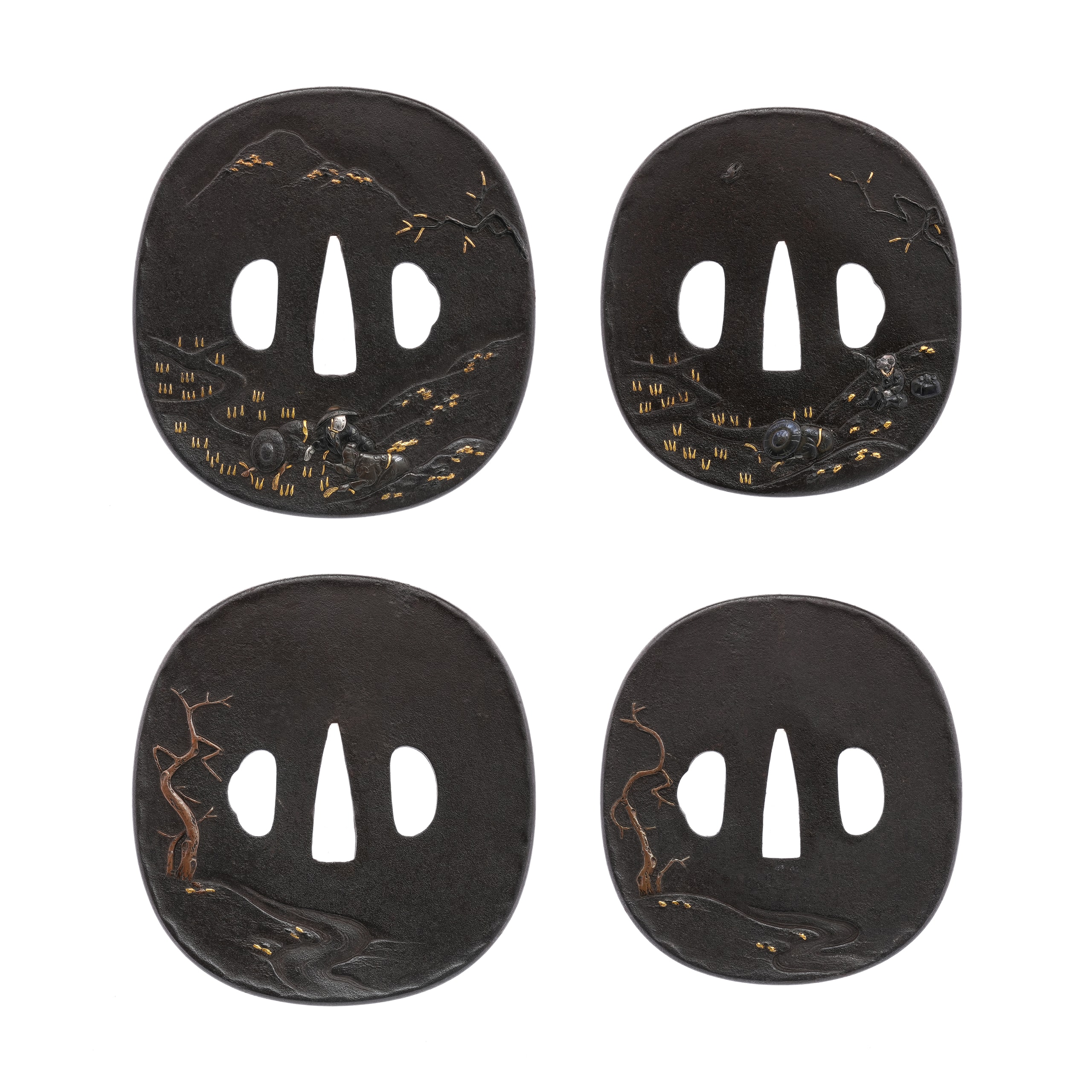
Tsuba - Tokuho - by Shoami - 田植風景図大小鐔 無銘(会津正阿弥) -Mumei (Aizu Shoami)- 12-1638Tsuba - Tokuho - by Shoami - 田植風景図大小鐔 無銘(会津正阿弥) -Mumei (Aizu Shoami)- 12-1638

鍔

作正阿弥
江戸
¥660,000
美術刀剣松本
特別保存
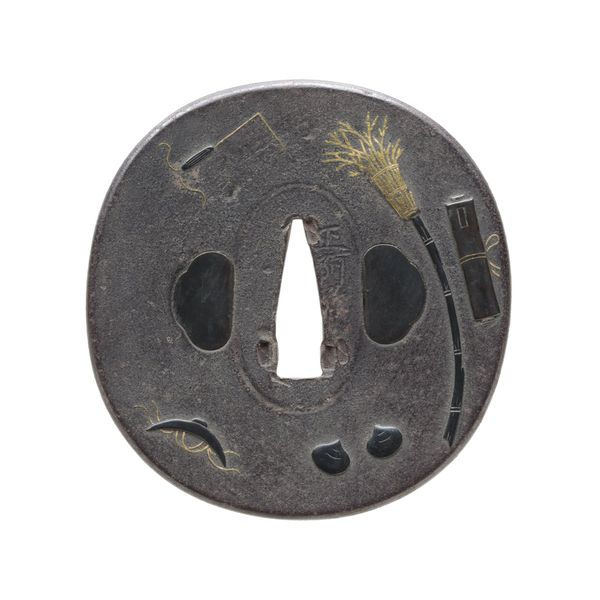
Tsuba - Tokuho - by Shoami - 雲文透桐鳳凰図Tsuba - Tokuho - by Shoami - 雲文透桐鳳凰図

鍔

作正阿弥
江戸
¥220,000
濃州堂
Tsuba - by Shoami - 鍔 柳図 銘:正阿弥Tsuba - by Shoami - 鍔 柳図 銘:正阿弥

鍔

作正阿弥
¥20,000
草薙の舎
保存
Tsuba - Hozon - by Shoami - 圧巻の名品最高傑作大迫力の雨龍蕨手図鍔『会津正阿弥』保存刀装具Tsuba - Hozon - by Shoami - 圧巻の名品最高傑作大迫力の雨龍蕨手図鍔『会津正阿弥』保存刀装具

鍔

作正阿弥
¥198,000

正阿弥の売約済み

永楽堂
保存
Tsuba - Hozon - by Shoami - 古正阿弥 久留子文様透鍔/鐔 保存刀装具Tsuba - Hozon - by Shoami - 古正阿弥 久留子文様透鍔/鐔 保存刀装具
売切れ

鍔

作正阿弥
室町
売却済

Shoami派の作

すべて見る →
刀心
特別貴重
Tsuba - Tokubetsu Kichō - by Shoami Masanori - 鉄線花図鐔 無銘(正阿弥政徳) -Mumei (Shoami Masanori)- 12-1512Tsuba - Tokubetsu Kichō - by Shoami Masanori - 鉄線花図鐔 無銘(正阿弥政徳) -Mumei (Shoami Masanori)- 12-1512

鍔

作政徳
江戸
¥396,000
永楽堂
特別保存
Tsuba - Tokuho - by Ko-Shoami School - 古正阿弥 枝菊図鍔/鐔 特別保存刀装具Tsuba - Tokuho - by Ko-Shoami School - 古正阿弥 枝菊図鍔/鐔 特別保存刀装具

鍔

作古正阿弥派
室町
¥350,000
勝武堂
特別保存
Tsuba - Tokuho - by Moritomi - 鐔 松山正阿弥盛富 蛙図 / Tsuba Matsuyama Shoami MoritomiTsuba - Tokuho - by Moritomi - 鐔 松山正阿弥盛富 蛙図 / Tsuba Matsuyama Shoami Moritomi

鍔

作盛富
江戸
¥300,000
Toyuukai
特別保存
Tsuba - Tokuho - by Kyo-Shoami School - 刳込六木瓜透図鐔 無銘 京正阿弥 特別保存刀装具鑑定書付Tsuba - Tokuho - by Kyo-Shoami School - 刳込六木瓜透図鐔 無銘 京正阿弥 特別保存刀装具鑑定書付

鍔

作京正阿弥派
江戸
¥300,000
Bushido Antique Japanese Swords
特別貴重
Tsuba - Tokubetsu Kichō - 達磨図鉄地鍔 古正阿弥Tsuba - Tokubetsu Kichō - 達磨図鉄地鍔 古正阿弥

鍔

作Shoami
江戸
¥500
永楽堂
保存
Tsuba - Hozon - by Ko-Shoami School - 古正阿弥 四方蕨手透鍔/鐔 保存刀装具Tsuba - Hozon - by Ko-Shoami School - 古正阿弥 四方蕨手透鍔/鐔 保存刀装具

鍔

作古正阿弥派
室町
¥100,000
濃州堂
保存
Tsuba - Hozon - by Shoami School - 鍔 下り藤紋図 銘:会津住正阿弥兼慶Tsuba - Hozon - by Shoami School - 鍔 下り藤紋図 銘:会津住正阿弥兼慶

鍔

作正阿弥派
¥88,000
葵美術
保存
Tsuba - Hozon - by Shoami School - Mumei(Unsigned)(Shoami)Tsuba - Hozon - by Shoami School - Mumei(Unsigned)(Shoami)

鍔

作正阿弥派
江戸
¥55,000

刀剣

  • 刀
  • 脇差
  • 短刀
  • 太刀
  • 薙刀
  • 槍

刀装具

  • 鍔
  • 縁頭
  • 小柄
  • 目貫

鑑定別

  • 特重
  • 重要
  • 特別保存
  • 保存

リソース

  • 刀剣商一覧
  • 刀工一覧
  • すべて見る
Nihontowatch© 2026
利用規約プライバシーCookie運営者情報

説明

Title: Shoami-style, Landscapes Description This is an antique Tsuba made from iron. Its Kougai hole is framed with gold-colored metal; it makes an ornamental look for this work. It might have also been to protect the Kougai from damages when it was stored in that space. This Tsuba’s design is a combination of different landscapes. You would find Japanese apricot blossoms and water-weeds at the upper side of the front, and a bridge is seen at the bottom. Mountains and the river, big tree are depicted at the backside. If this work was produced in the Aizu as engraved in the inscription, these themes might have been referred to as the scenery in this area. According to the signature, this Tsuba was made by the Shoami (正阿弥) school’s maker. It is said that the production of this style’s Tsubas was from the Muromachi period (1336-1573) to the Edo period. A theory says the Shoami school originated in Kyoto prefecture, and in various places and each era, there were many craftsmen who called themselves the Shoami school. The Akita Shoami, the Aizu Shoami, and the Iyo Shoami exceedingly prospered among this school. Now please look at again this Tsuba’s signature. You see that it is written as 会津住正阿弥. Aizu was located in the Mutsu-no Kuni (陸奥国, today’s Fukushima, Miyagi, Iwate, and Aomori prefecture). This area was one of the regions that the Tsuba production was flourished. *As this item is an antique, please check each photo and ensure its condition. What is Tsuba? Tsuba is the hand-guard of the Japanese sword. High-class Samurai wore his katana sword with its beautiful sword mountings such as Tsuba. Tsuba’s front design tends to be more decorative as this part was often seen by other Samurais when he was walking on the streets. Why is it that the sword mounting was important for Samurai? The sword mountings of the Japanese sword have many kinds of decorations such as handguards (Tsuba), sword hilt (Menuki), pommel (Fuchi Kashira). The Japanese sword worked as a weapon and as an object to show who he was. For example, it shows their personalities and beliefs. You could say that it is like decorations for smartphones today. We recommend you zoom in on the pictures of the sword fittings. When you do so, you can see the skill of Japanese metal engraving techniques. They are mainly made of iron and copper with inlays of gold, silver, and bronze. When it comes to handguard (Tsuba), each one has a different outline and weight. These sword fittings that have lived with Japanese swords of the same age might be worth as much as the Japanese swords. They are inconspicuous parts of the Japanese sword. Nevertheless, if you are knowledgeable or particular about it, you will become a connoisseur of the Samurai. 【About us】 Samurai Museum is located in Tokyo, Japan, exhibiting antique artifacts related to the Samurai history. Samurai Museum Shop is the place for those who are interested in Japanese culture and craftsmanship. We deal with antique Samurai swords/armor, traditional crafts made in Japan and so on. 【Payment method】 We accept payment through Stripe (Credit card), PayPal, Apple Pay or ChromePay, all of which are secure payment methods. If you prefer other payment method, please contact us. You may either pay in JPY, USD, AUD, EUR or GBP . The price is set in Japanese Yen. Prices in other currencies are automatically calculated based on the latest exchange rate. 【Shipping duration】 We normally ship via EMS (Express Mail Service) provided by Japan Post. It usually takes at least 5-14 days to deliver the package after you place an order. We will use DHL instead for those who ordered from Canada or Australia as EMS temporarily stops shipping to these countries due to COVID-19. We offer Free International Shipping as long as we can ship your order by either EMS or DHL (Australia, Canada only). If you prefer other shipping carriers, please contact us. We will inform you of the order’s tracking number via email. Please make sure you fill out your

NihontoWatch MonNihontoWatch
MarketAuctionsEncyclopedia
刀装具›正阿弥›Edo period antique Shoami Tsuba for Samurai Sword (T-387)
鍔
正阿弥

Edo period antique Shoami Tsuba for Samurai Sword (T-387)

在銘 · Shoami · 江戸

売却済
正阿弥 — 1 of 6
正阿弥 — 2 of 6
正阿弥 — 3 of 6
正阿弥 — 4 of 6
正阿弥 — 5 of 6
正阿弥 — 6 of 6
1 / 6
1 / 6
正阿弥 — 1 of 6正阿弥 — 2 of 6正阿弥 — 3 of 6正阿弥 — 4 of 6正阿弥 — 5 of 6正阿弥 — 6 of 6
法量・詳細
作者

正阿弥

時代

江戸

国

Aizu

銘

在銘

説明

Title: Shoami-style, Landscapes Description This is an antique Tsuba made from iron. Its Kougai hole is framed with gold-colored metal; it makes an ornamental look for this work. It might have also been to protect the Kougai from damages when it was stored in that space. This Tsuba’s design is a combination of different landscapes. You would find Japanese apricot blossoms and water-weeds at the upper side of the front, and a bridge is seen at the bottom. Mountains and the river, big tree are depicted at the backside. If this work was produced in the Aizu as engraved in the inscription, these themes might have been referred to as the scenery in this area. According to the signature, this Tsuba was made by the Shoami (正阿弥) school’s maker. It is said that the production of this style’s Tsubas was from the Muromachi period (1336-1573) to the Edo period. A theory says the Shoami school originated in Kyoto prefecture, and in various places and each era, there were many craftsmen who called themselves the Shoami school. The Akita Shoami, the Aizu Shoami, and the Iyo Shoami exceedingly prospered among this school. Now please look at again this Tsuba’s signature. You see that it is written as 会津住正阿弥. Aizu was located in the Mutsu-no Kuni (陸奥国, today’s Fukushima, Miyagi, Iwate, and Aomori prefecture). This area was one of the regions that the Tsuba production was flourished. *As this item is an antique, please check each photo and ensure its condition. What is Tsuba? Tsuba is the hand-guard of the Japanese sword. High-class Samurai wore his katana sword with its beautiful sword mountings such as Tsuba. Tsuba’s front design tends to be more decorative as this part was often seen by other Samurais when he was walking on the streets. Why is it that the sword mounting was important for Samurai? The sword mountings of the Japanese sword have many kinds of decorations such as handguards (Tsuba), sword hilt (Menuki), pommel (Fuchi Kashira). The Japanese sword worked as a weapon and as an object to show who he was. For example, it shows their personalities and beliefs. You could say that it is like decorations for smartphones today. We recommend you zoom in on the pictures of the sword fittings. When you do so, you can see the skill of Japanese metal engraving techniques. They are mainly made of iron and copper with inlays of gold, silver, and bronze. When it comes to handguard (Tsuba), each one has a different outline and weight. These sword fittings that have lived with Japanese swords of the same age might be worth as much as the Japanese swords. They are inconspicuous parts of the Japanese sword. Nevertheless, if you are knowledgeable or particular about it, you will become a connoisseur of the Samurai. 【About us】 Samurai Museum is located in Tokyo, Japan, exhibiting antique artifacts related to the Samurai history. Samurai Museum Shop is the place for those who are interested in Japanese culture and craftsmanship. We deal with antique Samurai swords/armor, traditional crafts made in Japan and so on. 【Payment method】 We accept payment through Stripe (Credit card), PayPal, Apple Pay or ChromePay, all of which are secure payment methods. If you prefer other payment method, please contact us. You may either pay in JPY, USD, AUD, EUR or GBP . The price is set in Japanese Yen. Prices in other currencies are automatically calculated based on the latest exchange rate. 【Shipping duration】 We normally ship via EMS (Express Mail Service) provided by Japan Post. It usually takes at least 5-14 days to deliver the package after you place an order. We will use DHL instead for those who ordered from Canada or Australia as EMS temporarily stops shipping to these countries due to COVID-19. We offer Free International Shipping as long as we can ship your order by either EMS or DHL (Australia, Canada only). If you prefer other shipping carriers, please contact us. We will inform you of the order’s tracking number via email. Please make sure you fill out your

作者について

正阿弥

鐔工

現在4点販売中

›

正阿弥派は室町時代に京都で興り、江戸時代には各地の大名の招きに応じて移住した。その中でも、古正阿弥時代から系統を引くと考えられる京正阿弥が最も著名であり、次いで伊予、阿波、会津、庄内、秋田、江戸、備前などが知られている。正阿弥派の刀工は、刀装具、特に鐔の製作において独自の作風を確立し、各地域において特色ある展開を見せた。

正阿弥派の作風は、鉄地に透彫を施し、金、銀、赤銅などの象嵌を組み合わせたものが通例である。古正阿弥と呼ばれる時代の鐔は、鉄の鍛えが良く、地透の意匠に趣向が凝らされている。象嵌は布目象嵌が多く用いられ、地鉄との調和が重視される。江戸時代の正阿弥派は、赤銅魚子地を用いた作品や、高彫、色絵を駆使した華やかな作風も見られる。秋田正阿弥派は、鋤出高彫による立体的な表現を特徴とし、伊予正阿弥派は、変り形や大振りの作品に象嵌を施し、重厚な味わいを醸し出す。勝義のように幕末から明治にかけて活躍した刀工は、刀装具の製作に加えて、香炉や置物などの室内装飾品も手掛け、その彫金技術を活かした作品を制作した。

正阿弥派の鐔は、その意匠の多様性と象嵌技術の高さから高く評価されている。「透彫も如何にも巧みでしかも雅趣に富み、布目の唐草象嵌も味がよく、正阿弥派の特色を示している」と評されるように、地鉄の鍛え、透かしの技術、象嵌の意匠が一体となった美しさが特徴である。また、「赤銅地に魚子が品良く散らされ、四方に猪目を透かし、耳には金色絵が施され、切羽も魚子地に金色絵が施され、桔梗紋が絶妙に配置されている」[[c:1]]と評されるように、細部にまで意匠が凝らされた作品も多い。正阿弥派は、室町時代から江戸時代、明治時代にかけて、刀装具の世界において重要な役割を果たし、その作風は後世に大きな影響を与えた。

歴史的重要度

正阿弥の位置づけを、日本刀全体および伝統・時代・時期ごとに示します。各位(随一・屈指・有数・著名)は、NBTHK および文化庁による指定に加え、三作や名物帳などの歴史的栄誉を加味したものです。

随一
随一
屈指
屈指
有数
有数
著名
著名

各項目を選ぶと評価方法が表示されます。

指定の実績
指定1口
重要刀剣
1
正阿弥の作 4点が現在販売中→
正阿弥 — 詳細鐔工派
流派について

正阿弥

鐔工 · Kyoto

現在193点販売中

›

正阿弥派は室町時代中期頃に興った鐔工の一派である。室町中期から末期にかけて専門の鐔工が登場するが、京の正阿弥もその主たるものであり、この時期の作を古正阿弥の名で言いならわしている。そもそも京都には同朋衆として阿弥衆が存在し、その中に正阿弥一派があった。有名の作はないものの、刀装金具師から鐔工となったというのが今日の通説である。桃山時代には京都に栄え、慶長八年の年紀を有する彦十郎の太刀鐔・大切羽一組はその隆盛の一端を伝えている。同派は江戸期に入ると各地に移住分派し栄えた。秋田正阿弥もその一類で、伝兵衛重吉を事実上の祖としている。傳兵衛は慶安四年に出羽国庄内に生まれ、寛文八年十八歳の時に江戸へ出て正阿弥吉長の弟子となり、延宝元年に秋田へ移り、同三年に藩主佐竹義処の抱え工となり、同四年に正阿弥の流名を許された。以後嫡流は伝内重高、伝七重常、嘉吉重央と続いている。また岡山正阿弥は池田藩に仕え、幕末には藤四郎家九代を継いだ勝義が出た。 古正阿弥と呼ばれるものの作風を見ると、鉄に透彫をして、それに金・銀などの布目象嵌を施したものが通例である。鍛えの良いやや薄手の鉄磨地に左右大透など大胆な地透を切り、日足鑢に赤銅象嵌を加え、耳に縄目文の銀象嵌や雷文繫の金布目象嵌を施すなど、斬新で力強い意匠に見どころがある。一方、赤銅魚子地に高彫・金色絵で家紋を散らす糸巻太刀拵の総金具など格式の高い太刀金具も手掛けており、長右衛門の針書銘や秋田の六弥の年紀銘を有する作が知られる。秋田正阿弥随一の金工傳兵衛の作域は広く、秋田名物の蕗図や雲龍図を肉彫地透象嵌で表したものや、漆芸の堆朱のような効果を発揮したぐり彫などをはじめ多岐に亘っているが、いずれも構図が斬新であり、線象嵌や布目象嵌など高度な象嵌技術には目を見張るものがある。平地に施された金七宝象嵌は平田本家における七宝手法と全く同一のものであり、両家の交流の証として貴重である。岡山の勝義は堂々とした造込みに堅実な鏨使いで重厚感のある高彫を施し、金・銀・赤銅・素銅・四分一の入念精緻な象嵌を存分に用いており、実兄勝実を通じて後藤一乗の作風も学んでいる。 古正阿弥の鐔は、肥後細川家や大徳川家に伝来した打刀拵、信長拵を手本に制作された肥後打刀拵、宮本武蔵の高弟寺尾信行の指料と伝える拵などに用いられており、武家の実用と雅味の双方に応えた同派への評価を物語っている。慶長八年や天明二年などの年紀作は資料性が極めて高く、正阿弥研究の進展に大きく寄与するものである。秋田では傳兵衛が秋田随一の金工として活躍し、三代傳七も初・二代同様に藩主佐竹家の藩工として腕を振るい、江戸の佐野直照に学んだ重照ら門流も確かな構図・彫技を示した。幕末明治の勝義は明治九年に廃刀令にあって刀装具の制作を断ったが、持国天図鐔や七十三翁銘の難波潟歌絵図鐔など、風流のなかにも覇気を感じさせる傑作を遺している。先祖正阿弥から受け継いだ伝統に用即美の華を添えたその系譜は、室町の京に発して諸国に広がり、近世金工の掉尾を飾るまで連綿と続いた一大流派として、刀装具史に確固たる位置を占めている。

11名の刀工指定42口
主要刀工
刀工時代指定
傳兵衛—13
正阿弥勝義—7
又七—0
吉一—0
治八郎—0
正阿弥流派を見る →
ご注意 — 鑑定書が見つかりません

販売店の出品ページで鑑定書を確認できませんでした。日本刀および刀装具は通常、NBTHK(または NTHK)の鑑定を受けます。鑑定書がない場合、極めは販売店の見解にとどまり、第三者による確認は行われていません。ご購入前に販売店へ鑑定書の有無をお問い合わせのうえ、慎重にご判断ください。

販売店
サ
サムライミュージアム
🇯🇵日本から発送
›
✓認証販売店samuraimuseum.jp
✓海外発送可✓英語対応PayPalクレジットカード
返品ポリシー

Returns/exchanges limited to defects caused by shipping (except willful misconduct or gross negligence by the company); customers must contact within 72 hours of receiving the product.
サムライミュージアムの出品一覧を見る→販売店サイトでこの商品を見る→

正阿弥の他の作

すべて見る →
刀心
特別保存
Tsuba - Tokuho - by Shoami - 田植風景図大小鐔 無銘(会津正阿弥) -Mumei (Aizu Shoami)- 12-1638Tsuba - Tokuho - by Shoami - 田植風景図大小鐔 無銘(会津正阿弥) -Mumei (Aizu Shoami)- 12-1638

鍔

作正阿弥
江戸
¥660,000
美術刀剣松本
特別保存
Tsuba - Tokuho - by Shoami - 雲文透桐鳳凰図Tsuba - Tokuho - by Shoami - 雲文透桐鳳凰図

鍔

作正阿弥
江戸
¥220,000
濃州堂
Tsuba - by Shoami - 鍔 柳図 銘:正阿弥Tsuba - by Shoami - 鍔 柳図 銘:正阿弥

鍔

作正阿弥
¥20,000
草薙の舎
保存
Tsuba - Hozon - by Shoami - 圧巻の名品最高傑作大迫力の雨龍蕨手図鍔『会津正阿弥』保存刀装具Tsuba - Hozon - by Shoami - 圧巻の名品最高傑作大迫力の雨龍蕨手図鍔『会津正阿弥』保存刀装具

鍔

作正阿弥
¥198,000

正阿弥の売約済み

永楽堂
保存
Tsuba - Hozon - by Shoami - 古正阿弥 久留子文様透鍔/鐔 保存刀装具Tsuba - Hozon - by Shoami - 古正阿弥 久留子文様透鍔/鐔 保存刀装具
売切れ

鍔

作正阿弥
室町
売却済

Shoami派の作

すべて見る →
刀心
特別貴重
Tsuba - Tokubetsu Kichō - by Shoami Masanori - 鉄線花図鐔 無銘(正阿弥政徳) -Mumei (Shoami Masanori)- 12-1512Tsuba - Tokubetsu Kichō - by Shoami Masanori - 鉄線花図鐔 無銘(正阿弥政徳) -Mumei (Shoami Masanori)- 12-1512

鍔

作政徳
江戸
¥396,000
永楽堂
特別保存
Tsuba - Tokuho - by Ko-Shoami School - 古正阿弥 枝菊図鍔/鐔 特別保存刀装具Tsuba - Tokuho - by Ko-Shoami School - 古正阿弥 枝菊図鍔/鐔 特別保存刀装具

鍔

作古正阿弥派
室町
¥350,000
勝武堂
特別保存
Tsuba - Tokuho - by Moritomi - 鐔 松山正阿弥盛富 蛙図 / Tsuba Matsuyama Shoami MoritomiTsuba - Tokuho - by Moritomi - 鐔 松山正阿弥盛富 蛙図 / Tsuba Matsuyama Shoami Moritomi

鍔

作盛富
江戸
¥300,000
Toyuukai
特別保存
Tsuba - Tokuho - by Kyo-Shoami School - 刳込六木瓜透図鐔 無銘 京正阿弥 特別保存刀装具鑑定書付Tsuba - Tokuho - by Kyo-Shoami School - 刳込六木瓜透図鐔 無銘 京正阿弥 特別保存刀装具鑑定書付

鍔

作京正阿弥派
江戸
¥300,000
Bushido Antique Japanese Swords
特別貴重
Tsuba - Tokubetsu Kichō - 達磨図鉄地鍔 古正阿弥Tsuba - Tokubetsu Kichō - 達磨図鉄地鍔 古正阿弥

鍔

作Shoami
江戸
¥500
永楽堂
保存
Tsuba - Hozon - by Ko-Shoami School - 古正阿弥 四方蕨手透鍔/鐔 保存刀装具Tsuba - Hozon - by Ko-Shoami School - 古正阿弥 四方蕨手透鍔/鐔 保存刀装具

鍔

作古正阿弥派
室町
¥100,000
濃州堂
保存
Tsuba - Hozon - by Shoami School - 鍔 下り藤紋図 銘:会津住正阿弥兼慶Tsuba - Hozon - by Shoami School - 鍔 下り藤紋図 銘:会津住正阿弥兼慶

鍔

作正阿弥派
¥88,000
葵美術
保存
Tsuba - Hozon - by Shoami School - Mumei(Unsigned)(Shoami)Tsuba - Hozon - by Shoami School - Mumei(Unsigned)(Shoami)

鍔

作正阿弥派
江戸
¥55,000

刀剣

  • 刀
  • 脇差
  • 短刀
  • 太刀
  • 薙刀
  • 槍

刀装具

  • 鍔
  • 縁頭
  • 小柄
  • 目貫

鑑定別

  • 特重
  • 重要
  • 特別保存
  • 保存

リソース

  • 刀剣商一覧
  • 刀工一覧
  • すべて見る
Nihontowatch© 2026
利用規約プライバシーCookie運営者情報
NihontoWatch Mon

NihontoWatch

マーケットオークション
事典
NihontoWatch Mon

NihontoWatch

マーケットオークション
事典