 NihontoWatchNihontoWatch
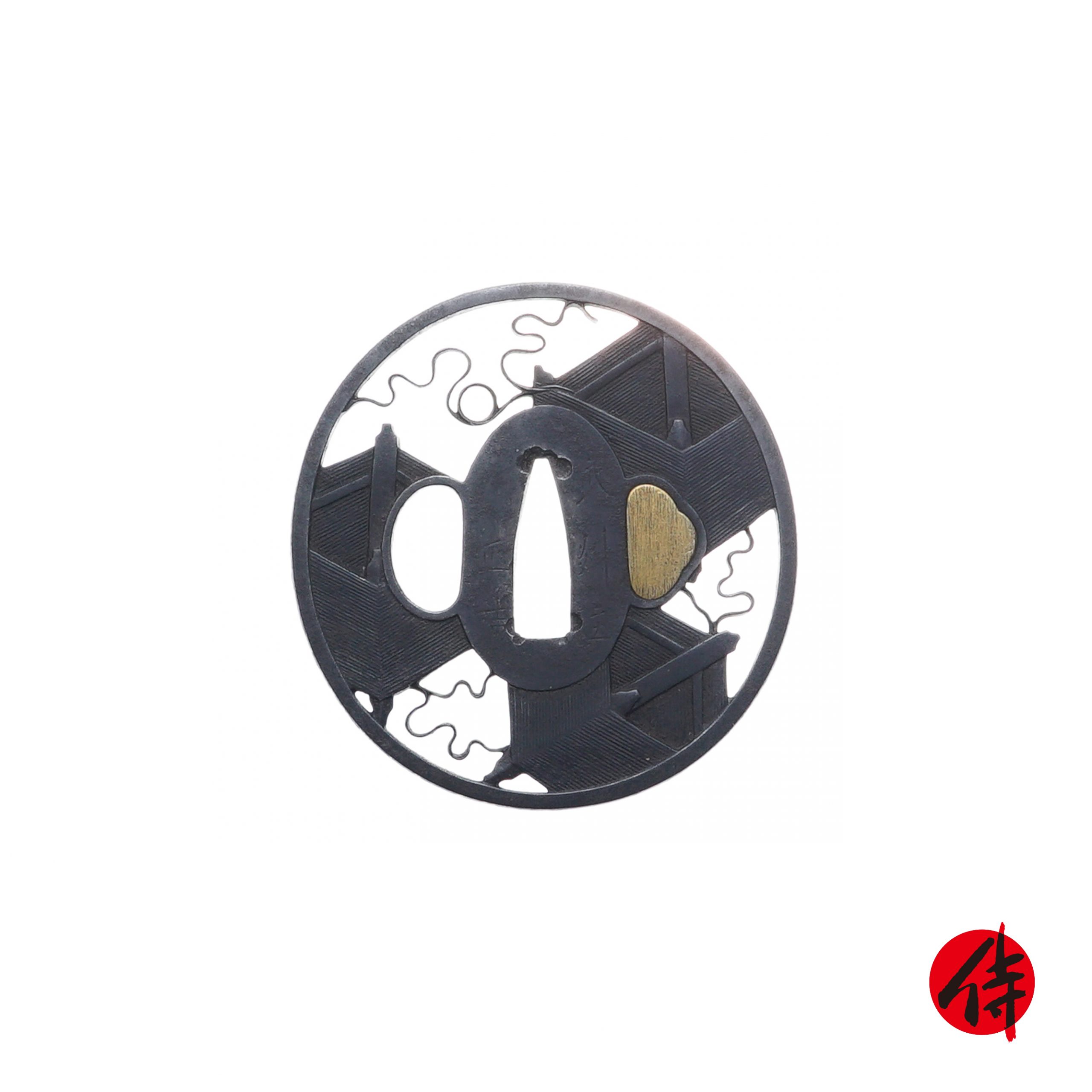
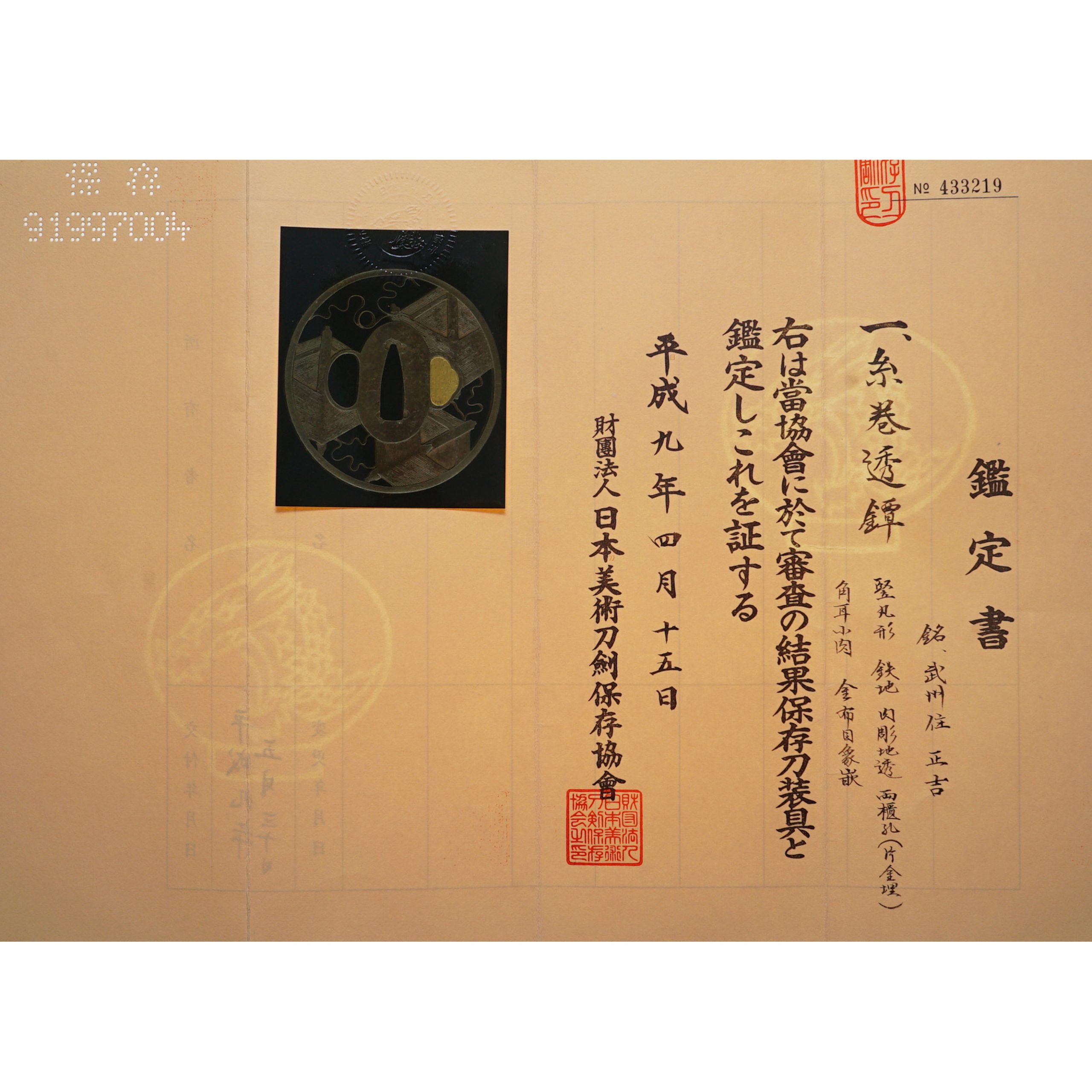
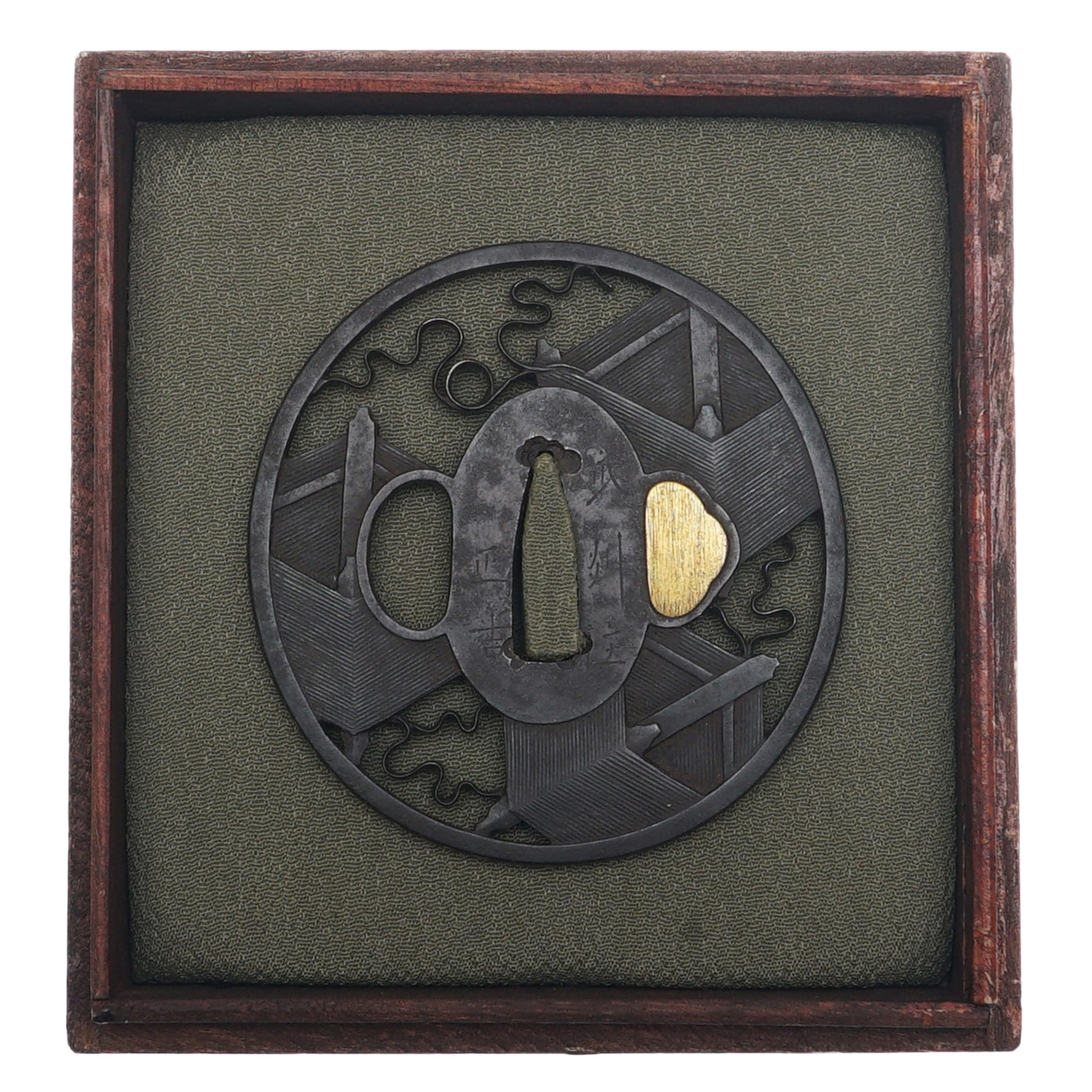
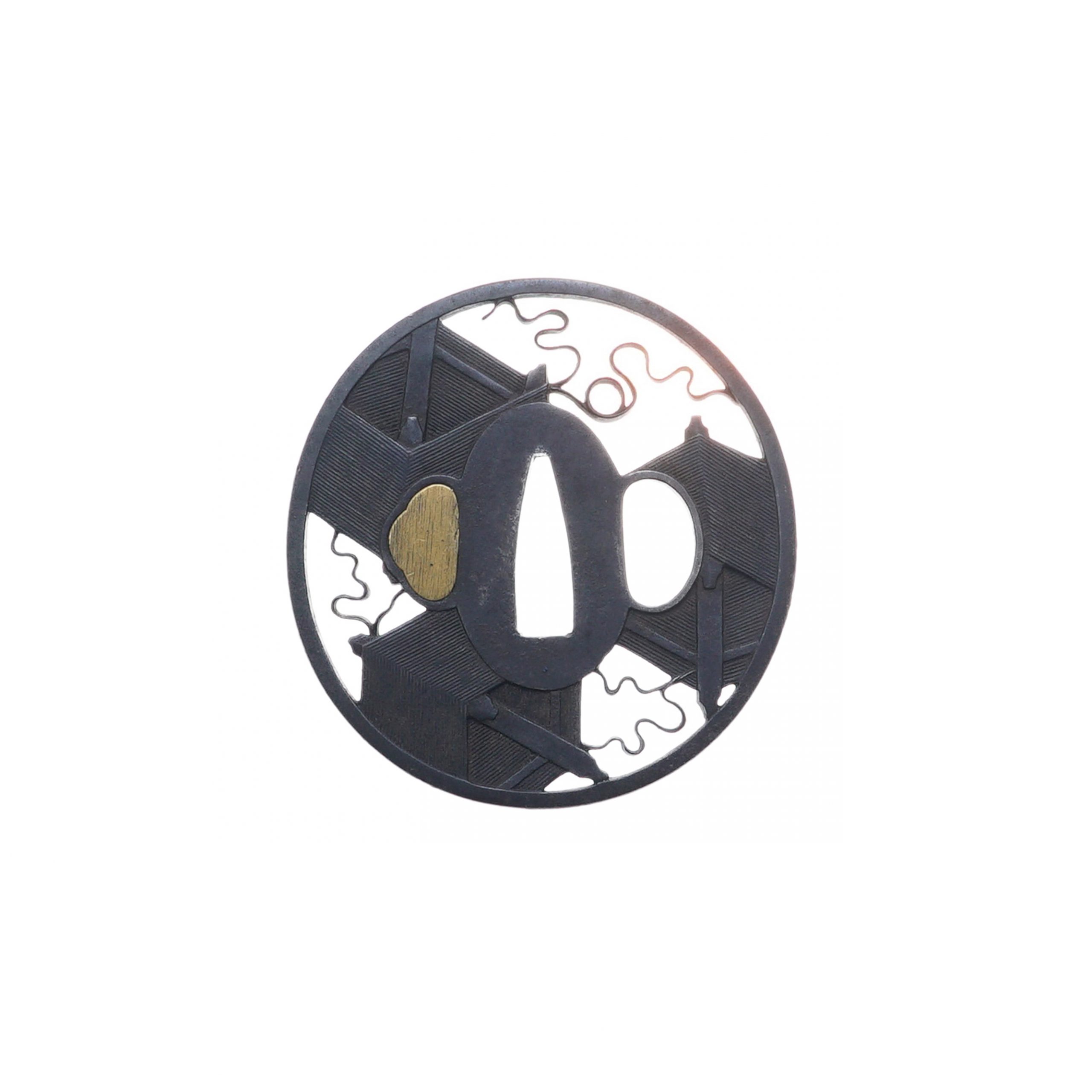
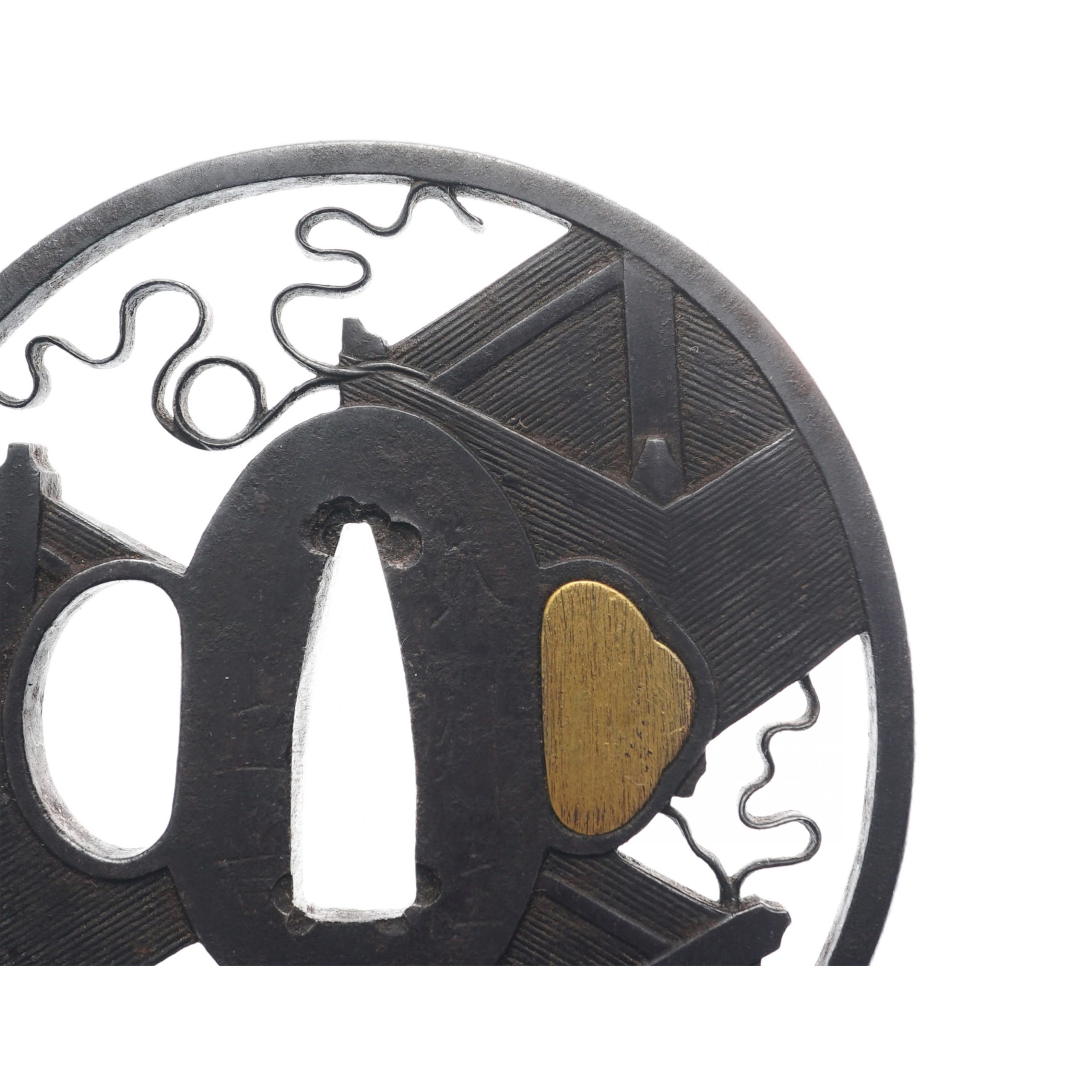
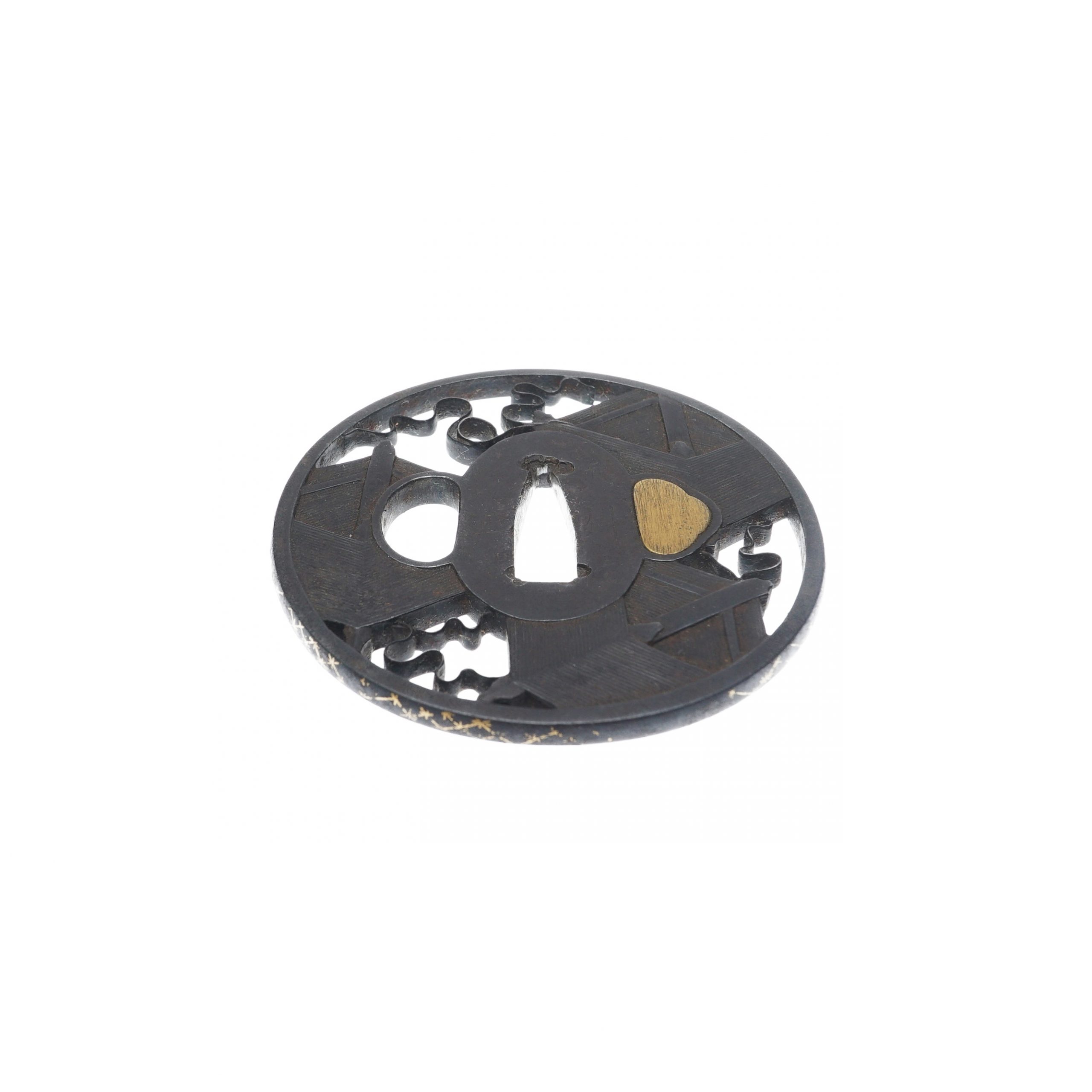
Title: Masayoshi-style, Itoguruma Sukashi Description This iron Tsuba has an oval shape. Three Itomaki (spool) are engraved with Sukashi-Bori (openwork) technique. The thread extends from each reel. It is said these long threads represent the wish for longevity. This motif also has been favored for Noh (classical Japanese dance-drama) costume and women’s Kimono (traditional Japanese costume). This Tsuba is recognized by The Society for Preservation of Japanese Art Swords, which is known as NBTHK. *As this item is an antique, please check each photo and ensure its condition. What is Tsuba? Tsuba is the hand-guard of the Japanese sword. High-class Samurai wore his Katana sword with its beautiful sword mountings such as Tsuba. Tsuba’s front design tends to be more decorative as this part was often seen by other Samurais when he was walking on the streets. Why is it that the sword mounting was important for Samurai? The sword mountings of the Japanese sword have many kinds of decorations such as handguards (Tsuba), sword hilt (Menuki), pommel (Fuchi Kashira). The Japanese sword worked as a weapon and as an object to show who he was. For example, it shows their personalities and beliefs. You could say that it is like decorations for smartphones today. We recommend you zoom in on the pictures of the sword fittings. When you do so, you can see the skill of Japanese metal engraving techniques. They are mainly made of iron and copper with inlays of gold, silver, and bronze. When it comes to handguard (Tsuba), each one has a different outline and weight. These sword fittings that have lived with Japanese swords of the same age might be worth as much as the Japanese swords. They are inconspicuous parts of the Japanese sword. Nevertheless, if you are knowledgeable or particular about it, you will become a connoisseur of the Samurai. Authentication Paper : NBTHK Hozon Certificate NBTHK, also known as Nihon Bijutsu Touken Hozon Kyokai (the Society for the Preservation of the Japan Art Sword), is one of the oldest Japanese sword appraising organizations in modern-day Japan. They authenticated the Tsuba on April 15th in the 9th year of Heisei (1997). They appraised it as Hozon Tousougu, the Tsuba worth preserving for Japanese society. The purchaser will receive this original certificate as well. We can also translate what is written into English and make a PDF file for your record if you request. *This Tsuba was originally listed as a Tsuba clock, but we decided to sell the Tsuba itself. You will receive the Tsuba itself stored in a wooden box. 【About us】 Samurai Museum is located in Tokyo, Japan, exhibiting antique artifacts related to the Samurai history. Samurai Museum Shop is the place for those who are interested in Japanese culture and craftsmanship. We deal with antique Samurai swords/armor, traditional crafts made in Japan and so on. 【Payment method】 We accept payment through Stripe (Credit card), PayPal , Apple Pay or ChromePay, all of which are secure payment methods. Also, you don’t need to make an account on Stripe for the checkout. If you prefer other payment method, please contact us. You may either pay in JPY , USD , AUD , CAD , EUR , CHF or GBP . The price is set in Japanese Yen. Prices in other currencies are automatically calculated based on the latest exchange rate. 【Shipping duration】 We normally ship via EMS (Express Mail Service) provided by Japan Post. It usually takes at least 5-14 days to deliver the package after you place an order. Time of delivery is estimated as accurately as possible by the carrier but does not take into account any delays beyond our control such as by inclement weather, post office holiday seasons. We will use DHL instead for those who ordered from Canada as EMS temporarily stops shipping to this country due to COVID-19. We offer Free International Shipping as long as we can ship your order by either EMS or DHL (Canada only). If you prefer other shipping carriers, please contact us. We will info
NihontoWatch取扱店 サムライミュージアム

鐔工 · 武蔵
現在51点販売中
伊藤派は武蔵国江戸神田を拠点とした金工の一派で、初代正長(元禄頃~享保十二年没)が宝永七年に将軍家宣に拝謁し、公儀お抱え鍔師に任ぜられたことに始まる。歴代当主はいずれも「正」の字を通字とし、十代にわたって鍔・小道具の制作を続けた。二代正恒は糸透かしと呼ばれる精緻な糸鋸透の技法を開発し、「武州住正恒」と銘する打刀拵では鐔・縁頭を同作とし、七宝・螺鈿・金打込を駆使した統一的な拵を手がけている。十代にして最後の当主となった伊藤勝見(文政十二年〈一八二九〉生、明治四十三年〈一九一〇〉没)は、十二歳で田中清寿の門人となり、弘化元年に師家の養子となって清重と名乗った。若くして法橋に叙され、師父から東竜斎の号を許されたが、清寿と不仲になって田中家を離れた後、柴田是真に蒔絵を学んだ。万延元年三月に伊藤正広家と養子縁組して正隆と名乗り、伊藤家十代目を継承、三十歳後半に勝見と改名した。金工の鍛錬に是真門下の蒔絵の薫陶が加わり、勝見の色金への鋭敏な感覚に結実した。 伊藤派の作風は、象嵌と色絵を的確に用いた精密な彩色金工を最大の特色とする。鉄・四分一・朧銀・赤銅の地板に、高彫・鋤出高彫・片切彫・毛彫といった多彩な彫技を駆使し、金・銀・素銅・緋色銅・真鍮など多種の色金による象嵌色絵を施す。正恒の拵作品では赤銅魚子地に高彫色絵の栗形・返角を配し、鐺には金地に桜花文を打込む手法が見られ、「すべてに取り合せがよく、当時の武士の好尚がうかがえる」[[c:1]]と評される。勝見の作品では、鳥羽僧正に因む鳥獣戯画蛙合戦図・蝦蟇仙人蛙合戦図・大聖不動明王図など物語性・信仰性の強い図柄が好まれ、いずれも「高彫から片切毛彫を駆使した抜群な彫技」[[c:2]]と「的確で優れた象嵌色絵」[[c:3]]が一体となった画面を構成する。小柄においても牡丹に胡蝶を金・銀・緋色銅など多彩な色金で豊かに表現し、「発色の良い色金の象嵌技術は勝見の本領が存分に発揮され」[[c:4]]た入念作と称される。据文象嵌・布目象嵌・消し込み象嵌など技法の使い分けも巧みで、清寿門下の伝統を踏まえつつ独自の境地を拓いた。 伊藤派は元禄から明治に至るまで江戸の鐔工として高い水準を維持した一門である。参勤交代を通じて各国の武士がその作品を求め、伊藤鐔は全国に広まった。説示において勝見の作品は繰り返し「真骨頂を示す優品」[[c:5]]「勝見の本領が存分に発揮された」[[c:6]]と評価され、蛙合戦図鐔については「諧謔な図を昇華させた鐔」[[c:7]]と、物語画を金工芸術の高みに引き上げた点が特筆されている。絵画的な構図力と高度な彫金・象嵌を融合させ、信仰や文学の主題を鐔上に再現し得た伊藤派は、幕末金工史において独自の位置を占める。 詳しく見る →
銘が正しい、または無銘でも年代・流派を指摘でき、美術工芸的価値が認められる、保存に値する真正の刀装具と鑑定されたものです。
日本美術刀剣保存協会(NBTHK)は、1948年に設立され、文化庁の監督を受ける公益財団法人で、東京・刀剣博物館に本部を置きます。専門の審査員が出品作を直接審査し、美術的・歴史的価値に応じた鑑定書を発行します。NBTHKの鑑定書は、日本刀および刀装具の真正性を示す最も広く認知された基準です。
NBTHK公式サイトReturns/exchanges limited to defects caused by shipping (except willful misconduct or gross negligence by the company); customers must contact within 72 hours of receiving the product.