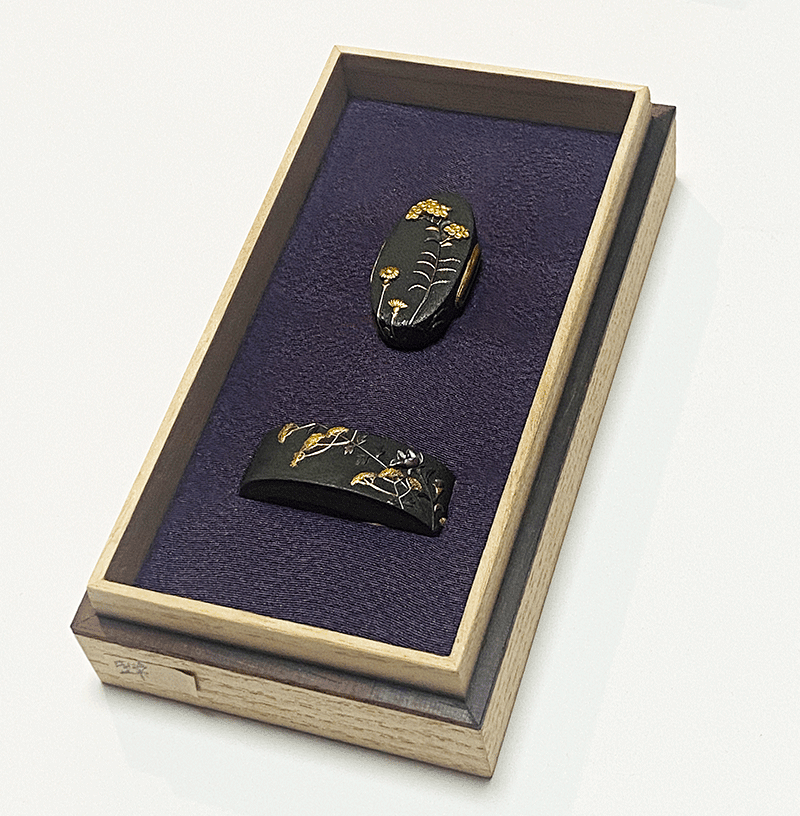
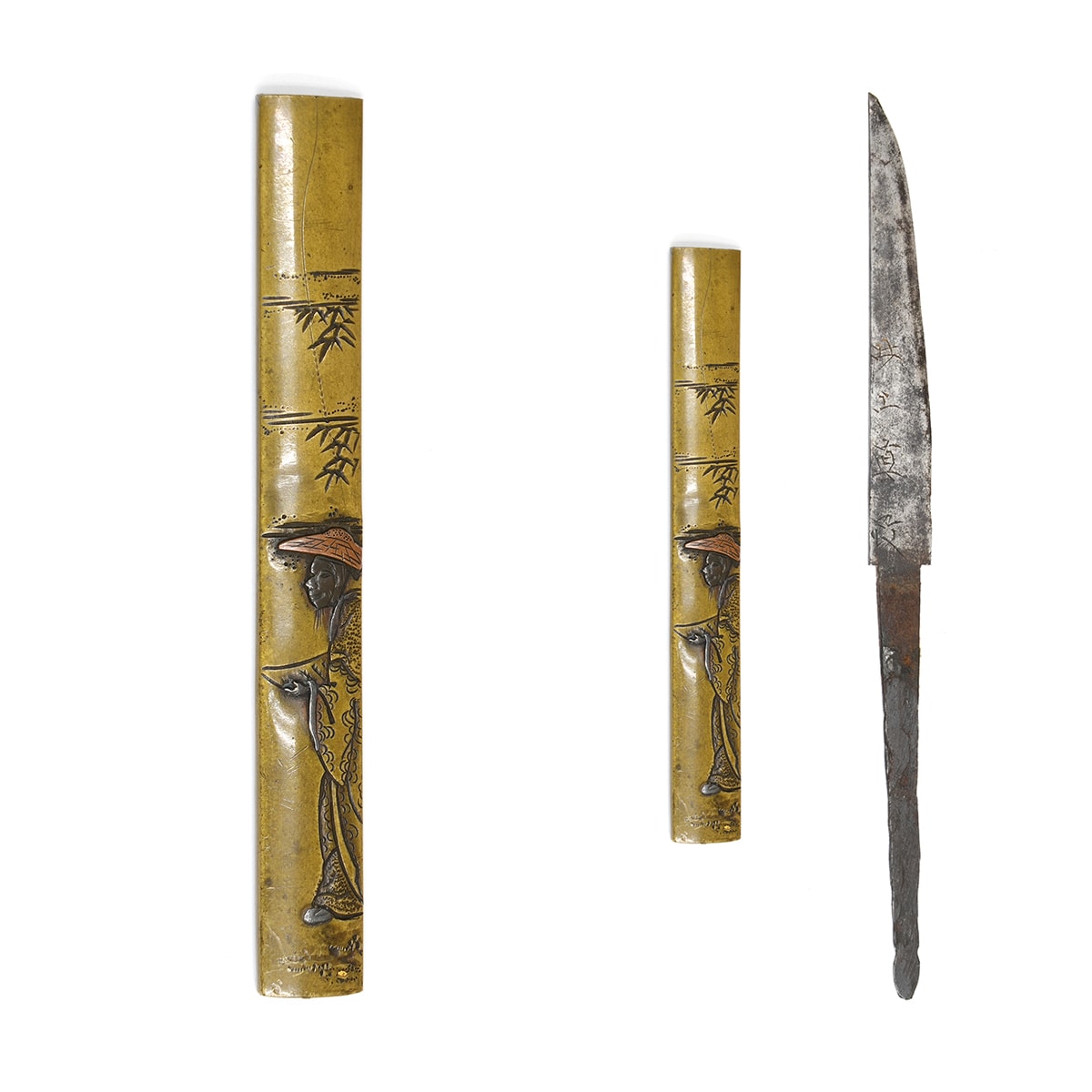
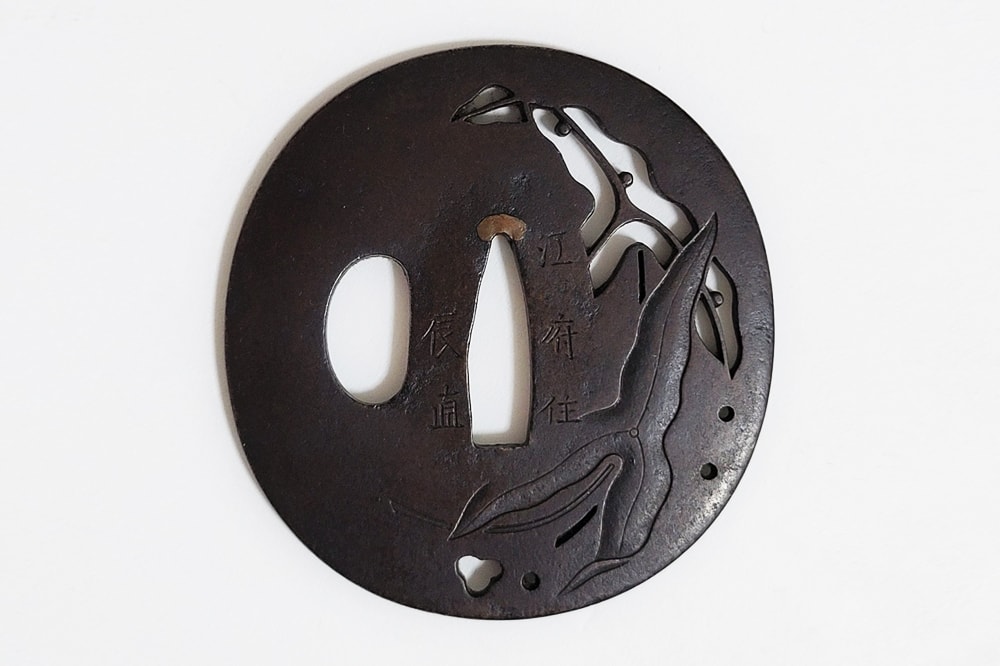
Katsumi was born in in Bunsei 12 (1829). At the age of twelve he entered the school of Tanaka Seijū, and in Kōka 1 (1844), at seventeen, he was adopted into his master's household and took the name Kiyoshige. While still young he was awarded the court title Hōkyō, and his teacher permitted him the art name Tōryūsai. After falling out with Seijū, however, he left the Tanaka house. Thereafter he studied under Shibata Zeshin, and in Man'en 1 (1860) he was adopted into the Masahiro family, taking the name Masataka and becoming the tenth head of the house — recognized as the principal line of Bushū makers. He changed his name to Katsumi in his late thirties and used the art name Ōkei Inshi in his mature period. He died in Meiji 43 (1910) at the age of eighty-two.
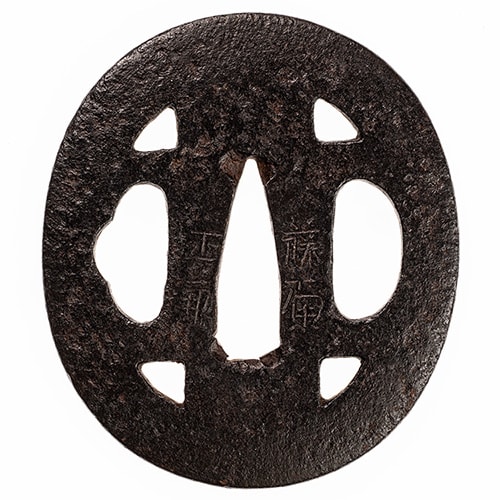
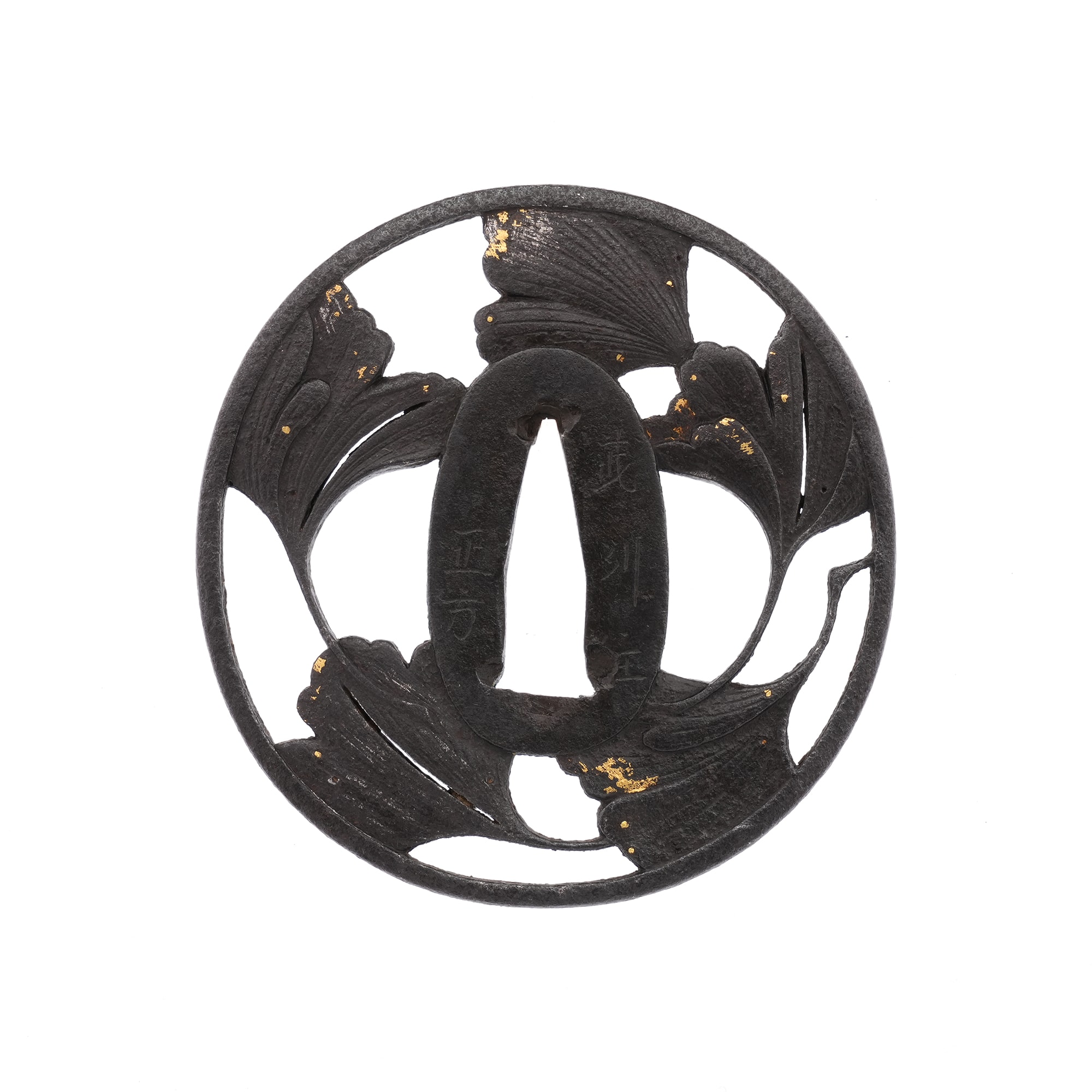
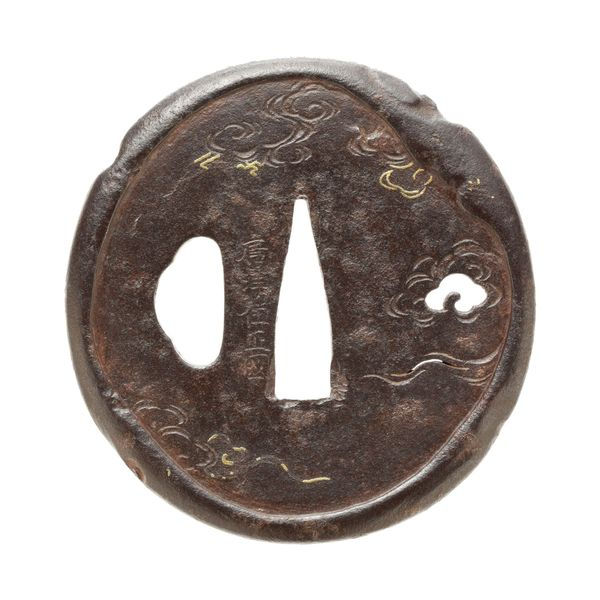
Katsumi's technical command encompasses the full range of metalworking disciplines transmitted through the Tōryūsai school: with polychrome , inlay in gold, silver, and , , and — all deployed with precision. In his Chōjū-giga from his seventy-sixth year, the techniques of and are deployed to their fullest extent, while the composition successfully preserves the spirit of the original painting. His Daisei Fudō Myōō makes extensive use of and in keeping with Seijū's circle, resulting in a compelling image in which the awe-inspiring power of Fudō Myōō seems to unfold directly before the viewer's eyes.
The consistently identifies Katsumi's works as pieces that reveal his true strength — a forceful, firmly grounded technique enriched by cross-disciplinary training under Zeshin. His collaborative with Hōkyō Kiyoshige constitutes valuable material for the study of the Tōryūsai school, clearly demonstrating the individual strengths of both makers. Whether in the spirited narrative compositions of his later years or the emphatic sculptural presence of his mature devotional subjects, Katsumi's oeuvre abundantly demonstrates the achievements of a master who stood at the confluence of the Tōryūsai and traditions.