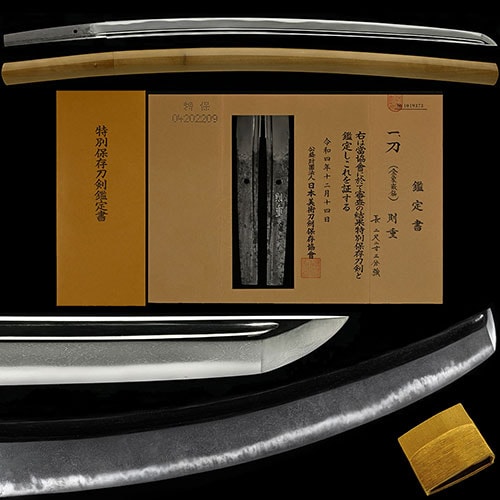
徳川の泰平のもと、大小は法度の定める身分の制服となり、需要は城下町、とりわけ江戸に集まった。工芸は二つに分かれる。目利きのための華やかな鑑賞の作と、截断の結果を金象嵌に刻む実証の刀である。
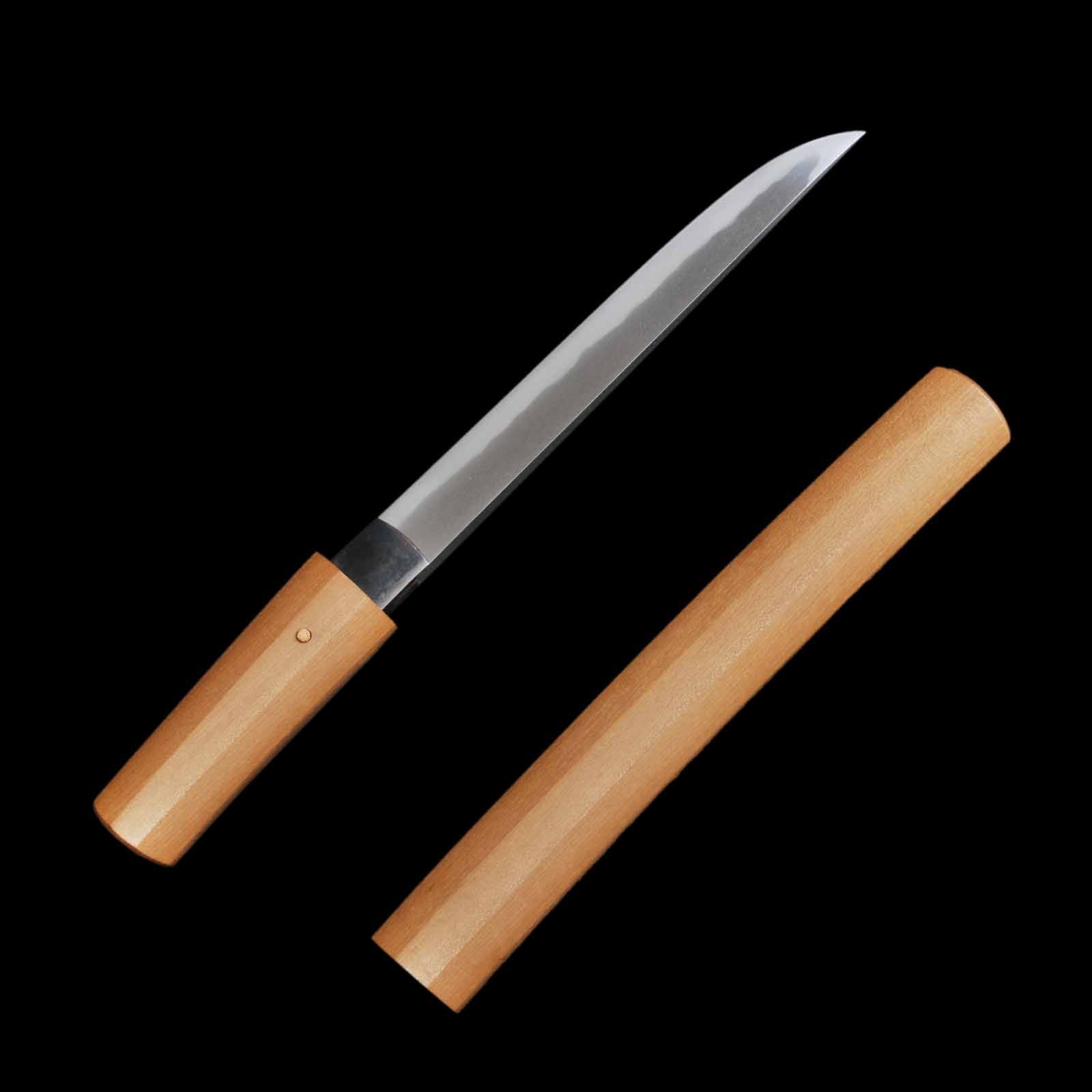
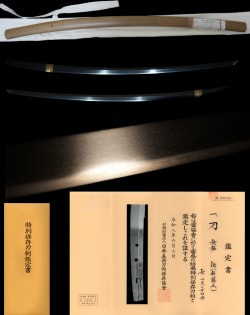
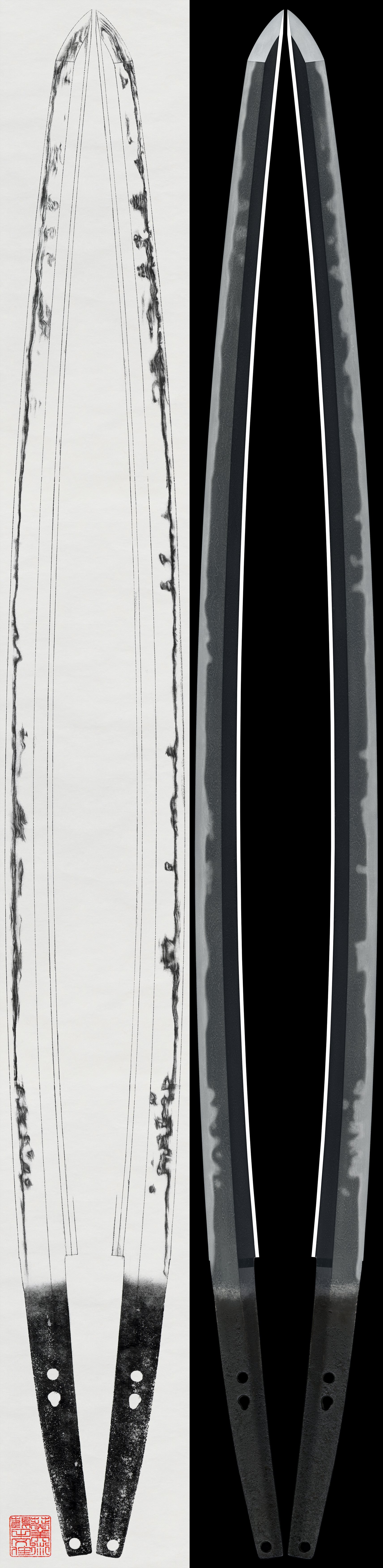
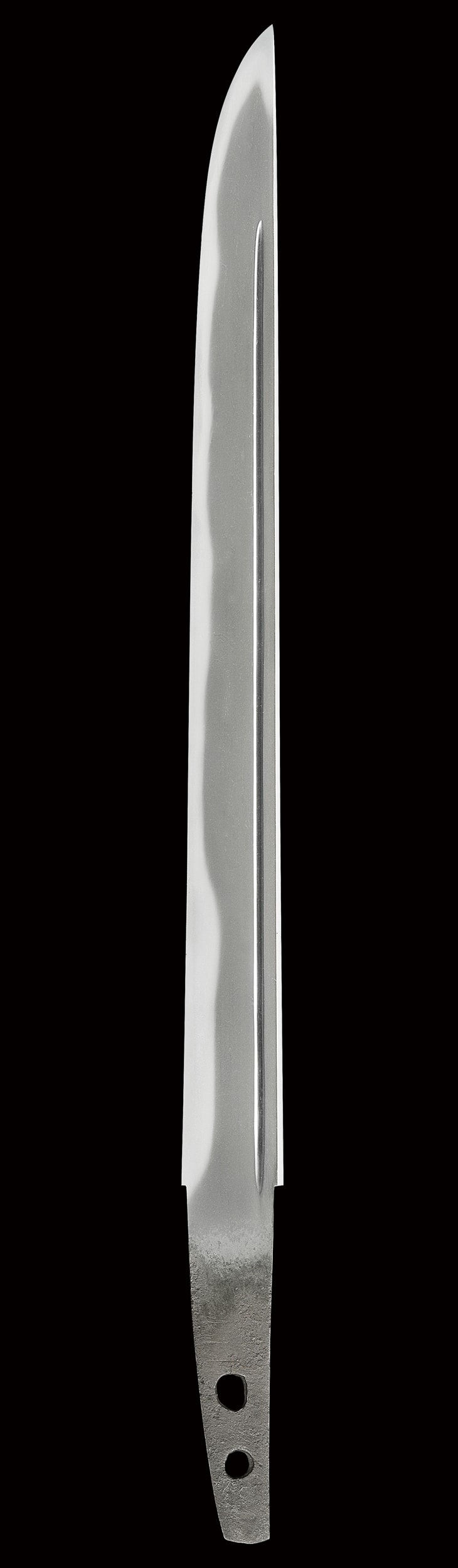
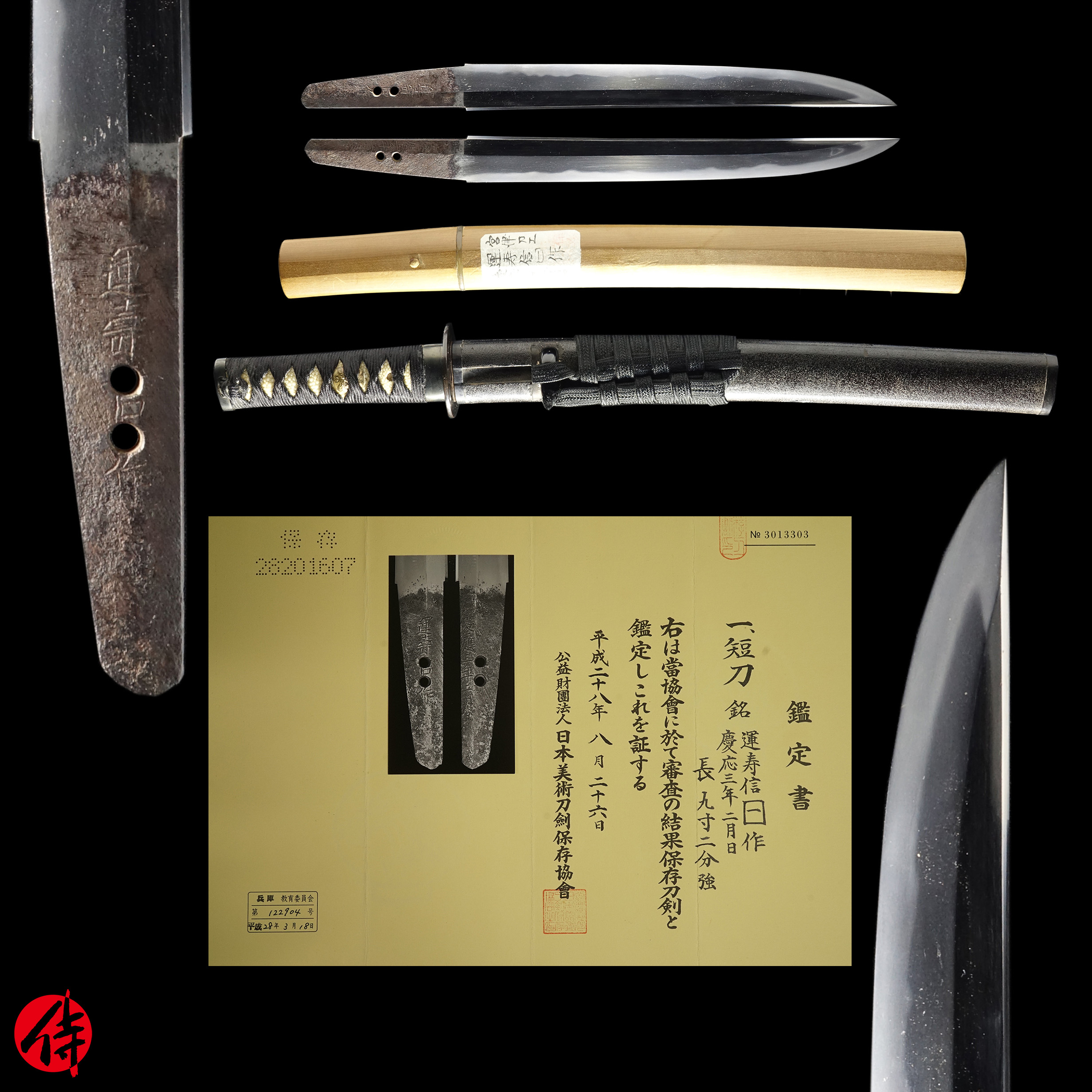
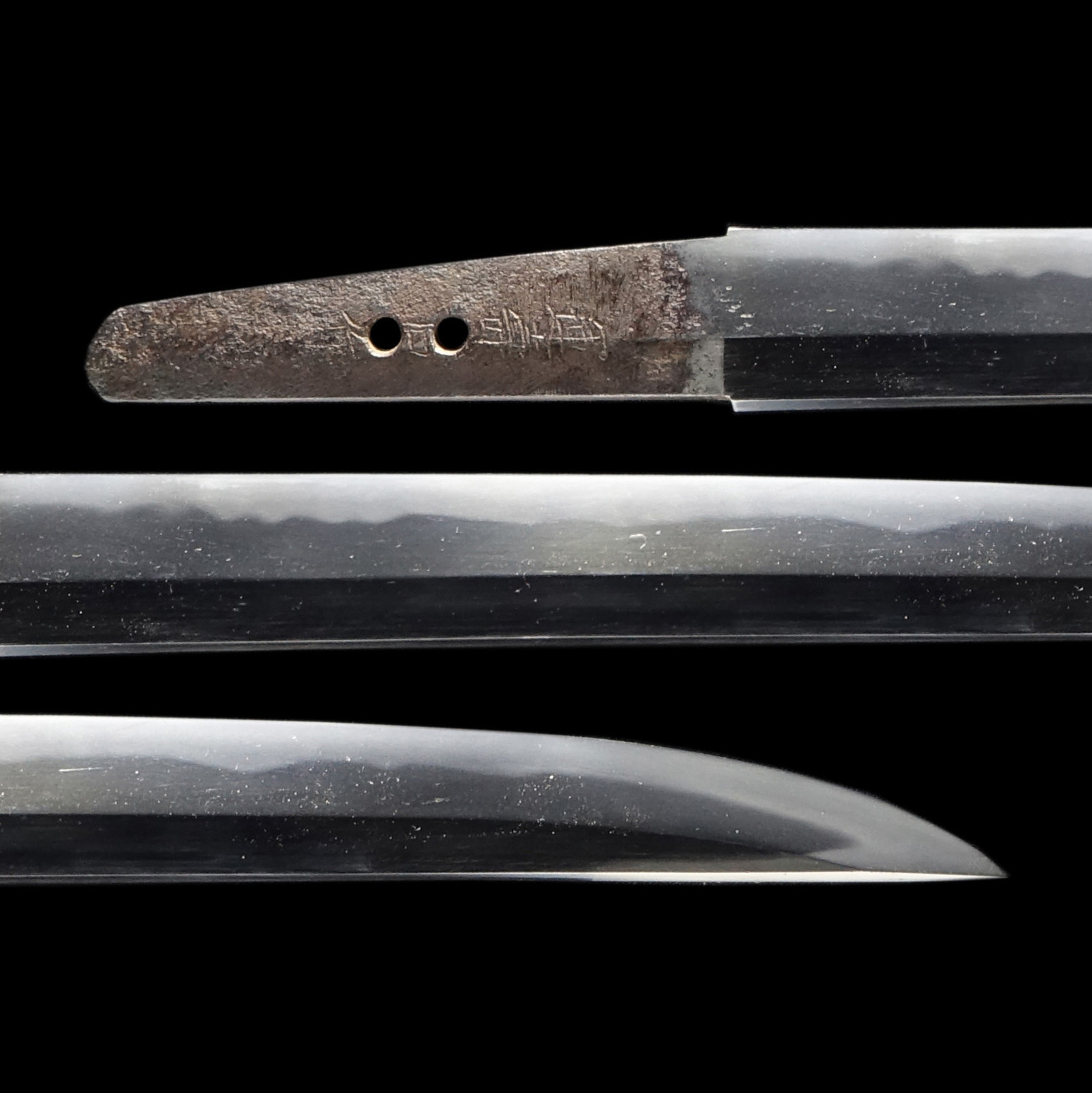
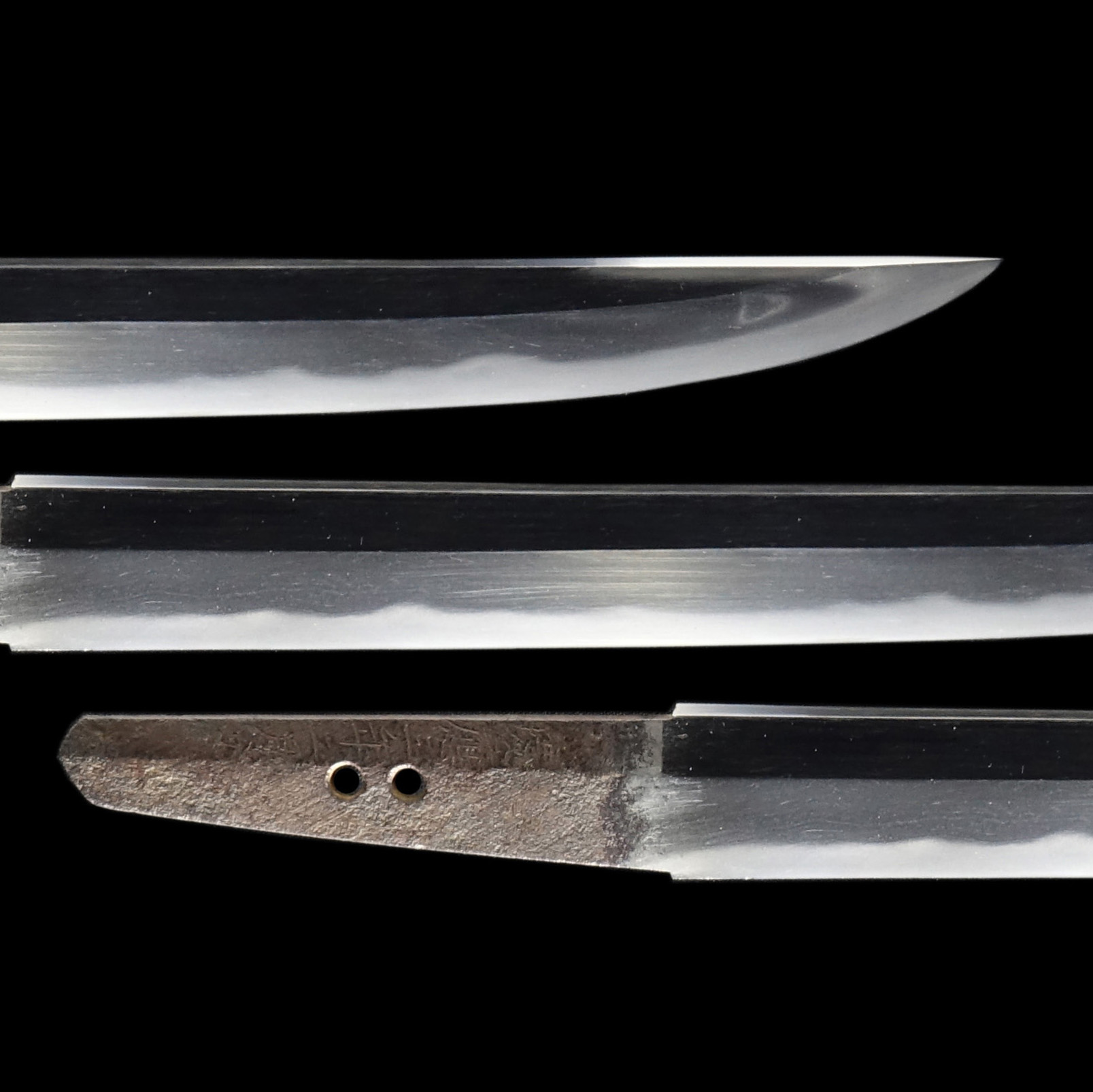
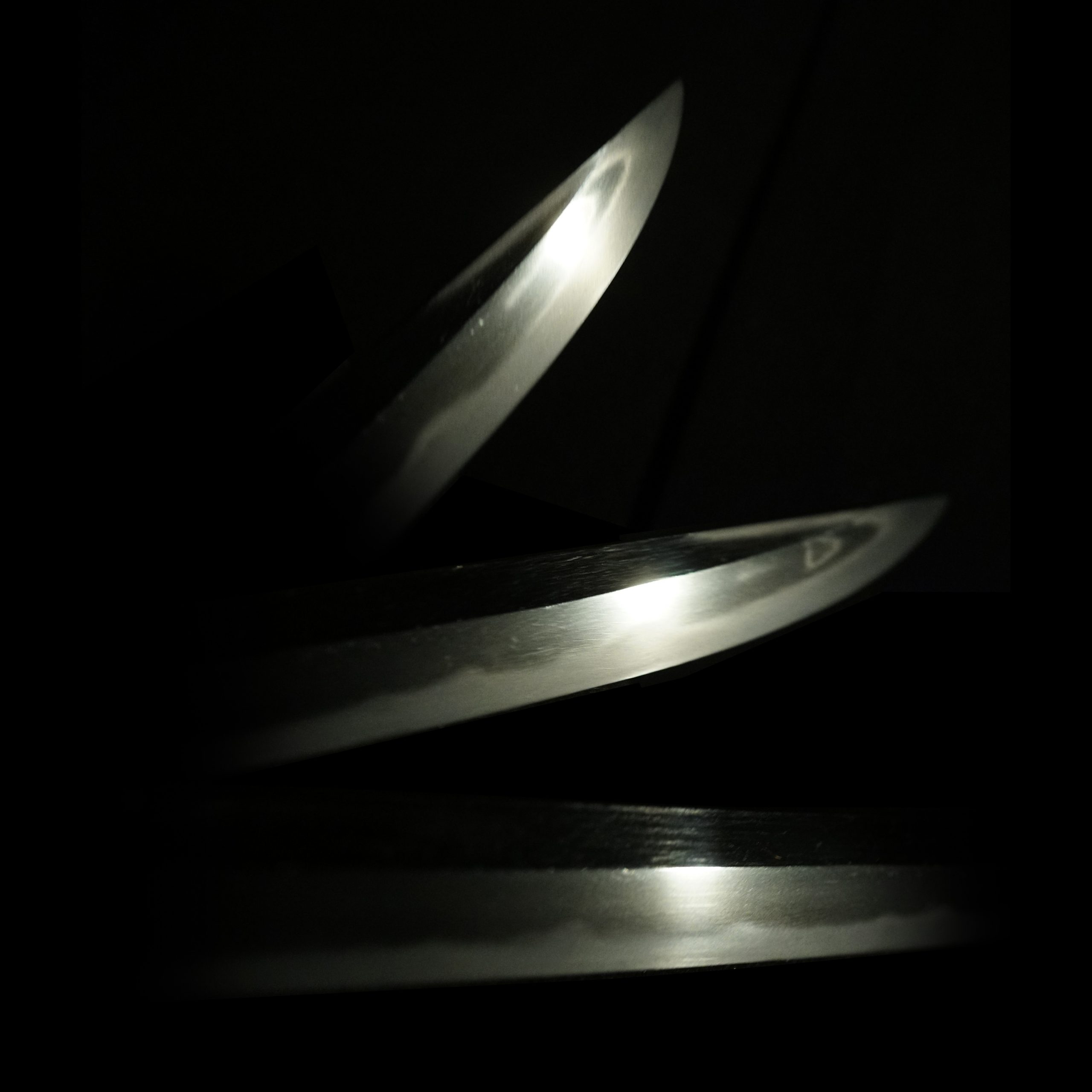
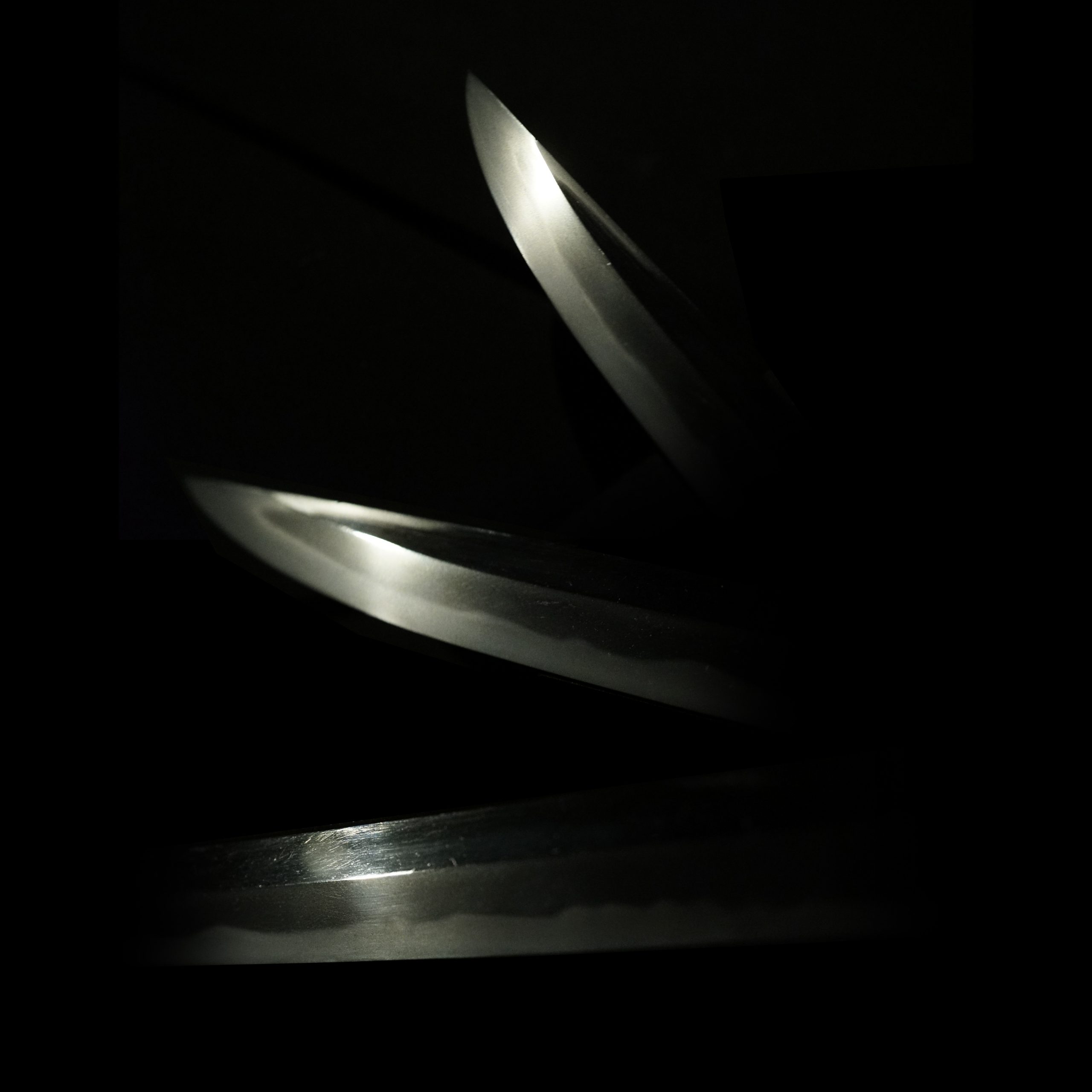
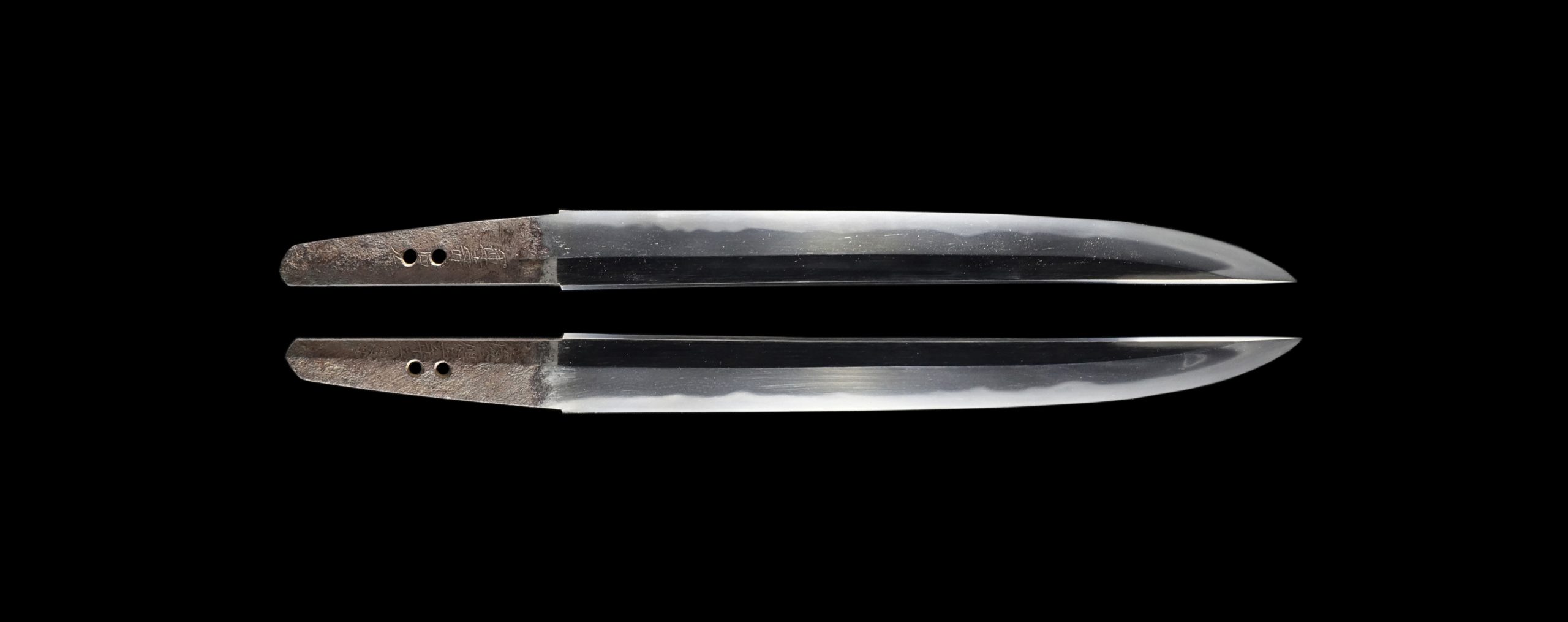
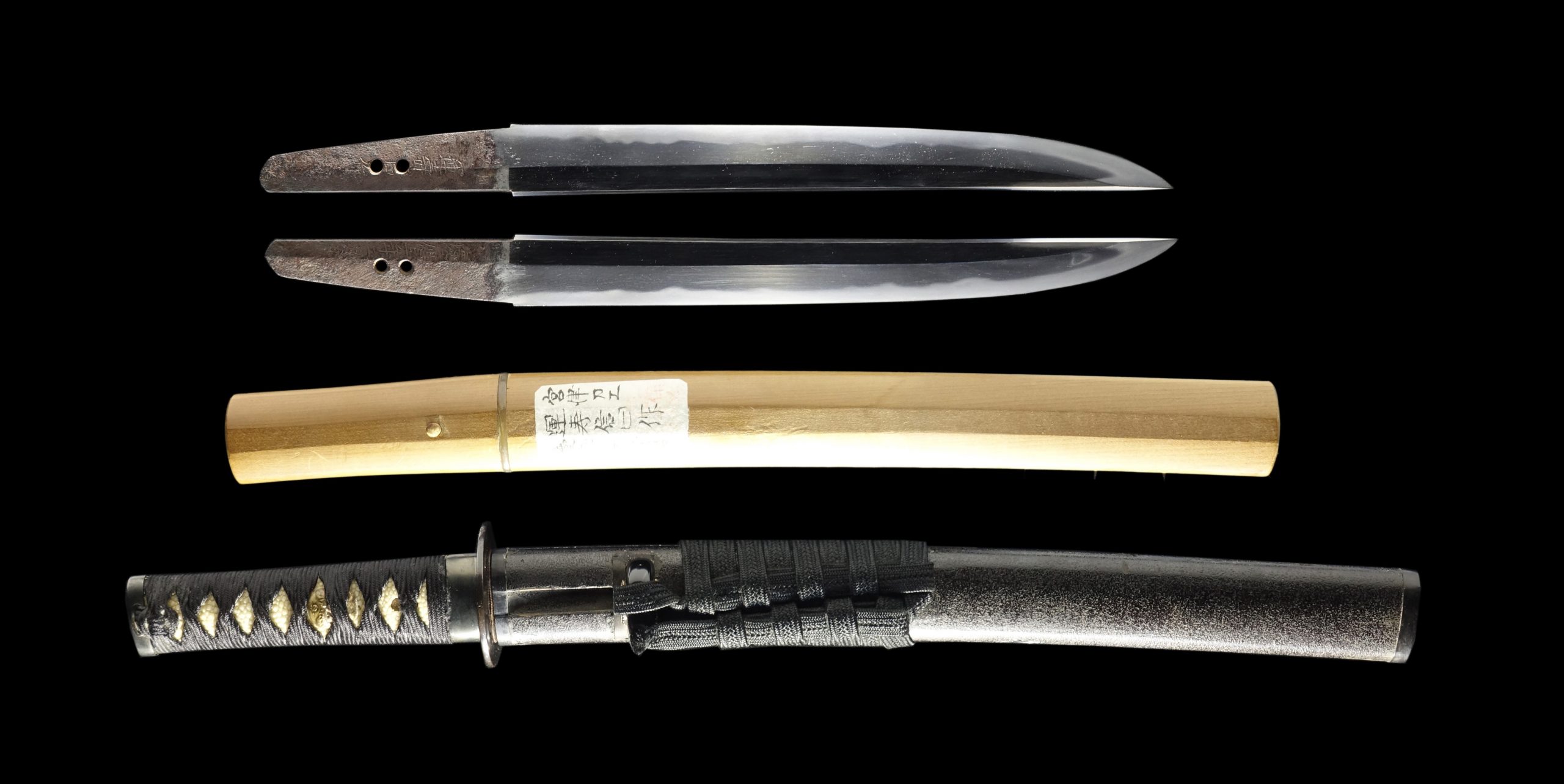
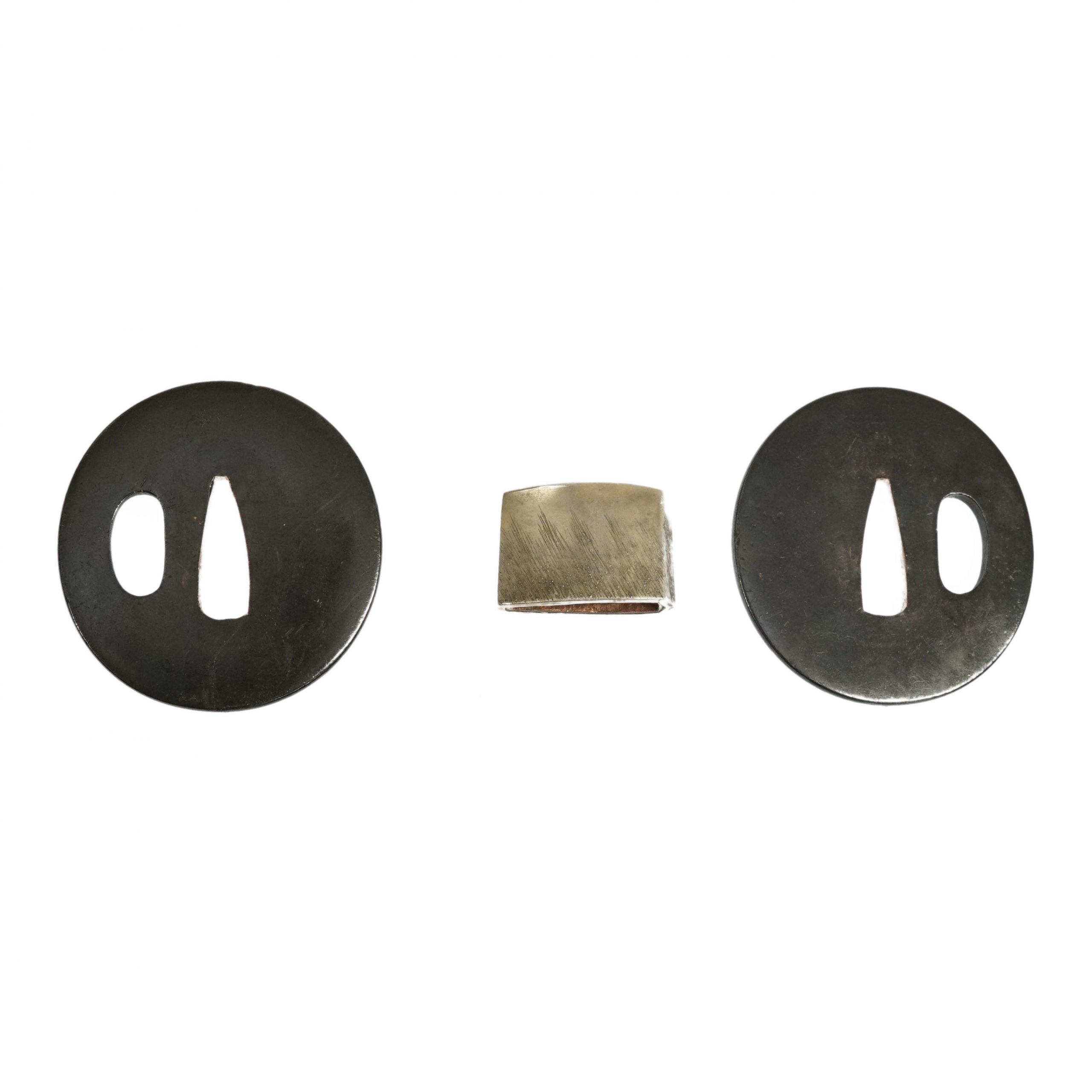
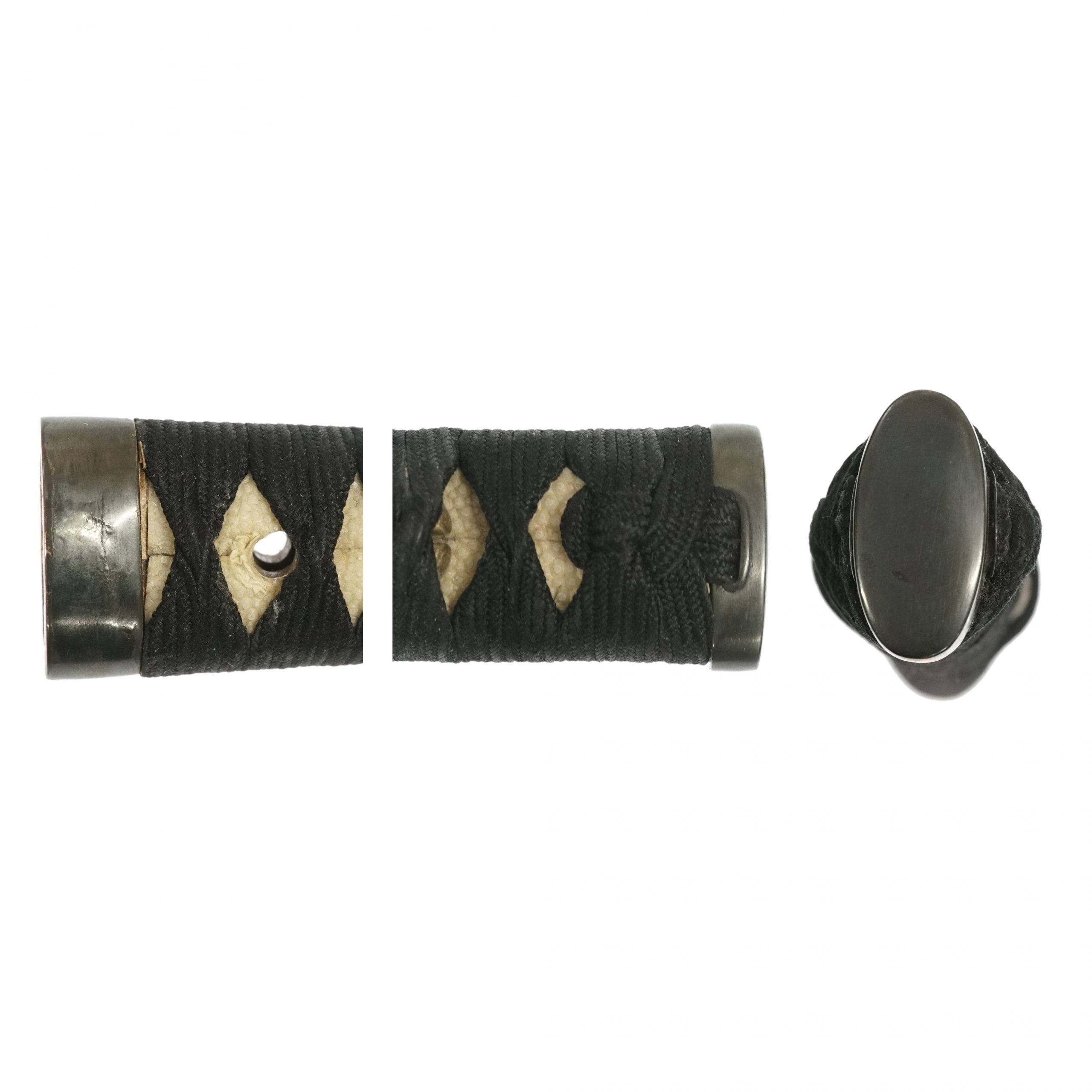
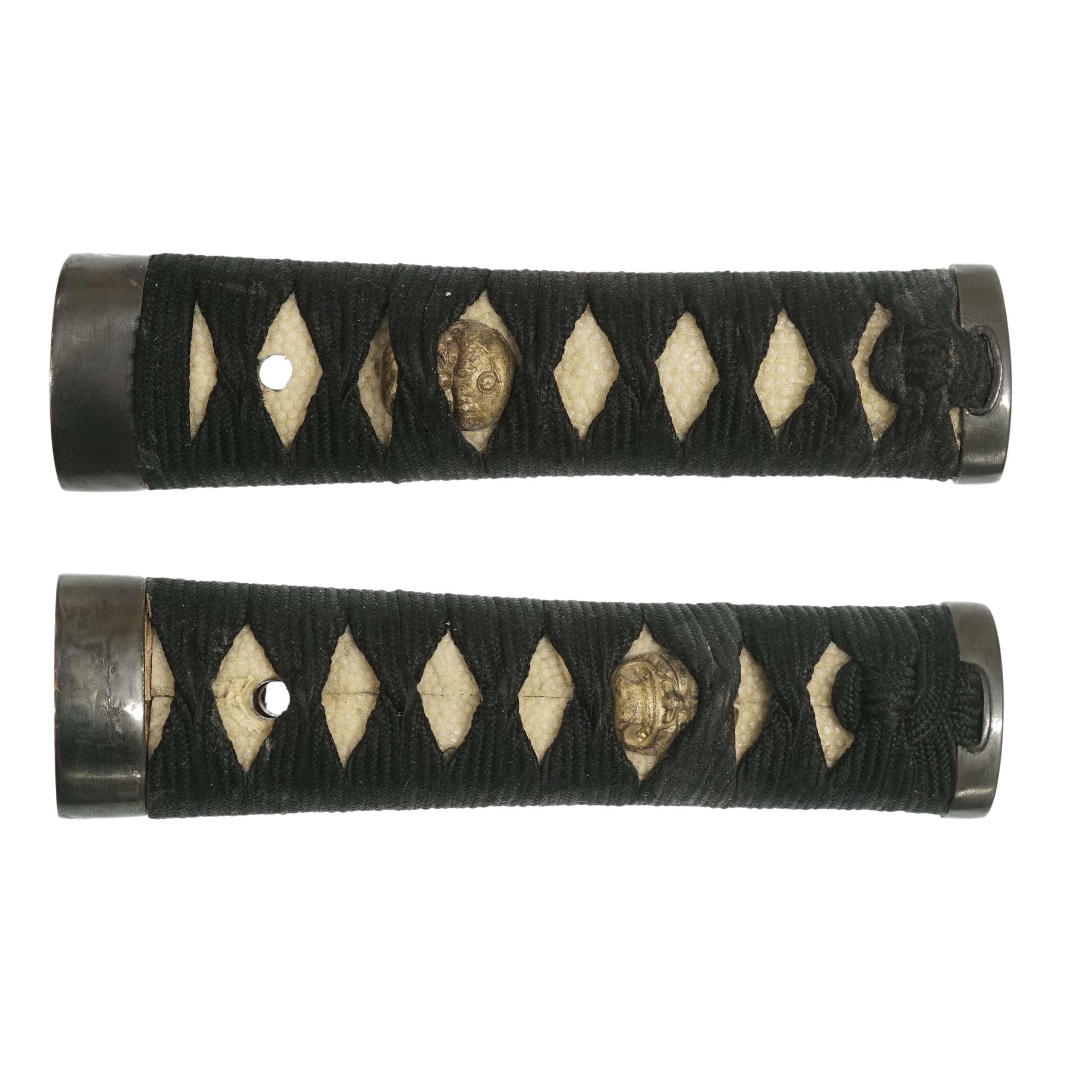
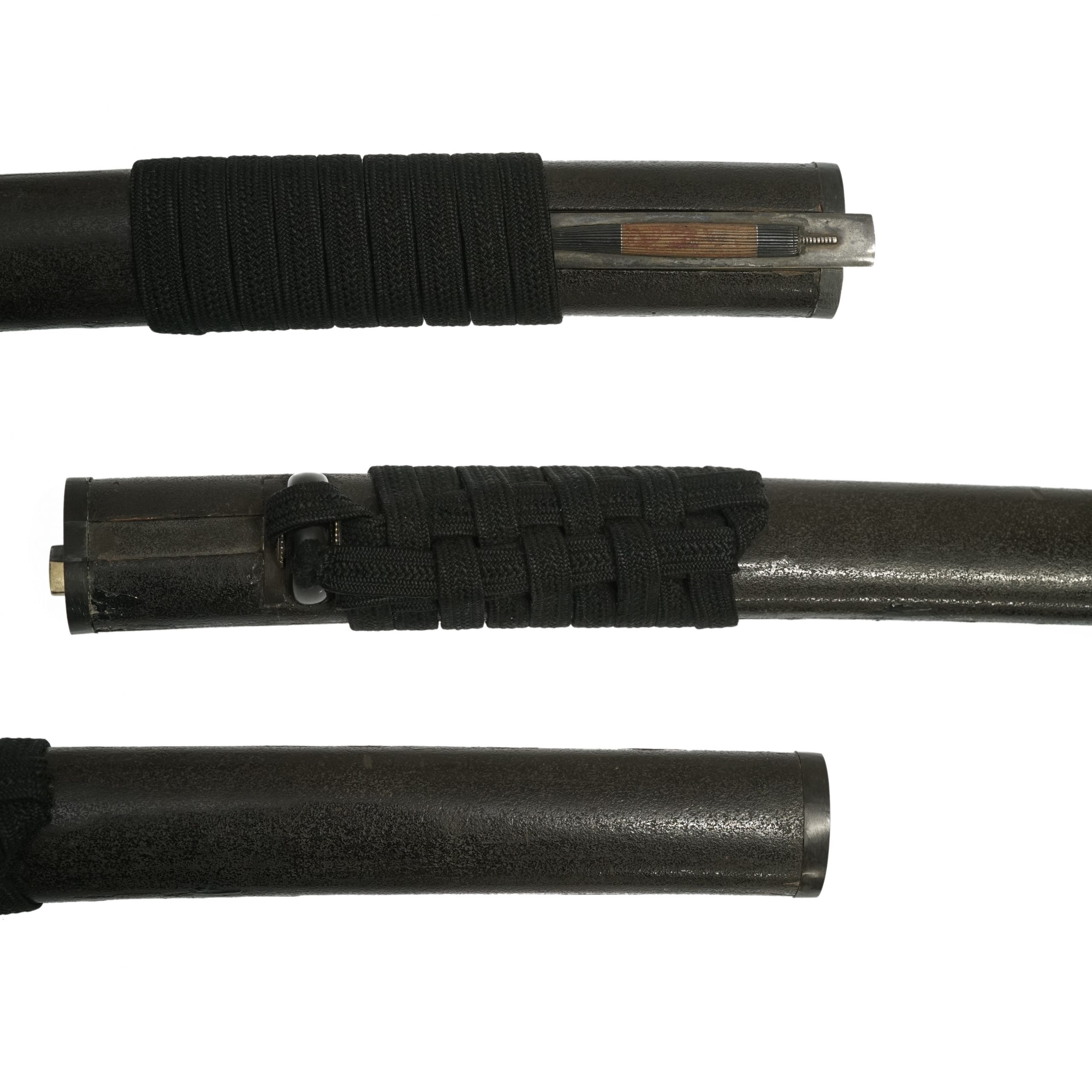
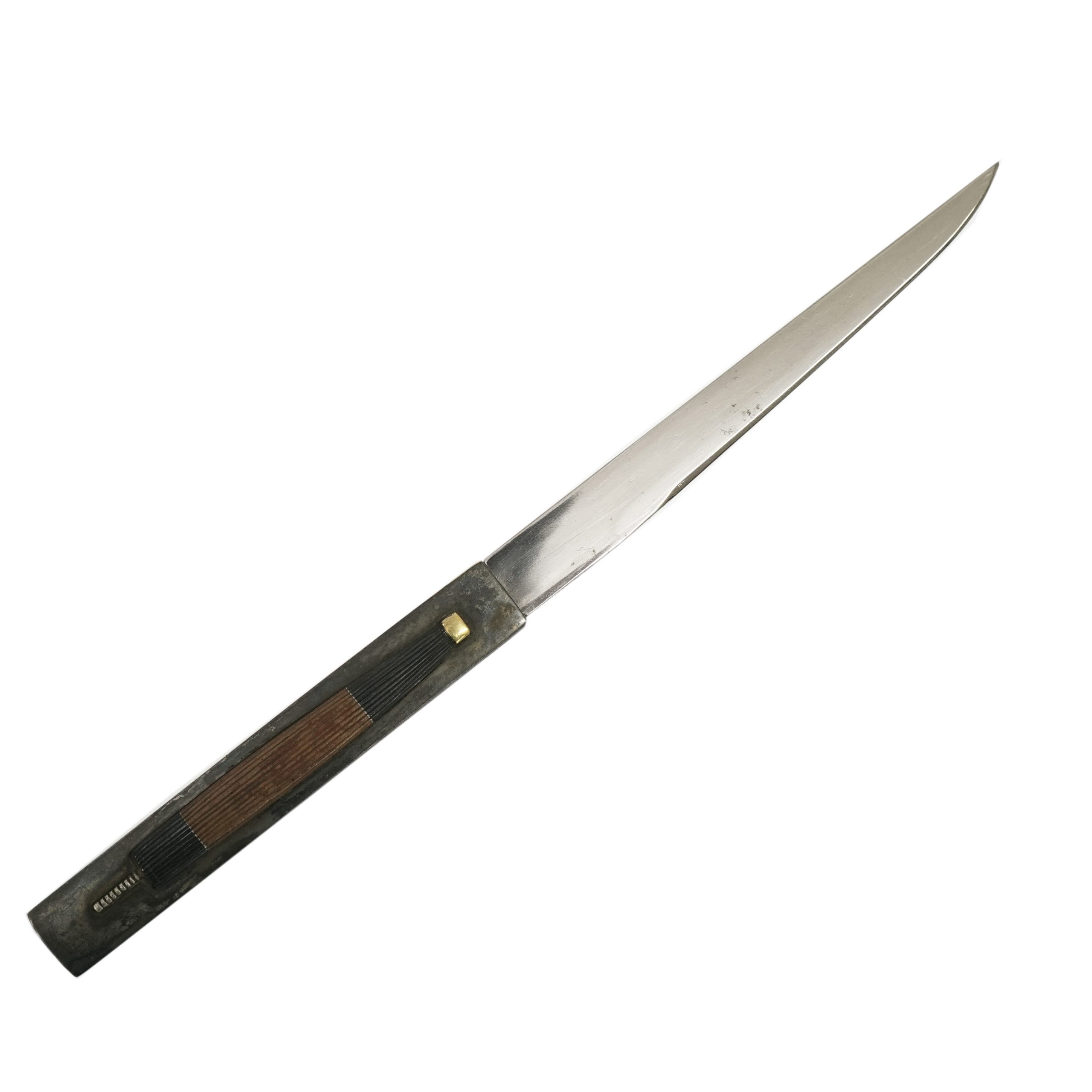
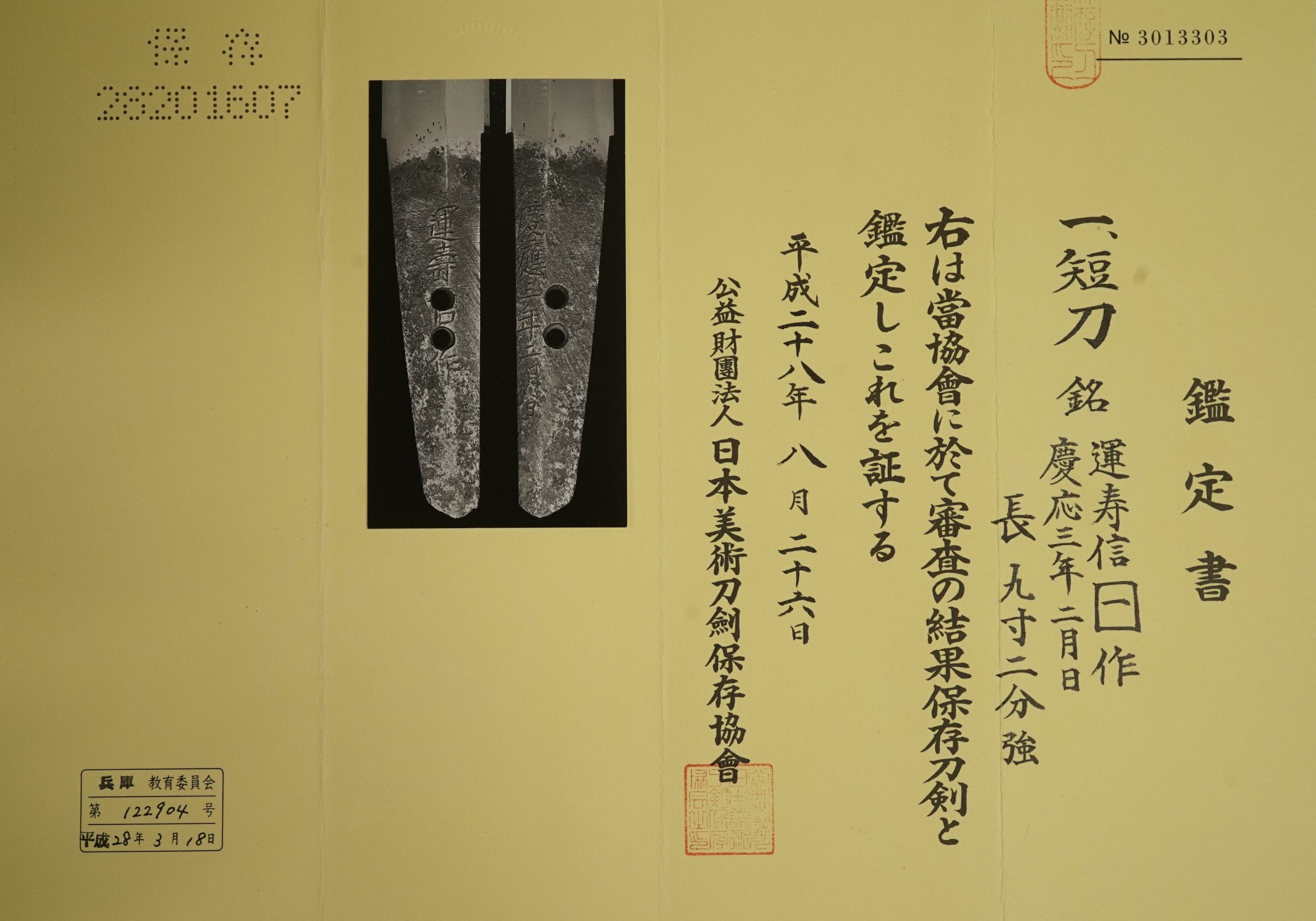
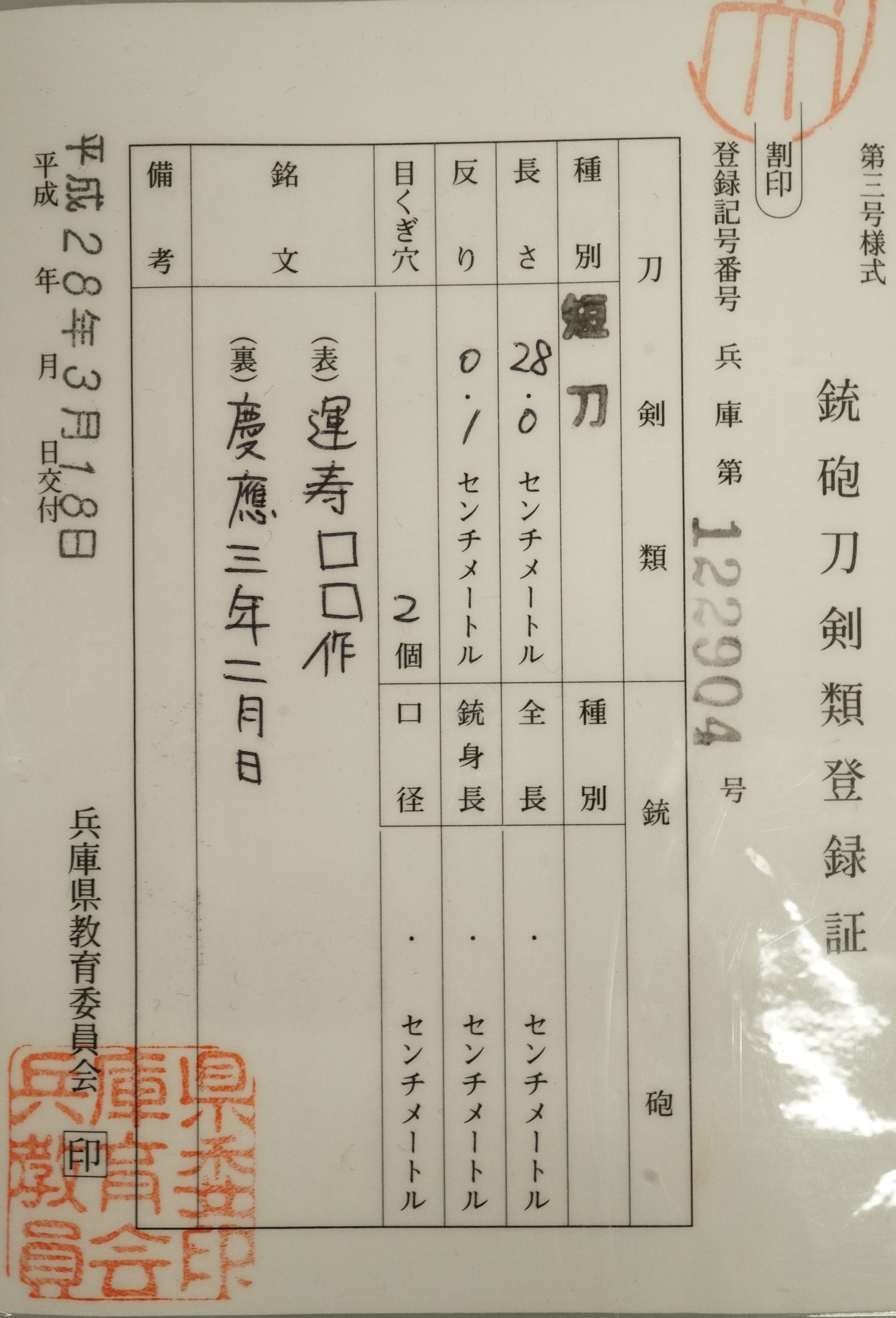
Antique Japanese Sword Tanto Signed by Nobukazu with NBTHK Hozon Certificate 【Description】 Unjyu Nobokazu was an apprentice of seventh-gen Sekido Korekazu, who was a famous SOSHU-DEN swordsmith. He exclusively served the Ayabe clan in Kyoto prefecture. Ayabe clan was run by Kuki(九鬼) family, who was a navy working for Nobunaga Oda or Hideyoshi Toyotomi during the Sengoku Jidai(The warring state period). The family was prestigious, and they were depicted as a pirate feudal lord in war chronicles during the Edo period(1603-1868). Nobukazu forged this Tanto in the third year of the Keio era(1867). He was active at sword making before the Edo period(-1868) ended, and the Tokugawa government lost their political power. There aren’t so many remaining works left by Unjyu Nobukazu today. This sword has a Hozon certificate issued by NBTHK. This authentication paper was only given to Japanese swords, worth preserving by Nihon Bijutsu Touken Hozon Kyokai(the Society for the Preservation of the Japan Art Sword). Though the part of the signature is missed due to adjusting the length of the blade in the past, NBTHK appraised this sword and concluded the blade was forged by Unjyu Nobukazu. This sword comes with a beautiful Koshirae(scabbard&sword fitting). 【Blade】 Length : 28.0 cm(11.0 inches) Curvature : 0.1 c m(0.04 inches) Hamon : The crystalline structure which forms along the cutting edge of a blade as a result of the hardening process Jimon(Jihada) : visible steel surface pattern created by folding and hammering during forging process 【Other details】 Fuchi-Kashira : A pair of matching sword fittings that cover the upper and bottom parts of its sword hilt Plain and simple Fuchi Kashira decorates the Tsuka. Tsuka and Menuki : Tsuka is the handle of the Japanese sword and Menuki is its decoration Male faces are designed for Menuki with gold. They have compelling expressions. Tsuba and Habaki : Tsuba is the handguard for the Japanese Sword and Habaki is the equipment to make the blade not touch its scabbard inside.It prevents the blade from getting rusty and chipped. Saya : Saya is the scabbard for the Japanese sword Kozuka : Kozuka is a small knife stored in Koduka Hitsu(groove of the sheath of the Japanese sword). A Wagasa (和傘, Japanese umbrella) is designed for Kozuka. Wagasa is made of bamboo and traditional Japanese paper. Of course, it is to avoid the rain, but it has also been considered an amulet to protect its user from evil spirits. In the Edo period, it is said people judged the rank or relations of master and servant based on designs of Wagasa. Authentication Paper : NBTHK Hozon Certificate for the blade NBTHK , also known as Nihon Bijutsu Touken Hozon Kyokai (the Society for the Preservation of the Japan Art Sword), is one of the oldest Japanese sword appraising organizations in modern-day Japan. They authenticated the blade on August 26th in the 28th year of Heisei(2016). They appraised it as Hozon Touken, the blade worth preserving for Japanese society. The purchaser will receive this original certificate as well. We can also translate what is written into English and make a PDF file for your record if you request. Registration Number : Hyogo 122904 The Board of Education in Hyogo prefecture issued a registration paper for this sword . In order to obtain this paper, the sword needs to be traditionally hand forged. With this paper, its owner can legally own an authentic Japanese sword in Japan. —————————————————————– 【About us】 Samurai Museum is located in Tokyo, Japan, exhibiting antique artifacts related to the Samurai history. Samurai Museum Shop is the place for those who are interested in Japanese culture and craftsmanship. We deal with antique Samurai swords/armor, traditional crafts made in Japan and so on. 【 Japanese Sword& Export Process 】 The Japanese swords we deal with are hand-forged edged swords made in Japan. It was made from the traditional carbon steel called TAMAHAGANE(玉鋼) . Samurai Museum is familiar with th
 NihontoWatch
在銘 · Soshu · 元治 · 長さ 28cm · 反り 0.1cm
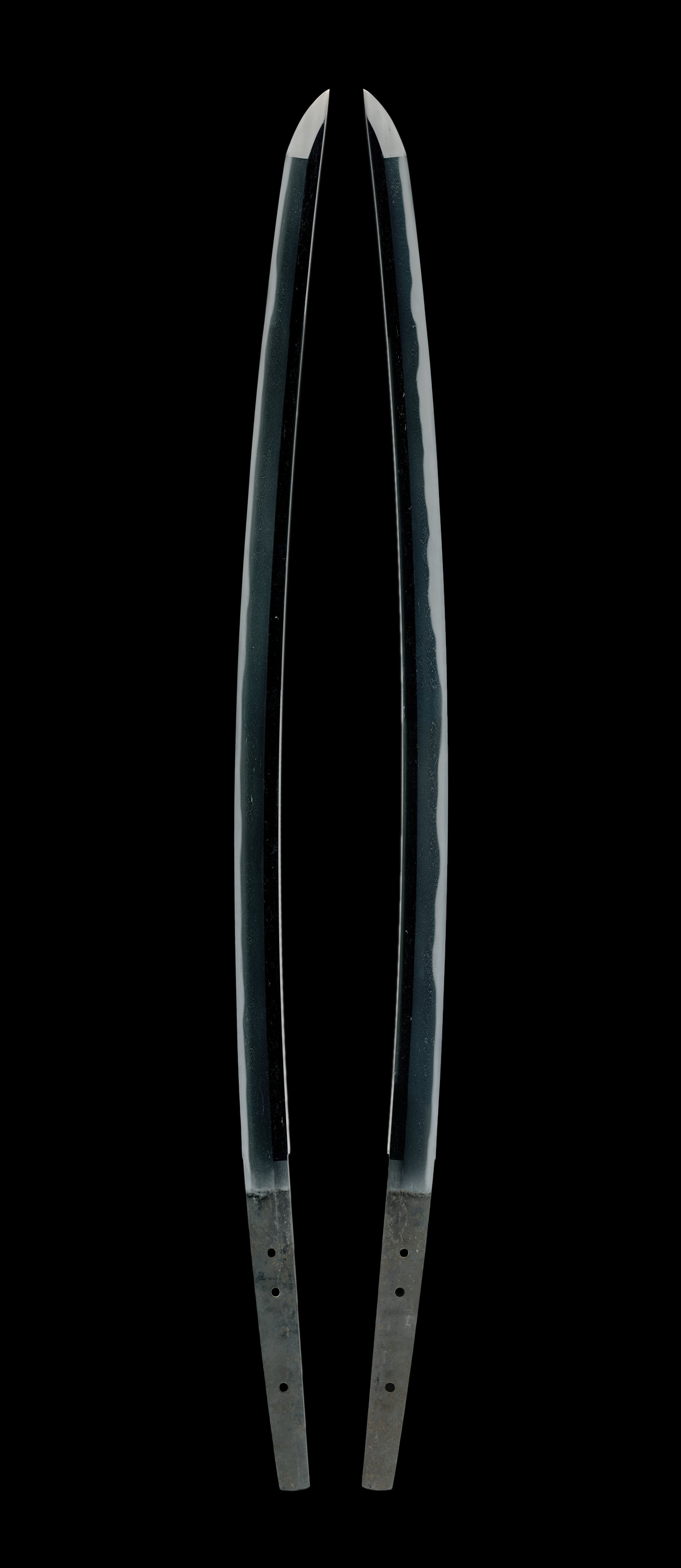
出雲 · 1864-1865頃
江戸時代
徳川の泰平のもと、大小は法度の定める身分の制服となり、需要は城下町、とりわけ江戸に集まった。工芸は二つに分かれる。目利きのための華やかな鑑賞の作と、截断の結果を金象嵌に刻む実証の刀である。
銘が正しい、または無銘でも年代・国・系統を確実に指摘できる、保存に値する真正の作と鑑定されたものです。
日本美術刀剣保存協会(NBTHK)は、1948年に設立され、文化庁の監督を受ける公益財団法人で、東京・刀剣博物館に本部を置きます。専門の審査員が出品作を直接審査し、美術的・歴史的価値に応じた鑑定書を発行します。NBTHKの鑑定書は、日本刀および刀装具の真正性を示す最も広く認知された基準です。
NBTHK公式サイトReturns/exchanges limited to defects caused by shipping (except willful misconduct or gross negligence by the company); customers must contact within 72 hours of receiving the product.
Antique Japanese Sword Tanto Signed by Nobukazu with NBTHK Hozon Certificate 【Description】 Unjyu Nobokazu was an apprentice of seventh-gen Sekido Korekazu, who was a famous SOSHU-DEN swordsmith. He exclusively served the Ayabe clan in Kyoto prefecture. Ayabe clan was run by Kuki(九鬼) family, who was a navy working for Nobunaga Oda or Hideyoshi Toyotomi during the Sengoku Jidai(The warring state period). The family was prestigious, and they were depicted as a pirate feudal lord in war chronicles during the Edo period(1603-1868). Nobukazu forged this Tanto in the third year of the Keio era(1867). He was active at sword making before the Edo period(-1868) ended, and the Tokugawa government lost their political power. There aren’t so many remaining works left by Unjyu Nobukazu today. This sword has a Hozon certificate issued by NBTHK. This authentication paper was only given to Japanese swords, worth preserving by Nihon Bijutsu Touken Hozon Kyokai(the Society for the Preservation of the Japan Art Sword). Though the part of the signature is missed due to adjusting the length of the blade in the past, NBTHK appraised this sword and concluded the blade was forged by Unjyu Nobukazu. This sword comes with a beautiful Koshirae(scabbard&sword fitting). 【Blade】 Length : 28.0 cm(11.0 inches) Curvature : 0.1 c m(0.04 inches) Hamon : The crystalline structure which forms along the cutting edge of a blade as a result of the hardening process Jimon(Jihada) : visible steel surface pattern created by folding and hammering during forging process 【Other details】 Fuchi-Kashira : A pair of matching sword fittings that cover the upper and bottom parts of its sword hilt Plain and simple Fuchi Kashira decorates the Tsuka. Tsuka and Menuki : Tsuka is the handle of the Japanese sword and Menuki is its decoration Male faces are designed for Menuki with gold. They have compelling expressions. Tsuba and Habaki : Tsuba is the handguard for the Japanese Sword and Habaki is the equipment to make the blade not touch its scabbard inside.It prevents the blade from getting rusty and chipped. Saya : Saya is the scabbard for the Japanese sword Kozuka : Kozuka is a small knife stored in Koduka Hitsu(groove of the sheath of the Japanese sword). A Wagasa (和傘, Japanese umbrella) is designed for Kozuka. Wagasa is made of bamboo and traditional Japanese paper. Of course, it is to avoid the rain, but it has also been considered an amulet to protect its user from evil spirits. In the Edo period, it is said people judged the rank or relations of master and servant based on designs of Wagasa. Authentication Paper : NBTHK Hozon Certificate for the blade NBTHK , also known as Nihon Bijutsu Touken Hozon Kyokai (the Society for the Preservation of the Japan Art Sword), is one of the oldest Japanese sword appraising organizations in modern-day Japan. They authenticated the blade on August 26th in the 28th year of Heisei(2016). They appraised it as Hozon Touken, the blade worth preserving for Japanese society. The purchaser will receive this original certificate as well. We can also translate what is written into English and make a PDF file for your record if you request. Registration Number : Hyogo 122904 The Board of Education in Hyogo prefecture issued a registration paper for this sword . In order to obtain this paper, the sword needs to be traditionally hand forged. With this paper, its owner can legally own an authentic Japanese sword in Japan. —————————————————————– 【About us】 Samurai Museum is located in Tokyo, Japan, exhibiting antique artifacts related to the Samurai history. Samurai Museum Shop is the place for those who are interested in Japanese culture and craftsmanship. We deal with antique Samurai swords/armor, traditional crafts made in Japan and so on. 【 Japanese Sword& Export Process 】 The Japanese swords we deal with are hand-forged edged swords made in Japan. It was made from the traditional carbon steel called TAMAHAGANE(玉鋼) . Samurai Museum is familiar with th
NihontoWatch在銘 · Soshu · 元治 · 長さ 28cm · 反り 0.1cm
出雲 · 1864-1865頃
江戸時代
徳川の泰平のもと、大小は法度の定める身分の制服となり、需要は城下町、とりわけ江戸に集まった。工芸は二つに分かれる。目利きのための華やかな鑑賞の作と、截断の結果を金象嵌に刻む実証の刀である。
銘が正しい、または無銘でも年代・国・系統を確実に指摘できる、保存に値する真正の作と鑑定されたものです。
日本美術刀剣保存協会(NBTHK)は、1948年に設立され、文化庁の監督を受ける公益財団法人で、東京・刀剣博物館に本部を置きます。専門の審査員が出品作を直接審査し、美術的・歴史的価値に応じた鑑定書を発行します。NBTHKの鑑定書は、日本刀および刀装具の真正性を示す最も広く認知された基準です。
NBTHK公式サイトReturns/exchanges limited to defects caused by shipping (except willful misconduct or gross negligence by the company); customers must contact within 72 hours of receiving the product.