説明
Antique Japanese Sword Katana Signed by Motoyuki with
Tokubetsu Hozon
Certificate
【Description】
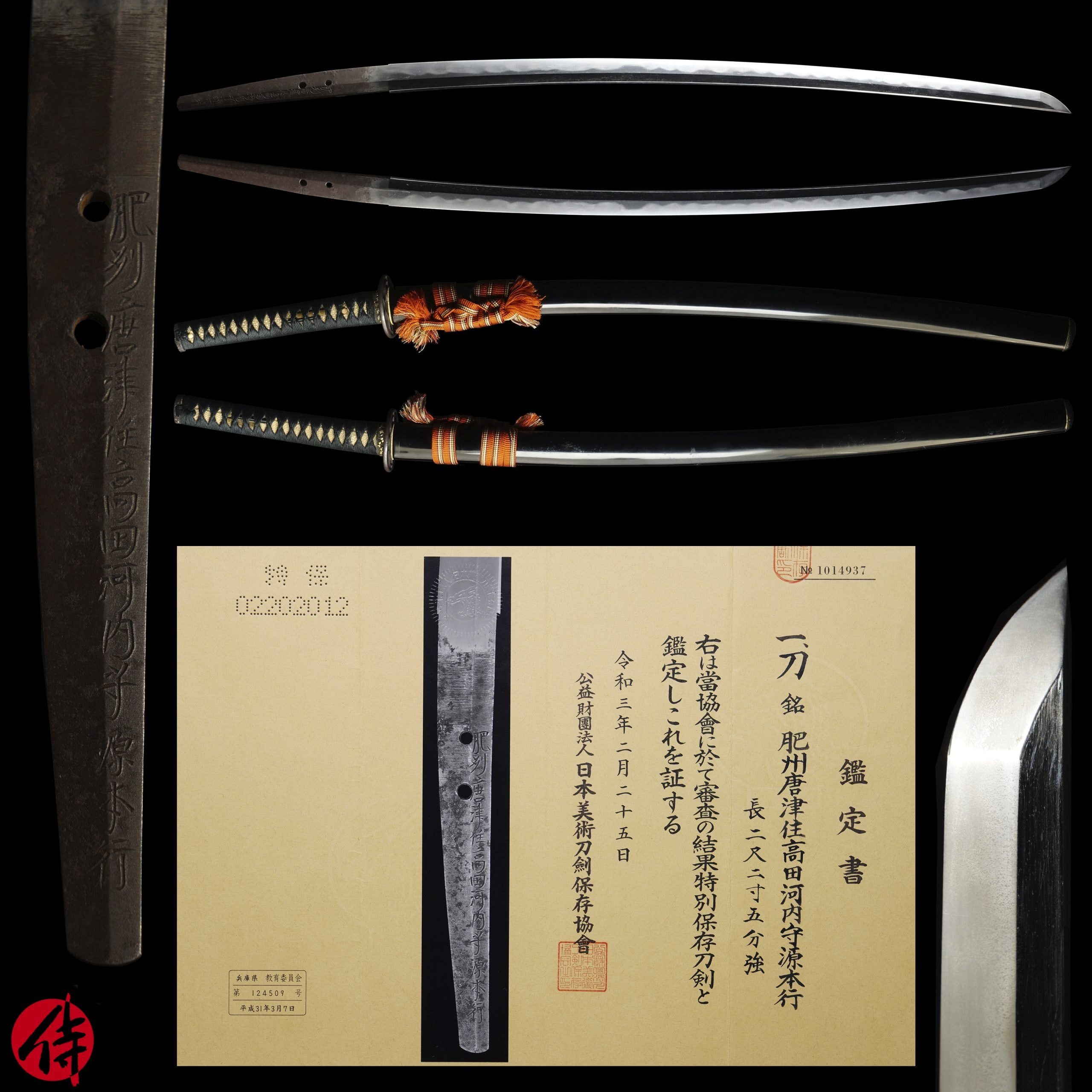
This blade was forged by Hishu Karatsu JyuTakada Kwachi No Kami Minamoto Motoyuki (肥州唐津住高田河内守源本行) during the early-mid Edo period(Approximately 300 years old).
He first signed as Yukihira(行平). He believed that he was a descendant of Kishin Dayu Yukihira(紀新大夫行平), a famous swordsmith in Bungo province during the late Heian-early Kamakura period(Late12th-early 13th century).
He was born in the 19th year of Kan-Ei era(1642). At the beginning of his career, he stayed in Takada village, Oita prefecture. And he moved to Karatsu city in Saga prefecture when he was 35 years old(the 5th year of Enpo era: 1676). At around the same time, he received the honorable title of Kawachi Daijyo(河内大掾).
In the seventh year of Genroku era(1694), he moved to Edo city and received a new maker’s name Motoyuki(本行) from Hon Ami school and then officially changed his maker’s name to Motoyuki(本行). Hon-Ami school has been trusted official Japanese sword polishers/appraisers since 1596(Late Azuchi Momoyama period). This fact indicates prestigious Hon-Ami school acknowledged his ability to forge high-quality swords.
During the same time, he often visited Kamakura city to master SOSHU style swords from the master named Tsunahiro. SOSHU style, also known as SOSHU DEN, is one of the most traditional Japanese sword-forging methods developed in SOSHU area(Today’s Kanagawa prefecture).
Motoyuki moved back to Karatsu city after mastering Soshu style technique. There is a record of him forging a sword when he was 83 years old. It is said that he called himself Bungo Taro. Bungo is the area Karatsu city is located. He was also called Hige Kawachi, which came from the fact that he had a nice bear. In addition, at the end of his career, he was also known as Matsuba Motoyuki. How he signed the letter 本(Moto) was distinctive during this time, and it resembled Matsu(Japanese pine needles).
The smith’s name Motoyuki lasted 4th generations, and the first-gen Motoyuki forged this blade. The blades forged by the first-gen Motyuki are pretty popular among Japanese sword collectors in Japan. His passion for improving his artistry is beyond our imaginations. By moving places and learning from different masters, he reached the pinnacle of craftsmanship. Based on how he signed his blade, we believe it was forged in his late career when he mastered this high level of techinique.
We are confident you will cherish the beauty of this blade as well as the gorgeous sword mounting that comes with it.
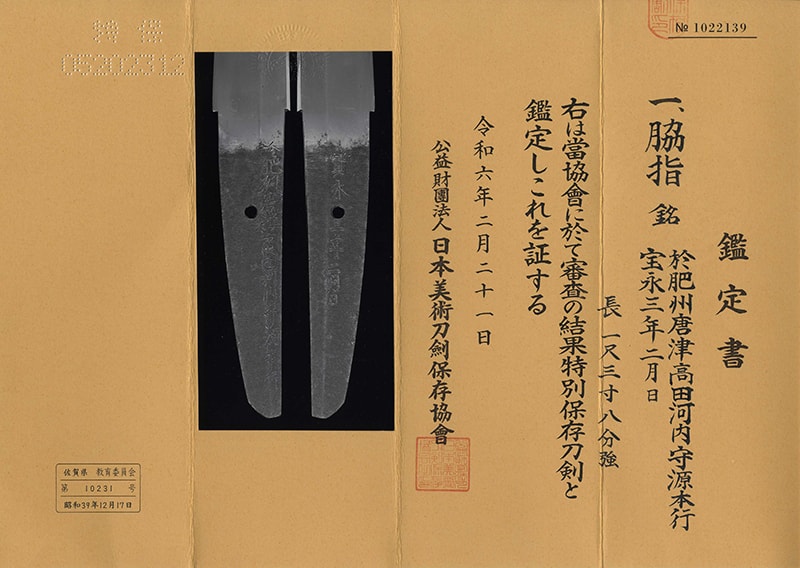
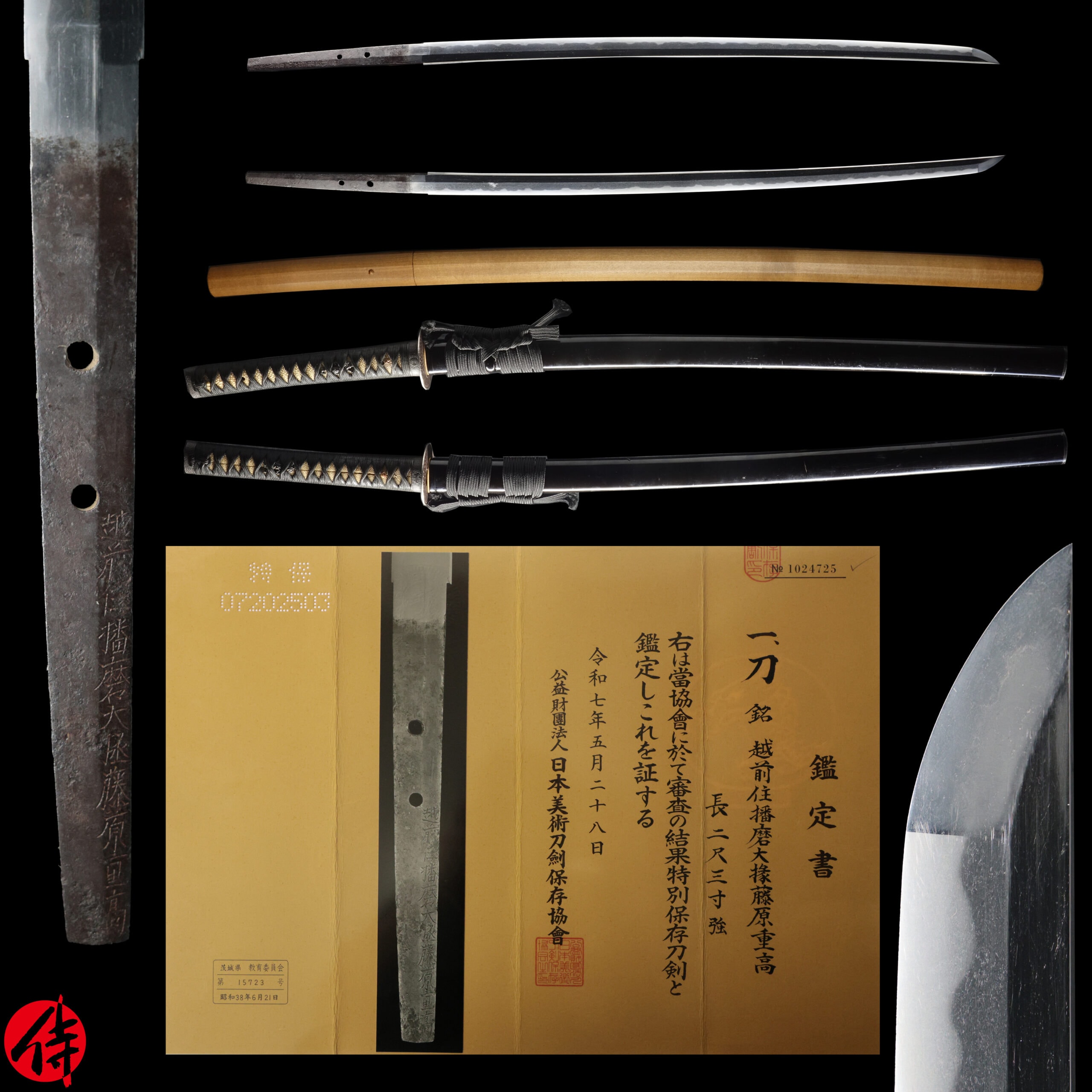
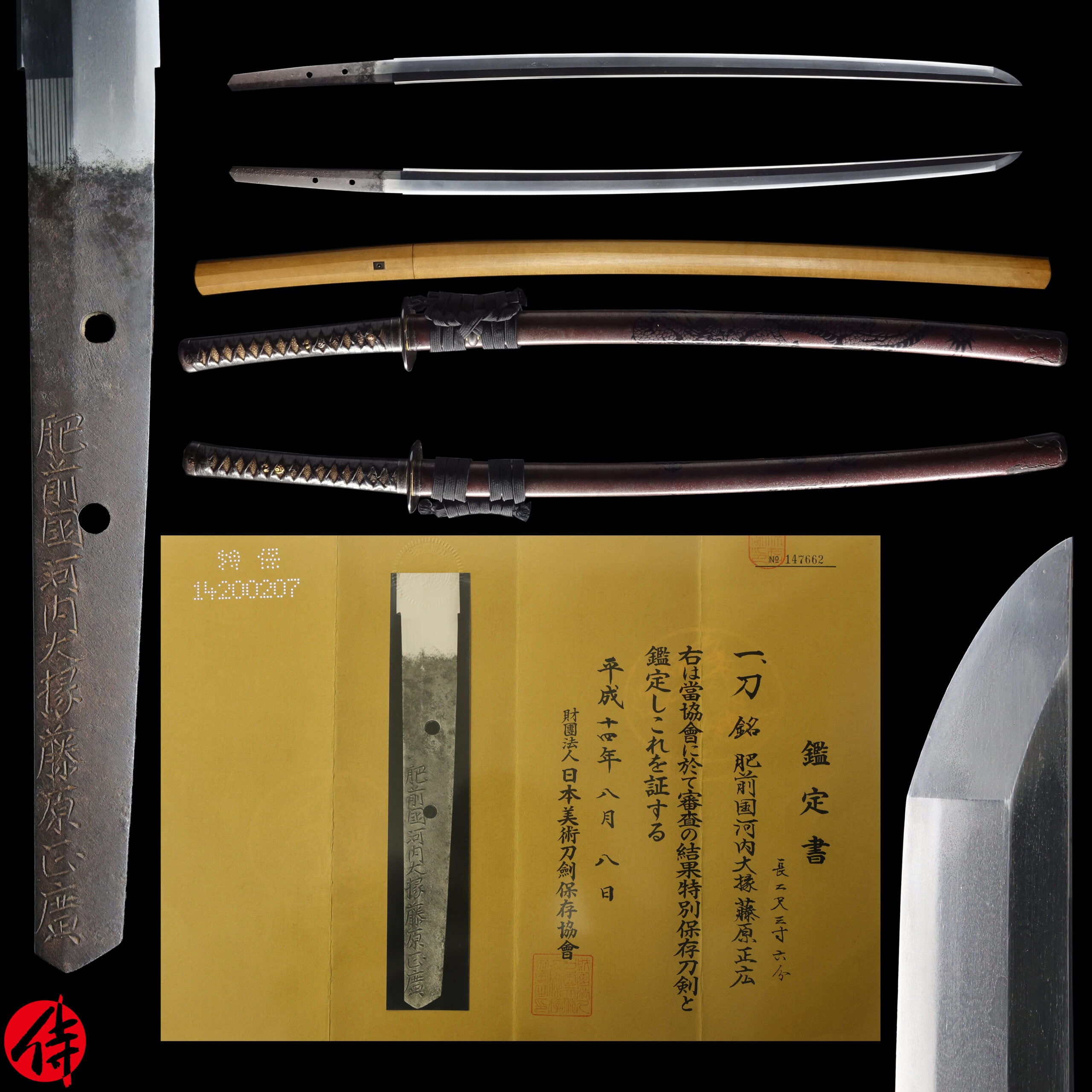
This blade is appraised as Tokubetsu Hozon certificate issued by NBTHK. This authentication paper was only given to Japanese swords, especially worth preserving by Nihon Bijutsu Touken Hozon Kyokai(the Society for the Preservation of the Japan Art Sword).
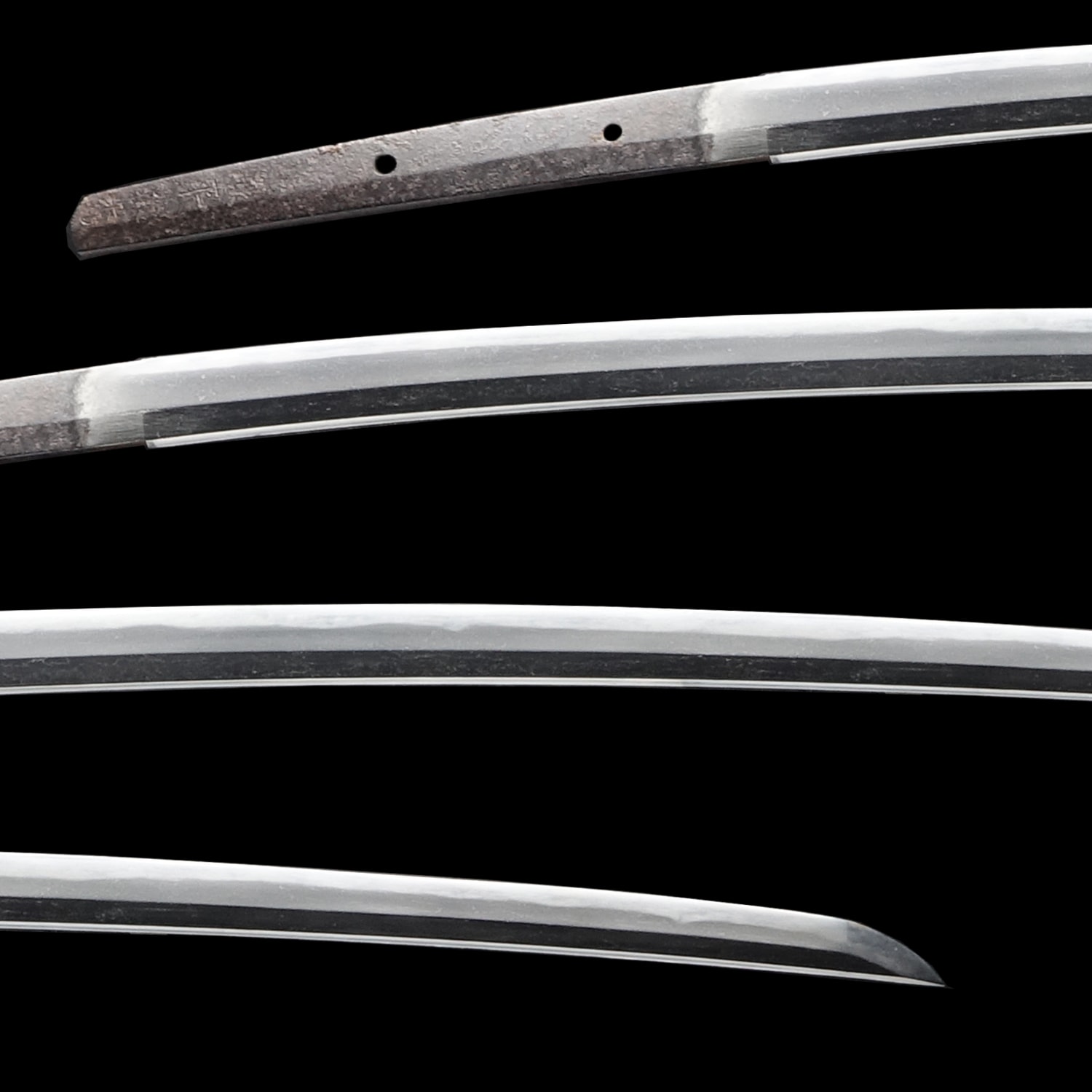
【 Blade】
Cutting Edge Length(Nagasa)
:
68.2 cm(26.85 inches)
Curvature(Sori)
:
1.7 cm( 0.67 inches)
For more detailed measurement of the blade/sword mounting
Hamon
:
The crystalline structure which forms along the cutting edge of a blade as a result of the hardening process
Jimon(Jihada)
:
visible steel surface pattern created by folding and hammering during forging process
Nakago
:
Nakago is the tang of the Japanese sword.
Japanese swordsmiths left the black rust on the tang because it prevents red rust while the tang is in its handle. And the discoloration of the tang was created over time, and it is a great indicator for a Japanese sword specialist to estimate when the sword was forged.
Koshirae:
Koshirae is the mounting of the Japanese sword. There are several parts that consist of Koshirae such as Saya(Scabbard), Tsuka( Handle), Tsuba(Handguard).
Fuchi-Kashira
:
A pair of matching sword fittings that cover the upper and bottom parts of its sword hilt.
The seven flowers of autumn, called Aki-no Nanakusa in Japanese, are designed for this Fuchi Kashira. Although some golden parts were already flaked off due to aging, it remains its look gorgeou