徳川の泰平のもと、大小は法度の定める身分の制服となり、需要は城下町、とりわけ江戸に集まった。工芸は二つに分かれる。目利きのための華やかな鑑賞の作と、截断の結果を金象嵌に刻む実証の刀である。
 NihontoWatchNihontoWatch
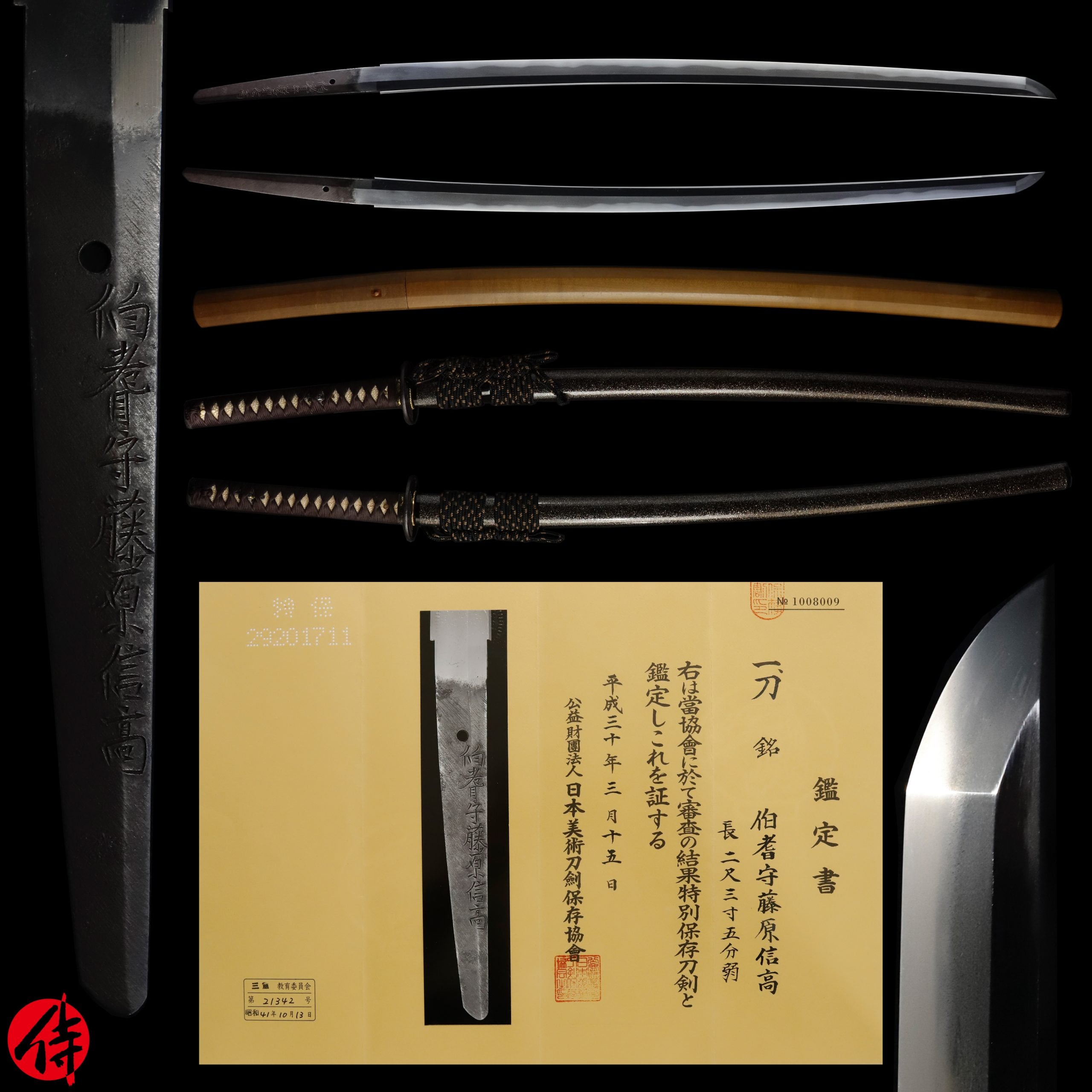
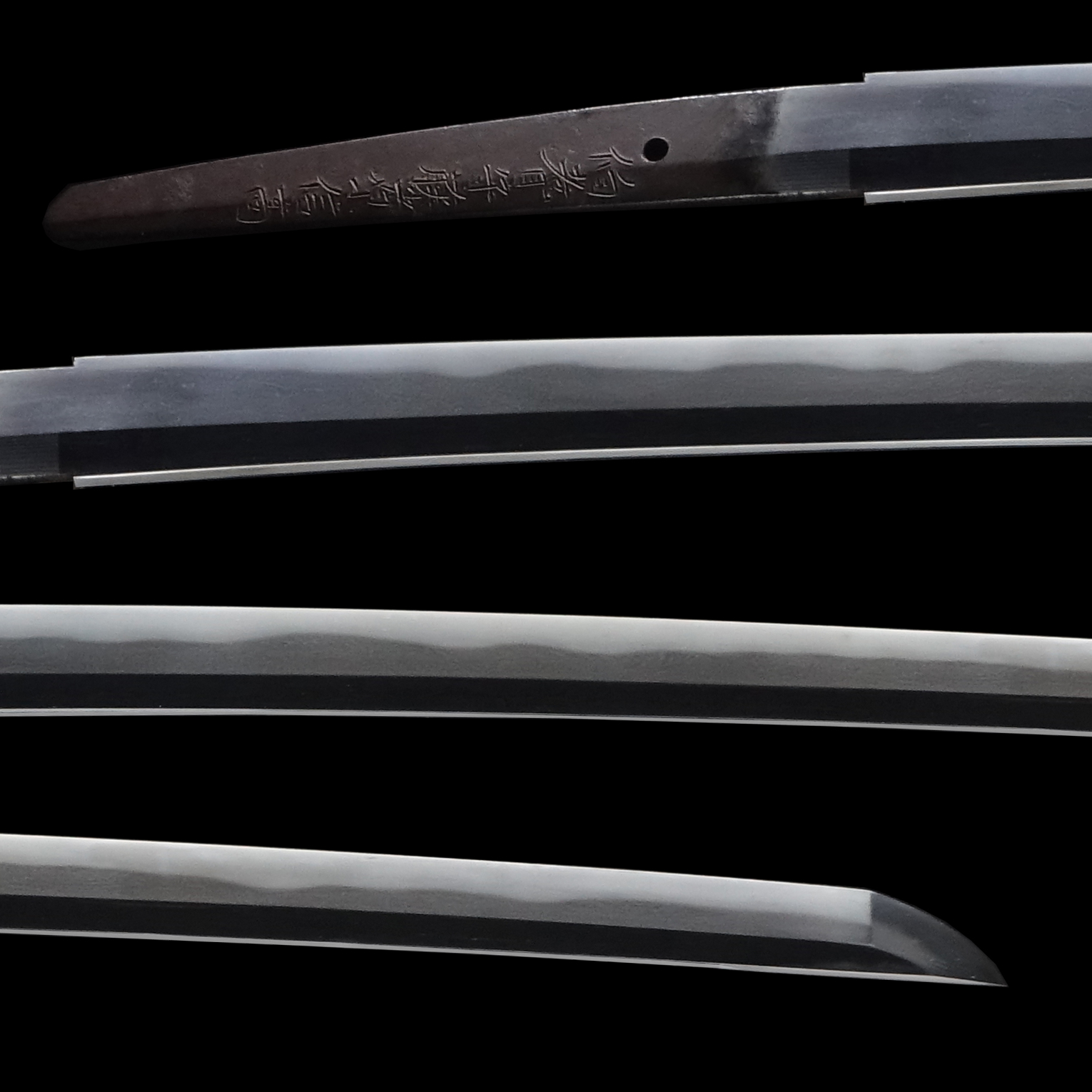
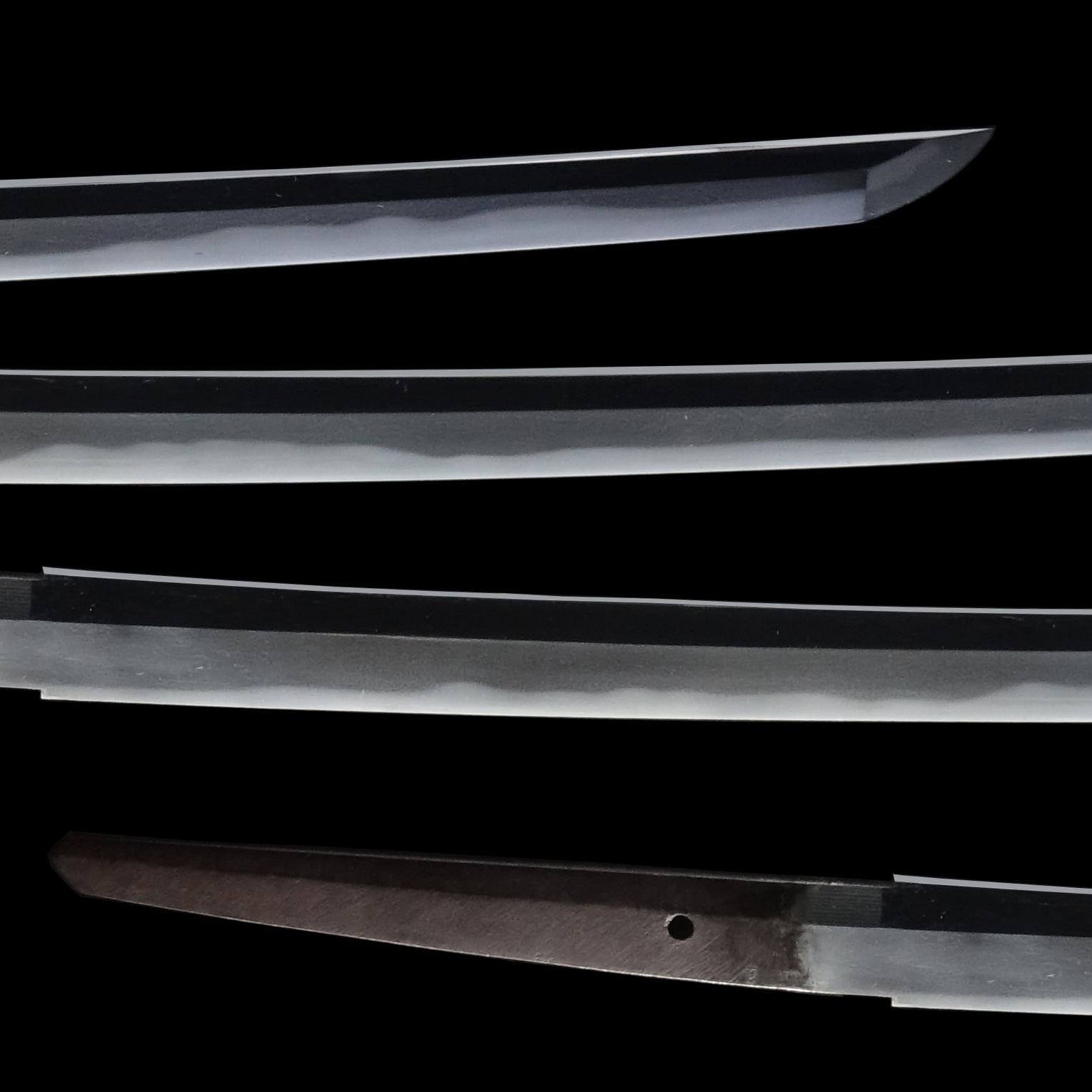
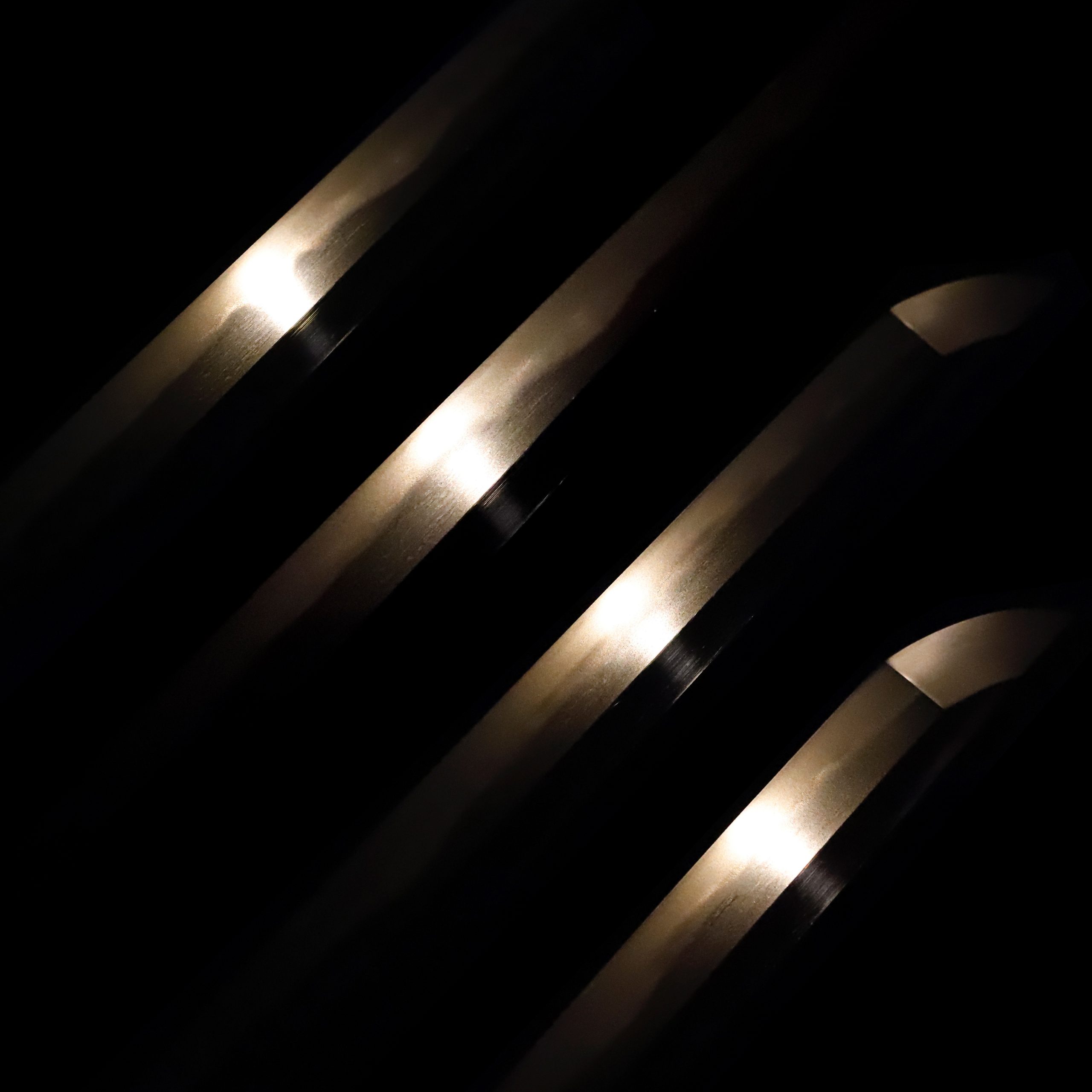
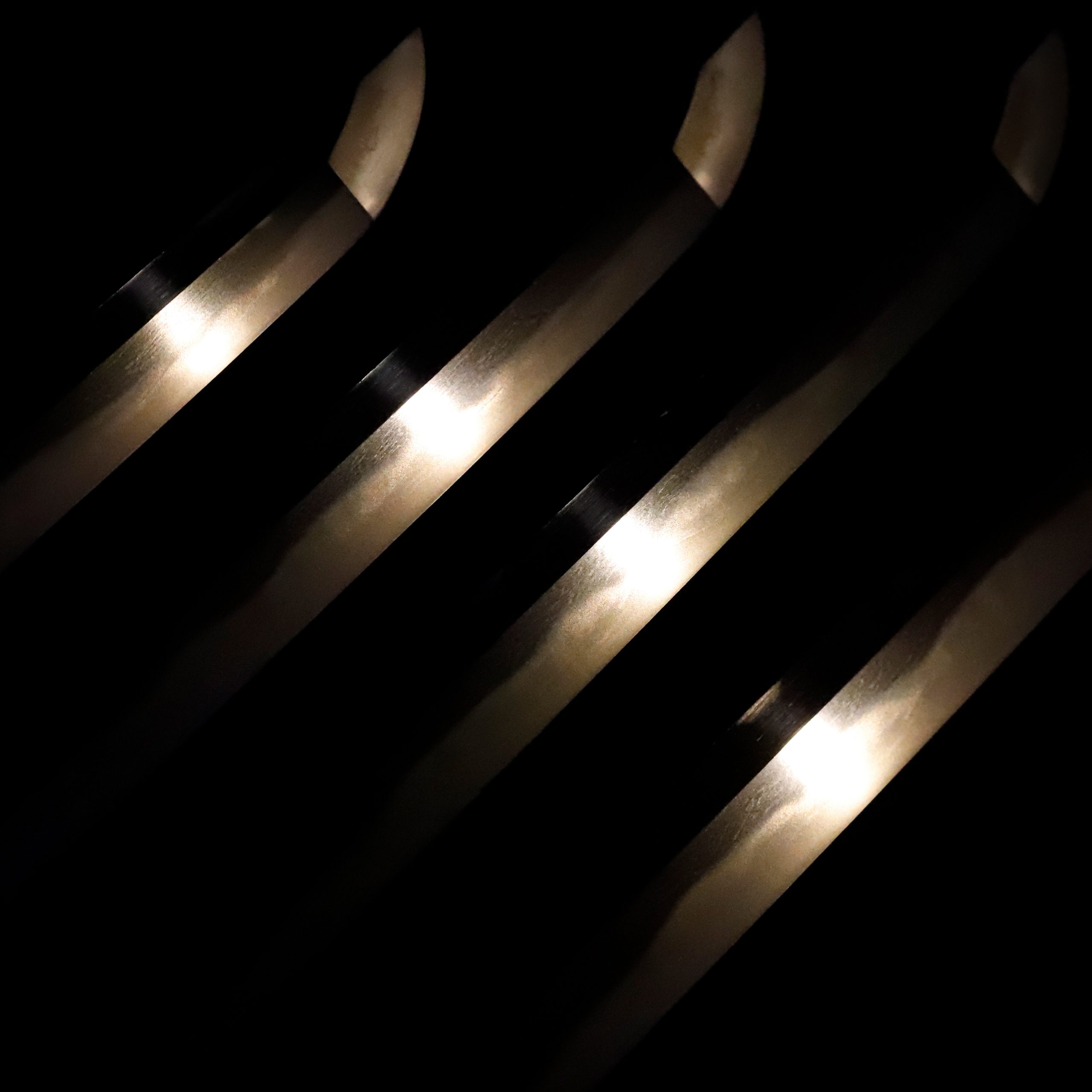
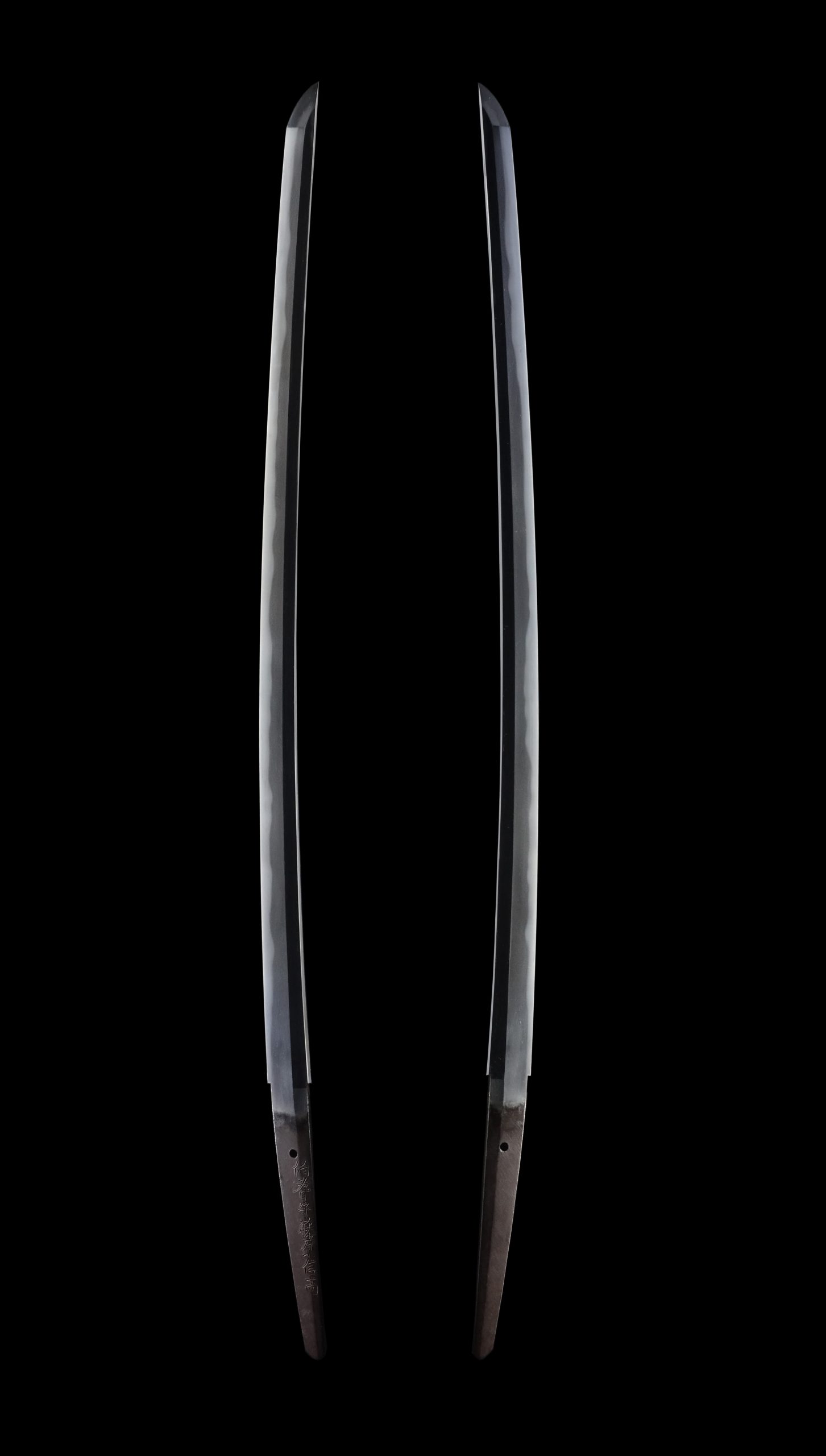
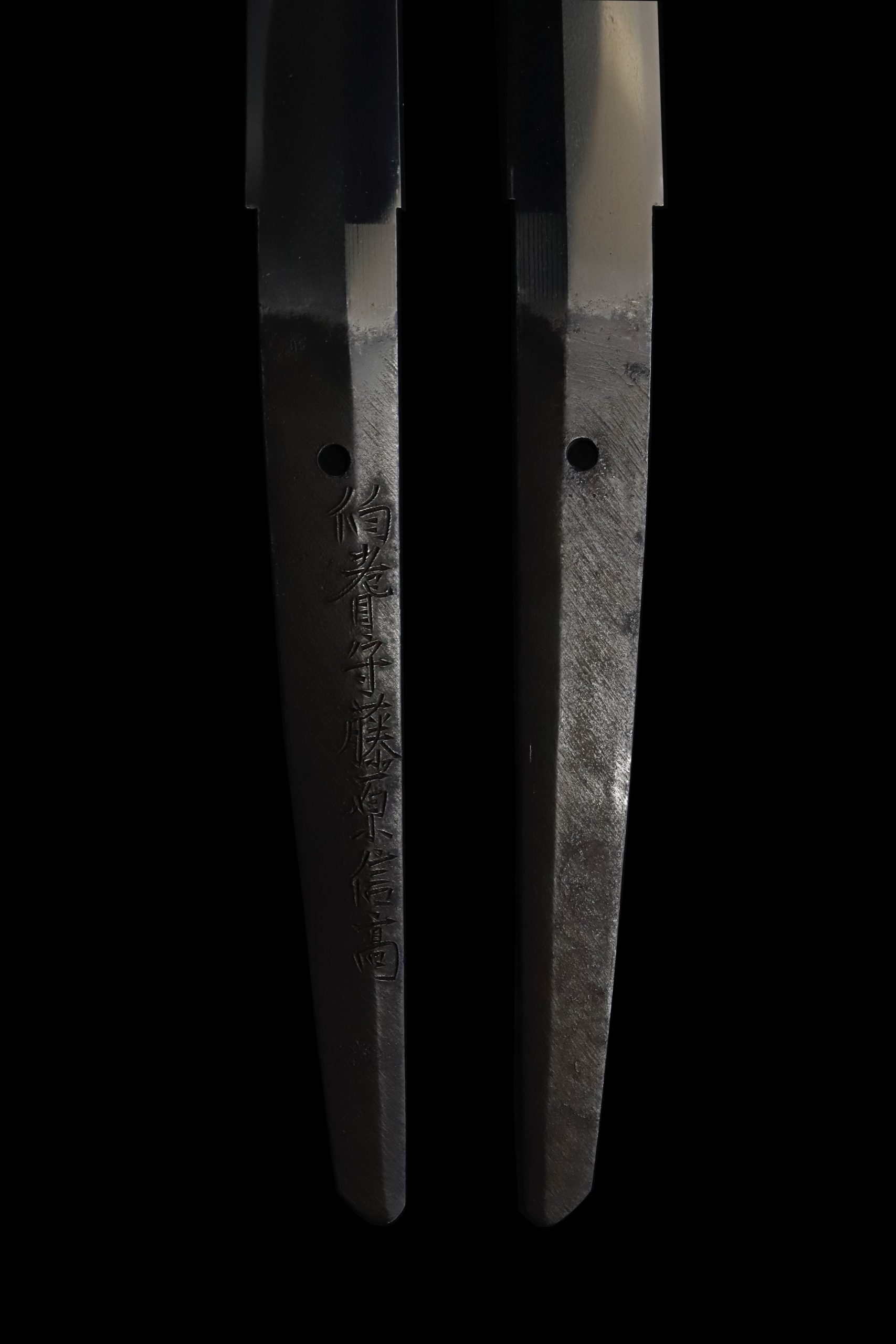
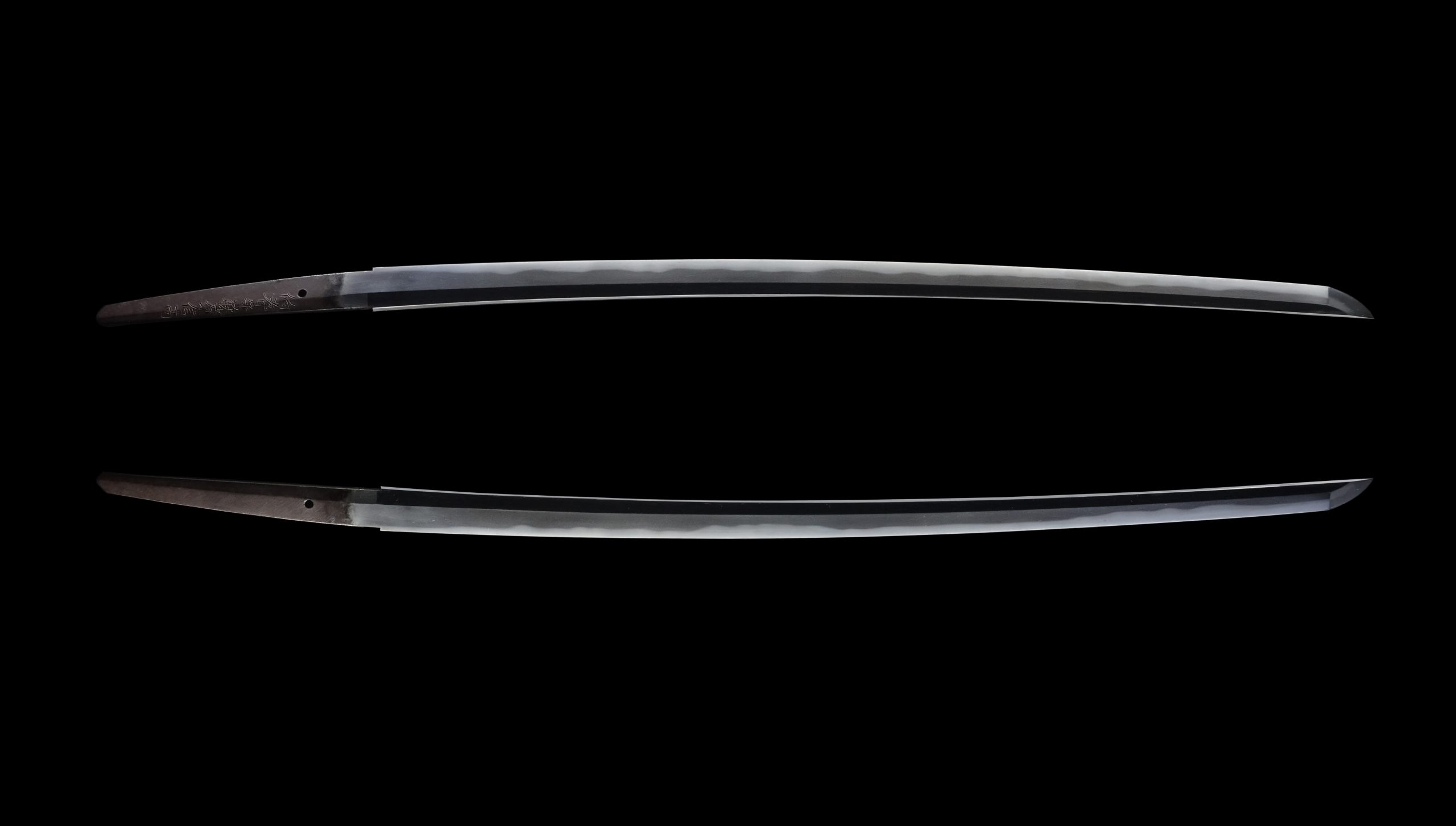
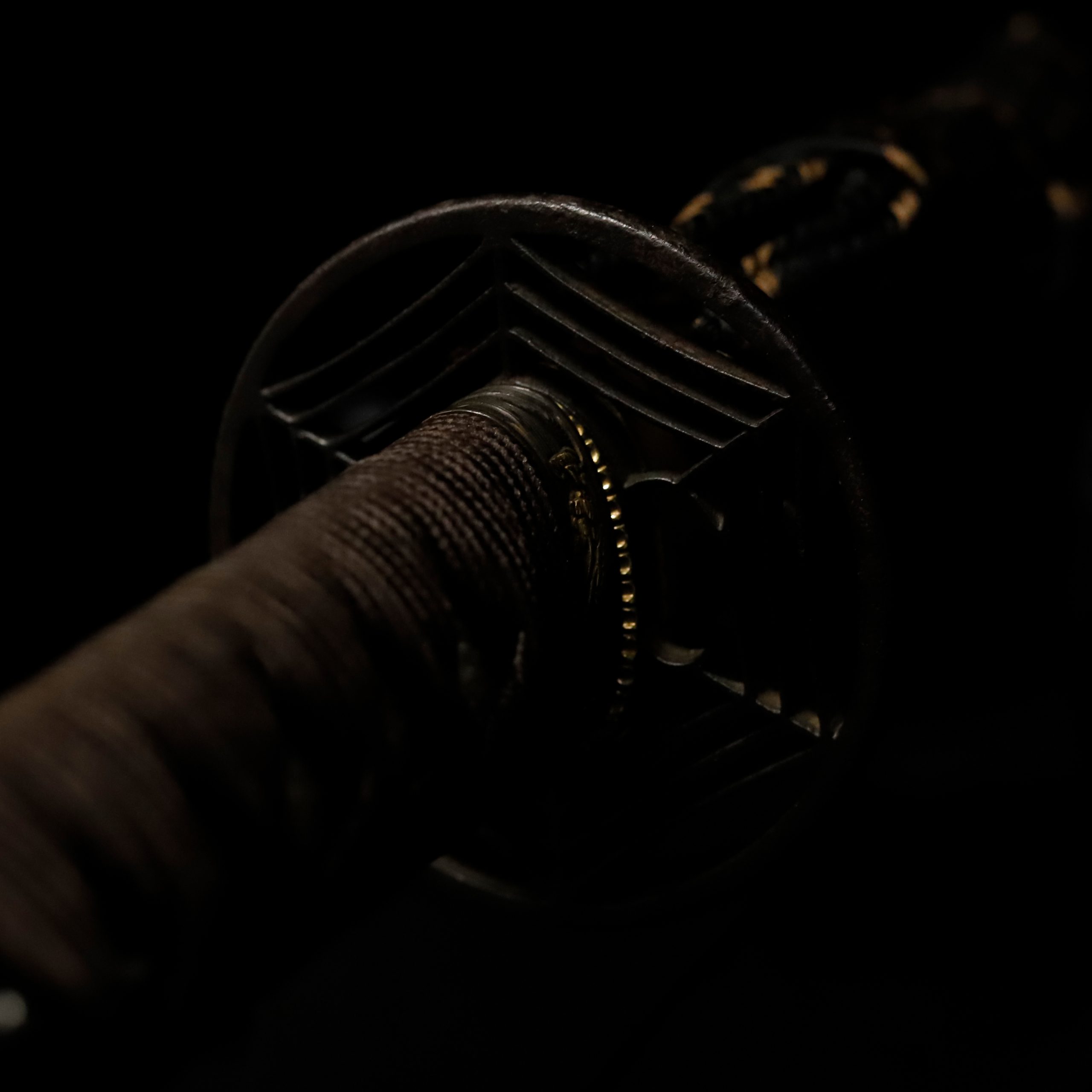
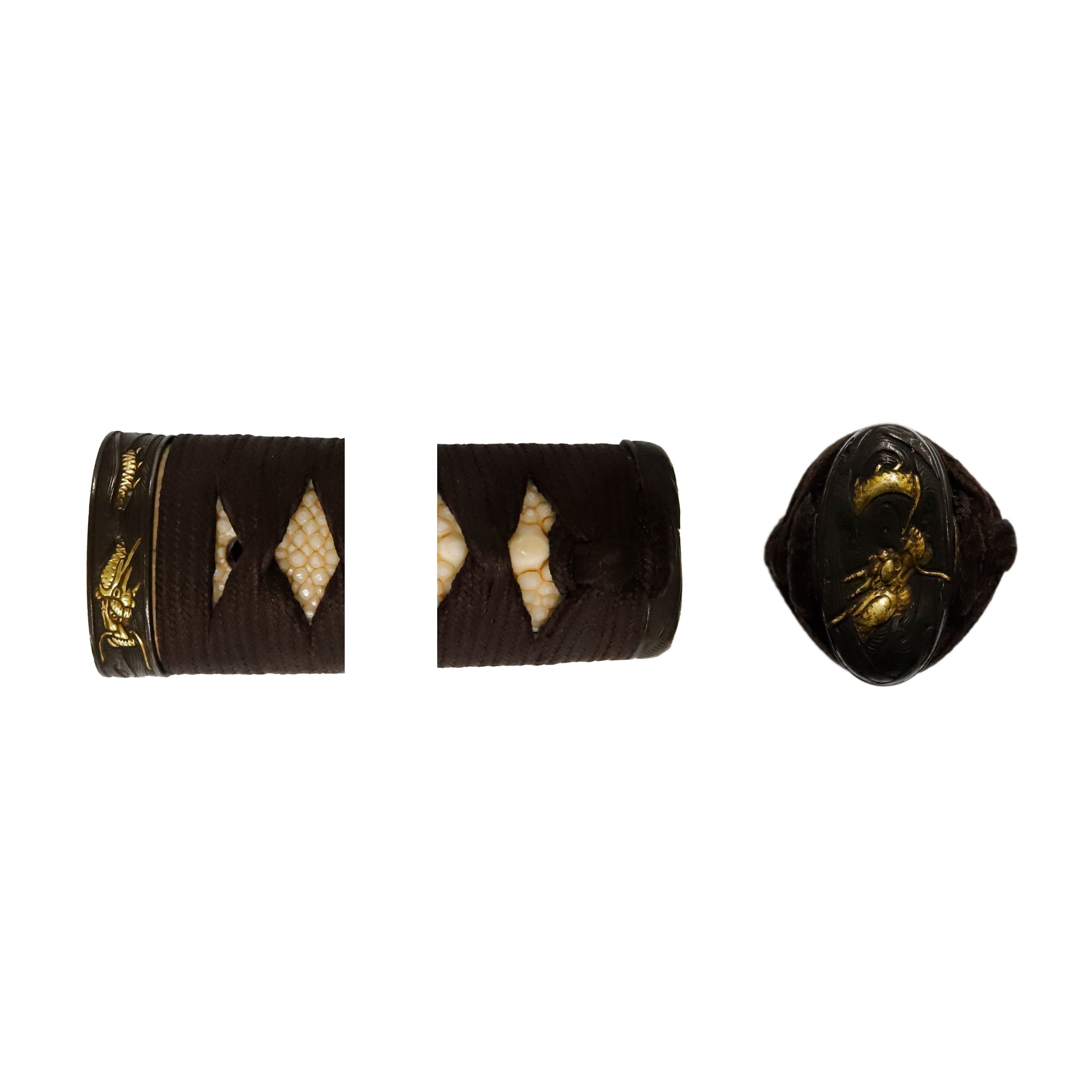
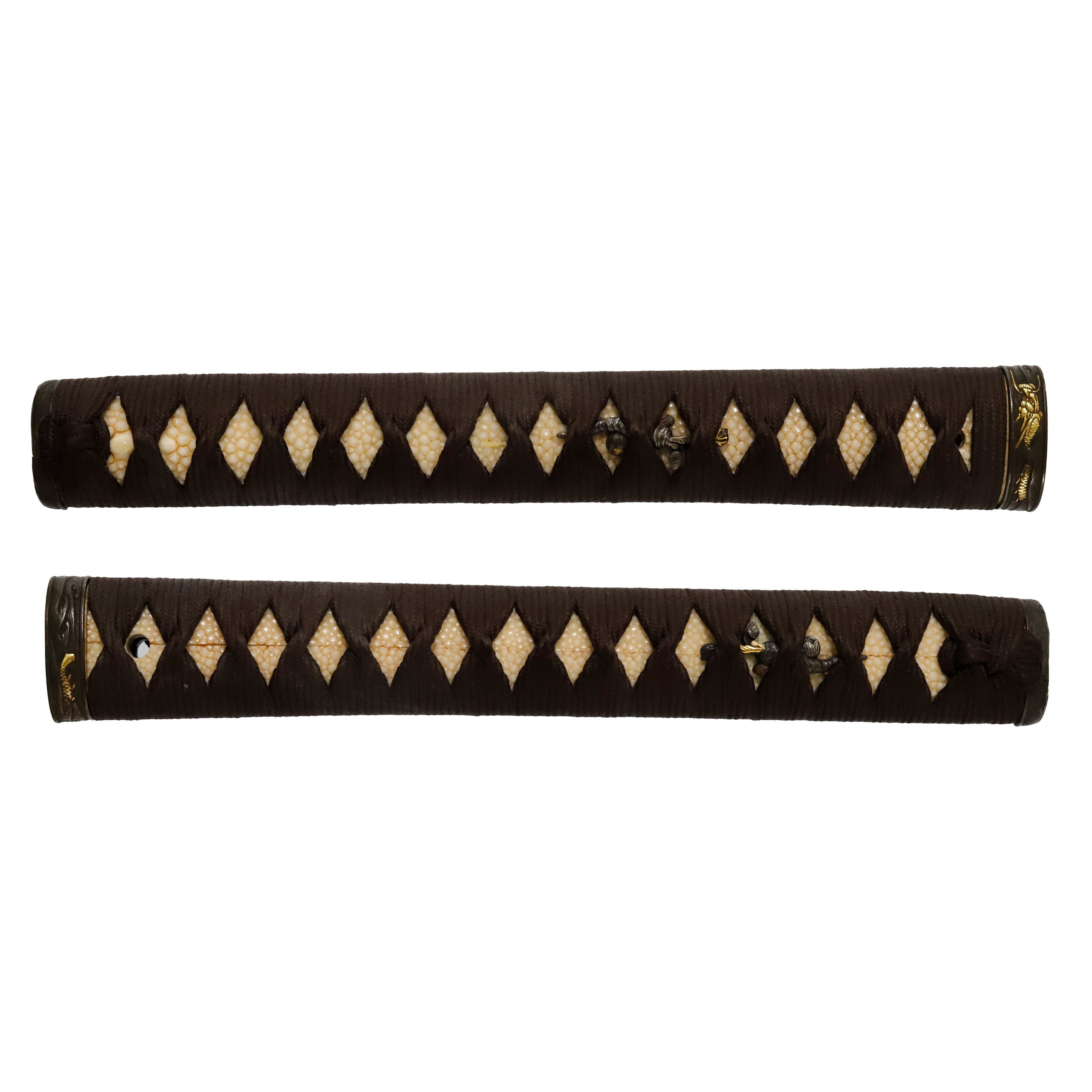
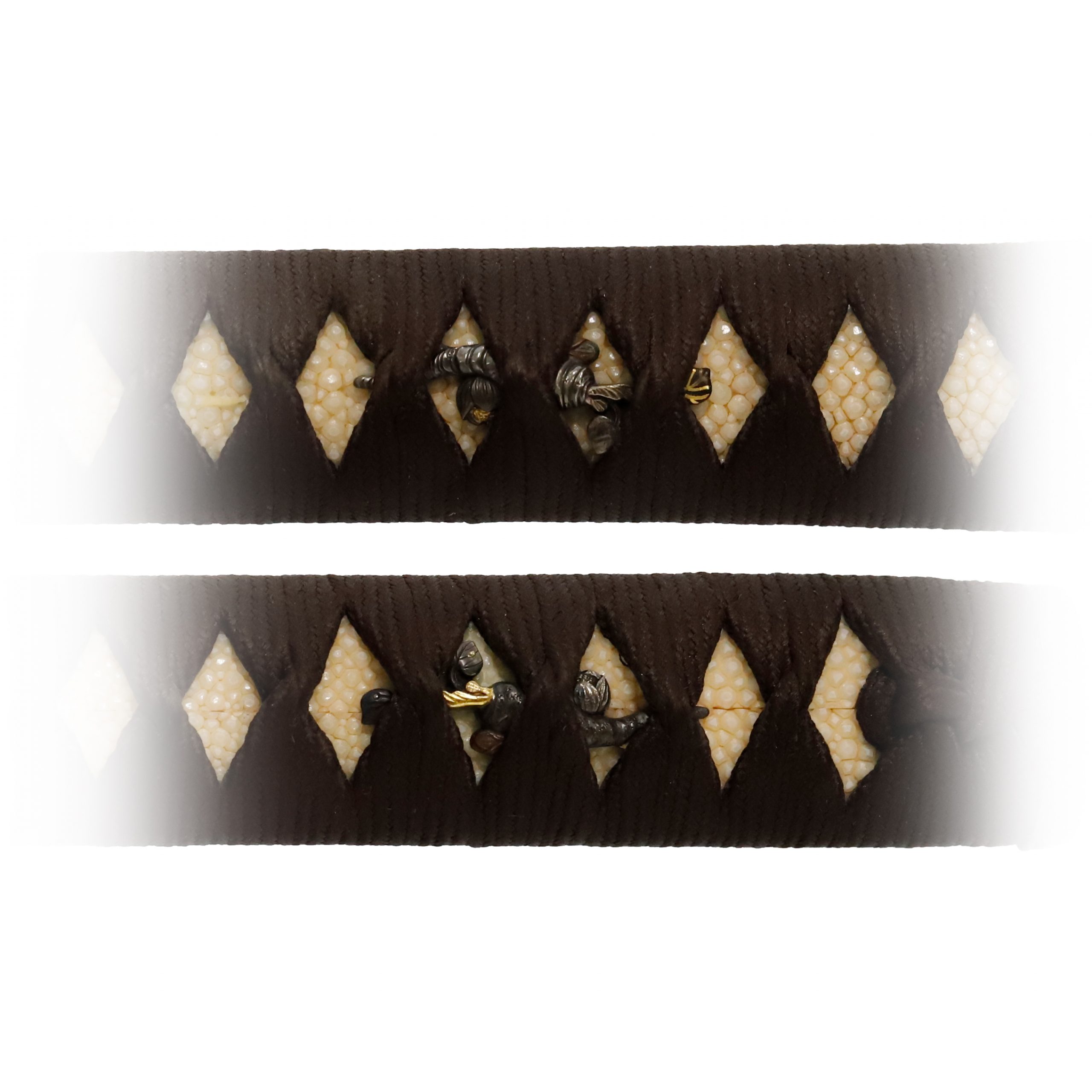
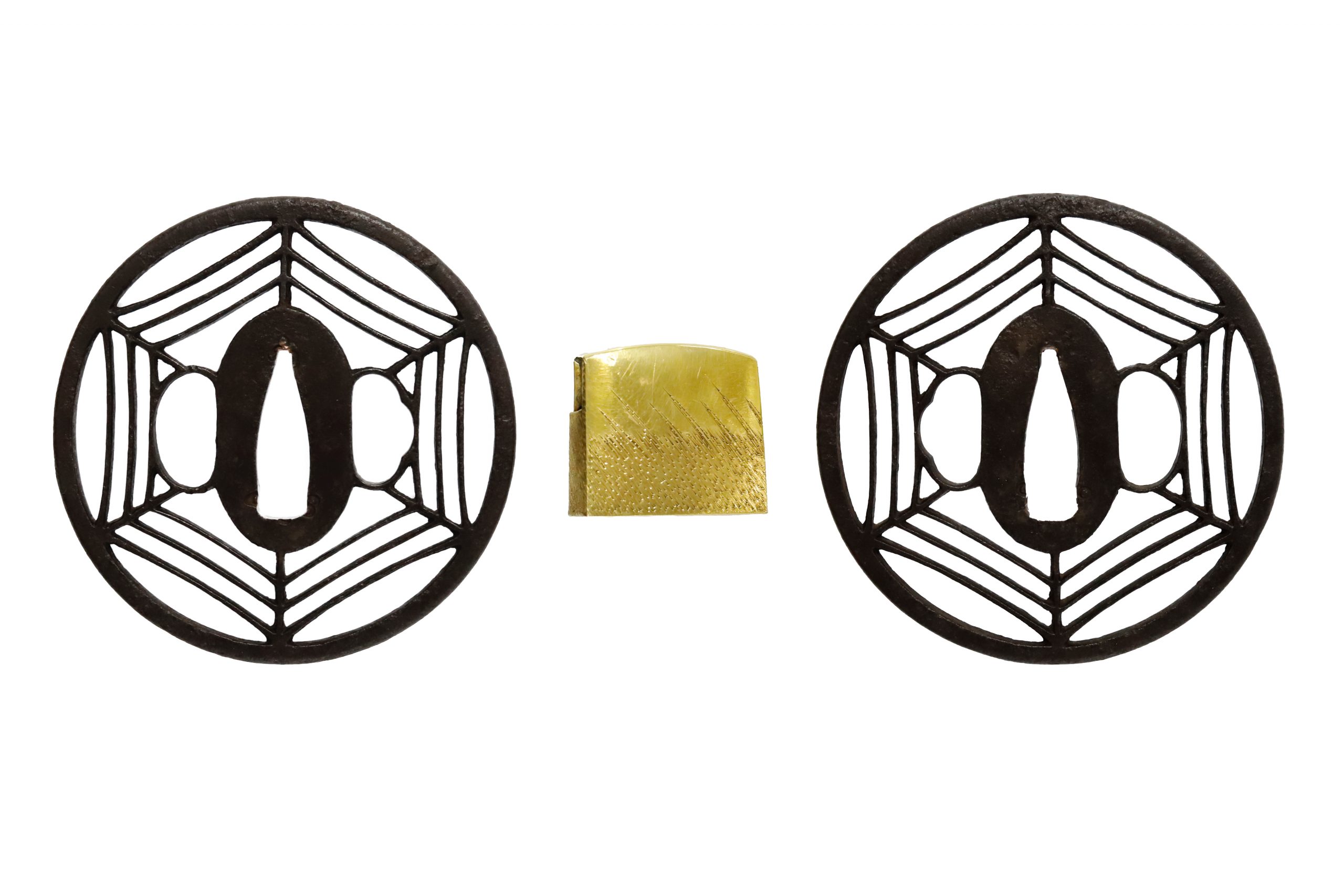
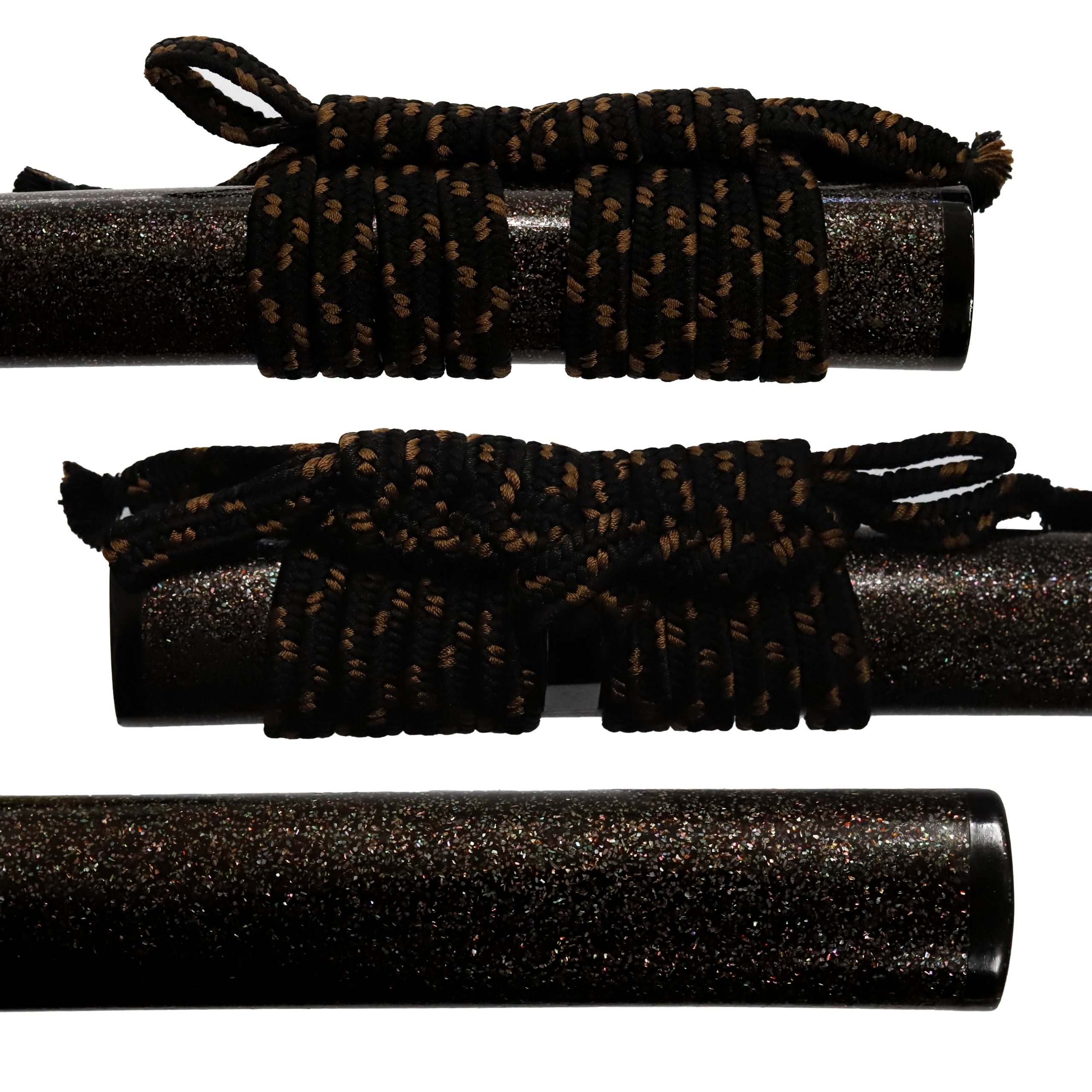
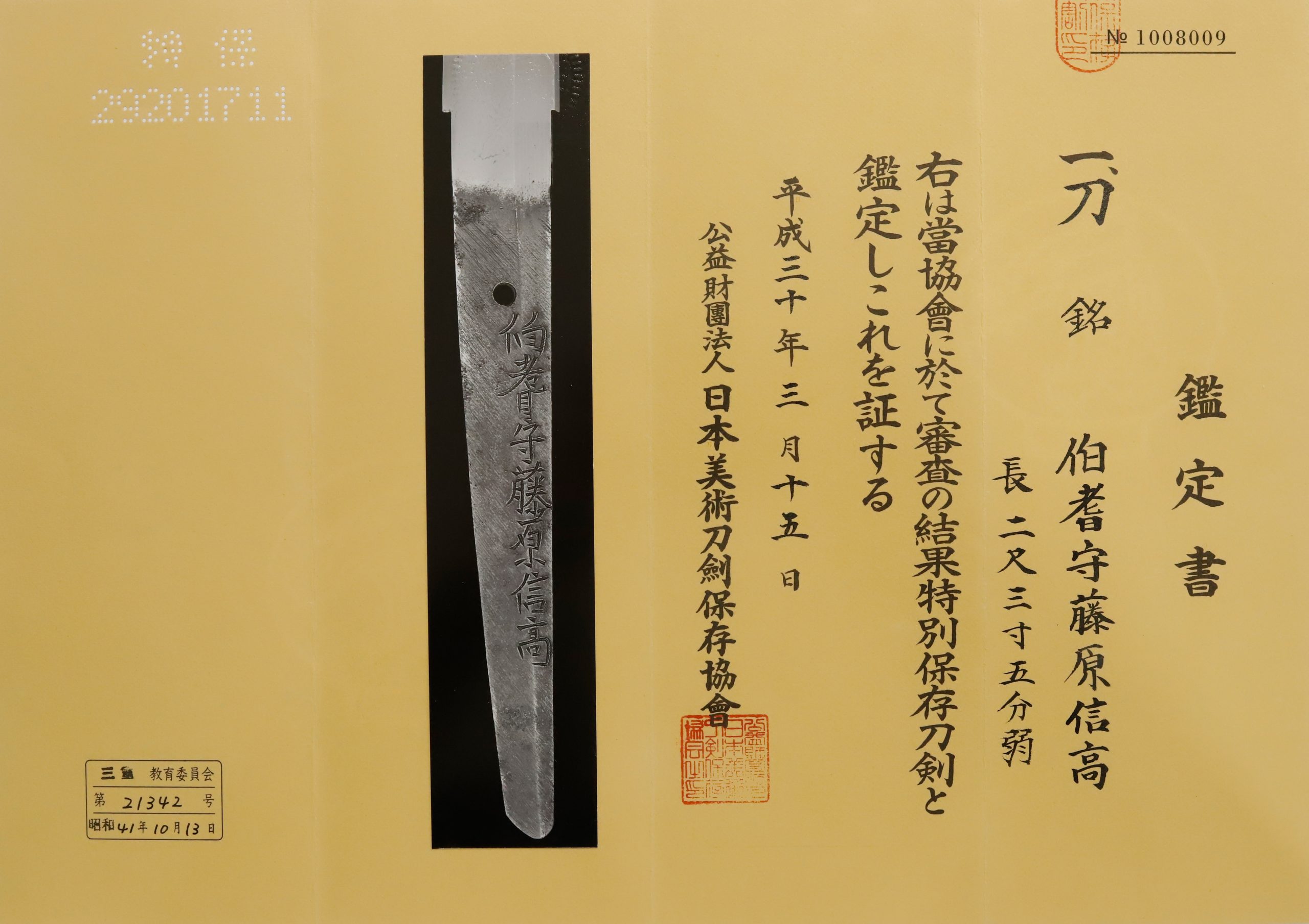
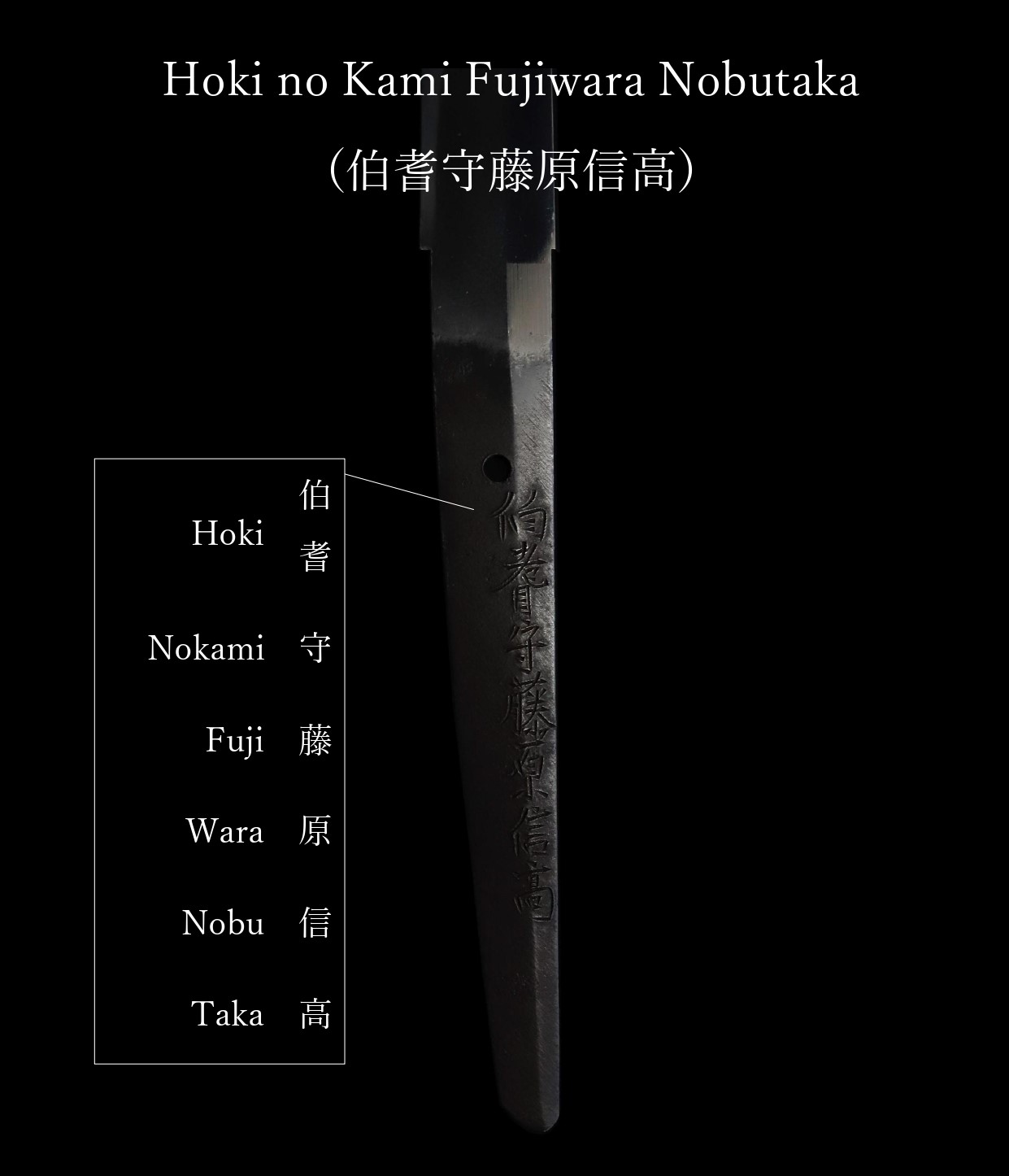
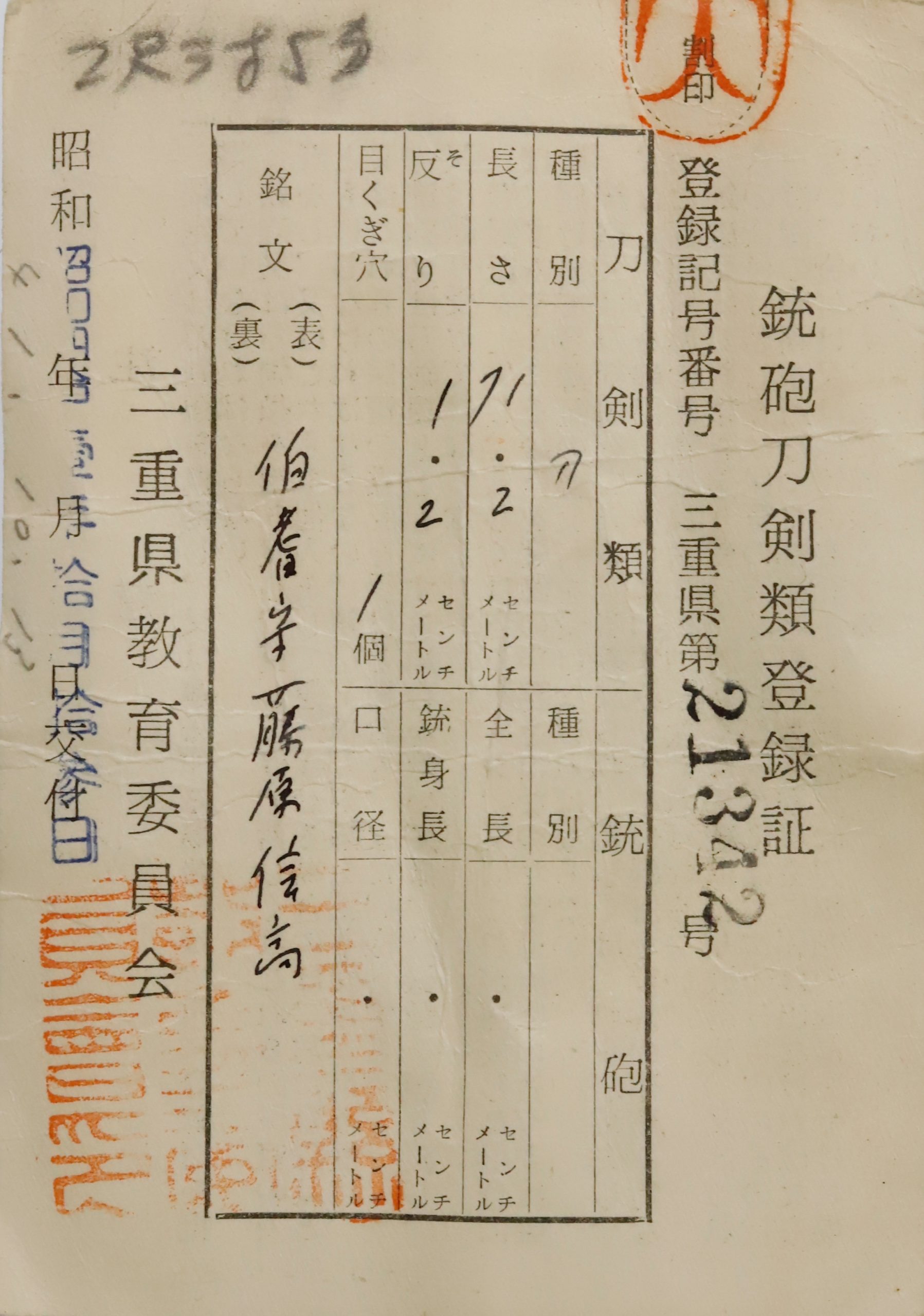
This blade was signed by Hoki no Kami Fujiwara Nobutaka (伯耆守藤原信高). Based on the characteristic of the signature, we believe the second-gen Nobutaka forged it. The second-gen was active in Owari province during 1624-1644( Kan-Ei era: Early Edo period). The swordsmith’s name “Nobutaka” lasted 6th generation during the Edo period. Hoki no Kami was an honorable title given to this swordsmith, and the 1st-5th generation received this title. It is said that Nobutaka was a descendant of Kanekuni who belonged to Mino koku San-Ami school. Nobuta was one of the most famous swordsmiths in the Owari province. The generations of Nobutaka served Owari Tokugawa clan, a relative family of Tokugawa Shogunate who ruled Edo government during the Edo period. The second-gen Nobutaka( real name Kawamura Hoki) was born as the son of the first-gen Nobutaka in the 8th year of the Keicho era(1603) in Owari province(today’s Aichi prefecture). The second-gen received Hoki no Kami title in the 10th year of the Kanei era(1633) when he was 31 years old. He was appointed as an Okakaekaji for Tokugawa Yoshinao, the first-gen head of Owari Tokugawa clan in his career. Okakaekaji is a swordsmith who exclusively served a particular clan or feudal lord. He let his son(the third-gen Nobutaka) run his school in the second year of the Kanbun era(1662) when he was 60 years old. After that, he became a Buddist priest, and he changed his name to Sangetsu Heiyu(山月閉遊). There is a record of him signing Nobutaka Nyudo(信高入道). Nyudo indicates that he was a monk when he signed a blade. He died at the age of 87 in the second year of the Genroku era(1689). The first-gen Nobutaka was originally from Mino province, which is famous for Japanese sword tradition, MINO-DEN. The first-gen moved to Owari castle at the beginning of the Keicho era(the late 1590s). And he relocated to Nagoya after Nagoya castle was built. There were many swordsmiths from Mino province who moved to Owari province. They are called Owari Seki. The most famous swordsmiths categorized as Owari Seki are the first-gen Hoki no Kami Nobutaka, Hida no Kami Ujifusa, and Sagami no Kami Masatsune. All the highly refined sword-forging techniques the first-gen Nobutaka had passed down to the second-gen. You can see outstanding craftsmanship from this blade. As Owari province(today’s Aichi prefecture) was active in martial arts during the early Edo period, there was much demand among high-class Samurai to order swords forged by the second-gen Nobutaka. He often worked with his son(the third-gen Nobutaka), and there is some remaining work where you can see both signatures. This blade is appraised as a Tokubetsu Hozon Token(特別保存刀剣) issued by NBTHK(Nihon Bijutsu Touken Hozon Kyokai:日本美術刀剣保存協会). Fuchi-Kashira Dragons swimming in the sea are designed for this Fuchi Kashira. The gold-colored metal is applied to these dragons. Initially, the dragon is an imaginary creature found in ancient traditions or myths. Furthermore, it is regarded as a symbolic beast of auspicious signs. Its body is likened to nine animals: antlers are deer, the head is a camel, eyes are demons, the neck is a snake, belly is the Mizuchi (蛟, mythical animal in Japan which looks like a snake and have a horn and four legs), scales are fish, claws are falcons, palms are tigers, and ears are cows. It was thought that the dragon would reign at the top of all animals because of its odd-looking appearance. Also, in Japan, there is a belief that worships dragon as a water god. As mentioned above, this Fuchi Kashira’s motif is a combination of dragons and the sea (that is, water). This faith might have influenced this work’s design. Tsuka and Menuki This Menuki’s motif is probably the Choji (丁子, clove). It remains its glossy metal color, and some parts are colored with golden paint. The Choji was once treated as a miracle cure for eternal youth. According to a theory, Samurais used this plant as a medicine for analgesic effect and anti‐inflammatory action. It had other uses for Samurais. For example, they distilled Choji’s flowers and branches and made oil. Samurais used this oil as a sword rust preventive, insect repellent, and incense. It was also used as the Bintsuke (鬢付け, Japanese pomade) oil. In addition, as it has a strong smell, Samurais thought it would protect them from evil spirits. It is said that some Samurais perfumed their armor and helmet by burning incense, wishing self-defense before they went to battlefields. So, the Choji was a familiar plant for Samurais, and we can imagine that its motif was popular among them. Tsuba and Habaki Circle-shaped Tsuba made from iron. This Tsuba has Kozuka and Kougai holes and has a well-balanced symmetry design. The cobweb is the motif of this work. As spiders nest and catch prey with their web, people considered the spider pattern had the meaning of “grabbing happiness” or “attracting things.” The cobweb was treated in Nihonshoki (日本書紀, Nihongi, The Chronicles of Japan), Kokin Wakashu (古今和歌集, an early anthology of Japanese poetry) and also Heike Monogatari (平家物語, The Tale of the Heike). When the cobweb goes down in the morning, it was thought, “the person you are waiting for will come.” The cobweb pattern has been appreciated thanks to its beautiful nest shape and its meaning. People have enjoyed using this motif for Kimono (traditional Japanese costume) or ceramics. Authentication Paper They authenticated the blade on March 15th in the 30st year of Heisei (2018). They appraised it as Tokubetsu Hozon Touken, the blade especially worth preserving for Japanese society.

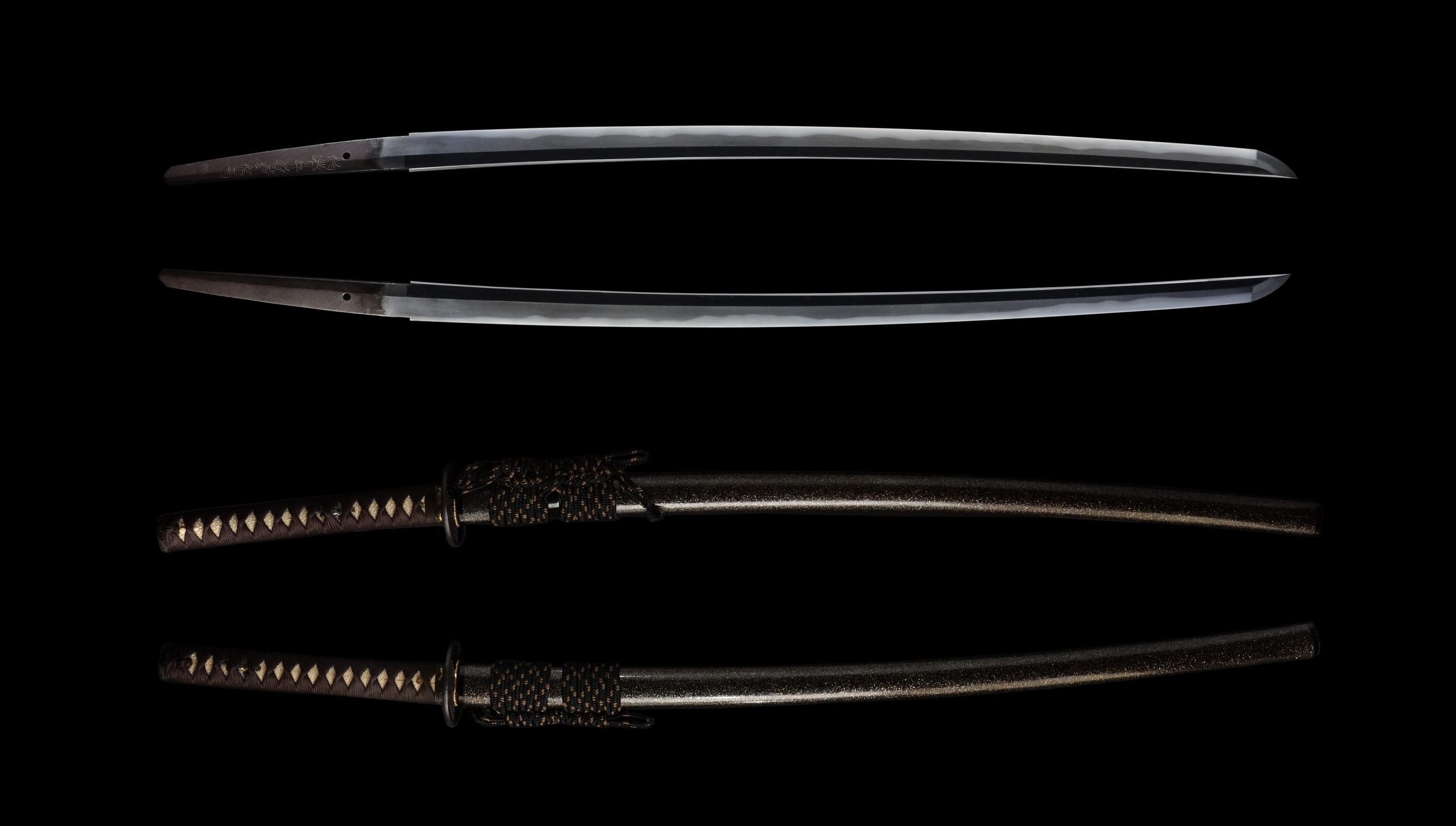
販売店の記載のまま
美濃伝 · 尾張 · 1624-1644頃
藤代 上作 · 刀剣大鑑 上位37%
現在1点販売中
信高の位置づけを、日本刀全体および伝法・時代・時期ごとに示します。各区分(随一・屈指・有数・著名)は、日刀保および文化庁による指定に加え、三作や名物帳などの歴史的栄誉を加味したものです。
各項目を選ぶと評価方法が表示されます。
美濃伝 · 美濃
現在6点販売中
三阿弥は美濃国に興った刀工の一派で、説示に拠れば関七流の一つに数えられ、その頭領が兼則であったと伝える。兼則は古伝書や銘鑑に南北朝末期から室町初期の応永にかけて存在したことが記され、現存する作例の最古とみられる太刀は作風と銘字の書風から応永を降らぬものと鑑せられている。同派の兼国は、その遠祖を南北朝時代の直江兼友門とも、大和兼国あるいは兼則の子ともいうが、そこまで時代の溯る作は未だ見られず、室町期に入って同銘数工におよび、末関に至るまで栄えた。兼則は兼元・兼定らと共に末関を代表する刀工に位置づけられる。下って桃山から江戸初期には、三阿弥兼国の子孫と伝える伯耆守藤原信高が出る。初代信高は永禄六年に美濃国上有知(現美濃町)に生まれ、河村左衛門と称し、天正九年十九歳で伯耆守を受領し、のち尾州清洲を経て徳川義直に従い慶長十五・六年頃に名古屋へ移った。寛永十年に隠居して入道銘を慶遊といい、同十三年に七十六歳で歿している。鍛えや帽子に美濃伝の見どころを残しつつ、活動の地は美濃から尾張へと移っている。 作風は時代と工により振幅が大きい。兼則・兼国ら室町期の作は、小板目あるいは板目がよくつみ、処々流れごころとなって地沸が細かにつき、白けごころをまじえる鍛えに、匂口の締まった直刃を基調とし、小互の目や角ばる刃、尖り刃を交え、足が入り、処々ほつれて飛焼がかかり、帽子は直ぐに小丸、あるいは尖りごころに返って掃きかけるものがある。兼国の優作は地鉄ともども冴えて明るく、一見善定兼吉の出来を思わせると評される。信高に至ると姿は一変し、室町最末期から桃山期にかけての幅広・大鋒の堂々たる豪壮な体配を示し、広直刃を基調に浅くのたれ、裏は小のたれに互の目ごころの刃を交え、匂深く沸がよくつき、部分的に荒めの沸をまじえて焼頭が沸崩れ、処々ほつれて喰違刃風となり、砂流し・金筋・湯走り・飛焼が鎬地にまたがって頻りにかかり、上半は皆焼風となる。帽子を焼き深く大胆に一枚風として長く返らせ、板目に流れ肌をまじえる鍛えや帽子の地蔵風に出身たる美濃伝の名残を窺わせる。見分けには、室町期の締まった直刃と冴えた地鉄、信高の沸づき変化に富む放胆な刃取りと豪壮な姿という時代差が手がかりとなる。 鑑定の要点は、兼則の「兼」の字の第四画目の鏨がしゃくれるところで、これは康応や応永年紀の兼吉にも見られ、南北朝末から応永にかけての銘の特徴とされる。信高には初代と二代があり、二代は初代の子で寛永十年に伯耆守を受領、寛文二年六十歳で入道し、元禄二年八十七歳で歿した。その技倆は父に劣らず、現存作中の優秀作は多くがこの二代の手になるという。伝来の明らかな作も多く、兼則には山之内家伝来の太刀、兼国には相模国小田原藩主大久保家の旧蔵で大久保忠成が九十三歳で指料とした旨を金象嵌に刻む一口があり、いずれも資料性が高い。信高には天正九年伯耆守受領直後の作で稲葉江写しとして名高い一口や、尾張刀工に多い槍のうちでも稀な長大作があって、その技を伝える。美濃に発し関七流の一角を占めた一派が、末関を経て尾張へ伝統を運んだ流れを、これらの作は示している。 詳しく見る →
江戸時代
徳川の泰平のもと、大小は法度の定める身分の制服となり、需要は城下町、とりわけ江戸に集まった。工芸は二つに分かれる。目利きのための華やかな鑑賞の作と、截断の結果を金象嵌に刻む実証の刀である。
保存刀剣のうち、出来が一層優れ、保存状態も良好と認められたものです。再刃や、室町・江戸期の多くの無銘作は対象外となり、保存刀剣より高い基準が課されます。
日本美術刀剣保存協会(日刀保)は、1948年に設立され、文化庁の監督を受ける公益財団法人で、東京・刀剣博物館に本部を置きます。専門の審査員が出品作を直接審査し、美術的・歴史的価値に応じた鑑定書を発行します。日刀保の鑑定書は、日本刀および刀装具の真正性を示す最も広く認知された基準です。
日刀保公式サイトReturns/exchanges limited to defects caused by shipping (except willful misconduct or gross negligence by the company); customers must contact within 72 hours of receiving the product.