徳川の泰平のもと、大小は法度の定める身分の制服となり、需要は城下町、とりわけ江戸に集まった。工芸は二つに分かれる。目利きのための華やかな鑑賞の作と、截断の結果を金象嵌に刻む実証の刀である。
 NihontoWatchNihontoWatch
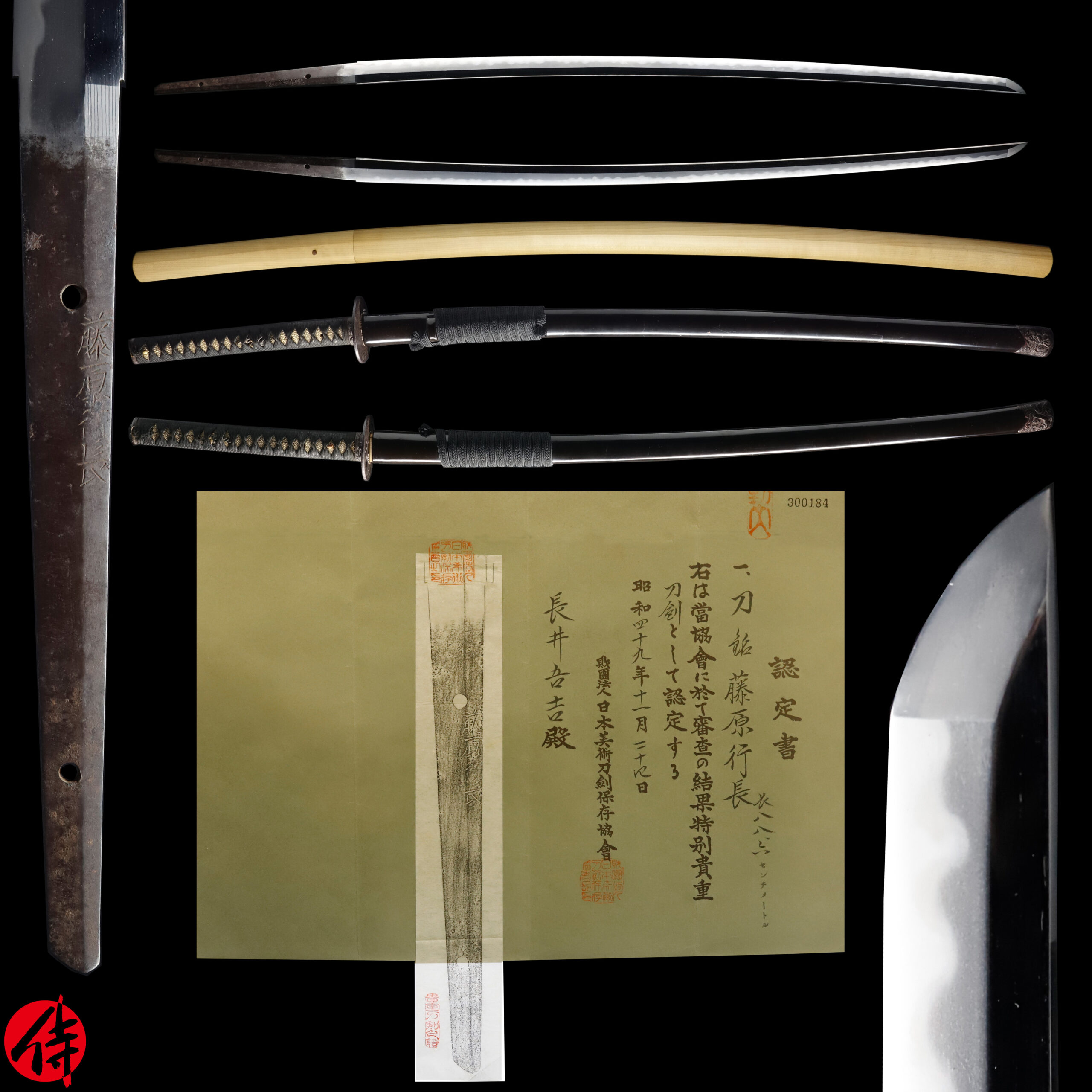
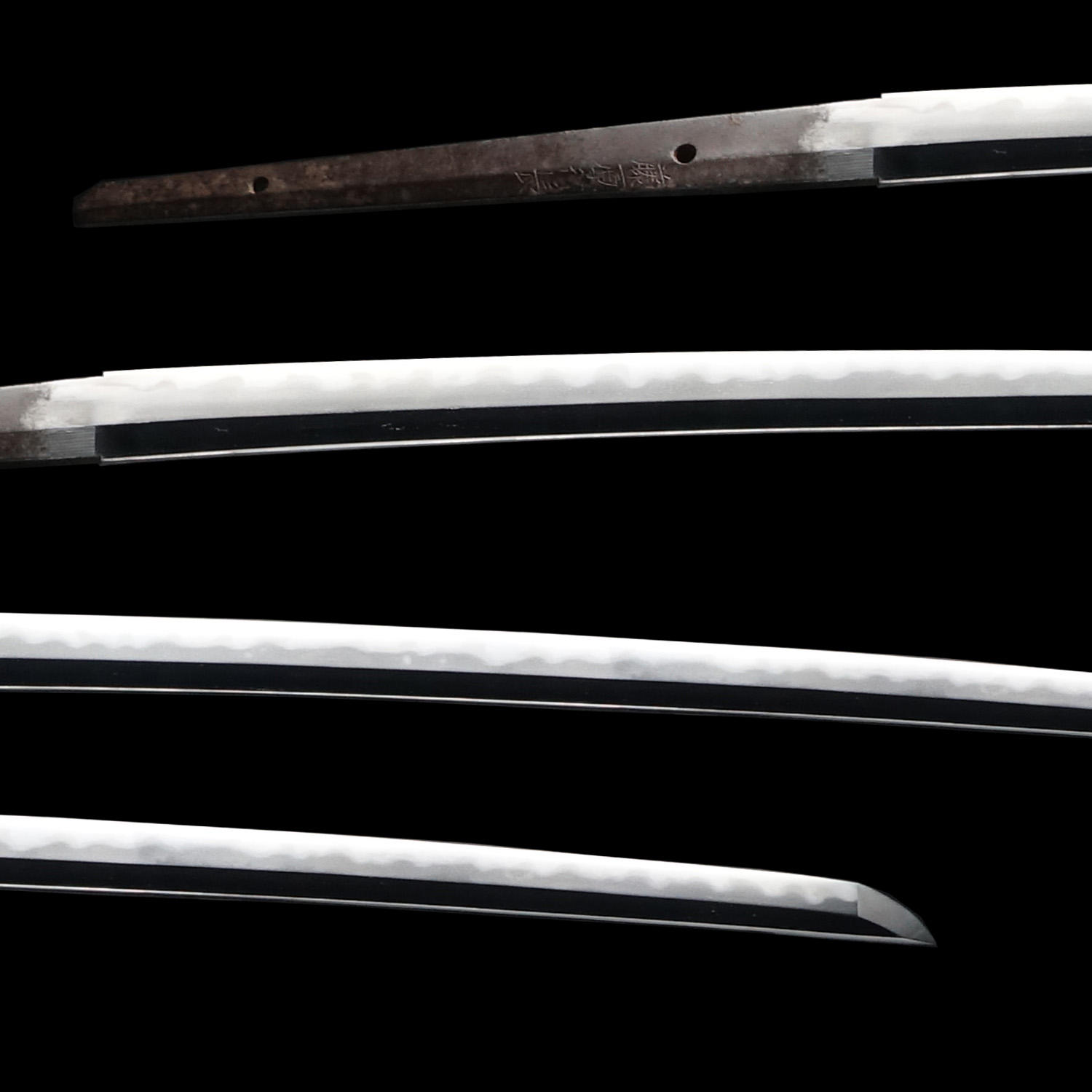
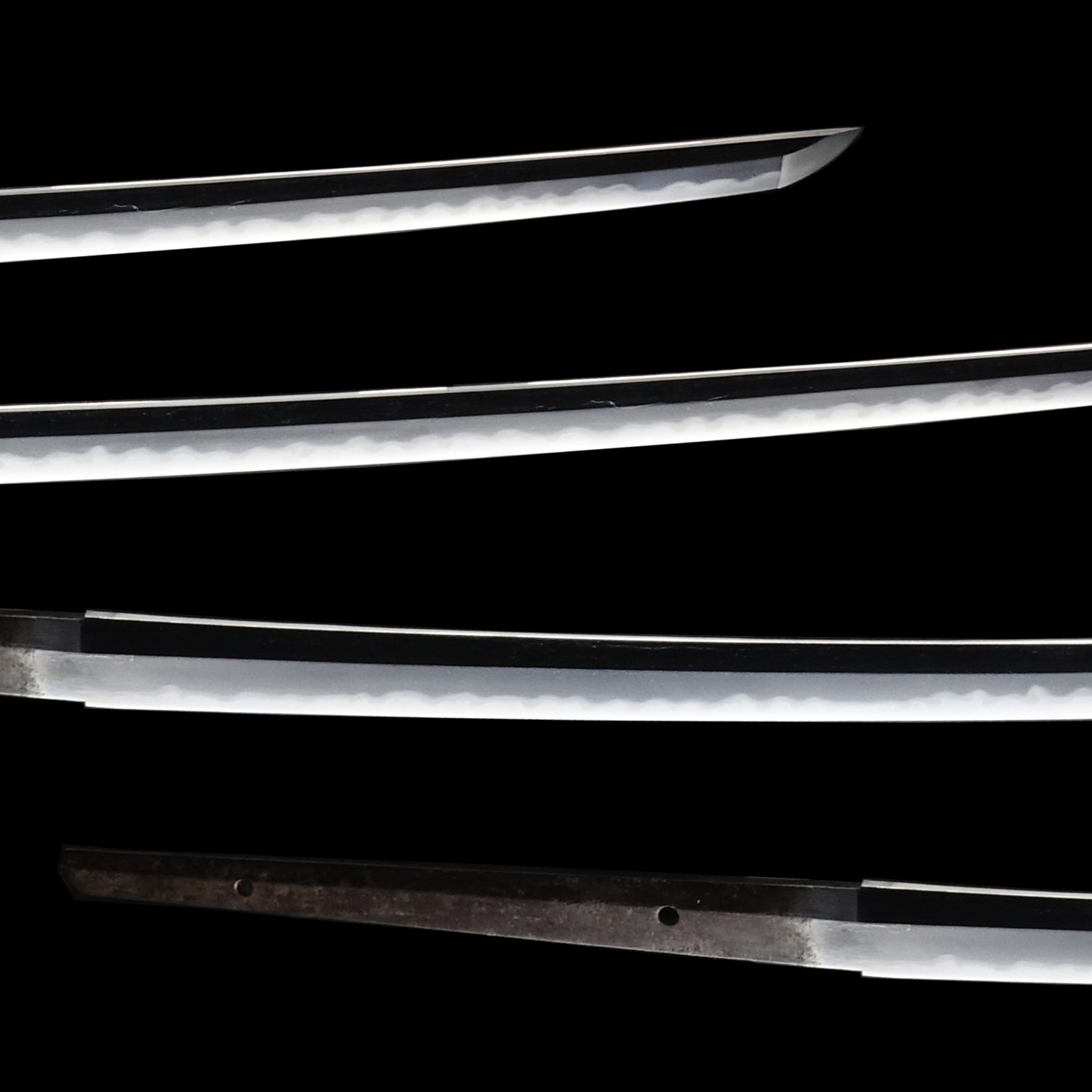
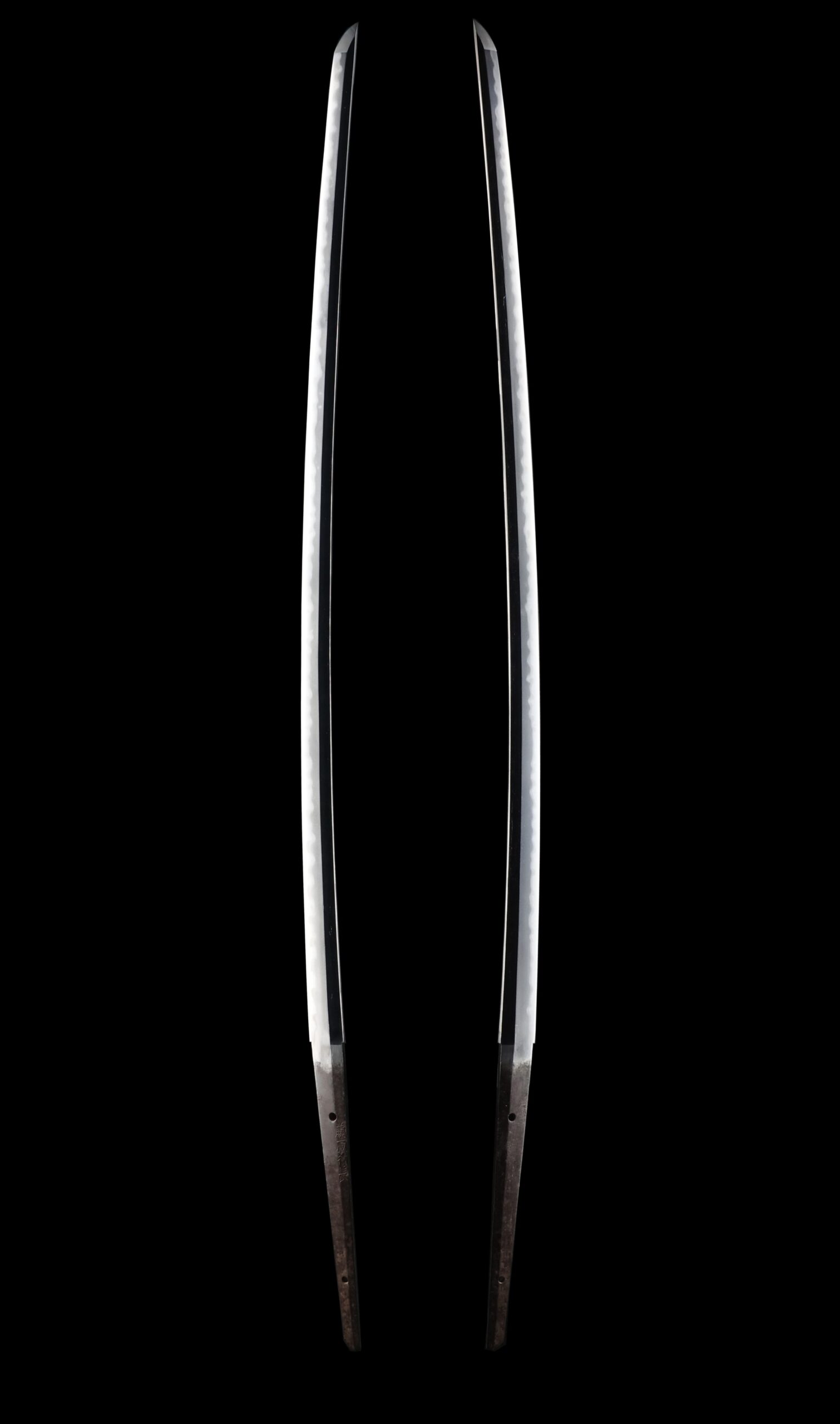
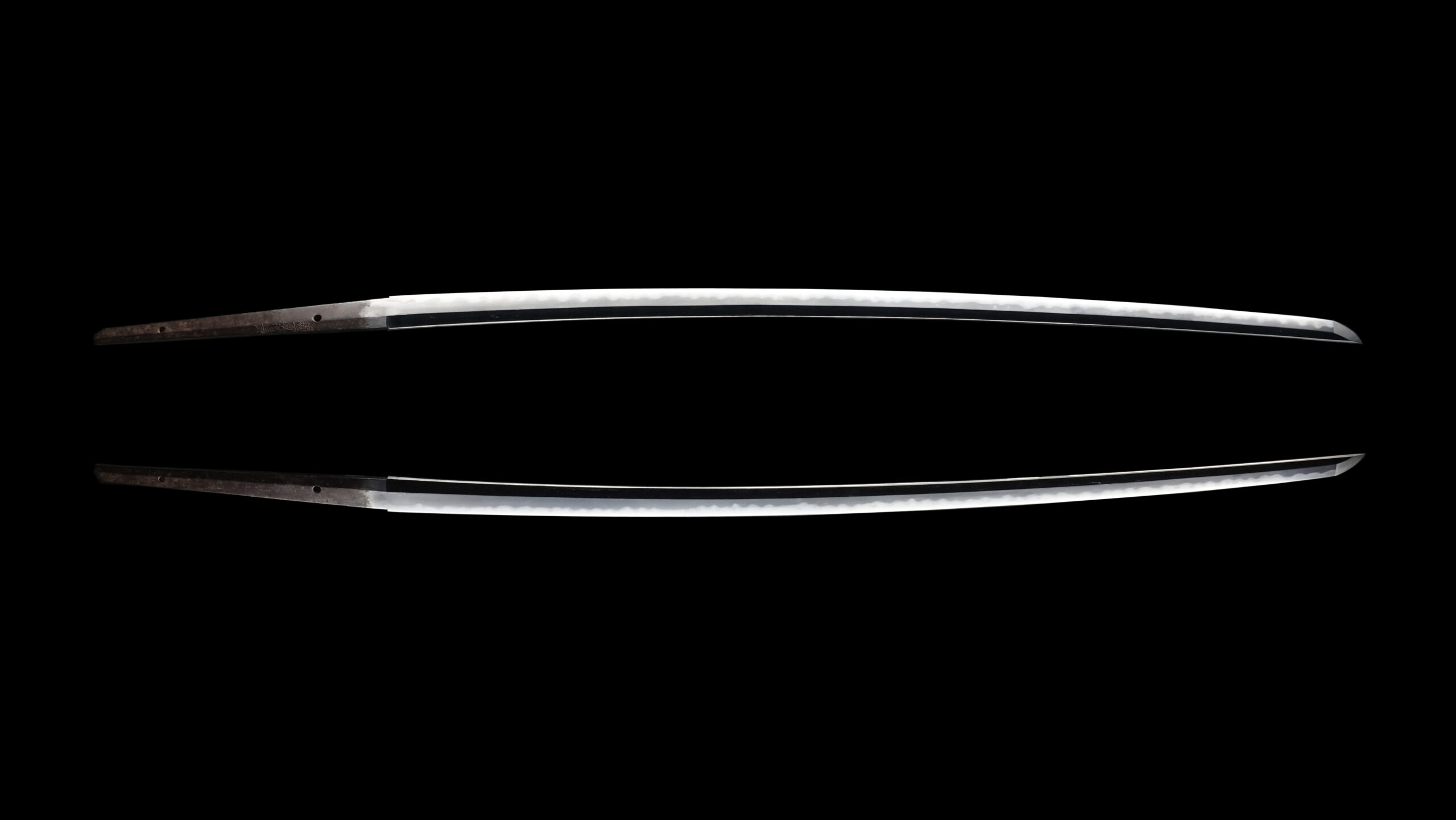
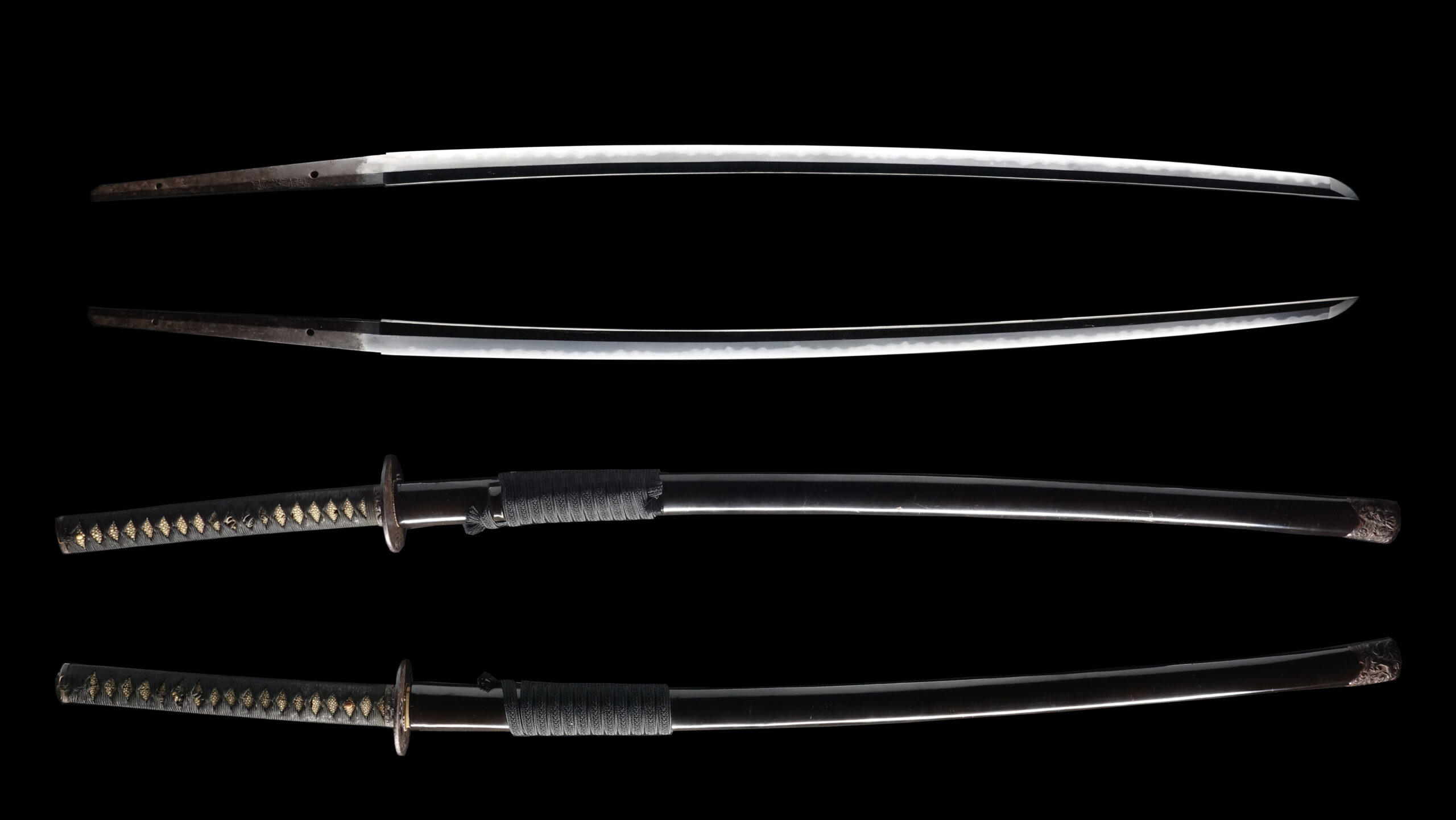
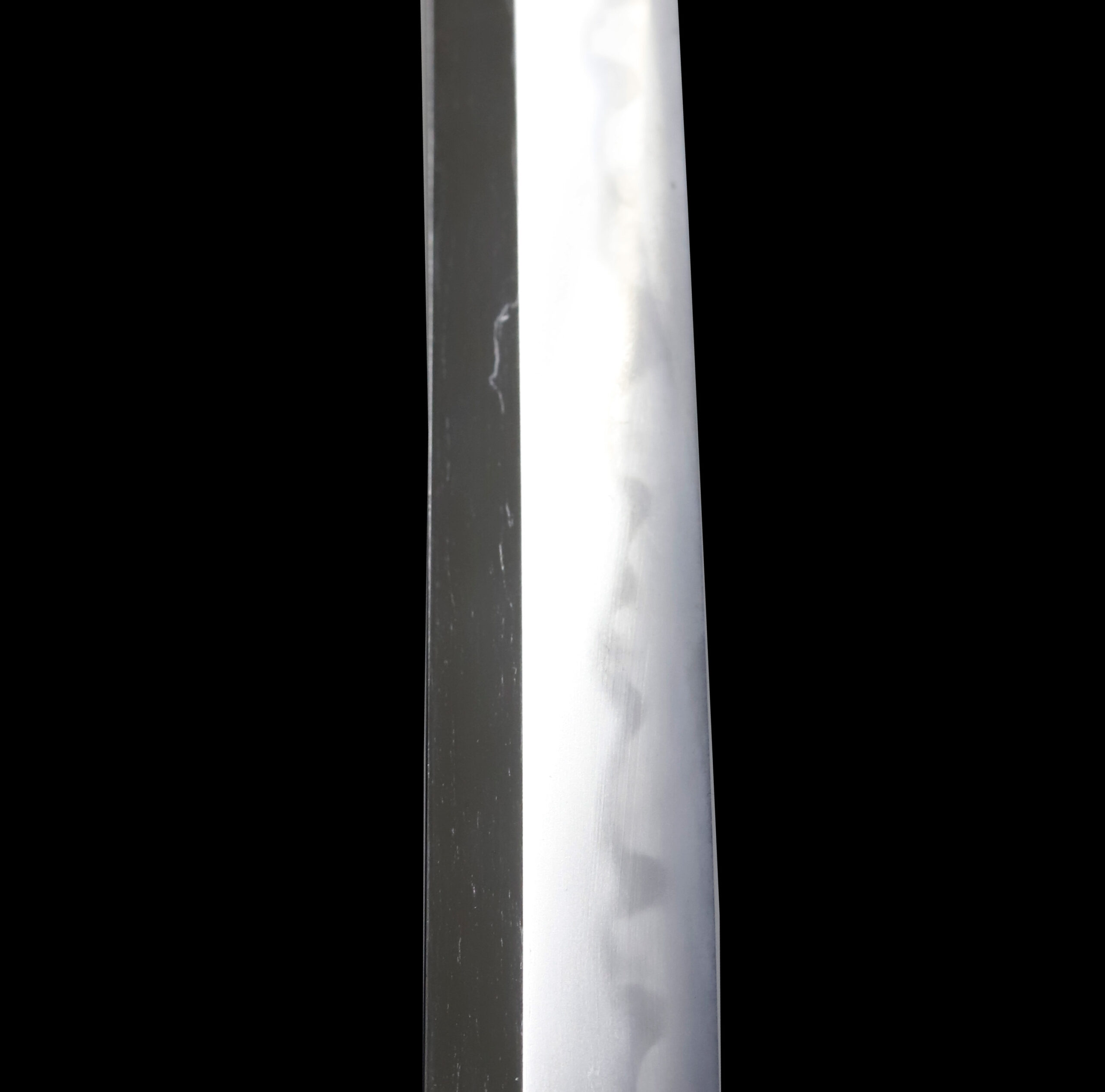
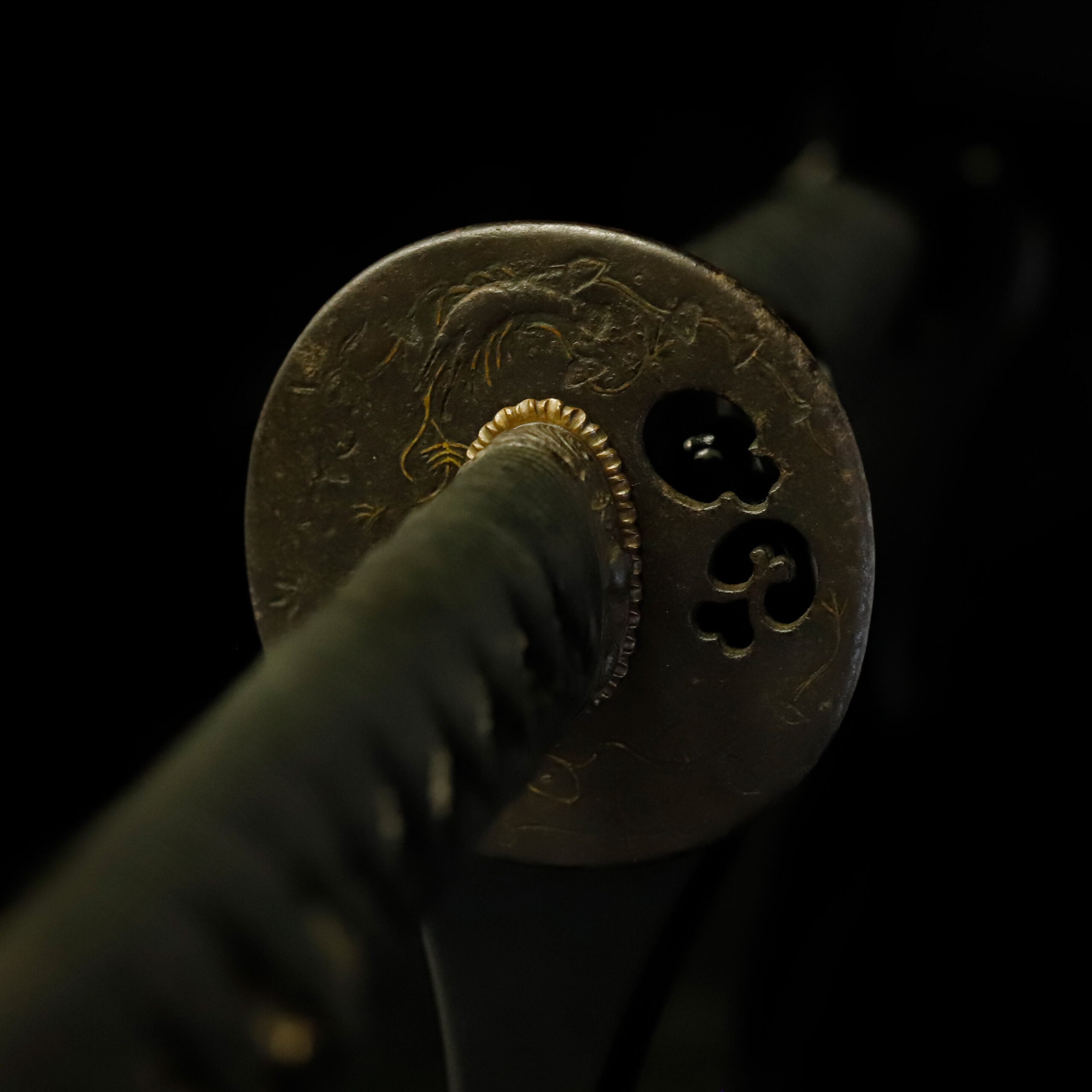
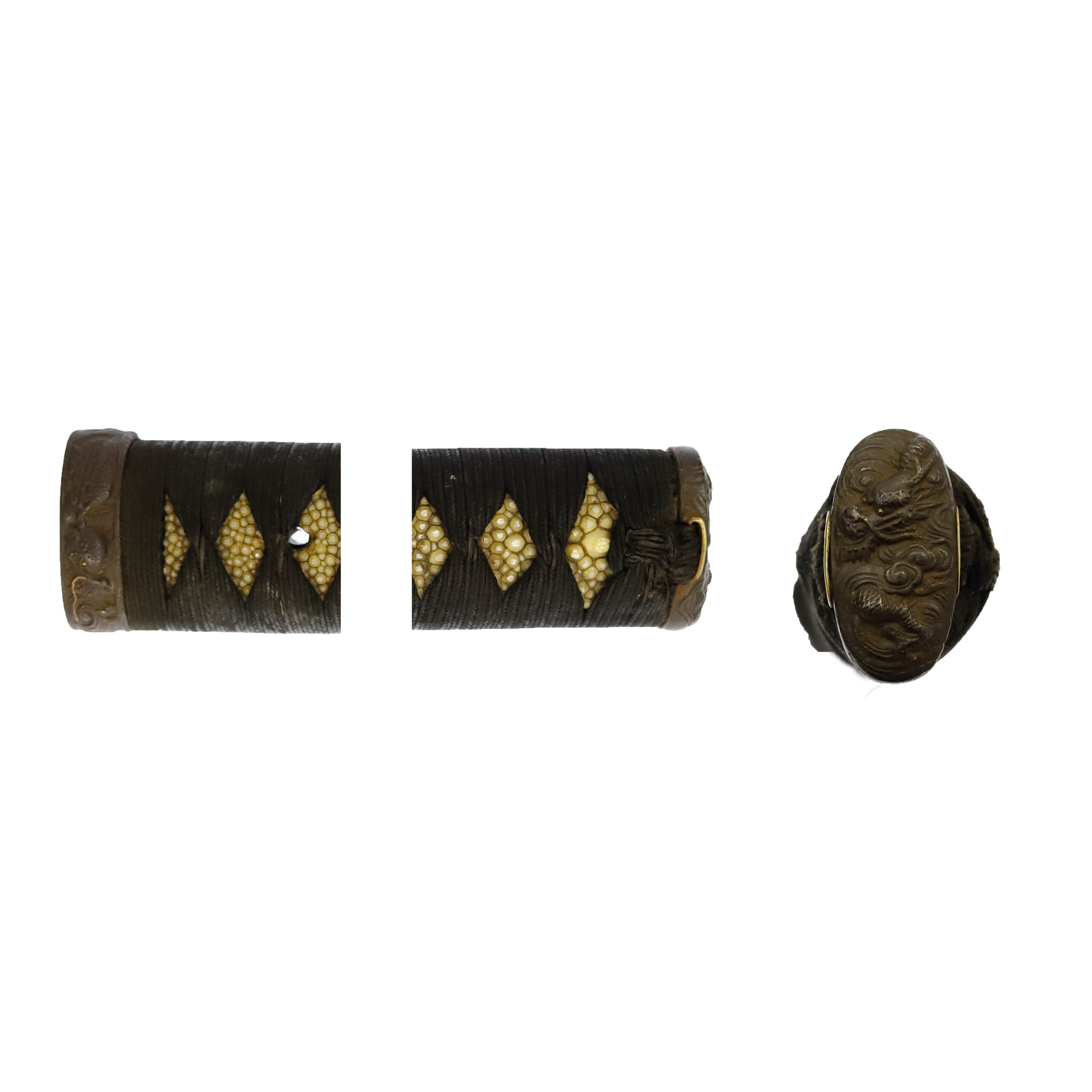
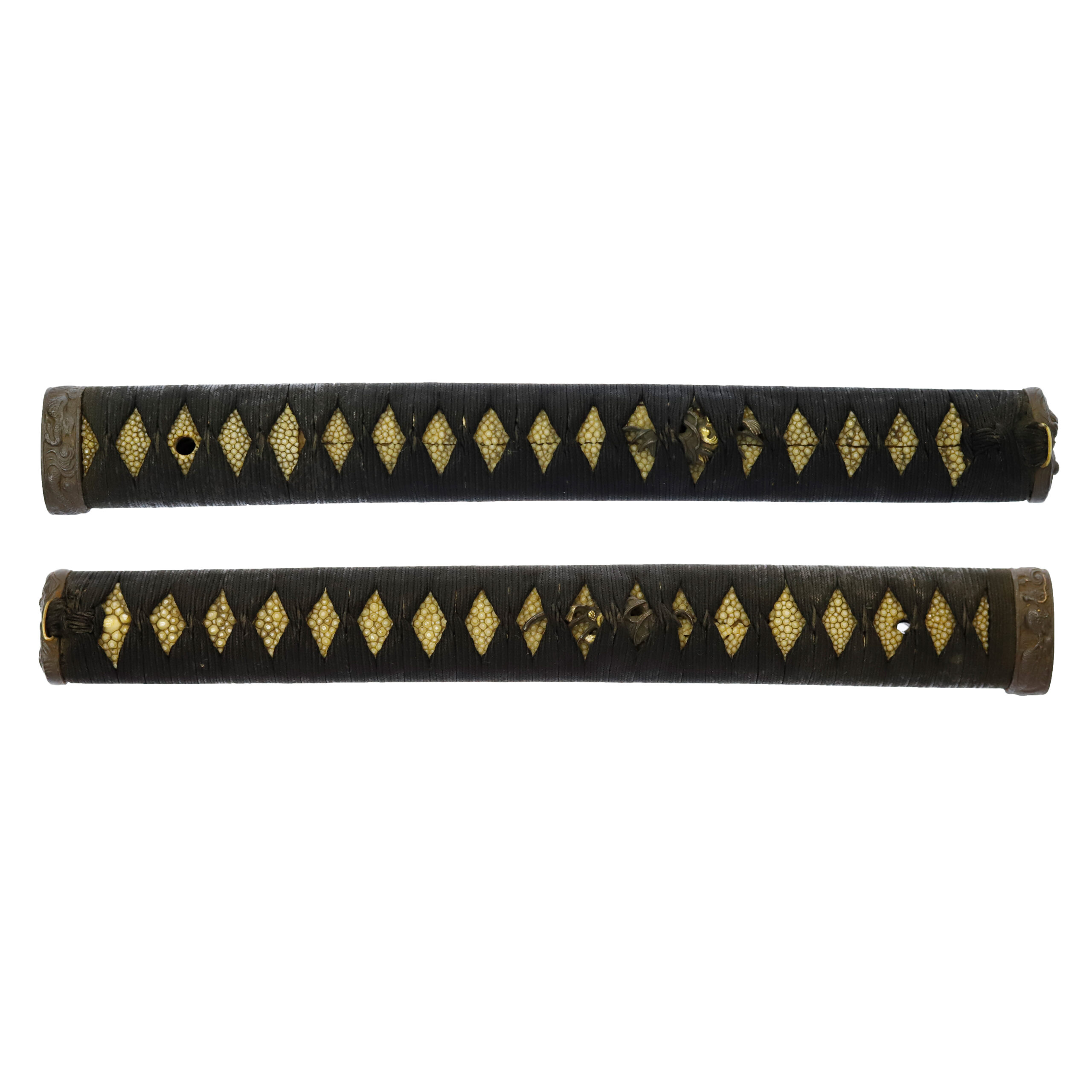
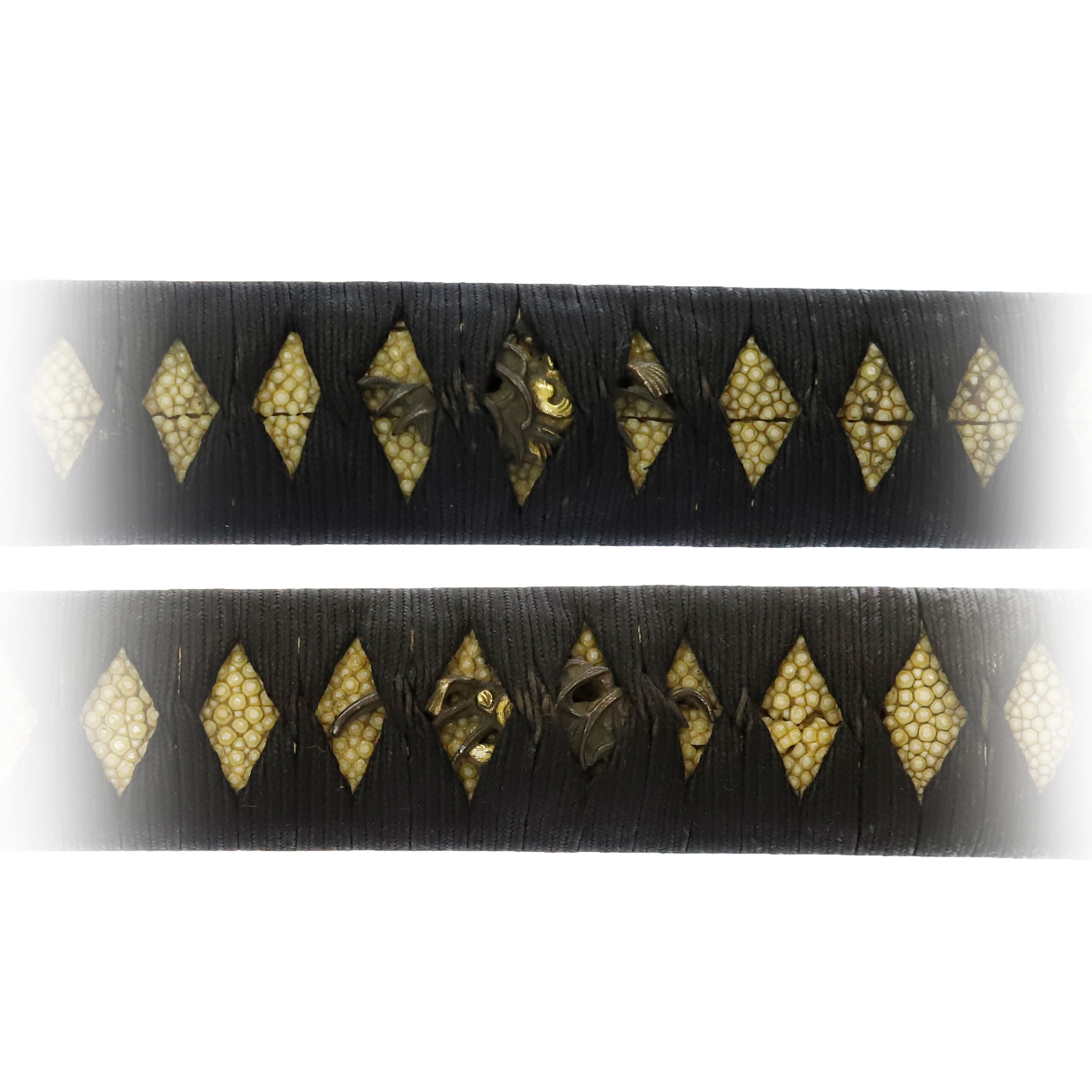
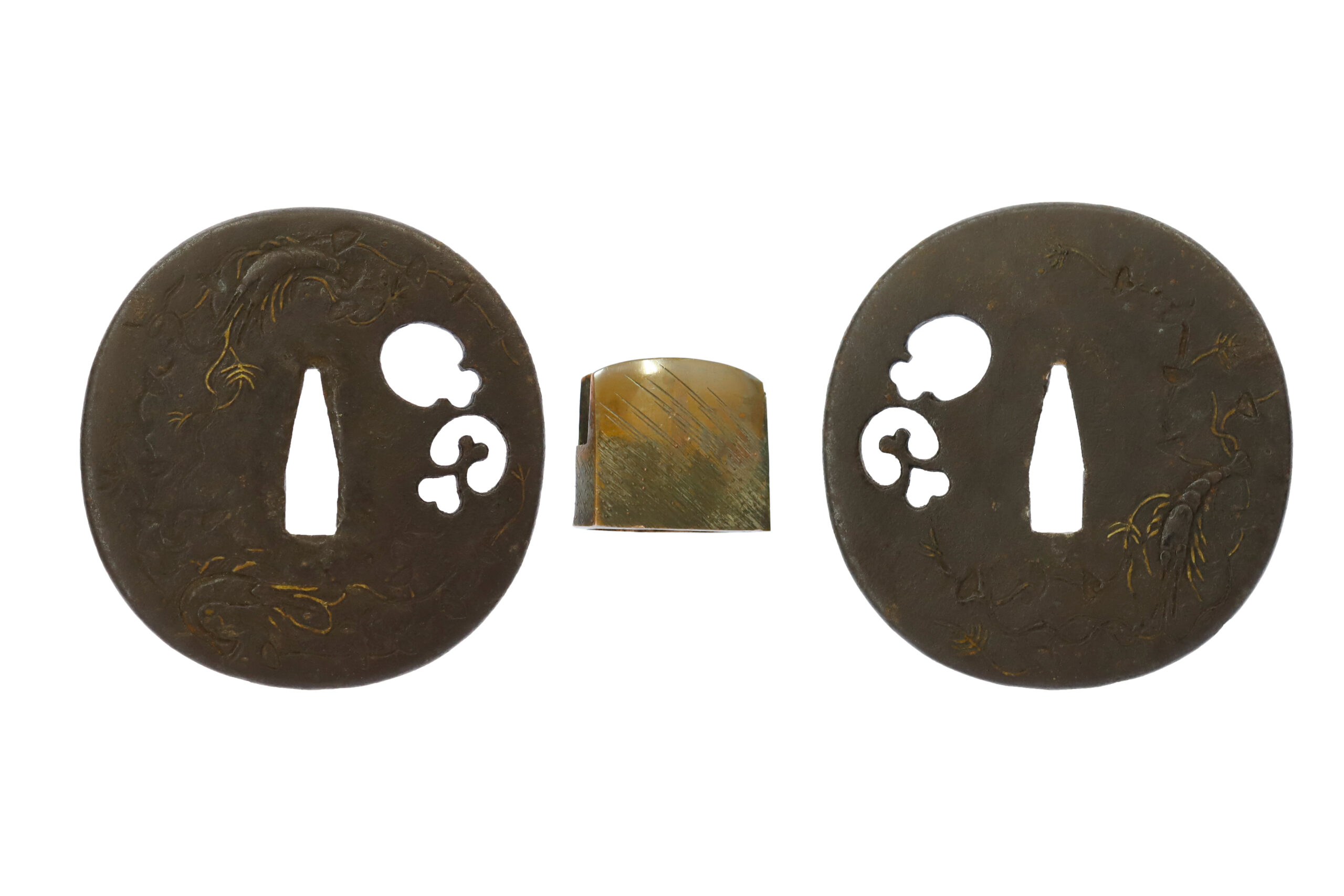
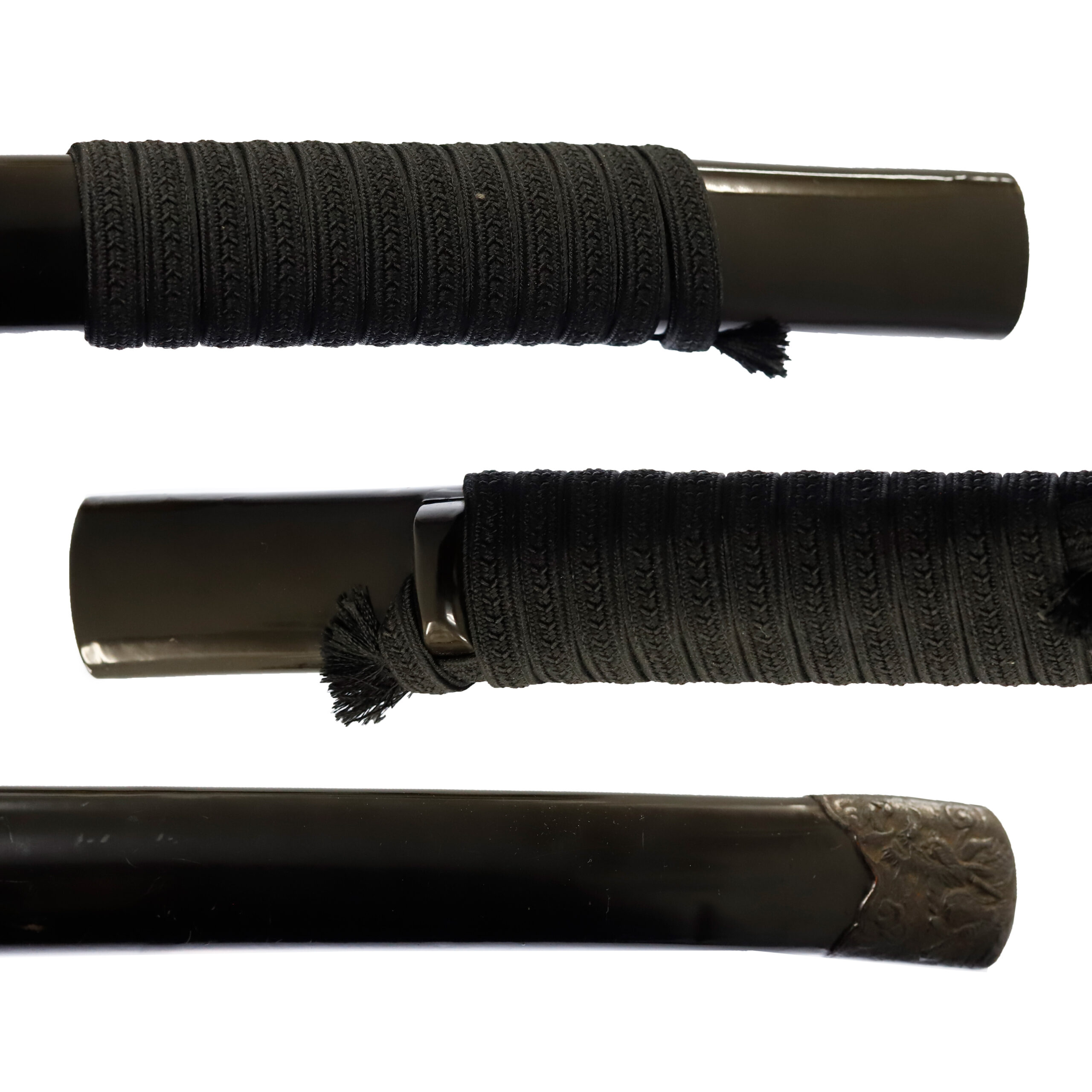
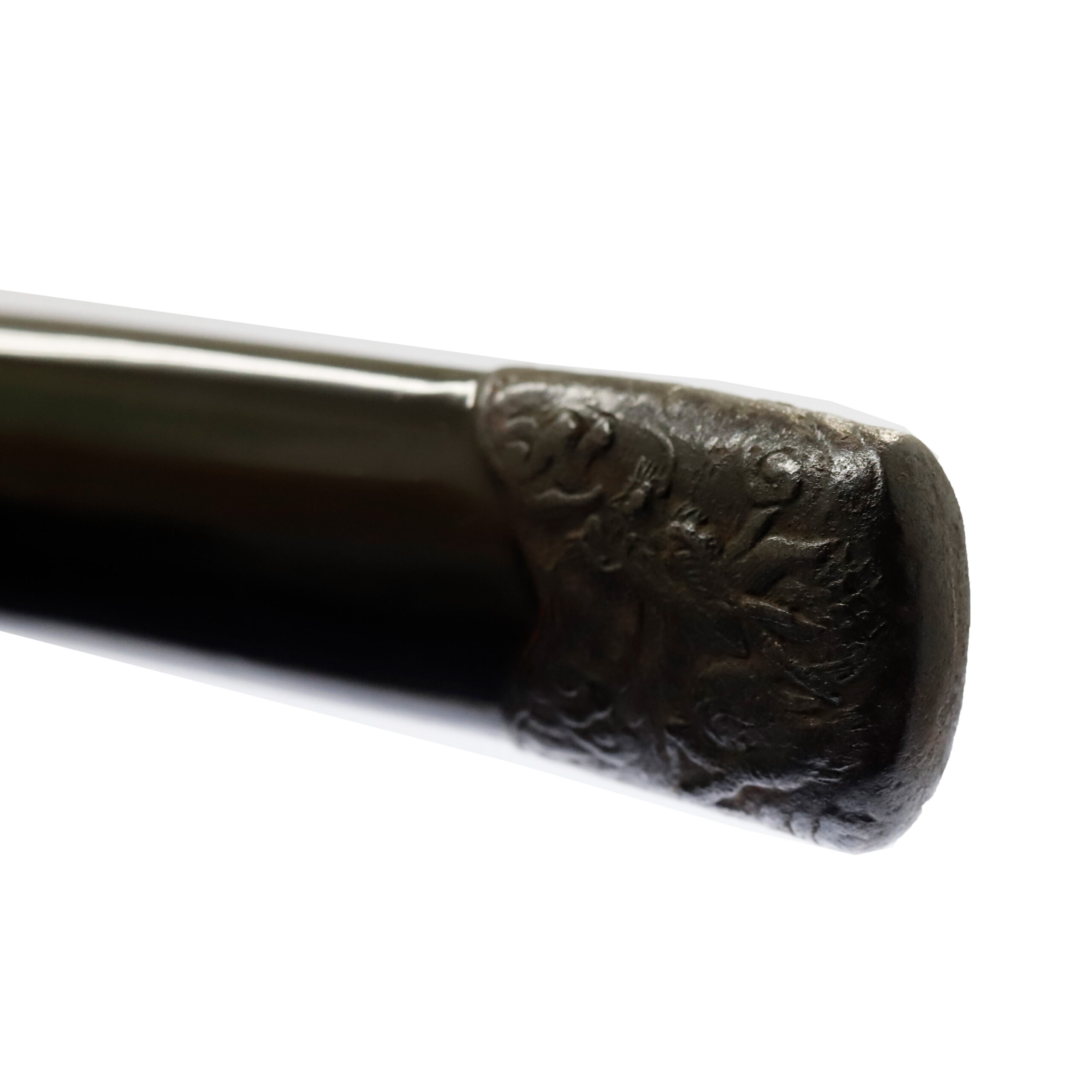
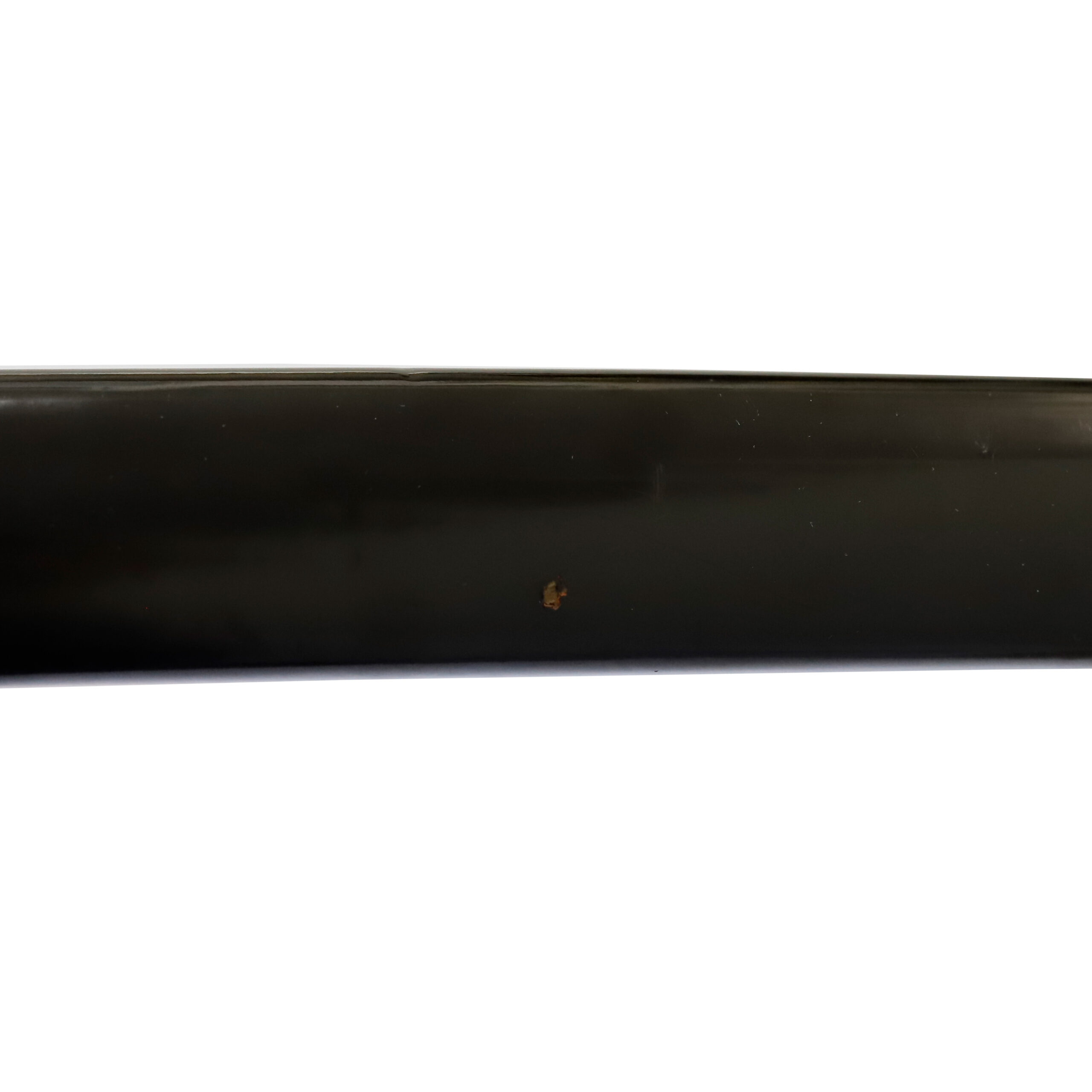
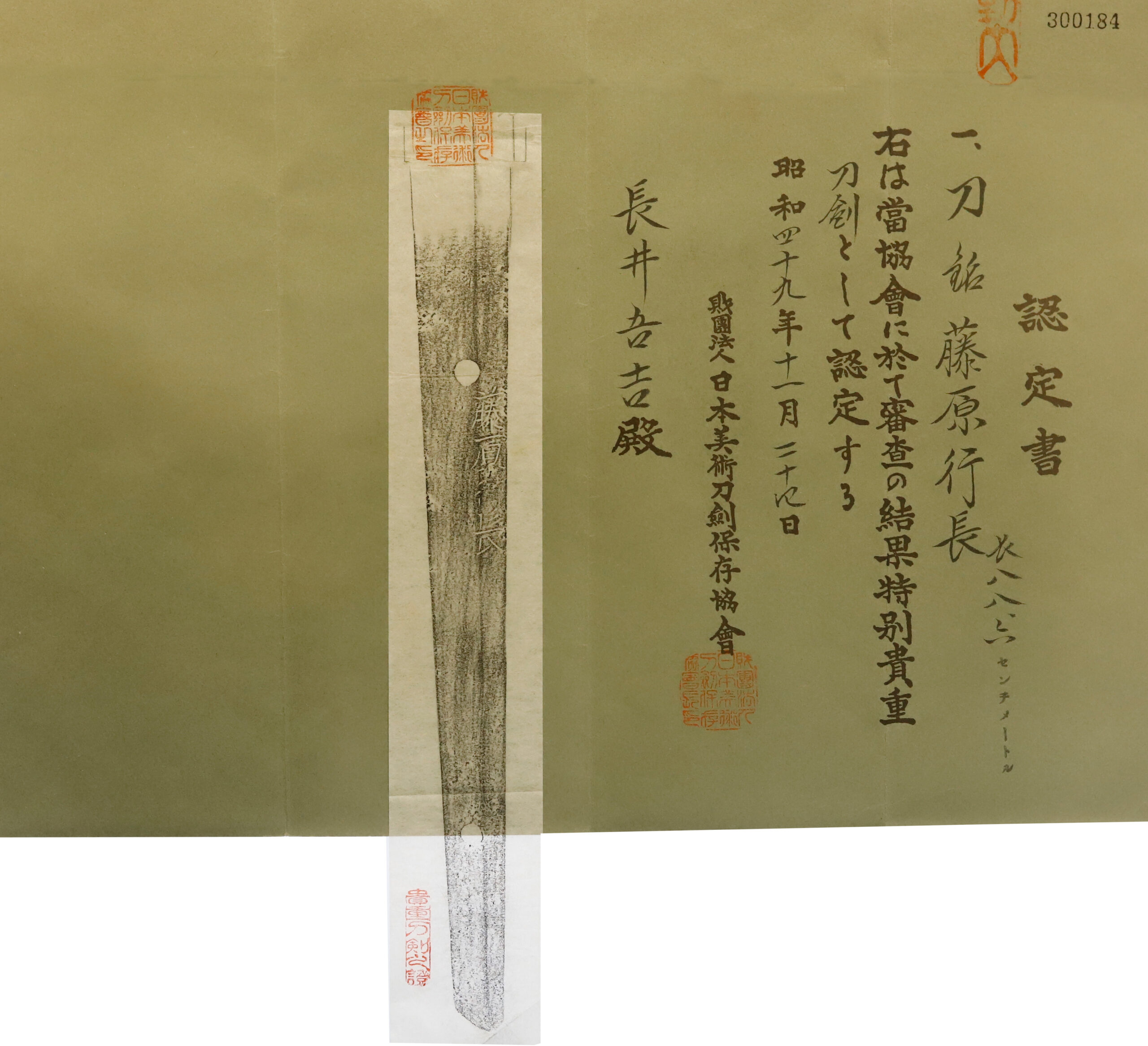
This blade was signed by Fujiwara Yukinaga (藤原行長), who belonged to a prestigious school named Takada(高田). He was active during the Kan-Ei~Seiho era (1624-1647: Early Edo period) Takada school was founded by Takada Tomoyuki in Takada village, Bungo domain (Ohita prefecture), during the Nanbokucho period. (1334-1338 A.D). Takada Tomoyuki went to Bizen province(today’s Okayama prefecture) to master the sword-forging techniques of BIZEN and returned to the village and trained his apprentices. That is how Takada school started. During Sengoku Period (the warring state period: from late 15 C to late 16 C), the Takada school forged many swords for many Samurais in Kyushu island. It is said that the reputation of the blades forged by Takada school was close to MINO or BIZEN swords, two of which are the most famous sword forging places. The Bungo domain was ruled by Otomo Yoshishige (Sorin) during the Sengoku period. Yoshishige and his domain built a strong military and political base there. Yoshishige was known as one of the most famous warlords on Kyushu island. It is said that Takada swordsmiths forged swords for those who served the Otomo clan and Toshiyuki played an important role to make Takada school prosperous during the Edo period along with Tokiyuki and Shigeyuki. Generally speaking, Kyushu island was prosperous in sword-making because of its long trading history with Asian countries. Many feudal lords on this island fought against each other to gain an advantage in trading. Takada school received many orders as the demand increased among those lords. The material of Japanese swords(high-quality iron sand and charcoal) was abundant in mount Sobo Katamuki, located near Takada village. We believe Takada school prospered because of its geographic location and natural resources. Its cutting edge length is close to 90 cm (88.6 cm) and its Sugata (appearance) is strong yet elegant. You can see superb craftsmaship of Tsunatoshi and Koretoshi. Fuchi-Kashira The theme of this Fuchi Kashira’s design is the Unryu Zu (雲龍図). It is a combination of dragons and clouds. On this sword mounting, you would find the figures of several dragons. Initially, the dragon was an imaginary creature in ancient foreign traditions or myths. Furthermore, it is regarded as a symbol of auspicious signs. Its body is likened to nine animals: antlers are deer, the head is a camel, eyes are demons, the neck is a snake, the belly is the Mizuchi (蛟, a mythical animal in Japan that looks like a snake and has a horn and four legs), scales are fish, claws are falcons, palms are tigers and ears are cows. It was thought that the dragon would reign at the top of all animals because of its odd-looking appearance. The dragon design is seen in various sword mountings; it tells us that many Samurai favored this dignified beast motif. About the cloud pattern, clouds bring blessed rain and snow, and their movements significantly affect the day’s weather. Due to its supernatural power, a theory says that gods, spirits, and dragons dwell in the clouds. In Japan, there is a belief that worships dragons as water gods. Since rice cultivation has flourished in this country, people always treat water as an essential resource. We imagine some people wished for a plentiful harvest in the Unryu theme. From such a religious aspect, we could infer that dragon designs were familiar to people. While the surface has worn down due to aging, it seems that he Kojiri (鐺, the metal fitting that protects the tip of a scabbard) has the same design as this Fuchi Kashira. Tsuba and Habaki About the design, you would see three Ebi (海老, shrimp) are designed on this Tsuba. Since aquatic plants are depicted around the shrimps, we believe it expresses the figures of shrimps swimming underwater. Japanese people already ate shrimp in the Heian period (794-1185). However, it was an expensive ingredient for ordinary citizens, so only the nobility and high-class people could enjoy it. Another distinguishing feature of shrimp is that they have protruding eyes. Some people think that this is an ingredient suitable for auspicious occasions, associating it with the Japanese expression “めでたし (目出たし).” It literally refers to eyes protruding, but as an idiomatic expression, it means something auspicious. People started using shrimp as a good-omen pattern and appreciated designing it for their family crests in the Muromachi period (1336-1573). In the Samurai’s society, as a shrimp is covered with a hard shell, it was thought that a shrimp represents the figure of a brave Samurai who wears armor. It has the meaning that wishes the fate of a Samurai will last for a long time. Shrimp has been likened to an older adult because of its long feelers. Also, shrimps actively jump even though they are bowed. That is the reason why the shrimp pattern is treated as a symbol of perpetual youth and longevity. This animal shed its molt several times to grow up; therefore, some people have considered it to be a symbol of success in life. Authentication Paper They authenticated the blade on Nov 27th in the 49th year of Showa (1974). They appraised it as Tokubetsu Kicho Token, an old form of the certificate.



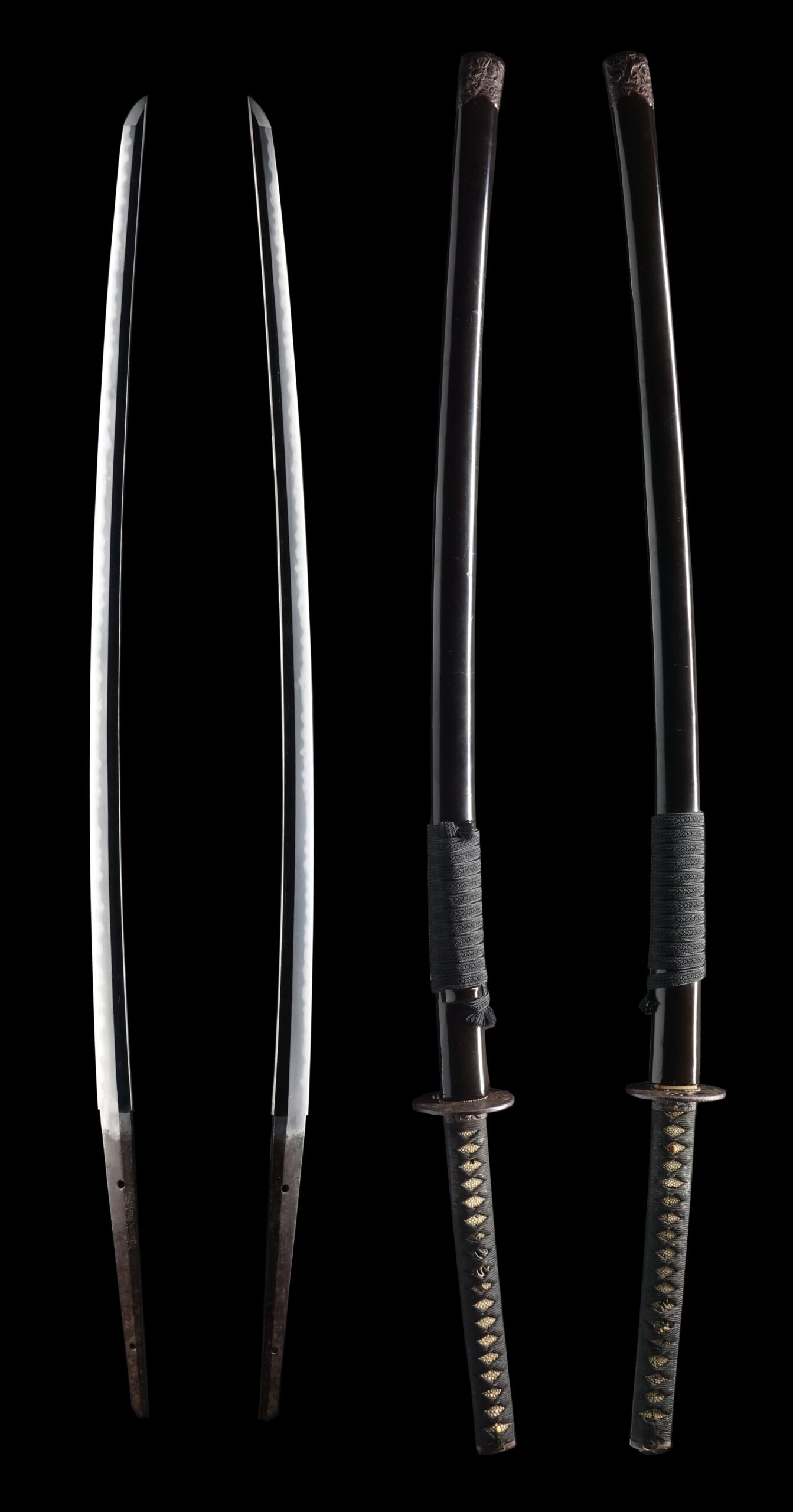
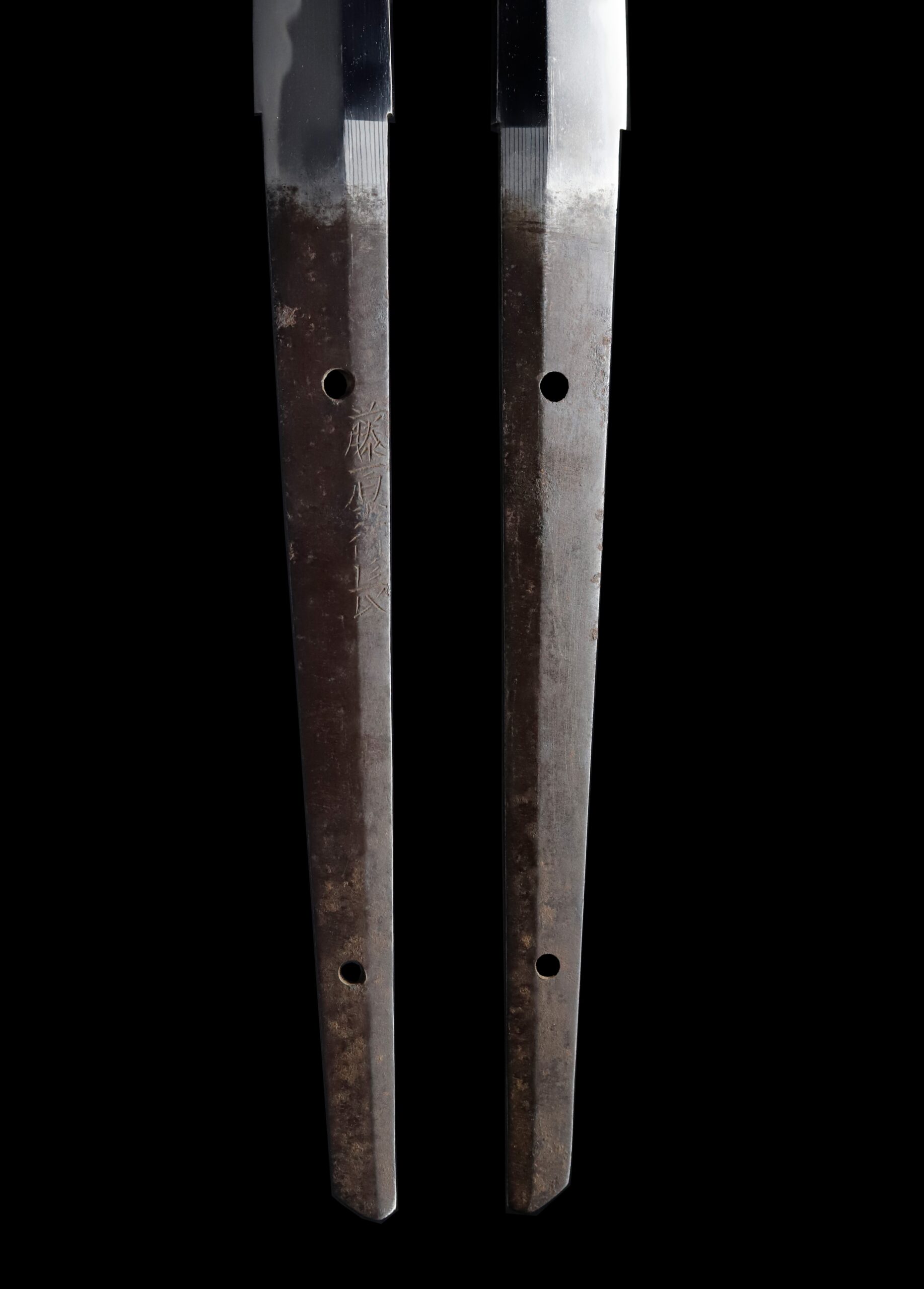
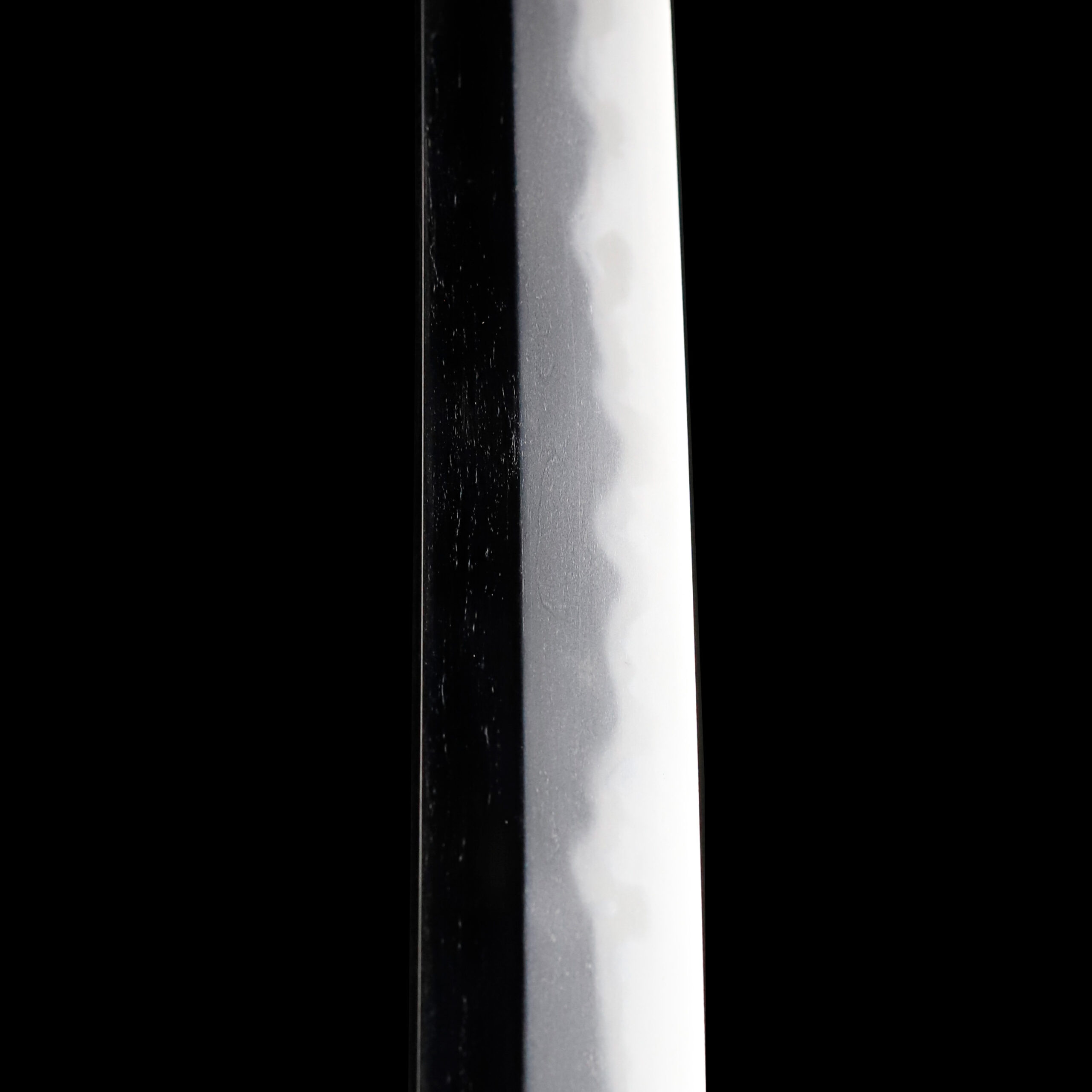
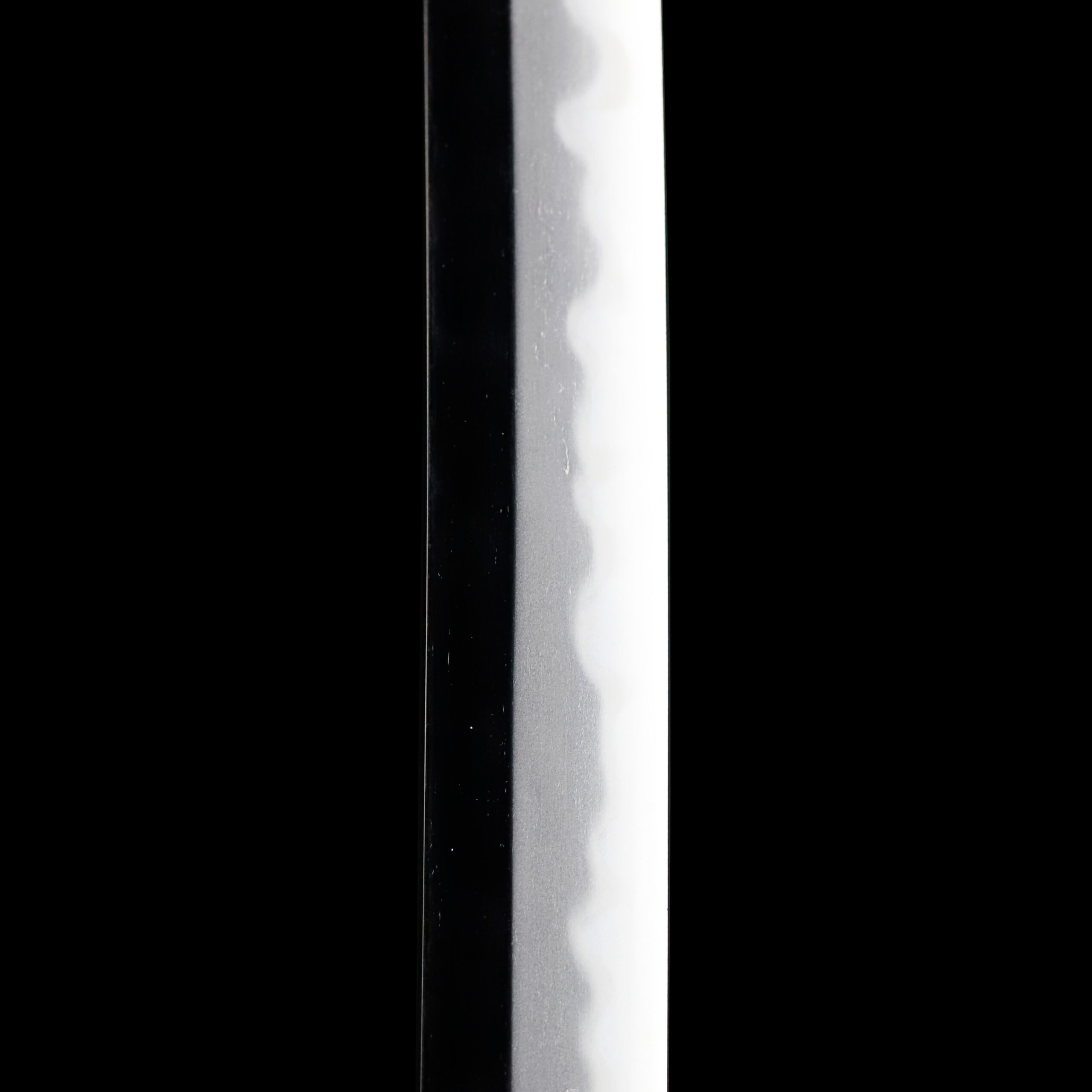
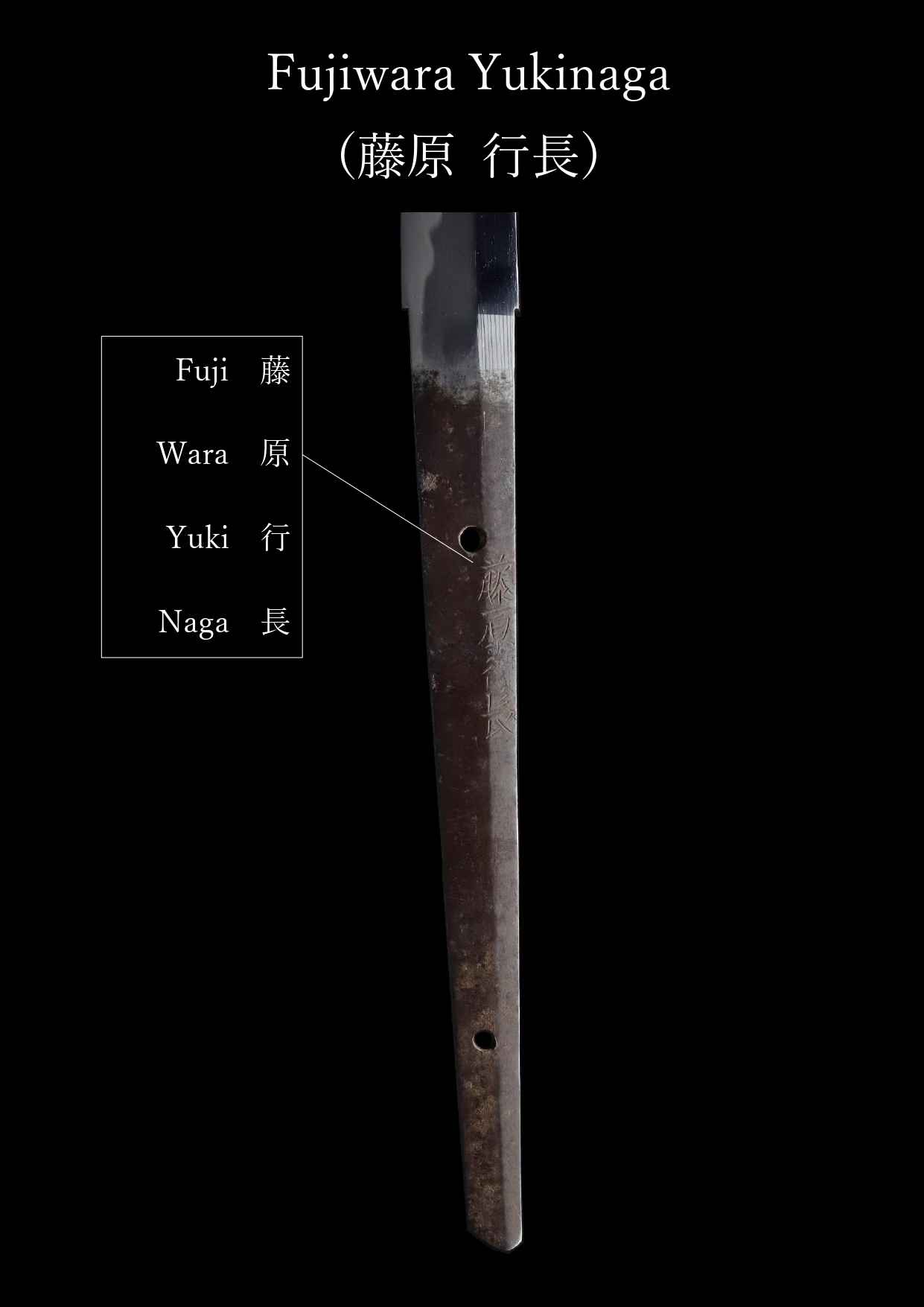
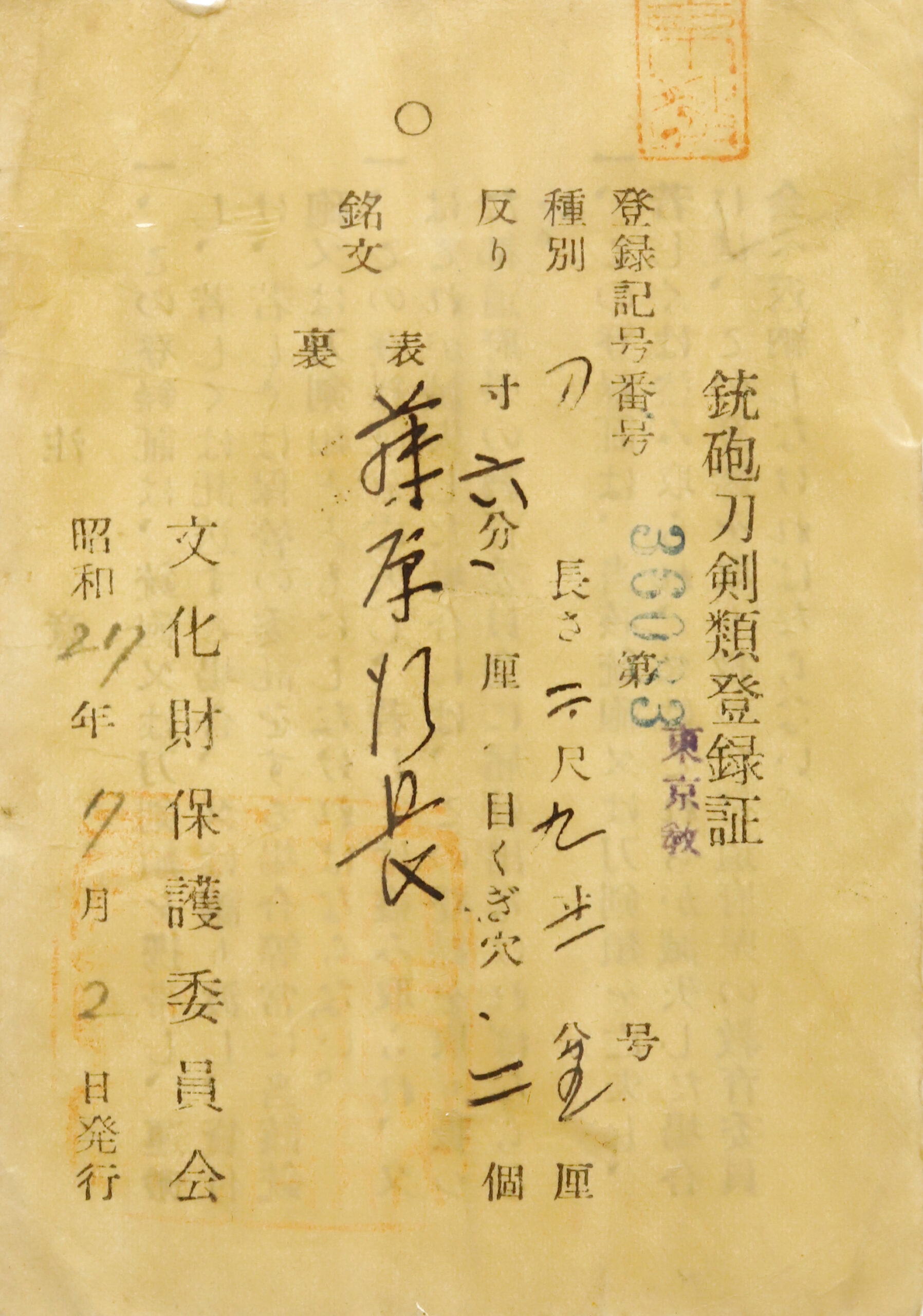
販売店の記載のまま
豊後 · 1644-1648頃
刀剣大鑑 上位87%
現在1点販売中
江戸時代
徳川の泰平のもと、大小は法度の定める身分の制服となり、需要は城下町、とりわけ江戸に集まった。工芸は二つに分かれる。目利きのための華やかな鑑賞の作と、截断の結果を金象嵌に刻む実証の刀である。
本作はNBTHKの旧鑑定書(貴重・特別貴重)を有しますが、これらは現在発行されておらず、現在の日刀保ではほとんど認められていません。極めを確認するには、公的な鑑定機関(NBTHK・NTHKなど)に再提出し、現行の鑑定を受けることもご検討ください。
Returns/exchanges limited to defects caused by shipping (except willful misconduct or gross negligence by the company); customers must contact within 72 hours of receiving the product.