徳川の泰平のもと、大小は法度の定める身分の制服となり、需要は城下町、とりわけ江戸に集まった。工芸は二つに分かれる。目利きのための華やかな鑑賞の作と、截断の結果を金象嵌に刻む実証の刀である。
 NihontoWatchNihontoWatch
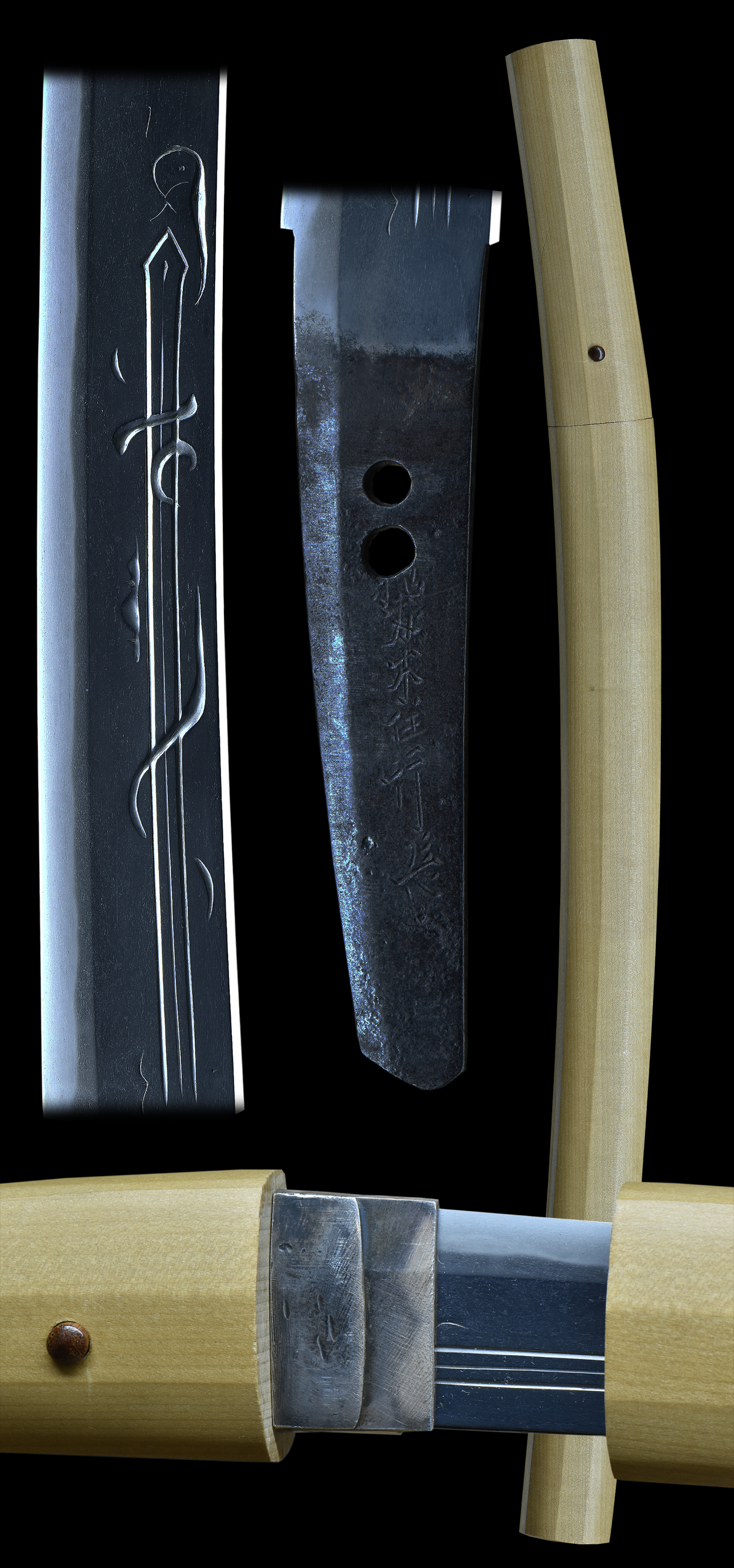
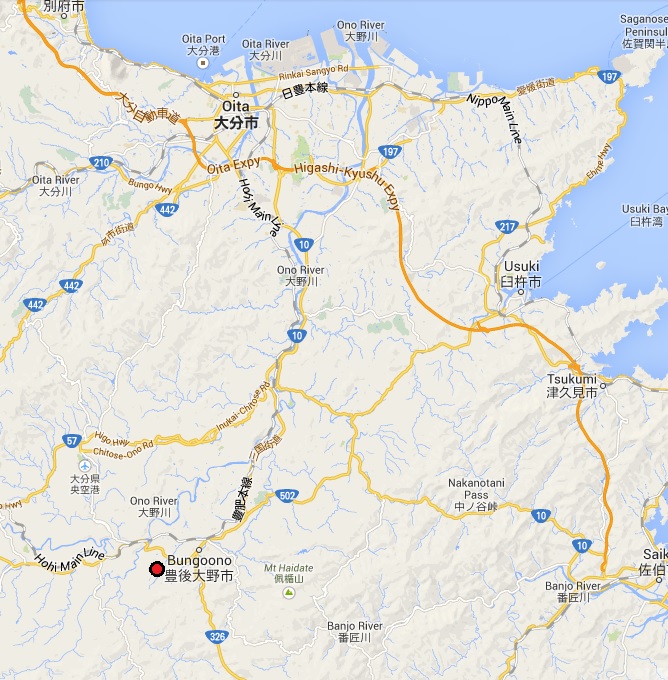
This sword is a fine example of a Kaimoto blade by the smith Yukinaga. The blade is a hefty Katakiriba shape with a Dragon horimono. The hada is a very unique silken itame/mokume blend. There is a fine and a course nie. The hamon is an erratic gunome midare with a fine nioi-gucchi. The Horimono is in the So No Kurikawa style. There is much chikei to be seen as well as a bright ji-nie. Utsuri is present and kinsugi. The Kaimoto smiths are a rarer group and a unique school. A rare treat for the collector. Below you can read more about the Kaimoto School. This sword is on consignment. From Markus Sesko: I want to introduce this time the Kaimoto smiths (甲斐本) of Bungo province. First of all, let´s address the name of the group. It goes back to an area of the same name in Nakao (中尾). Nakao in turn is located about 3 km to the southwest of the city of Bungo-Ôno (豊後大野市) and about 30 km to the south of the city of Ôita (大分市) and at the limits of the village of Nakao, there are still the graves of the Kaimoto smiths extant. The i in “Kaimoto” is usually not pronounced, i.e. with kay like in okay but with a longer “a” and not stressing the “y”. Older topographies transcribe the area also as “Kehinomoto” (ケヒノモト) and write the name with the characters (賀井本), or (賀井ノ本) respectively when the particle no was noted too. Picture 1: The red dot marks Nakao/Kaimoto (© 2014, Google, ZENRIN) We don´t know exactly when smiths started to forge swords in the Kaimoto neighborhood but it is assumed that this was at the latest in the Sengoku period. The earliest written reference we have today is on a document with a joint signature of five magistrates (bugyô, 奉行) of theÔtomo family (大友) from Eiroku five (永禄, 1562). From this document we learn that theÔtomo provided the Kaimoto smiths from within Bungo´s Mie district (三重郷) with charcoal and iron and paid them a salary of 50 koku. Also we have genealogic informations on the group or rather family compiled by the 6th Kaimoto-generation Yukihisa (行久). Therein he states that the ancestor of the family was a certain Magoshirô Yukinaga (孫四郎行長) and the actual founder of the school his successor Matazaemon Yukinaga (又左衛門行長). Yukihisa states that the Kaimoto smiths were employed like the Takada smiths (高田) by the Ôtomo family and that they received initially a salary of 50 koku what matches with the bugyô document. But further he writes that when their lord Ôtomo Yoshishige (大友義鎮, 1530-1587), aka Sôrin (宗麟), retired and moved to Usuki Castle (臼杵城) in Tenshô four (1576), the salary was reduced to 10 koku. This is insofar interesting as it shows that the Kaimoto smiths played a more important role for the earlier Ôtomo campaigns, e.g. against the Kikuchi (菊池), Ryûzôji (龍造寺), and Môri (毛利) and until about the time Yoshishige was appointed shugo governor of Buzen and Chikuzen province and Kyûshû-tandai (九州探題) in Eiroku two (1559), compared to the later fightings against the Shimazu family (島津) and their fighting for Hideyoshi in the course of his Kyûshû Campaign in Tenshô 15 (1587). It surely also played a role that Yoshishige´s son Yoshimune (大友義統, 1558-1610) was accused by Hideyoshi in Bunroku two (文禄, 1593) of deserting under enemy fire in Korea and lost so all Bungo domains, a measure which basically sounded the bell for the end of the Ôtomo family. After Yoshimune was removed by Hideyoshi, the lands of Usuki, i.e. where Kaimoto was located, were given to his retainer Ôta Kazuyoshi (太田一吉, ?-1617). But Ôta sided with Ishida Mitsunari at Sekigahara and so his lands were again confiscated and transferred by Ieyasu to Inaba Sadamichi (稲葉貞通, 1546-1603) as he changed sides in favor of the Eastern Army during the battle. And the Inaba family held the Usuki fief (臼杵藩) until the abolition of the feudal system. Back to the Kaimoto smiths. We know from fief records from Keian four (慶安, 1651) that the Kaimoto smith Matazaemon (又左衛門) received still the salary of 10 koku and that the family was treated like with the same social status as that of a village head, whatever that means. It is assumed that this entry refers to the same sixth Kaimoto-generation Yukihisa who made the aforementioned copy of the families genealogy. So if this is correct than the meikan must be corrected because they date Yukihisa around Tenshô (天正, 1573-1592). Then we find an entry from Kyôhô eleven (享保, 1726) which states that the Kaimoto smith Sôzaemon (惣左衛門) is “doing a good job”, lit. “saiku mo yoroshiku tsukamatsuri-sôrô” (細工も宜く仕り候). But Kyôhô eleven seems too late for Kaimoto Toyoyuki (豊行) who was the one who bore the first name “Sôzaemon.” From another document we learn that the family was granted the status of o-memie (御目見), i.e. qualified to meet with the shôgun, in Hôreki nine (宝暦, 1759) what meant usually samurai status. But then for Kansei eleven (寛政, 1799) we read that the Kaimoto smith Ka´emon (嘉右衛門) couldn´t cope with the fief´s demands in him as a craftsman – lit. “shokubun-fushussei” (職分不出精) – and that so the status of o-memie was again withdrewn. After that time, i.e. entering the late Edo period, we loose track of the Kaimoto smiths. However, a document from the Usuki fief from Bunsei three (文政, 1820) in which several local merchants ask their government for the permission to have a bridge erected on their own costs mentions the name“Kaimoto Gensuke” (甲斐源助) as being as tea dealer (chaya, 茶屋) one of the petitioners.

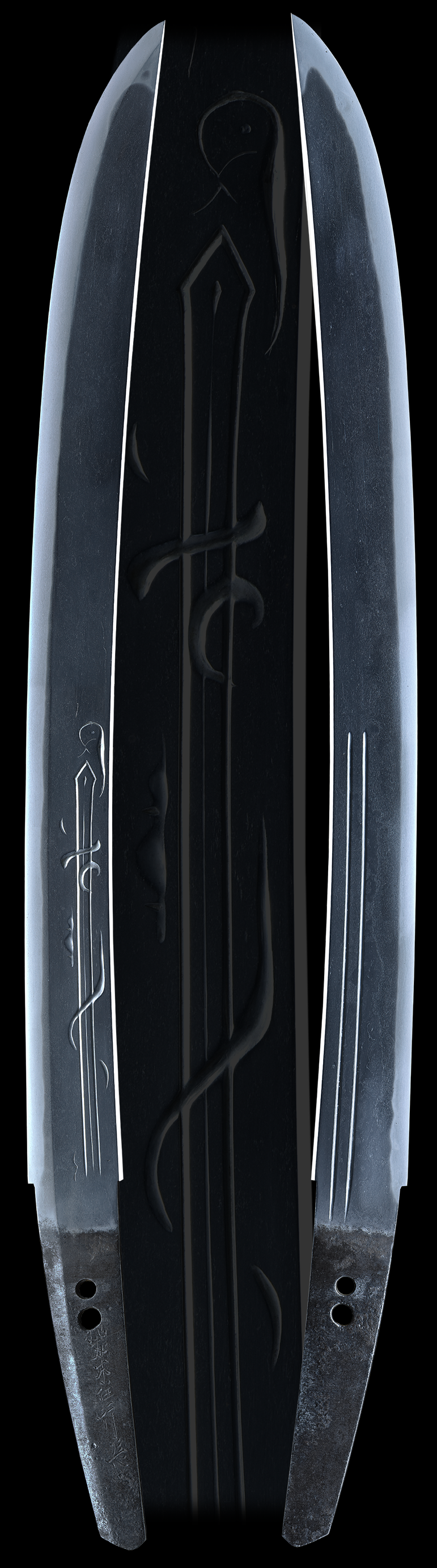
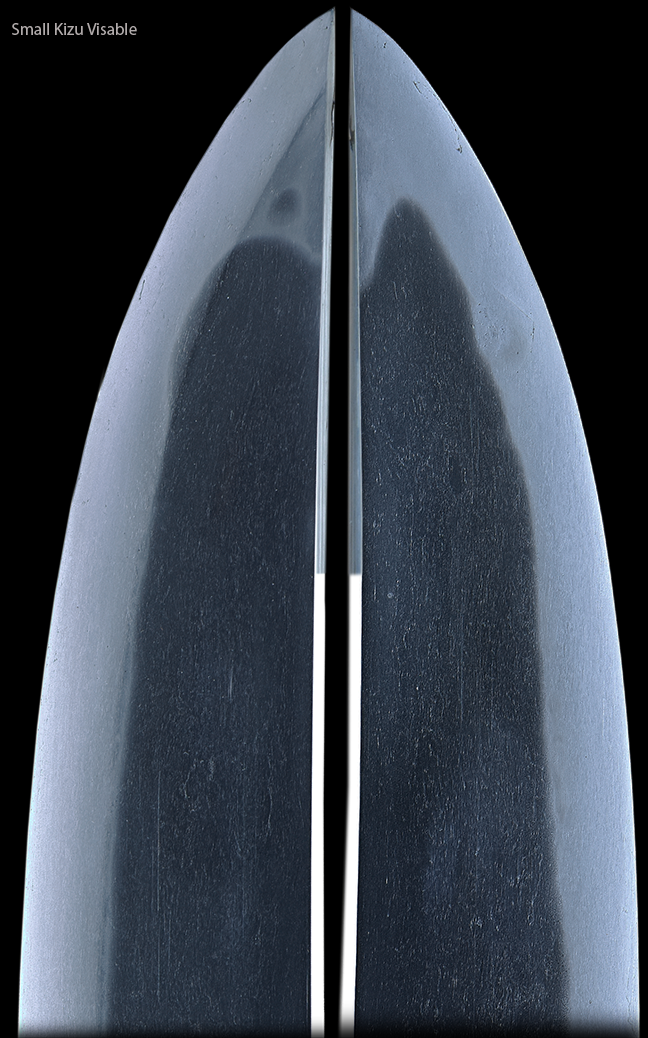
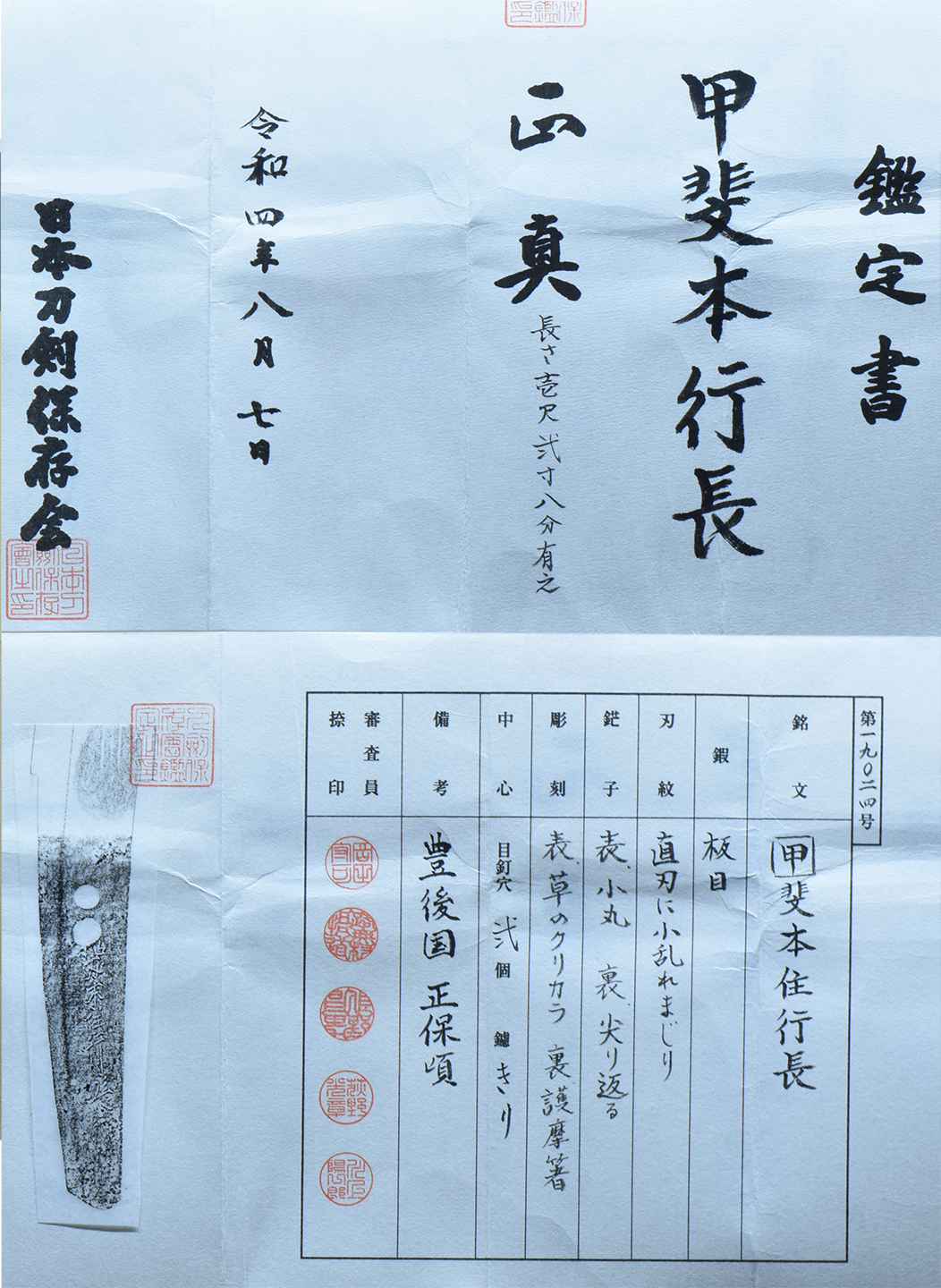
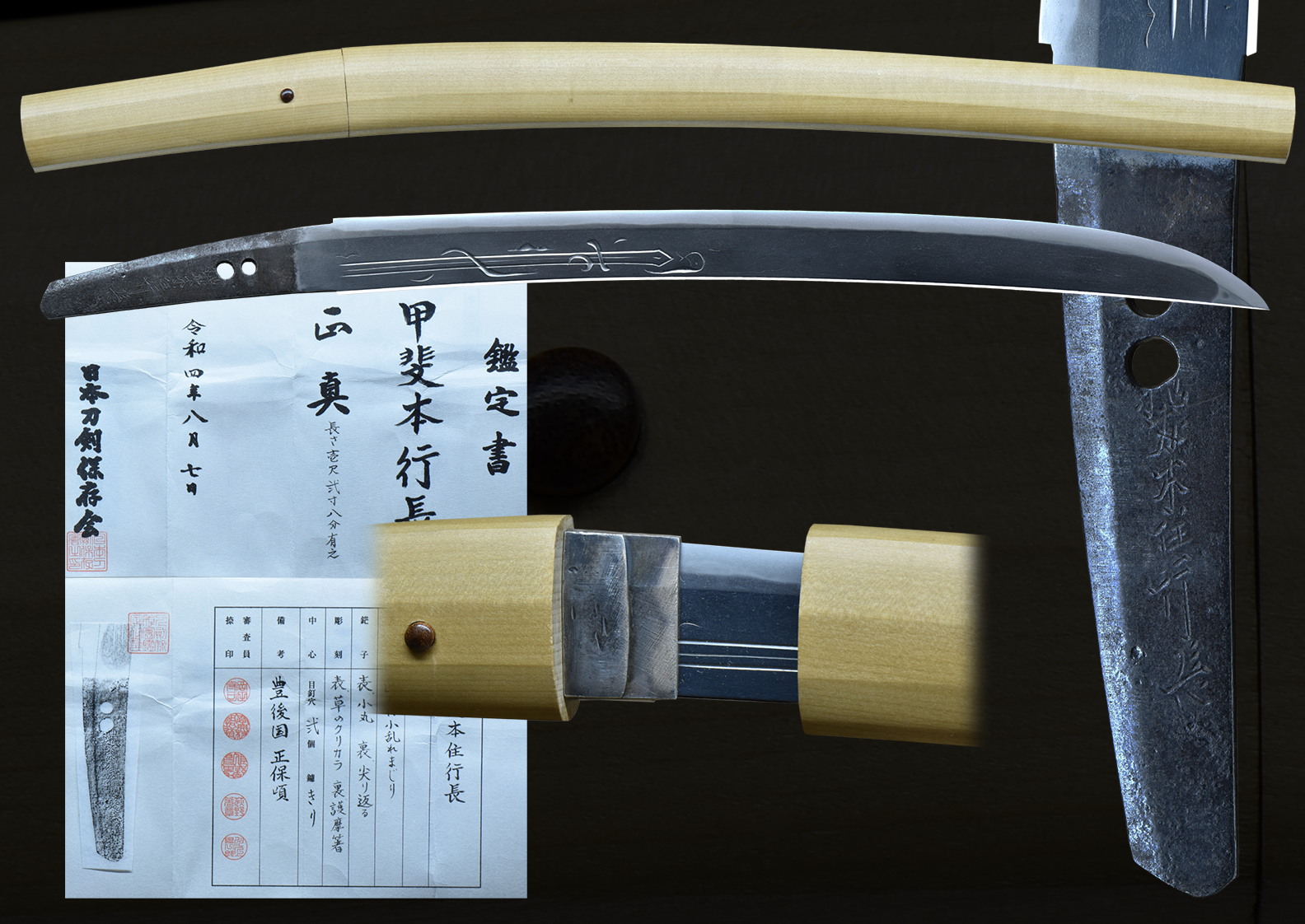
販売店の記載のまま
(翻訳なし)
豊後 · 1644-1648頃
刀剣大鑑 上位87%
現在1点販売中
江戸時代
徳川の泰平のもと、大小は法度の定める身分の制服となり、需要は城下町、とりわけ江戸に集まった。工芸は二つに分かれる。目利きのための華やかな鑑賞の作と、截断の結果を金象嵌に刻む実証の刀である。
NTHKの中心的な鑑定書で、相応の出来を備えた作に発行されます。在銘作は銘の正真を、無銘作は審査員による刀工・流派の極めを示します。点数を記す詳細な審査表が付されます。
NTHK(日本刀剣保存会)は、NBTHK(1948年設立)に先立つ1910年に創立された、日本で最も古い刀剣鑑定団体です。長く会を率いた会長の没後、NTHKとNTHK-NPOの二つに分かれ、いずれも審査を続けています。NTHKの鑑定書は、点数と審査員の所見を併記する詳細な審査表が特徴で、特に無銘作の極めに定評があります。
We offer a 48 hour inspection period for all Antique items shipped within the United States only. If the item is not to your satisfaction, we will gladly refund your money less any shipping and handling fees. All sales are final after the 48 hour inspection period. Please note that all discounted items are a final sale and not returnable.
$2,800