江戸は刀の目利きの時代である。本阿弥の鑑定、1719年の享保名物帳、盛んな刀剣書が、戦で抜かれることのなくなった刀を学問の対象へと変えていった。
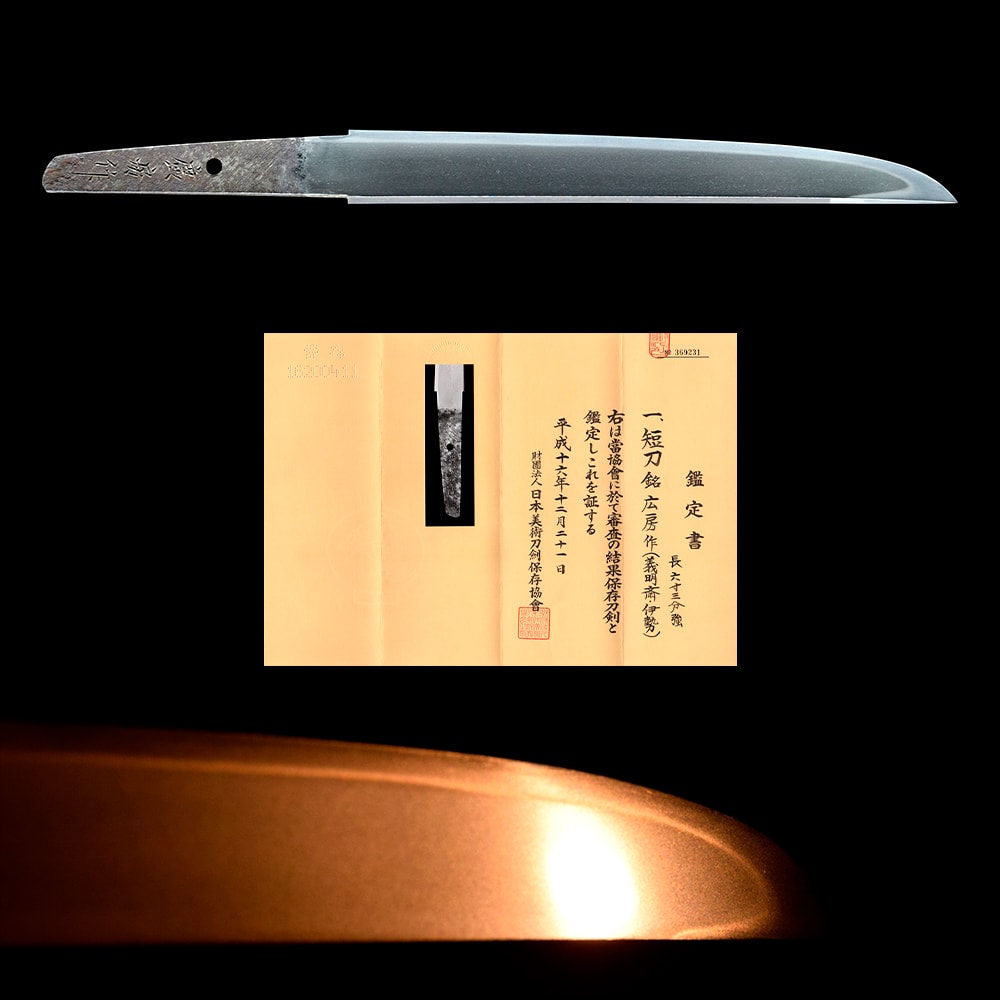
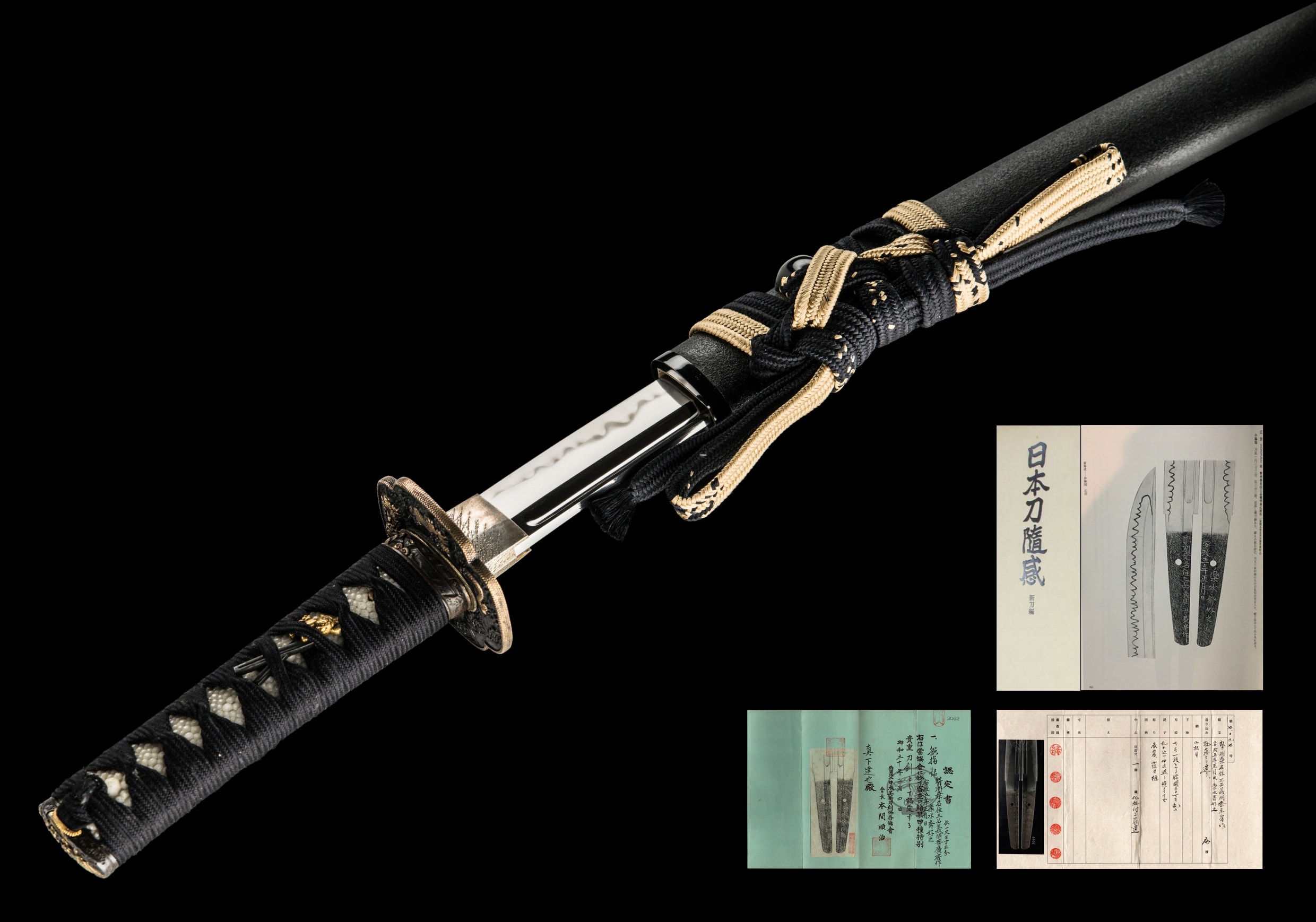
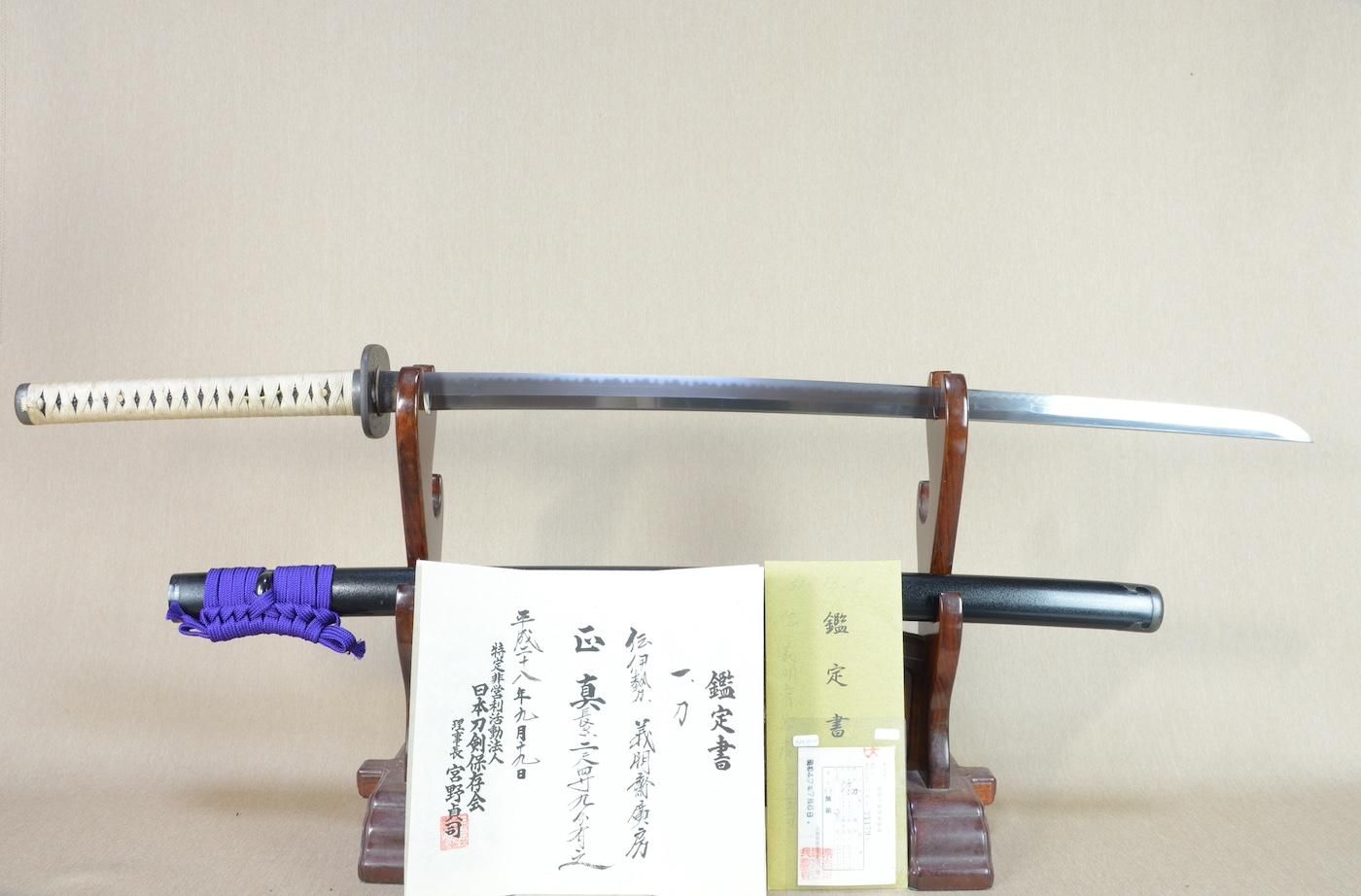
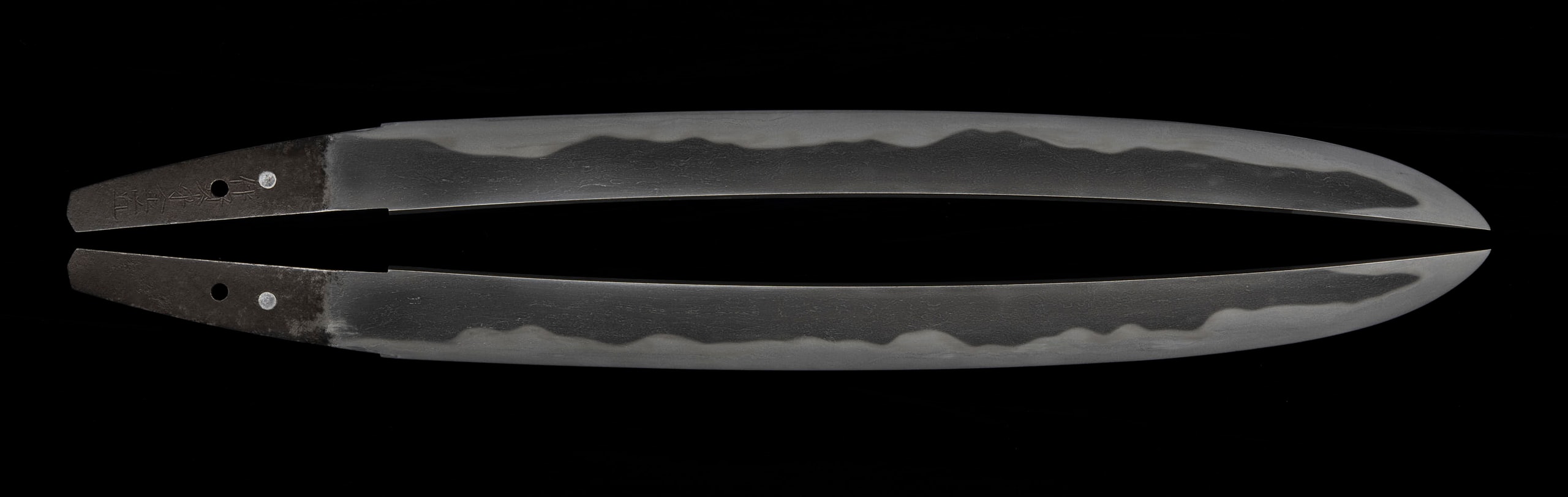
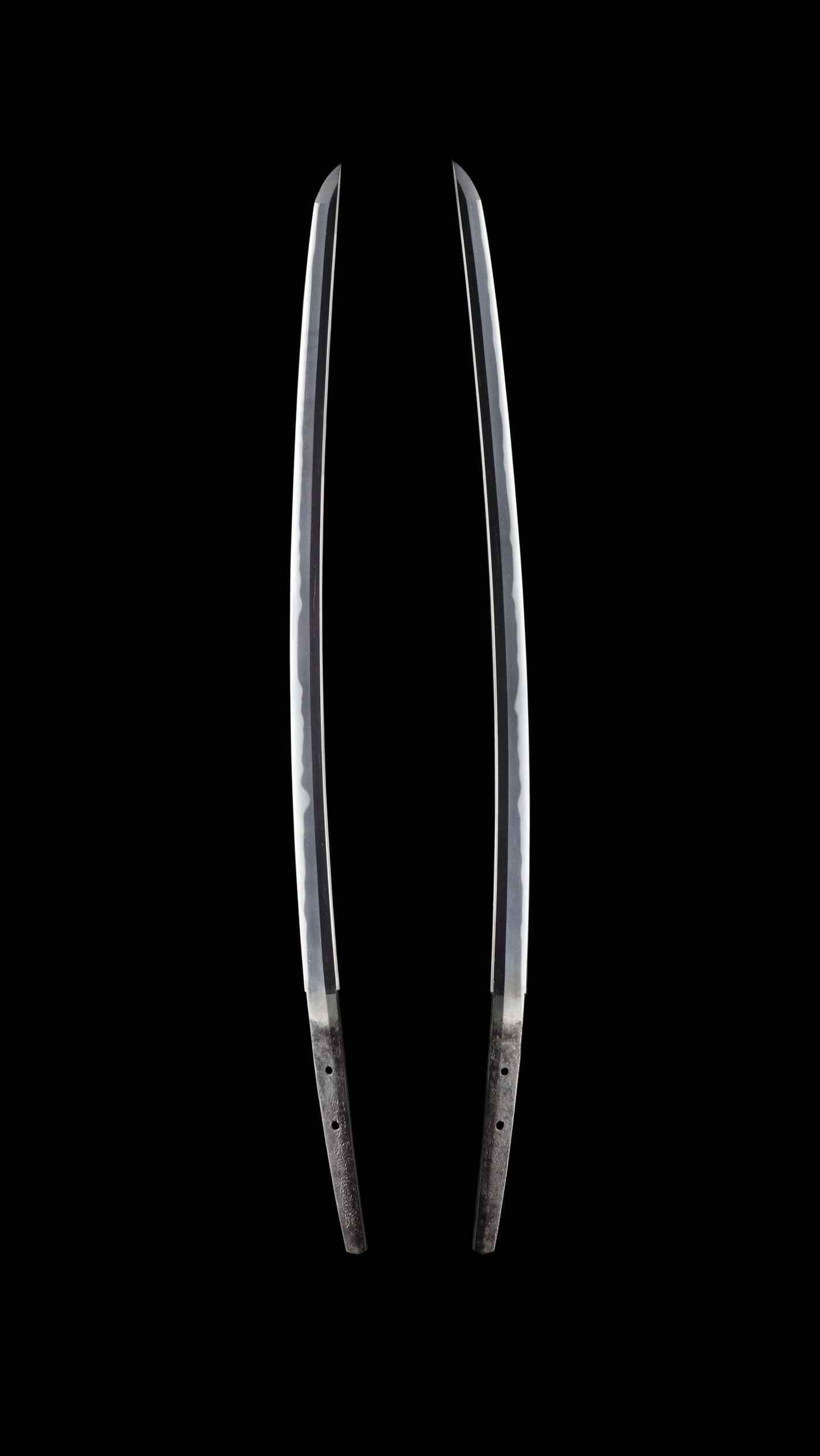
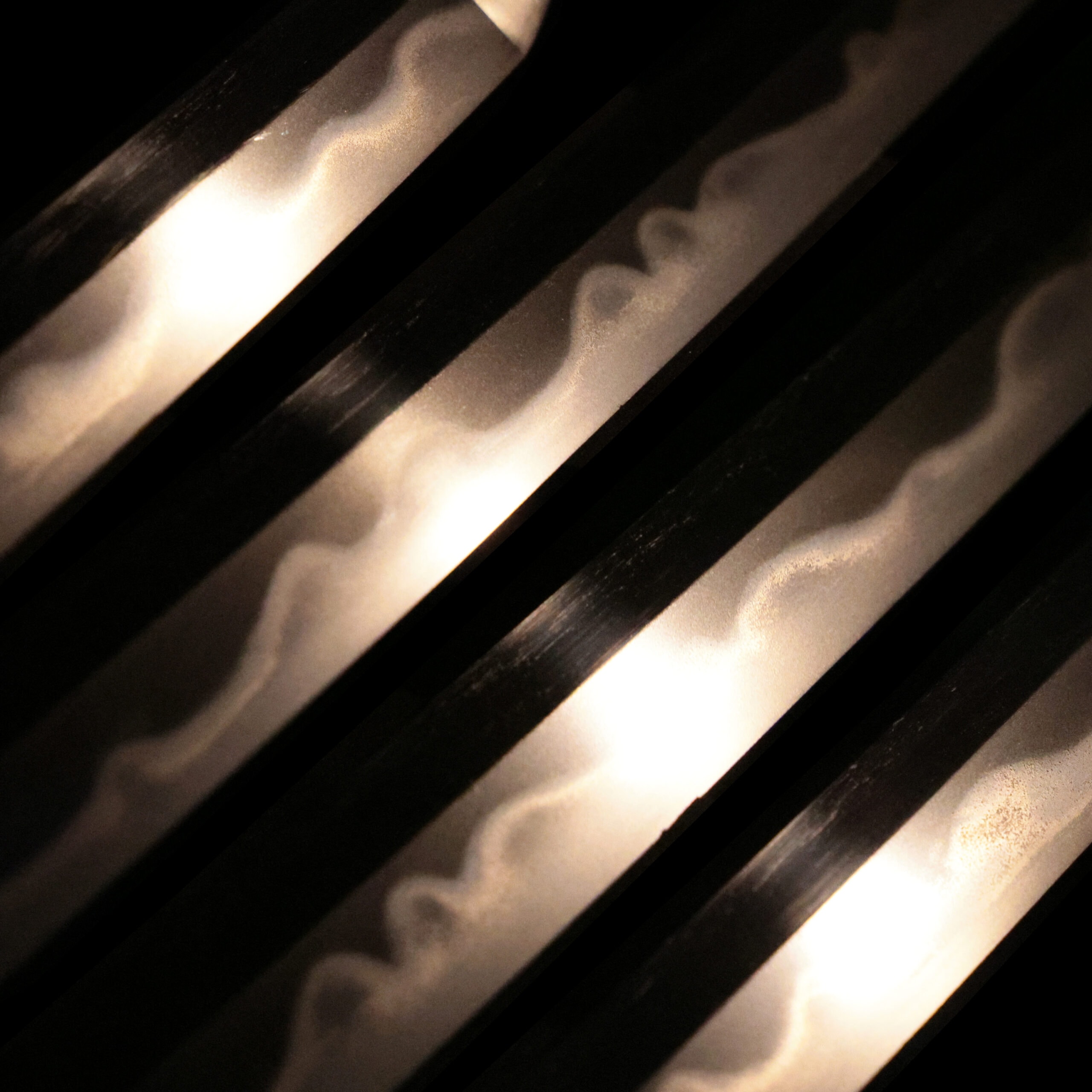
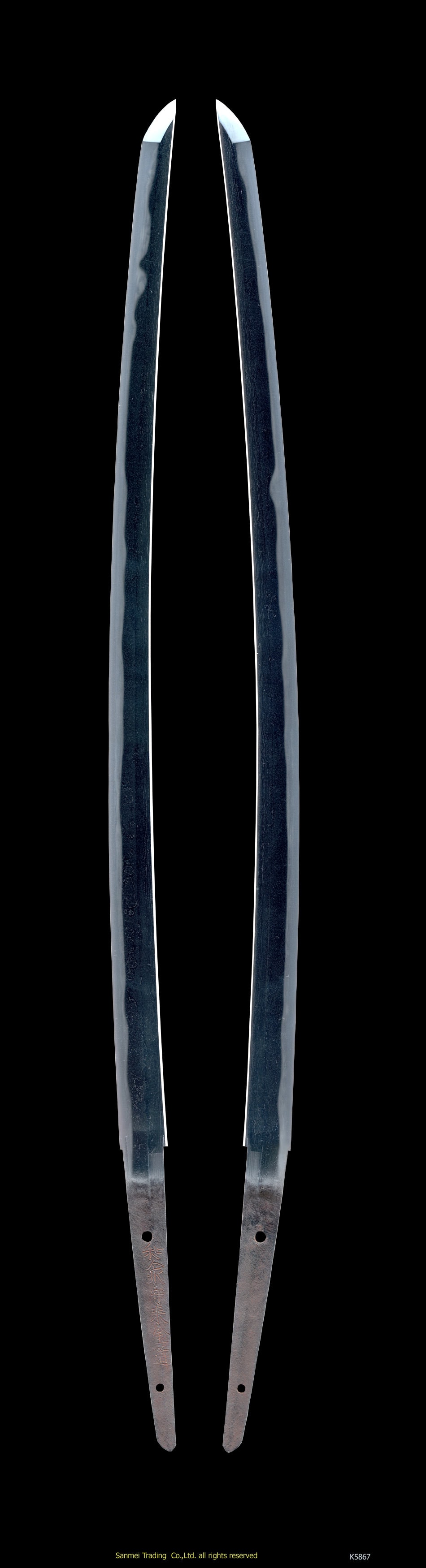
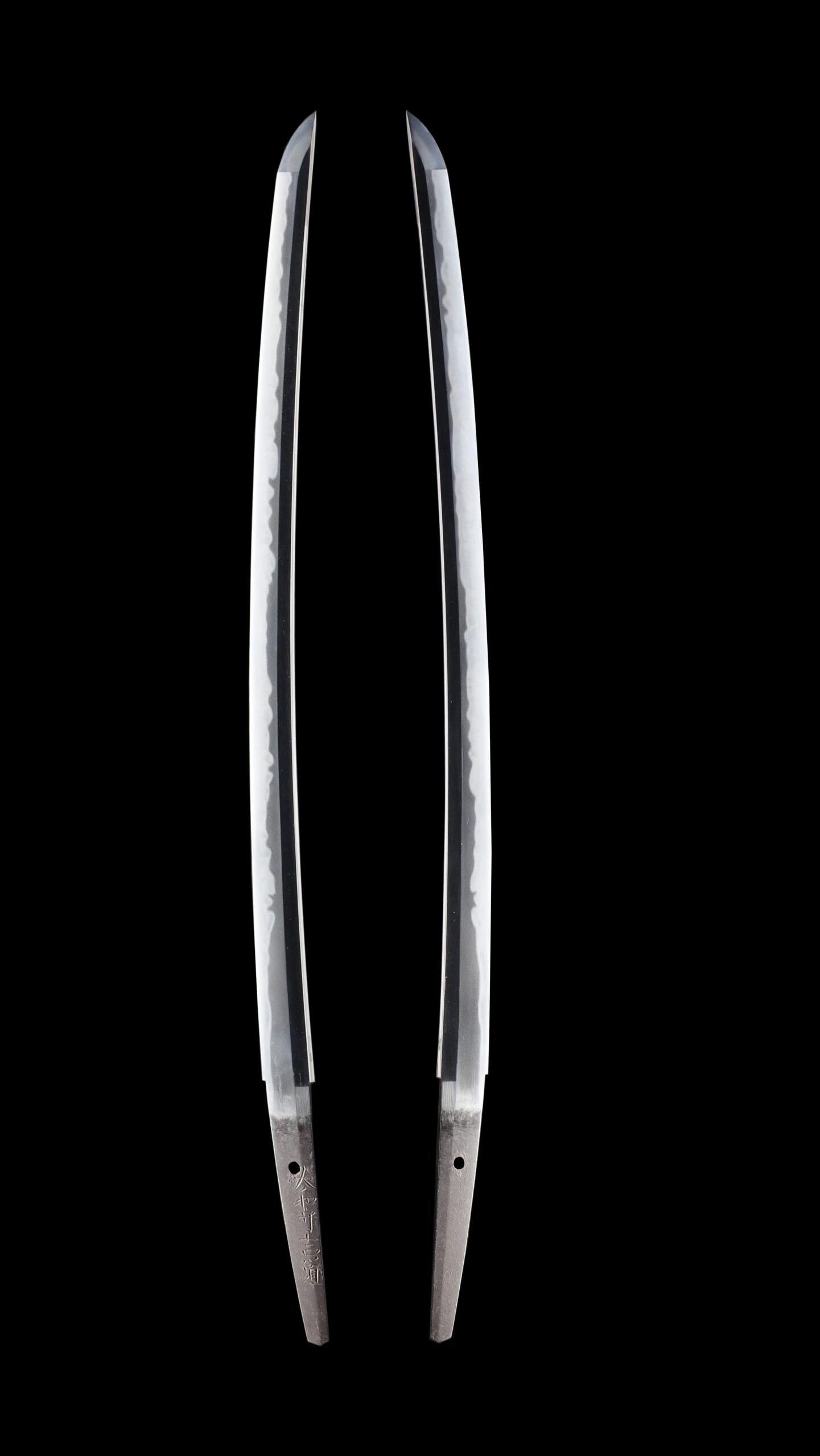
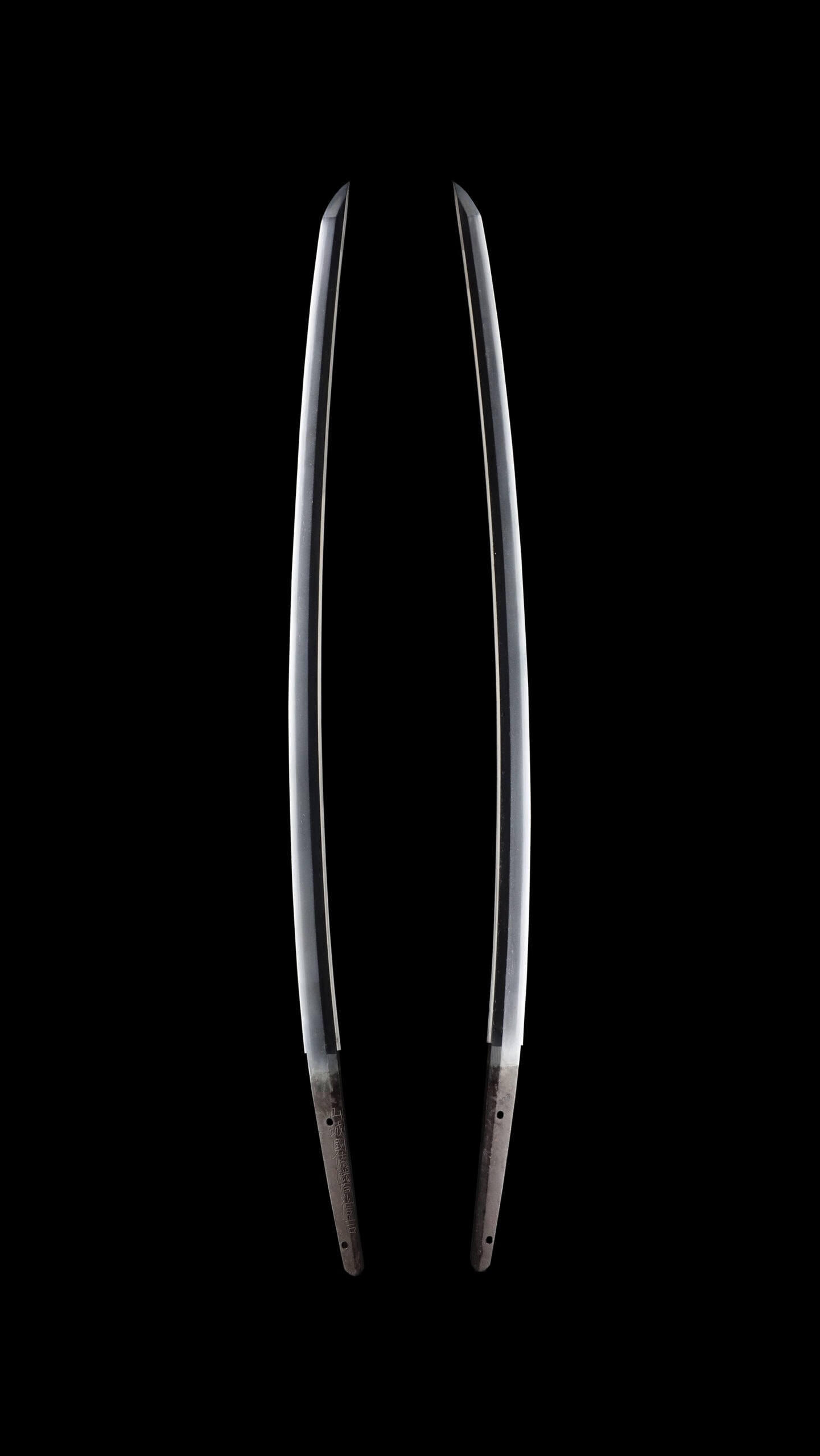
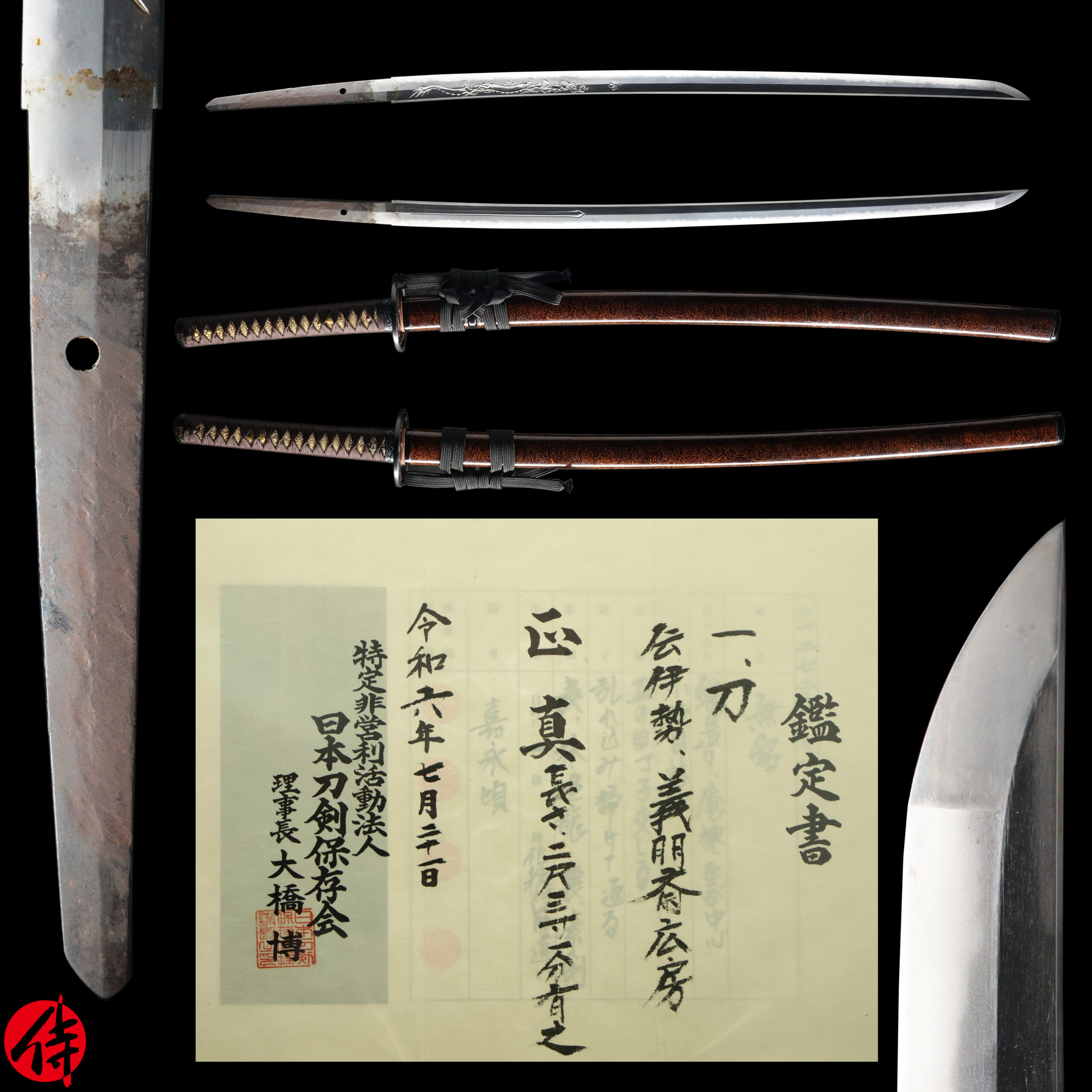
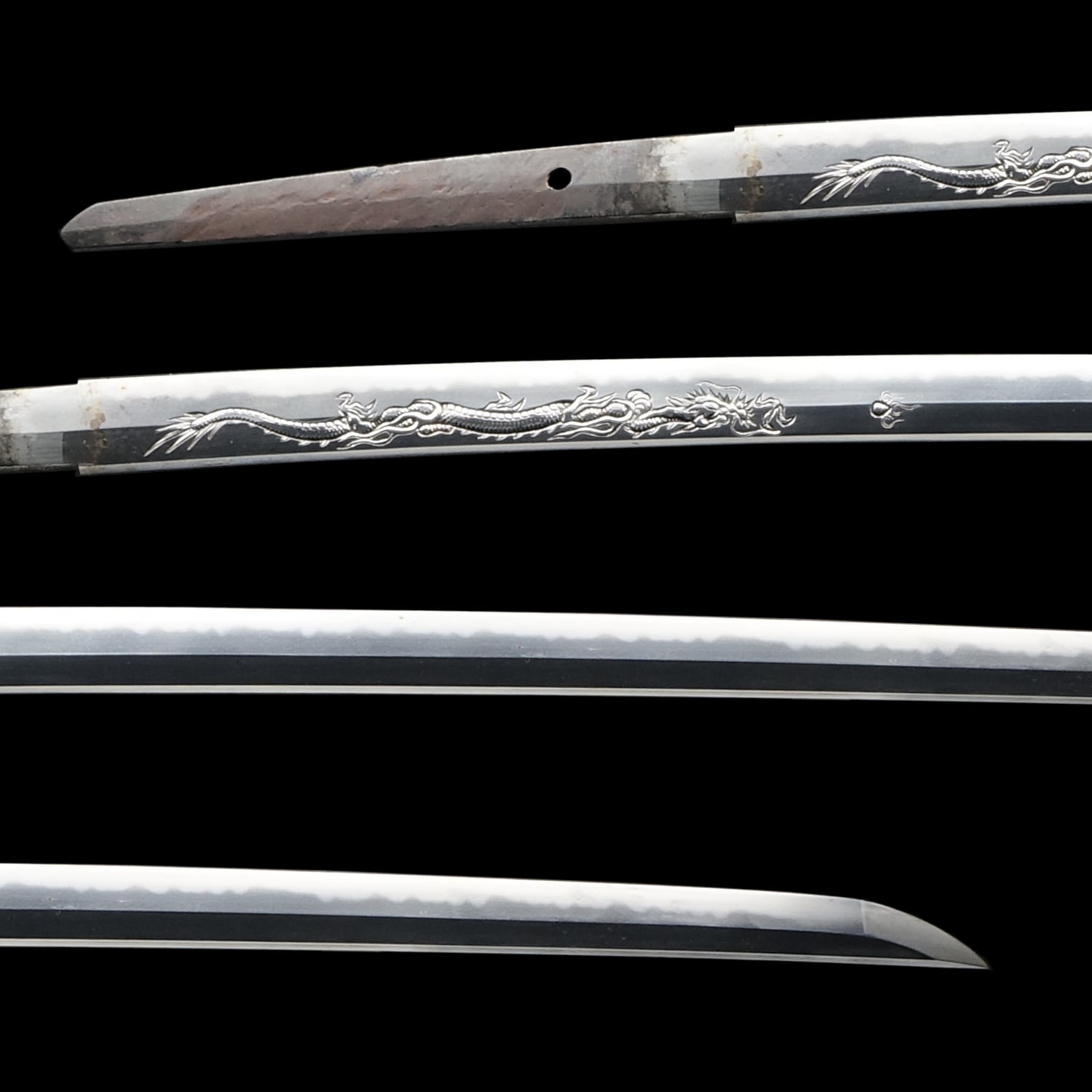
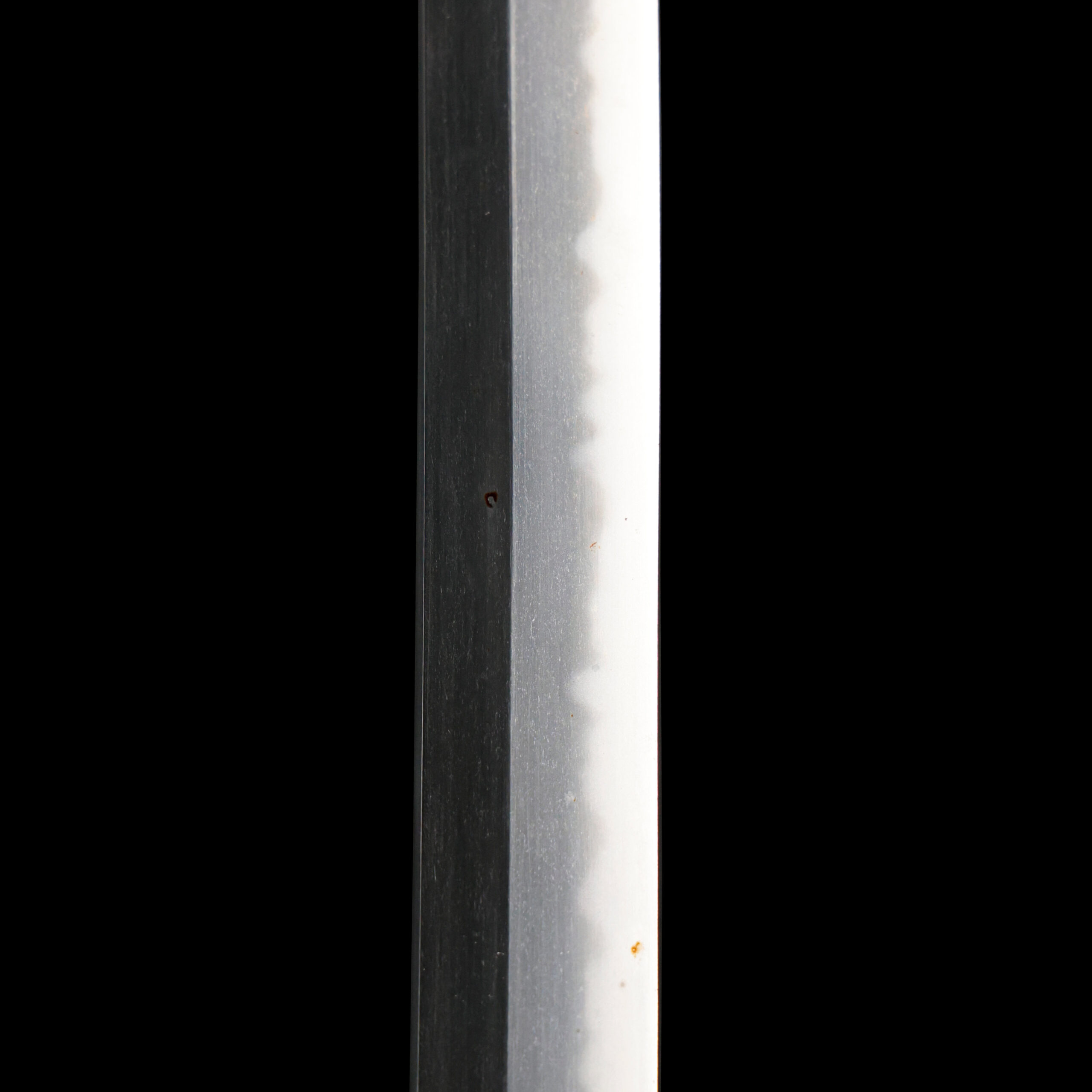
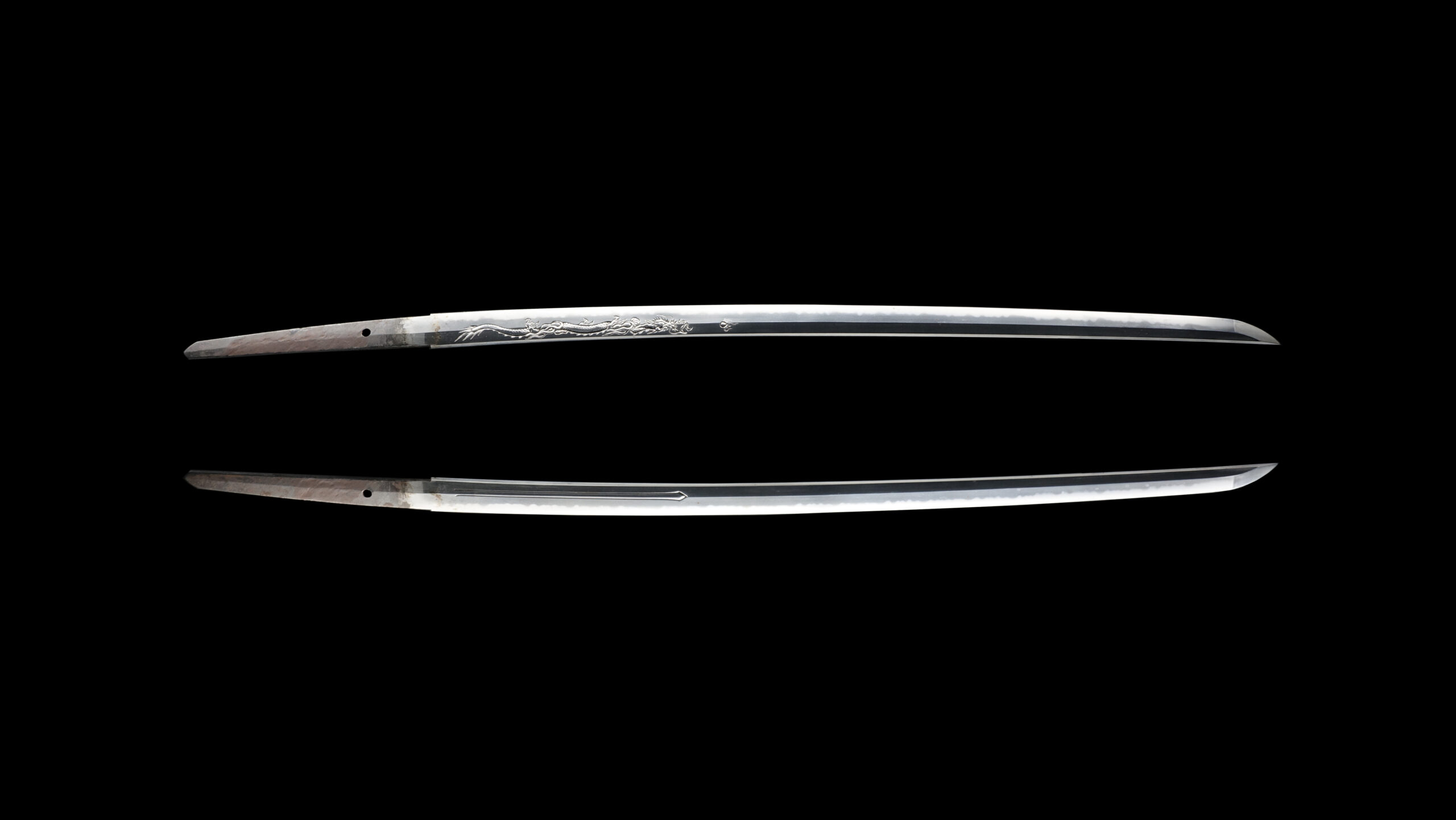
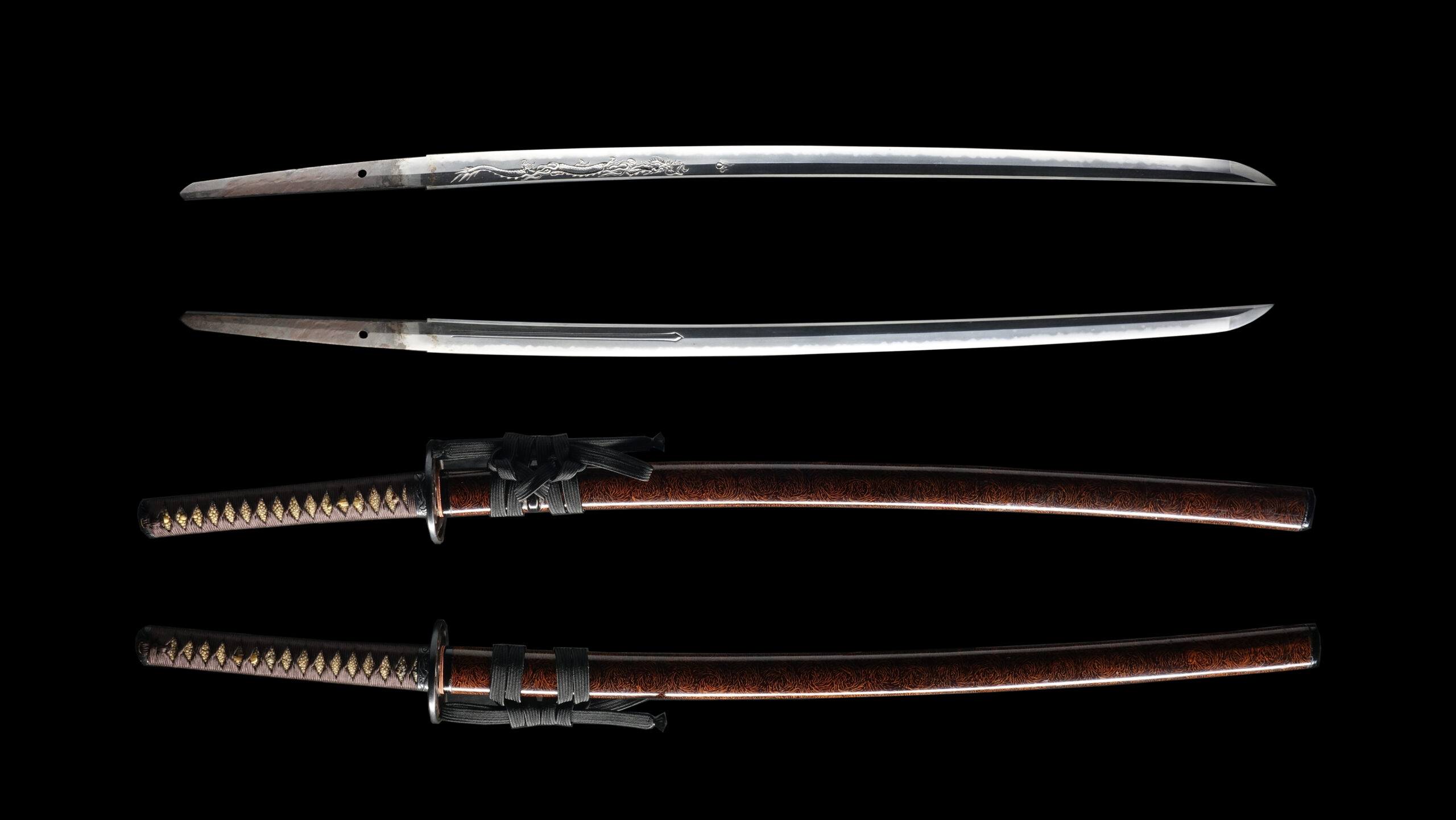
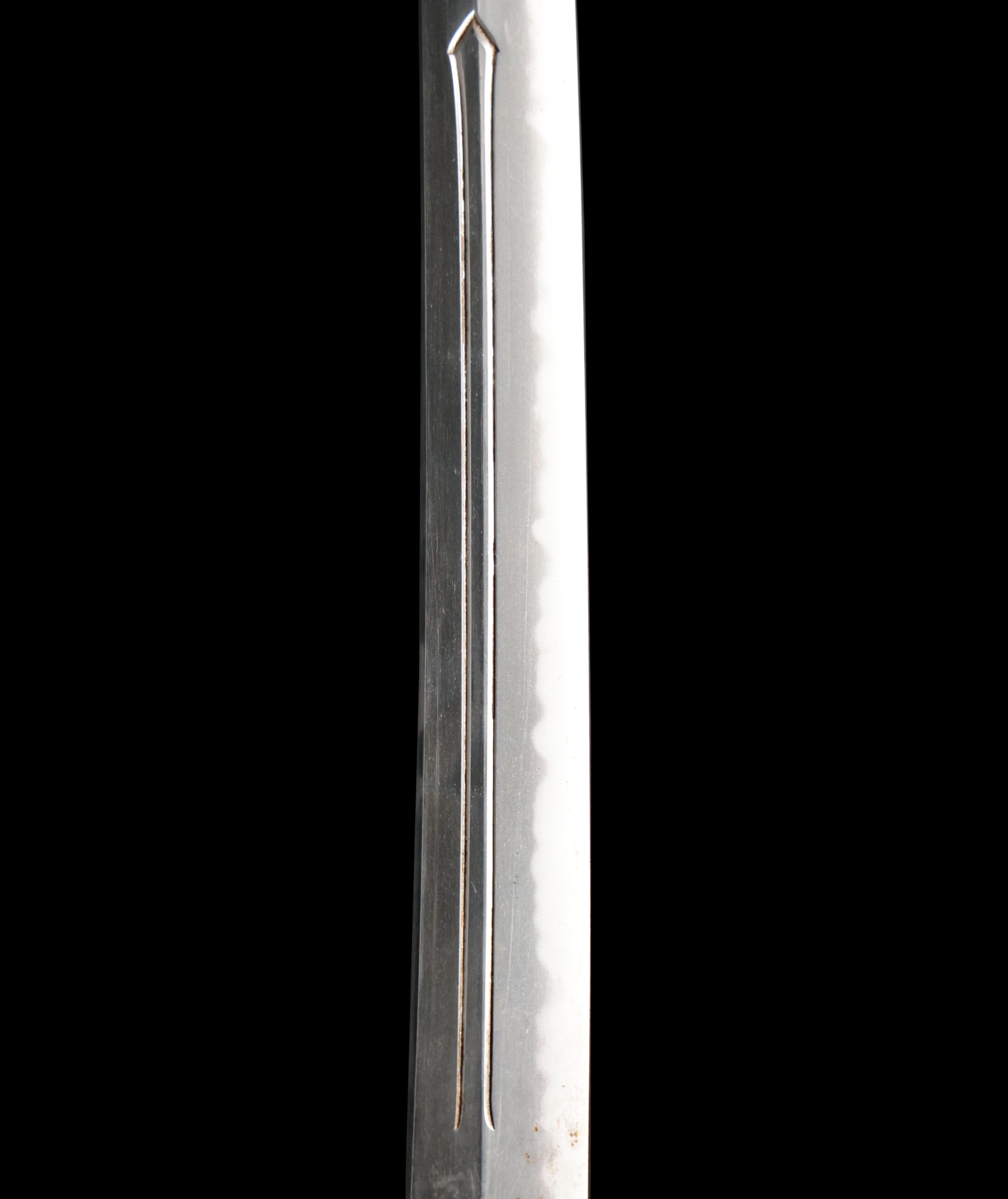
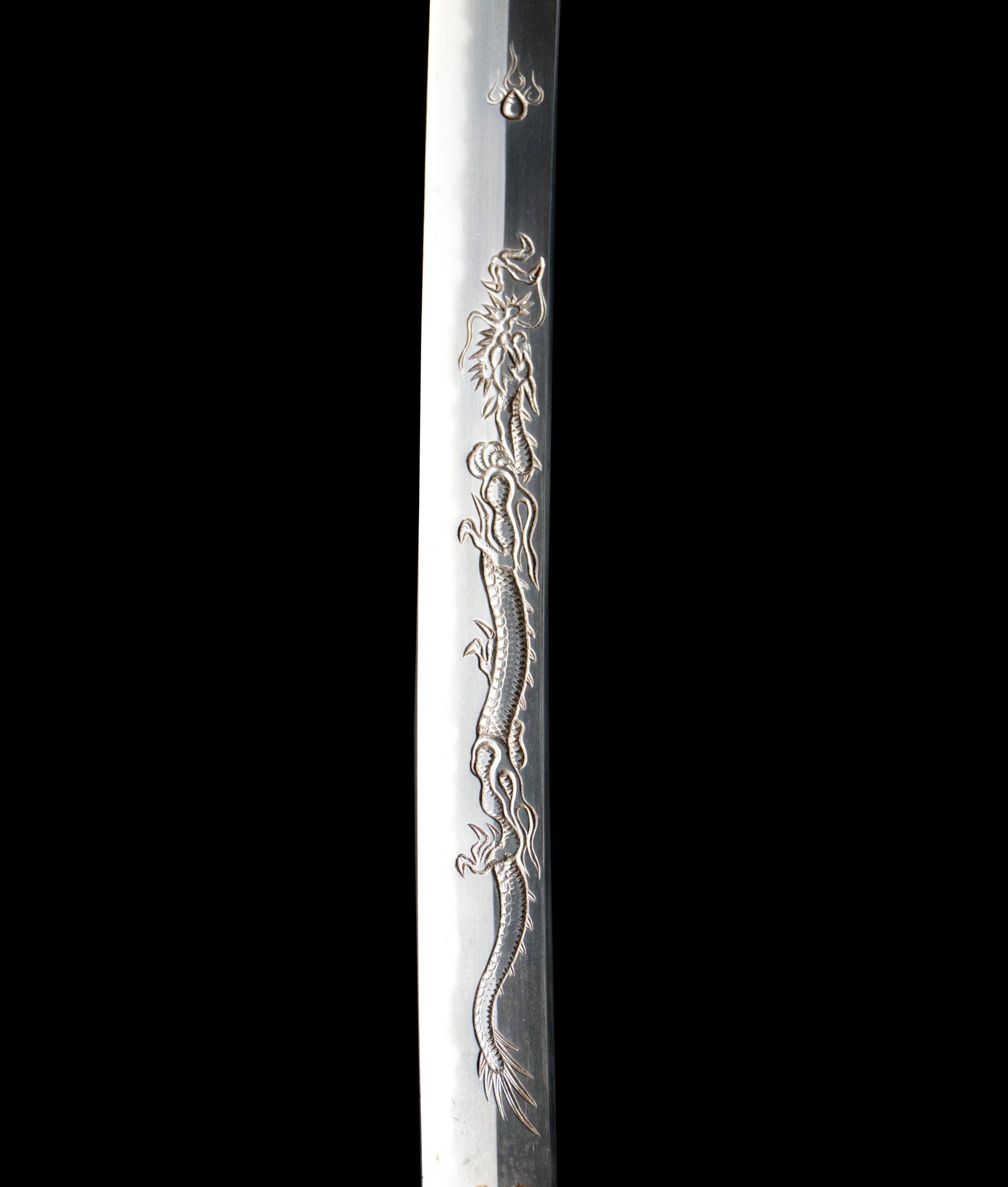
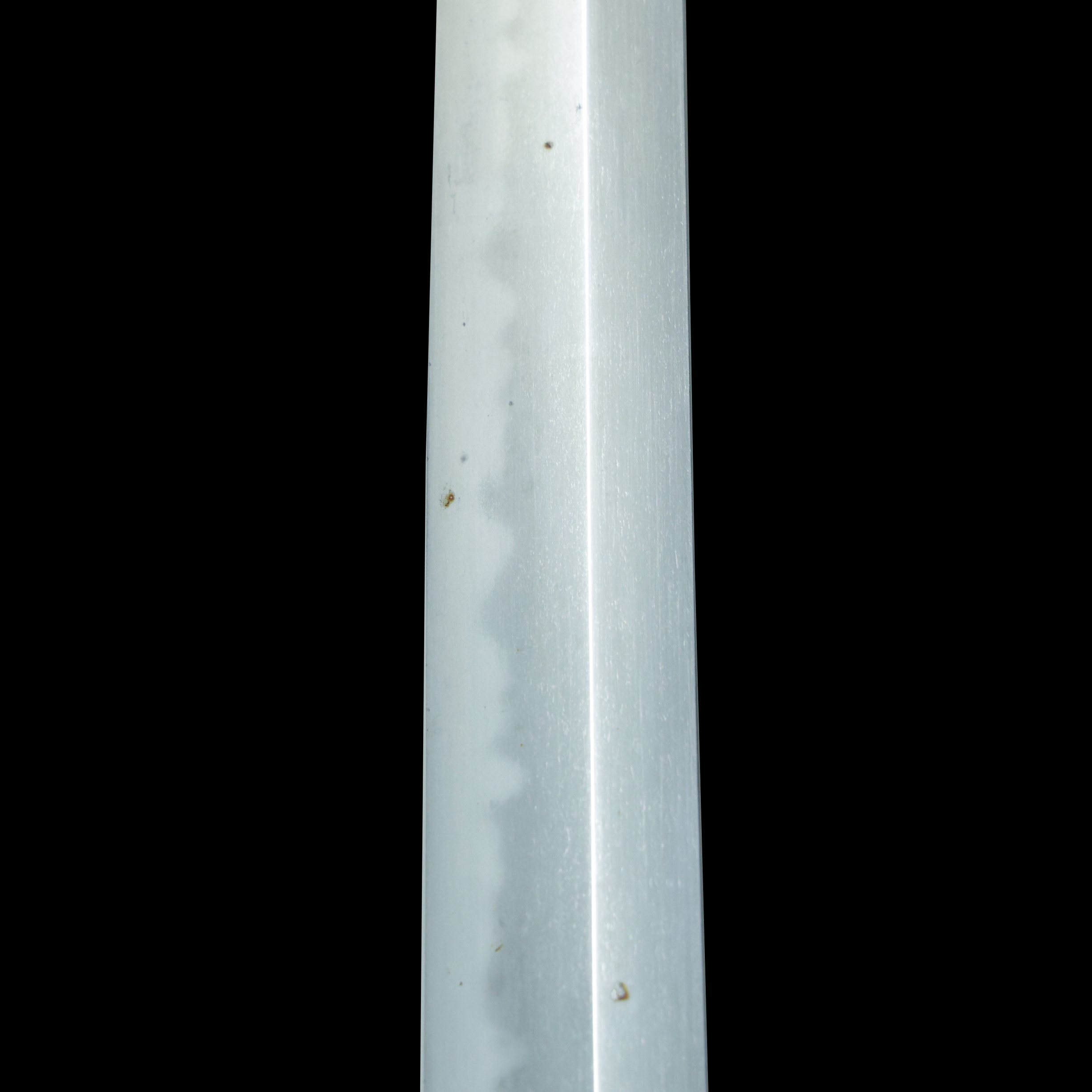
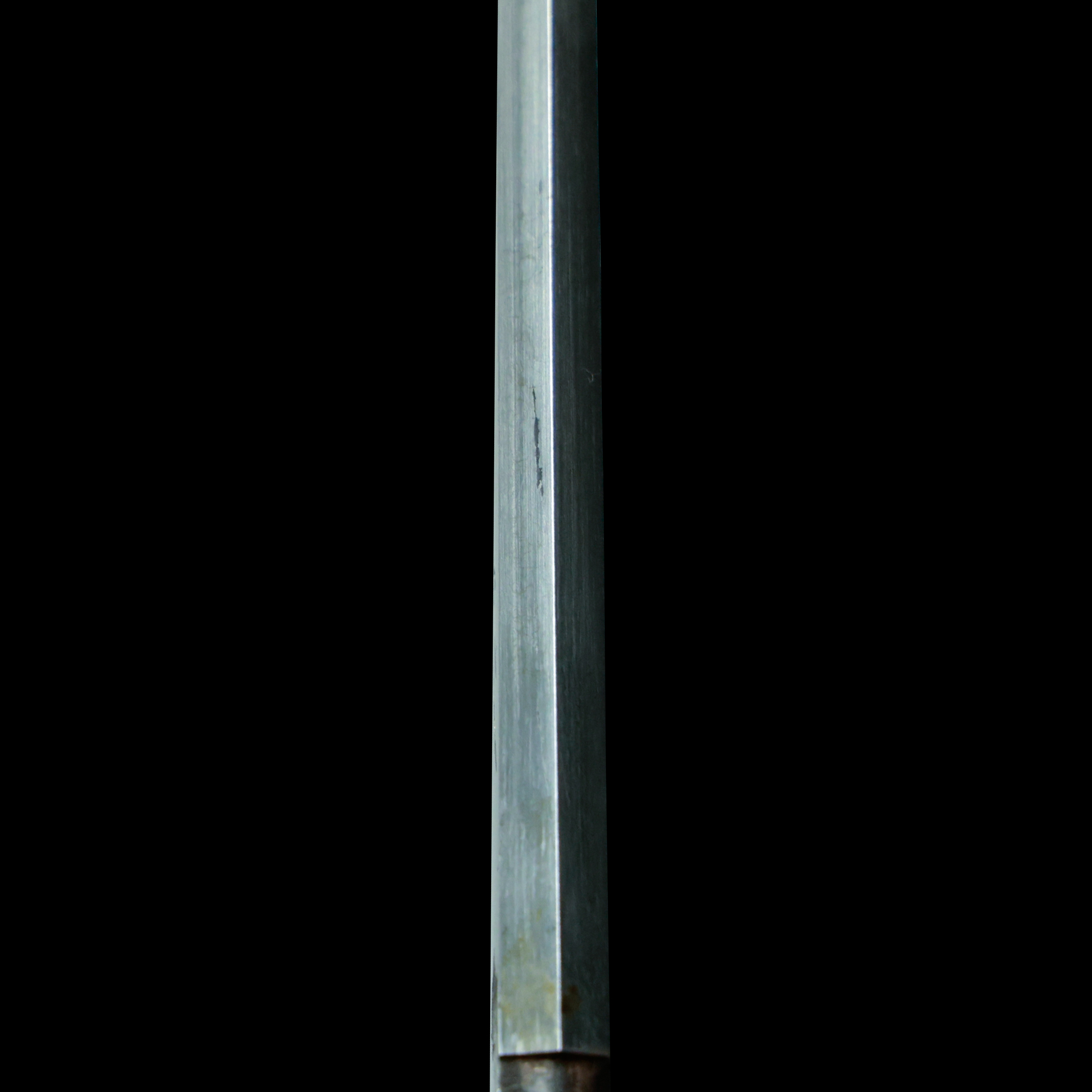
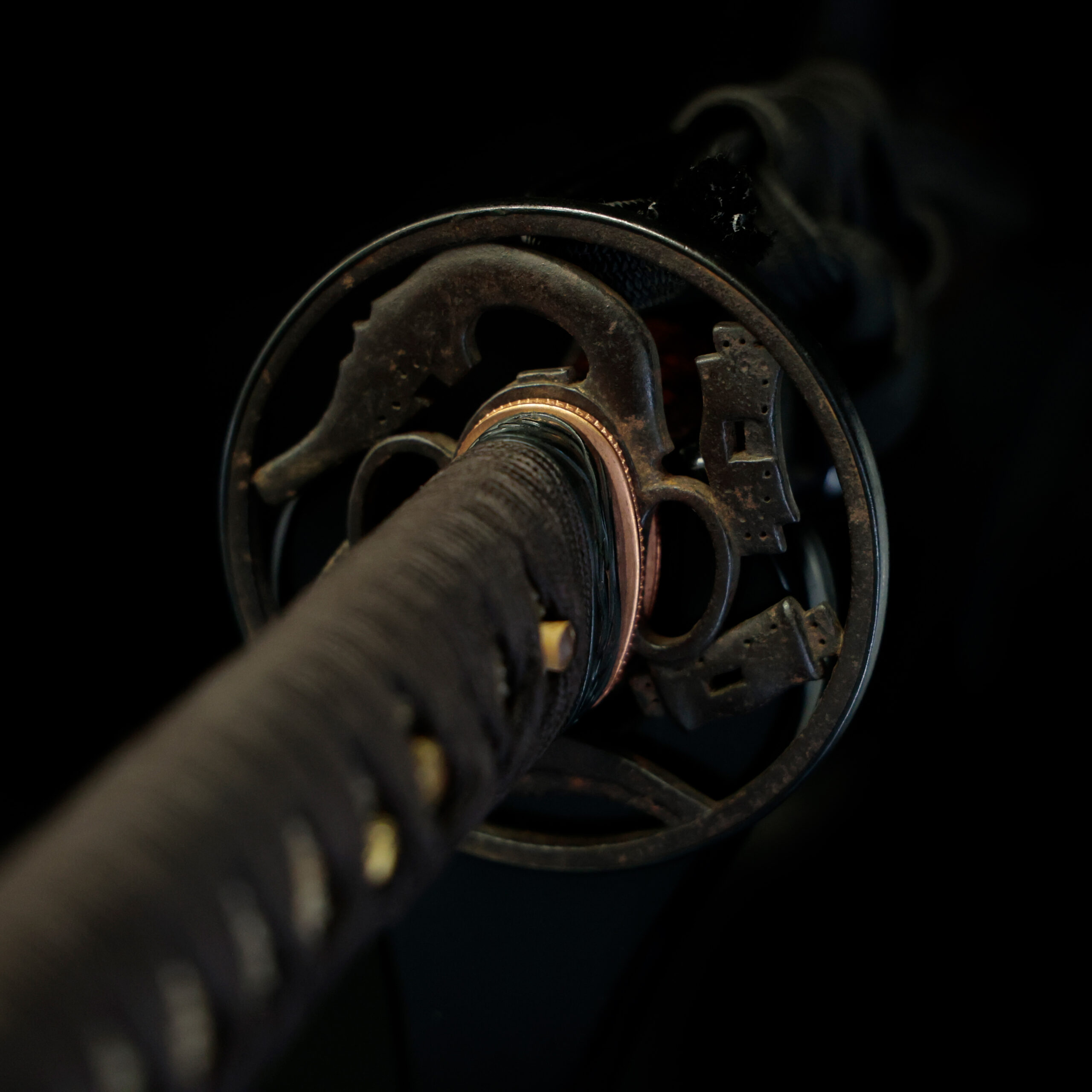
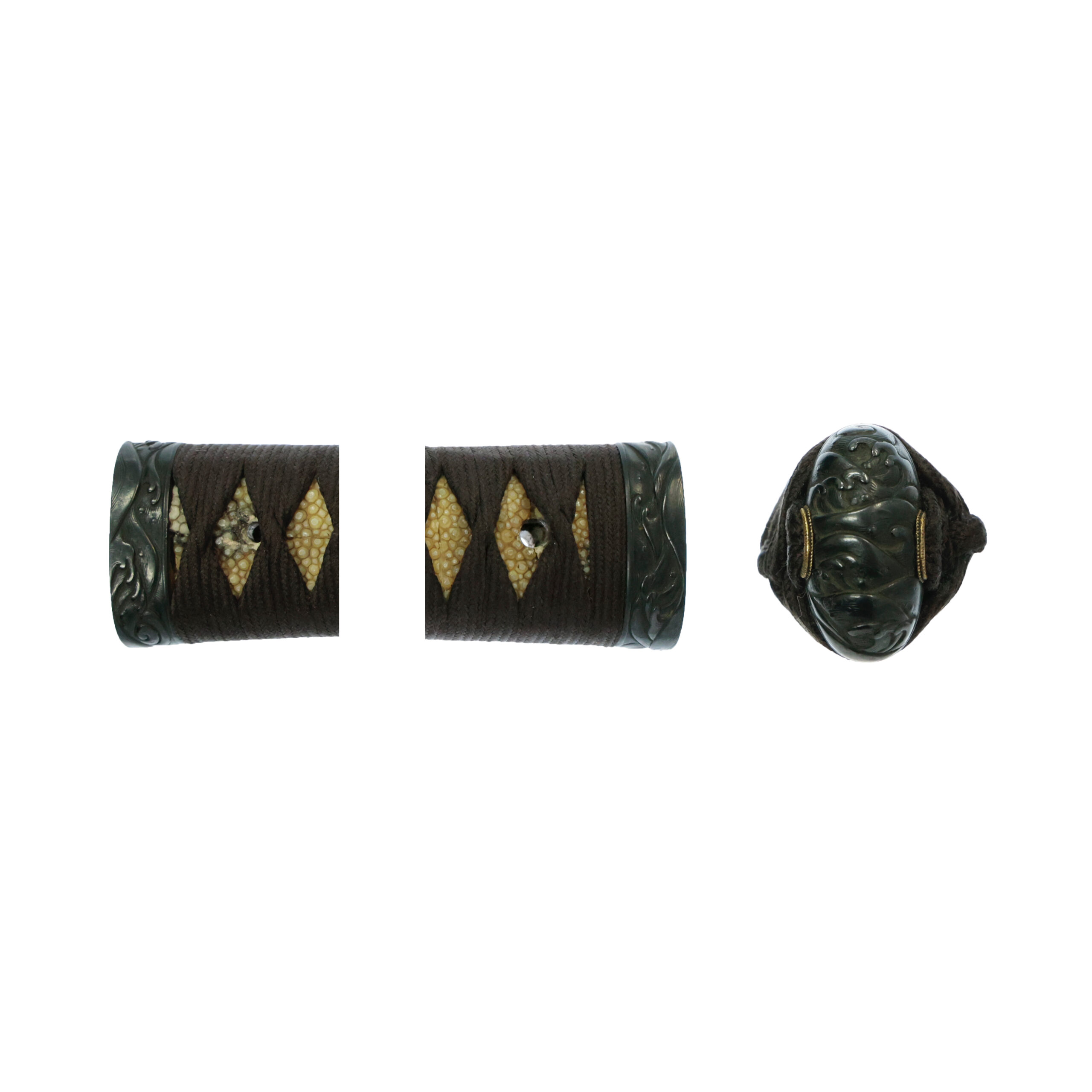
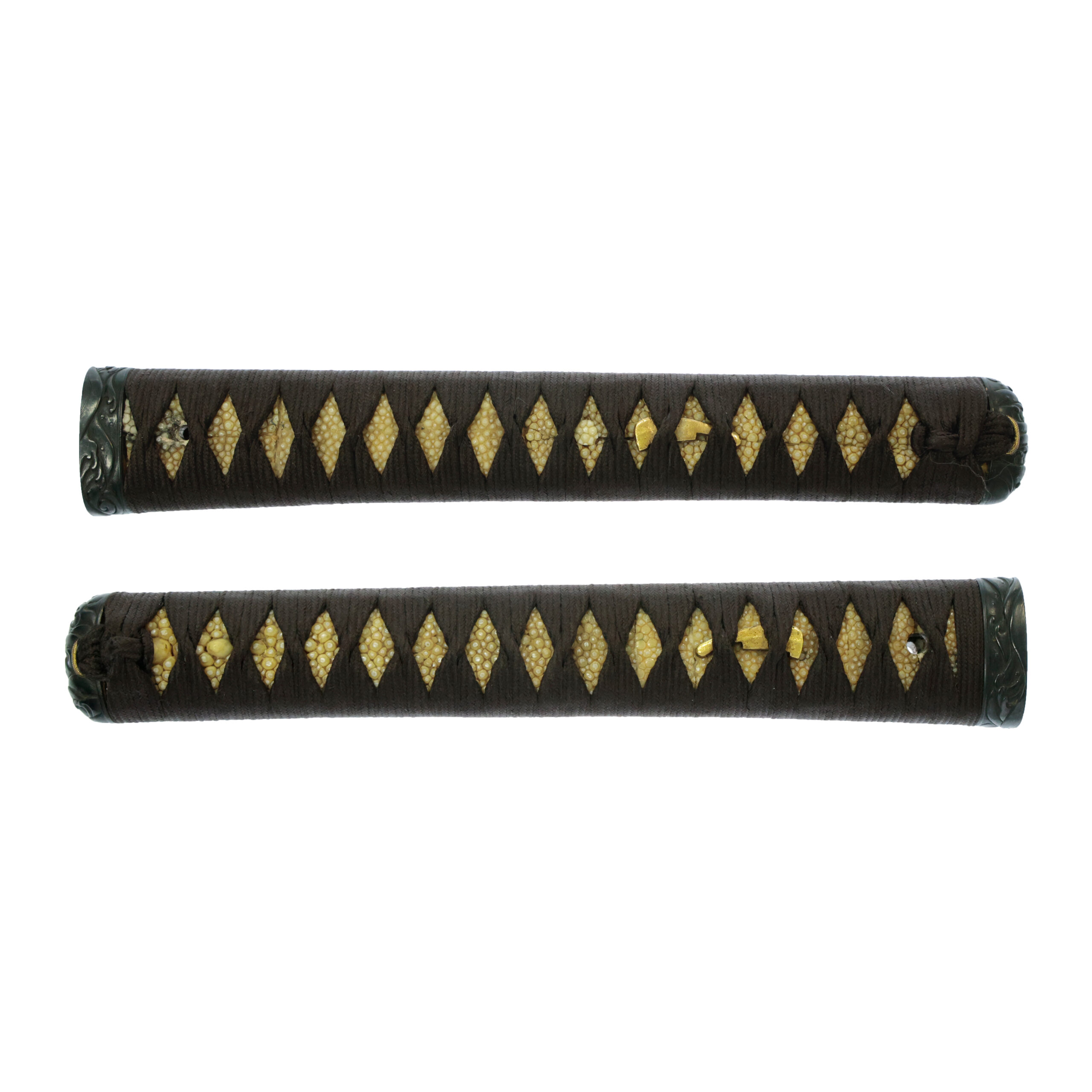
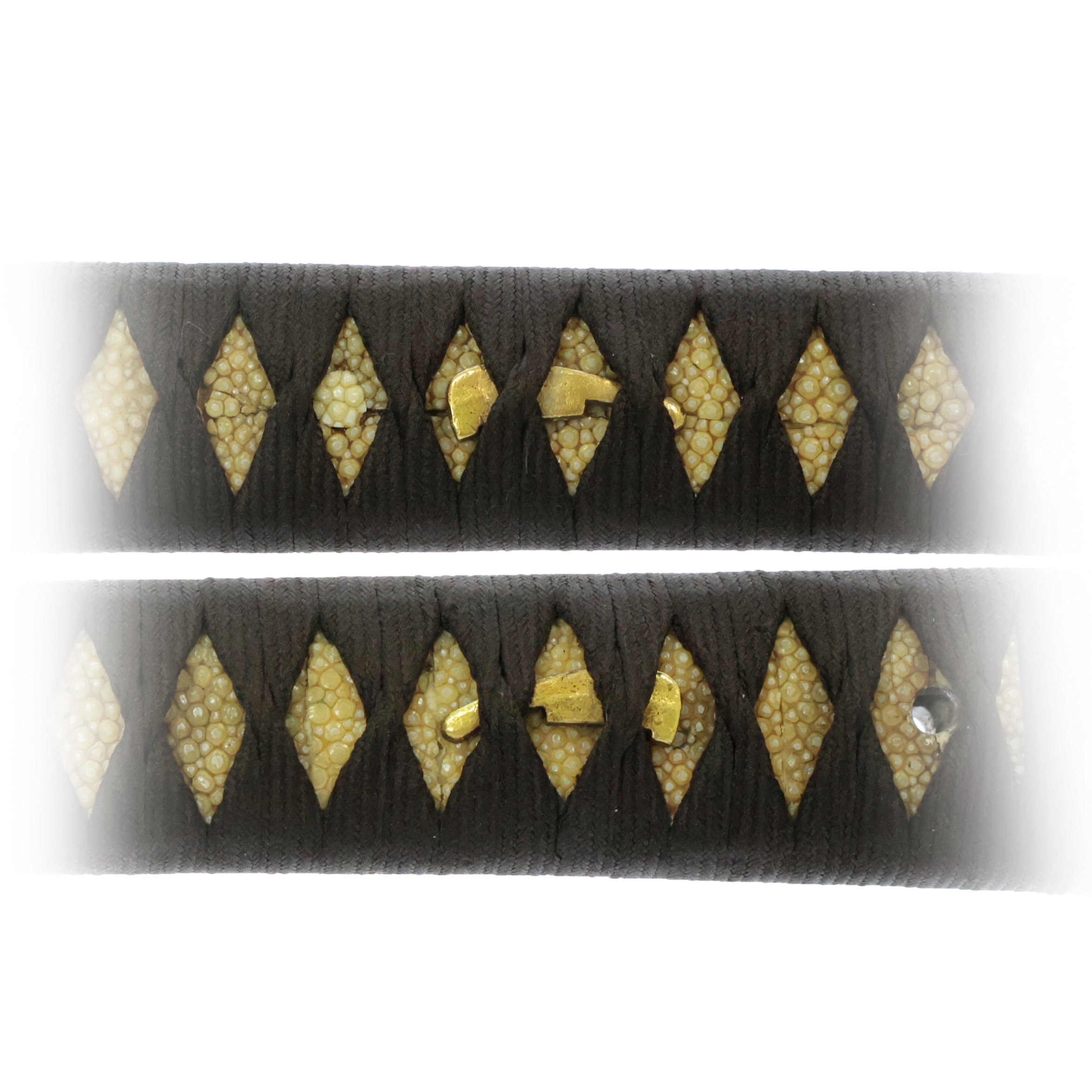
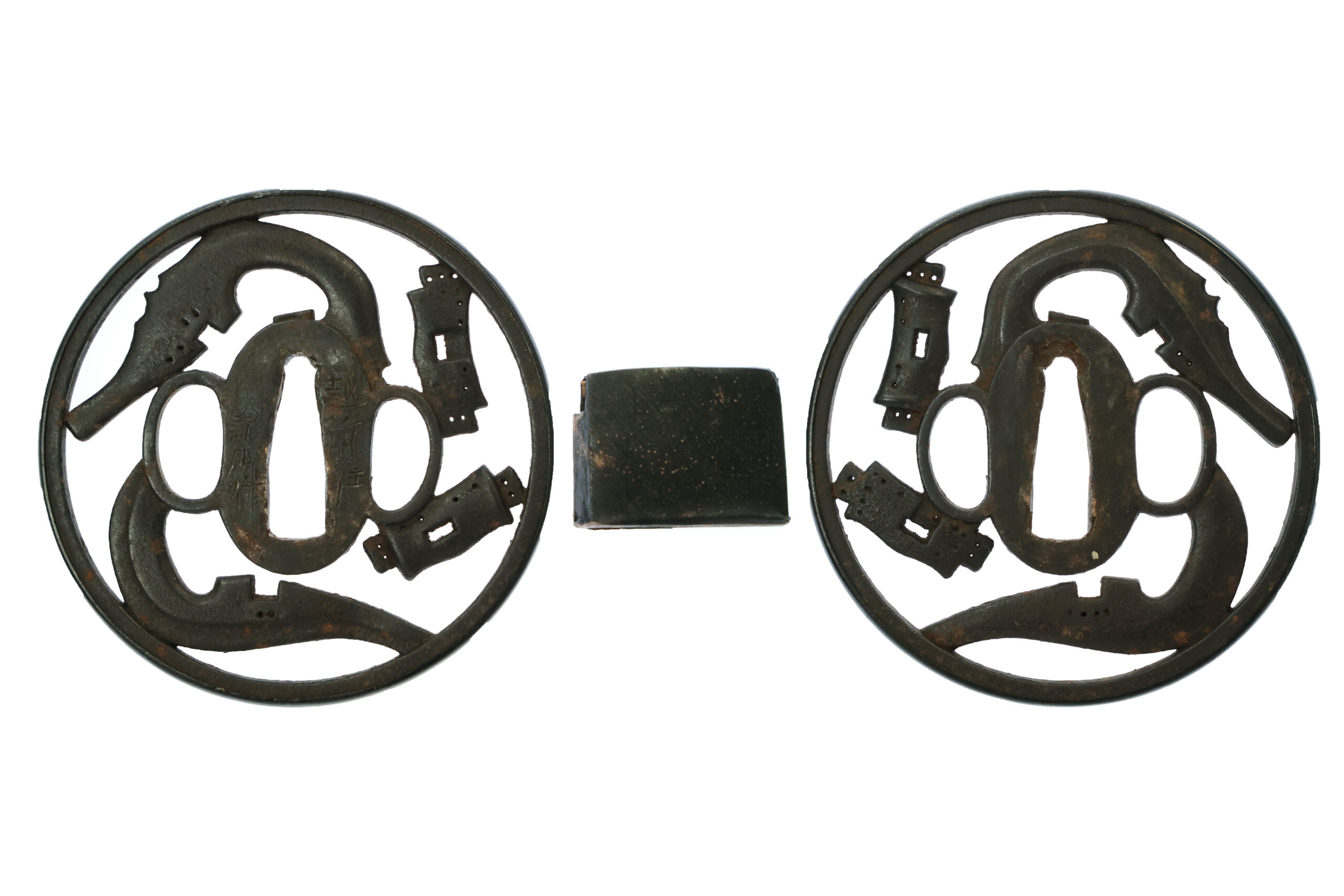
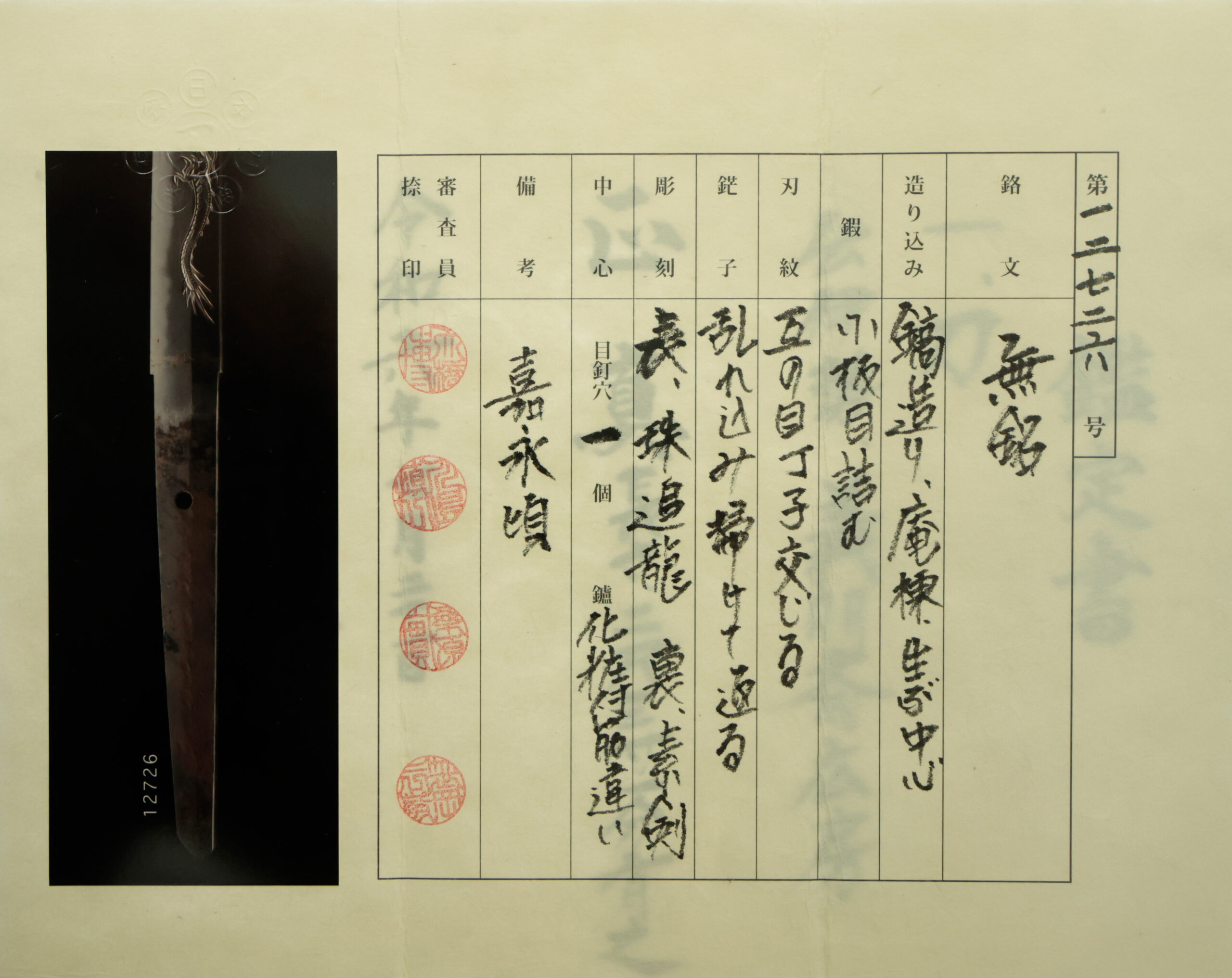
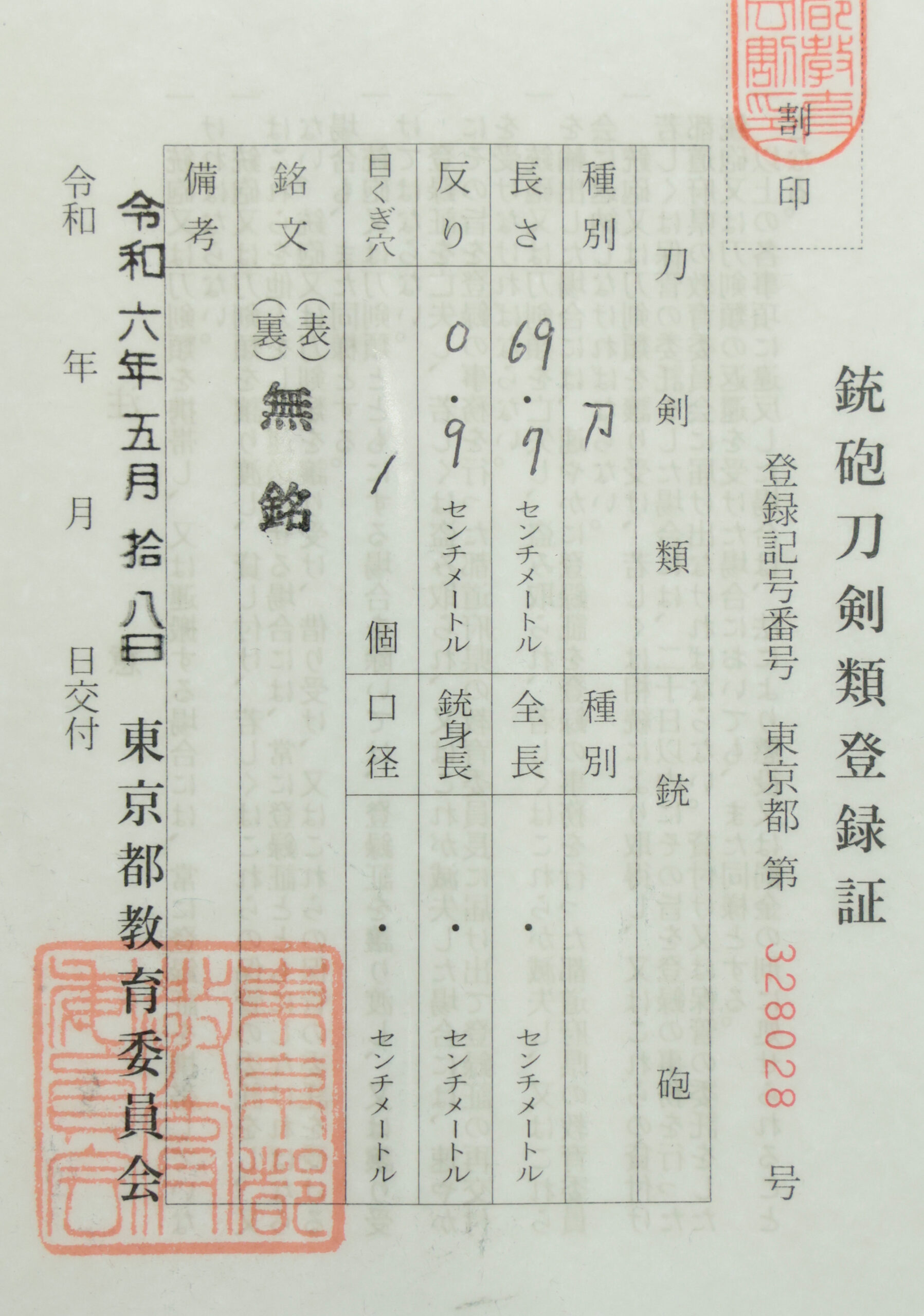
Antique Japanese Sword Katana attributed to Gimeisai Hirofusa with NTHK Kanteisho Certificate 【Description】 This blade is attributed to a work of Gimeisai Hirofusa (義朋斎広房), or called Seishu Kuwana Ju Gimeisai Mishina Hirofusa (勢州桑名住義朋斎三品広房), a well-known swordsmith during the Kaei era (1848 – 1855: late Edo period), according to NTHK’s appraisal. Seishu is the name of the province located in Today’s Mie prefecture and Seishu Kuwana Ju means he resided in this area when he forged blades. Gimeisai is the title named by himself, and Mishina is the name of the school Hirofusa belonged to. His father is Kuwana Ju Gisensai Mishina Hiromichi (桑名住義専斎三品広道), who was active during 1848-1868 (the end of the Edo period). He is known as a younger brother of the 9th Mutsu no Kami Omichi (陸奥守大道). While he mainly resided in Kuwana city, there is also a record of him forging swords in Iga city. Among the Omichi family, Hirofusa is said to have been one of the most skilled swordsmiths, producing deep blade patterns. Mishina School Mishina school was founded by the first-gen Mutsu no Kami Omichi (陸奥守大道). It is said that initially, he was from Mino province, exclusively forging blades for Shingen Takeda, a famous feudal lord. Later on, he moved to Kyoto by bringing his four sons and founded his school in Kyoto. They were Iga no Kami Kinmichi (伊賀守金道)、Izumi no Kami Rai Kinmichi (和泉守来金道), Tanba no Kami Yoshimichi (丹波守吉道) and Echu no kami Masatoshi (越中守正俊). His sons were known as Kyoto Gokaji (京都五鍛冶), prestigious swordsmiths forging in Kyoto in the early Edo period. Mishina school was prosperous throughout the Edo period and spread to other parts of Japan, such as Kuwana. And the superb craftsmanship of Mishina school was passed down for generations. Hiromichi is a good example, and you can see excellent artistry from this blade. Horimono (Engraving) This blade has beautiful engravings on both sides. You would find the Horimono of Suken (素剣) and the Tama oi Ryu (珠追龍) on this blade. The Suken is a simplified design of the Sanko-Duka-Ken (三鈷柄剣), which is a sword that the Fudo Myo-O (不動明王: acalanātha, one of the objects of worship in Buddhism) brings. It is an esoteric Buddhist tool used for esoteric prayer, meditation, purification, and amulets. It is believed that this sword would exorcize evil spirits. The Tama oi Ryu is the design of a dragon (龍, Ryu) chasing after a ball-shaped jem (珠, Tama). The word 追 (oi) means chasing. The jem is a ball with a pointed upper tip and accompanied by a flame. In Buddhism, it is said that by obtaining the ball, any wish would be fulfilled. *Please keep in mind that there are a few black rust spots on the blade. If you like to see the detailed condition, please feel free to contact us. 【 Blade】 Cutting Edge Length (Nagasa) :69.7 cm (27.4 inches) Curvature (Sori) :0.9 cm (0.35 inches) Hamon : the crystalline structure which forms along the cutting edge of a blade as a result of the hardening process Jimon(Jihada) : visible steel surface pattern created by folding and hammering during forging process Kissaki : Kissaki is the tip of the Japanese sword. Nakago : Nakago is the tang of the Japanese sword. Japanese swordsmiths left the black rust on the tang because it prevents red rust while the tang is in its handle. And the discoloration of the tang was created over time, and it is a great indicator for a Japanese sword specialist to estimate when the sword was forged. Koshirae :Koshirae is the mounting of the Japanese sword. There are several parts that consist of Koshirae such as Saya (Scabbard), Tsuka (Handle), Tsuba (Handguard). Fuchi-Kashira : A pair of matching sword fittings that cover the upper and bottom parts of its sword hilt. The theme of this Fuchi Kashira’s design is waves (波, Nami). As waves’ movements continue endlessly, the wave pattern represents eternity, immortality, longevity, birth, etcetera. Also, since tides repeatedly change the shape and terrain of rocks, some people hoped for a strong will by us
 NihontoWatch
無銘 · Mishina · 嘉永 · 長さ 69.7cm · 反り 0.9cm
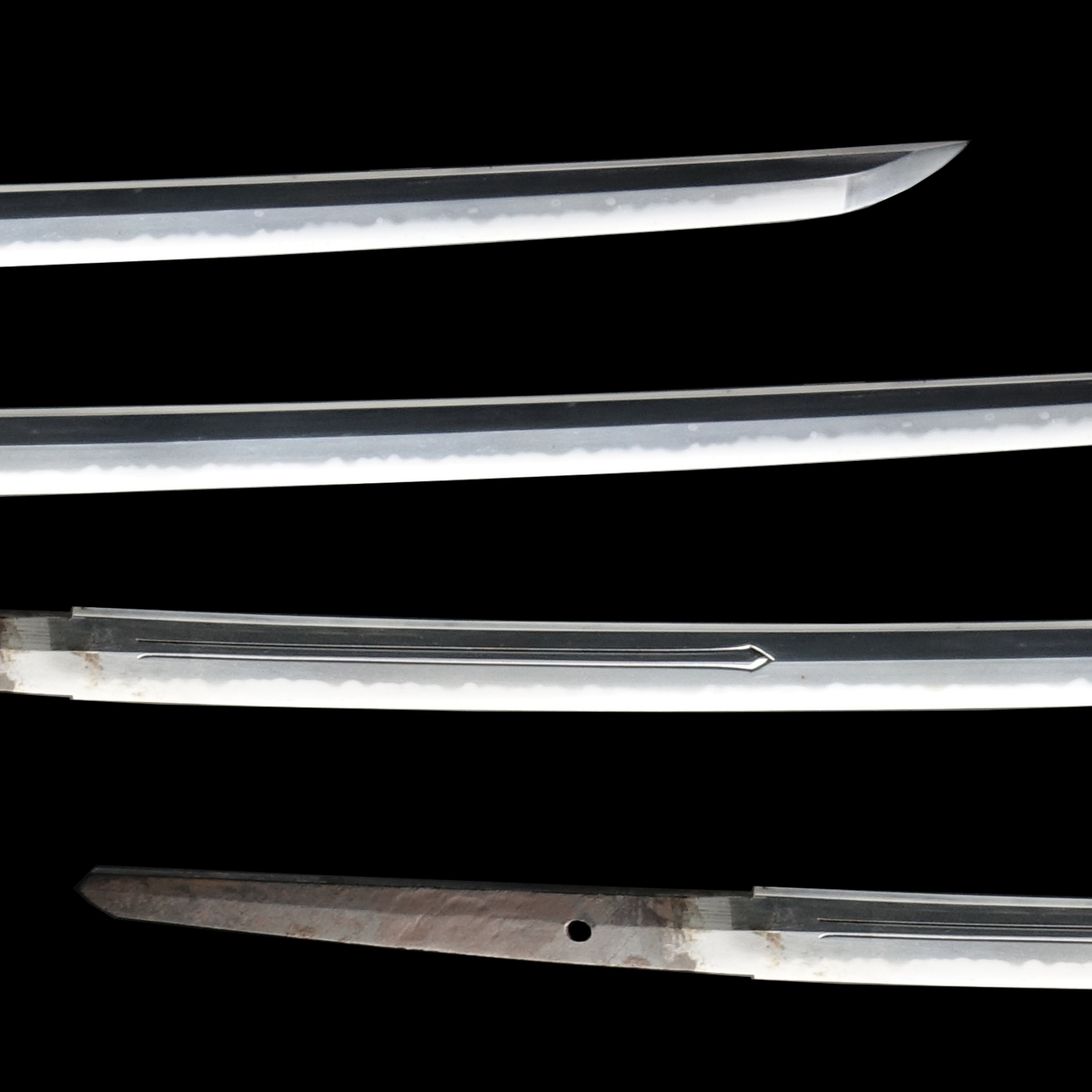
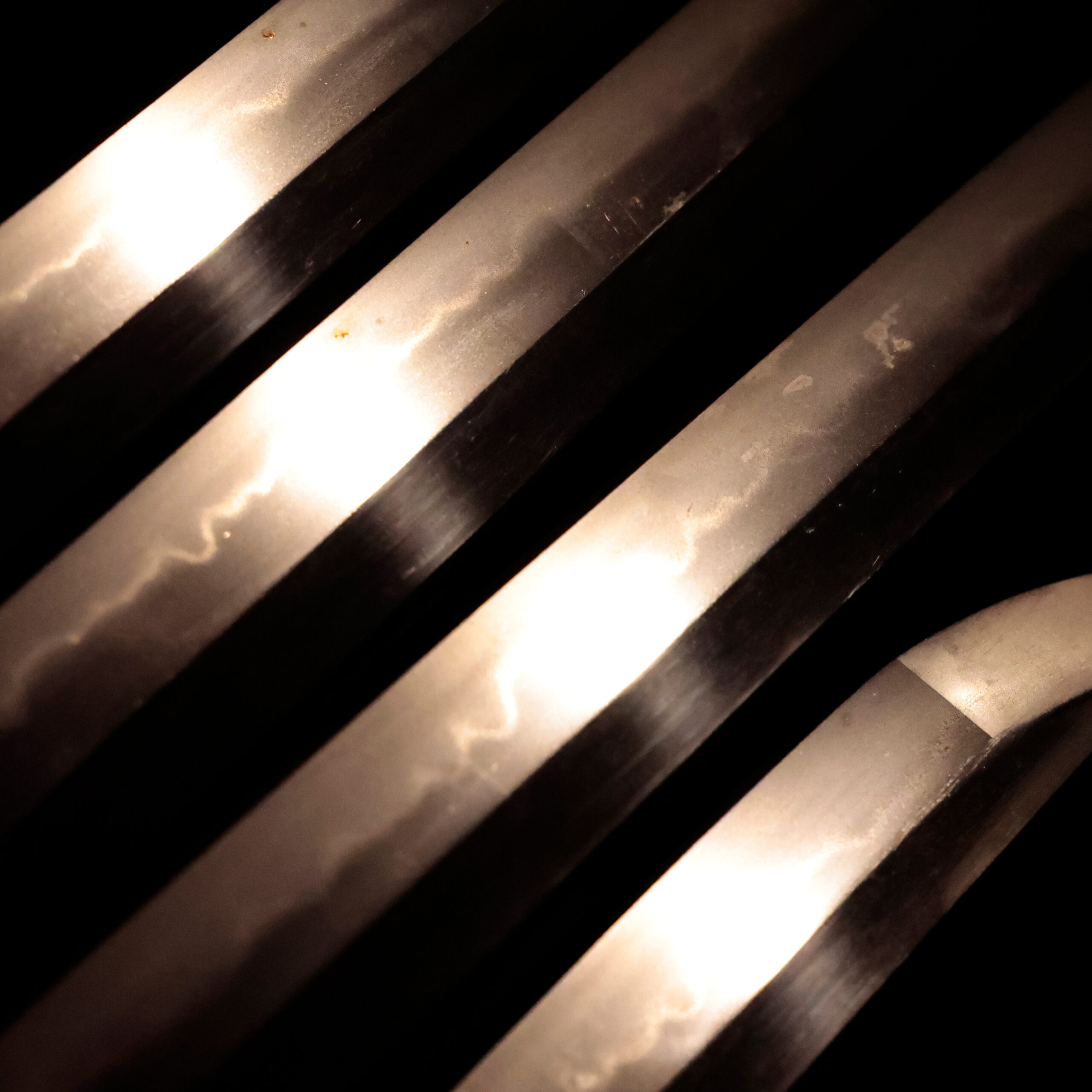
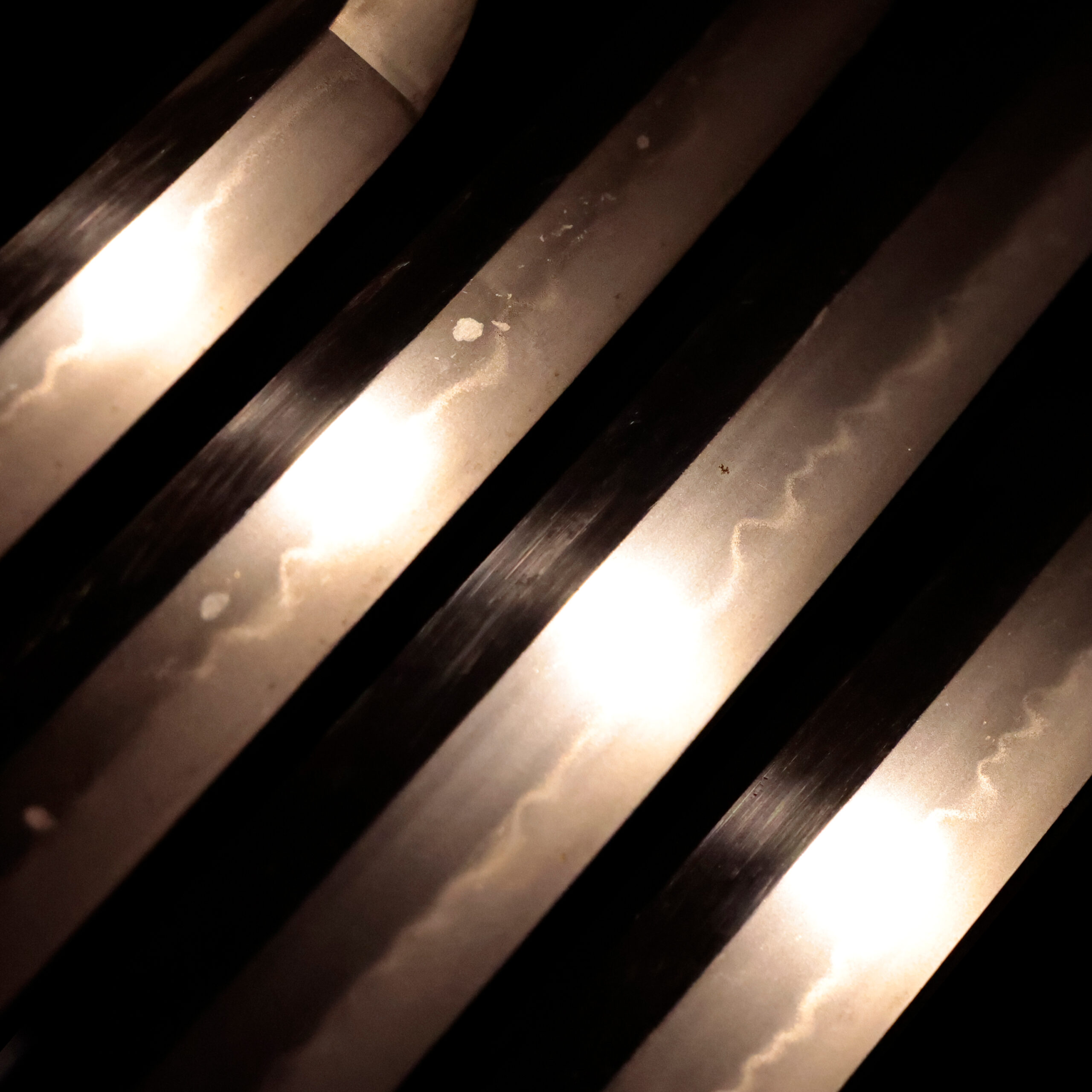
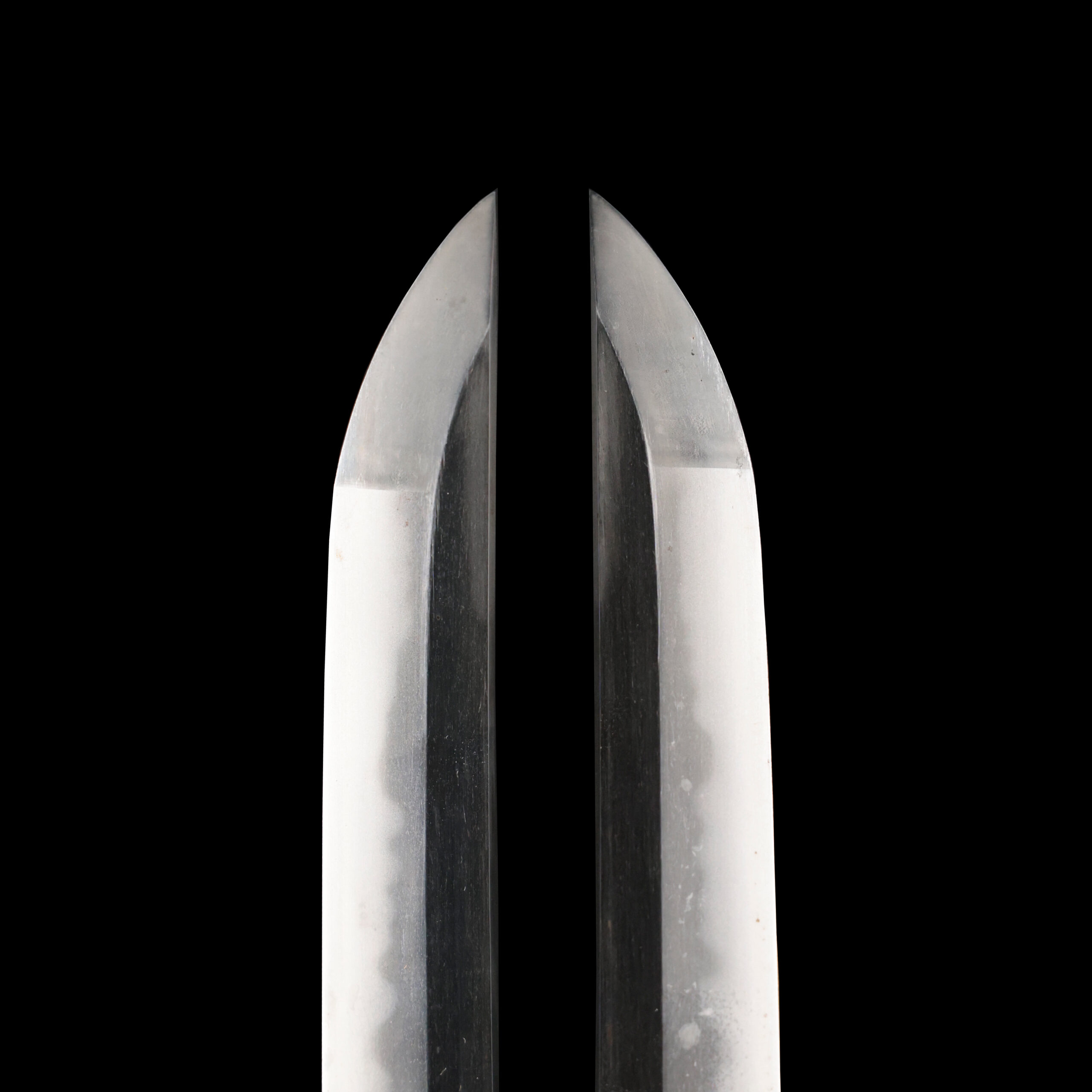
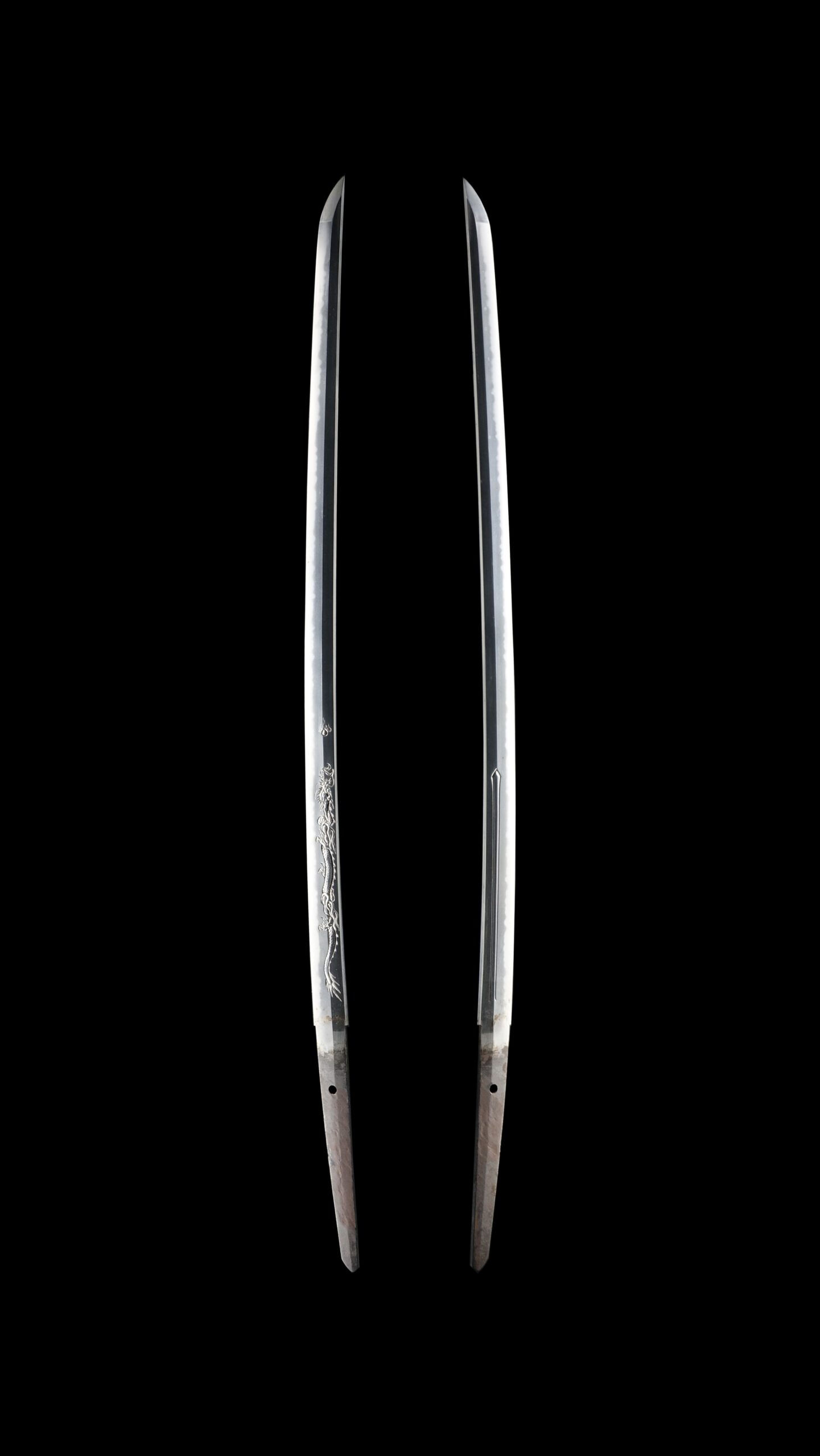
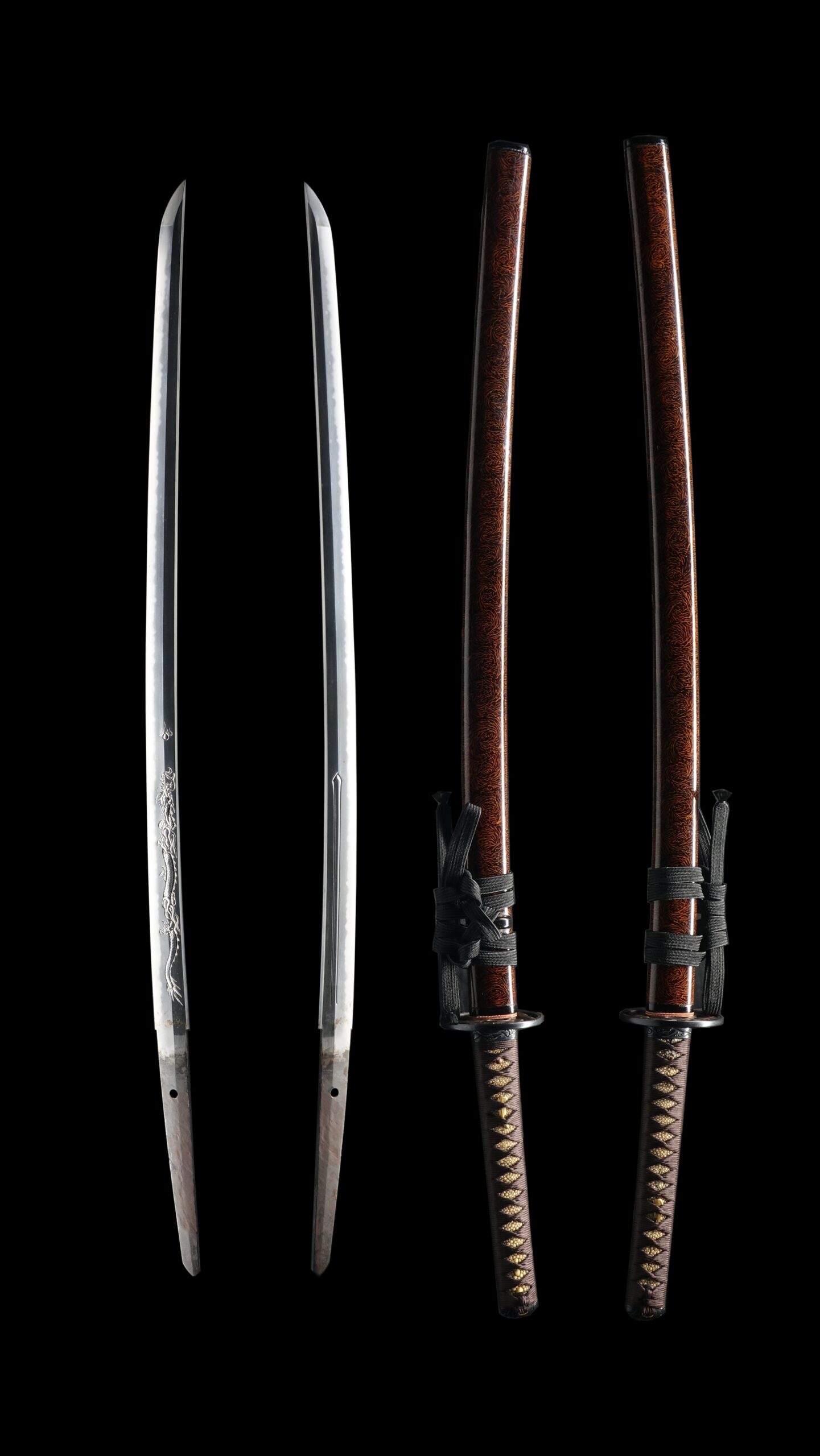
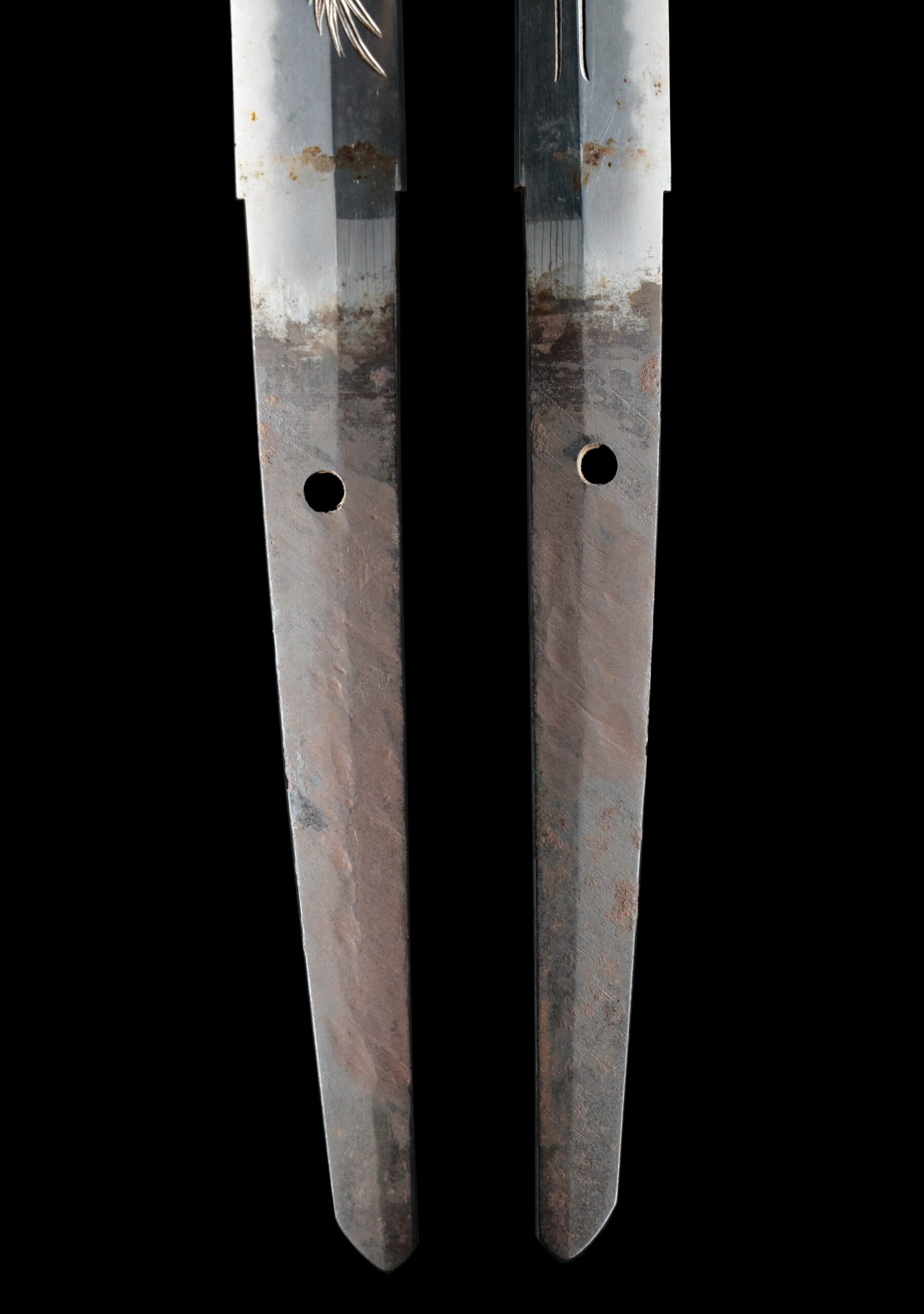
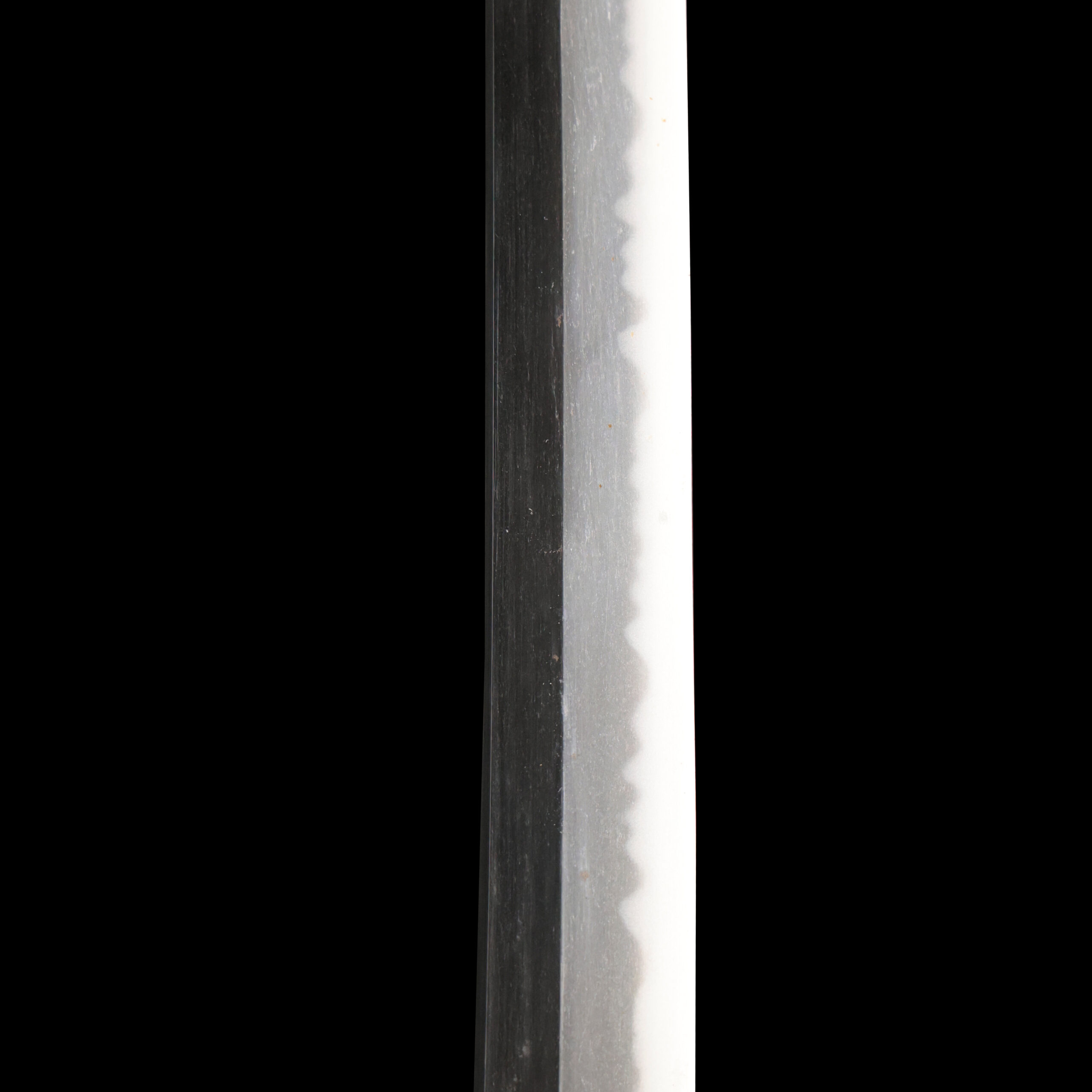
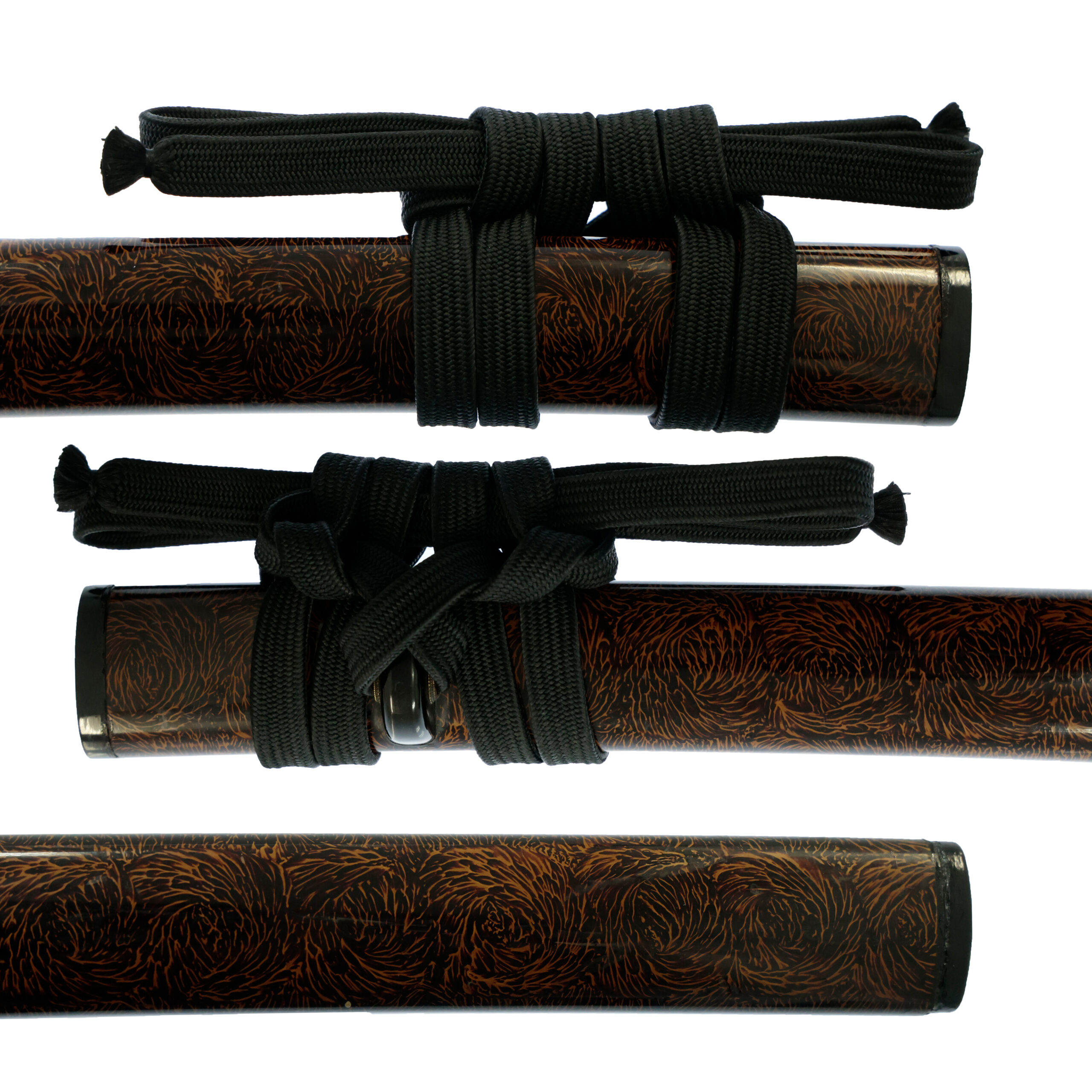
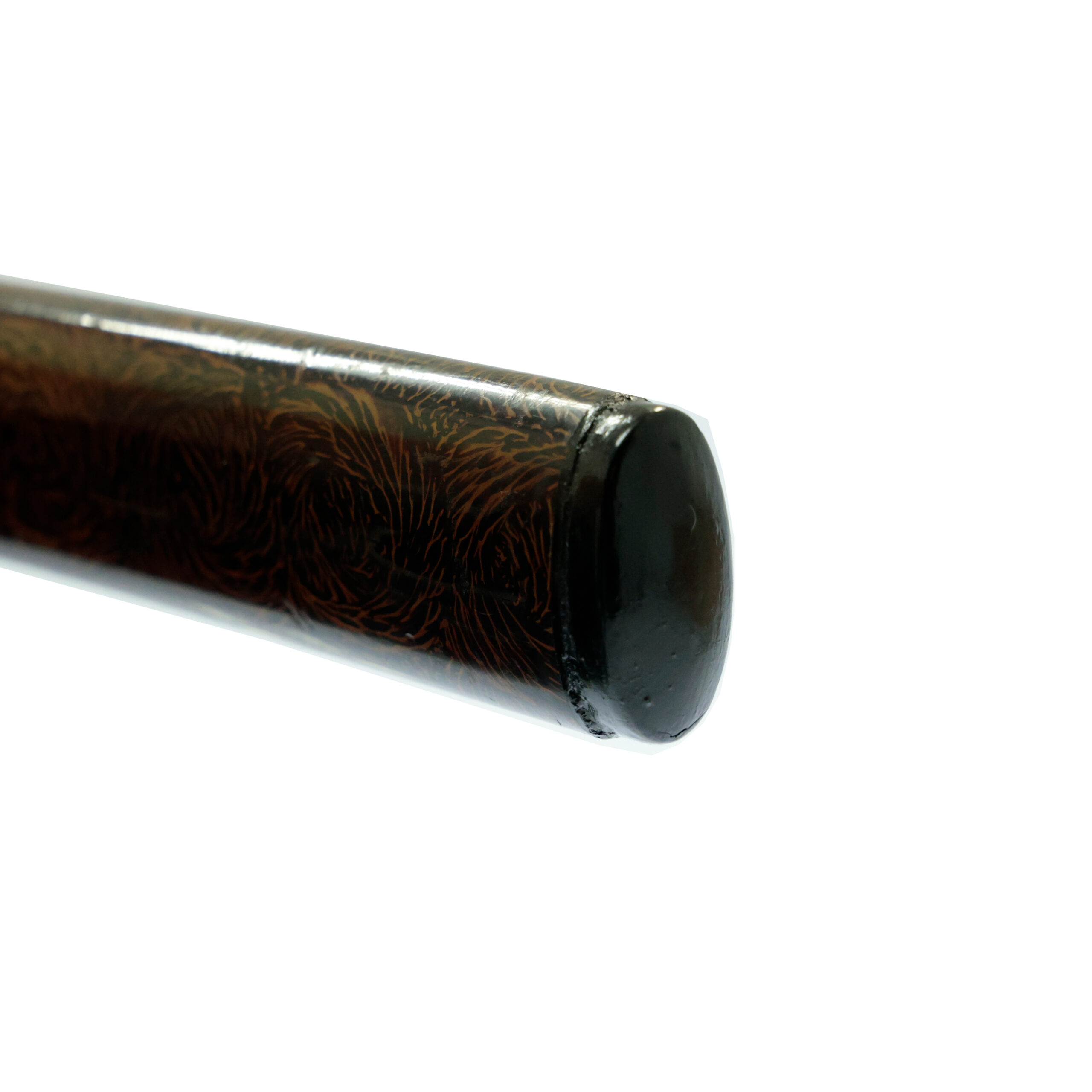

伊勢 · 1848-1867頃
現在3点販売中
江戸時代
江戸は刀の目利きの時代である。本阿弥の鑑定、1719年の享保名物帳、盛んな刀剣書が、戦で抜かれることのなくなった刀を学問の対象へと変えていった。
NTHKの中心的な鑑定書で、相応の出来を備えた作に発行されます。在銘作は銘の正真を、無銘作は審査員による刀工・流派の極めを示します。点数を記す詳細な審査表が付されます。
NTHK(日本刀剣保存会)は、NBTHK(1948年設立)に先立つ1910年に創立された、日本で最も古い刀剣鑑定団体です。長く会を率いた会長の没後、NTHKとNTHK-NPOの二つに分かれ、いずれも審査を続けています。NTHKの鑑定書は、点数と審査員の所見を併記する詳細な審査表が特徴で、特に無銘作の極めに定評があります。
Returns/exchanges limited to defects caused by shipping (except willful misconduct or gross negligence by the company); customers must contact within 72 hours of receiving the product.
![Wakizashi - Tokuho - 作 廣房 - 脇差[桑名住三品義明斎広房][日本美術刀剣保存協会]特別保存刀剣](/_next/image?url=https%3A%2F%2Fitbhfhyptogxcjbjfzwx.supabase.co%2Fstorage%2Fv1%2Fobject%2Fpublic%2Flisting-images%2Fworld-seiyudo%2FL963052%2F01.jpg&w=2560&q=90)


![Katana - Tokuho - 作 廣房 - Katana [Seishu-Kuwana-ju Gimeisai Mishina Hirofusa][N.B.T.H.K]Tokubetsu Hozon Token](/_next/image?url=https%3A%2F%2Fitbhfhyptogxcjbjfzwx.supabase.co%2Fstorage%2Fv1%2Fobject%2Fpublic%2Flisting-images%2Fworld-seiyudo%2FL31462%2F00.jpg&w=2560&q=90)