参勤交代が集めた日本最大の帯刀人口が江戸にあった。御用鍛冶康継は茎に葵紋を許され、虎徹の刀は截断銘の金象嵌を帯びる。この町では、証こそが物を言った。
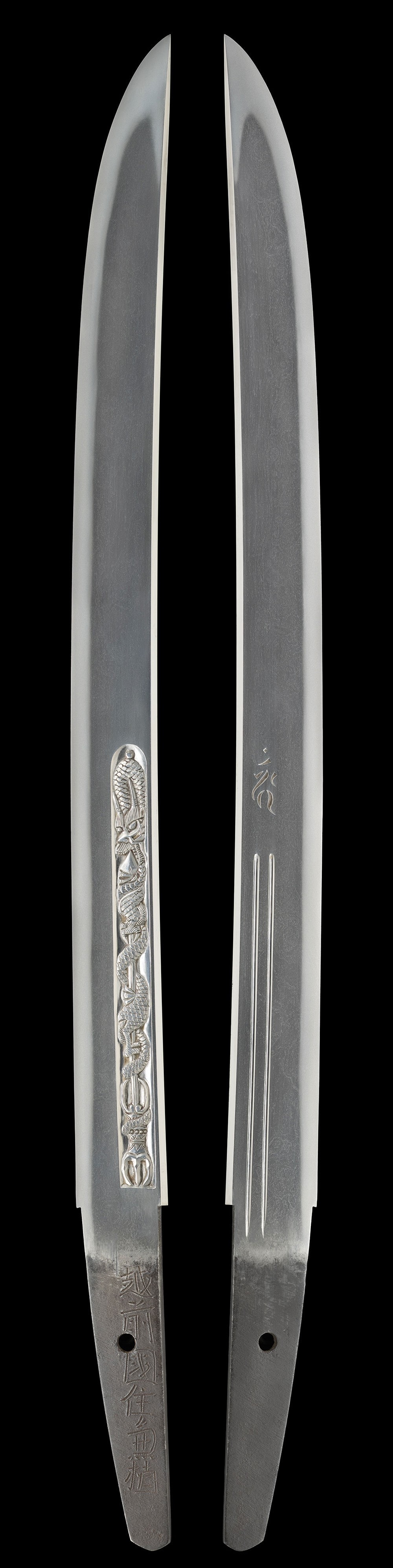
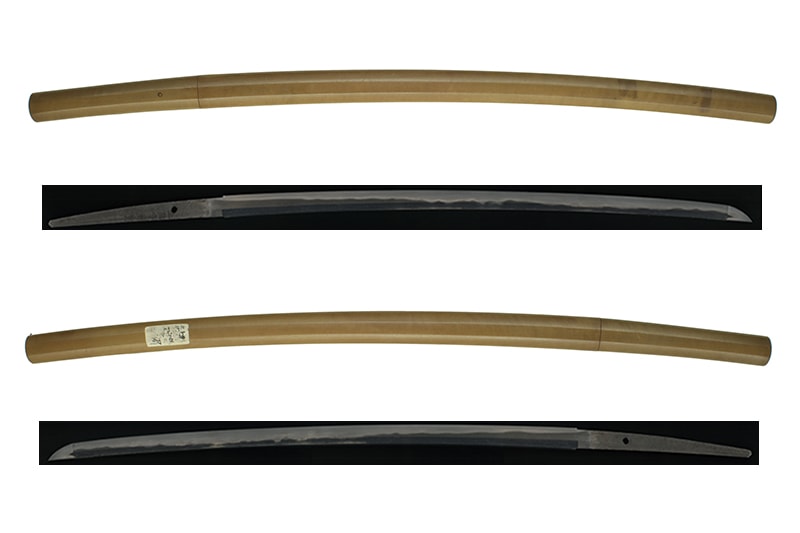
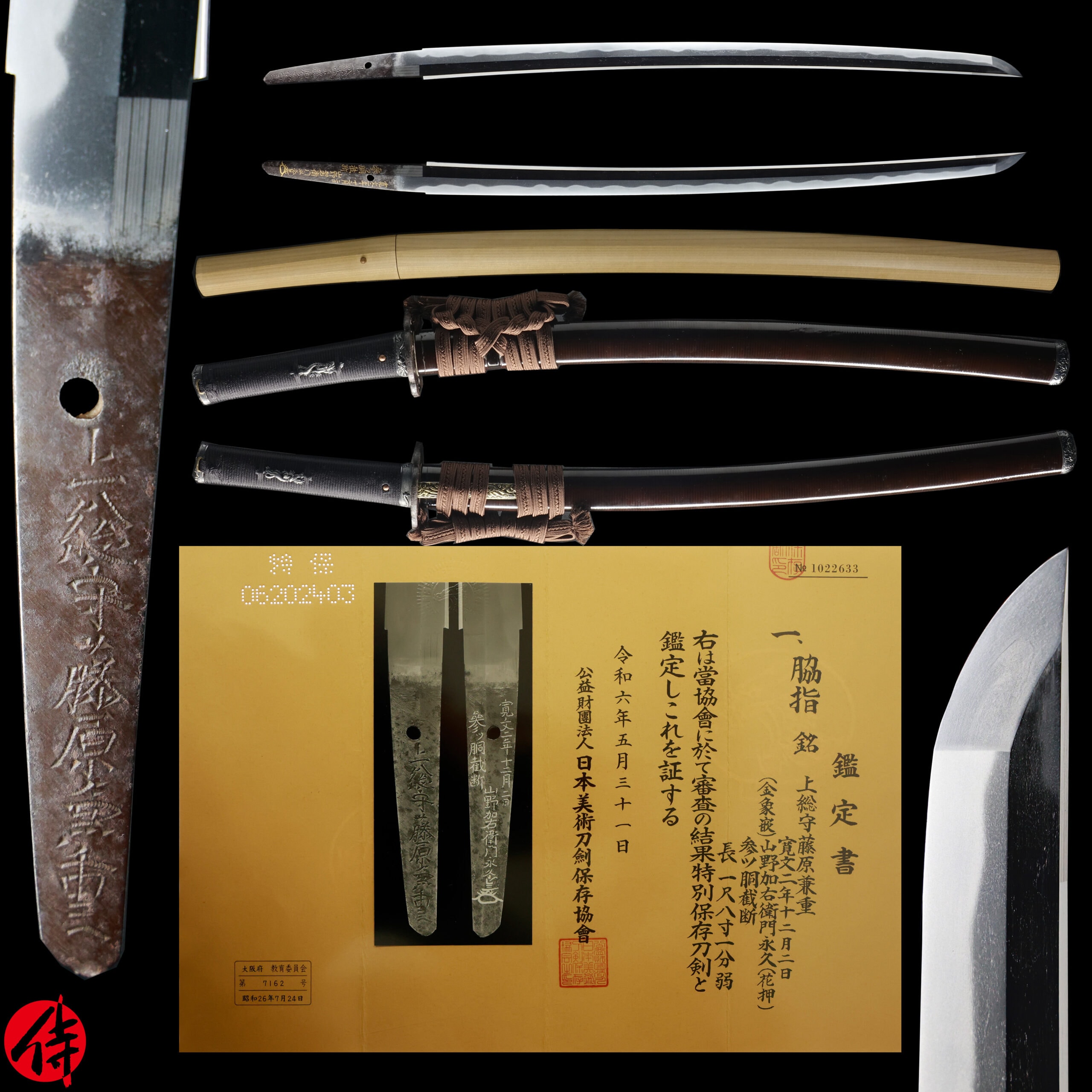
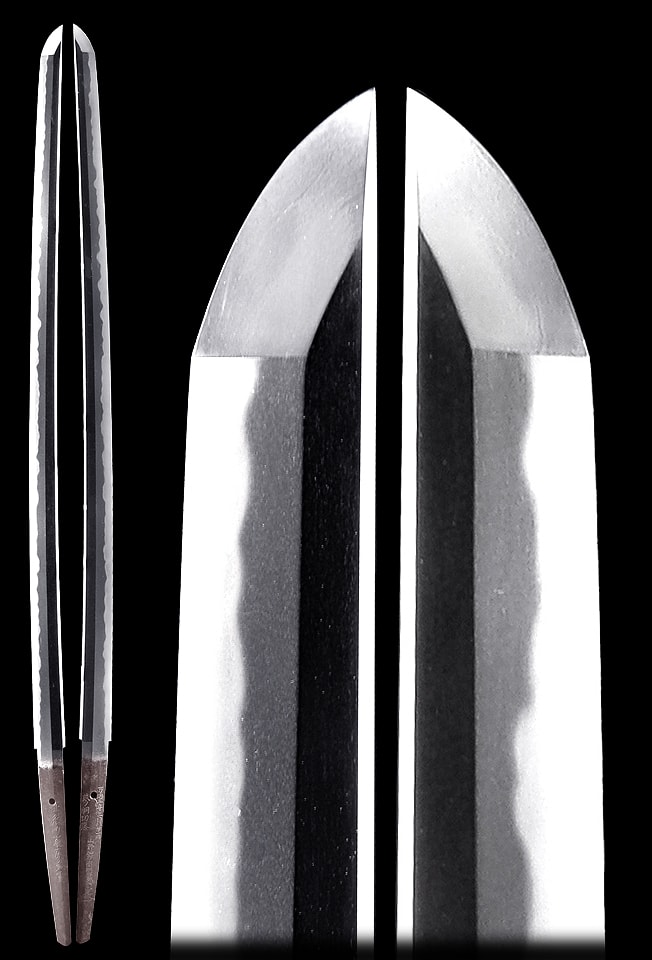
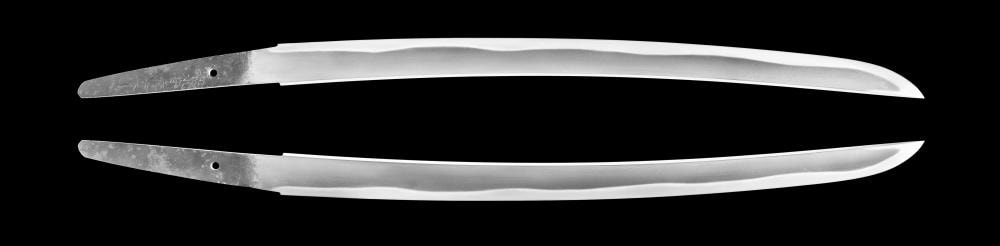
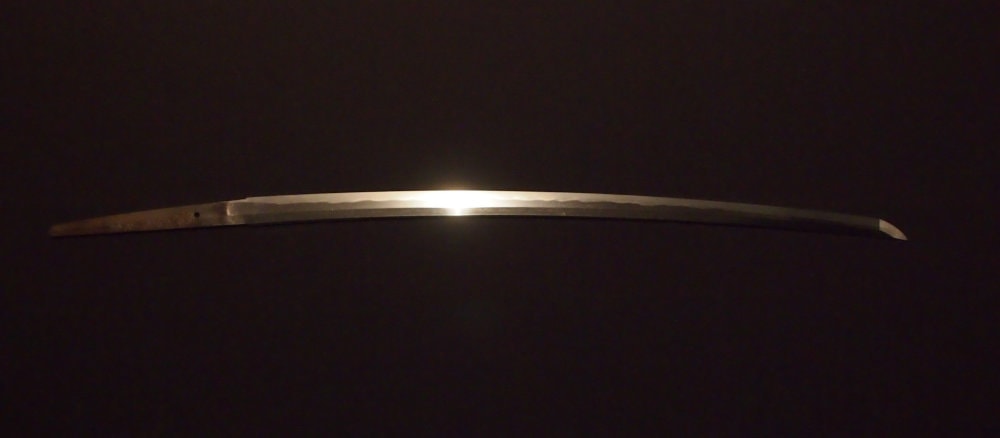
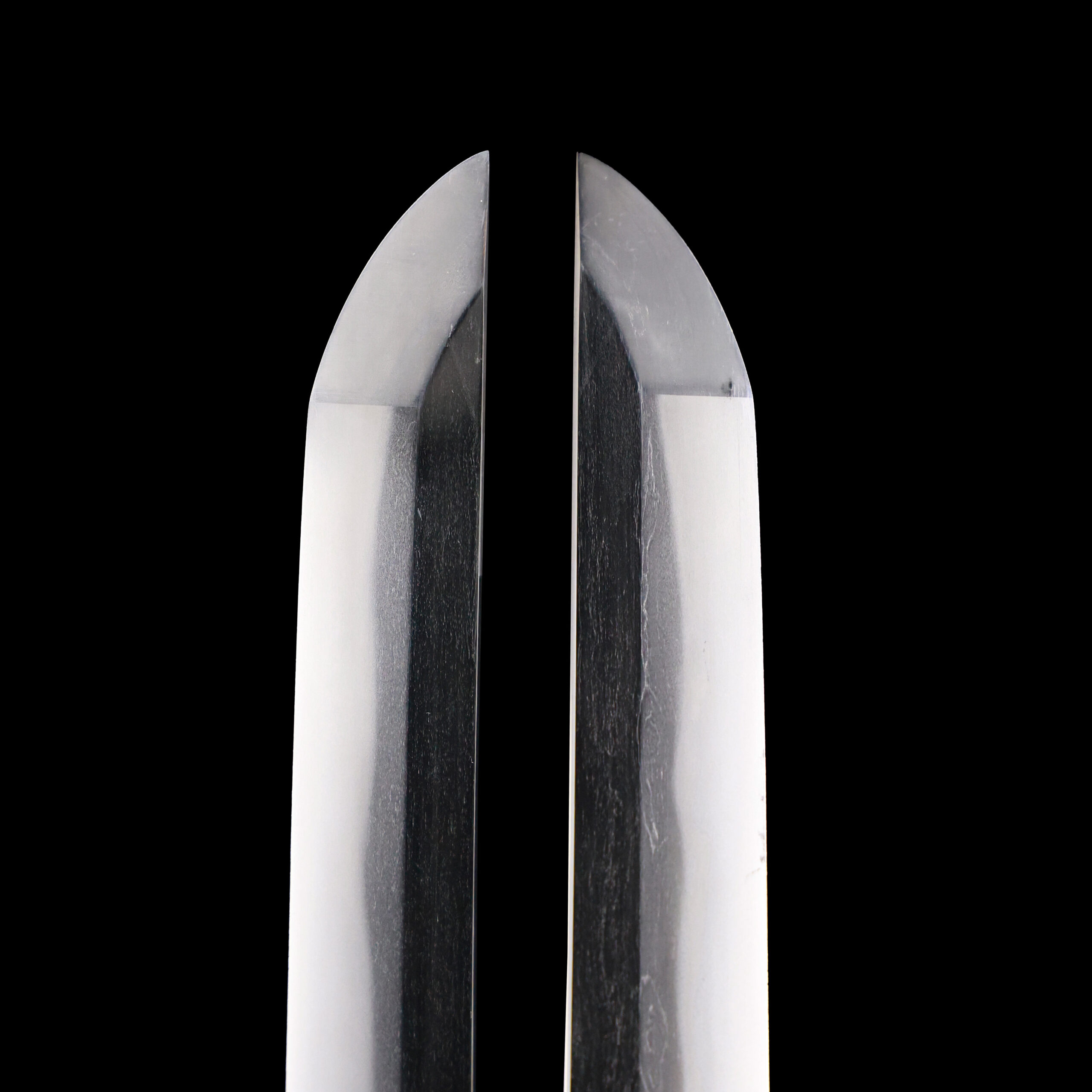
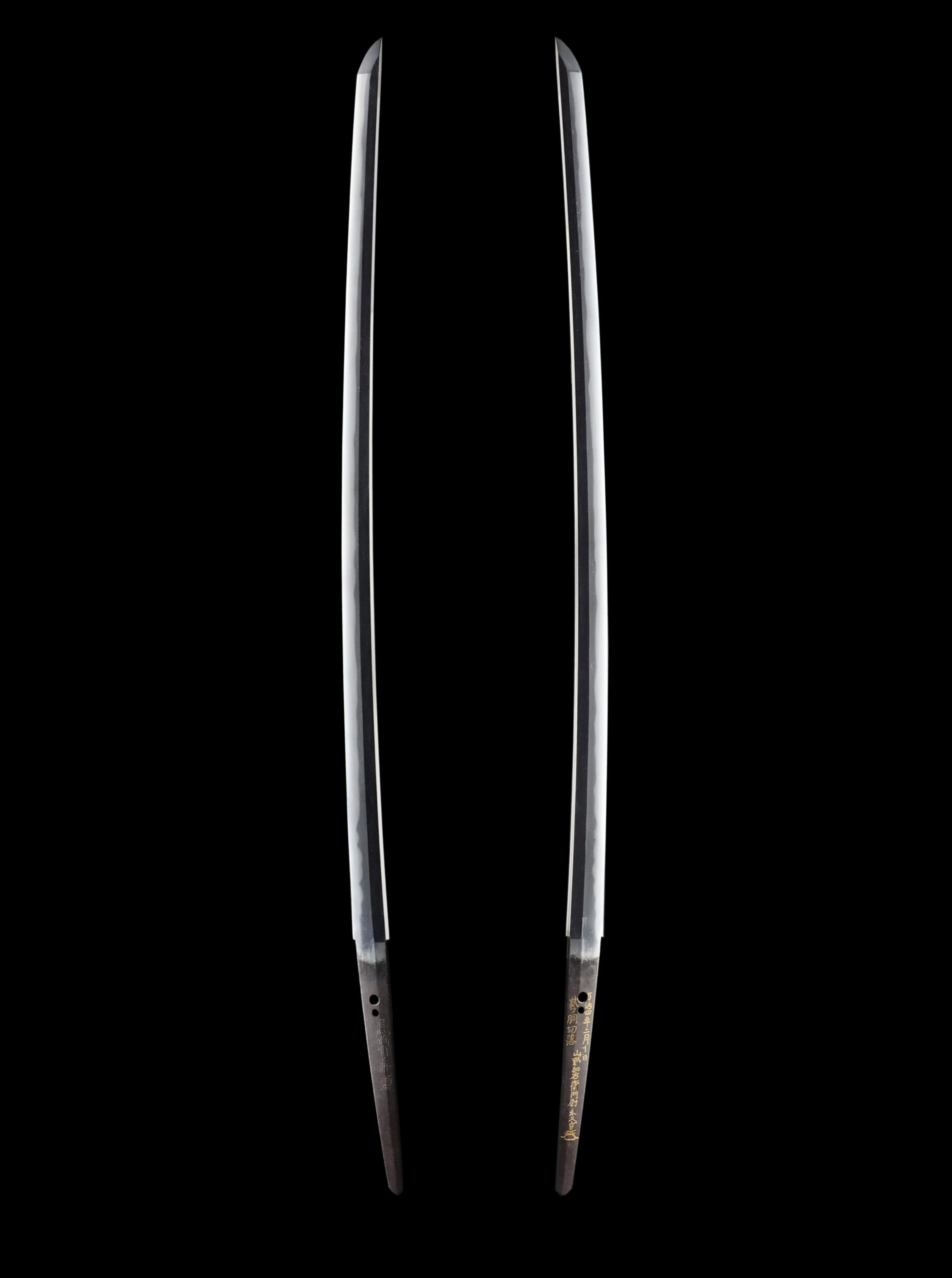
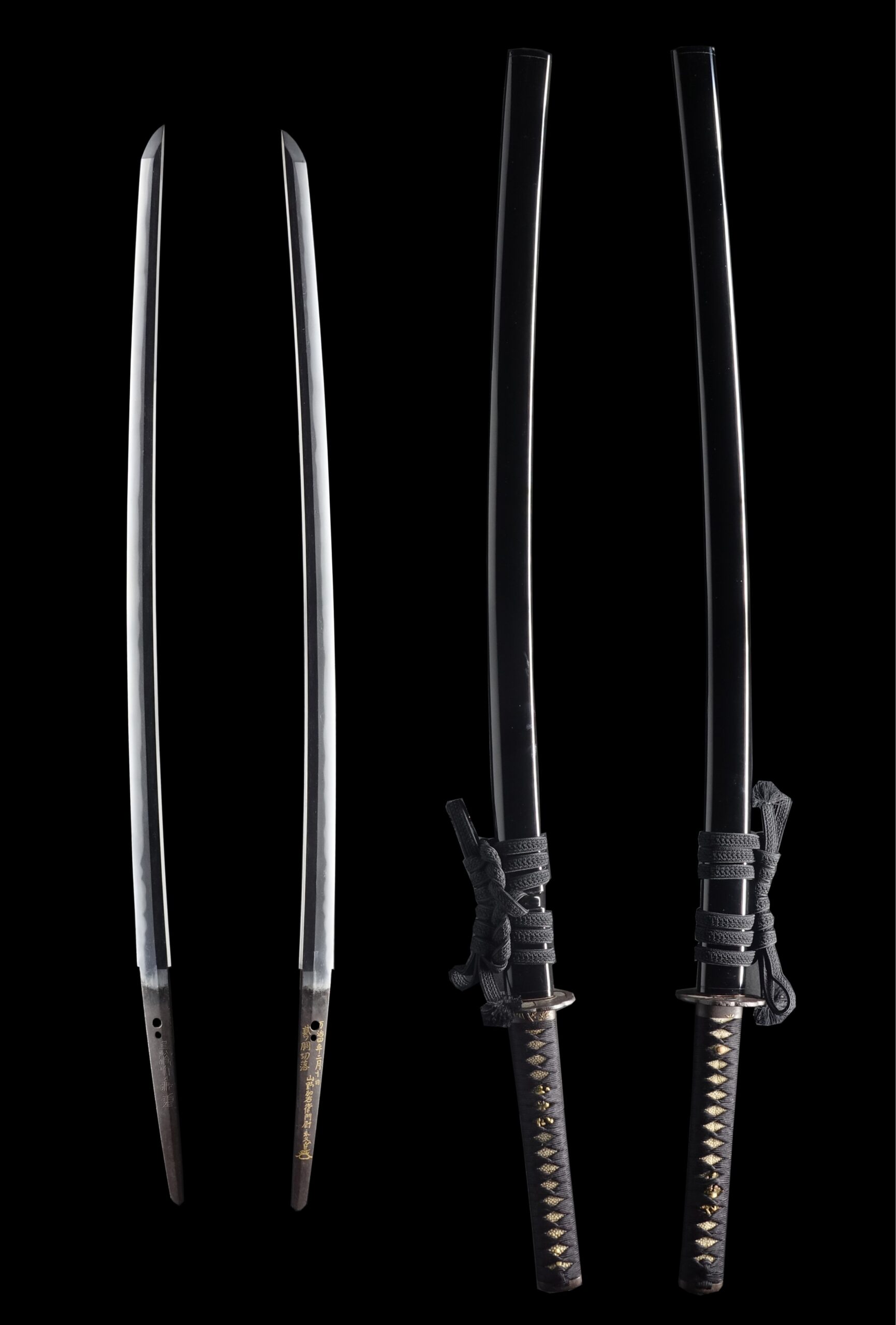
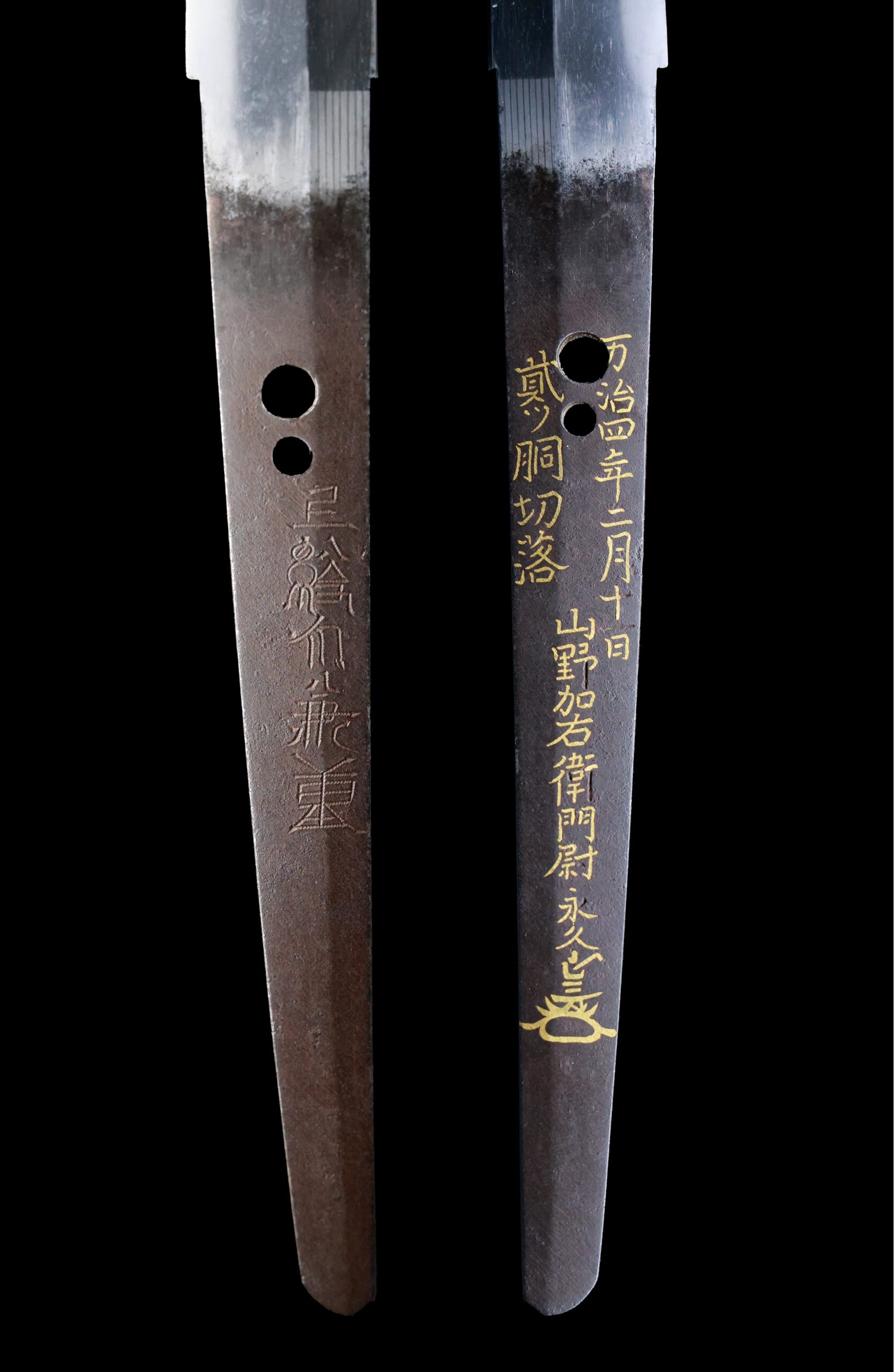
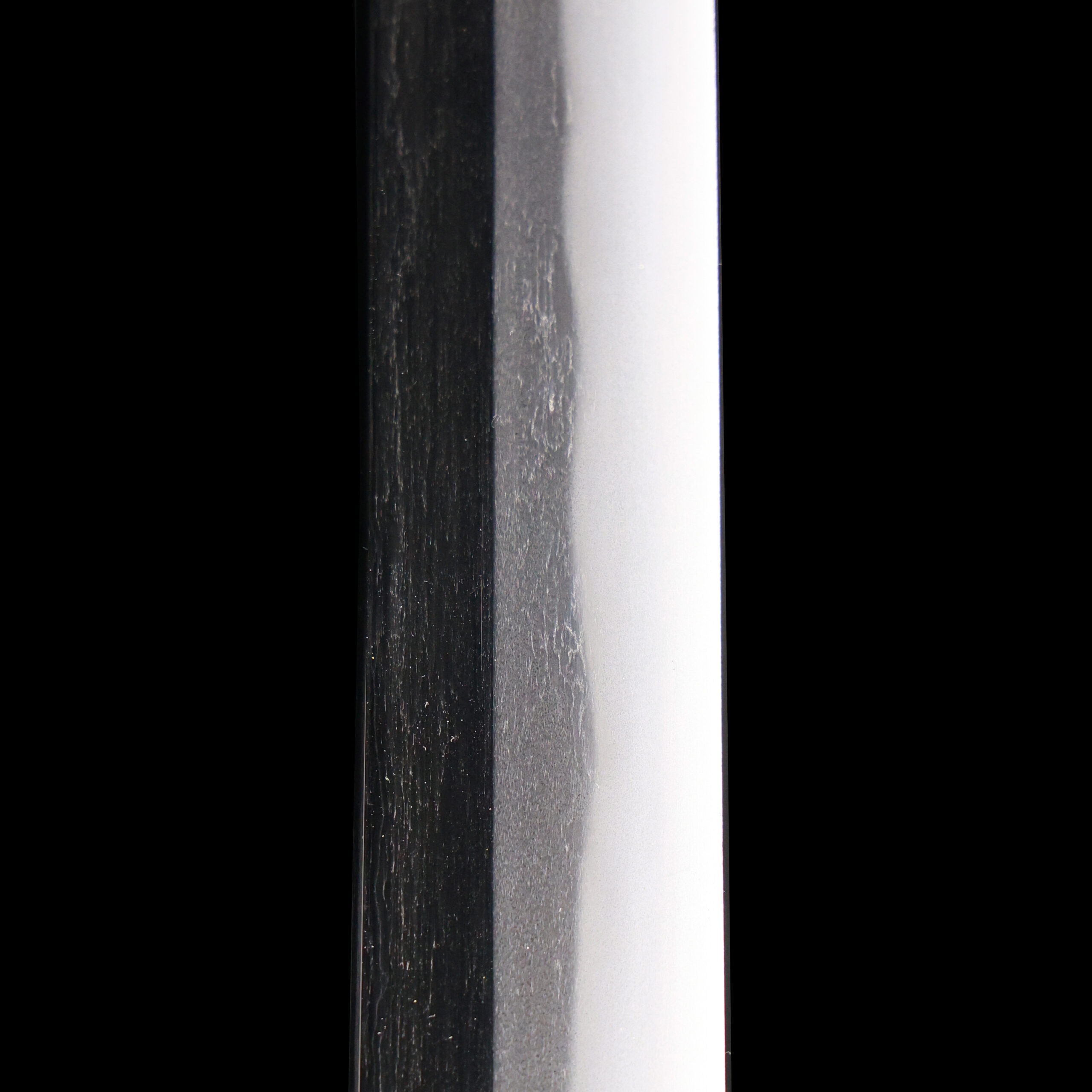
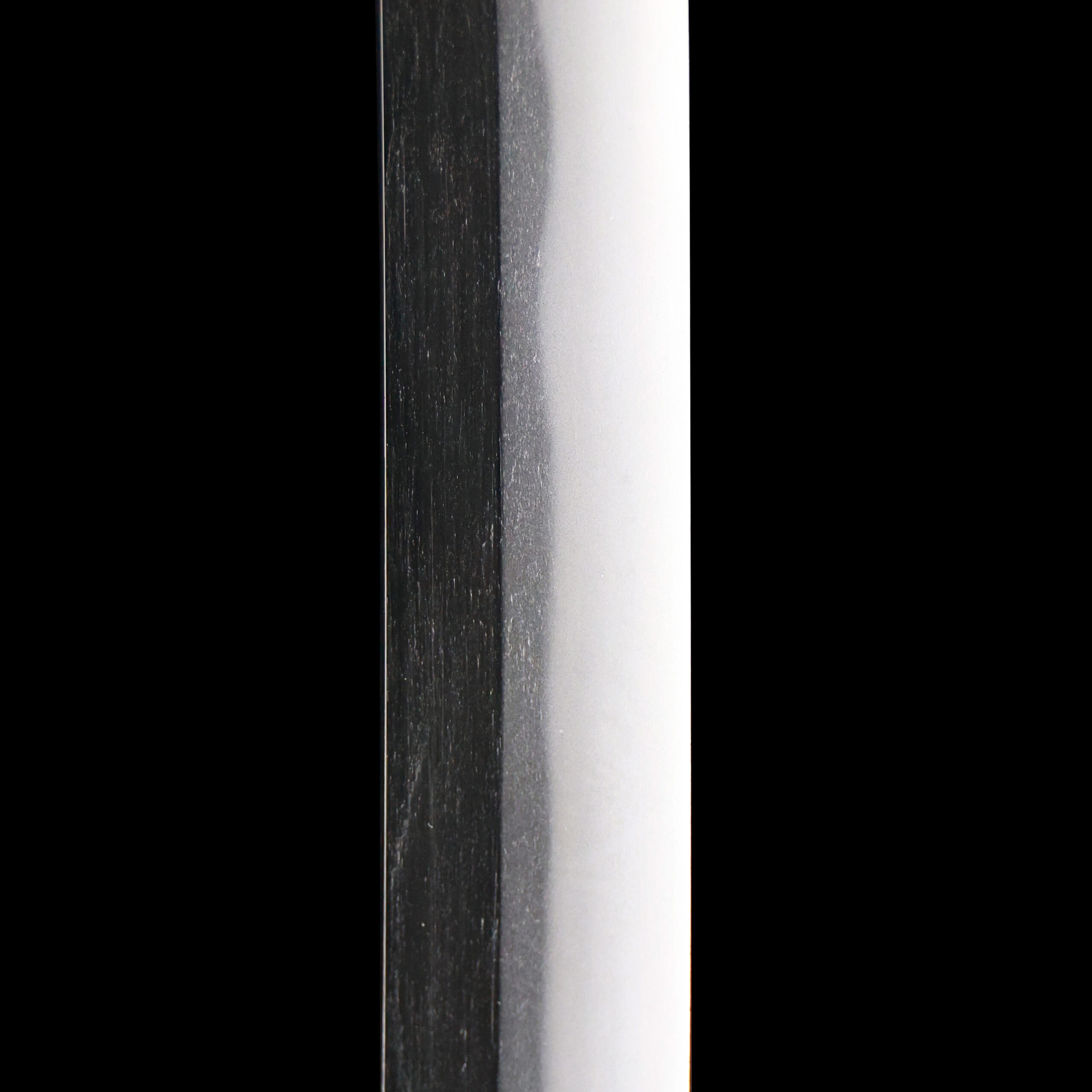
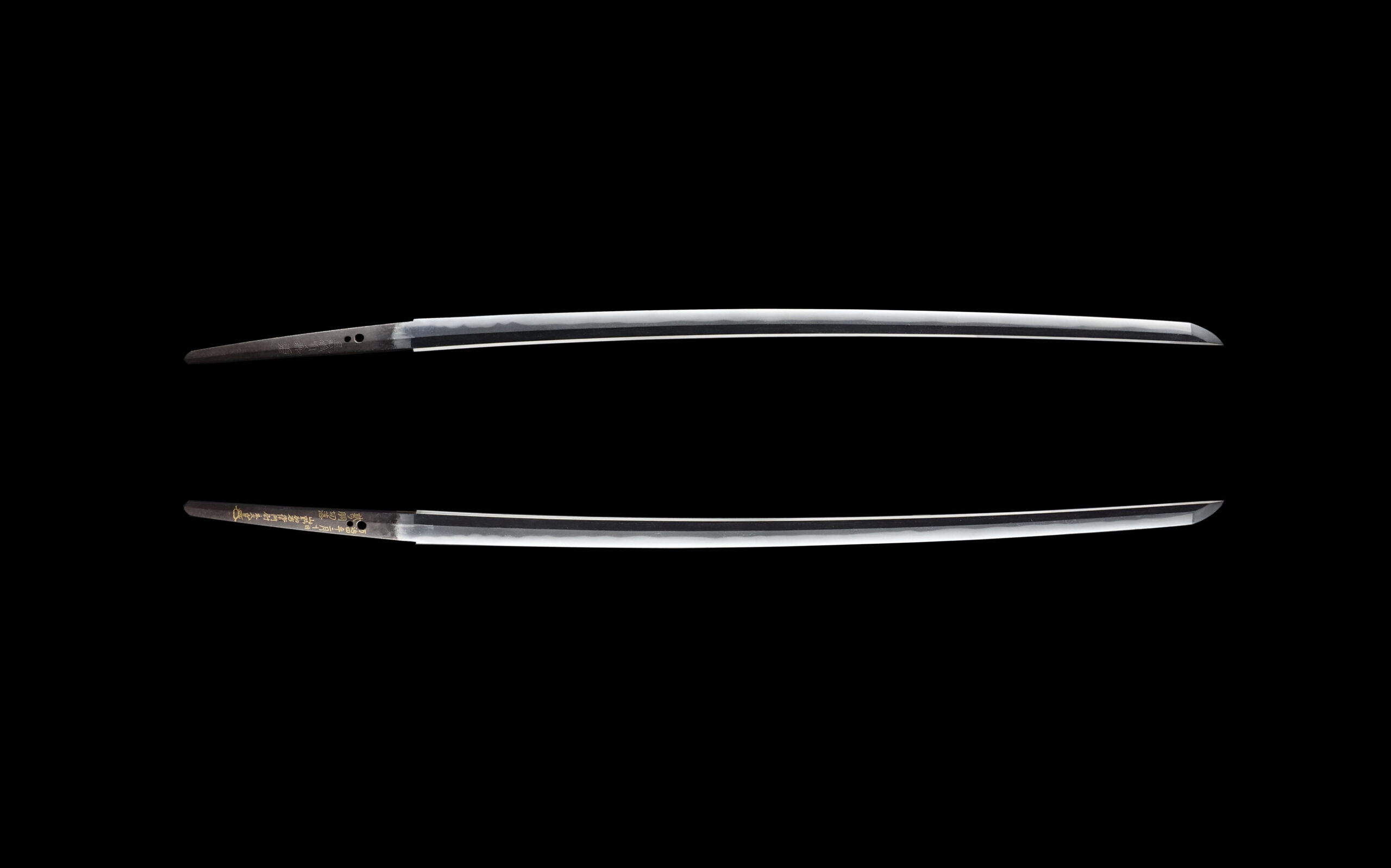
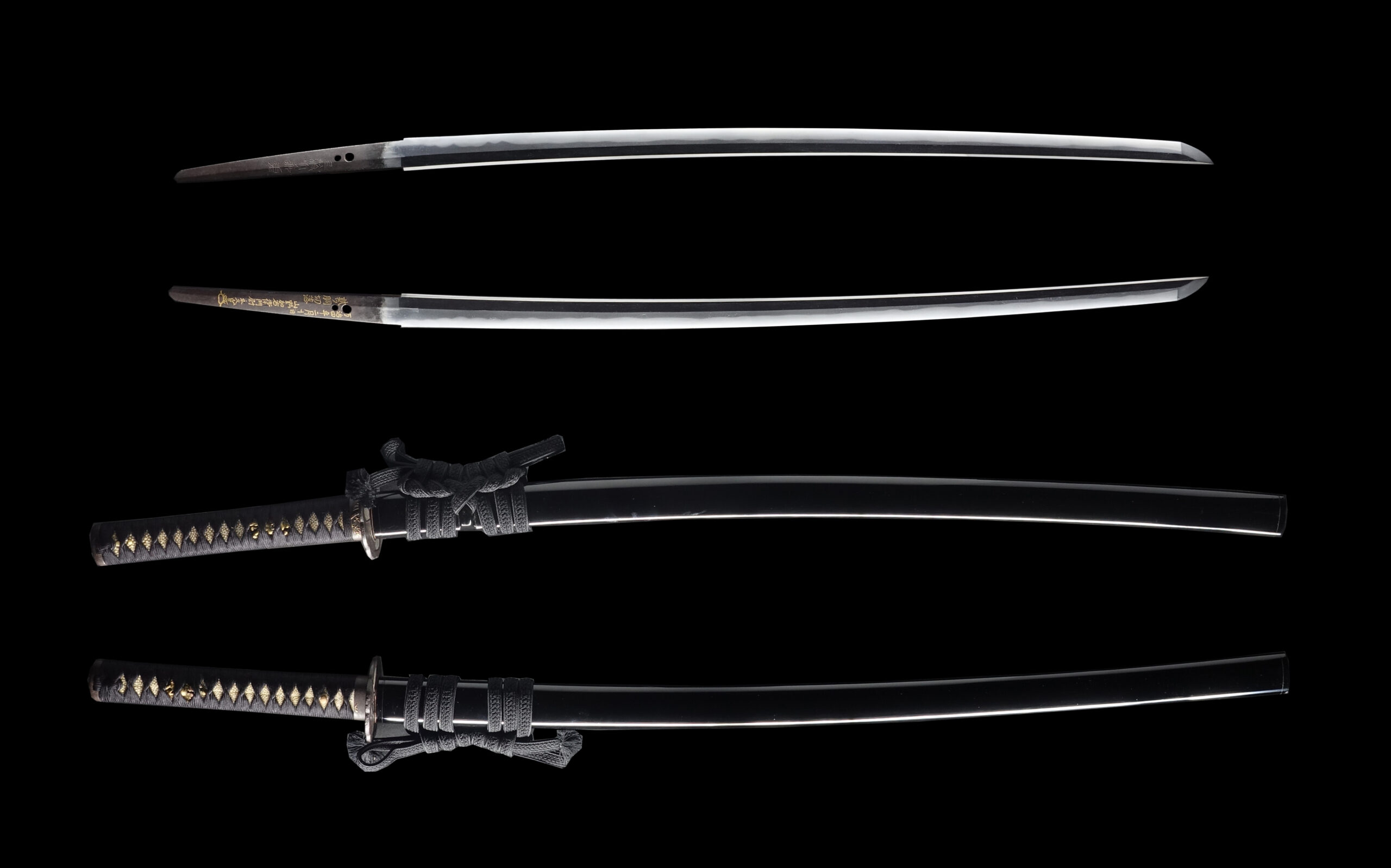
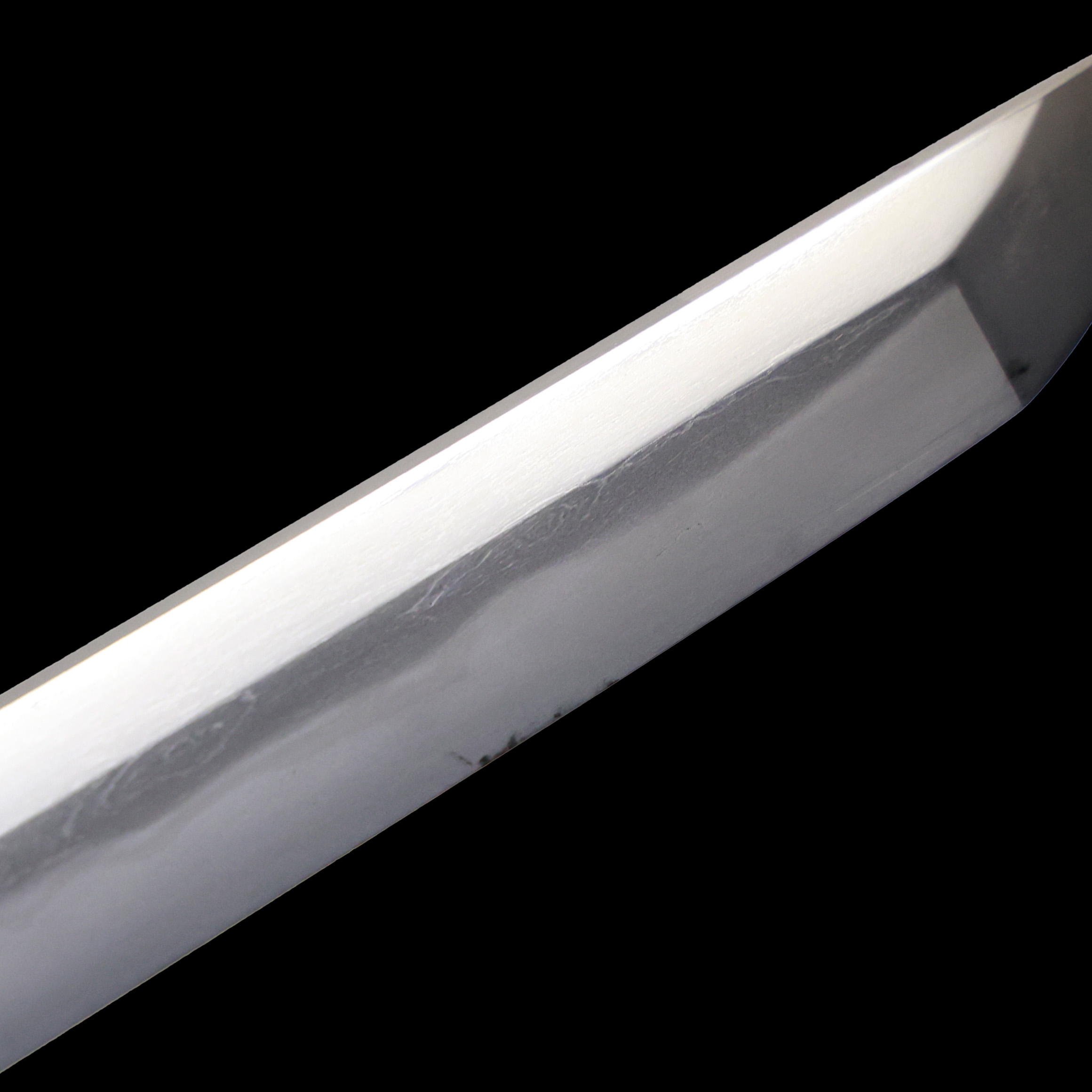
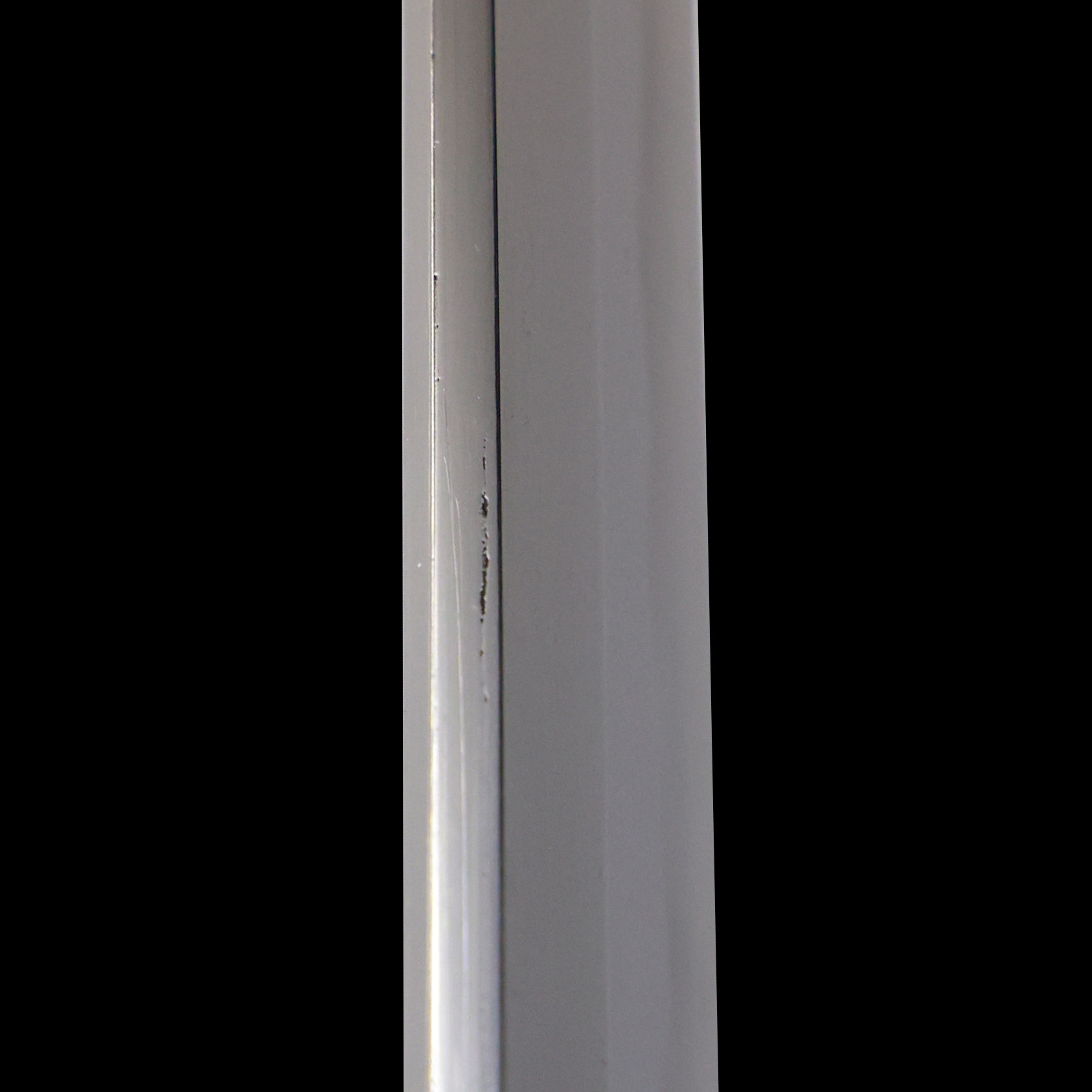
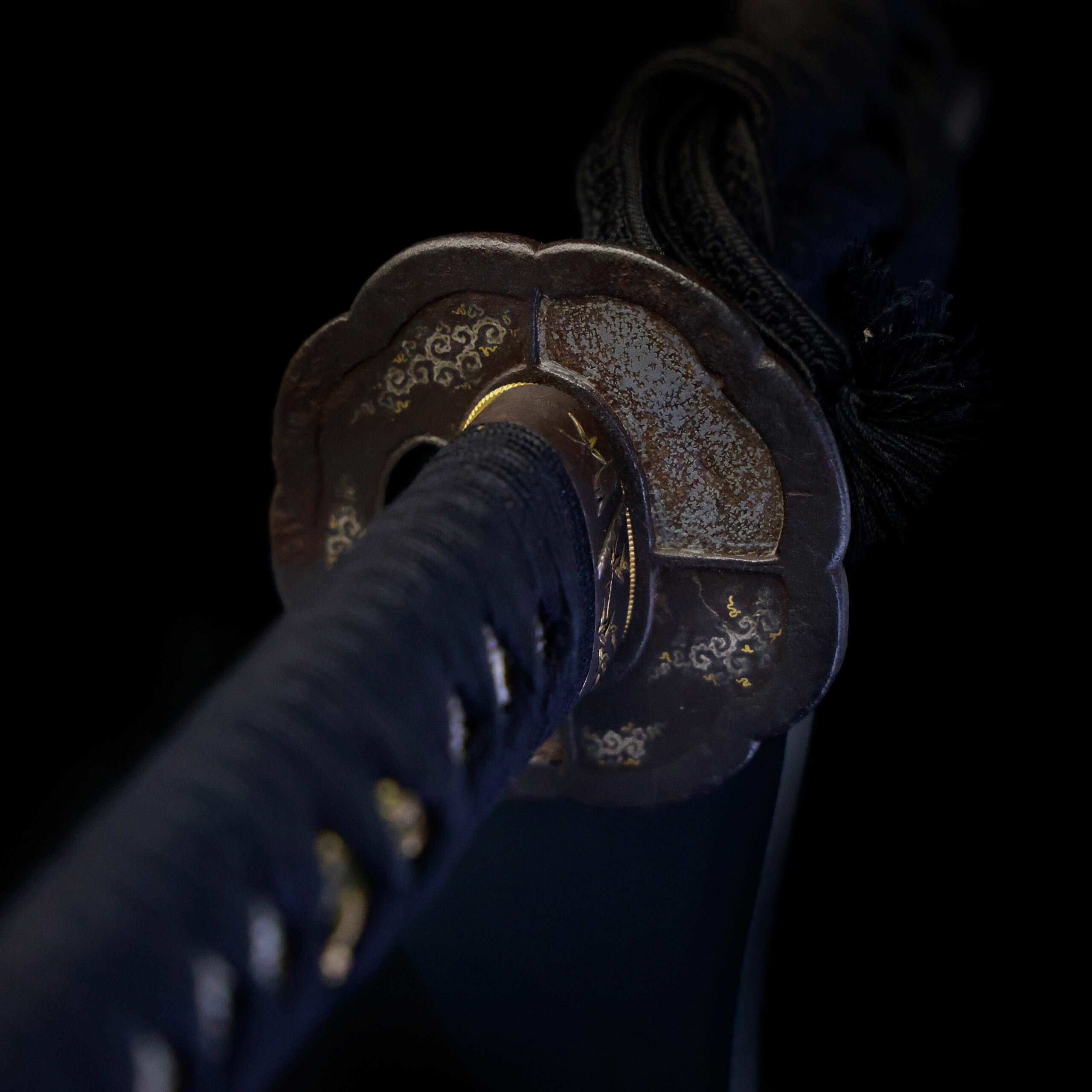
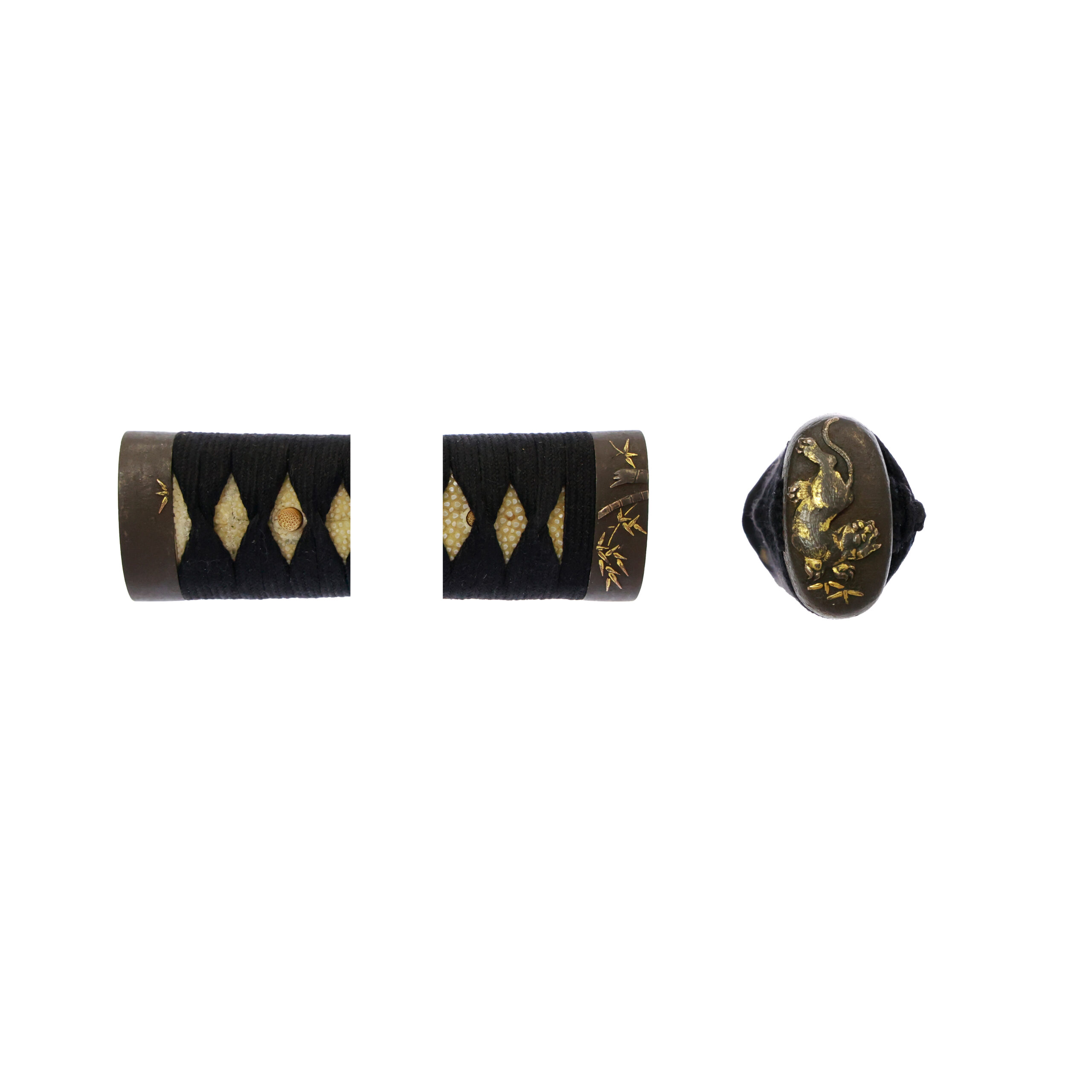
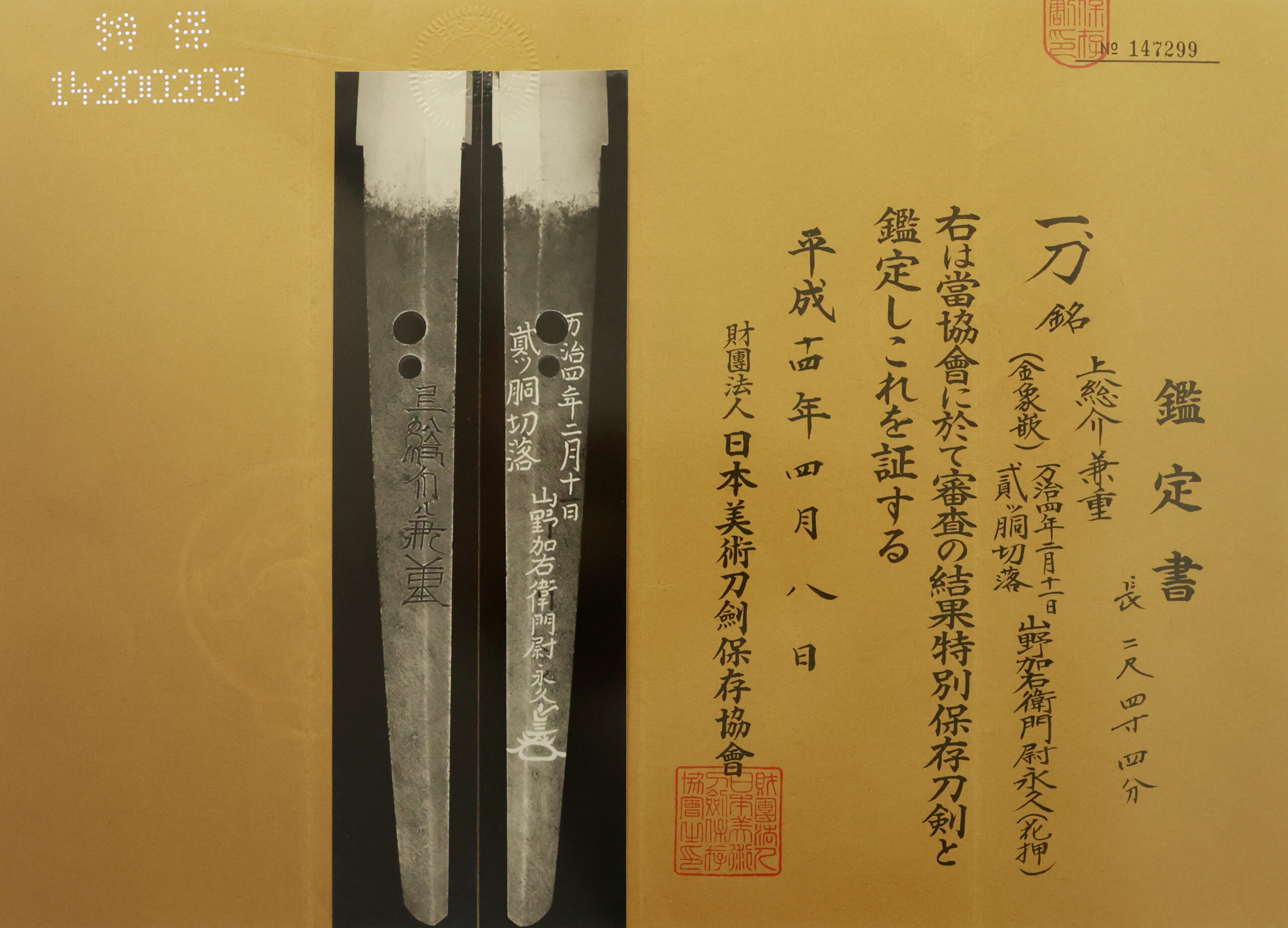
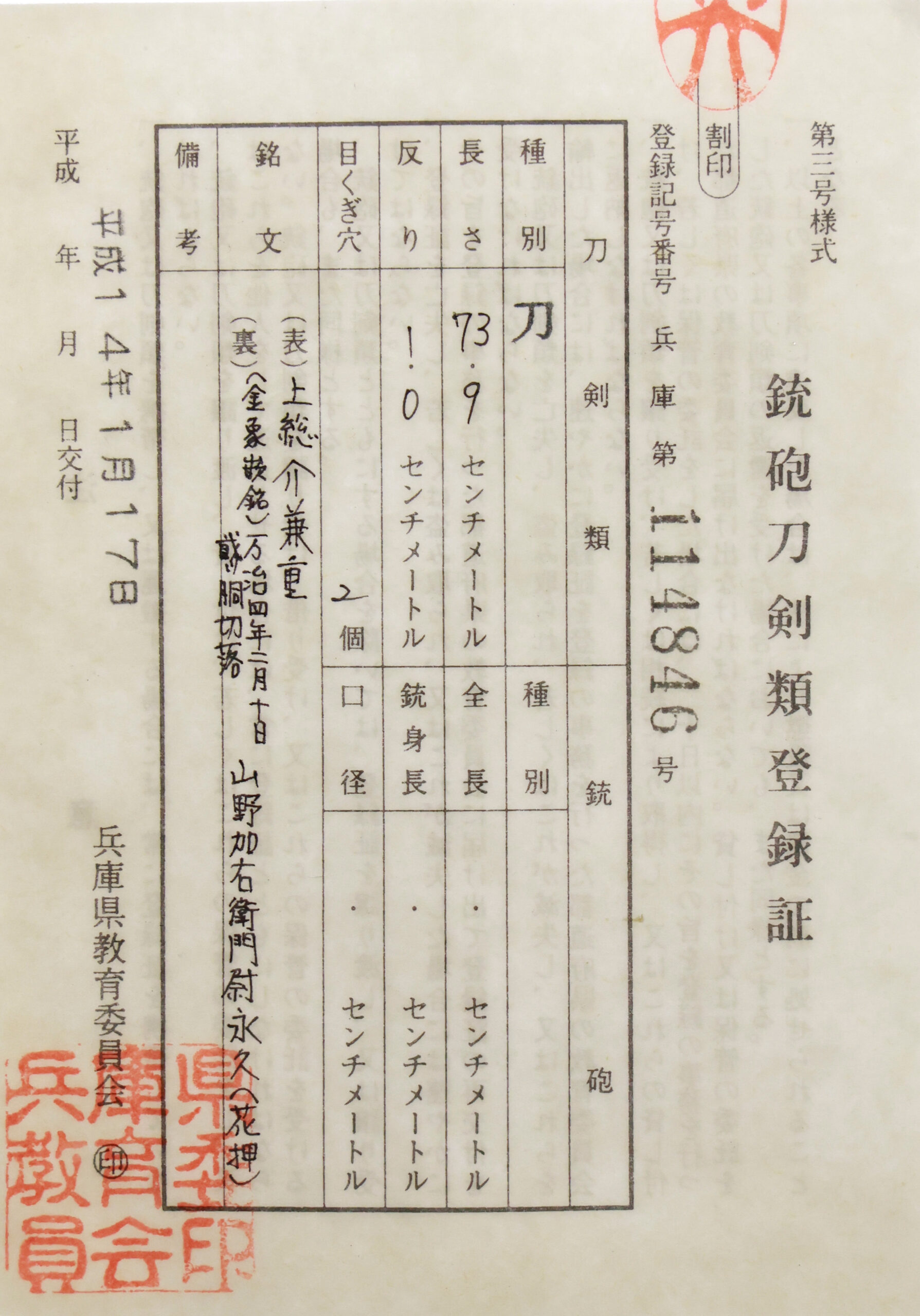
特別保存刀剣鑑定書付 上総介兼重 銘 (金象嵌截断銘) 【解説】 本作は江戸時代前期(寛文二年以前)、武蔵国(現在の東京都)にて上総介兼重(かずさのすけかねしげ)によって制作された一振りです。茎(なかご)の裏には、後述する試し斬りの結果を記した截断銘が刻まれています。 兼重は寛文・延宝期(1661-1681年)の武蔵国を代表する名工であり、仙台や伊勢でも作刀した記録が残っています。江戸初期における最も評価の高い工の一人であり、名匠・和泉守兼重の門下で技を磨き、後にその流派を継承したことから「二代兼重」としても知られています。初代から二代への継承時期は慶安年間(1648-1652年)頃とされ、兼重の名は三代にわたって受け継がれました。 また、和泉守兼重の門下には、江戸新刀の最高峰と称される長曽祢虎徹(興里)がいたことでも有名です。上総介兼重と虎徹は同門として共に切磋琢磨し、師から卓越した技術を学びました。また、剣豪・宮本武蔵が上総介兼重の刀を愛用していたという伝承もあり、当時からその実力が極めて高く評価されていたことを物語っています。 【初代兼重と二代兼重について】 初代兼重(和泉守兼重)は、江戸時代初期(1624-1652年頃)に活躍しました。元は越前国の出身で、徳川将軍家の親族である松平家に仕えていたと伝えられています。寛永元年(1624年)に江戸へ移り、同三年(1626年)にはその優れた技量から「和泉大掾」を受領、後に「和泉守」へと昇進しました。 初代兼重は、戦国から江戸初期にかけての名将・藤堂高虎に召し抱えられました。これには、高虎と親交のあった宮本武蔵の推挙があったという逸話が残っています。二代兼重である上総介兼重もまた、引き続き藤堂家に仕えました。 二代兼重は当初、朝廷より「上総介」ではなく「上総守」を拝命しましたが、後に自ら「上総介」への改称を願い出たという興味深いエピソードがあります。これは、主君である藤堂高虎が後に「上総守」を拝命したため、主君と同じ受領名を名乗ることを憚ったためと言われており、彼の忠義心と謙虚な人柄を象徴する逸話として語り継がれています。 兼重の代々は、その圧倒的な切れ味から「良業物(よきわざもの)」に列せられています。これは寛政九年(1797年)に柘植平助方理(懐宝剣尺)によって編纂された、刀剣の切味による格付けに基づくものです。 【截断銘(試し斬り)について】 鑑定書および茎の銘文によれば、本作は寛文元年(1661年)二月十日、当時高名な御様御用(おためしごよう)であった山野加右衛門永久(やまのかえもんながひさ)によって試し斬りが行われています。これは上総介兼重の活躍時期と合致しており、その結果は「金象嵌(きんぞうがん)」によって誇り高く刻まれています。 銘文にある「弐ツ胴截断(ふたつどうさいだん)」とは、重ねた二つの遺体を一太刀で切り落としたことを意味しており、本作が美術品としての美しさのみならず、武器としても比類なき性能を備えていたことを証明しています。
 NihontoWatch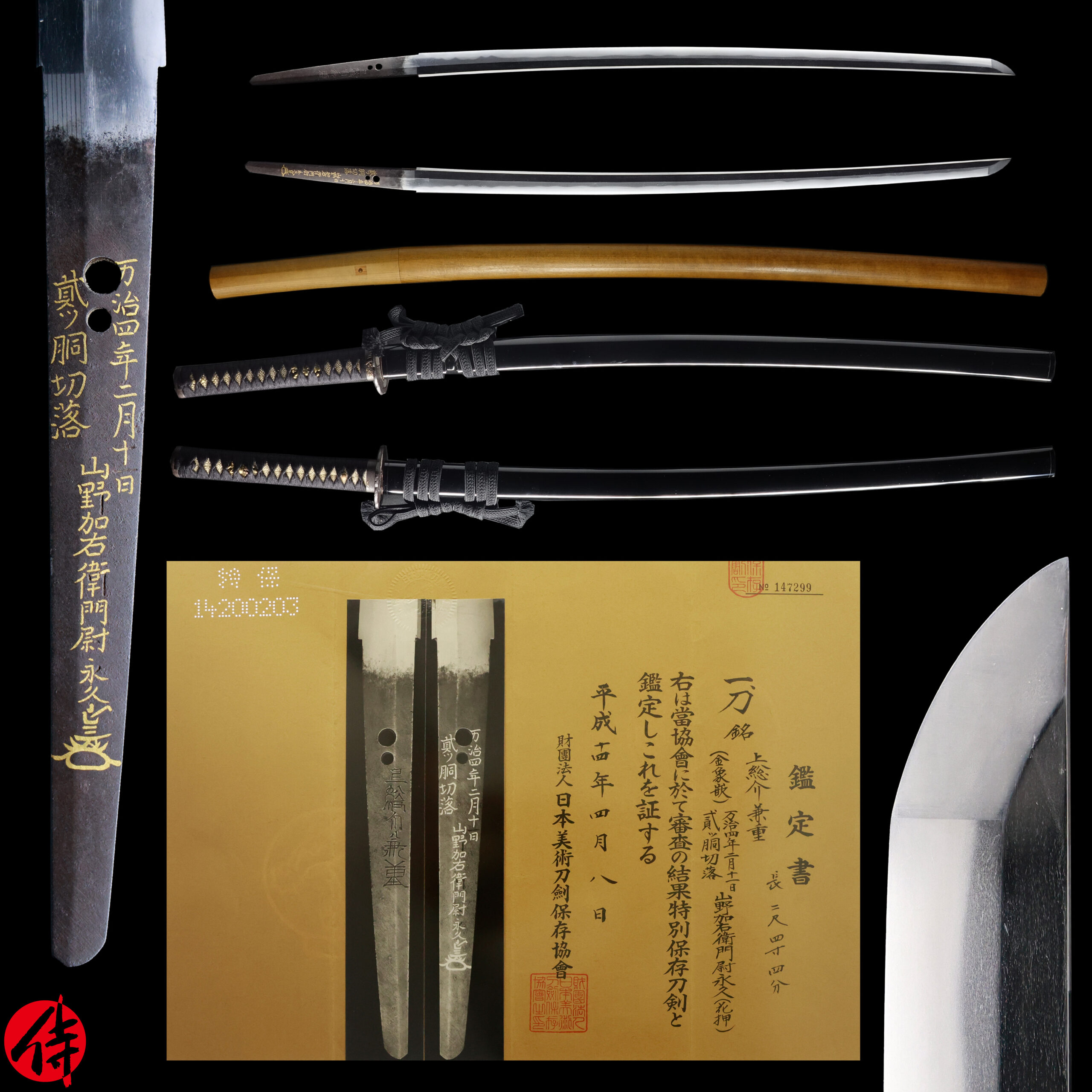
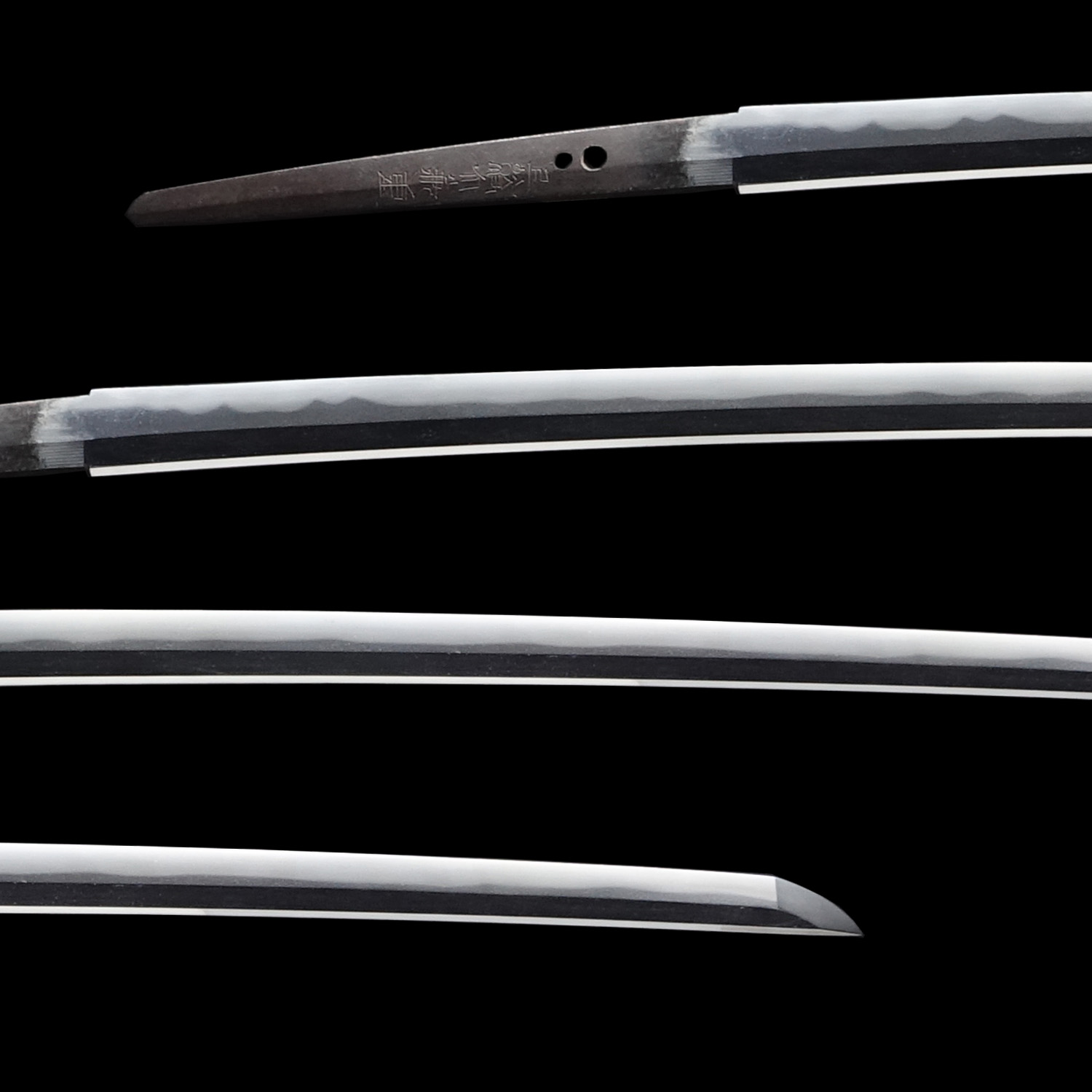
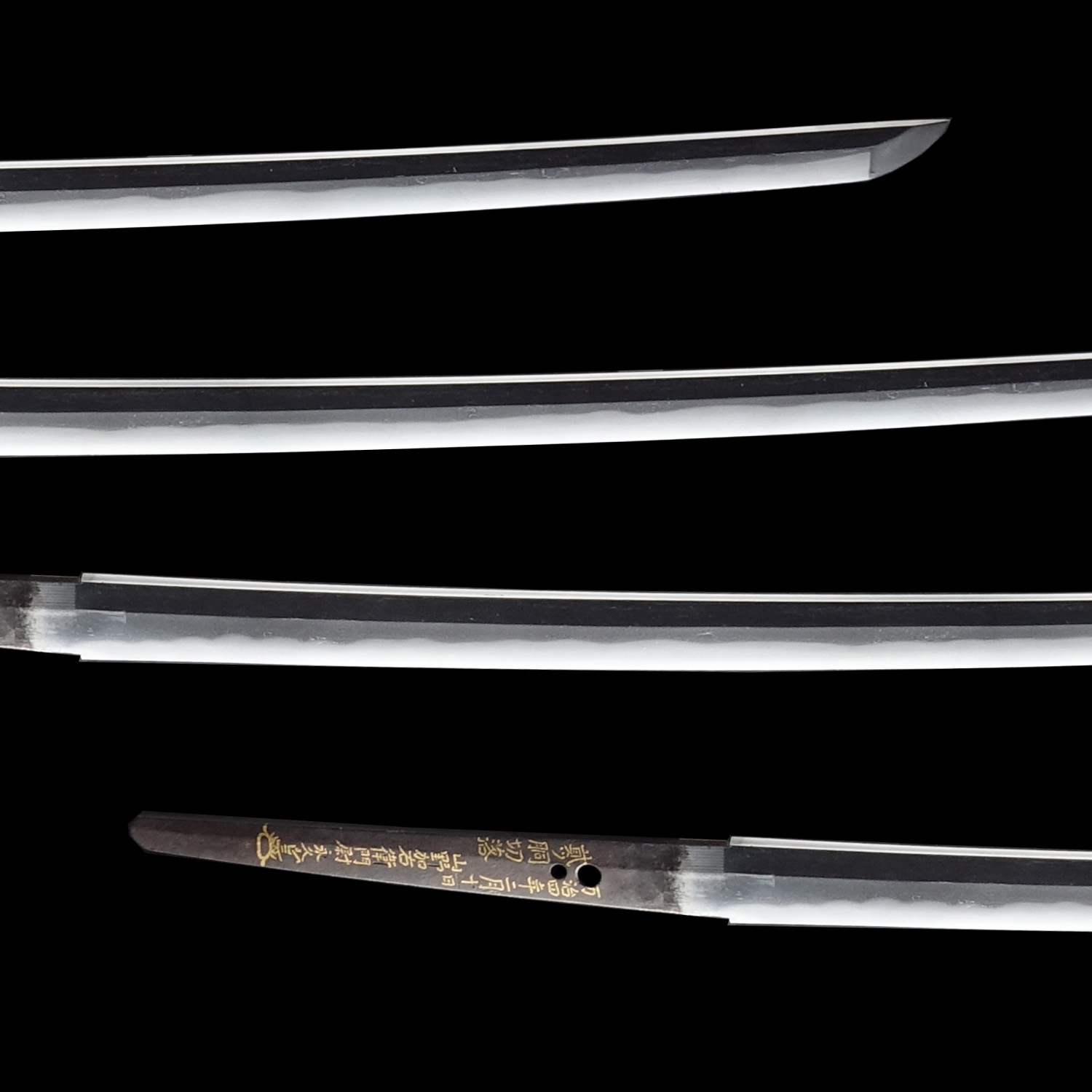
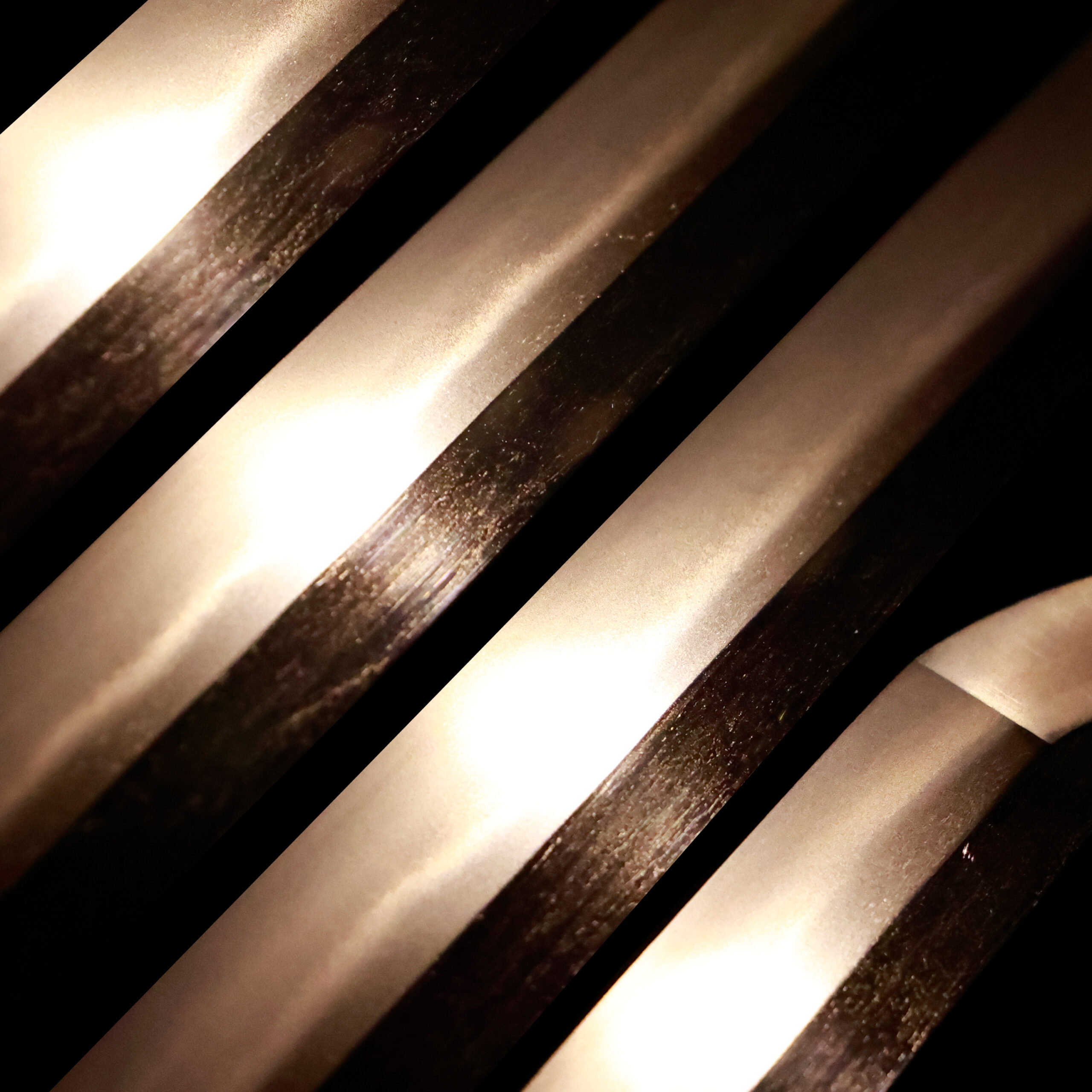
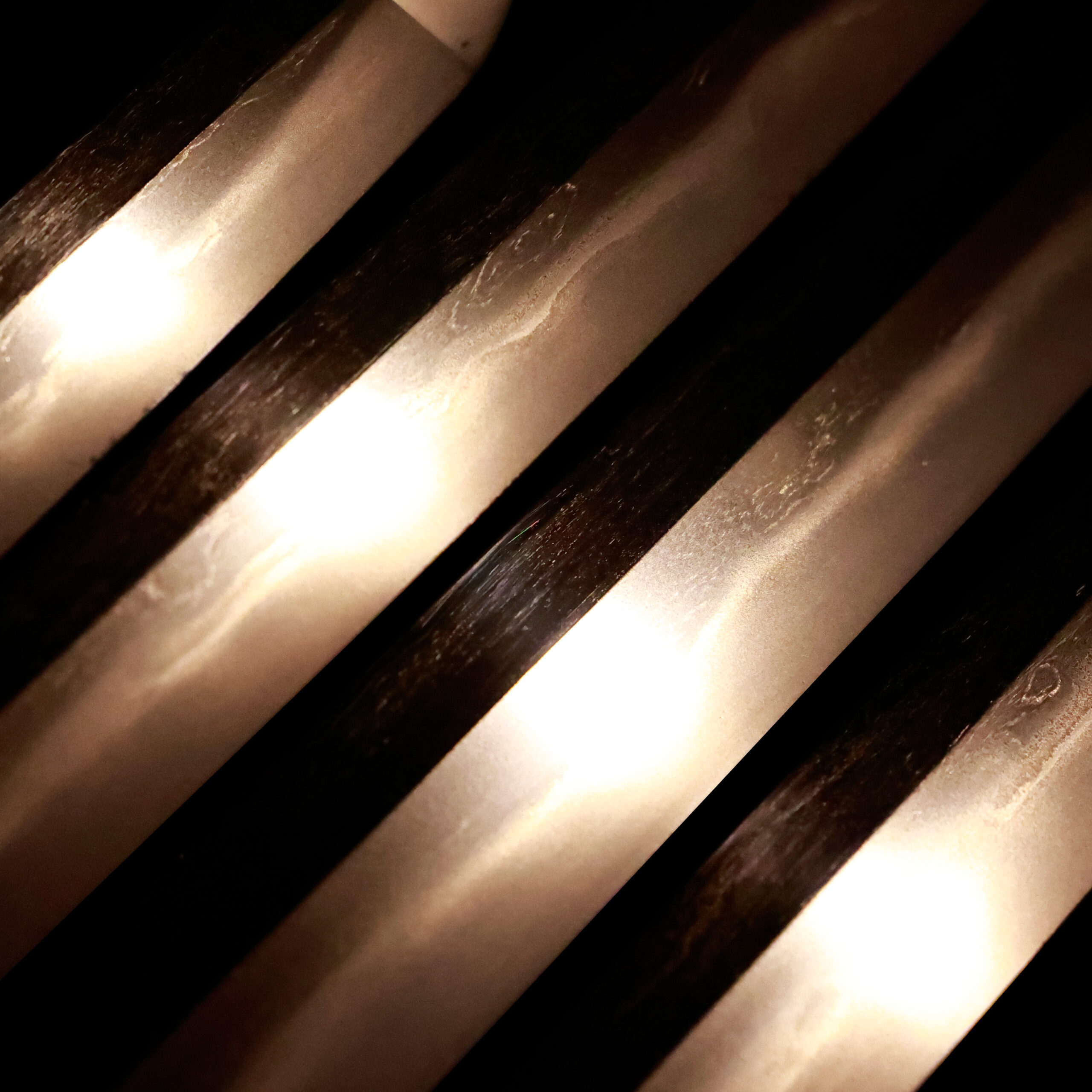
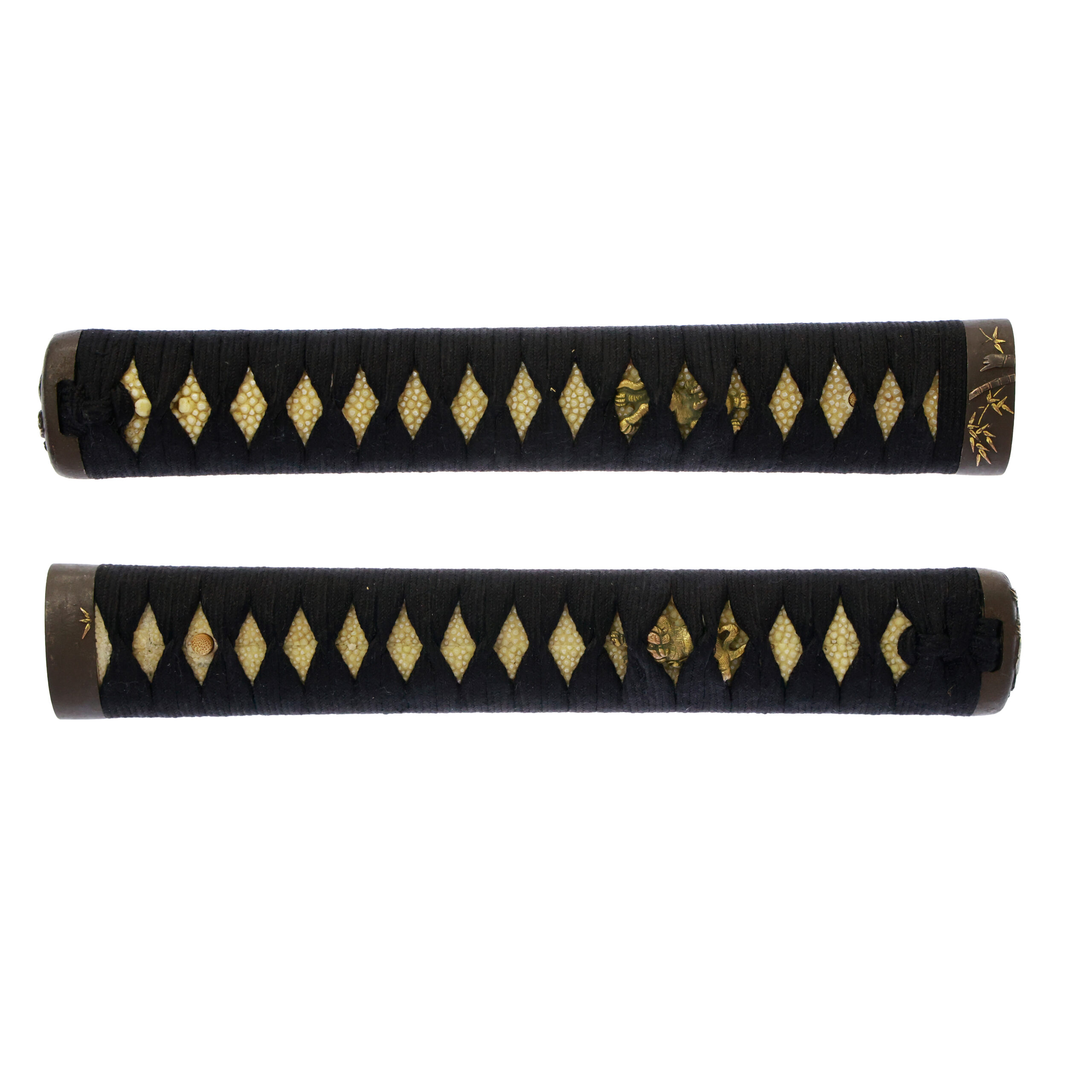
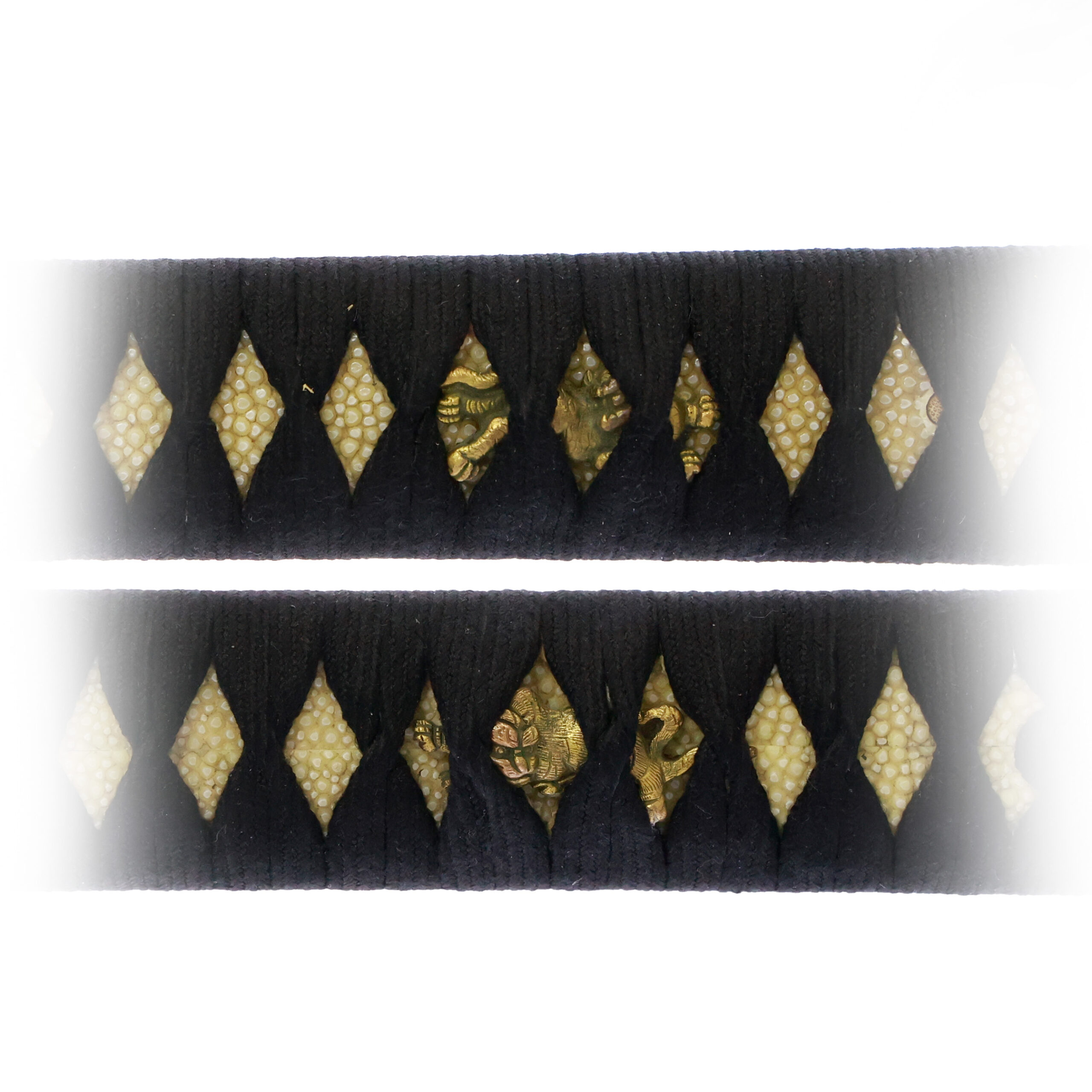
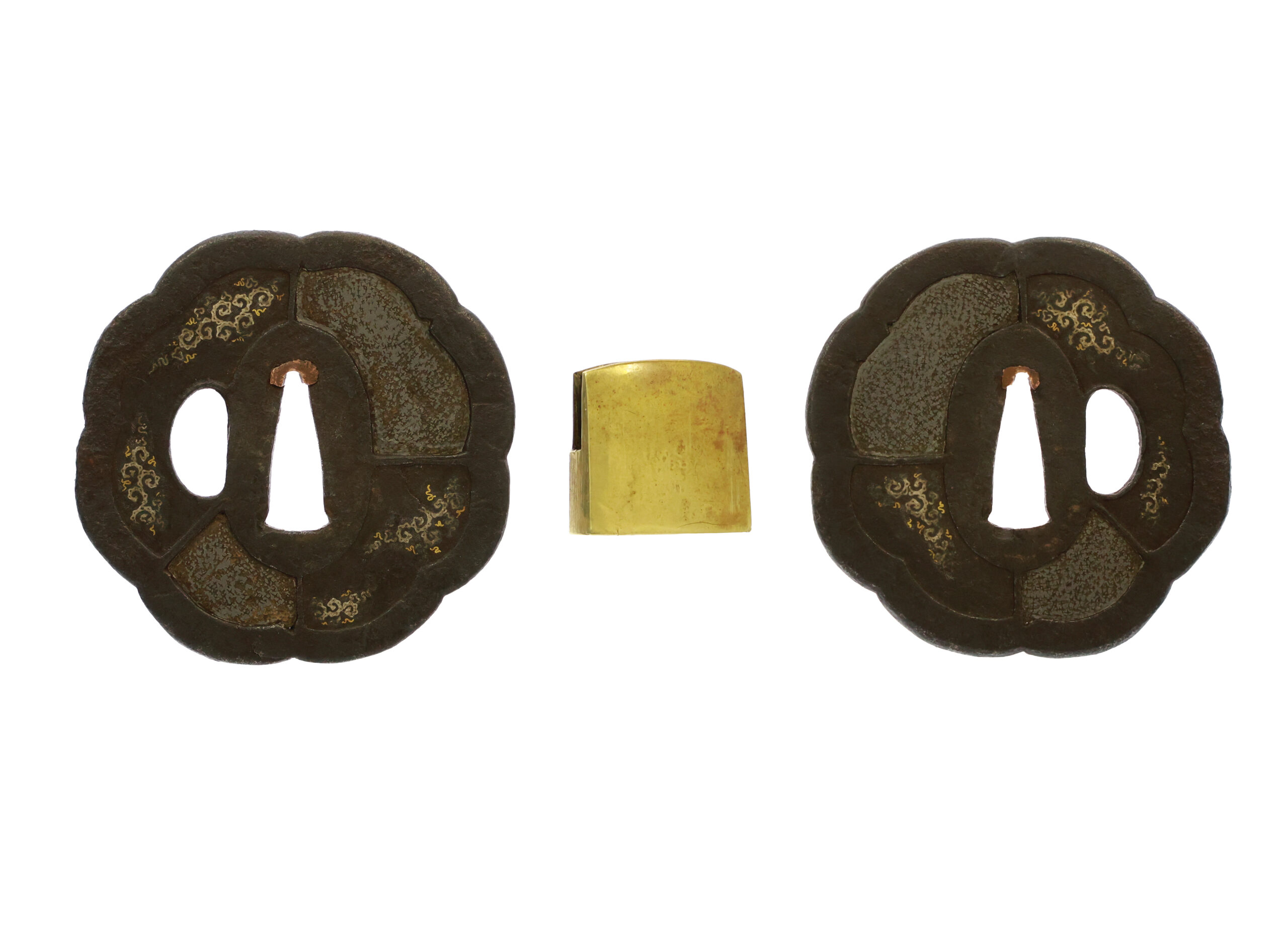
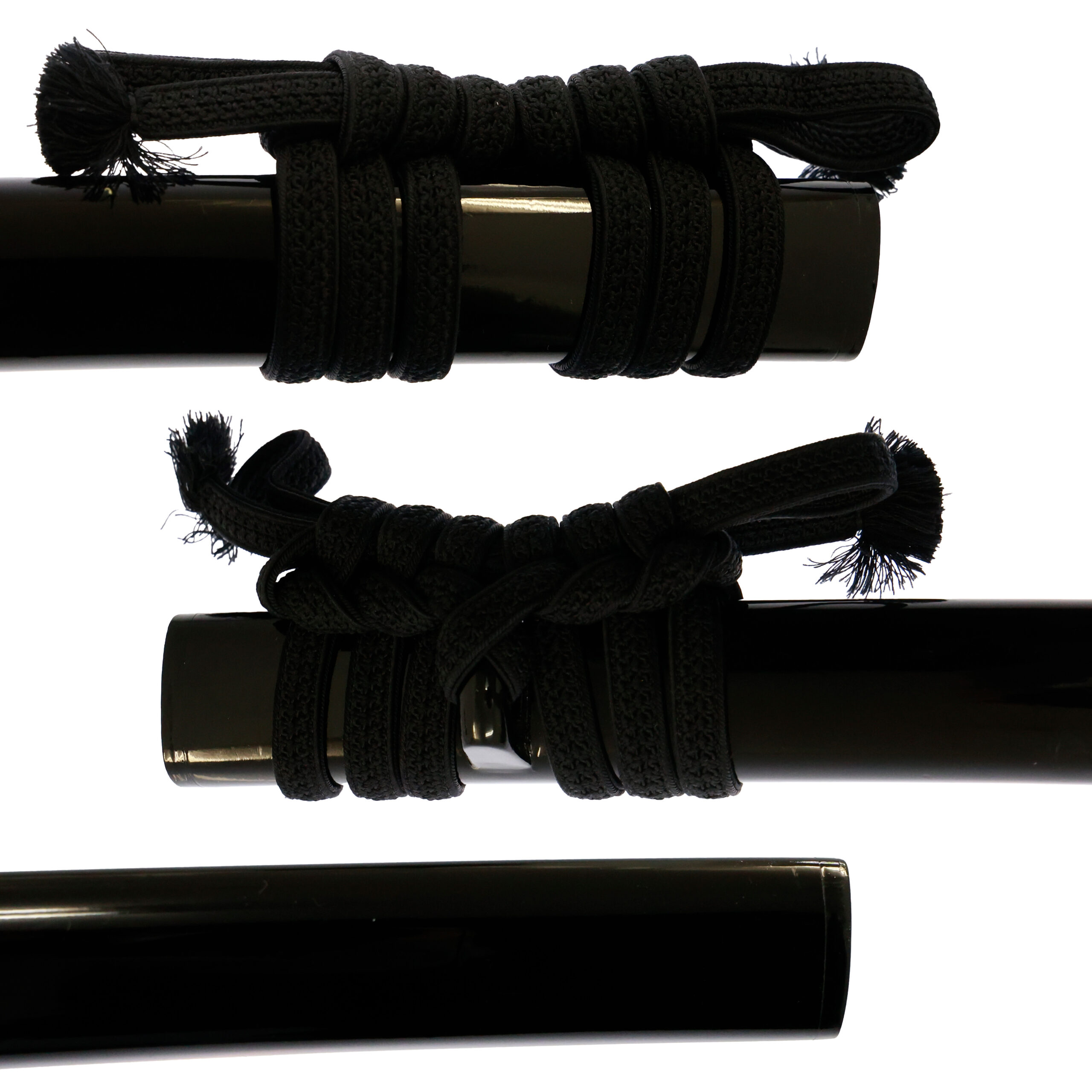
Edo Kaneshige (Musashi, Shinto) · 武蔵 · 1661-1673頃
藤代 Jo saku · 刀剣大鑑 上位21%
現在1点販売中
兼重の名で現存する最も早い年紀の作は、寛永二年紀の和泉守藤原兼重による薙刀である。説明書はこの和泉守を、初代康継・繁慶についであらわれた江戸鍛冶とする。伝に越前の出で、もと矢ノ根鍛冶であったが、のち江戸に出て刀鍛冶に転じたといい、「古今鍛冶備考」にもそうあるが、明らかではない。名はさらに二人目の刀工、上総守とも銘した上総介藤原兼重を擁し、初代の子または弟子で、長曽祢虎徹と同時代とされる。両者は長く同人とされ、旧説はその受領銘の変更を遠慮によって説いた。藤堂和泉守に抱えられ、主に和泉守を譲って自らは上総介に改めたというのである。しかし説明書は今これを退ける。在銘・年齢入りの作から、上総介は寛永三年生まれと知れ、和泉守には既に寛永の年紀があって、両者は別人なのである。この一系を一つに結ぶのは、江戸の試し切りの名手のうちでの地位と、初代が虎徹の師であったという根強い伝えである。
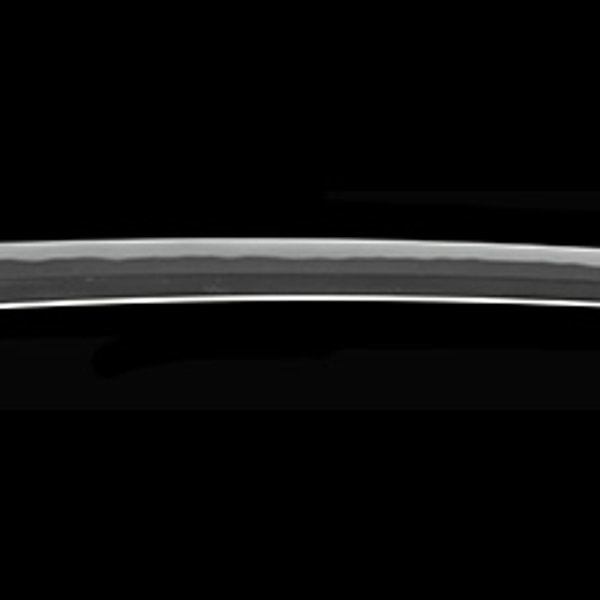
この一系が最もよく見分けられる手は、互の目の連れた数珠刃であり、二代がこれを完成の域に高めた。よくつんでやや肌立ち、地沸が微塵に厚くつき地景の入る小板目に、身幅尋常・反り浅く中鋒の詰まる寛文新刀の姿に、刃文は直刃調を基に互の目が連れて、ついには数珠刃となる。説明書はその手の仕組みをはっきりと取り出す。すなわち互の目を一つ焼くと次は二つ焼くというふうに、一つ二つと繰り返して焼く一定のリズムであり、これをこの工の大きな見どころ、すなわち観る者がまず読み取る特色とする。足太く入り、匂深く沸厚くつき、金筋・砂流しが長くさかんに刃中を走り、匂口は明るい。その出来は虎徹に極めて近く、説明書はある一刀について、「殆んど馬徹に見紛う程の出来」[[c:1]]と評する。
その刃を支える地鉄は、江戸の名手のよくつんだ小板目で、処々杢・流れ肌を交えて肌立ちごころとなり、地沸を微塵に厚くつけ地景がよく入る。開いた肌ではなく抑制された都の鉄であって、二代の大ぶりの刀ではわずかな肌立ちが地を破らぬまま生かす。帽子は直ぐに小丸、先は掃きかけ、時にやや深く返り、最も乱れる作では先がやや乱れ込んでから返る。茎は生ぶ、筋違の鑢目には既に装飾的な気味があって、説明書はこれを後世の化粧鑢の原形とみる。長銘は独特の隷書体で切られ、晩年には鏨が細く銘字がやや小振りで自然になる。
説明書は初代の作域を二様に描き、その分け方は作の読み方を律するゆえに留め置く価値がある。一は、のたれを基調とした互の目乱れで、元に焼出しを見せ、浅いのたれに互の目・葉を交え、足よく入り、匂口深く明るく、細かに砂流しかかる。二は、直刃を基とし、広く極めて浅くのたれをおびて、匂深く沸厚く、刃中に沸筋を伏せ、匂口の一段と冴えるものである。この後者を説明書は刃中のよく働く濡れごころの直刃と評し、重ね厚く平肉の豊かな明暦三年の一刀については、直刃ながら焼刃の広い帯に覇気が漲るとして、「直刃といえども迫力を感じさせる」[[c:2]]とする。二代はその連れた互の目を完成された数珠刃へと高めた。近年この二つの手を分ける研究が進み、初二代の代替りは慶安期に置かれ、二代は初め和泉守を冠してのち上総守・上総介を交互に用いたとみられ、子と伝える助九郎兼常による代銘も指摘されている。
この一系を分かつものは、他派の特色を述べるよりも、その自らの確かな見どころから語るのがよい。その見どころは、一つ二つと繰り返す数珠刃であり、すなわち「互の目を一つ焼くと次は二つ焼くというふうに、一つ二つと繰り返して焼く」[[c:3]]手を、匂深く匂口の明るい静かな直刃調の上に運び、金筋・砂流しを長く走らせる。説明書は虎徹との関係を両端から枠づける。初代を、伝にいう虎徹の師とし、その作風は全く虎徹のようで、地刃ともに匂深く冴える、「全く虎徹のように地刃の出来が匂深く冴えている」[[c:4]]とする。二代を数珠刃そのものの源に置き、その万治四年の截断銘脇指に完全な数珠刃が虎徹に先立って現れるとして、その手が後の虎徹の数珠刃の展開に大きな影響を及ぼしたとする。同じ説明書は、同じ江戸の一角に活躍した法城寺一派との類似を説き、兼重はその一派と截断銘の合作刀を残しており、数珠刃は一個の発明というよりは、浅草界隈に働いた刀工たちに共有された一つの潮流として読める。
兼重は藤代の上作に位し、江戸新刀の有力な名の一つで、その名声は多くの作に伴う試し切りと切り離せない。山野加右衛門尉永久の金象嵌截断銘がその作に繰り返し現れ、浅草での三ツ胴・二ツ胴の截断を記し、一刀は兼重の系と法城寺一派を併記して三度の截断を負う。その名で記録に立つのは、重要刀剣の二十口で、そのほとんどが鎬造の刀・脇指、短刀は稀に見るのみであり、加えて重要文化財一口、すなわち日光・二荒山神社に蔵される在銘の大太刀である。これはその指定によって、市場に出るものではなく護られた文化財である。残る重要刀剣の諸刀こそ、私の蔵家が現実に出会い得る領域で、多くは旧家に久しく蔵され、時に市に現れる。山野の名高い截断銘をもつ在銘の兼重は最も求められる一例であり、確かな記録をもつ一刀を、江戸開府期の最も見分けやすい刃文の一つに結ぶものである。
兼重の位置づけを、日本刀全体および伝統・時代・時期ごとに示します。各位(随一・屈指・有数・著名)は、NBTHK および文化庁による指定に加え、三作や名物帳などの歴史的栄誉を加味したものです。
各項目を選ぶと評価方法が表示されます。
新刀 · 武蔵
現在8点販売中
兼重は、初代康継・繁慶についで江戸にあらわれた鍛冶で、説示は初代和泉守兼重をもと越前の矢ノ根鍛冶とし、のちに江戸へ出て刀鍛冶に転じたと伝える。古今鍛冶備考の説に拠るとあり、その現存作で最も早い年紀は寛永二年八月日紀の薙刀で、作刀は明暦の頃にまで及ぶ。和泉守と上総介の両者は従来同人とされ、藤堂和泉守に抱えられたために主君と受領銘が同じであることを憚って上総介に改めたと伝えられてきたが、辻上総介藤原兼重四十三歳於江戸作之康継下坂市之丞云々と銘じた脇指、ならびに寛文六年紀の康継合作刀の存在によって、上総介兼重は寛永三年の生まれと算せられ、和泉守とは明らかに別人であることが説示に示される。二代上総介兼重は和泉守兼重の子または弟子とみられる兼重二代目であり、上総守と冠することもあって、作刀はおよそ明暦・万治から始まり、寛文・延宝の頃が活躍期で、虎徹と同時代に位置する。近年は両者の銘字を比較検討して代替りの時期を慶安期とし、二代も初期には和泉守を冠したのち上総守・上総介を交互に用い、さらに二代の子と伝える助九郎兼常による代銘を指摘するなど、新説が打ち出されているという。 作風は説示が初二代に分けて記す。初代和泉守の作は大別して二様で、一はのたれを基調に互の目が連れて交じり足の入ったもの、一は沸匂深く直刃仕立に浅くのたれをおびた刃取りで匂口が明るく冴えるものである。鍛えは小板目肌がよくつみ、あるいは板目に杢・流れ肌を交えて肌立ちごころとなり、地沸が微塵に厚くつき地景が細かによく入る。直刃の作では広直刃に浅いのたれをおびて沸筋がかかり、匂が一段と深く沸が厚くつくところが、この作域を手懸けた折の特色とされる。二代上総介の作は、直刃調に互の目が連れて数珠刃風となるのが本領で、足太く頻りに入り、金筋・砂流しがかかって匂口が明るい。互の目を一つ焼くと次は二つ焼くというふうに、一つ二つと繰り返して焼く一定のリズムが見られ、これが大きな見どころと説示は繰り返す。姿は身幅尋常、元先の幅差つき、反り浅く中鋒の詰まった寛文新刀の体配を示し、寛永・正保頃の作には慶長新刀から寛文新刀へ移行する過渡的な姿もあらわれる。茎には化粧風の鑢がかかり、後世の装飾的な化粧鑢の原形とみられると説示はほぼ一様に記す。 伝承の要点として説示が重んじるのは虎徹との関係である。二代は虎徹同様に数珠刃を得意とし、万治四年の山野加右衛門尉永久の金象嵌截断銘の脇指に虎徹に先立って完全な数珠刃を焼いた作があることから、その作風が後の虎徹の数珠刃に大きな影響を及ぼしたと想像に難くないとし、初代もまた虎徹の師と云われるとの伝を引く。一見虎徹を髣髴させ、ほとんど虎徹に見紛う程の出来とする評が諸作に見え、長曽祢虎徹や法城寺一派と類似した数珠刃風の互の目を江戸鍛冶相互の影響のうちに焼いたとも説く。截断銘を伴う作が多いのも特色で、山野加右衛門尉永久、勘十郎時代の同人、柴崎伝左衛門正次、前島八郎友次らの金象嵌截断銘が裏に添えられ、三ツ胴・二ツ胴截断の業物として遇されたことを示す。茎の隷書風の独特の書体による五字・七字・長銘も同工識別の手懸りであり、銘字の太細や大小の推移が前後期の判別に資する。明暦三年紀や寛文・延宝紀の作を含め、説示は数珠刃の完成度と直刃の冴えの両面に同派の到達を見ている。 詳しく見る →
江戸 将軍の御膝元
参勤交代が集めた日本最大の帯刀人口が江戸にあった。御用鍛冶康継は茎に葵紋を許され、虎徹の刀は截断銘の金象嵌を帯びる。この町では、証こそが物を言った。
保存刀剣のうち、出来が一層優れ、保存状態も良好と認められたものです。再刃や、室町・江戸期の多くの無銘作は対象外となり、保存刀剣より高い基準が課されます。
日本美術刀剣保存協会(NBTHK)は、1948年に設立され、文化庁の監督を受ける公益財団法人で、東京・刀剣博物館に本部を置きます。専門の審査員が出品作を直接審査し、美術的・歴史的価値に応じた鑑定書を発行します。NBTHKの鑑定書は、日本刀および刀装具の真正性を示す最も広く認知された基準です。
NBTHK公式サイトReturns/exchanges limited to defects caused by shipping (except willful misconduct or gross negligence by the company); customers must contact within 72 hours of receiving the product.
特別保存刀剣鑑定書付 上総介兼重 銘 (金象嵌截断銘) 【解説】 本作は江戸時代前期(寛文二年以前)、武蔵国(現在の東京都)にて上総介兼重(かずさのすけかねしげ)によって制作された一振りです。茎(なかご)の裏には、後述する試し斬りの結果を記した截断銘が刻まれています。 兼重は寛文・延宝期(1661-1681年)の武蔵国を代表する名工であり、仙台や伊勢でも作刀した記録が残っています。江戸初期における最も評価の高い工の一人であり、名匠・和泉守兼重の門下で技を磨き、後にその流派を継承したことから「二代兼重」としても知られています。初代から二代への継承時期は慶安年間(1648-1652年)頃とされ、兼重の名は三代にわたって受け継がれました。 また、和泉守兼重の門下には、江戸新刀の最高峰と称される長曽祢虎徹(興里)がいたことでも有名です。上総介兼重と虎徹は同門として共に切磋琢磨し、師から卓越した技術を学びました。また、剣豪・宮本武蔵が上総介兼重の刀を愛用していたという伝承もあり、当時からその実力が極めて高く評価されていたことを物語っています。 【初代兼重と二代兼重について】 初代兼重(和泉守兼重)は、江戸時代初期(1624-1652年頃)に活躍しました。元は越前国の出身で、徳川将軍家の親族である松平家に仕えていたと伝えられています。寛永元年(1624年)に江戸へ移り、同三年(1626年)にはその優れた技量から「和泉大掾」を受領、後に「和泉守」へと昇進しました。 初代兼重は、戦国から江戸初期にかけての名将・藤堂高虎に召し抱えられました。これには、高虎と親交のあった宮本武蔵の推挙があったという逸話が残っています。二代兼重である上総介兼重もまた、引き続き藤堂家に仕えました。 二代兼重は当初、朝廷より「上総介」ではなく「上総守」を拝命しましたが、後に自ら「上総介」への改称を願い出たという興味深いエピソードがあります。これは、主君である藤堂高虎が後に「上総守」を拝命したため、主君と同じ受領名を名乗ることを憚ったためと言われており、彼の忠義心と謙虚な人柄を象徴する逸話として語り継がれています。 兼重の代々は、その圧倒的な切れ味から「良業物(よきわざもの)」に列せられています。これは寛政九年(1797年)に柘植平助方理(懐宝剣尺)によって編纂された、刀剣の切味による格付けに基づくものです。 【截断銘(試し斬り)について】 鑑定書および茎の銘文によれば、本作は寛文元年(1661年)二月十日、当時高名な御様御用(おためしごよう)であった山野加右衛門永久(やまのかえもんながひさ)によって試し斬りが行われています。これは上総介兼重の活躍時期と合致しており、その結果は「金象嵌(きんぞうがん)」によって誇り高く刻まれています。 銘文にある「弐ツ胴截断(ふたつどうさいだん)」とは、重ねた二つの遺体を一太刀で切り落としたことを意味しており、本作が美術品としての美しさのみならず、武器としても比類なき性能を備えていたことを証明しています。
NihontoWatchEdo Kaneshige (Musashi, Shinto) · 武蔵 · 1661-1673頃
藤代 Jo saku · 刀剣大鑑 上位21%
現在1点販売中
兼重の名で現存する最も早い年紀の作は、寛永二年紀の和泉守藤原兼重による薙刀である。説明書はこの和泉守を、初代康継・繁慶についであらわれた江戸鍛冶とする。伝に越前の出で、もと矢ノ根鍛冶であったが、のち江戸に出て刀鍛冶に転じたといい、「古今鍛冶備考」にもそうあるが、明らかではない。名はさらに二人目の刀工、上総守とも銘した上総介藤原兼重を擁し、初代の子または弟子で、長曽祢虎徹と同時代とされる。両者は長く同人とされ、旧説はその受領銘の変更を遠慮によって説いた。藤堂和泉守に抱えられ、主に和泉守を譲って自らは上総介に改めたというのである。しかし説明書は今これを退ける。在銘・年齢入りの作から、上総介は寛永三年生まれと知れ、和泉守には既に寛永の年紀があって、両者は別人なのである。この一系を一つに結ぶのは、江戸の試し切りの名手のうちでの地位と、初代が虎徹の師であったという根強い伝えである。
この一系が最もよく見分けられる手は、互の目の連れた数珠刃であり、二代がこれを完成の域に高めた。よくつんでやや肌立ち、地沸が微塵に厚くつき地景の入る小板目に、身幅尋常・反り浅く中鋒の詰まる寛文新刀の姿に、刃文は直刃調を基に互の目が連れて、ついには数珠刃となる。説明書はその手の仕組みをはっきりと取り出す。すなわち互の目を一つ焼くと次は二つ焼くというふうに、一つ二つと繰り返して焼く一定のリズムであり、これをこの工の大きな見どころ、すなわち観る者がまず読み取る特色とする。足太く入り、匂深く沸厚くつき、金筋・砂流しが長くさかんに刃中を走り、匂口は明るい。その出来は虎徹に極めて近く、説明書はある一刀について、「殆んど馬徹に見紛う程の出来」[[c:1]]と評する。
その刃を支える地鉄は、江戸の名手のよくつんだ小板目で、処々杢・流れ肌を交えて肌立ちごころとなり、地沸を微塵に厚くつけ地景がよく入る。開いた肌ではなく抑制された都の鉄であって、二代の大ぶりの刀ではわずかな肌立ちが地を破らぬまま生かす。帽子は直ぐに小丸、先は掃きかけ、時にやや深く返り、最も乱れる作では先がやや乱れ込んでから返る。茎は生ぶ、筋違の鑢目には既に装飾的な気味があって、説明書はこれを後世の化粧鑢の原形とみる。長銘は独特の隷書体で切られ、晩年には鏨が細く銘字がやや小振りで自然になる。
説明書は初代の作域を二様に描き、その分け方は作の読み方を律するゆえに留め置く価値がある。一は、のたれを基調とした互の目乱れで、元に焼出しを見せ、浅いのたれに互の目・葉を交え、足よく入り、匂口深く明るく、細かに砂流しかかる。二は、直刃を基とし、広く極めて浅くのたれをおびて、匂深く沸厚く、刃中に沸筋を伏せ、匂口の一段と冴えるものである。この後者を説明書は刃中のよく働く濡れごころの直刃と評し、重ね厚く平肉の豊かな明暦三年の一刀については、直刃ながら焼刃の広い帯に覇気が漲るとして、「直刃といえども迫力を感じさせる」[[c:2]]とする。二代はその連れた互の目を完成された数珠刃へと高めた。近年この二つの手を分ける研究が進み、初二代の代替りは慶安期に置かれ、二代は初め和泉守を冠してのち上総守・上総介を交互に用いたとみられ、子と伝える助九郎兼常による代銘も指摘されている。
この一系を分かつものは、他派の特色を述べるよりも、その自らの確かな見どころから語るのがよい。その見どころは、一つ二つと繰り返す数珠刃であり、すなわち「互の目を一つ焼くと次は二つ焼くというふうに、一つ二つと繰り返して焼く」[[c:3]]手を、匂深く匂口の明るい静かな直刃調の上に運び、金筋・砂流しを長く走らせる。説明書は虎徹との関係を両端から枠づける。初代を、伝にいう虎徹の師とし、その作風は全く虎徹のようで、地刃ともに匂深く冴える、「全く虎徹のように地刃の出来が匂深く冴えている」[[c:4]]とする。二代を数珠刃そのものの源に置き、その万治四年の截断銘脇指に完全な数珠刃が虎徹に先立って現れるとして、その手が後の虎徹の数珠刃の展開に大きな影響を及ぼしたとする。同じ説明書は、同じ江戸の一角に活躍した法城寺一派との類似を説き、兼重はその一派と截断銘の合作刀を残しており、数珠刃は一個の発明というよりは、浅草界隈に働いた刀工たちに共有された一つの潮流として読める。
兼重は藤代の上作に位し、江戸新刀の有力な名の一つで、その名声は多くの作に伴う試し切りと切り離せない。山野加右衛門尉永久の金象嵌截断銘がその作に繰り返し現れ、浅草での三ツ胴・二ツ胴の截断を記し、一刀は兼重の系と法城寺一派を併記して三度の截断を負う。その名で記録に立つのは、重要刀剣の二十口で、そのほとんどが鎬造の刀・脇指、短刀は稀に見るのみであり、加えて重要文化財一口、すなわち日光・二荒山神社に蔵される在銘の大太刀である。これはその指定によって、市場に出るものではなく護られた文化財である。残る重要刀剣の諸刀こそ、私の蔵家が現実に出会い得る領域で、多くは旧家に久しく蔵され、時に市に現れる。山野の名高い截断銘をもつ在銘の兼重は最も求められる一例であり、確かな記録をもつ一刀を、江戸開府期の最も見分けやすい刃文の一つに結ぶものである。
兼重の位置づけを、日本刀全体および伝統・時代・時期ごとに示します。各位(随一・屈指・有数・著名)は、NBTHK および文化庁による指定に加え、三作や名物帳などの歴史的栄誉を加味したものです。
各項目を選ぶと評価方法が表示されます。
新刀 · 武蔵
現在8点販売中
兼重は、初代康継・繁慶についで江戸にあらわれた鍛冶で、説示は初代和泉守兼重をもと越前の矢ノ根鍛冶とし、のちに江戸へ出て刀鍛冶に転じたと伝える。古今鍛冶備考の説に拠るとあり、その現存作で最も早い年紀は寛永二年八月日紀の薙刀で、作刀は明暦の頃にまで及ぶ。和泉守と上総介の両者は従来同人とされ、藤堂和泉守に抱えられたために主君と受領銘が同じであることを憚って上総介に改めたと伝えられてきたが、辻上総介藤原兼重四十三歳於江戸作之康継下坂市之丞云々と銘じた脇指、ならびに寛文六年紀の康継合作刀の存在によって、上総介兼重は寛永三年の生まれと算せられ、和泉守とは明らかに別人であることが説示に示される。二代上総介兼重は和泉守兼重の子または弟子とみられる兼重二代目であり、上総守と冠することもあって、作刀はおよそ明暦・万治から始まり、寛文・延宝の頃が活躍期で、虎徹と同時代に位置する。近年は両者の銘字を比較検討して代替りの時期を慶安期とし、二代も初期には和泉守を冠したのち上総守・上総介を交互に用い、さらに二代の子と伝える助九郎兼常による代銘を指摘するなど、新説が打ち出されているという。 作風は説示が初二代に分けて記す。初代和泉守の作は大別して二様で、一はのたれを基調に互の目が連れて交じり足の入ったもの、一は沸匂深く直刃仕立に浅くのたれをおびた刃取りで匂口が明るく冴えるものである。鍛えは小板目肌がよくつみ、あるいは板目に杢・流れ肌を交えて肌立ちごころとなり、地沸が微塵に厚くつき地景が細かによく入る。直刃の作では広直刃に浅いのたれをおびて沸筋がかかり、匂が一段と深く沸が厚くつくところが、この作域を手懸けた折の特色とされる。二代上総介の作は、直刃調に互の目が連れて数珠刃風となるのが本領で、足太く頻りに入り、金筋・砂流しがかかって匂口が明るい。互の目を一つ焼くと次は二つ焼くというふうに、一つ二つと繰り返して焼く一定のリズムが見られ、これが大きな見どころと説示は繰り返す。姿は身幅尋常、元先の幅差つき、反り浅く中鋒の詰まった寛文新刀の体配を示し、寛永・正保頃の作には慶長新刀から寛文新刀へ移行する過渡的な姿もあらわれる。茎には化粧風の鑢がかかり、後世の装飾的な化粧鑢の原形とみられると説示はほぼ一様に記す。 伝承の要点として説示が重んじるのは虎徹との関係である。二代は虎徹同様に数珠刃を得意とし、万治四年の山野加右衛門尉永久の金象嵌截断銘の脇指に虎徹に先立って完全な数珠刃を焼いた作があることから、その作風が後の虎徹の数珠刃に大きな影響を及ぼしたと想像に難くないとし、初代もまた虎徹の師と云われるとの伝を引く。一見虎徹を髣髴させ、ほとんど虎徹に見紛う程の出来とする評が諸作に見え、長曽祢虎徹や法城寺一派と類似した数珠刃風の互の目を江戸鍛冶相互の影響のうちに焼いたとも説く。截断銘を伴う作が多いのも特色で、山野加右衛門尉永久、勘十郎時代の同人、柴崎伝左衛門正次、前島八郎友次らの金象嵌截断銘が裏に添えられ、三ツ胴・二ツ胴截断の業物として遇されたことを示す。茎の隷書風の独特の書体による五字・七字・長銘も同工識別の手懸りであり、銘字の太細や大小の推移が前後期の判別に資する。明暦三年紀や寛文・延宝紀の作を含め、説示は数珠刃の完成度と直刃の冴えの両面に同派の到達を見ている。 詳しく見る →
江戸 将軍の御膝元
参勤交代が集めた日本最大の帯刀人口が江戸にあった。御用鍛冶康継は茎に葵紋を許され、虎徹の刀は截断銘の金象嵌を帯びる。この町では、証こそが物を言った。
保存刀剣のうち、出来が一層優れ、保存状態も良好と認められたものです。再刃や、室町・江戸期の多くの無銘作は対象外となり、保存刀剣より高い基準が課されます。
日本美術刀剣保存協会(NBTHK)は、1948年に設立され、文化庁の監督を受ける公益財団法人で、東京・刀剣博物館に本部を置きます。専門の審査員が出品作を直接審査し、美術的・歴史的価値に応じた鑑定書を発行します。NBTHKの鑑定書は、日本刀および刀装具の真正性を示す最も広く認知された基準です。
NBTHK公式サイトReturns/exchanges limited to defects caused by shipping (except willful misconduct or gross negligence by the company); customers must contact within 72 hours of receiving the product.