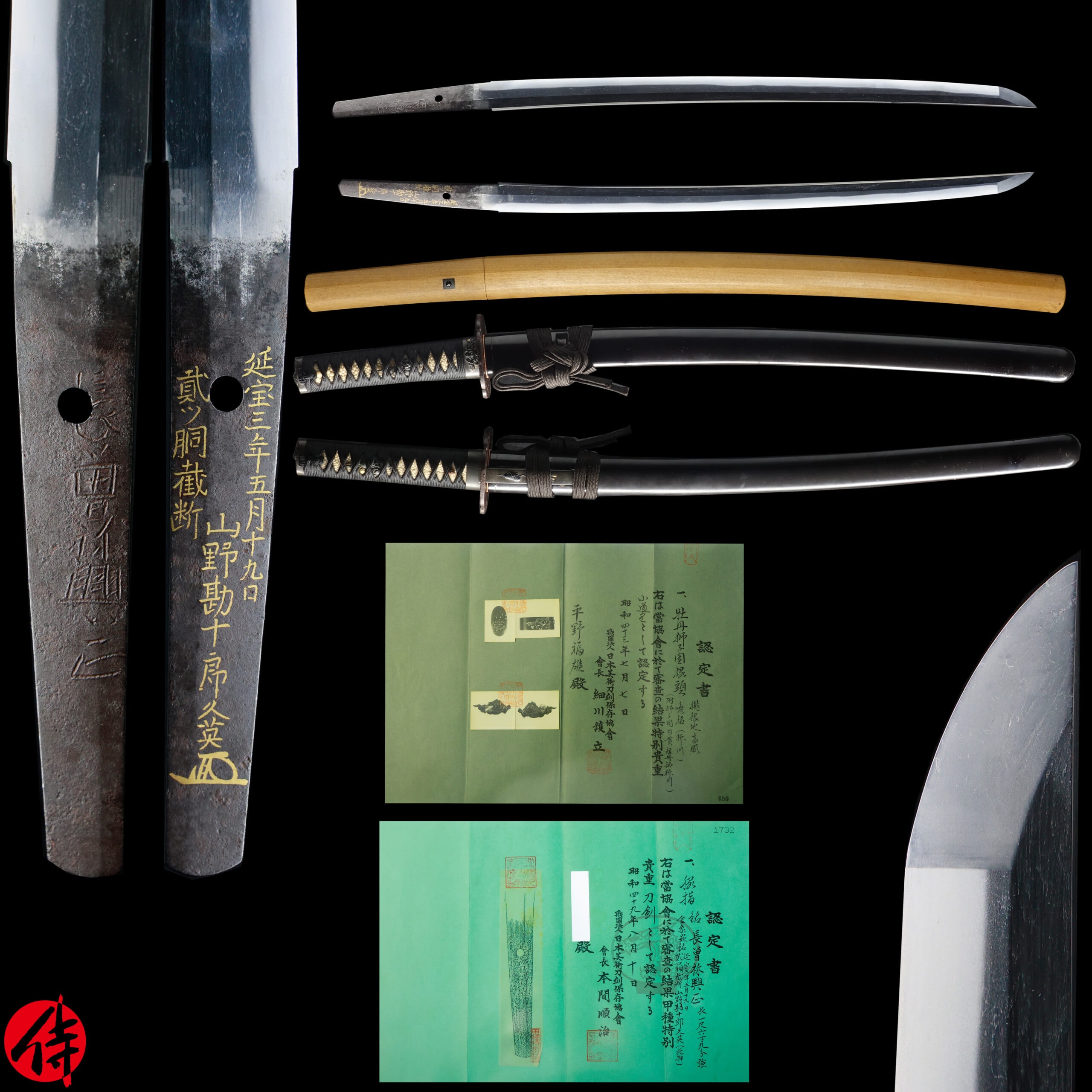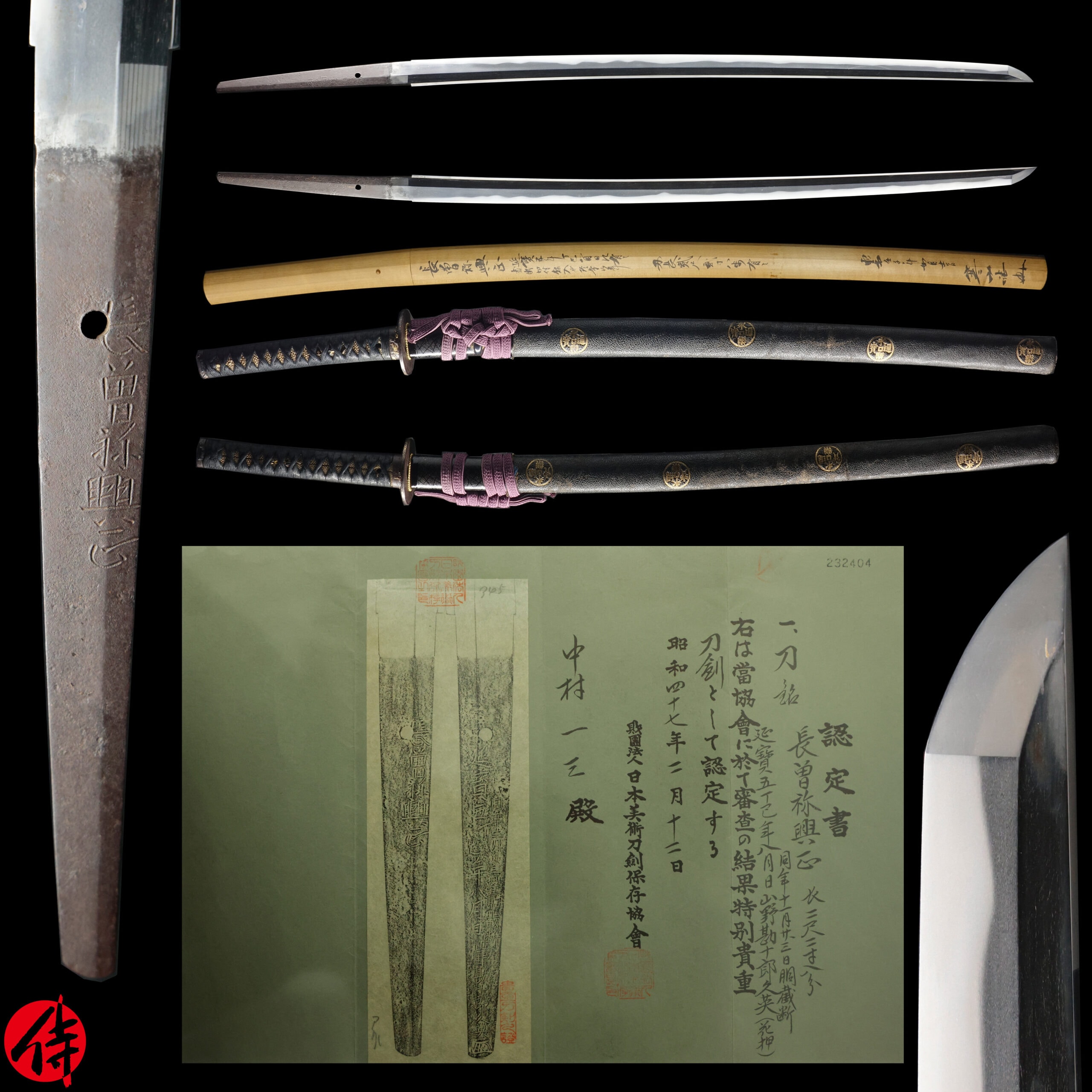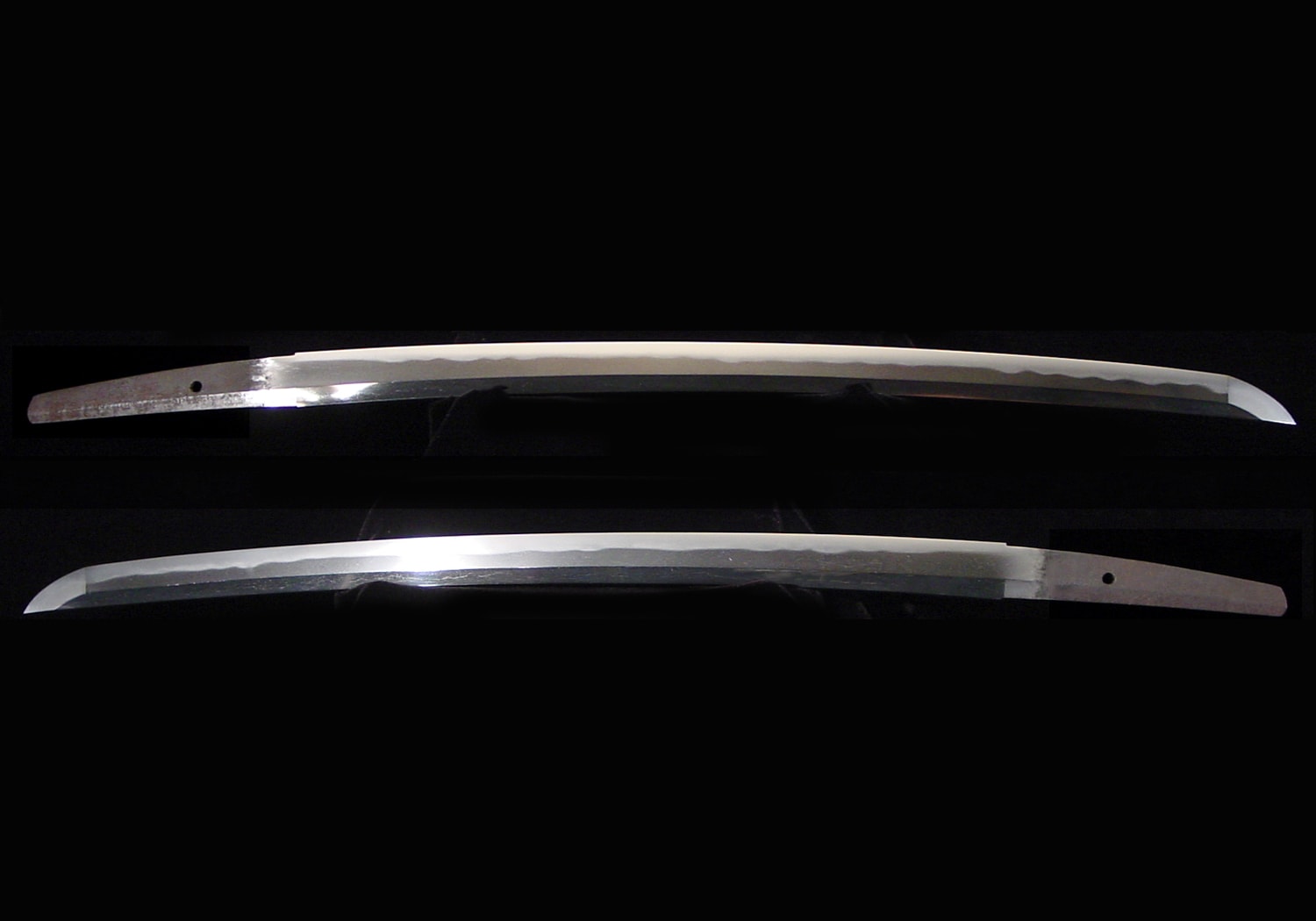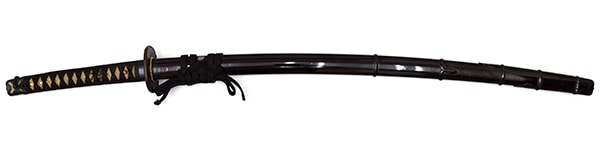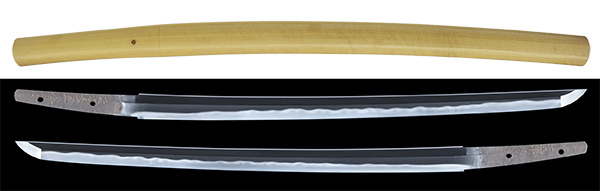

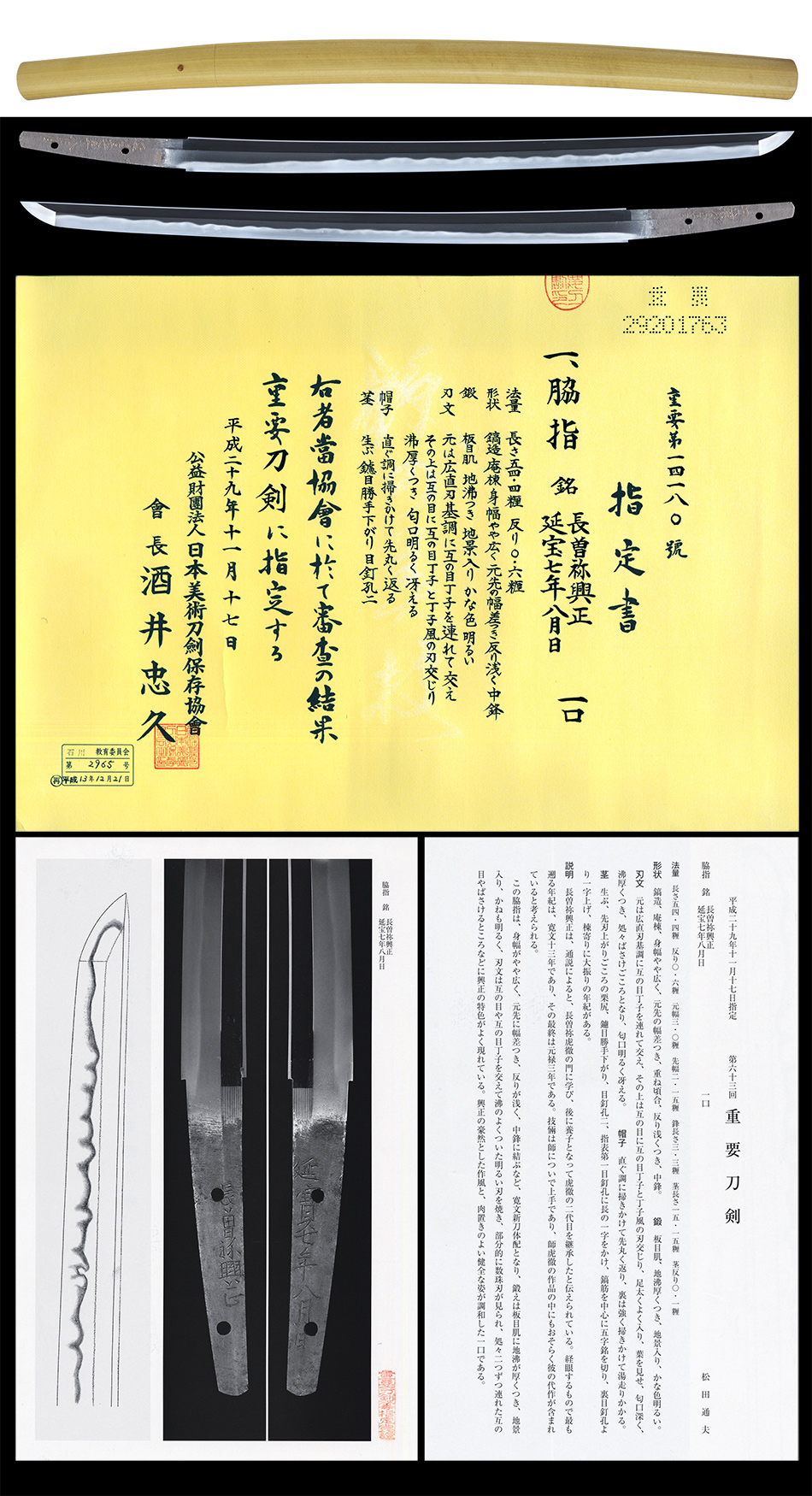
Juyo-Token, 63rd Session — Designated November 17, 2017
Wakizashi, mei: Nagasone Okimasa (長曾祢興正)
Measurements Nagasa 54.4 cm, sori 0.6 cm, motohaba 3.0 cm, sakihaba 1.5 cm, kissaki-nagasa 3.3 cm, nakago-nagasa 15.1 cm, nakago-sori 0.1 cm
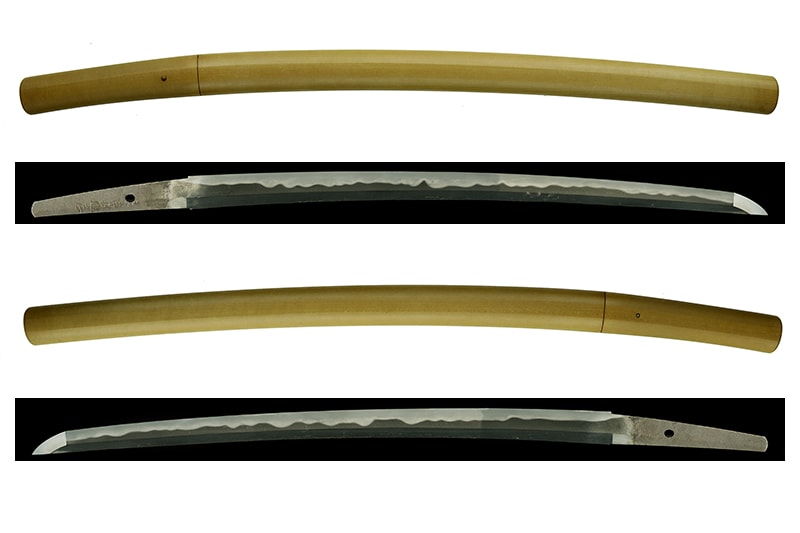
Description Keijo: shinogi-zukuri, iori-mune; somewhat wide mihaba with evident taper from base to tip; moderate kasane; shallow sori; chu-kissaki. Kitae: itame-hada with thickly adhering ji-nie; chikei appearing; the steel color is bright. Hamon: At the base, a wide suguha tendency, accompanied and mixed with gunome-chōji; above that, gunome mixed with gunome-chōji and chōji-like elements; thick, well-entering ashi; deep nioiguchi; thickly adhering nie; with places showing a basake tendency; the nioiguchi is bright and clear. Boshi: Straight, with hakikake, turning back in a rounded manner; on the reverse side, strongly hakikake with yubashiri appearing. Horimono: None. Nakago: ubu; kurijiri with a tendency toward ha-agari; katte-sagari yasurime; two mekugi-ana; on the omote the character 長 of “Naga” extends into the first mekugi-ana, and the five-character signature is cut centered on the mune; on the ura the date inscription is large, placed toward the mune, beginning one character above the mekugi-ana.
Artisan Nagasone Okimasa (長曾祢興正)
Era Enpō 7 (1679), Edo period
Explanation According to the prevailing tradition, Nagasone Okimasa studied under Nagasone Kotetsu, and later became his adopted son, succeeding as the second generation of Kotetsu. Among extant works, the earliest dated example is from Kanbun 13 (1673), and the latest is from Genroku 3 (1690). His skill is said to have been second only to his master’s, and it is considered possible that some works within the corpus of Kotetsu include pieces made as Okimasa’s substitute work (daisaku).
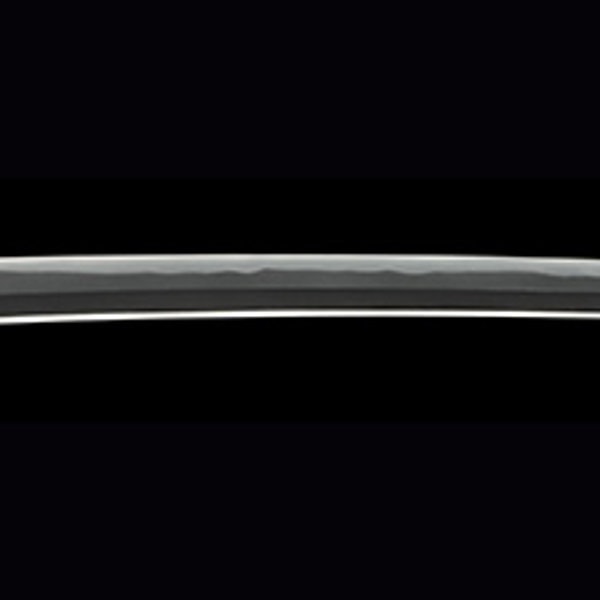
This wakizashi has a somewhat wide mihaba, clear taper between base and tip, shallow sori, and a chu-kissaki, presenting the characteristic Kanbun-period Shintō taihai (overall shape). The forging shows itame-hada with thick ji-nie and visible chikei, and the steel color is also bright. The temper is a bright nie-laden hamon mixing gunome and gunome-chōji; in places, juzu-ba can be observed, and features such as paired gunome and areas where the pattern becomes basakeru appear here and there—elements in which Okimasa’s distinctive characteristics are well expressed. This is a work in which Okimasa’s bold manner and a kenzen (sound and well-preserved) condition of good substance are in harmonious accord.
As a result of examination, the above is designated an Important Sword.
November 17, 2017 NBTHK (The Society for the Preservation of the Japanese Art Sword) Chairman: Sakai Tadahisa

![Wakizashi - Tokuho - 作 興正 - 脇差[長曽祢興正(二代目虎徹・最上大往物)][日本美術刀剣保存協会]特別保存刀剣](/_next/image?url=https%3A%2F%2Fitbhfhyptogxcjbjfzwx.supabase.co%2Fstorage%2Fv1%2Fobject%2Fpublic%2Flisting-images%2Fworld-seiyudo%2FL31715%2F00.jpg&w=2560&q=90)