応仁の乱が足利の体制を砕いた後、戦国の一世紀はほとんどすべての国を武装させた。この時代は選ぶ目に報いる。並の作は多いが、その傍らには第一級の注文打ちが立っている。
 NihontoWatchNihontoWatch
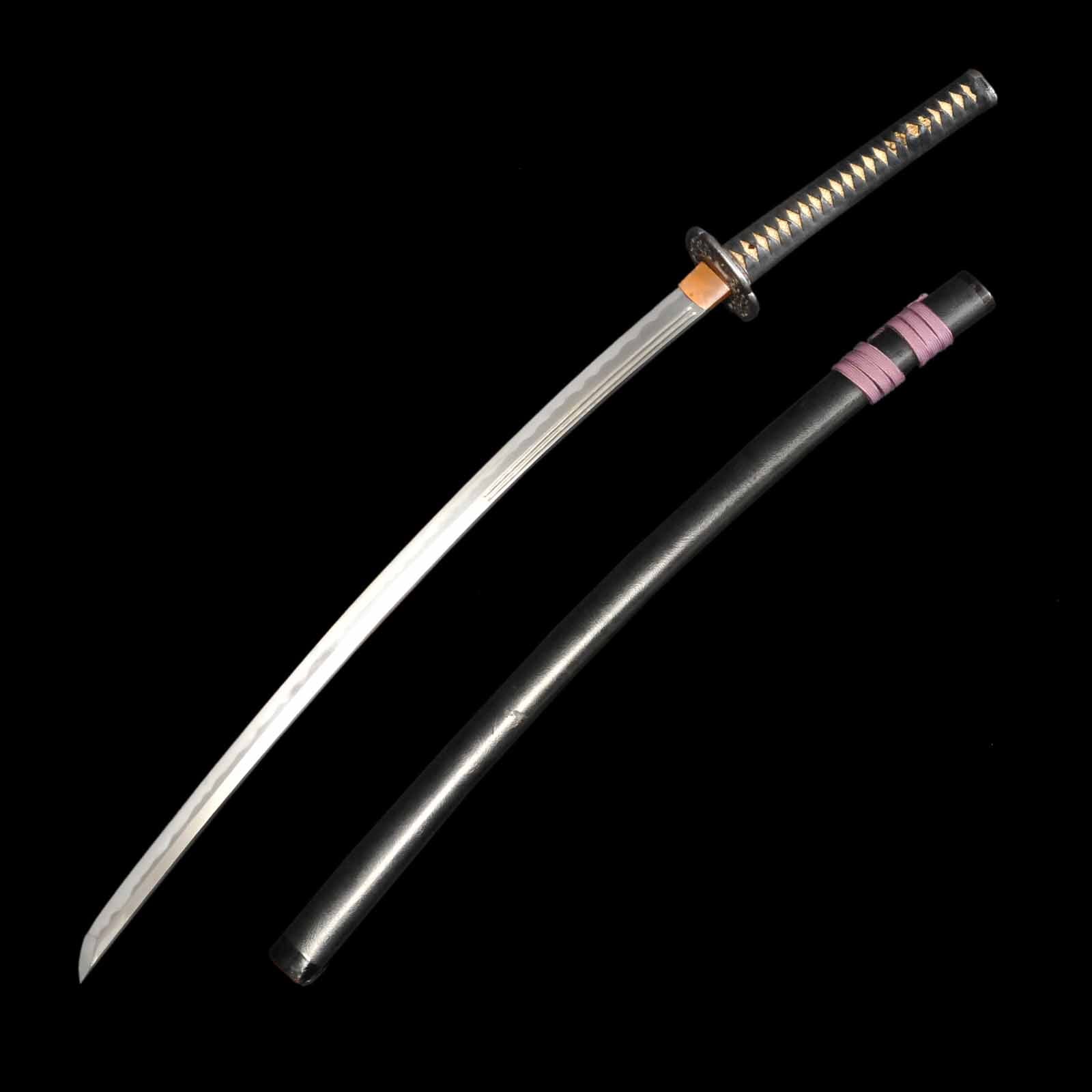
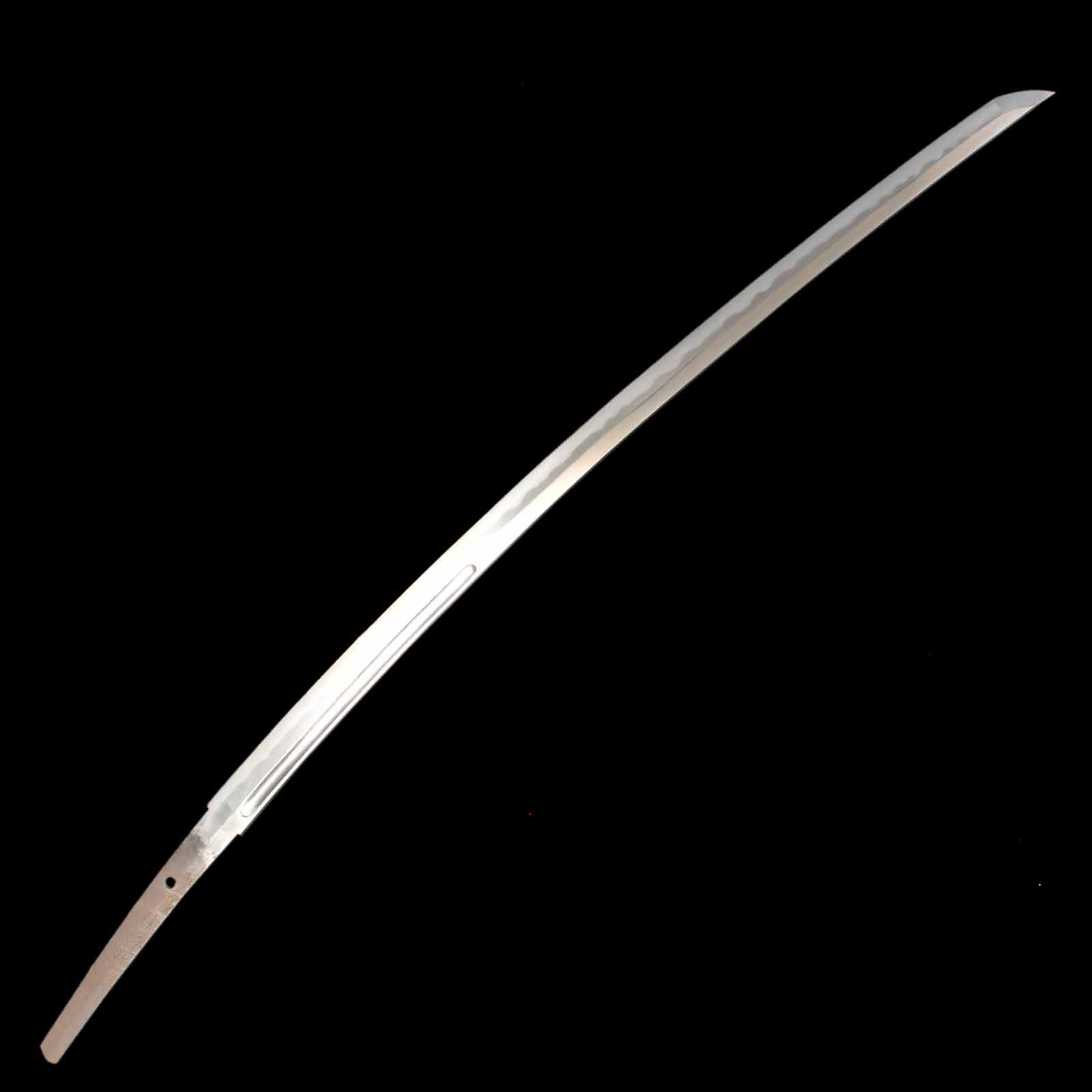
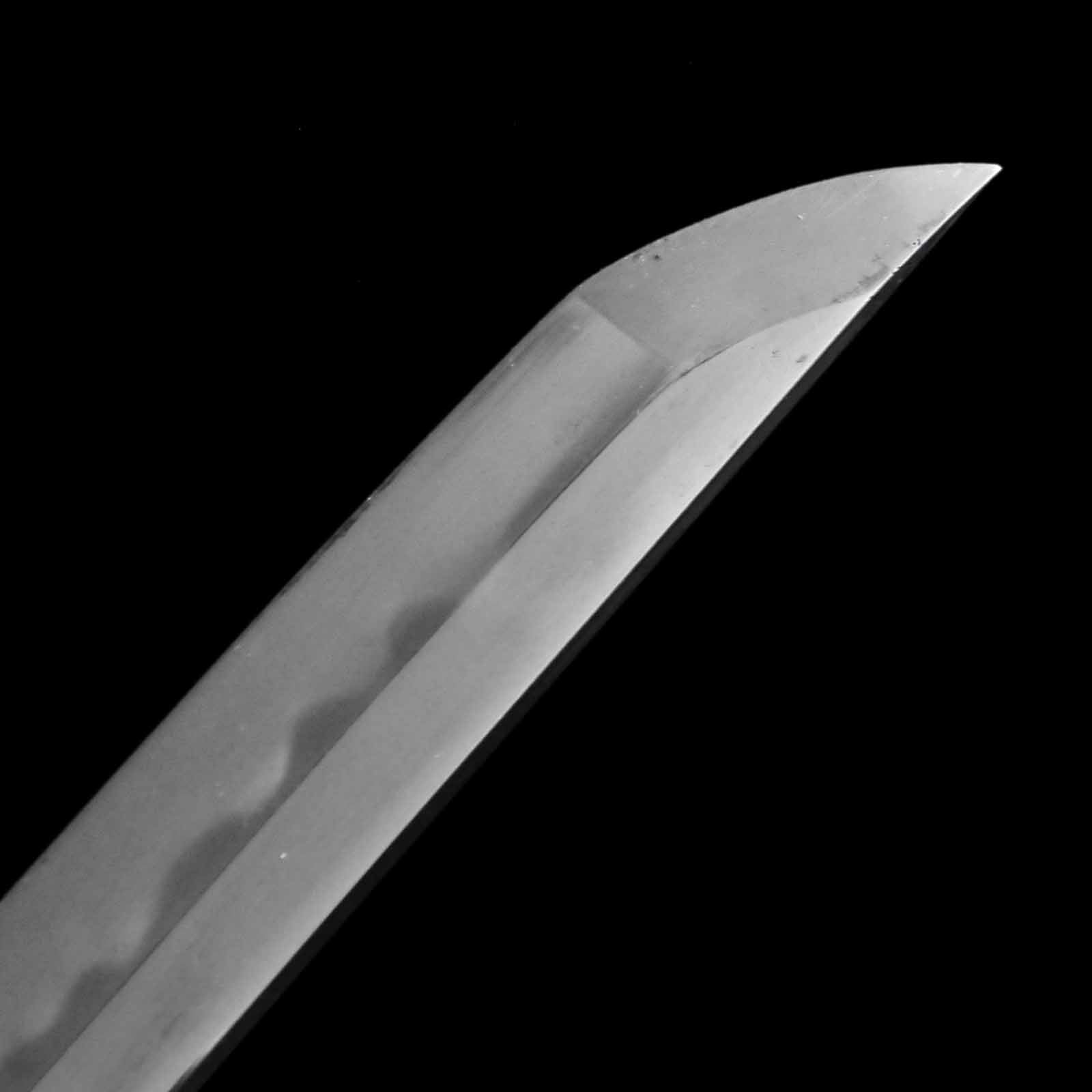
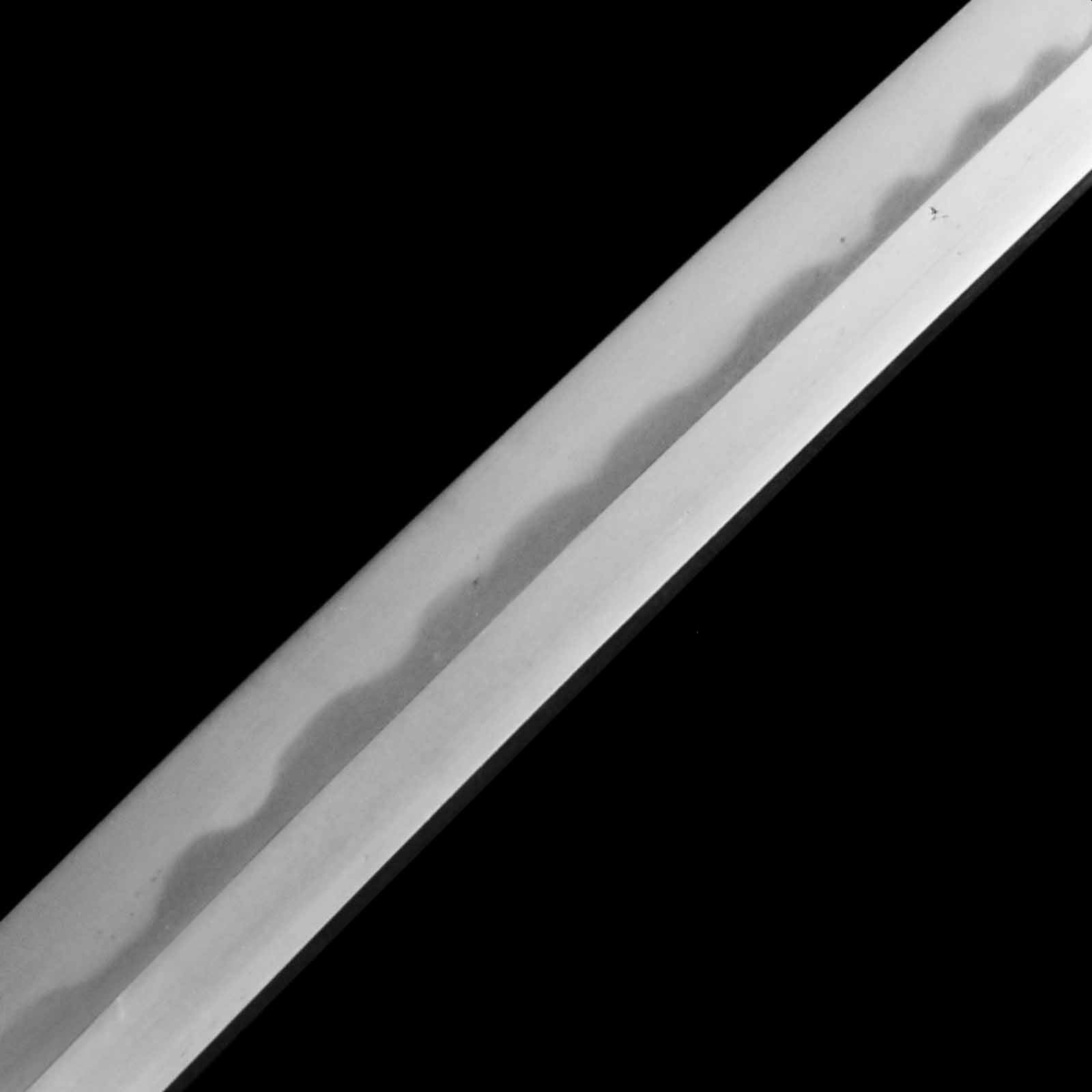
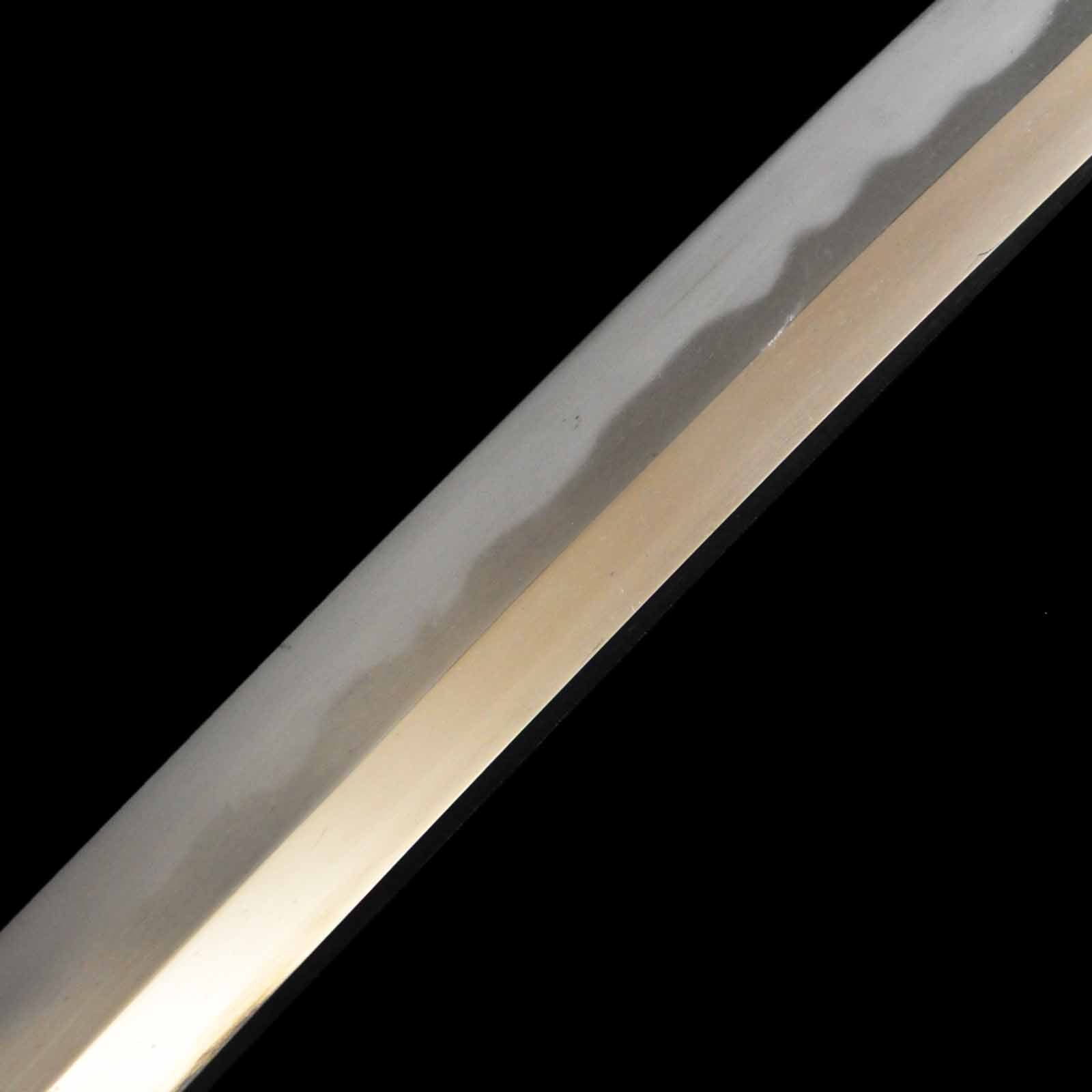
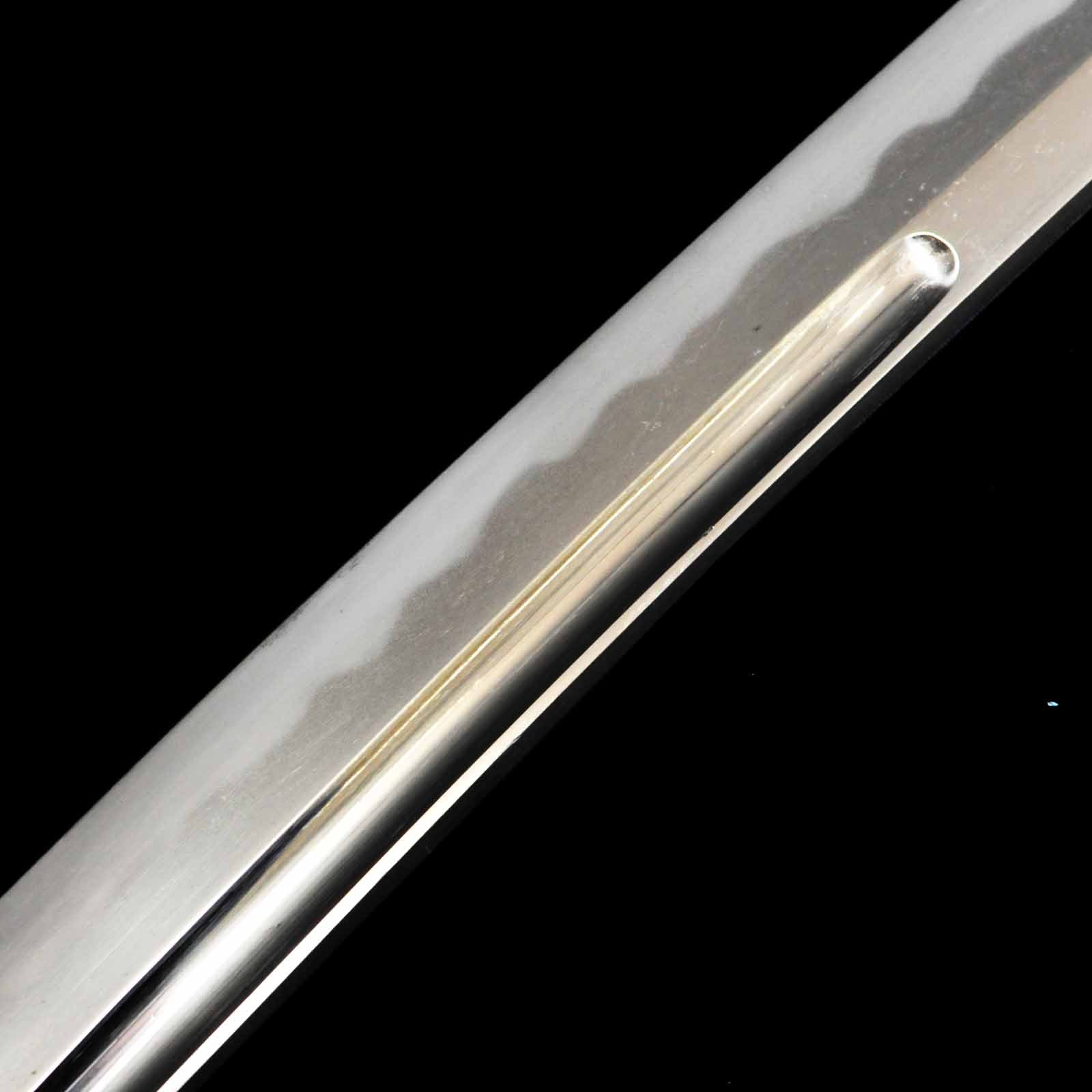
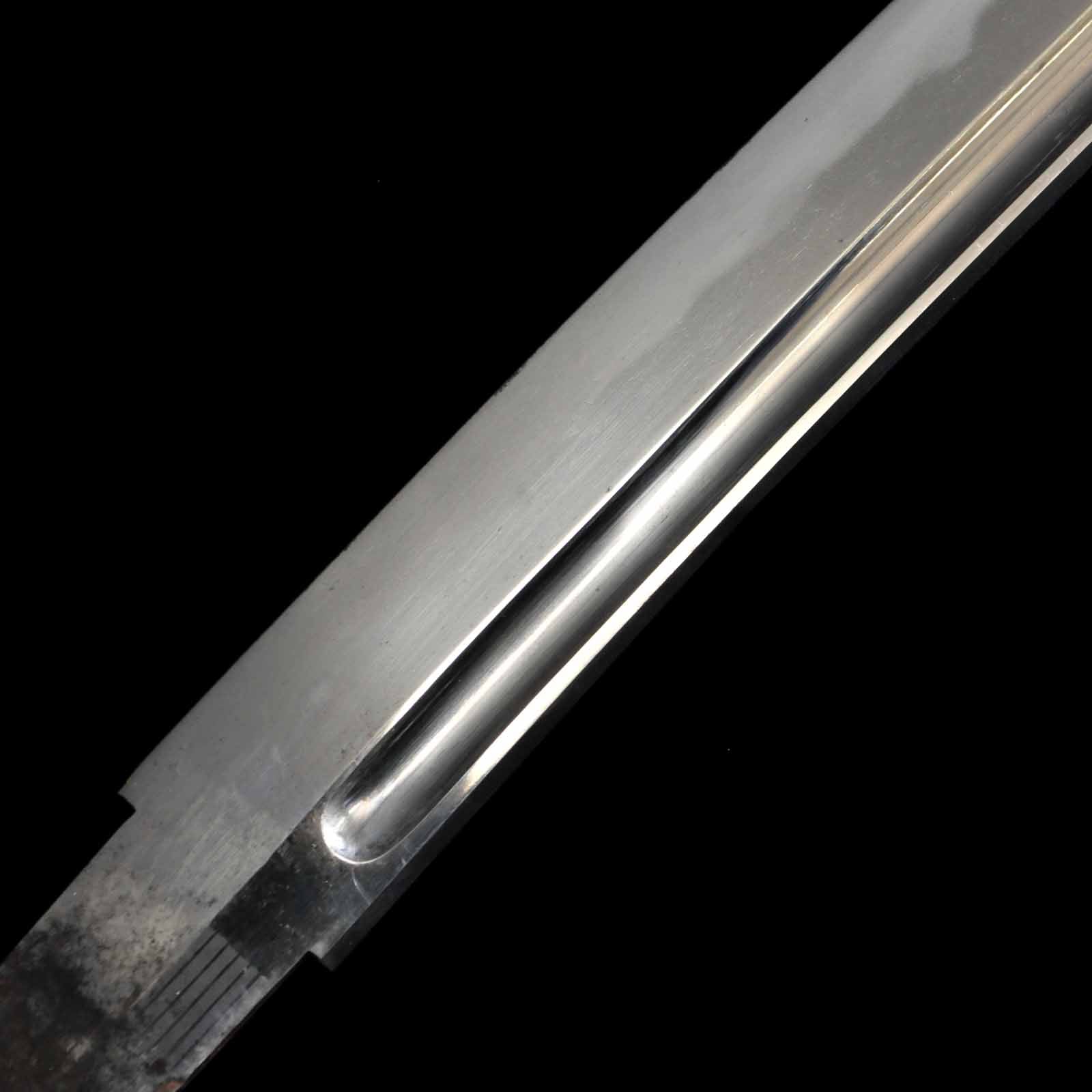
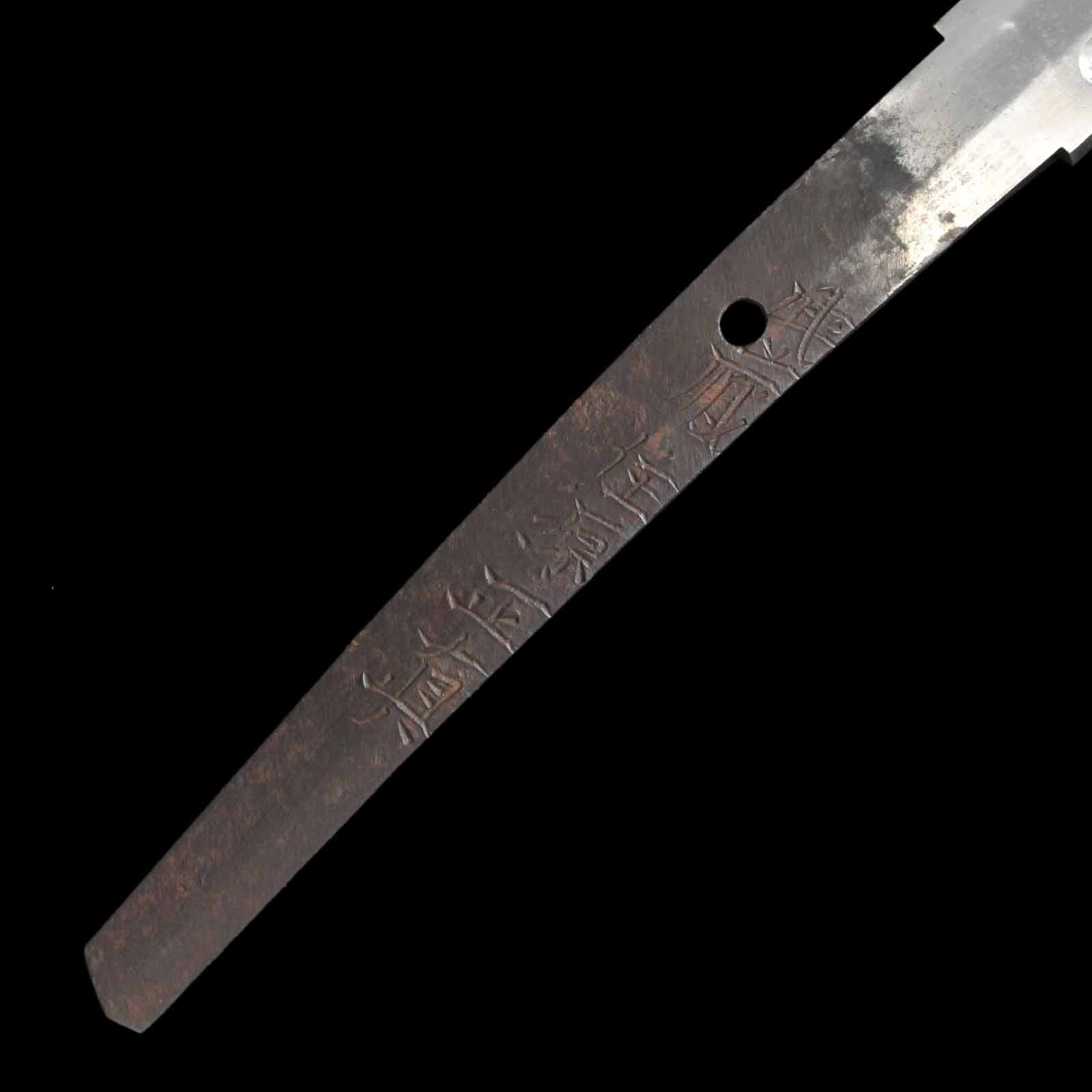
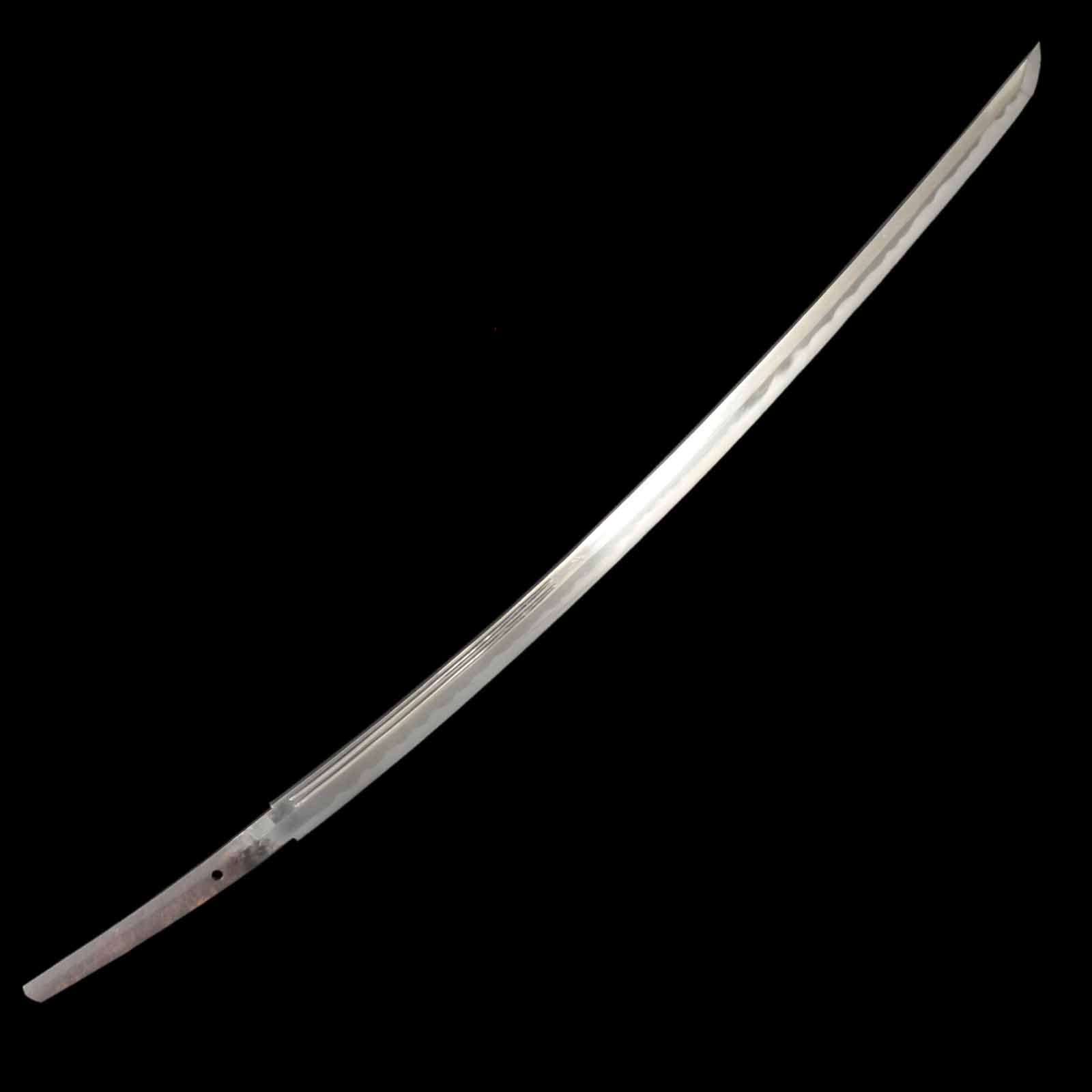
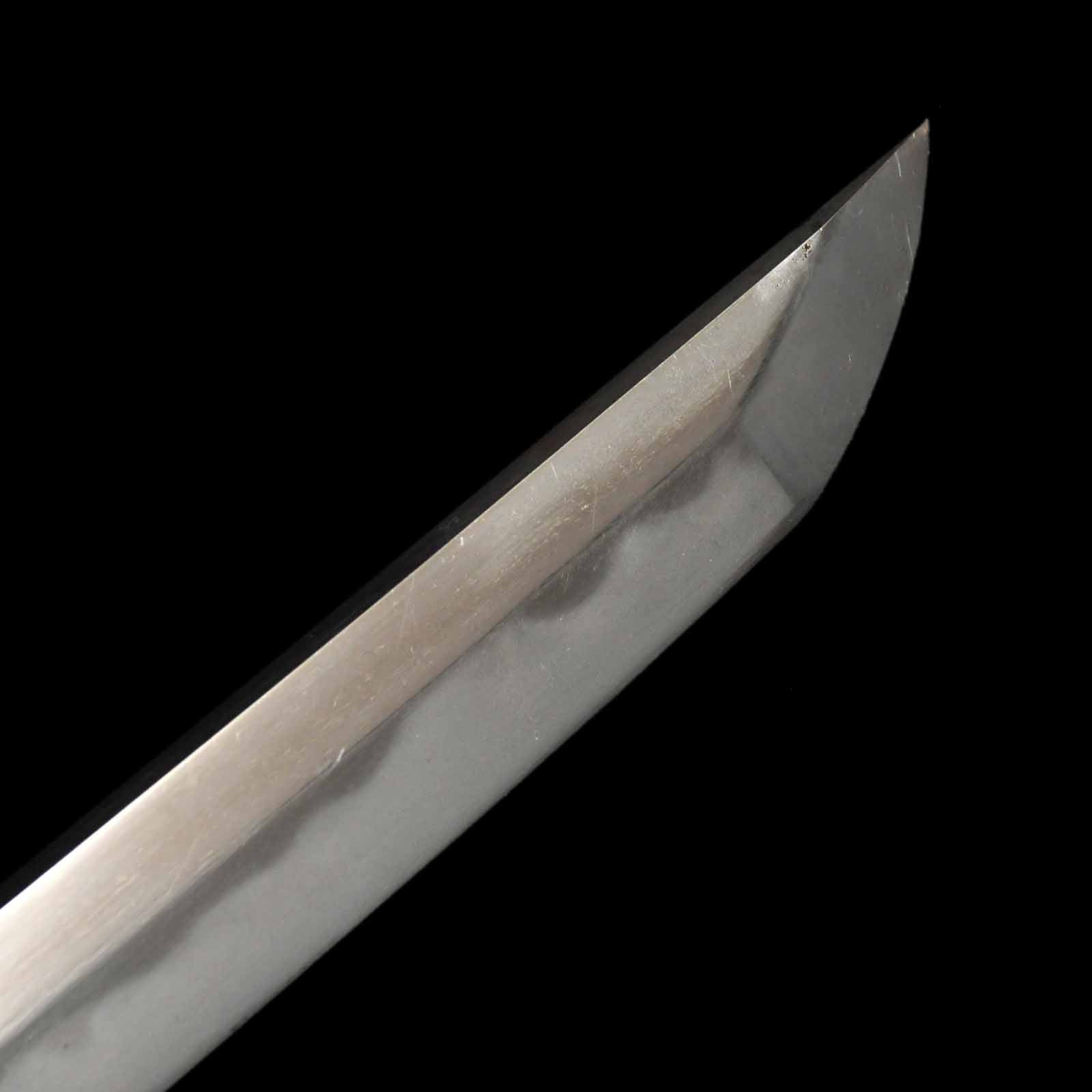
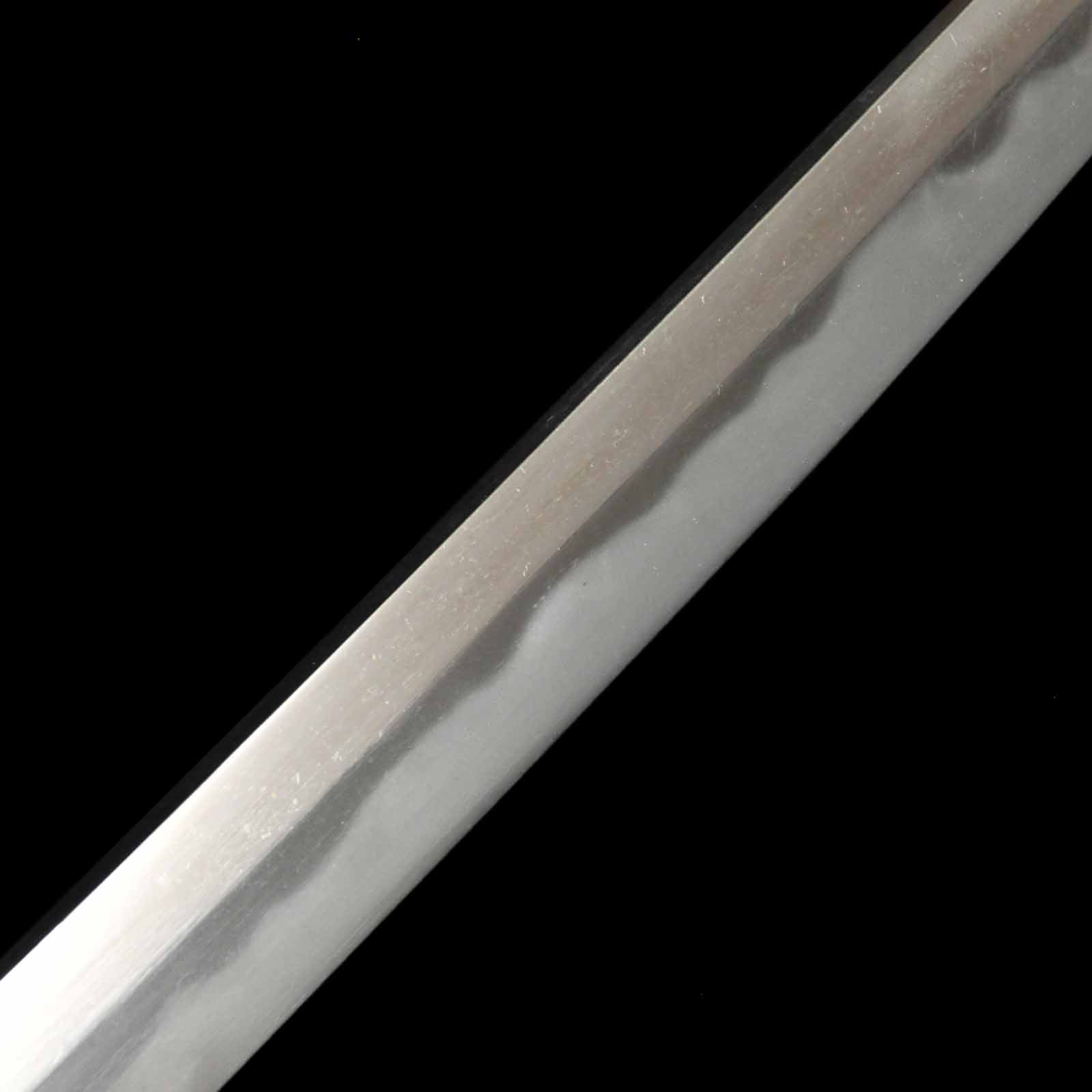
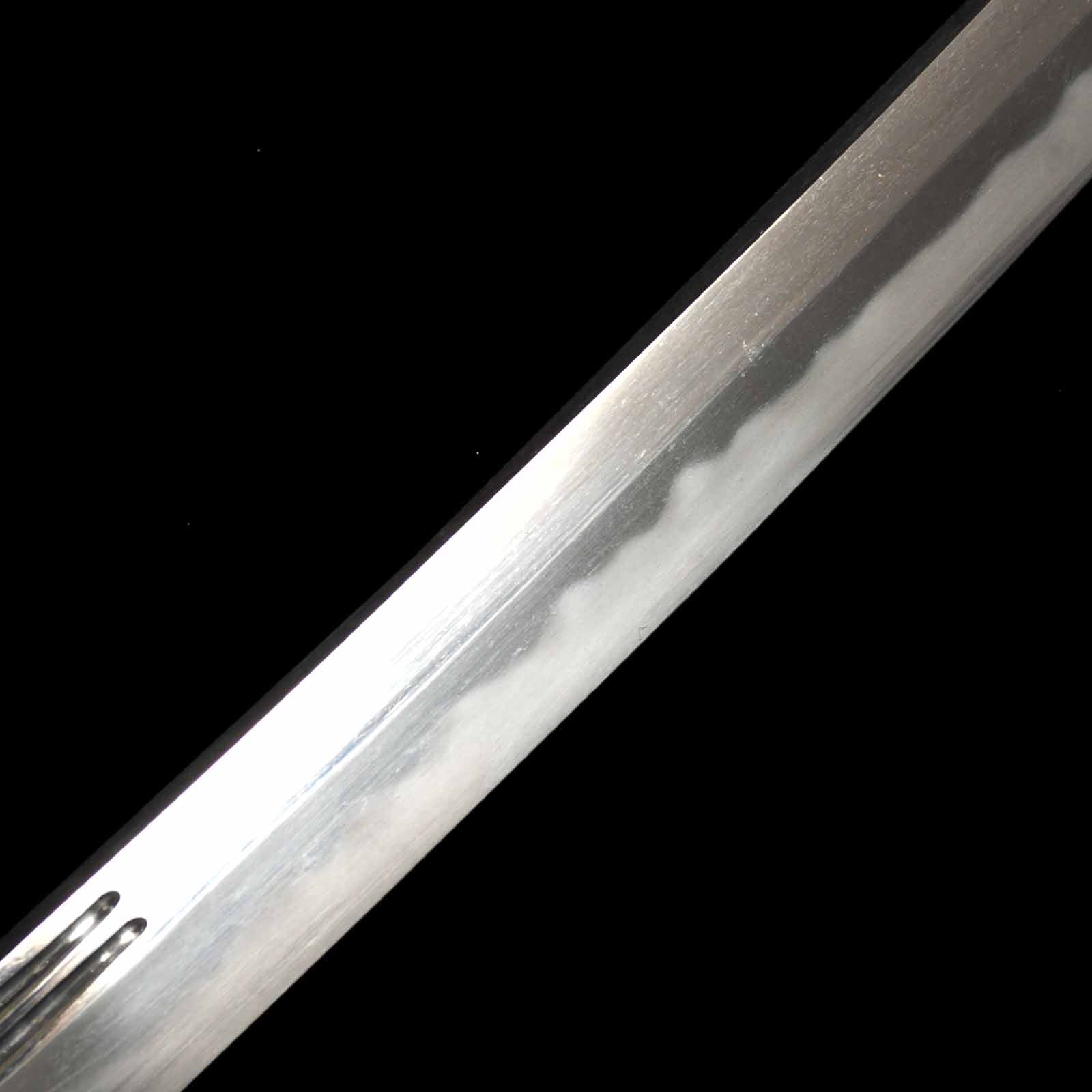
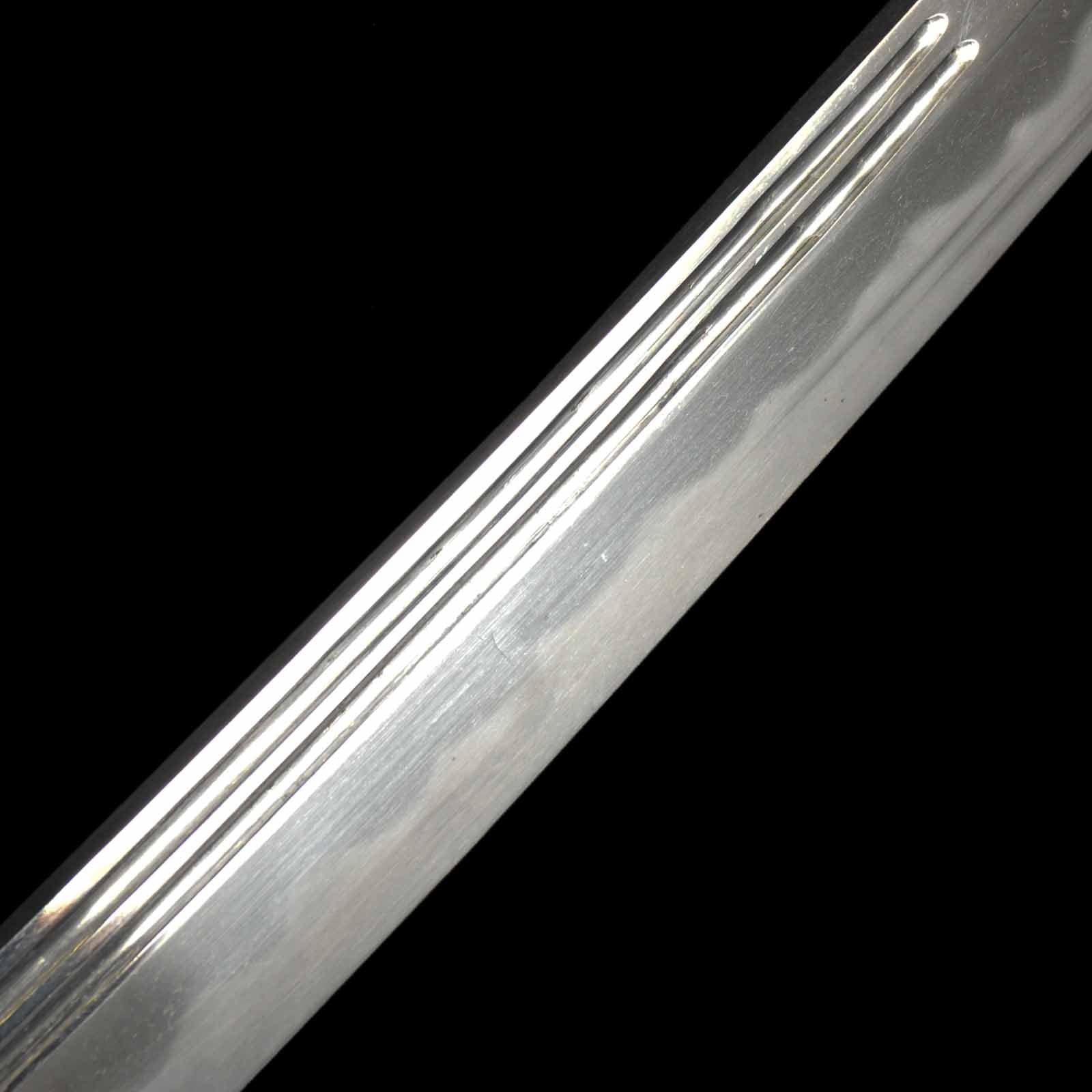
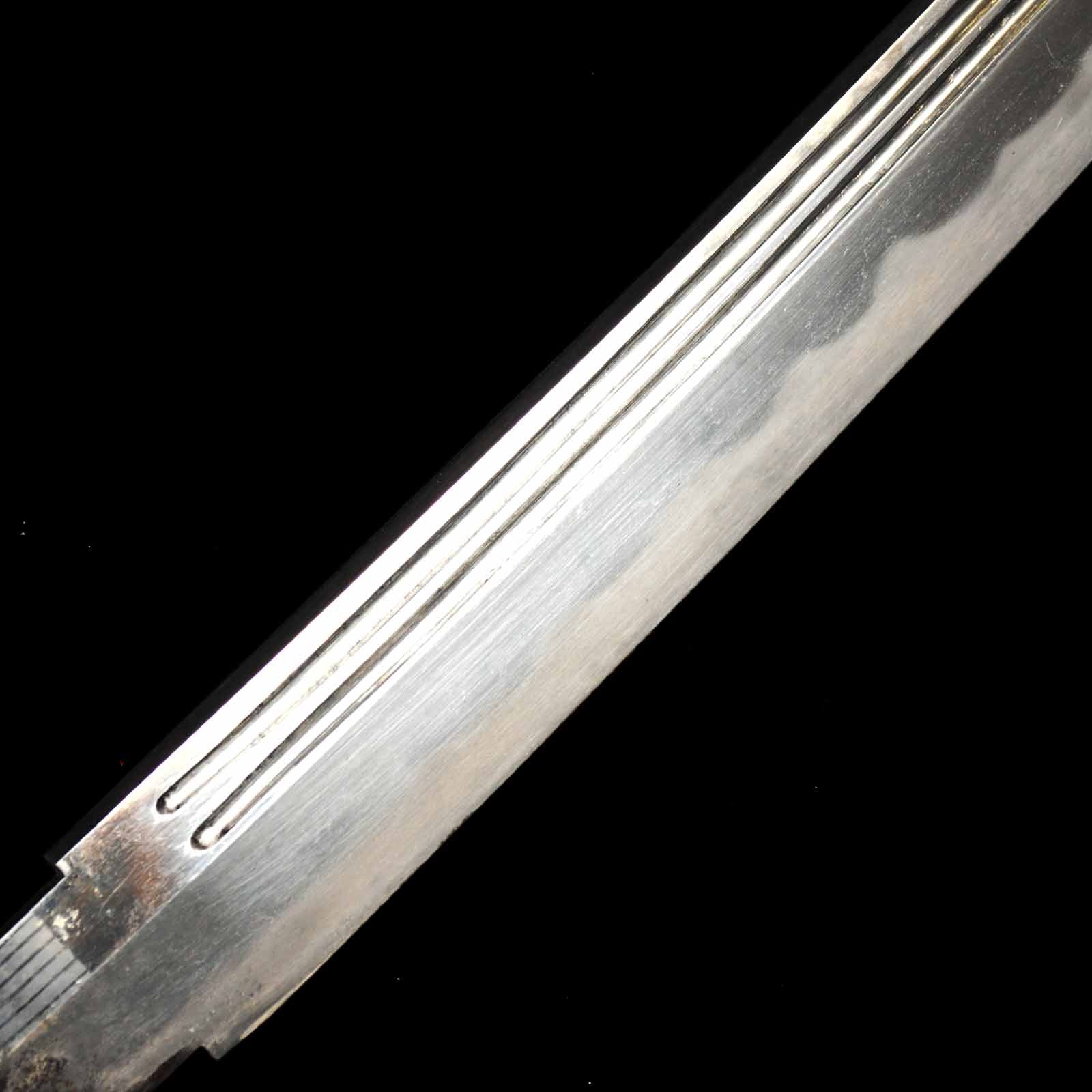
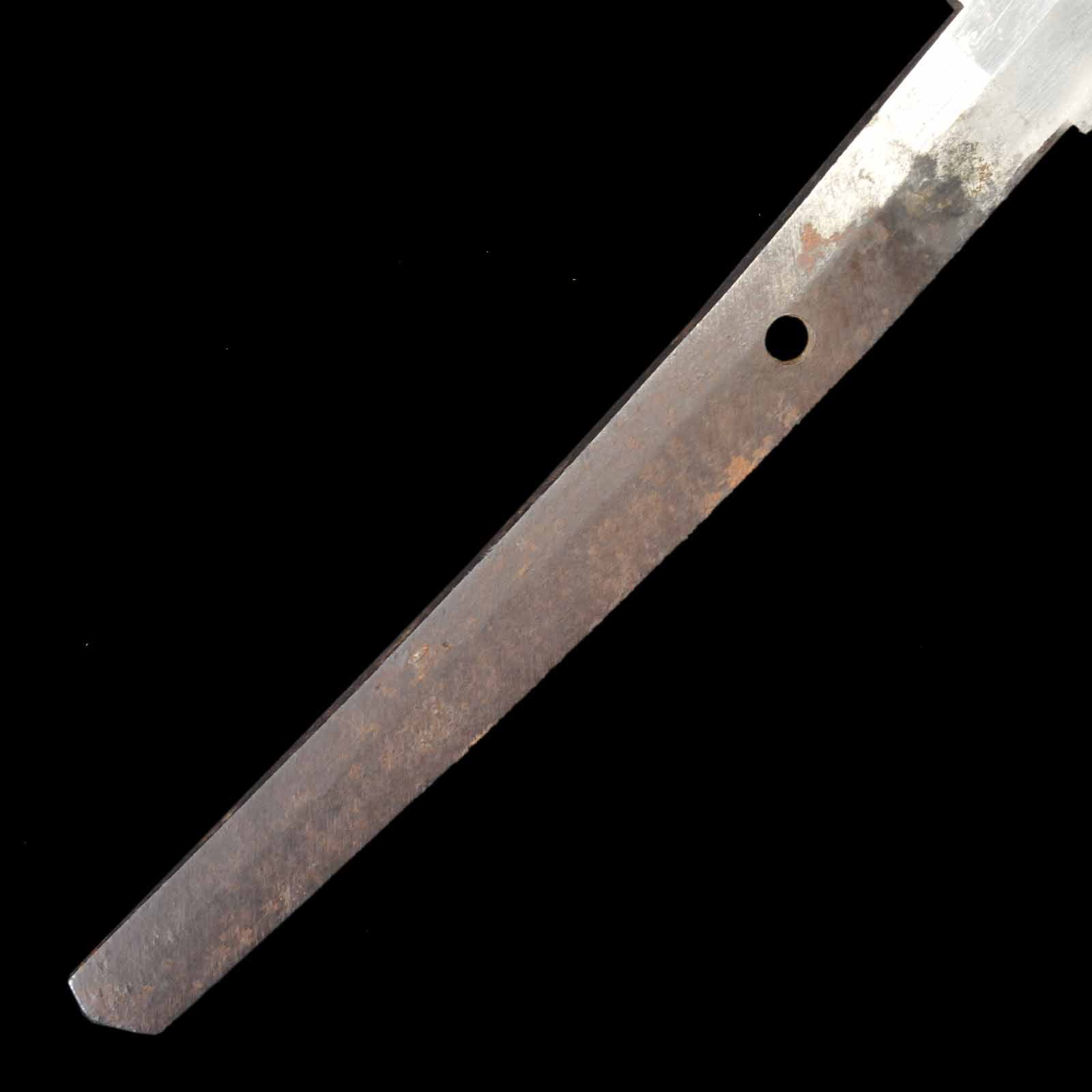
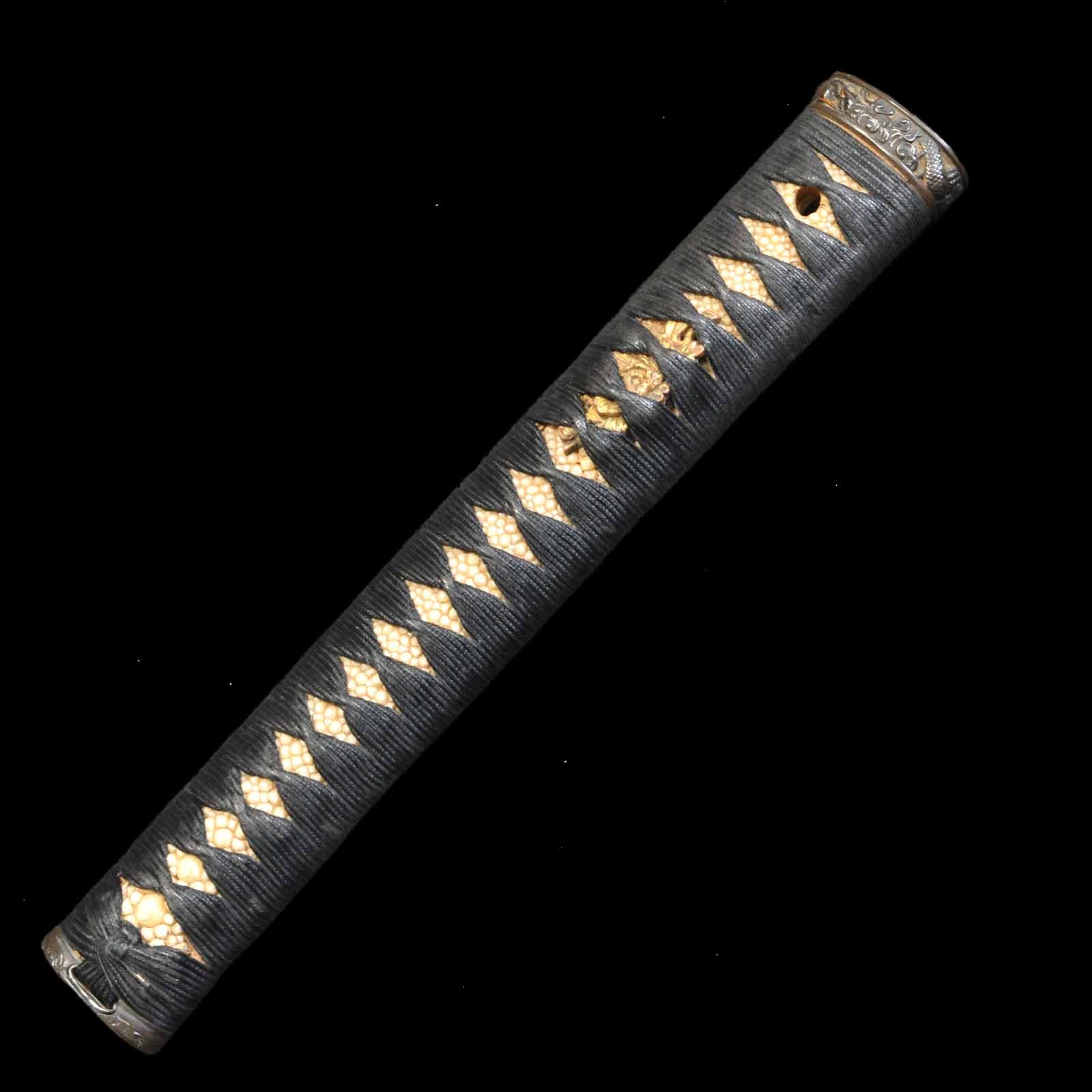
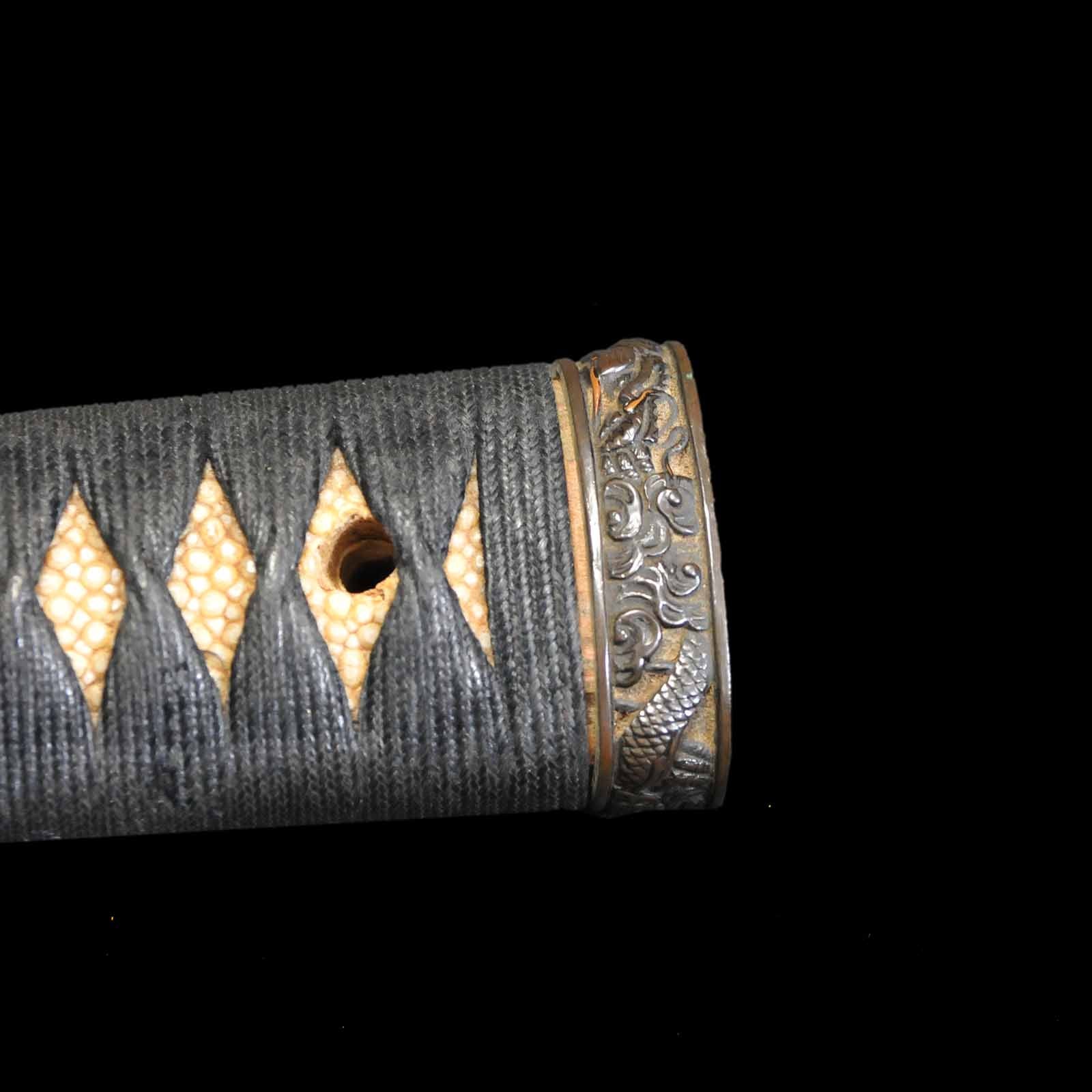
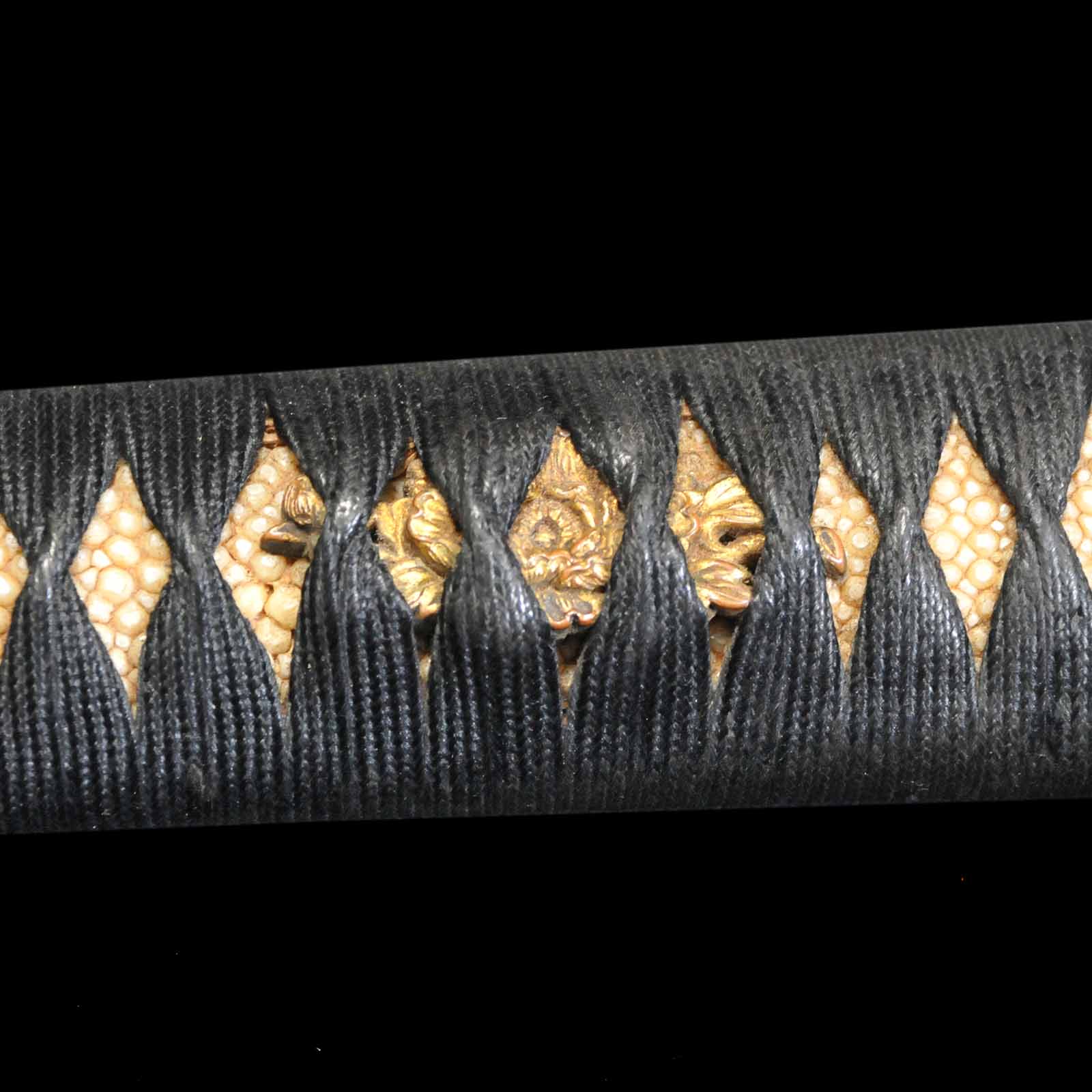
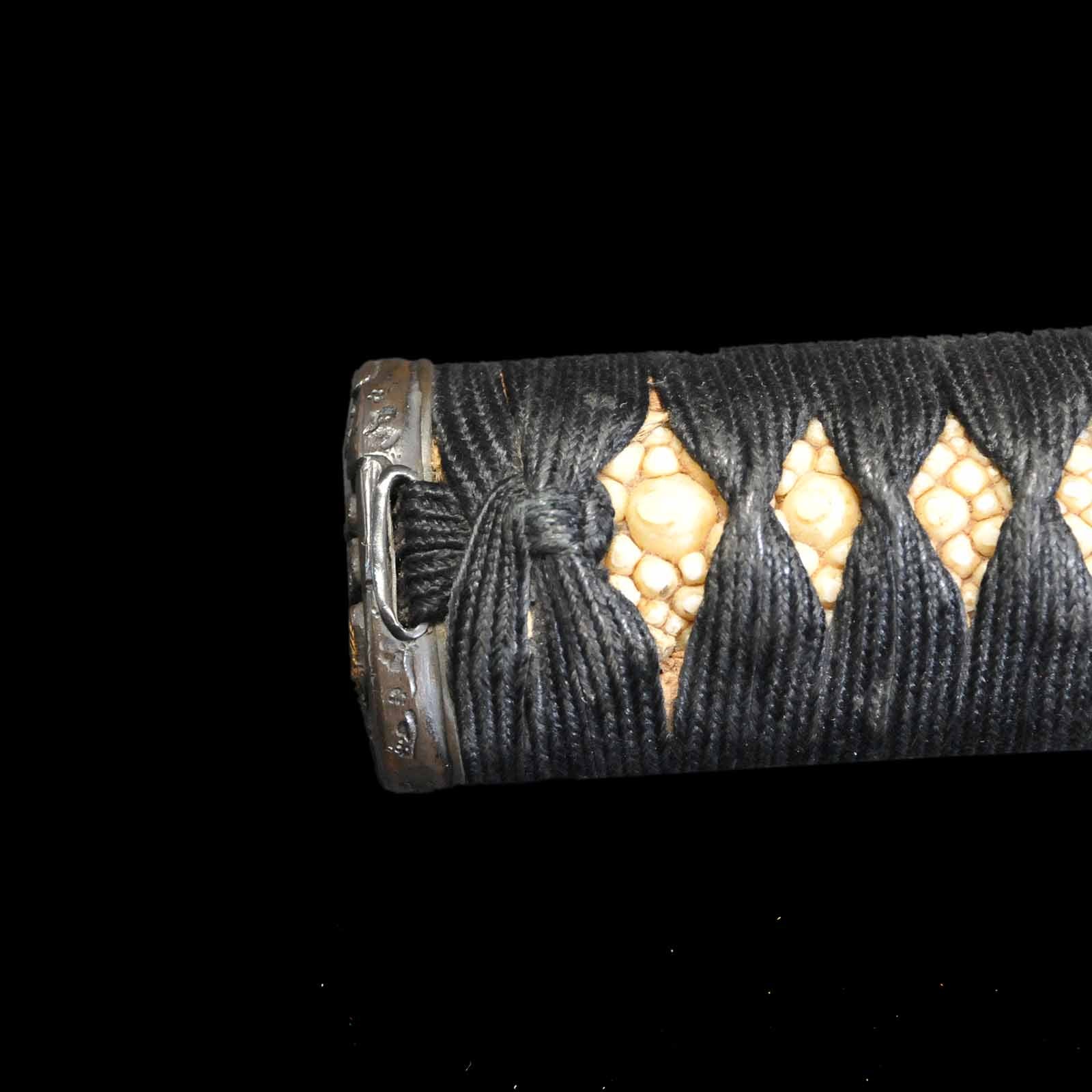
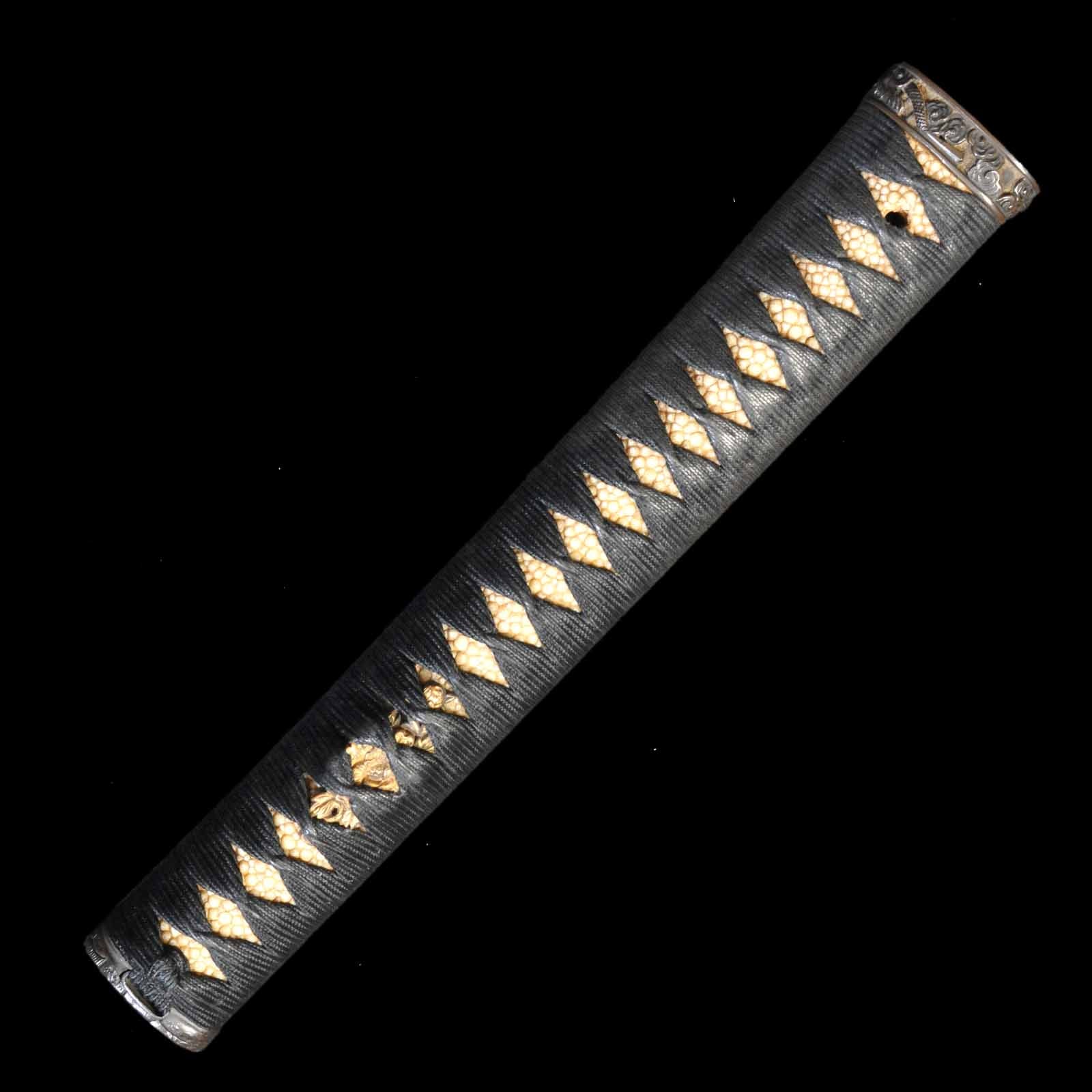
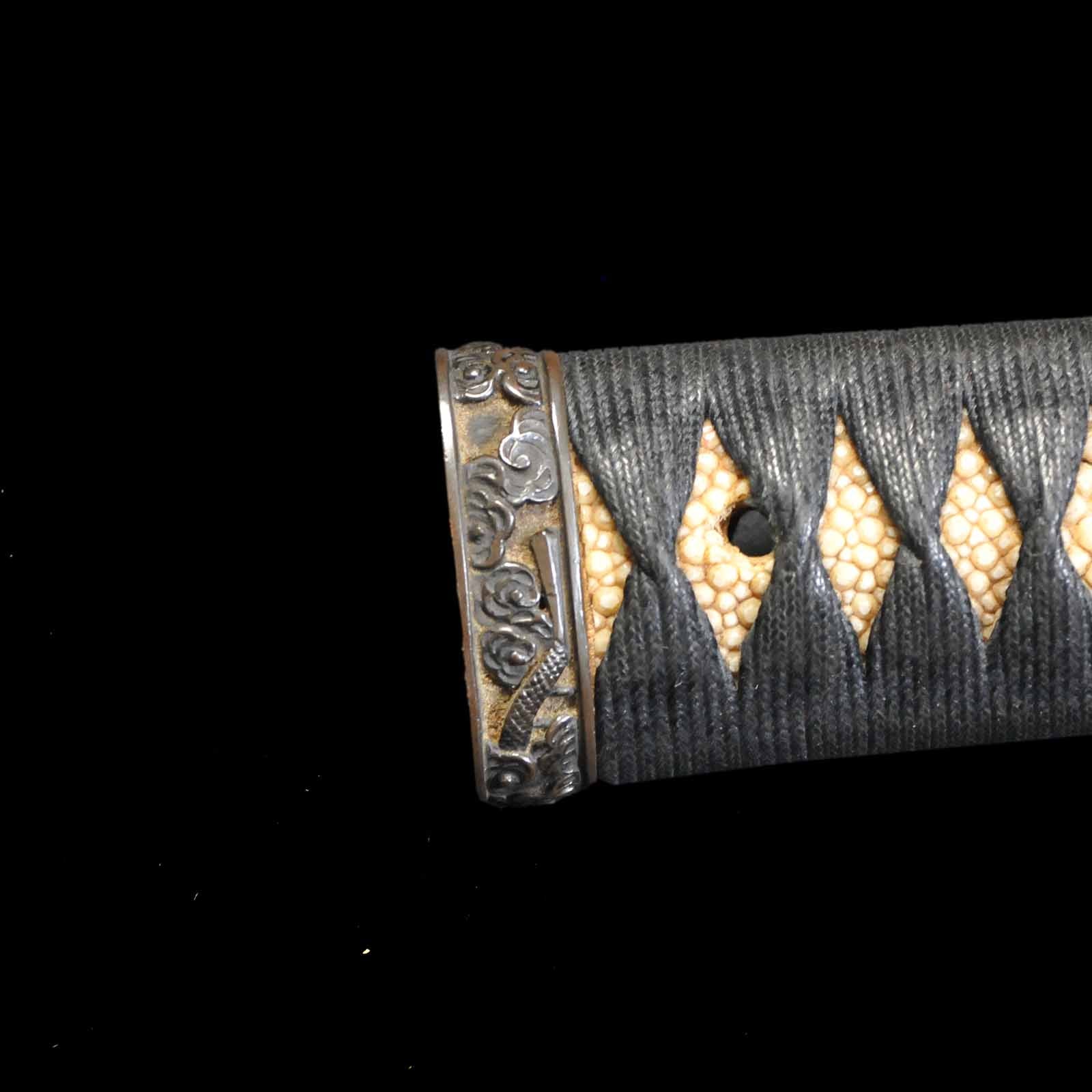
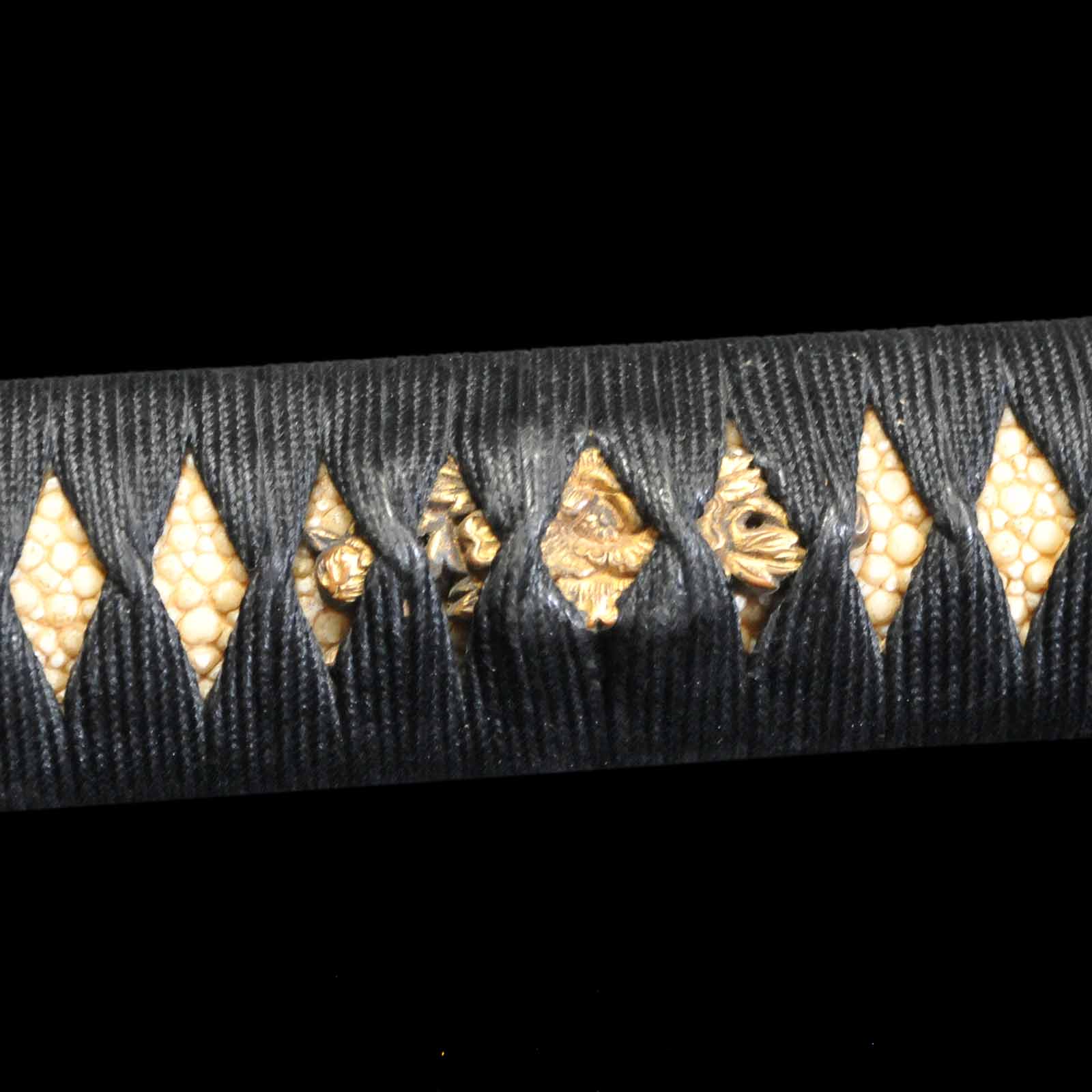
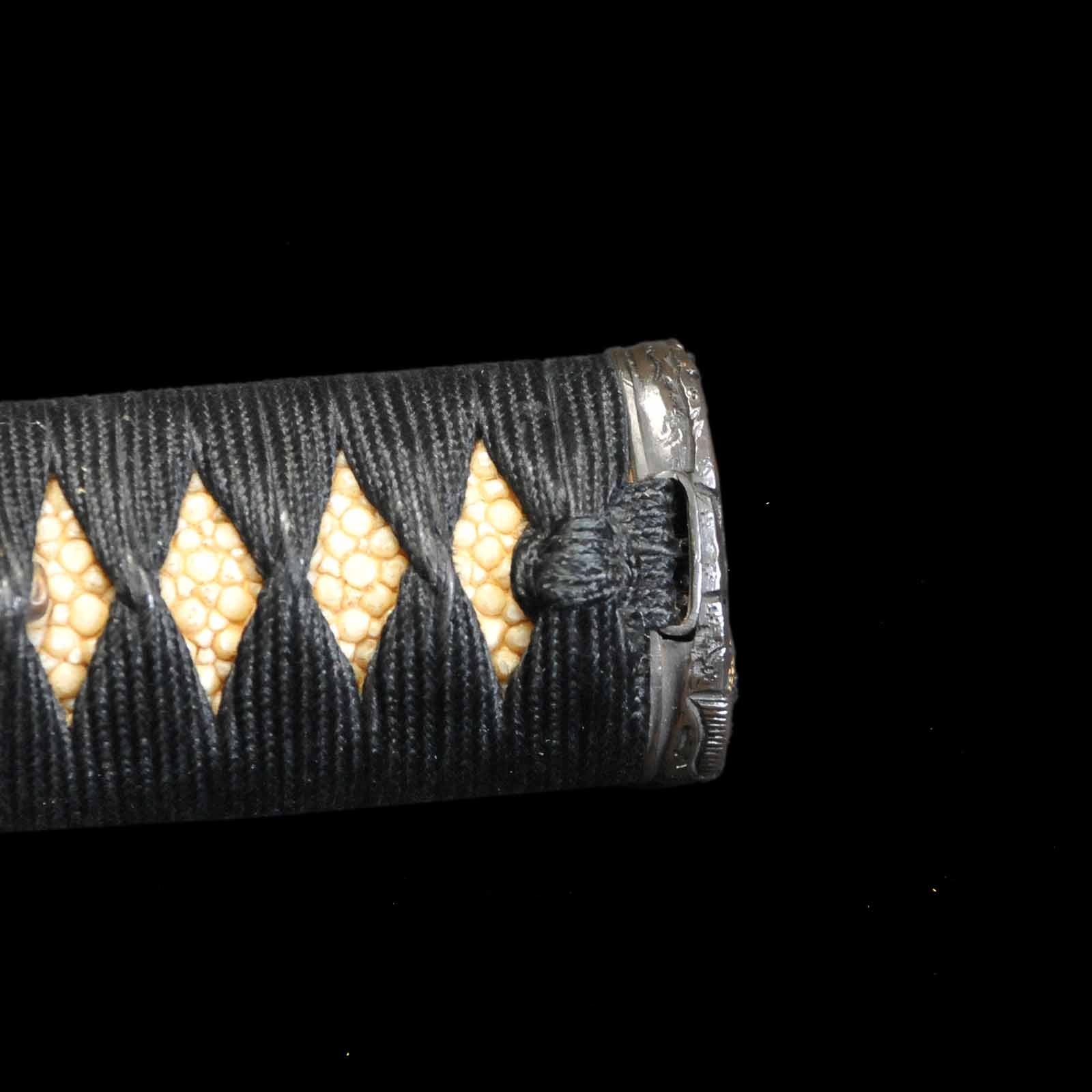
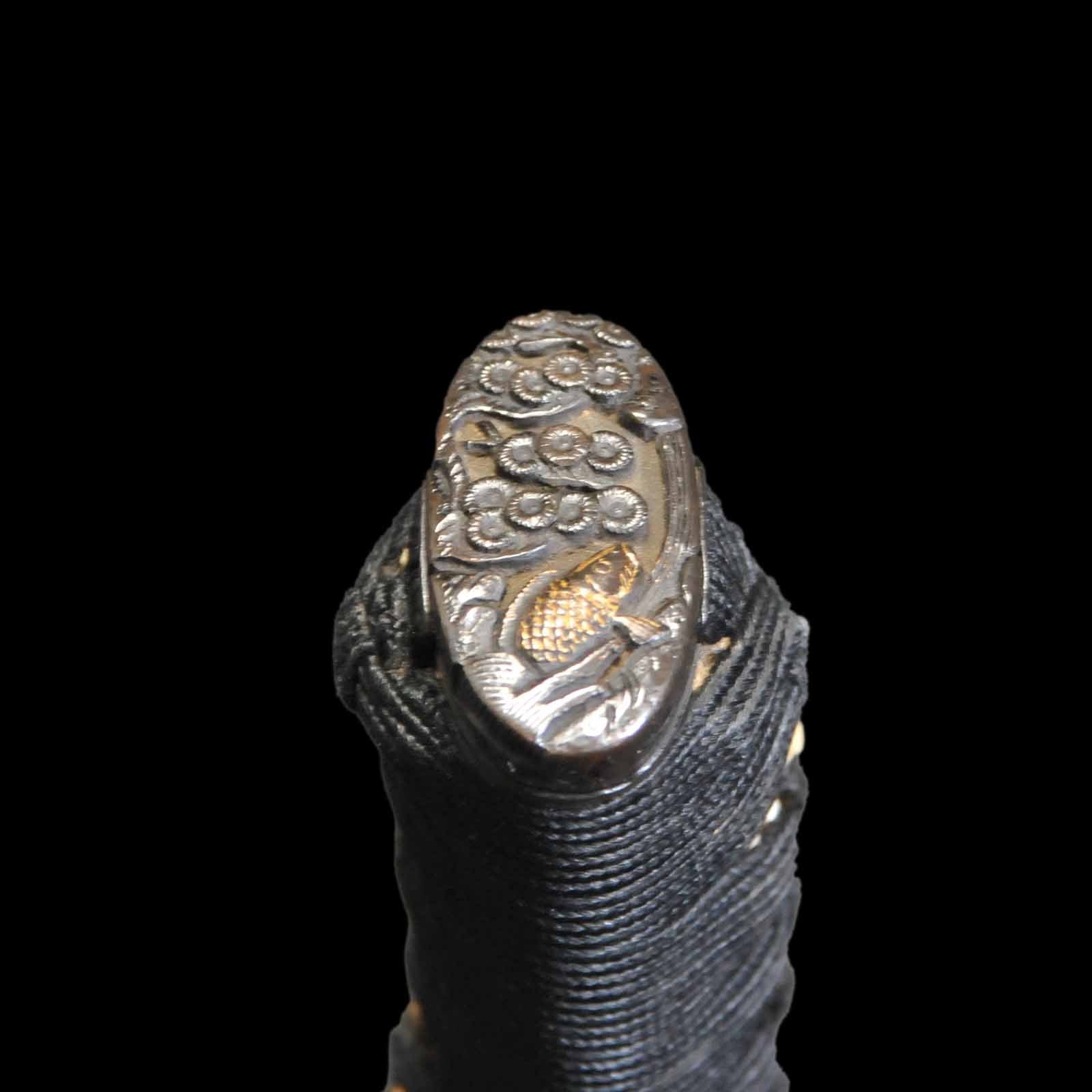
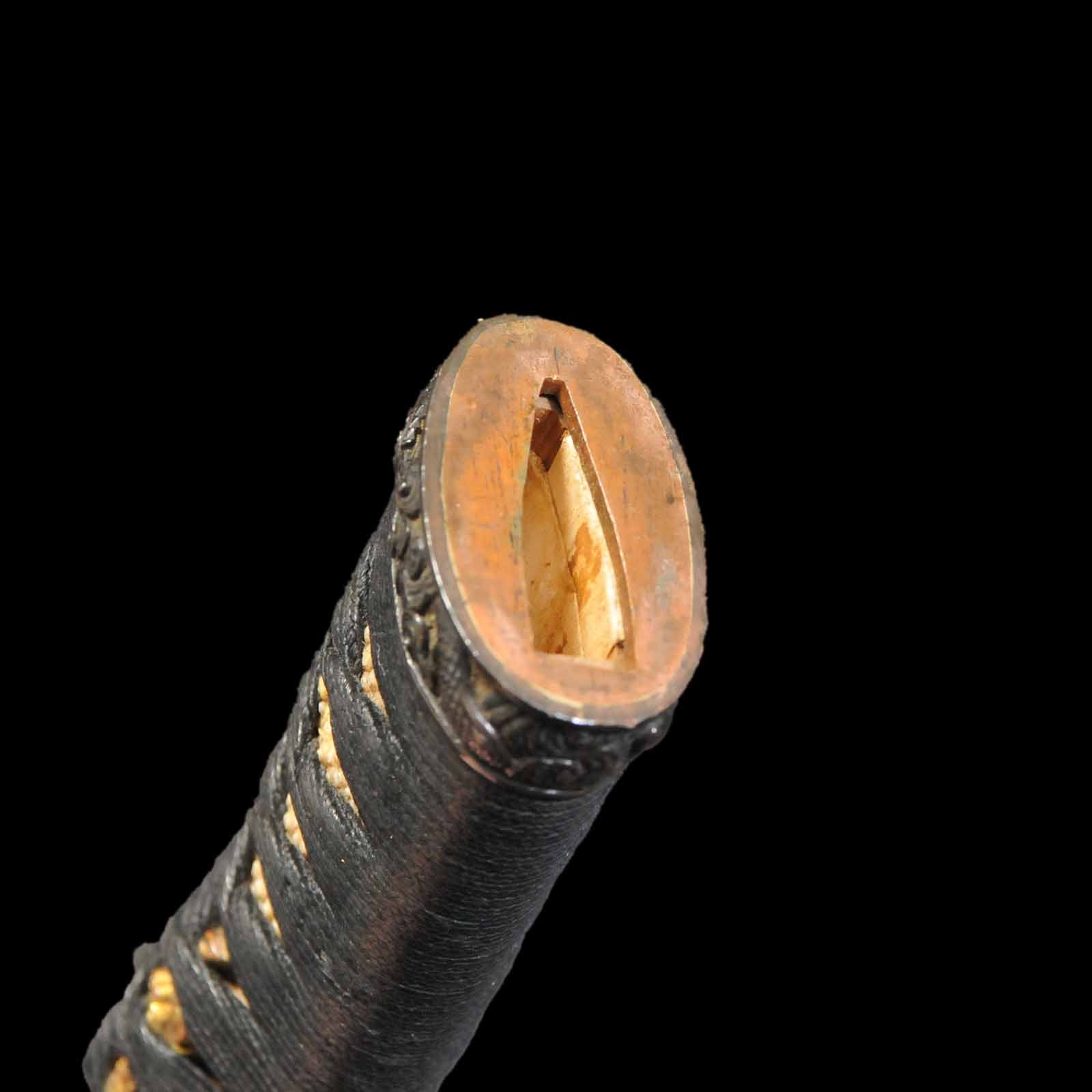
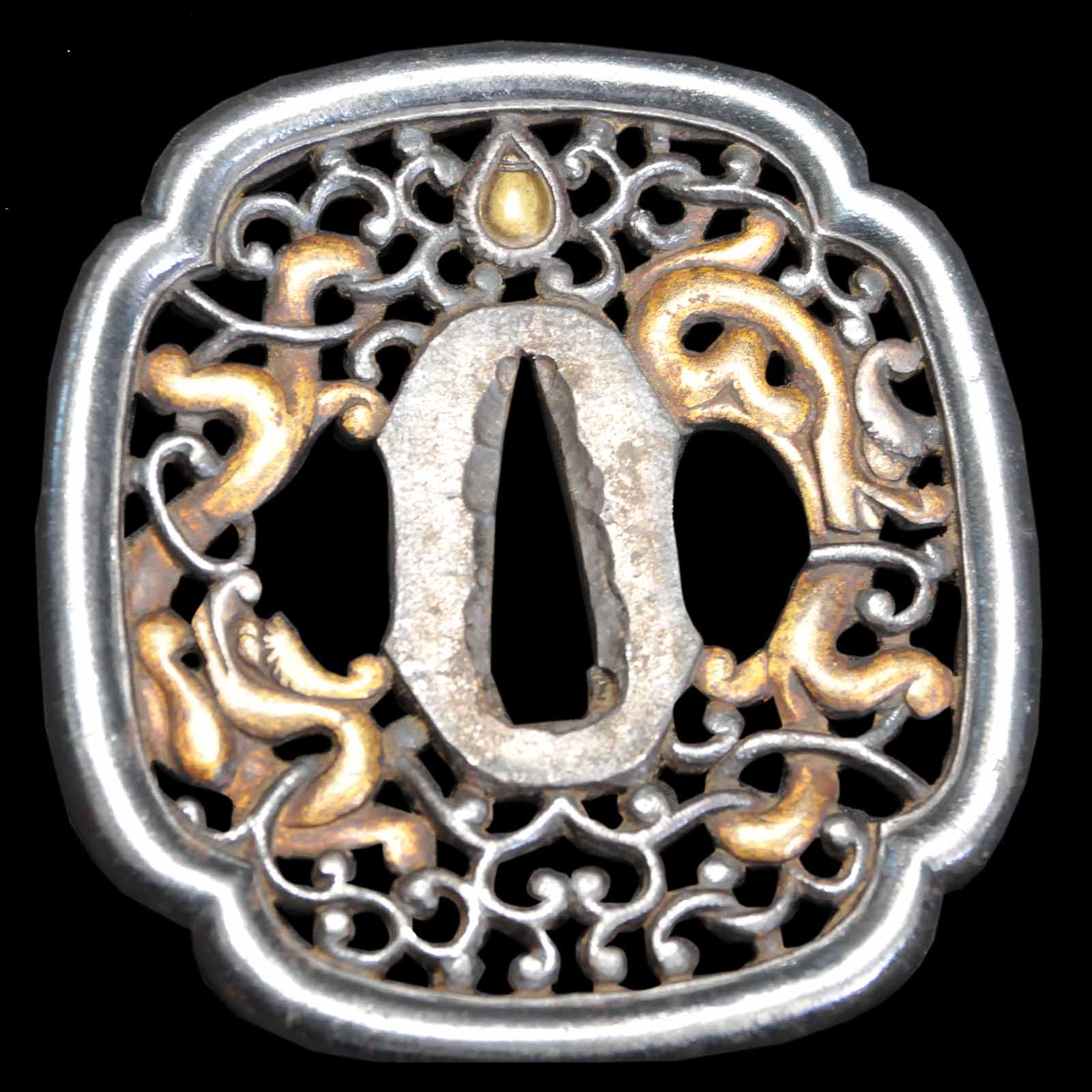
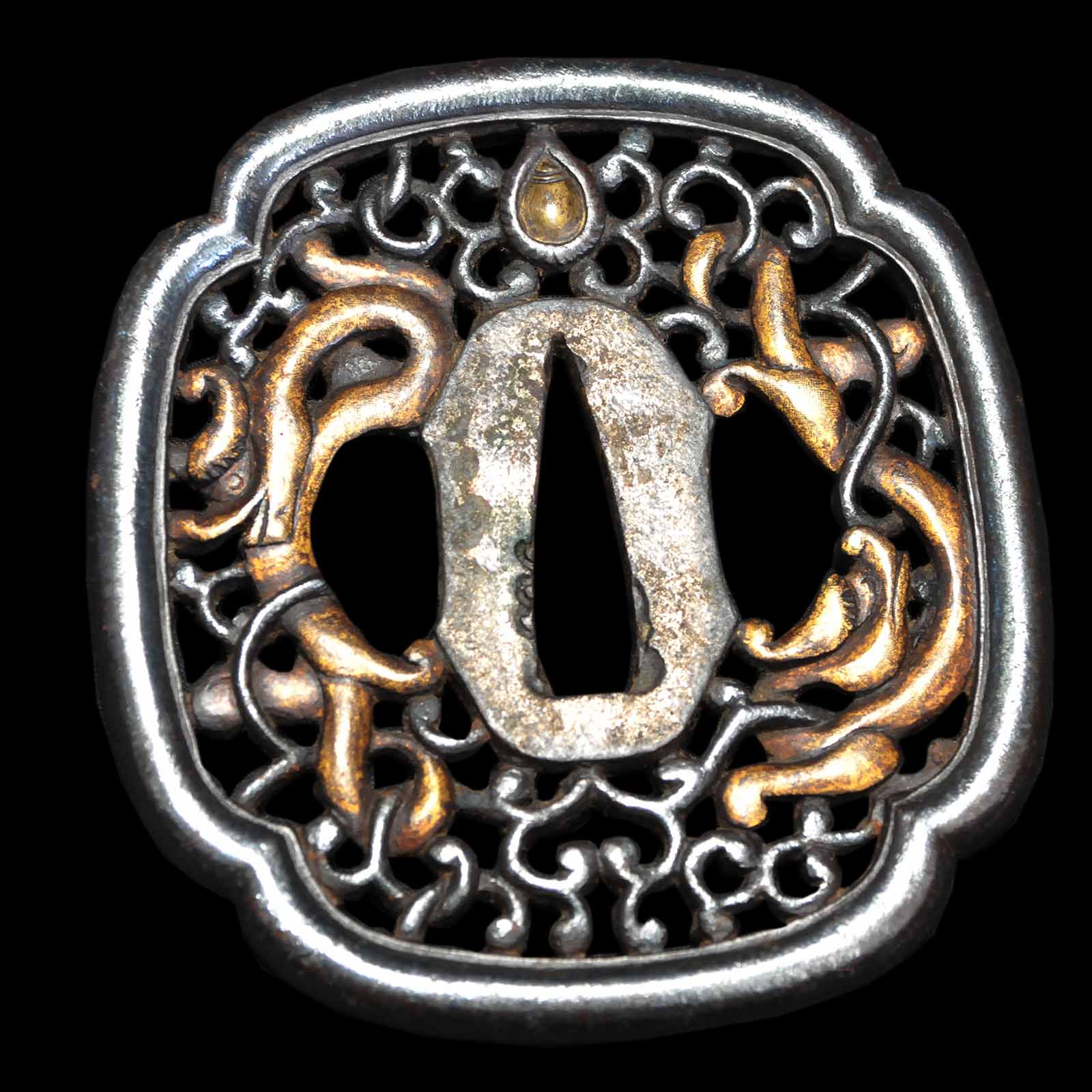
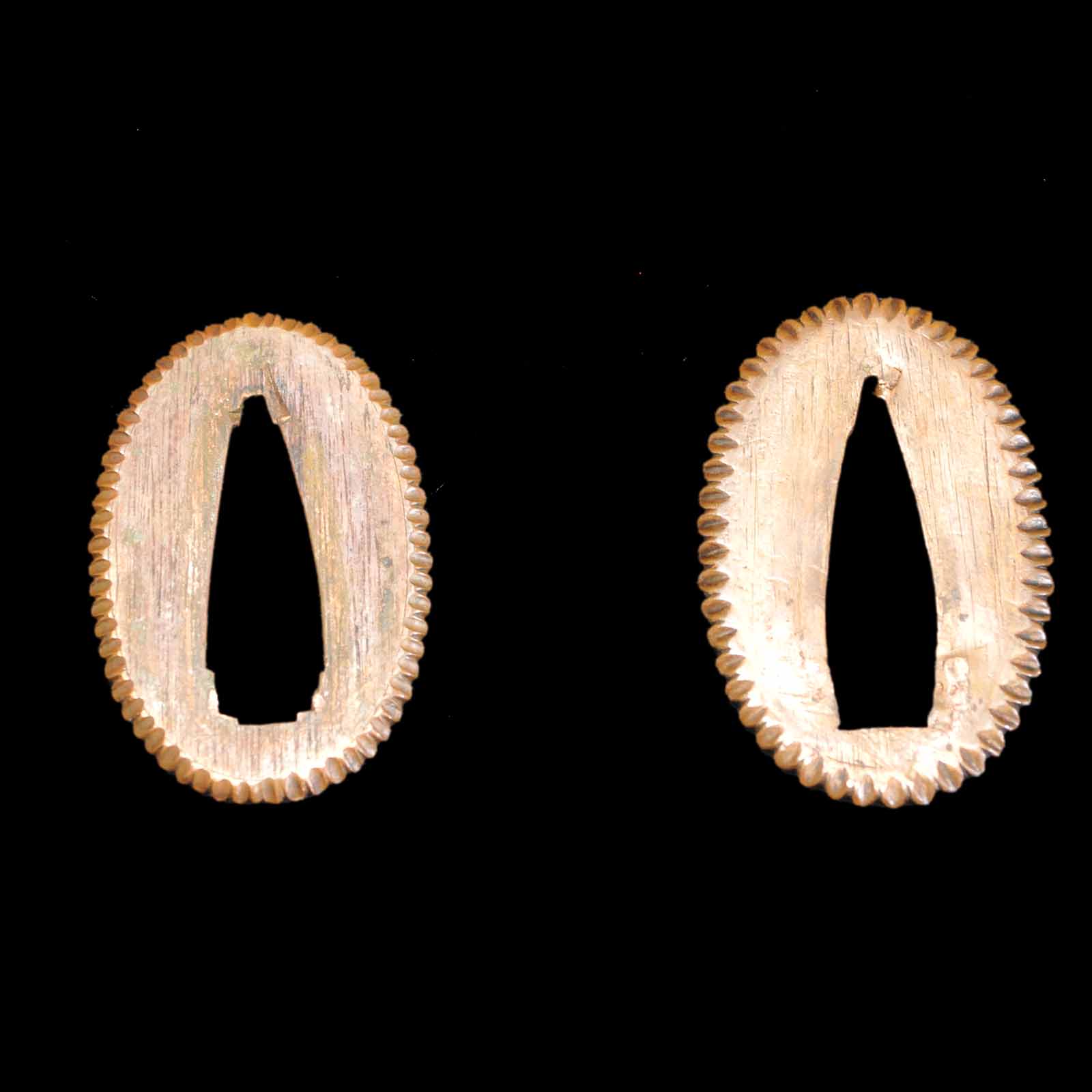
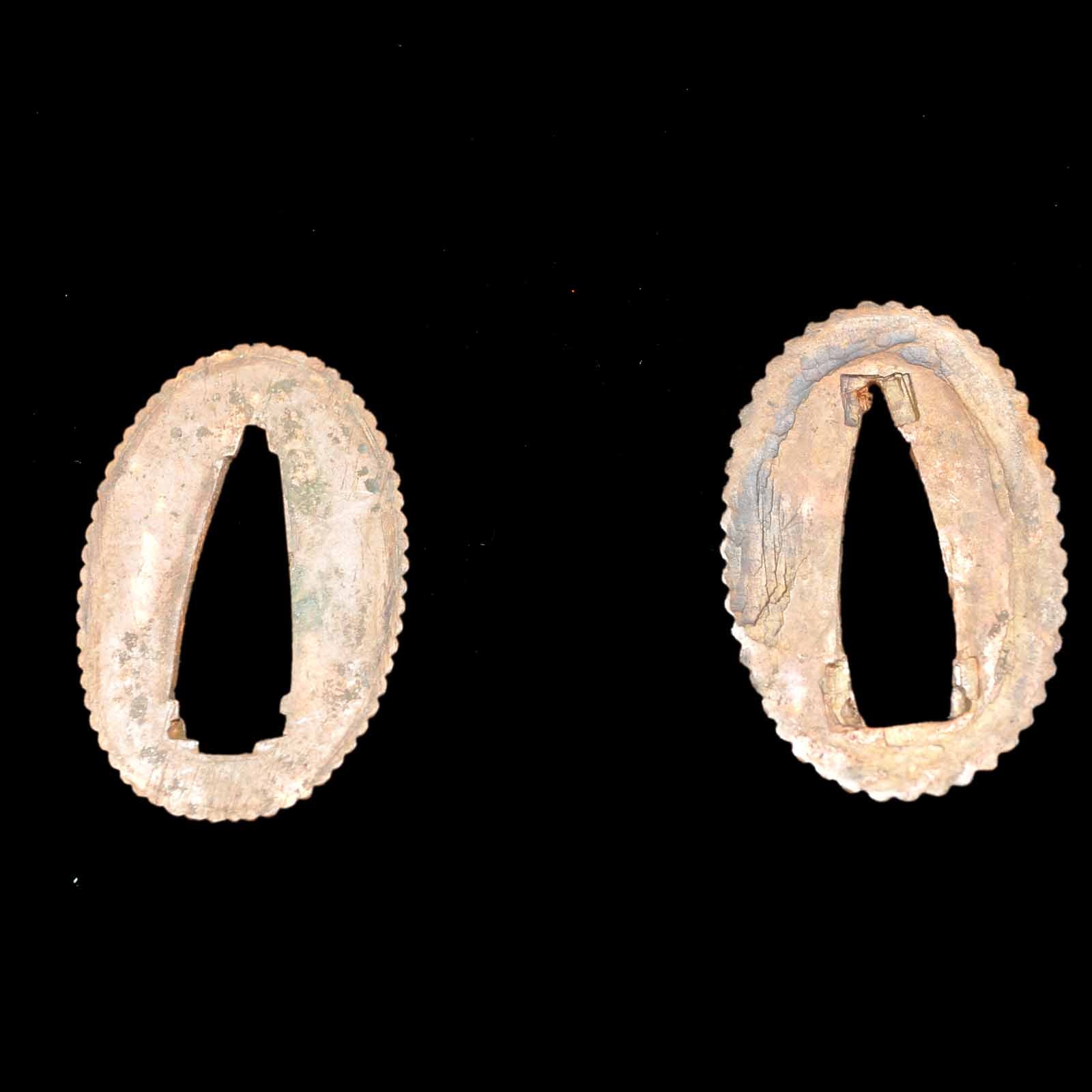
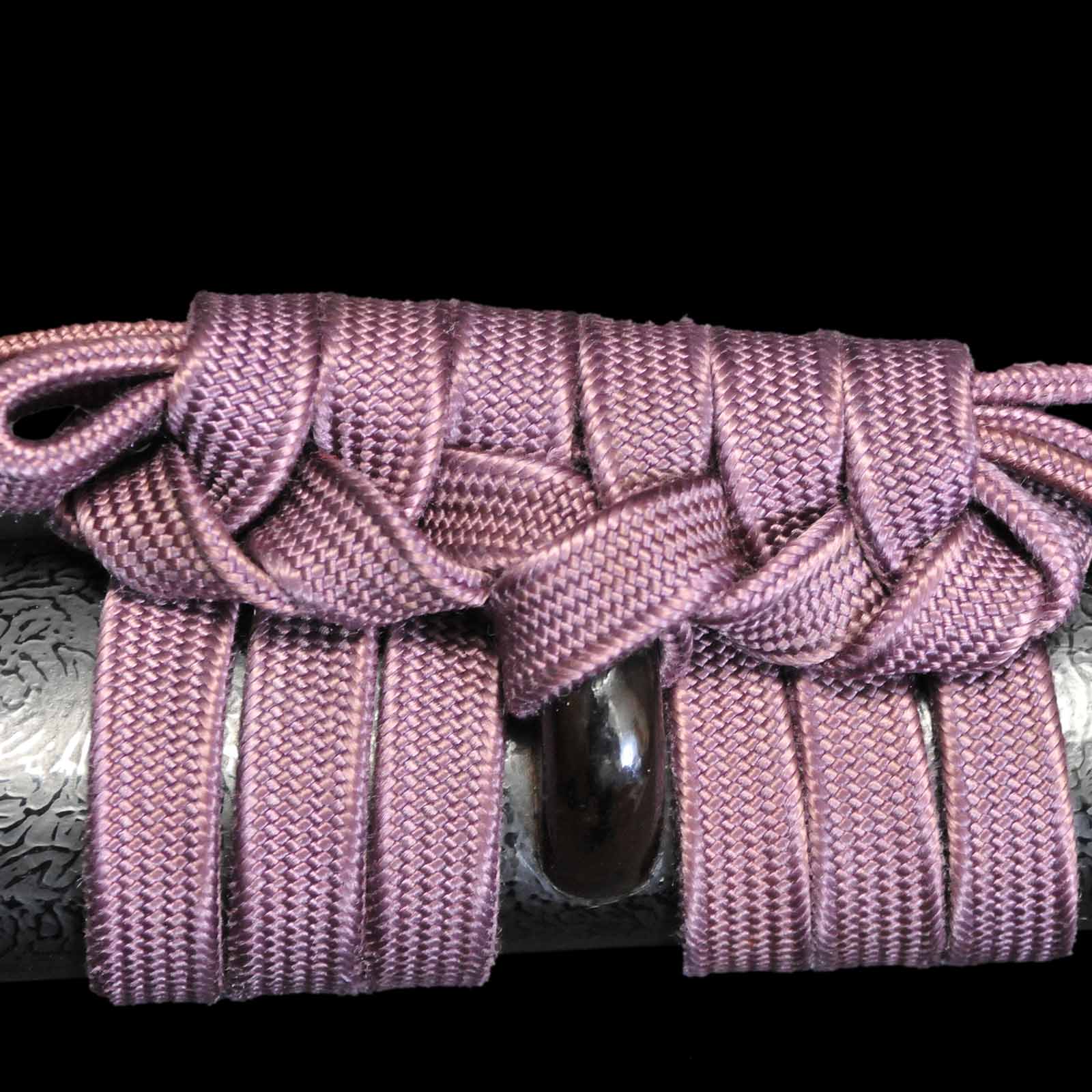
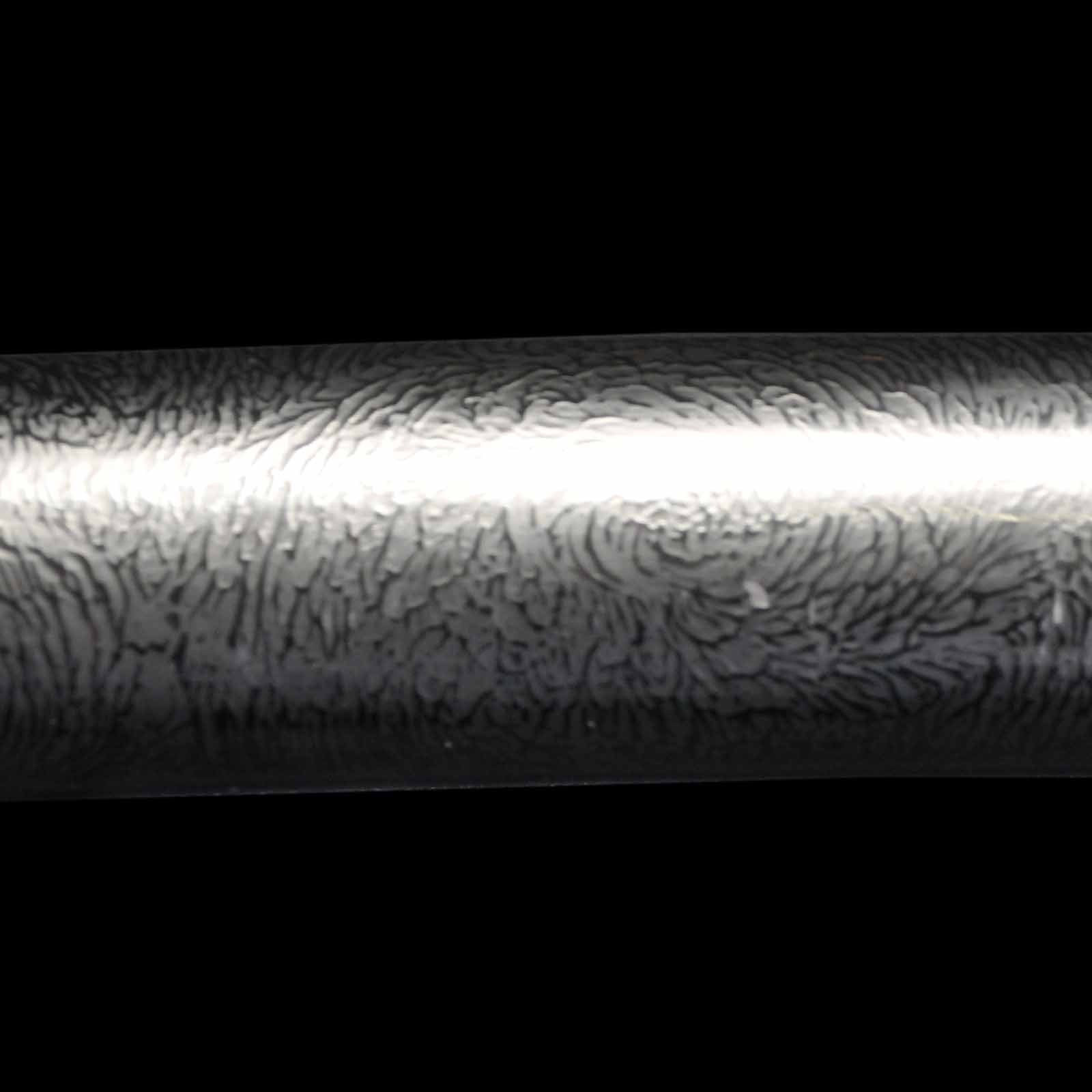
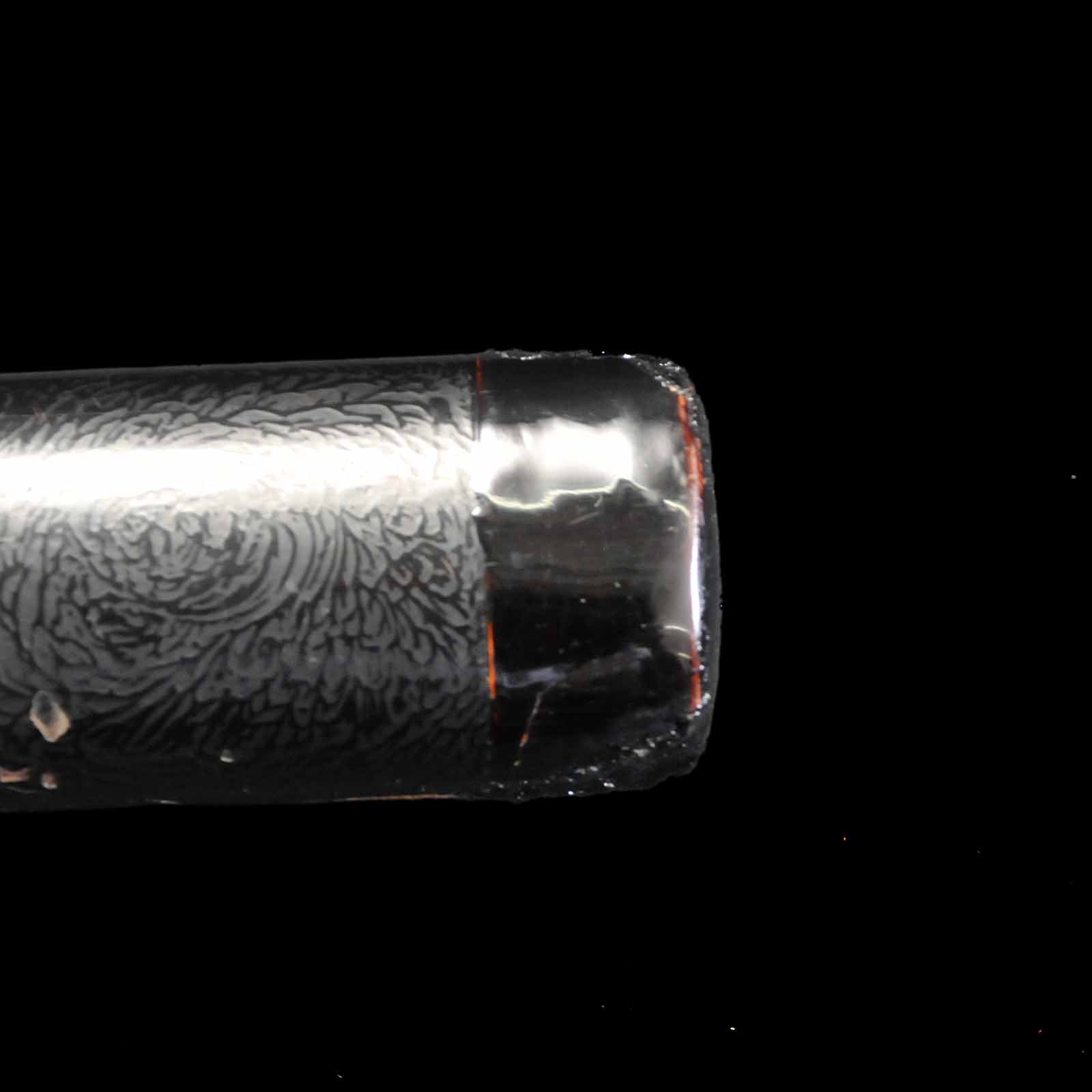
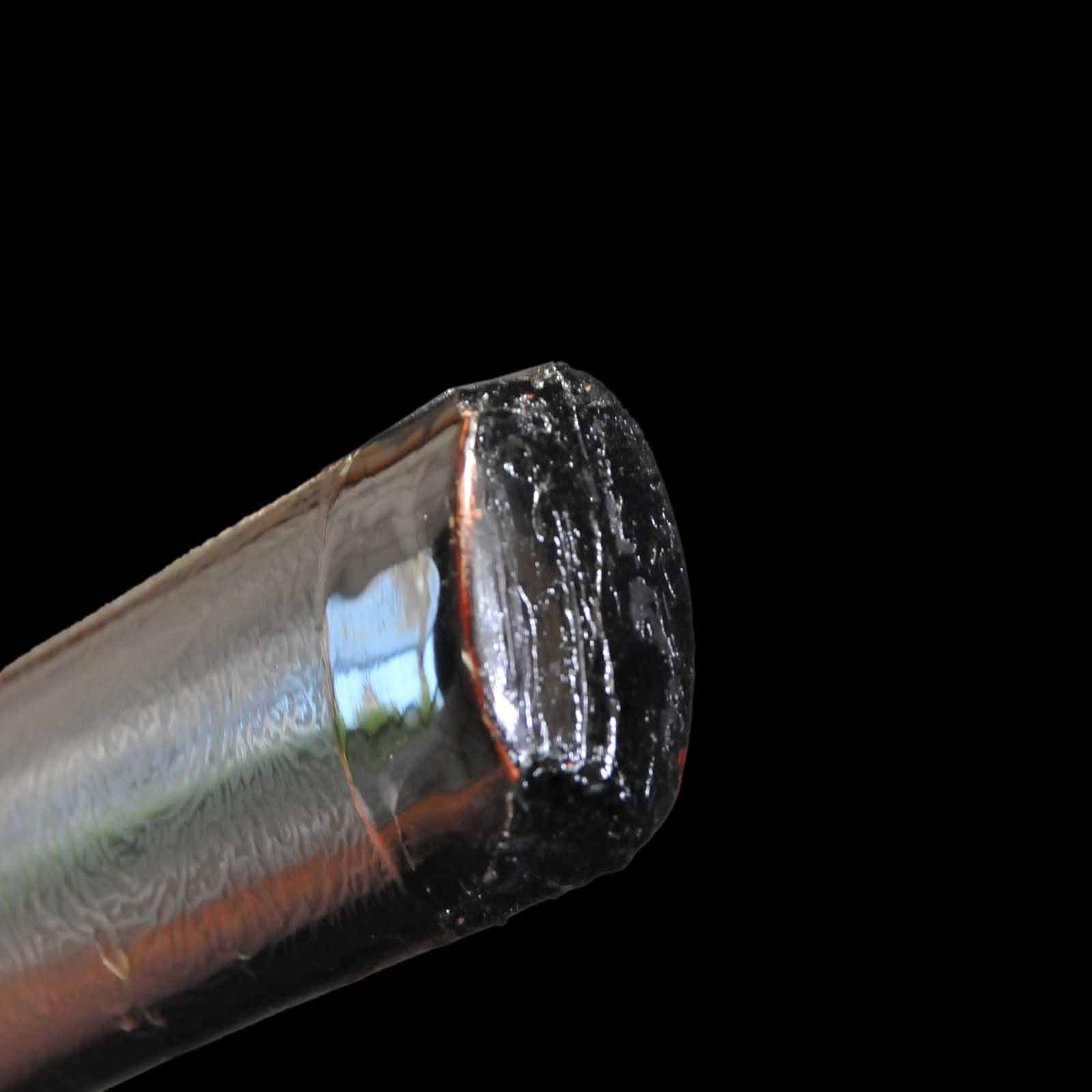
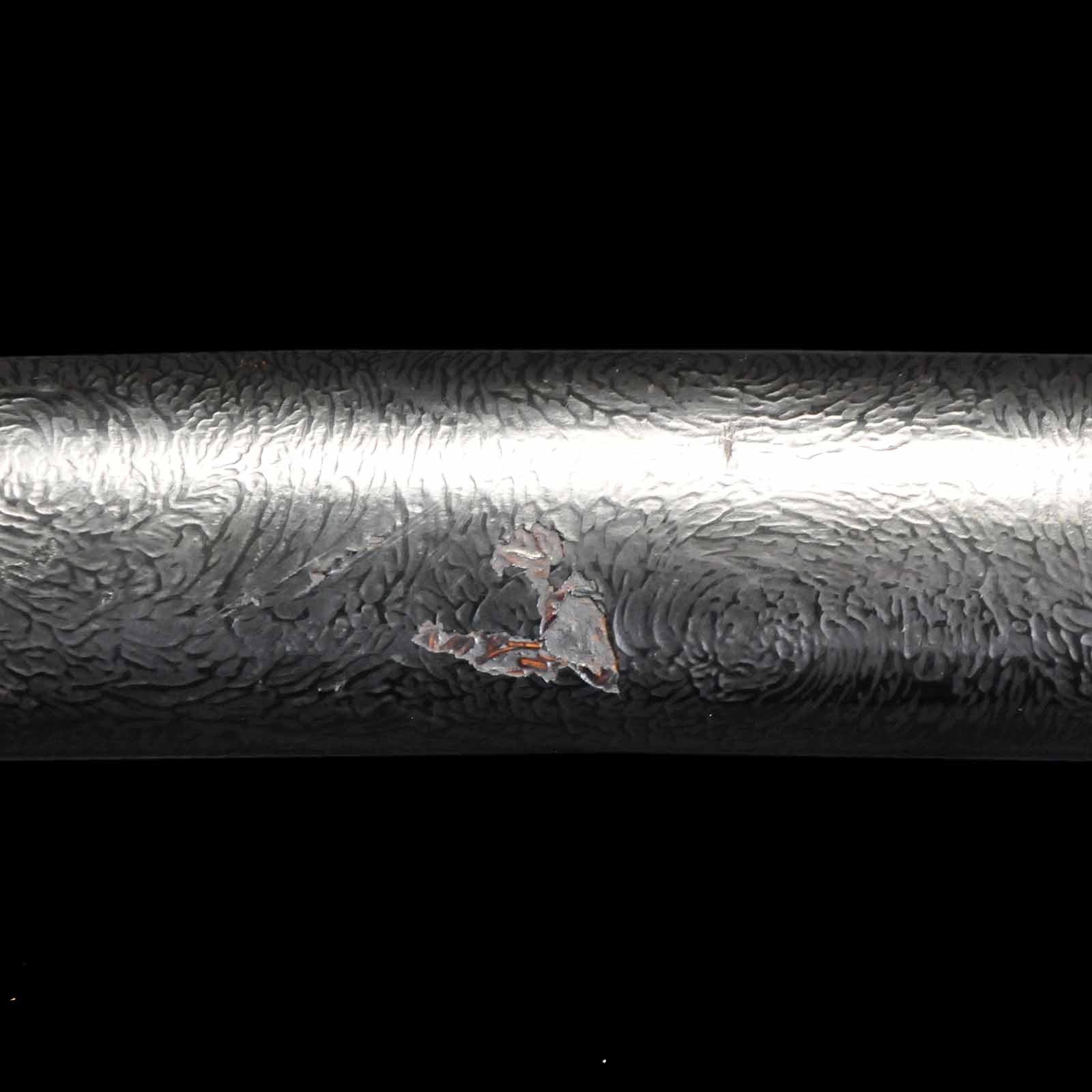
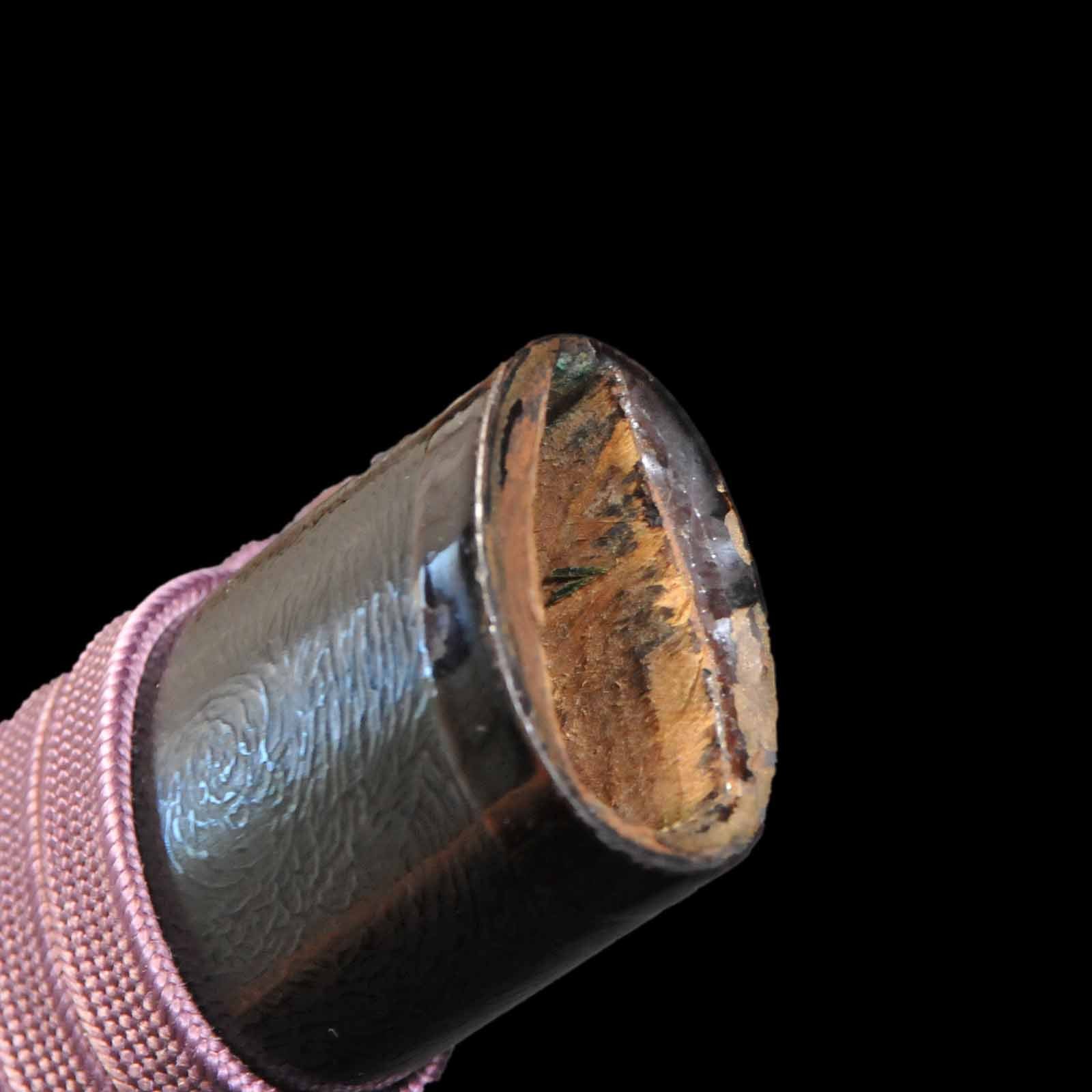
A work by Masazane, a swordsmith active in the early Edo period, is available for sale with uchigatana equipment from the period at a very reasonable price. Masazane seems to be a Hojo family swordsmith judging by his style. The condition of the sword is a little cloudy from old polishing, but there are no flaws or chips, but there is a very small rust around the matsuba of the kisaki. Both sides of the sword are engraved with different shaped grooves (one thicker groove on the sashiomote and two thinner ones on the sashiura). The hada is a well-packed itame with very active chikei. The hamon is overall a niedeki gunome with very active hataraki, including alaniye, kinsen, and ashi, which is spectacular. The nakago is engraved with the name "Minamoto Masazane, who lives in Musashi". All metal fittings used on the uchigatana are of the period, and the tsuka is tightly wrapped with a small diamond shape. The scabbard is very textured with a swirling pattern. There is a dent on the corner of the Kojiri. Add this katana to your collection, as it is ideal for iai and bat, but also has features to be appreciated and enjoyed closely. Blade length: 67.3 cm Curvature: 1.8 cm Number of Mekugi hole: 1 Sakihaba: 20.1 mm Sakikasane: 4.7 mm Motohaba: 29.6 mm Motokasane: 6.8 mm Signature: Musashi Ju Minamoto Masazane Era: Shinto Structure: Shinogi-zukuri, Iori-mune Jigane: Itame Hamon: Suguha Boshi: Massugu Haitte Komaru ni Kaeru Weight: 940 g(without Saya) Nakago: Ubu Original Registration No.: Hyogo 16209 Please contact us if the katana you are looking for is not listed here.
NihontoWatch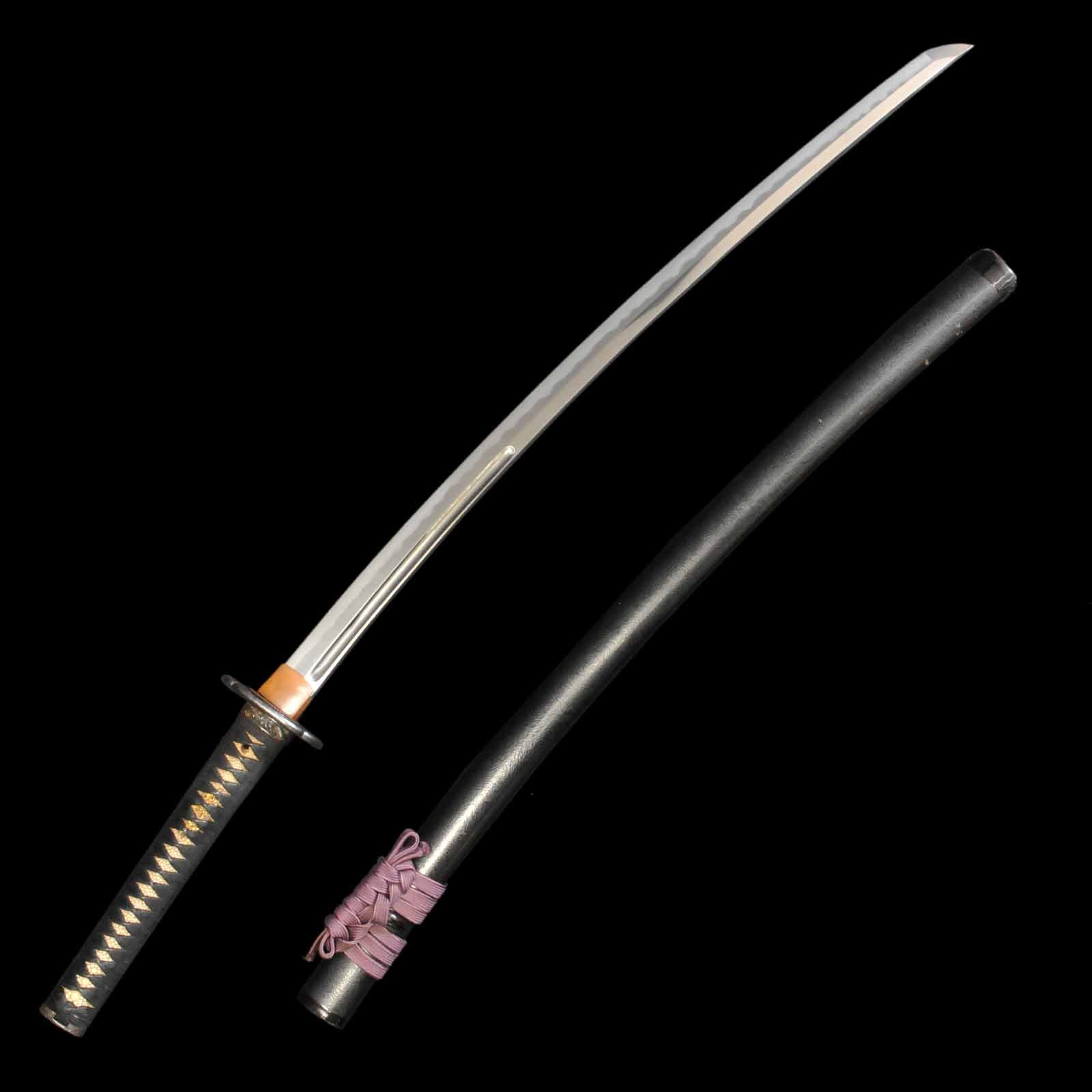
(翻訳なし) 店主の原文のまま表示しています。正確さの確認を通った翻訳のみを表示します。
脇物 · 大和 · 1532-1555頃
現在1点販売中
脇物 · 大和
現在6点販売中
金房派は、大和国奈良すなわち南都を本拠として室町末期から新刀期にかけて活動した一群である。説示によれば、金房某と銘する刀工が数多く知られて栄え、永正以降の年紀作をままみるという。同派の代表工としては政次があり、南都住金房兵衛尉政次と長銘を切る。ほかに政定が伝わり、南都住藤原朝臣金房左衛門尉政定作と銘し、永禄二年の年紀を有する作が知られる。大和の伝統的な五派との関係は明らかでないと説示は記しており、同地に拠りながらも別個の一派として隆盛をみたものと位置づけられる。同派に薙刀の遺例が比較的目立つのは、興福寺をはじめとする南都七大寺の僧兵の需要にこたえたものと説示は説く。 作風について説示が共通して挙げるのは、板目が流れて柾がかり、肌立つ鍛であり、地沸のつくもの、白気映りの立つものがみられる点である。刃文は、説示の一には直刃が最も多いとし、ほかにのたれや互の目を焼くと記すが、互の目調の大乱を主とする作も多く、腰の開いた互の目乱れに小足・葉のよく入るもの、足・葉が太く入るものが見受けられる。匂口は締まりごころとなるものを多く挙げ、一方で沈みごころとなるものにも触れる。帽子は乱れ込んで掃きかけ、先尖りごころに返るものや、やや長く焼き下げるものがある。造込みは身幅広く反り浅い大鋒の打刀姿を採り、末備前・末関などと共通する姿を示すと説示は述べ、薙刀造の作と併せて、実用に応じた一派の性格をうかがわせる。彫物には棒樋や倶利迦羅を施す例があり、茎は生ぶ、鑢目は勝手下りや筋違を交える。 鑑定にあたっては、柾がかって流れる板目鍛と、足・葉の目立つ互の目調の刃を要点とし、薙刀を含む実用本位の造込みを併せて見るべきものである。代表作としては政次の長大な薙刀があり、説示はこれを同派中の著名な一典型とする。政定の打刀には永禄の年紀と倶利迦羅の彫を備えた作が伝わる。なお薙刀には朱塗長巻拵などを附帯し、中身の製作に合わせて誂えられ、金具・塗りともそのままに保存される例もある。資料は僅少であるが、説示の記すところに従えば、金房派は大和奈良に拠りつつ伝統的な大和伝とは異なる作風を展開し、僧兵の需要を背景に薙刀と実用の刀槍を手がけた、室町末期を代表する一派として理解される。 詳しく見る →
室町時代
応仁の乱が足利の体制を砕いた後、戦国の一世紀はほとんどすべての国を武装させた。この時代は選ぶ目に報いる。並の作は多いが、その傍らには第一級の注文打ちが立っている。
As a general rule, returns/exchanges are not accepted on Japanese sword orders unless damaged upon delivery. Other items: returns/exchanges accepted within 7 days of delivery. Cancellation for personal reasons incurs a 30% restocking fee (70% refunded). Return shipping must be prepaid and insured by the buyer; shipping/handling fees are non-refundable. Contact katana@tozando.co.jp to initiate a return.