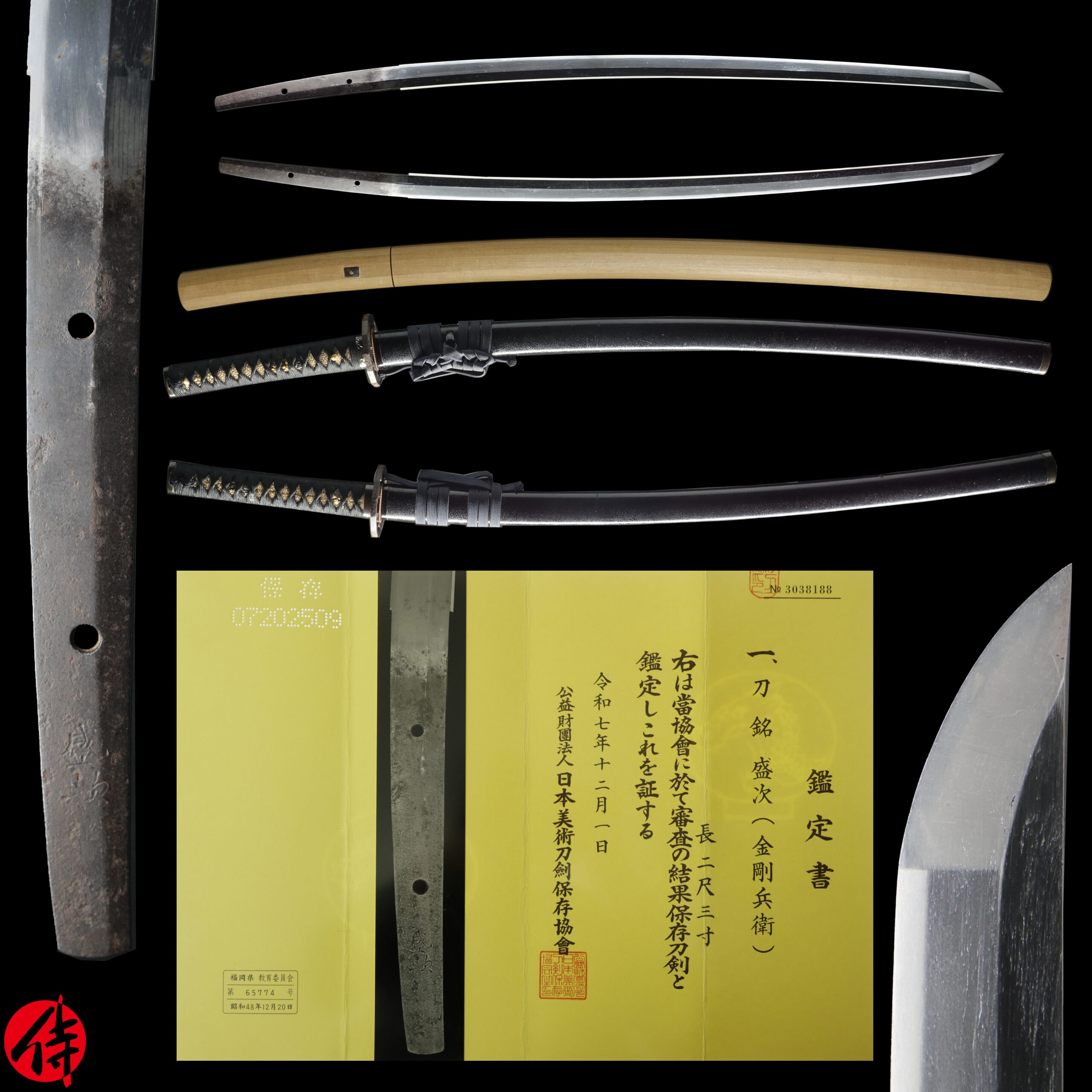
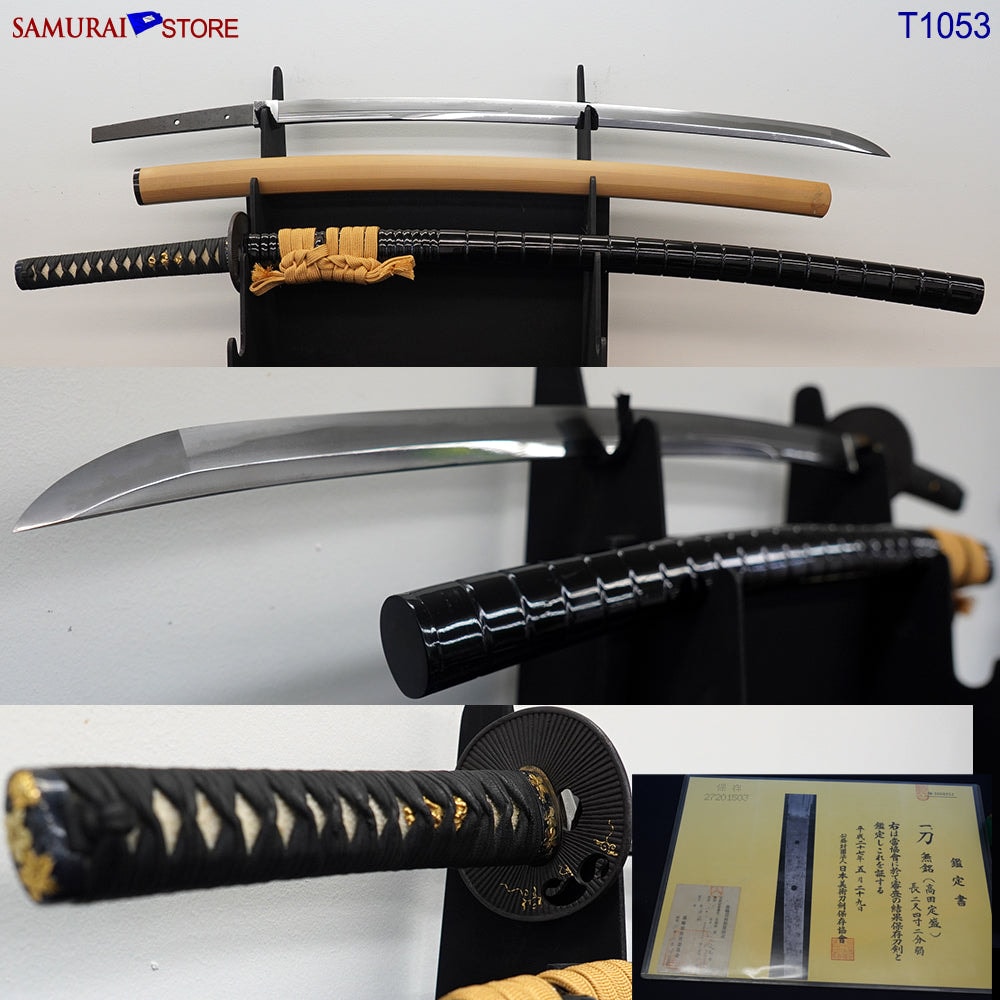
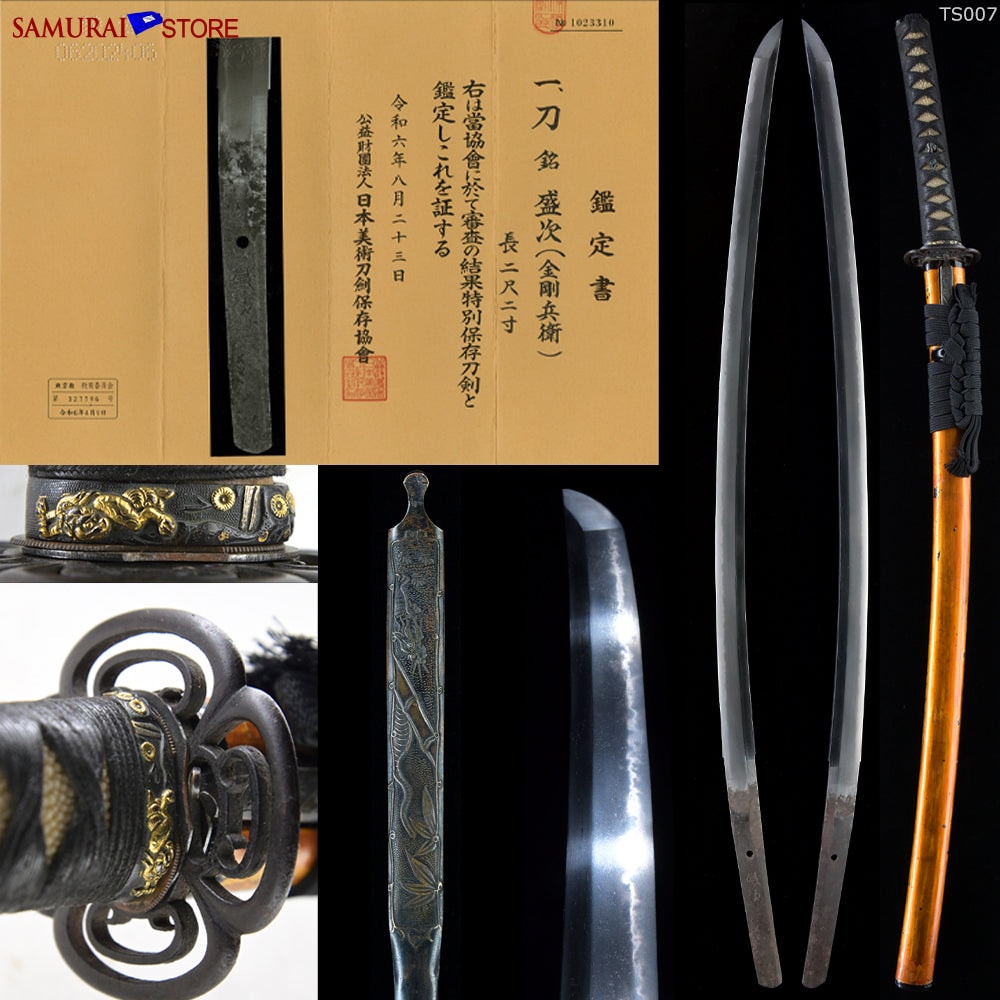
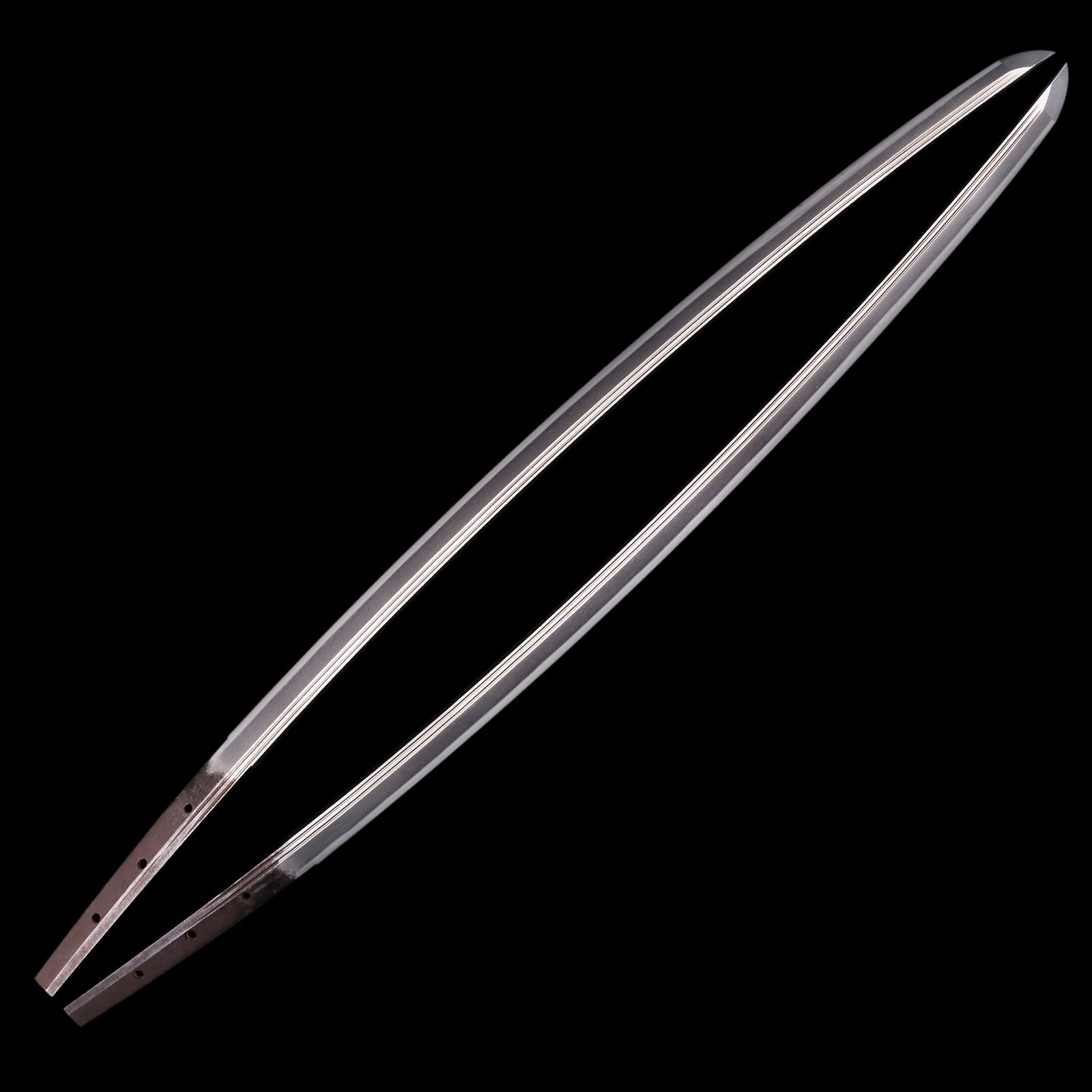
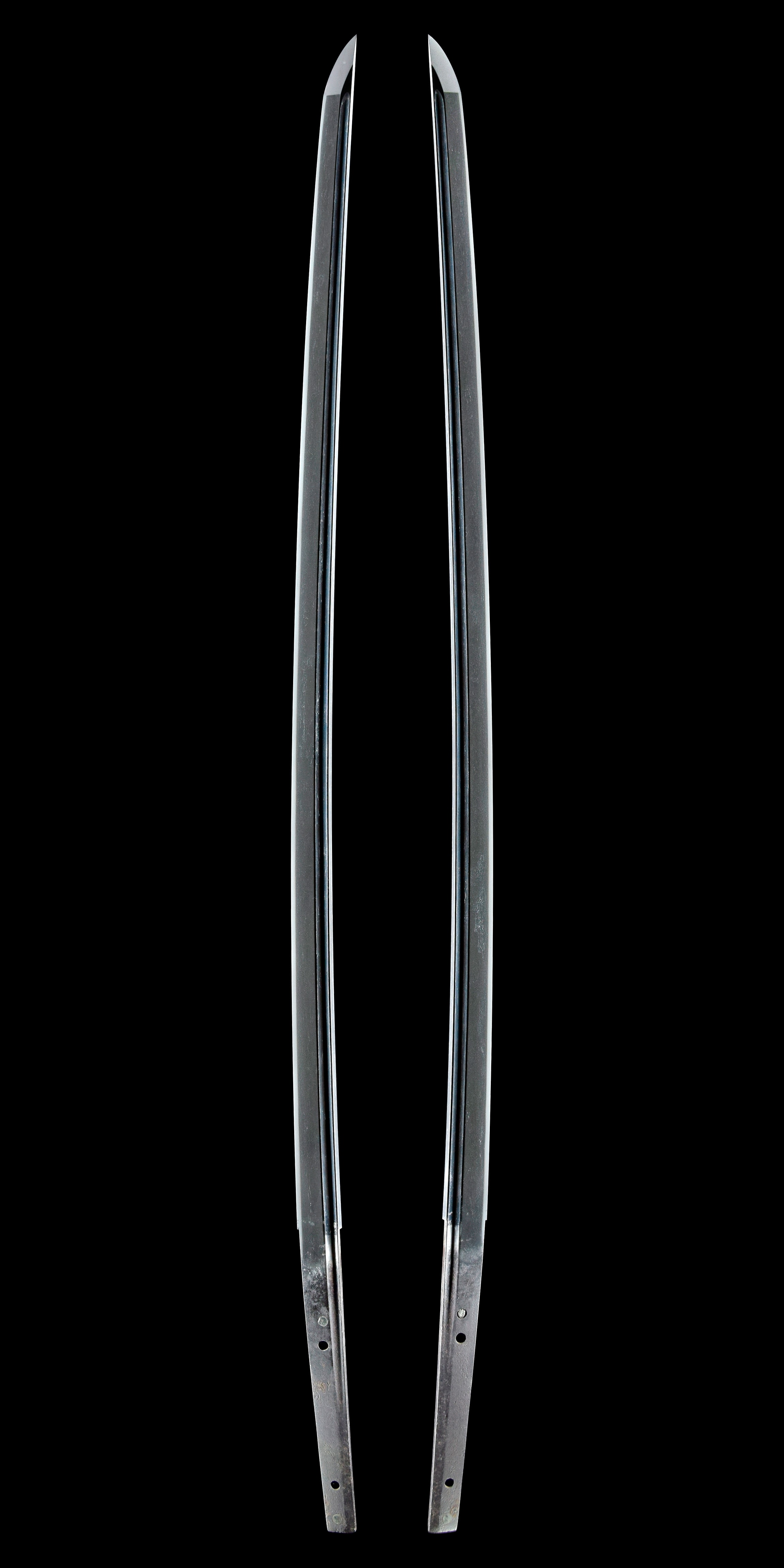
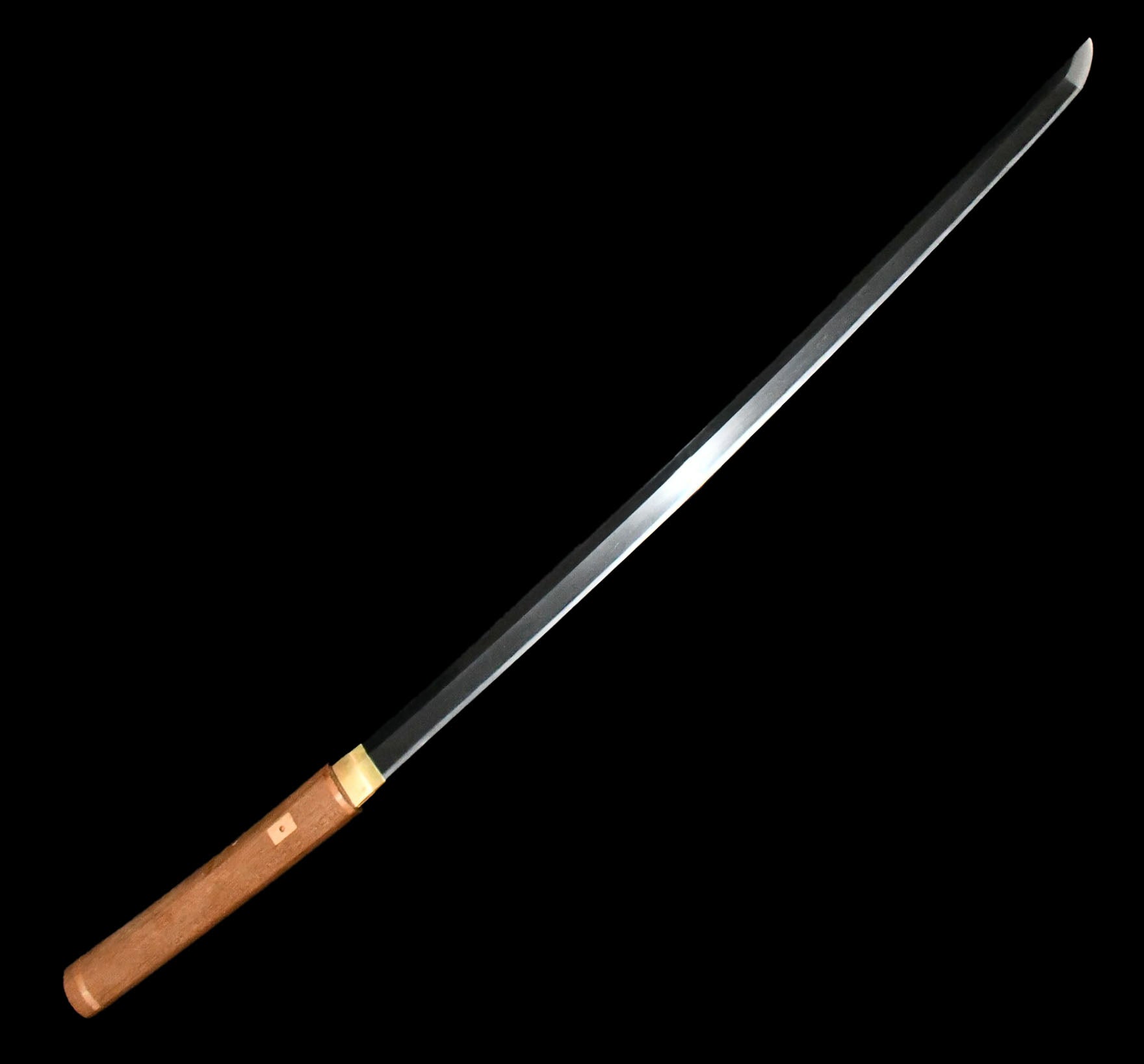
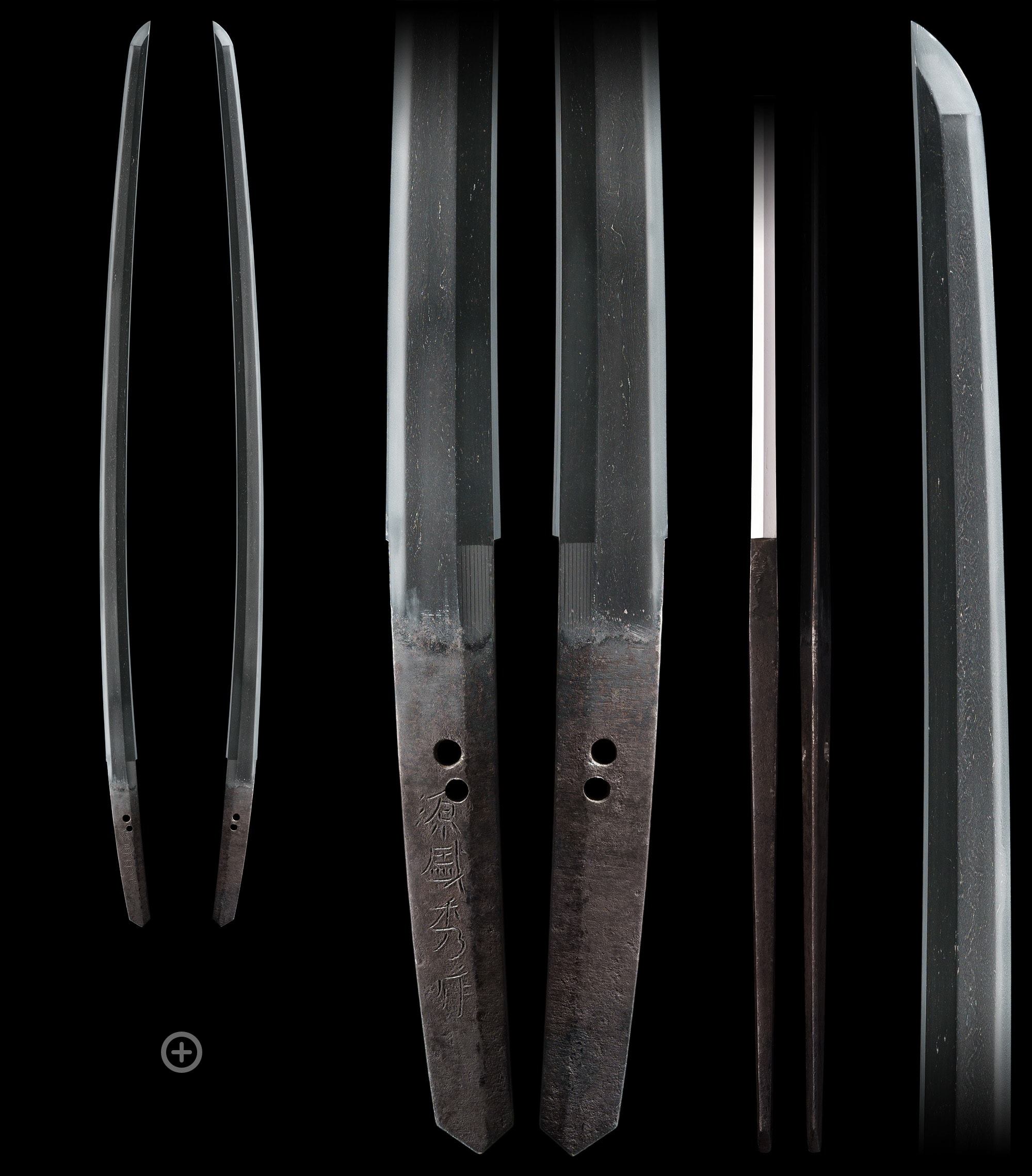
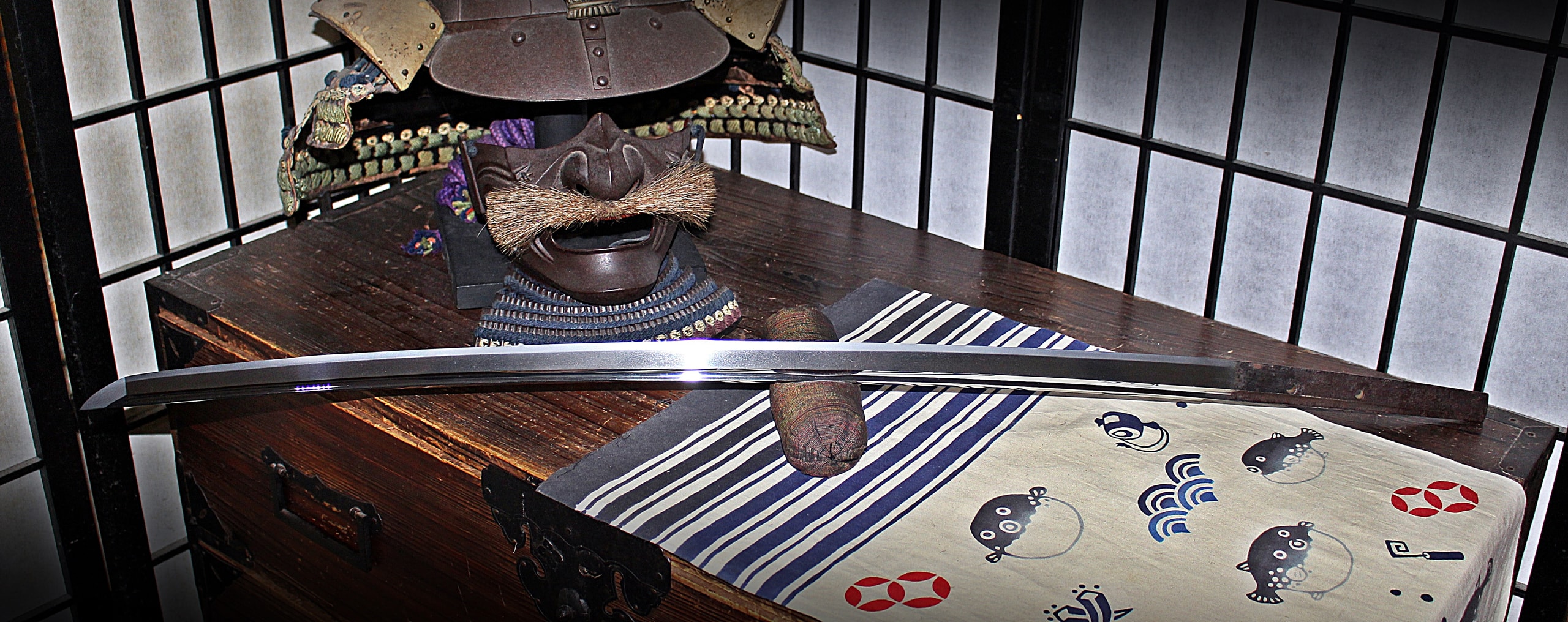
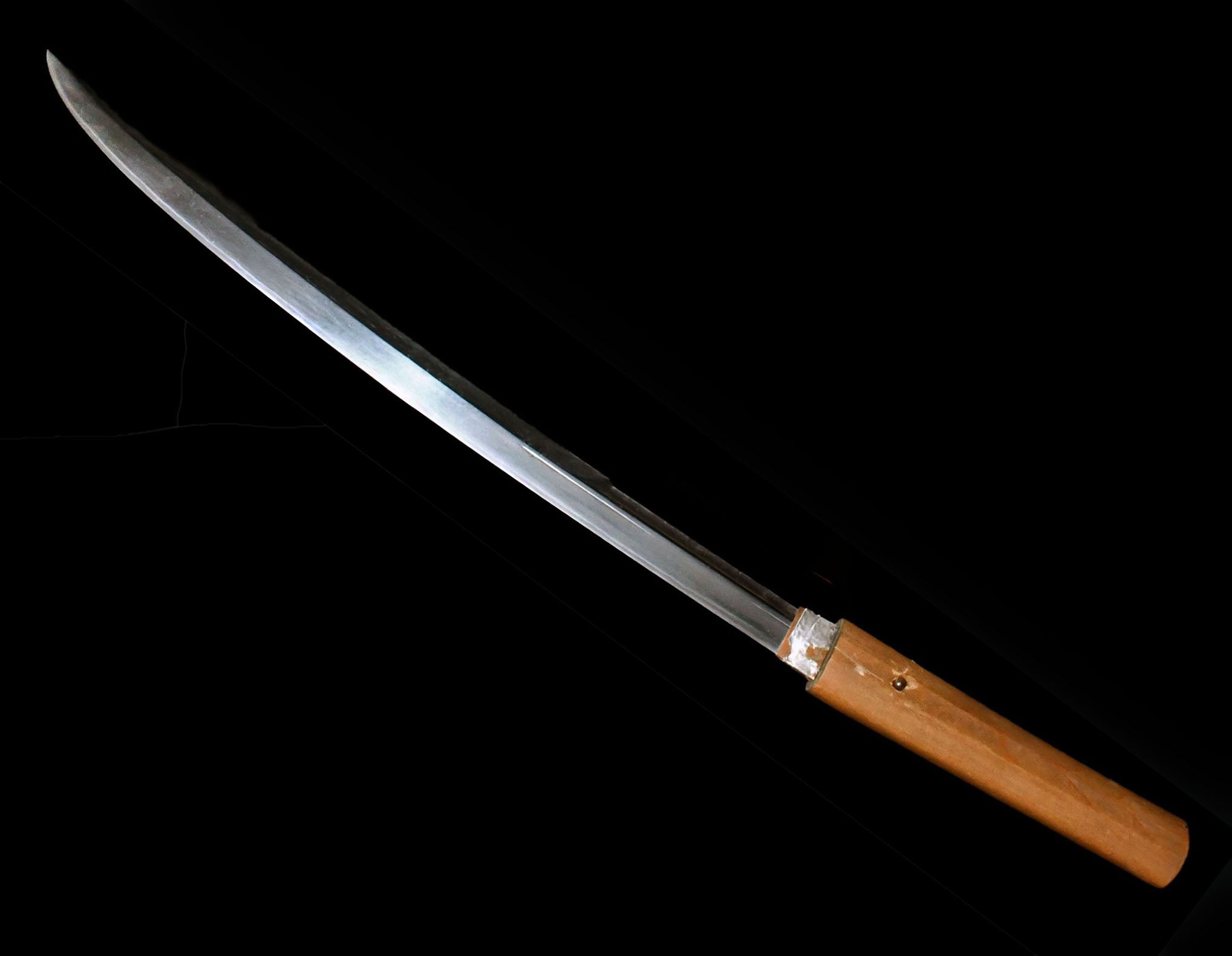
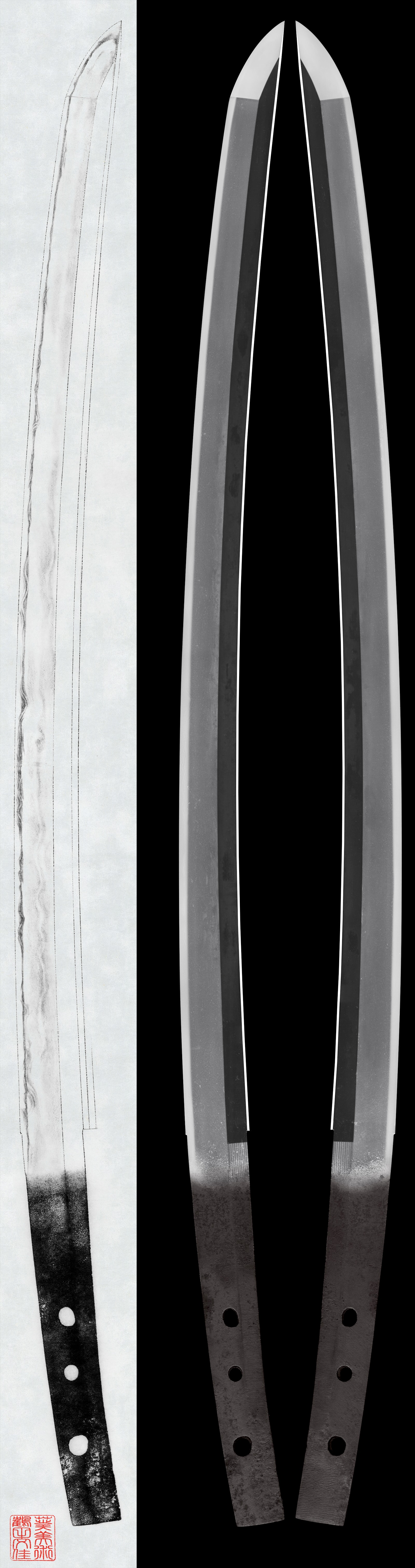
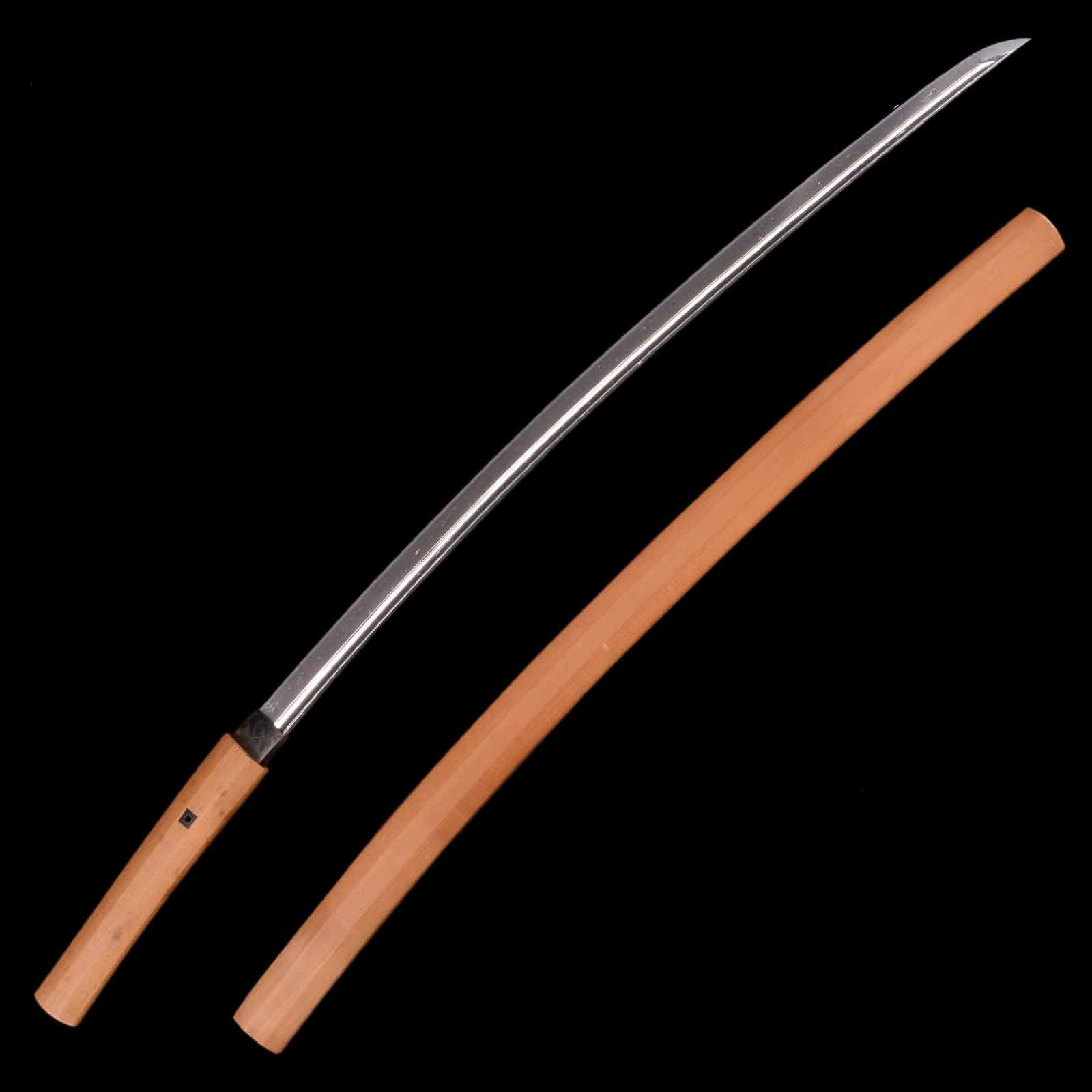
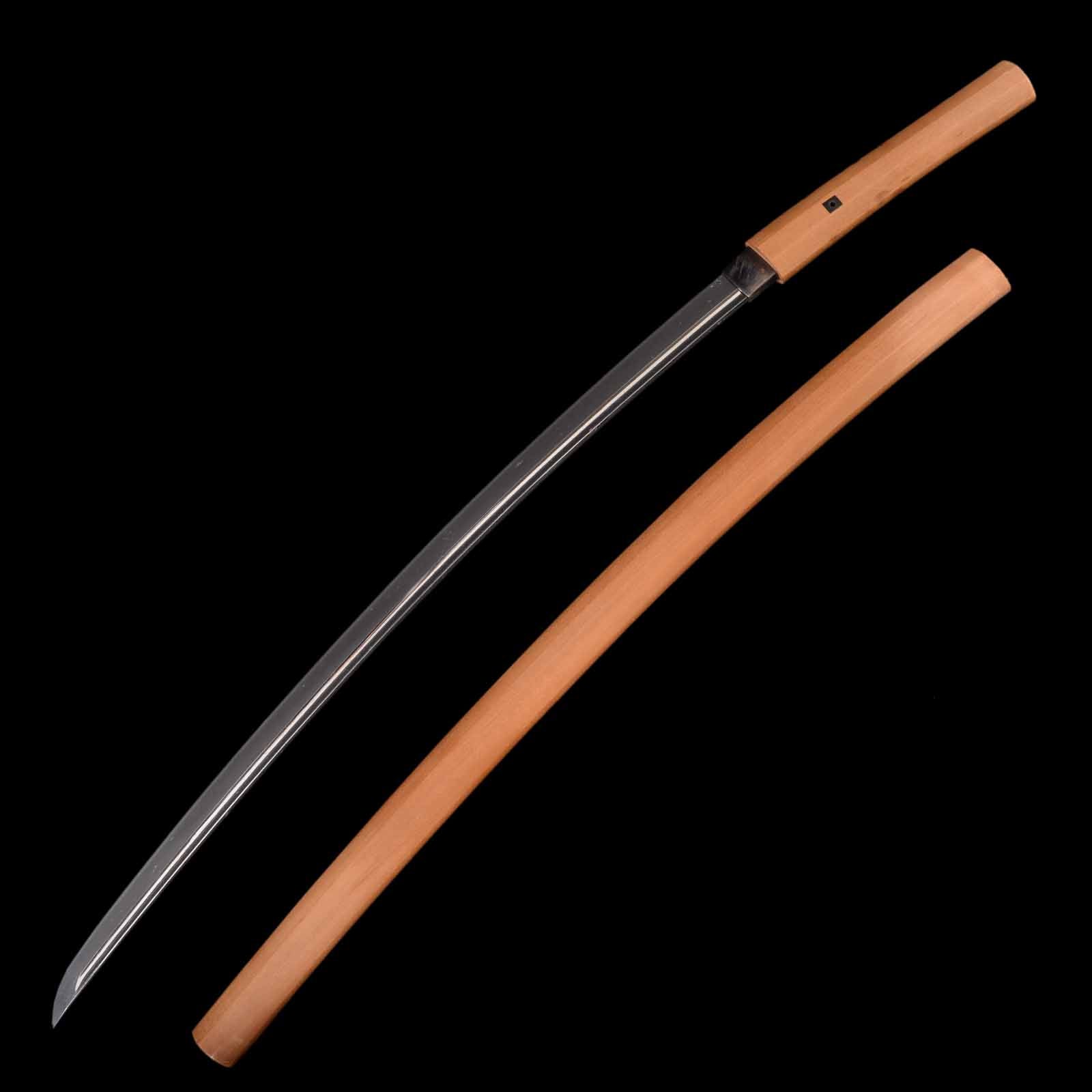
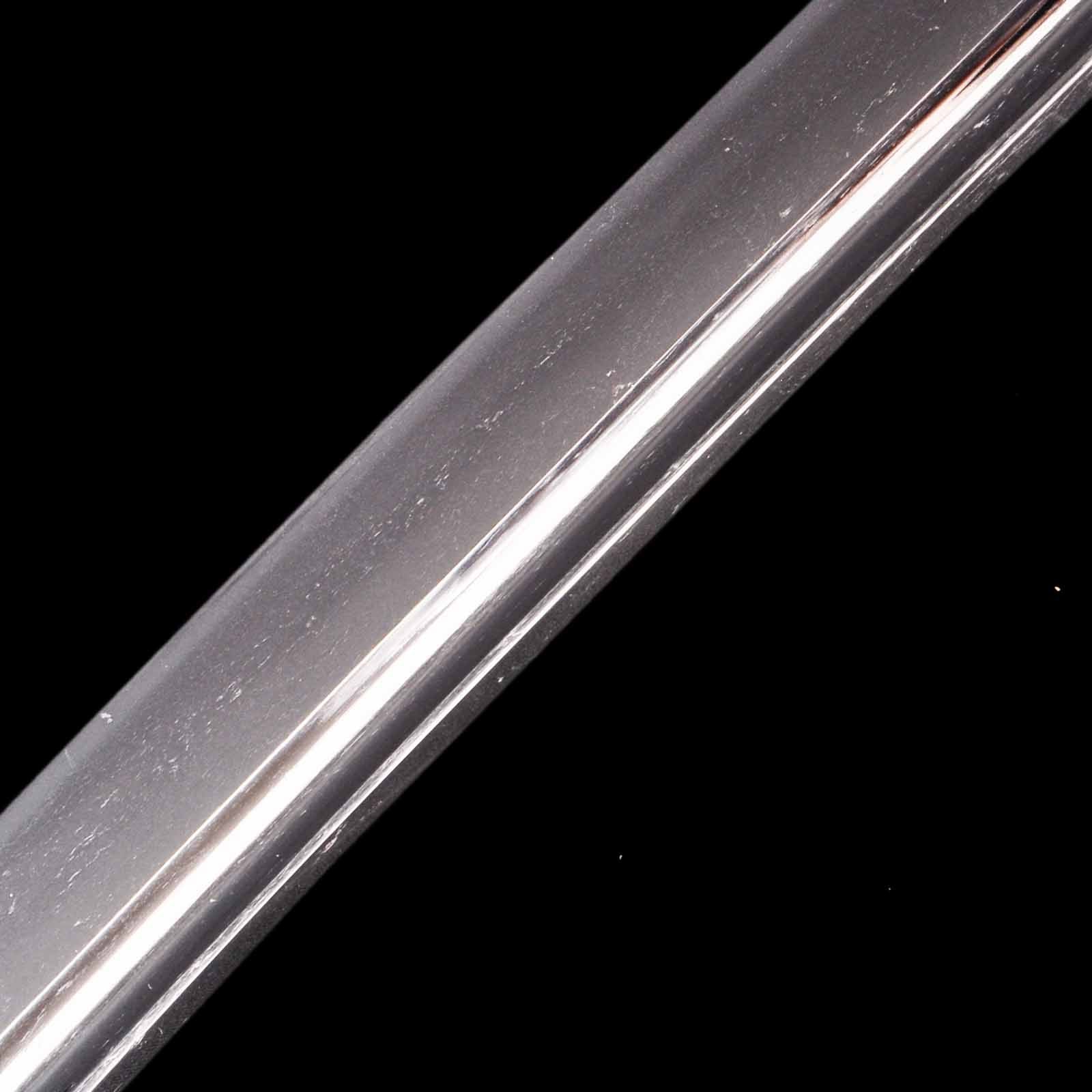
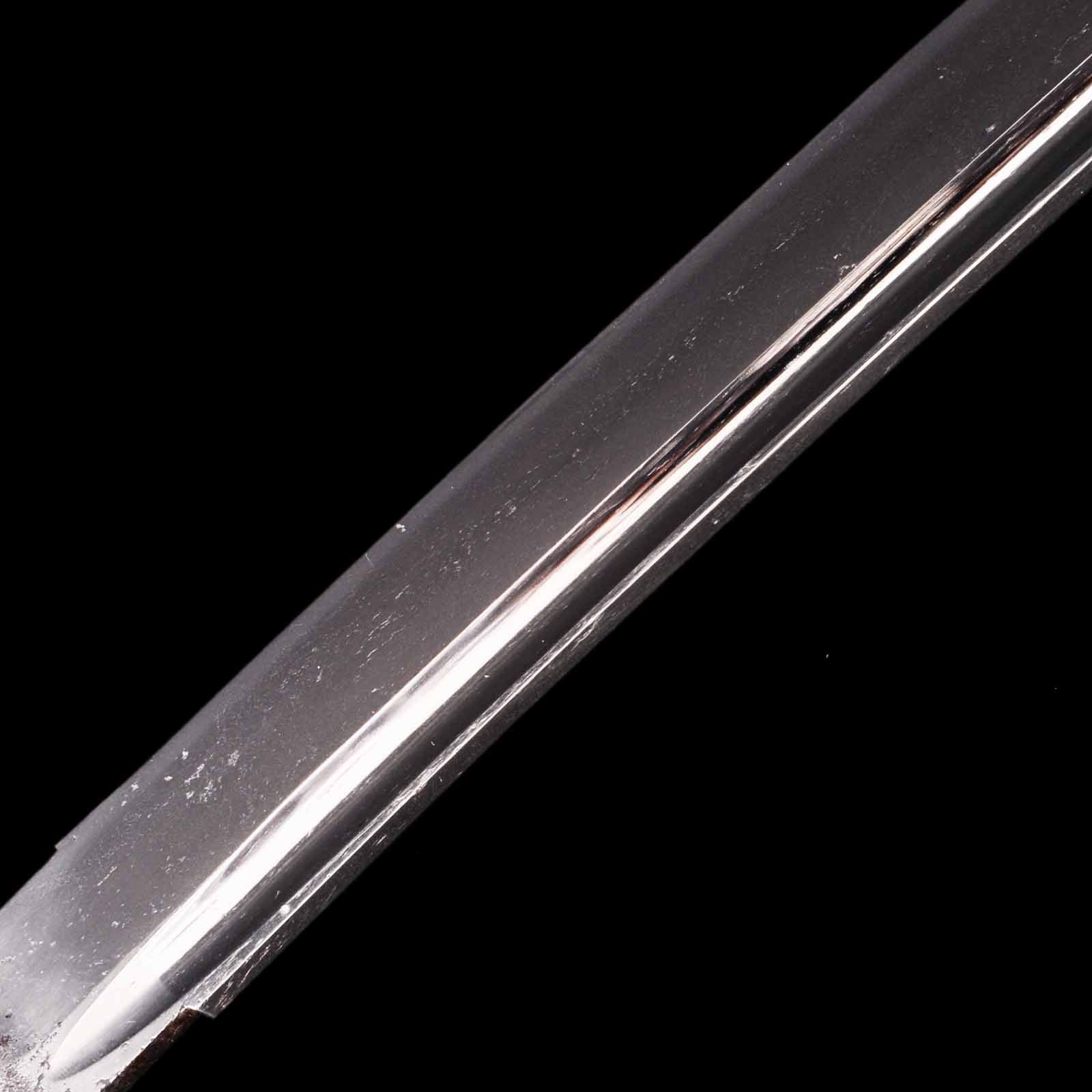
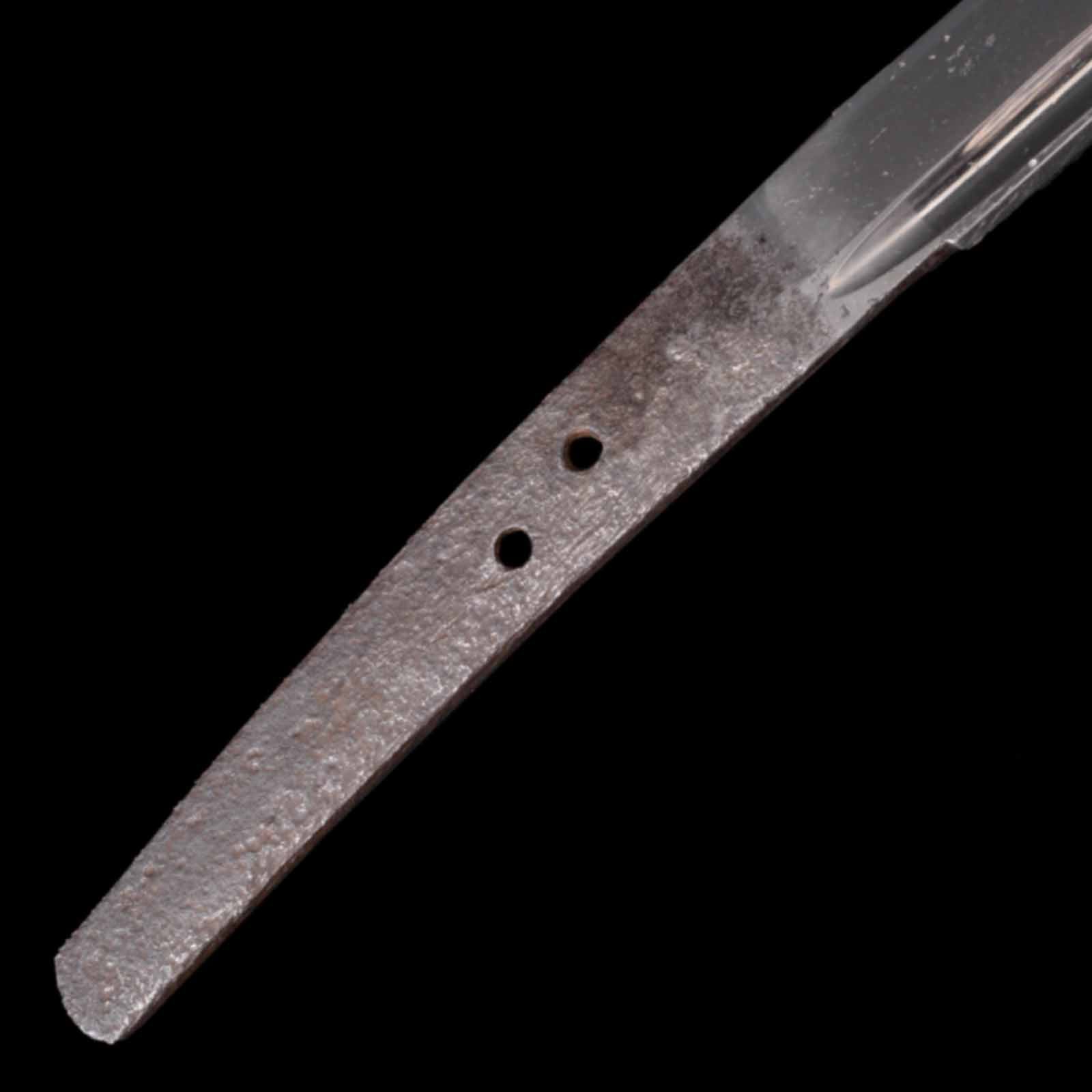
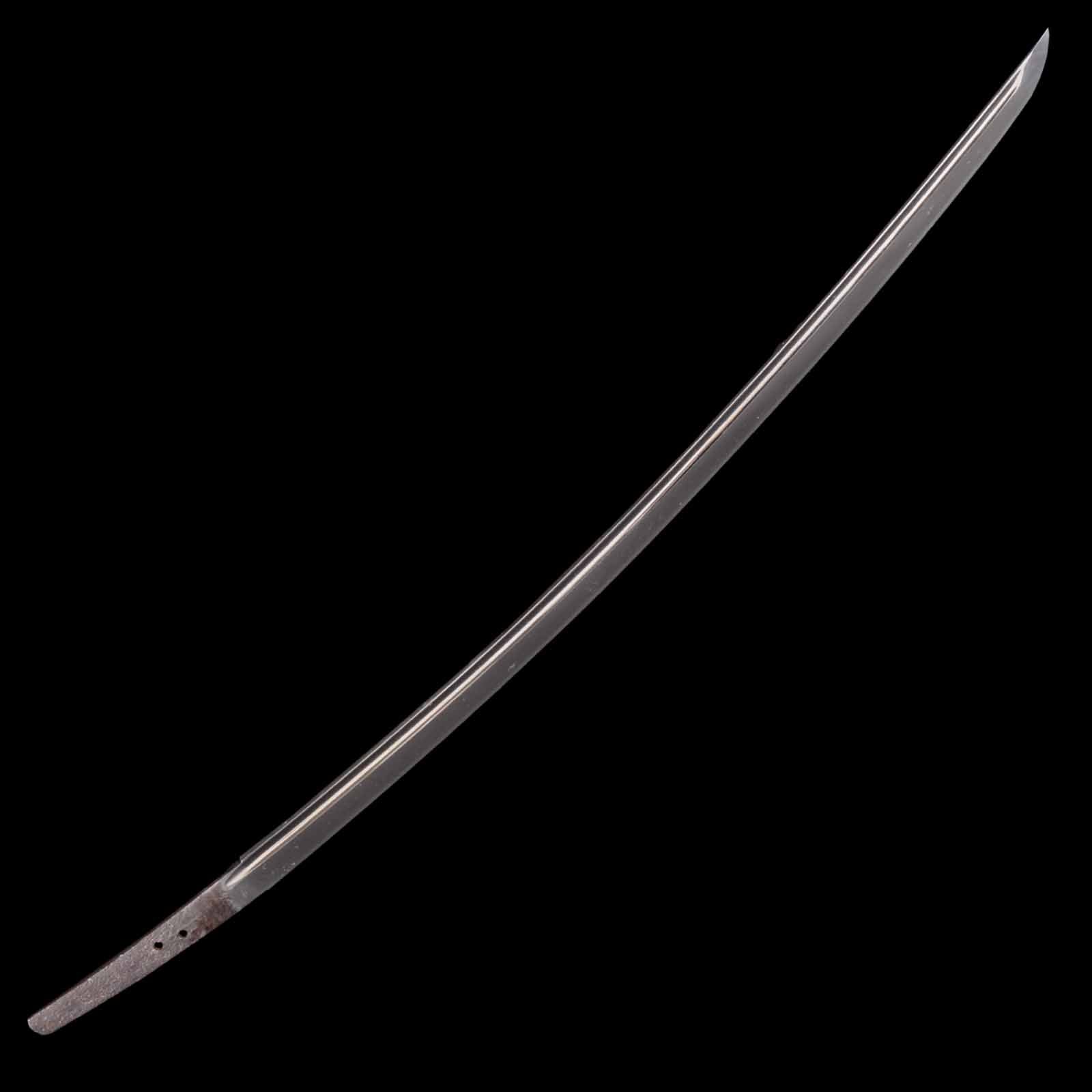
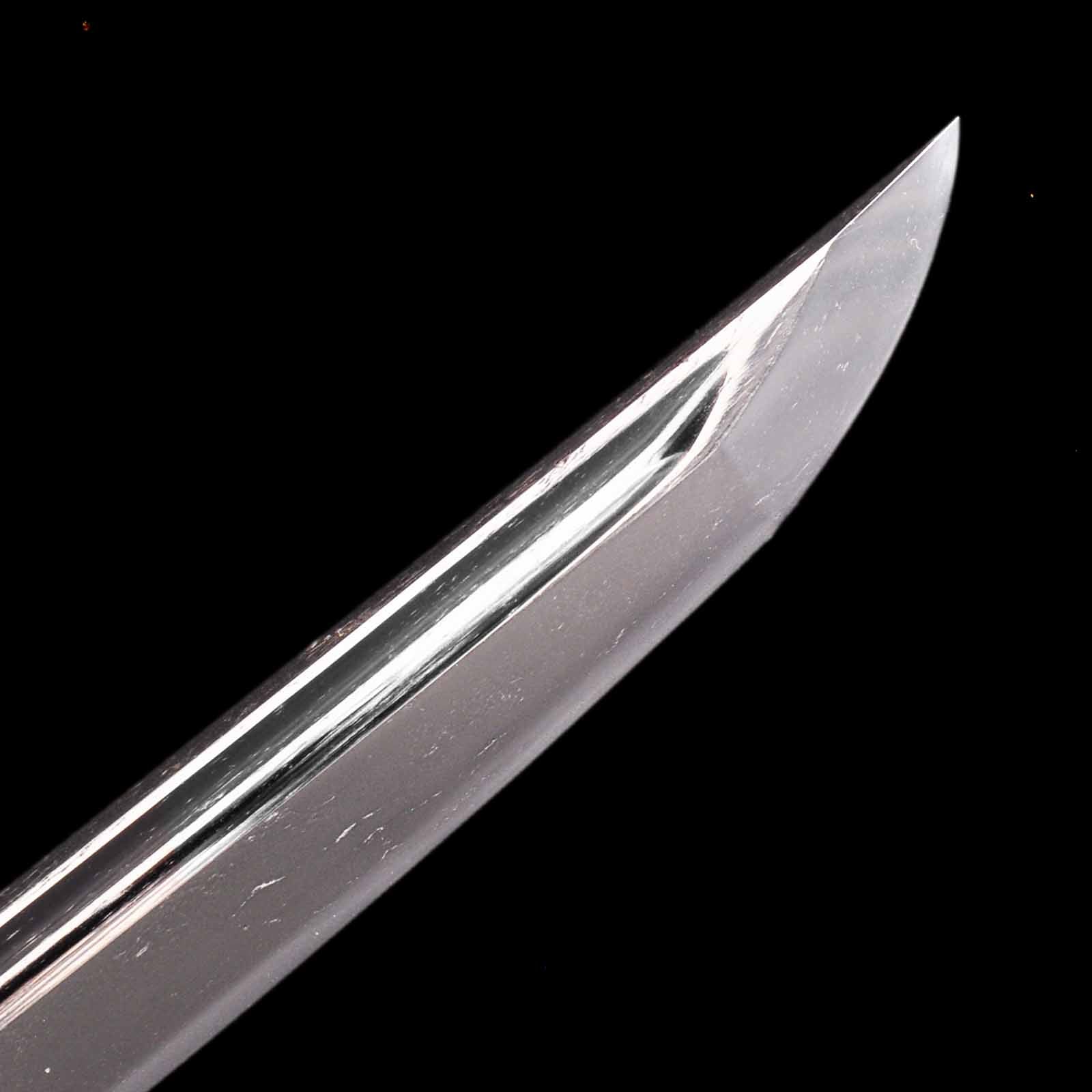
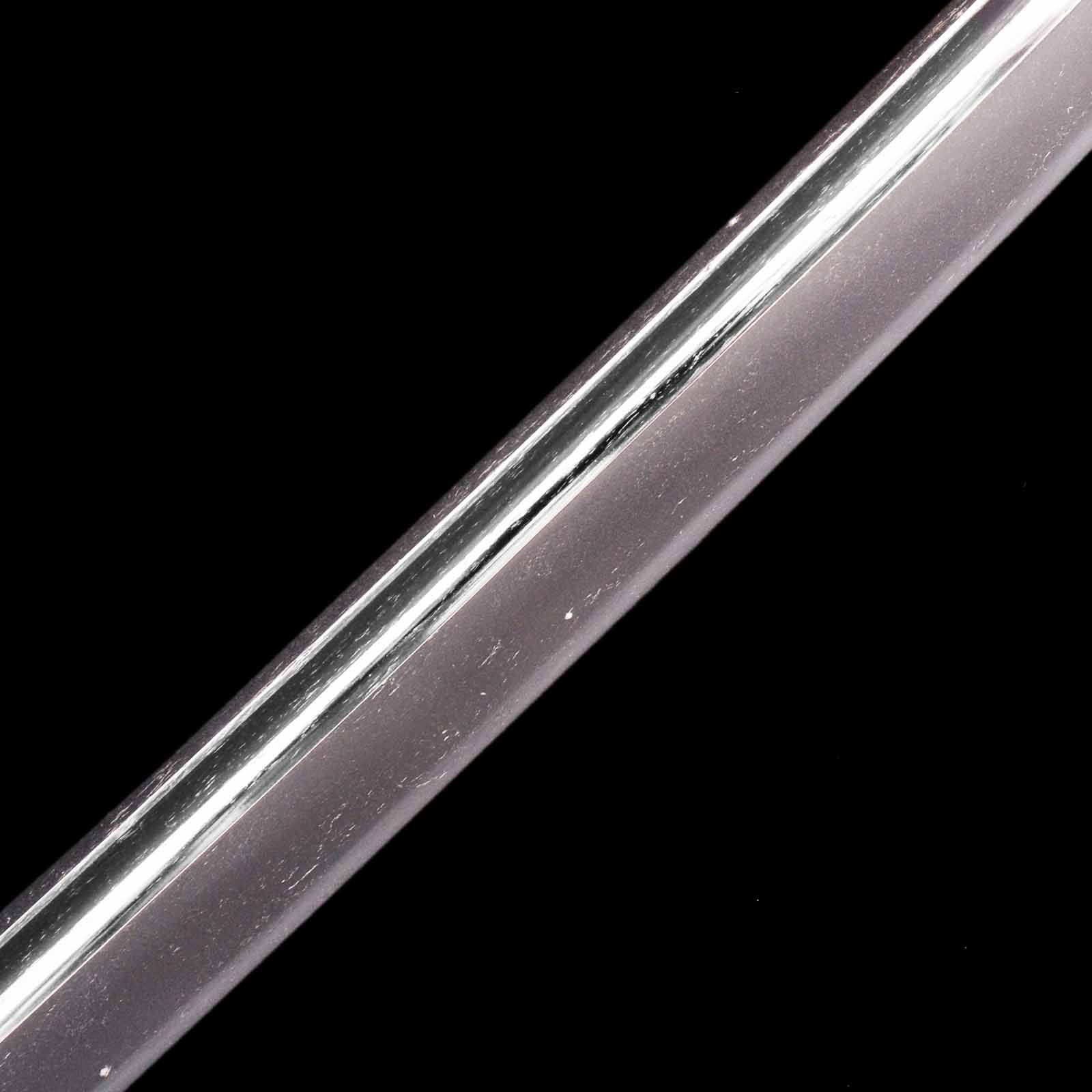
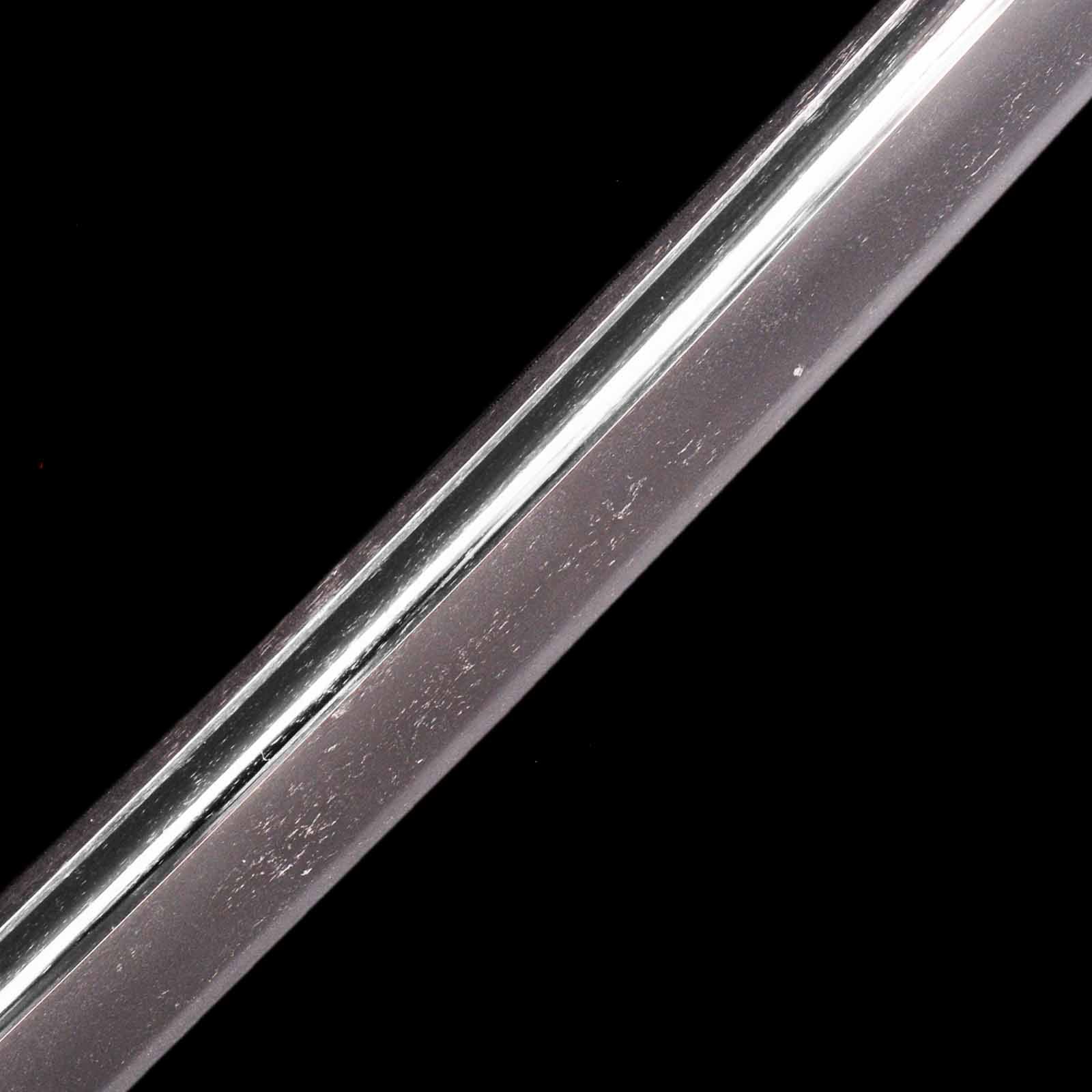
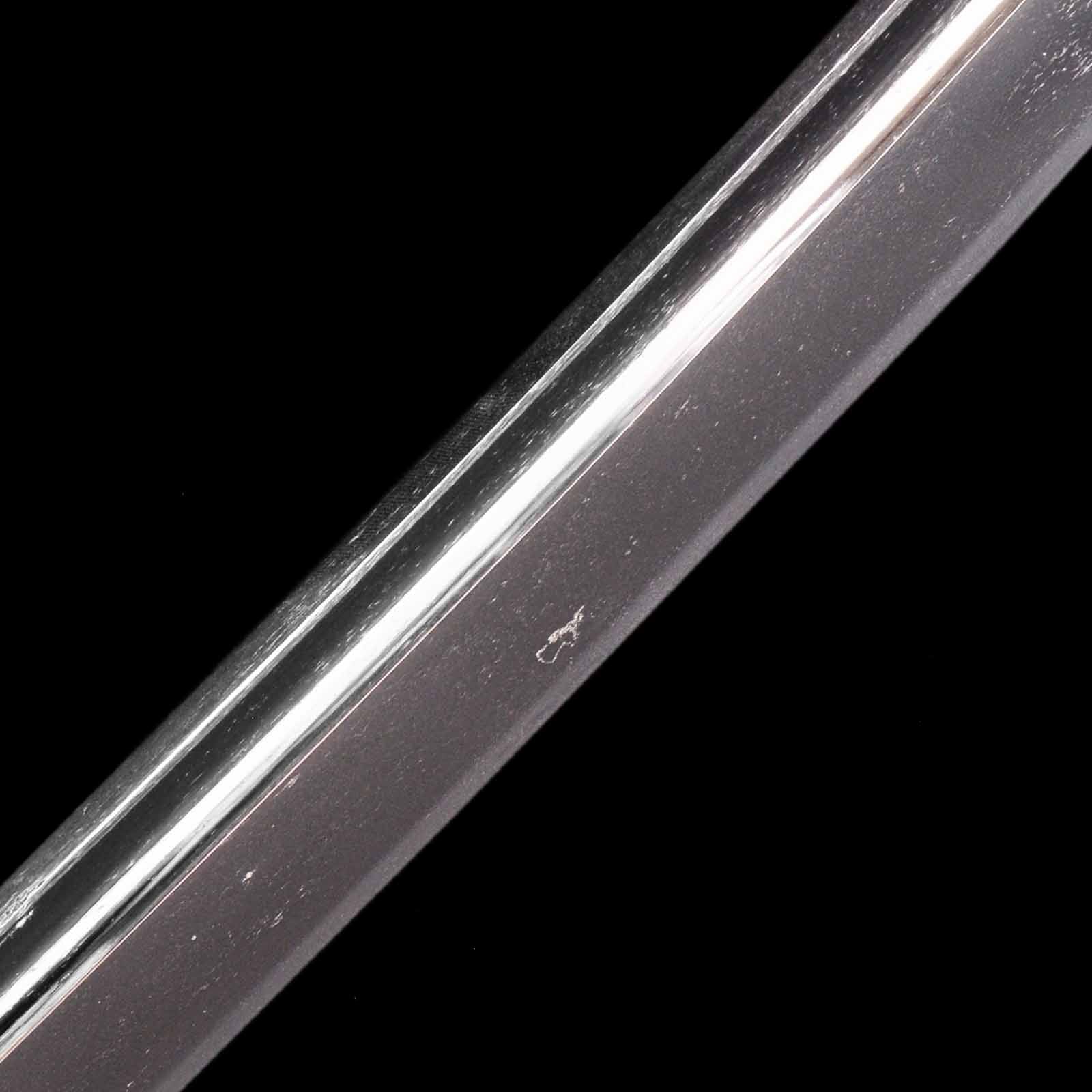
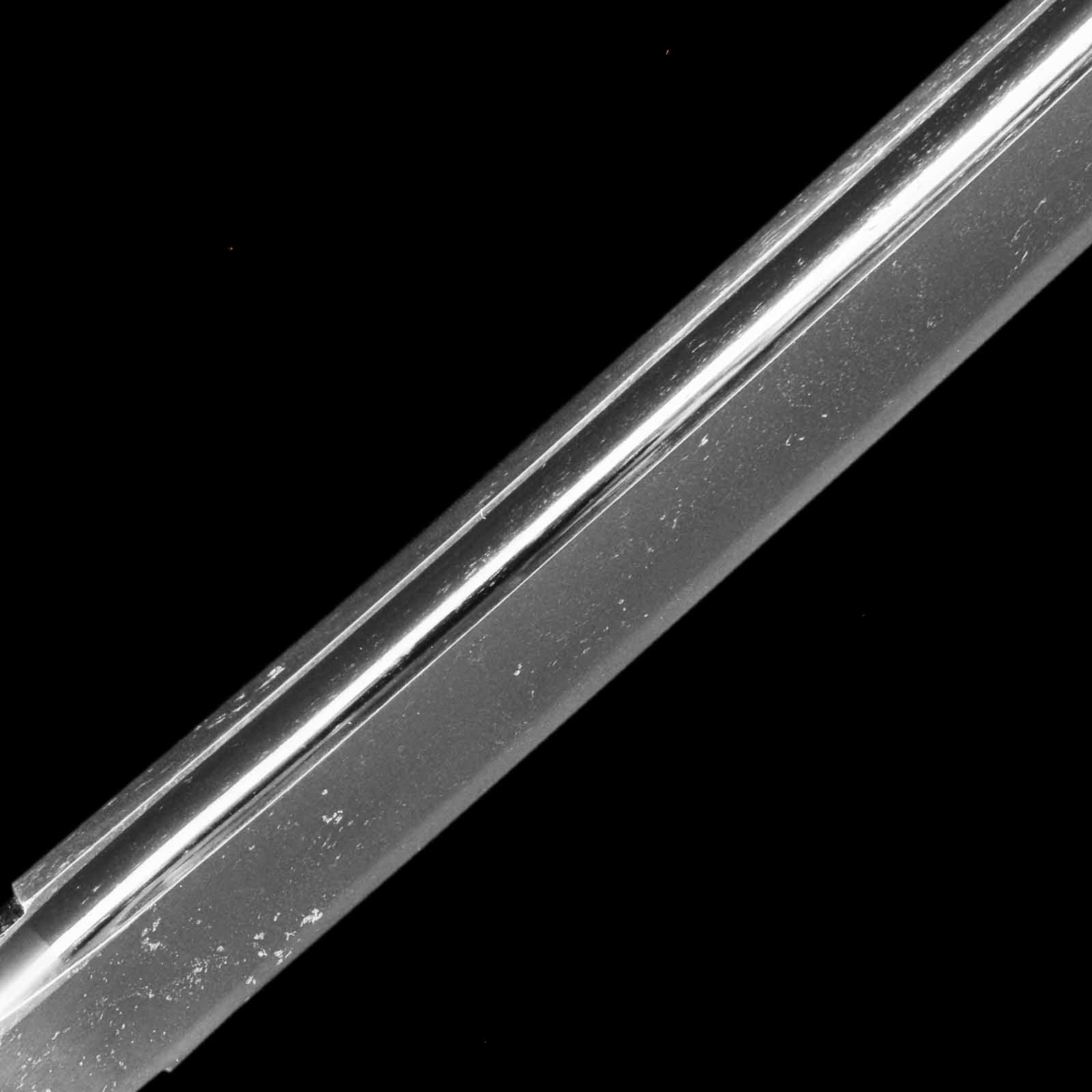
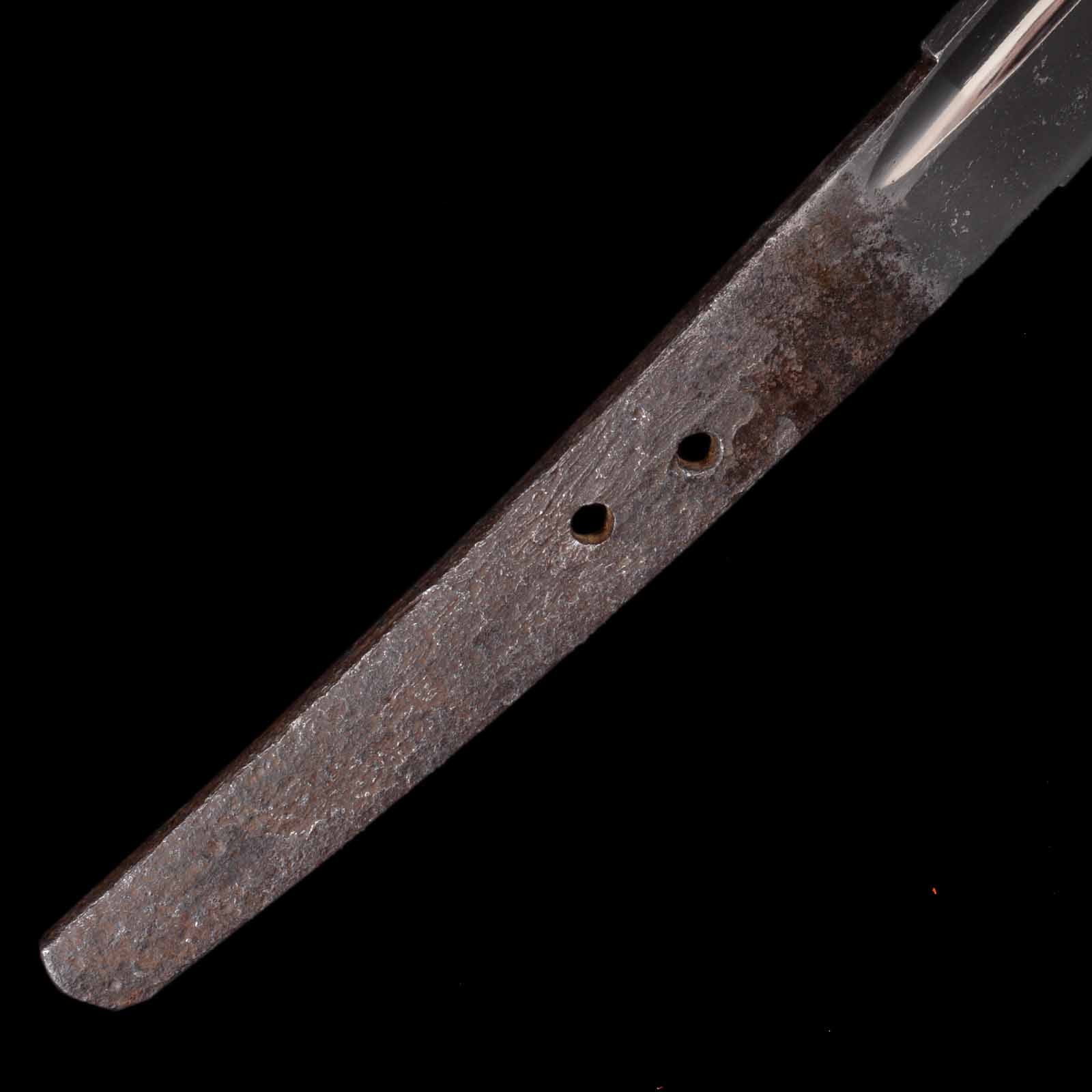
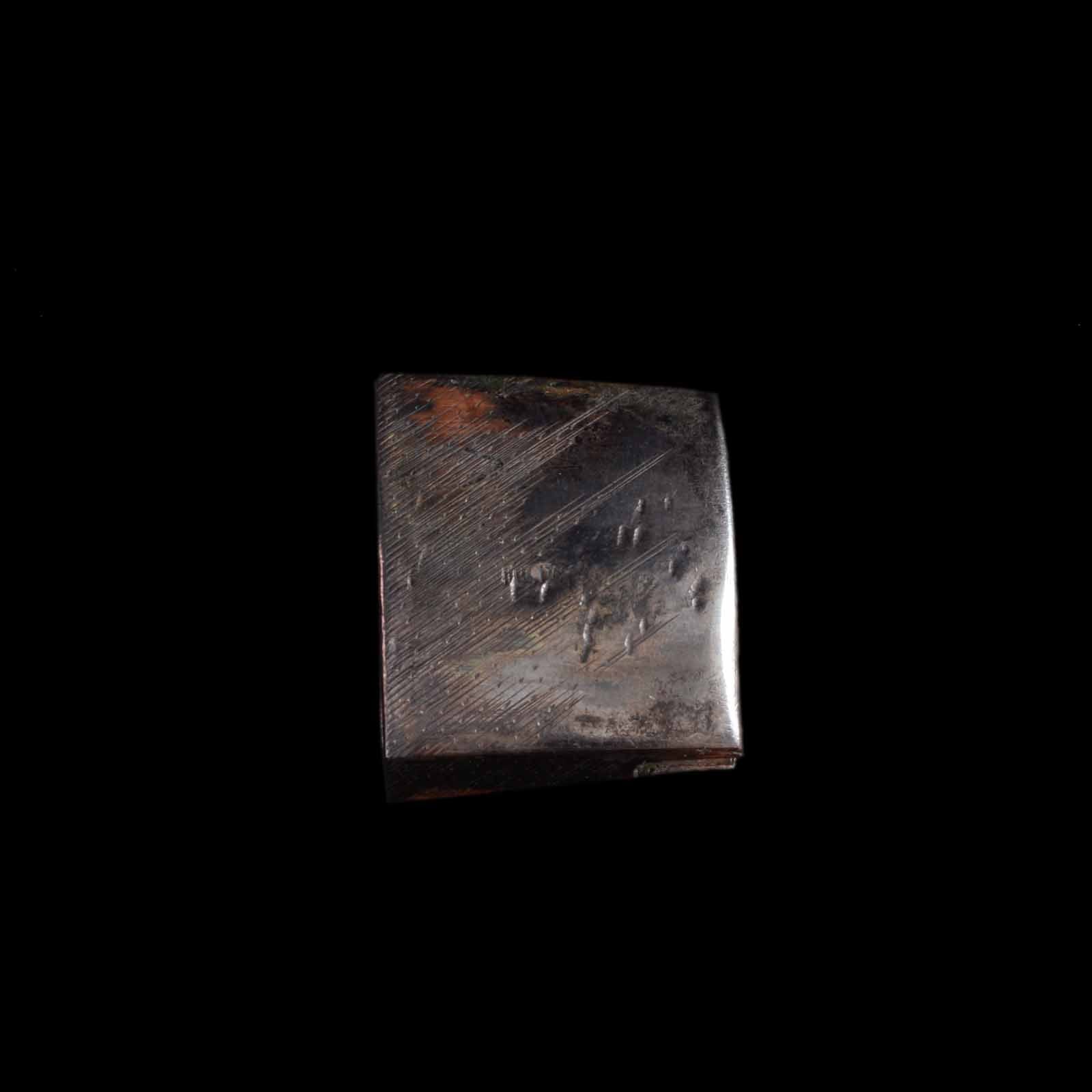
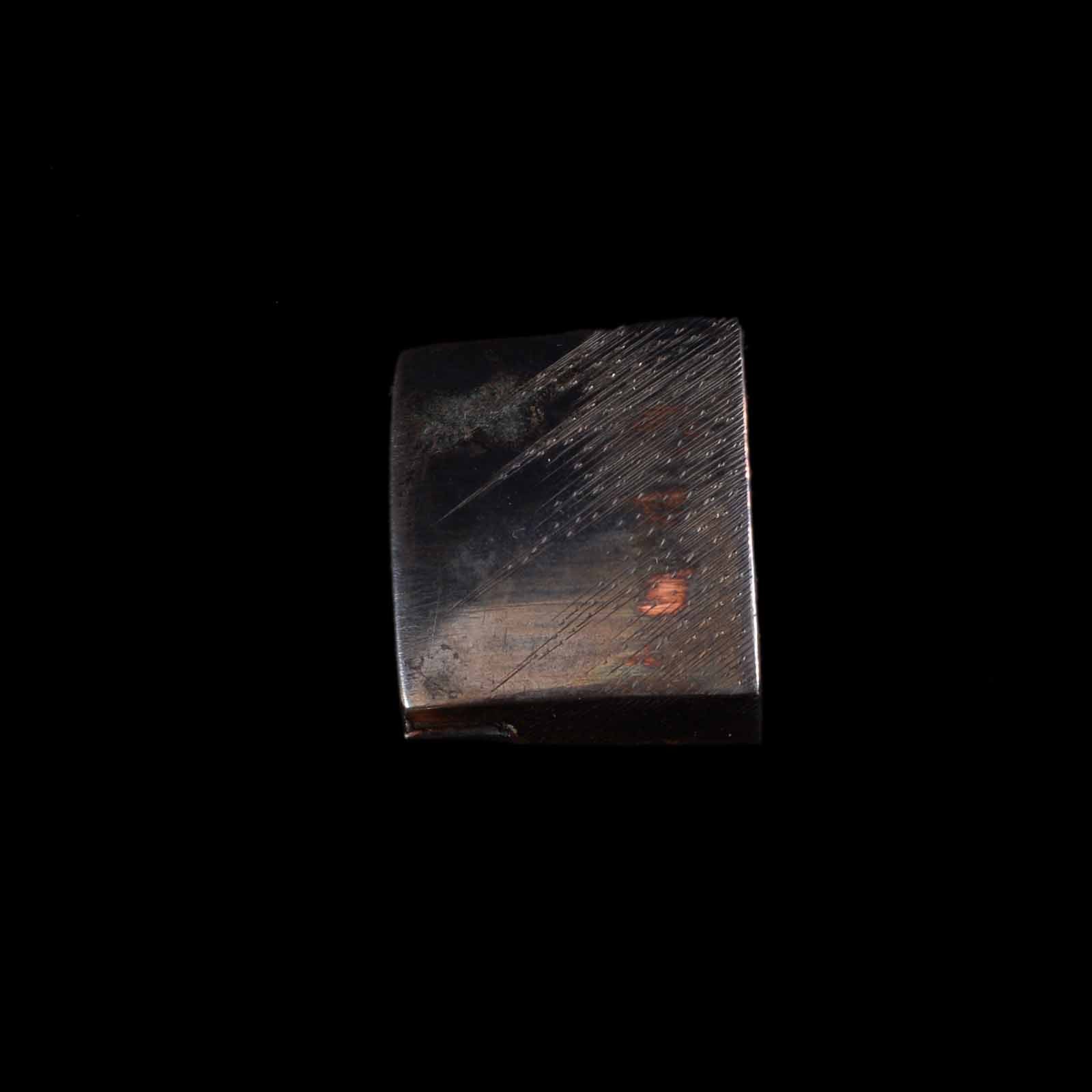
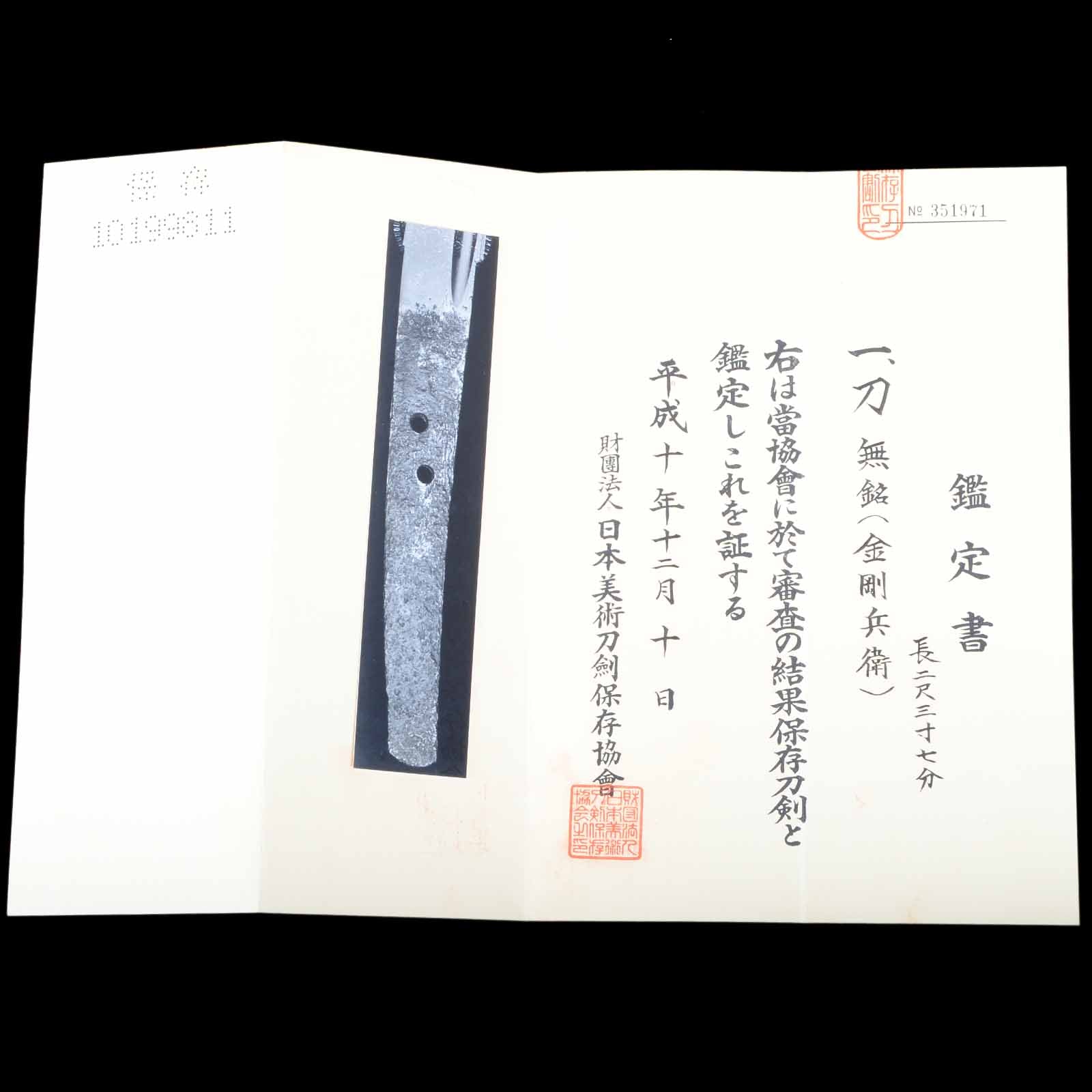
古刀期に制作された無銘の刀が入荷いたしました。 本作は、平成11年12月に日本美術刀剣保存協会より「金剛兵衛」と極められ、後世に伝えるべき価値ある刀剣として「保存刀剣」に指定された一振りです。 年代を考慮すれば、保存状態は極めて良好と言えます。 差し表の切先から約8cm下に幅1.8cmほどの膨れ状の鍛え肌があり、差し裏には切先から15cm付近に鍛え割れ、また29cmと36cm付近に「打ち込み」と呼ばれる点状の疵が見受けられます。 地鉄は板目肌がよく練れ、処々杢目を交え、刃文は非常に細い直刃を焼いています。 また、表裏には掻き流しの樋が施されています。 金剛兵衛は「切れ味の極致」と称えられ、名門中の名門として知られています。 本作の茎尻は金剛兵衛の大きな特徴である初期の栗尻となっており、鎌倉時代における金剛兵衛派の祖、盛高の作と推測されます。盛高の作品は非常に珍重されています。 金剛兵衛は、鎌倉時代の元寇(蒙古襲来)の際、幕府に極めて鋭利な武器を供給して元軍の撃退に貢献したことから、その刀は崇拝の対象となりました。 盛高は鎌倉末期から室町末期にかけて筑前国(現在の福岡県)で活動した刀工です。 流派の祖である盛高は、南北朝時代の正平年間(1346〜1370年)に活躍し、国吉の甥とも伝えられています。金剛兵衛の門流に属したことから「金剛兵衛盛高」と称されました。 金剛兵衛は筑前国太宰府近郊の有智山に拠点を置いた一派です。有智山には金剛宝満神社(竈門神社)があったことから、その名で呼ばれるようになりました。 また、一説には真田幸村の愛刀であったとも伝えられています。
 NihontoWatch
無銘 · Kongo Hyoe · 古刀 · 長さ 71.7cm · 反り 2.3cm
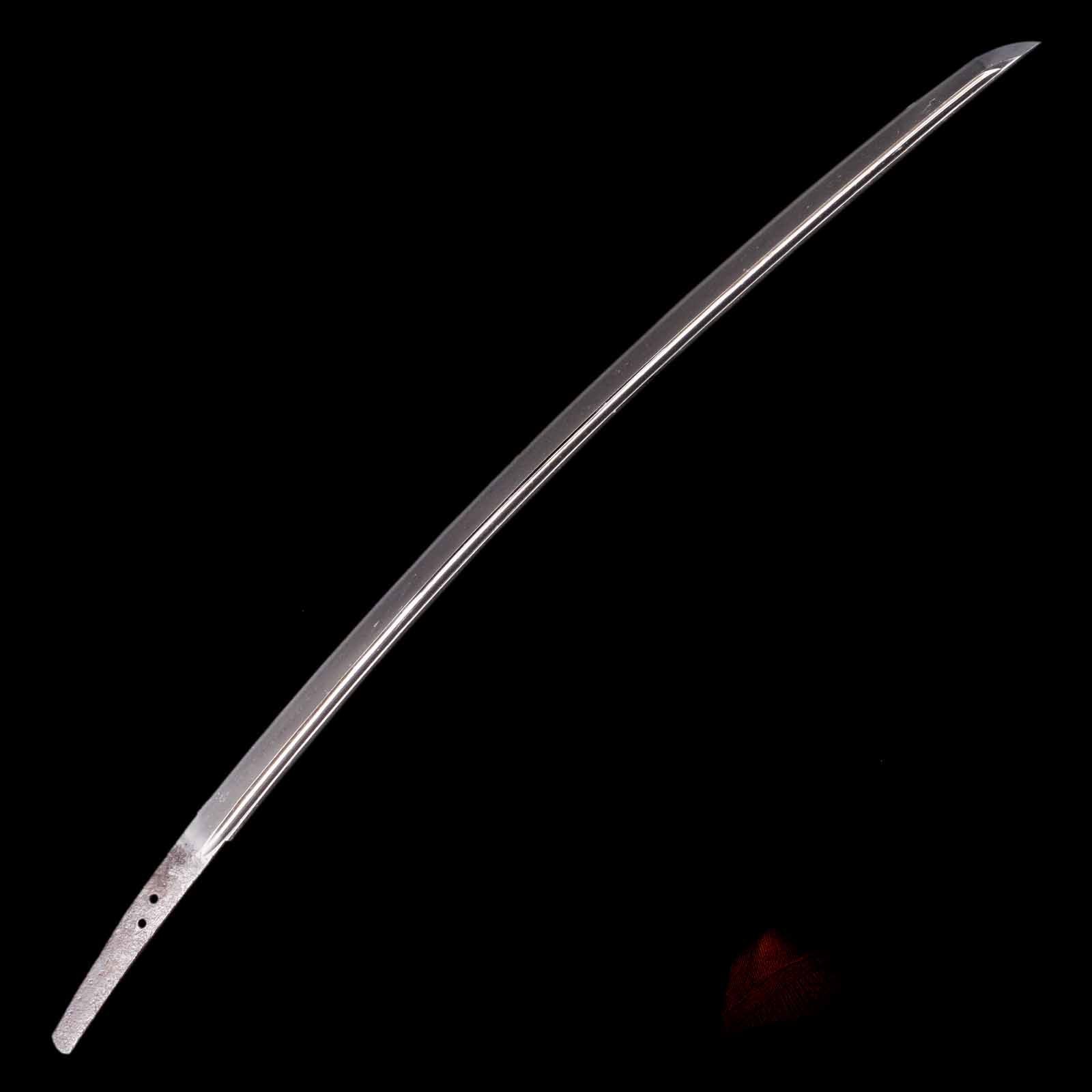
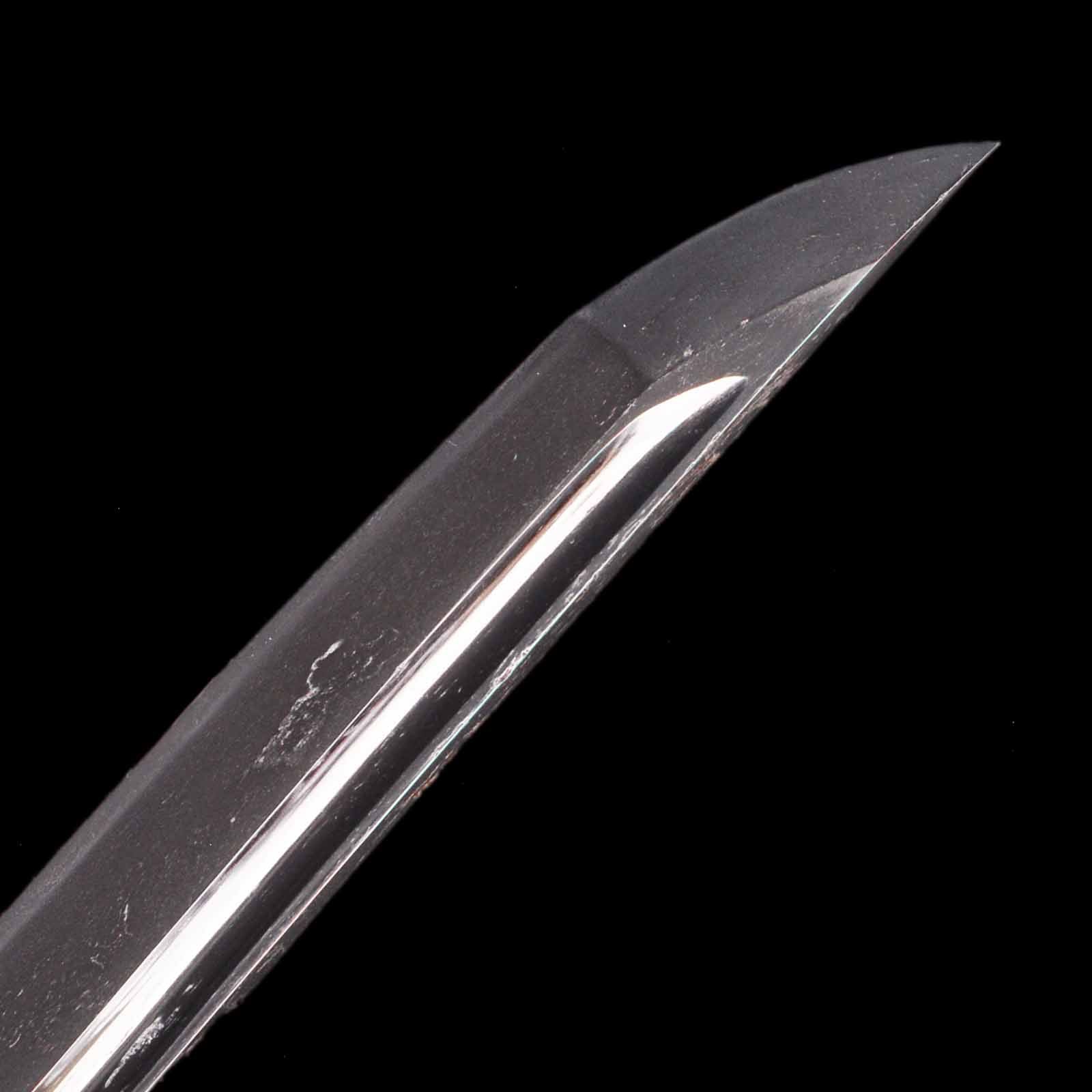
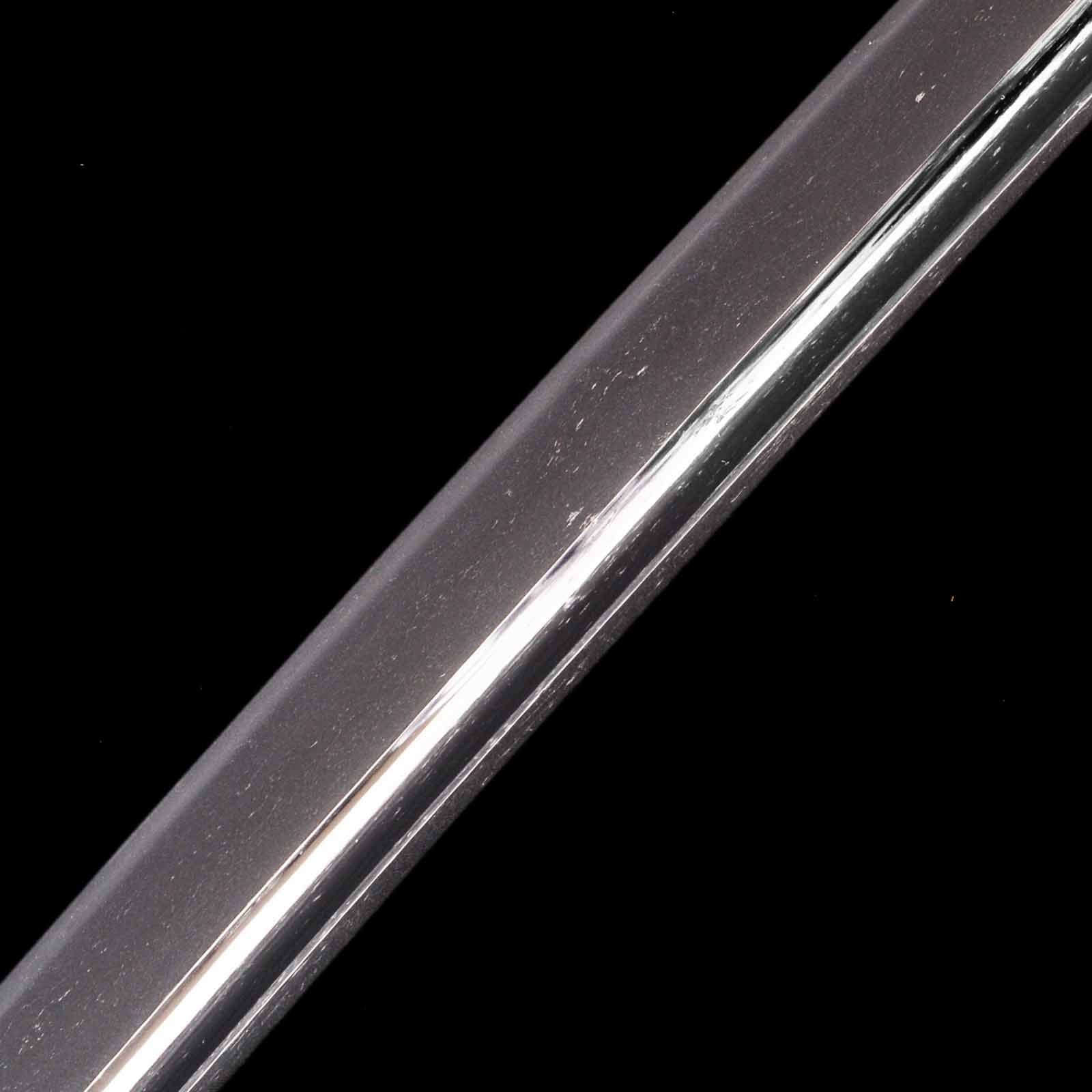
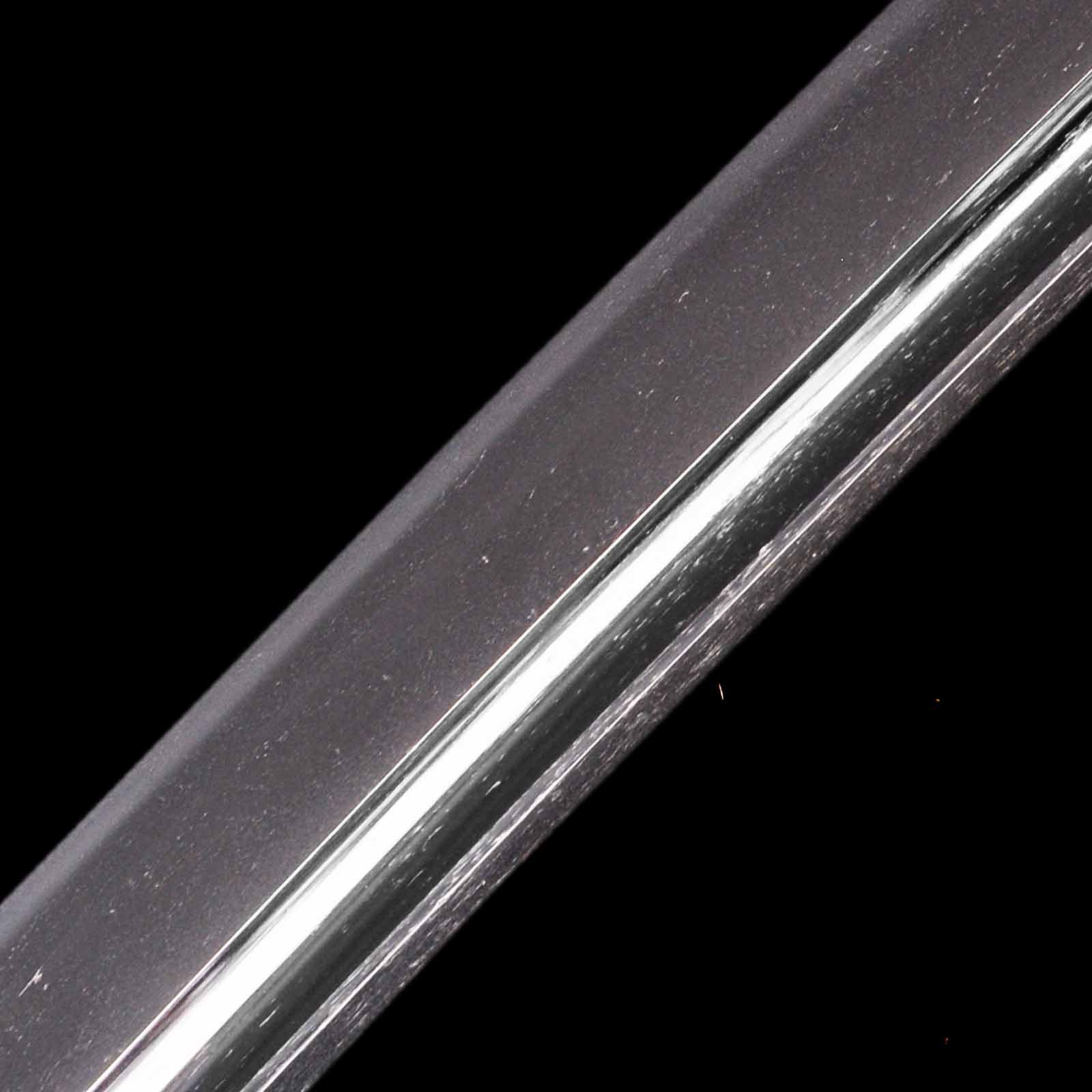
脇物 · 筑前
現在10点販売中
南北朝期の筑前国には左文字派と金剛兵衛派の二大流派が並存した。金剛兵衛派は福岡を拠点とし、同時代の左文字派とは異なる作風を示す。現存する有銘作には室町期を遡るものは見られず、最も古い紀年作として「筑州冷泉貞盛 正平廿五一月日」[[c:1]]銘の短刀(重要美術品)が知られる。貞盛作に見られる地刃の大和気質は、この派の成立に大和鍛冶の影響があったことを示唆している。 鍛えは大板目に板目を交え、処々大杢目が混じり、刃寄りに僅かに流れ肌を交えて柾となる。総体に肌立ちごころで、地沸がつき、かな色はやや黒みがかって濁りを帯びる。刃文は細直刃を基調とし、僅かに浅くのたれをおび、小互の目ごころの刃を交える。小足が入り、匂口は締まりごころに小沸がよくつく。刃縁はほつれ、ささやかながら砂流しや金筋が地刃にまたがって現れる。九州独特のかな味を示しつつ、匂口がやや沈みごころとなる点にこの派の特色がある。 現存する金剛兵衛派の古作は、いずれも大磨上げの無銘品として「古金剛兵衛」と極められている。身幅が広く、反りが浅くつき、中鋒から大鋒となる南北朝期の体配を示し、棒樋や棒樋に添樋を施した例が多い。質実にして力強い姿形を備え、地景が頻りに入った地がねと、細直刃ながら変化に富んだ刃文は見どころが多く、鎌倉末期から南北朝期における筑前鍛冶の優れた作例として評価されている。 詳しく見る →
銘が正しい、または無銘でも年代・国・系統を確実に指摘できる、保存に値する真正の作と鑑定されたものです。
日本美術刀剣保存協会(NBTHK)は、1948年に設立され、文化庁の監督を受ける公益財団法人で、東京・刀剣博物館に本部を置きます。専門の審査員が出品作を直接審査し、美術的・歴史的価値に応じた鑑定書を発行します。NBTHKの鑑定書は、日本刀および刀装具の真正性を示す最も広く認知された基準です。
NBTHK公式サイトAs a general rule, returns/exchanges are not accepted on Japanese sword orders unless damaged upon delivery. Other items: returns/exchanges accepted within 7 days of delivery. Cancellation for personal reasons incurs a 30% restocking fee (70% refunded). Return shipping must be prepaid and insured by the buyer; shipping/handling fees are non-refundable. Contact katana@tozando.co.jp to initiate a return.