室町の長船は輸出産業であった。明との勘合貿易はおよそ十二万八千振の日本刀を海の彼方へ運び、国内では戦国の軍勢が買い手となった。注文主の俗名を銘に刻む注文打ちが、兵卒用の数打ち物と並んで鍛えられている。
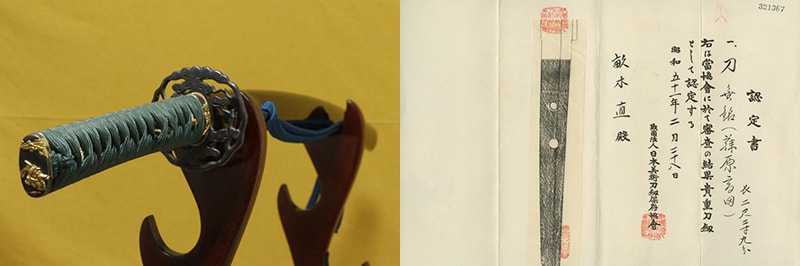
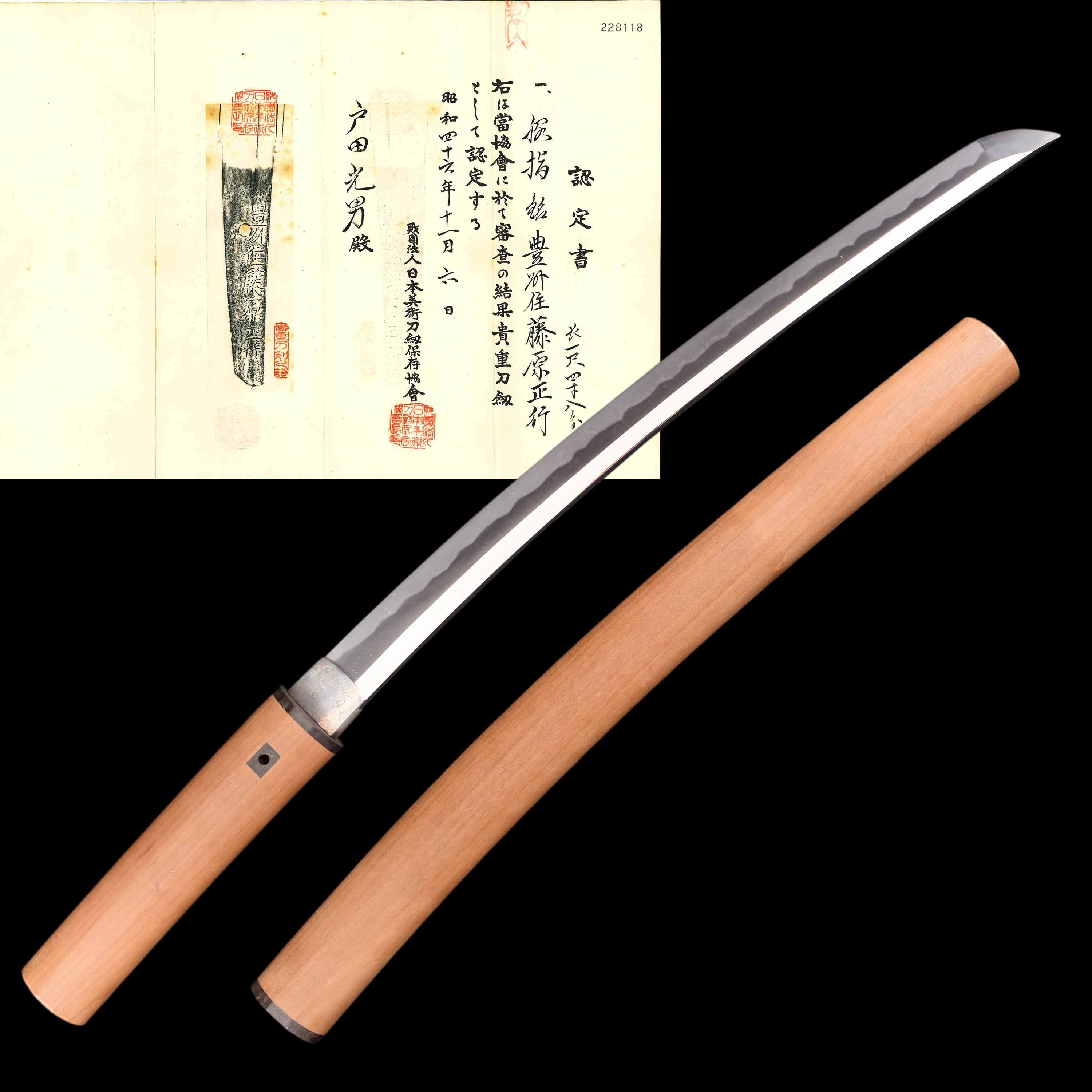
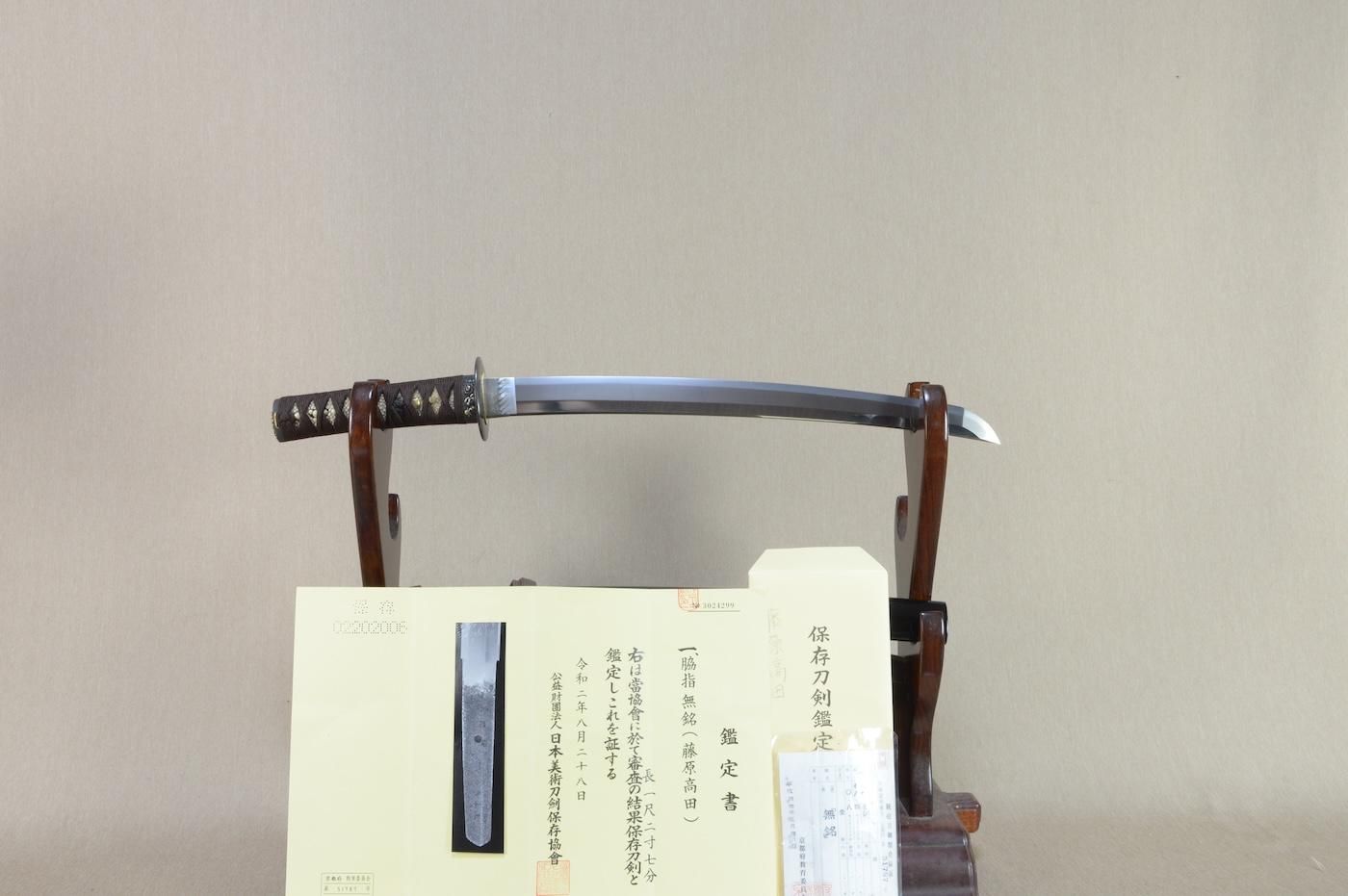
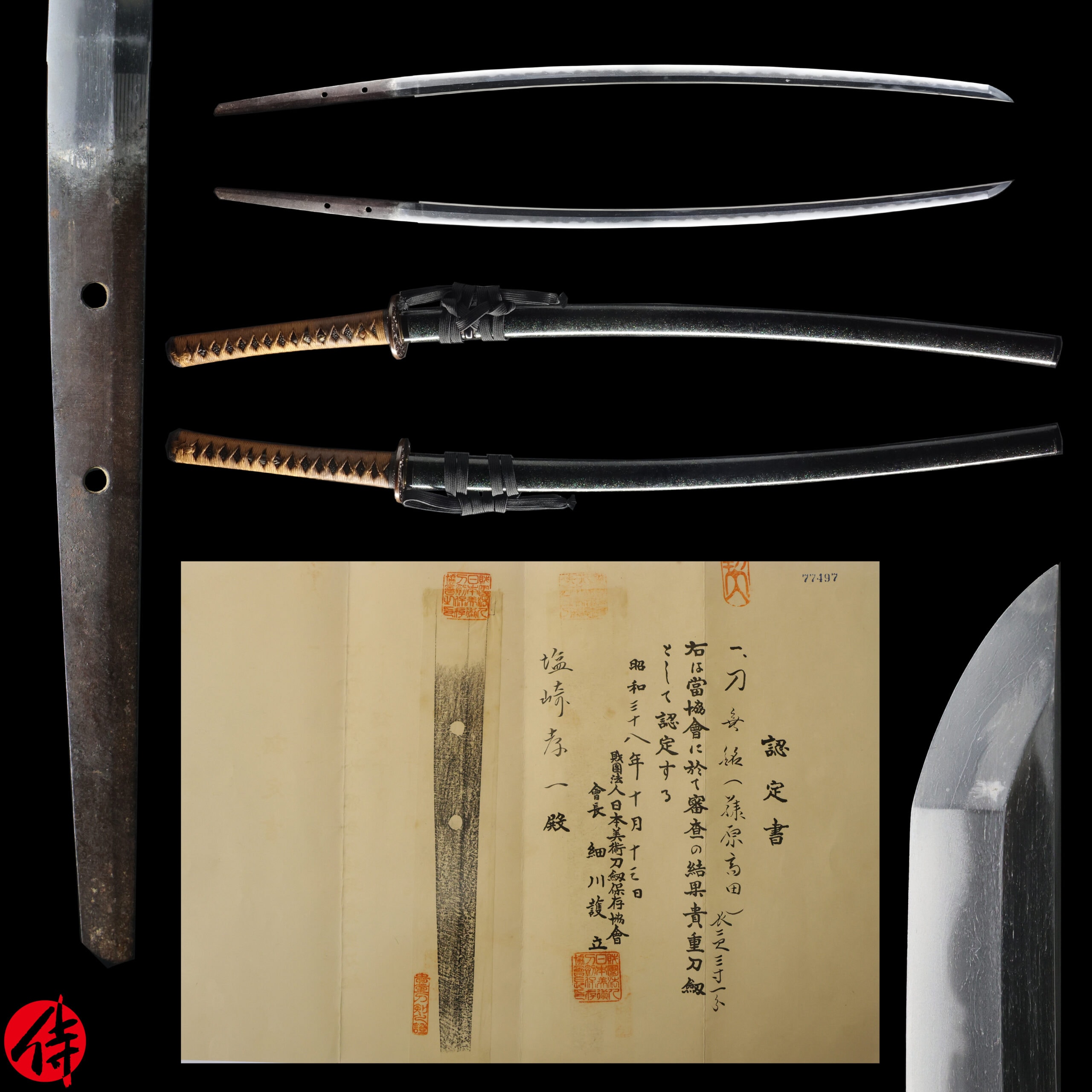
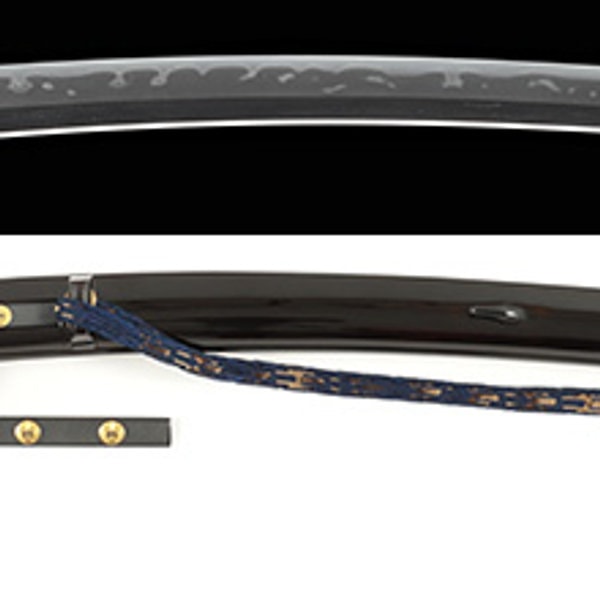
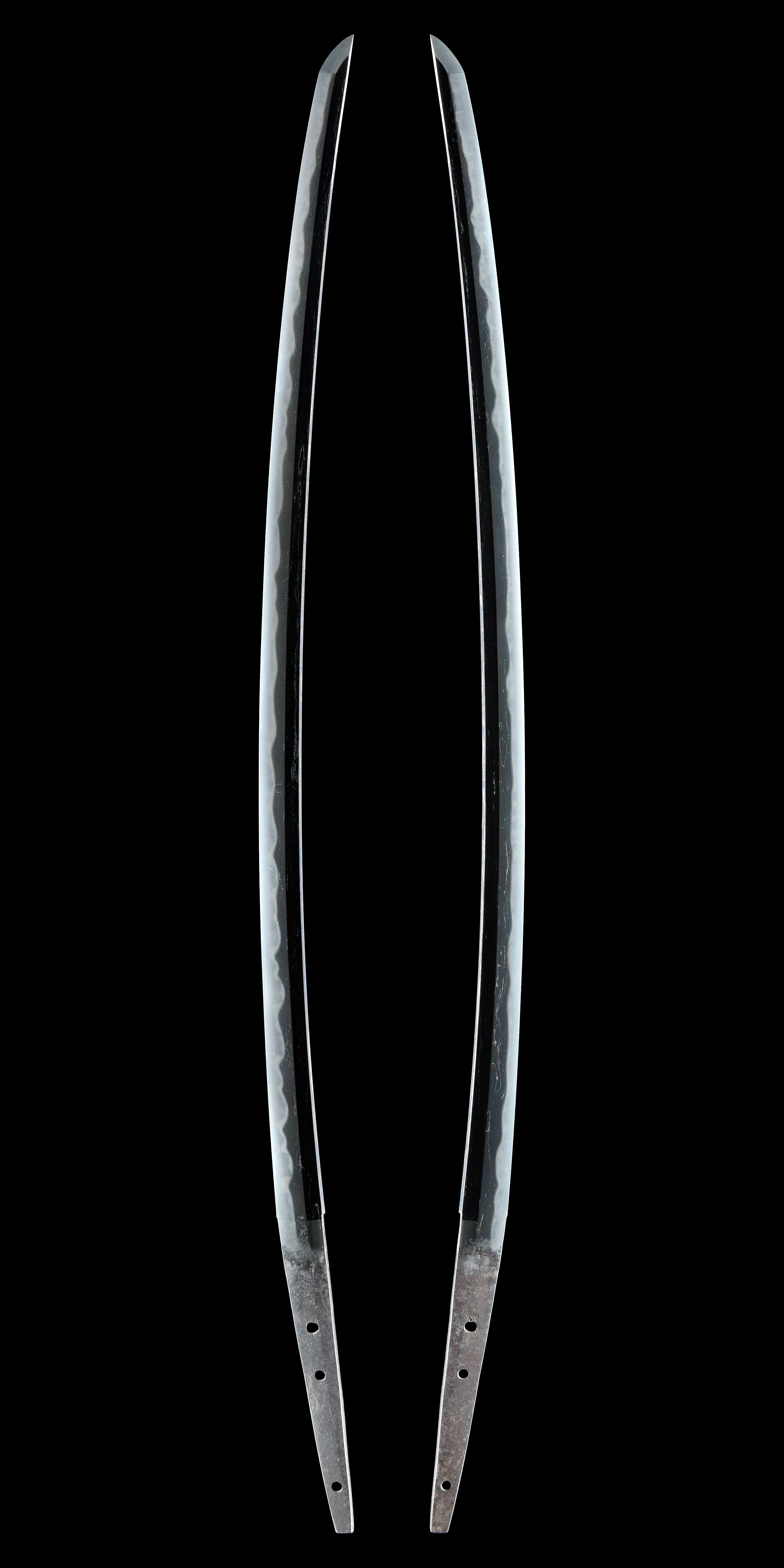
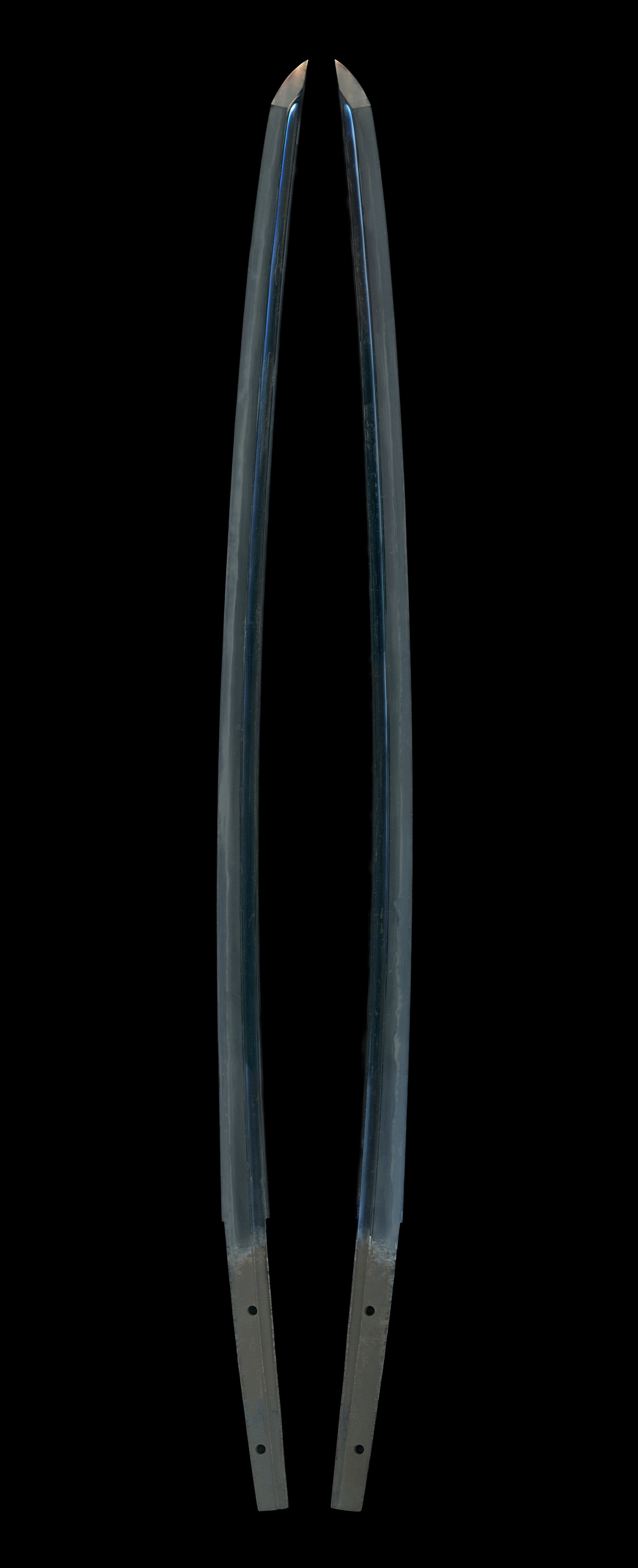
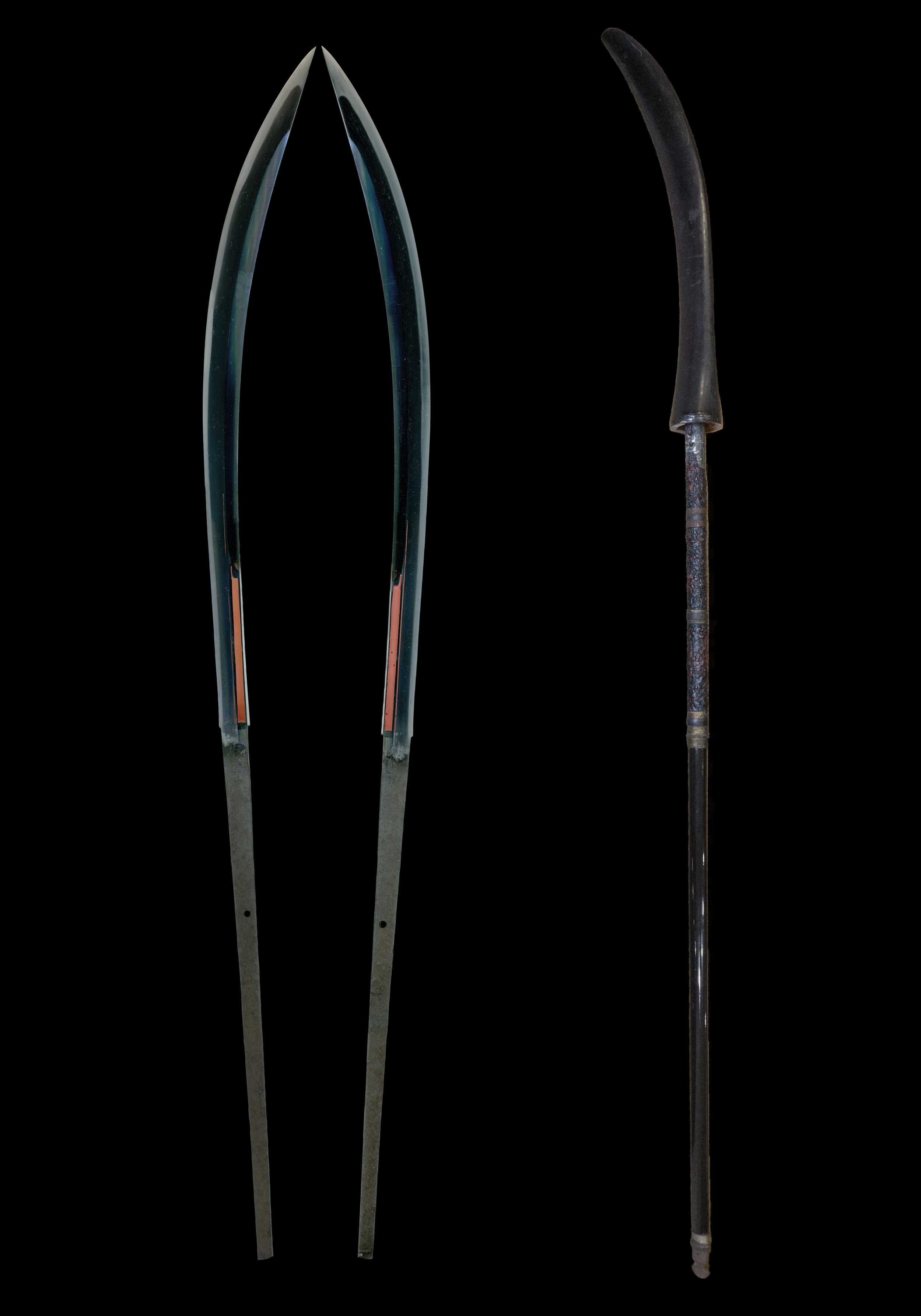
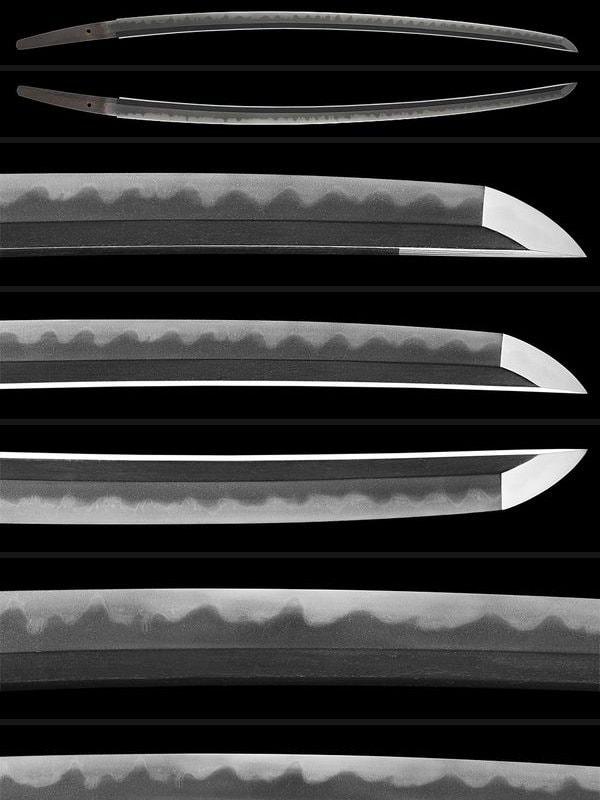
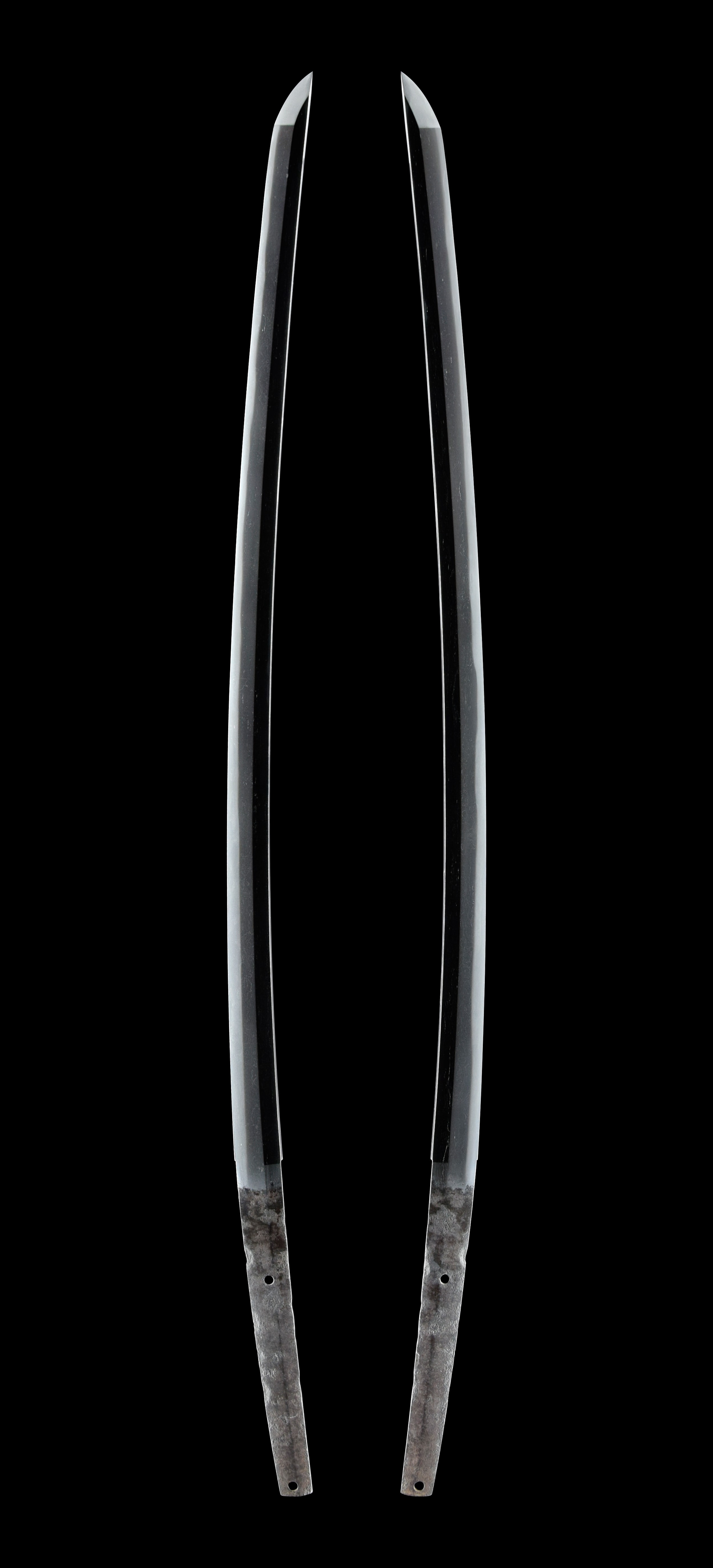
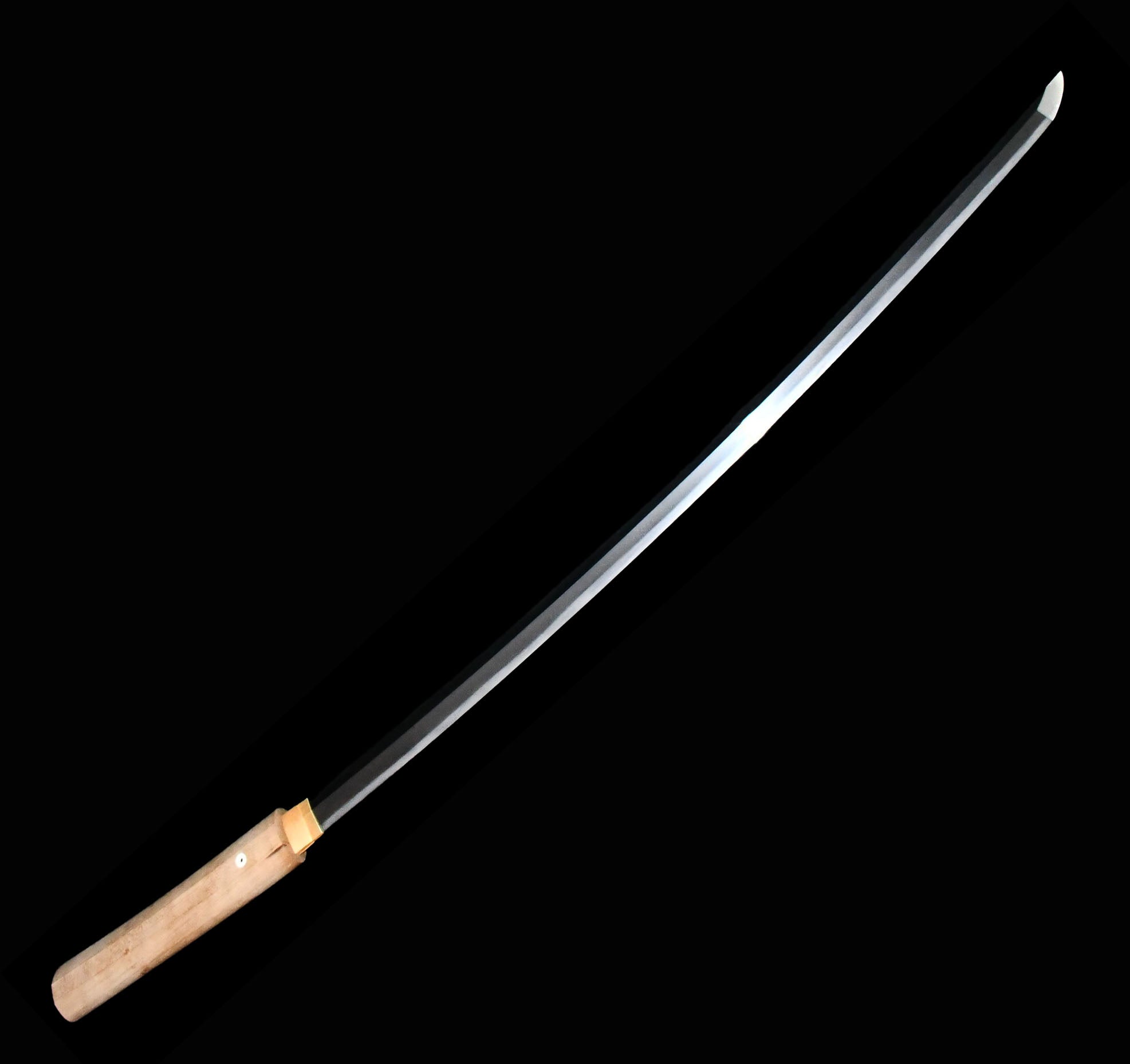
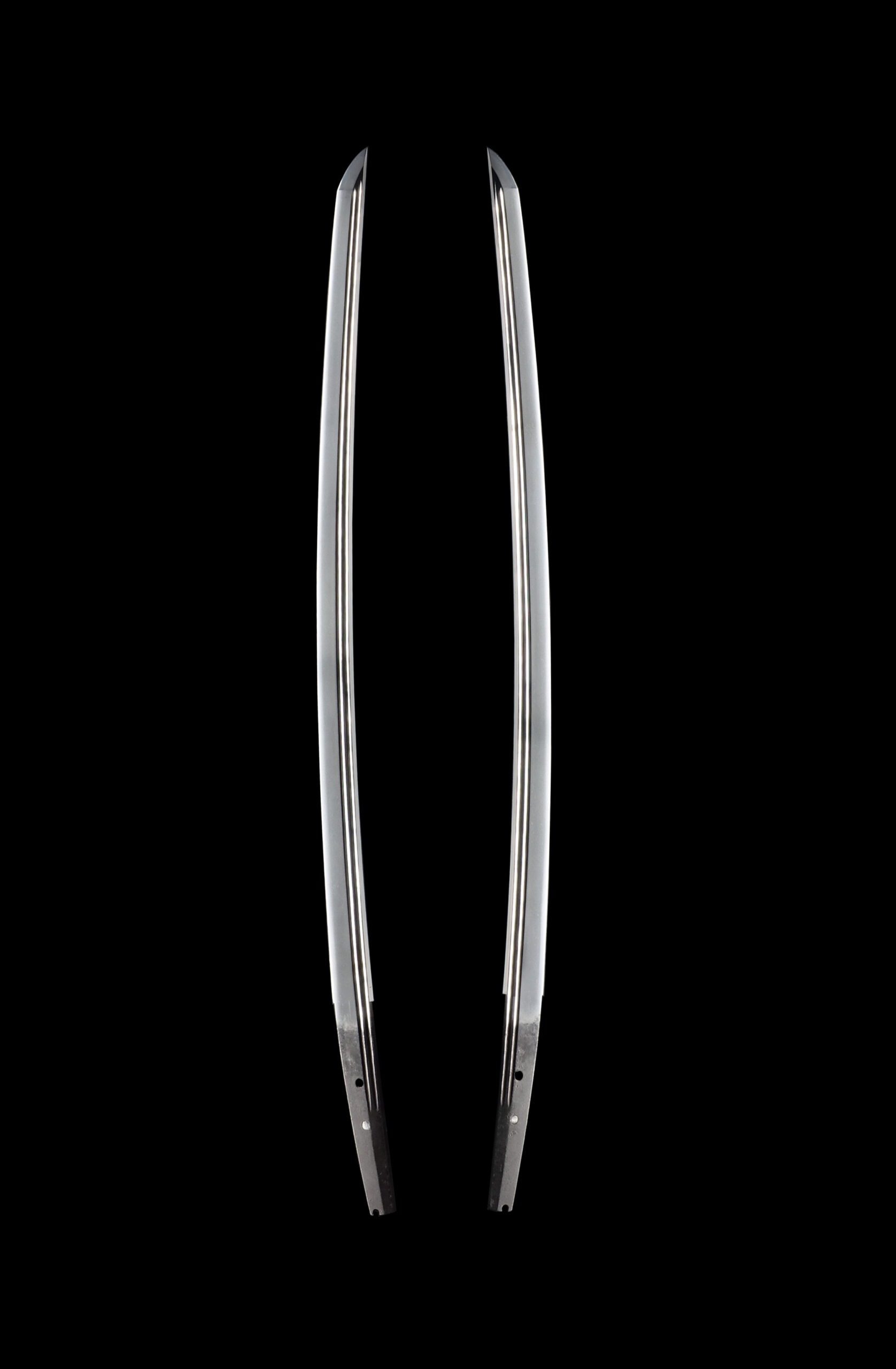
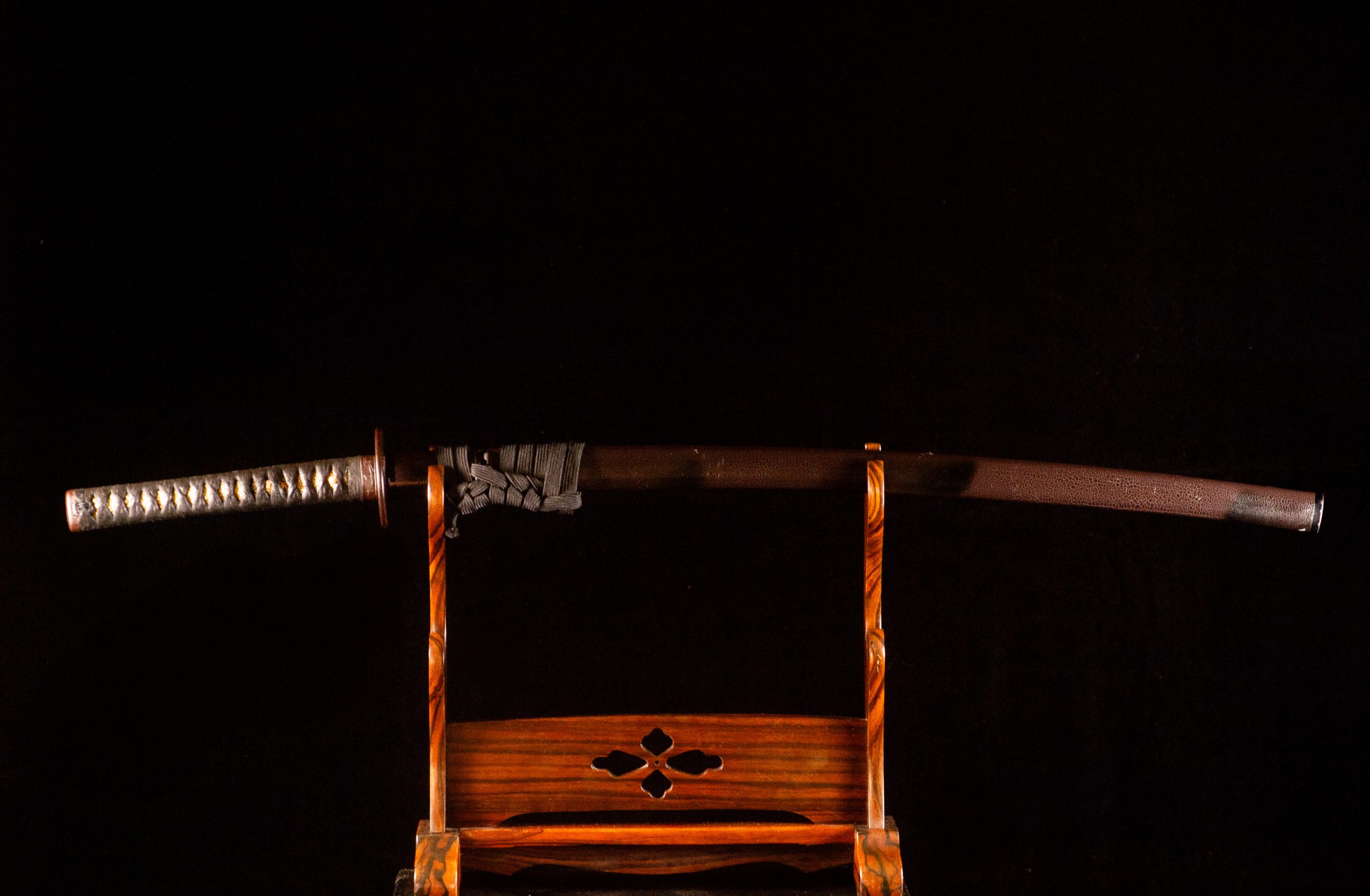
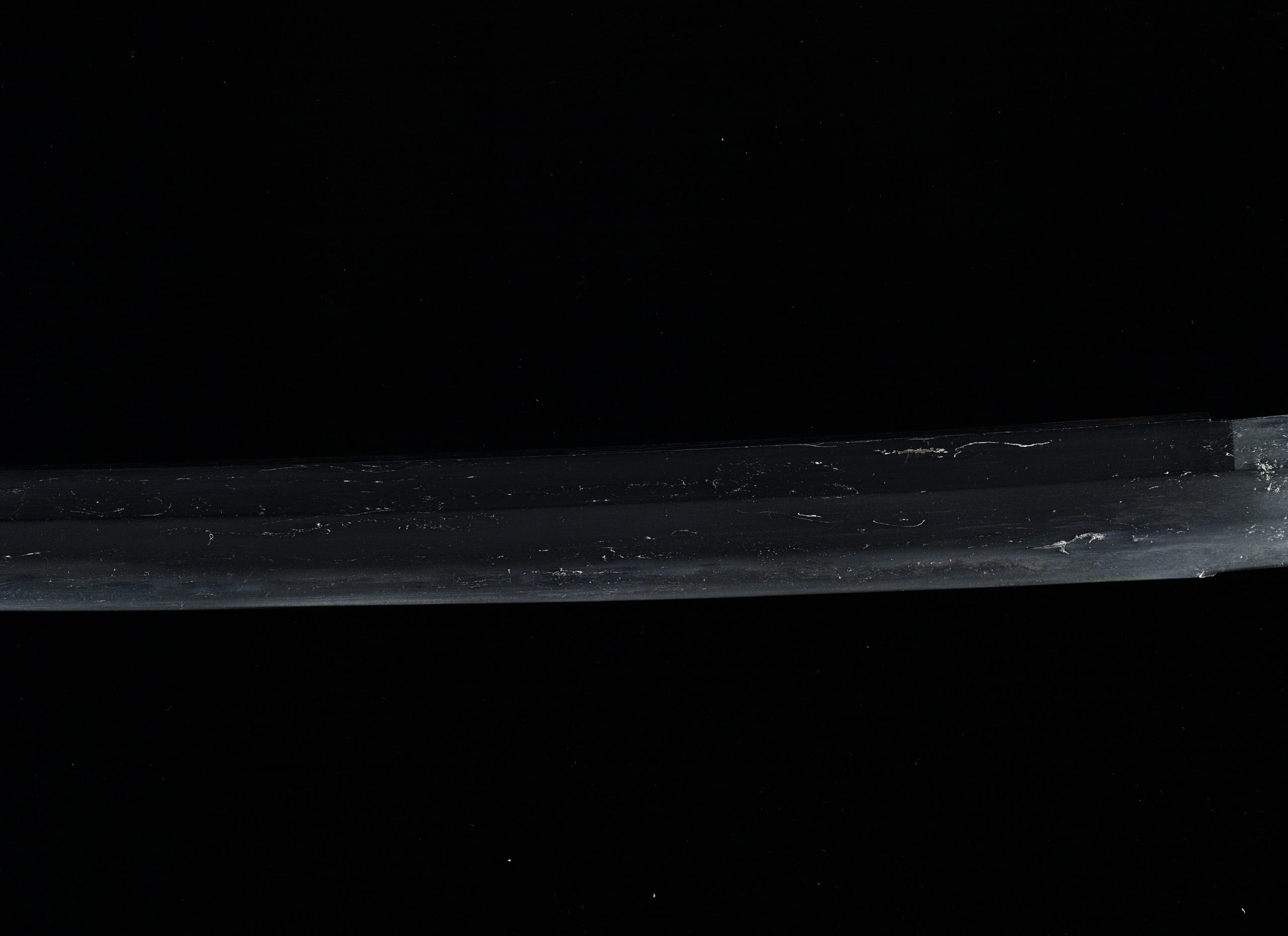
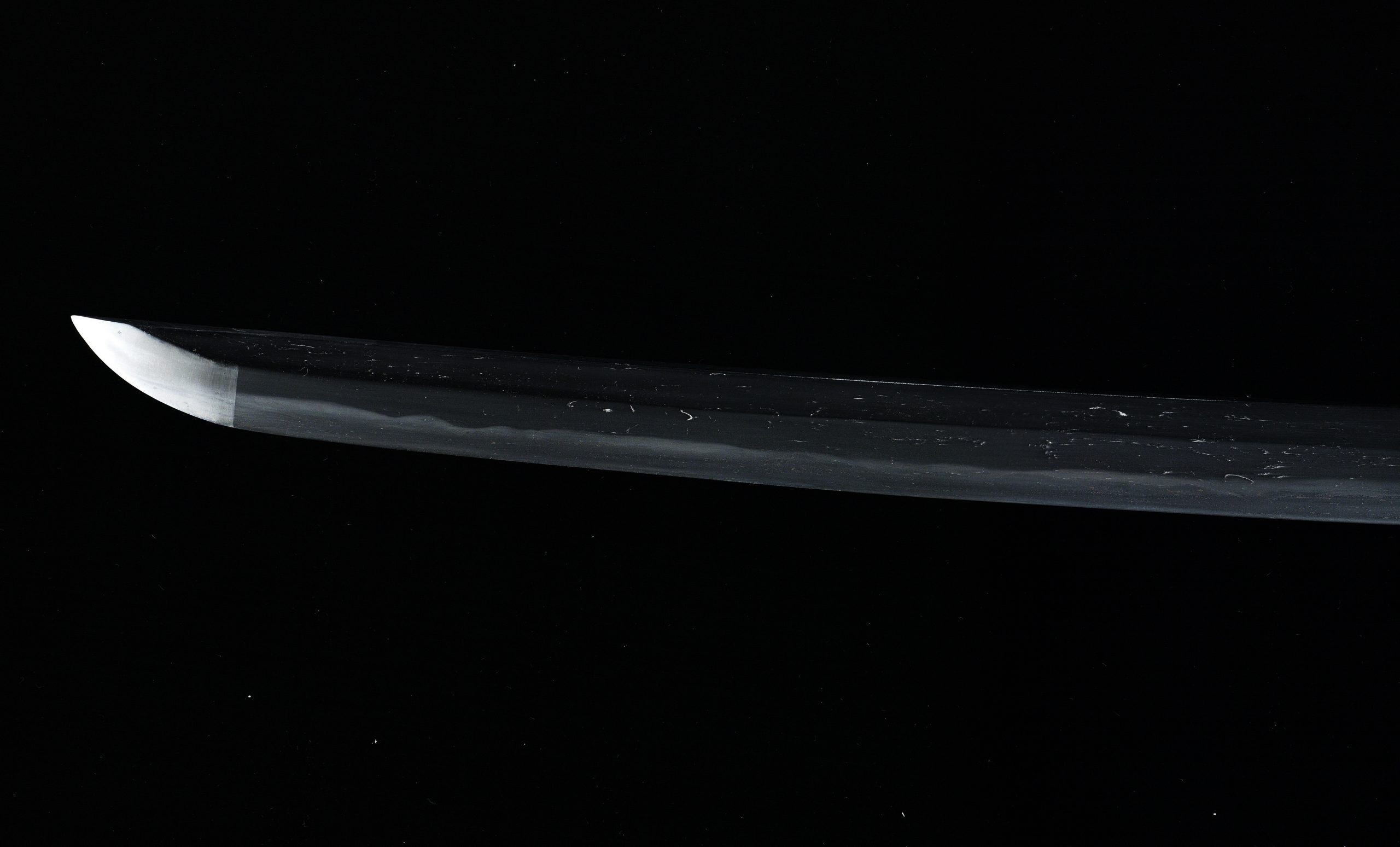
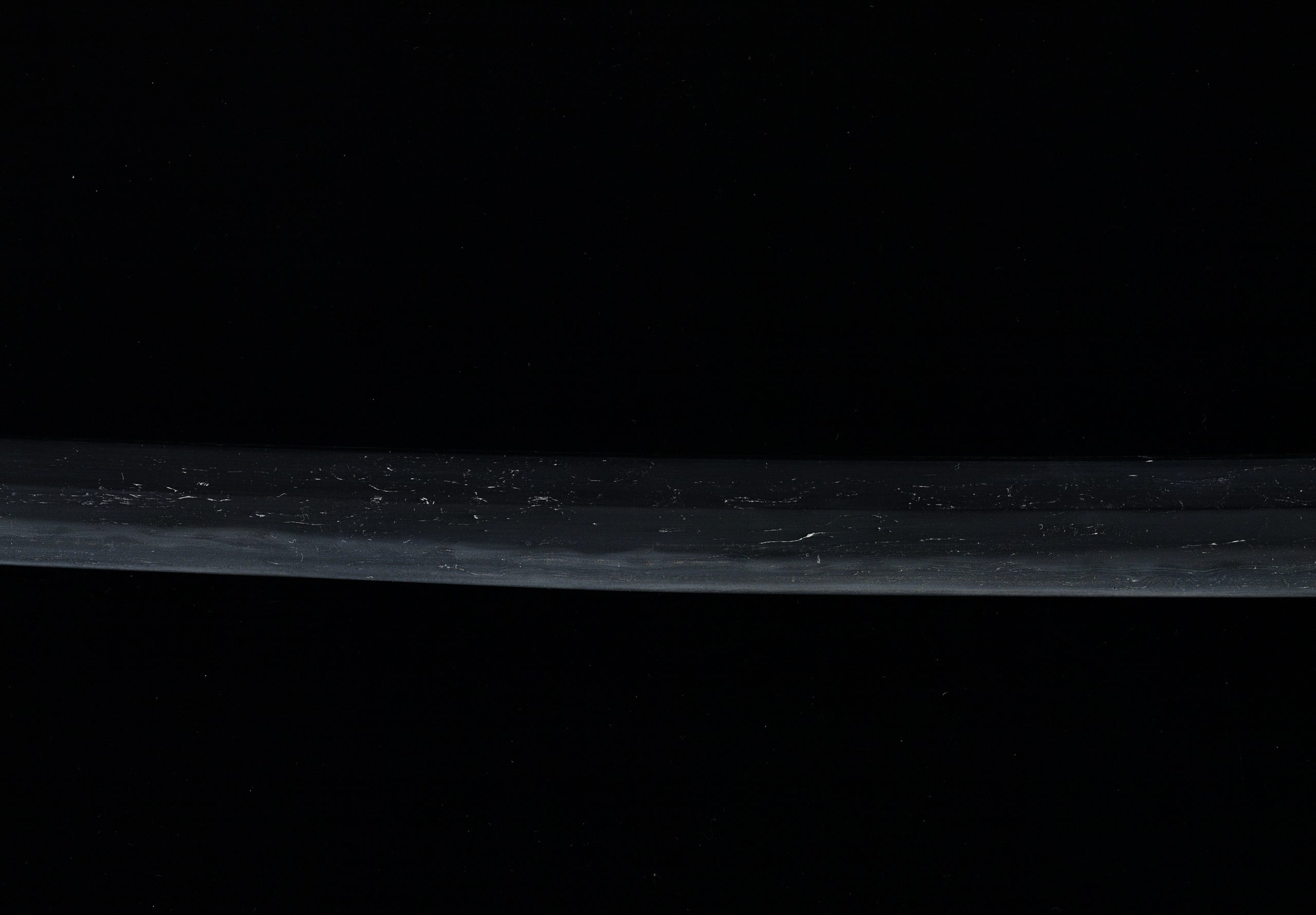
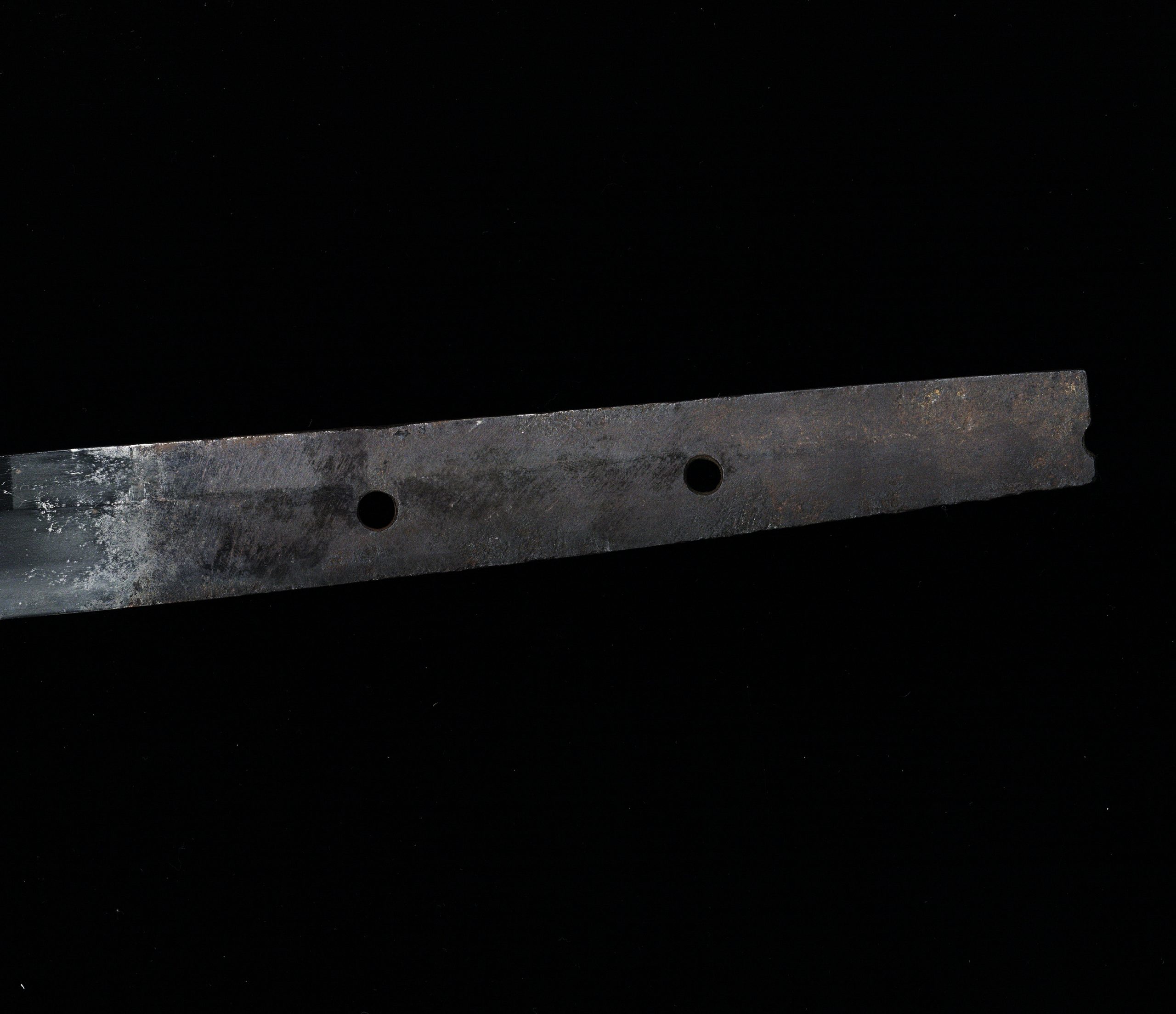
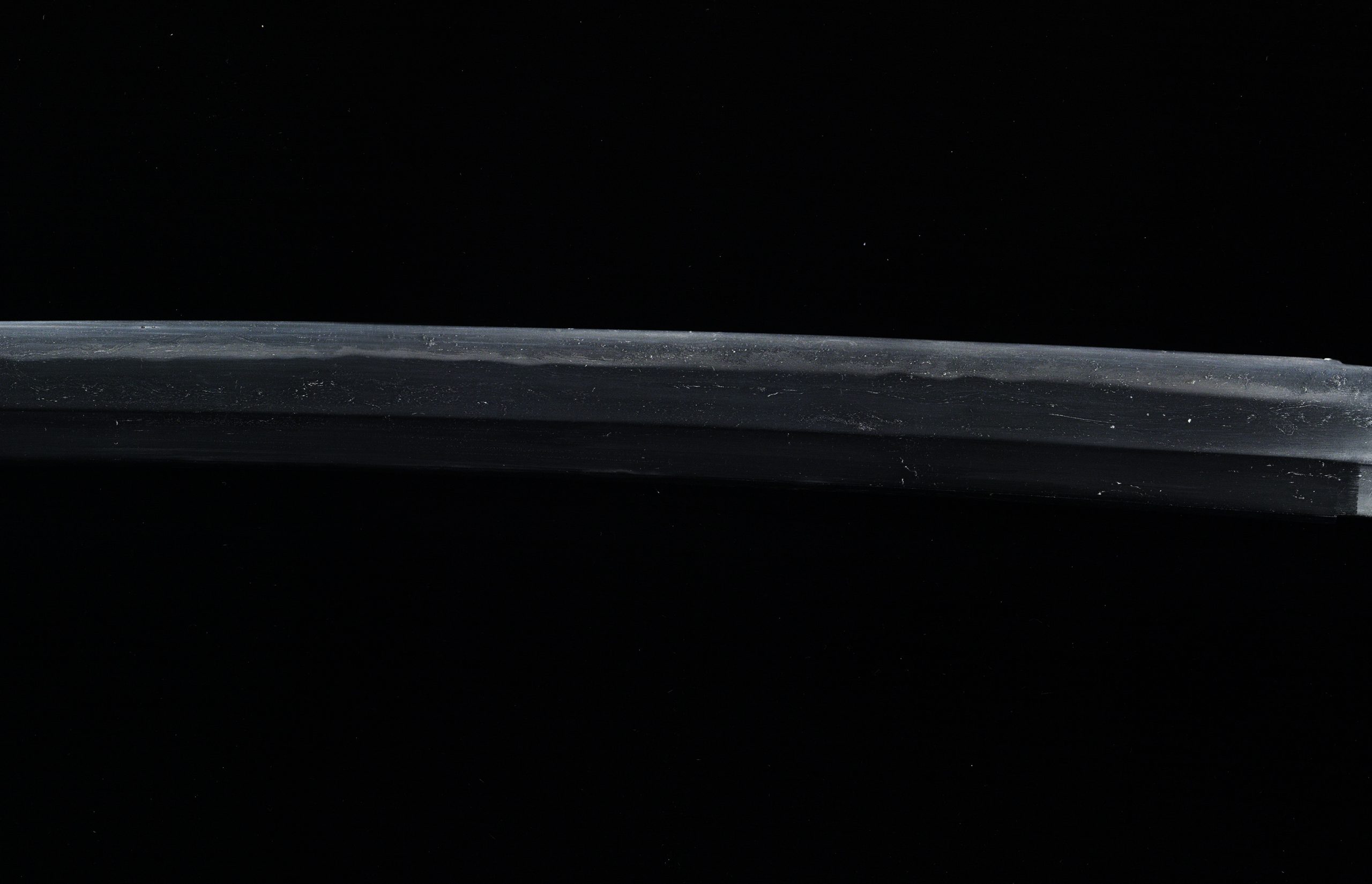
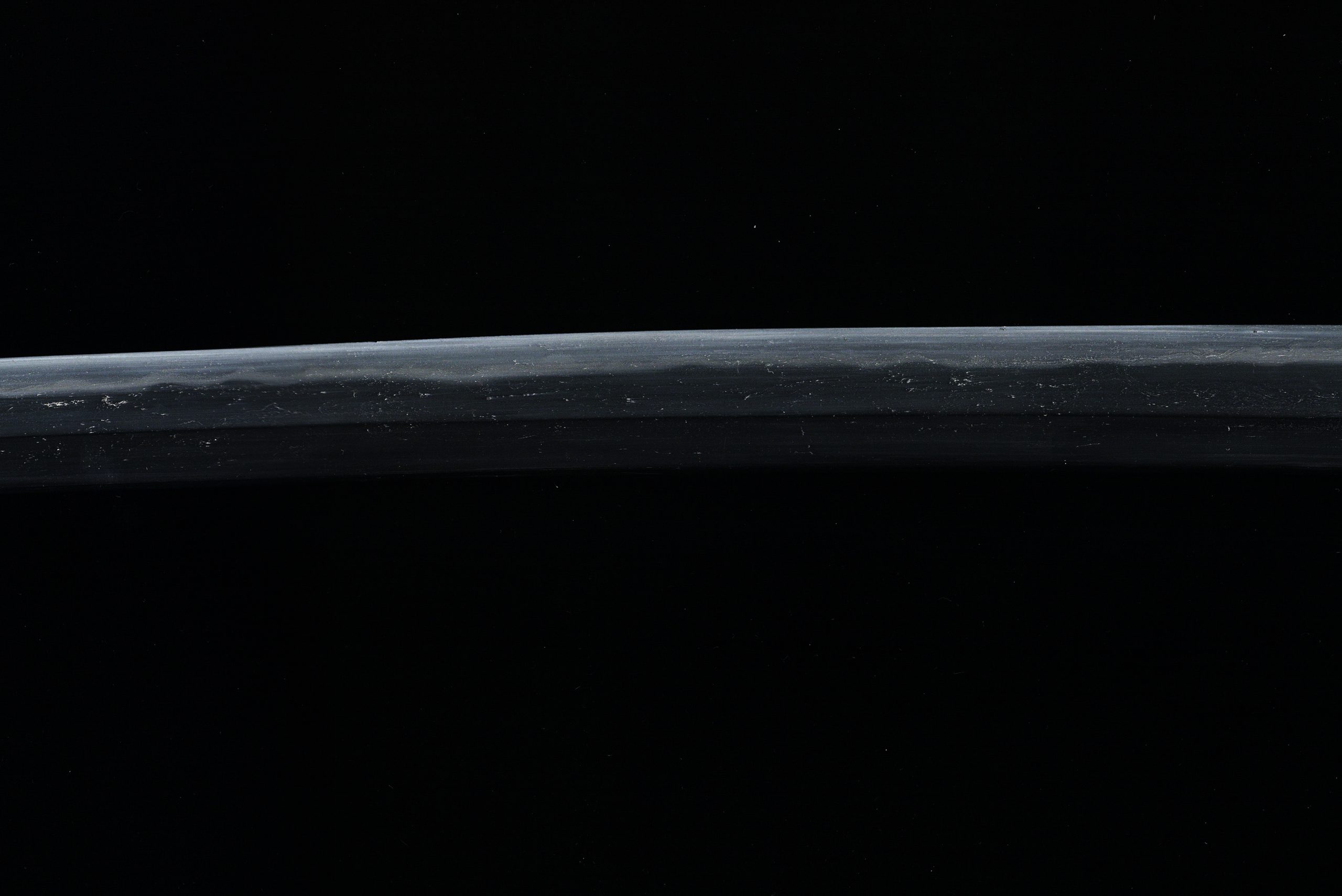
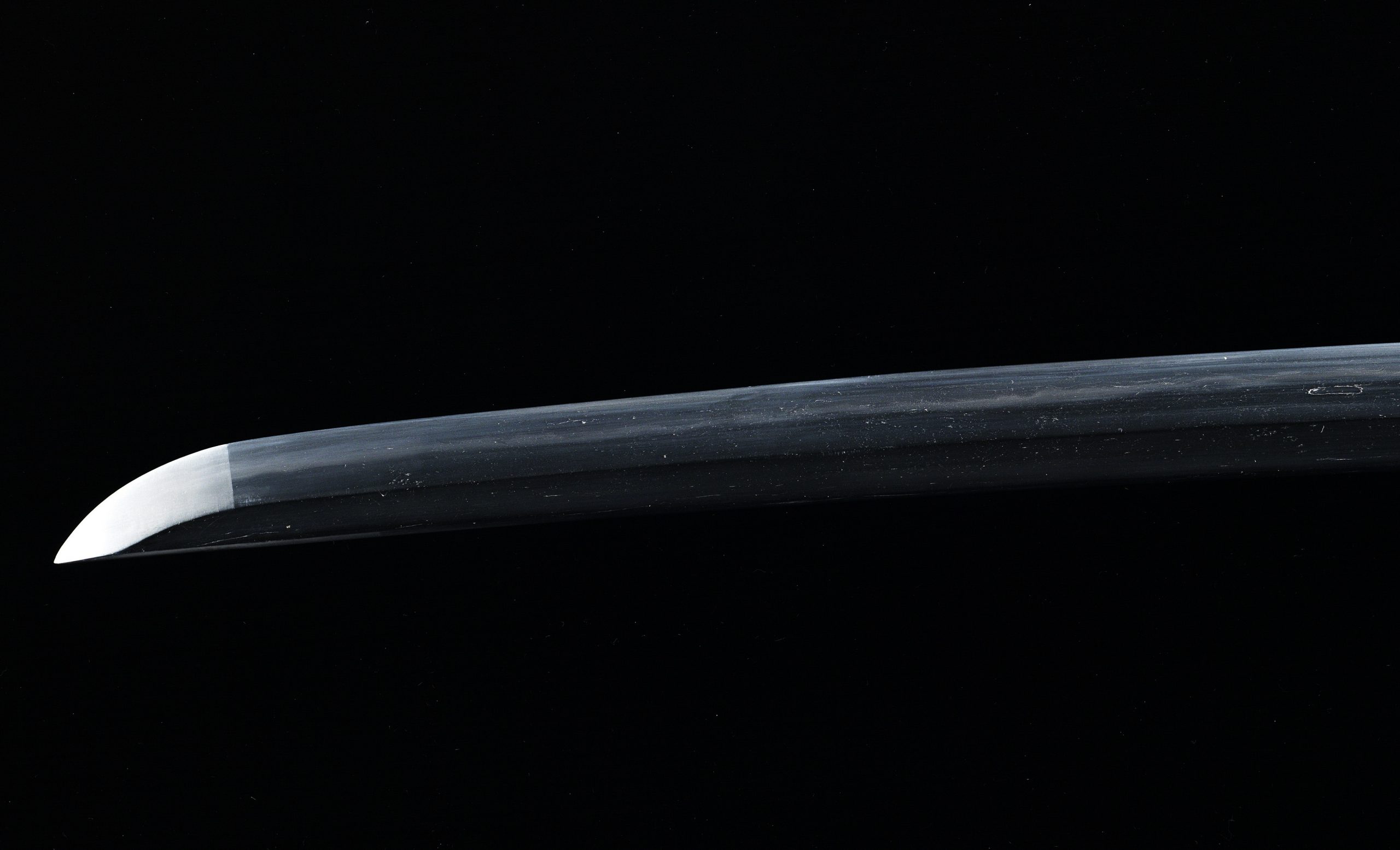
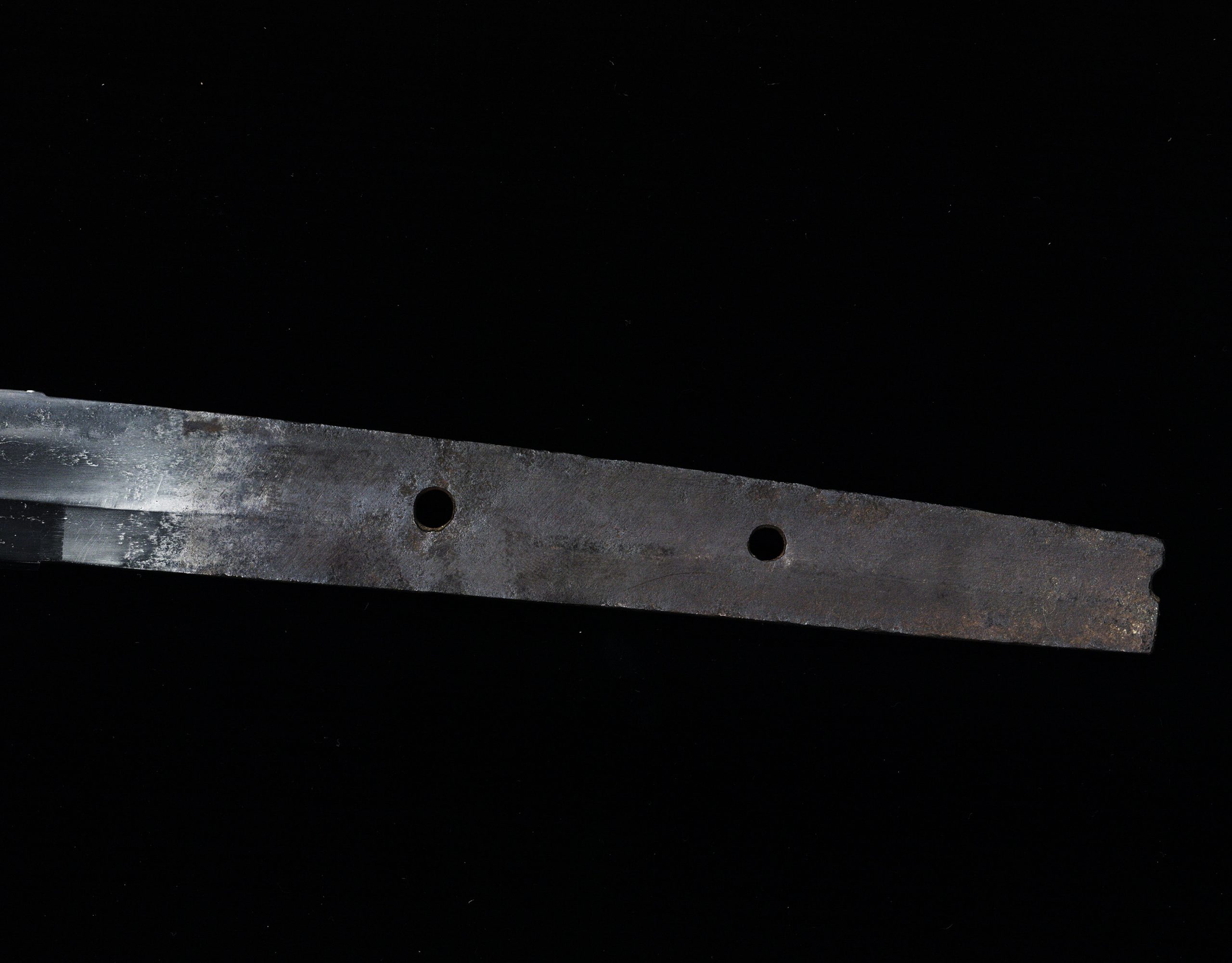
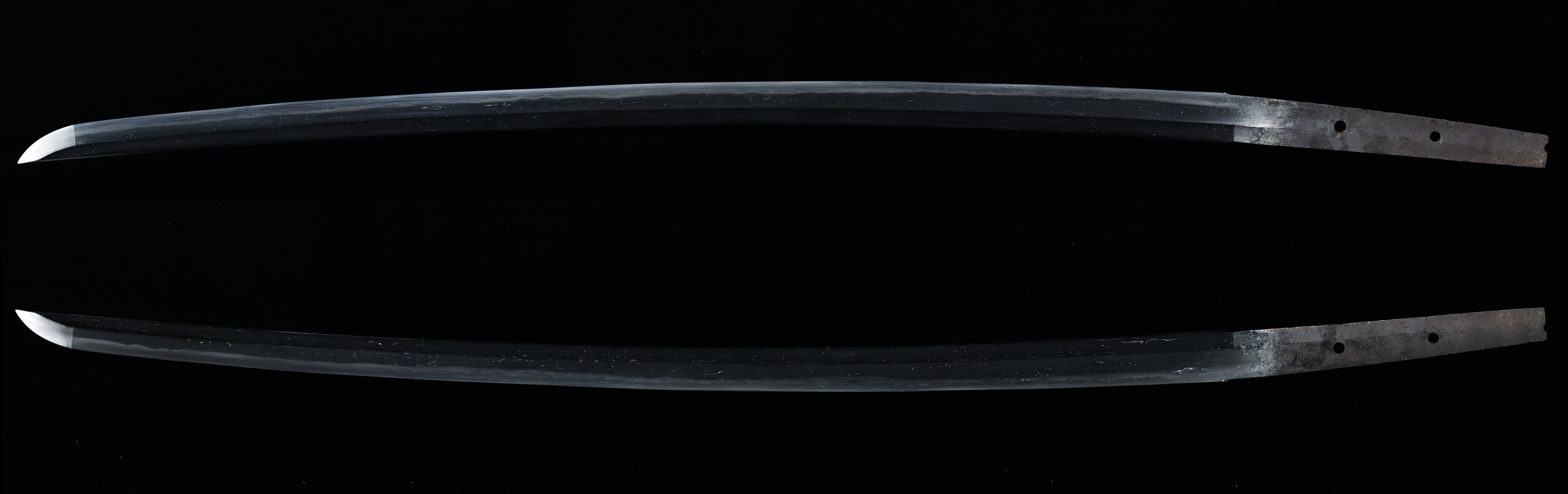
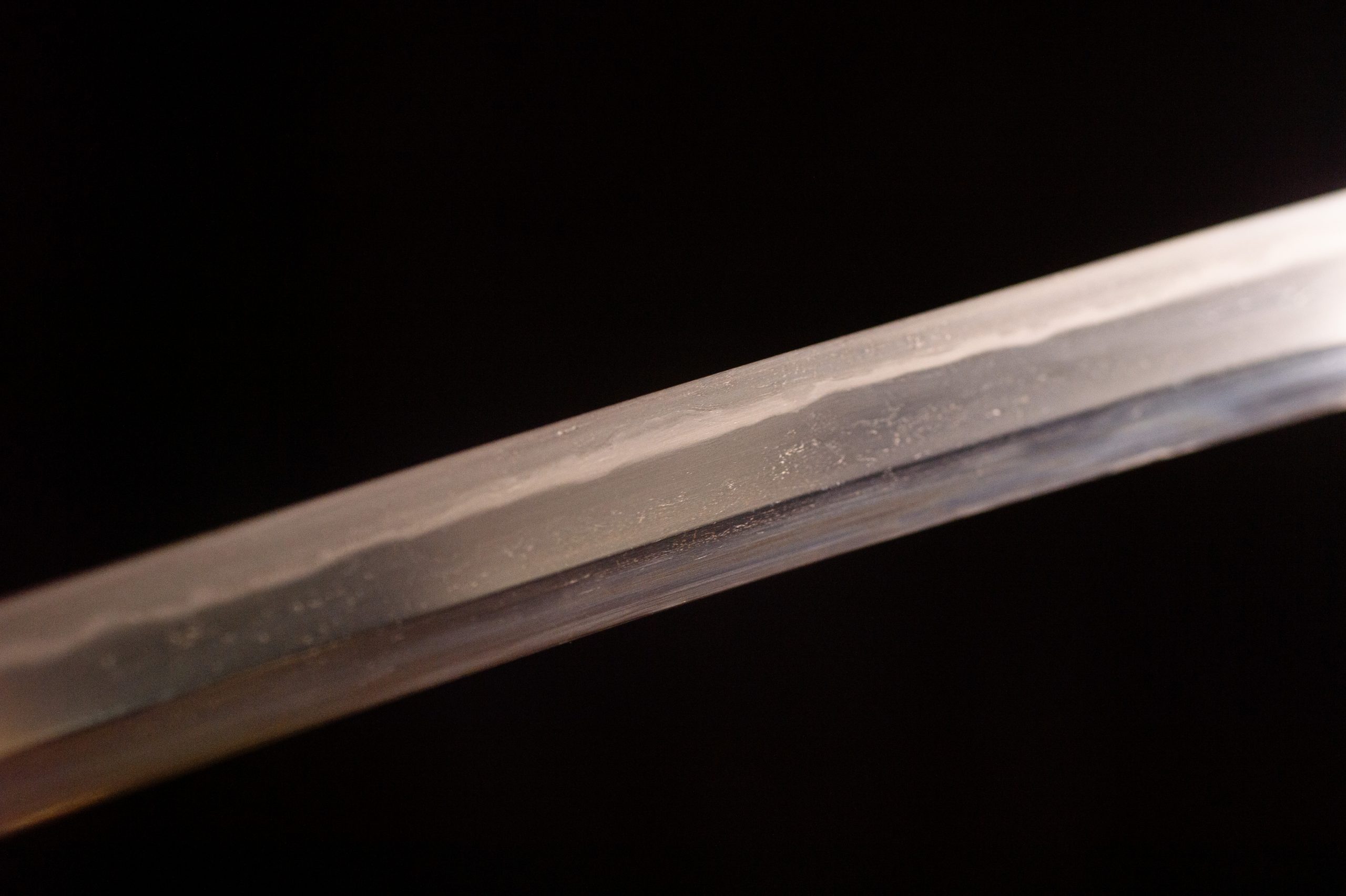
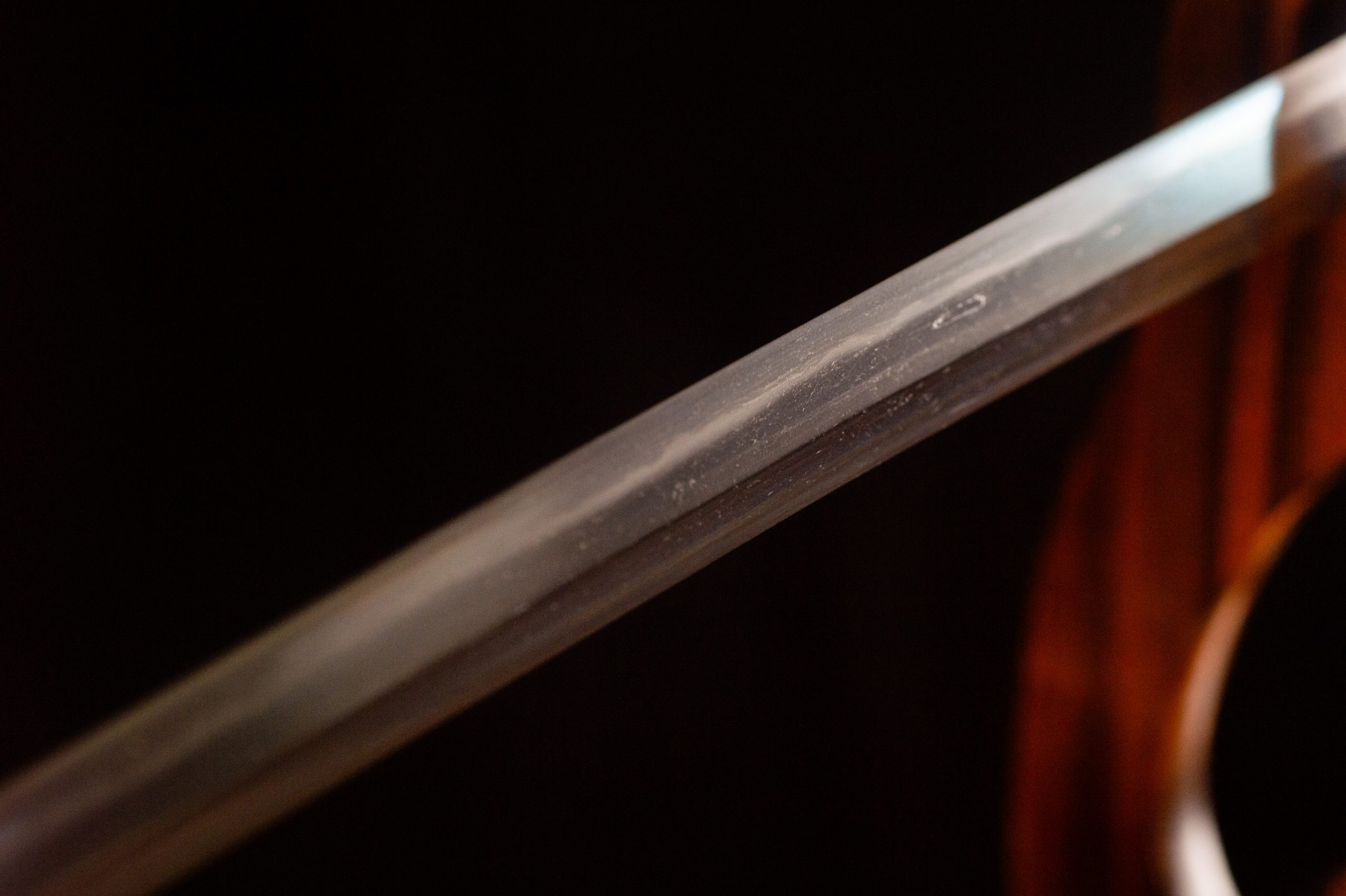
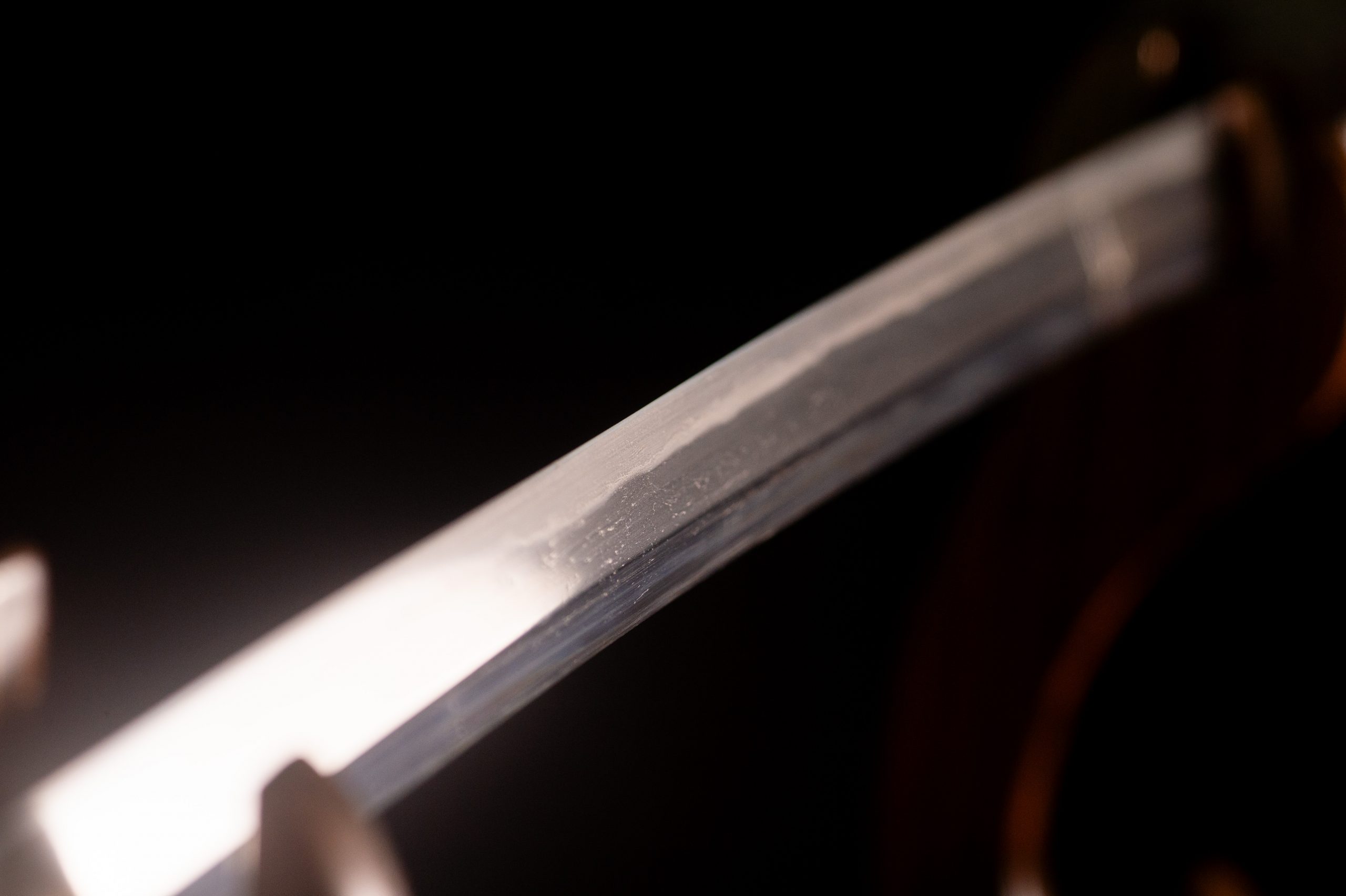
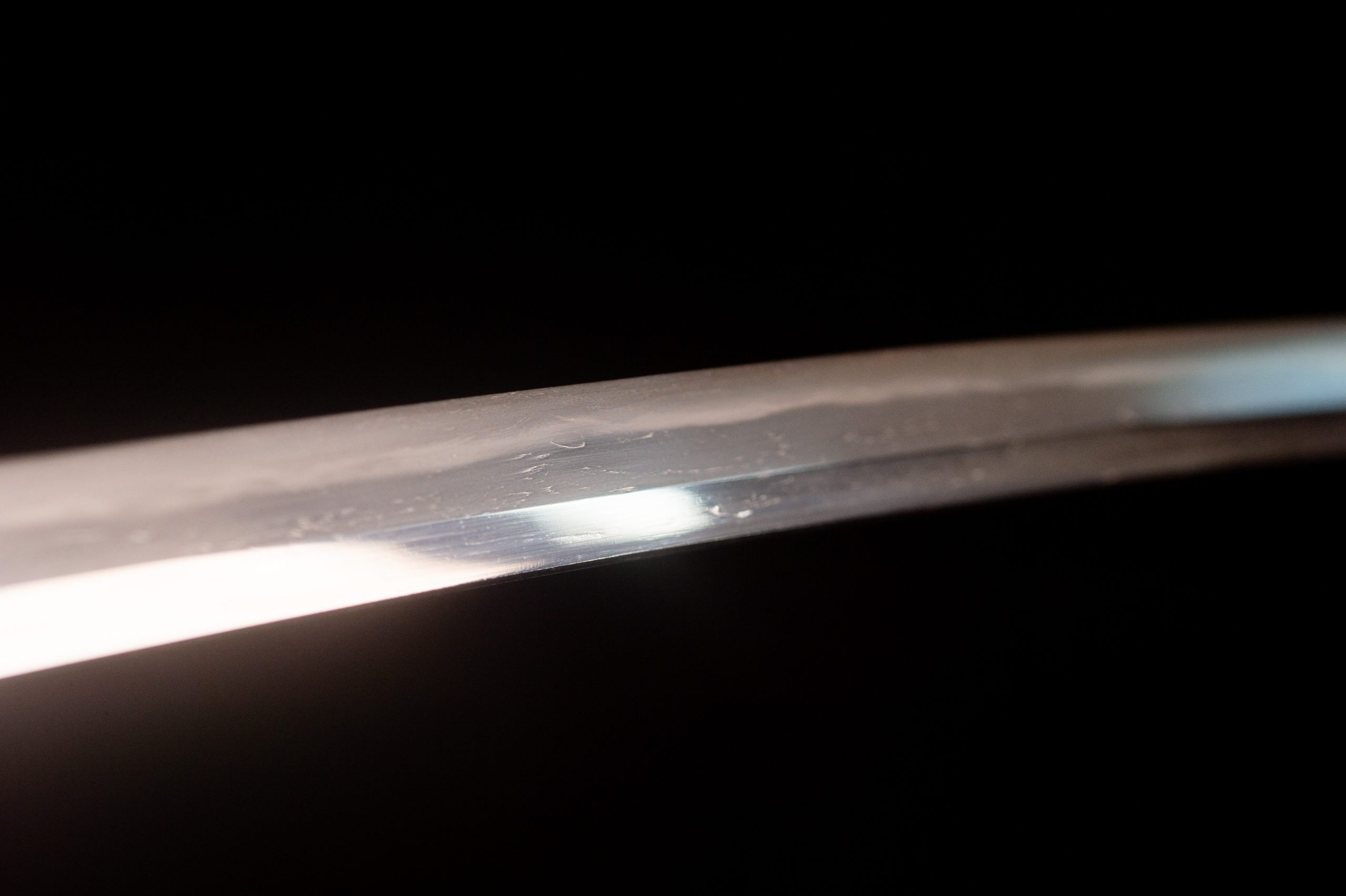
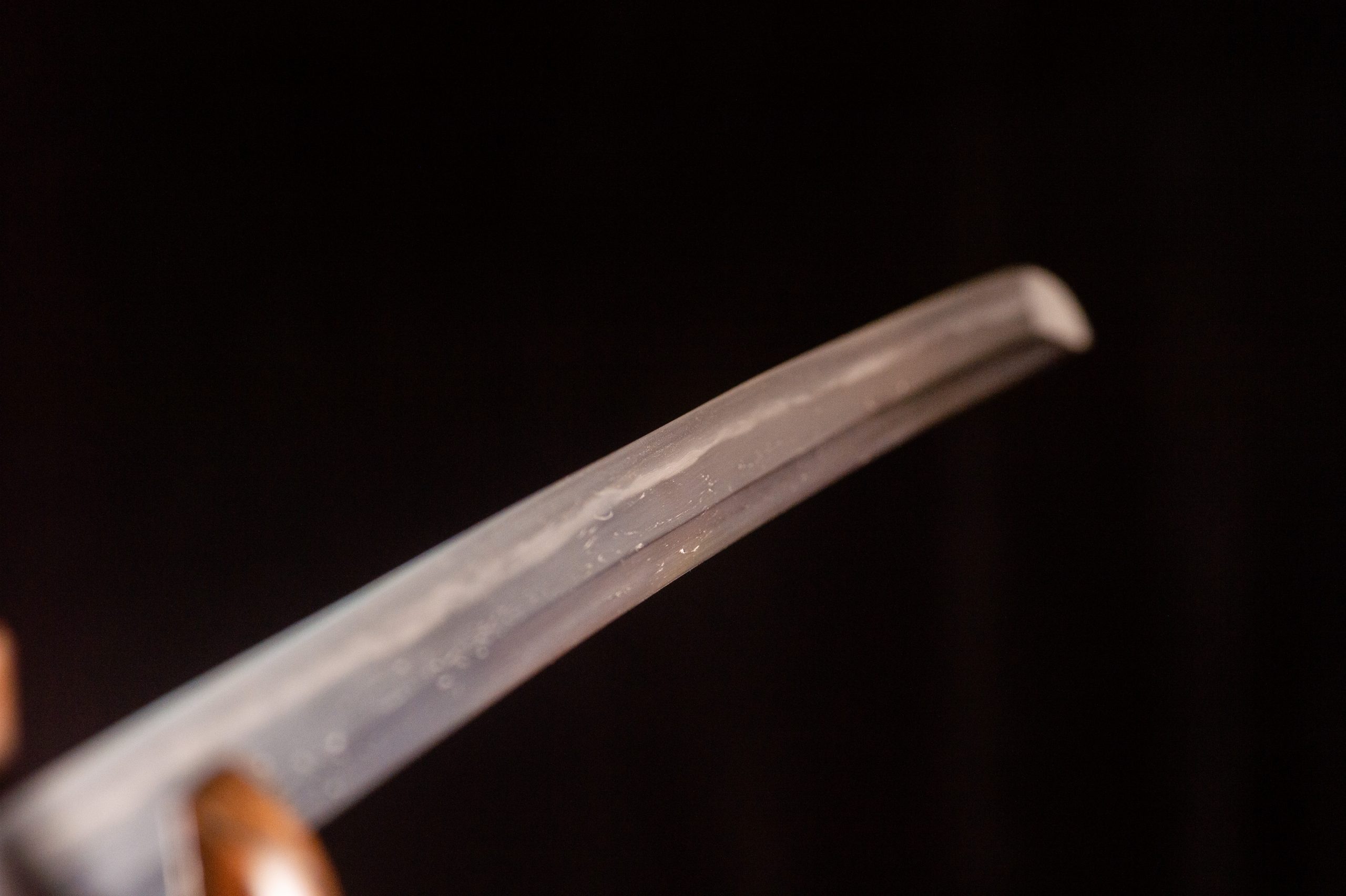
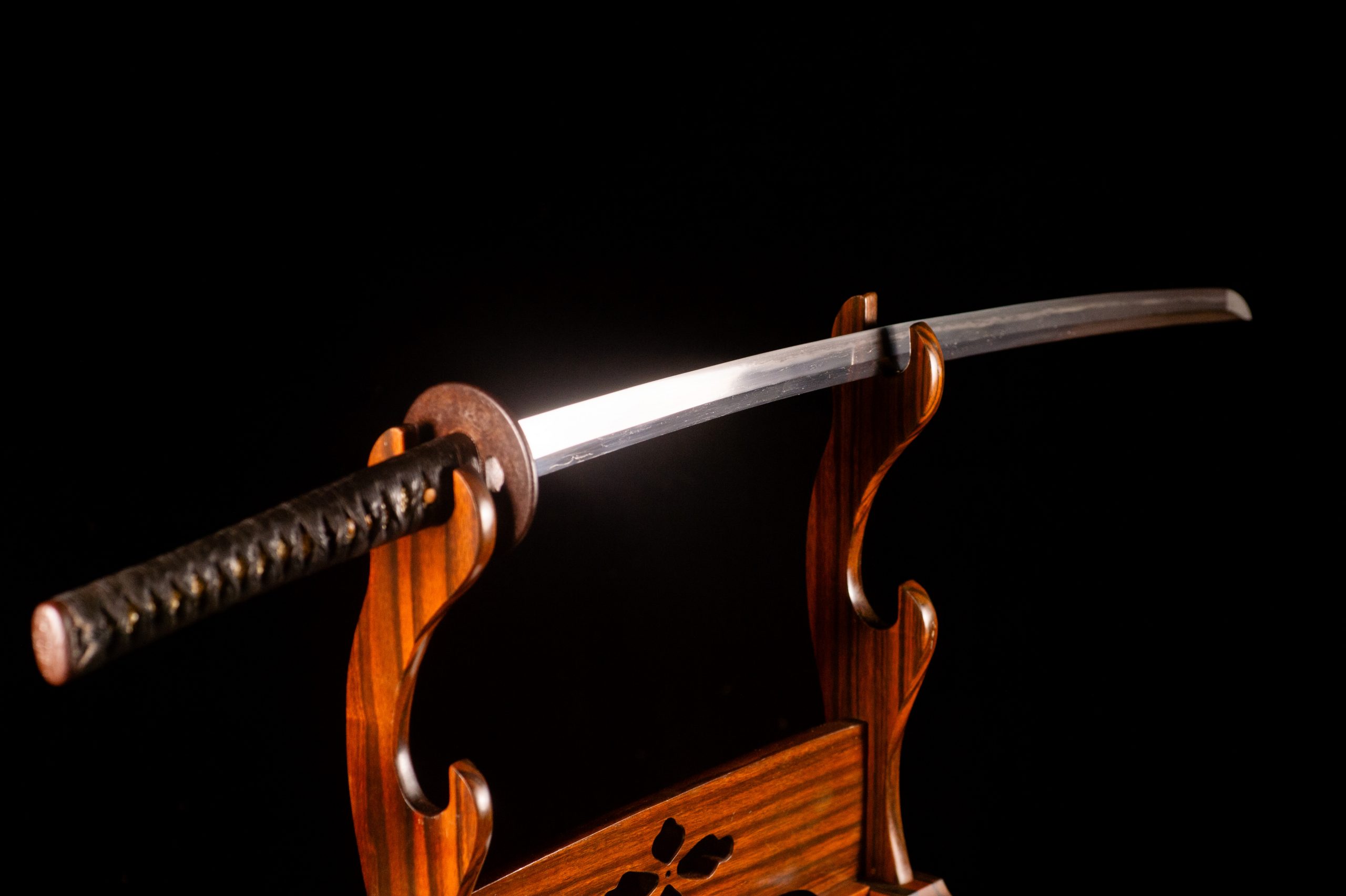
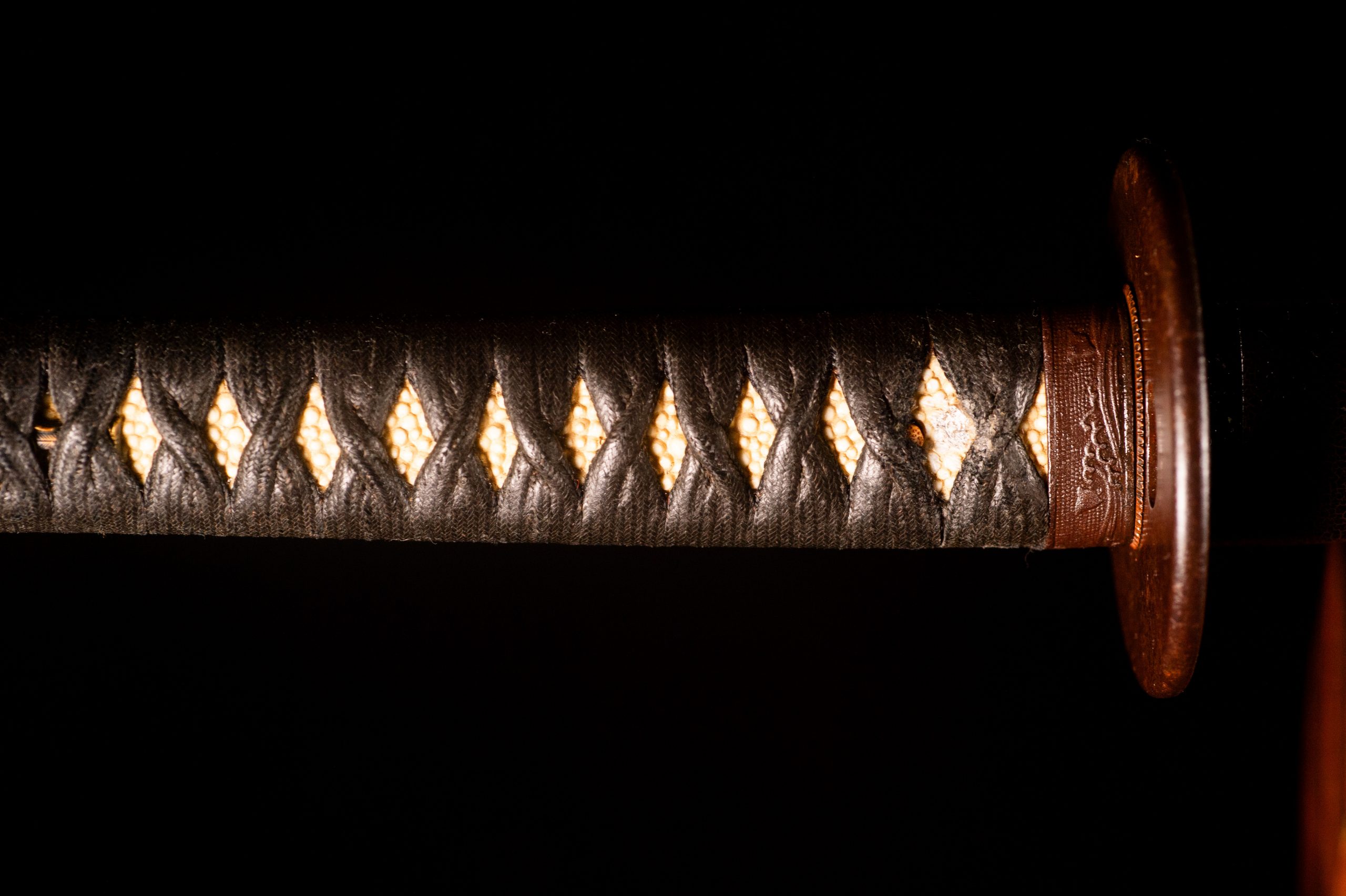
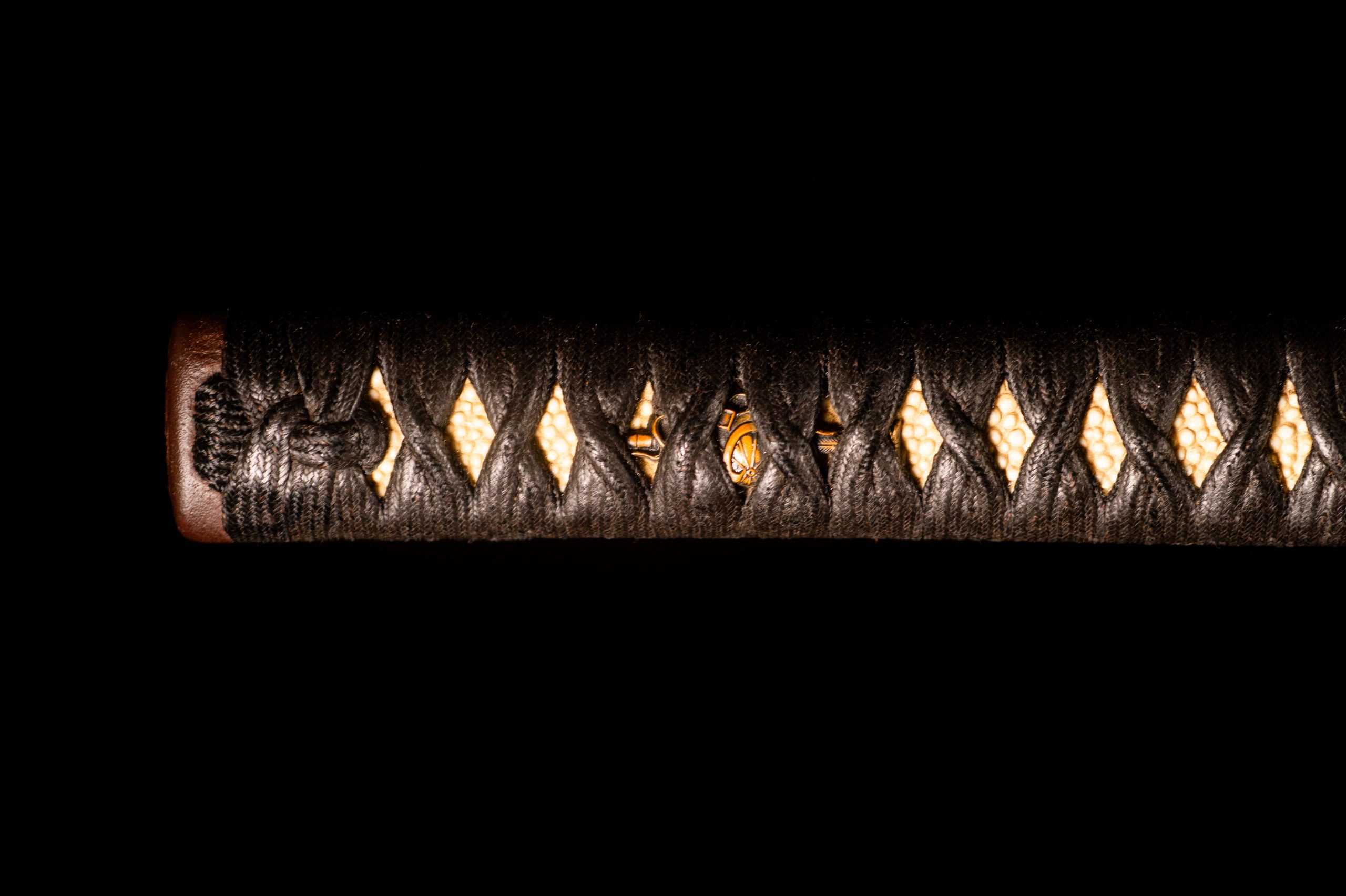
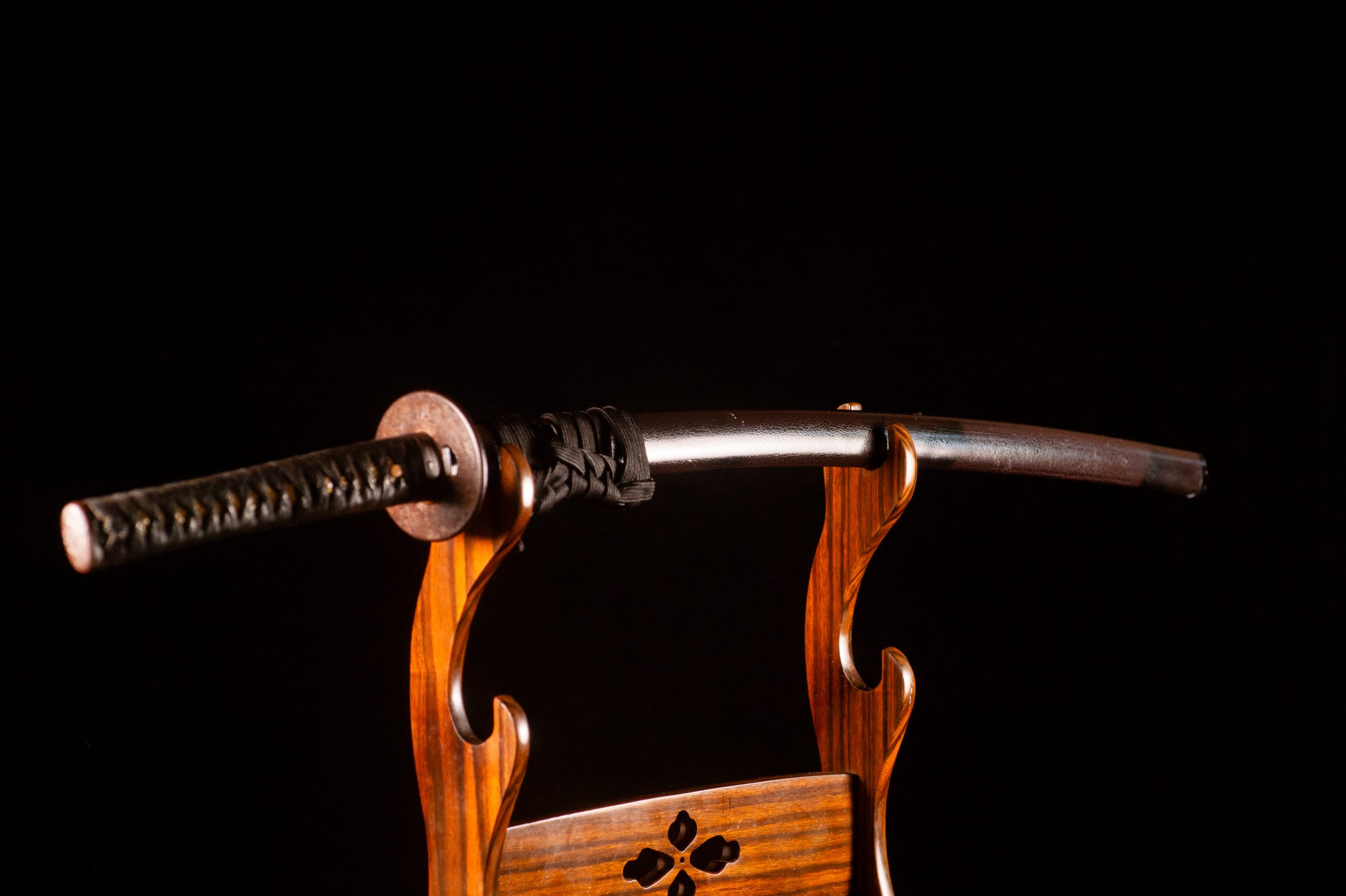
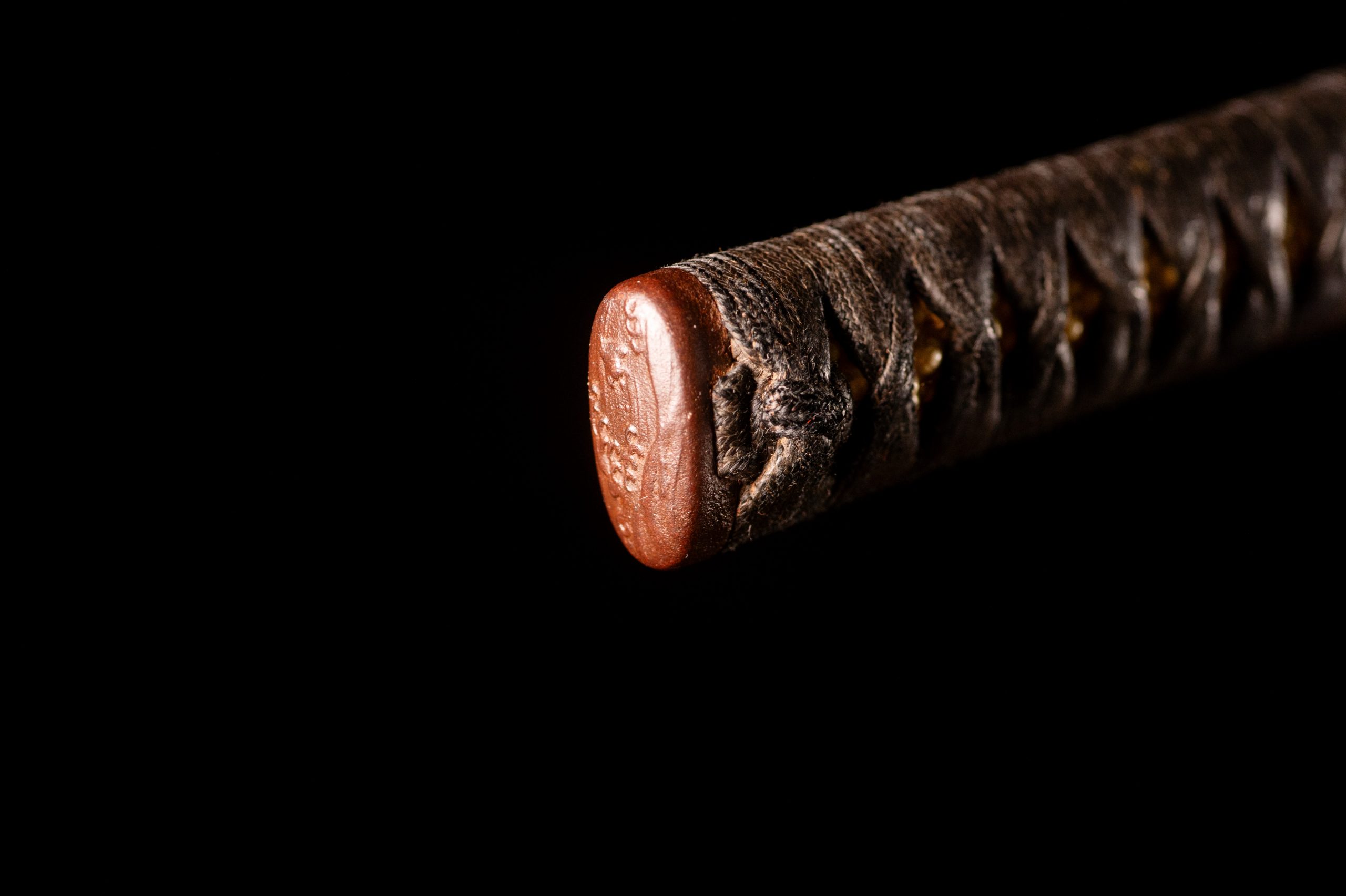
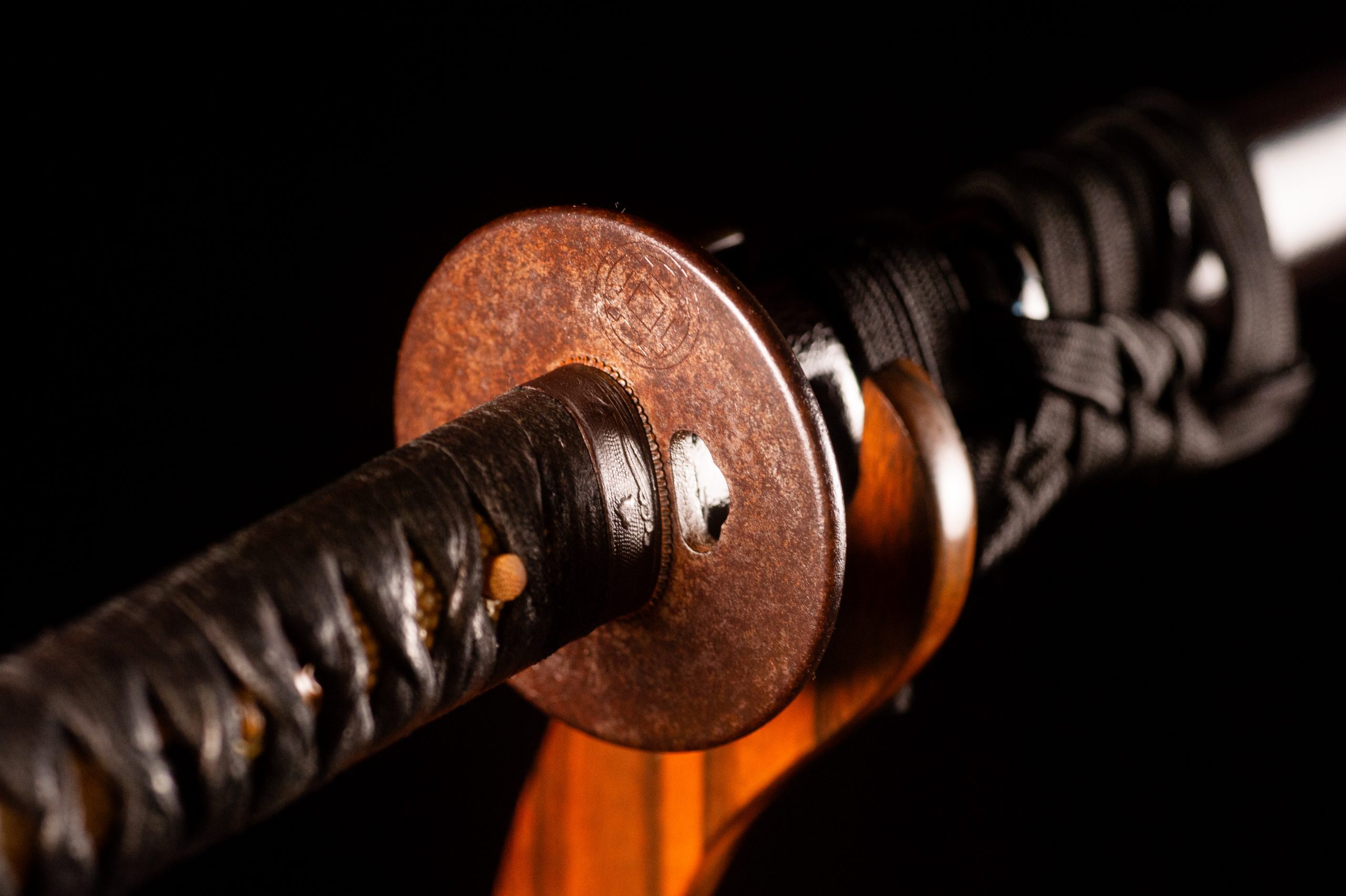
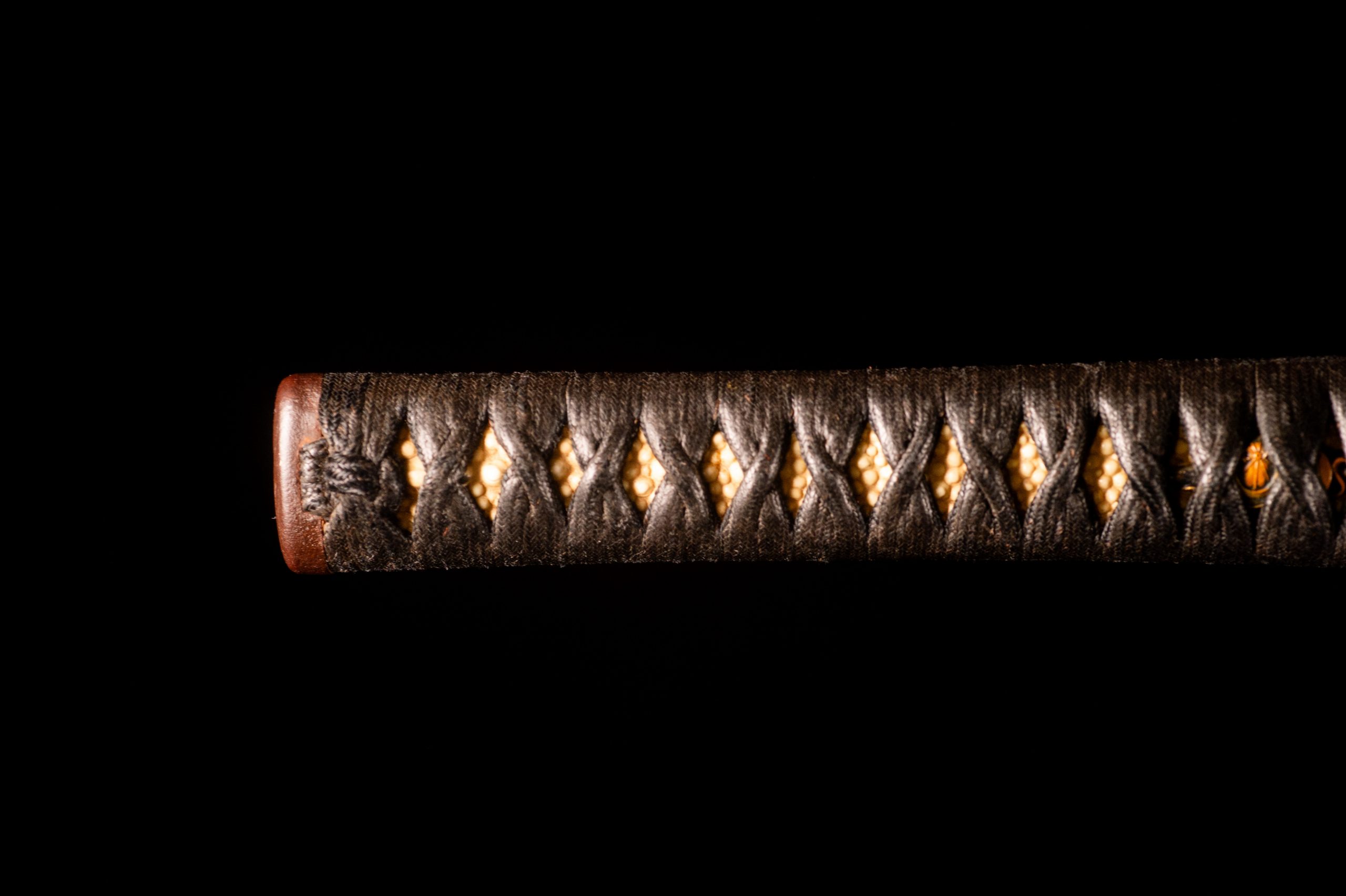
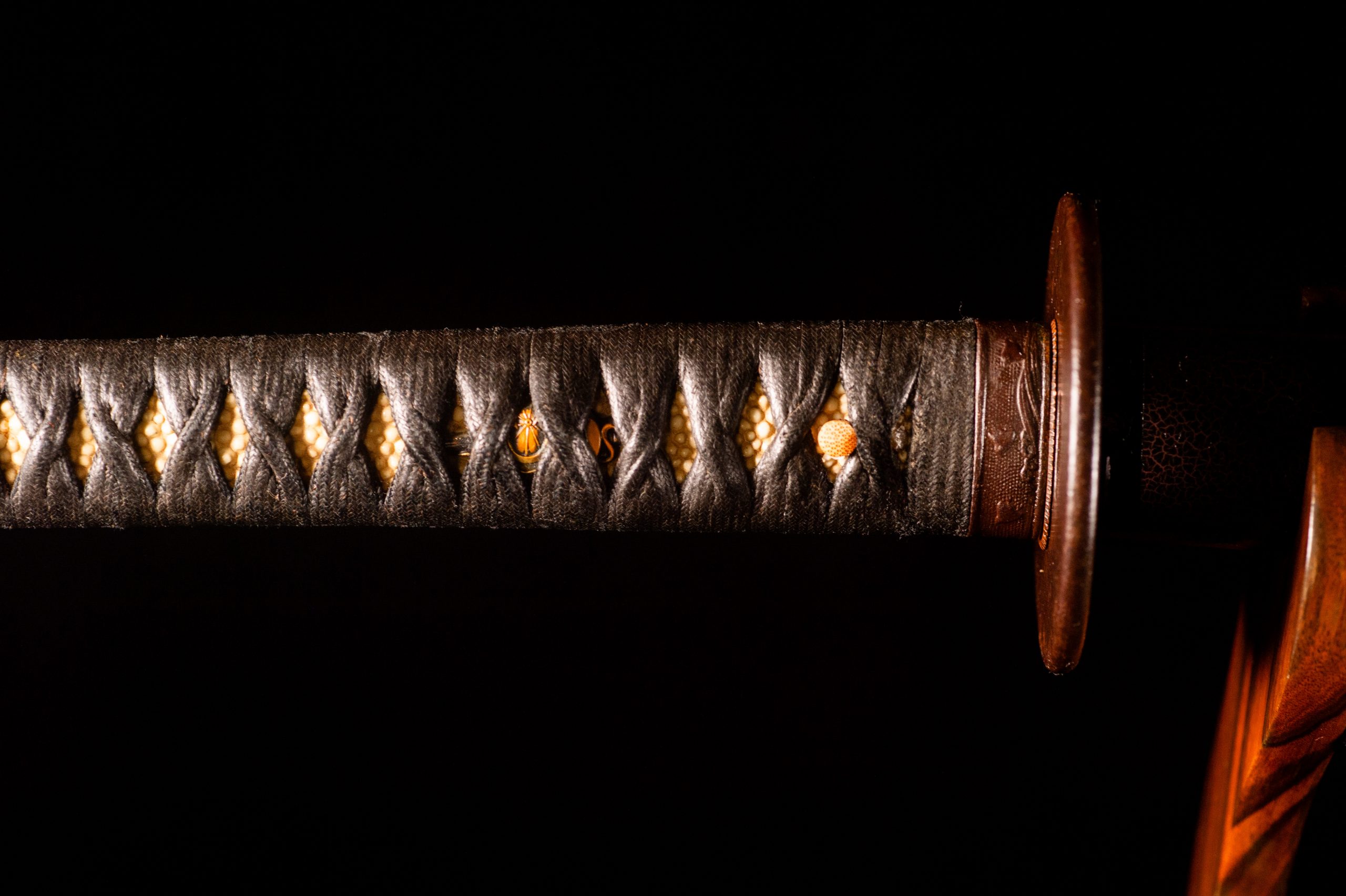
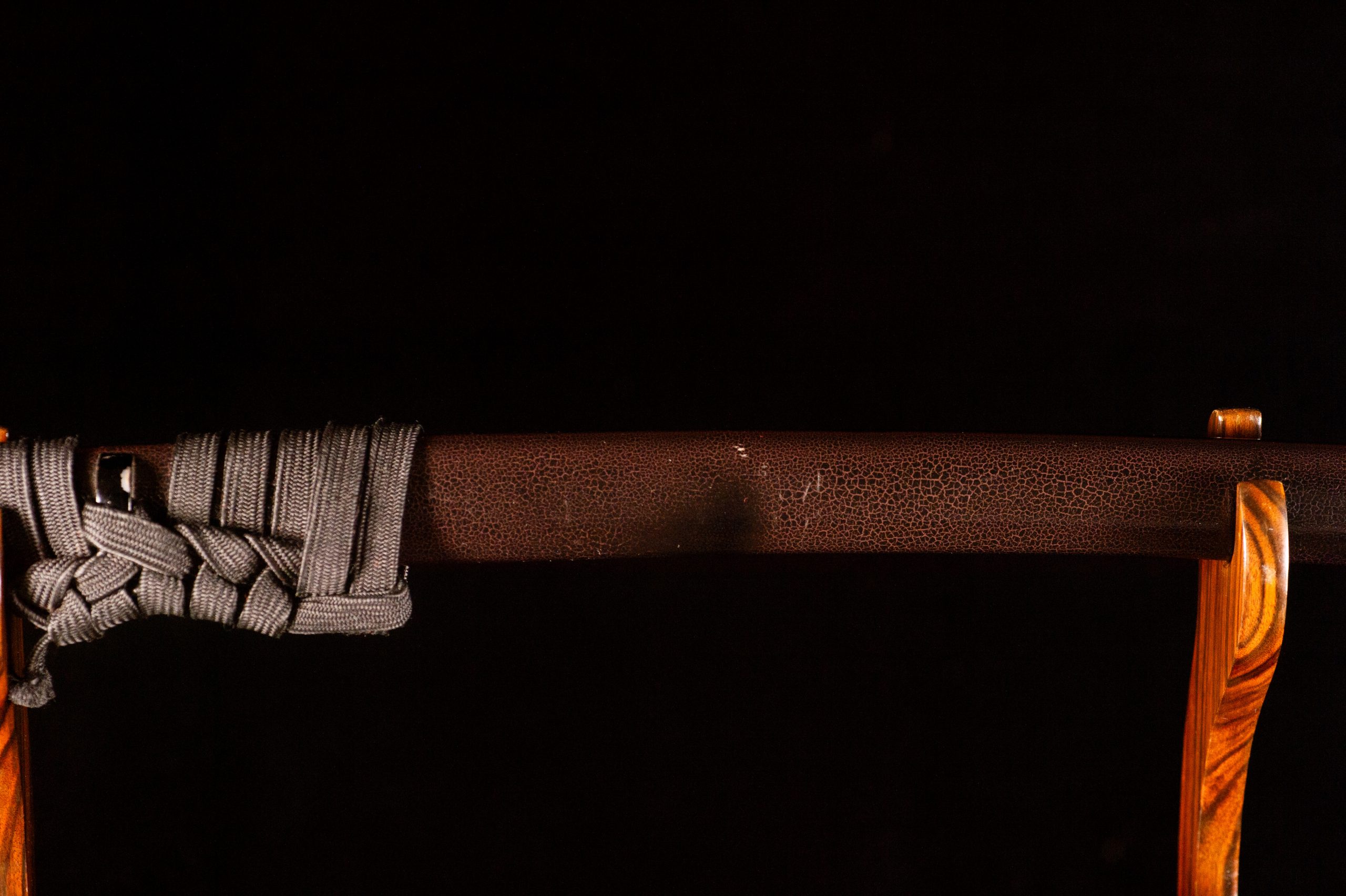
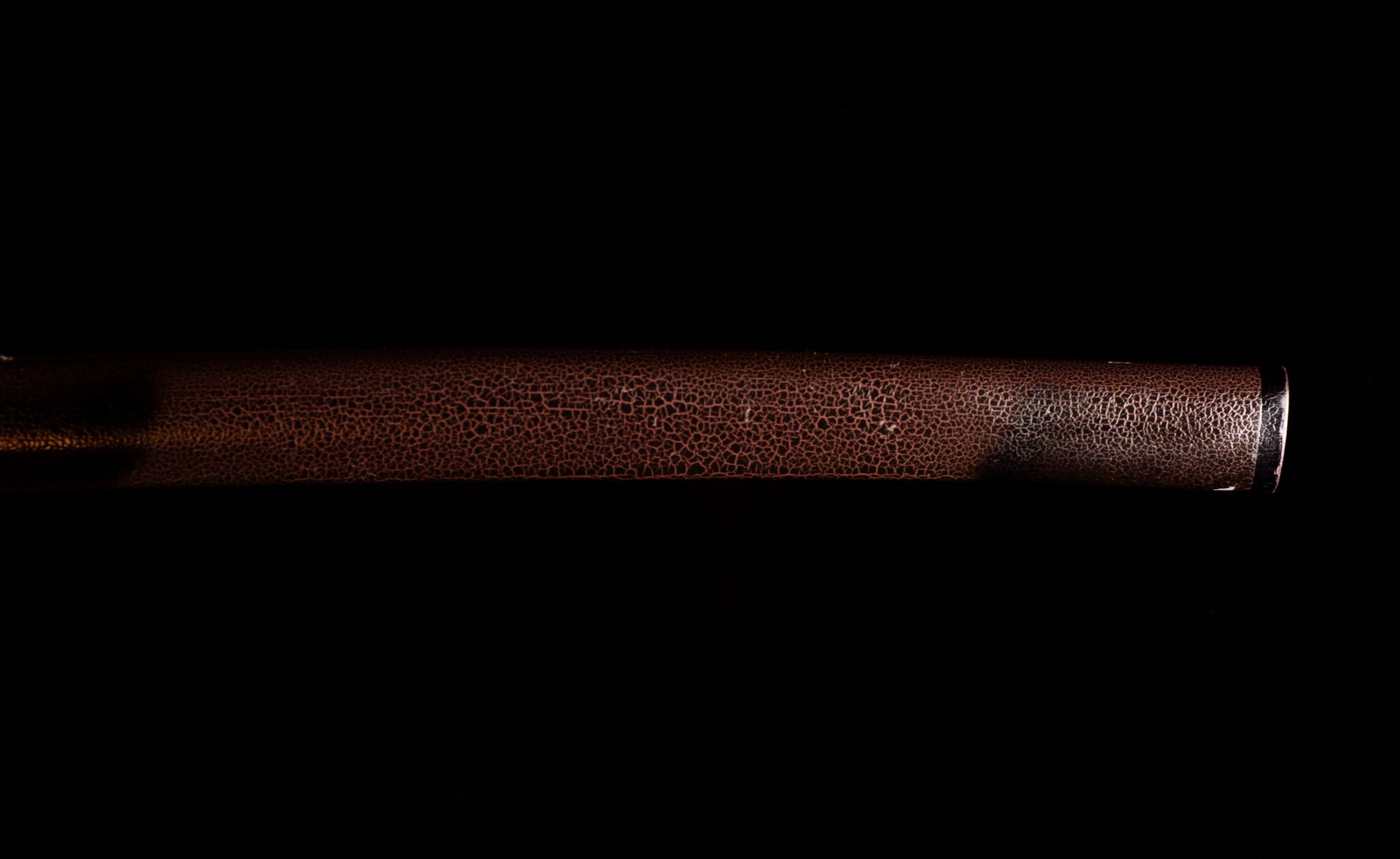
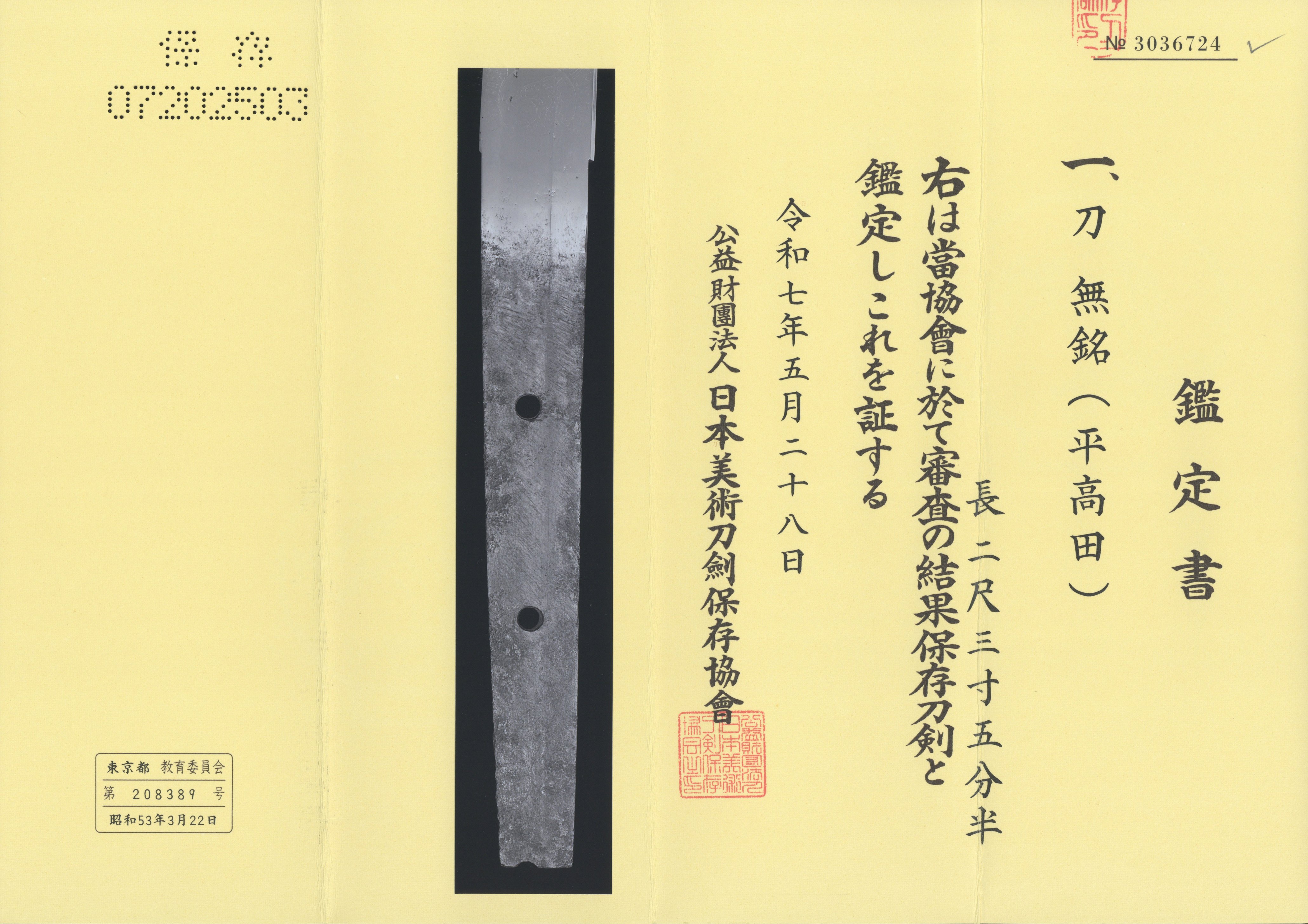
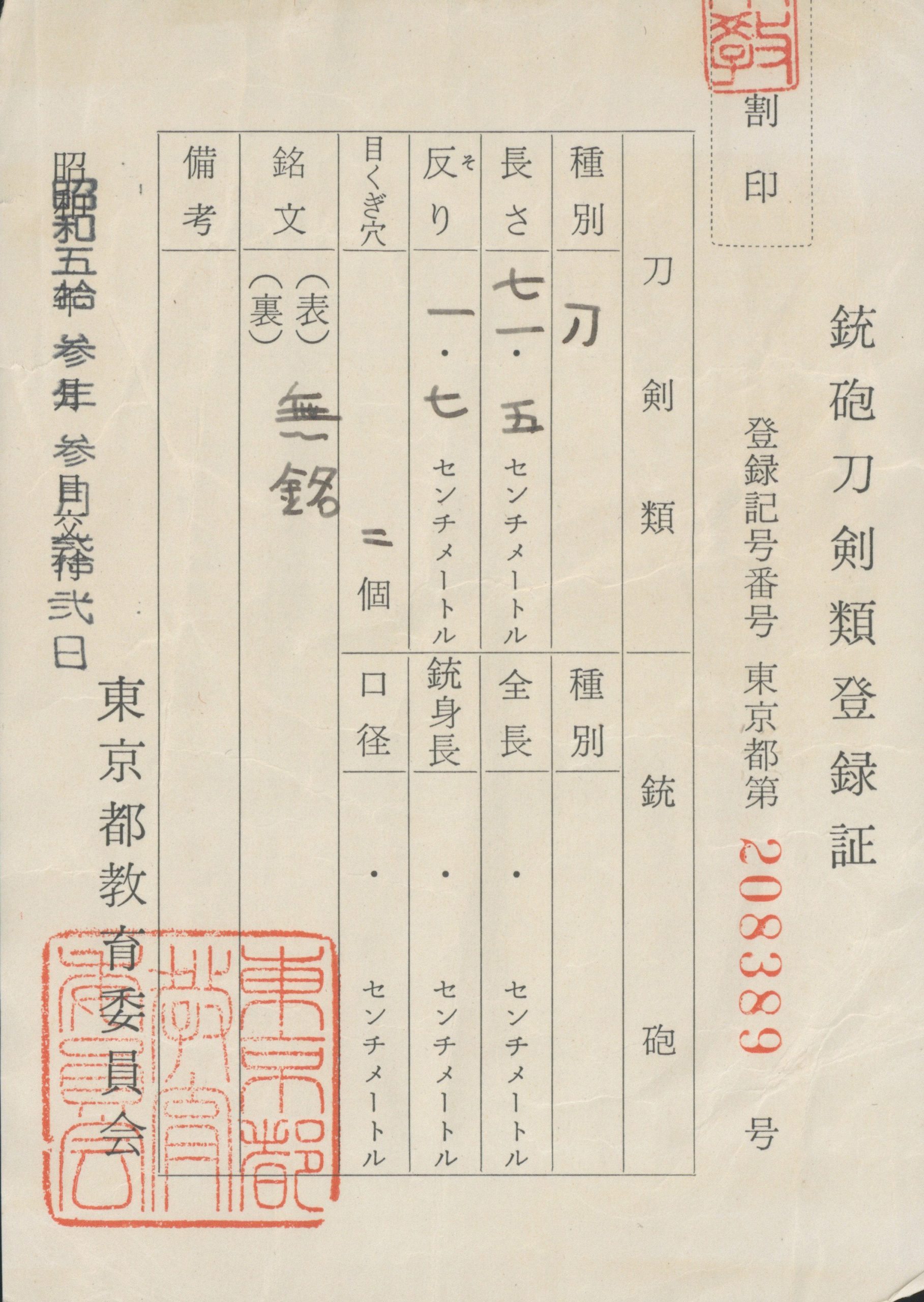
【商品詳細】 刀袋(着物地または綿製)が付属いたします。 日本美術刀剣保存協会(NBTHK)の鑑定書が付属します。 【鑑定書・資料】 室町時代 刀 NBTHK保存刀剣鑑定書 「鑑定書」 「刀 無銘(平高田)」 「右は当協会において審査の結果、保存刀剣と鑑定し、これを証する。」 「長さ:二尺三寸五分半」(約71.36cm) 「公益財団法人 日本美術刀剣保存協会」 【極めと背景】 鑑定書の「無銘(平高田)」という極めは、本刀が豊後国(現在の大分県)の高田派によって、室町時代(古刀期)に制作されたことを示しています。 専門的な分類において「平高田」とは、室町時代の豊後高田鍛冶を指す呼称です。江戸時代の新刀期以降、同派の多くが「藤原」を冠した銘を刻むようになることから、それらは一般に「藤原高田」と呼ばれ区別されています。 高田学校の起源はさらに遡りますが、九州における需要の高まりとともに室町後期に大きく繁栄し、その伝統は江戸時代まで長く続きました。 本作は、実戦的でバランスが良く、信頼性の高い武用刀が求められた戦国時代の気風を反映した、室町期の「平高田」による一振りです。 【刀身の体配・特徴】 造り込みは鎬造り、反りは1.7cmと標準的で、登録証のデータとも一致する美しい姿をしています。 切先は横手がしっかりと立ち、中切先の標準的な比率を保っています。 刃文については、現状の光の下では穏やかな焼出しが確認できますが、画像のみで特定の刃取りを断定するものではありません。 茎(なかご)は無銘で、目釘穴は二つ。時代を経た落ち着いた錆色を呈しています。 全体として、当時の実戦刀としての機能美を備えた体配です。
 NihontoWatch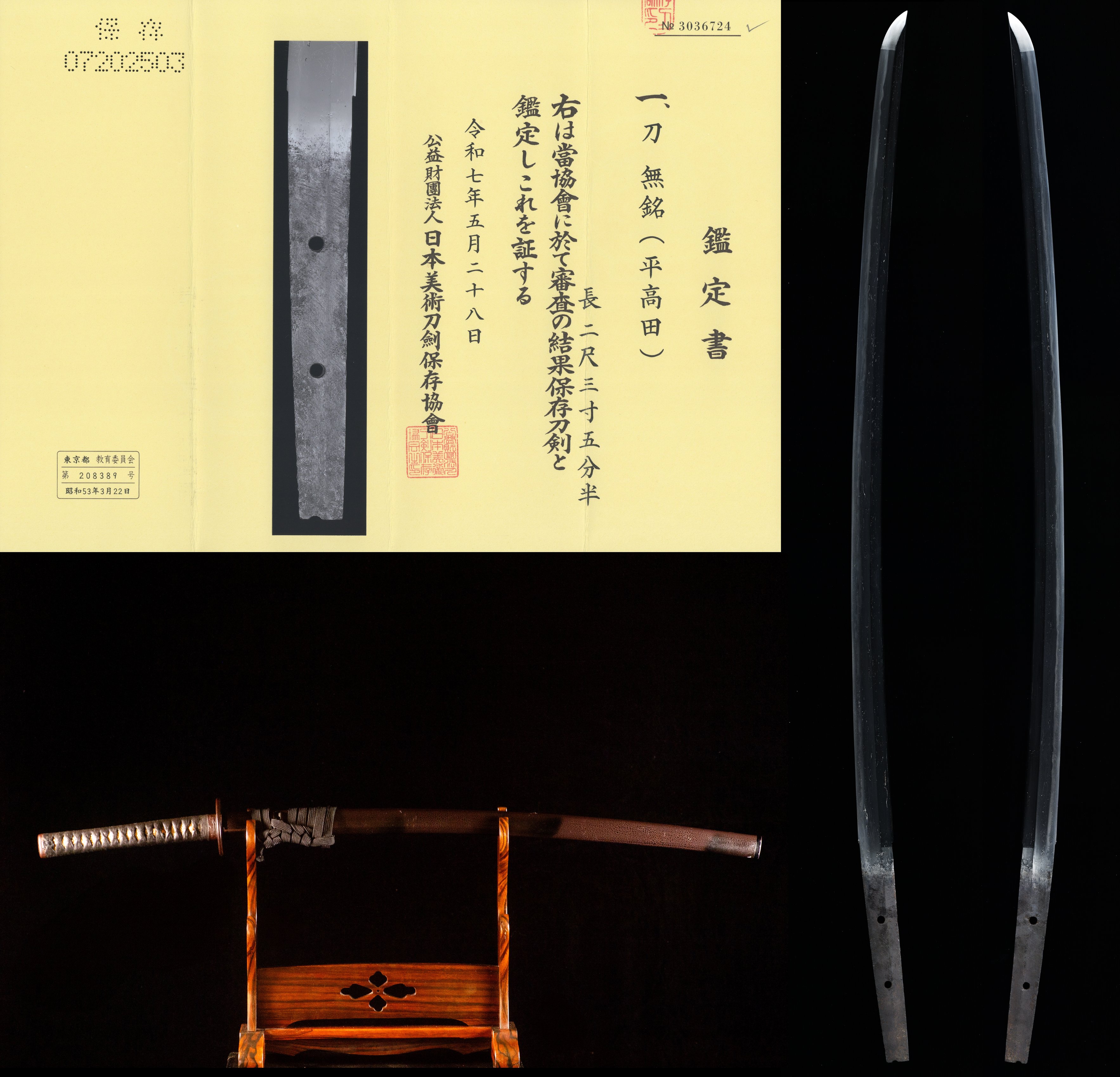


備前伝 · 豊後
現在44点販売中
豊後国の高田派は、同国高田荘の地名を負う一門で、鎌倉初期に定秀・行平らの名工を出した九州刀の伝統が一時跡絶えた後、南北朝時代に友行が同地に現れて再興した鍛冶集団である。説示は友行をもって高田鍛冶の祖とし、現存する年紀作に貞治・正平の年号を伝える点を挙げる。友行のほか、その子あるいは門人と伝える時行が著名で、別系と思われる行政には建徳二年紀の短刀がある。南北朝期の作には「藤原」を冠し、室町期以降は「平」を銘じて「盛」「守」「鎮」「統」などを通字とし、これらを総じて平高田と汎称する。さらに末期に至って再び「藤原」を冠するようになり、江戸期以降もこれを踏襲して藤原高田と呼び習わされ区分される。この間に長盛・竪守・鎮教・鎮清・鎮正らを輩出し、鎮正の門からは伊予宇和島に移った国房が出て新刀期へと繋がるなど、室町後期から江戸期に及ぶ長い系譜を形づくった。 作風は説示の記すところ多彩で、一様には括れない。鍛えは板目に杢を交え、総じて肌立ちごころとなり、柾に流れる態を見せて、地沸つき地景入り、白気映りや乱れ映りが立つものが多い。刃文は直刃を基調とするものから、小互の目や角ばる互の目を交えて乱れるもの、腰の開いた複式風で末備前を彷彿とさせるもの、さらに皆焼に及ぶものまで幅がある。祖の友行は同時代の左文字一類に近似するが、刃中に角ばる互の目が間遠に連れ、地に白けが強く地斑を交える点が見どころとされる。室町期の作の多くに共通する要所として、刃中に針の先で突いたような固い葉が入ることが従来指摘されており、系統と時代の判別に資する。姿形は室町中期頃までは反りが深くついて反らせたものが多く、末期は身幅広めで反りが幾分浅く、中鋒が延びて時代を映した頑健な造込みとなる。行政の作のように、鍛えが大きく流れて古典色が濃く、櫃中に行平を踏襲した倶利迦羅の浮彫を施す例もみられる。 伝承の上では、高田物は実用刀として広く行き渡った一方、斯界の評価は決して高くないとされてきた。説示はその傾向を踏まえつつ、地刃に破綻なく締まりごころとなり、来国行を参考にしたとも言えるほどの出来を示す鎮教や、地鉄精良で匂口冴える鎮清の作をもって面目を挽回する出色の一口と評し、平高田中で最も技倆に優れ直刃を得意とした長盛を一派の代表として挙げる。伝来を備える品も少なくなく、行政の短刀は庄内酒井家に伝わって本阿弥光忠の折紙を添え、鎮教には黒田家の重宝となり享保名物追記に載る権藤鎮教の長刀があり、長盛の脇指には島津継豊から本田親章へ拝領された切付銘を持つものがある。中世豊後刀工の作域を今に伝える資料として、また実用に堪える堅牢さと九州古典派の余韻を併せ持つ一門として位置づけられる。 詳しく見る →
室町の長船は輸出産業であった。明との勘合貿易はおよそ十二万八千振の日本刀を海の彼方へ運び、国内では戦国の軍勢が買い手となった。注文主の俗名を銘に刻む注文打ちが、兵卒用の数打ち物と並んで鍛えられている。
銘が正しい、または無銘でも年代・国・系統を確実に指摘できる、保存に値する真正の作と鑑定されたものです。
日本美術刀剣保存協会(NBTHK)は、1948年に設立され、文化庁の監督を受ける公益財団法人で、東京・刀剣博物館に本部を置きます。専門の審査員が出品作を直接審査し、美術的・歴史的価値に応じた鑑定書を発行します。NBTHKの鑑定書は、日本刀および刀装具の真正性を示す最も広く認知された基準です。
NBTHK公式サイト14-day return if items arrive damaged or in unexpected condition; customer bears return shipping + insurance; items returned in original condition with all accessories; antique armour non-returnable; only regular priced items refundable; shipping costs non-refundable.
【商品詳細】 刀袋(着物地または綿製)が付属いたします。 日本美術刀剣保存協会(NBTHK)の鑑定書が付属します。 【鑑定書・資料】 室町時代 刀 NBTHK保存刀剣鑑定書 「鑑定書」 「刀 無銘(平高田)」 「右は当協会において審査の結果、保存刀剣と鑑定し、これを証する。」 「長さ:二尺三寸五分半」(約71.36cm) 「公益財団法人 日本美術刀剣保存協会」 【極めと背景】 鑑定書の「無銘(平高田)」という極めは、本刀が豊後国(現在の大分県)の高田派によって、室町時代(古刀期)に制作されたことを示しています。 専門的な分類において「平高田」とは、室町時代の豊後高田鍛冶を指す呼称です。江戸時代の新刀期以降、同派の多くが「藤原」を冠した銘を刻むようになることから、それらは一般に「藤原高田」と呼ばれ区別されています。 高田学校の起源はさらに遡りますが、九州における需要の高まりとともに室町後期に大きく繁栄し、その伝統は江戸時代まで長く続きました。 本作は、実戦的でバランスが良く、信頼性の高い武用刀が求められた戦国時代の気風を反映した、室町期の「平高田」による一振りです。 【刀身の体配・特徴】 造り込みは鎬造り、反りは1.7cmと標準的で、登録証のデータとも一致する美しい姿をしています。 切先は横手がしっかりと立ち、中切先の標準的な比率を保っています。 刃文については、現状の光の下では穏やかな焼出しが確認できますが、画像のみで特定の刃取りを断定するものではありません。 茎(なかご)は無銘で、目釘穴は二つ。時代を経た落ち着いた錆色を呈しています。 全体として、当時の実戦刀としての機能美を備えた体配です。
NihontoWatch備前伝 · 豊後
現在44点販売中
豊後国の高田派は、同国高田荘の地名を負う一門で、鎌倉初期に定秀・行平らの名工を出した九州刀の伝統が一時跡絶えた後、南北朝時代に友行が同地に現れて再興した鍛冶集団である。説示は友行をもって高田鍛冶の祖とし、現存する年紀作に貞治・正平の年号を伝える点を挙げる。友行のほか、その子あるいは門人と伝える時行が著名で、別系と思われる行政には建徳二年紀の短刀がある。南北朝期の作には「藤原」を冠し、室町期以降は「平」を銘じて「盛」「守」「鎮」「統」などを通字とし、これらを総じて平高田と汎称する。さらに末期に至って再び「藤原」を冠するようになり、江戸期以降もこれを踏襲して藤原高田と呼び習わされ区分される。この間に長盛・竪守・鎮教・鎮清・鎮正らを輩出し、鎮正の門からは伊予宇和島に移った国房が出て新刀期へと繋がるなど、室町後期から江戸期に及ぶ長い系譜を形づくった。 作風は説示の記すところ多彩で、一様には括れない。鍛えは板目に杢を交え、総じて肌立ちごころとなり、柾に流れる態を見せて、地沸つき地景入り、白気映りや乱れ映りが立つものが多い。刃文は直刃を基調とするものから、小互の目や角ばる互の目を交えて乱れるもの、腰の開いた複式風で末備前を彷彿とさせるもの、さらに皆焼に及ぶものまで幅がある。祖の友行は同時代の左文字一類に近似するが、刃中に角ばる互の目が間遠に連れ、地に白けが強く地斑を交える点が見どころとされる。室町期の作の多くに共通する要所として、刃中に針の先で突いたような固い葉が入ることが従来指摘されており、系統と時代の判別に資する。姿形は室町中期頃までは反りが深くついて反らせたものが多く、末期は身幅広めで反りが幾分浅く、中鋒が延びて時代を映した頑健な造込みとなる。行政の作のように、鍛えが大きく流れて古典色が濃く、櫃中に行平を踏襲した倶利迦羅の浮彫を施す例もみられる。 伝承の上では、高田物は実用刀として広く行き渡った一方、斯界の評価は決して高くないとされてきた。説示はその傾向を踏まえつつ、地刃に破綻なく締まりごころとなり、来国行を参考にしたとも言えるほどの出来を示す鎮教や、地鉄精良で匂口冴える鎮清の作をもって面目を挽回する出色の一口と評し、平高田中で最も技倆に優れ直刃を得意とした長盛を一派の代表として挙げる。伝来を備える品も少なくなく、行政の短刀は庄内酒井家に伝わって本阿弥光忠の折紙を添え、鎮教には黒田家の重宝となり享保名物追記に載る権藤鎮教の長刀があり、長盛の脇指には島津継豊から本田親章へ拝領された切付銘を持つものがある。中世豊後刀工の作域を今に伝える資料として、また実用に堪える堅牢さと九州古典派の余韻を併せ持つ一門として位置づけられる。 詳しく見る →
室町の長船は輸出産業であった。明との勘合貿易はおよそ十二万八千振の日本刀を海の彼方へ運び、国内では戦国の軍勢が買い手となった。注文主の俗名を銘に刻む注文打ちが、兵卒用の数打ち物と並んで鍛えられている。
銘が正しい、または無銘でも年代・国・系統を確実に指摘できる、保存に値する真正の作と鑑定されたものです。
日本美術刀剣保存協会(NBTHK)は、1948年に設立され、文化庁の監督を受ける公益財団法人で、東京・刀剣博物館に本部を置きます。専門の審査員が出品作を直接審査し、美術的・歴史的価値に応じた鑑定書を発行します。NBTHKの鑑定書は、日本刀および刀装具の真正性を示す最も広く認知された基準です。
NBTHK公式サイト14-day return if items arrive damaged or in unexpected condition; customer bears return shipping + insurance; items returned in original condition with all accessories; antique armour non-returnable; only regular priced items refundable; shipping costs non-refundable.