江戸は刀の目利きの時代である。本阿弥の鑑定、1719年の享保名物帳、盛んな刀剣書が、戦で抜かれることのなくなった刀を学問の対象へと変えていった。
 NihontoWatchNihontoWatch
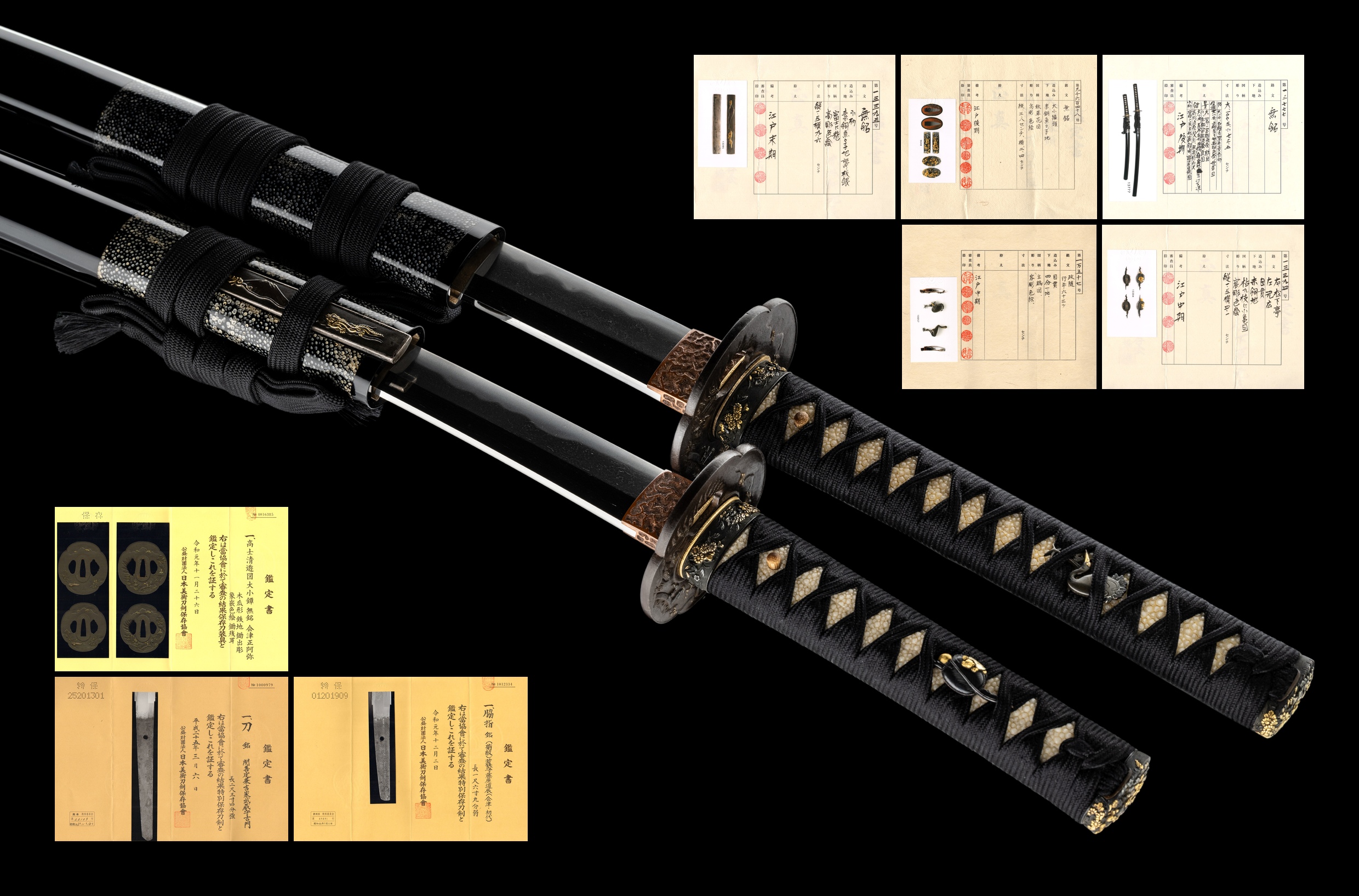
This daishô pairs a katana by Musashi no Kami Yoshikado with a wakizashi by Wakasa no Kami Michitoki, two smiths of different generations brought together in one magnificent union. Yoshikado was active in the Mito domain of Hitachi province from the Kan’ei era (1624-1644) through the Enpô era (1673-1681). Born in Mino, he proudly inscribed his Seki Zenjô Kaneyoshi lineage in his signature. He trained under Ômura Kaboku, a figure of unusual background who was both a physician and a swordsmith, and served as private retained smith to Tokugawa Mitsukuni, the second daimyô of Mito. Ranked jôsaku, with a cutting-sharpness rating of ryô-wazamono, Yoshikado signed this blade with the title Musashi no Kami, which dates it before Enpô 4 (1676), most likely to around the Kanbun era (1661-1673). The katana measures 71.0cm with deep sori, a pronounced taper from moto-haba to saki-haba and a chû-kissaki. The jihada is a fine, tight ko-itame with itame near the monouchi and standing-out utsuri, while the chôji-midare hamon, with thick nie, bright nioiguchi and sunagashi, produces a strikingly brilliant effect. Yahazuba and pointed togari appear along the hamon, and tobiyaki scatter through the ji. Michitoki, who flourished around the Shôtoku era (1711-1716), trained under the first-generation Miyoshi Nagamichi and later under the third-generation Iga no Kami Kinmichi, holder of the title Nihon Kaji Sôshô, Grand Master of Japanese Smiths. After receiving the title Wakasa no Kami he was permitted, alongside Kinmichi, to carve a chrysanthemum crest into the nakago, which suggests he may have produced blades for the imperial court. His wakizashi shows a ko-itame jihada through which masame flows, and a bright gunome-midare hamon with long ashi, thick nie and sunagashi. Two parallel lines of kinsuji appear in one area, which is quite rare. A wonderful custom daishô koshirae, produced by Unique Japan, is unified throughout in black. Its most distinctive feature is the togidashi-zame, polished ray-skin, that wraps the lower portion of each saya with quiet elegance, matched by copper ganseki habaki with a rock-textured finish. The paired iron daishô tsuba is by the Aizu Shôami school and depicts noble scholars at leisure. The fuchi-kashira, from the Môgarashi school of Hikone, shows autumn grasses and flowers in gold and colour accents on a shakudô nanako ground. A crane menuki by Hamano Shôzui on the katana and a tortoise menuki by Matsushitatei Motohiro on the wakizashi pair longevity symbols from two leading metalworkers, and the kozuka by Akagiken Motonaga shows a dragon rising above Mount Fuji. A daishô worthy of the name.
販売店の記載のまま
美濃伝 · 武蔵 · 1644-1648頃
刀剣大鑑 上位49%
美濃伝 · 美濃
現在3点販売中
江戸時代
江戸は刀の目利きの時代である。本阿弥の鑑定、1719年の享保名物帳、盛んな刀剣書が、戦で抜かれることのなくなった刀を学問の対象へと変えていった。
保存刀剣のうち、出来が一層優れ、保存状態も良好と認められたものです。再刃や、室町・江戸期の多くの無銘作は対象外となり、保存刀剣より高い基準が課されます。
日本美術刀剣保存協会(NBTHK)は、1948年に設立され、文化庁の監督を受ける公益財団法人で、東京・刀剣博物館に本部を置きます。専門の審査員が出品作を直接審査し、美術的・歴史的価値に応じた鑑定書を発行します。NBTHKの鑑定書は、日本刀および刀装具の真正性を示す最も広く認知された基準です。
NBTHK公式サイトAll swords come with a three-day inspection period beginning from the date of delivery. If not satisfied, the sword may be returned within this period for a full refund of the purchase price. Outside of this period, all sales are final. Swords purchased on a layaway payment plan are not eligible for the three-day inspection period.