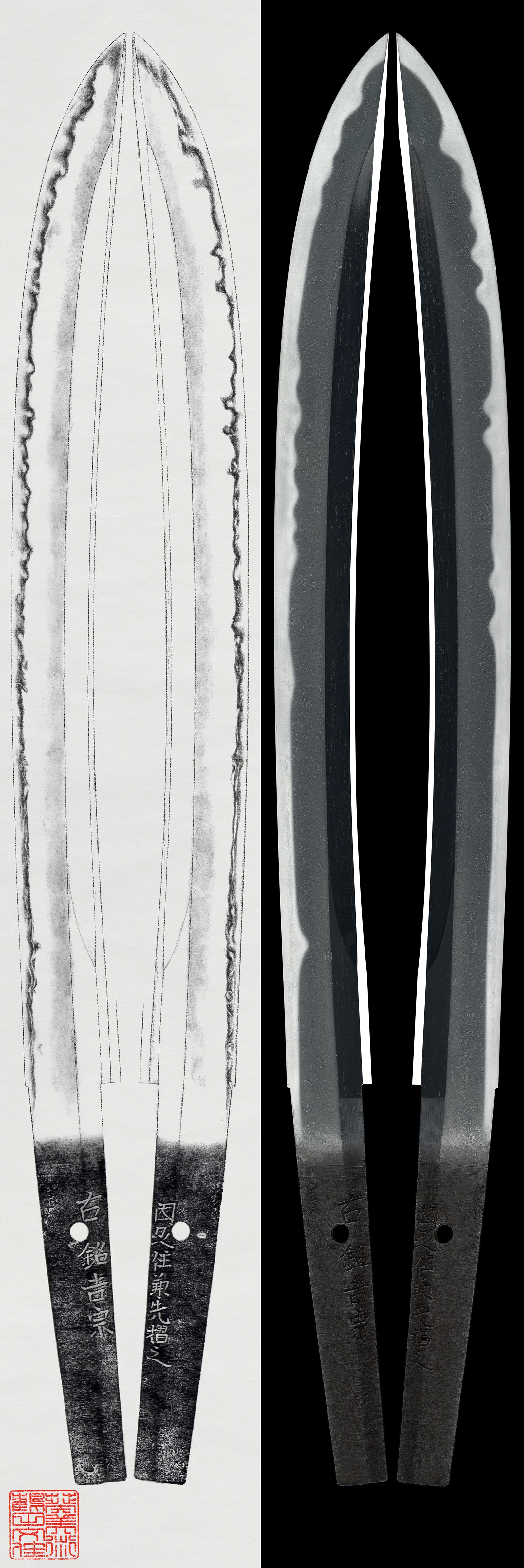
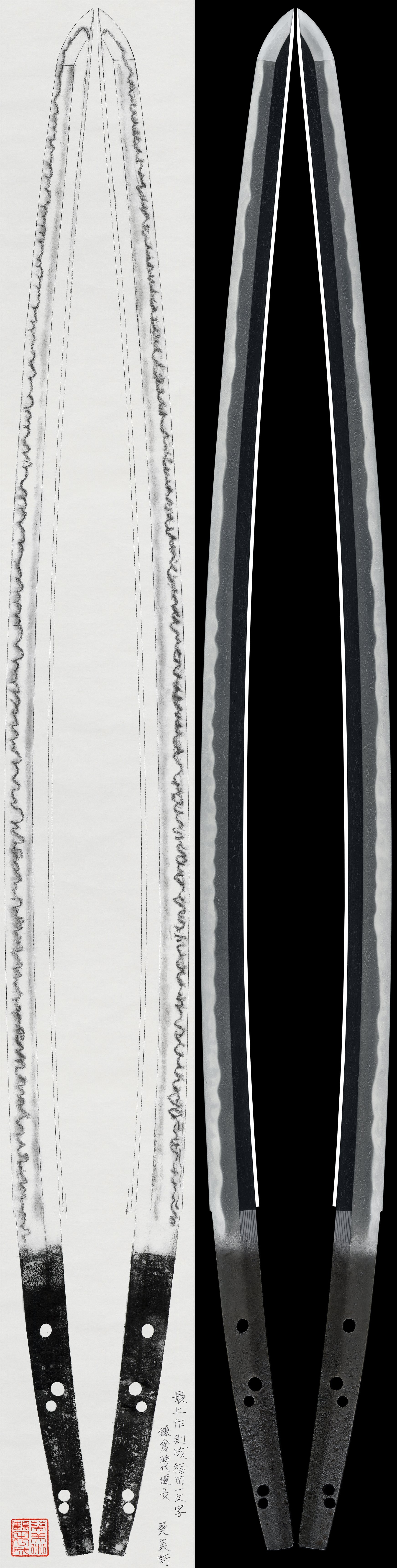
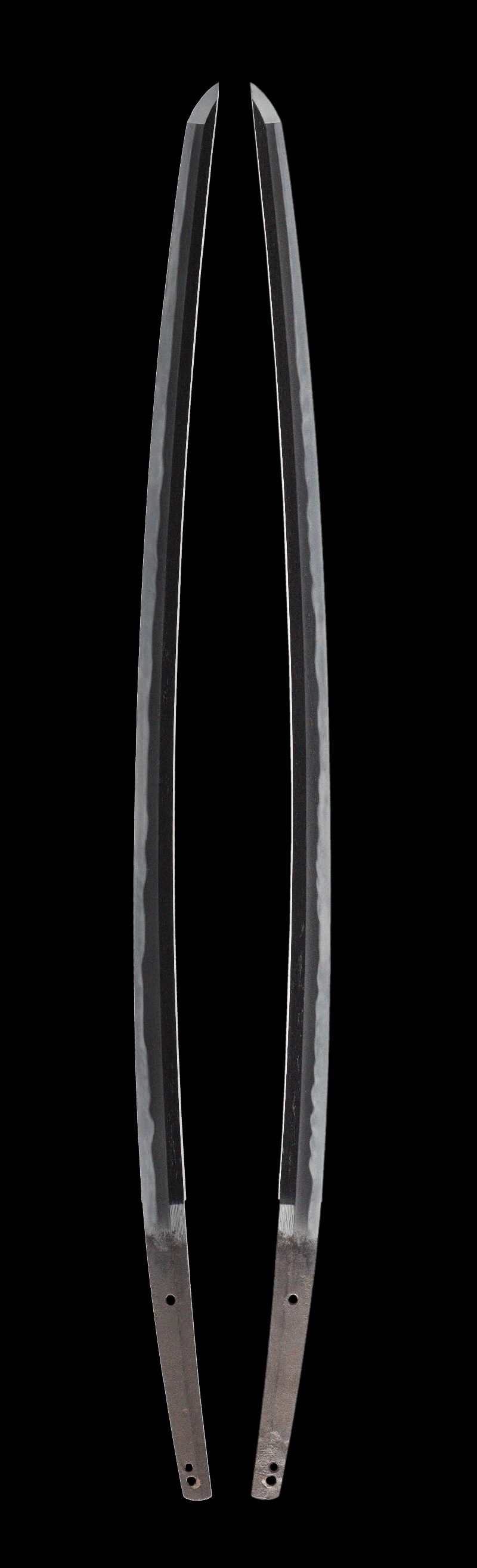
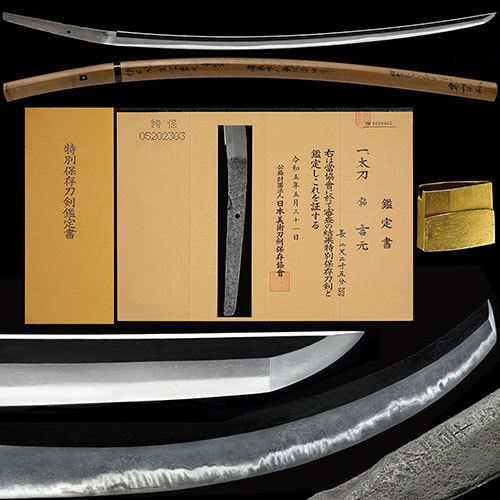
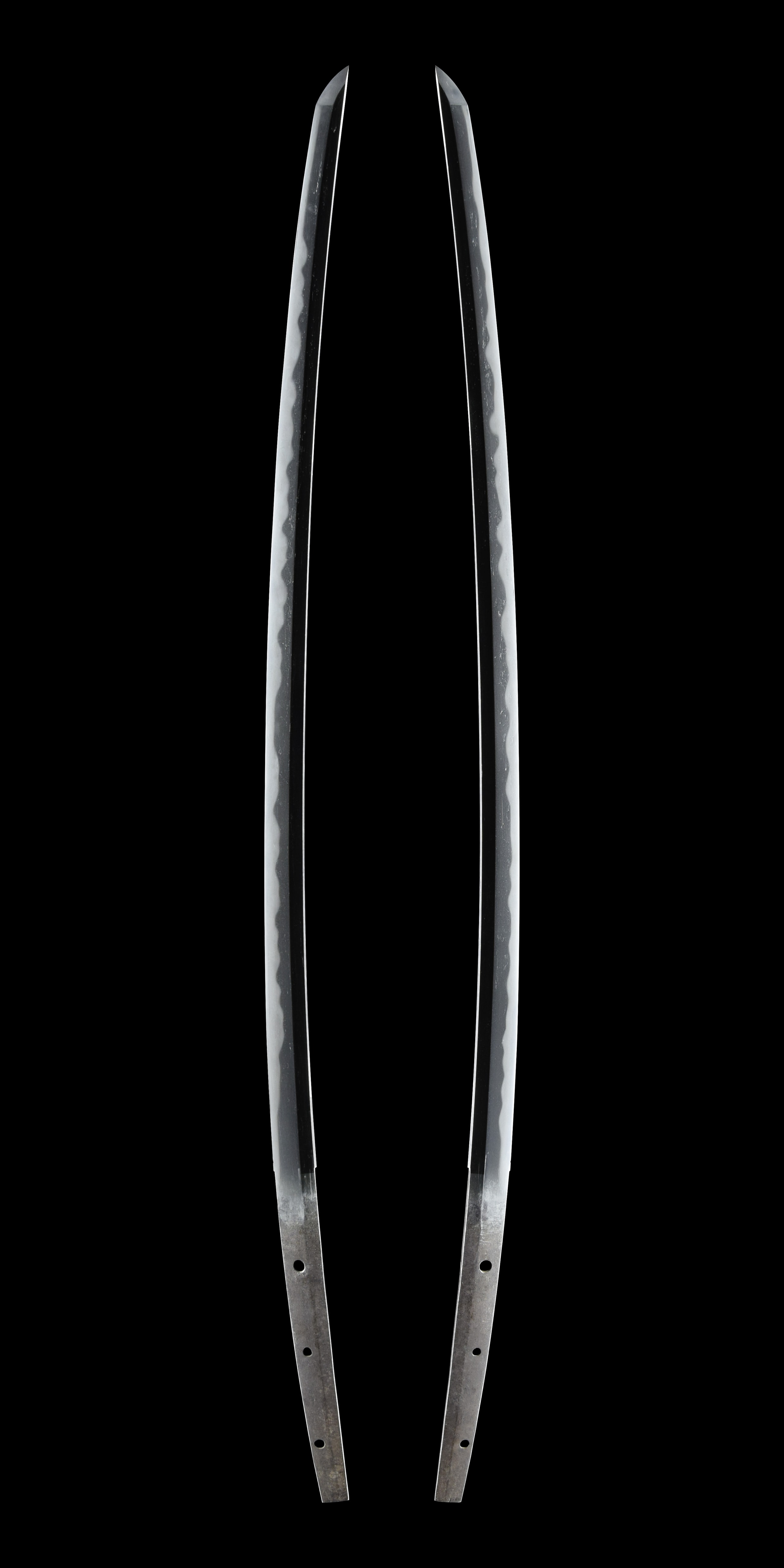
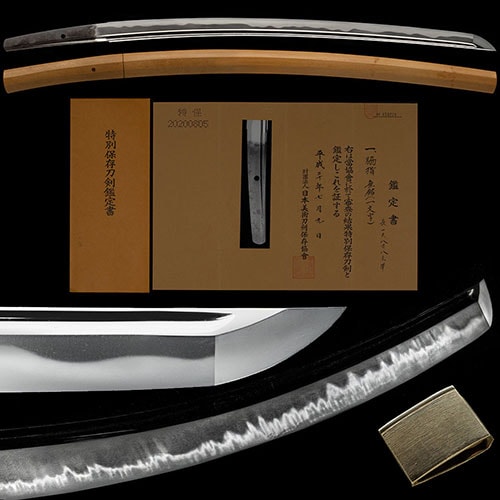
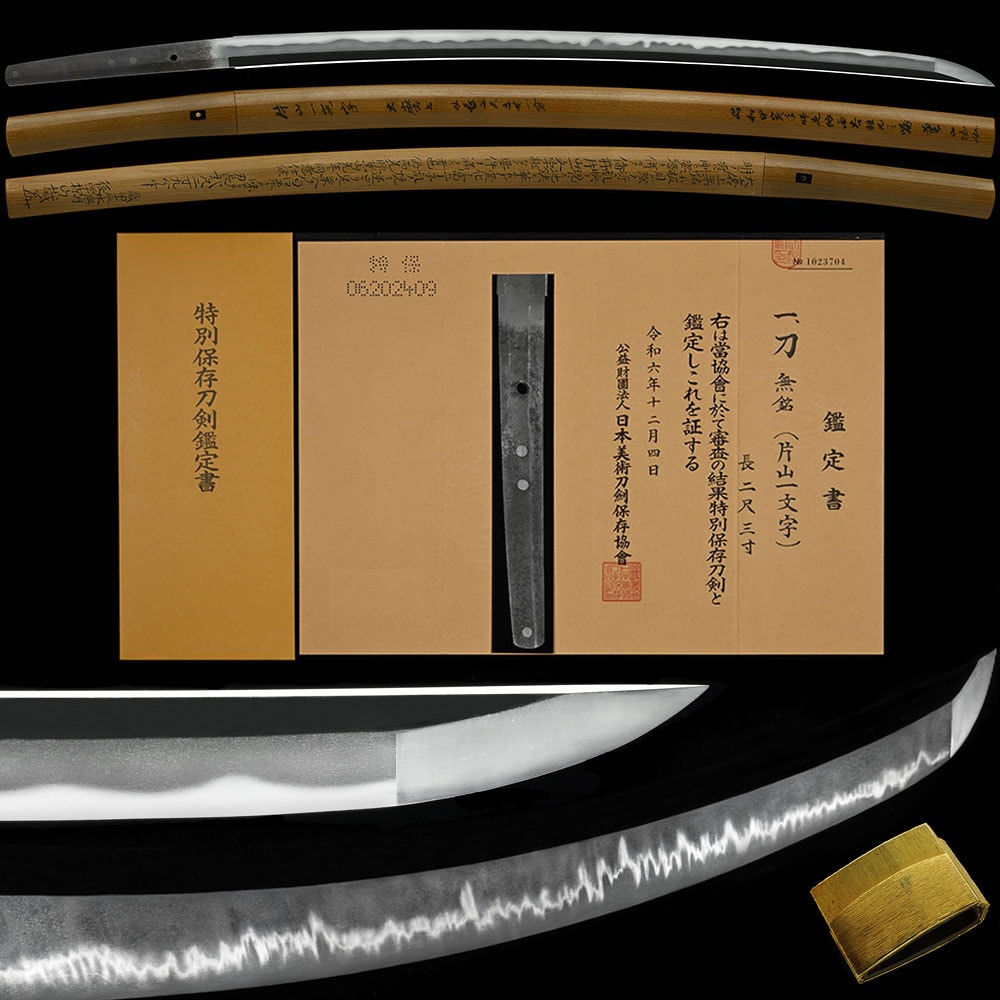
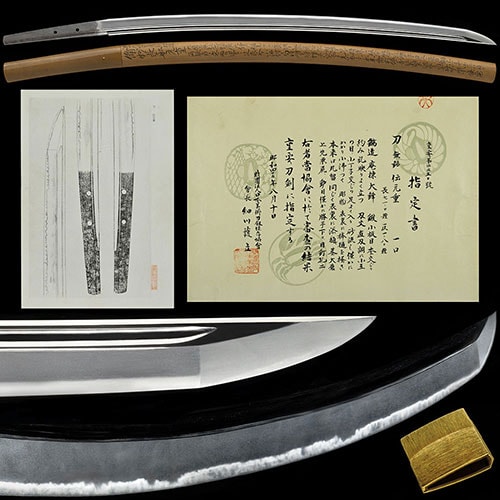
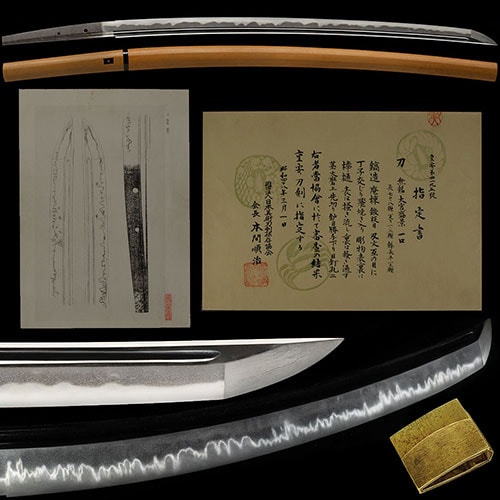
Narimune (成宗) is transmitted as a son — or, by some accounts, a younger brother — of Norimune, the founder of the Fukuoka Ichimonji school of Bizen Province. His period of activity falls within the early Kamakura, and extant signed tachi by this smith are exceedingly limited in number. The relationship to Norimune places Narimune at the very headwaters of the Ichimonji tradition, and his works carry a distinctly archaic flavor that the NBTHK characterizes as possessing a kocho quality.
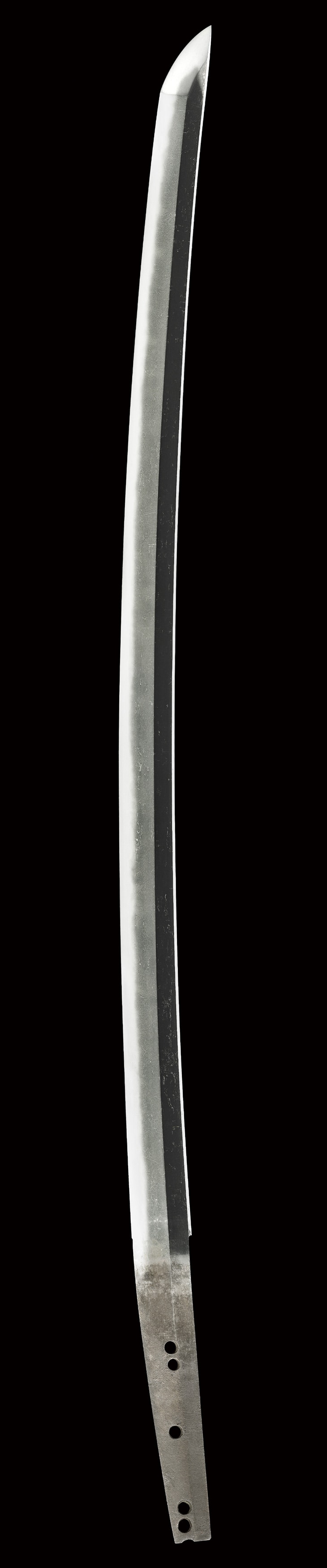
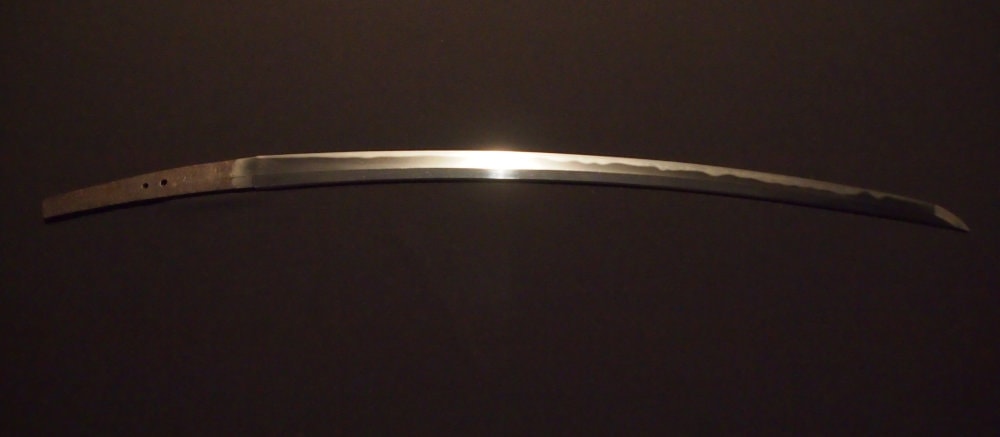
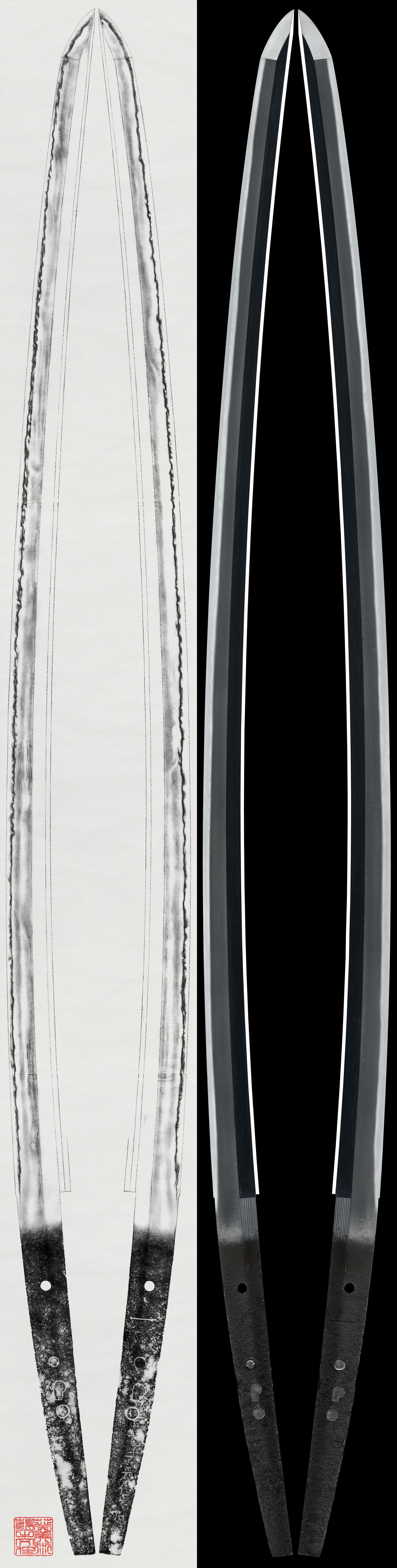
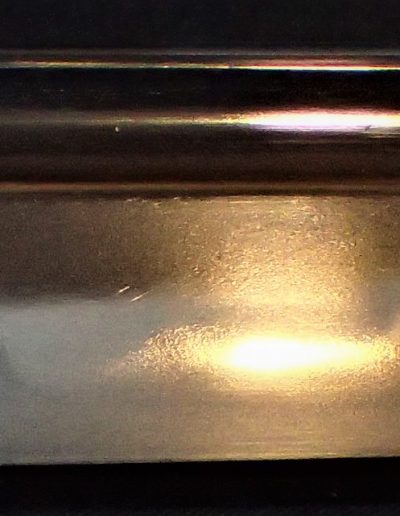
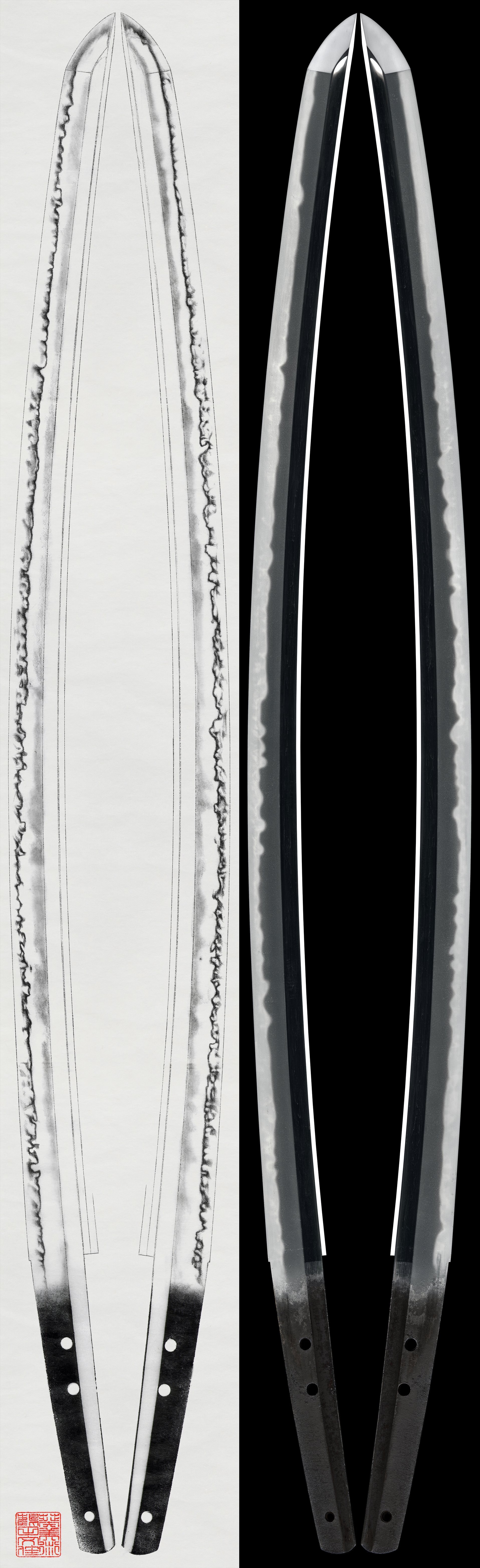
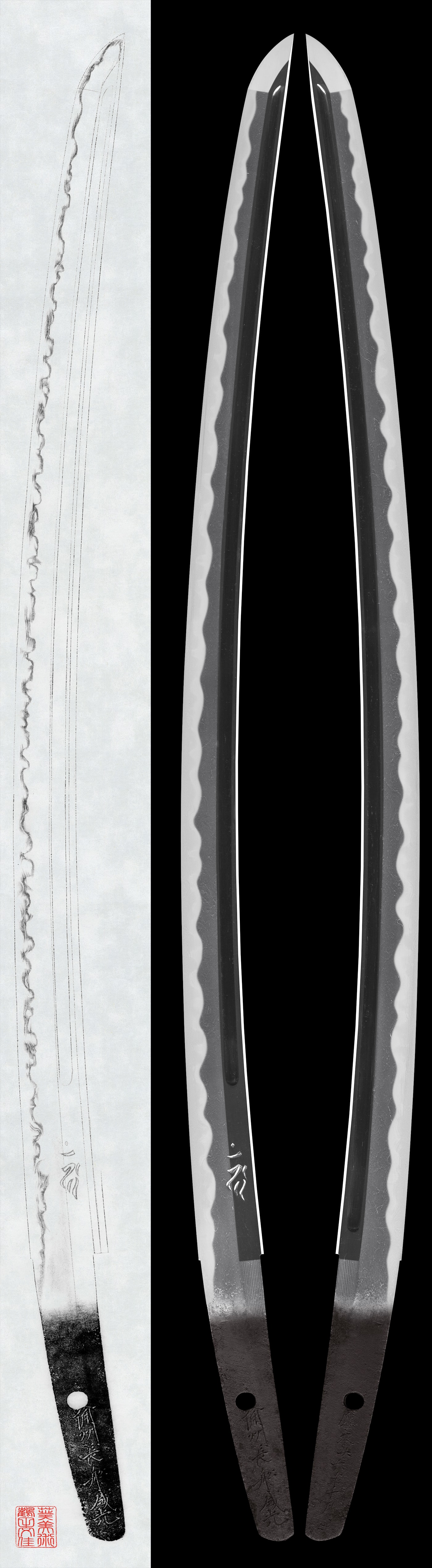
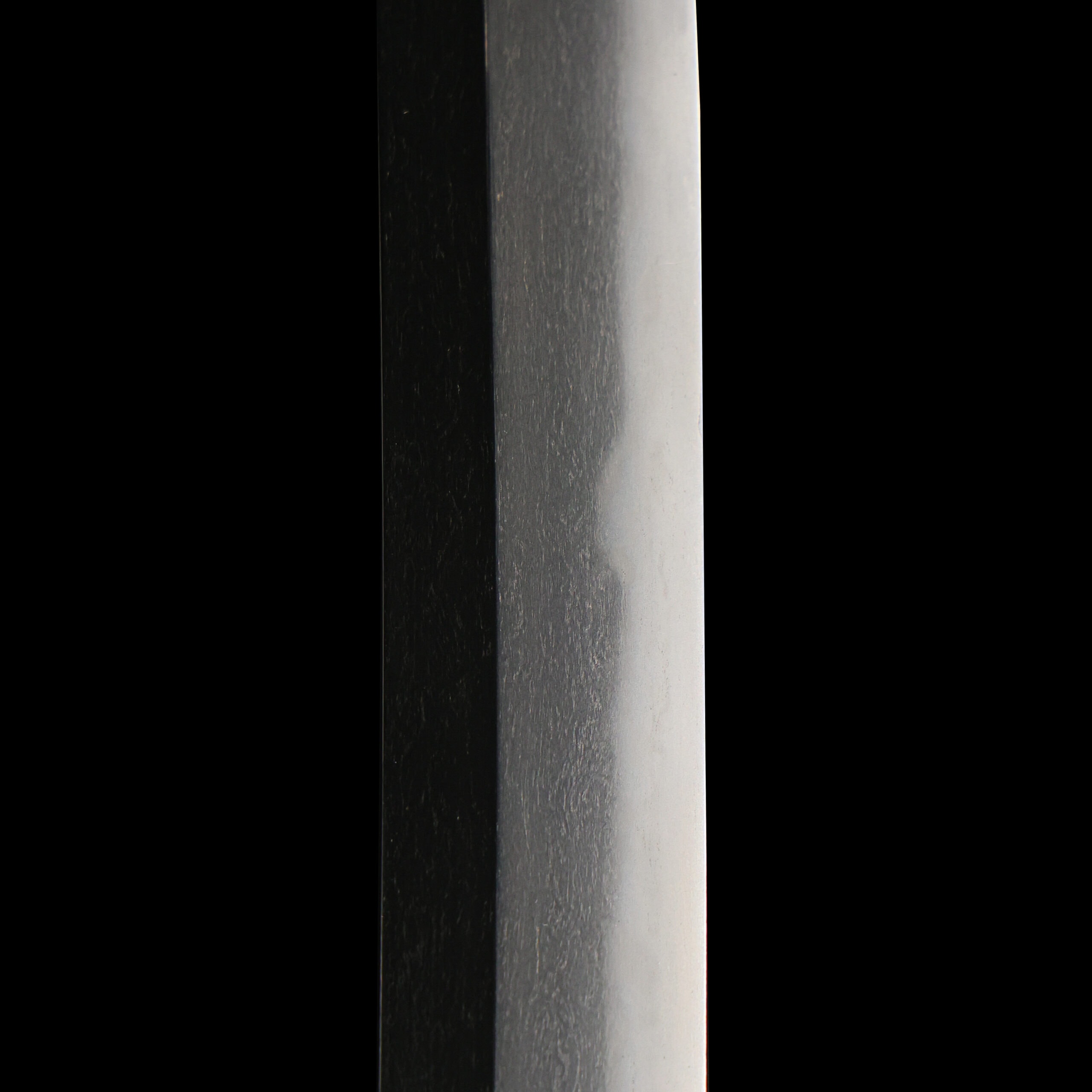
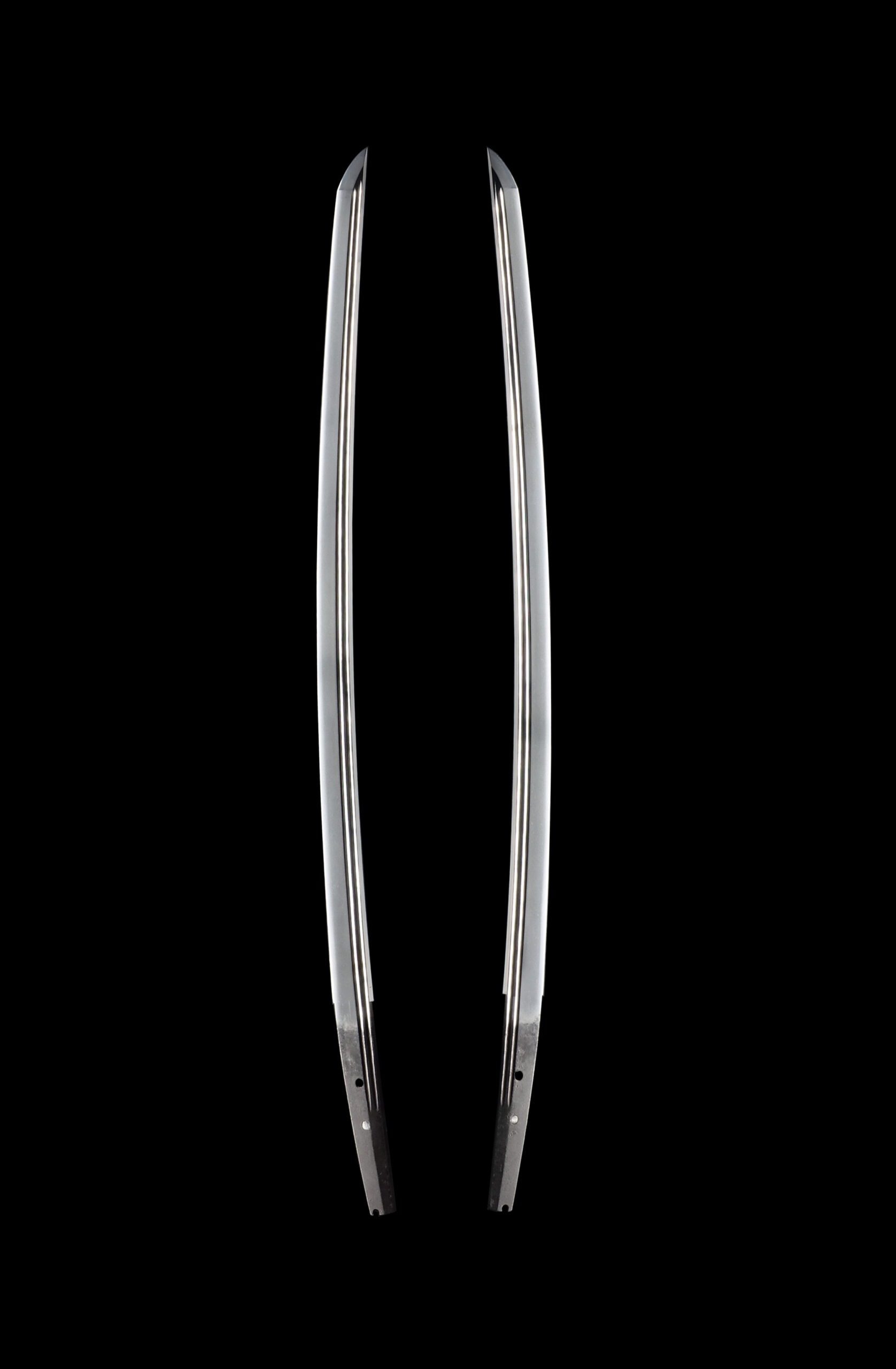
The forging in Narimune's tachi is a tightly worked ko-itame-hada with fine ji-nie adhering, upon which midare-utsuri appears distinctly — a hallmark of high-level Bizen Ichimonji workmanship. The hamon is characteristically a ko-midare intermingled with ko-choji and ko-gunome, rendered in ko-nie-deki, with ashi and yo entering well and sunagashi and kinsuji appearing here and there. The boshi tends toward sugu, turning back in ko-maru. The temper is typically narrow in width, and the overall effect is one of restrained, classical elegance consistent with the early Kamakura Fukuoka Ichimonji idiom. In sugata, his tachi present a slender build with high koshizori, pronounced funbari, and ko-kissaki — the archetypal early Kamakura tachi form.
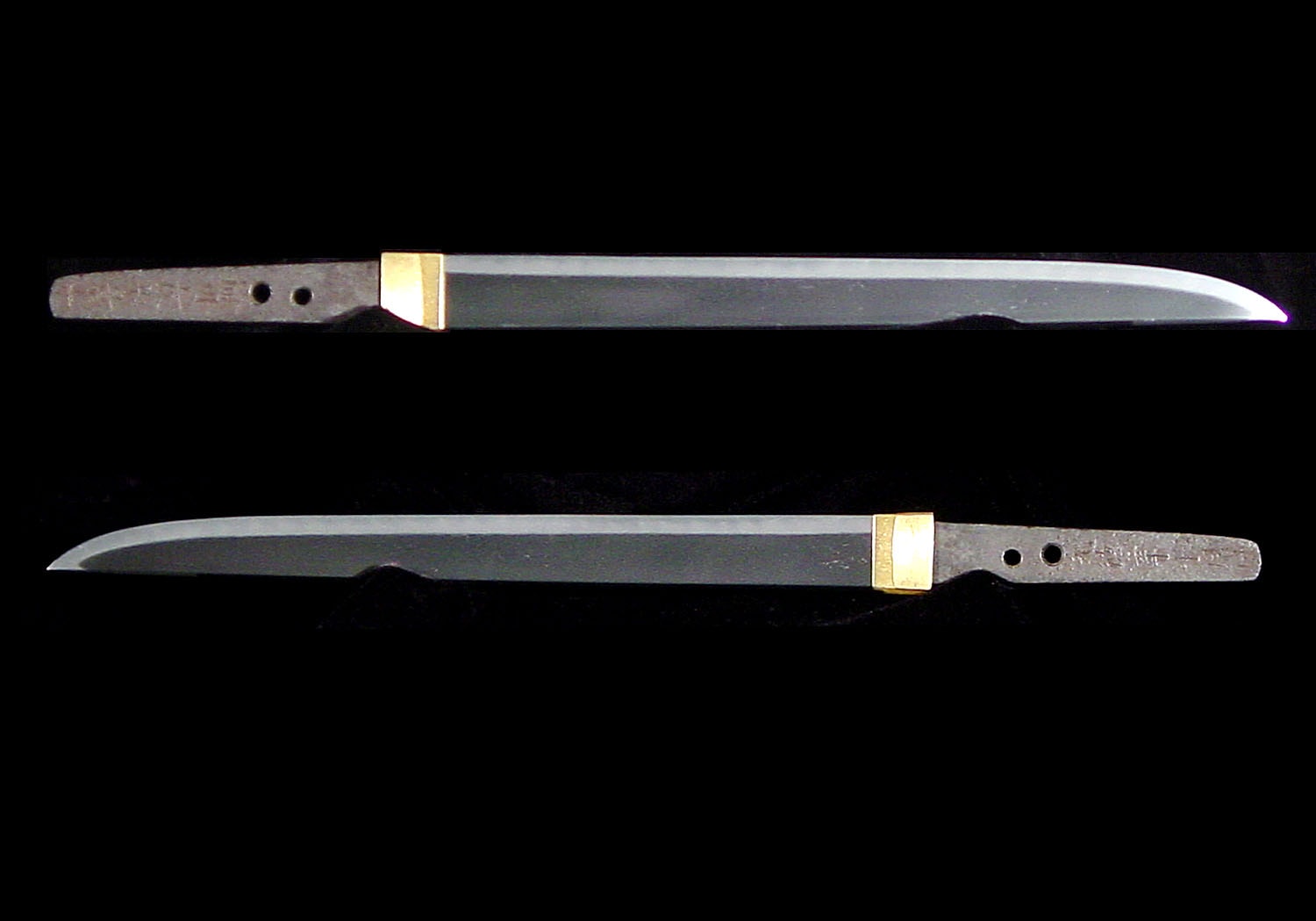
Narimune's surviving works, though few, are prized for their combination of authentic early Ichimonji craftsmanship and the rarity of preserved signatures. The NBTHK observes that signed tachi by this smith are "limited to only a few examples," lending each extant blade particular documentary significance. While some pieces show a tendency toward tsukare, they have "not yet lost their aesthetic appeal," and the jigane — with its conspicuous midare-utsuri and fine ji-nie — confirms workmanship consistent with the highest standards of the early Fukuoka Ichimonji school.