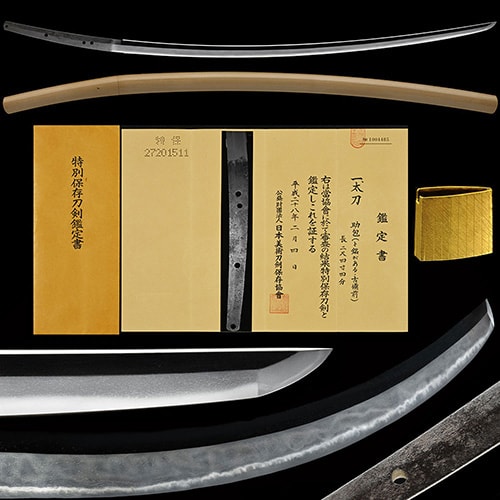
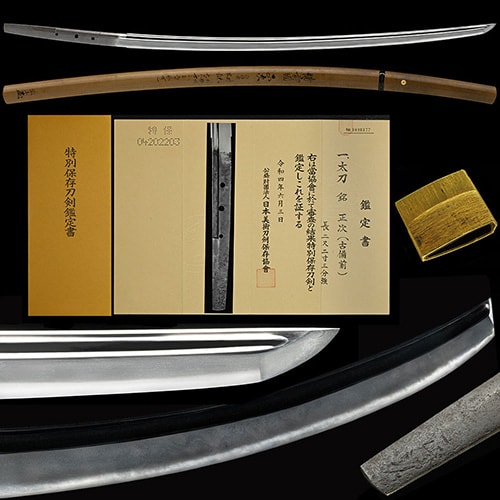
The name Masazane is borne by smiths of markedly different lineages and eras. The earliest is Ko-Bizen Masazane, whose period of activity is traditionally placed around the Joo era (1222-1224) of the early Kamakura period; extant signed works are exceedingly rare. A later Masazane appears in the Yamato Monju lineage, a group that established its forges at Tawara in Mikawa Province around the Bunki and Eisho eras of the early sixteenth century, producing blades in a suguha style without structural faults that came to be known as "Mikawa Monju." Yet another Masazane, signing Fujiwara Masazane, was a student of the first-generation Muramasa, working alongside Masashige in a related but subtly distinguishable manner.
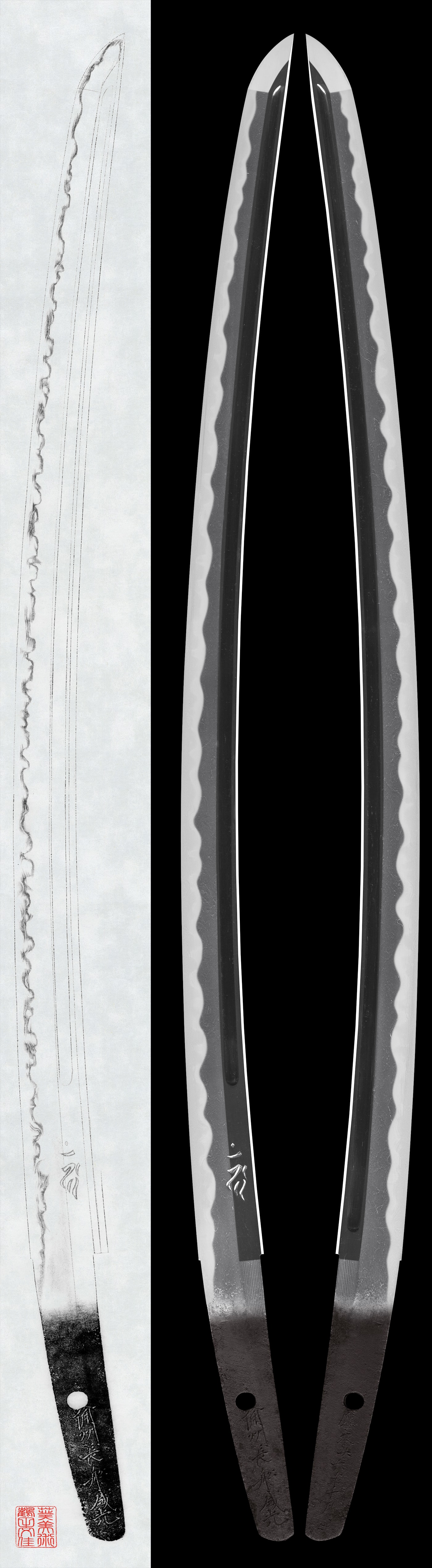
The Ko-Bizen work presents the hallmarks of its school: a slender tachi with high koshizori and small kissaki, its itame-hada mixed with mokume bearing ji-nie and abundant kinsuji. The hamon is a ko-midare mixed with ko-choji and ko-gunome, thickly covered with nie, yielding an antique elegance. The Muramasa-school Masazane favors a distinctive hako-gakatta tempering pattern with the hamon aligned on omote and ura, clearly reflecting the characteristic traits of that group, while tending toward a somewhat tighter jihada than his fellow student Masashige. The Mikawa Monju Masazane produces a suguha-cho with ko-ashi and well-adhering ko-nie, distinguished from the Sengo Masazane by taka-no-ha yasurime that indicate Yamato rather than Ise origin.
Each Masazane lineage contributes documentary value precisely because signed examples remain scarce. The Ko-Bizen tachi in its ubu state preserves a refined sugata and brilliant nie of great antiquarian significance, while the Muramasa-school and Monju works illuminate the distinctive regional idioms of their respective traditions.