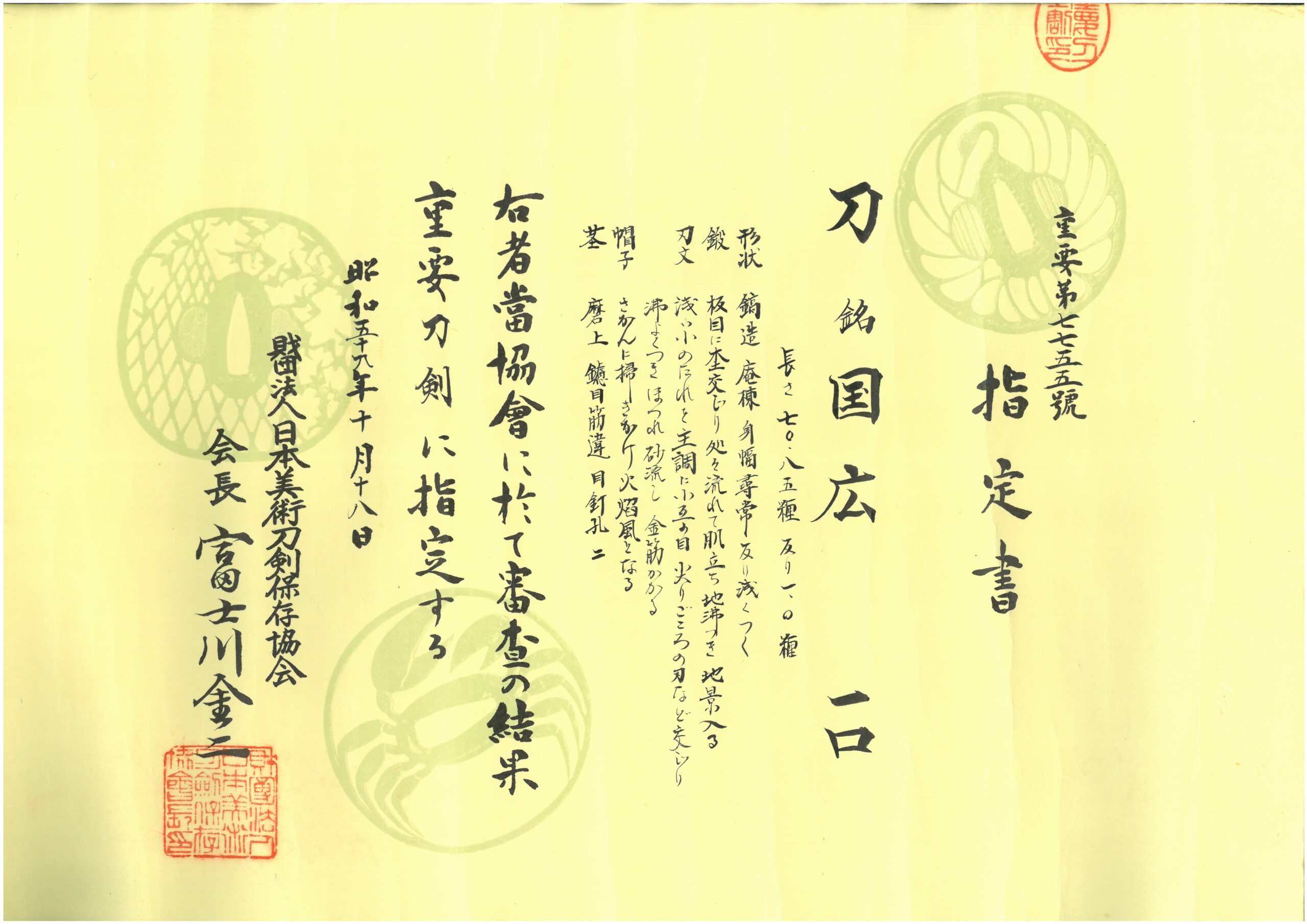
Izumi no Kami Fujiwara Kunitora is traditionally said to have been a descendant of Horikawa Kuniyasu, who served the Torii family, lords of Iwaki Castle. He later went to Osaka and studied under Inoue Shinkai, after which he returned to his home province of Iwaki, entering the service of the Naito family. His family name was Nemoto, and he held the honorary title Izumi no Kami, though it is unclear when he received it. Among dated examples, inscriptions from the Jokyo and Hoei eras are found, with the earliest known work bearing the date Jokyo 1 (1684). He is said to have died in Kyoho 3 (1718) at the age of sixty-one. A second generation is recorded as active around the Kan'en period, though his works are also rare.
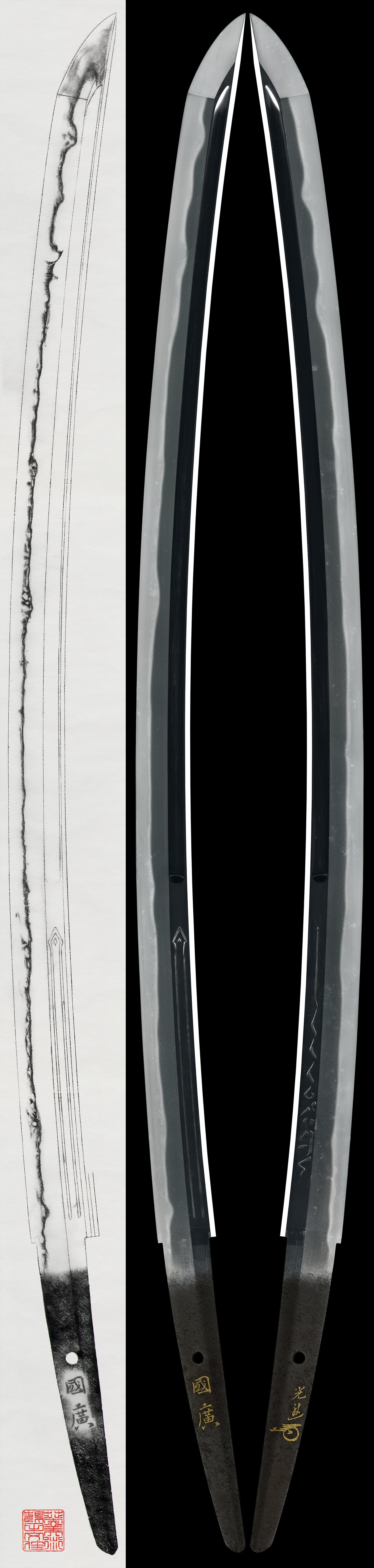
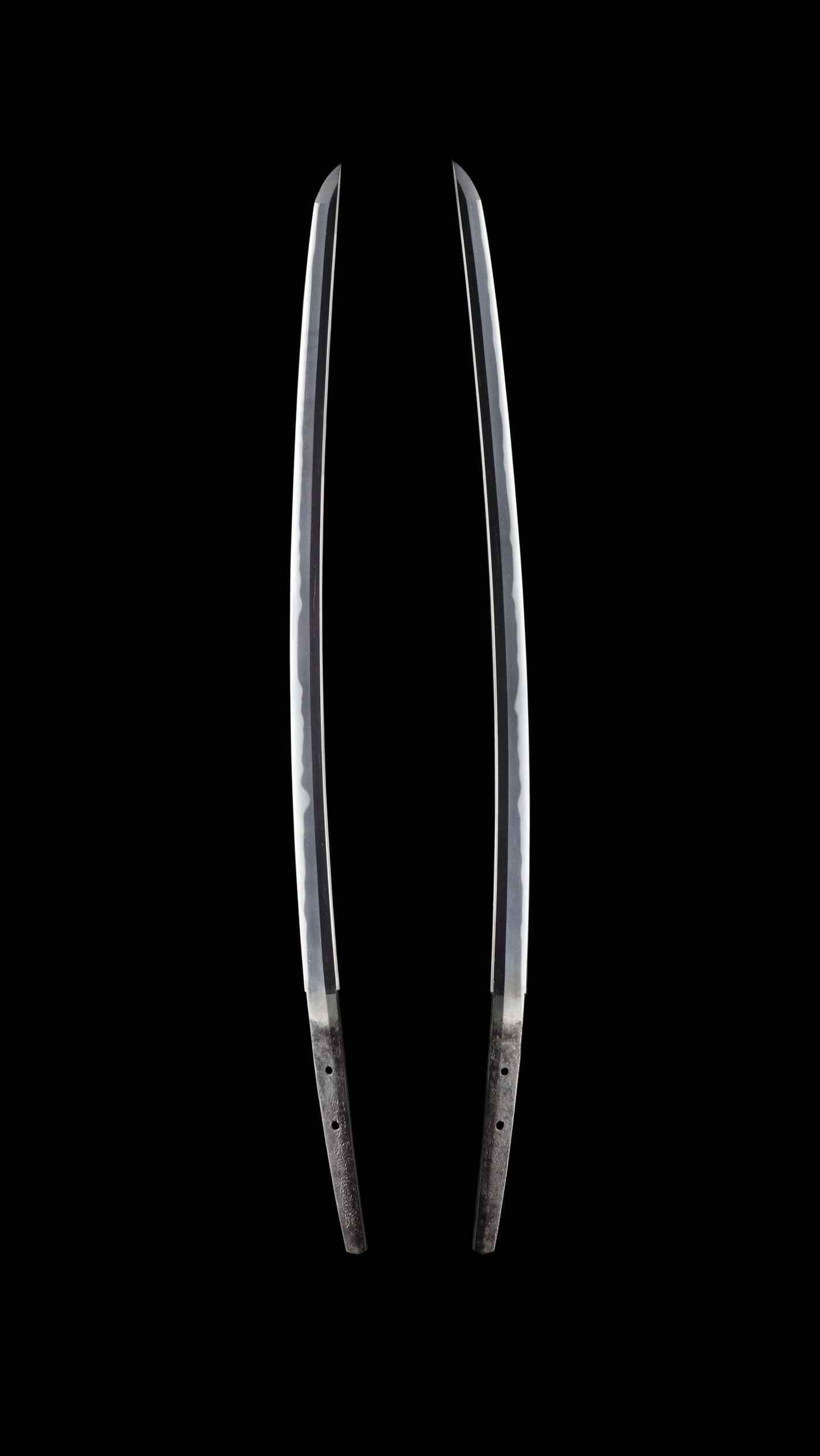
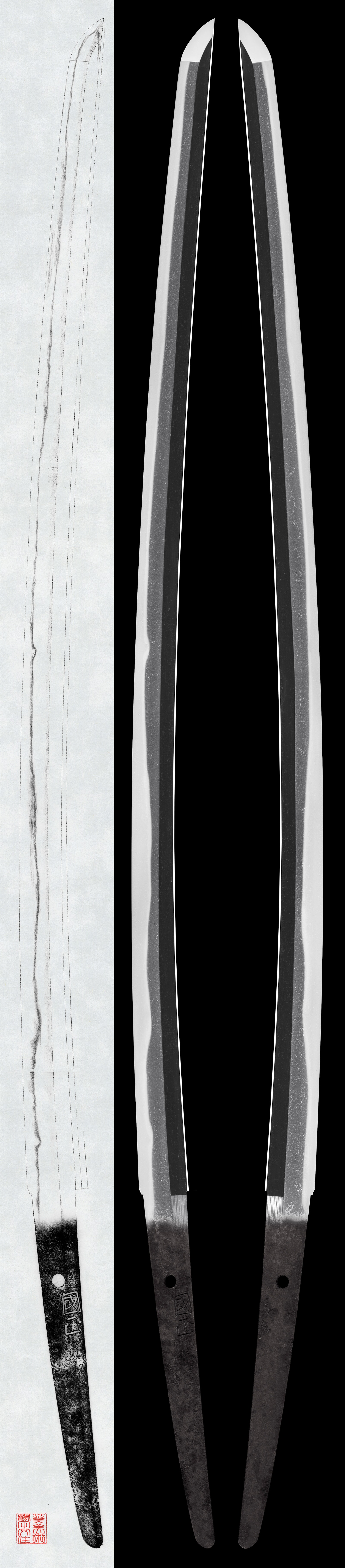
Relatively few of Kunitora's works are extant; those that survive are chiefly katana. His style is described as "skillful and resembling Shinkai's work," yet he produced almost no suguha; instead, he was particularly adept at ko-notare combined with gunome-midare. The kitae is characteristically dense ko-itame-hada with well-adhering ji-nie, and on certain examples itame mixed with mokume showing a flowing tendency. The hamon typically features a notare-based pattern mixed with large gunome, with thick ashi, deep nioi, and well-adhering ko-nie, finished with sunagashi and a base yakidashi. The boshi is consistently straight with ko-maru. An inscription found on several works reads "以颪湯鉄作之" -- "made this using oroshi-yutetsu" -- where yutetsu refers to pig iron processed into steel for forging.
The NBTHK characterizes Kunitora as a smith of "considerable skill" based on surviving examples, and his best katana are called "representative works among his production." Despite the rarity of signed examples, the quality of extant pieces -- praised for their skillful Shinkai-derived technique adapted to the forging traditions of Iwaki Province -- establishes Kunitora as a noteworthy figure among the regional shinto smiths of the late seventeenth century.