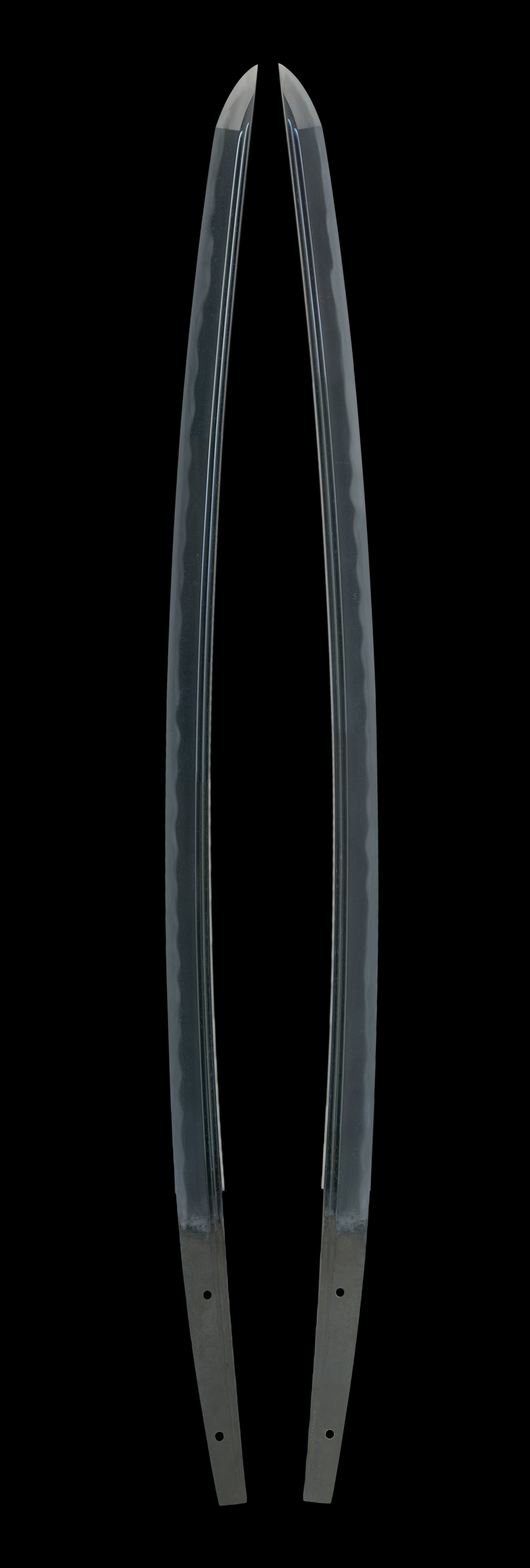
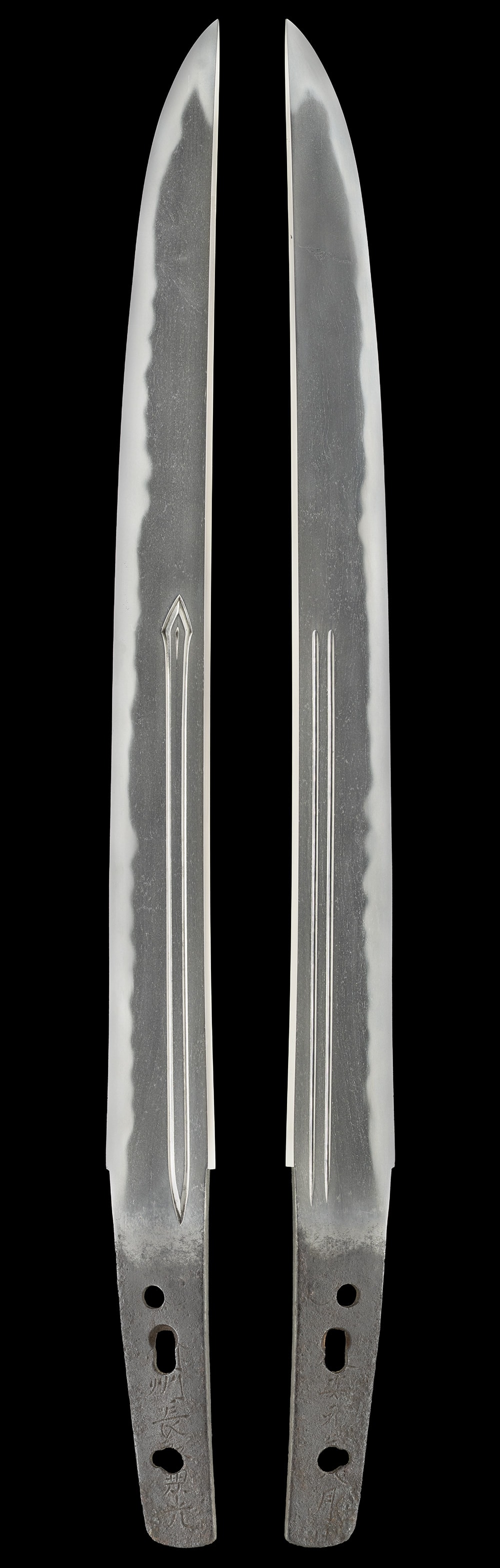
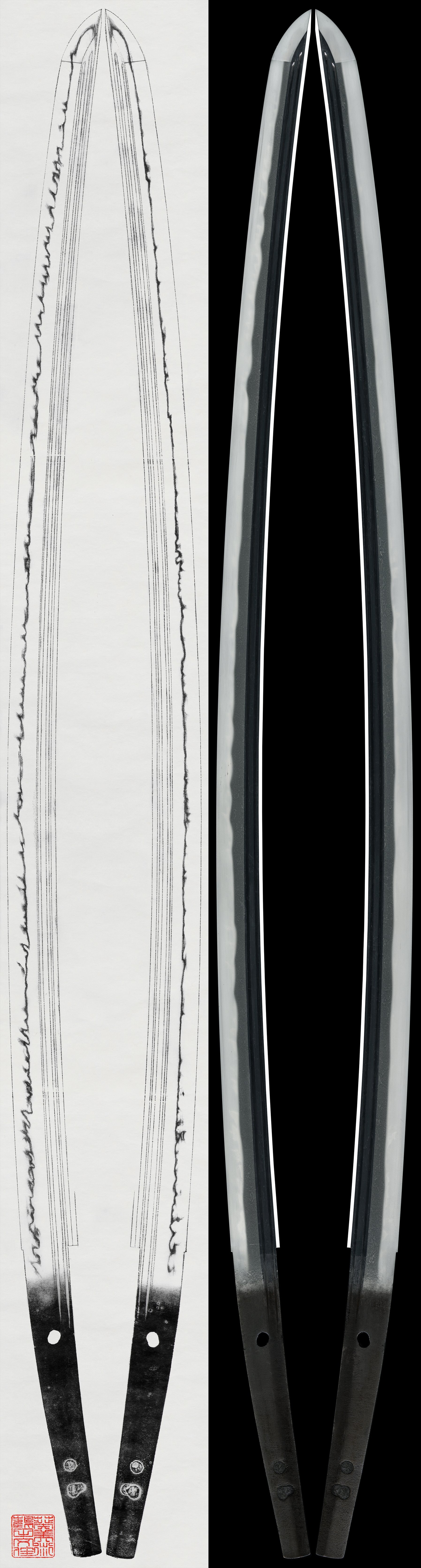
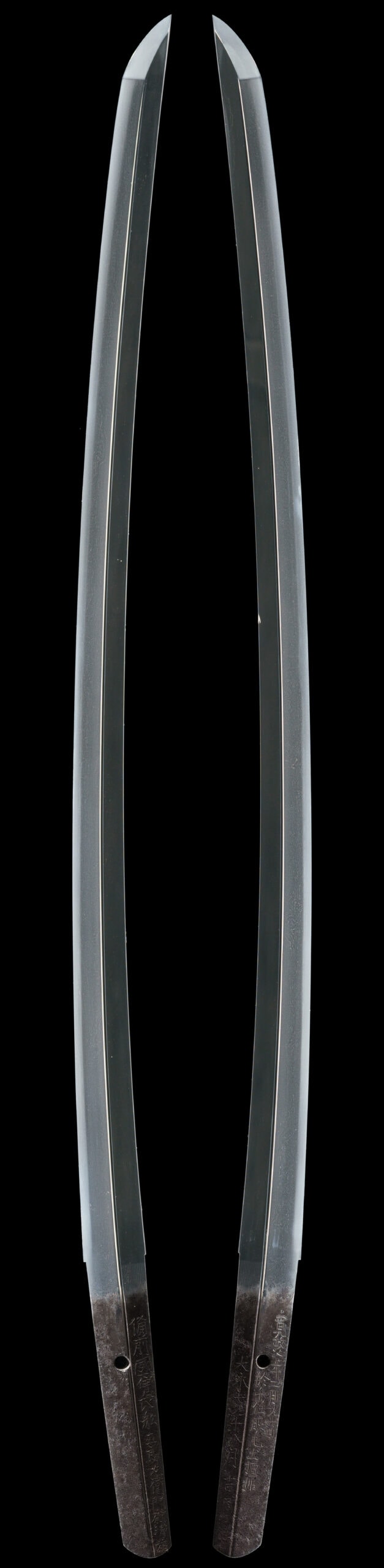
Yukizane (行真) was a swordsmith of the Seno group in Province, active during the period. The smiths are broadly divided into two lineages: the smiths — Moritsugu, Tametsugu, Sadatsugu, and others — who commonly employ the character "tsugu" in their names and forged along the basin of the Takahashi River, and the Seno smiths, situated to the east toward , who rarely incorporate that character. Seno is known as a place developed by Seno Taro Kaneyasu, a retainer of the Taira. The Kokon Meizukushi records Yukizane as a son of Suemasa within the Seno lineage, and sword- manuals list several smiths of this name from the period through around the Oei era. Extant works by Yukizane are few, making each surviving example of considerable documentary importance.
Yukizane's present an old-fashioned, imposing form with wide , a pronounced taper to the tip, lofty , and a . The forging shows mixed with , with a slightly standing grain and areas of -like texture toward the edge — a recognized hallmark of Seno workmanship. Fine forms densely, appears, and -like mottling gives the ground a distinctive jiban-toned character. The is based on , mixed with , , and a -like feeling; and enter well, forms throughout the temper, and fine and slight appear. The is vigorously , becoming a flame-like -style appearance — a particularly striking feature. The typically displays or file marks with a finely chiseled two-character signature on the , clearly expressing distinctive features of Seno workmanship.
The has described Yukizane's best works as possessing a dignified, imposing presence and a subdued, deeply flavorful character, with both and in — sound and well-preserved — condition. As the Genki Mekikisho observes, Seno blades convey a temperament "resembling work," and Yukizane's indeed carries something of a flavor even as the and file-mark conventions identify the hand unmistakably as Seno. It is especially desirable that his surviving retain with original signatures, providing irreplaceable source material for the study of this maker.