NihontoWatch MonNihontoWatch
MarketAuctionsEncyclopedia
NihontoWatch Mon

NihontoWatch

MarketAuctions
Encyclopedia
Overview·Historical importance·Designations·Lineage·School
OverviewHistorical importanceDesignationsLineageSchool
  1. Schools
  2. Awataguchi
  3. Kunimitsu

Awataguchi Kunimitsu

國光

Jūyō
Vol. 65, No. 2 · Katana

Awataguchi Kunimitsu

國光

4 ranked works

Notable smith
ProvinceYamashiroEraKencho (1249–1256)PeriodKamakuraSchoolAwataguchiTraditionYamashiro-denGeneration1stFujishiroJo-jo sakuToko Taikan2,500(top 1%)TypeSwordsmithCodeKUN538
1Jūyō Bunkazai
3Jūyō Tōken

Overview

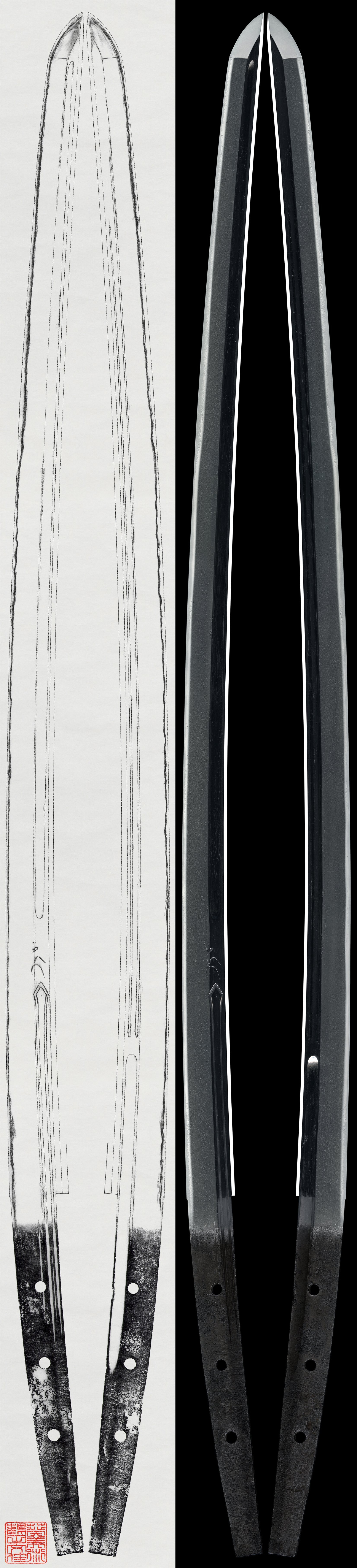
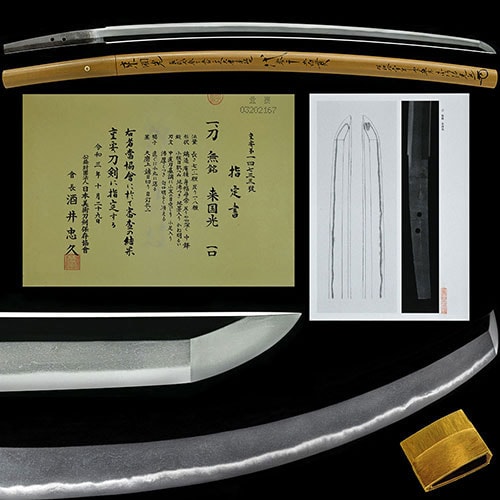
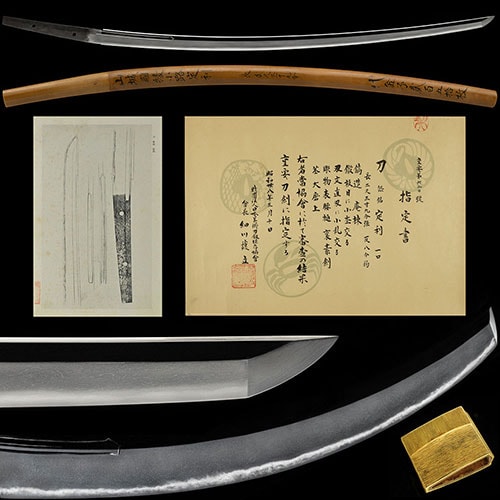
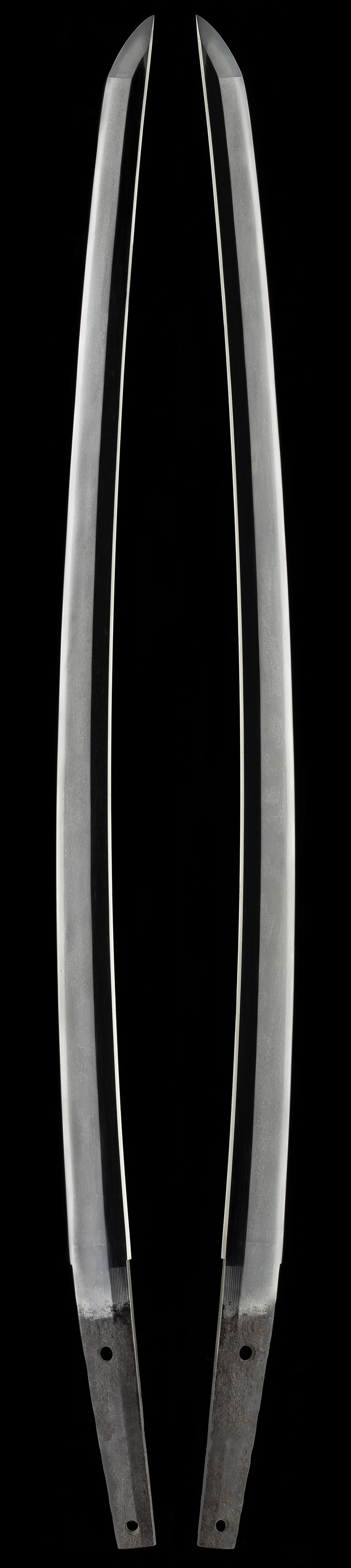
Kunimitsu, who styled himself Saemon no Jo, is traditionally held to have been the younger brother of Kuniyoshi, working within the illustrious school of Yamashiro Province during the late period. Another tradition identifies him as a son of Norikuni. Extant signed works are exceedingly rare; among the few known signed examples, the of Yoroji in Gifu Prefecture and the of the Kurokawa Institute of Ancient Cultures, both designated Important Cultural Properties, stand as representative pieces. He typically inscribed a two-character signature reading simply "Kunimitsu."

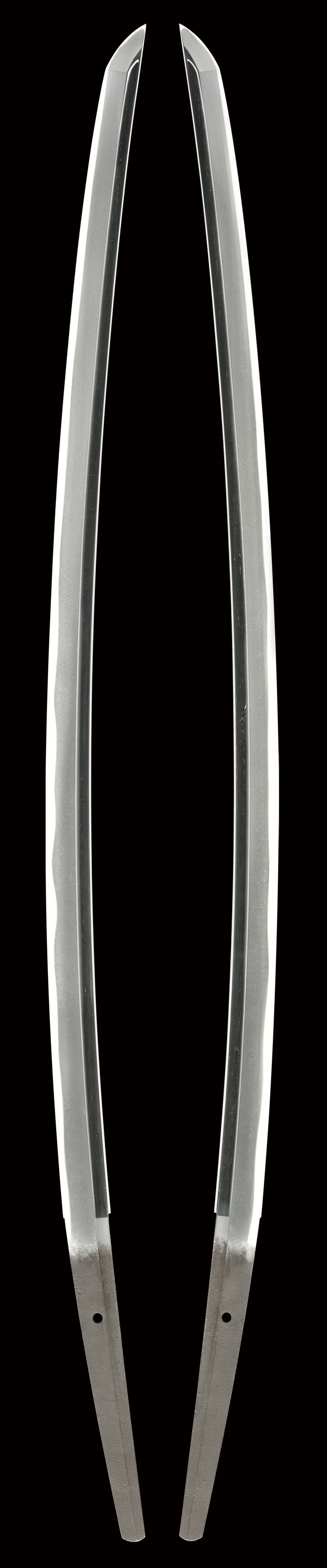
Kunimitsu's workmanship is defined by a mastery of refined steel and restrained tempering. His is characteristically a tightly forged in which ultra-fine adheres like minute particles, producing a steel surface of exceptional clarity. Abundant thread through the ground, and faint frequently appears. The is a calm or into which enter; adheres well along the temper line, with and running through and a that is consistently bright and clear. The turns in , typically straight, sometimes exhibiting . Several designated works preserve carved kaki-nagashi or , and one example retains an -style and near the base, a feature observed among other members of the group.

Kunimitsu's work embodies the highest virtues of the school: a well-refined of excellent quality united with a bright and orderly to produce blades of dignified tone and restrained elegance. Though most surviving examples are and unsigned, the consistency of his forging and tempering characteristics allows confident attribution. His blades convey a somewhat slender, gentle overall impression that, combined with the luminous , yields works of quiet authority representative of the finest Yamashiro tradition in the late period.

Historical importance

Where Kunimitsu stands among comparable artisans: across all of nihontō, and within tradition, era, and period. The tiers (Foremost · Leading · Major · Notable) weigh official designations from the NBTHK and Japan's Agency for Cultural Affairs, together with historical honors of lasting repute such as the Sansaku and Meibutsu-chō.

随一
Foremost
屈指
Leading
有数
Major
著名
Notable

Select a lens to see how it's measured.

Designations

Kokuhō—
Jūyō Bunkazai1
Jūyō Bijutsuhin—
Gyobutsu—
Tokubetsu Jūyō—
Jūyō Tōken3

Elite Standing

Currently Available

Lineage

Kunimitsu
Student
  1. 1.Kunimitsu國光1designated

Awataguchi School

Other artisans of the Awataguchi school

  1. 1.Yoshimitsu吉光44designated
  2. 2.Kuniyoshi國吉1 for sale51designated
  3. 3.Kunitsuna國綱18designated
  4. 4.Hisakuni久國21designated
  5. 5.Norikuni則國15designated
  6. 6.Kuniyasu國安22designated
  7. 7.Kunitomo國友4designated
  8. 8.Kunikiyo國清4designated
  9. 9.Arikuni有國2designated
  10. 10.Kagehisa景久1designated
  11. 11.Kunitsuna國綱1designated
  12. 12.Kunimitsu國光1designated

Kunimitsu

Kunimitsu(國光) was a Japanese swordsmith of the Awataguchi school in Yamashiro province, active during the Kencho (1249-1256) period.

The work follows the Yamashiro-den tradition.

Designated works by Kunimitsu include 1 Jūyō Bunkazai (Important Cultural Property), 3 Jūyō.