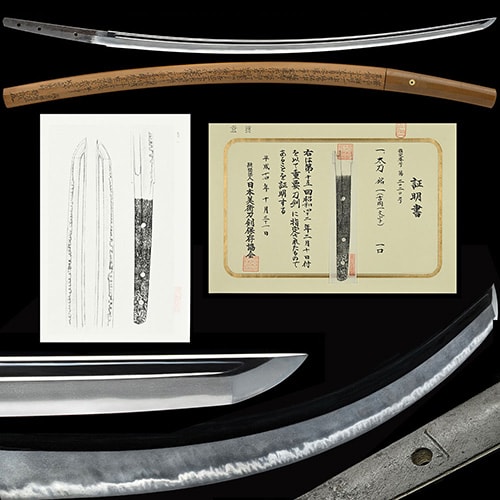
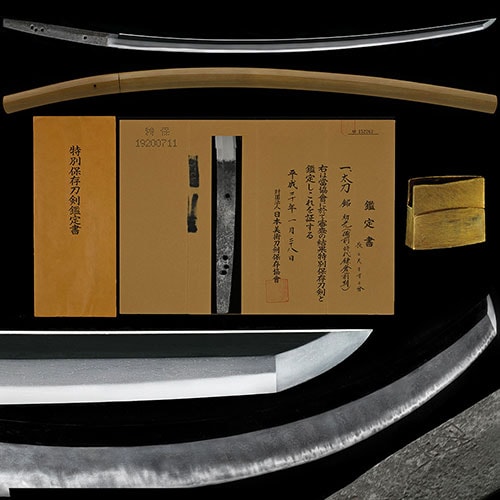
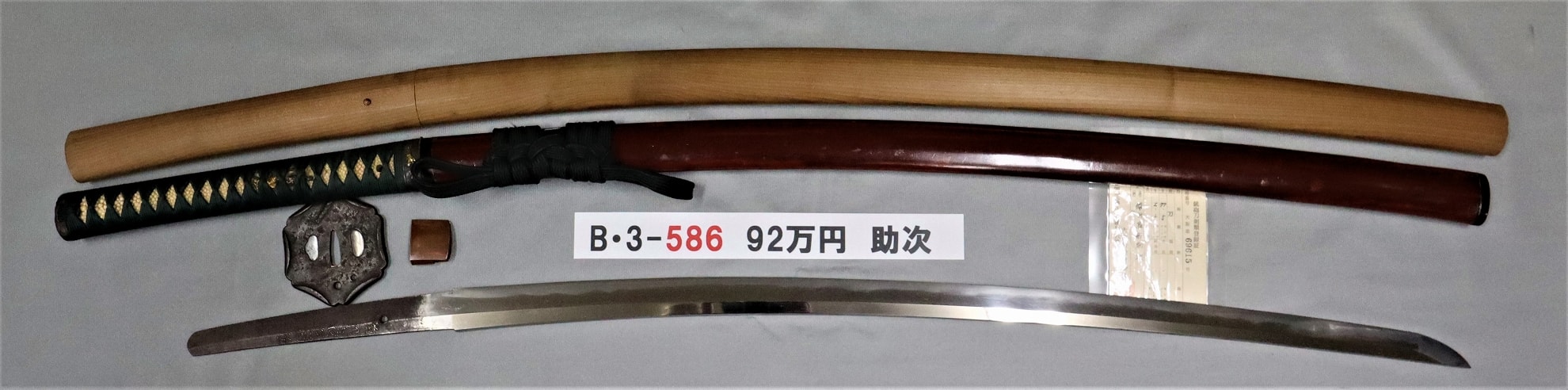
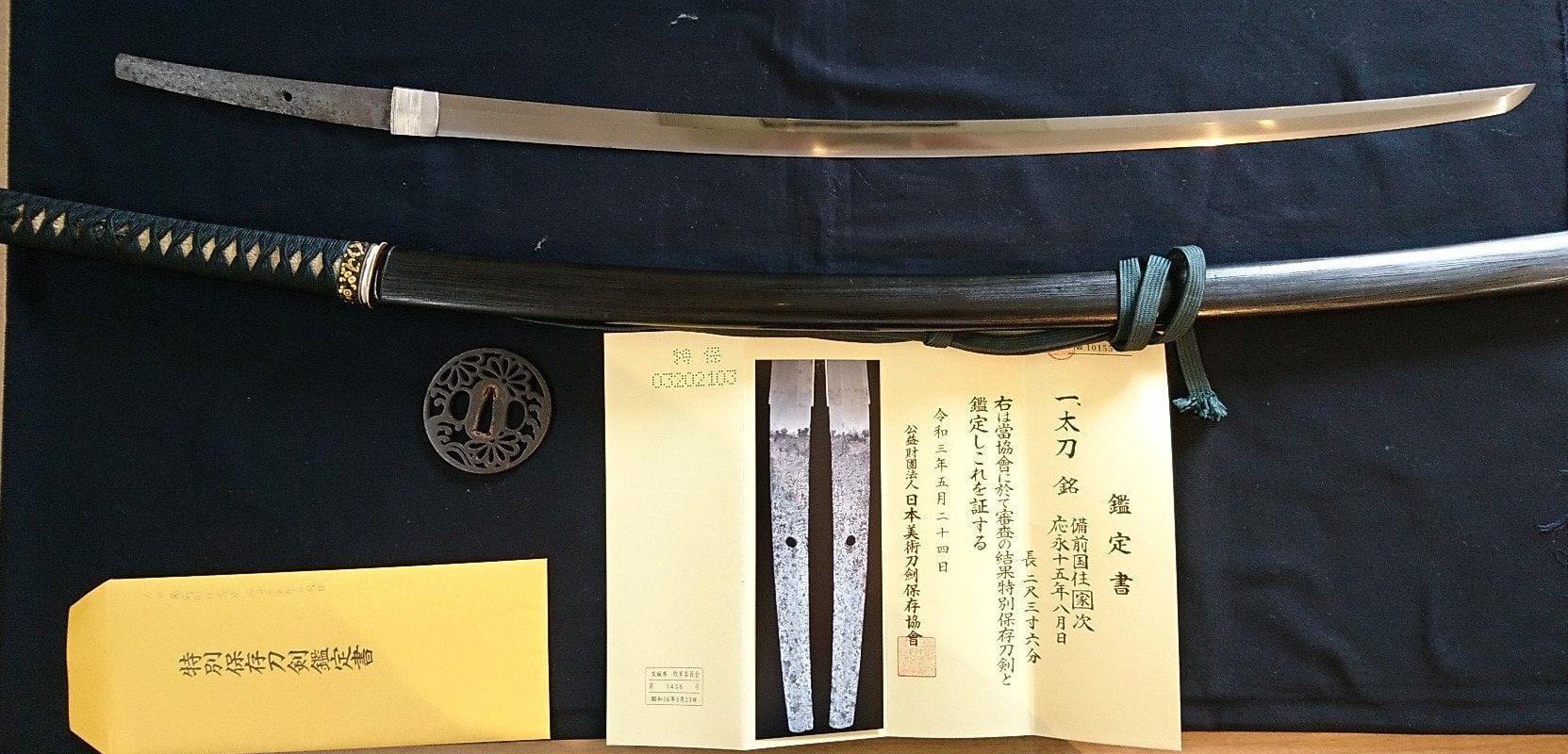
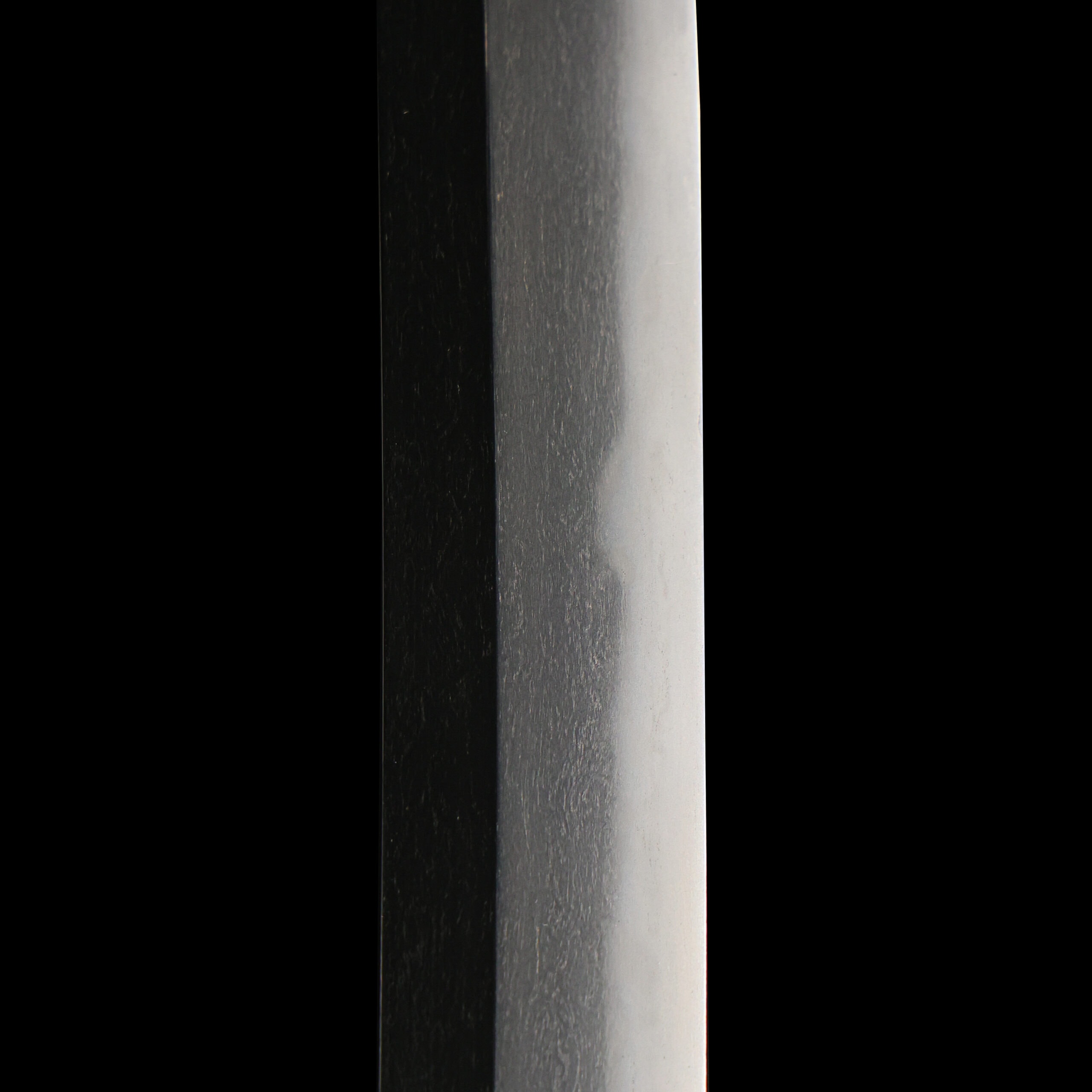
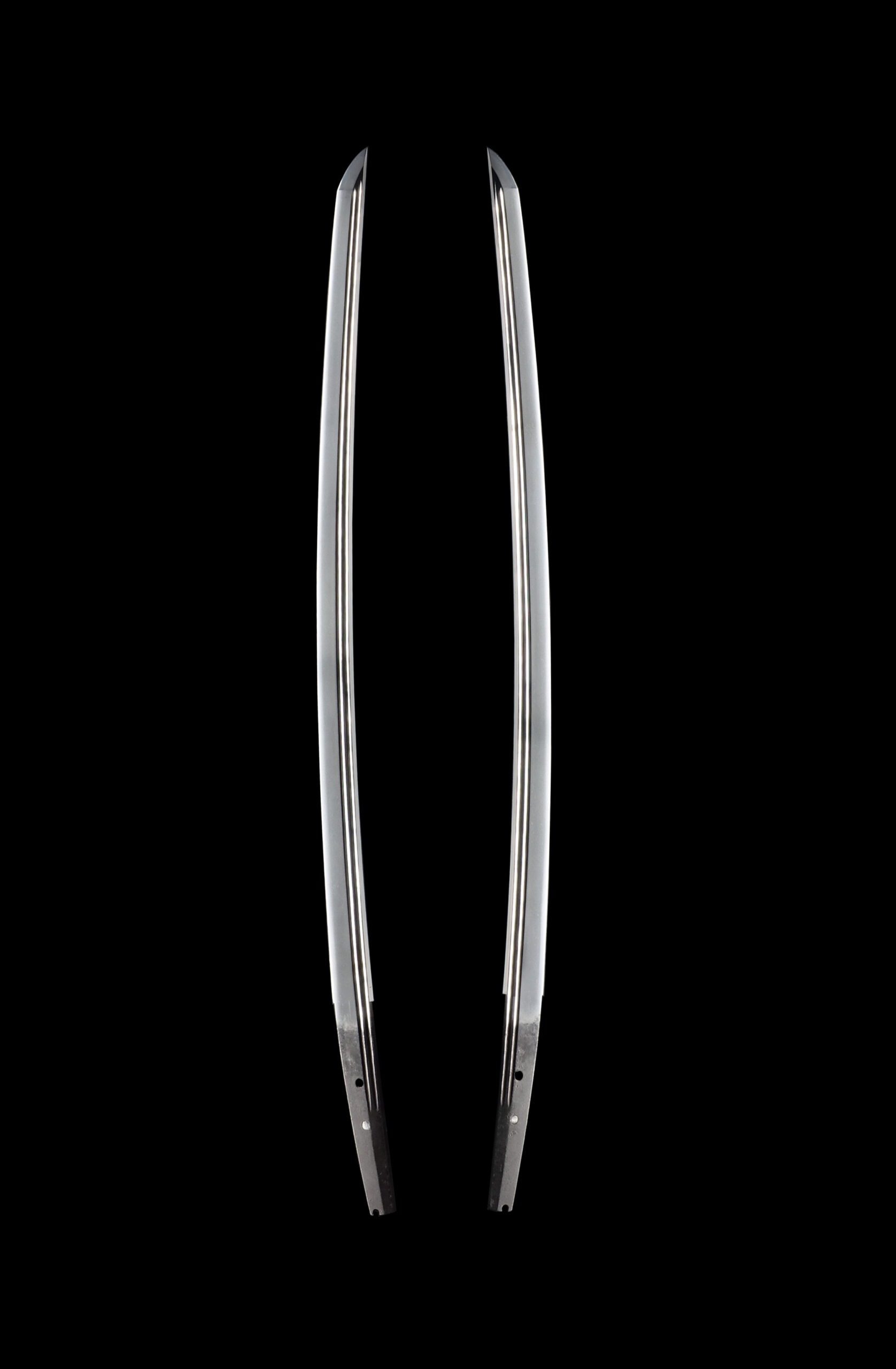
Yoshioka Sukeyoshi was a swordsmith of the Yoshioka group, active from the late period into the period. According to the sword reference books, Sukeyoshi is described as a son of Sukekichi, and is also recorded with the longer signature "Bishu Yoshioka-ju Saemon-no-jo Sukeyoshi," with his period of activity given as around the Gentoku and Jowa eras. The Yoshioka branch prospered following the decline of the Fukuoka , and its representative smiths — Sukemitsu, Sukeyoshi, Sukeshige, and Suketsugu — all share the character "" as a common element in their names. Within the broader lineage, the Yoshioka group occupies a transitional position, carrying the tradition forward from the period's greatest mainstream into the era.
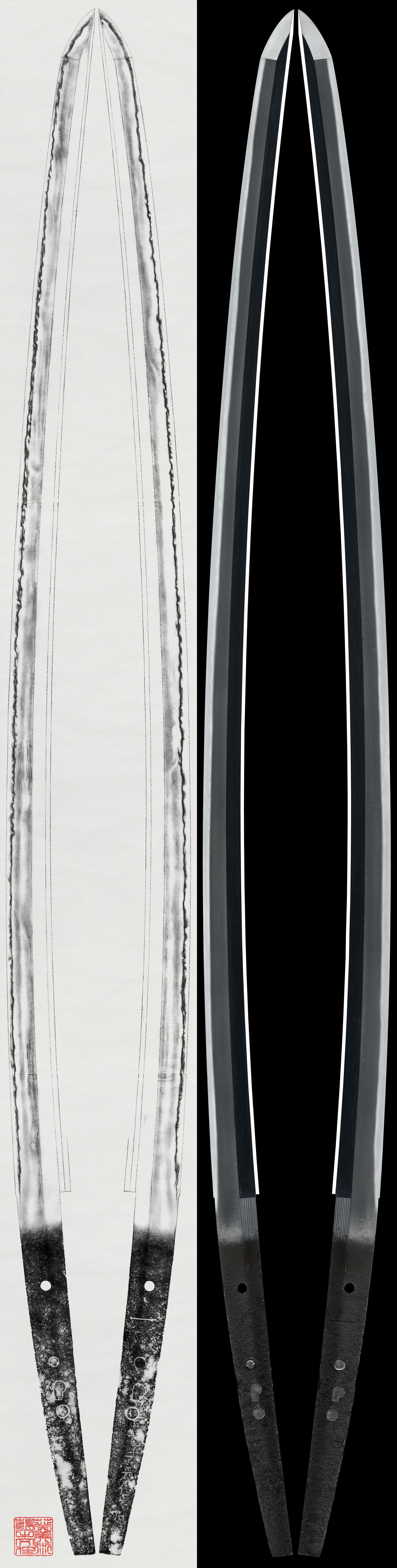
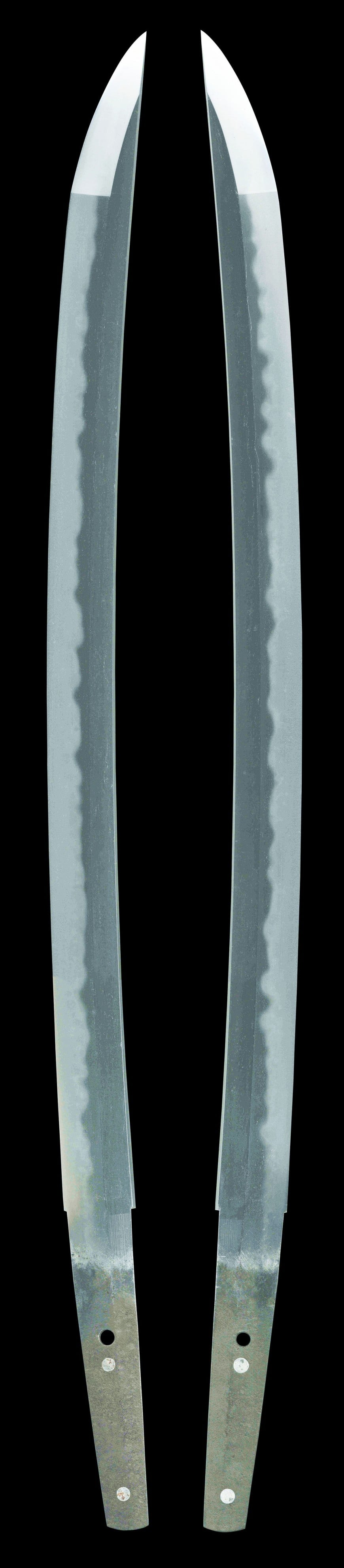
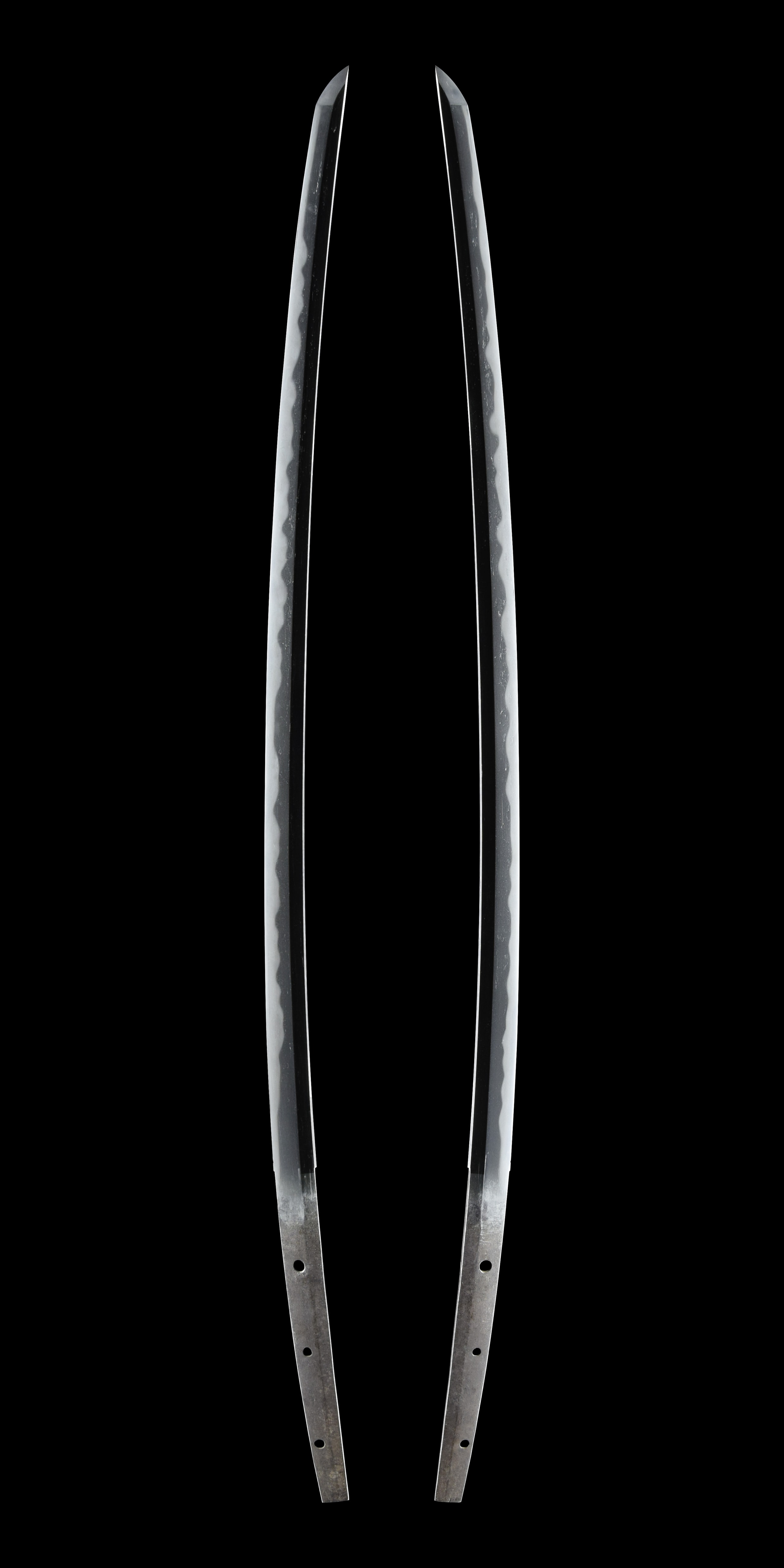
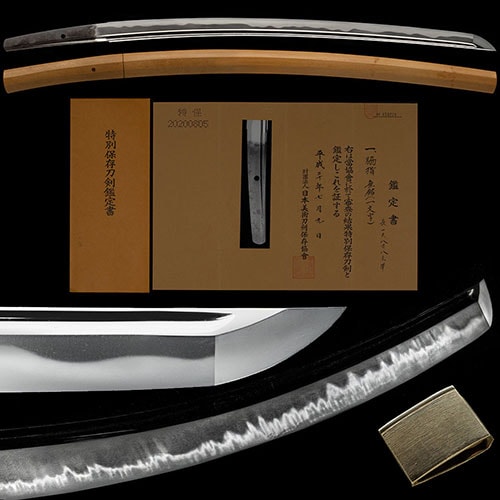
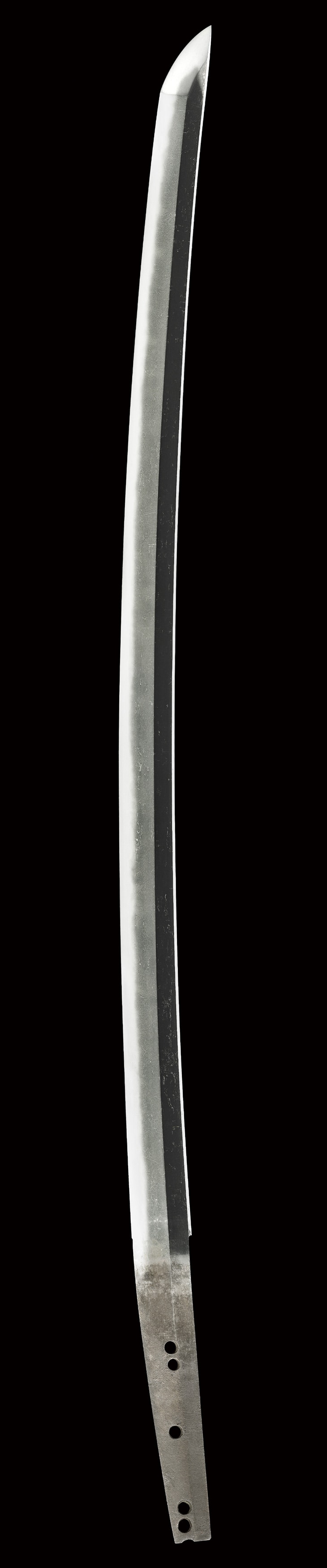
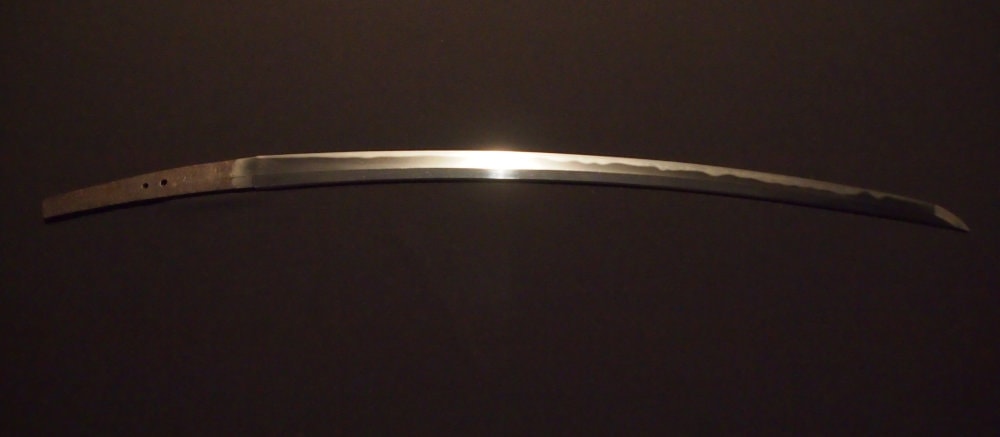
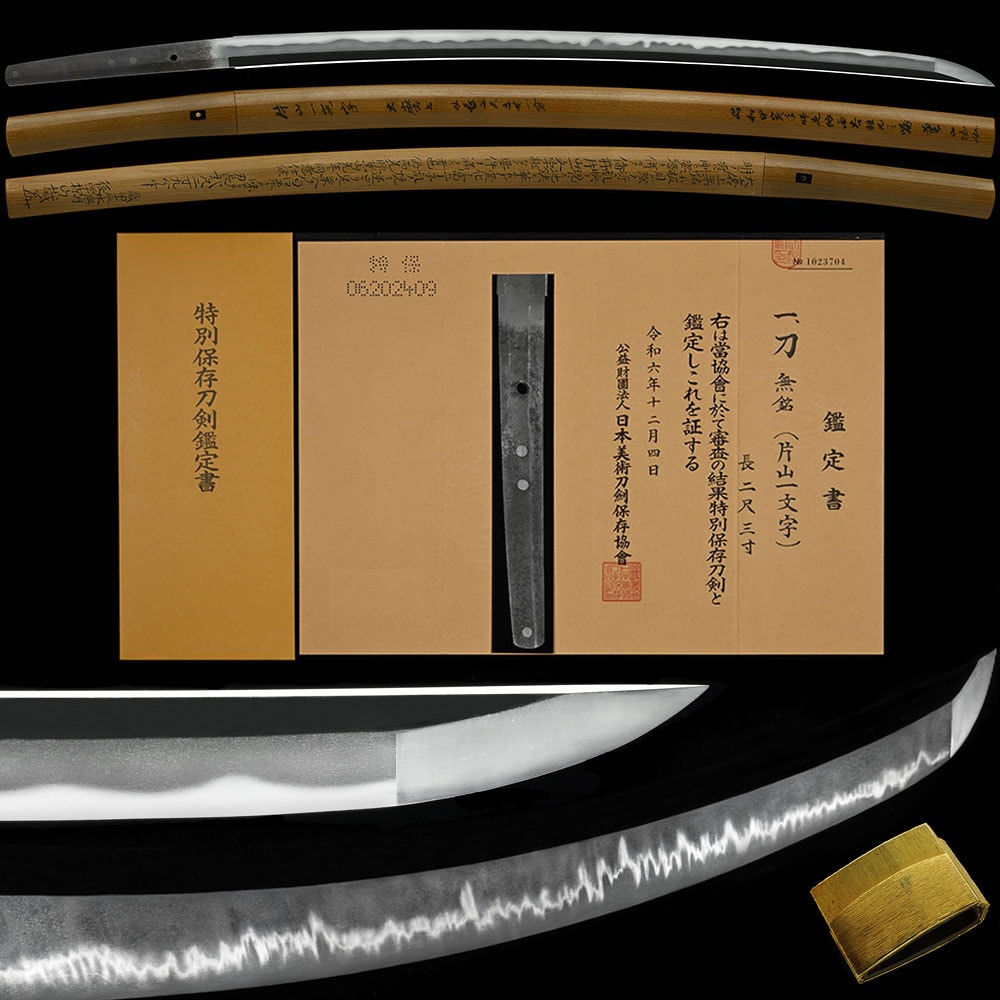
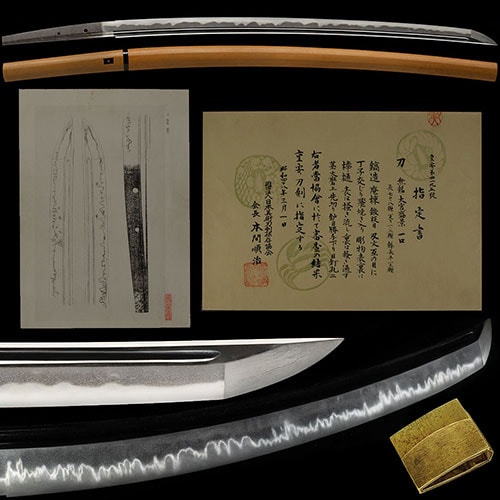
Sukeyoshi's characteristic manner, as identified by the , departs from the bold, large-patterned of the earlier Fukuoka in favor of a somewhat smaller-scaled workmanship in which stands out more than . The shows mixed with or , bearing fine with delicate , while a prominent stands out in the ground. The is chiefly mixed with , with abundant and ; it is -dominant with accompanying , and slight and are seen. The is described as bright and clear. Features to be appreciated include areas where the temper shows a reverse-slanting tendency, or where a compacted appearance is mixed into the edge. In addition to in the characteristic compact style, Sukeyoshi also produced works in , and the rare dated Gentoku 3 (1331) attests to a breadth of form unusual for smiths of his era.
The consistently affirms that Sukeyoshi's works clearly display the distinctive features of the Yoshioka school, with the bright and clear singled out as evidence of notably fine workmanship. Extant signed works with reliable inscriptions are described as few and precious, and those bearing dated inscriptions — such as the Ryakuo 2 (1339) and Sadawa 5 (1349) — are accorded high value as reference material. In that the is comparatively prominent and the overall pattern is somewhat small in scale, one can perceive the distinctive features of the Yoshioka school. Sukeyoshi's oeuvre, spanning signed , gold-inlaid attributions by Choshiki, and documentary dated examples, confirms his standing as a principal representative of this important lineage.