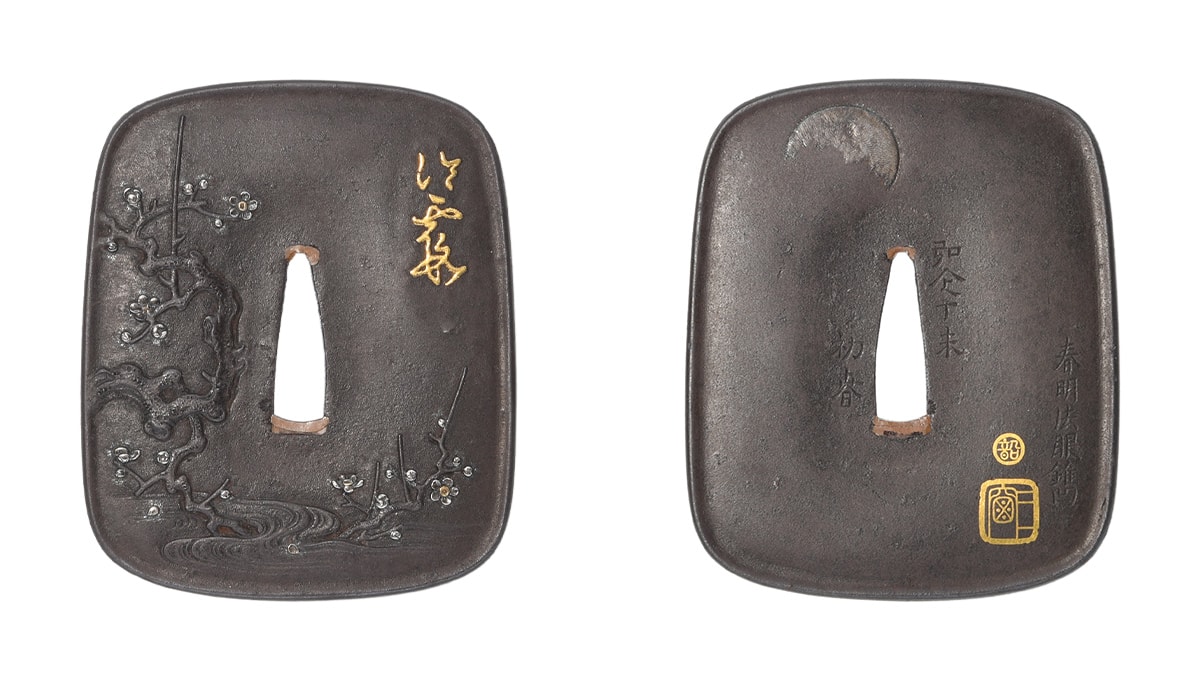
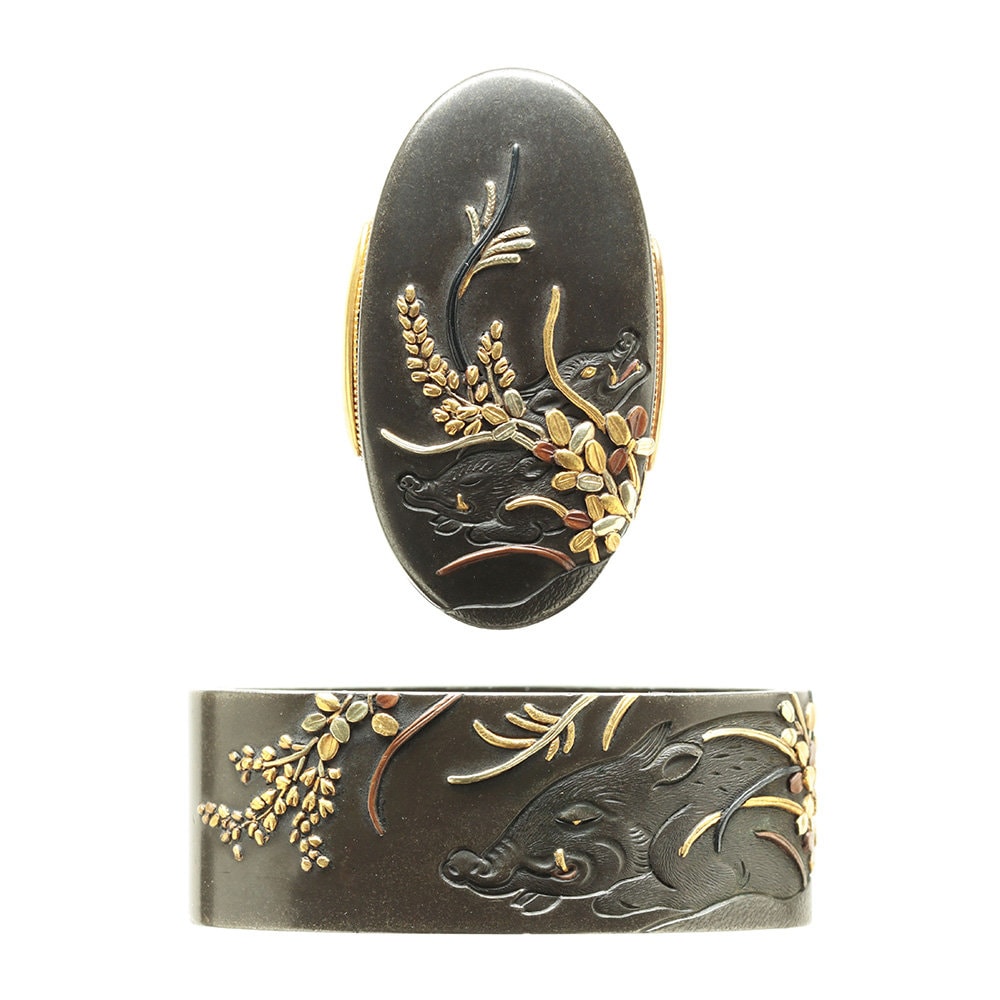
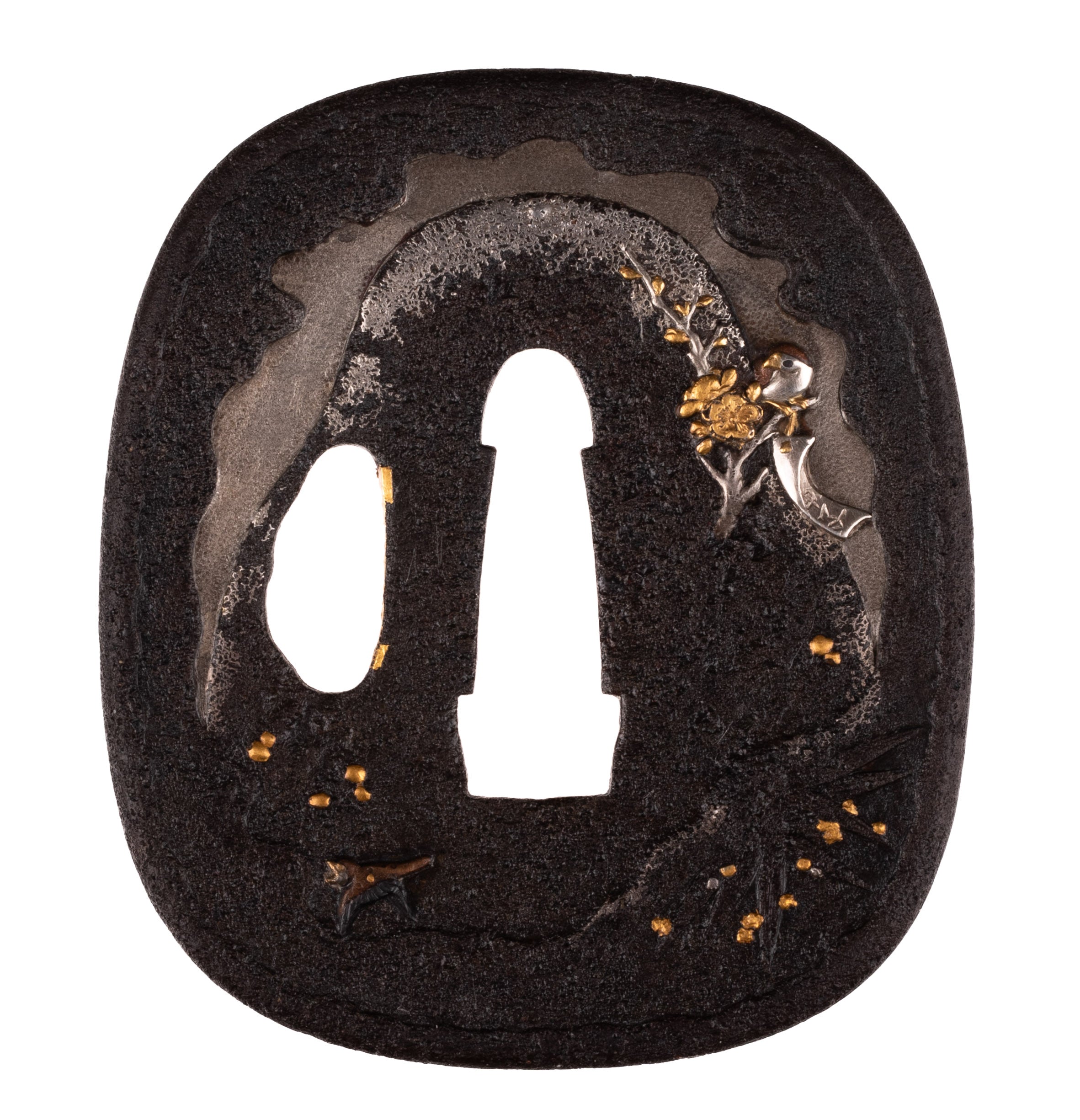
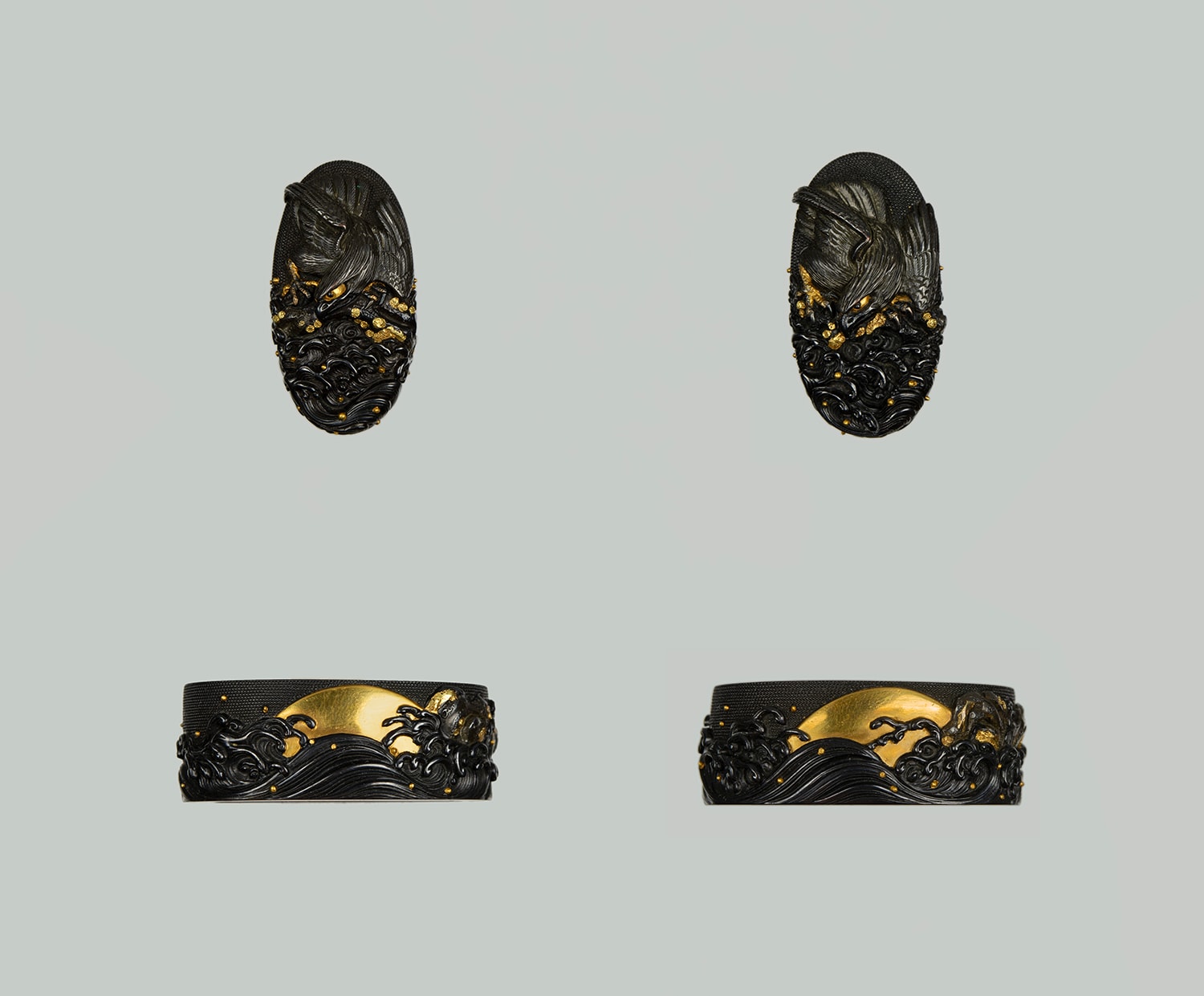
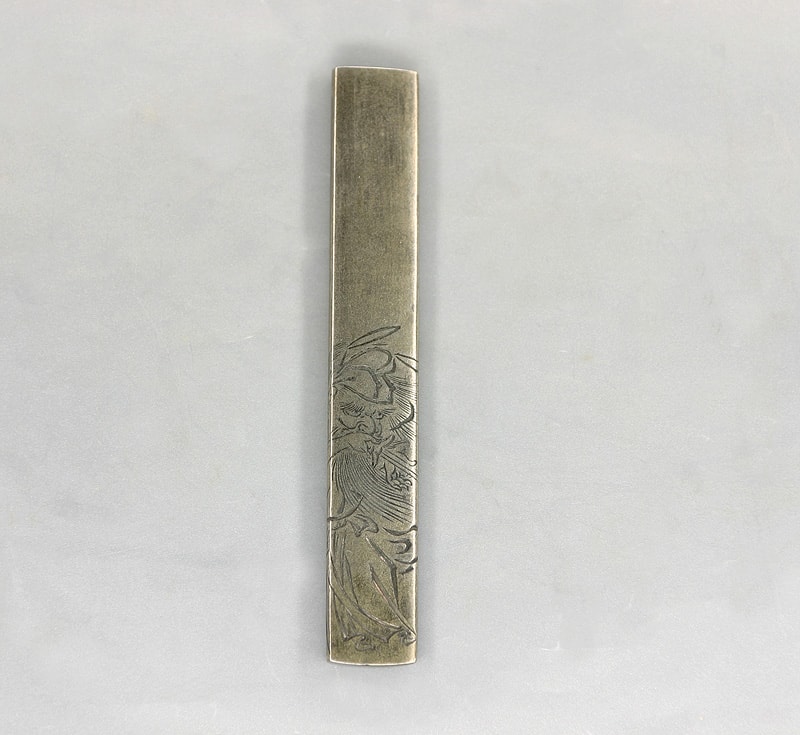
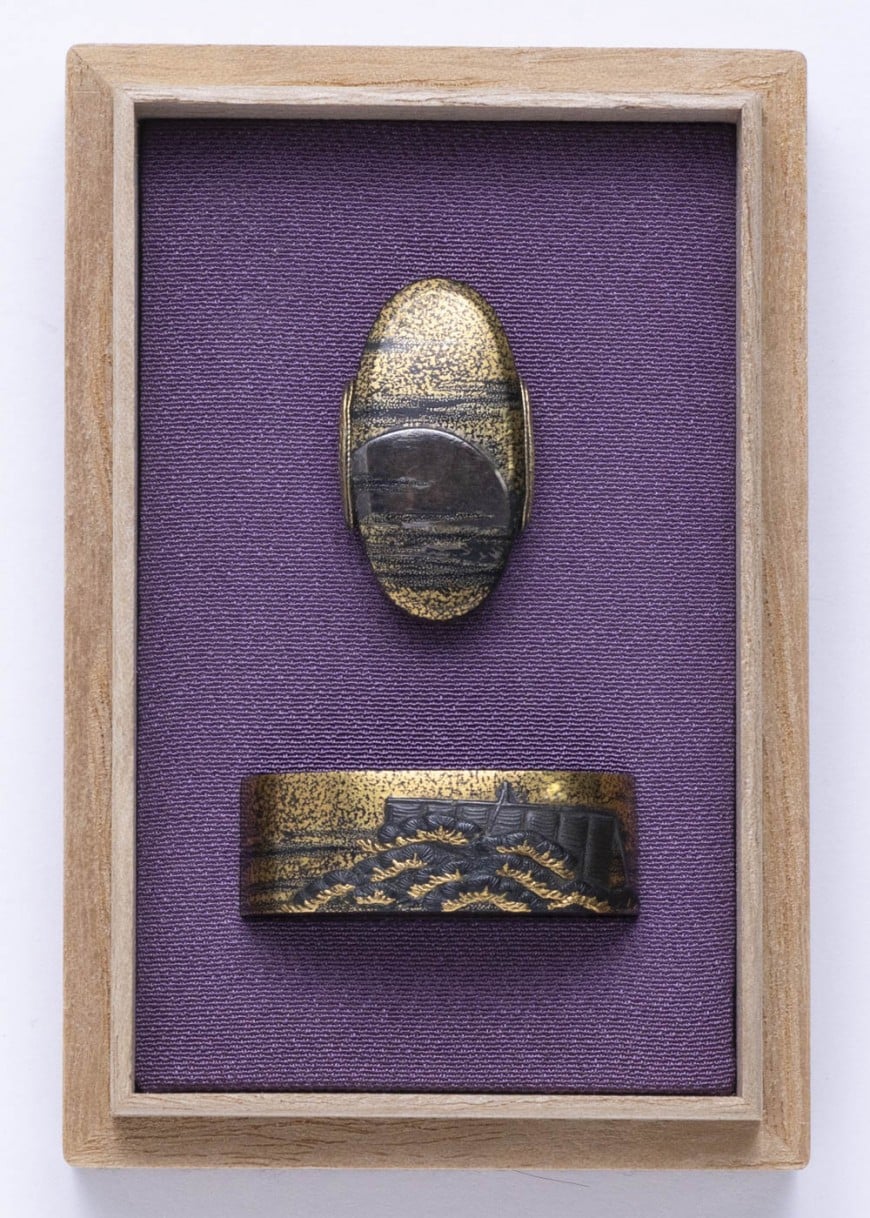
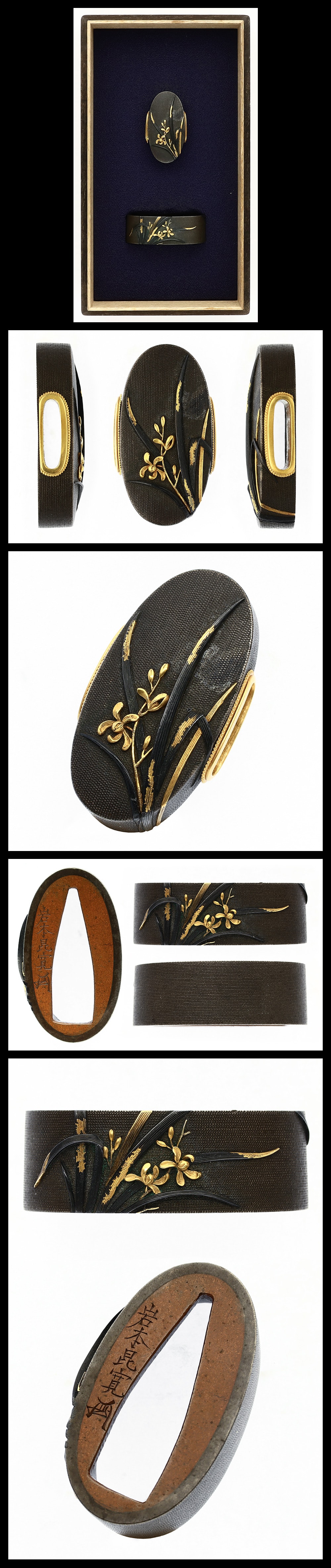
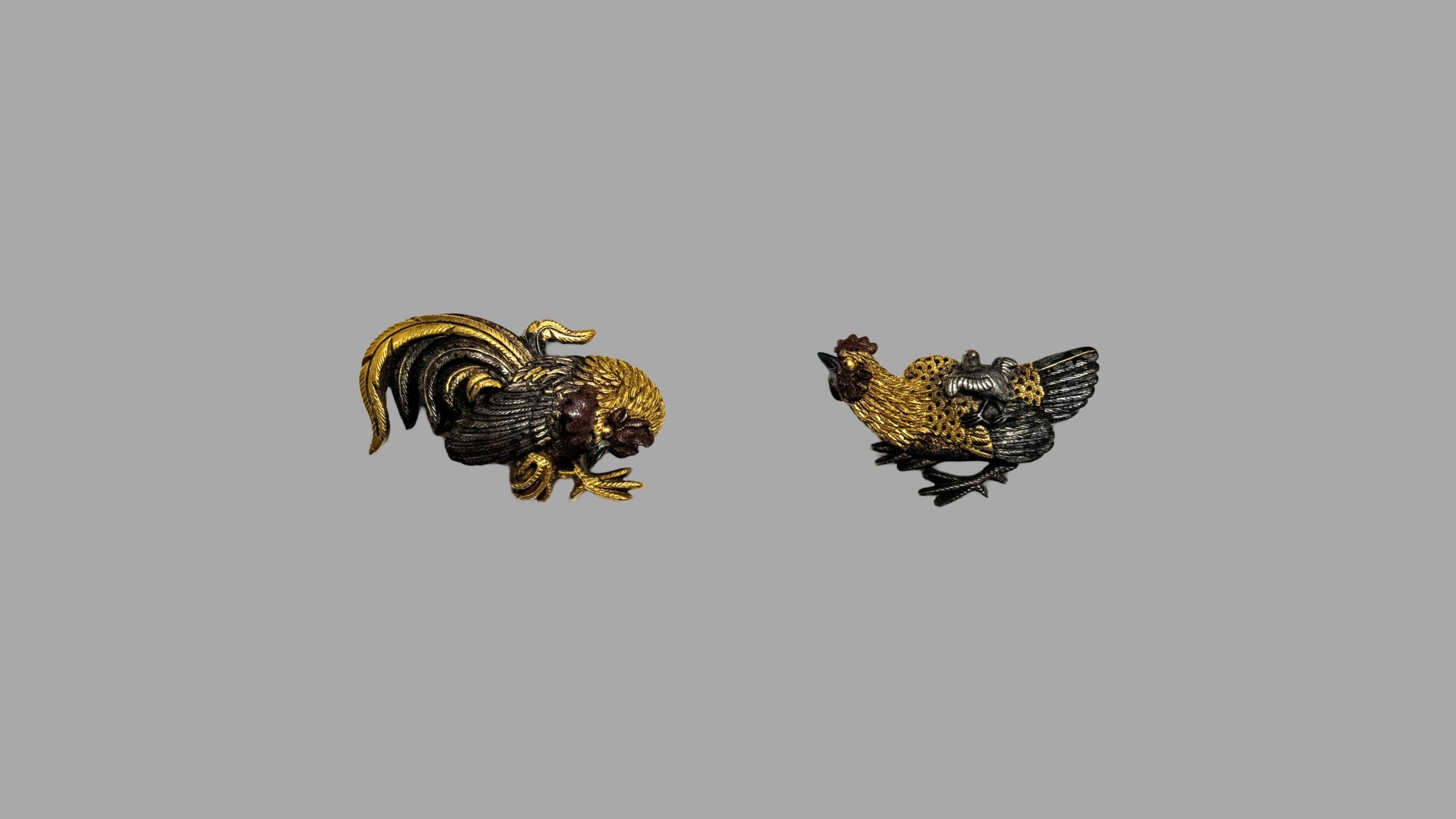
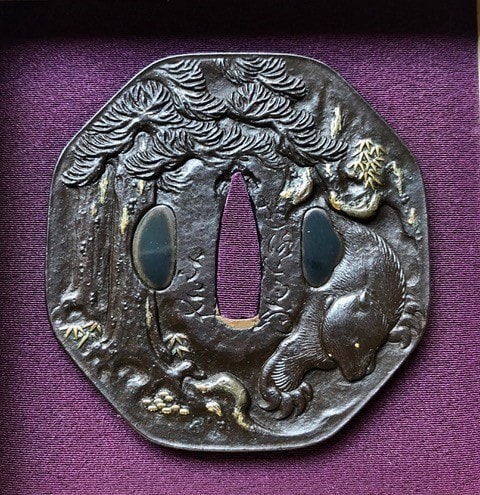
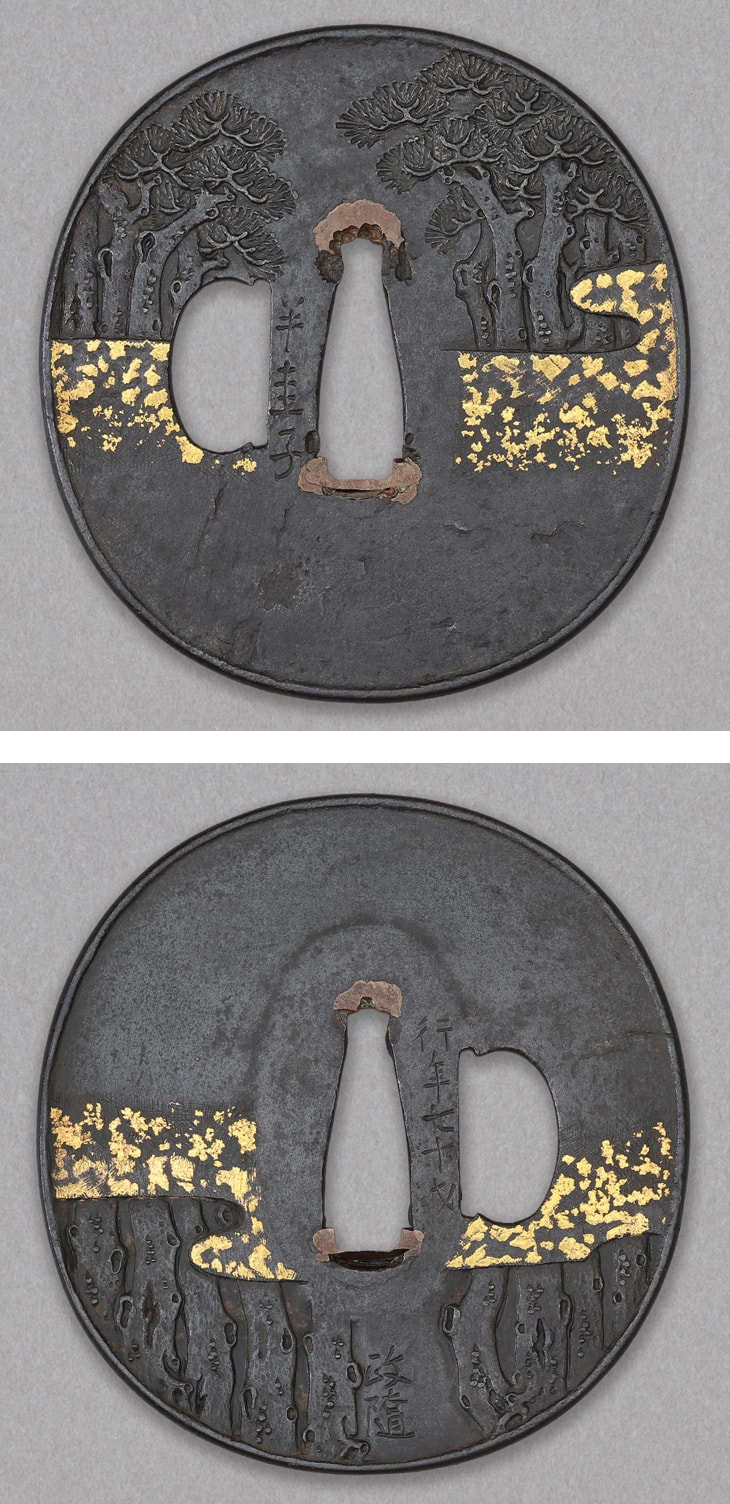
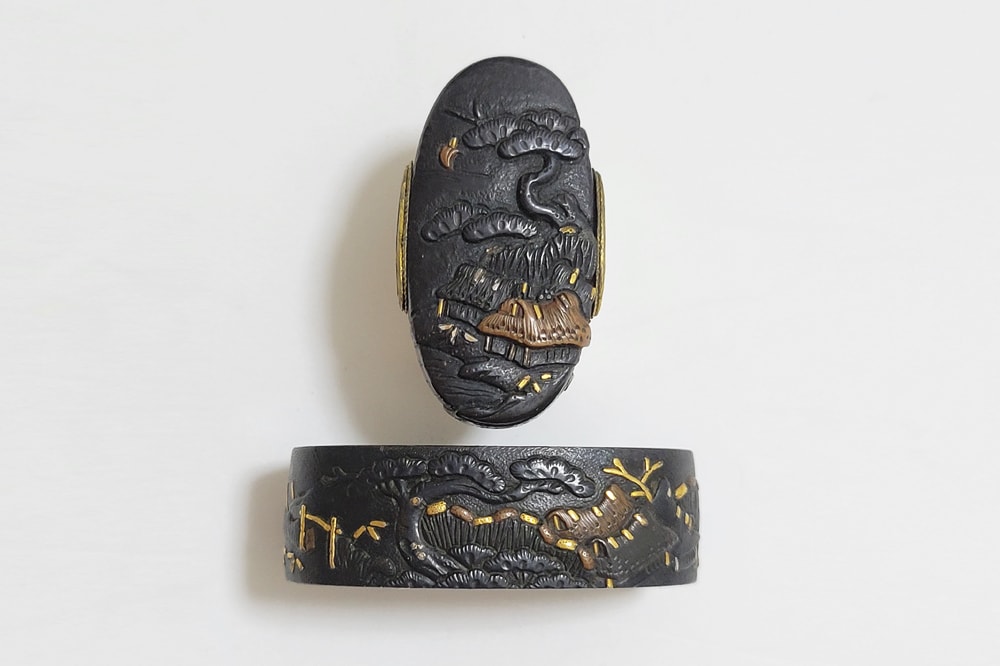
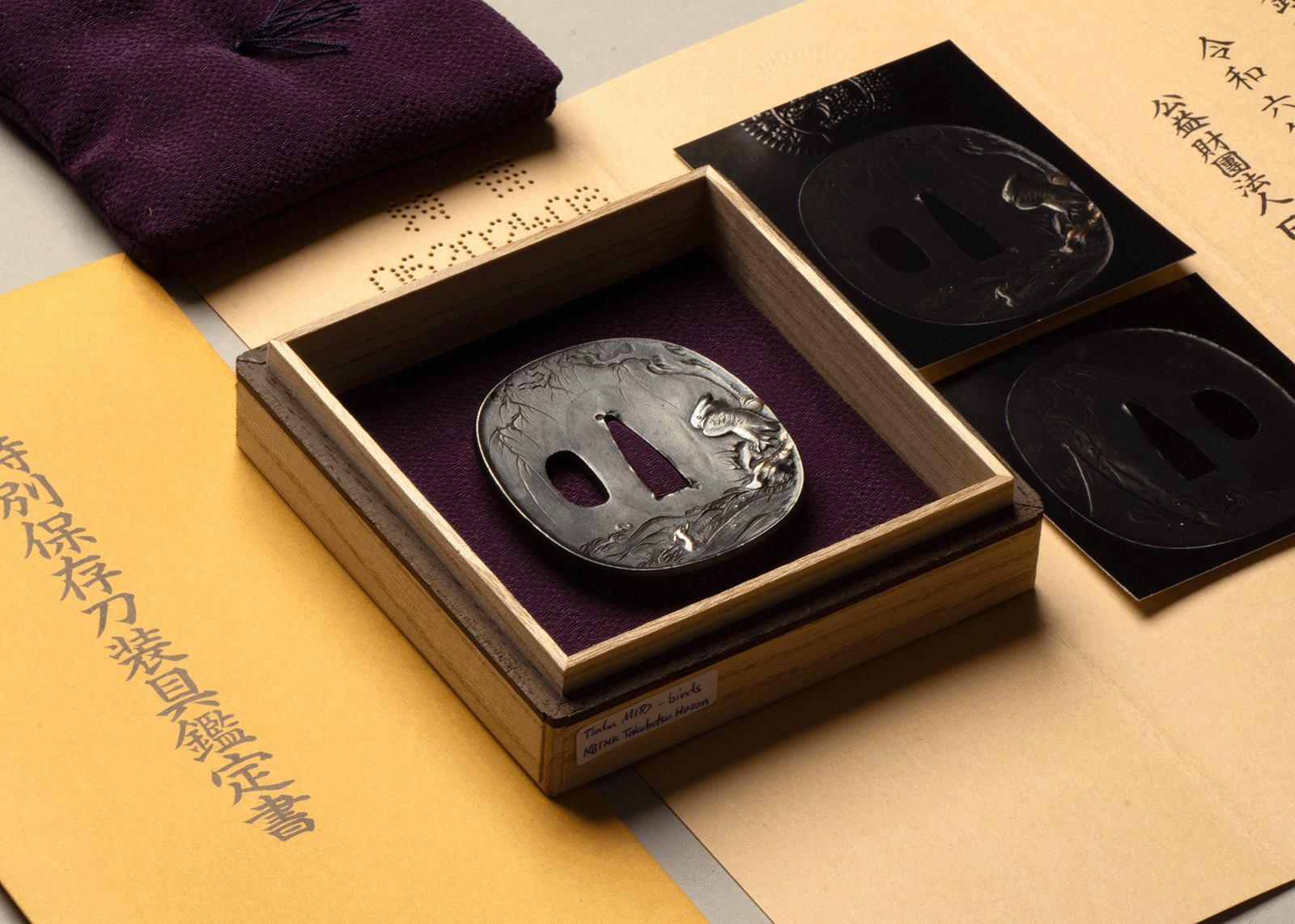
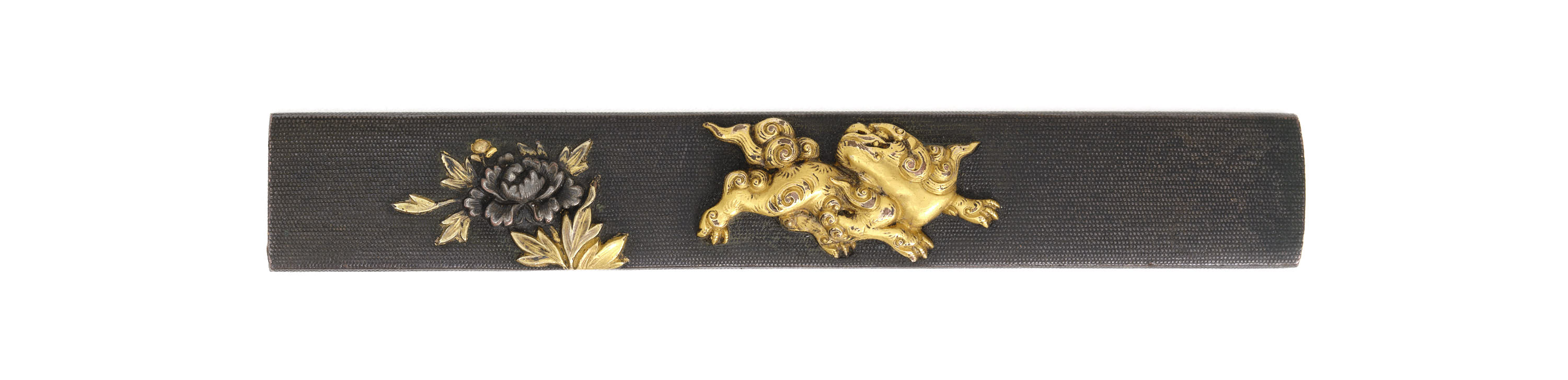
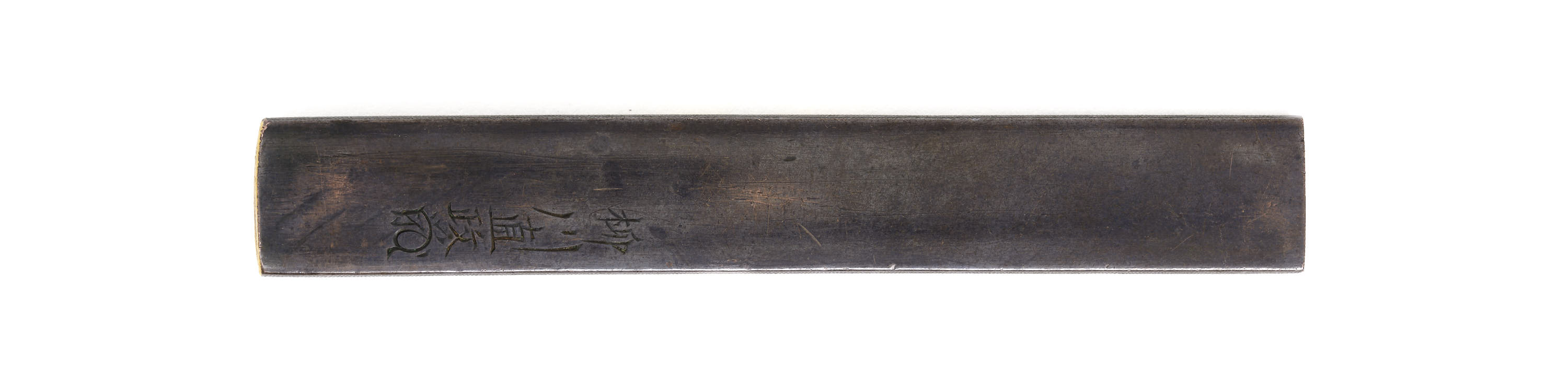
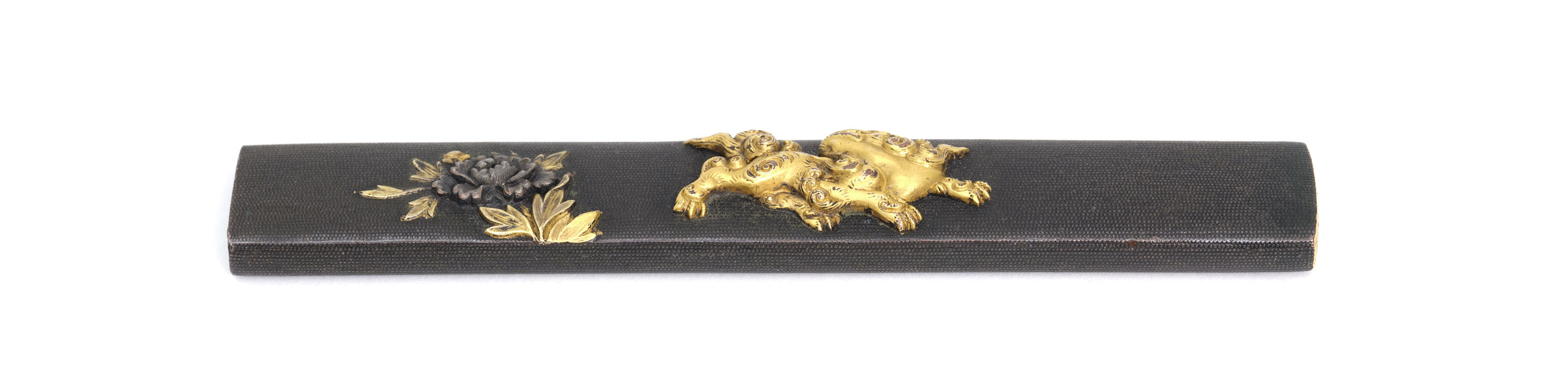
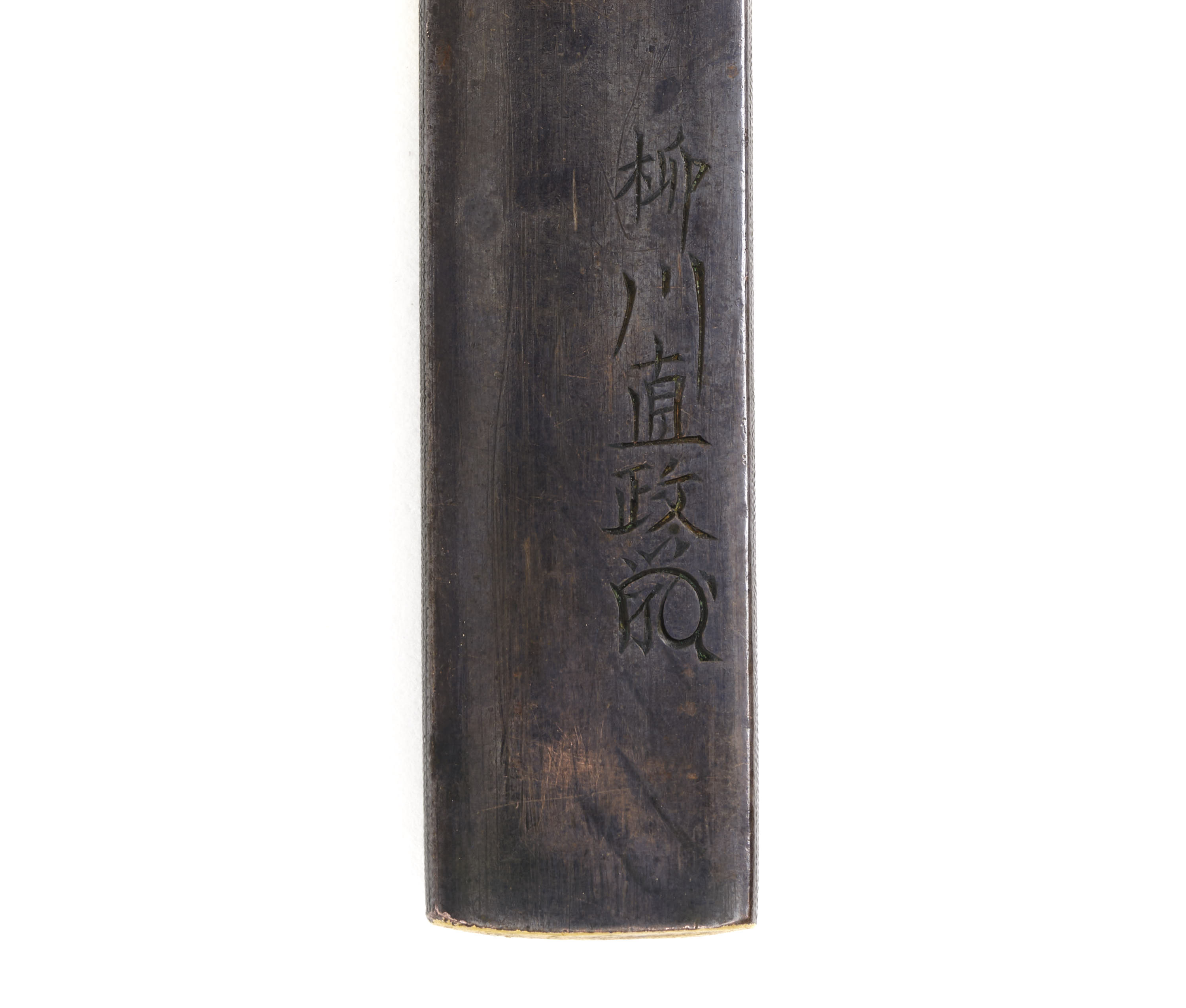
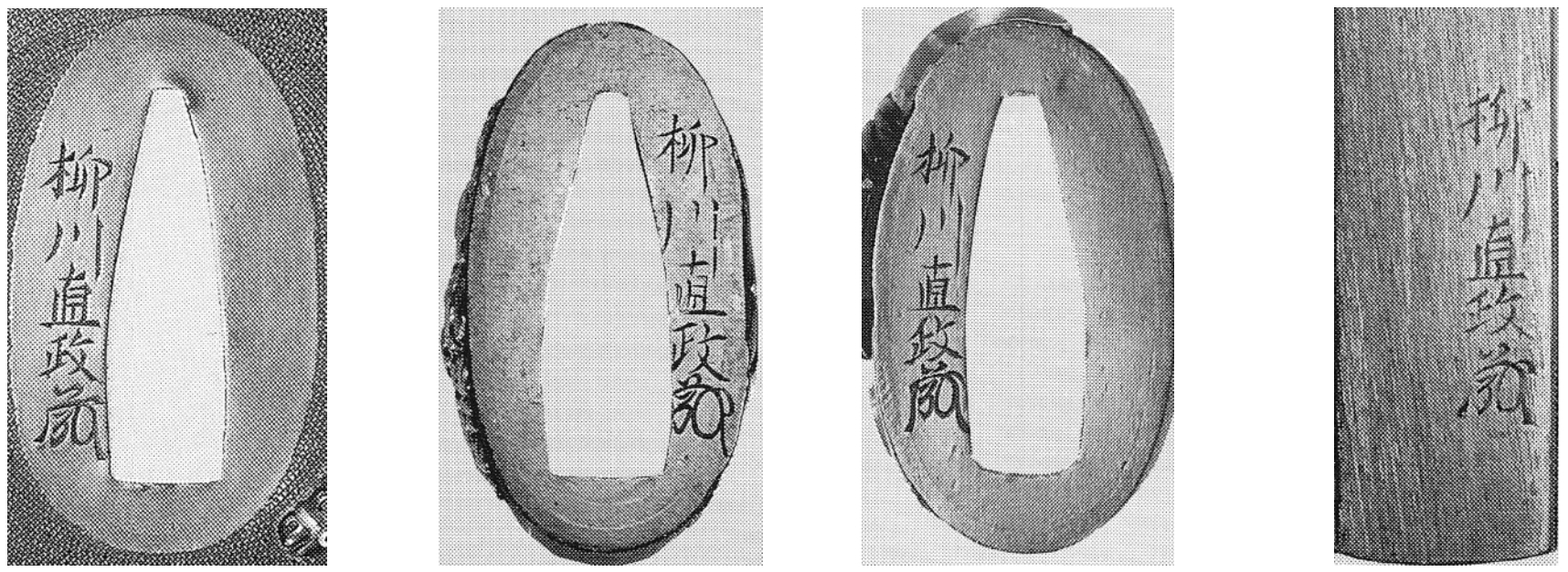
A finely crafted shakudō kozuka featuring a shishi (dog-lion) and peony flower, symbolizing the balance of strength and beauty. It is signed Yanagawa Naomasa, though the signature is considered gimei. The piece is well-executed, showing considerable skill by its maker, and dates to the 18th-19th century Edo period.
 NihontoWatch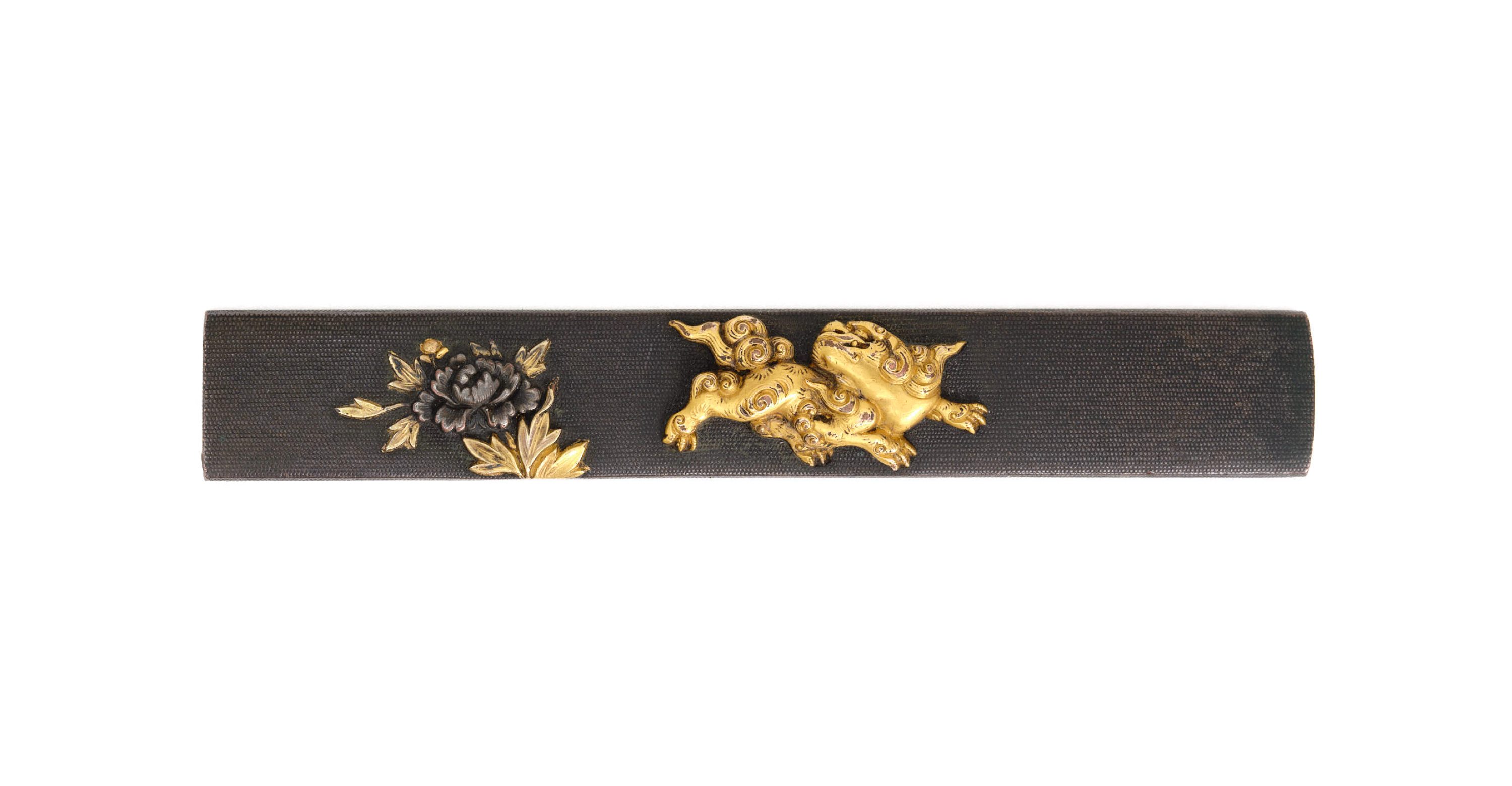
Yanagawa School
Edo
Edo
Gimei (false signature)
Tokuho (NBTHK)
Machibori · Edo
54 pieces on the market now
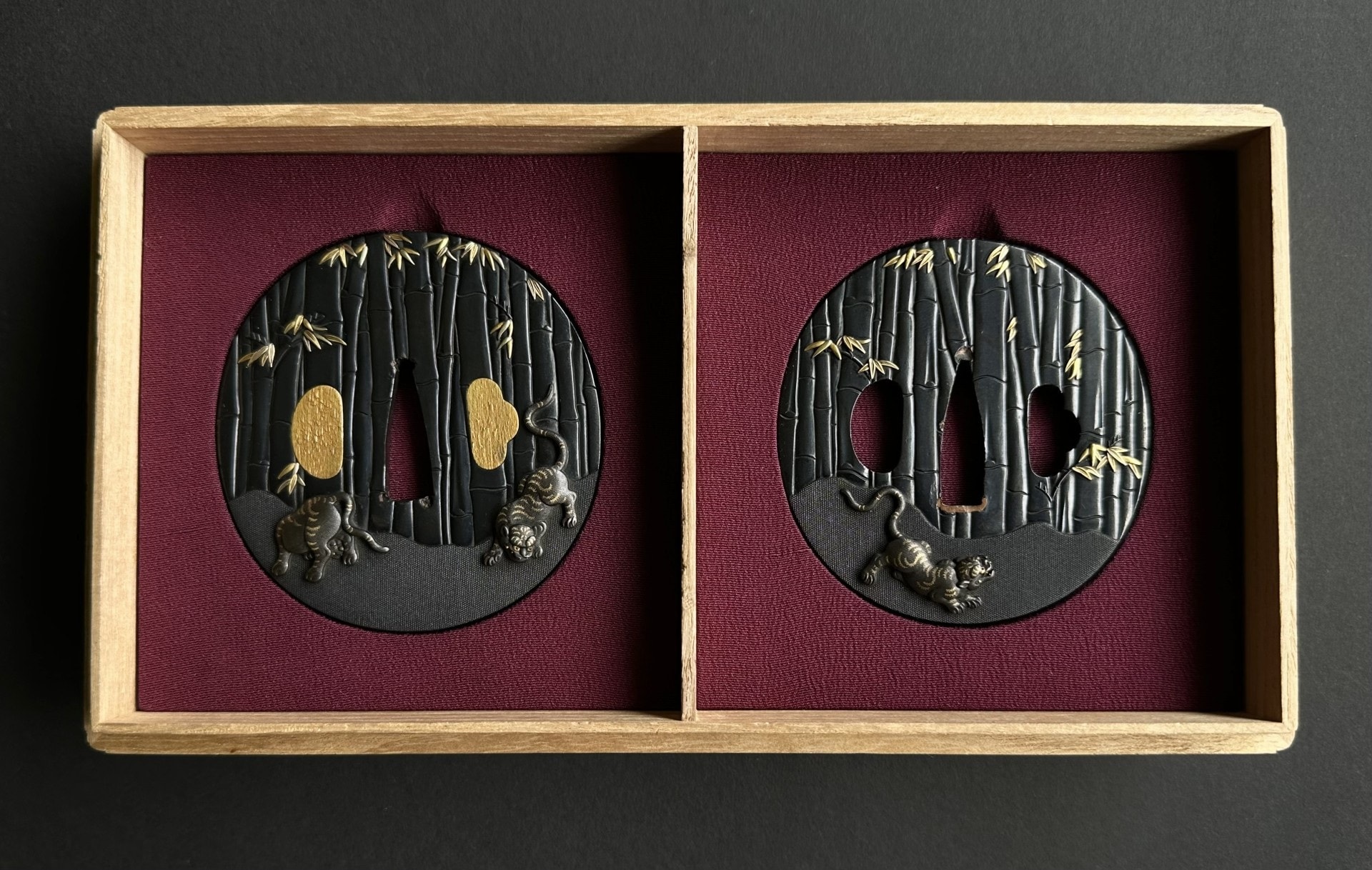
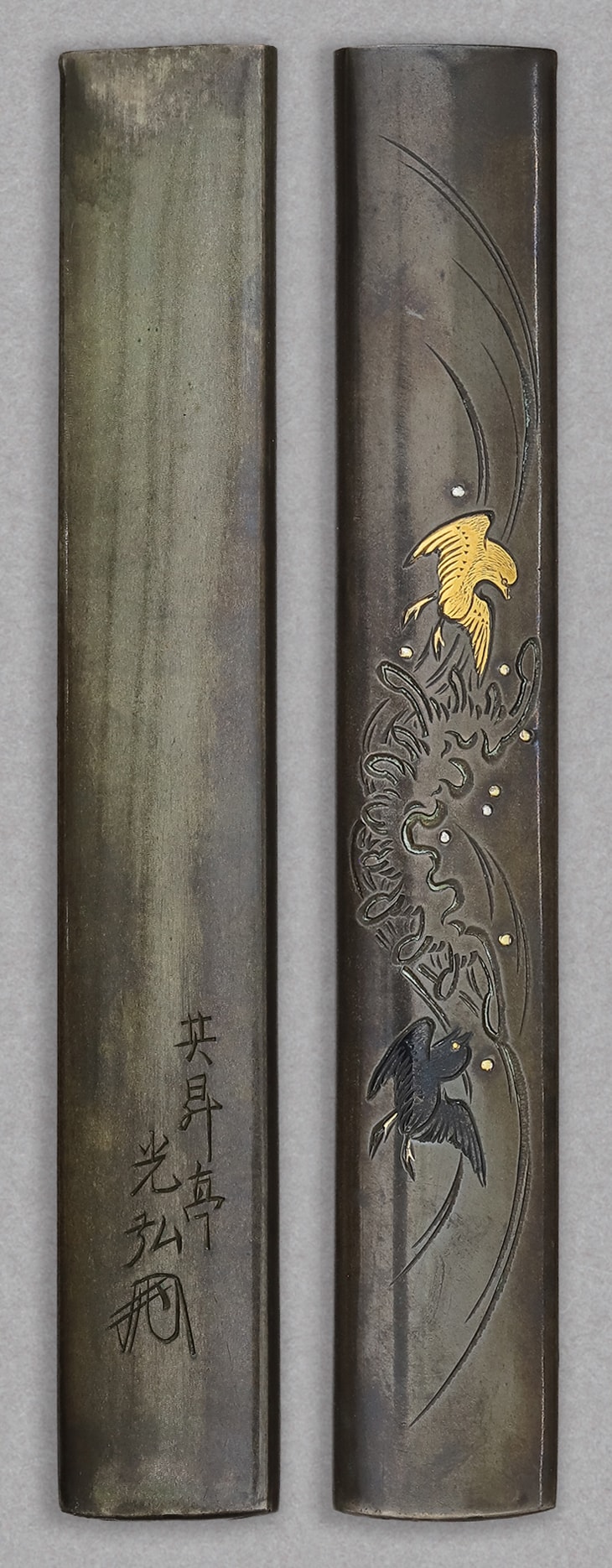
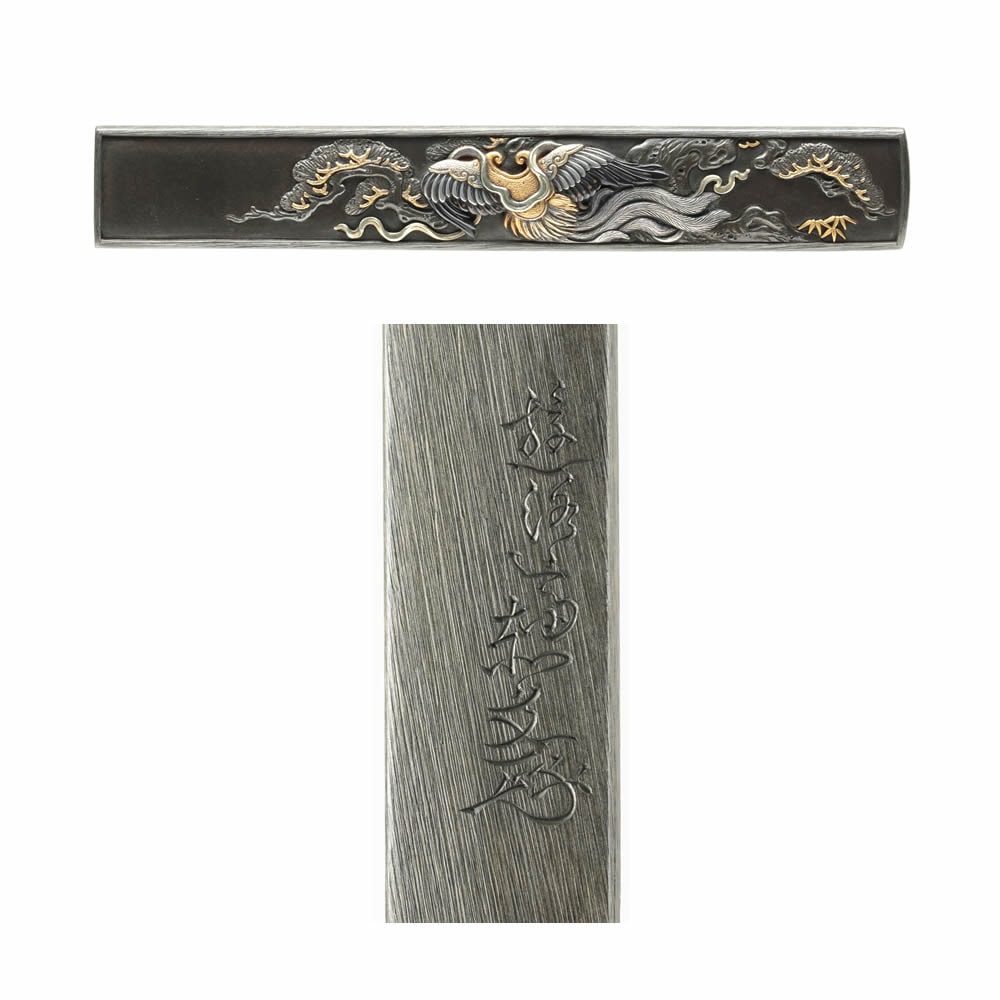
The Yanagawa (柳川) school ranks among the principal machibori ("town carving") lineages of Edo metalwork, arising in the mid-Edo period as a direct offshoot of the Yokoya house. Its founder, Yanagawa Naomasa (1692–1757), studied under Yoshioka Inaba-no-suke and under Yokoya Sōmin, and established himself in the Otamagaike district of Edo. The NBTHK setsumei consistently locate the school within this filiation, styling it "the Yanagawa branch within the Yokoya lineage" (横谷門下柳川派) and naming Naomasa as the family founder (家祖). Naomasa had no biological heirs and devoted himself to the training of disciples, and the successive heads of the house inherited the character nao (直). " The collective idiom of the school is the classic Yokoya-derived vocabulary of Edo kinkō work: grounds of shakudō (赤銅) dressed in nanako-ji (魚子地), high-relief carving (takabori) — frequently executed as applied motifs (suemon) — and polychrome inlay (zōgan iroe) in gold, silver, and shibuichi, deployed across kozuka, kōgai, fuchi-kashira, menuki, and tsuba. The school was likewise renowned for excellent katakiribori (single-cut carving), and its repertoire favored classical subjects: shishi (lions) with peonies, tigers, Chinese sages, and figural themes such as the Seven Lucky Gods.
Fidelity to the manner of Sōmin remained the school's touchstone across generations. " Equally characteristic is the school's mode of transmission, whereby pupils composed their art-names from characters granted by the Yanagawa masters. The measure of the Yanagawa school's significance lies as much in what it engendered as in its own production. Ishiguro Masatsune, a pupil of Katō Naotsune of the Yanagawa school, formed his name by combining masa (政) from Naomasa and tsune (常) from Naotsune; the setsumei record that he "moved beyond the manner of the Yanagawa school, devising innovative treatments particularly within bird-and-flower subjects," founding the Ishiguro lineage, which "continued to prosper through successive generations until the Meiji period" and produced the celebrated "twin peaks" Masayoshi and Masaaki. " Through these ramifying lines, the Yanagawa school served as the essential conduit by which the Yokoya manner of takabori iroe on shakudō nanako-ji grounds was disseminated across the late-Edo metalworking world. Learn more →
| Smith | Era | Designated |
|---|---|---|
| Haruaki春明 | — | 18 |
| Naoharu直春 | — | 7 |
| Naomasa直政 | — | 5 |
| Akinori/Meijo明乗 | — | 0 |
| Akio明雄 | — | 0 |
A Hozon-certified fitting of notably superior craftsmanship and condition, often with signature or workmanship of high reference value.
The NBTHK (Nihon Bijutsu Tōken Hozon Kyōkai, the Society for the Preservation of Japanese Art Swords) is a public-interest incorporated foundation founded in 1948 and supervised by Japan’s Agency for Cultural Affairs (Bunkachō); it is based at the Japanese Sword Museum in Tokyo. Its expert panels physically examine each submitted work (shinsa) and issue a certificate (kanteishō) ranking it by artistic and historical merit. NBTHK papers are the most widely recognized standard of authentication for Japanese swords and fittings.
NBTHK official siteReturns accepted on items ordered from the site when an item does not appear to be as depicted and described; buyer must notify via email within 7 days of receipt. Refund covers purchase price minus shipping, bank fees, and currency conversion. Sales on items paid in terms are final, as are sales of items personally inspected.
A finely crafted shakudō kozuka featuring a shishi (dog-lion) and peony flower, symbolizing the balance of strength and beauty. It is signed Yanagawa Naomasa, though the signature is considered gimei. The piece is well-executed, showing considerable skill by its maker, and dates to the 18th-19th century Edo period.
NihontoWatchYanagawa School
Edo
Edo
Gimei (false signature)
Tokuho (NBTHK)
Machibori · Edo
54 pieces on the market now
The Yanagawa (柳川) school ranks among the principal machibori ("town carving") lineages of Edo metalwork, arising in the mid-Edo period as a direct offshoot of the Yokoya house. Its founder, Yanagawa Naomasa (1692–1757), studied under Yoshioka Inaba-no-suke and under Yokoya Sōmin, and established himself in the Otamagaike district of Edo. The NBTHK setsumei consistently locate the school within this filiation, styling it "the Yanagawa branch within the Yokoya lineage" (横谷門下柳川派) and naming Naomasa as the family founder (家祖). Naomasa had no biological heirs and devoted himself to the training of disciples, and the successive heads of the house inherited the character nao (直). " The collective idiom of the school is the classic Yokoya-derived vocabulary of Edo kinkō work: grounds of shakudō (赤銅) dressed in nanako-ji (魚子地), high-relief carving (takabori) — frequently executed as applied motifs (suemon) — and polychrome inlay (zōgan iroe) in gold, silver, and shibuichi, deployed across kozuka, kōgai, fuchi-kashira, menuki, and tsuba. The school was likewise renowned for excellent katakiribori (single-cut carving), and its repertoire favored classical subjects: shishi (lions) with peonies, tigers, Chinese sages, and figural themes such as the Seven Lucky Gods.
Fidelity to the manner of Sōmin remained the school's touchstone across generations. " Equally characteristic is the school's mode of transmission, whereby pupils composed their art-names from characters granted by the Yanagawa masters. The measure of the Yanagawa school's significance lies as much in what it engendered as in its own production. Ishiguro Masatsune, a pupil of Katō Naotsune of the Yanagawa school, formed his name by combining masa (政) from Naomasa and tsune (常) from Naotsune; the setsumei record that he "moved beyond the manner of the Yanagawa school, devising innovative treatments particularly within bird-and-flower subjects," founding the Ishiguro lineage, which "continued to prosper through successive generations until the Meiji period" and produced the celebrated "twin peaks" Masayoshi and Masaaki. " Through these ramifying lines, the Yanagawa school served as the essential conduit by which the Yokoya manner of takabori iroe on shakudō nanako-ji grounds was disseminated across the late-Edo metalworking world. Learn more →
| Smith | Era | Designated |
|---|---|---|
| Haruaki春明 | — | 18 |
| Naoharu直春 | — | 7 |
| Naomasa直政 | — | 5 |
| Akinori/Meijo明乗 | — | 0 |
| Akio明雄 | — | 0 |
A Hozon-certified fitting of notably superior craftsmanship and condition, often with signature or workmanship of high reference value.
The NBTHK (Nihon Bijutsu Tōken Hozon Kyōkai, the Society for the Preservation of Japanese Art Swords) is a public-interest incorporated foundation founded in 1948 and supervised by Japan’s Agency for Cultural Affairs (Bunkachō); it is based at the Japanese Sword Museum in Tokyo. Its expert panels physically examine each submitted work (shinsa) and issue a certificate (kanteishō) ranking it by artistic and historical merit. NBTHK papers are the most widely recognized standard of authentication for Japanese swords and fittings.
NBTHK official siteReturns accepted on items ordered from the site when an item does not appear to be as depicted and described; buyer must notify via email within 7 days of receipt. Refund covers purchase price minus shipping, bank fees, and currency conversion. Sales on items paid in terms are final, as are sales of items personally inspected.