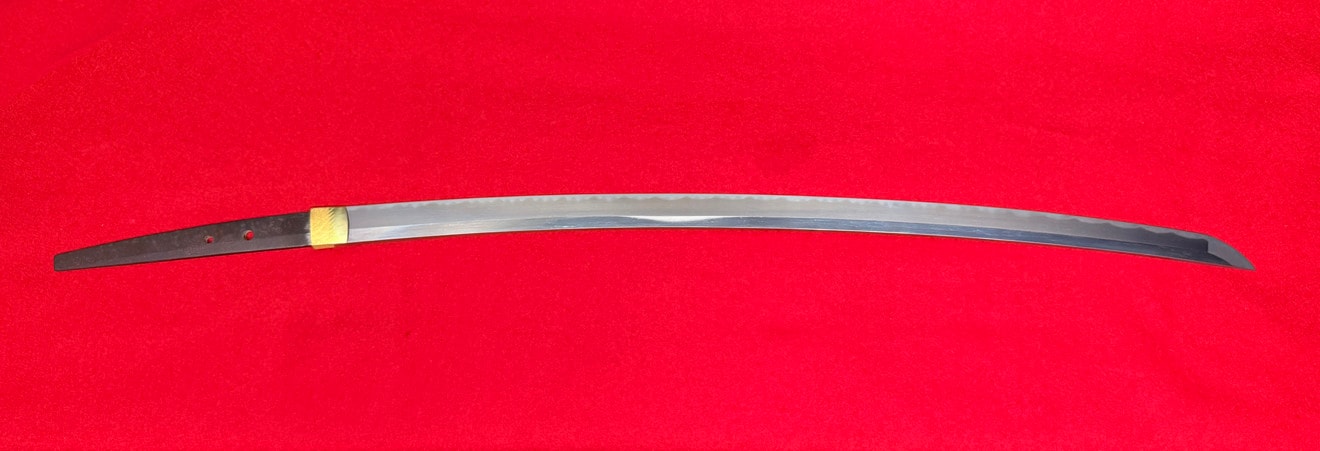
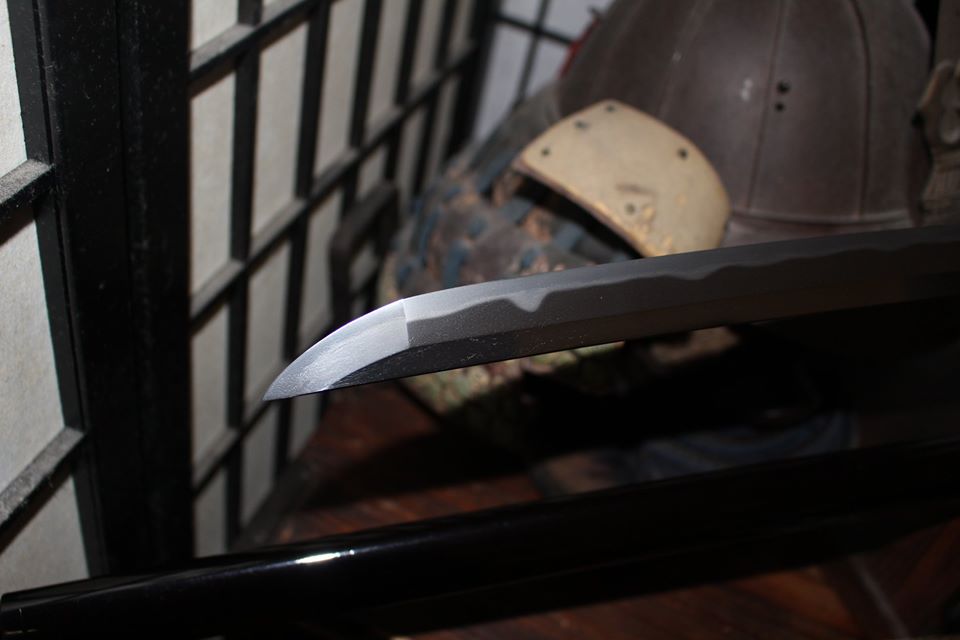
Sengoku Seki was an industry: smiths organized under their tutelary Kasuga shrine, arming the war bands of central Japan. Magoroku Kanemoto’s sanbonsugi and the finest Kanesada work prove quality survived inside mass production.
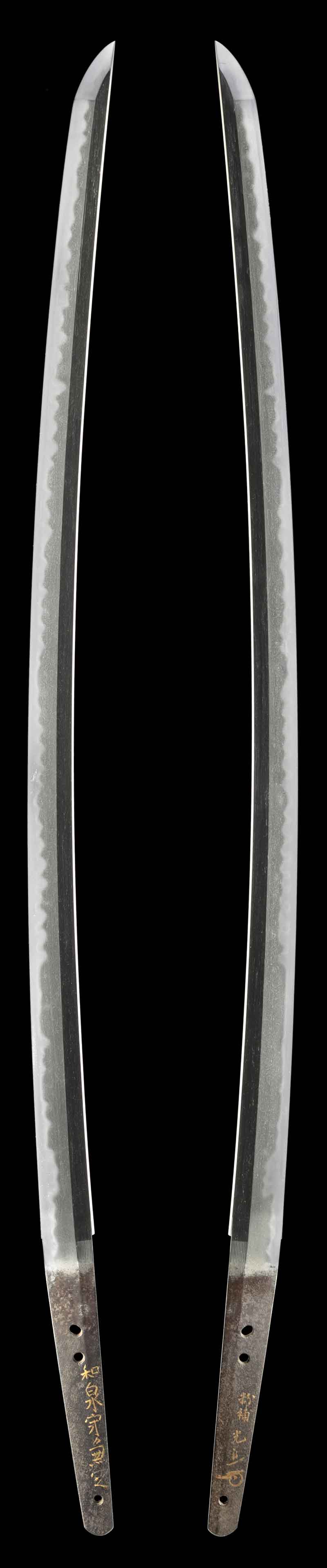
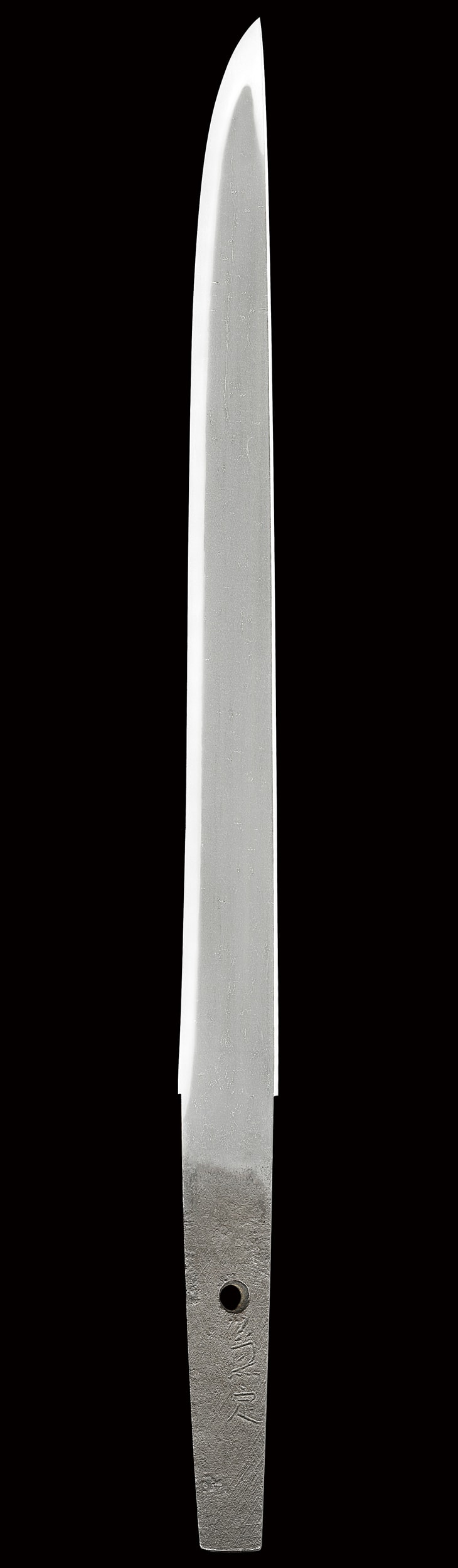
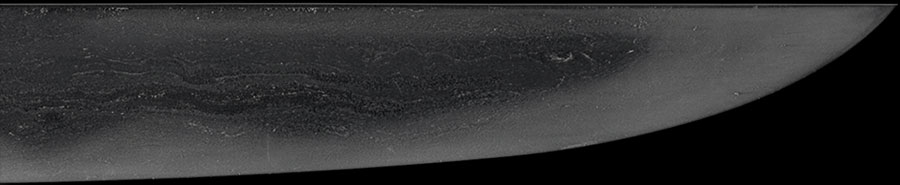
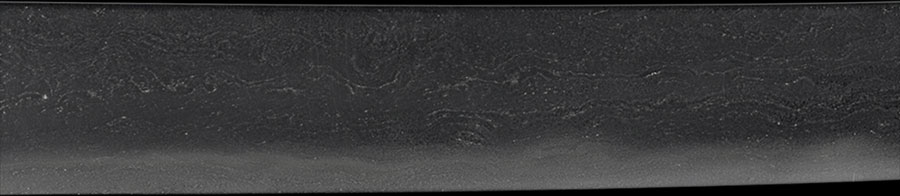
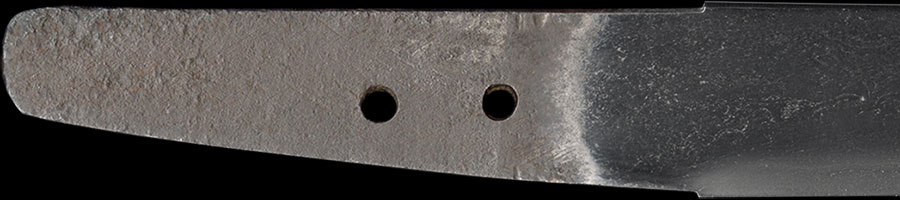
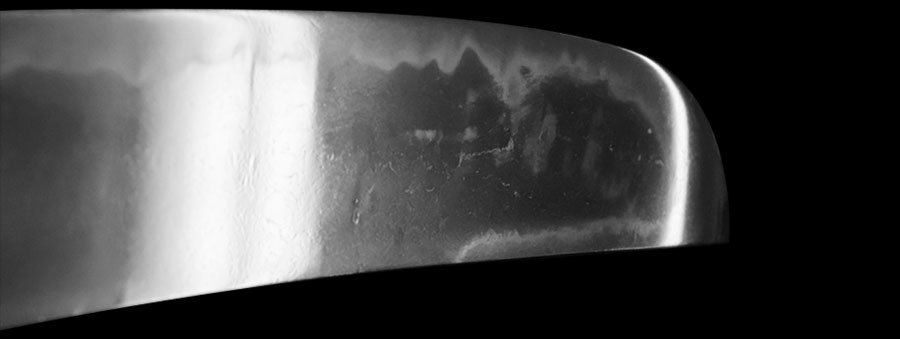
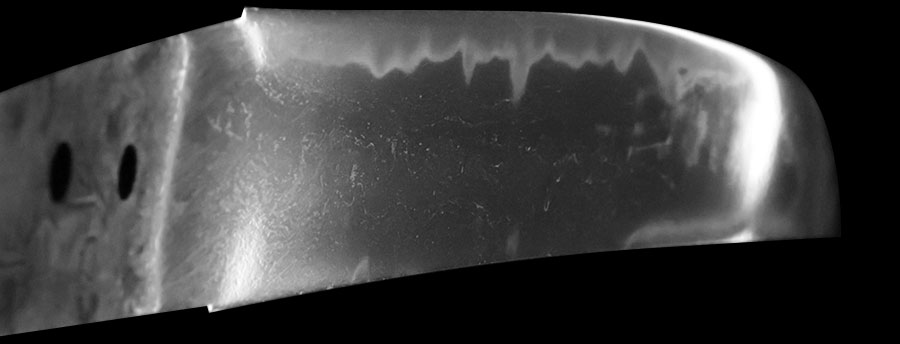
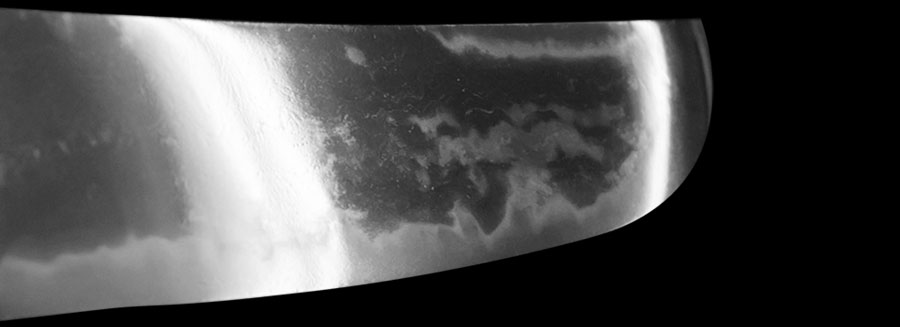
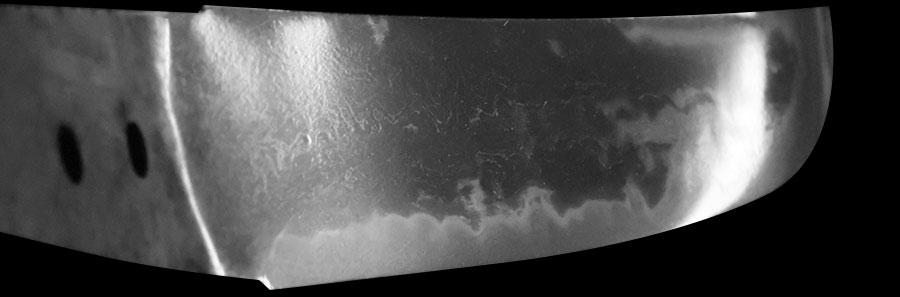
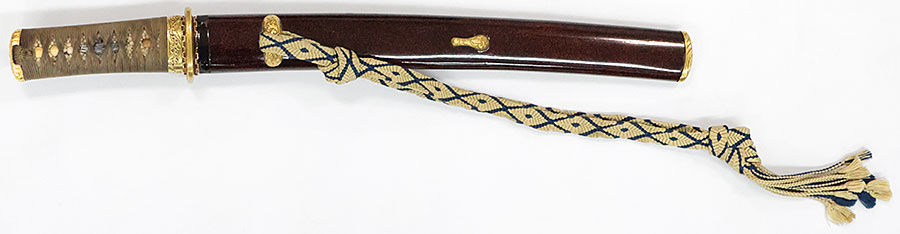
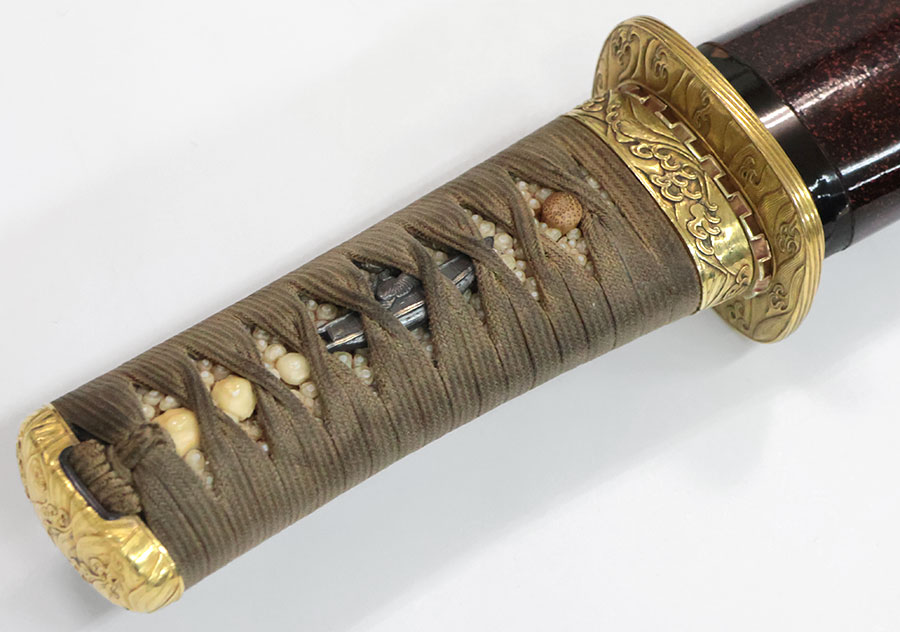
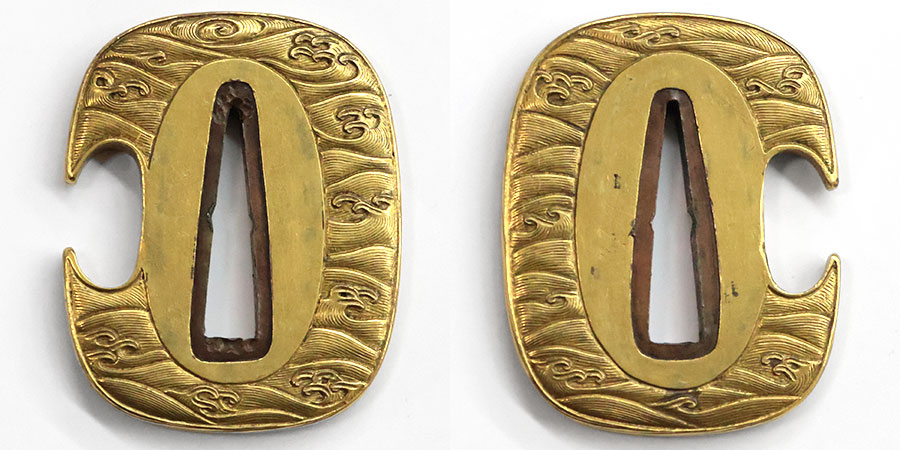
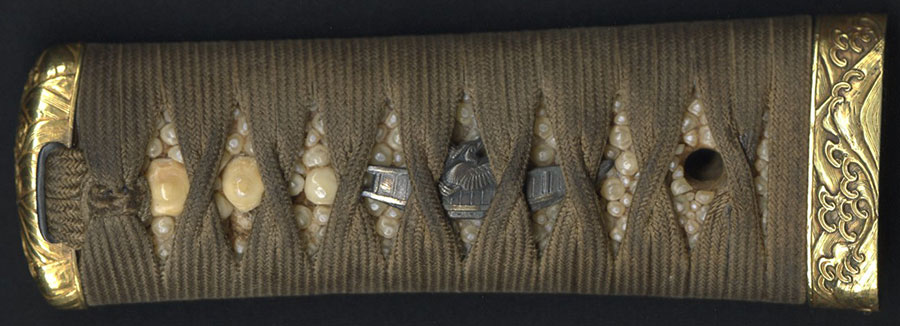
(Famous also in Touken Ranbu) Senryo Kanesada (Estimated current value of 100 million yen) It has arrived, it has arrived—it is no exaggeration to call it a miracle. A precious tanto by the beloved Izumi no Kami Kanesada (Nosada) has appeared. Tanto by Izumi no Kami Kanesada (Nosada) are truly few in number and extremely rare. Izumi no Kami Kanesada (Nosada) was born in Koshu (Yamanashi); he went to Seki and became a monjin of the first generation Kanesada. Later, his character and skill were recognized, and at his master's earnest request, he was adopted. He formed a brotherly bond with Magoroku Kanemoto and was considered Magoroku Kanemoto's elder brother figure. Since ancient times, his work has been called "Senryo Kanesada," meaning it was so precious that it could not be obtained without paying one thousand ryo. He received the title of Izumi no Kami around the beginning of the Eisho era in the Muromachi period (1506) (519 years ago). The sugata of this tanto is a magnificent hira-zukuri tanto form with a wide moto-mihaba and wide saki-mihaba. The jigane is a tightly packed ko-itame hada mixed with masame, forged into an incomparably bright, high-quality steel with abundant ji-nie. The hamon is nioi-deki with ko-nie, featuring intentional tobiyaki in the ji, spirited round-topped gunome-ba, and sharp-pointed teeth with a deep kaeri. It is a magnificent, rustic, and bright blade that truly displays the sharpness of a Saijo O-wazamono. Kanesada (Nosada) has been famous since ancient times, but extant works are few, making this an extremely precious tanto. The luxurious koshirae from the Edo period further adds splendor to this tanto. Please enjoy this precious tanto by Izumi no Kami Kanesada (Nosada), which Sengoku daimyo vied to obtain since ancient times.
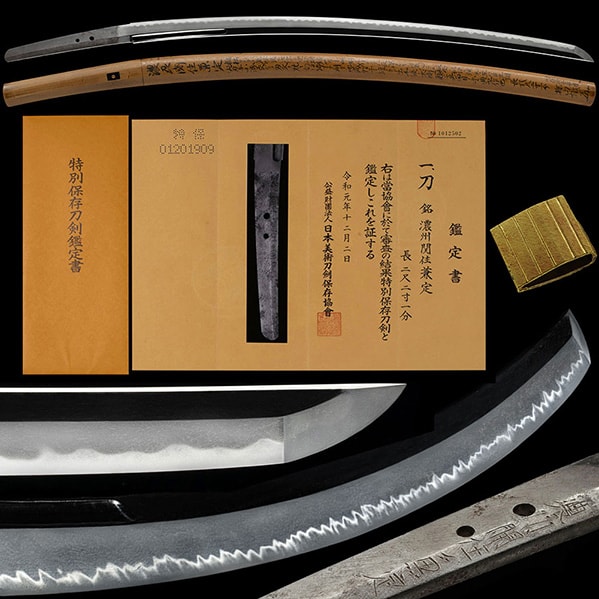
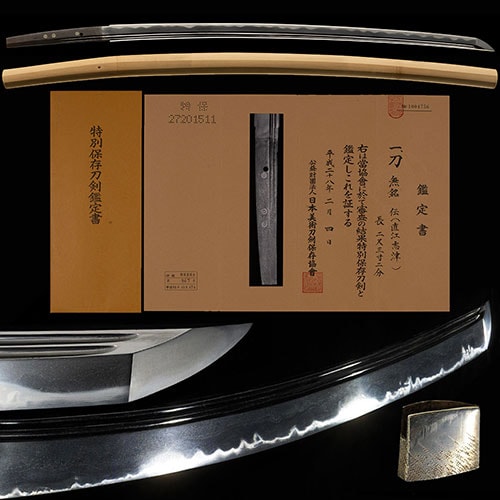
Certificate reading — 銘 和泉守兼定
 NihontoWatch
Muromachi · nagasa 27.1cm


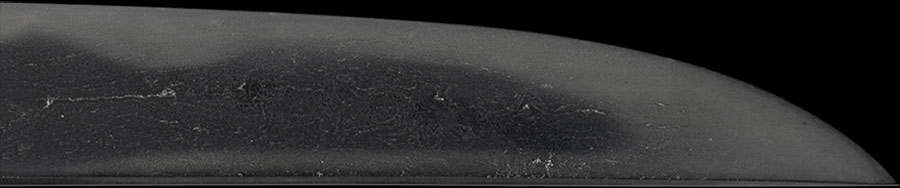
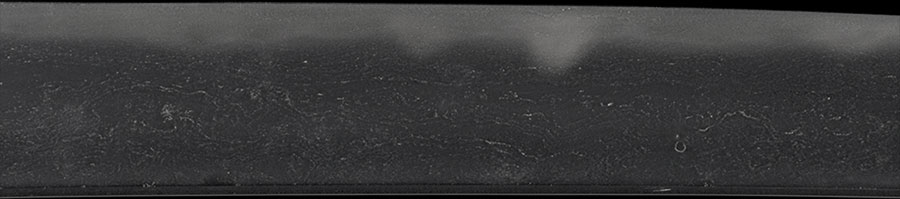
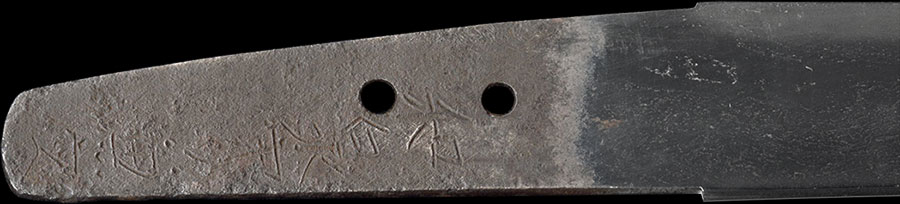
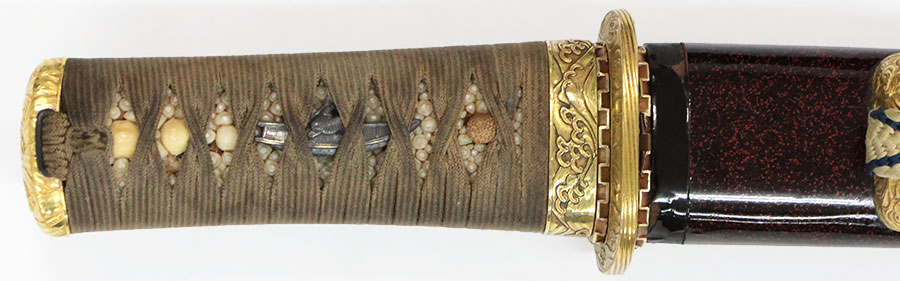
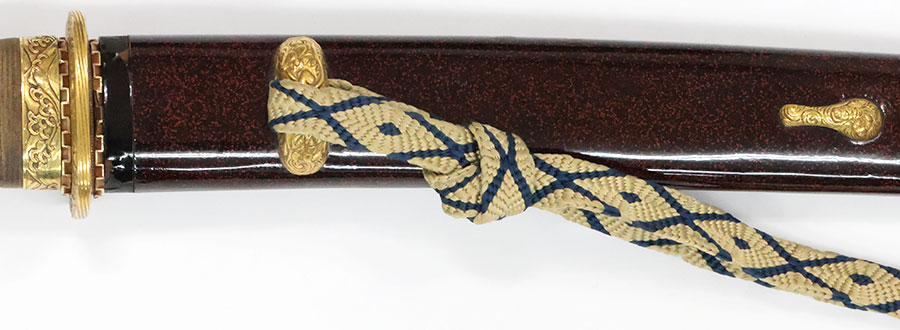
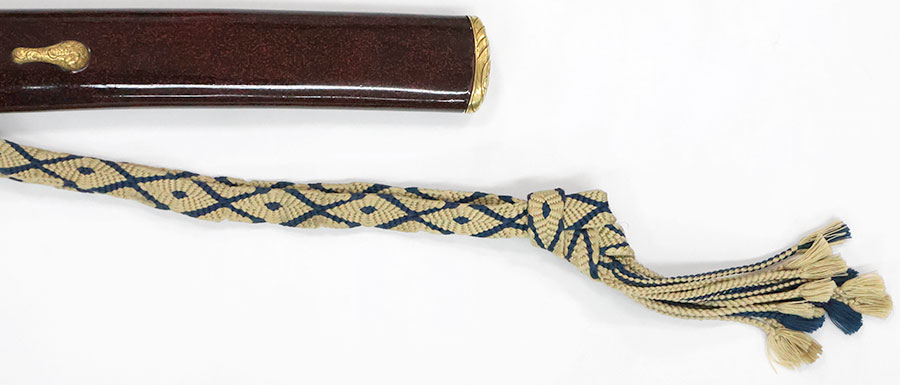
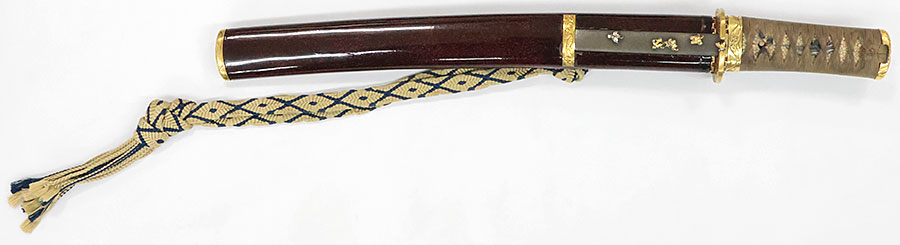
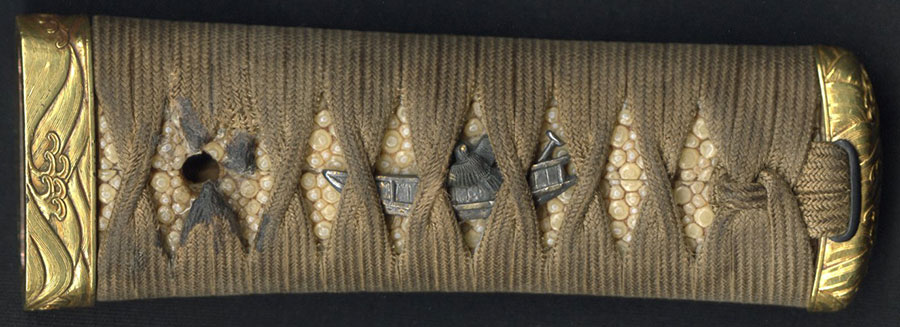
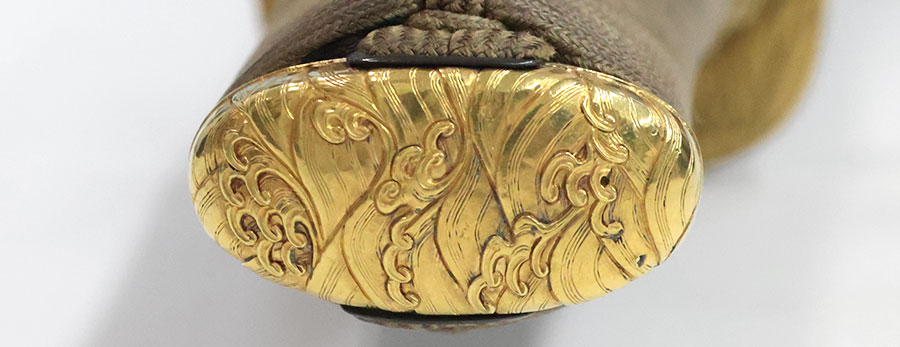



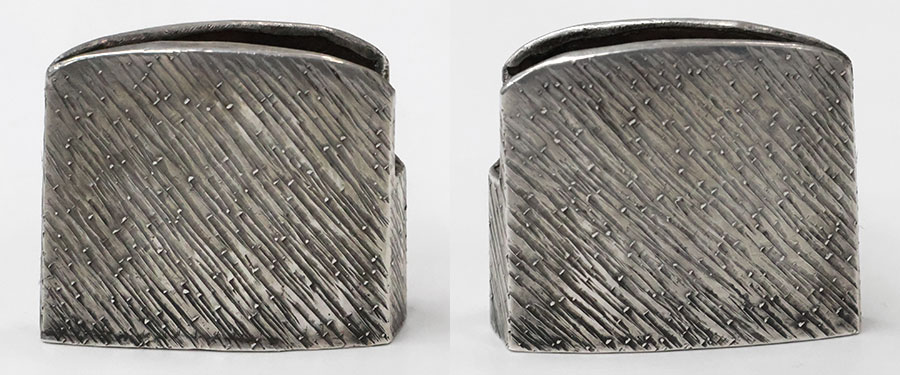
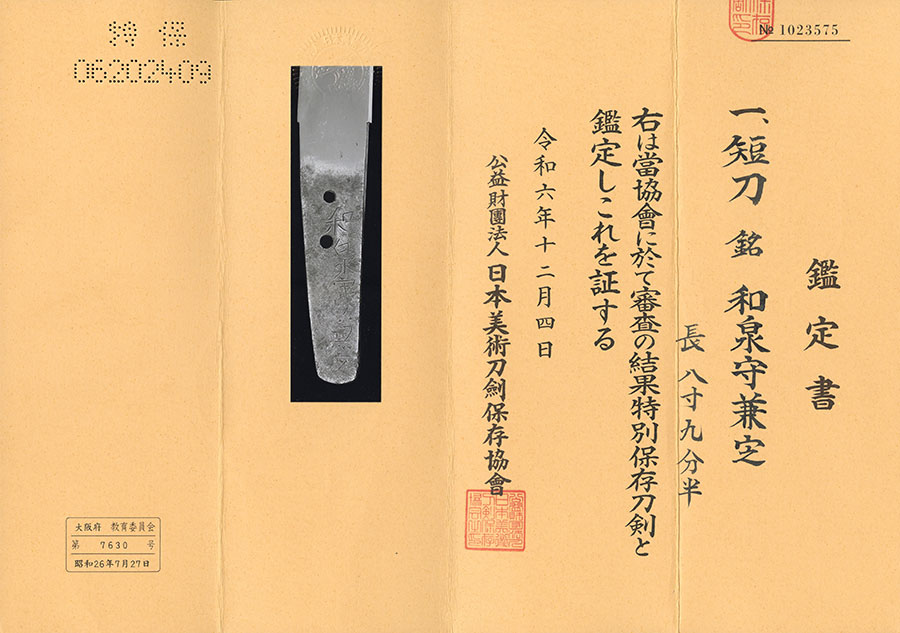
Seki (Mino) — Izumi no Kami Kanesada, "Nosada" · Mino · around 1492-1515
Fujishiro Jo-jo saku · Tōken Taikan top 14%
7 pieces on the market now
Kanesada is the second-generation Izumi no Kami Kanesada of Seki in Mino, the smith universally called "Nosada" because he cut the character sada (定) with the element inside the u-crown formed as 之. The published sources place his working life across the Meio years into Daiei, in the closing decades of the Muromachi period, and rank him with Kanemoto as a representative Mino smith of his age. He was, as the published commentary notes, a rare case in the kotO era of a smith granted the court title Izumi no Kami, and he often cut the Fujiwara surname as well. The first generation having signed plainly, it was this hand that carried the name to its height, and the swordbooks call him simply "an excellent master"[[c:1]]. The change from a standard-script sada to the 之 form that earned him his nickname is placed by the published sources around the eleventh month of Meio 8 and before the eighth month of Meio 9; the third-generation "Hikisada" is kept distinct from him.
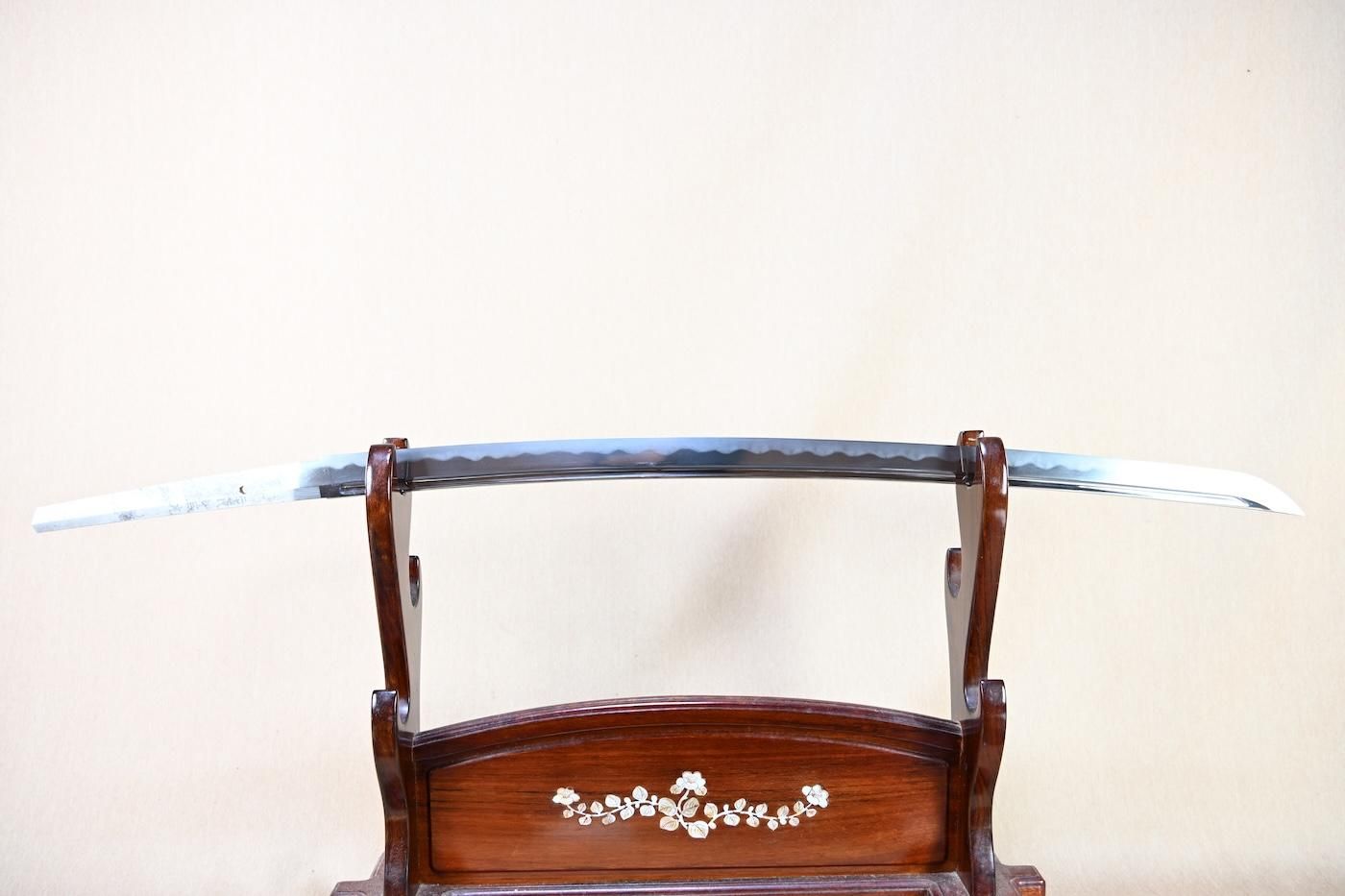
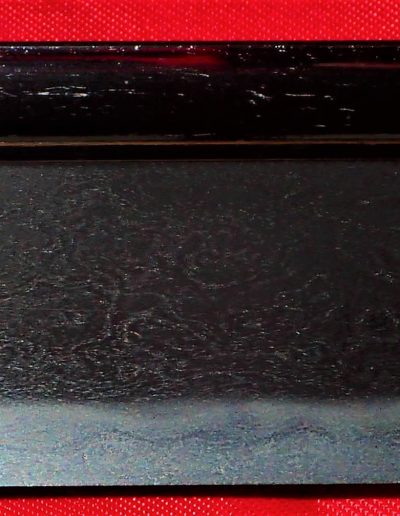
His recognized strength is the lively Mino hand. The shape is the late-Muromachi katana, wide in body with sakizori and at times an o-kissaki, dignified and imposing, the hiraniku full as on a blade meant to cut. Over an itame that runs a little in places and is overall well forged, the jigane carries ji-nie and a whitish shirake-utsuri. The temper is a busy mixture, gunome with choji and pointed togariba elements, nioi-dominant with ko-nie, slight ashi and yo, sunagashi running through, and very slight tobiyaki. The boshi runs as a midare-komi with hakikake, tending to a pointed turnback. Of his finest piece in this manner the published commentary writes that the ji and ha are both clear and that it shows "the true strength of Nosada, the finest example among this smith's works"[[c:2]].
The jigane is the constant of his hand. Itame, sometimes tightening into ko-itame mixed with mokume, with ji-nie and a whitish cast, appears on nearly every blade; where the grain runs it leans toward masame, and the utsuri it carries is the pale shirake of Mino steel rather than the bright midare-utsuri of Bizen. That whitish jigane is itself the discriminator the judges return to, the feature that separates his work from the brighter Bizen utsuri. Over it the nioiguchi is laid tight and clear, the activity carried in ashi, sunagashi and ko-nie; one shortened katana widens toward the middle into a more flamboyant midare with tobiyaki, while the body of the temper stays a busy gunome.
His work divides into two registers, and the published sources draw the line themselves. Beside the lively Mino temper stands a deliberate Yamashiro imitation, a slender suguha over a closely packed ko-itame, which the commentary says was made with Rai Kunitoshi and the Yamashiro masters as the explicit target. Of this register the judges write that as a Kyo-mono utsushi among all the Kanesada, "none surpasses this example"[[c:3]]. The tell that the hand is still his is named in the same breath: even at this level of workmanship there is fushi within the edge, a faint gunome mingling in the otherwise quiet suguha, the shape leaning to sakizori, the itame turning whitish where Yamashiro steel would not. He worked the full range, katana, tanto and the rare naginata, and a small number of blades carry a chrysanthemum crest and the inscription that they were made at Yamada in Ise, the so-called Yamada-uchi pieces treasured for that mark.
What sets him apart within the Seki group is exactly what the judges name. Several Muromachi smiths cut the Kanesada name and a number held the Izumi no Kami title, so the published sources treat the generational divisions as not yet settled, and grant that at least four distinguishable hands cut the 之 form. Among them his signature style is "the most extolled, and in fact the most skillful"[[c:4]], the maker whose dated Eisho works the commentary singles out as the finest of the group. His bright, busy Mino temper over a whitish itame, and his slender Rai-styled suguha with its hidden gunome, are the grounded marks that hold him apart from the plainer Seki output around him; the published record calls his oeuvre "broad in scope and high in artistic value"[[c:5]].
For the collector he is a great late-kotO name, well represented but never common. Fujishiro grades him Jo-jo saku. He has no National Treasures and no Important Cultural Properties on this record; his standing is carried instead by one Tokubetsu Juyo and a long line of Juyo blades, with a Juyo Bijutsuhin tachi among them, and his blades pass through the highest daimyO provenance. The Tokubetsu Juyo katana was the personal sash-sword of Miura Shogen, chief retainer of the Kii Tokugawa house; one tachi was forged for Takeda Sakyo no Daibu Nobutora, father of Shingen; a chrysanthemum-crested katana points to an imperial connection, and his blades are recorded with the Shimazu, Satake, Kyogoku, Yamauchi and Akimoto houses and in the Sano Art Museum. With only a single piece in the Tokubetsu Juyo tier and the rest at Juyo and below, a signed Nosada comes to market from time to time rather than rarely, more findable than the great Kamakura names, yet a fine dated Eisho example with sound provenance remains a landmark when it appears, a sword by the smith the swordbooks call an excellent master.
Where Kanesada stands among comparable artisans: across all of nihontō, and within tradition, era, and period. The tiers (Foremost · Leading · Major · Notable) weigh official designations from the NBTHK and Japan's Agency for Cultural Affairs, together with historical honors of lasting repute such as the Sansaku and Meibutsu-chō.
Select a lens to see how it's measured.
Years he was demonstrably active, proven by signed-and-dated blades
Mino-den · Mino
23 pieces on the market now
Seki in Mino province supplied the base for the Kanesada line, whose blades the NBTHK places among the representative work of the Mino-den in the closing phase of the Muromachi period. The setsumei consistently pair Kanesada with Kanemoto as the two leading masters of Sue-Seki, the late Seki group active with Seki as its center, where (as one 31st-session katana notes) the Mino smiths flourished second only to Bizen. Within the line the signatures sort by how the character sada (定) is cut: when the element under the u-kanmuri (う冠) appears as 之, the smith is called Nosada (之定), and when it appears as 疋, Hikisada (疋定). Several generations and individuals carried each name, which the Imperial-collection tantō (Kotō #85 to #87) state makes precise identification difficult; a kanwaku of ordinary workmanship is mentioned alongside them, and one entry records that a Kanesada was called Hachiya Seki, residing at Hachiya in the same province. The standout is the second-generation Izumi no Kami Kanesada, the Nosada the records single out for high technical ability and for receiving, rare in the kotō era, the court title Izumi no Kami. Per the Kotō Mei Shūroku cited in the 14th Tokuju setsumei, he first cut sada in kaisho (standard script) and shifted to the 之 form, the change placed by extant works between the eleventh month of Meiō 8 and before the eighth month of Meiō 9, with Nosada signatures running on to about Daiei 6 (1526). Several blades carry domain provenance: Nosada works pass through the Tosa Yamanouchi, Akita Satake, Shimazu, and Tatebayashi Akimoto families, and one was made for Takeda Nobutora, father of Shingen. The shared vocabulary the setsumei draw is a refined itame-hada, frequently mixed with nagare (flowing grain) or mokume and tending to stand up as hada-dachi, carrying ji-nie, chikei, and very often a whitish shirake-utsuri. Against Kanemoto's pointed, togariba-dominant sanbon-sugi, Kanesada is defined by variety: rounded gunome, ko-notare, and gunome-chōji, with togariba and yahazu-like elements mixed in, ashi and yō entering, sunagashi and kinsuji running, and a nioiguchi the records repeatedly call bright and clear (saeru). A second register is the elegant suguha the setsumei name Rai-utsushi, an evocation of Rai work that the 30th-session tantō likens directly to Rai Kuniyoshi; the 45th-session tantō ties the same Kyō-modeled chū-suguha to a Nosada early signature.
The hand is read most clearly in Nosada: a gunome-chōji base broken into modest rises and falls, a jigane that is brighter and more thoroughly nerareta (well-kneaded) than ordinary Sue-Seki, and, on katana, a slender to standard mihaba with pronounced taper and slightly elevated sakizori. When Nosada turns to notare the silhouette broadens with a larger kissaki. The bōshi runs midare-komi to ko-maru, at times Jizō-flavored, and a mizukage-like stand-up at the machi recurs. Lesser Kanesada and the Hikisada works read as plainer and, where togari-heavy gunome dominates a tantō, the Imperial entries judge the manner unusual and late. For kantei the registers converge on Seki signatures: taka-no-ha (and on tantō often higaki) yasurime, ubu kurijiri or, in later years, iriyama-gata tangs with sujikai file, and the diagnostic 之-versus-疋 reading of sada. Tang-form drift, higaki kurijiri giving way to sujikai iriyama-gata, lets the 50th-session tantō be dated to late Daiei. The cutting reputation is carried in metal: kinzōgan cutting-test inscriptions appear on the 14th-session Tokuju katana, owned as a personal sash-sword by Miura Shōgen, karō of the Kii Tokugawa, and on a 58th-session katana, while another names Kosuga Tatewaki of the Tsuyama Matsudaira and another the Nawa cutting record. The Jūyō-Bijutsuhin Nosada for Takeda Nobutora is recorded in the Kokon Kaji Bikō and Mino-tō Taikan; the 62nd-session katana survives in the oshigata of Kōzu Haku. On this evidence the line holds standing as the Mino tradition's most accomplished late voice, Nosada its peak hand for a brightness and refinement uncommon for Seki. Learn more →
| Smith | Era | Designated |
|---|---|---|
| Kanesada兼定 | 1492-1515 | 37 |
| Kanesada兼定 | 1532-1555 | 0 |
| Kanesada兼定 | 1558-1570 | 0 |
| Kanesada兼定 | 1573-1592 | 0 |
| Kanesada兼定 | 1469-1487 | 0 |
Mino in the Muromachi period
Sengoku Seki was an industry: smiths organized under their tutelary Kasuga shrine, arming the war bands of central Japan. Magoroku Kanemoto’s sanbonsugi and the finest Kanesada work prove quality survived inside mass production.
A Hozon-certified blade judged to show notably superior workmanship and a better state of preservation. The bar is higher: re-tempered blades and most unsigned Muromachi/Edo works are excluded.
The NBTHK (Nihon Bijutsu Tōken Hozon Kyōkai, the Society for the Preservation of Japanese Art Swords) is a public-interest incorporated foundation founded in 1948 and supervised by Japan’s Agency for Cultural Affairs (Bunkachō); it is based at the Japanese Sword Museum in Tokyo. Its expert panels physically examine each submitted work (shinsa) and issue a certificate (kanteishō) ranking it by artistic and historical merit. NBTHK papers are the most widely recognized standard of authentication for Japanese swords and fittings.
NBTHK official siteFor returns due to customer circumstances, the cost is the customer's responsibility. For returns due to our mis-shipment or a defective item, we bear the cost.
Price on request