The twentieth century nearly killed the craft twice: wartime distortion, then the occupation ban. The NBTHK’s founding in 1948 and licensed forging from 1953 rebuilt the sword as an art, crowned by Living National Treasures and the mukansa rank.
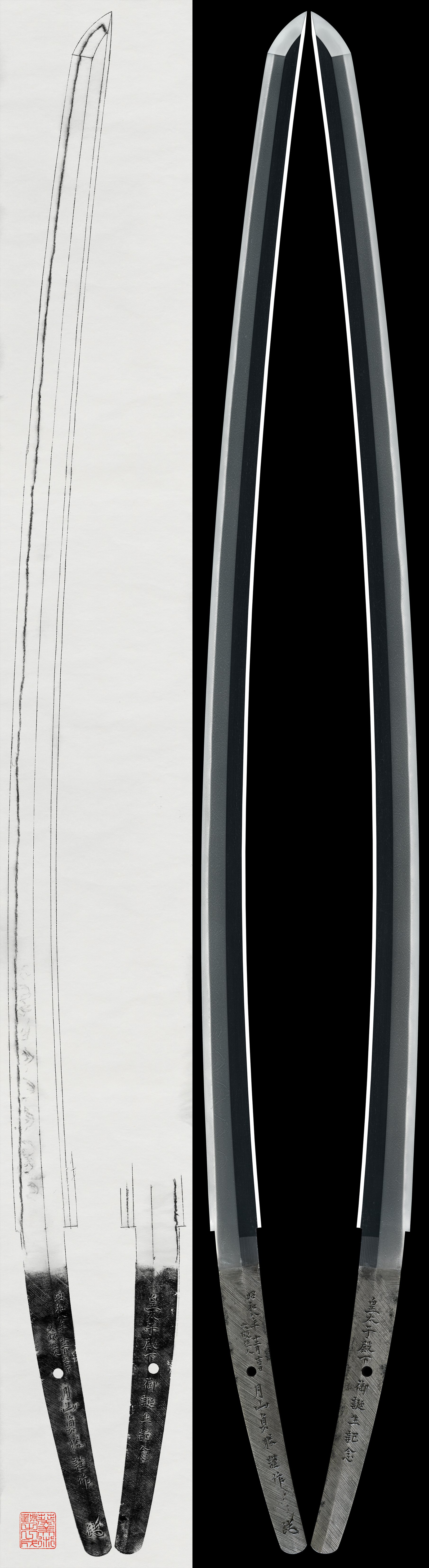
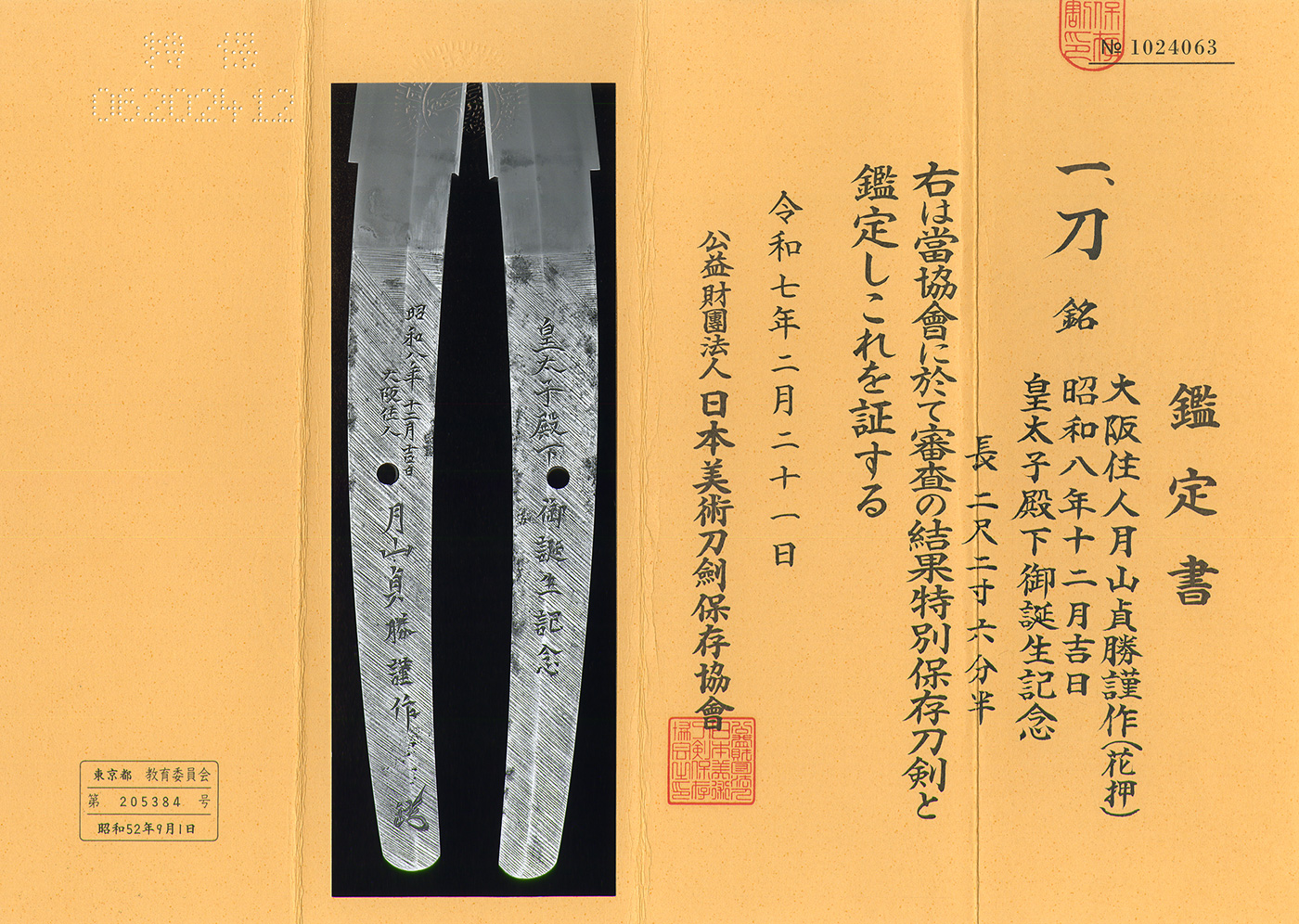
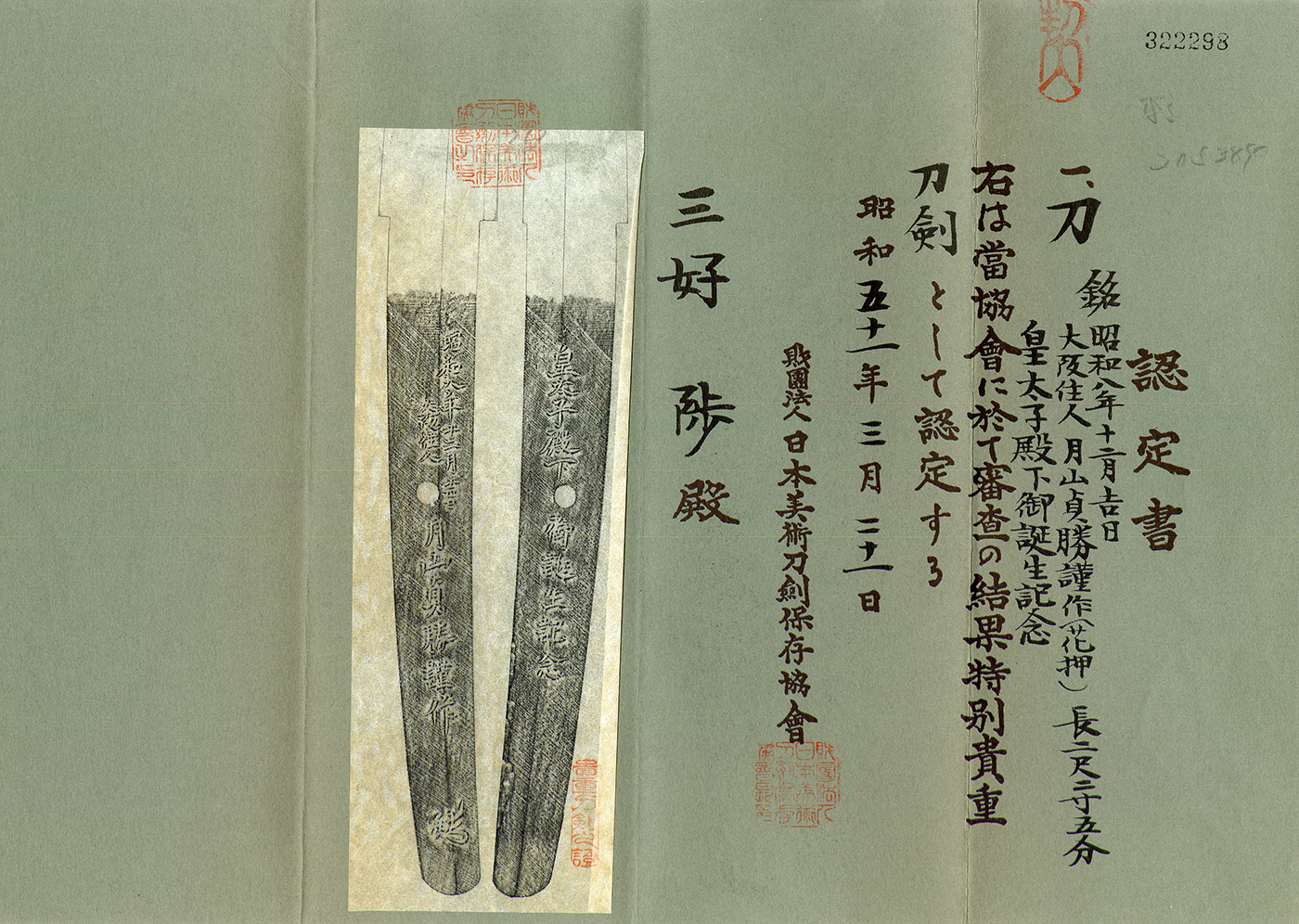
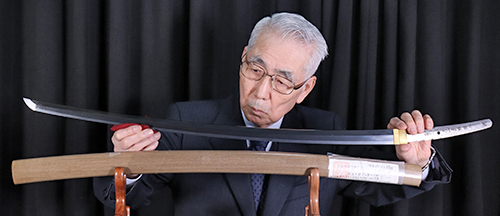
Katana in Shirasaya (NBTHK Tokubetsu Hozon Token) 昭和八年十二月吉日 Showa Hachi-nen Ju-ni-gatsu Kichijitsu 大阪住人月山貞勝謹作(花押) Osaka Junin Gassan Sadakatsu Kinsaku (Respectfully made by Gassan Sadakatsu, resident of Osaka in December 1933) We divide works in to Saijo Saku, Jyojyo Saku, Jyo Saku,and Regular Saku. This piece is ranked as Jyojyo Saku for Sadakatsu. Shape: slightly wide ande deeply carved blade with Mitsumune Jigane: Mainly Ayasugihada with fine Ji-nie. Hamon: Nie deki Suguha with Hotsure and sunagashi blending in Ayasugi patterns. Features: Gassan Sadakatsu, the son of the first-generation Gassan Sadakazu, was one of the representative swordsmiths from 20th century. He is known as a master swordsmith skilled not only in Ayasugi-hada but also in a wide variety of forging styles. This work is an excellent example of the Ayasugi-hada established by his grandather Sadayoshi, who revived the Ayasugi-hada forging pattern originally forged by the Gassan school swordsmiths of the Muromachi period. This work was made to commemorate the birth of His Imperial Highness the Crown Prince (now Emperor Emeritus) on December 23, 1933. NBTHK Tokubetsu Hozon Certificate Aoi-Art estimation Paper whole Oshigata
Offered by Aoi Art
7 on the market


As written by the shop
Shinshinto · Osaka · around 1926-1989
Fujishiro Jo saku · Tōken Taikan top 60%
7 pieces on the market now
Where Sadakatsu stands among comparable artisans: across all of nihontō, and within tradition, era, and period. The tiers (Foremost · Leading · Major · Notable) weigh official designations from the NBTHK and Japan's Agency for Cultural Affairs, together with historical honors of lasting repute such as the Sansaku and Meibutsu-chō.
Select a lens to see how it's measured.
Shinshinto · Settsu
28 pieces on the market now
| Smith | Era | Designated |
|---|---|---|
| Sadaharu貞晴 | 1865-1868 | 0 |
| Sadayoshi貞吉 | 1926-1989 | 0 |
| Yoshiaki吉明 | 1844-1848 | 0 |
| Naonobu直信 | 1854-1860 | 0 |
| Sadayoshi貞吉 | 1830-1863 | 0 |
Shōwa to the present: destruction and revival
The twentieth century nearly killed the craft twice: wartime distortion, then the occupation ban. The NBTHK’s founding in 1948 and licensed forging from 1953 rebuilt the sword as an art, crowned by Living National Treasures and the mukansa rank.
A Hozon-certified blade judged to show notably superior workmanship and a better state of preservation. The bar is higher: re-tempered blades and most unsigned Muromachi/Edo works are excluded.
The NBTHK (Nihon Bijutsu Tōken Hozon Kyōkai, the Society for the Preservation of Japanese Art Swords) is a public-interest incorporated foundation founded in 1948 and supervised by Japan’s Agency for Cultural Affairs (Bunkachō); it is based at the Japanese Sword Museum in Tokyo. Its expert panels physically examine each submitted work (shinsa) and issue a certificate (kanteishō) ranking it by artistic and historical merit. NBTHK papers are the most widely recognized standard of authentication for Japanese swords and fittings.
NBTHK official siteIf you wish to return an item, please notify us within 3 days of receipt. After this period we cannot accept cancellations. Please ship the return to us within 5 business days. Cancellation is conditional on the item being kept in the same condition as at the time of sale, so please handle it with care.
¥1,800,000