Two courts, sixty years of war, and the most dramatic silhouettes in the sword’s history: broad blades, extended points, true ōdachi later cut down into the majestic katana collectors prize. The Sōshū manner was the style of the age.
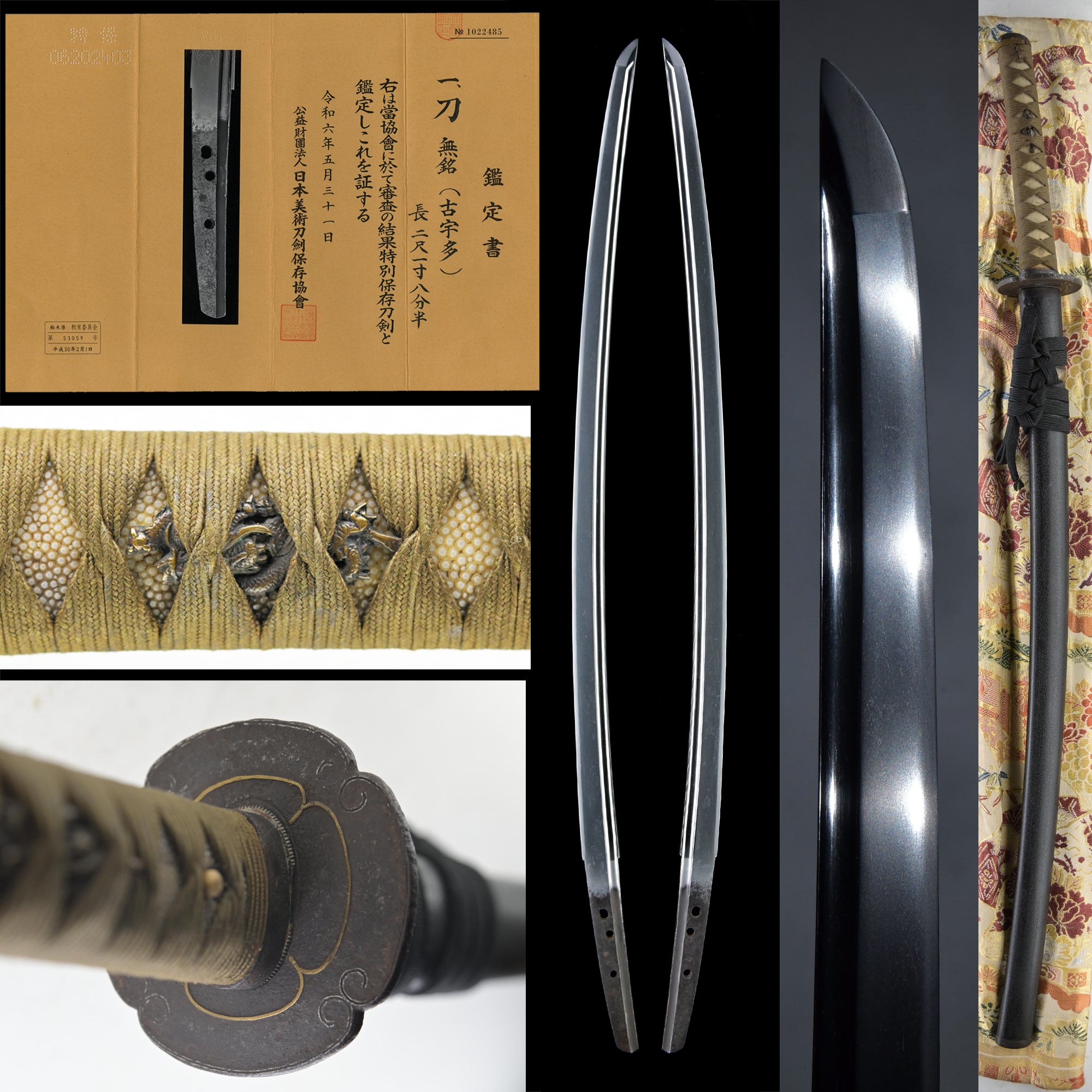
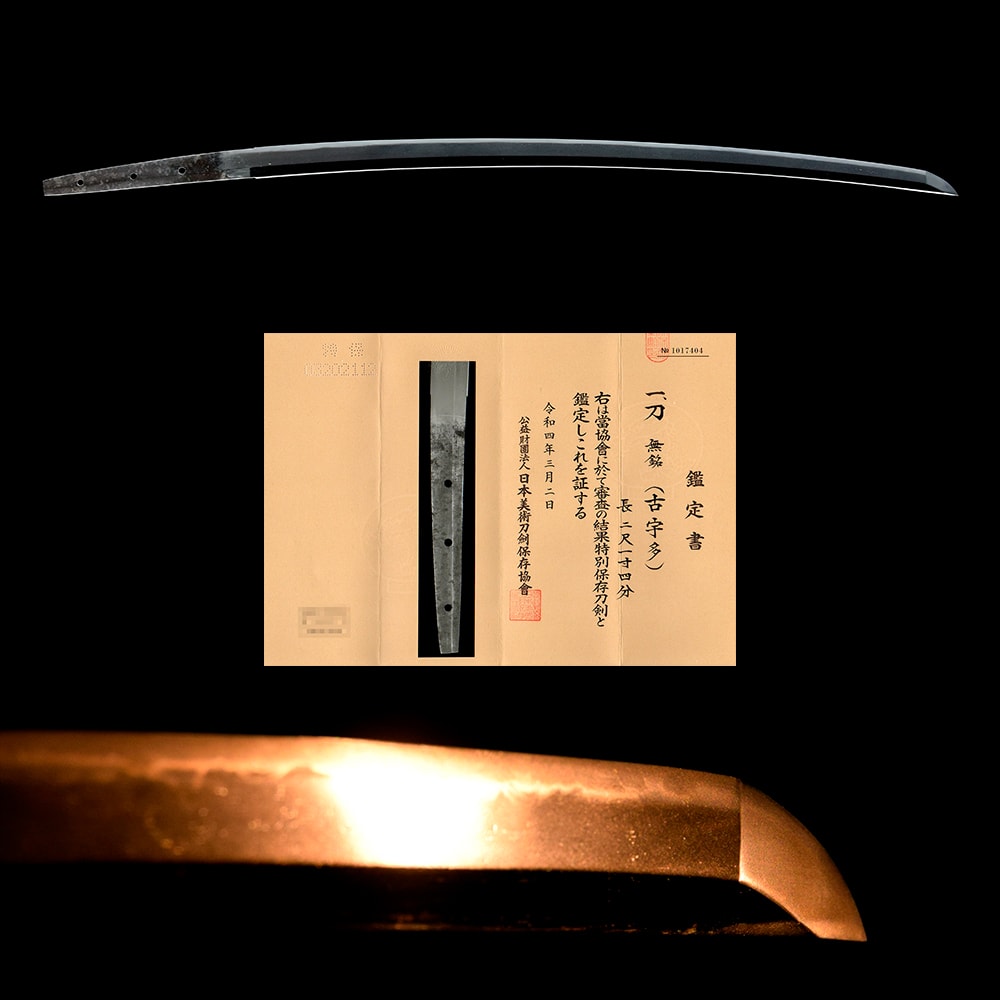
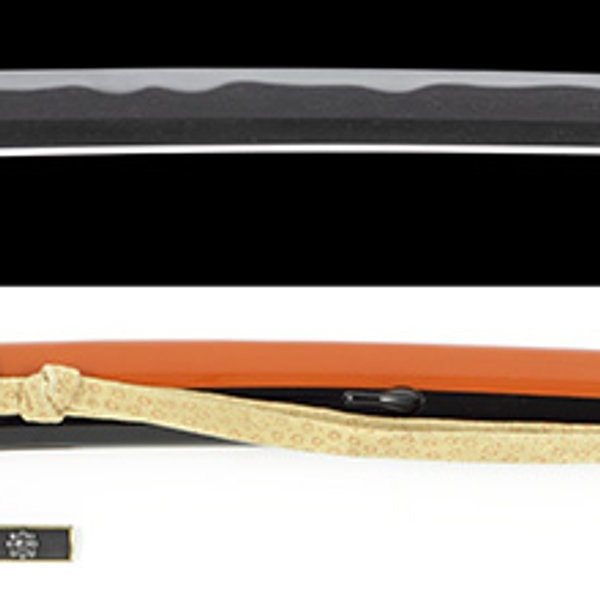
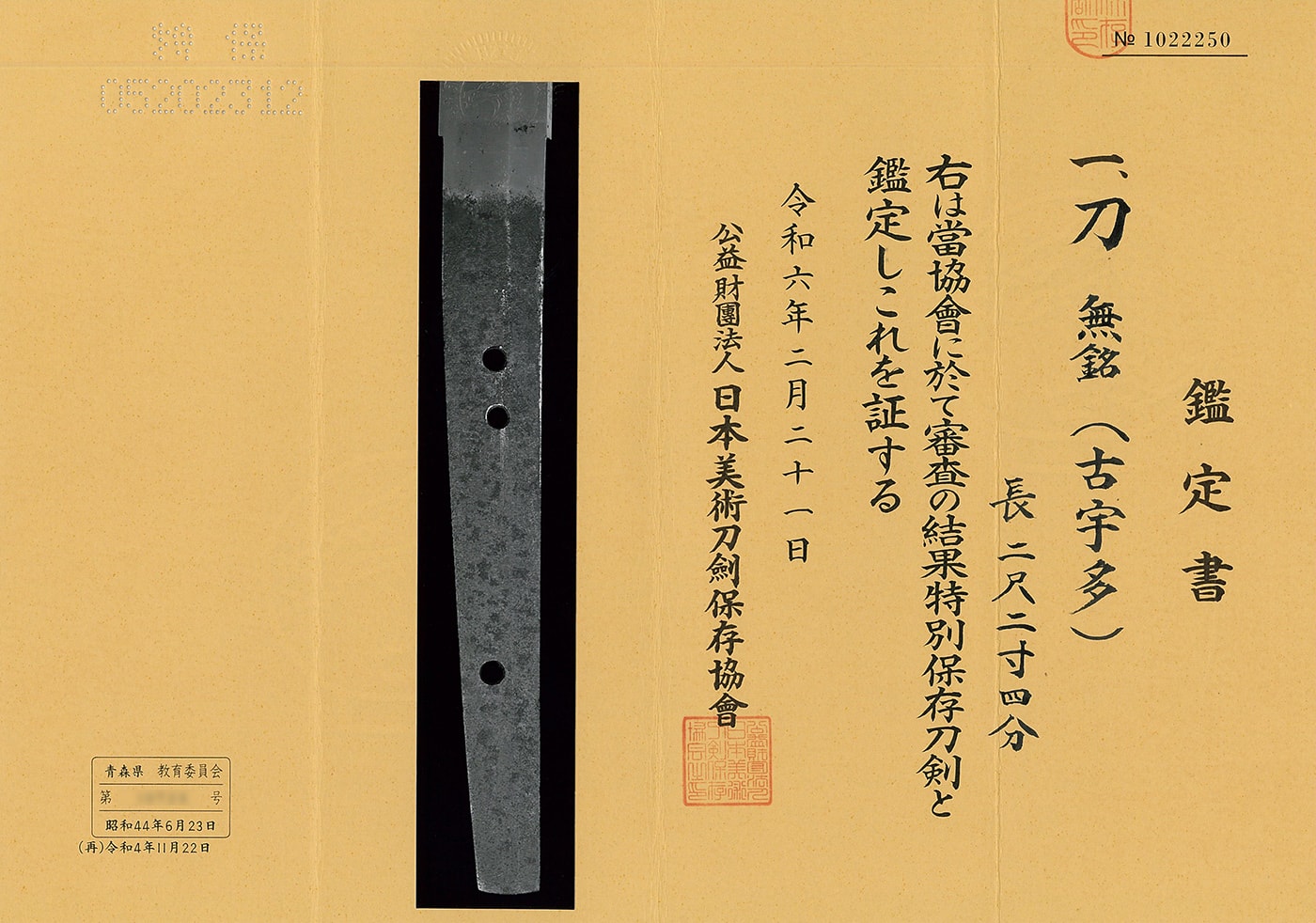
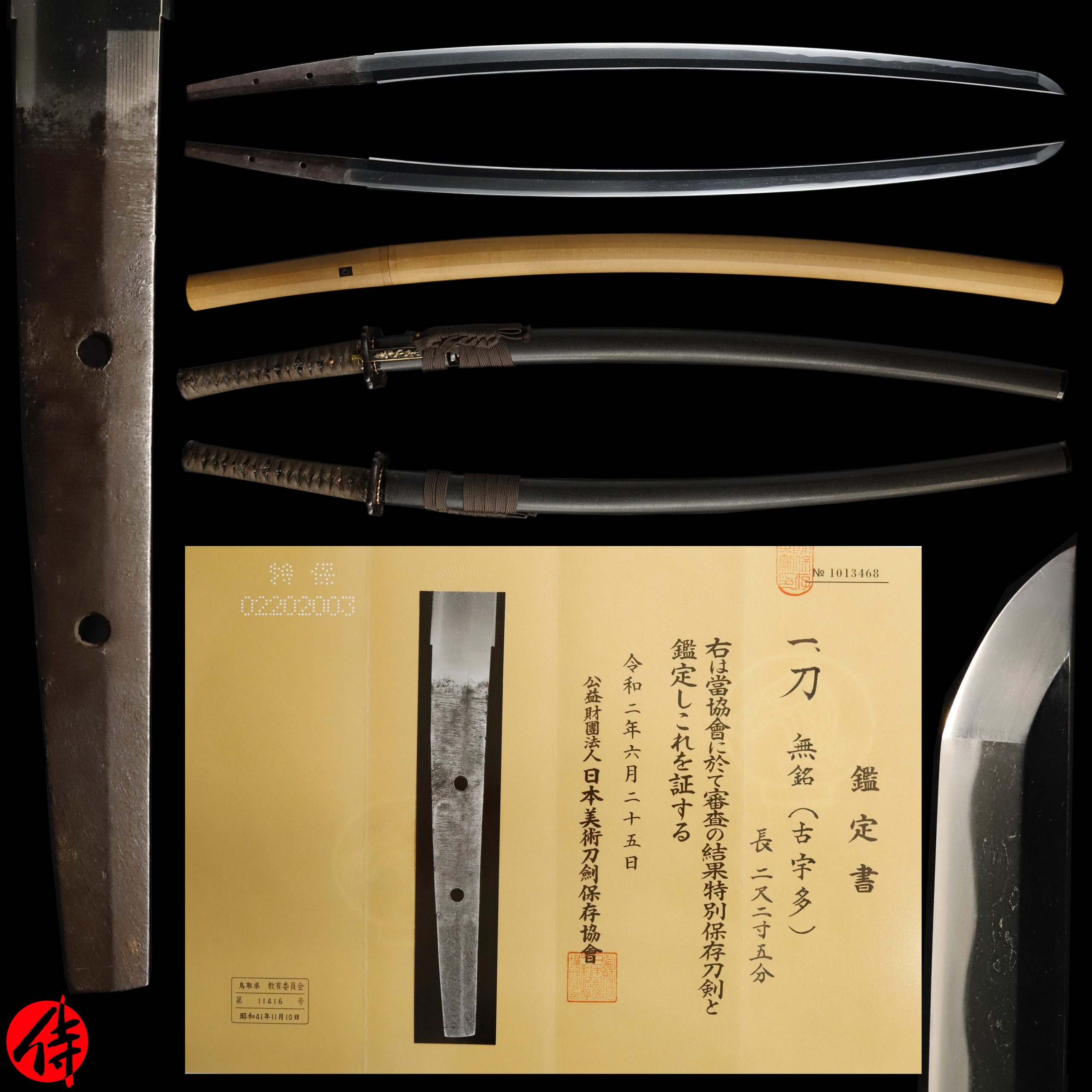
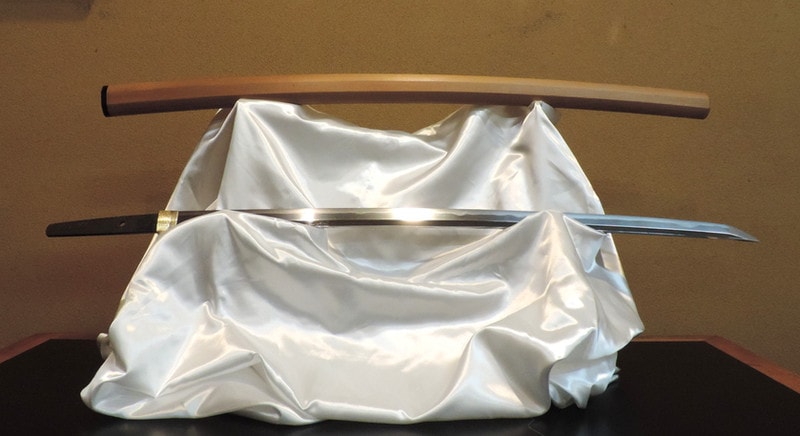
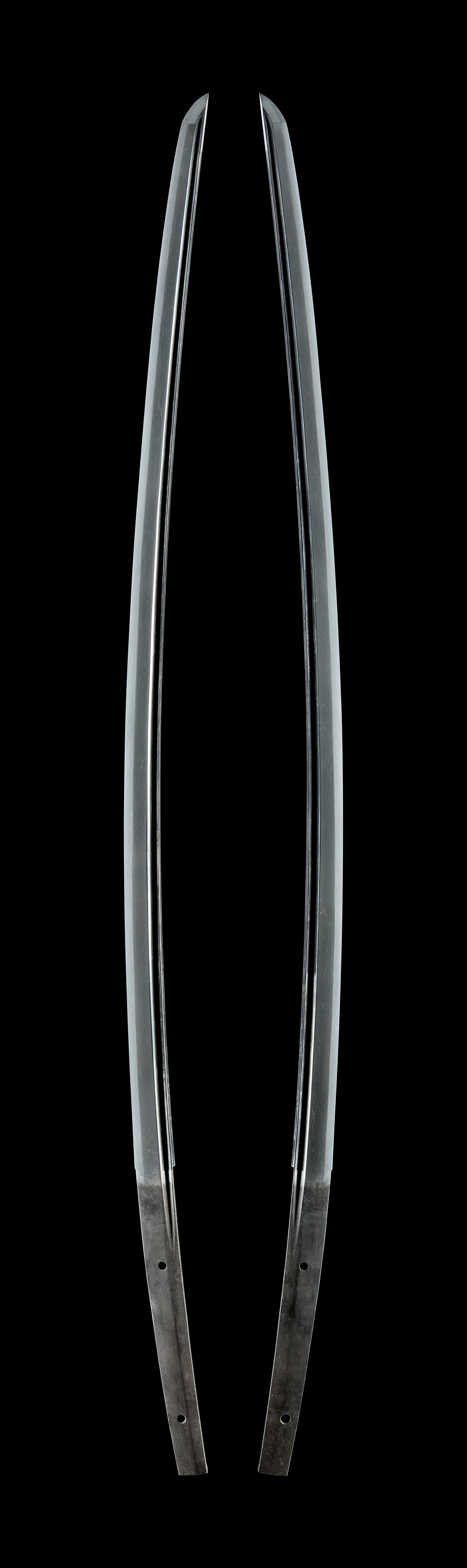
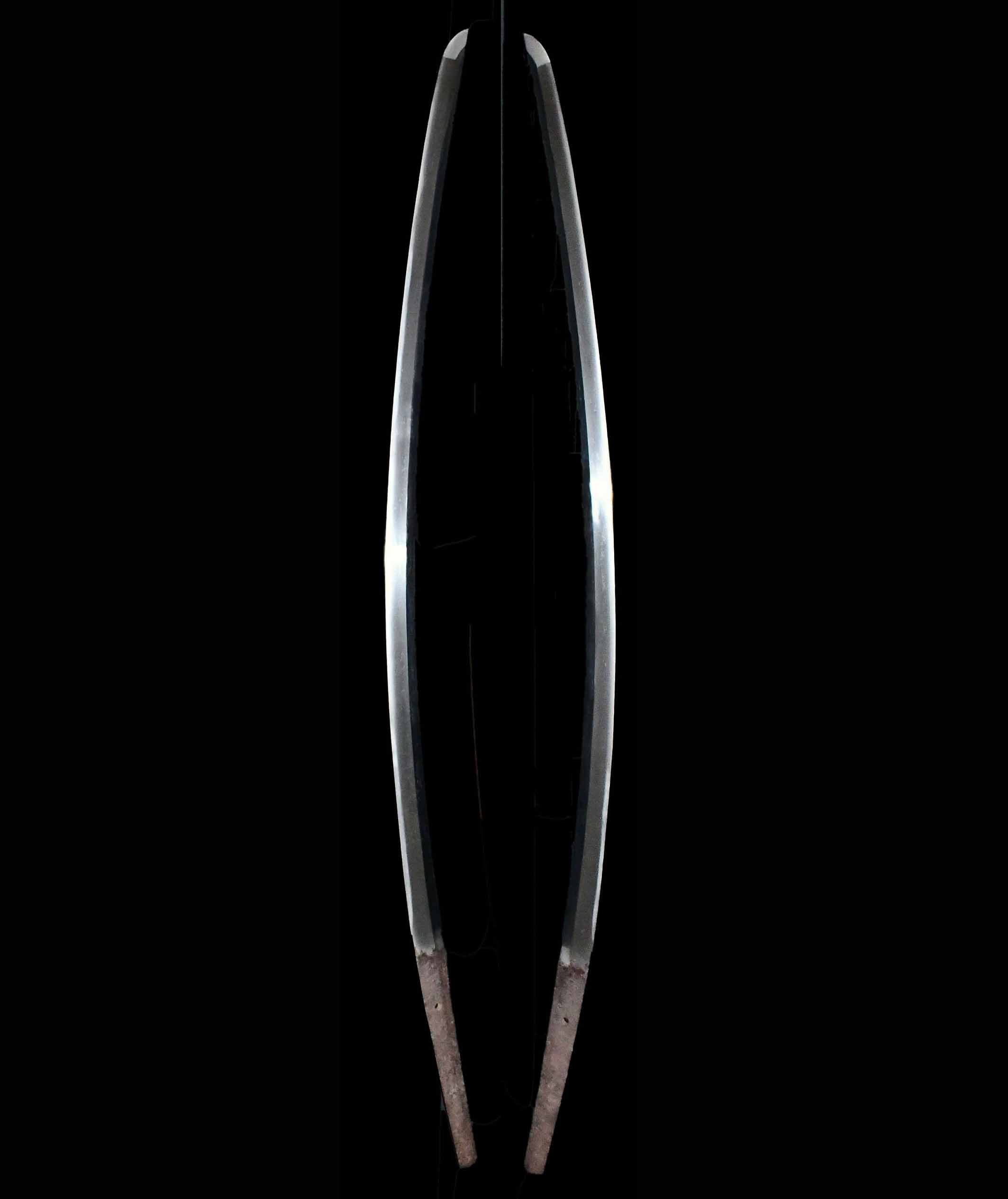
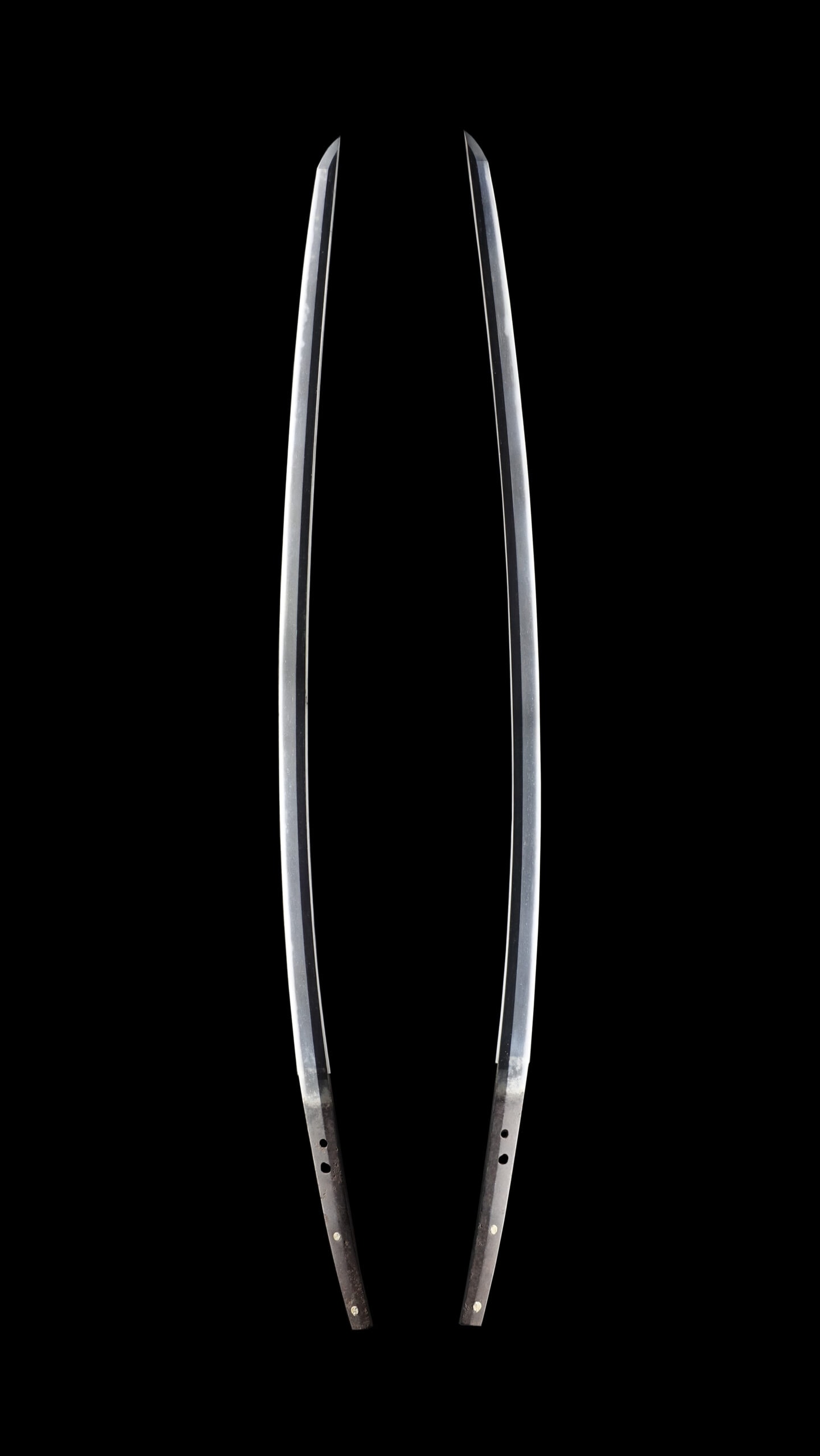
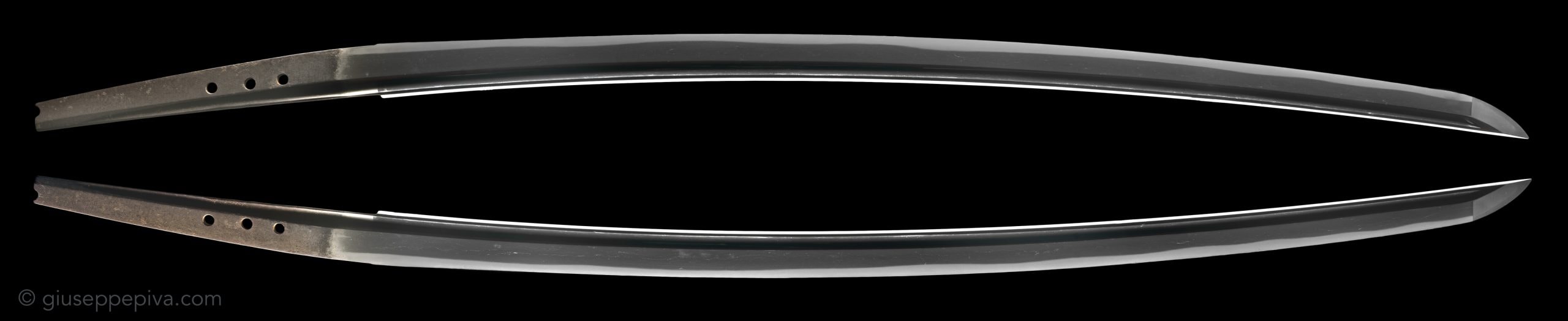
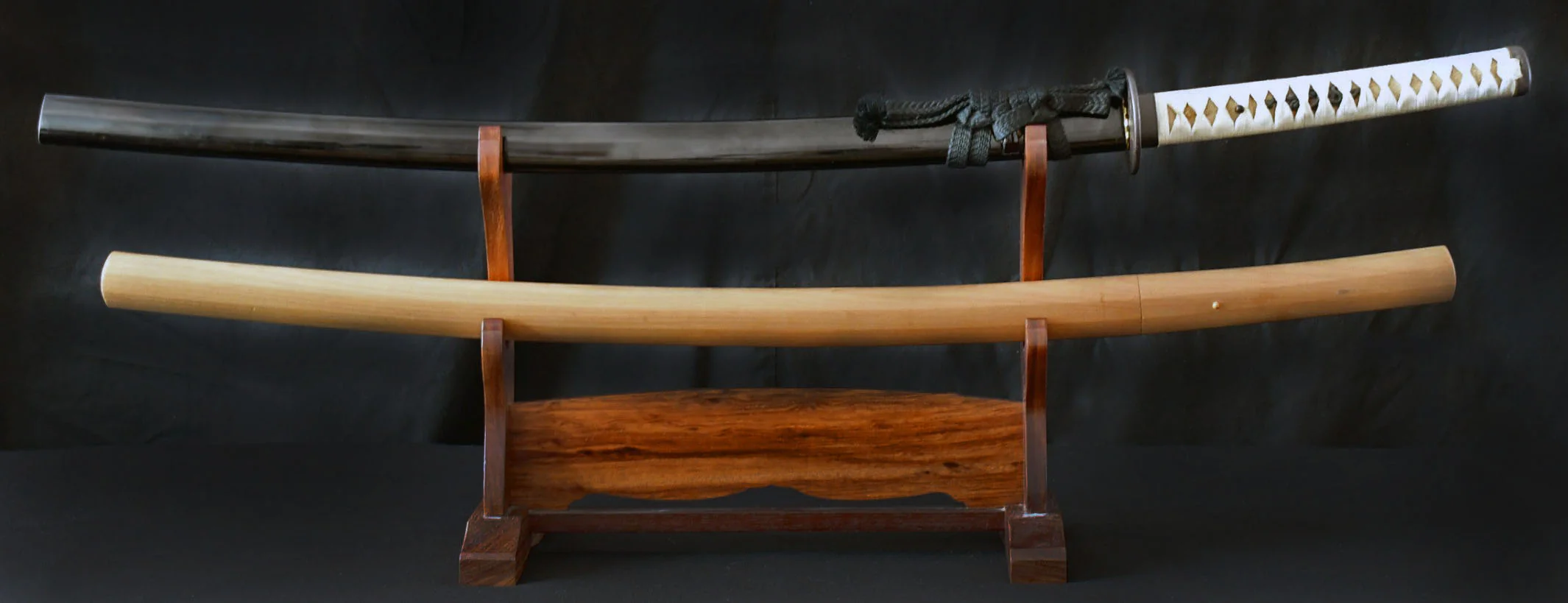
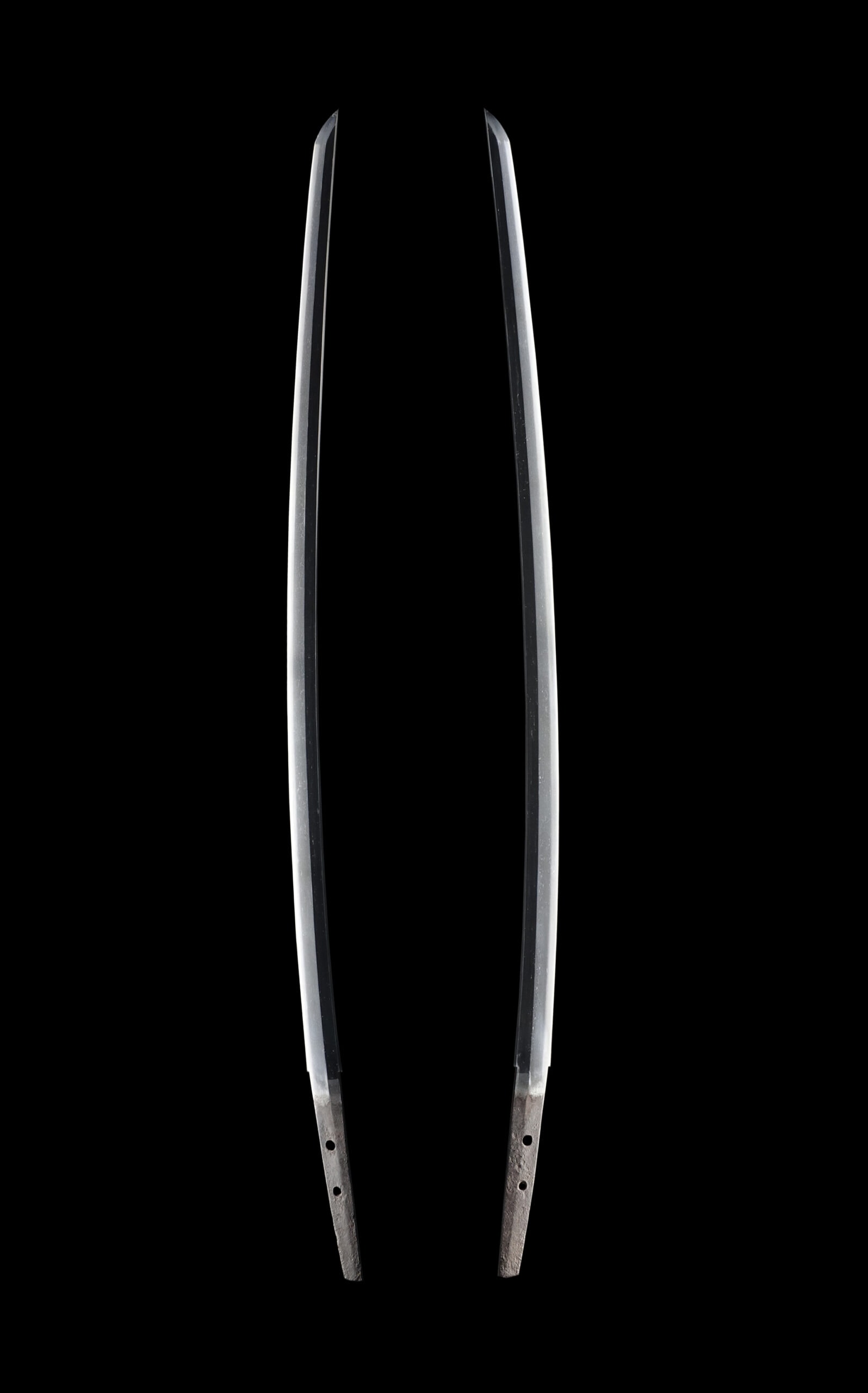
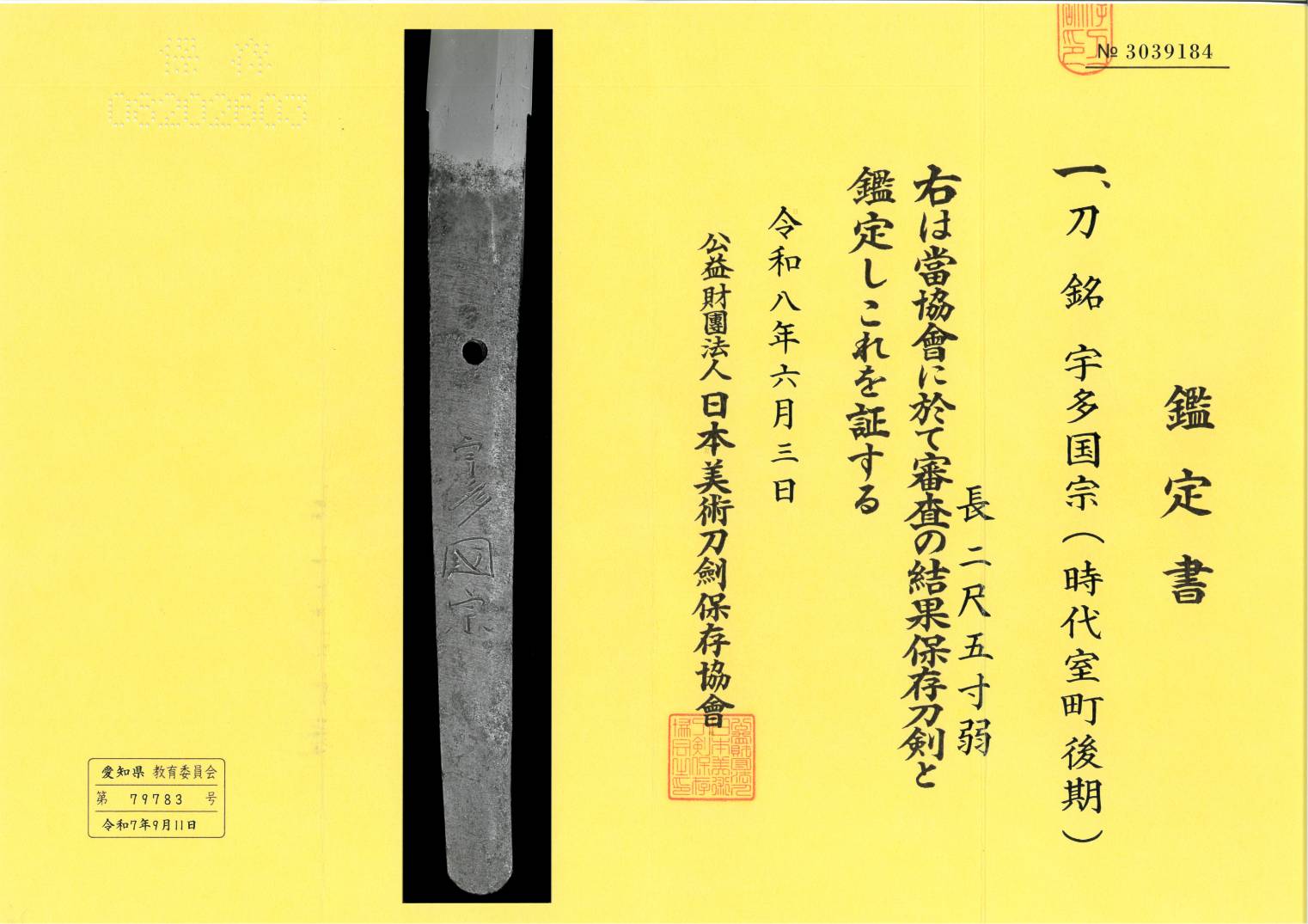
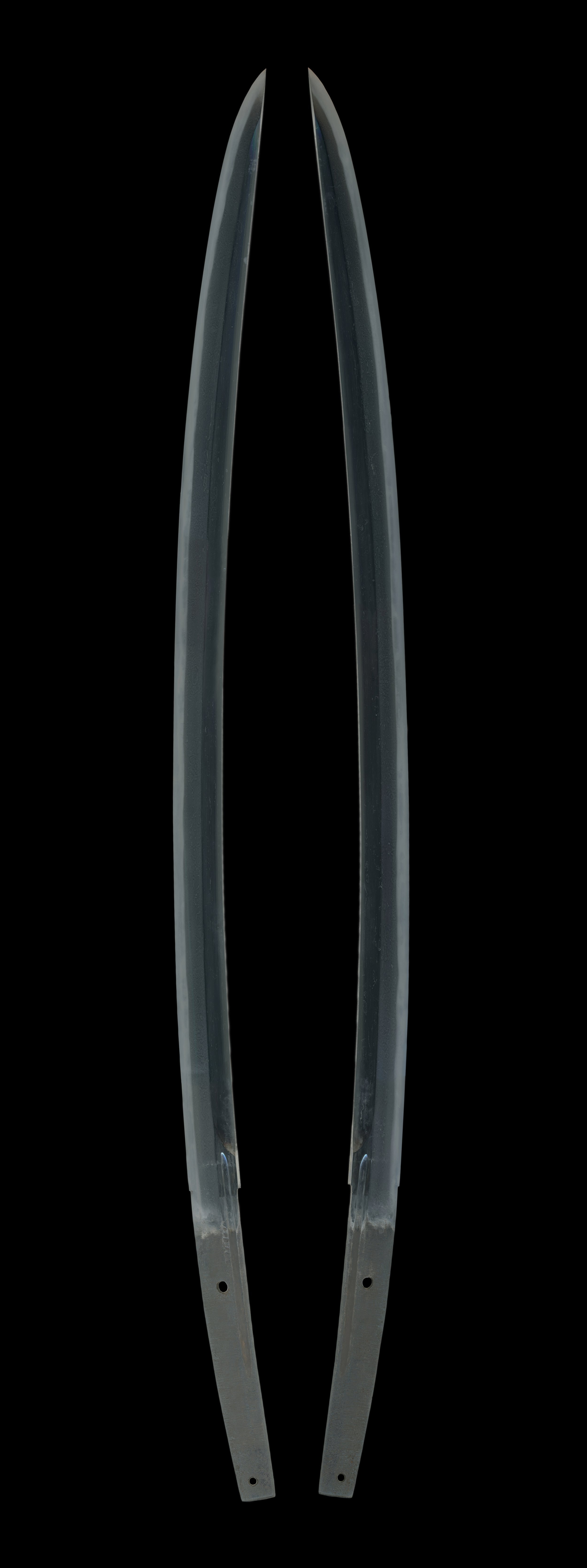
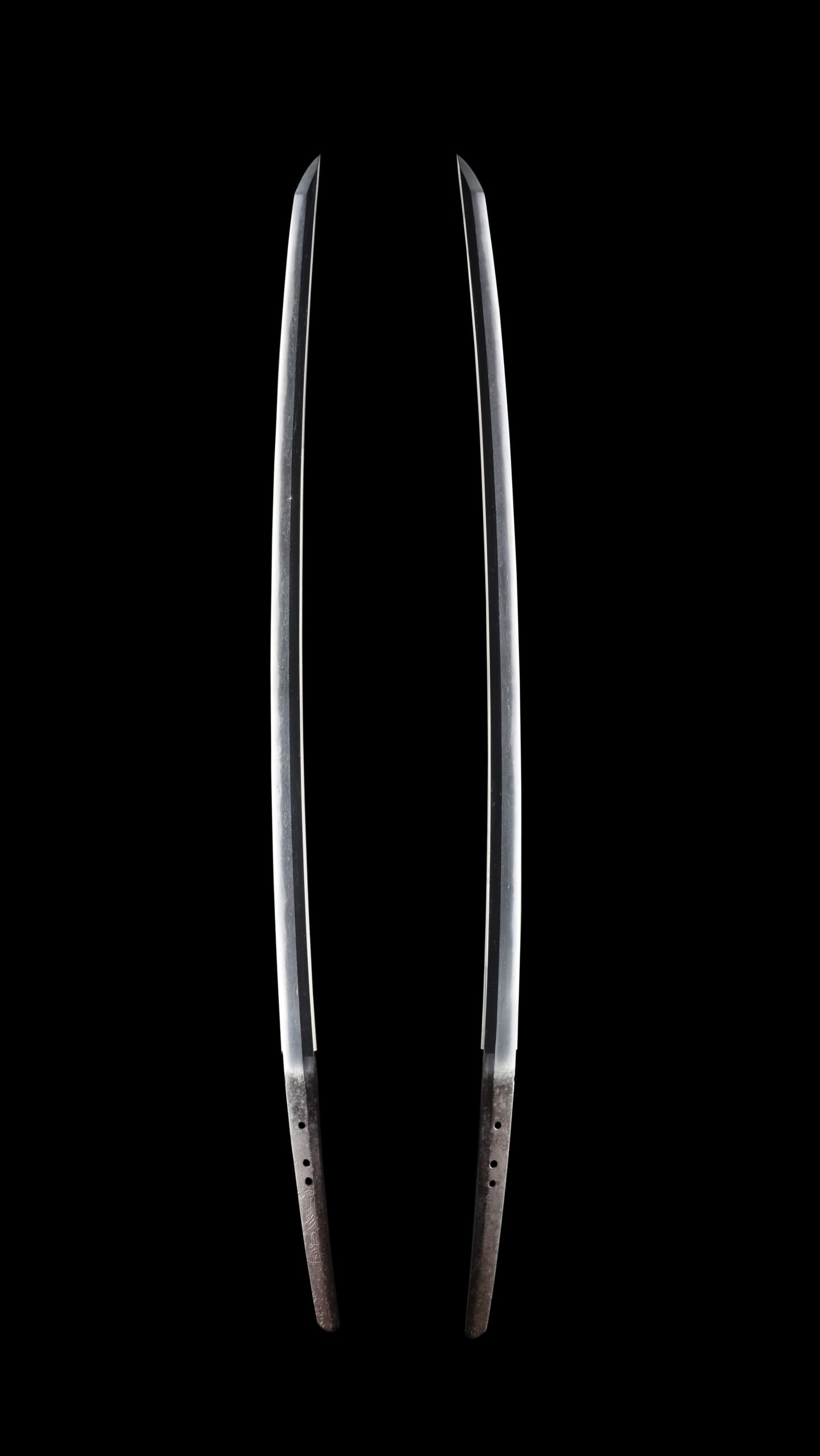
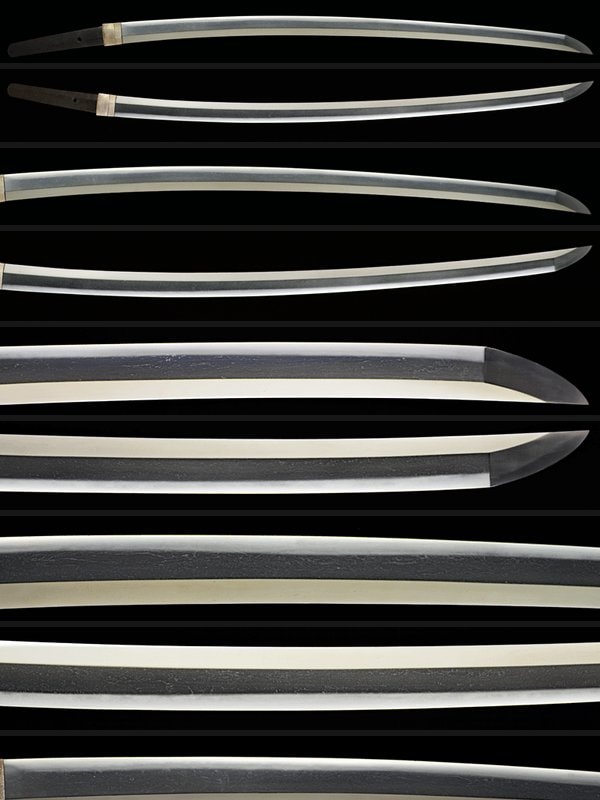
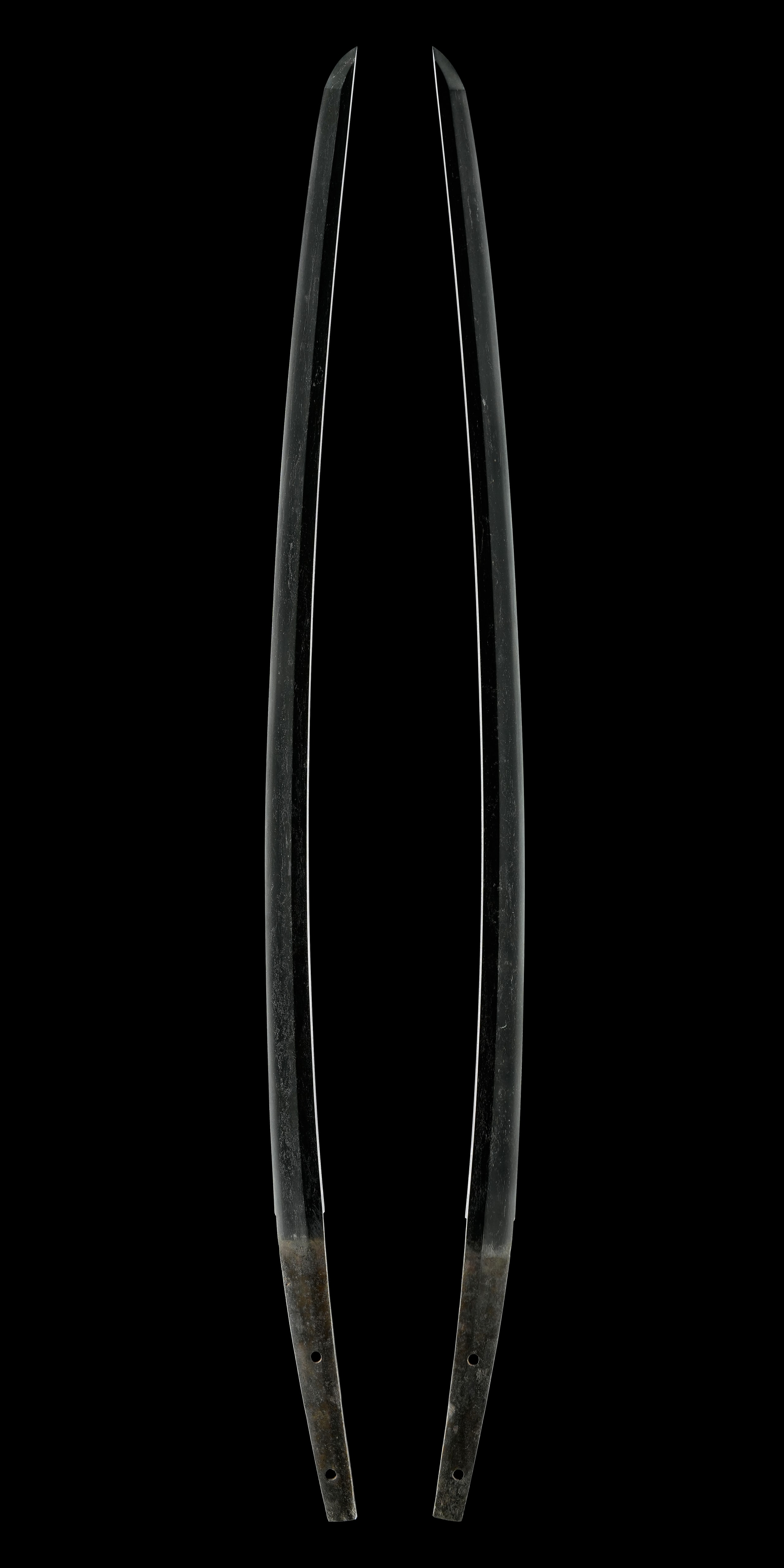
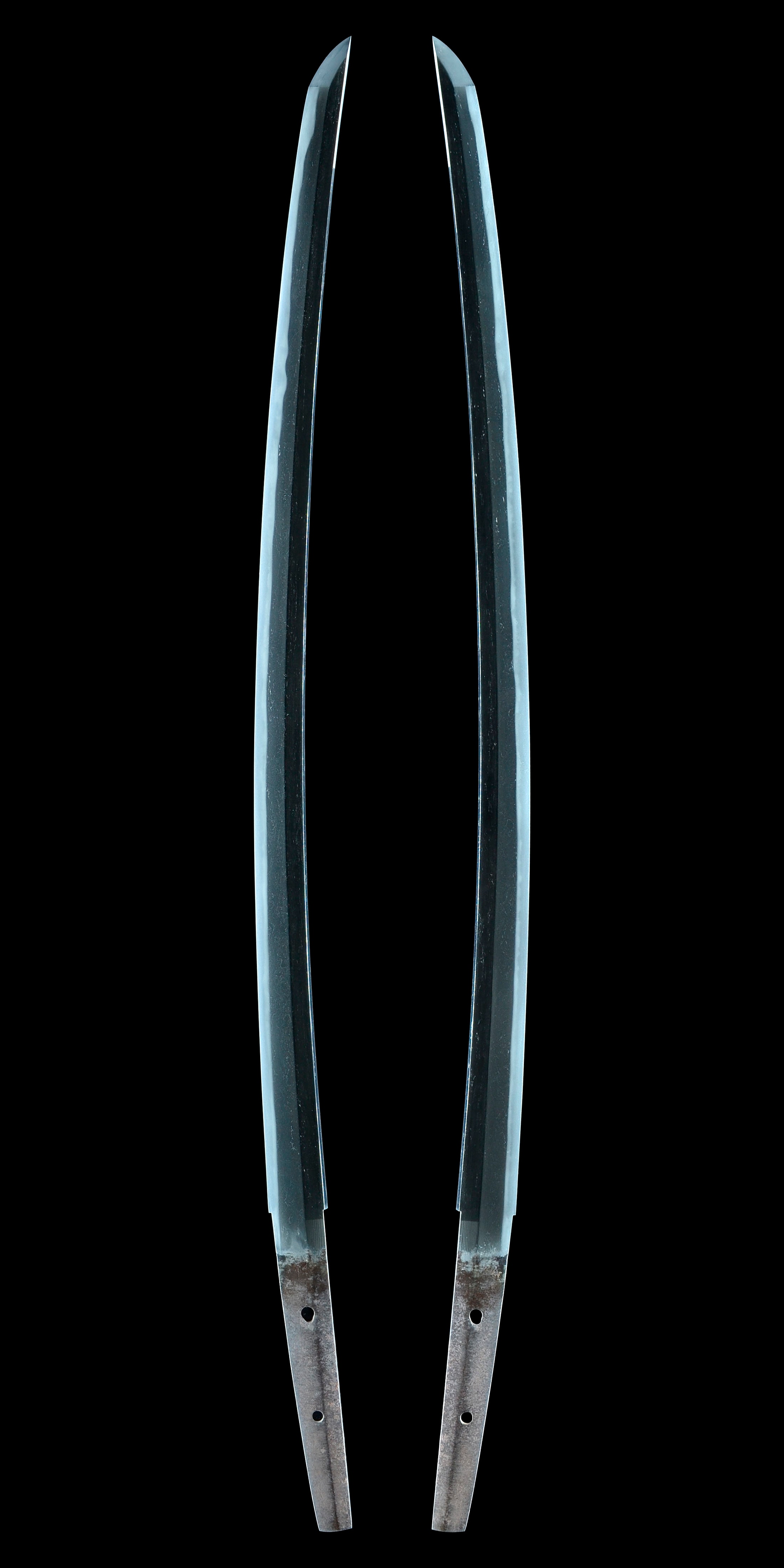
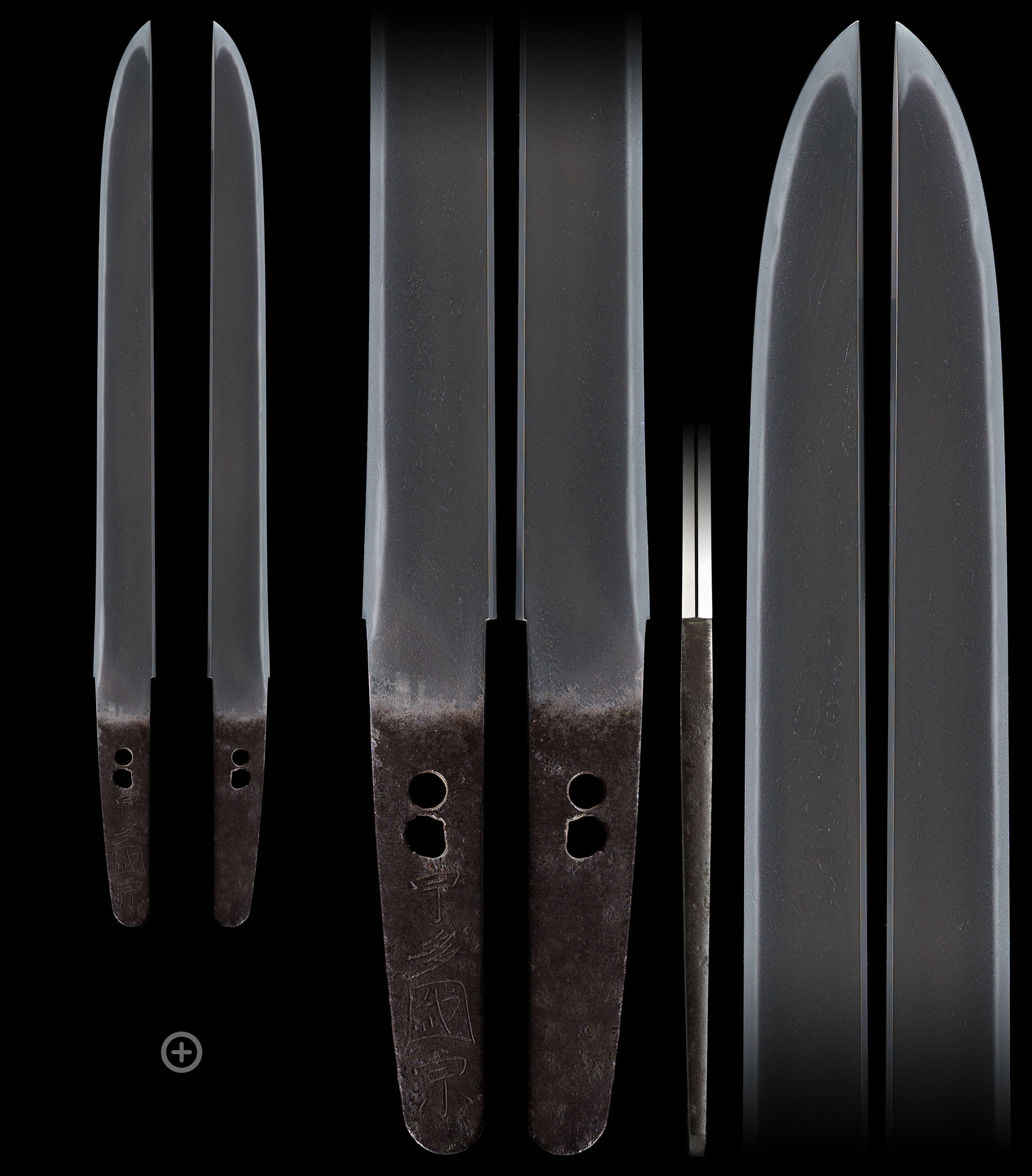
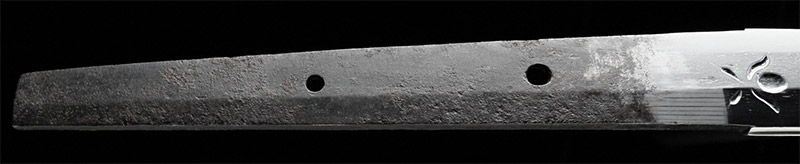
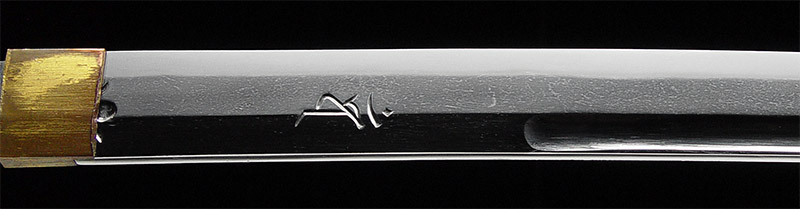
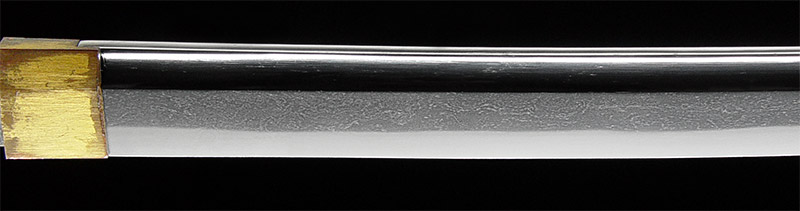
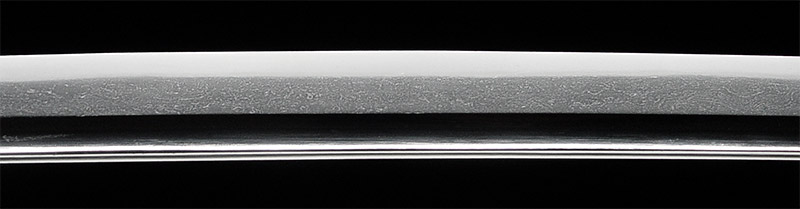
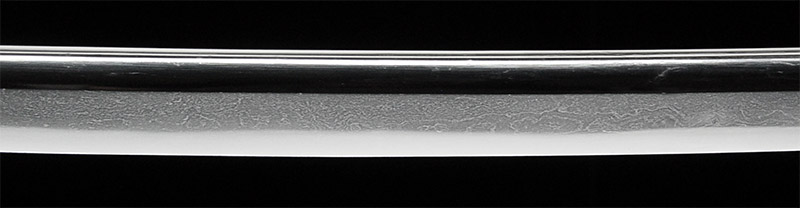
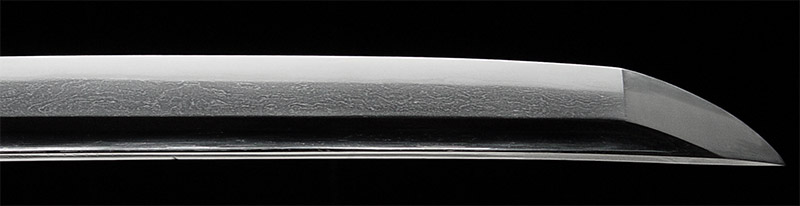
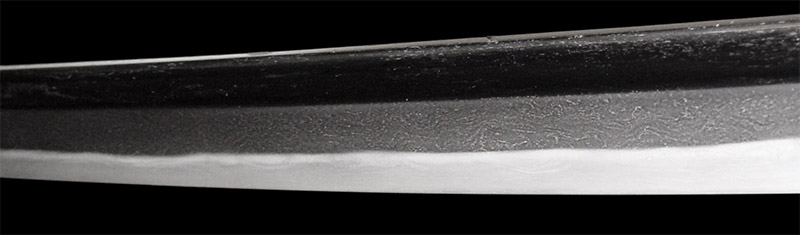
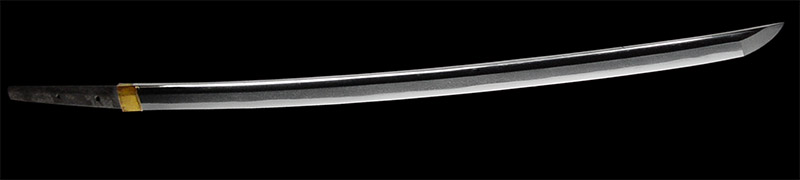
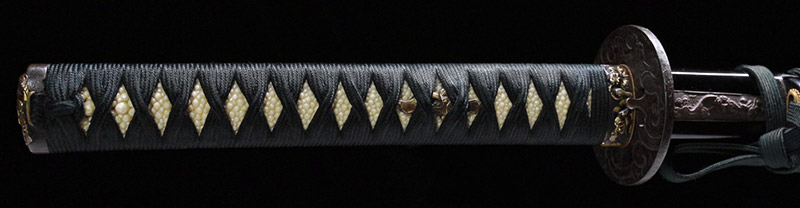
This is a mumei katana attributed to the Ko-Uda school, dating to the Nanbokucho period. The blade features a suguha hamon with fine ko-nie and delicate sunagashi and kinsuji. It has a koshirae with a black lacquer saya and fittings depicting dragons and Noh theater scenes. The sword comes with a Tokubetsu Hozon certificate from the NBTHK.
 NihontoWatch
mumei · Uda · Nanbokucho · nagasa 67.4cm · sori 1cm


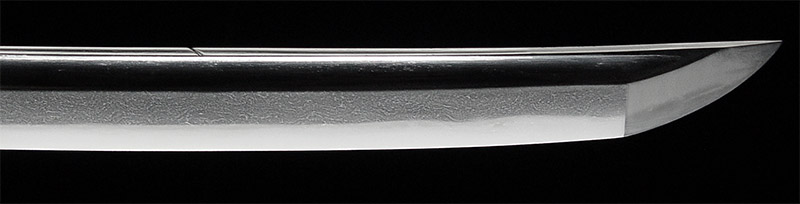
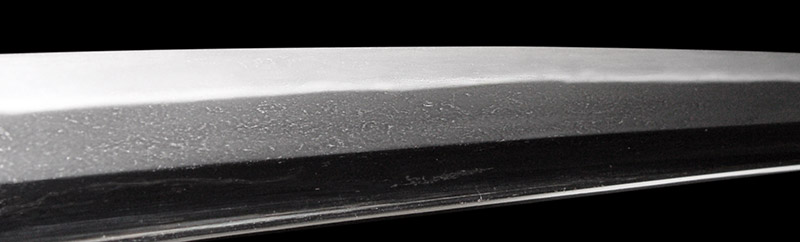
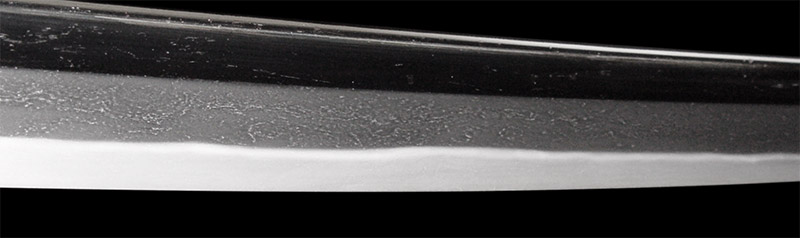
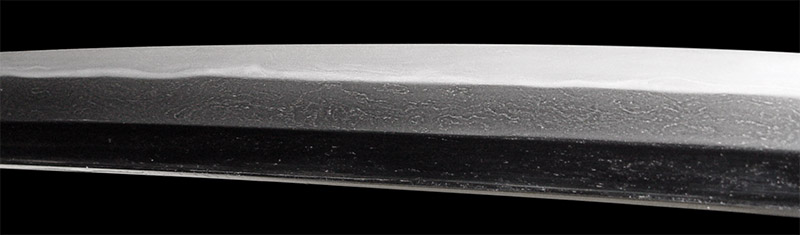
Wakimono · Etchu
8 pieces on the market now
The Ko-Uda school (古宇多) carries its origin in its own steel, a Yamato craft transplanted into the northern provinces. Its story begins with the monk-smith remembered as Ko-Nyūdō Kunimitsu, held by tradition to have come from Uda District in Yamato and to have settled at Utsu in Etchū around the Bunpō era of the late Kamakura period. From that migration the school took its name and its grounding manner. Kunimitsu is the founder and the hinge of the whole attribution, for almost no securely signed first-generation work survives, and his earliest pieces are read instead by their strong Yamato-den character. Through the Nanbokuchō period the line sent out the smiths gathered under the Ko-Uda name, among them his sons Kunifusa and Kunimune, together with Kunitsugu and Tomonori, who reused the house names down the generations as the school flourished toward the Muromachi. Within that long descent the term Ko-Uda is reserved for work of the late Kamakura through the Nanbokuchō, the formative early phase before the later Uda manner settled. A shared vocabulary binds the early generations, set first by the Yamato root the school never lost. The kitae is an itame, frequently mixed with mokume and a flowing nagare grain that tends to stand rather than lie flat, often standing into masame toward the edge, the surface carrying ji-nie with dark chikei entering. The steel takes a blackish, kanairo cast and grows hazy and standing in places, and where the forging tightens a shirake-utsuri stands clearly in the ji; this northern color is the feature the appraisal turns on, the character distinctive to works of the north.
Over it the smiths temper a suguha or quiet ko-midare, mixing in ko-gunome and shallow notare, the hardening running in nie more than nioi, the nioiguchi tending to sink rather than to glow. Into the habuchi they work the Yamato activity the school keeps as its own: fine hotsure, crossing kuichigai-ba, crescent uchinoke, with sunagashi streaming and kinsuji entering, and a bōshi that runs straight into a ko-maru or sweeps off in hakikake. A second, Sōshū-leaning manner runs beside the first, traced to the Uda study under Etchū Norishige with the smith called Gō set beside him as a model; here the temper opens into notare and gunome dense with nie, calling the Sōshū tradition to mind, though none are of purely Sōshū construction. What separates Ko-Uda from the later Uda is this early concentration of Yamato hataraki and the darkened, dry-standing steel, with Kunifusa seen in a tightly forged jigane and Kunimune more often in a standing grain. To kantei Ko-Uda is to return a nie-laden blade to the northern provinces by its jigane and its sinking temper, since a piece dense with nie, kinsuji and sunagashi that reads at first as a high Sōshū hand is held to Uda by its blackish, standing steel and its rounded ha-nie, the resemblance stopping at construction. The published commentary divides the Sōshū debt itself, assigning the finely forged bright-steeled work to the current of Yoshihiro and the standing-grain blackish-steeled work to that of Norishige. Among the best members Kunifusa and Kunimune stand as representative hands, with the founder Kunimitsu read through both the archaic Yamato face and the bolder Nanbokuchō shapes, and Tomonori ranked among the more able of the line, his quiet whitish suguha and his nie-laden hitatsura work sorting by the presence or absence of streaming nie. The school's record is overwhelmingly mumei and ō-suriage, appraised to the group rather than to a single hand, so that a signed blade of any of these names is already a document and a signed early piece rarer still. Recorded provenance is thin, the work held rather than traded, descending through such hands as the Kurokawa Institute of Ancient Cultures and passing only seldom through the market; for the student of how the Yamato and Sōshū currents met in the north, the Ko-Uda blades are the place where that meeting can actually be seen. Learn more →
| Smith | Era | Designated |
|---|---|---|
| Kunifusa國房 | 1368-1405 | 17 |
| Kunimitsu國光 | 1362-1368 | 9 |
| Tomonori友則 | 1390-1394 | 4 |
| Kunitsugu國次 | 1356-1361 | 1 |
| Kunimitsu國光 | 1317-1319 | 2 |
The Nanbokuchō period (1333 to 1392)
Two courts, sixty years of war, and the most dramatic silhouettes in the sword’s history: broad blades, extended points, true ōdachi later cut down into the majestic katana collectors prize. The Sōshū manner was the style of the age.
A Hozon-certified blade judged to show notably superior workmanship and a better state of preservation. The bar is higher: re-tempered blades and most unsigned Muromachi/Edo works are excluded.
The NBTHK (Nihon Bijutsu Tōken Hozon Kyōkai, the Society for the Preservation of Japanese Art Swords) is a public-interest incorporated foundation founded in 1948 and supervised by Japan’s Agency for Cultural Affairs (Bunkachō); it is based at the Japanese Sword Museum in Tokyo. Its expert panels physically examine each submitted work (shinsa) and issue a certificate (kanteishō) ranking it by artistic and historical merit. NBTHK papers are the most widely recognized standard of authentication for Japanese swords and fittings.
NBTHK official siteIf the item is not to your liking, please feel free to return it for any reason. Return shipping is the customer's responsibility. After the item arrives and we confirm it is in the same condition as at the time of sale, we transfer the refund to your designated account the same day. Purchases made at the store are outside the scope of cooling-off.