Sengoku Seki was an industry: smiths organized under their tutelary Kasuga shrine, arming the war bands of central Japan. Magoroku Kanemoto’s sanbonsugi and the finest Kanesada work prove quality survived inside mass production.
 NihontoWatchNihontoWatch
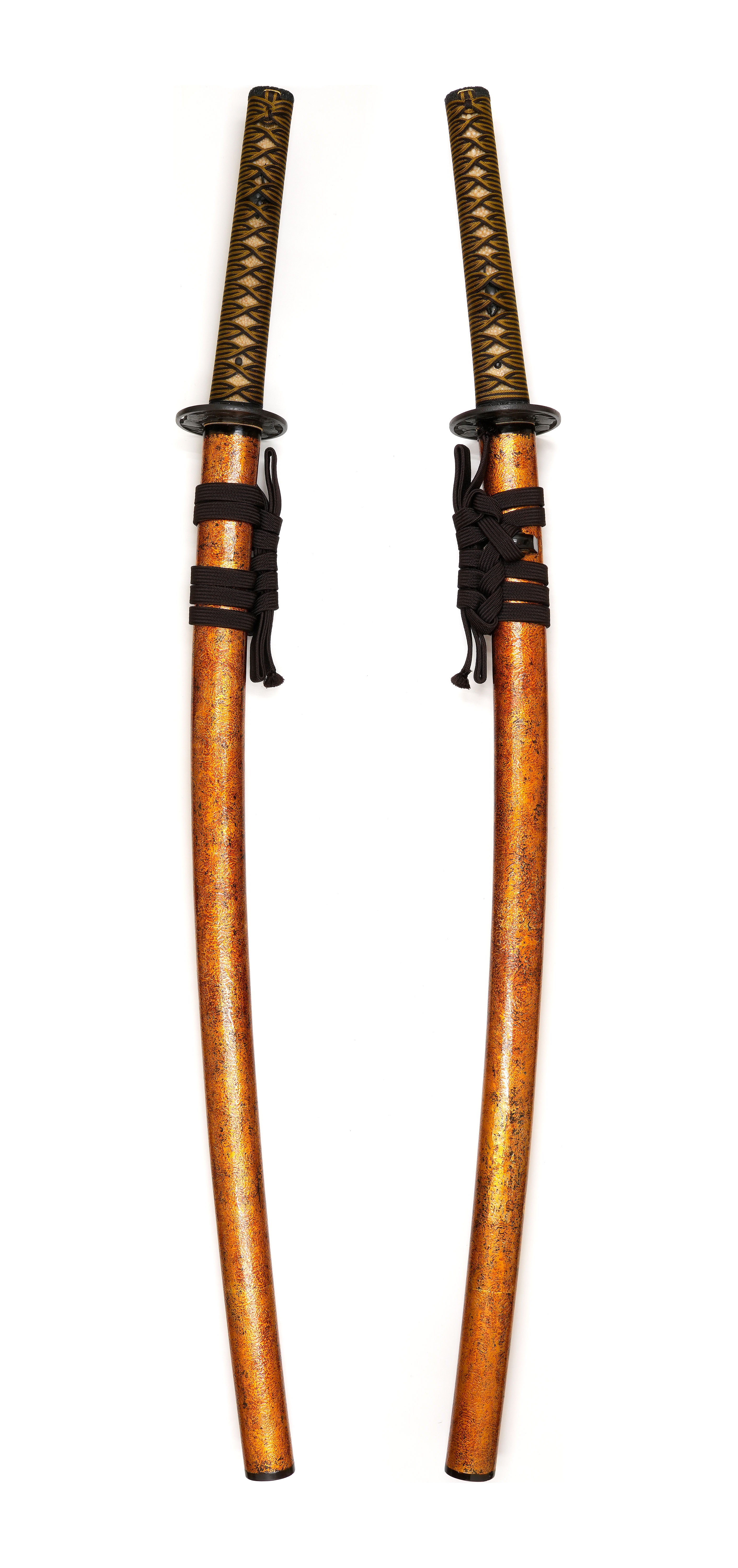
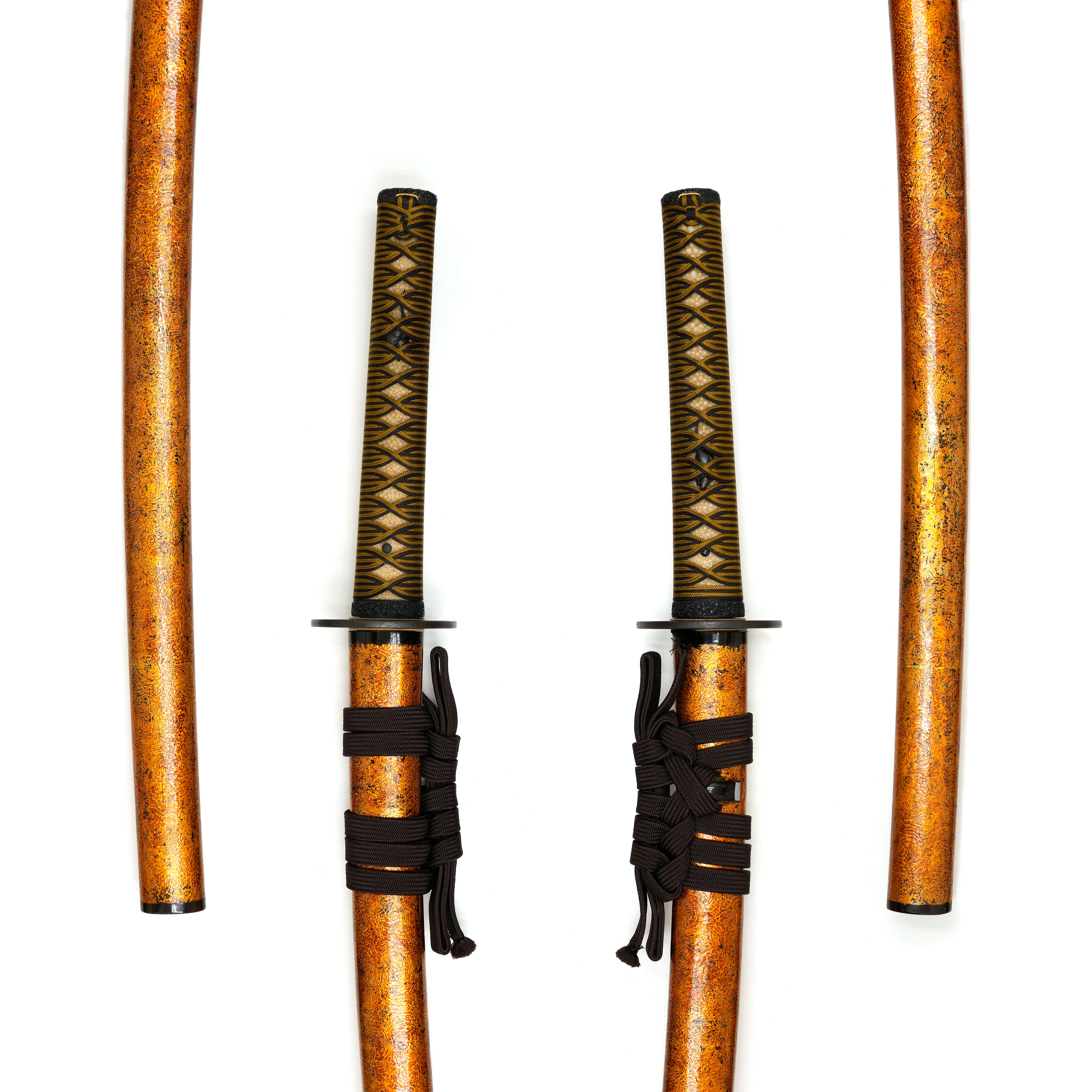
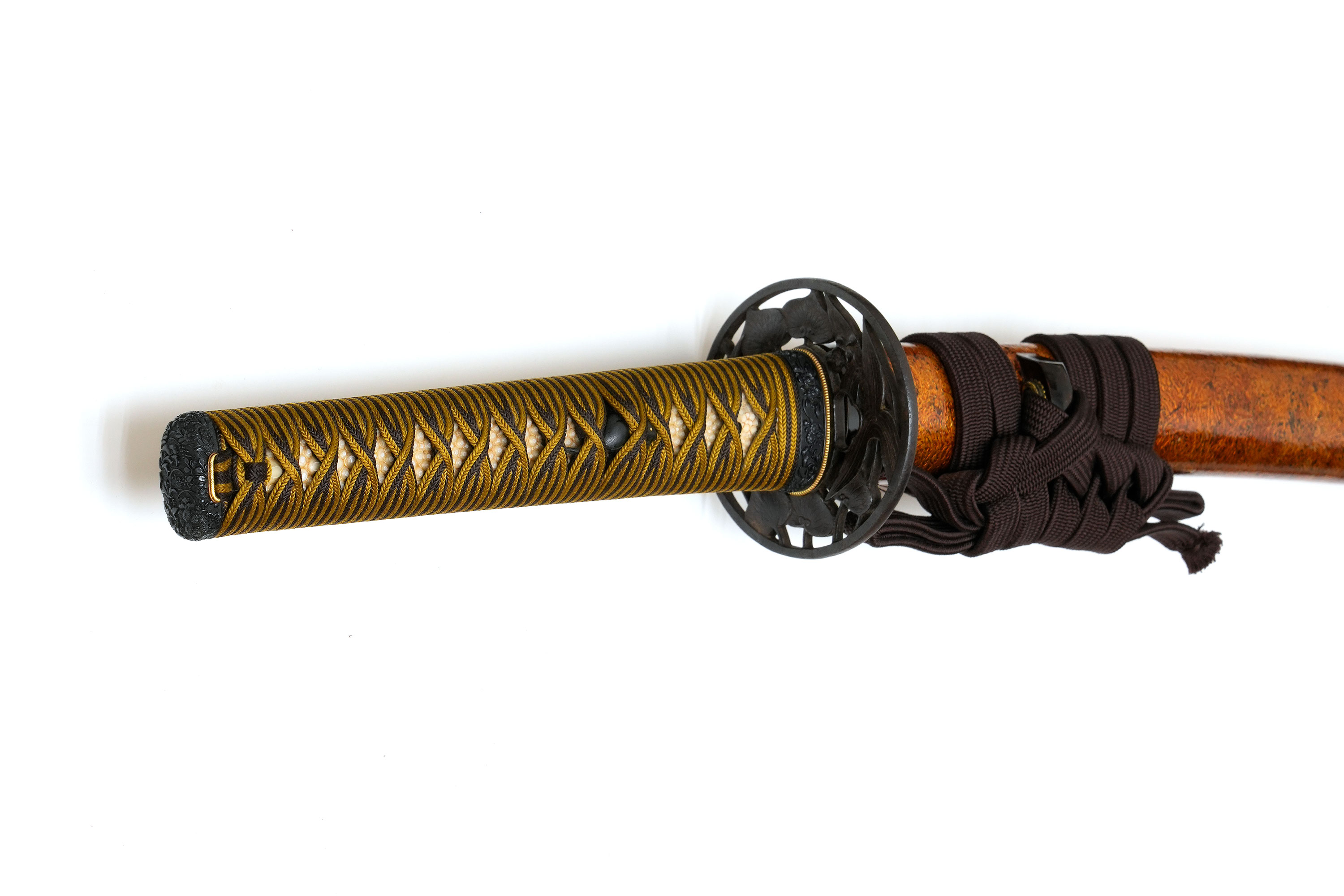
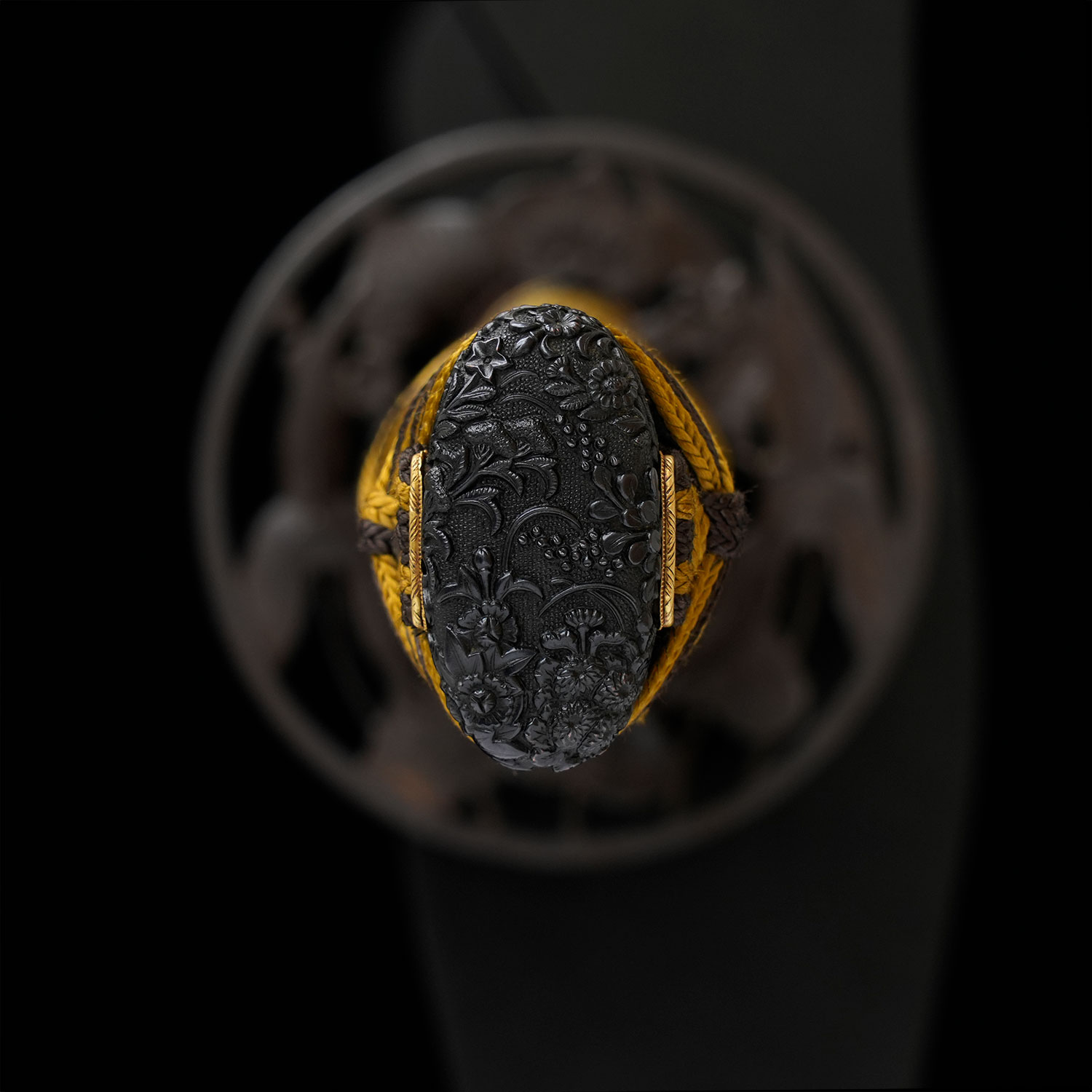
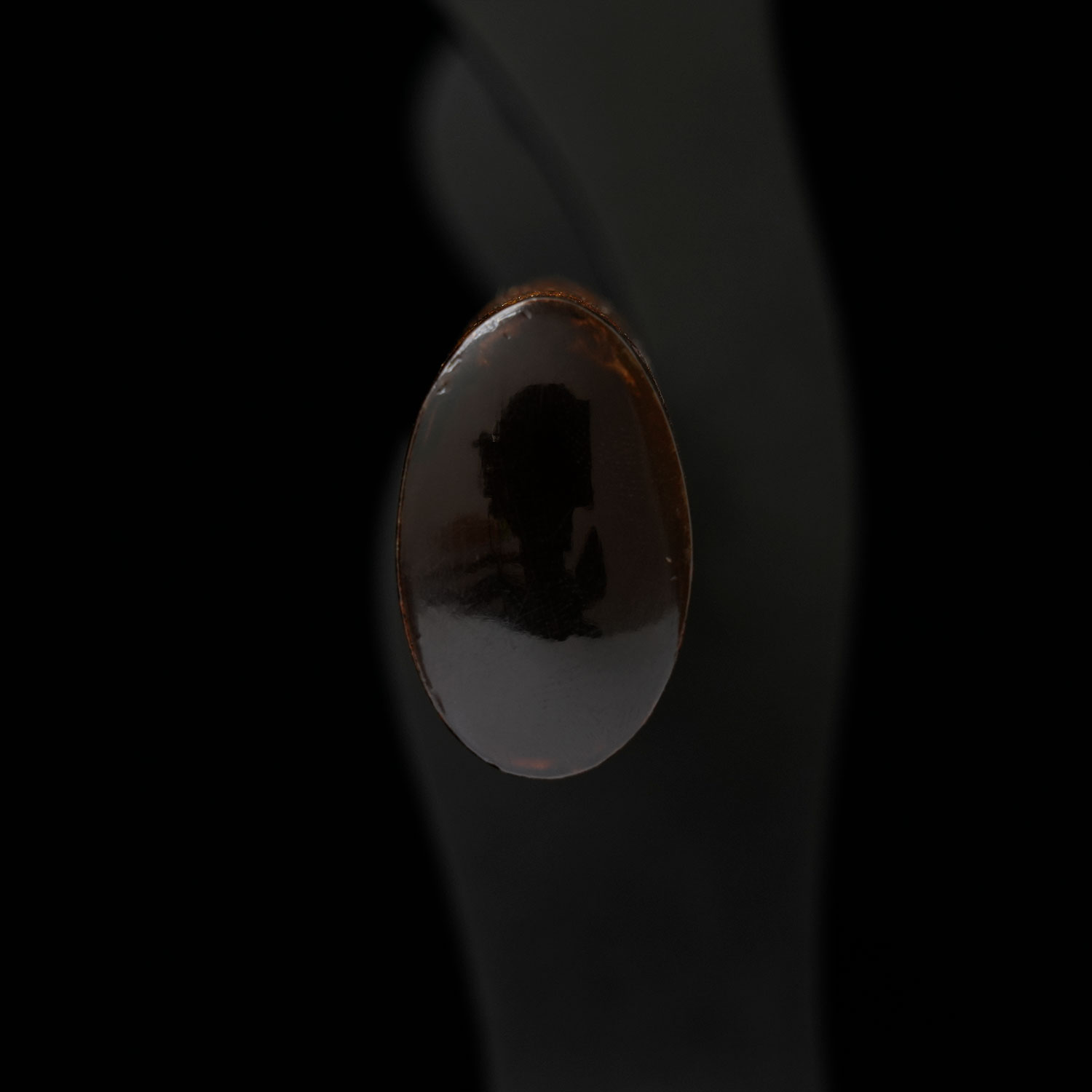
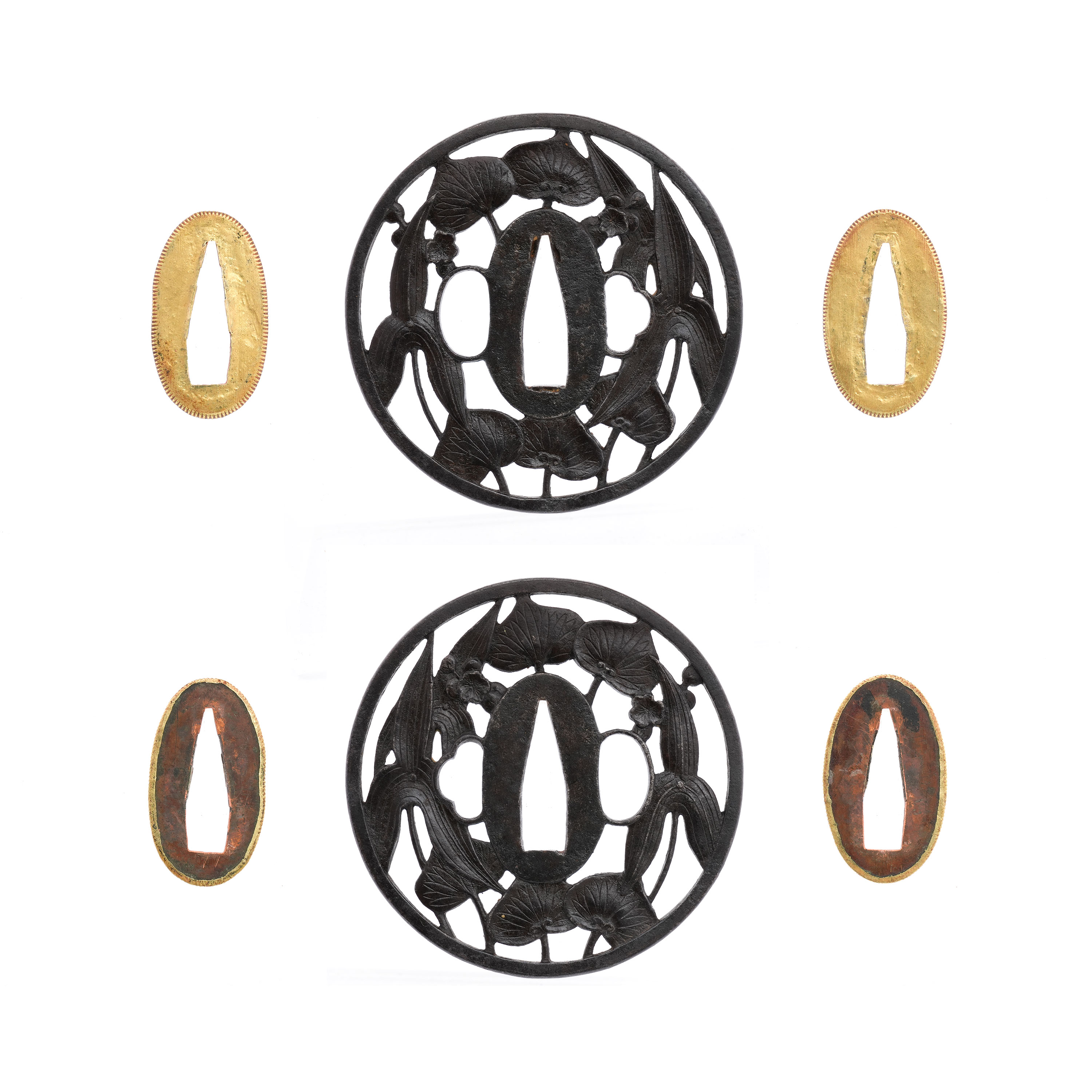
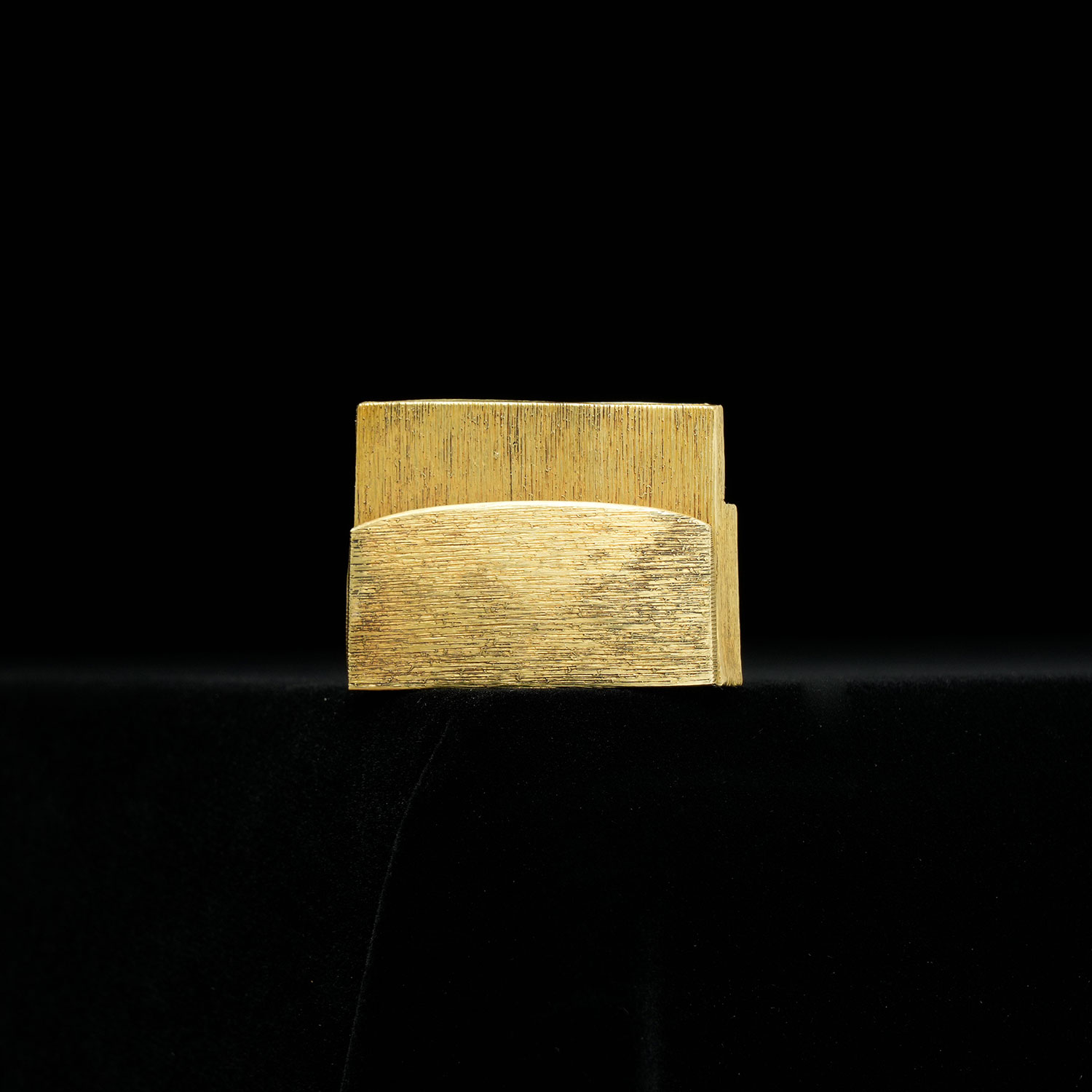
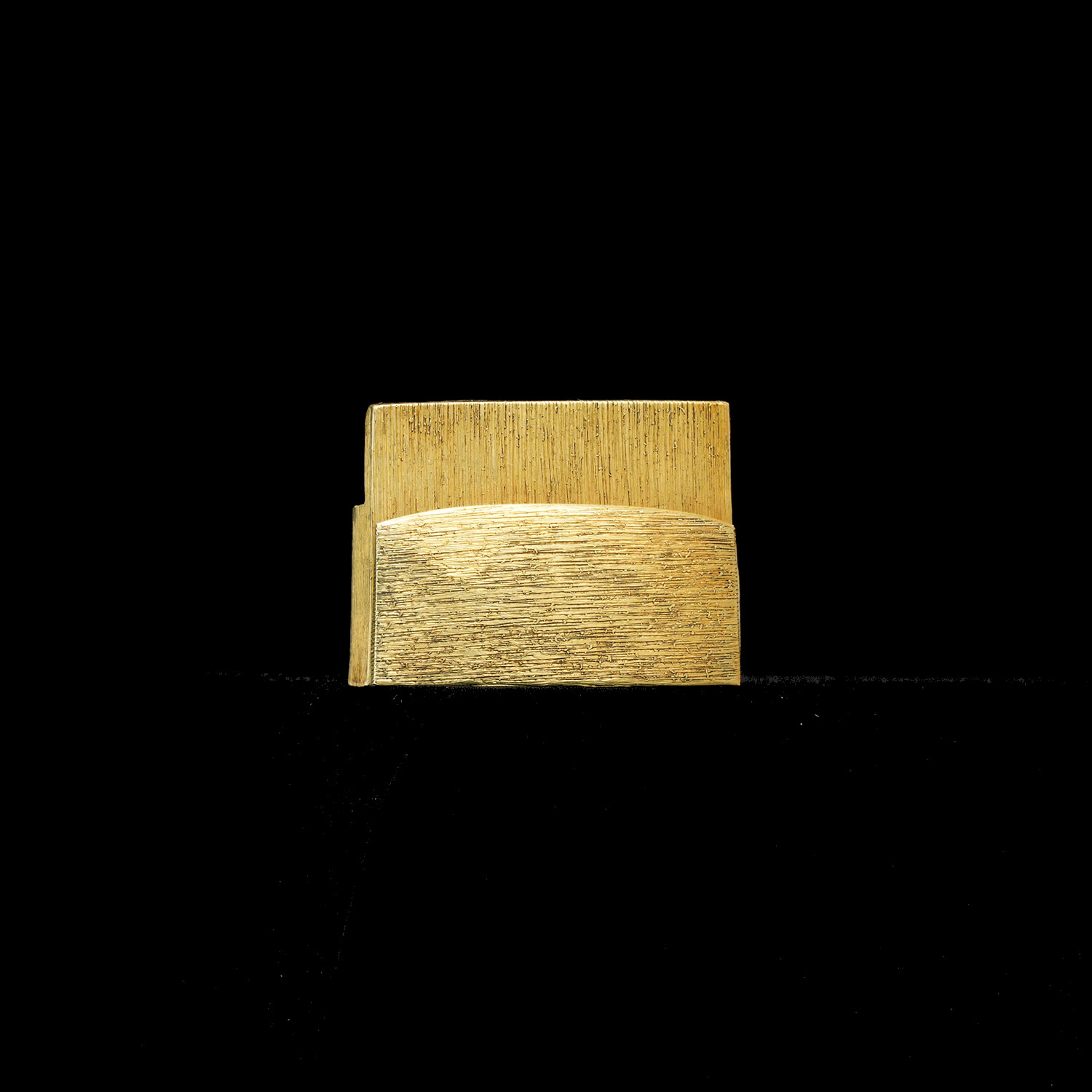
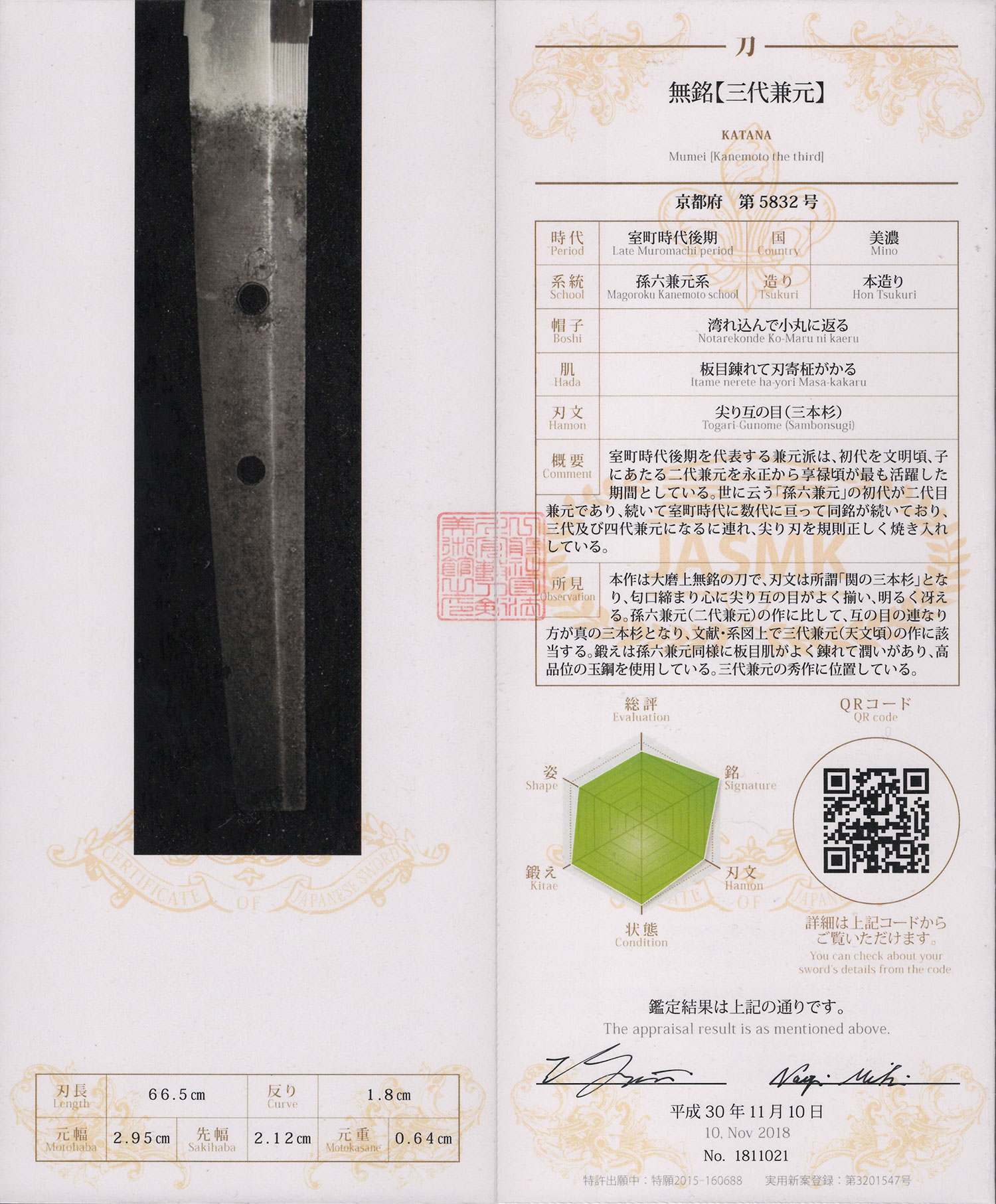
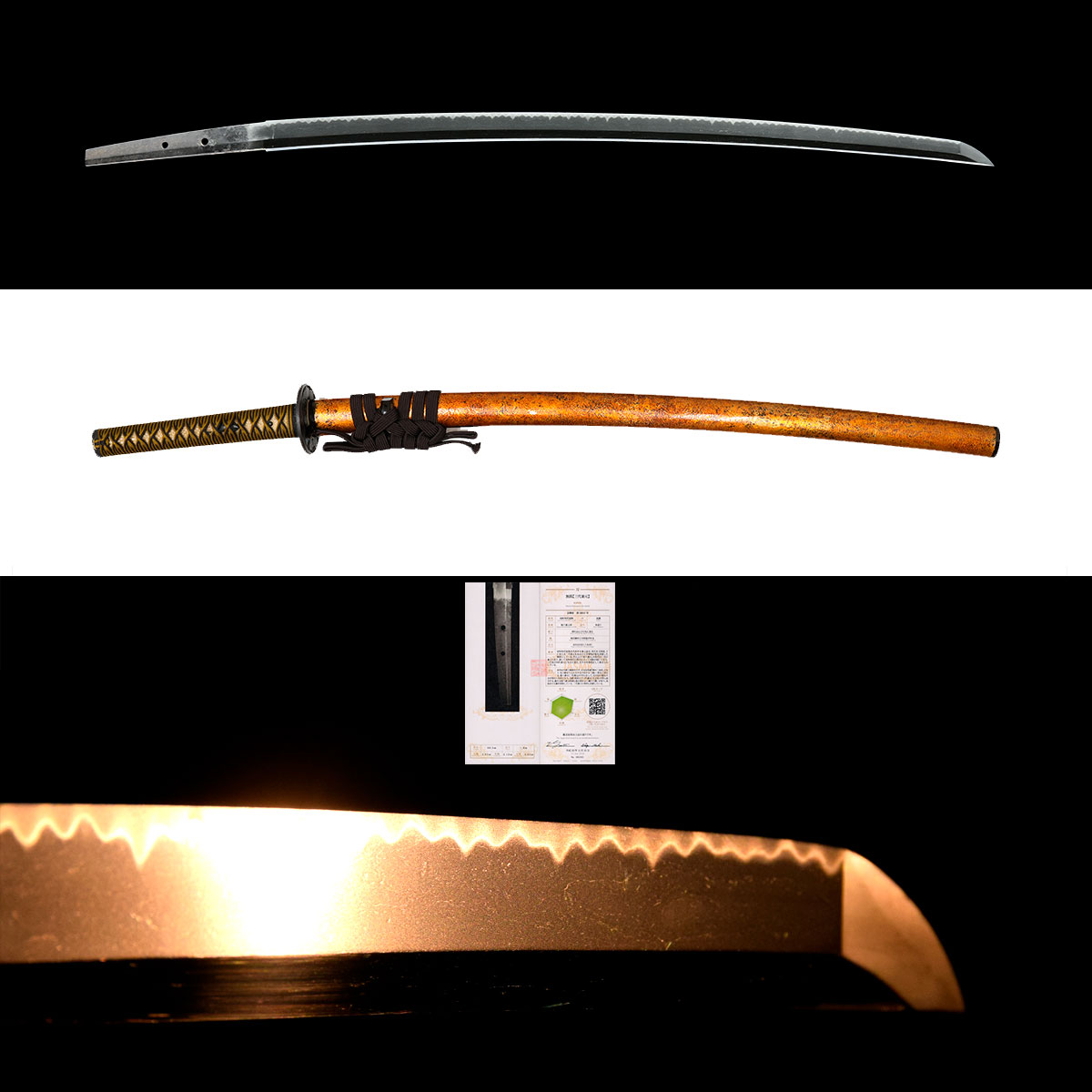
Nagasa 67.0 cm Sori 1.7 cm Motohaba 29.6 mm Motokasane 6.3 mm Monouchi-haba 23.9 mm Yokote-position haba 20.3 mm Monouchi-kasane 5.2 mm Matsubasaki-kasane 4.3 mm Mekugi-ana 3, 1 plugged Bare blade weight 604 grams, weight in koshirae excluding saya 850 grams The latter period of Muromachi era The latter period of Muromachi era Showa 27 September 25 Kyoto Prefecture registration Included: Kurashiki Token Bijutsukan kanteisho, kinji kawari-nuri saya uchigatana koshirae, ginji kin-paku niju habaki This sword is a magnificent blade with a kiwame to the third generation Kanemoto. The sugata is shinogi-zukuri with a pleasing difference between the motohaba and sakihaba, showing a handsome taihai where the chu-kissaki is slightly extended. The jigane is ko-itame mixed with mokume, the ha-side and shinogi-ji are masame-hada, with well-attached ji-nie and chikei, showing a deep-flavored kitae characteristic of Mino-mono such as being slightly hadadatsu; the hamon is a gunome-midare fired in sanbonsugi where the nioiguchi is bright and clear as expected of Kanemoto, fully exhibiting the characteristics of this smith such as the inclusion of togari-ba, with frequent ashi that seem to reach the edge, and the ha-chu presents rich hataraki full of highlights such as fine sunagashi and kinsuji entwined with the ji; the boshi is notare-komi with a maru kaeri, a magnificent workmanship combining sharpness and beauty, and the sashikomi polishing further brings out the Kanemoto character. Regarding the accompanying koshirae, the flashy kawari-nuri saya with a gold ground and the tsukamaki beautifully braided with two-colored thread are particularly eye-catching. The fuchi-kashira use high-quality shakudo as the base metal, adorned with a delicately carved akigusa-zu, and the menuki are accompanied by a lovely shakudo-ji nezumi-zu. The tsuba is a sukashi-zitate of omodaka and aoi-zu using a tetsu-ji, and the seppa are elaborate works of suaka-ji with kin-paku. The habaki is a niju habaki made of solid silver with kin-paku, making it a wonderful koshirae where luxury was lavished without any compromise in the details. Furthermore, as a point worthy of special mention, this sword is also a Daimyo registration sword from Showa 27, and combined with its flamboyant koshirae and the high quality of the blade, it is a high-quality item of noble lineage that suggests it was carefully handed down within a high-ranking samurai family such as a small Daimyo or Joshi in ancient times. Additionally, in its current condition, there is tsuba-nari, a slight rattling in the tsuka can be seen, and there is a microscopic ha-kobore around the monouchi of the blade. *Consignment item
NihontoWatchOffered by Toushin

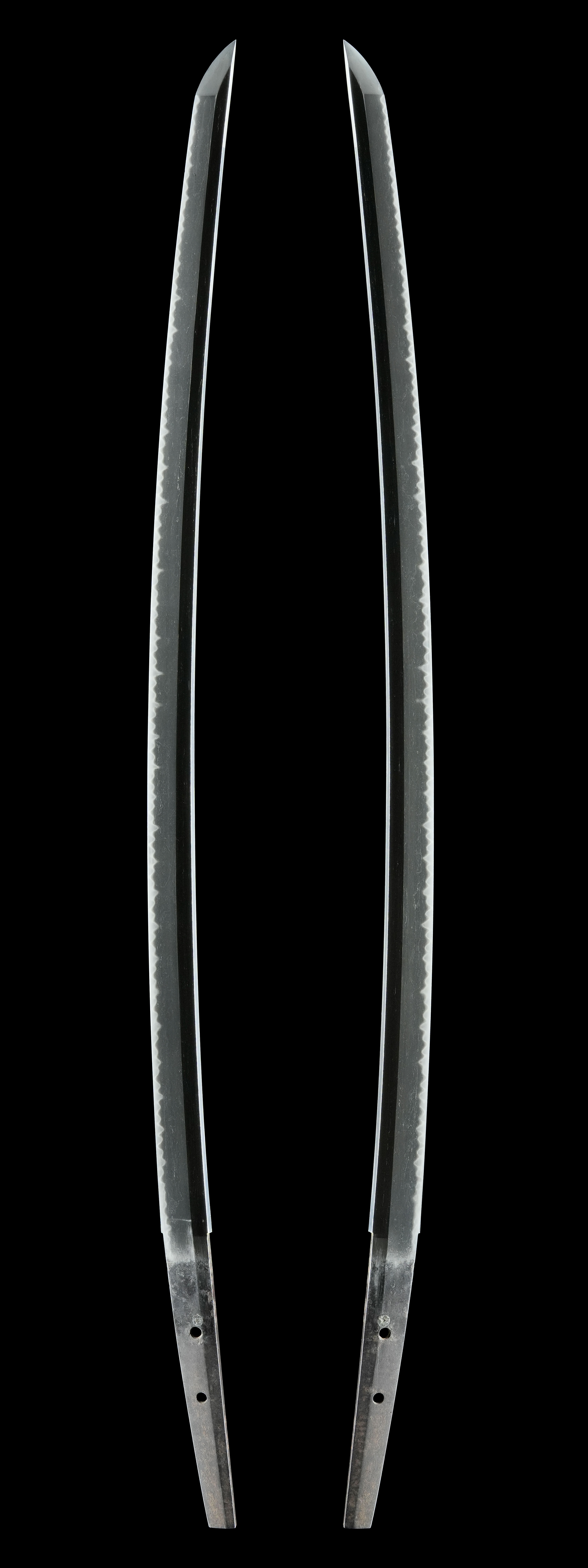
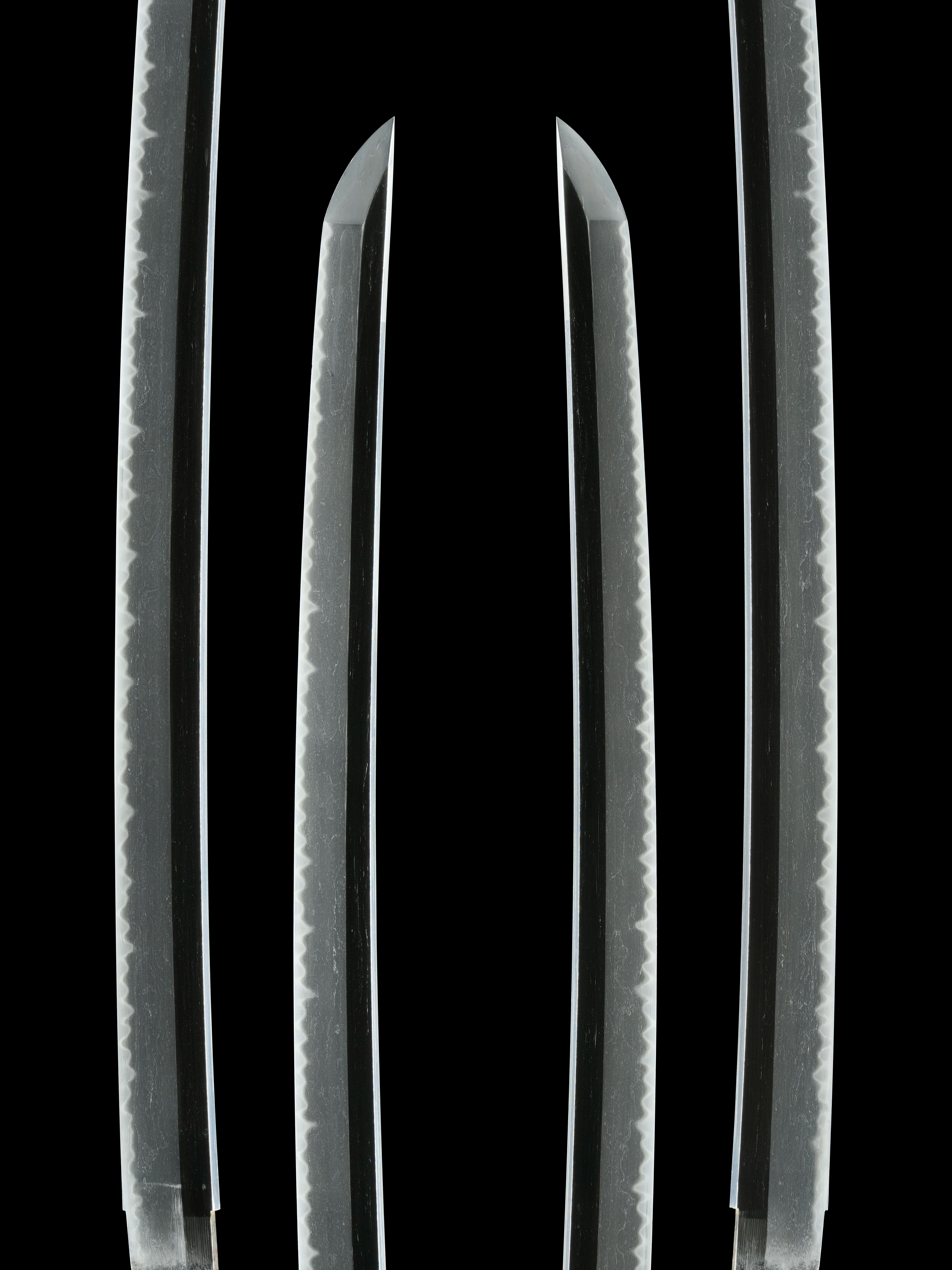
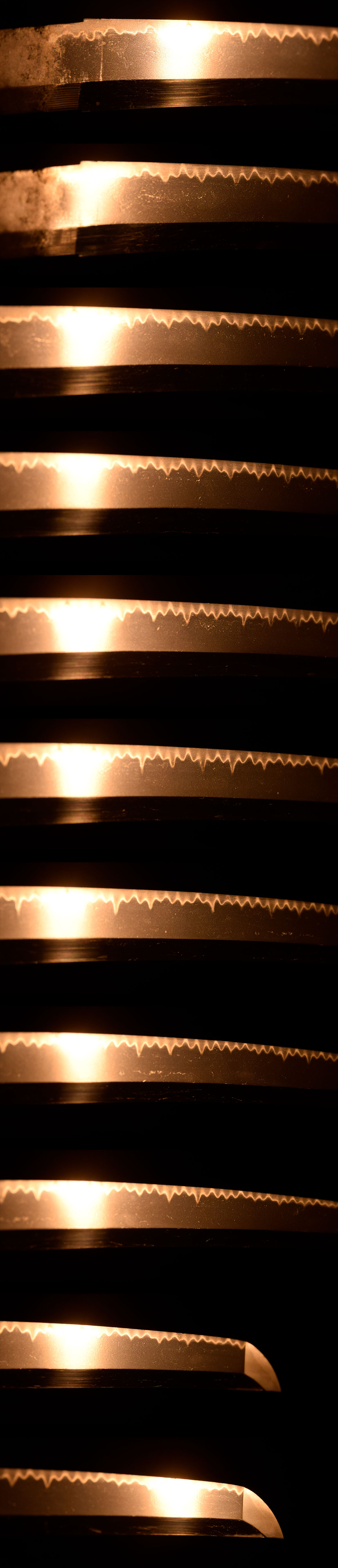
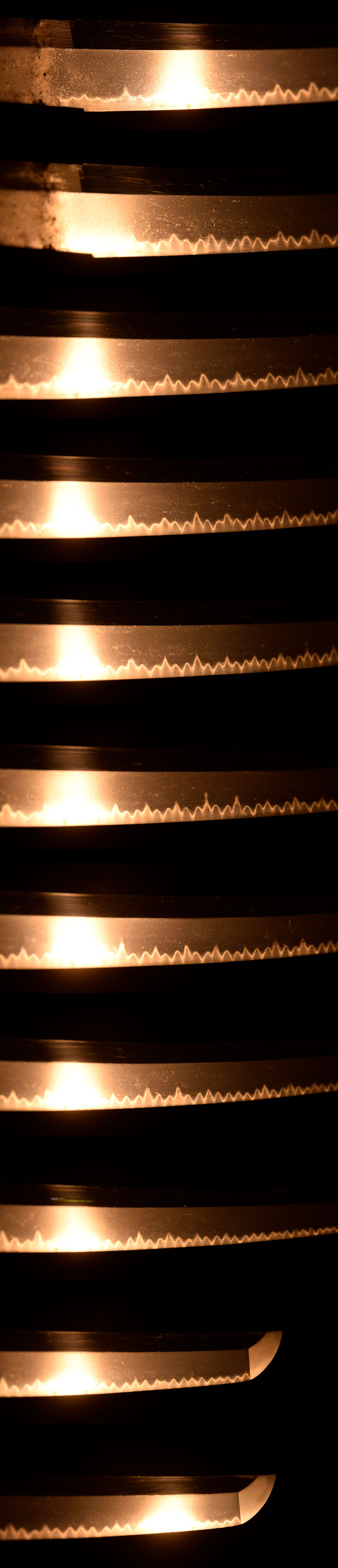
Machine translation from the shop's Japanese · may contain errors ·
Mino-den · Mino · around 1532-1555
2 pieces on the market now
Mino-den · Mino
21 pieces on the market now
Kanemoto (兼元) worked at Akasaka in Mino Province, and the line takes its place among the smiths of the late Muromachi period whom the NBTHK registers under the Mino-den tradition centered on Seki. The setsumei place the family within the Sue-Seki (Sue-Mino) milieu, naming Kanemoto alongside Kanesada as the two leading figures of the province in this era; one tantō note instead pairs the name with Kaneshiba, and another with Izumi no Kami Kaneshige, marking the company the line kept. The name passed through successive generations, and the records repeatedly state that distinguishing each generation has not been definitively settled. Dated long signatures reading "Nōshū Akasaka-jū Kanemoto" survive from the Meiō, Bunki, Daiei, Kyōroku, and Eishō eras, while two-character signatures bear no date. The first generation is documented through pieces dated Meiō 6, 8, 9, and 10, all giving the Akasaka residence; the most accomplished hand, and the one the world singles out under the sobriquet "Magoroku Kanemoto," is the second generation. The shared vocabulary of the line is the sanbonsugi (three-cedar) gunome, a sequence of linked pointed crests that rise and fall in groups. The ground is Mino-den through and through: itame-hada mixed with mokume and flowing masame, tending toward standing grain (hada-dachi), with fine ji-nie, chikei, and a whitish shirake-utsuri that the setsumei call out again and again. The temper mixes togariba (pointed elements) and gunome, is nioi-dominant with ko-nie, and runs sunagashi, kinsuji, and occasional tobiyaki; the bōshi is typically midare-komi turning in ko-maru, often described as Jizō-like with hakikake or a falling kaeri. The chief means of separating the second generation from the later line is regularity: as the generations descend, the pointed crests grow sharply angular and standardized, whereas Magoroku's sanbonsugi is deliberately uneven, the gunome heads rounded in places, and the pattern shifts freely into nihonsugi, yonsugi, and gosugi groupings of two, four, and five. The records describe this as a gyōsō (cursive, free) manner.
The first generation, by contrast, does not emphasize sanbonsugi at all, favoring gunome mixed with gunome-chōji and at times yubashiri and tobiyaki; both generations also made suguha, and one tantō is an uncommon Rai-utsushi in elegant straight temper that evokes Kaneyuki. For kantei, the line is read through the standing Mino grain, the shirake-utsuri, and above all the irregular sanbonsugi, with the leaning bōshi a noted point: the records observe that the honka model and these blades share a bōshi that falls over. Named and documented works recur across the register. A naginata dated Kyōroku 1 (1528) carries the full Akasaka signature and is valued as documentary source material, dated two-character pieces being scarce. A katana bearing a kinzōgan inscription on the reverse is known as "Sasatsuyu Kanemoto" and is recorded in the hands of Makishima Kenmotsu Akishige, of the same clan as Furuta Kosukezaemon. The "Aoki Kanemoto," a second-generation work, is said to be the sword with which Aoki Ichishige, a retainer of Tokugawa Ieyasu, killed Magara Masataka of the Asakura side at the Battle of Anegawa in Genki 1 (1570). A further katana carries a Genna 1 (1615) kinzōgan cutting-test inscription by Nakagawa Saheita reading "two bodies," and one suguha katana descended in the Echizen Matsudaira family. Two katana signed Kanemoto are recorded in Honma's inventory of the Imperial collection. Across these works the line is registered as the cutting-edged representative of Sue-Seki, its hand recognized wherever the three-cedar temper runs uneven over standing Mino steel. Learn more →
| Smith | Era | Designated |
|---|---|---|
| Kanemoto兼元 | 1521-1528 | 30 |
| Kanemoto兼元 | 1532-1555 | 0 |
| Kanemoto兼元 | 1573-1592 | 0 |
| Kanemoto兼元 | 1592-1596 | 0 |
| Kanemoto兼元 | 1818-1830 | 0 |
Mino in the Muromachi period
Sengoku Seki was an industry: smiths organized under their tutelary Kasuga shrine, arming the war bands of central Japan. Magoroku Kanemoto’s sanbonsugi and the finest Kanesada work prove quality survived inside mass production.
As a rule we do not accept returns, except when we have sent a different item from the one ordered or when there is a significant discrepancy between the description and the item. If you wish to return an item, please contact us within 3 days of its arrival and then send it back.