Sengoku Seki was an industry: smiths organized under their tutelary Kasuga shrine, arming the war bands of central Japan. Magoroku Kanemoto’s sanbonsugi and the finest Kanesada work prove quality survived inside mass production.
 NihontoWatchNihontoWatch
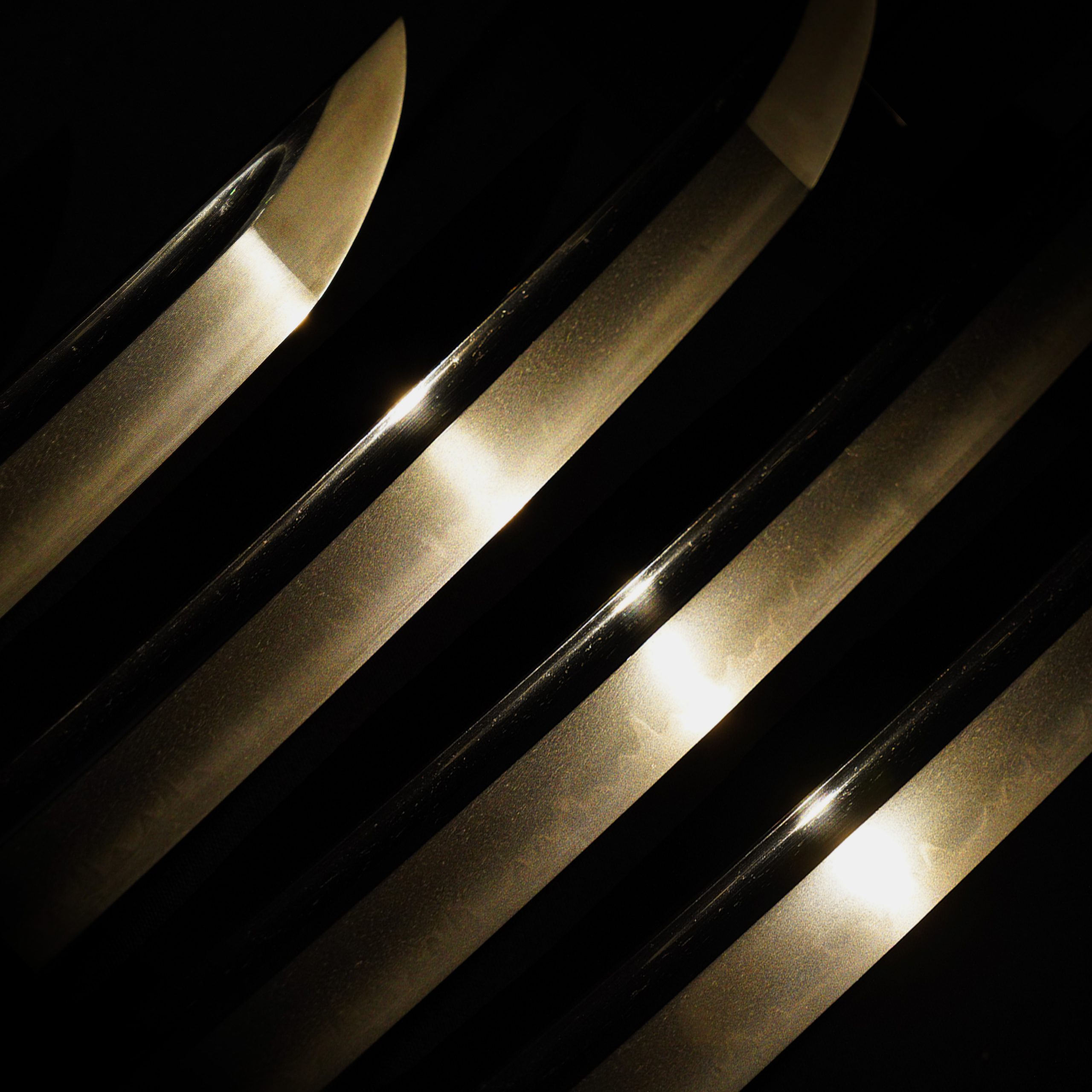
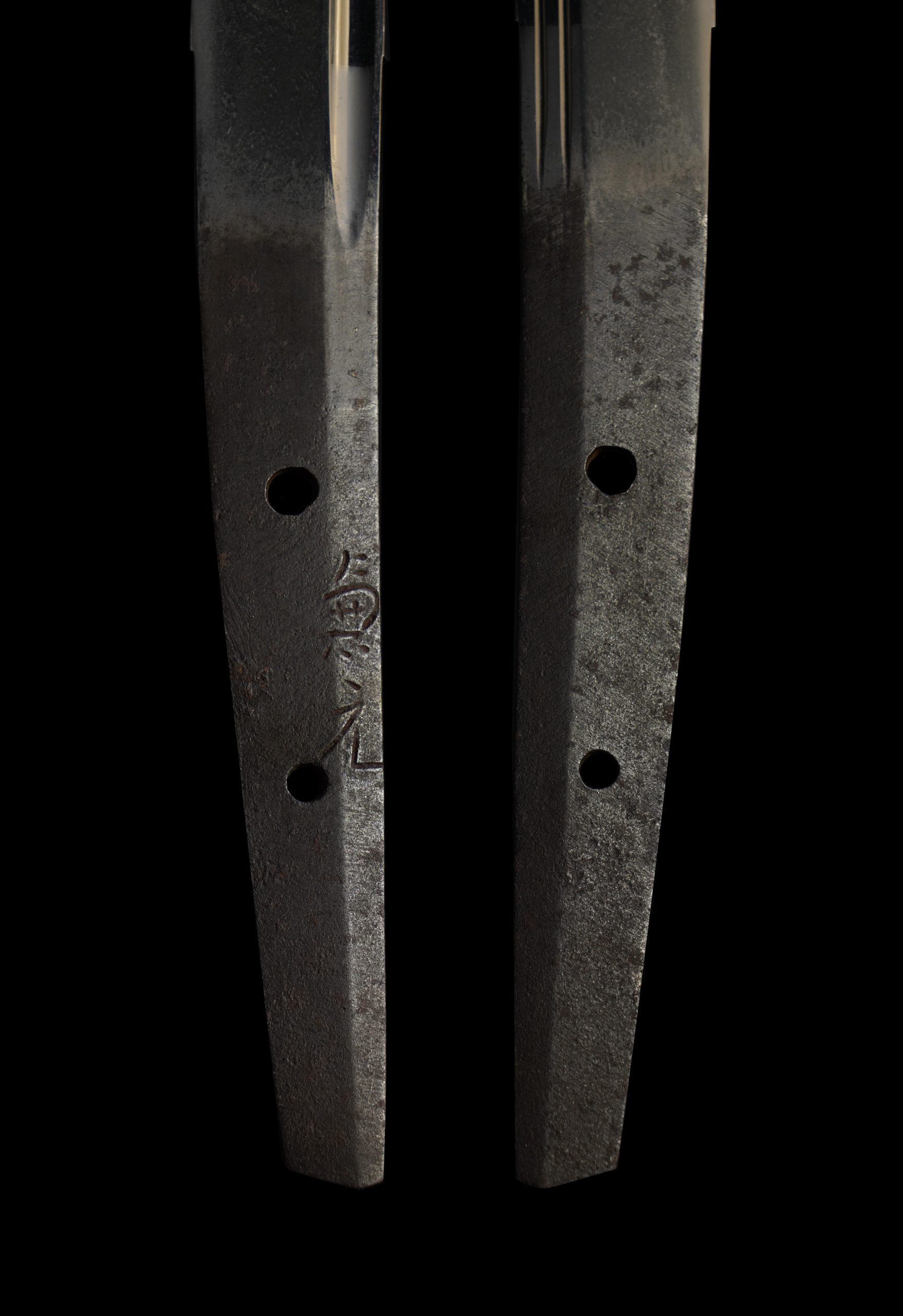
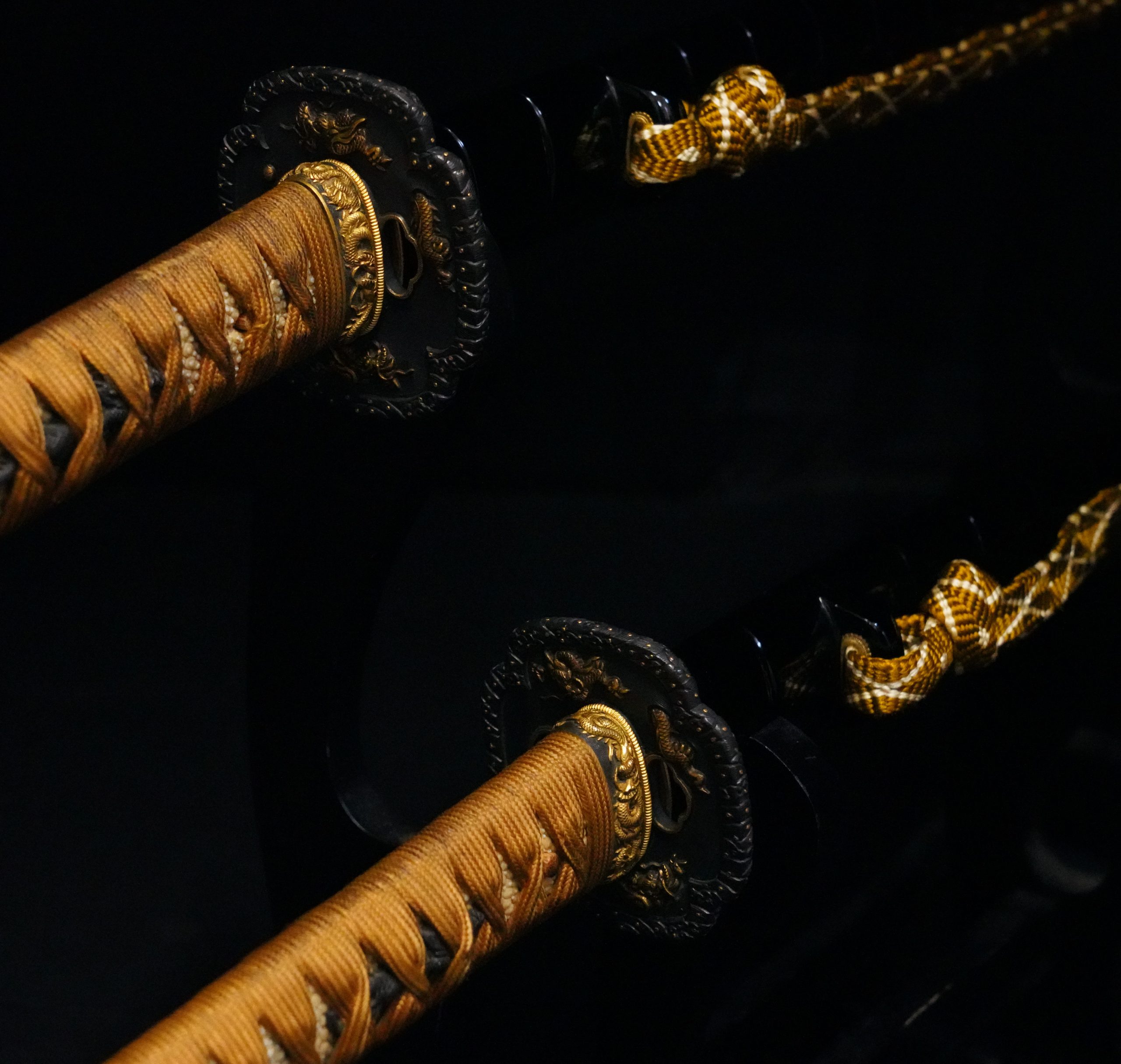
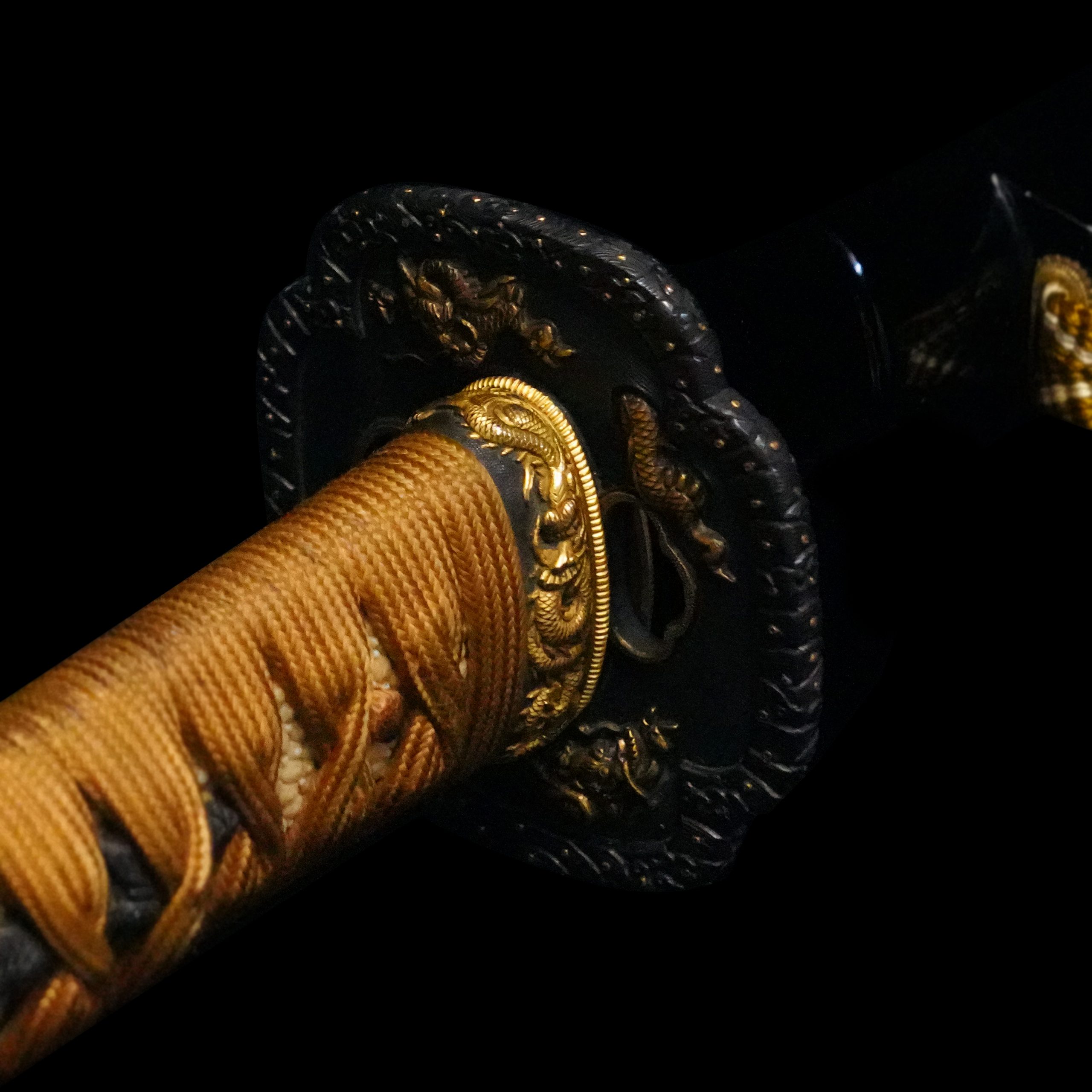
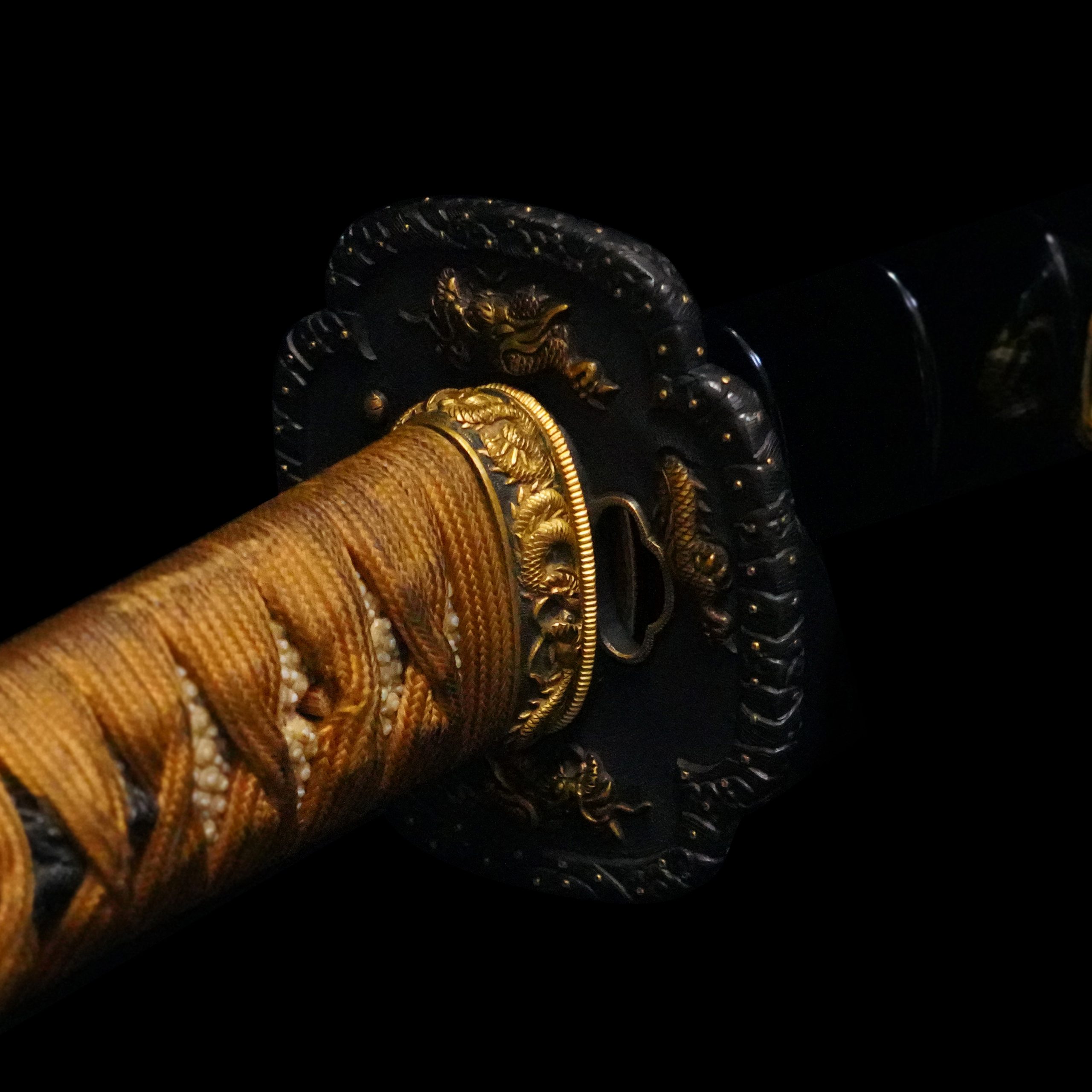
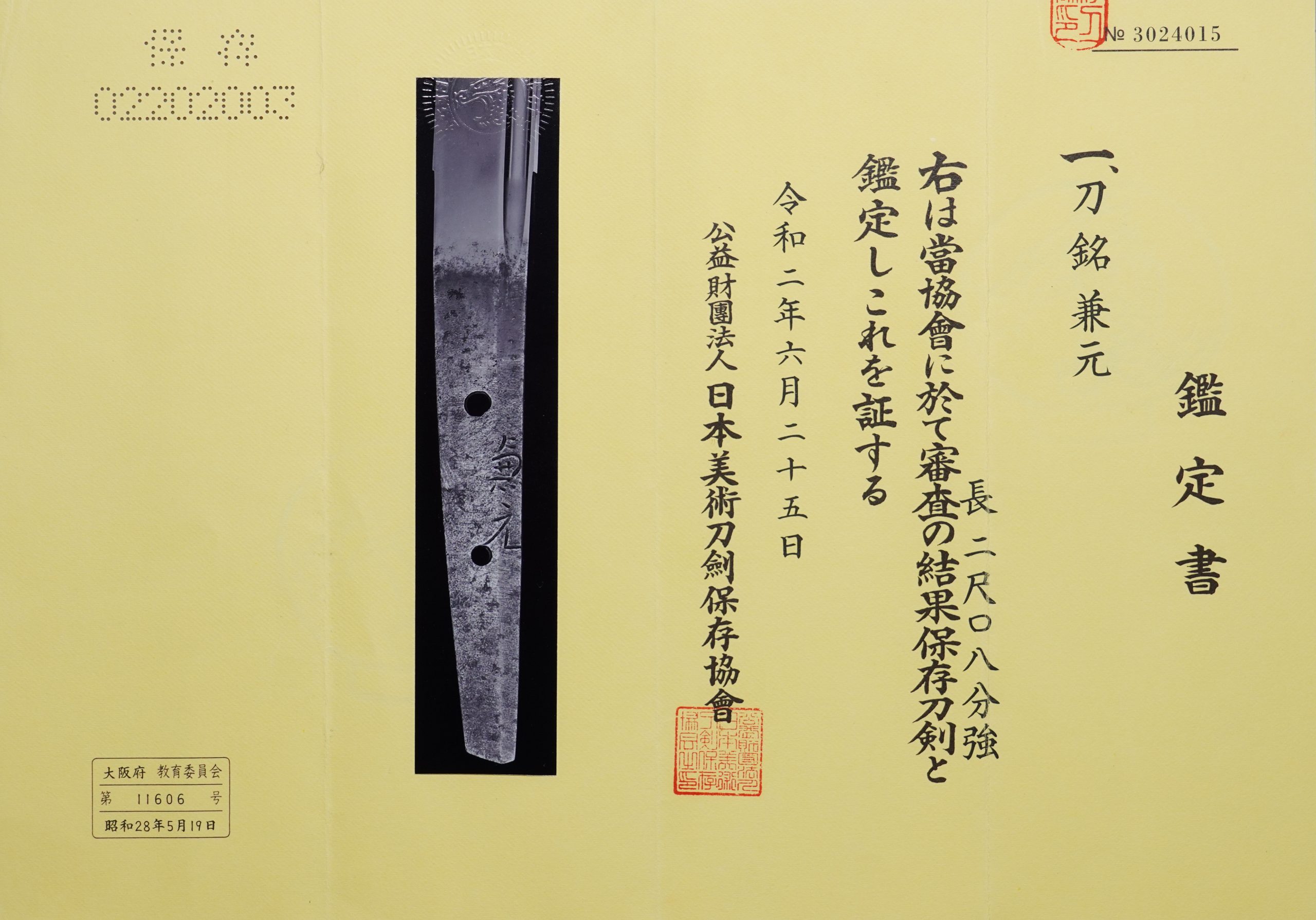
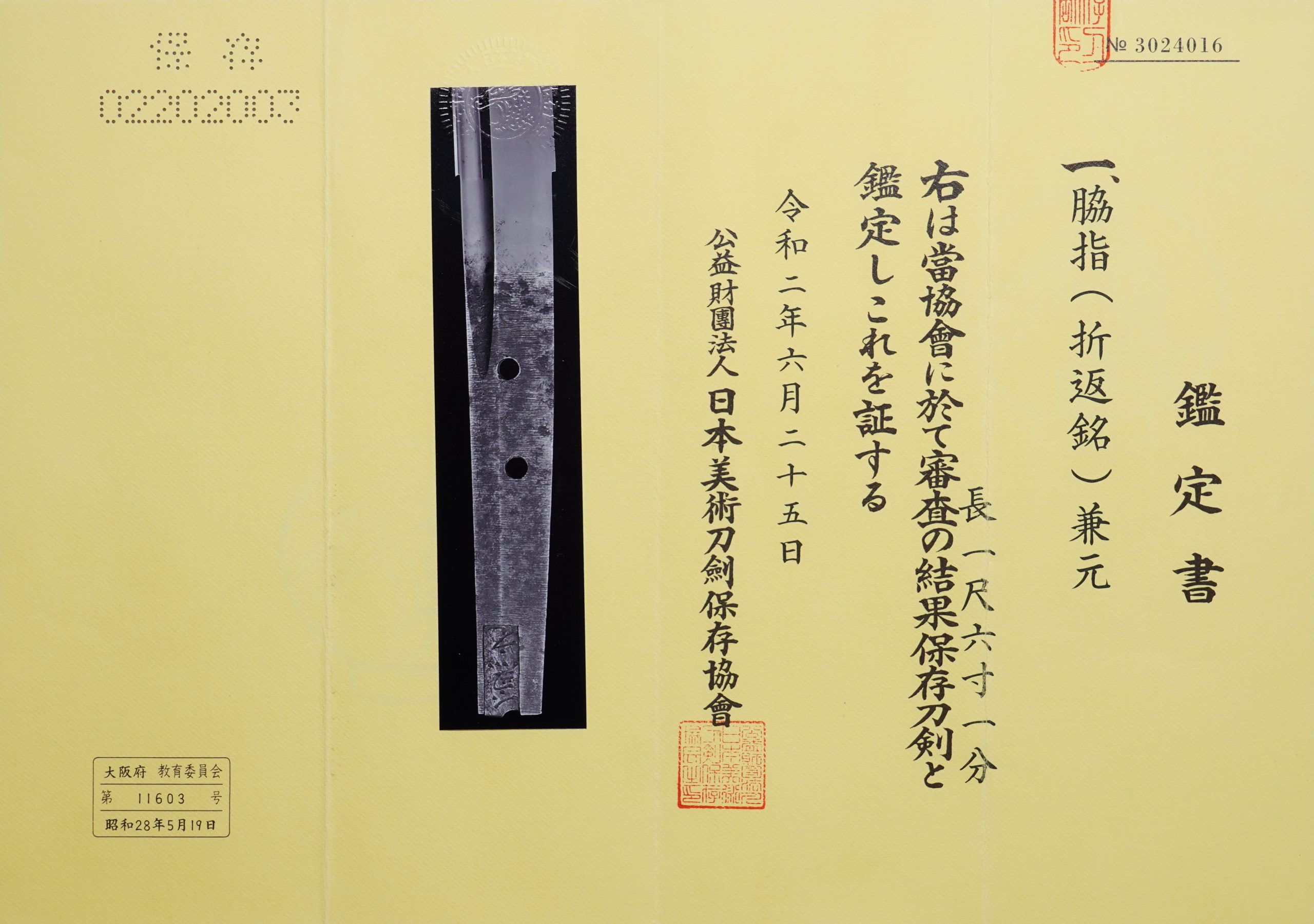
Both Katana and Wakizashi were signed by Kanemoto(兼元). According to NBTHK, these two blades were forged by later-gen Kanemoto during the late Muromachi period(1492~1569). The swordsmith Kanemoto lasted 27th generations from the Muromachi period to the Heisei period(modern-day). It is said the most skilled Kanemoto of all is the second-gen, also known as Magoroku, who was one of the most famous MINO swordsmiths from the Muromachi period. He forged swords in the Mino province, which is renowned for a particular sword style called MINO-DEN. Each gen of Kanemoto was good at forging swords with Sanbon Sugi tempering line(Hamon in Japanese). Sanbon Sugi tempering line resembles a small cedar tree/forest growing horizontally. Those who forged swords in Mino province at the end of the Muromachi period are called Sue-Seki. The MINO swordsmiths style, also known as MINO-DEN, basically has the TOGARI(Pointed shapes protruding from the Hamon )in a classic straight line and random temper line with some white Utsuri. MINO-DEN had its origin from YAMATO-DEN in the late KAMAKURA period(1280-1330). The school flourished in the MUROMACHI period(1333-1573) and continued until the EDO period(1603-1868). MINO-DEN exceedingly prospered during Sengoku Jidai(Warring State period) due to the high demand for weapons. And the location of Mino province beat others. Akechi Mitsuhide controlled Mino province, and Nobunaga Oda ruled Owari province, and Tokugawa Ieyasu was the lord of Suruga (Neighboring areas). There was high demand from those powerful feudal lords and their retainers. Furthermore, so many wars occurred between the Kanto region and the Kyoto area. Mino is located in the middle, making feudal lords feel convenient to order swords from MINO-DEN. The blades forged in MINO provinces also had the reputation of their practical design and sharpness. Many feudal lords demanded swords forged in the Mino province. While the signature of Katana is the standard type, that of Wakizashi is unusual looking. This is called Orikaeshi Mei(折返し銘). It is often the case that the signature was cut when adjusting the size of the blade. However, sometimes, Japanese swordsmiths folded the signature part and put it to the other side to keep the signature. That is why the signature of this Wakizashi looks upside down. What is Daisho? Daisho is a pair of two Japanese swords Samurai carried. During the Edo period, having Daisho in public places was considered social status for Samurai. Furthermore, Samurai were required to wear them under the law back then. Daisho is written as 大=Big and 小=Small. Dai part means Katana, and Sho part means Wakizashi. They have such a fancy appearance that we believe a high-ranked Samurai owned them. If you like dragon, we are confident you would like this pair of Daisho Koshirae. Appraisal These blades are appraised as a Hozon certificate issued by NBTHK. This authentication paper was only given to Japanese swords, worth preserving by Nihon Bijutsu Touken Hozon Kyokai(the Society for the Preservation of the Japan Art Sword). -Katana Jimon(Jihada) -Katana -Wakizashi Fuchi-Kashira Gold-colored dragons are engraved on these Fuchi Kashiras. They twist their elongated bodies, and their big eyes give us a strong impression. Even in details such as each scale, are carefully carved and shows us its maker’s excellent skill. Initially, the dragon is an imaginary creature found in ancient traditions or myths. Furthermore, it is a symbolic beast of auspicious signs. Its body is likened to nine animals: antlers are deer, the head is a camel, eyes are demons, the neck is a snake, belly is Mizuchi (蛟, mythical animal in Japan which looks like a snake and have a horn and four legs), scales are fish, claws are falcons, palms are tigers, and ears are cows. It was thought that the dragon would reign at the top of all animals because of its odd-looking appearance. Tsuka and Menuki Same as Fuchi Kashira, the dragon is the principal motif of these Menukis. It looks they are made from copper and has beautiful black color. It seems dragons that are facing Tsuba’s direction are bringing the small ball in their hands. It might be Nyoi Houju (如意宝珠, Cintāmaṇi). It is a fantasy jewel that fulfills any desire, gives out treasure, clothes, food, and drink. Moreover, it heals illness and suffering, removes evils, purifies muddy water, and prevents disasters. By combining it with the dragon motif, the mystical impression of this work is strengthened. Tsuba and Habaki These Tsubas have Yotsu-Mokkou-shape. Mokkou shape, its origin is a shape of eggs that are rest in a nest. When a quince (it is written 木瓜 in Japanese) is cut into round slices, its cross-section looks similar to this shape; therefore, it was named Mokkougata Tsuba. Yotsu-Mokkougata (a combination of four Mokkou shapes) Tsuba is often seen as these works are categorized. Dragons are designed and colored with golden metal. If you focus on the front of Katana’s Tsuba, you will find a small golden drop-shaped ball. It might be Nyoi Houju (如意宝珠, Cintāmaṇi), same as Menuki. In Japan, its shape is generally spherical at the bottom and curved and pointed at the top. At the backside of Tsubas, you would find that dragon’s tail coils a point of a sword. There is a design which is called Kurikara Ken (倶利伽羅, the sword that Fudo Myo-O brings his right hand). Usually, this motif is depicted as a sword coiled with a dragon, so this tip could simply represent a unique shape of a tail in this Tsuba’s case. It is said the Kurikara Ryu (倶利伽羅龍) changed its figure to this fire. Fudo Myo-O (不動明王) is a protective god in Buddhism, particularly Japanese Shingon Buddhism. This god was also known as a god of wars. Tsubas’ edges are framed with black colored metal, and the wave pattern is designed. Golden small dots might represent waterdrops. In Japan, some people worship a dragon as a water god. This faith is called Ryujin Shinkou (竜神信仰). As rice cultivation has been flourished in this country, water is always an essential resource. Lots of Samurais might have loved the combination of dragon and wave motifs. Kozuka Kozuka is a small knife stored in Koduka Hitsu(groove of the sheath of the Japanese sword). Kozuka is put for Wakizashi’s handle. It is also decorated with the dragon motif. Unifying the entire design of sword mounting, the beauty of unity for this Daisho Koshirae is emphasized. Authentication Paper They authenticated these two blades on June 25th in the second year of Reiwa (2020). They appraised them as Hozon Touken, the blade worth preserving for Japanese society.
Offered by Samurai Museum

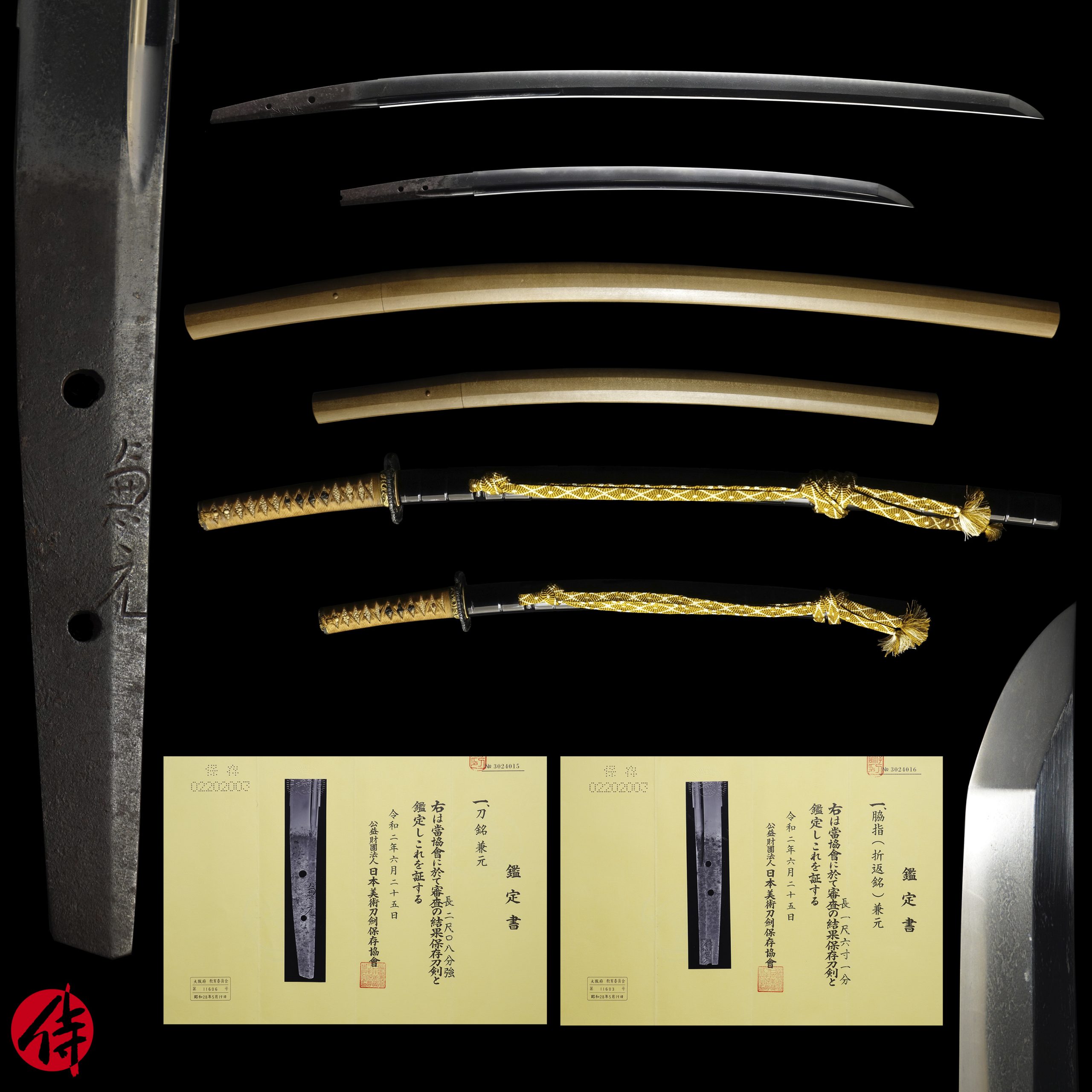
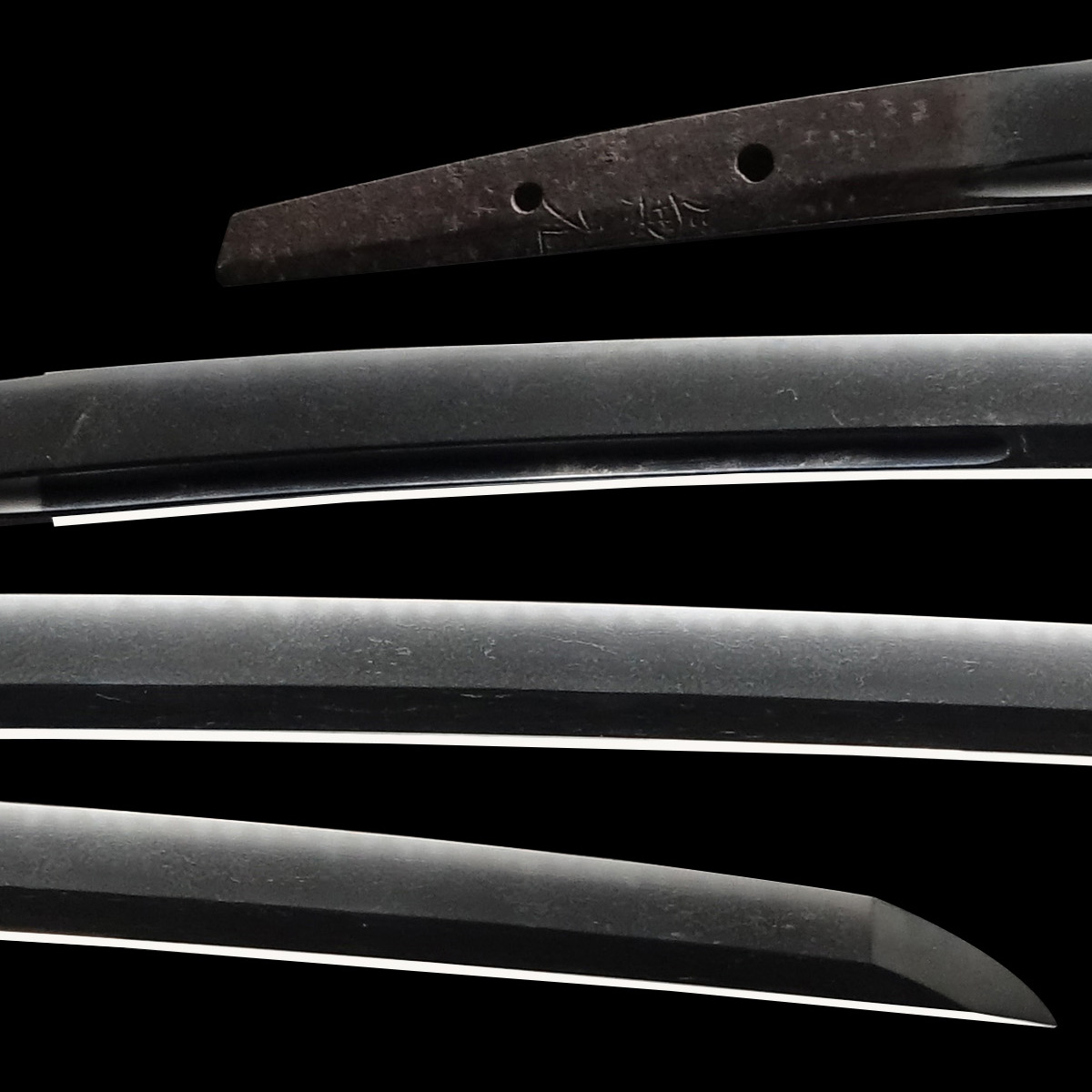
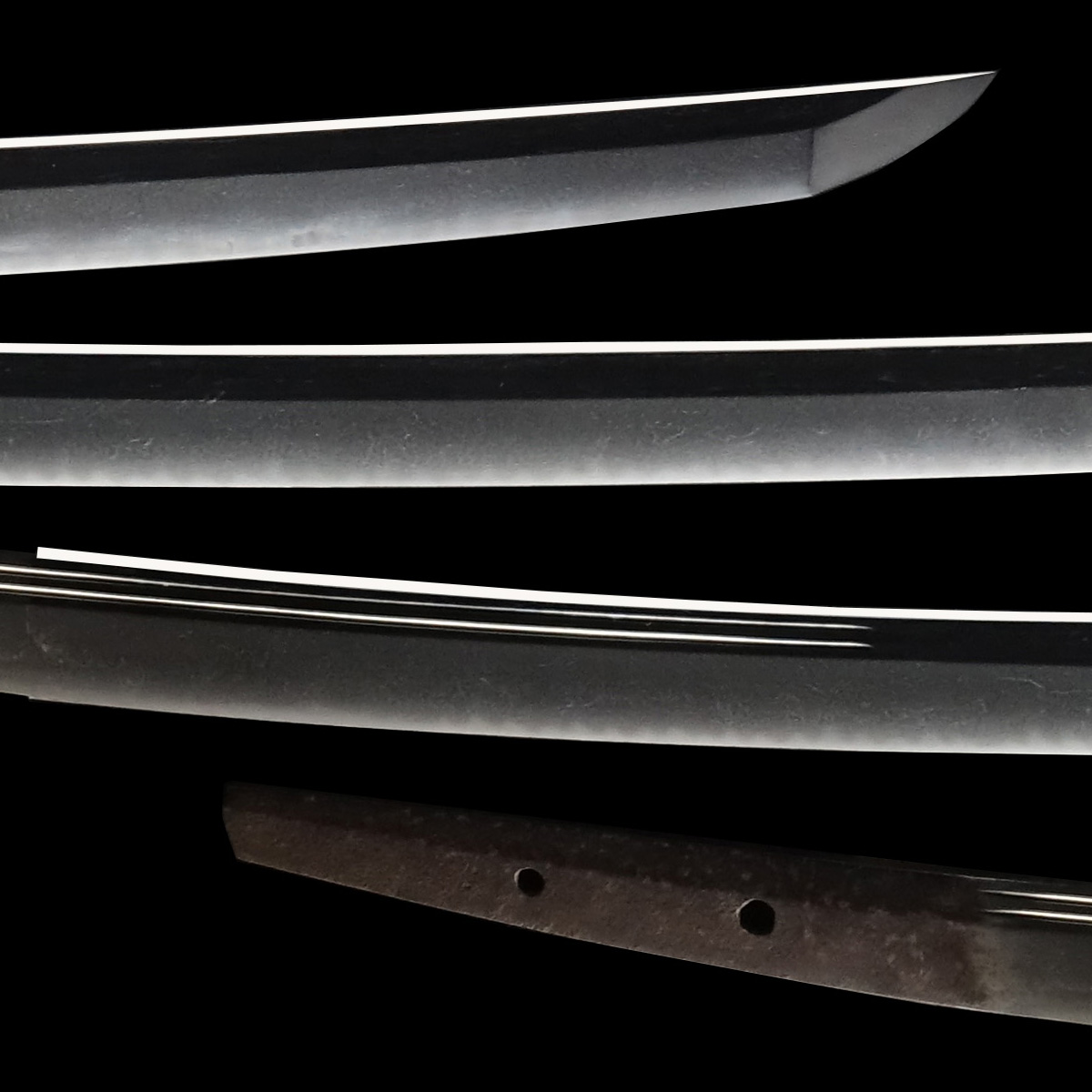
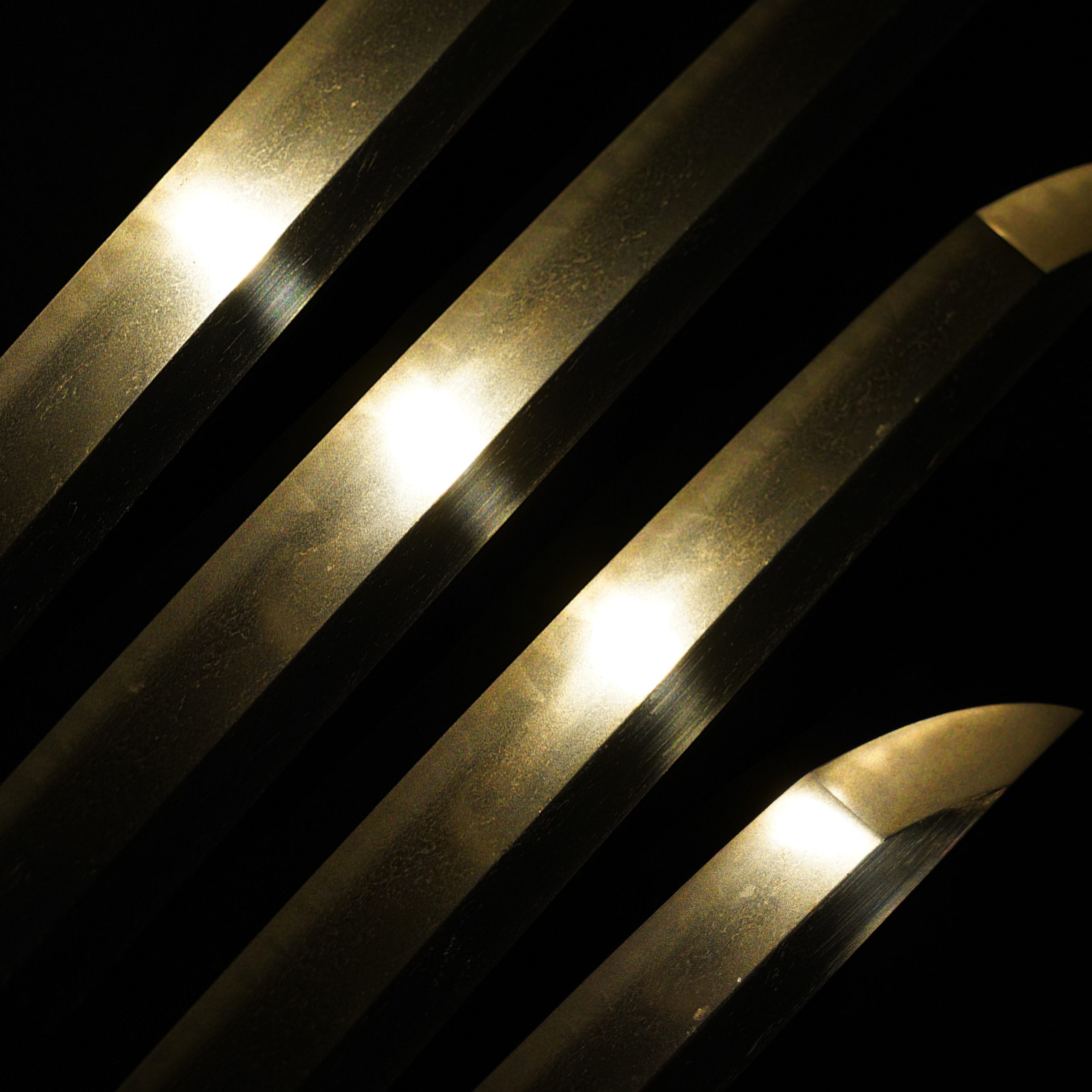
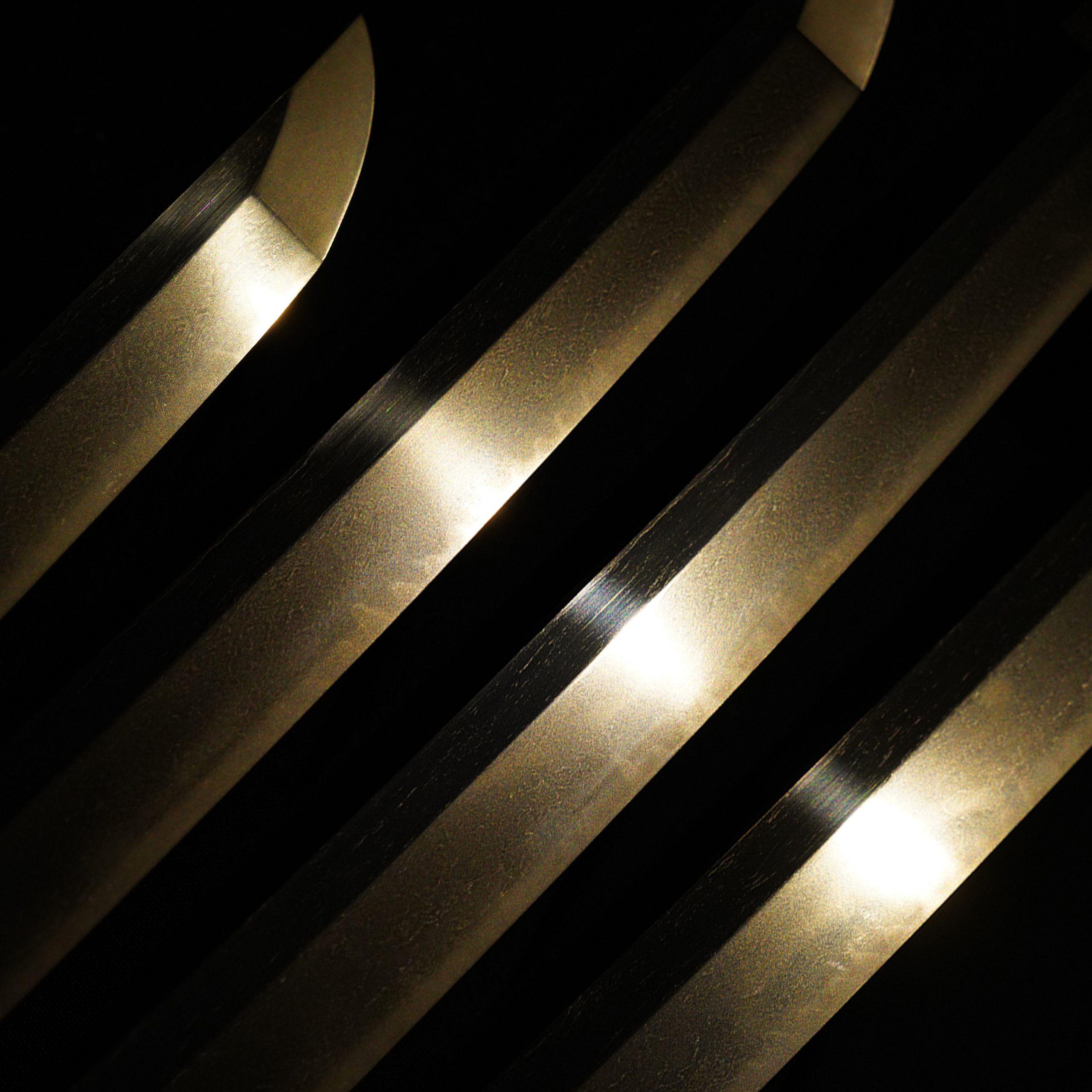
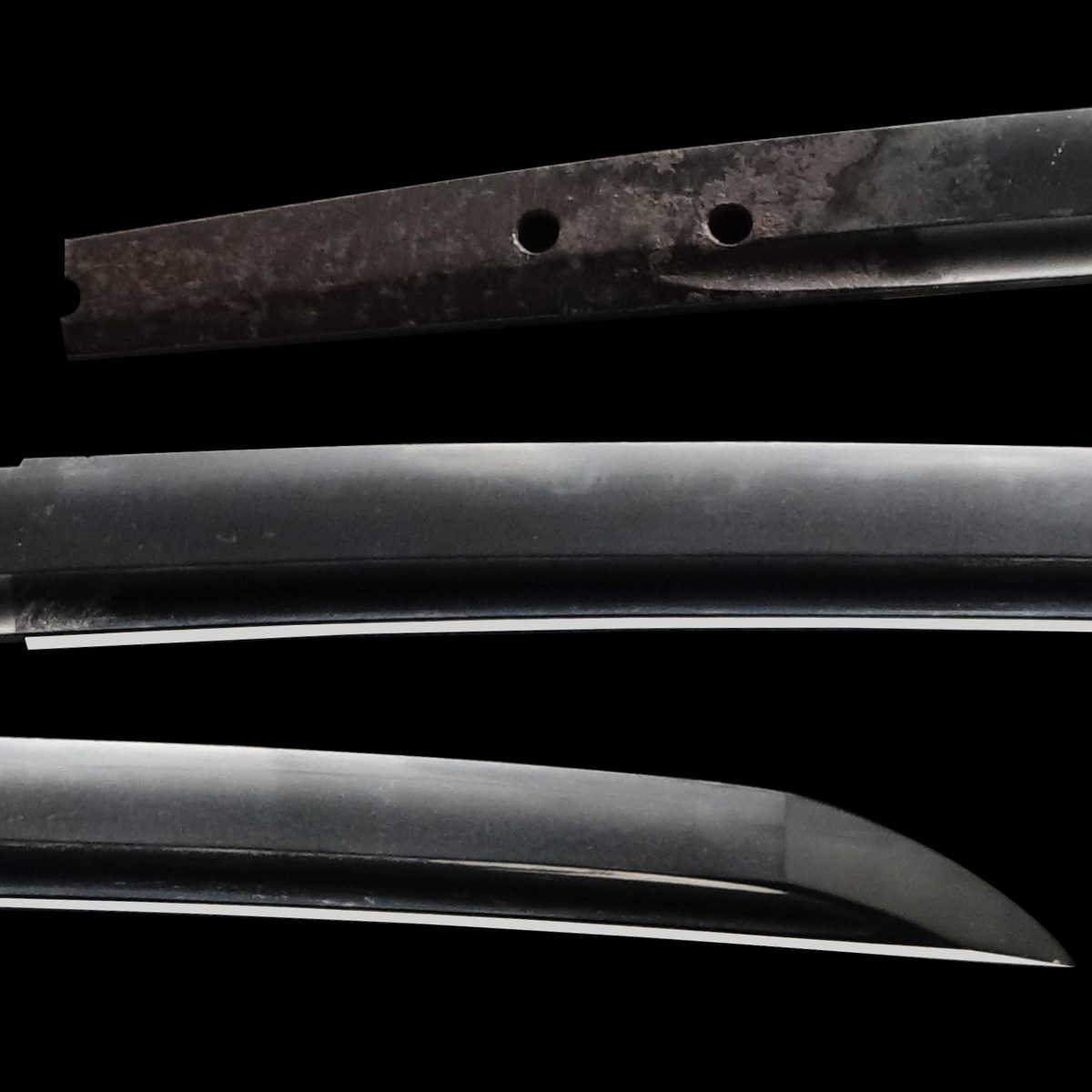
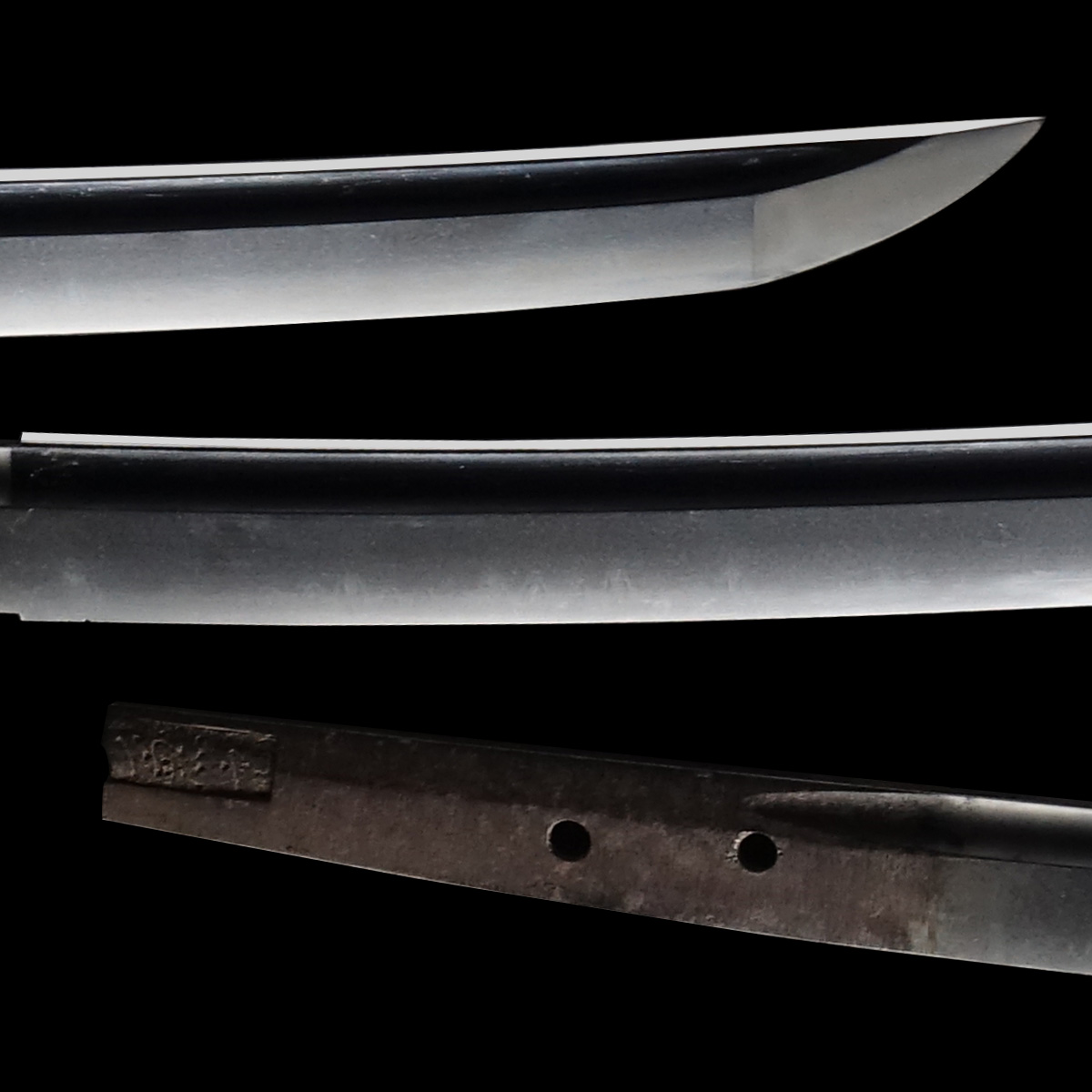
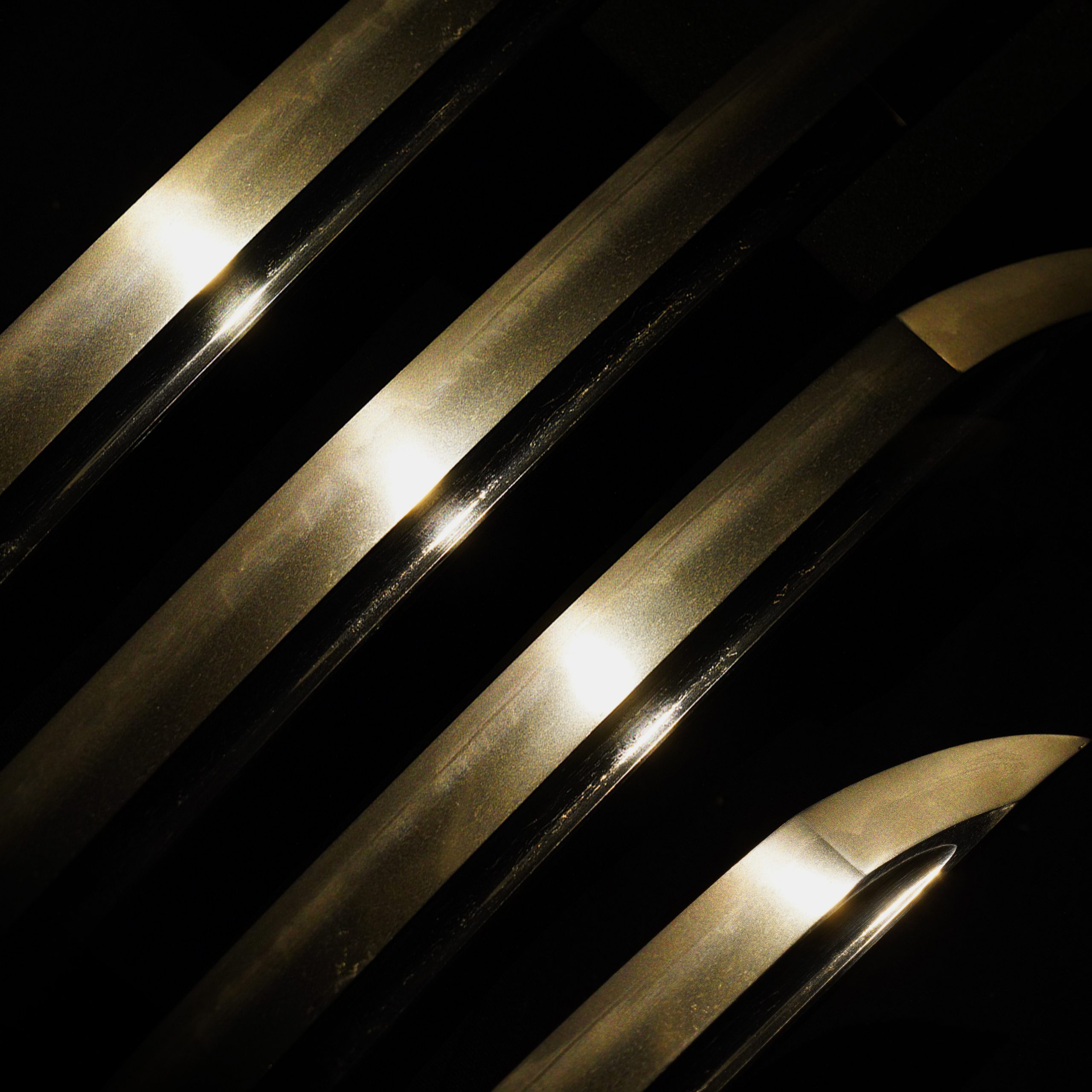
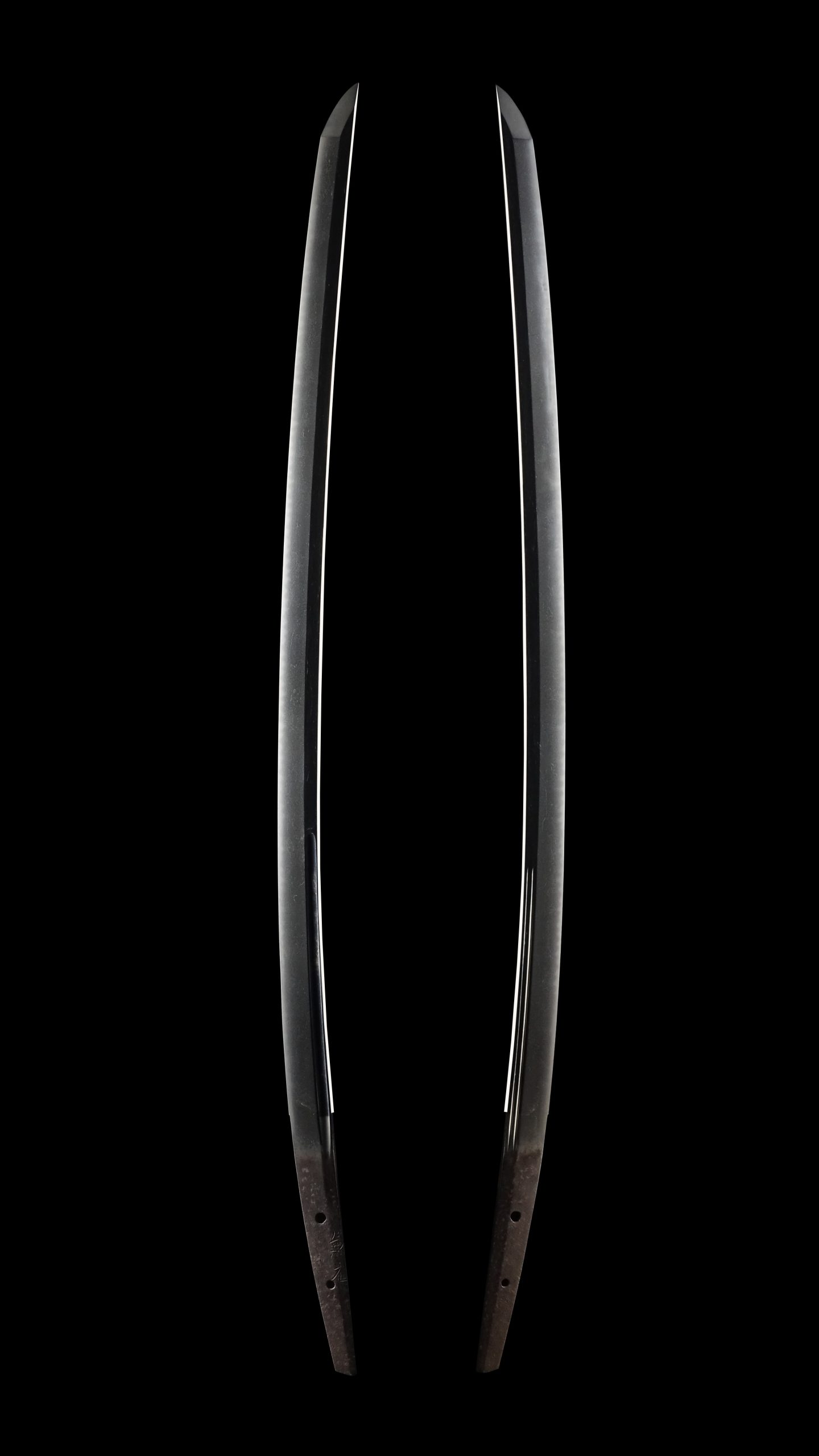
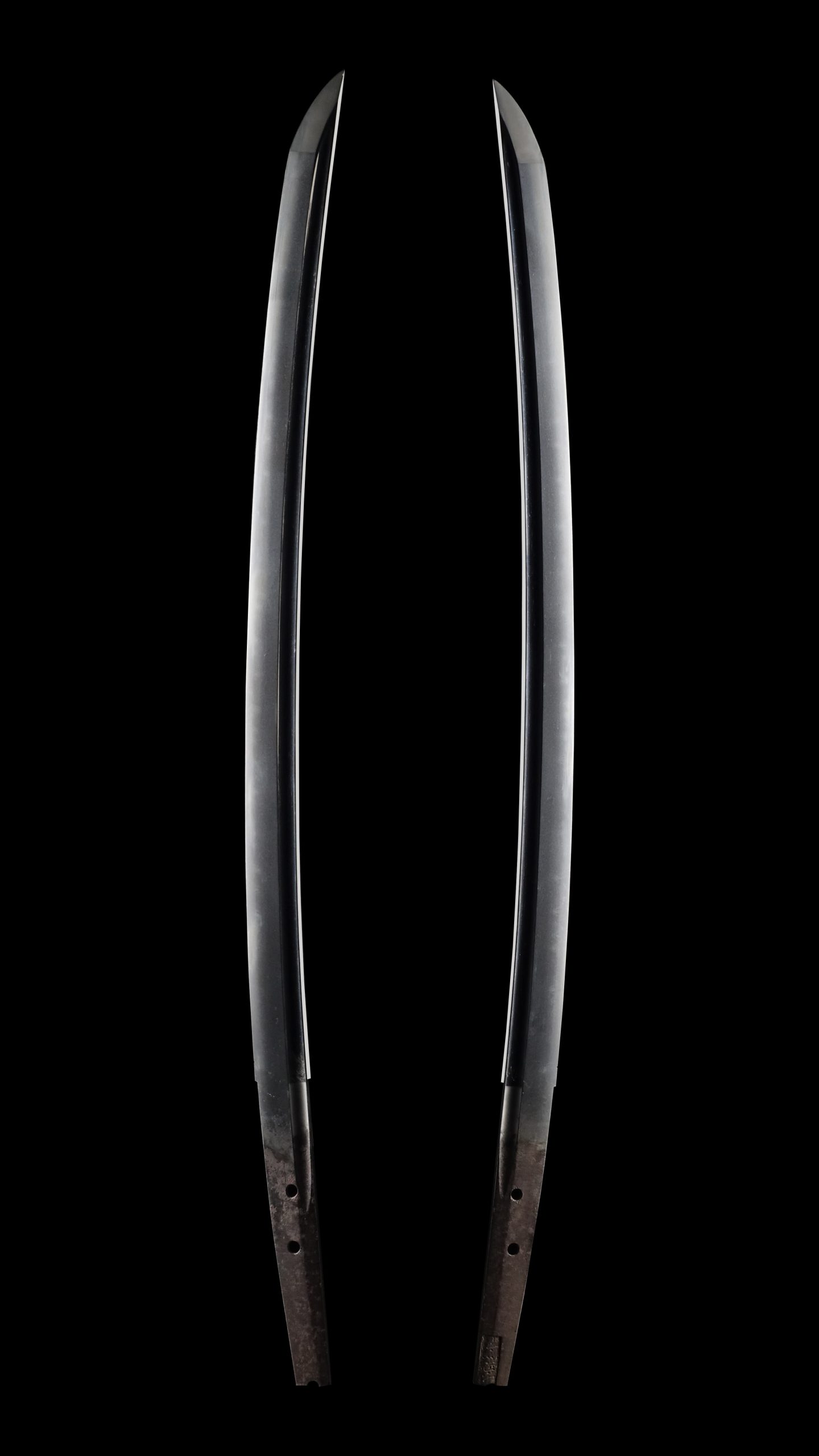
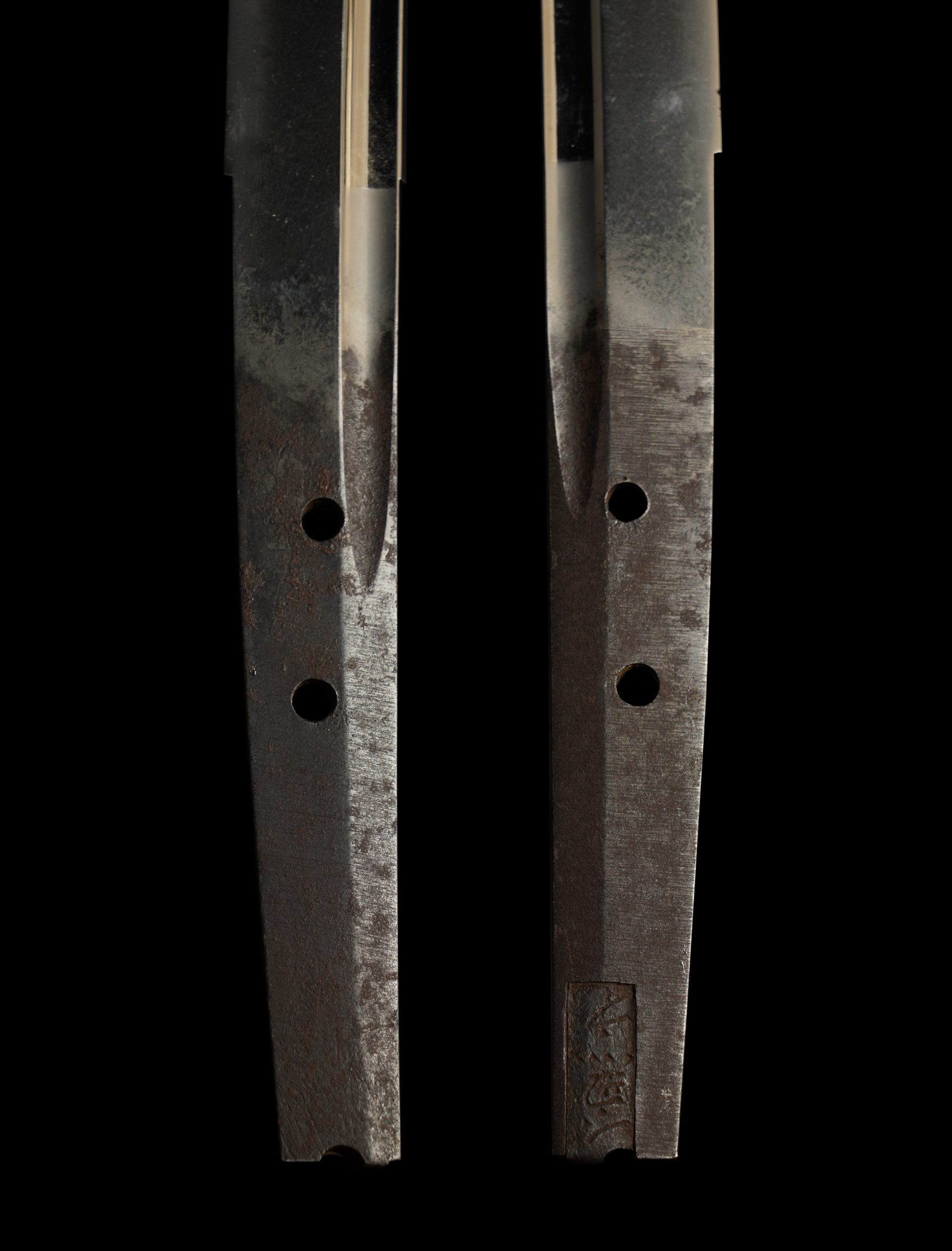
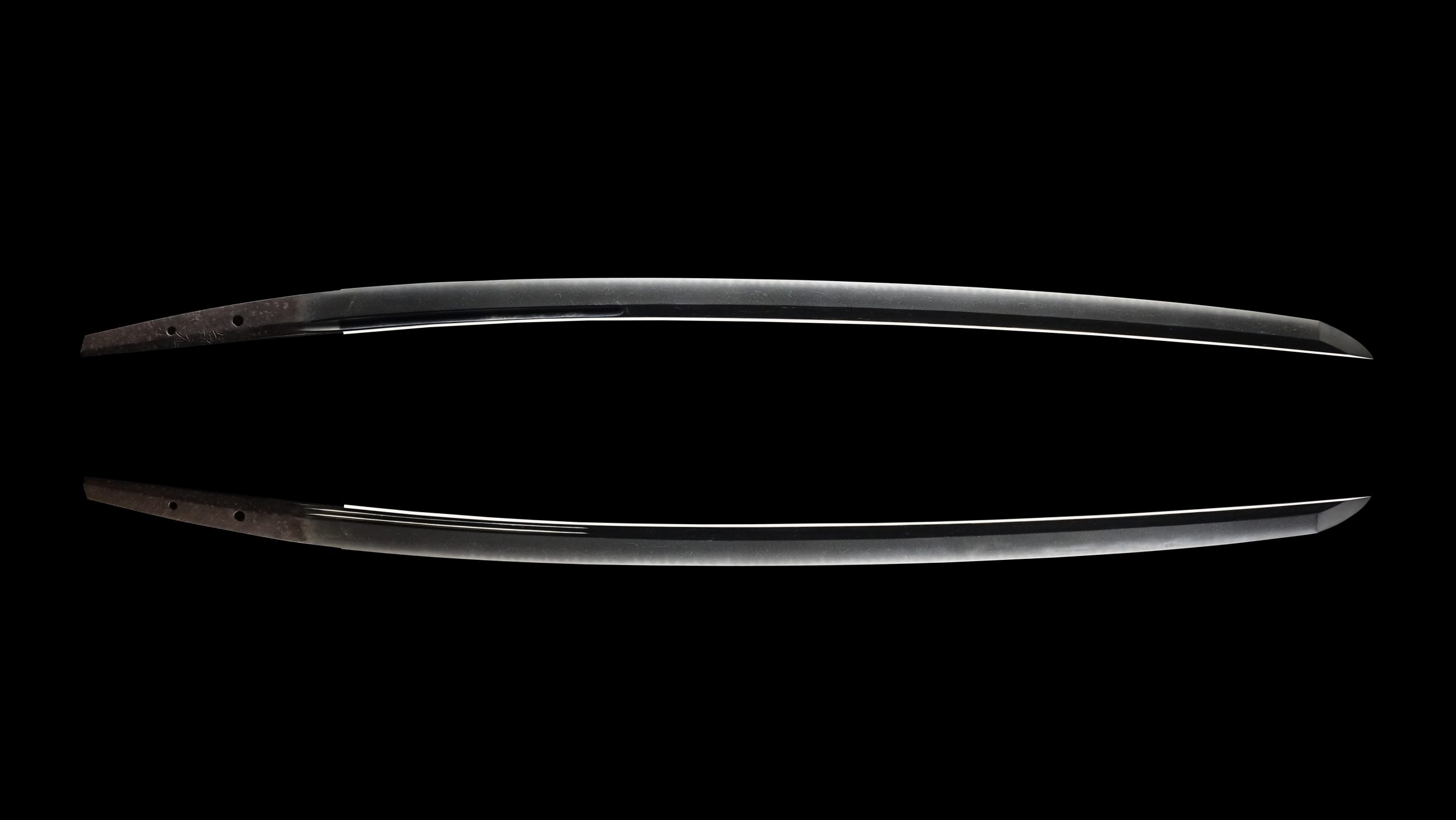
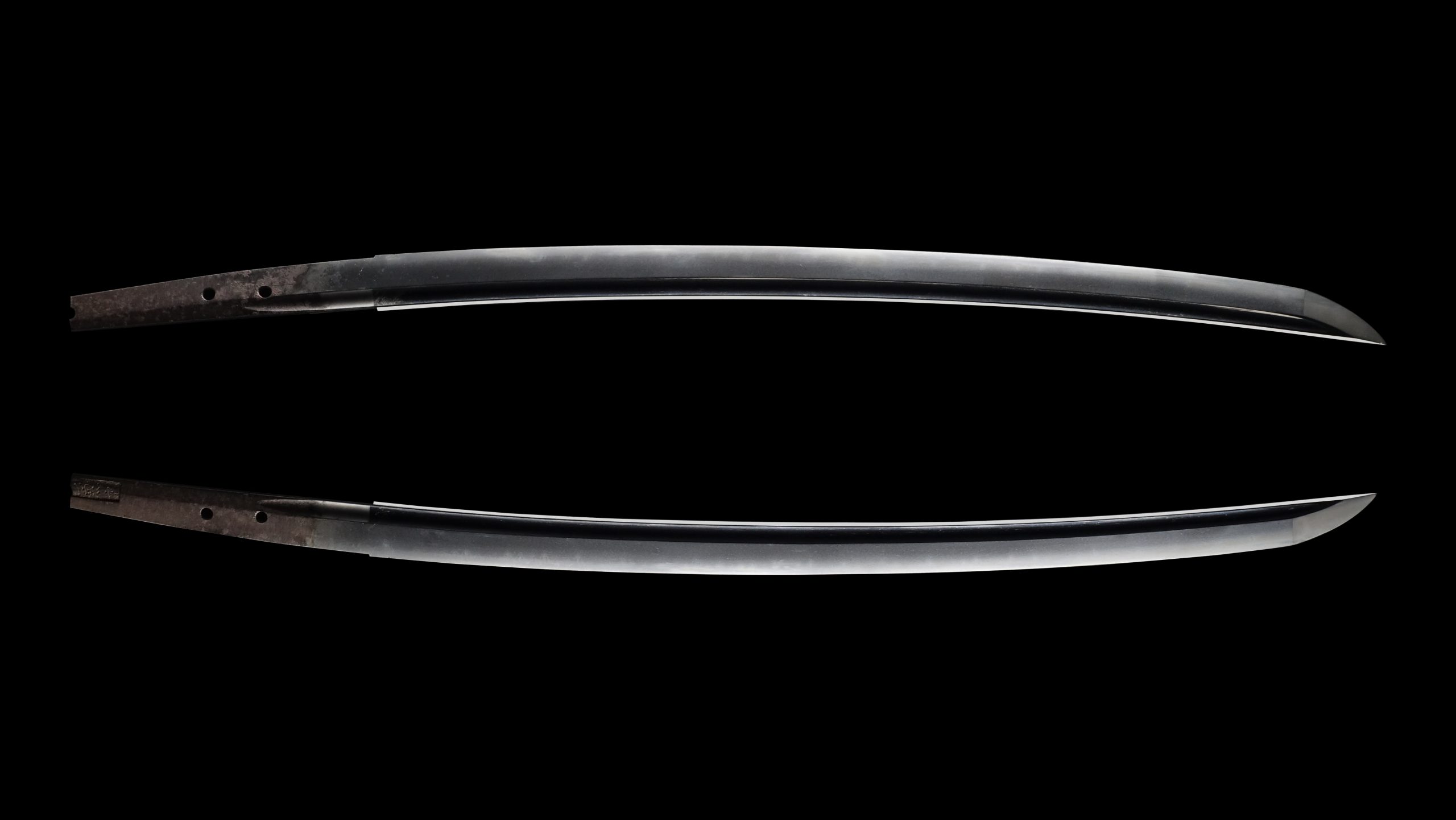
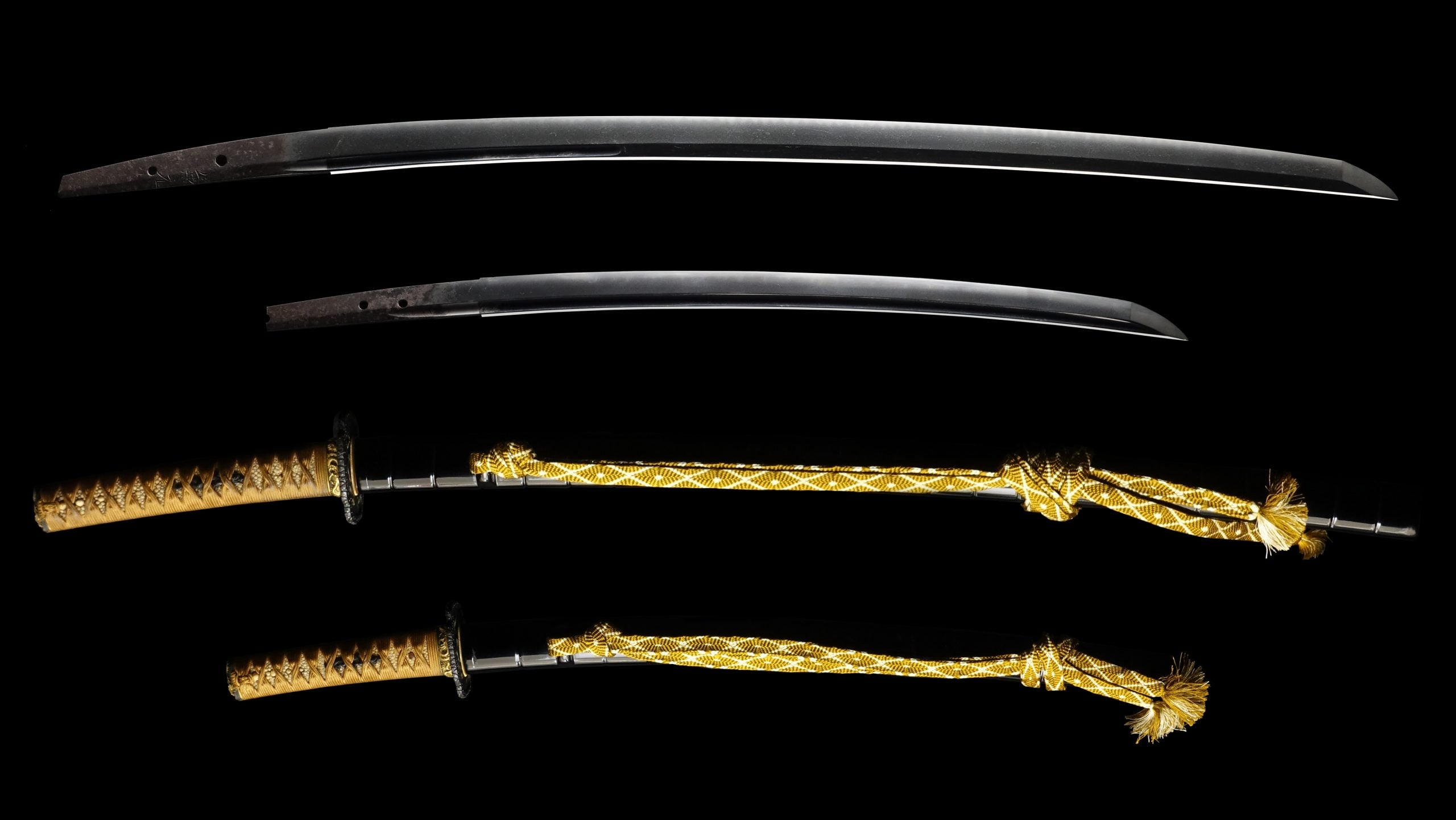
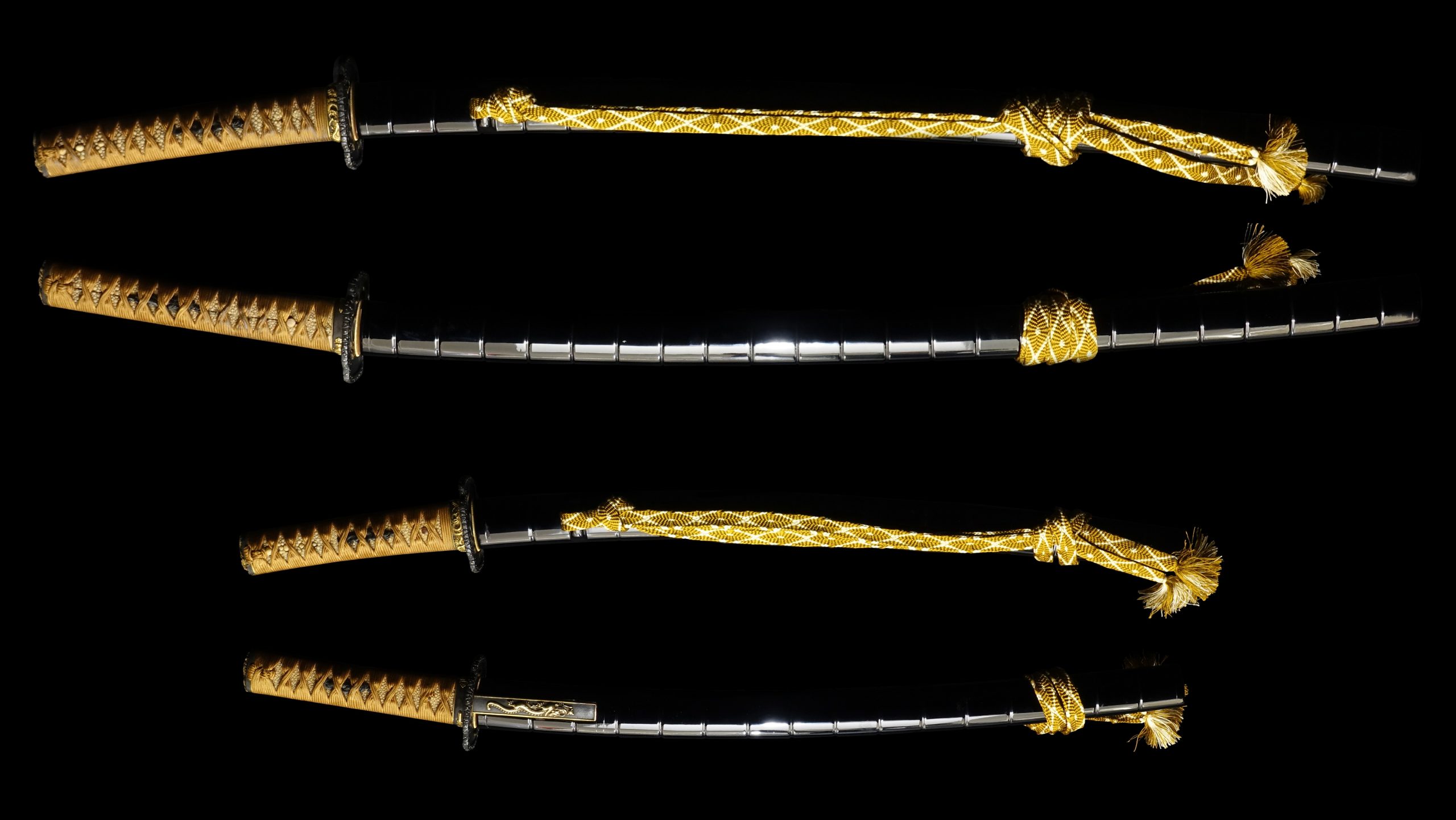
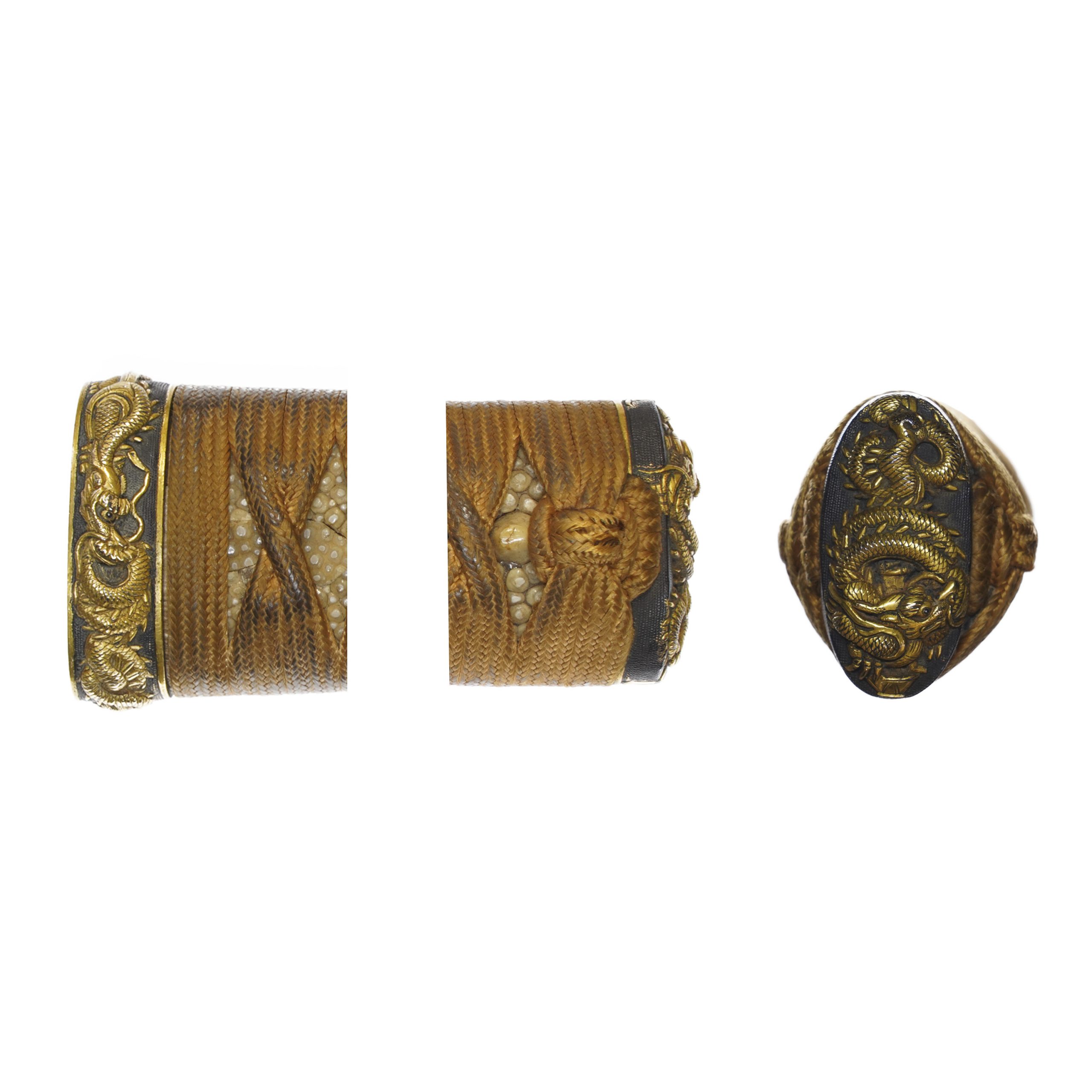
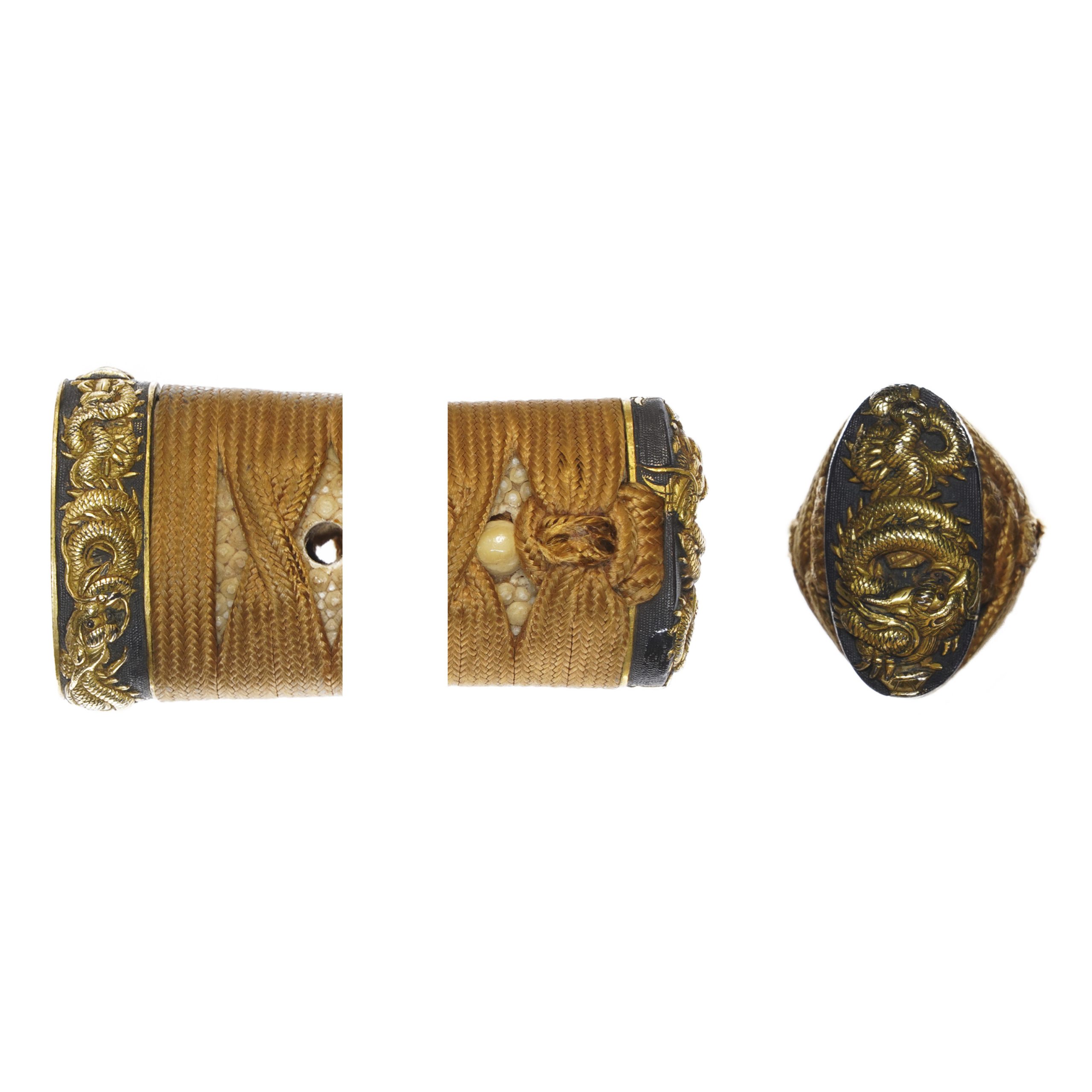
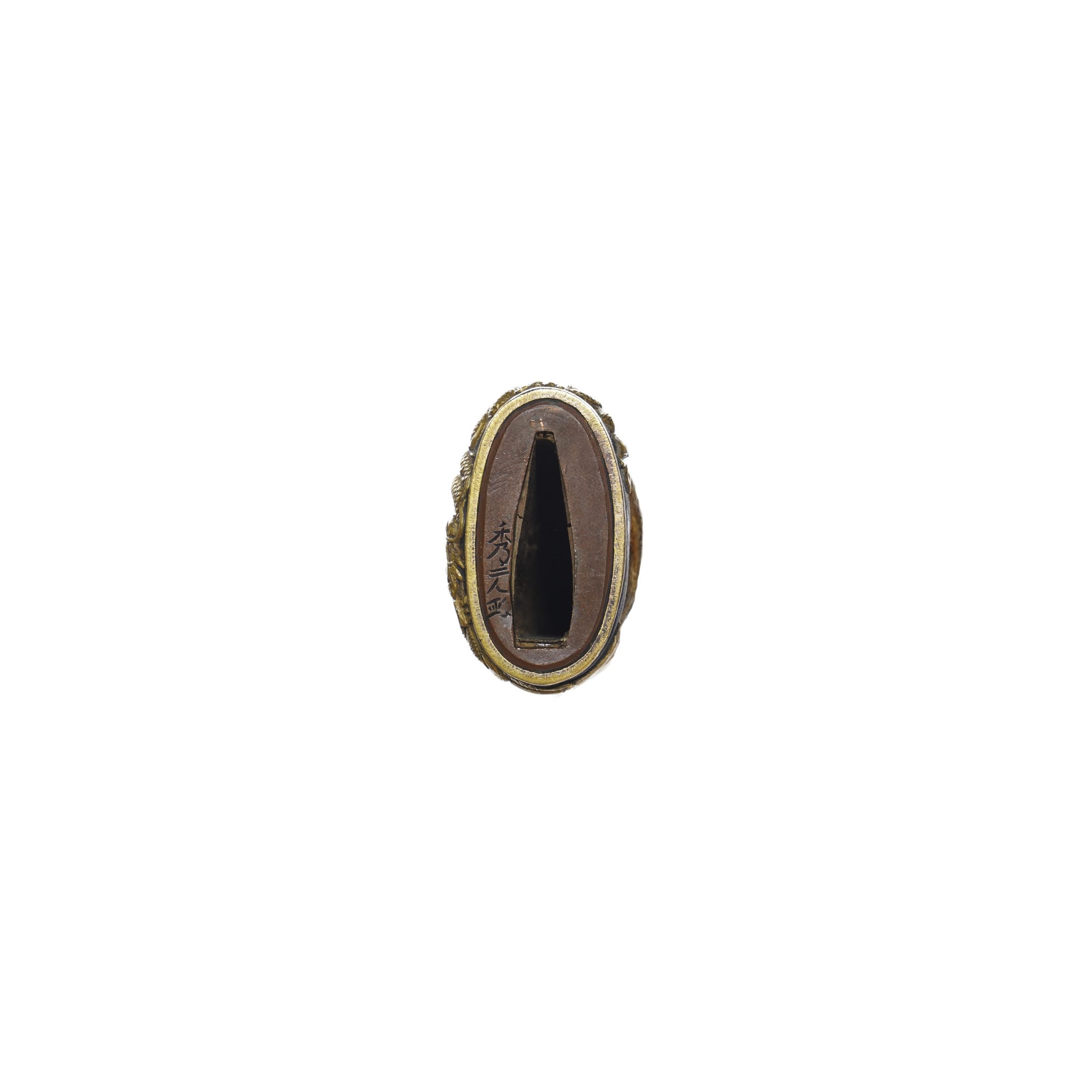
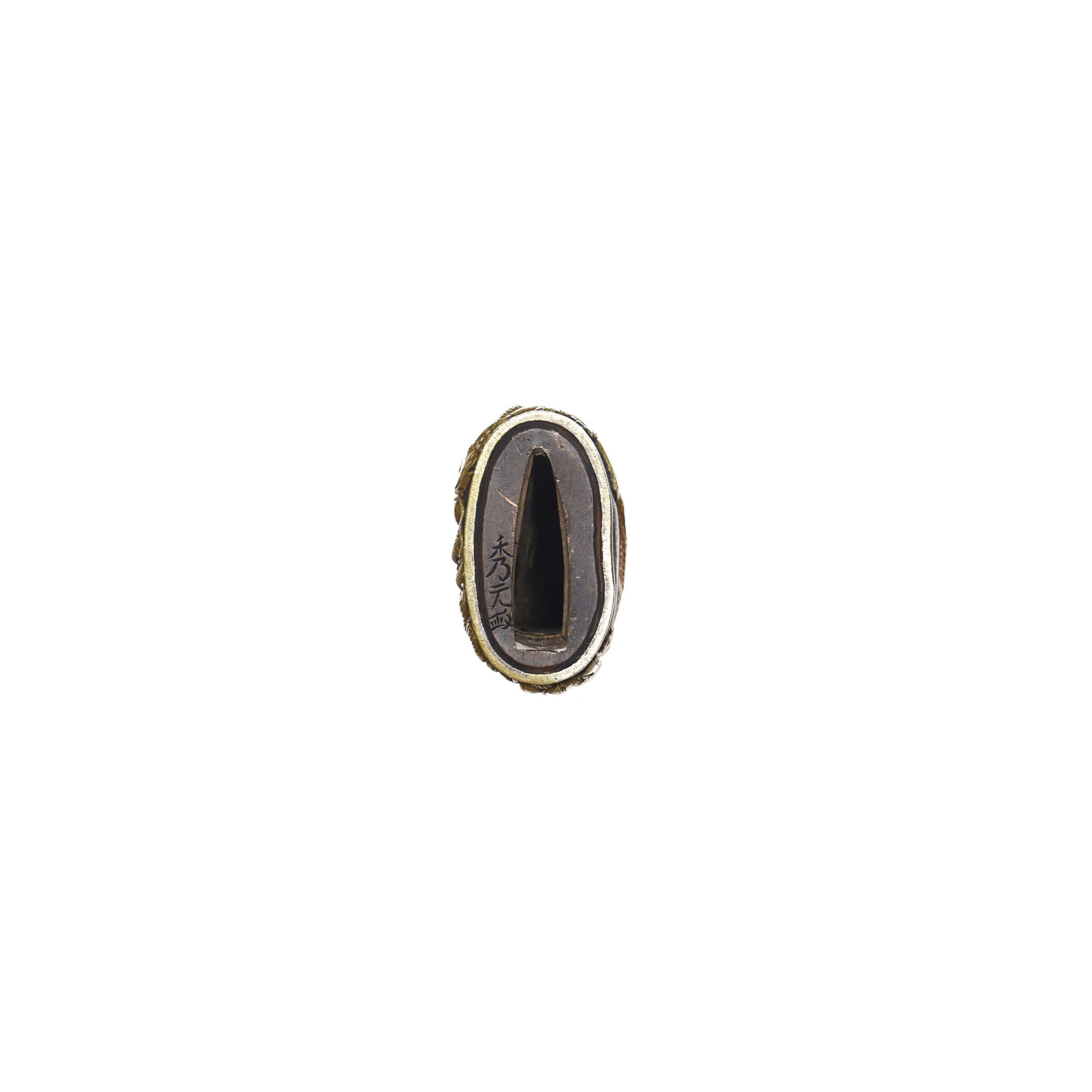
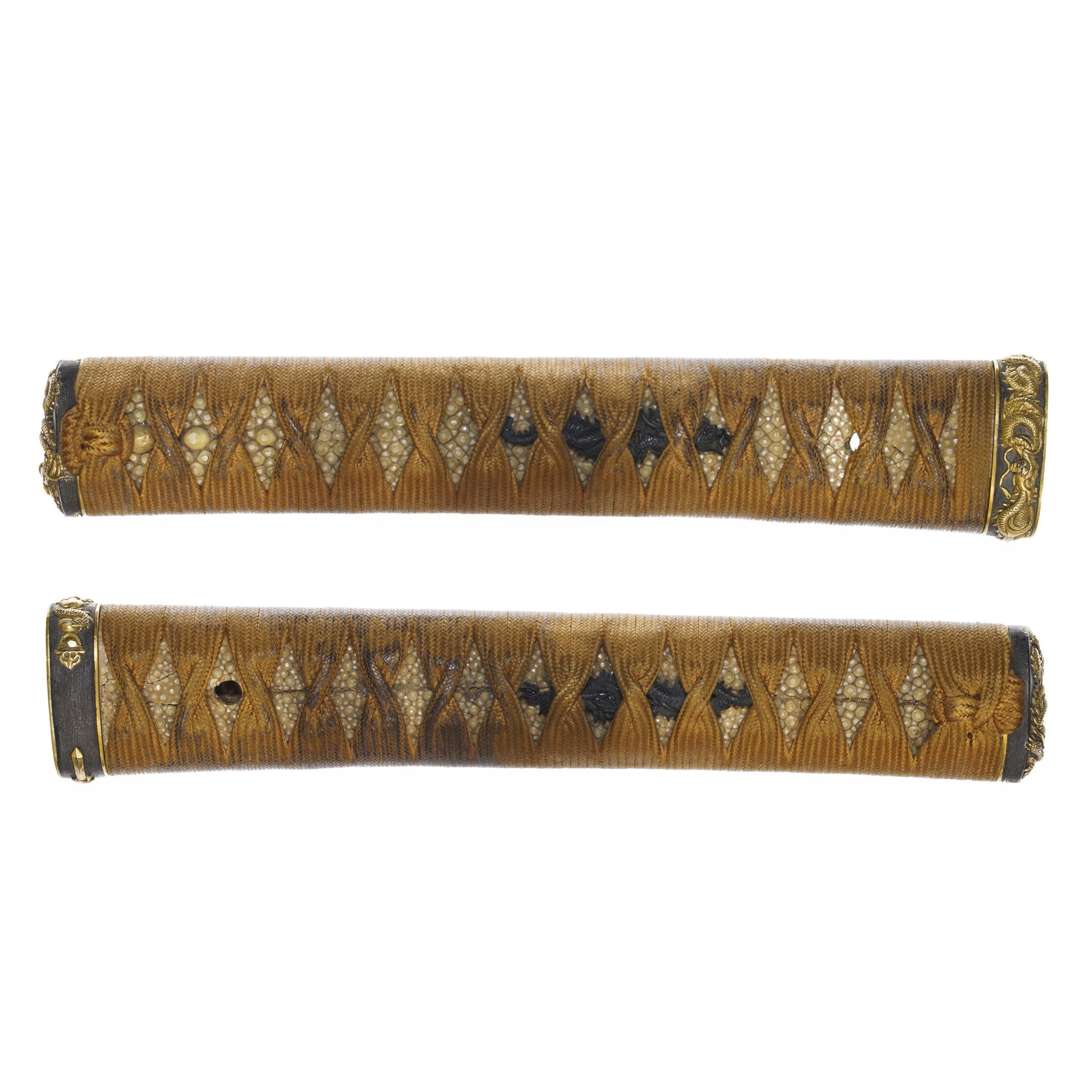
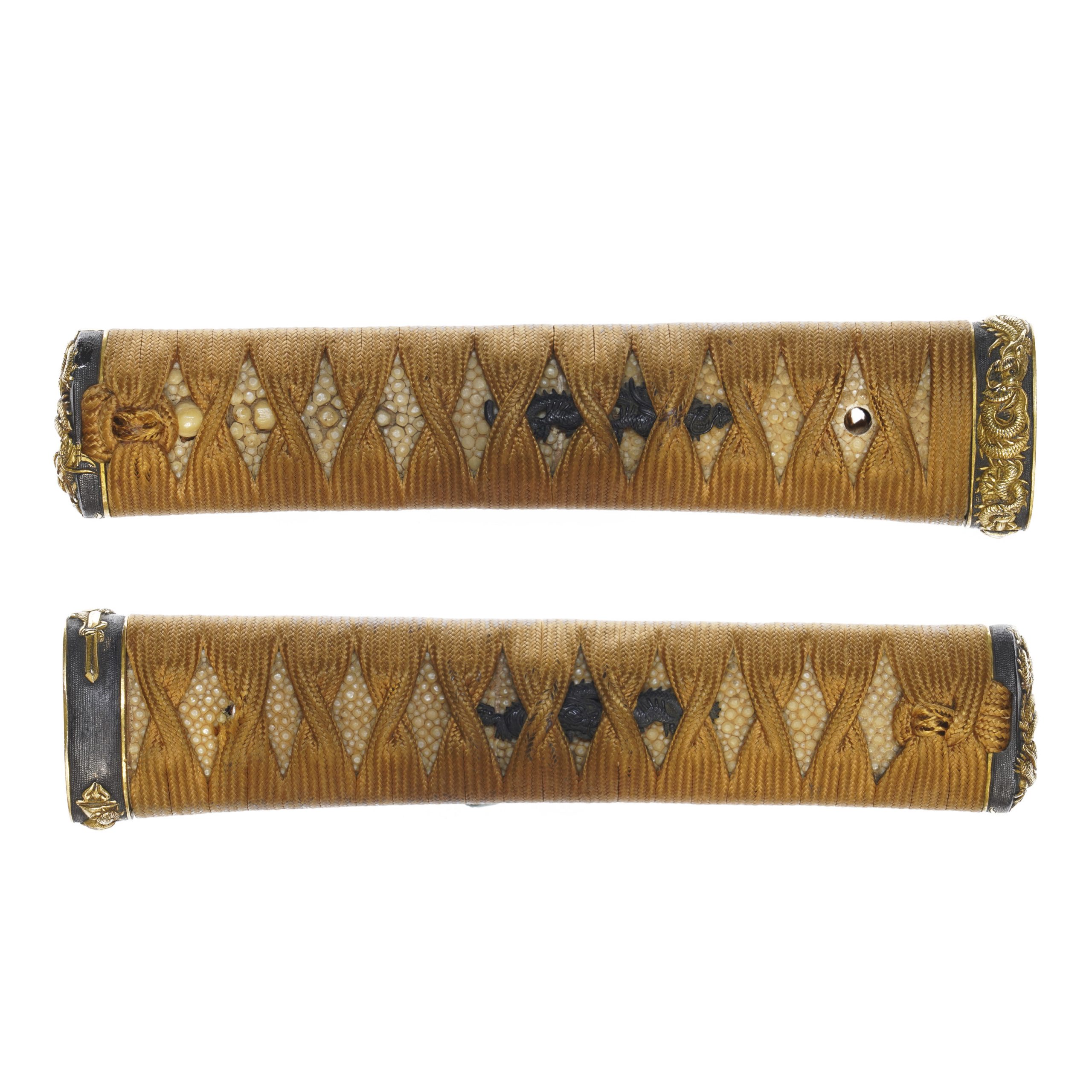
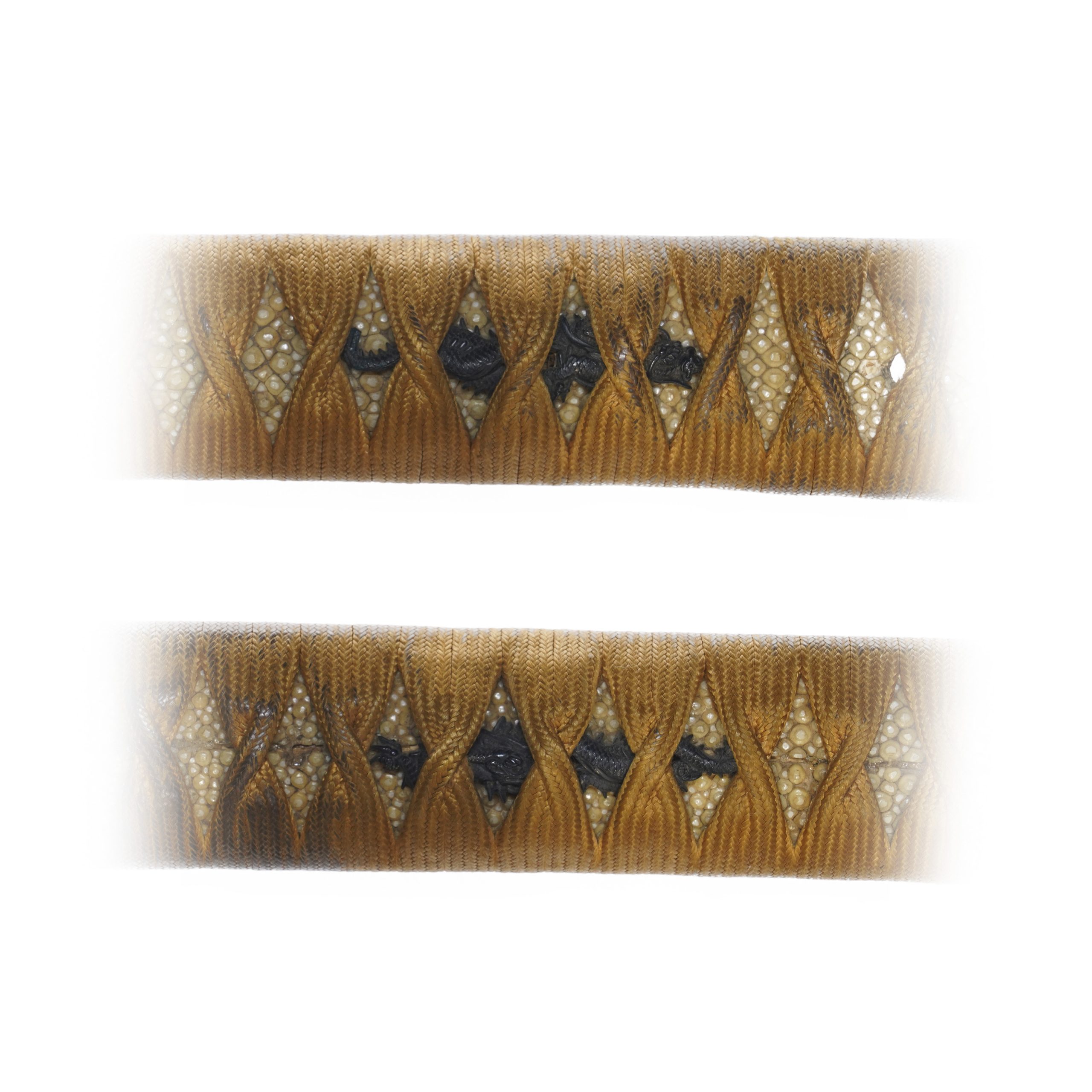
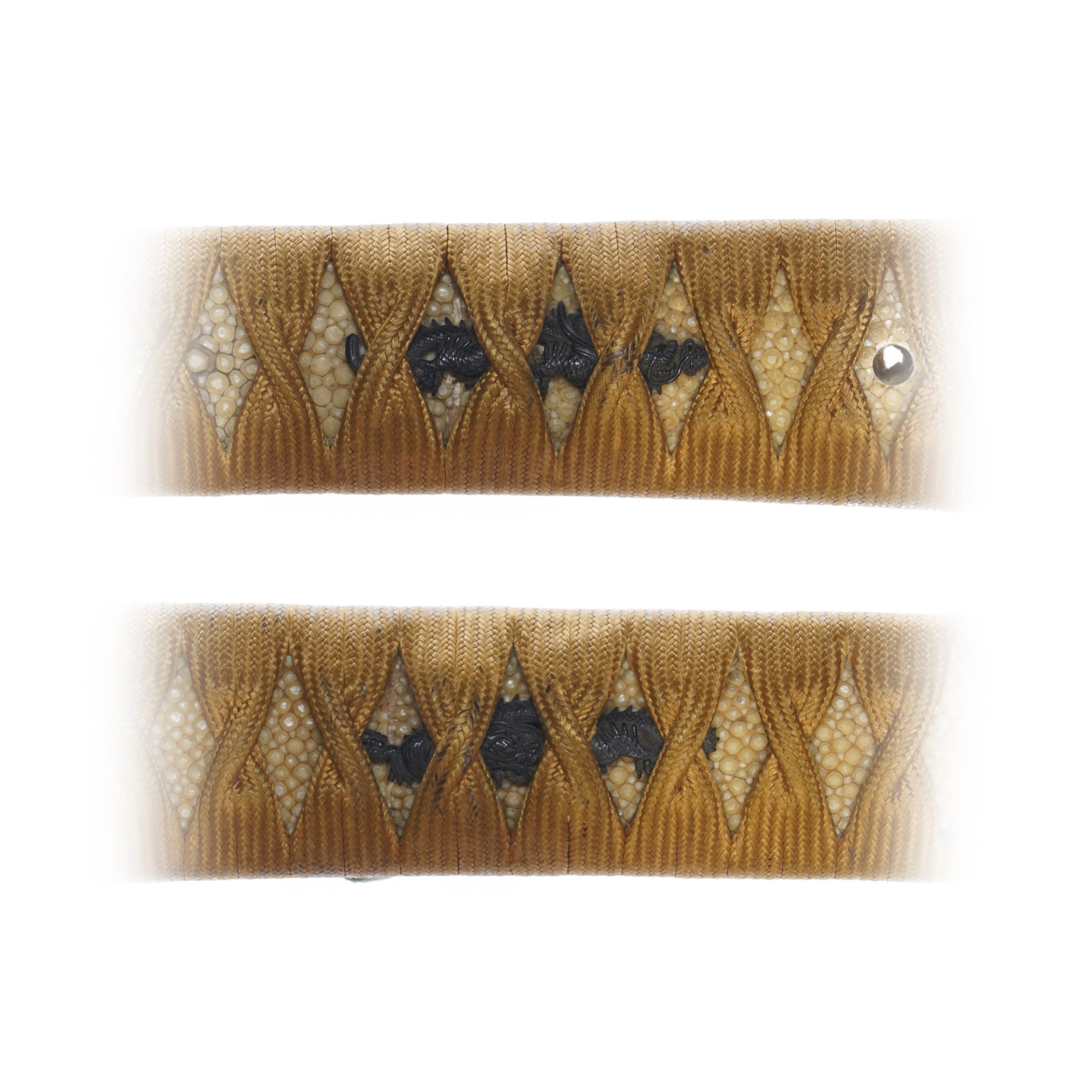
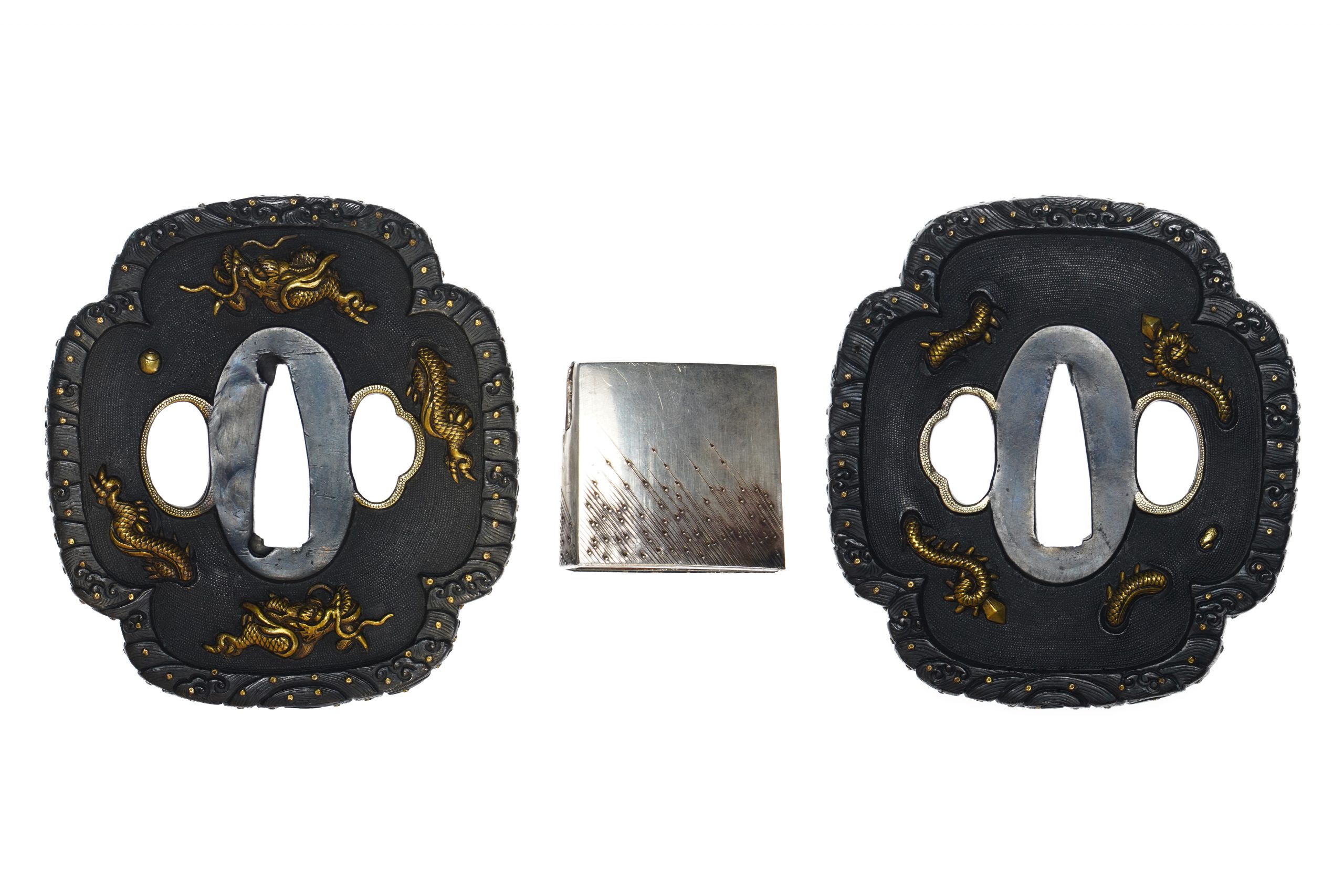
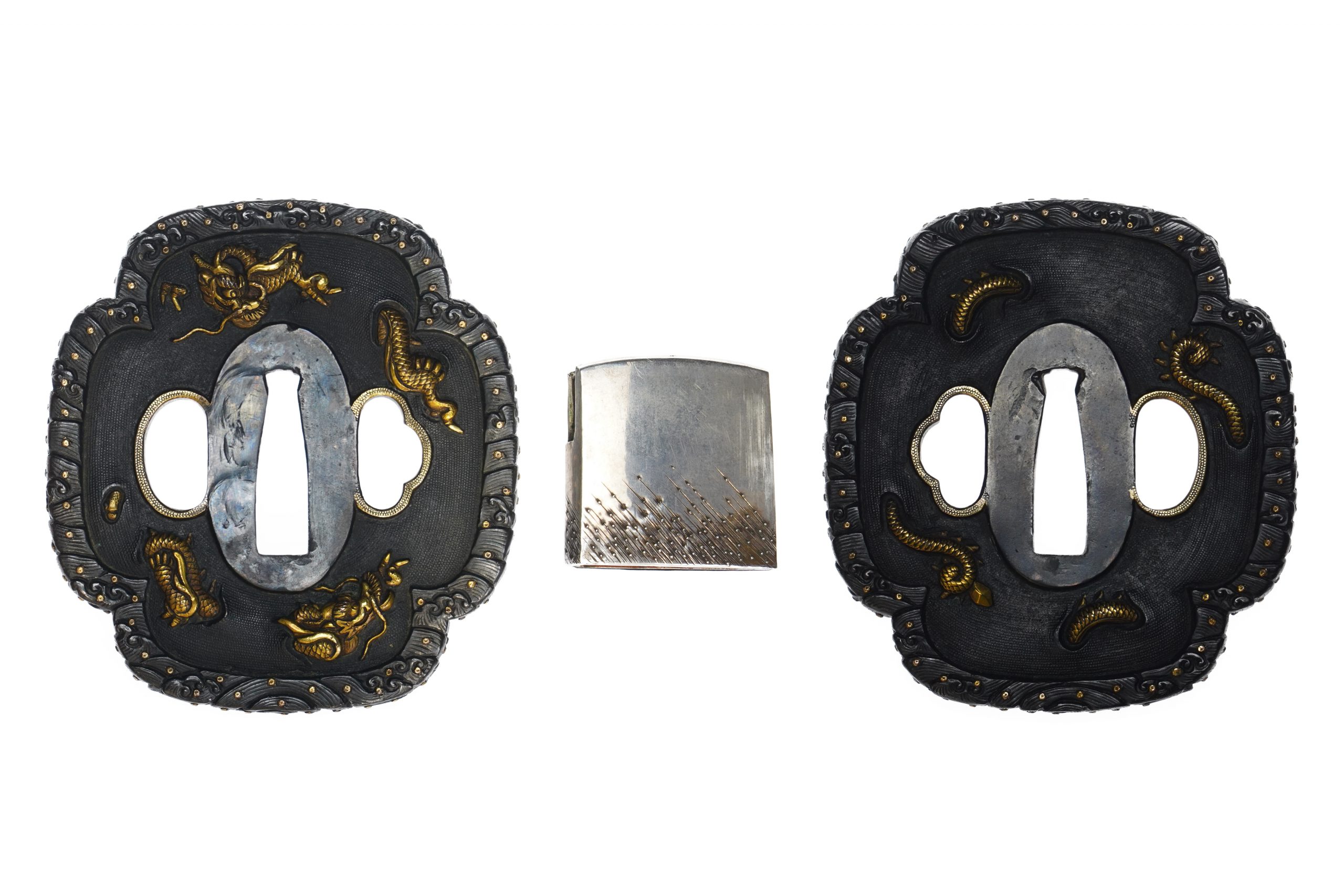
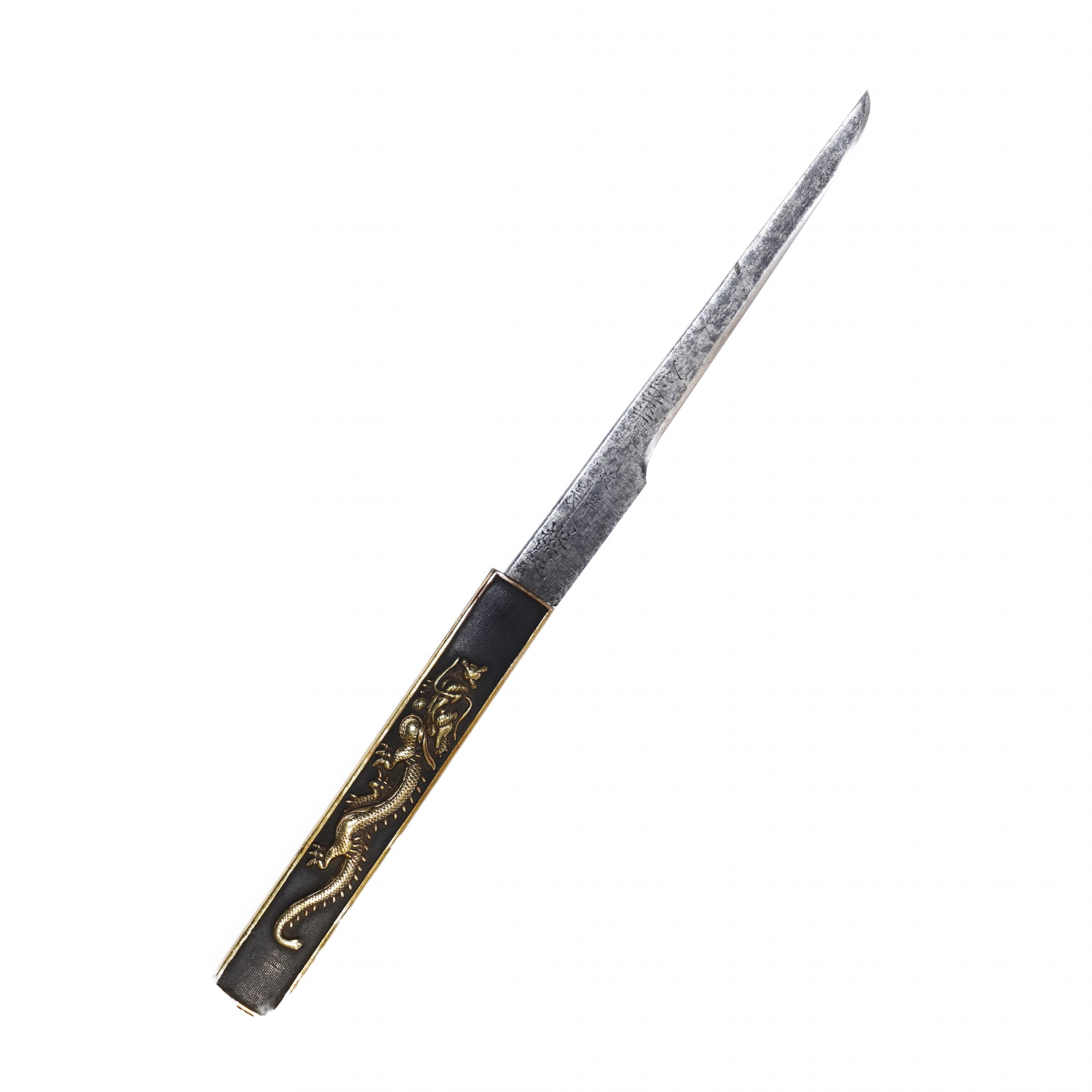
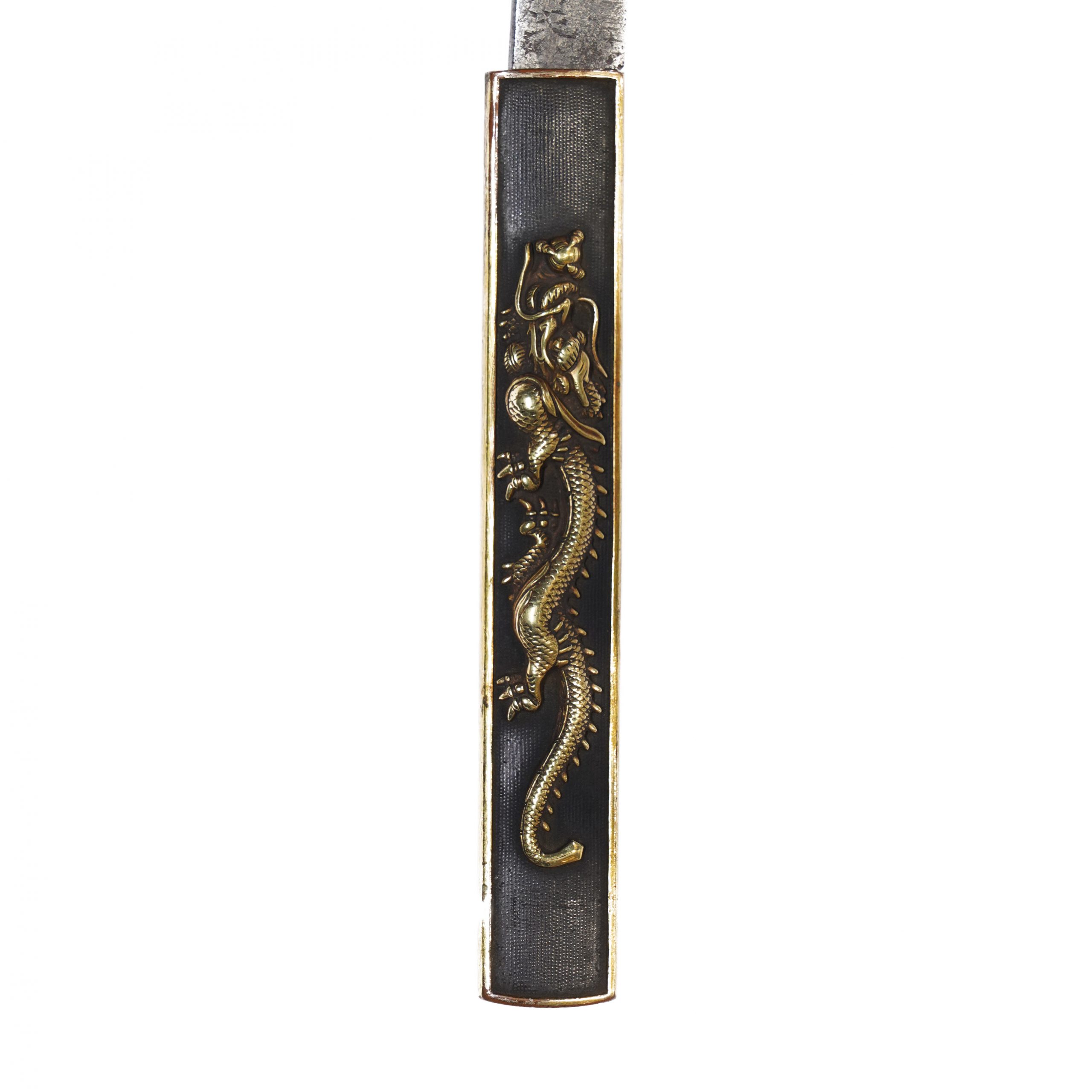
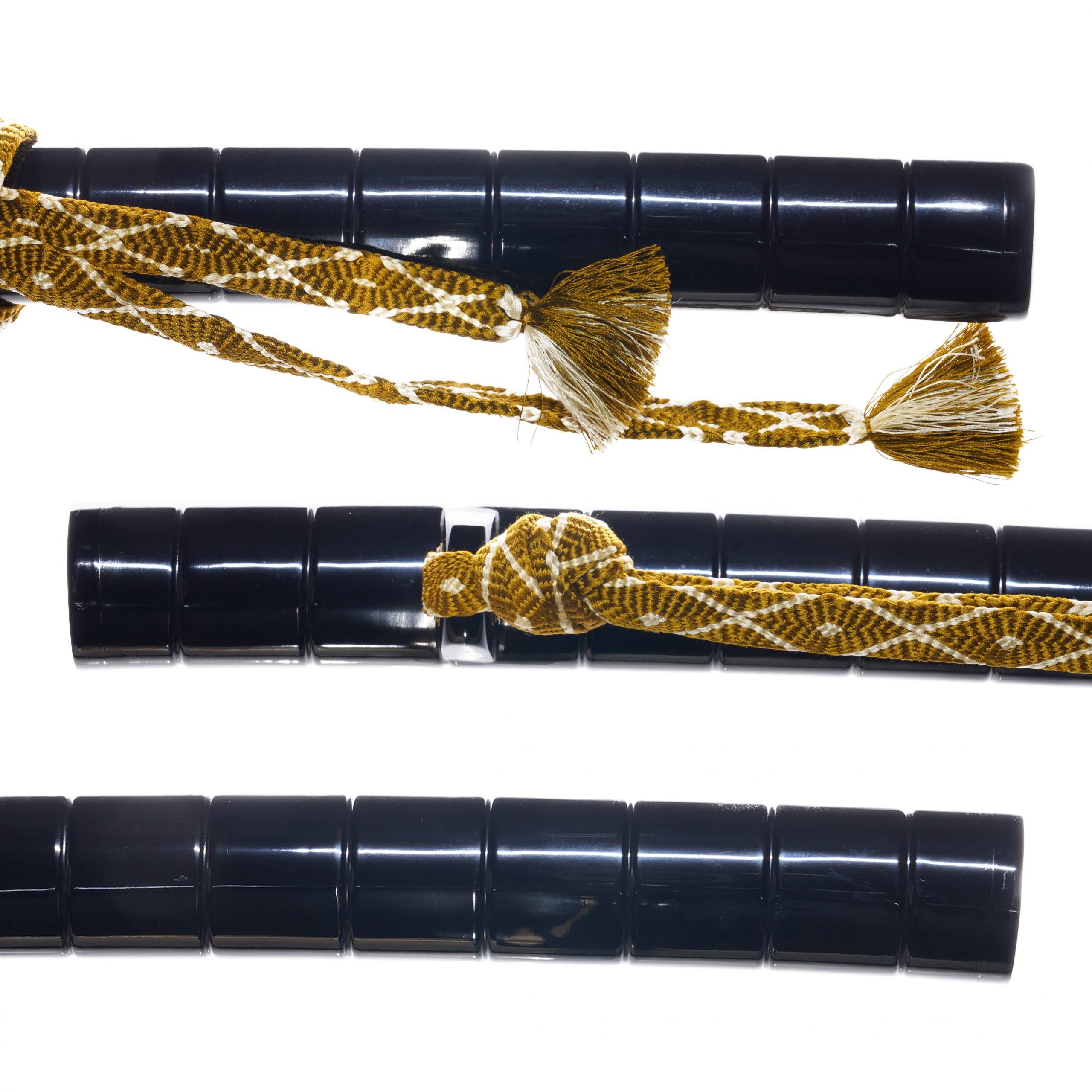
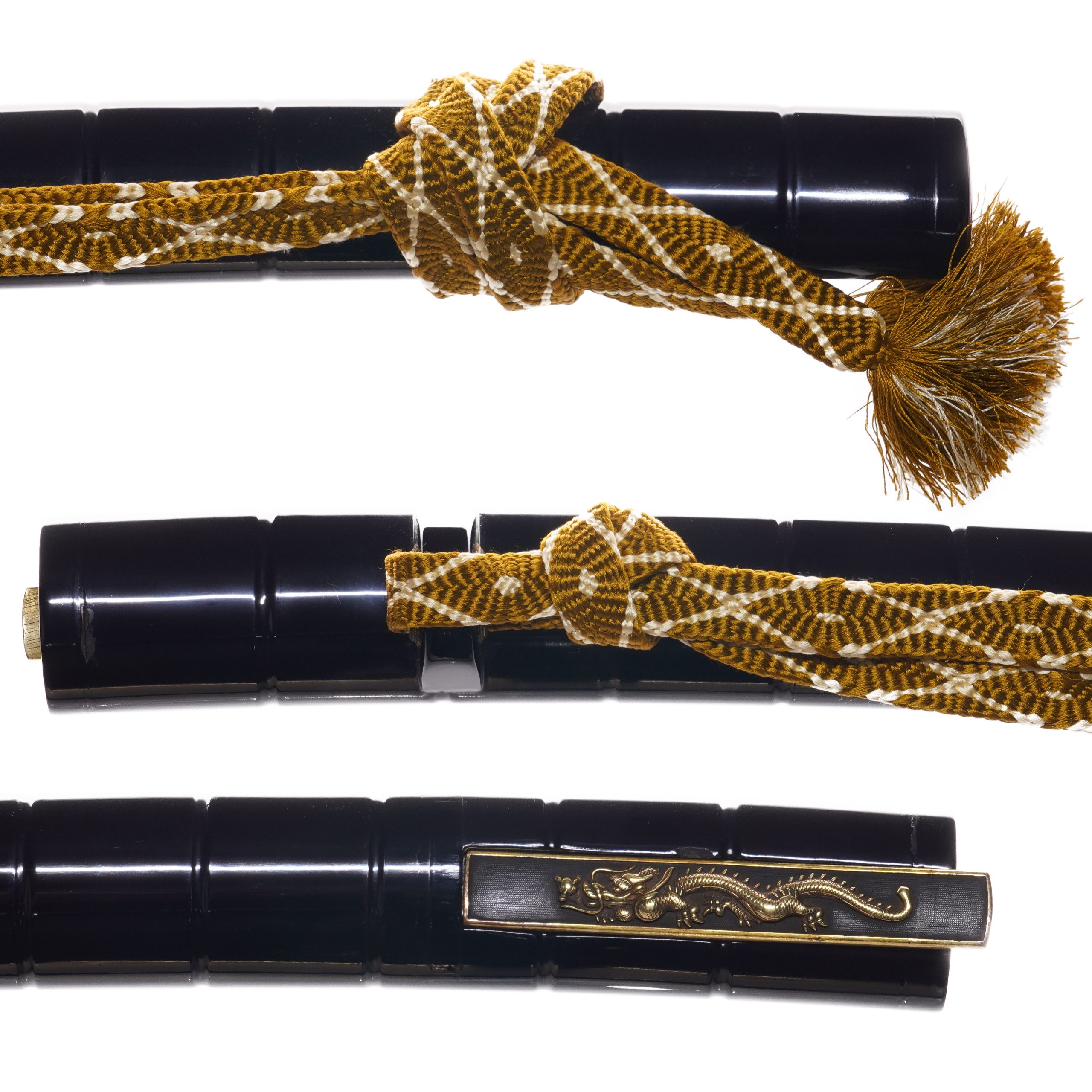
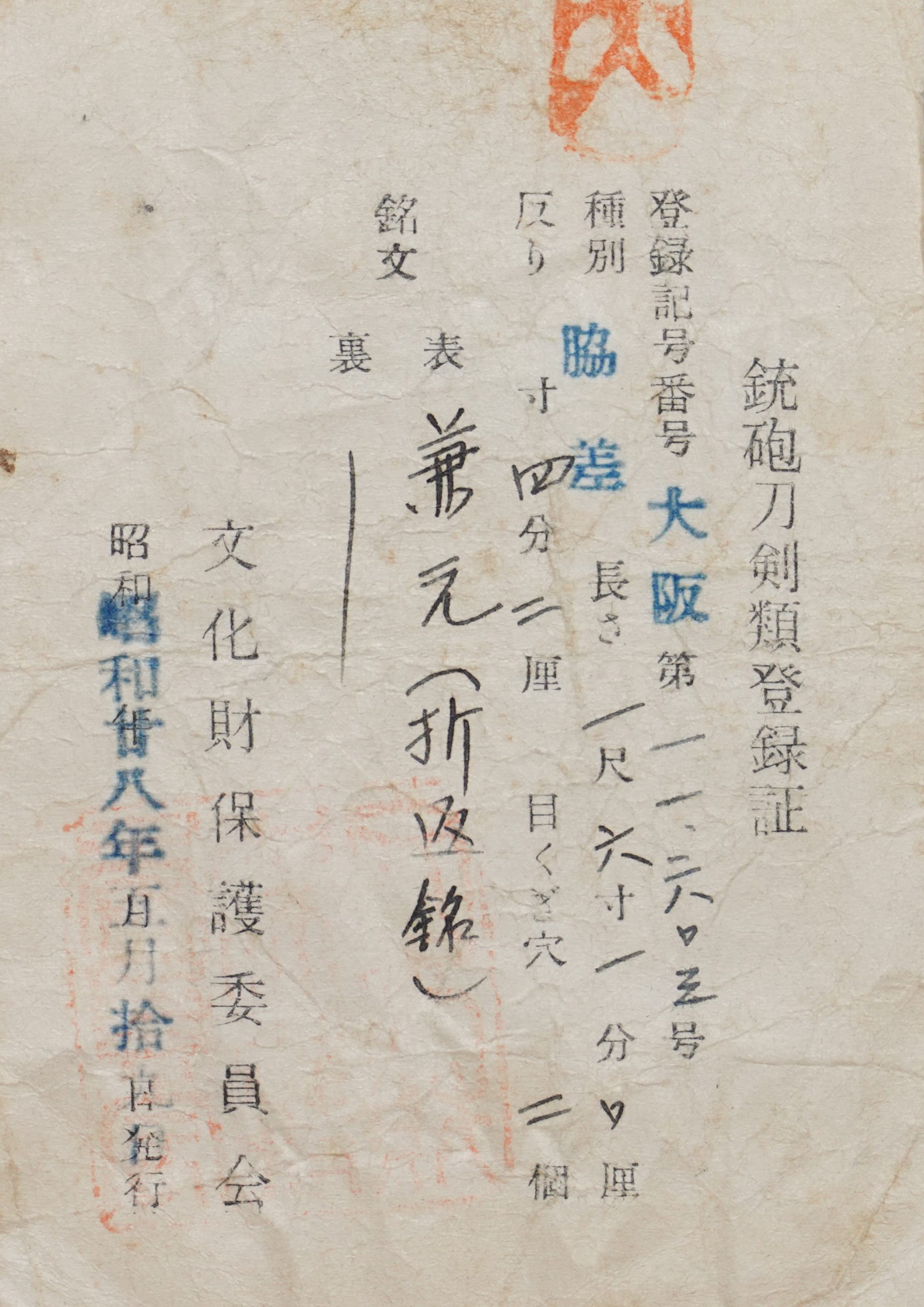
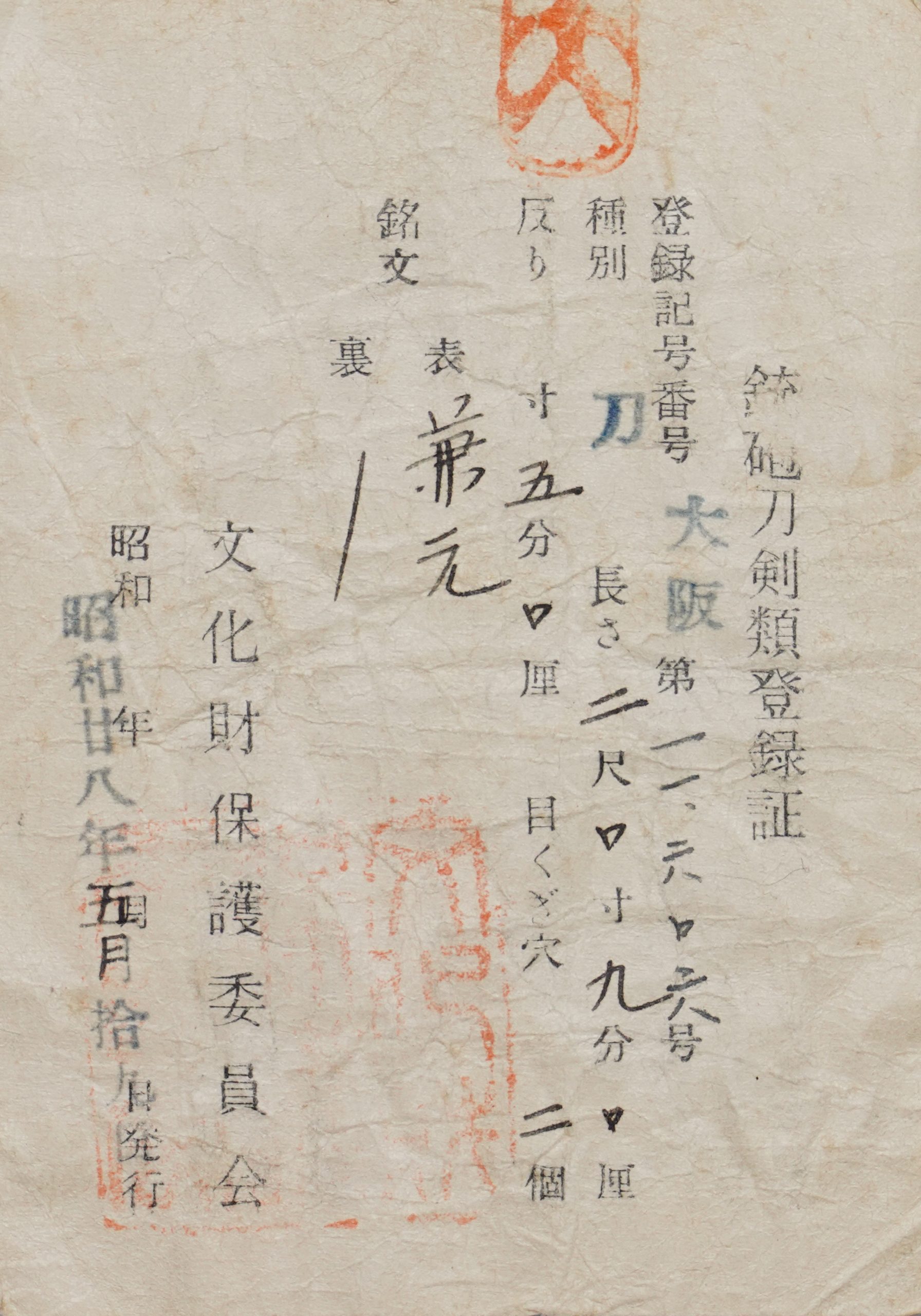
Mino-den · Mino · around 1532-1555
2 pieces on the market now
Mino-den · Mino
21 pieces on the market now
Kanemoto (兼元) worked at Akasaka in Mino Province, and the line takes its place among the smiths of the late Muromachi period whom the NBTHK registers under the Mino-den tradition centered on Seki. The setsumei place the family within the Sue-Seki (Sue-Mino) milieu, naming Kanemoto alongside Kanesada as the two leading figures of the province in this era; one tantō note instead pairs the name with Kaneshiba, and another with Izumi no Kami Kaneshige, marking the company the line kept. The name passed through successive generations, and the records repeatedly state that distinguishing each generation has not been definitively settled. Dated long signatures reading "Nōshū Akasaka-jū Kanemoto" survive from the Meiō, Bunki, Daiei, Kyōroku, and Eishō eras, while two-character signatures bear no date. The first generation is documented through pieces dated Meiō 6, 8, 9, and 10, all giving the Akasaka residence; the most accomplished hand, and the one the world singles out under the sobriquet "Magoroku Kanemoto," is the second generation. The shared vocabulary of the line is the sanbonsugi (three-cedar) gunome, a sequence of linked pointed crests that rise and fall in groups. The ground is Mino-den through and through: itame-hada mixed with mokume and flowing masame, tending toward standing grain (hada-dachi), with fine ji-nie, chikei, and a whitish shirake-utsuri that the setsumei call out again and again. The temper mixes togariba (pointed elements) and gunome, is nioi-dominant with ko-nie, and runs sunagashi, kinsuji, and occasional tobiyaki; the bōshi is typically midare-komi turning in ko-maru, often described as Jizō-like with hakikake or a falling kaeri. The chief means of separating the second generation from the later line is regularity: as the generations descend, the pointed crests grow sharply angular and standardized, whereas Magoroku's sanbonsugi is deliberately uneven, the gunome heads rounded in places, and the pattern shifts freely into nihonsugi, yonsugi, and gosugi groupings of two, four, and five. The records describe this as a gyōsō (cursive, free) manner.
The first generation, by contrast, does not emphasize sanbonsugi at all, favoring gunome mixed with gunome-chōji and at times yubashiri and tobiyaki; both generations also made suguha, and one tantō is an uncommon Rai-utsushi in elegant straight temper that evokes Kaneyuki. For kantei, the line is read through the standing Mino grain, the shirake-utsuri, and above all the irregular sanbonsugi, with the leaning bōshi a noted point: the records observe that the honka model and these blades share a bōshi that falls over. Named and documented works recur across the register. A naginata dated Kyōroku 1 (1528) carries the full Akasaka signature and is valued as documentary source material, dated two-character pieces being scarce. A katana bearing a kinzōgan inscription on the reverse is known as "Sasatsuyu Kanemoto" and is recorded in the hands of Makishima Kenmotsu Akishige, of the same clan as Furuta Kosukezaemon. The "Aoki Kanemoto," a second-generation work, is said to be the sword with which Aoki Ichishige, a retainer of Tokugawa Ieyasu, killed Magara Masataka of the Asakura side at the Battle of Anegawa in Genki 1 (1570). A further katana carries a Genna 1 (1615) kinzōgan cutting-test inscription by Nakagawa Saheita reading "two bodies," and one suguha katana descended in the Echizen Matsudaira family. Two katana signed Kanemoto are recorded in Honma's inventory of the Imperial collection. Across these works the line is registered as the cutting-edged representative of Sue-Seki, its hand recognized wherever the three-cedar temper runs uneven over standing Mino steel. Learn more →
| Smith | Era | Designated |
|---|---|---|
| Kanemoto兼元 | 1521-1528 | 30 |
| Kanemoto兼元 | 1532-1555 | 0 |
| Kanemoto兼元 | 1573-1592 | 0 |
| Kanemoto兼元 | 1592-1596 | 0 |
| Kanemoto兼元 | 1818-1830 | 0 |
Mino in the Muromachi period
Sengoku Seki was an industry: smiths organized under their tutelary Kasuga shrine, arming the war bands of central Japan. Magoroku Kanemoto’s sanbonsugi and the finest Kanesada work prove quality survived inside mass production.
Certifies a genuine blade worth preserving: a signature confirmed correct, or, if unsigned, an era, province, and school that the NBTHK can reliably identify.
The NBTHK (Nihon Bijutsu Tōken Hozon Kyōkai, the Society for the Preservation of Japanese Art Swords) is a public-interest incorporated foundation founded in 1948 and supervised by Japan’s Agency for Cultural Affairs (Bunkachō); it is based at the Japanese Sword Museum in Tokyo. Its expert panels physically examine each submitted work (shinsa) and issue a certificate (kanteishō) ranking it by artistic and historical merit. NBTHK papers are the most widely recognized standard of authentication for Japanese swords and fittings.
NBTHK official siteReturns/exchanges limited to defects caused by shipping (except willful misconduct or gross negligence by the company); customers must contact within 72 hours of receiving the product.