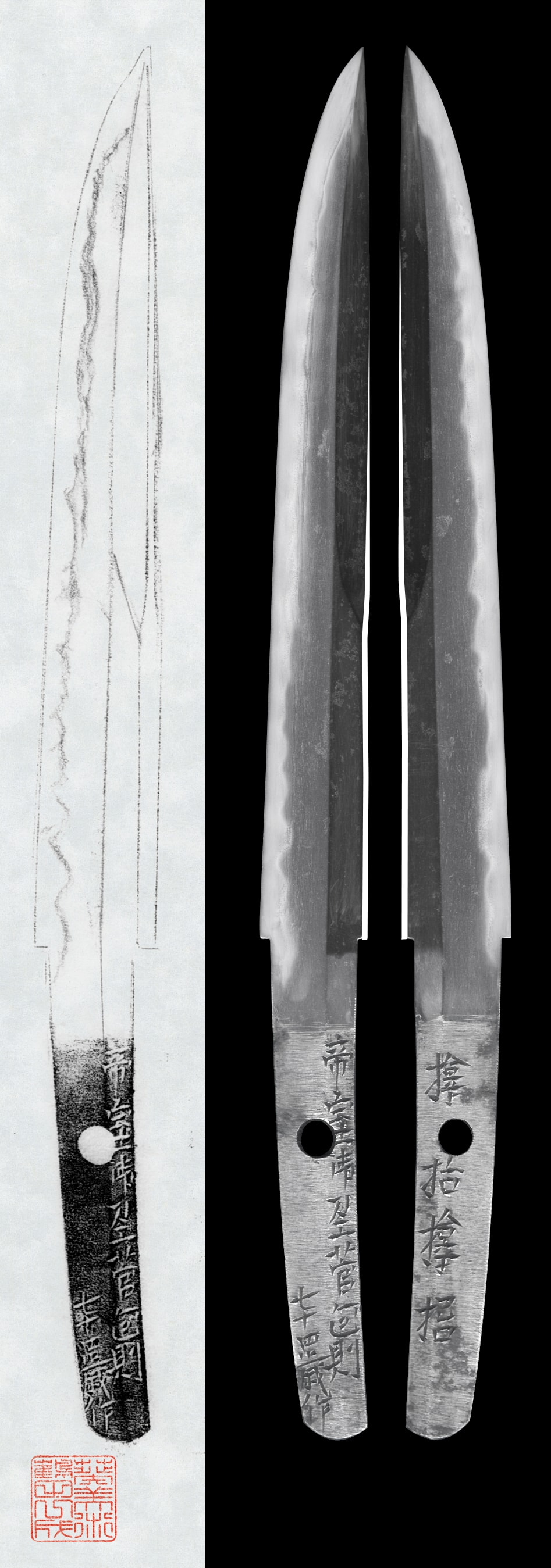
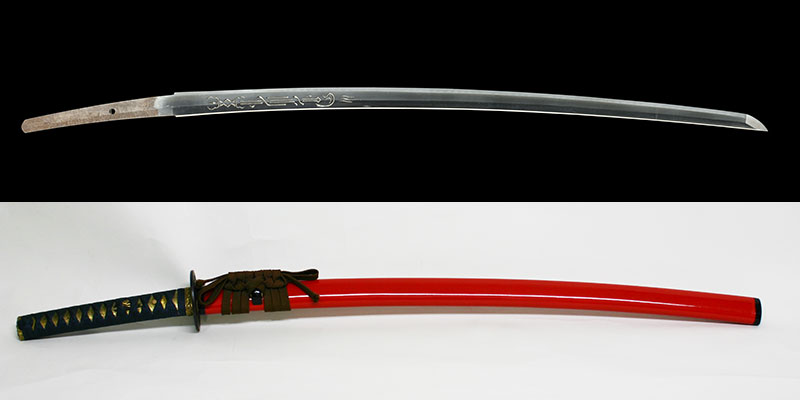
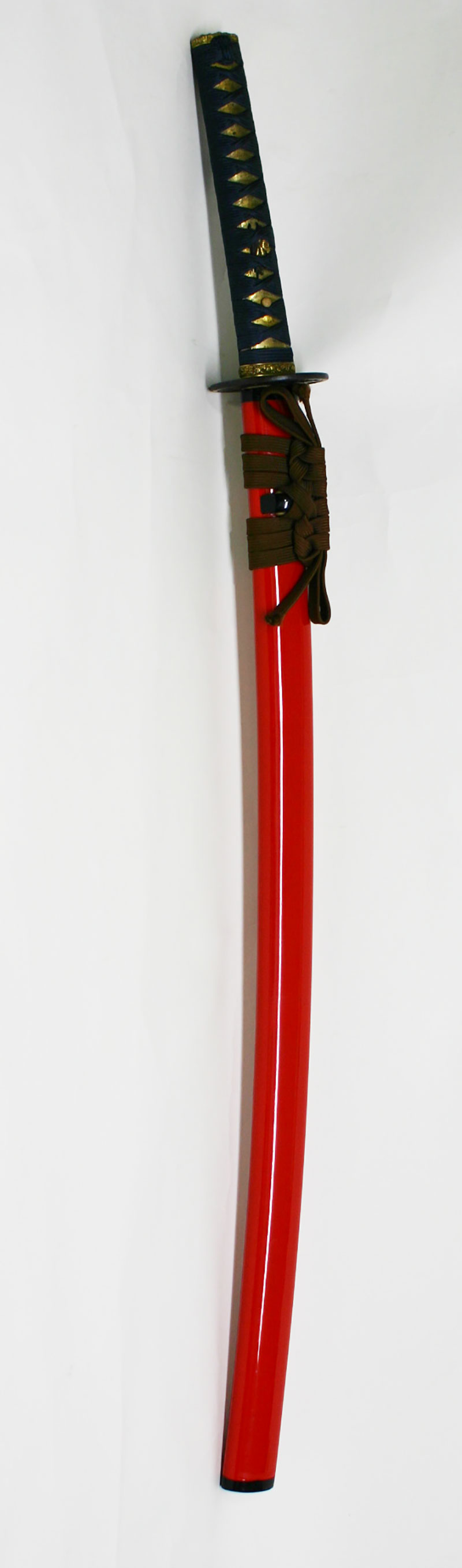
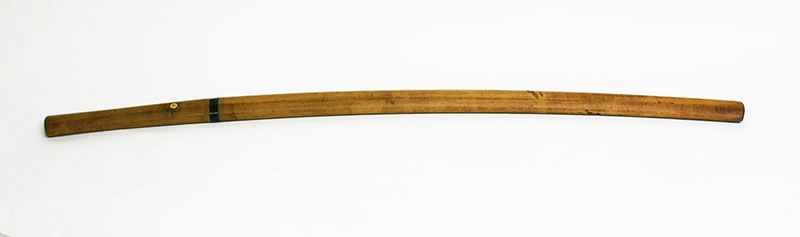
This is a katana by Miyamoto Kanenori, an Imperial Household Artist active from the late Edo to Meiji period. Born in Hoki Province, he studied under Yokoyama Sukekane and later forged swords for Emperor Komei. This piece, dated 1918, is a rare long work for the smith, featuring a gentle sugata, fine ko-itame hada, and gunome midare hamon reminiscent of Yoshii Bizen, with sword carvings on both sides.
 NihontoWatch
mei · Bunkyu-Meiji (1861-1912) · nagasa 66.4cm · sori 1.6cm

Hoki · around 1861-1864
2 pieces on the market now
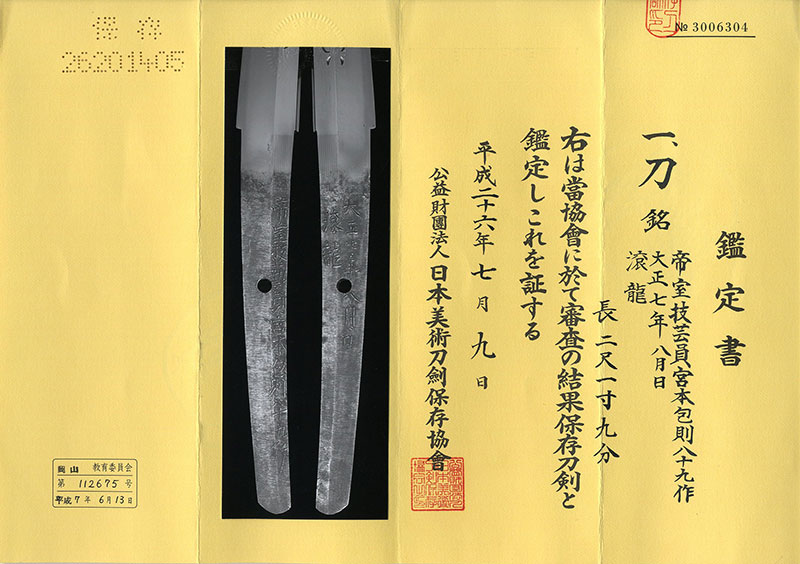
Certifies a genuine blade worth preserving: a signature confirmed correct, or, if unsigned, an era, province, and school that the NBTHK can reliably identify.
The NBTHK (Nihon Bijutsu Tōken Hozon Kyōkai, the Society for the Preservation of Japanese Art Swords) is a public-interest incorporated foundation founded in 1948 and supervised by Japan’s Agency for Cultural Affairs (Bunkachō); it is based at the Japanese Sword Museum in Tokyo. Its expert panels physically examine each submitted work (shinsa) and issue a certificate (kanteishō) ranking it by artistic and historical merit. NBTHK papers are the most widely recognized standard of authentication for Japanese swords and fittings.
NBTHK official siteCustomer-initiated returns accepted within two days of arrival; return shipping paid by customer and fees non-refundable. Returns/refunds unavailable for overseas deliveries.
This is a katana by Miyamoto Kanenori, an Imperial Household Artist active from the late Edo to Meiji period. Born in Hoki Province, he studied under Yokoyama Sukekane and later forged swords for Emperor Komei. This piece, dated 1918, is a rare long work for the smith, featuring a gentle sugata, fine ko-itame hada, and gunome midare hamon reminiscent of Yoshii Bizen, with sword carvings on both sides.
NihontoWatchmei · Bunkyu-Meiji (1861-1912) · nagasa 66.4cm · sori 1.6cm
Hoki · around 1861-1864
2 pieces on the market now
Certifies a genuine blade worth preserving: a signature confirmed correct, or, if unsigned, an era, province, and school that the NBTHK can reliably identify.
The NBTHK (Nihon Bijutsu Tōken Hozon Kyōkai, the Society for the Preservation of Japanese Art Swords) is a public-interest incorporated foundation founded in 1948 and supervised by Japan’s Agency for Cultural Affairs (Bunkachō); it is based at the Japanese Sword Museum in Tokyo. Its expert panels physically examine each submitted work (shinsa) and issue a certificate (kanteishō) ranking it by artistic and historical merit. NBTHK papers are the most widely recognized standard of authentication for Japanese swords and fittings.
NBTHK official siteCustomer-initiated returns accepted within two days of arrival; return shipping paid by customer and fees non-refundable. Returns/refunds unavailable for overseas deliveries.