Edo was the sword’s age of connoisseurship: the Hon’ami appraisers, the shogunal register of famous blades of 1719, and a thriving literature turned the sword into an object of study even as it ceased to be drawn in war.
 NihontoWatchNihontoWatch
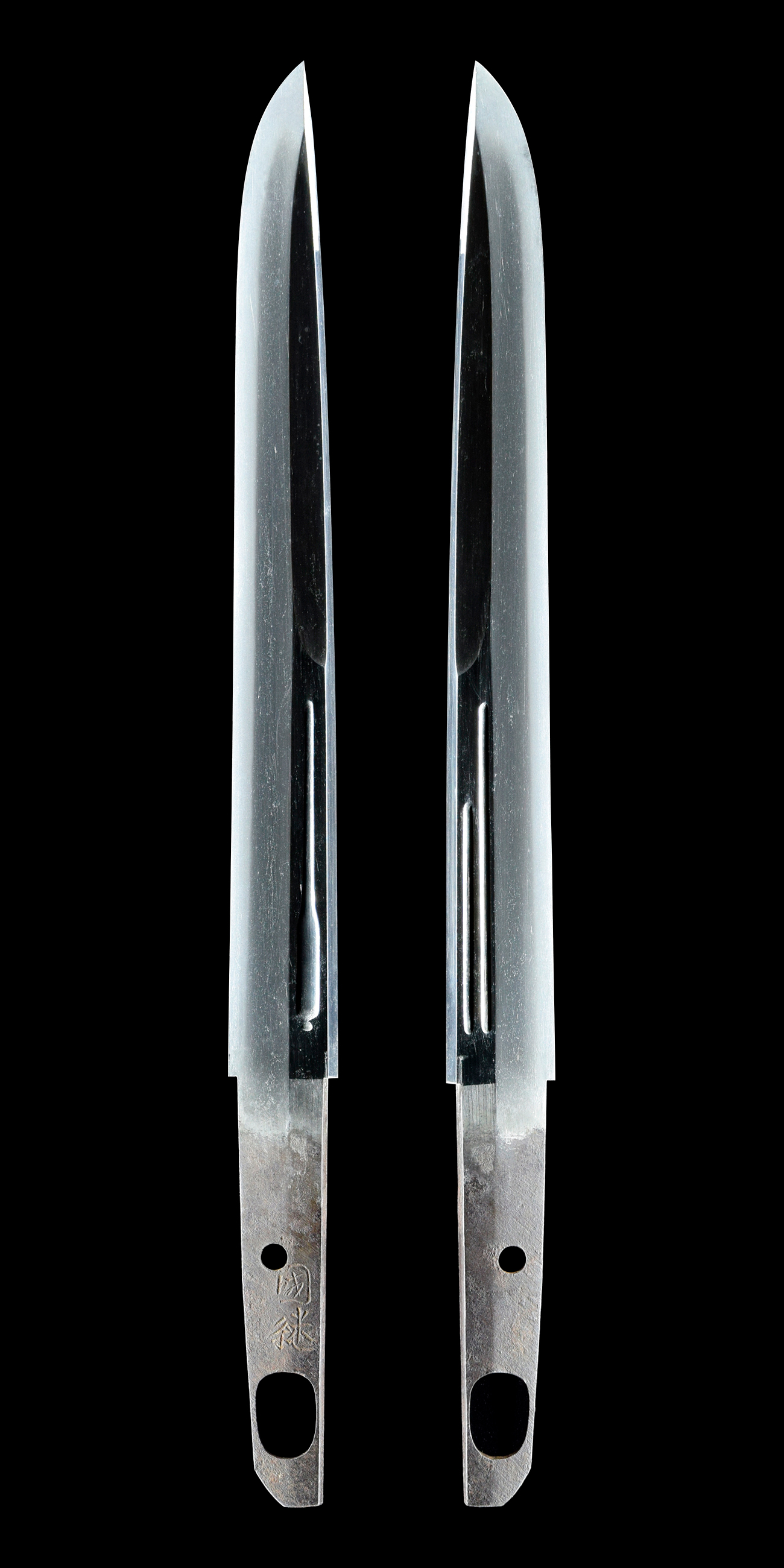
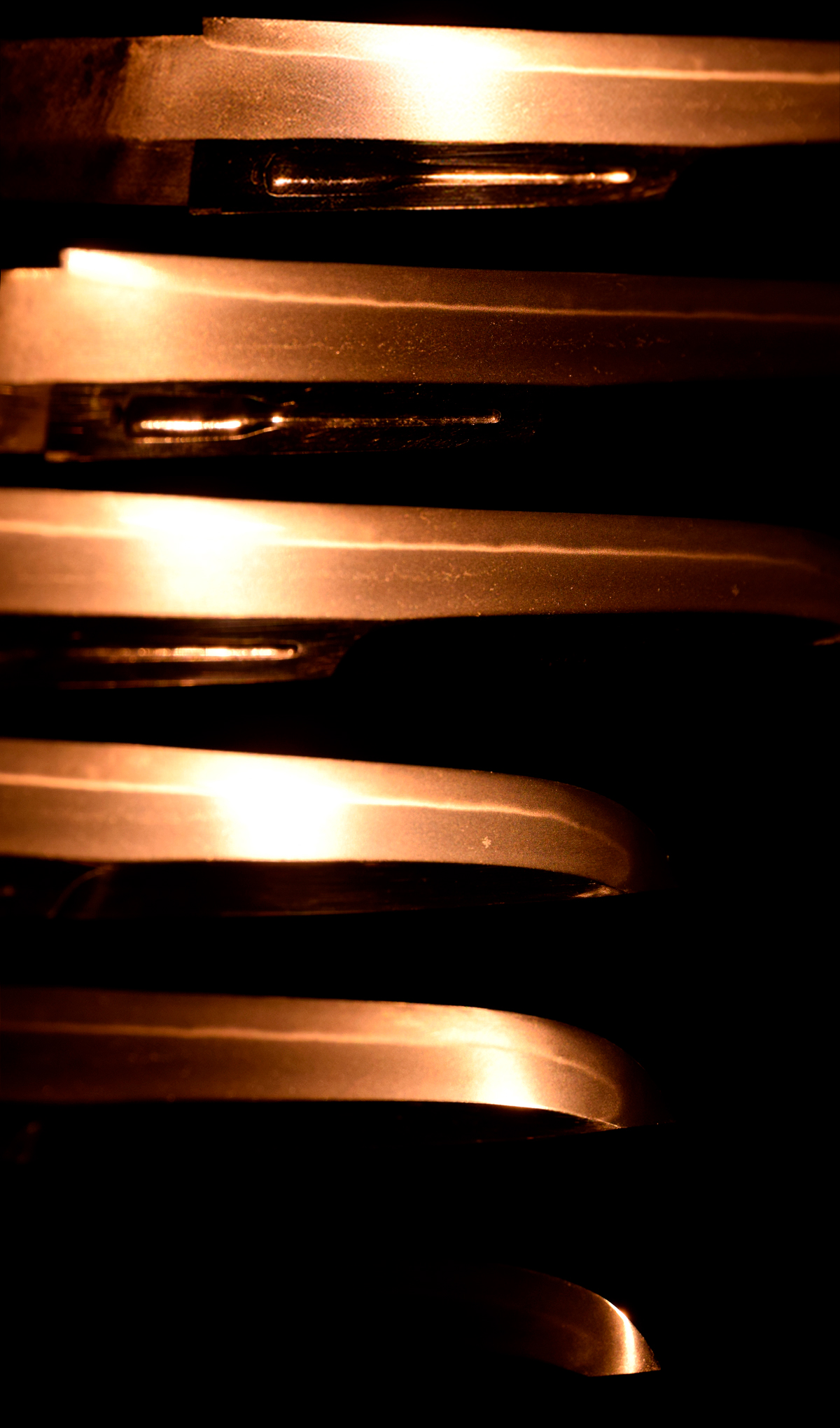
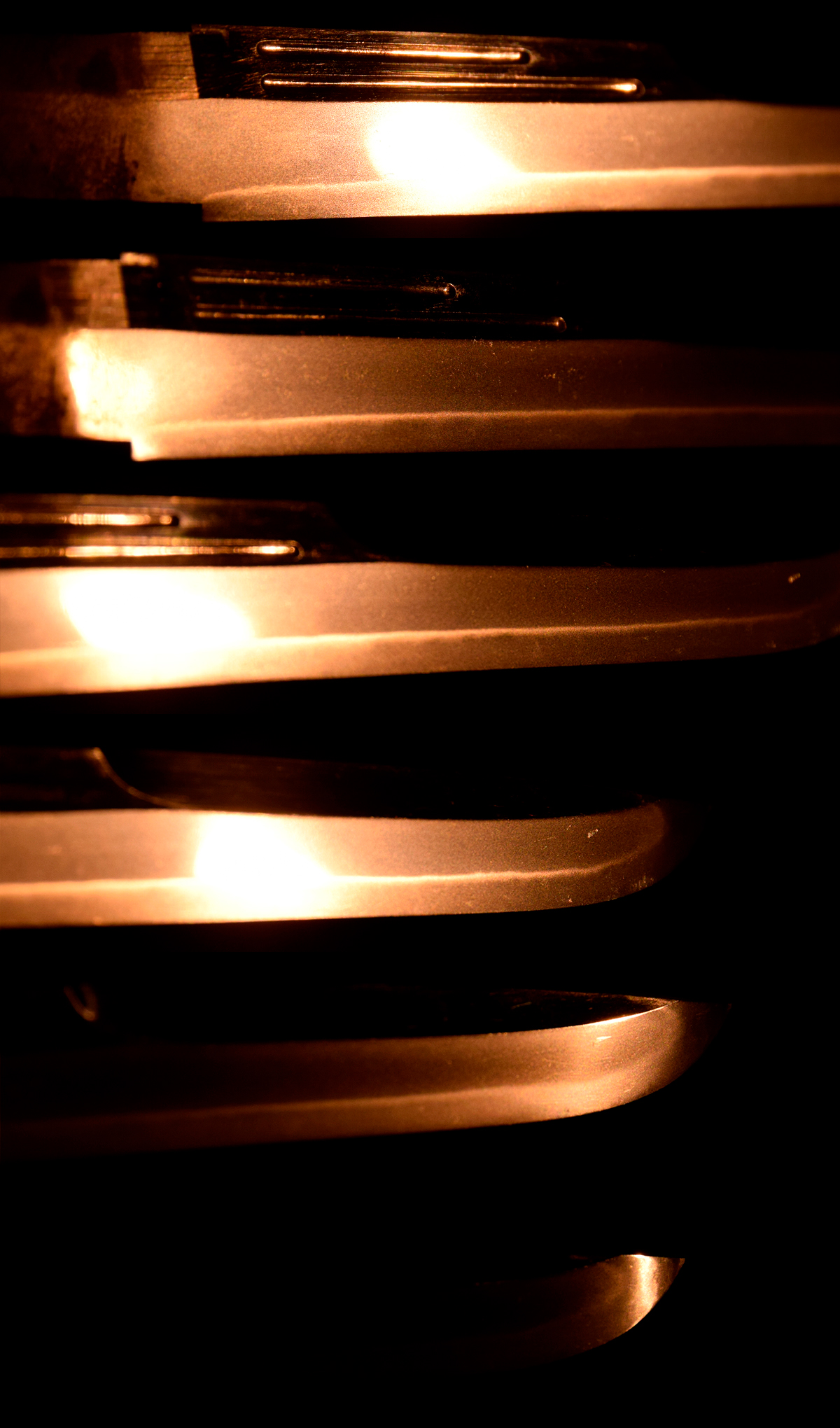
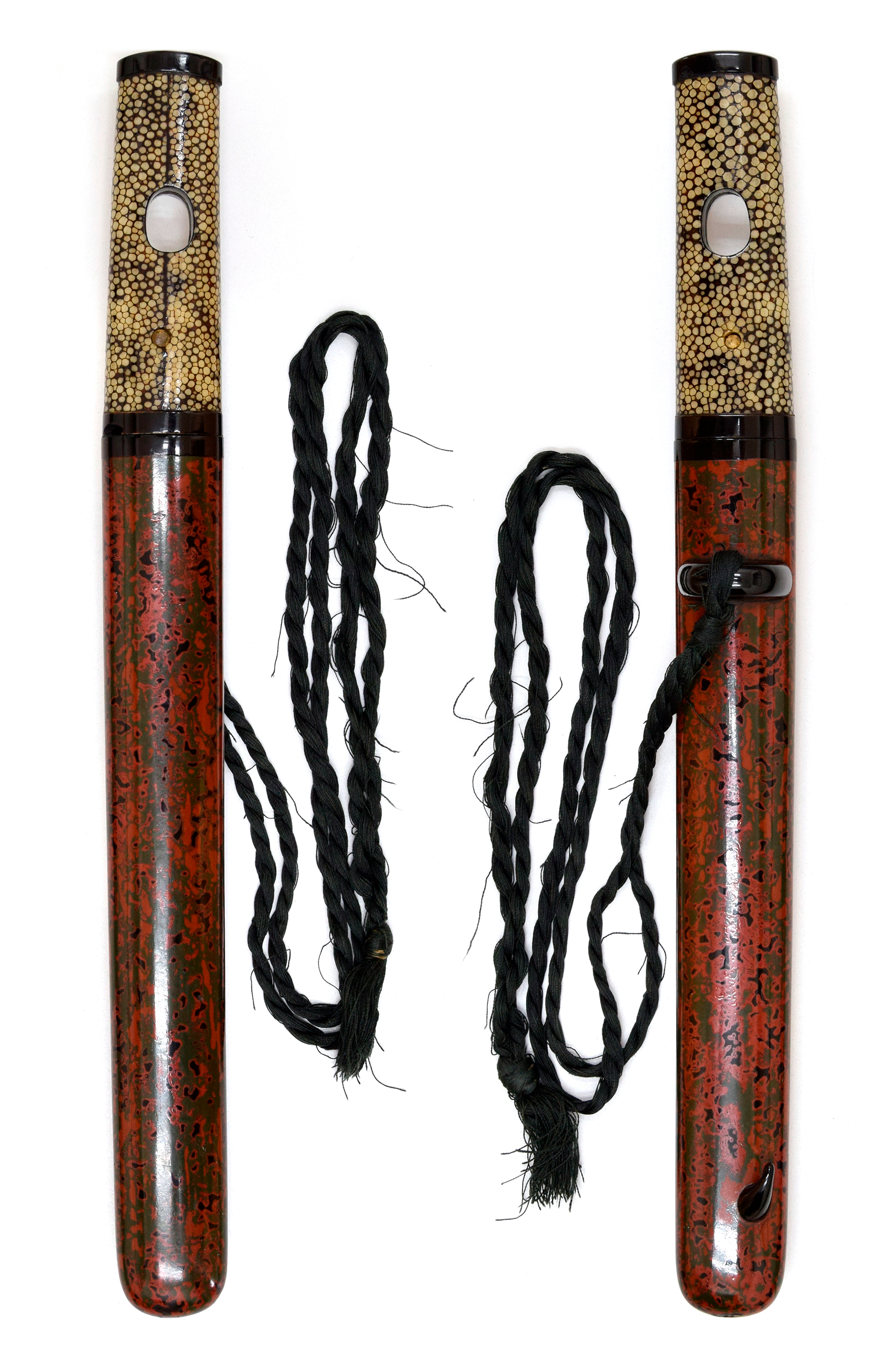
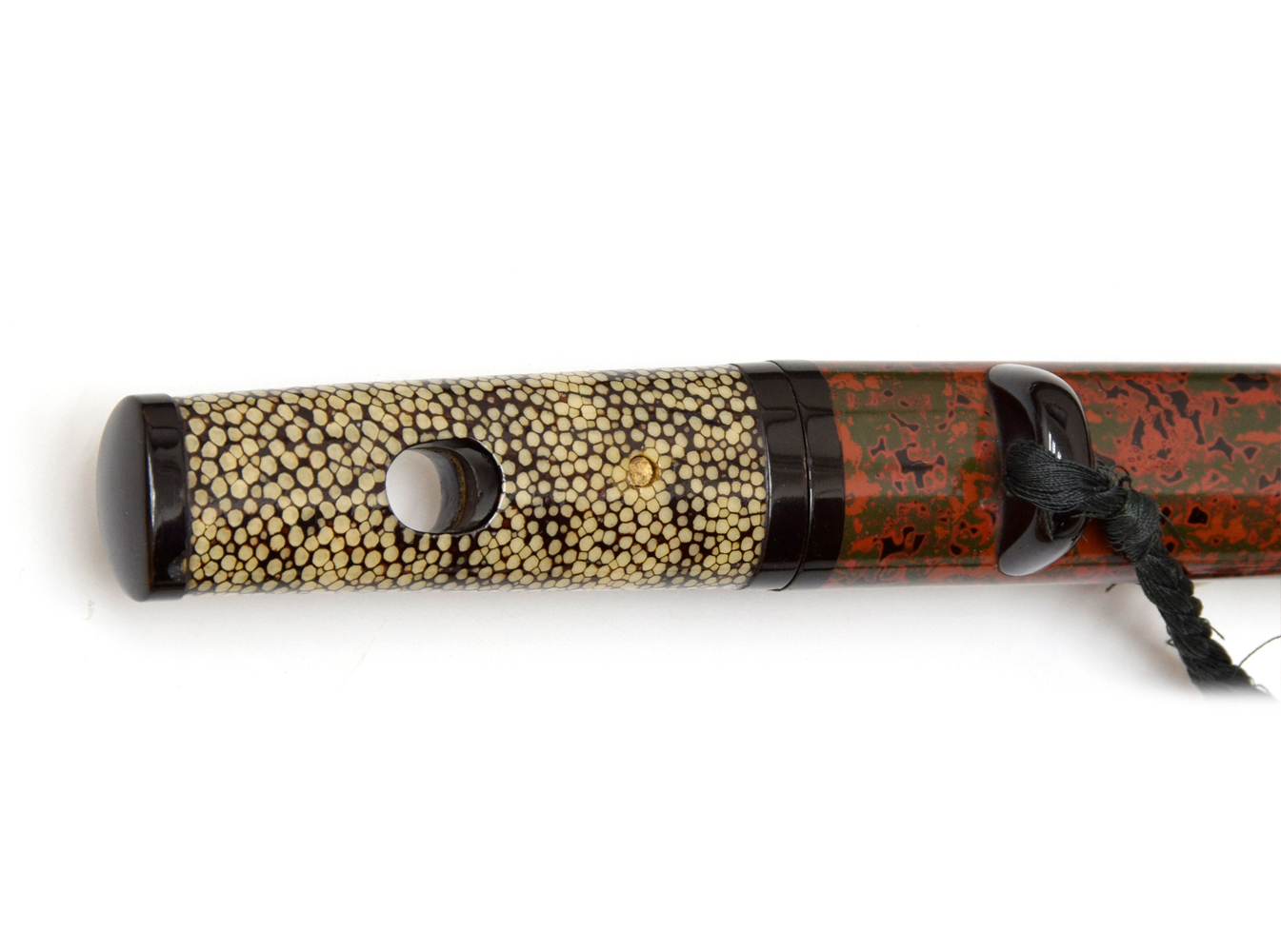
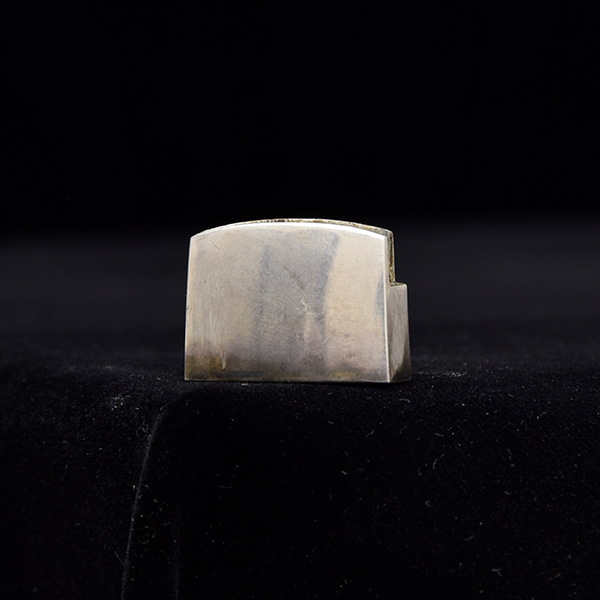
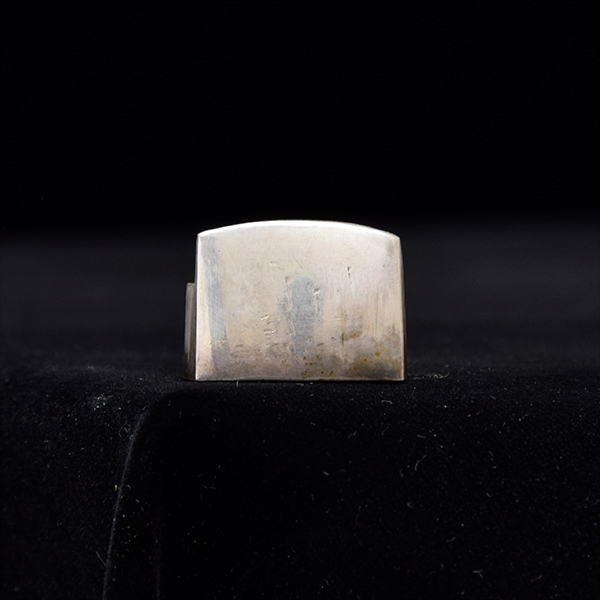
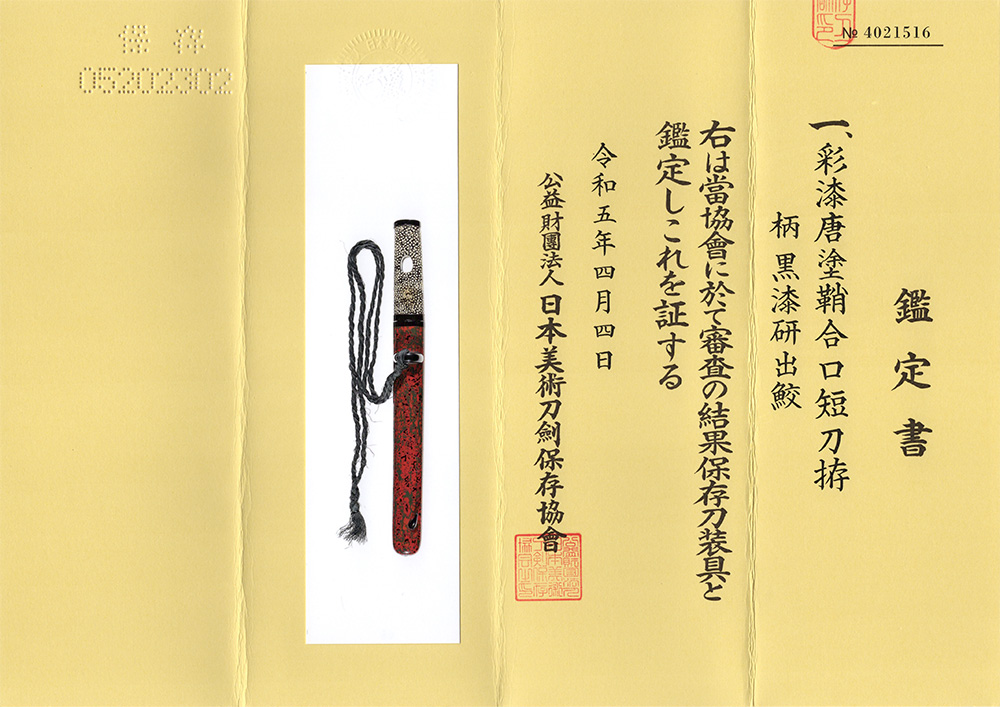
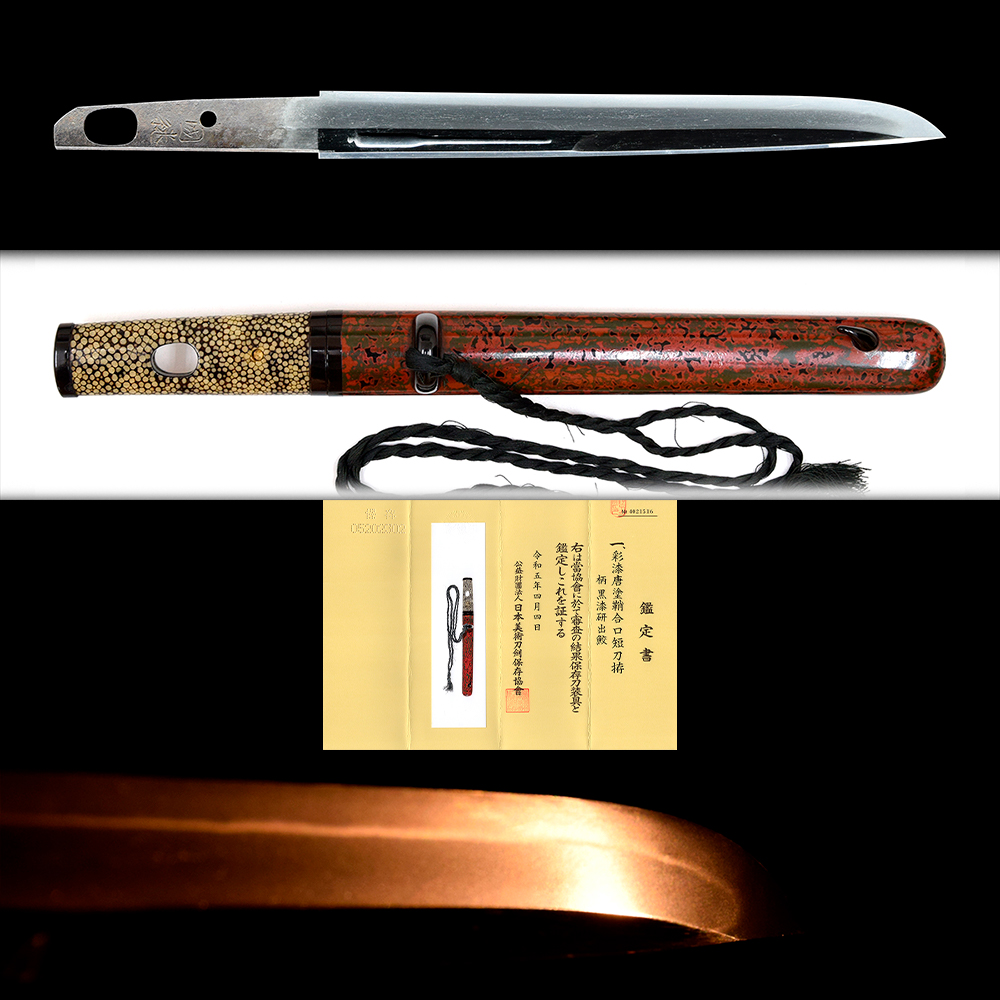
刃長19.9センチ 反り内反りセンチ 元幅21.4ミリ 元重ね6.9ミリ 物打幅18.1ミリ 物打重ね5.1ミリ 横手位置幅18.1ミリ 松葉先重ね4.7ミリ 裸身重量134グラム。 拵に納めて鞘を払った重量172グラム。 江戸前期 The early period of Edo era 昭和26年3月8日 神奈川県登録 附属 保存刀装具鑑定書、素銅地銀着はばき、彩漆唐塗鞘合口短刀拵 刃長の割に重ね厚めで内反り強く、姿は冠落としの鵜の首造りとし、表に笄、裏に丈比べの二本樋を丸留にし、茎には目釘孔とは別に大きく穴が穿かれています。地鉄は小板目よく練れて柾流れ、地沸付いて地景入り、少しく肌立ちごころ。刃文は匂口明るく冴えた直刃が、焼き幅を揃えて焼かれ、鋩子は先丸く上品に返る。 附属の拵は、刀身に合わせて柄に大きな穴を穿いた特異な形状が眼を惹き、柄は鮫の研ぎ出し、鞘は変わり塗りで返角が添えられており、昭和26年3月と、大名登録でも初期の登録であることから、大名、または家老クラス等の上士の指料であったであろうことが容易に窺えます。 尚、本工國継に関しましては、同銘工が複数居るため、いずれの國継かは然るべき鑑定機関の判断に委ねたいと考えますので、是非、内外共に保存刀剣鑑定を御受審下さい。 ※物打辺りに目立たぬ極々小の刃こぼれ(当て傷)があります。 各種クレジットカード、ショッピングローンによる分割購入も承っております。お気軽にお申し付け下さい。
NihontoWatchOffered by Toushin

Bizen-den · Bizen
187 pieces on the market now
No single workshop in the history of Japanese swordmaking grew larger or lasted longer than Osafune, the riverside village in Bizen Province whose name became, across three centuries, a byword for the province's mainline. Its de facto founder was Mitsutada (光忠), working at Osafune in the middle Kamakura period; tradition makes him the son of Chikatada, and the genealogies derive his line from the Ko-Bizen Masatsune group already settled in the village. His blades, bold and imposing with a jigane so refined the sources say it can at a glance suggest Kyoto work, were treasured from old as the swords of commanders, and from his hand the school spread immediately: his sons Nagamitsu (長光) and Sanenaga (眞長), his grandson Kagemitsu (景光), and outward through pupils and collaterals until, by the late Kamakura years, Osafune was less a family than an industry. The line is conventionally read as a three-generation spine, Mitsutada founding it, Nagamitsu setting its classical standard, Kagemitsu bringing both temper and forging to their finished form before handing the manner to his pupil Chikakage (近景), whose echo of the master is so close that signed Kagemitsu blades are sometimes read as Chikakage daimei. What binds the membership is a shared steel before any shared temper. The forging is itame mixed with mokume, tightening on the finest blades into a dense ko-itame; fine ji-nie adheres, chikei enter, and over all of it stands the midare-utsuri that anchors even the most Kyoto-like jigane back to Bizen. On that floor the founding generation tempers a flamboyant choji-midare mixed with gunome: Mitsutada's tadpole-headed kawazuko-choji, Nagamitsu's round-topped plump choji, the deep nioi with ko-nie, the bright nioiguchi. From here the school divides by hand and by era. Sanenaga draws the calm pole, a gentle chu-suguha of tightened nioiguchi; Kagemitsu completes the slanting, square-shouldered kataochi-gunome over a suguha base, the family's last great Kamakura invention, carried on by his close kinsman Kagemasa (景政). The Nanbokucho generation then turns toward Soshu-den: Kanemitsu (兼光), fourth master of the mainline, pioneers a broad notare and is read, with Chogi (長義), as the head of Soden-Bizen, the Bizen wing that worked Soshu nie into a jigane that still throws a Bizen utsuri.
Chogi is called the most un-Bizen of Bizen smiths, his ear-shaped mimigata his tell; around him Nagashige (長重), Yoshikage (義景), Tomomitsu (倫光) and Kanenaga (兼長) press the Soshu side by degrees, while Motoshige (元重), of a separate Hatakeda descent, carries an Aoe-tinged squared, slanting ha. Two generations later the Oei revival returns to Kamakura: Yasumitsu (康光) and Morimitsu (盛光), the twin pillars of Oei-Bizen, revive the tachi shape and the choji temper over a wide-waisted koshibiraki-gunome, both finishing in the pointed rosoku-no-shin (candle-wick) boshi that gives the late date away. For the collector the school is a school of discriminations, and to kantei it is to read those fine partitions. The constant midare-utsuri over a bright ko-itame fixes the province; the boshi then sorts the maker, Mitsutada's pointed midare-komi against Nagamitsu's composed ko-maru Sansaku turn, Kagemitsu's contained return, the candle-wick tongue of Oei. Within a single phase the calls turn on a half-step: Nagamitsu's plump crests against Sanenaga's cooler nioiguchi, Kagemasa's freer play against Kagemitsu's tighter order, Nagashige read out of Chogi by a nie that surpasses his brother's. The standing of the best is matched by their patrimony. Mitsutada, Nagamitsu and Kagemitsu each hold National Treasures and stand at the head of Fujishiro's Sai-jo saku; their named blades, the Daihannya Nagamitsu, the Kogaryu Kagemitsu, the O-Kanemitsu, passed through Nobunaga, Ieyasu, Uesugi Kenshin and the great daimyo houses. Because Nagamitsu and the Nanbokucho masters signed and survived in number, Osafune offers what most peerage names cannot, a deep field of Tokubetsu Juyo and Juyo work that a patient collector may still realistically hold. Through every register the same hand declares itself: the bright steel, the vivid reflection, and a temper that runs, across three centuries, as the spine of Bizen. Learn more →
| Smith | Era | Designated |
|---|---|---|
| Mitsutada光忠 | 1238-1239 | 59 |
| Nagamitsu長光 | 1274-1304 | 254 |
| Kagemitsu景光 | 1303-1336 | 142 |
| Sanenaga眞長 | 1299-1309 | 68 |
| Kanemitsu兼光 | 1323-1370 | 235 |
The Edo period (1615 to 1868)
Edo was the sword’s age of connoisseurship: the Hon’ami appraisers, the shogunal register of famous blades of 1719, and a thriving literature turned the sword into an object of study even as it ceased to be drawn in war.
Certifies a genuine blade worth preserving: a signature confirmed correct, or, if unsigned, an era, province, and school that the NBTHK can reliably identify.
The NBTHK (Nihon Bijutsu Tōken Hozon Kyōkai, the Society for the Preservation of Japanese Art Swords) is a public-interest incorporated foundation founded in 1948 and supervised by Japan’s Agency for Cultural Affairs (Bunkachō); it is based at the Japanese Sword Museum in Tokyo. Its expert panels physically examine each submitted work (shinsa) and issue a certificate (kanteishō) ranking it by artistic and historical merit. NBTHK papers are the most widely recognized standard of authentication for Japanese swords and fittings.
NBTHK official siteAs a rule we do not accept returns, except when we have sent a different item from the one ordered or when there is a significant discrepancy between the description and the item. If you wish to return an item, please contact us within 3 days of its arrival and then send it back.