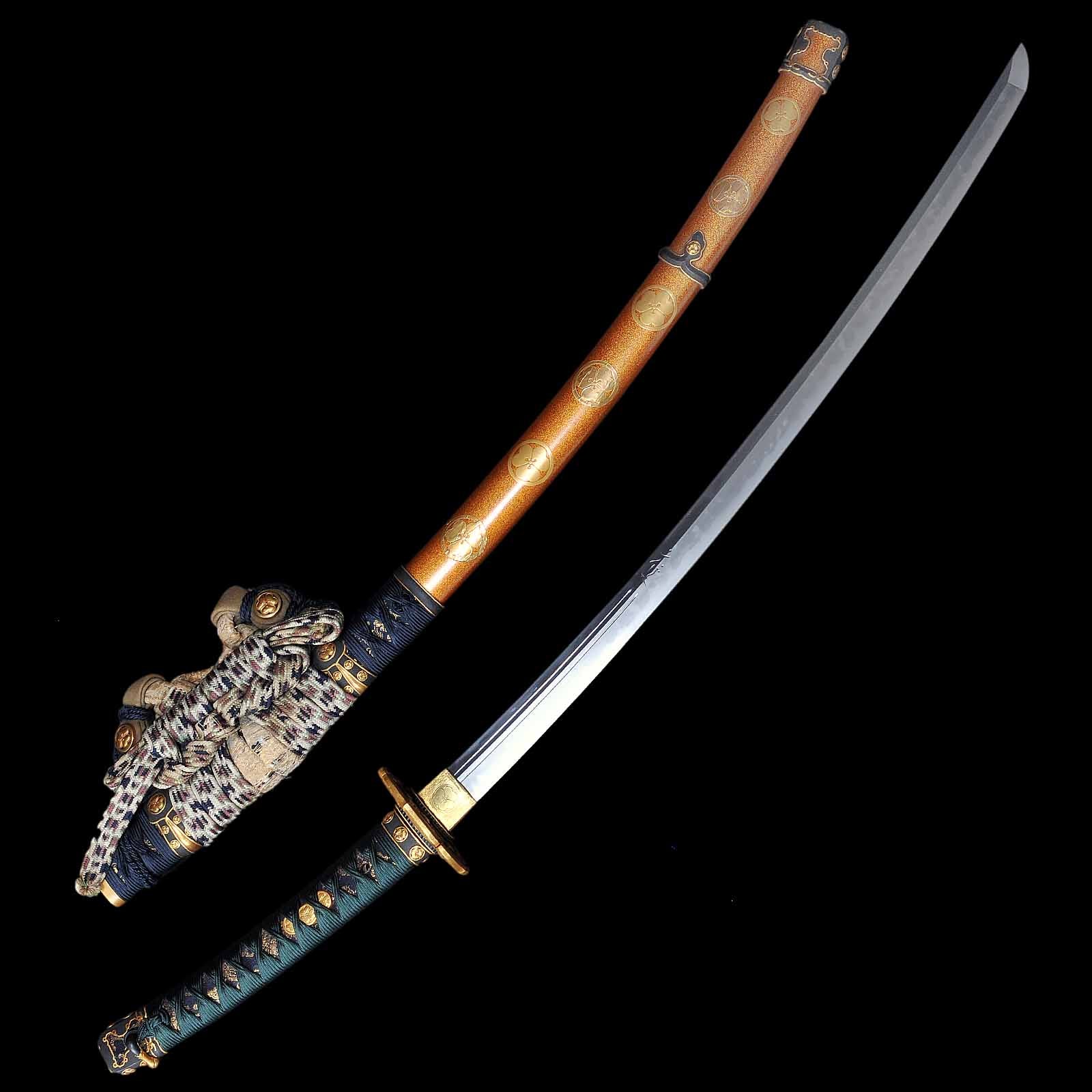
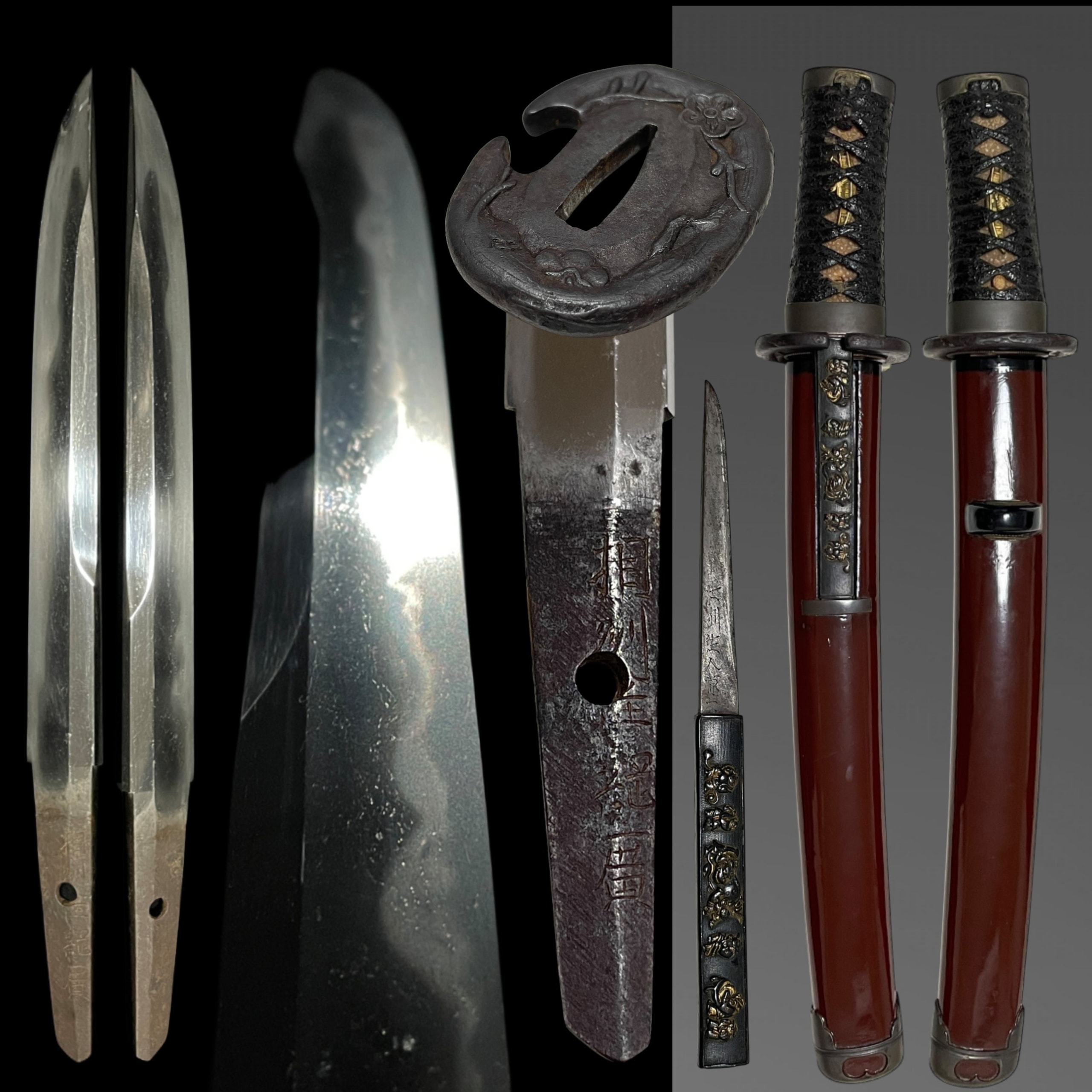
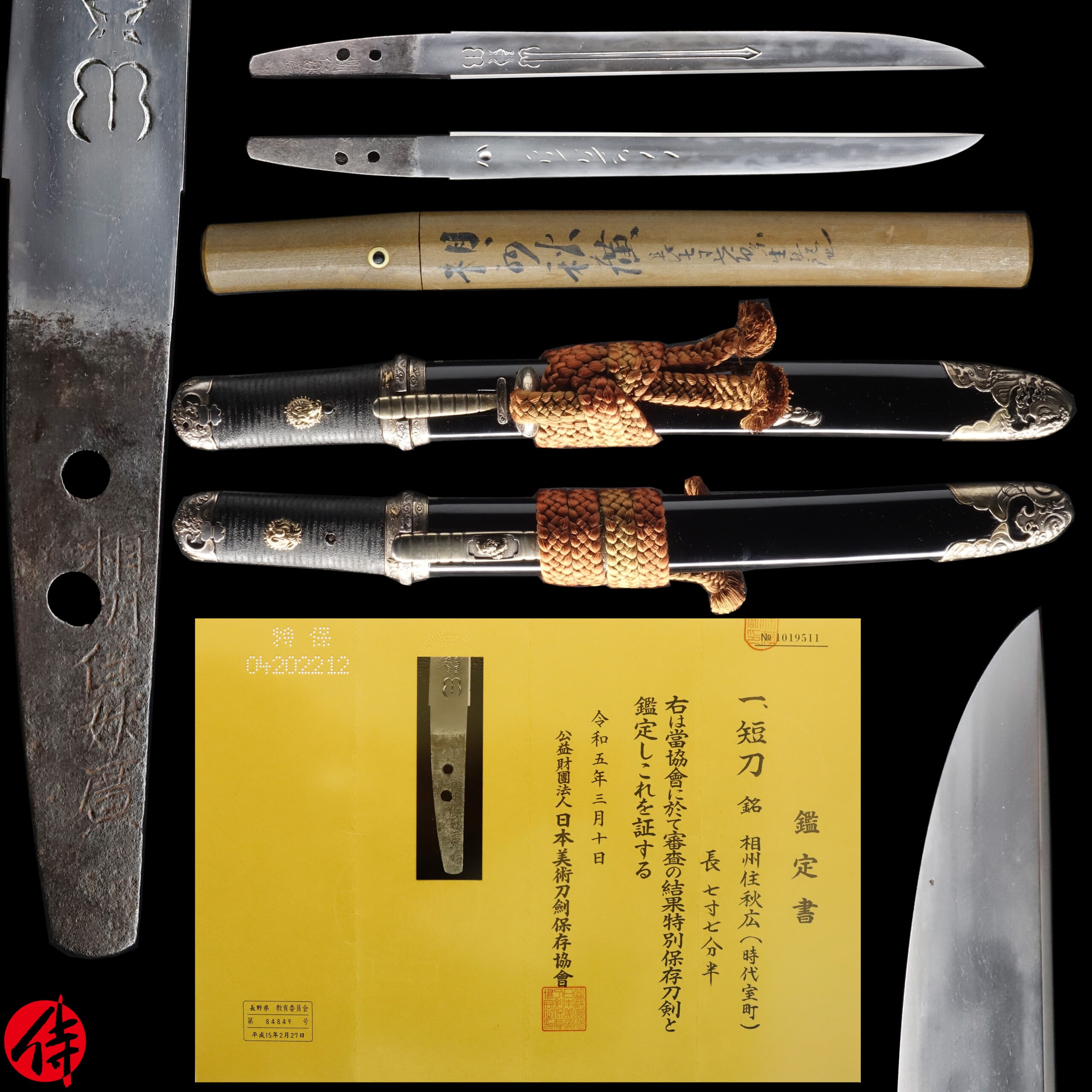
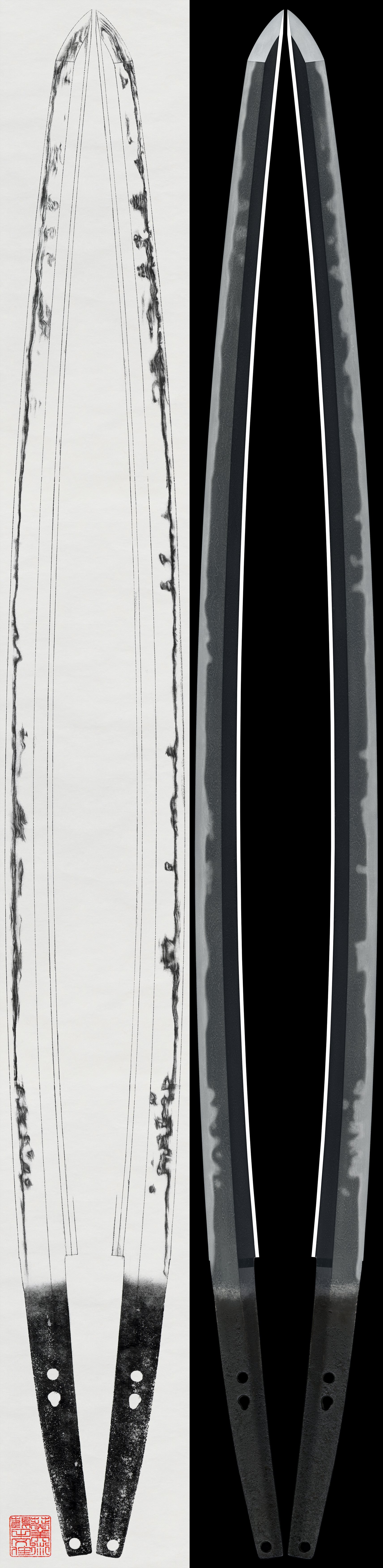
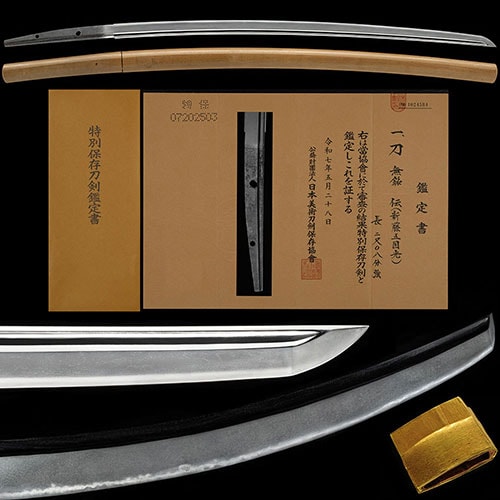
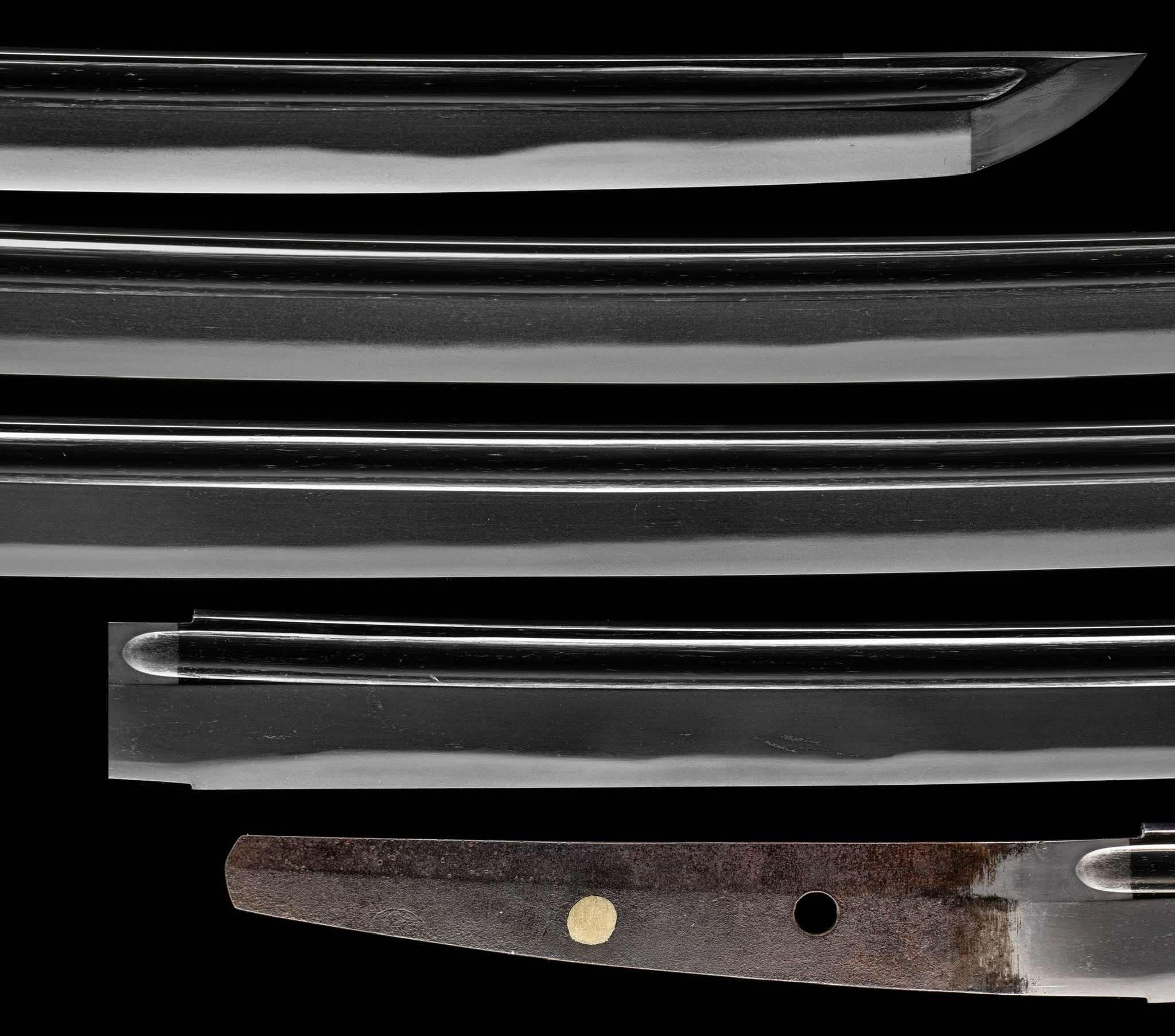
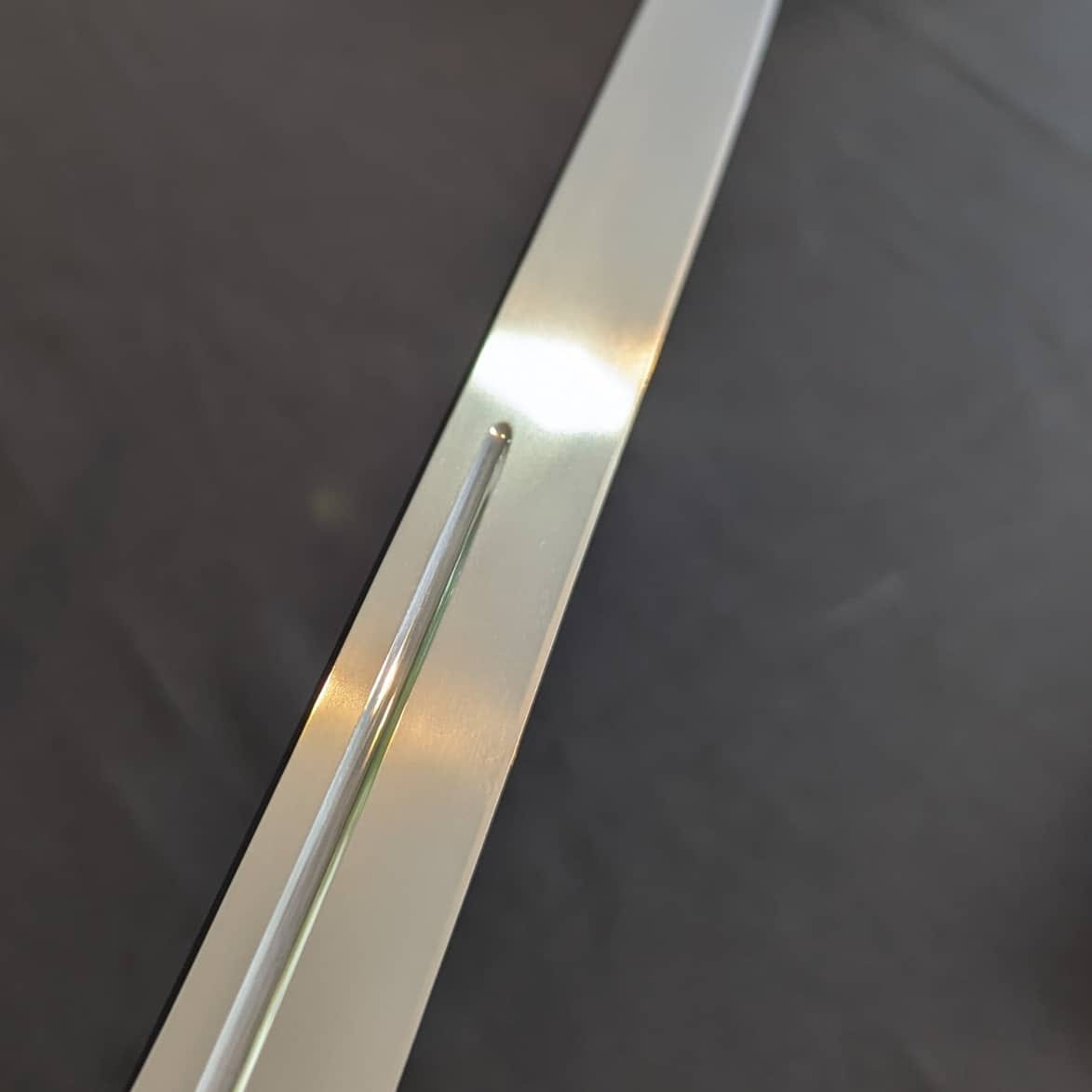
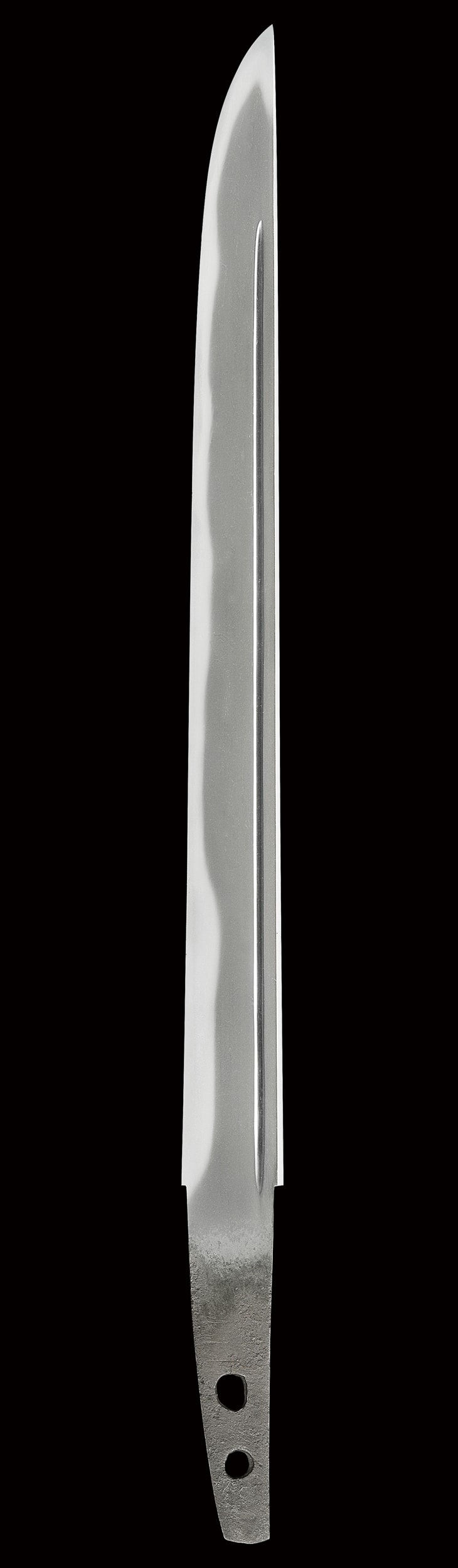
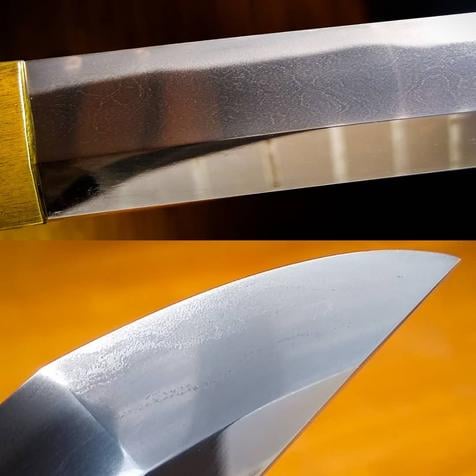
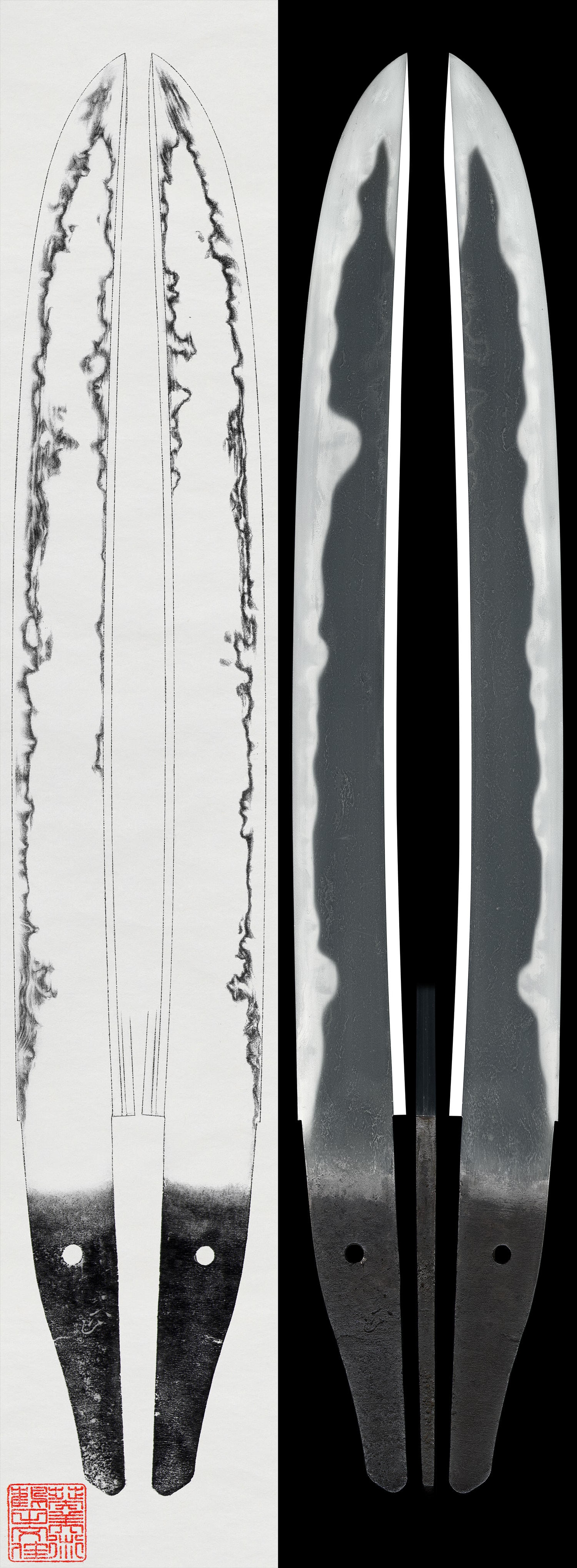
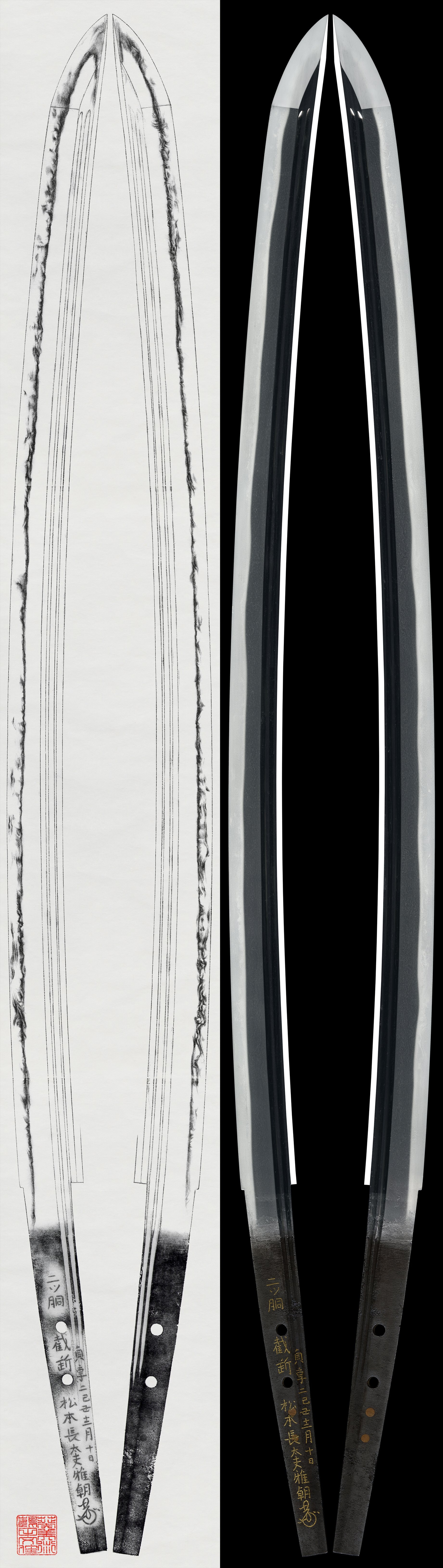
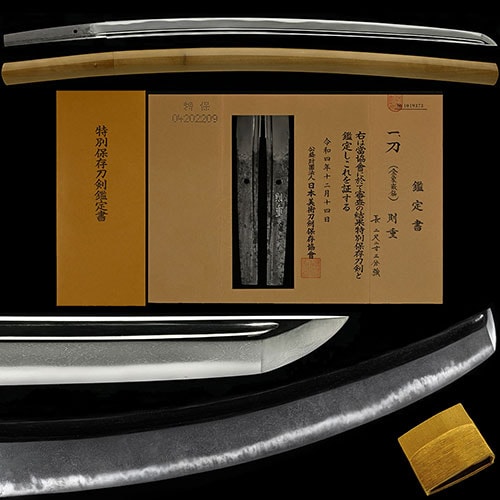
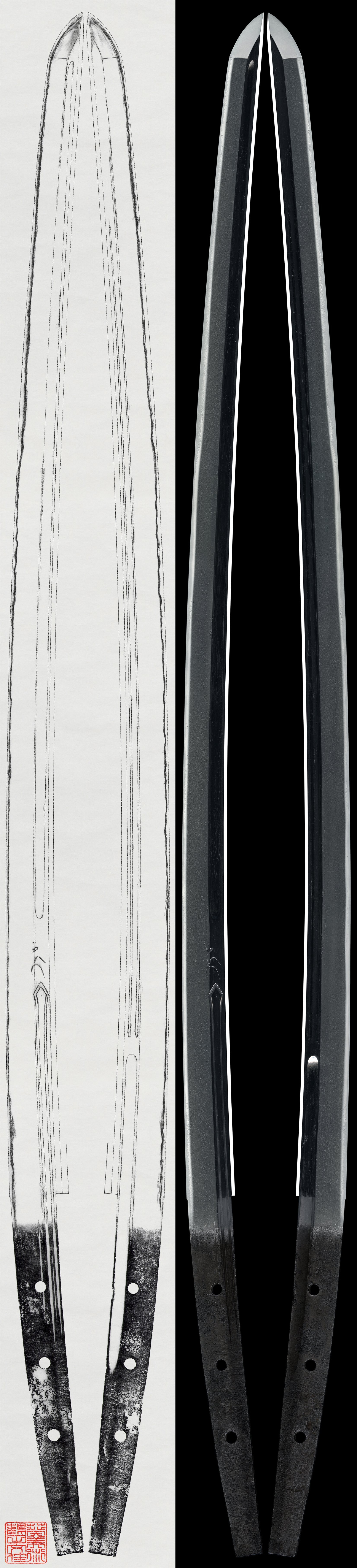
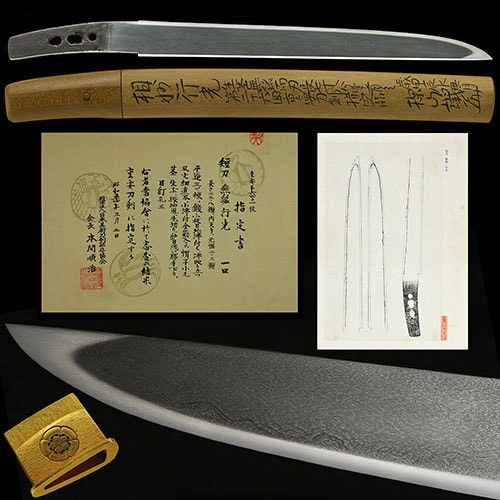
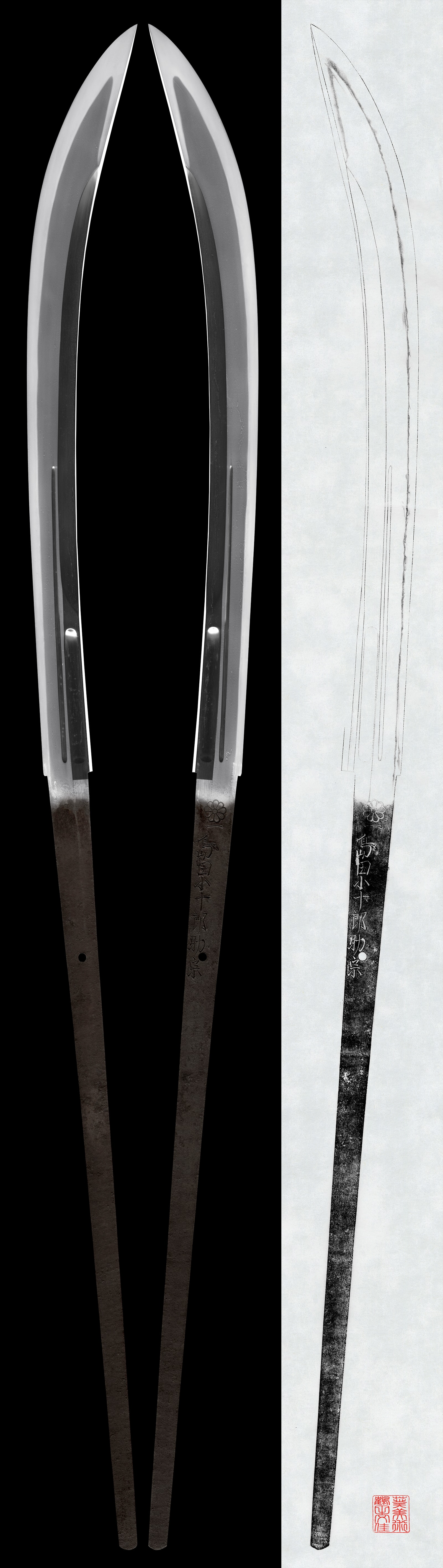
Norishige is a highly renowned smith of the Soshu Kunimitsu school and one of the Soshu Masamune Jittetsu; as there are examples with the Enkyo era name (1308) (710 years ago) from the Kamakura period, he is said to be a senior smith to Masamune. This sword is a tachi of approximately 2 shaku 4 sun that has been suriage by slightly less than 4 sun. The tachi-sugata is elegant, and the jigane features a boldly forged itame-hada with magnificent chikei. Because it was forged by mixing hard and soft steels in the manner of high-ranking Soshu-den smiths, the different qualities of steel appear intensely. Due to the heavy ji-nie and the jigane which resembles matsukawa-hada, it was attributed as a Soshu-den Saijo-saku (top-tier work) Norishige. The hamon is a refined notare-midare mixed with gunome in ko-nie deki, appearing like fallen light snow, with magnificent kinsuji appearing throughout. From any angle, it is unmistakably the work of a high-ranking Soshu smith, and it was likely cherished as a Daimyo-dogu during the Edo period. While typical matsukawa-hada is found in tanto and wakizashi, Norishige attributions for tachi are extremely rare and precious. For those who truly wish to own a Norishige, we offer this at a special low price. Please enjoy it.
 NihontoWatchBETA
mumei · Kamakura · nagasa 61.5cm · sori 1.4cm


Soshu-den · Sagami
42 pieces on the market now
The Soshu school took root in Kamakura, the seat of the Hojo regents in Sagami province, where the demand of the warrior government drew the country's leading smiths to a single town. The published sources count Awataguchi Kunitsuna of Yamashiro and the Bizen masters Kunimune and Sukezane among the immigrant pioneers of Kamakura sword-making, but the first native smith of Sagami, the man who cut his Kamakura residence and his dates into the nakago, was Shintogo Kunimitsu, reckoned the de facto founder of the Soshu-den. Learn more →
| Smith | Era | Designated |
|---|---|---|
| Masamune正宗 | 1288-1293 | 88 |
| Sadamune貞宗 | 1329-1331 | 87 |
| Akihiro秋廣 | 1346-1370 | 28 |
| Go Yoshihiro義弘 | 1299-1302 | 55 |
| Kunimitsu國光 | 1293-1322 | 72 |
A Hozon-certified blade judged to show notably superior workmanship and a better state of preservation. The bar is higher: re-tempered blades and most unsigned Muromachi/Edo works are excluded.
The NBTHK (Nihon Bijutsu Tōken Hozon Kyōkai, the Society for the Preservation of Japanese Art Swords) is a public-interest incorporated foundation founded in 1948 and supervised by Japan’s Agency for Cultural Affairs (Bunkachō); it is based at the Japanese Sword Museum in Tokyo. Its expert panels physically examine each submitted work (shinsa) and issue a certificate (kanteishō) ranking it by artistic and historical merit. NBTHK papers are the most widely recognized standard of authentication for Japanese swords and fittings.
NBTHK official siteFor returns due to customer circumstances, the cost is the customer's responsibility. For returns due to our mis-shipment or a defective item, we bear the cost.
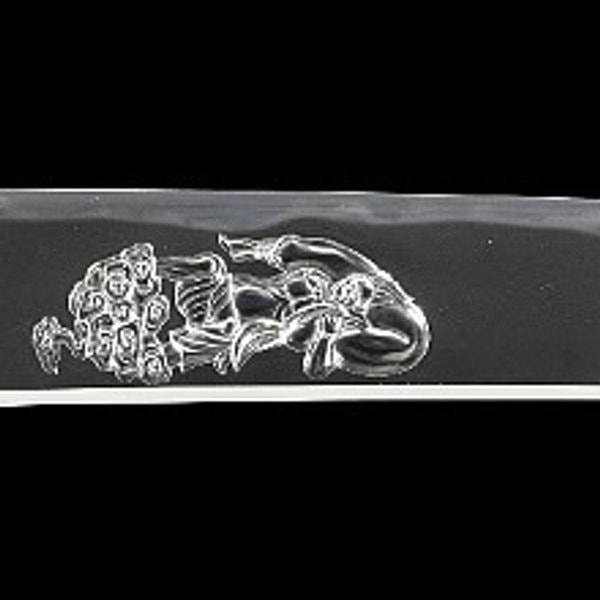
Norishige is a highly renowned smith of the Soshu Kunimitsu school and one of the Soshu Masamune Jittetsu; as there are examples with the Enkyo era name (1308) (710 years ago) from the Kamakura period, he is said to be a senior smith to Masamune. This sword is a tachi of approximately 2 shaku 4 sun that has been suriage by slightly less than 4 sun. The tachi-sugata is elegant, and the jigane features a boldly forged itame-hada with magnificent chikei. Because it was forged by mixing hard and soft steels in the manner of high-ranking Soshu-den smiths, the different qualities of steel appear intensely. Due to the heavy ji-nie and the jigane which resembles matsukawa-hada, it was attributed as a Soshu-den Saijo-saku (top-tier work) Norishige. The hamon is a refined notare-midare mixed with gunome in ko-nie deki, appearing like fallen light snow, with magnificent kinsuji appearing throughout. From any angle, it is unmistakably the work of a high-ranking Soshu smith, and it was likely cherished as a Daimyo-dogu during the Edo period. While typical matsukawa-hada is found in tanto and wakizashi, Norishige attributions for tachi are extremely rare and precious. For those who truly wish to own a Norishige, we offer this at a special low price. Please enjoy it.
NihontoWatchBETAmumei · Kamakura · nagasa 61.5cm · sori 1.4cm
Soshu-den · Sagami
42 pieces on the market now
The Soshu school took root in Kamakura, the seat of the Hojo regents in Sagami province, where the demand of the warrior government drew the country's leading smiths to a single town. The published sources count Awataguchi Kunitsuna of Yamashiro and the Bizen masters Kunimune and Sukezane among the immigrant pioneers of Kamakura sword-making, but the first native smith of Sagami, the man who cut his Kamakura residence and his dates into the nakago, was Shintogo Kunimitsu, reckoned the de facto founder of the Soshu-den. Learn more →
| Smith | Era | Designated |
|---|---|---|
| Masamune正宗 | 1288-1293 | 88 |
| Sadamune貞宗 | 1329-1331 | 87 |
| Akihiro秋廣 | 1346-1370 | 28 |
| Go Yoshihiro義弘 | 1299-1302 | 55 |
| Kunimitsu國光 | 1293-1322 | 72 |
A Hozon-certified blade judged to show notably superior workmanship and a better state of preservation. The bar is higher: re-tempered blades and most unsigned Muromachi/Edo works are excluded.
The NBTHK (Nihon Bijutsu Tōken Hozon Kyōkai, the Society for the Preservation of Japanese Art Swords) is a public-interest incorporated foundation founded in 1948 and supervised by Japan’s Agency for Cultural Affairs (Bunkachō); it is based at the Japanese Sword Museum in Tokyo. Its expert panels physically examine each submitted work (shinsa) and issue a certificate (kanteishō) ranking it by artistic and historical merit. NBTHK papers are the most widely recognized standard of authentication for Japanese swords and fittings.
NBTHK official siteFor returns due to customer circumstances, the cost is the customer's responsibility. For returns due to our mis-shipment or a defective item, we bear the cost.