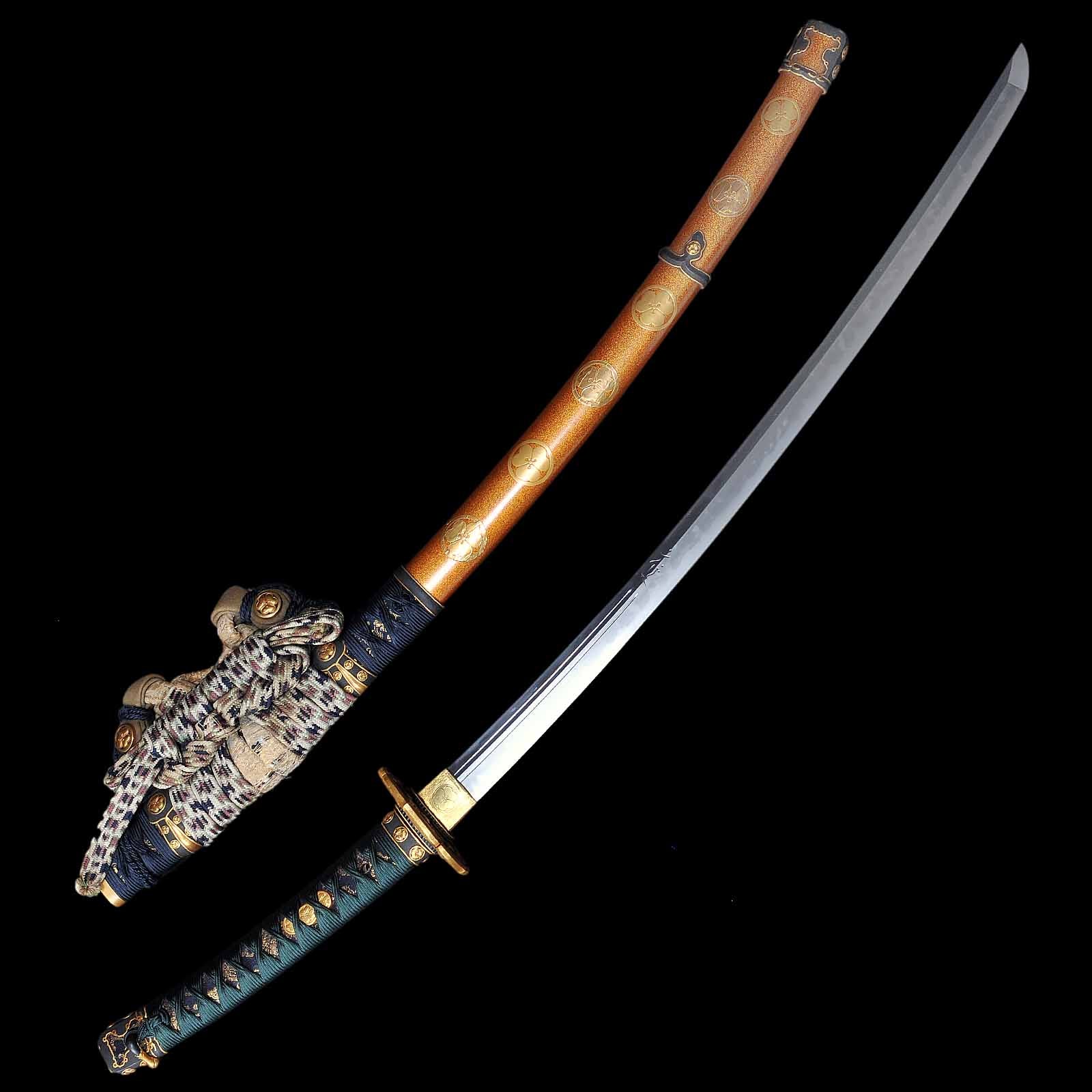
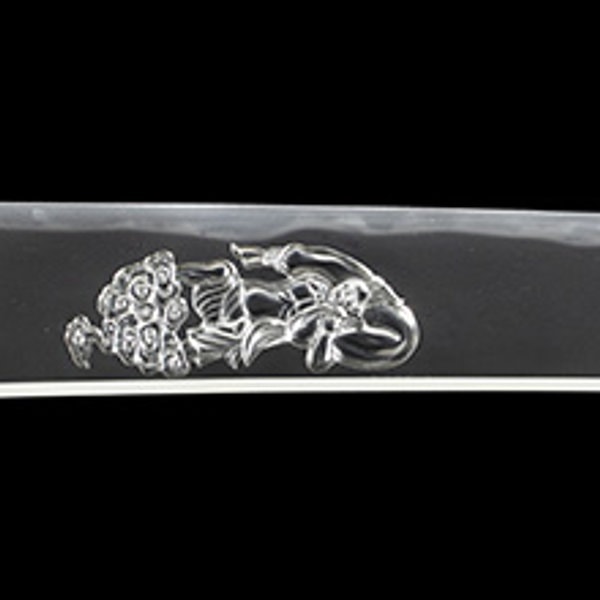
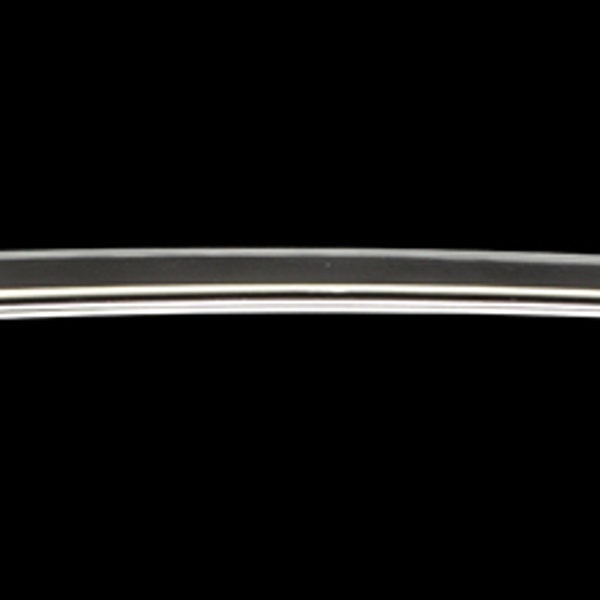
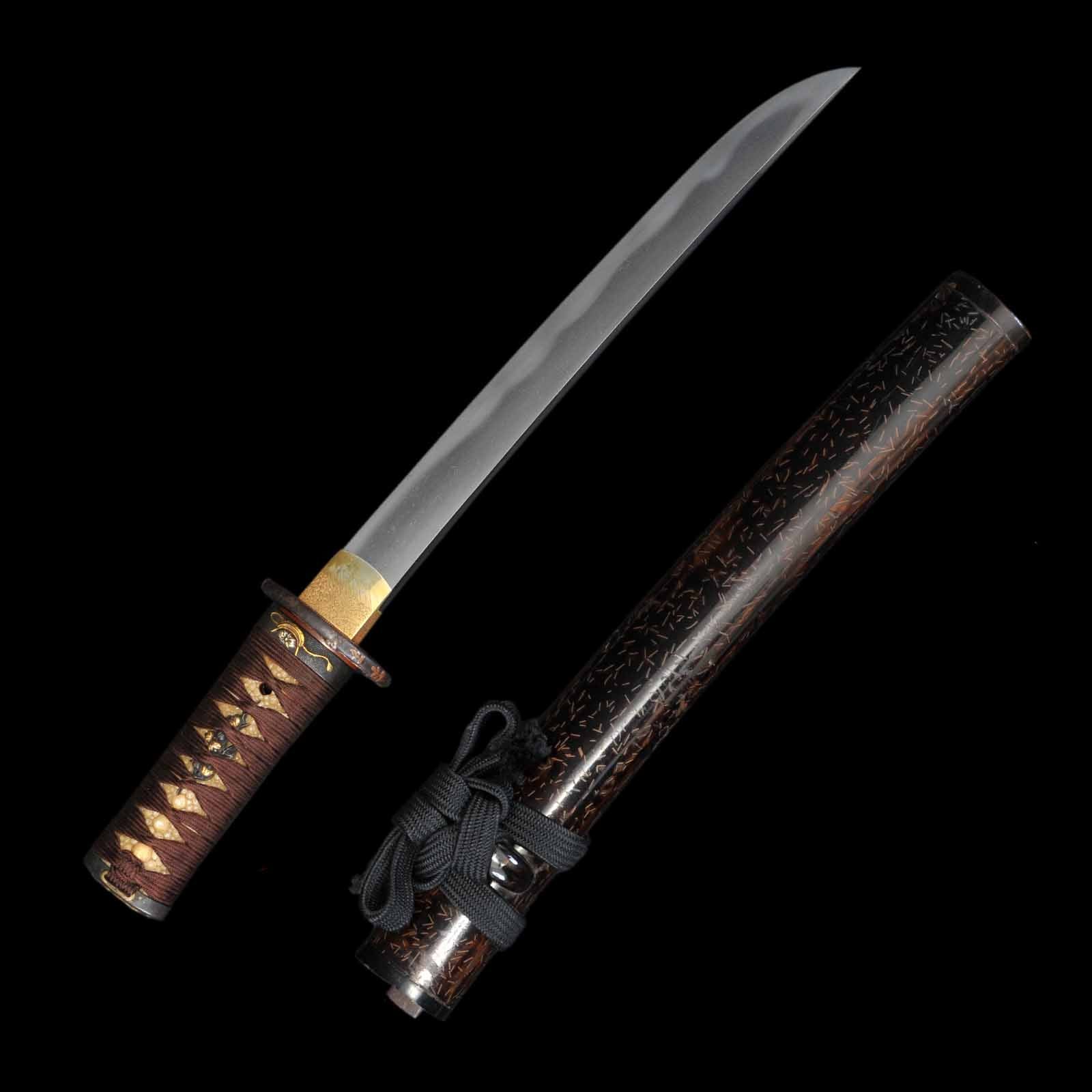
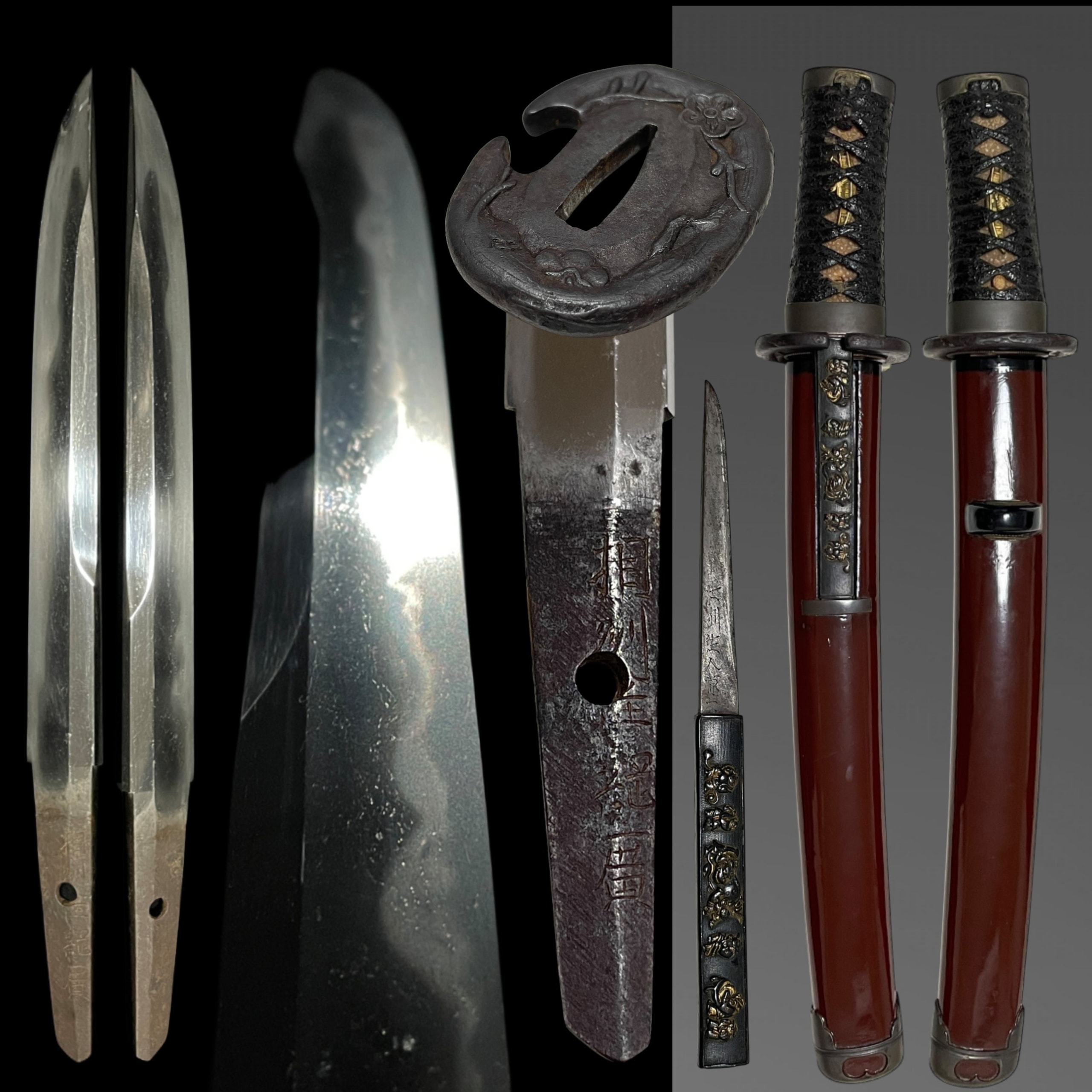
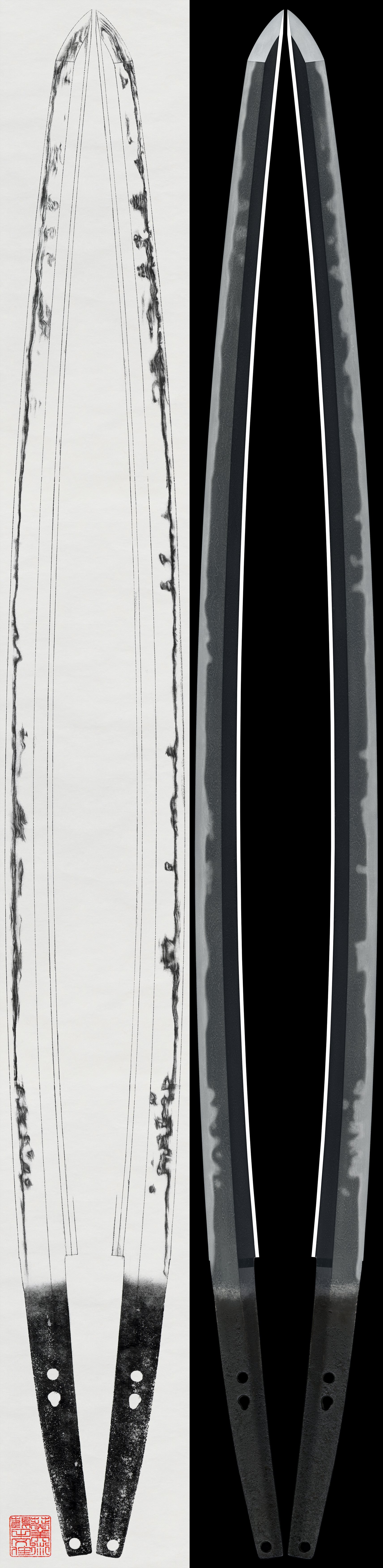
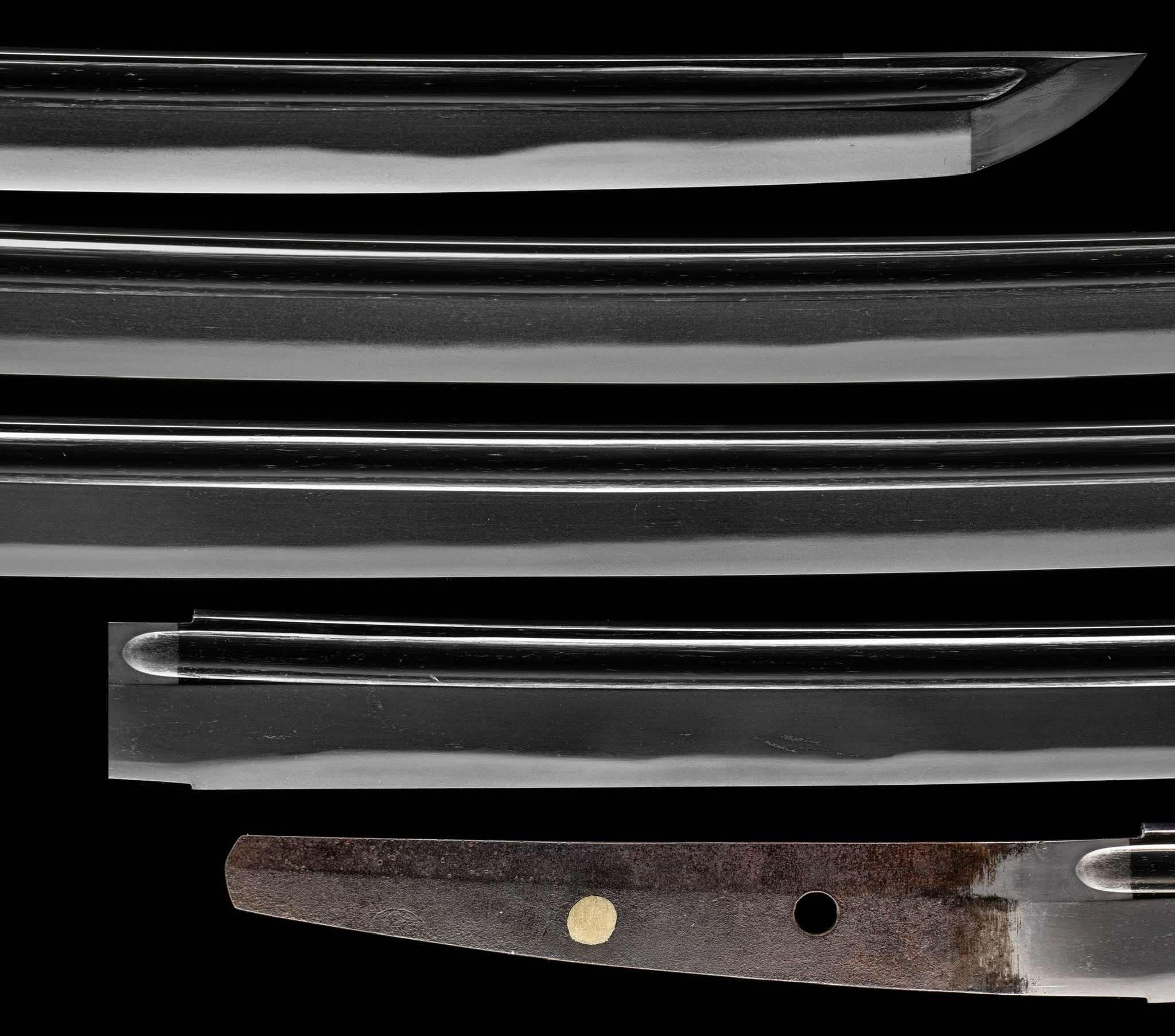
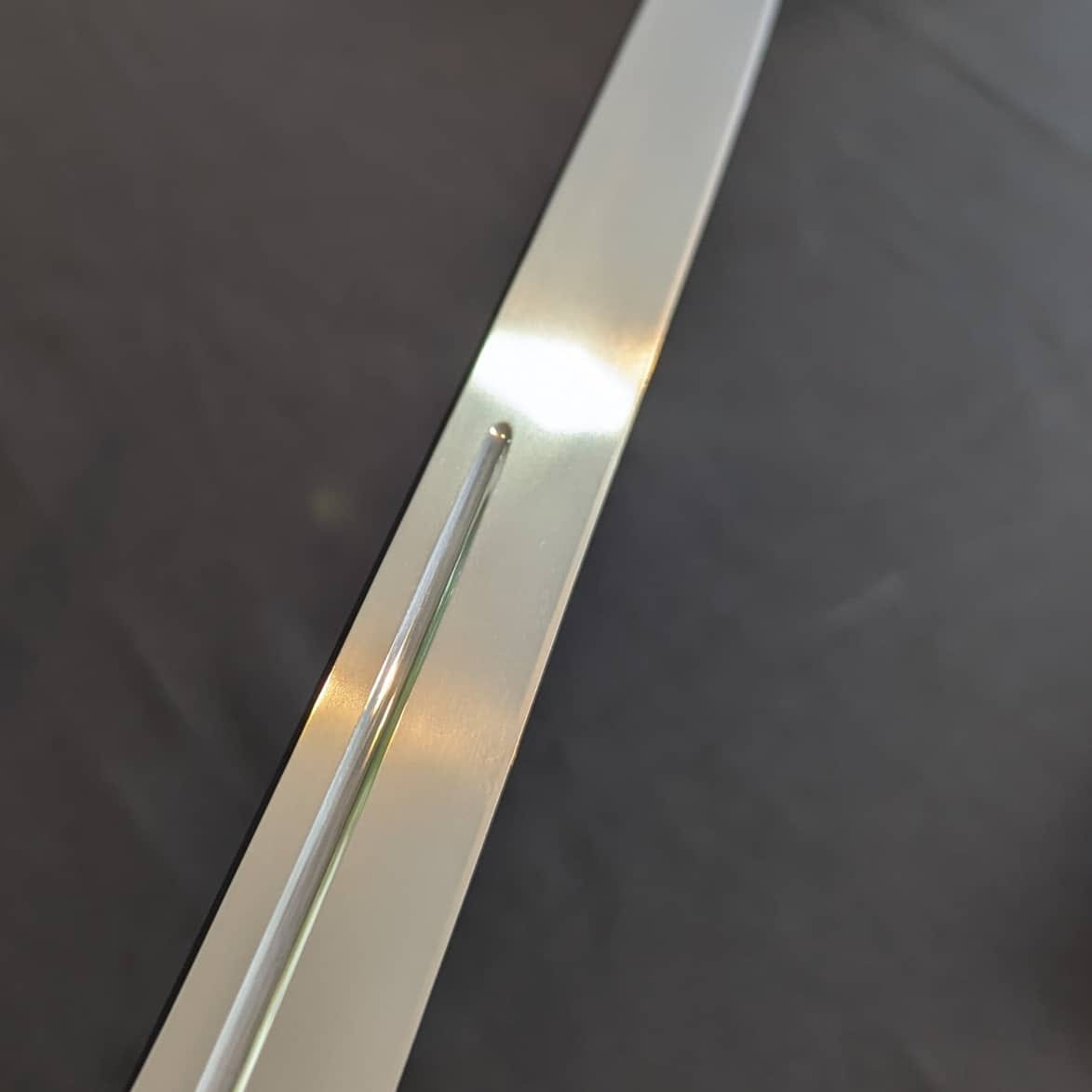
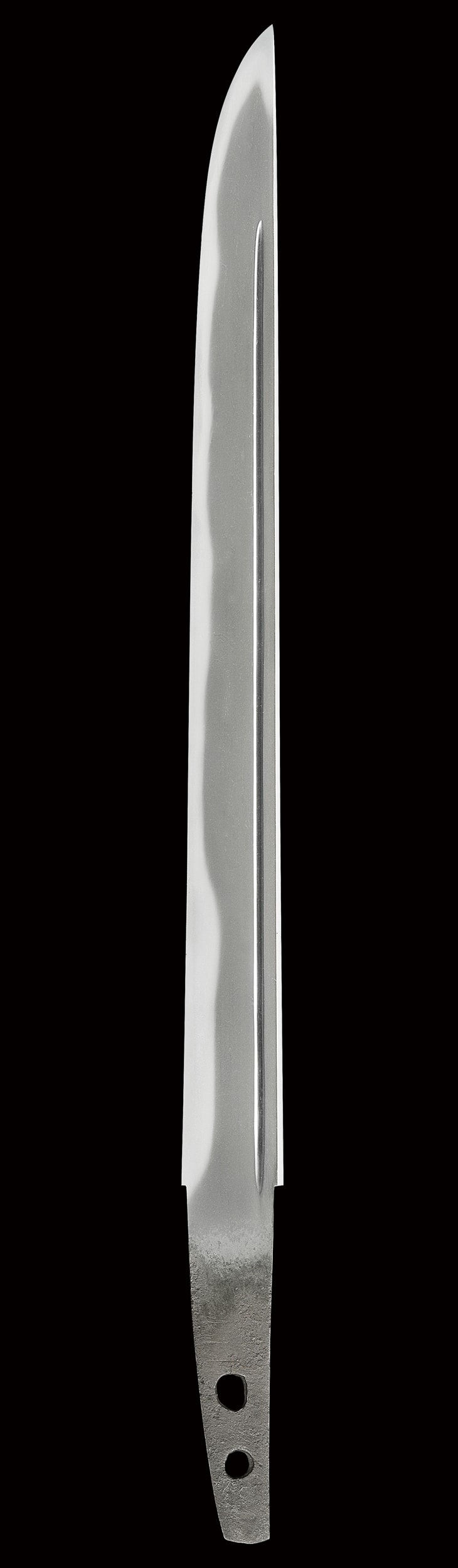
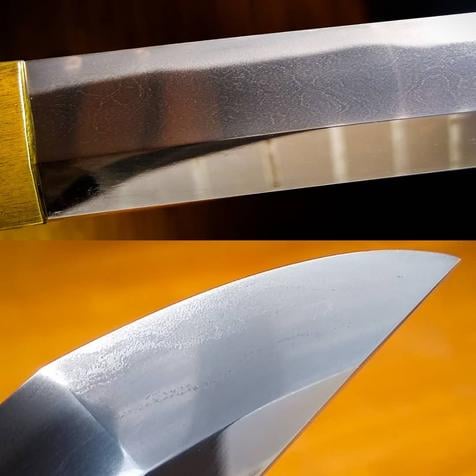
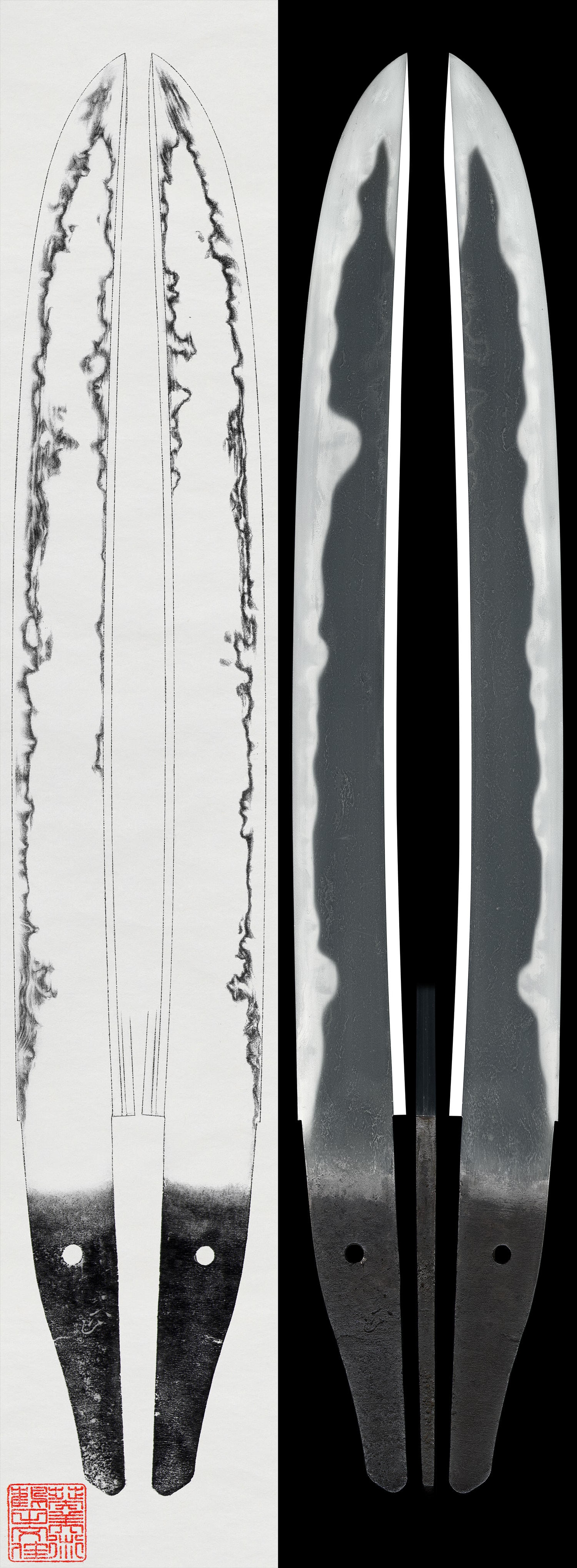
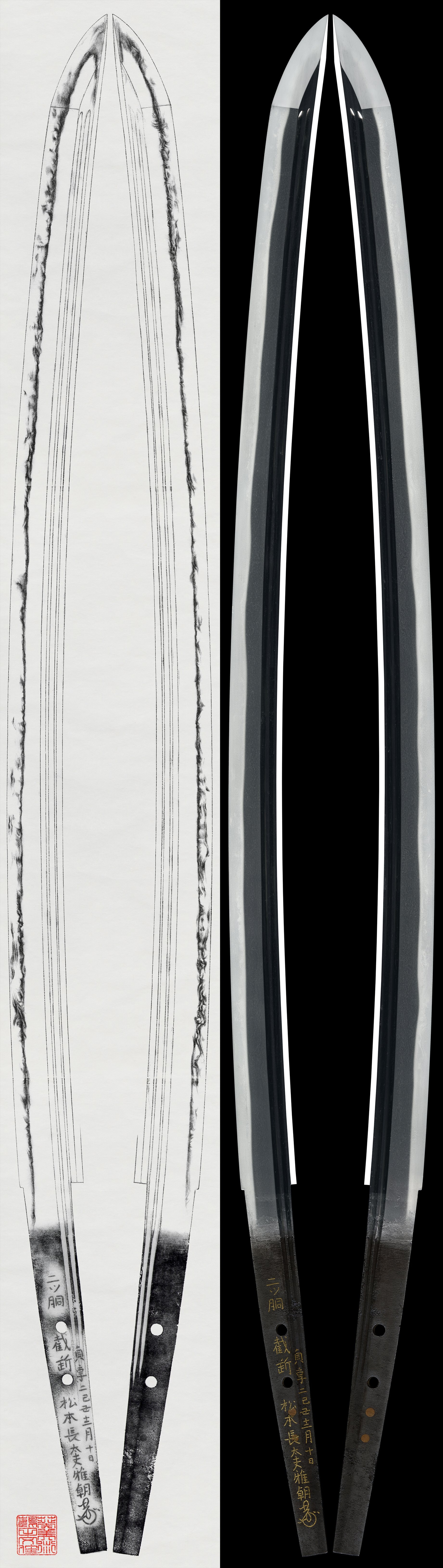
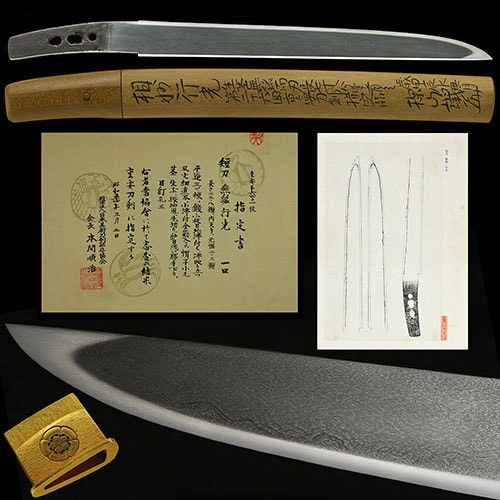
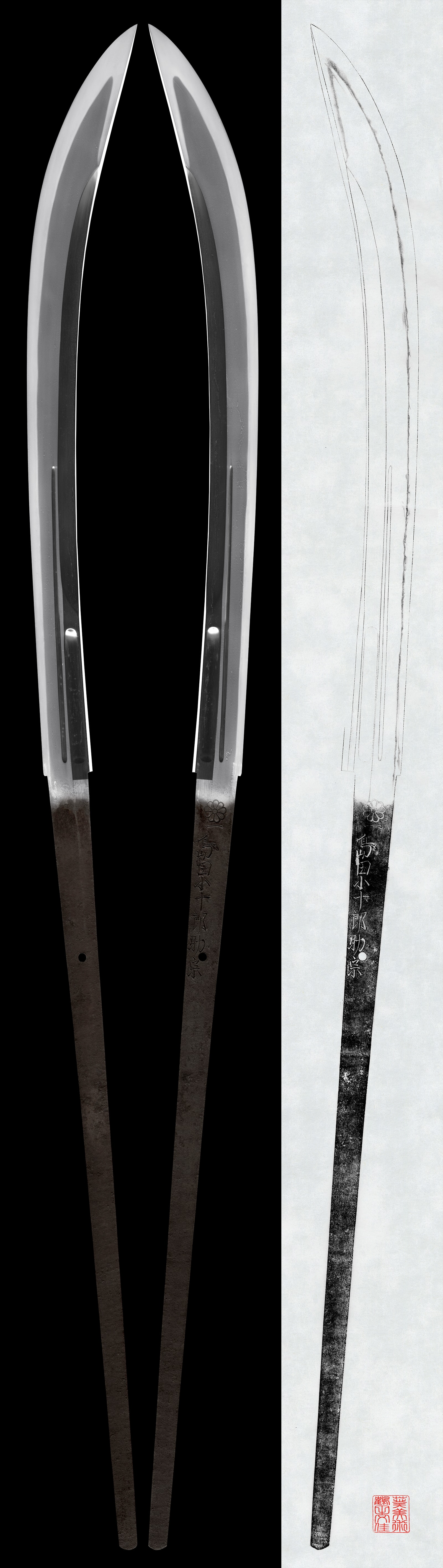
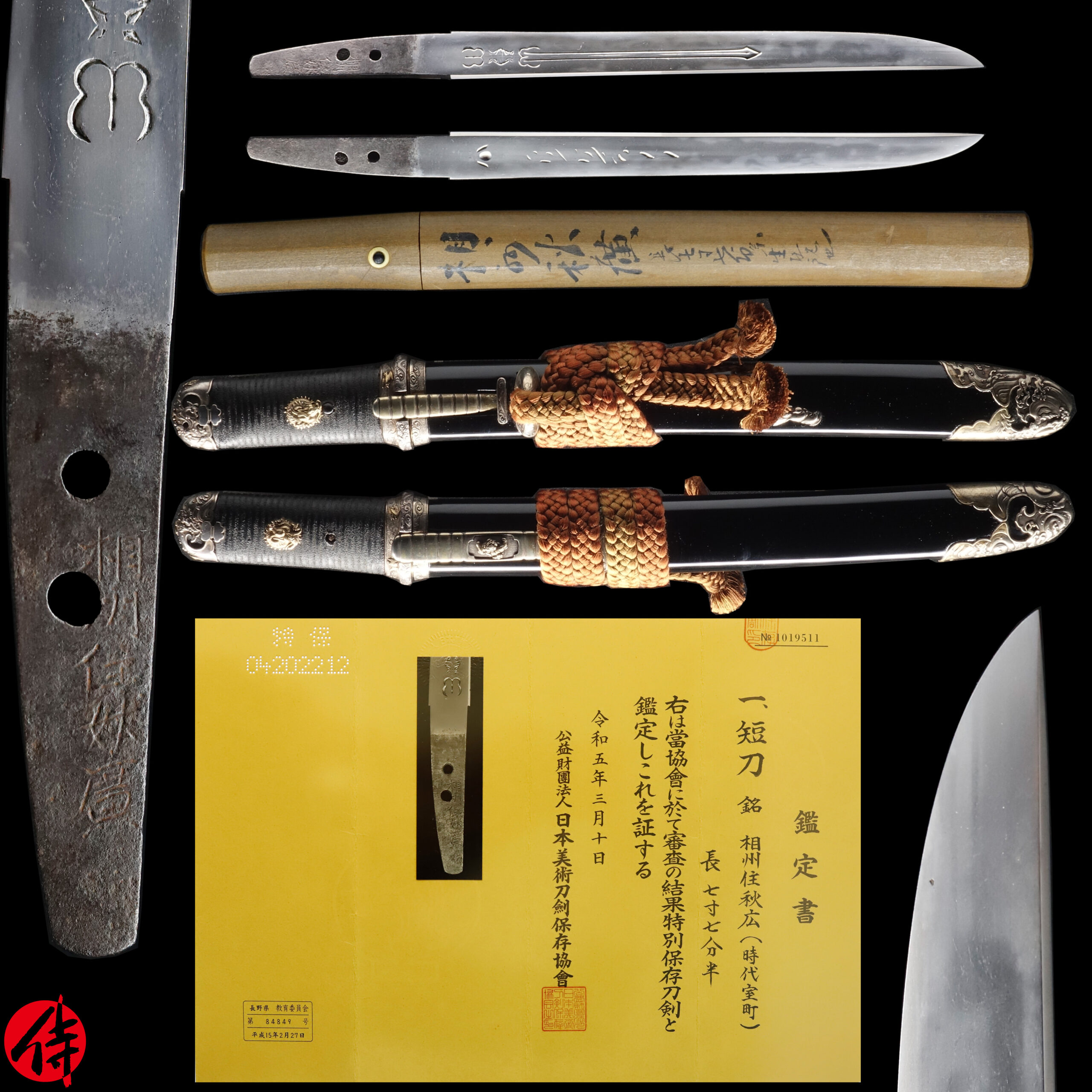
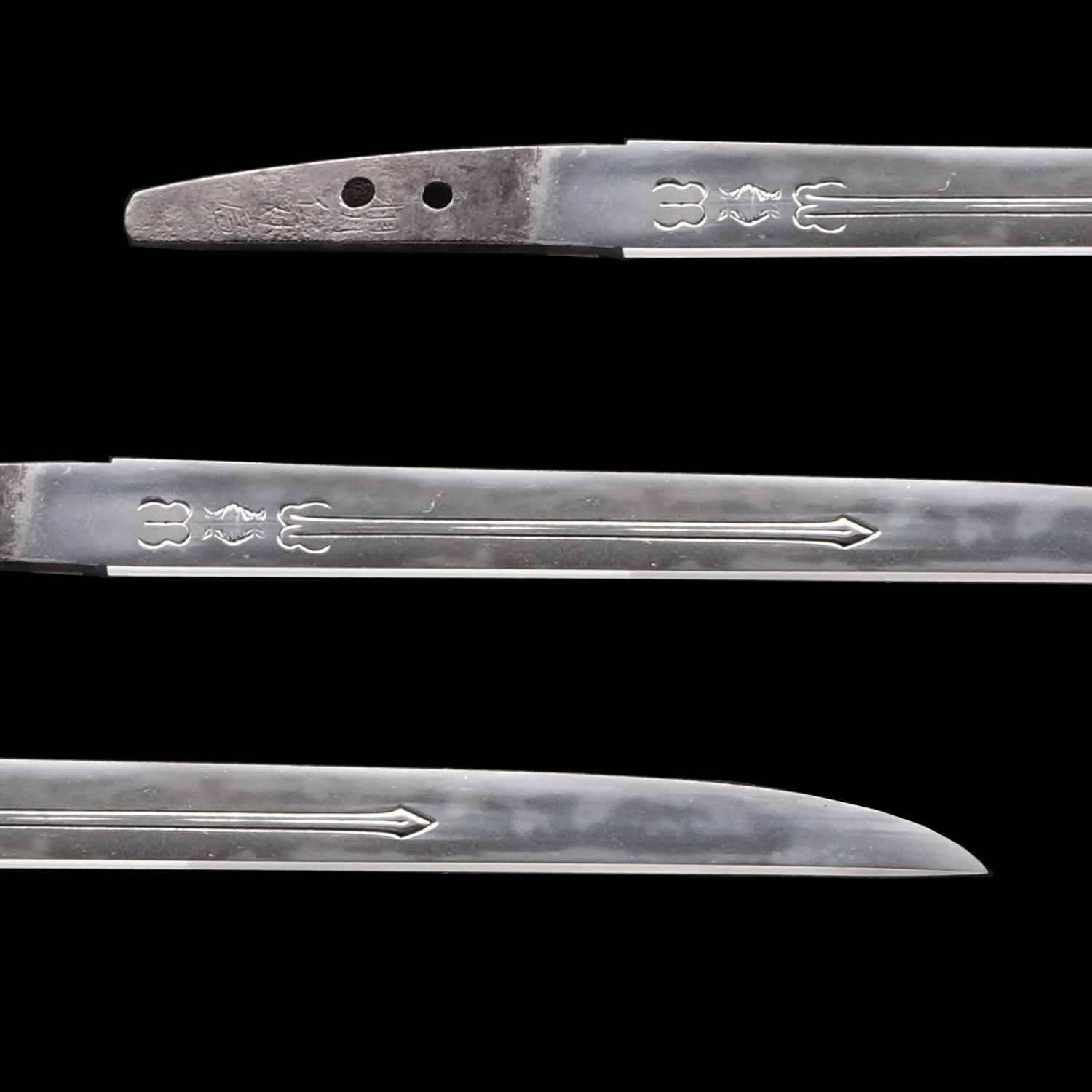
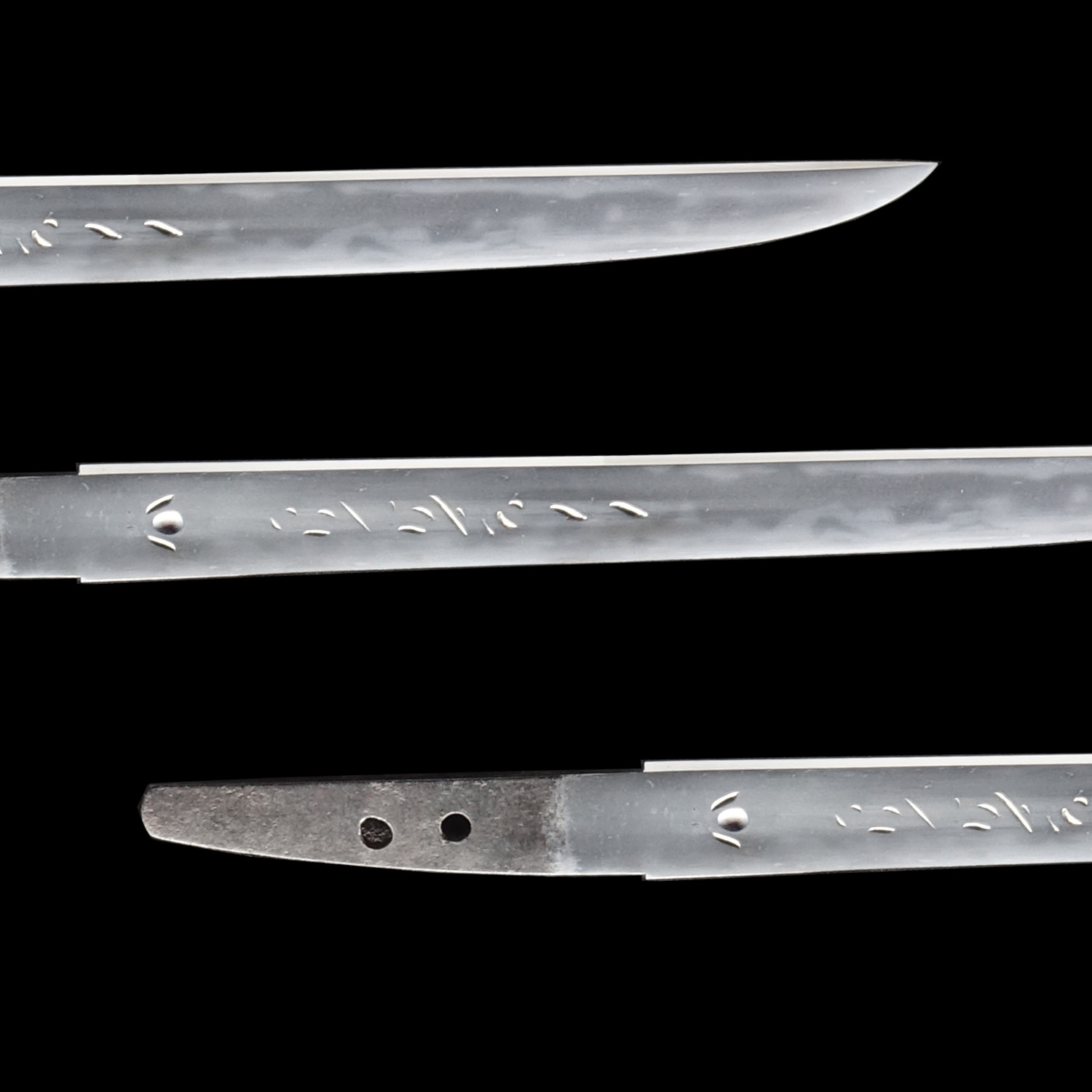
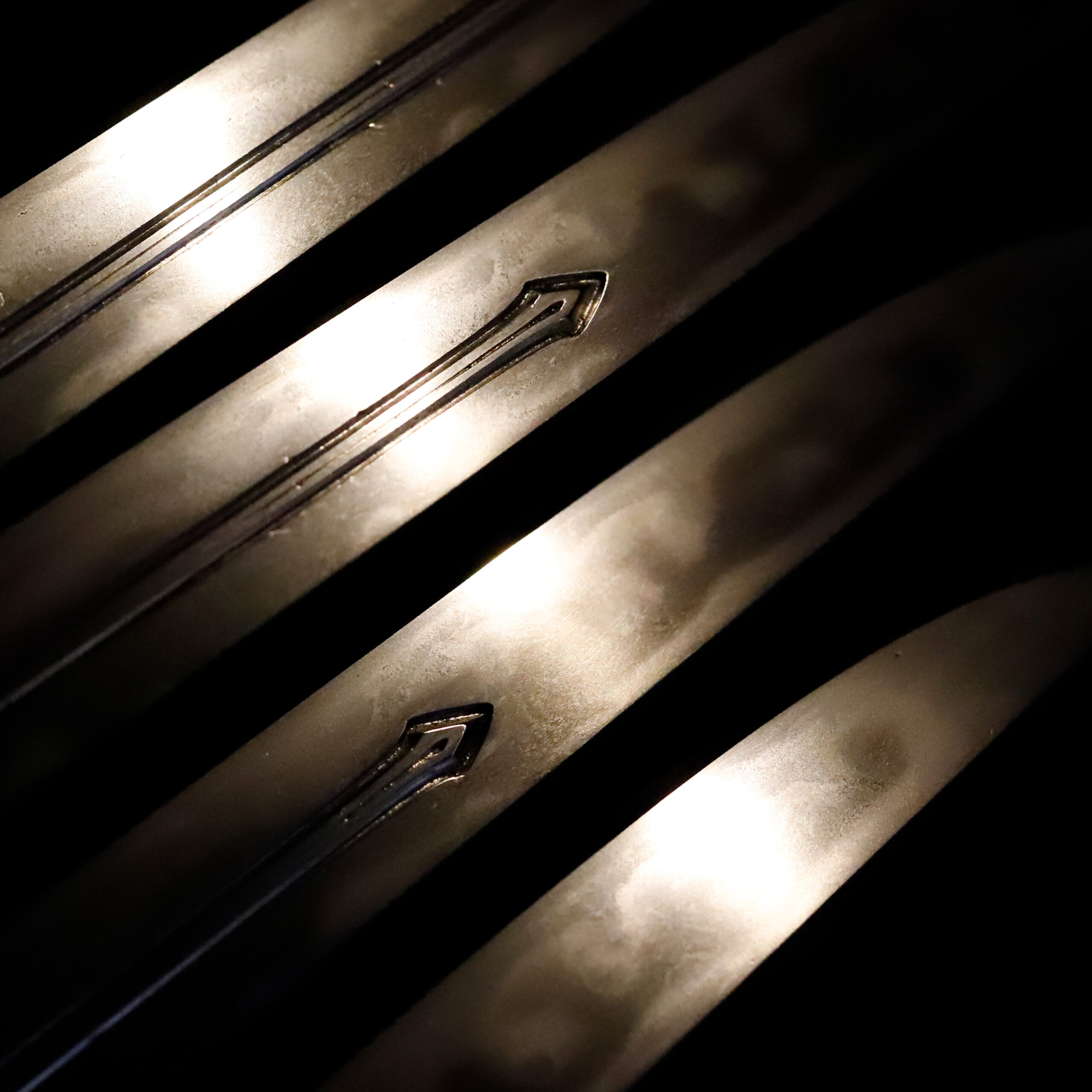
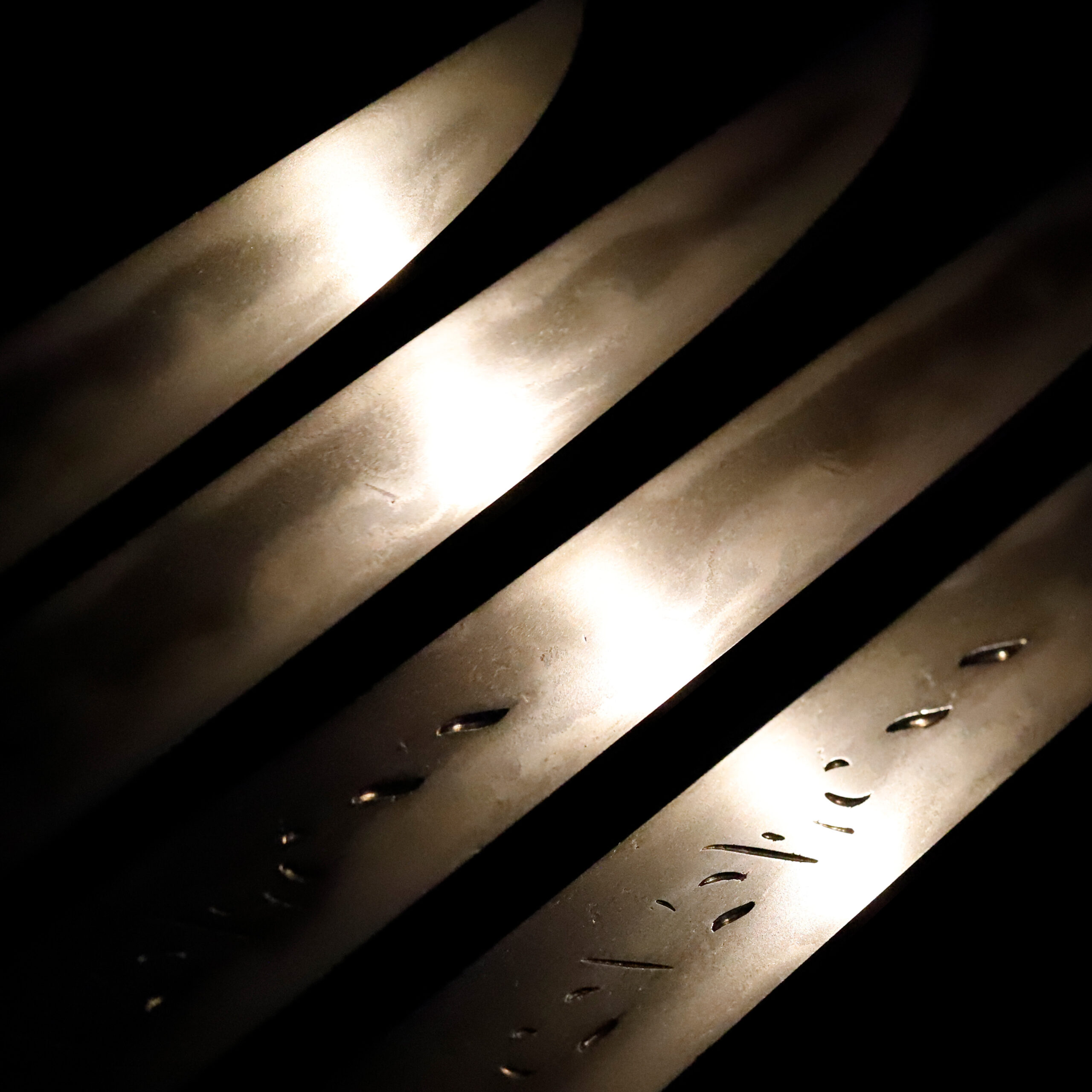
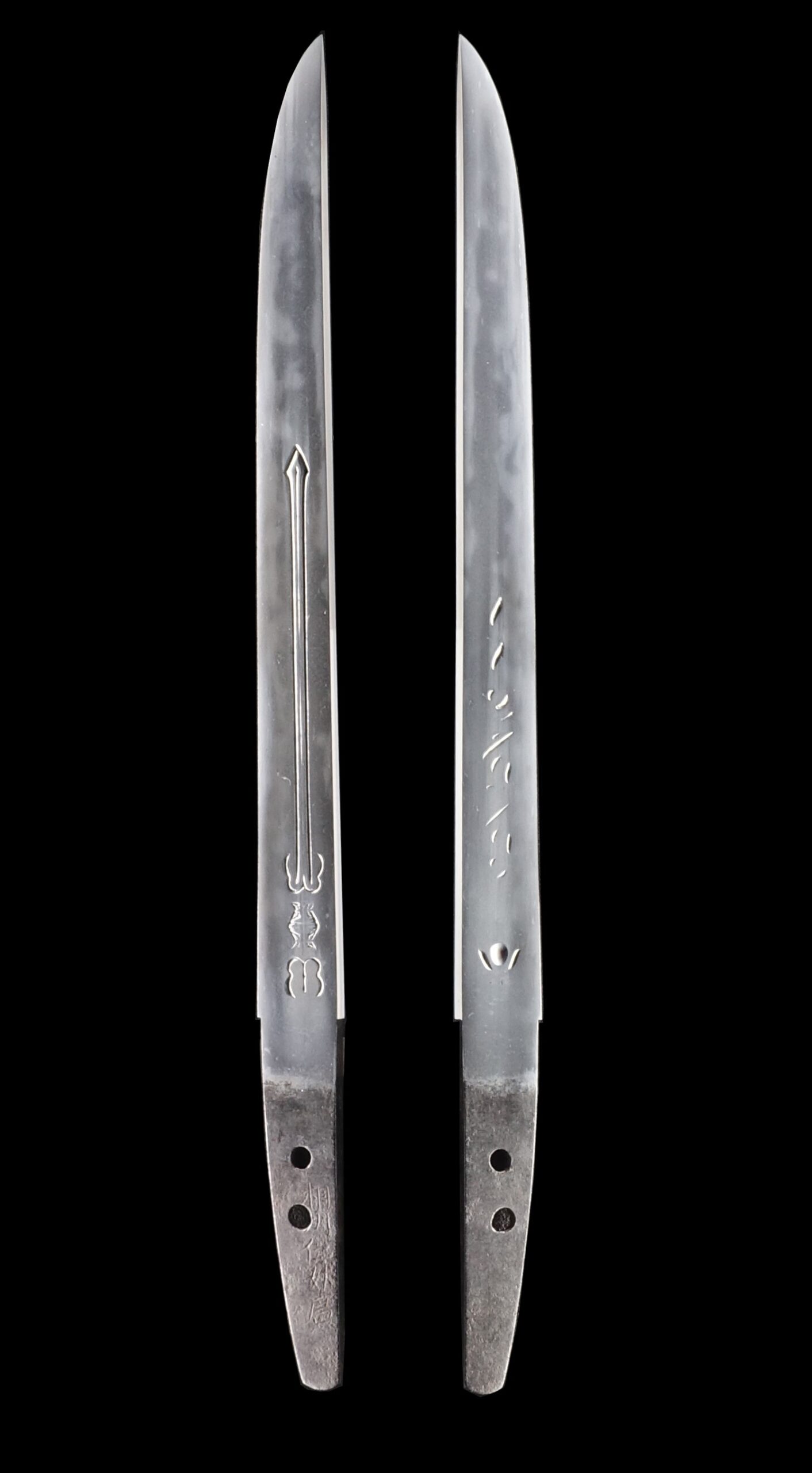
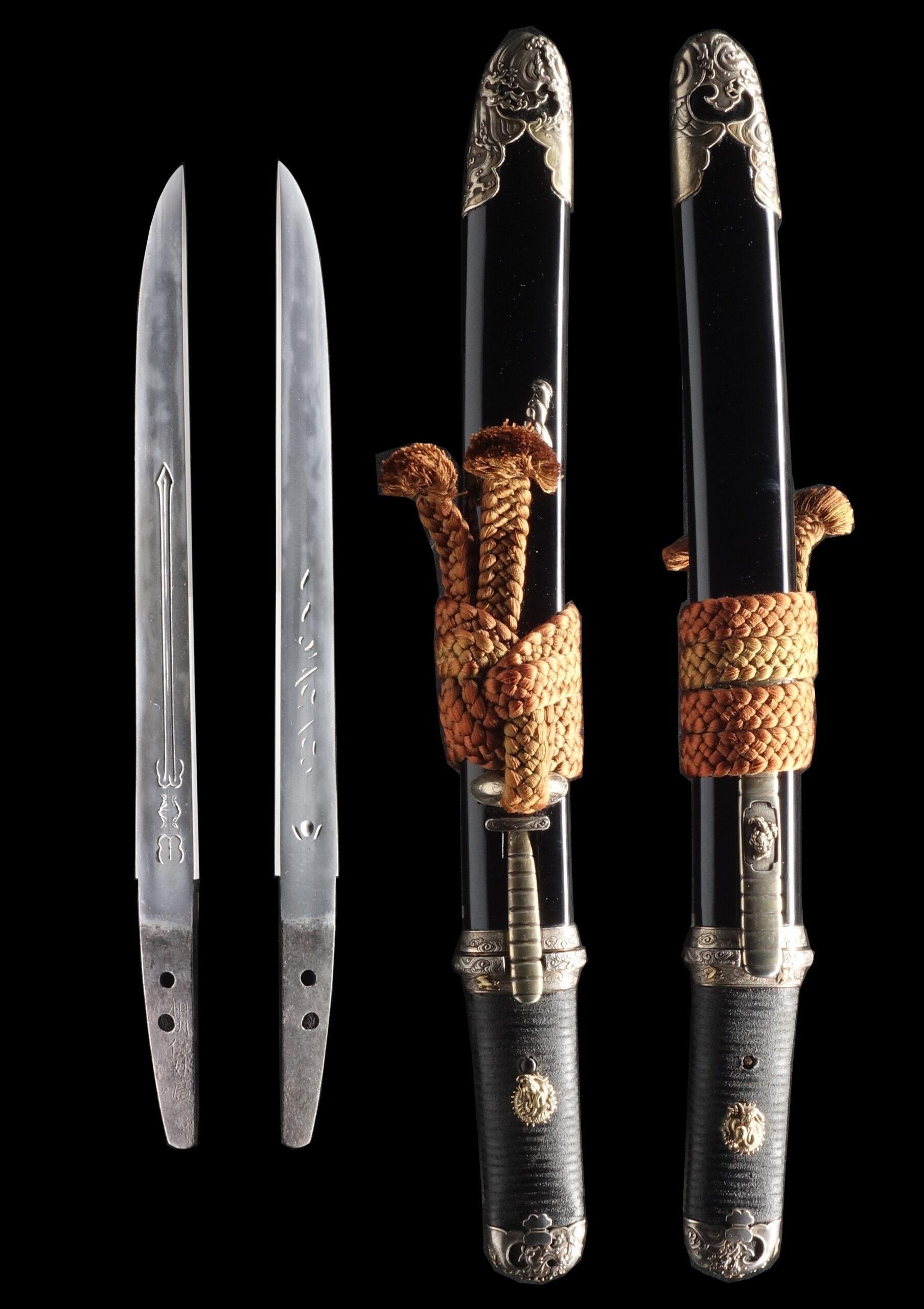
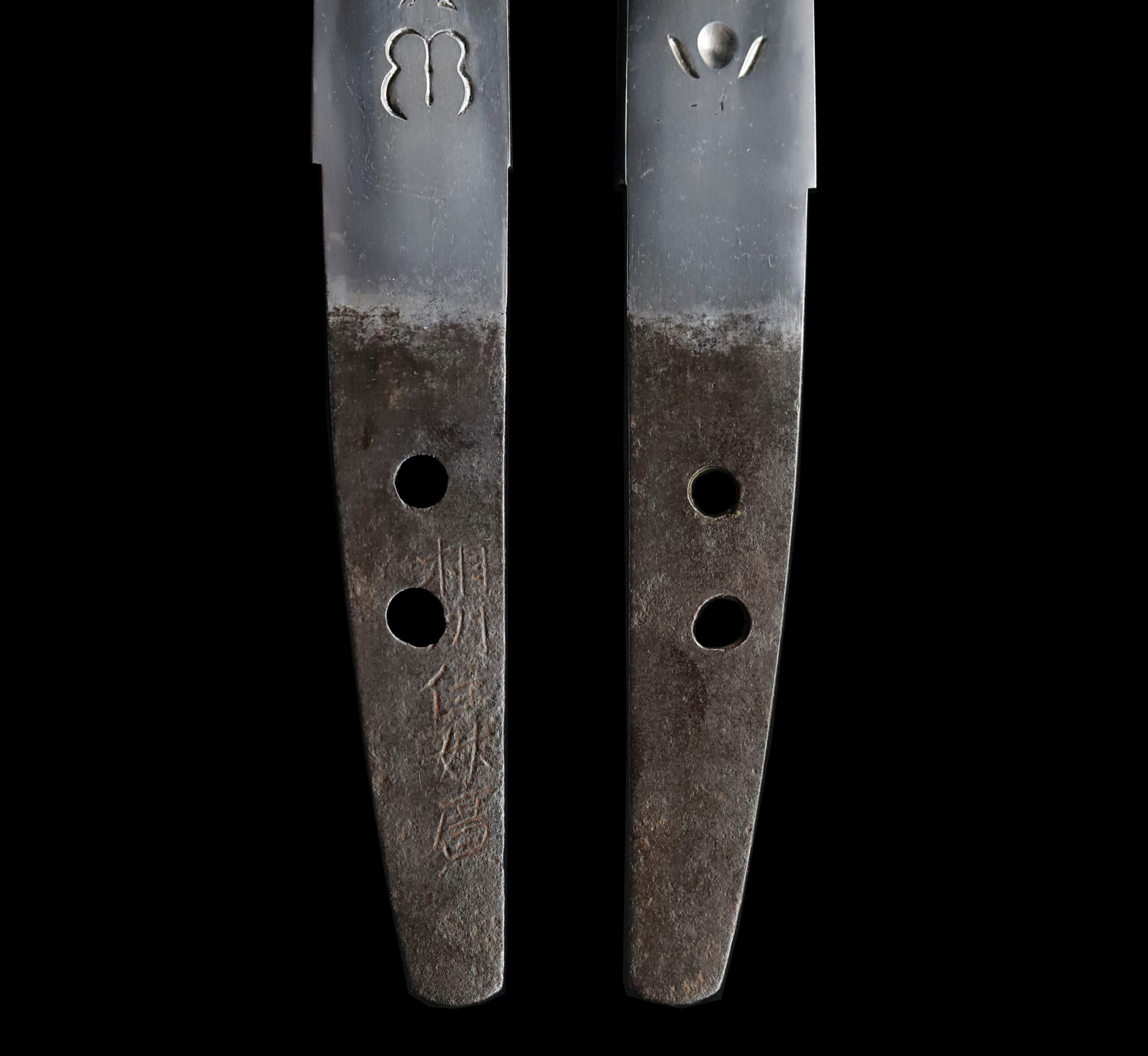
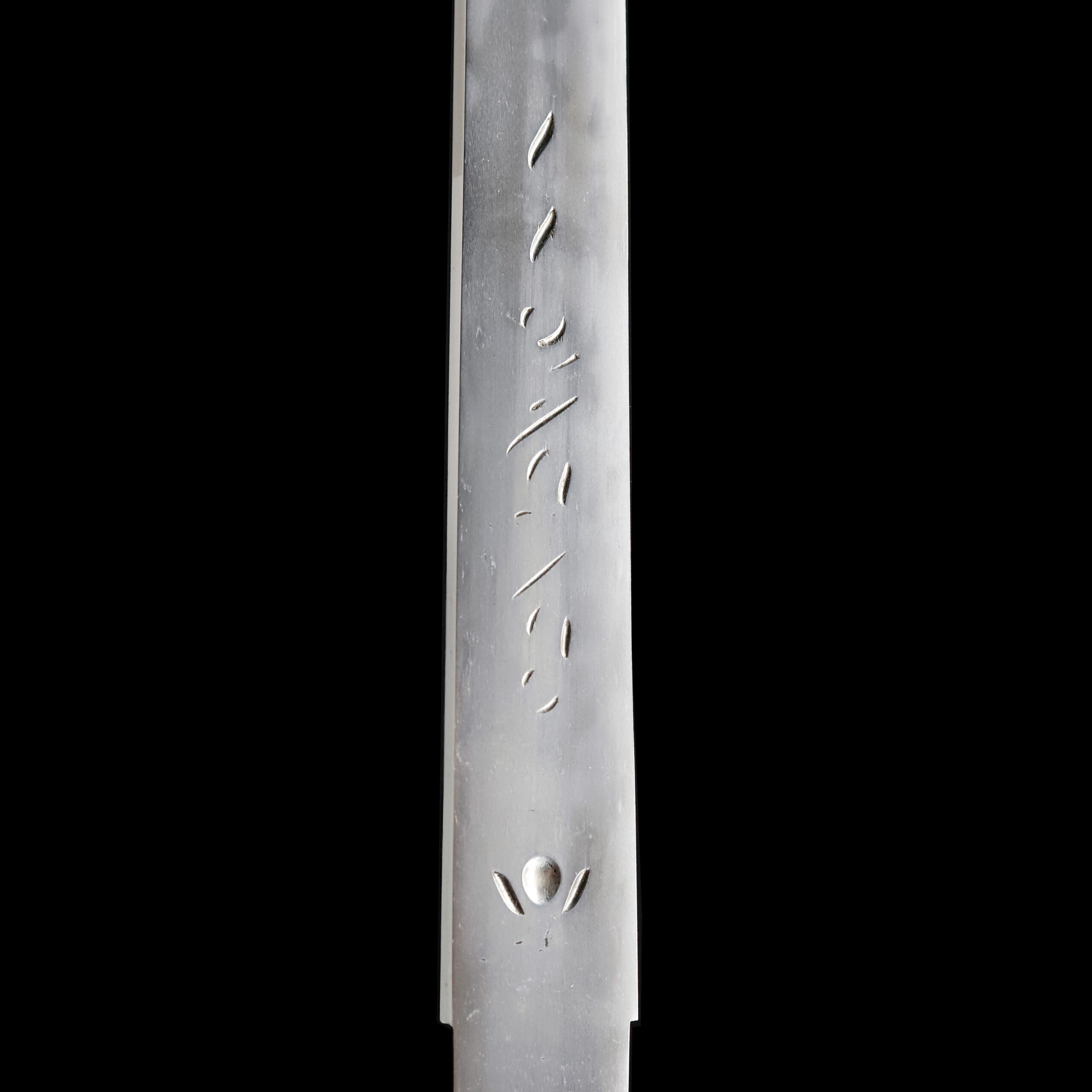
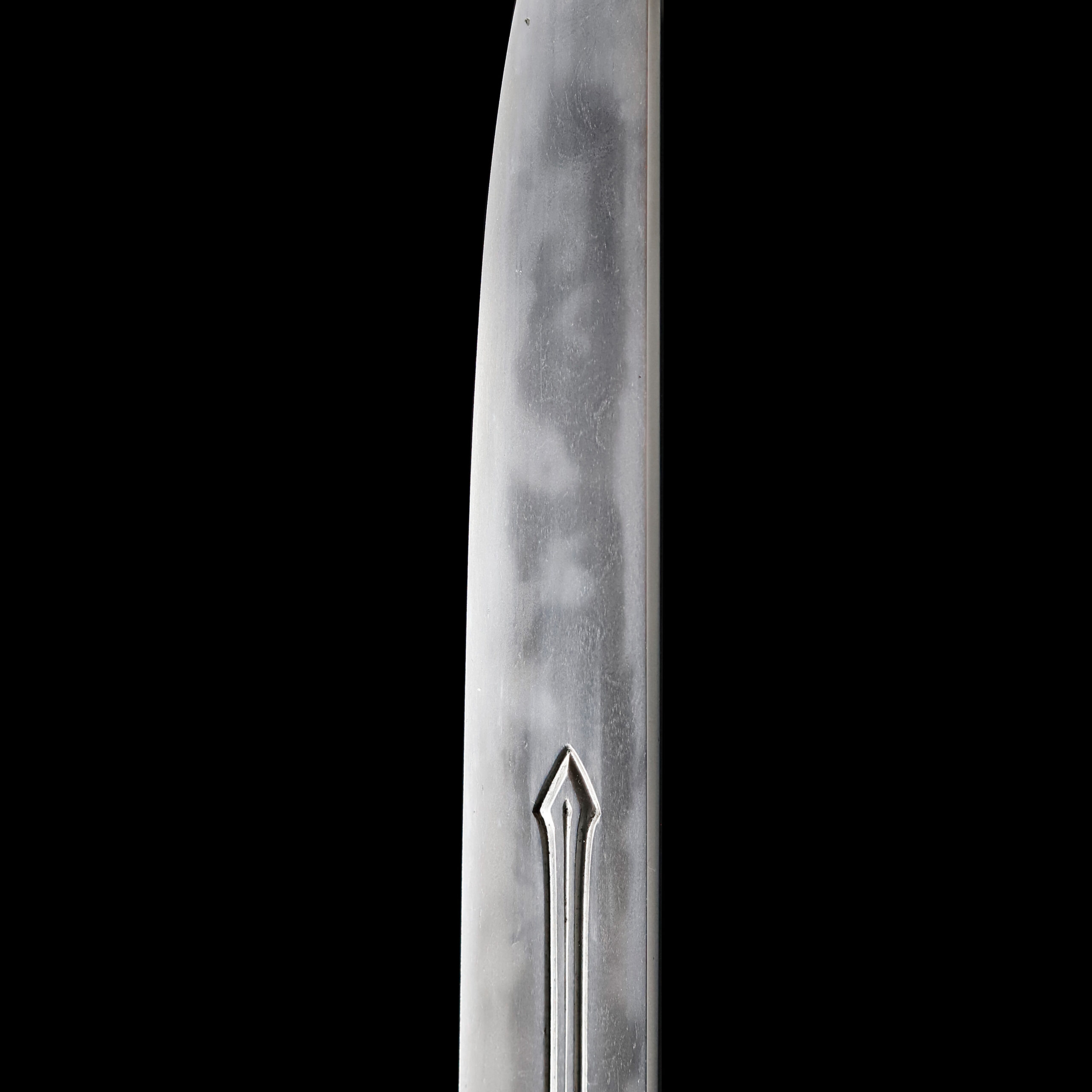
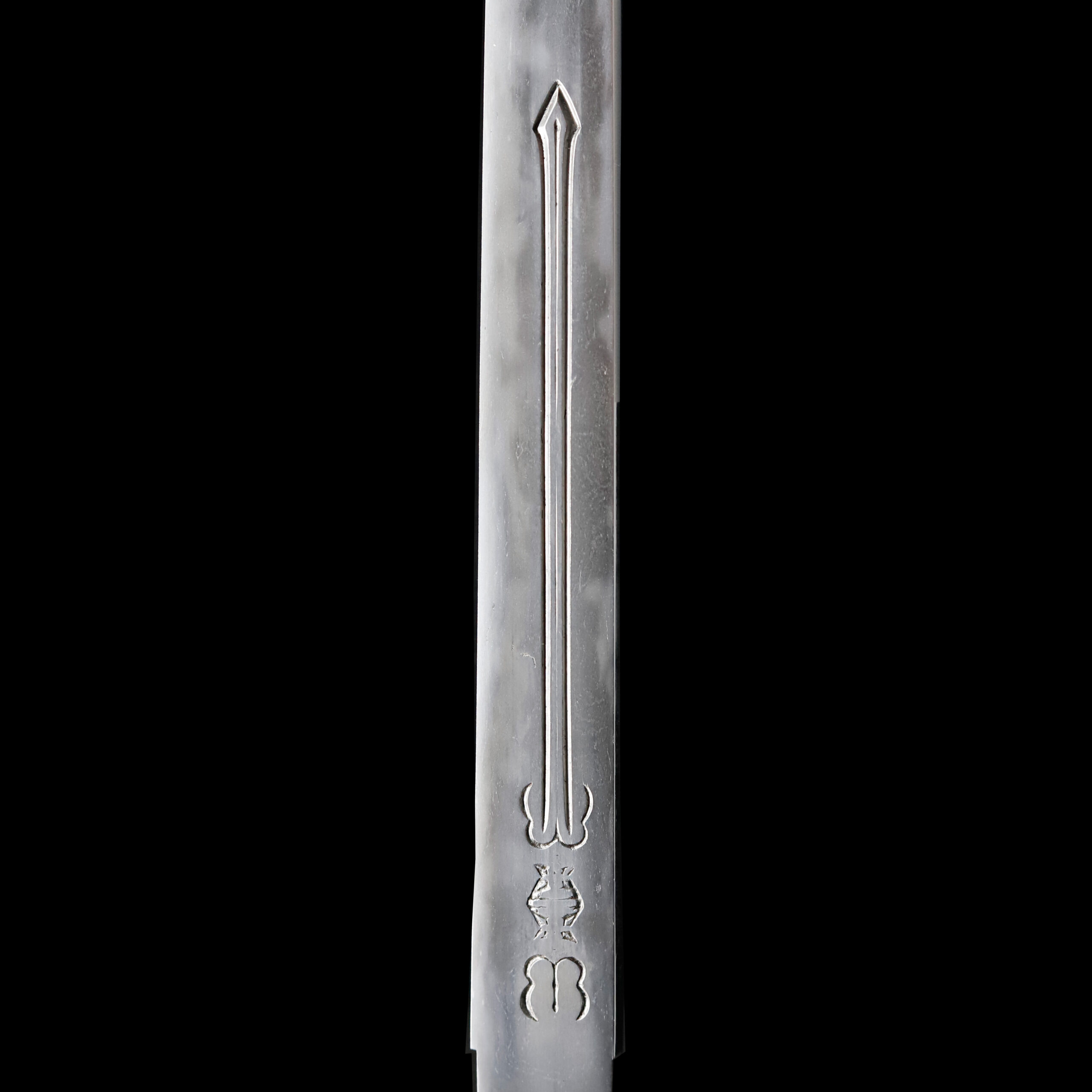
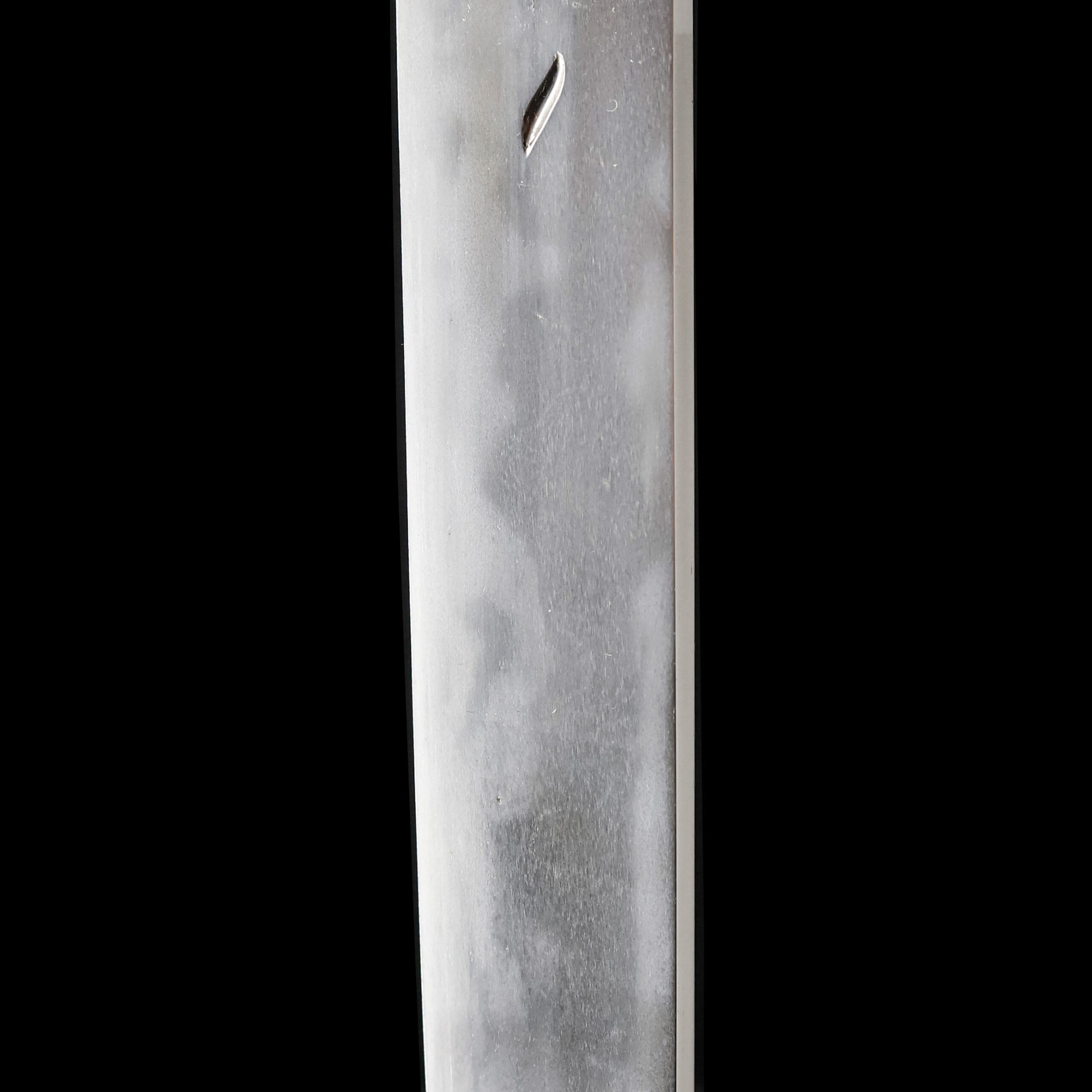
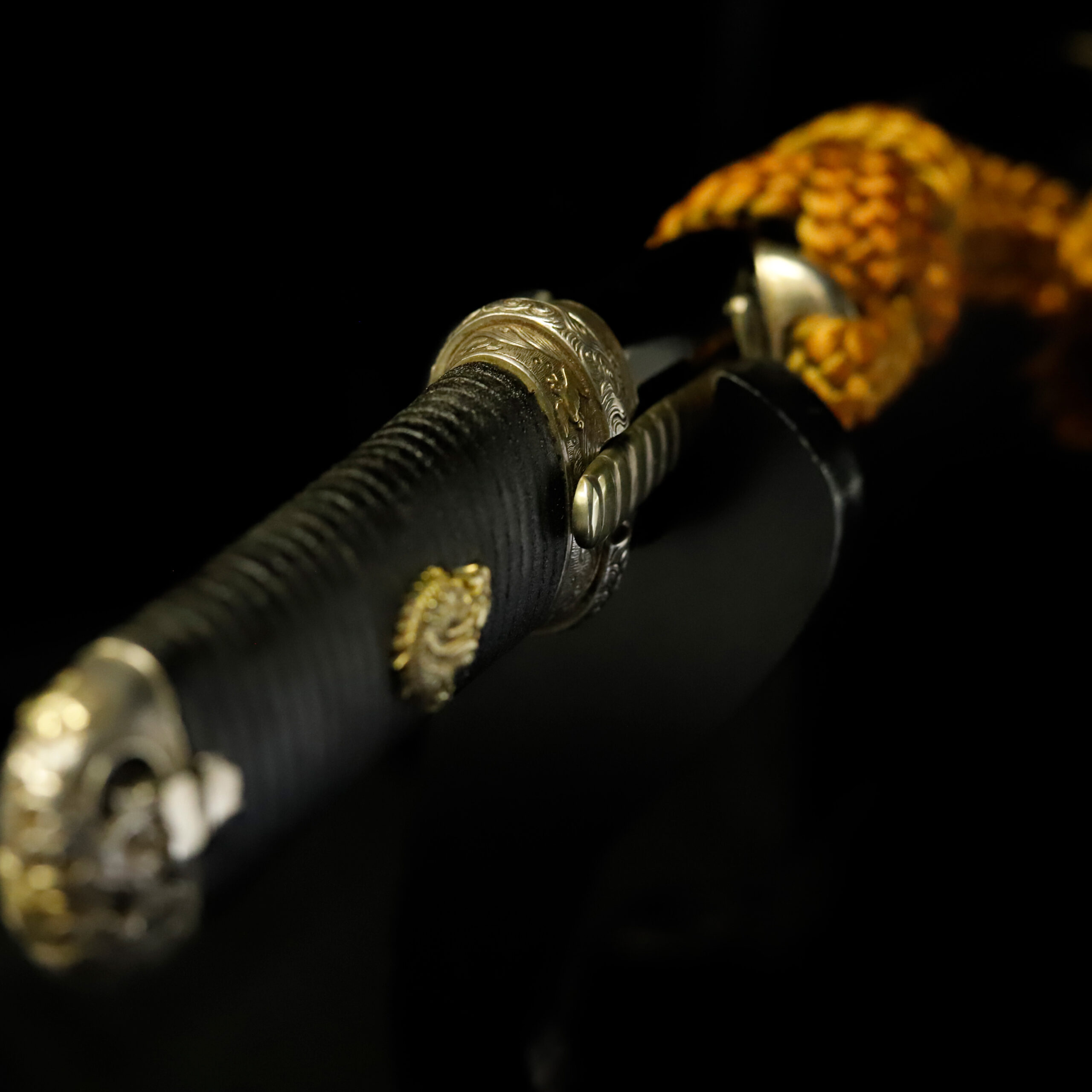
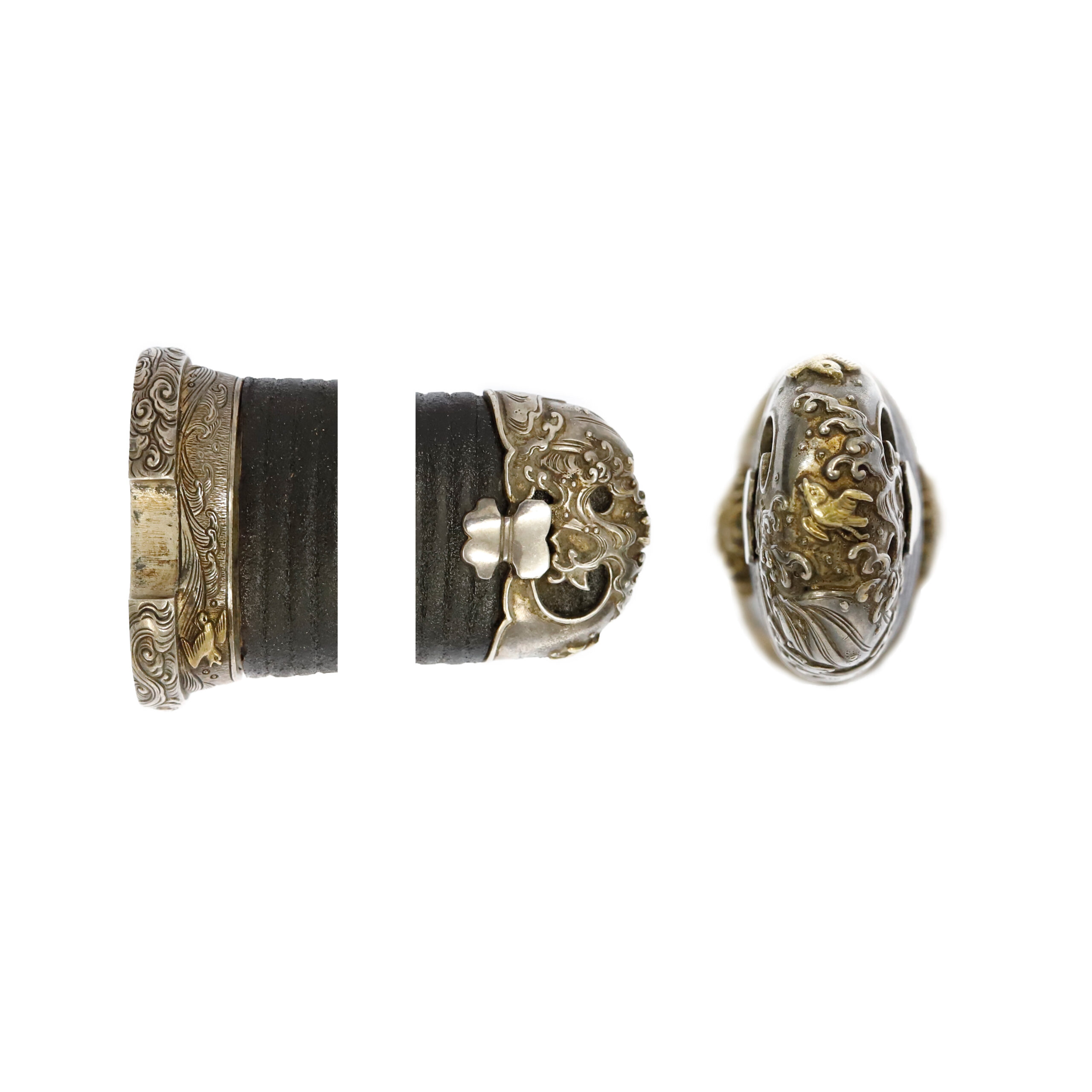
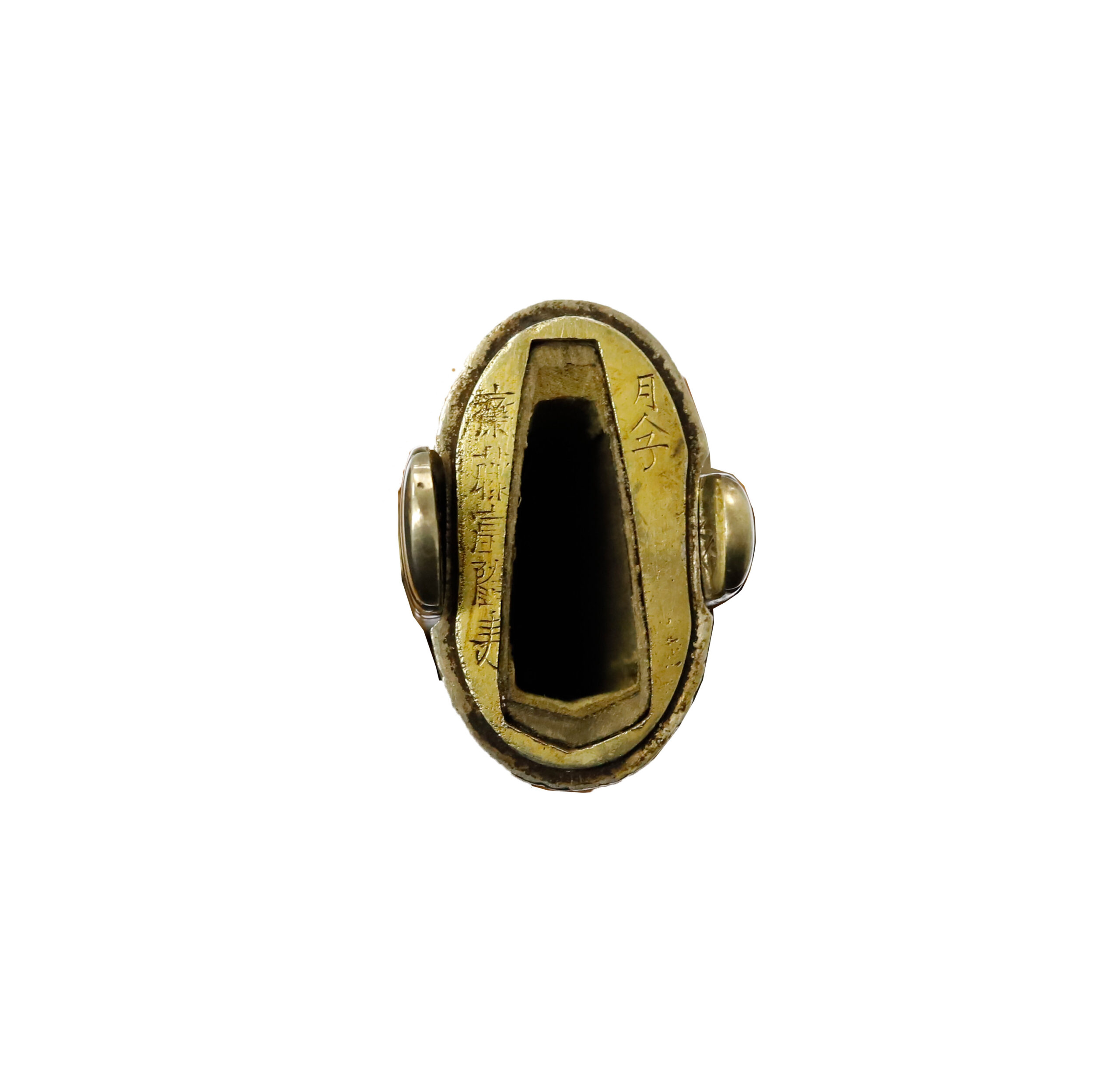
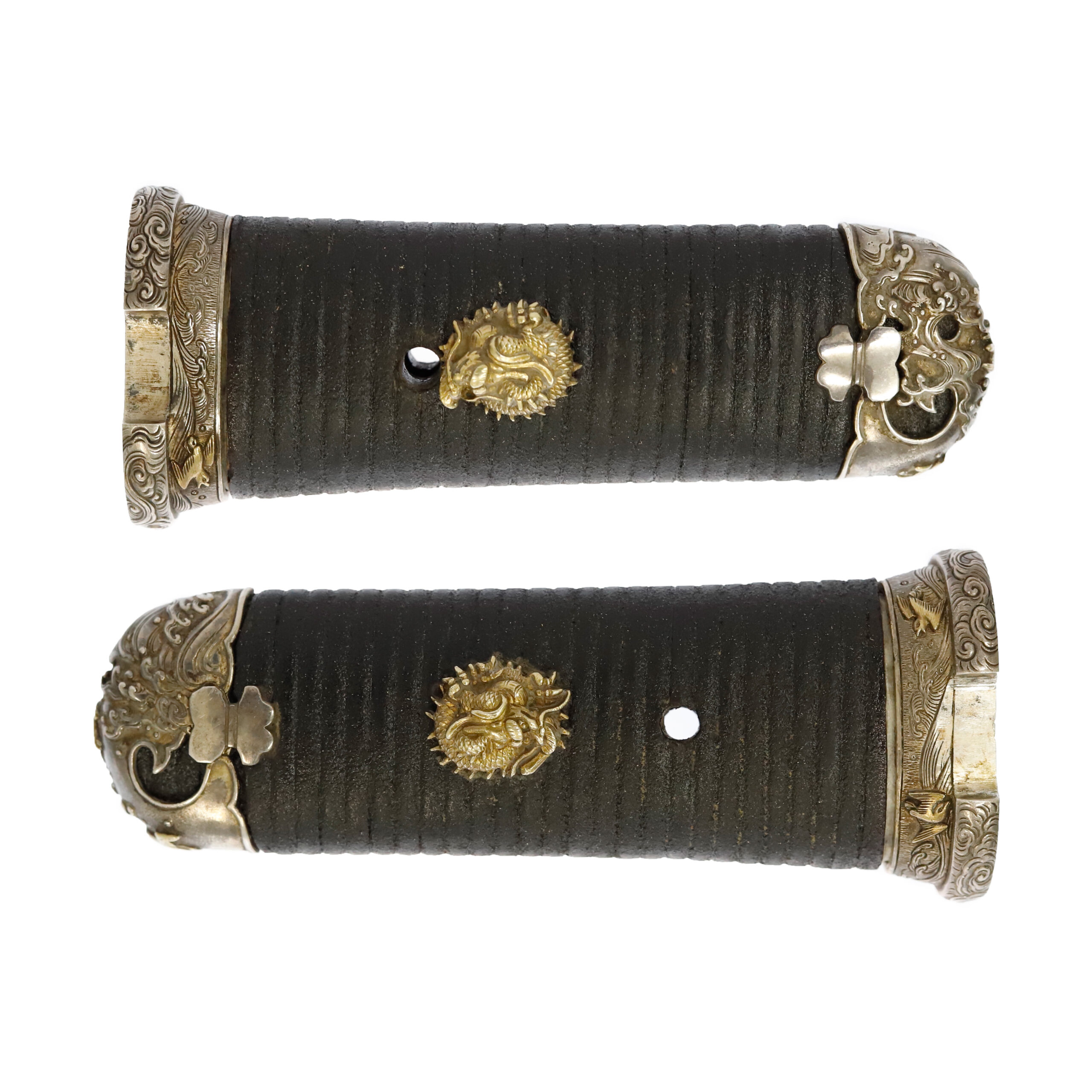
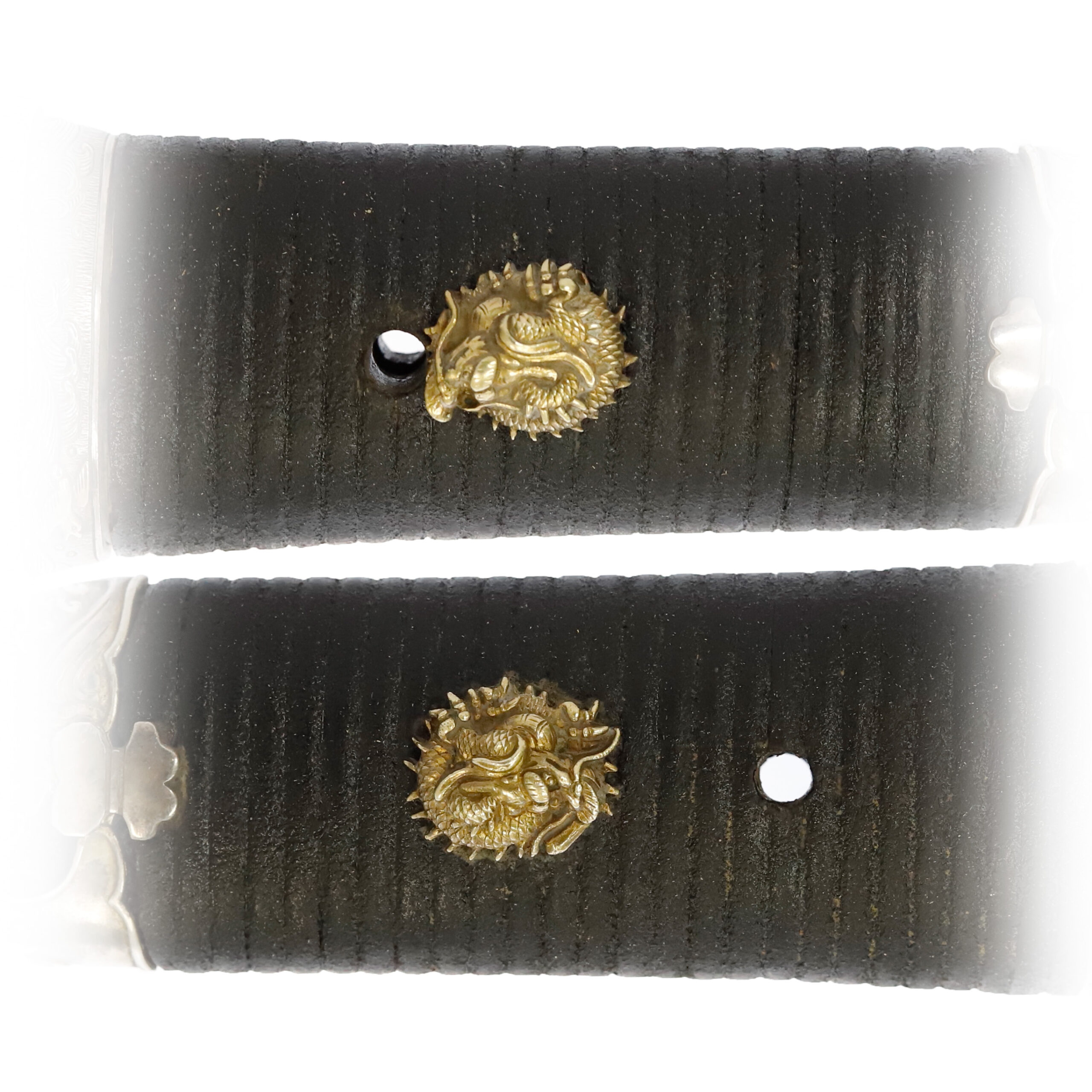
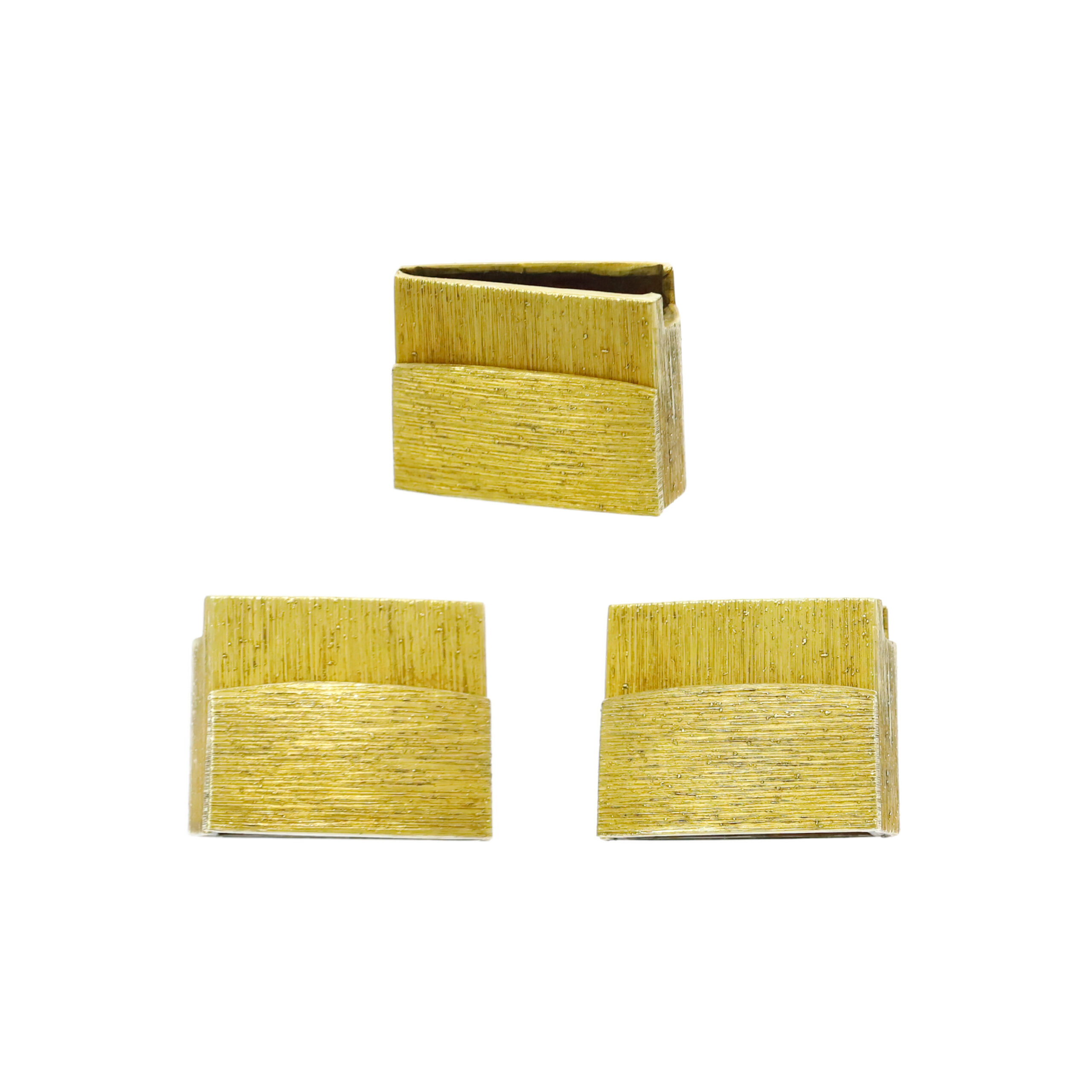
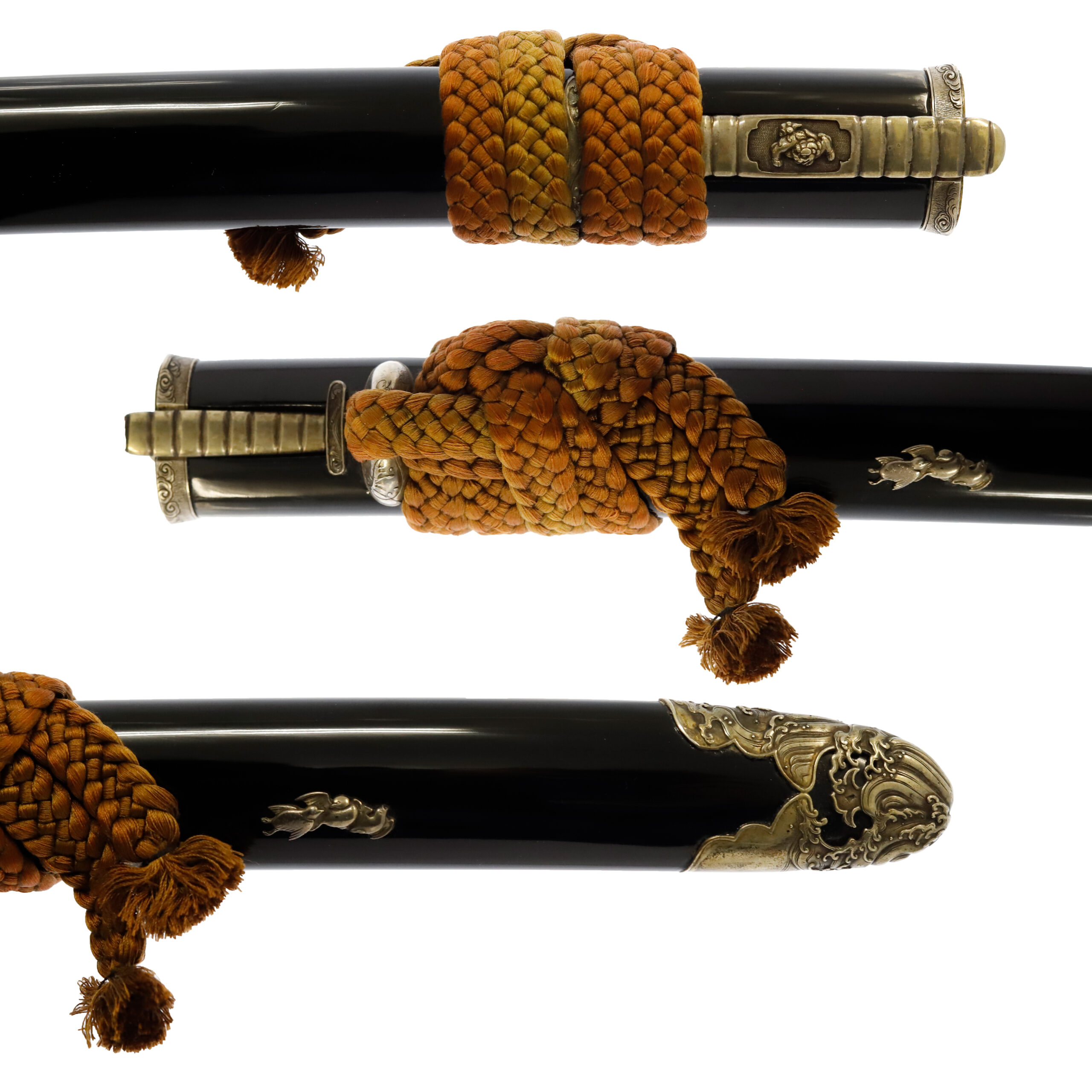
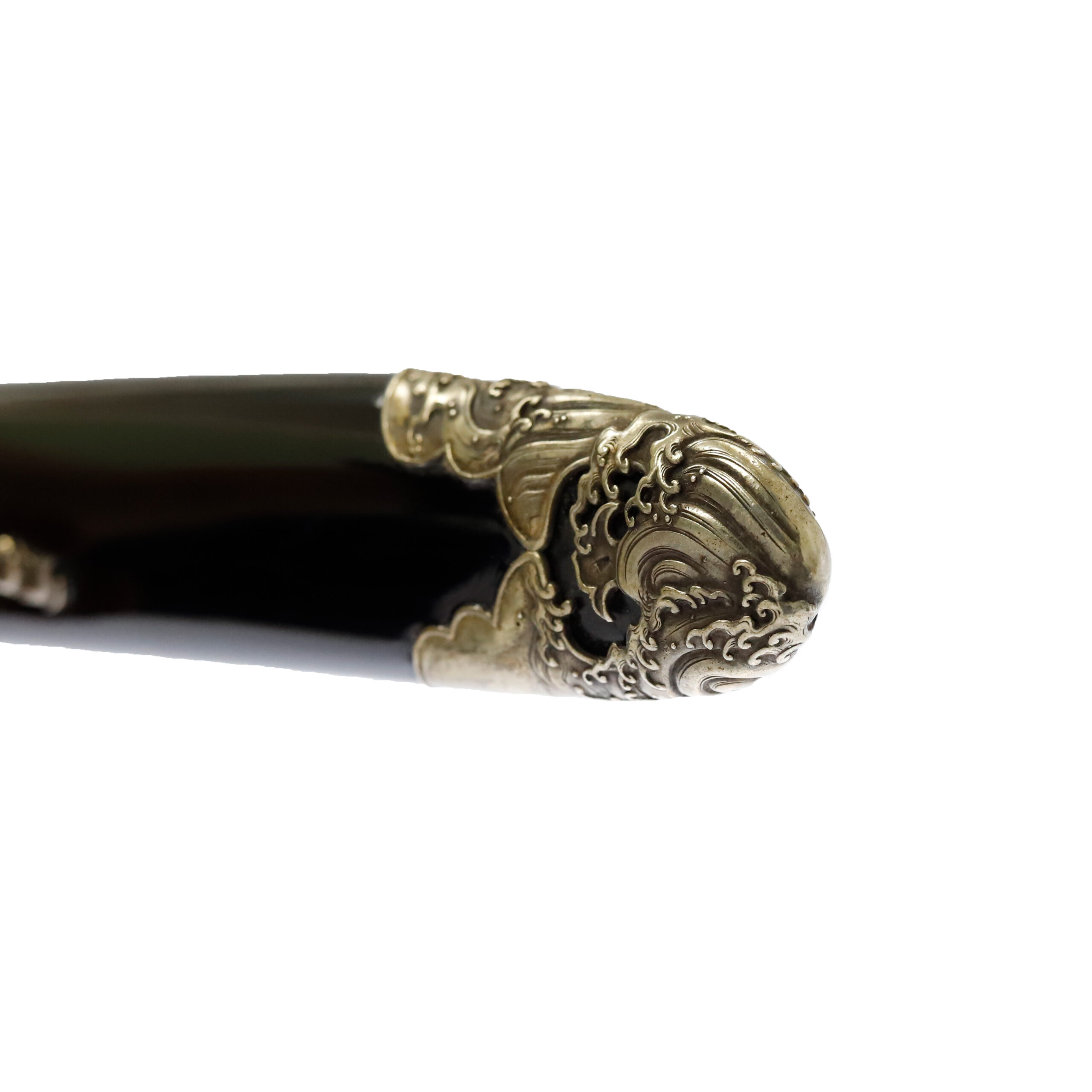
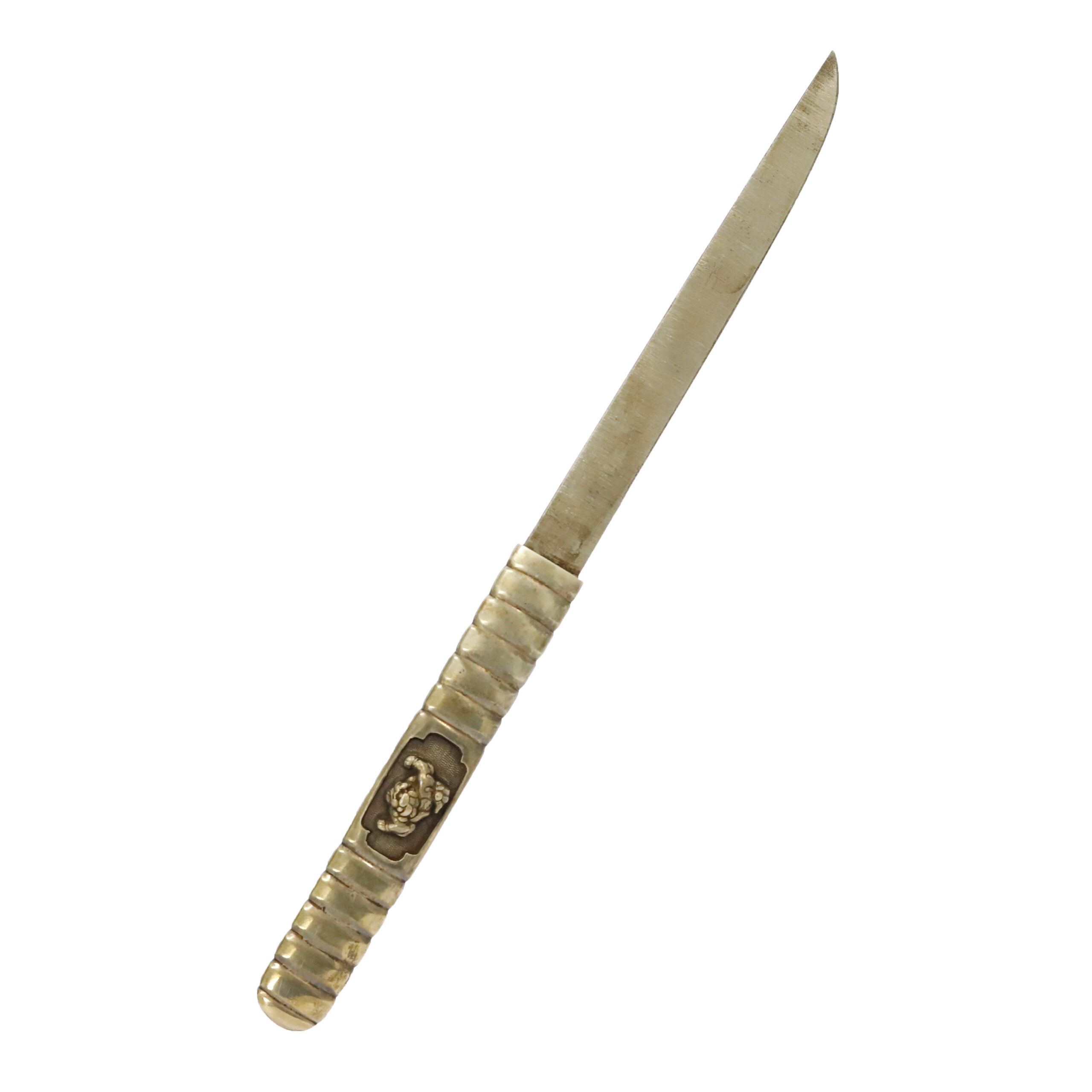
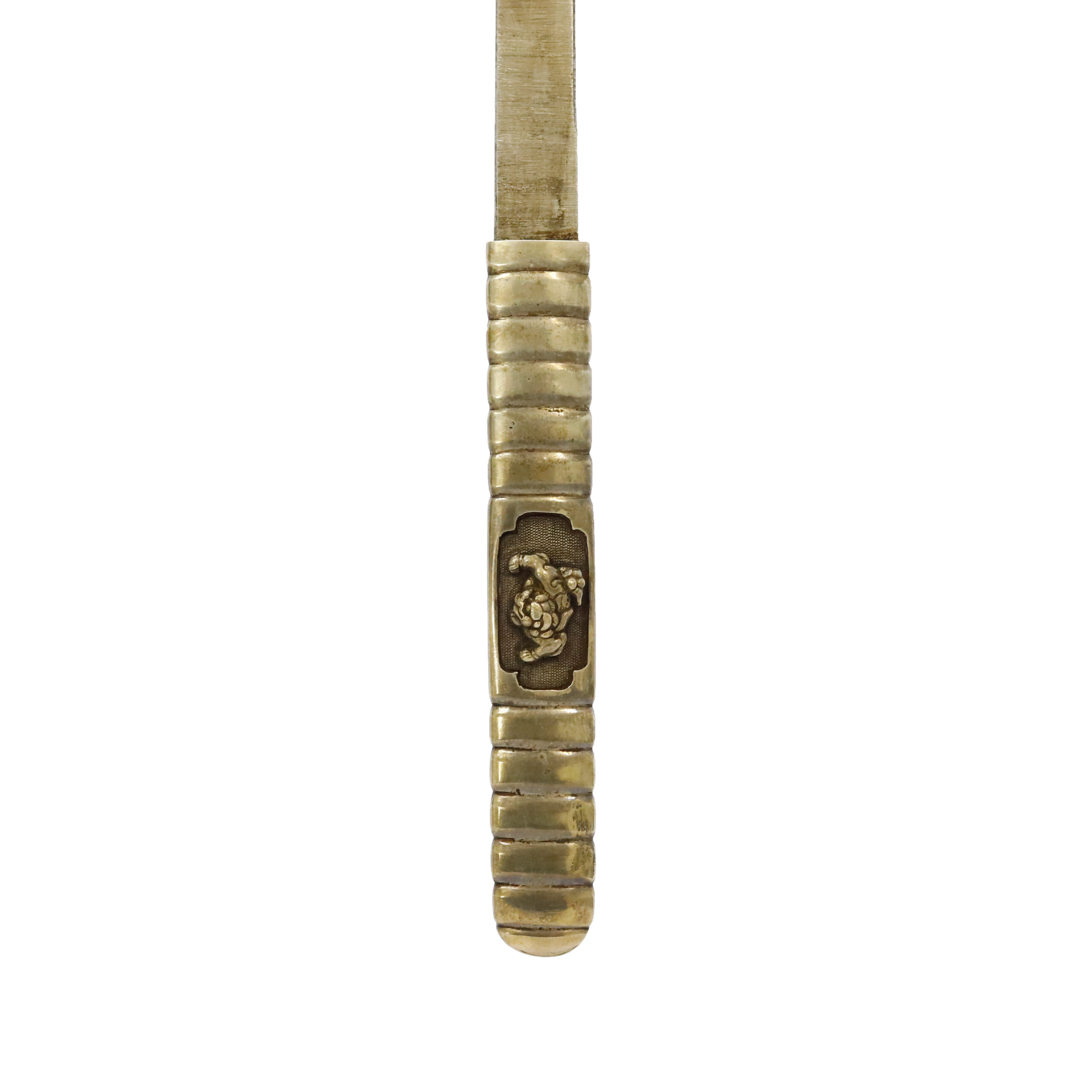
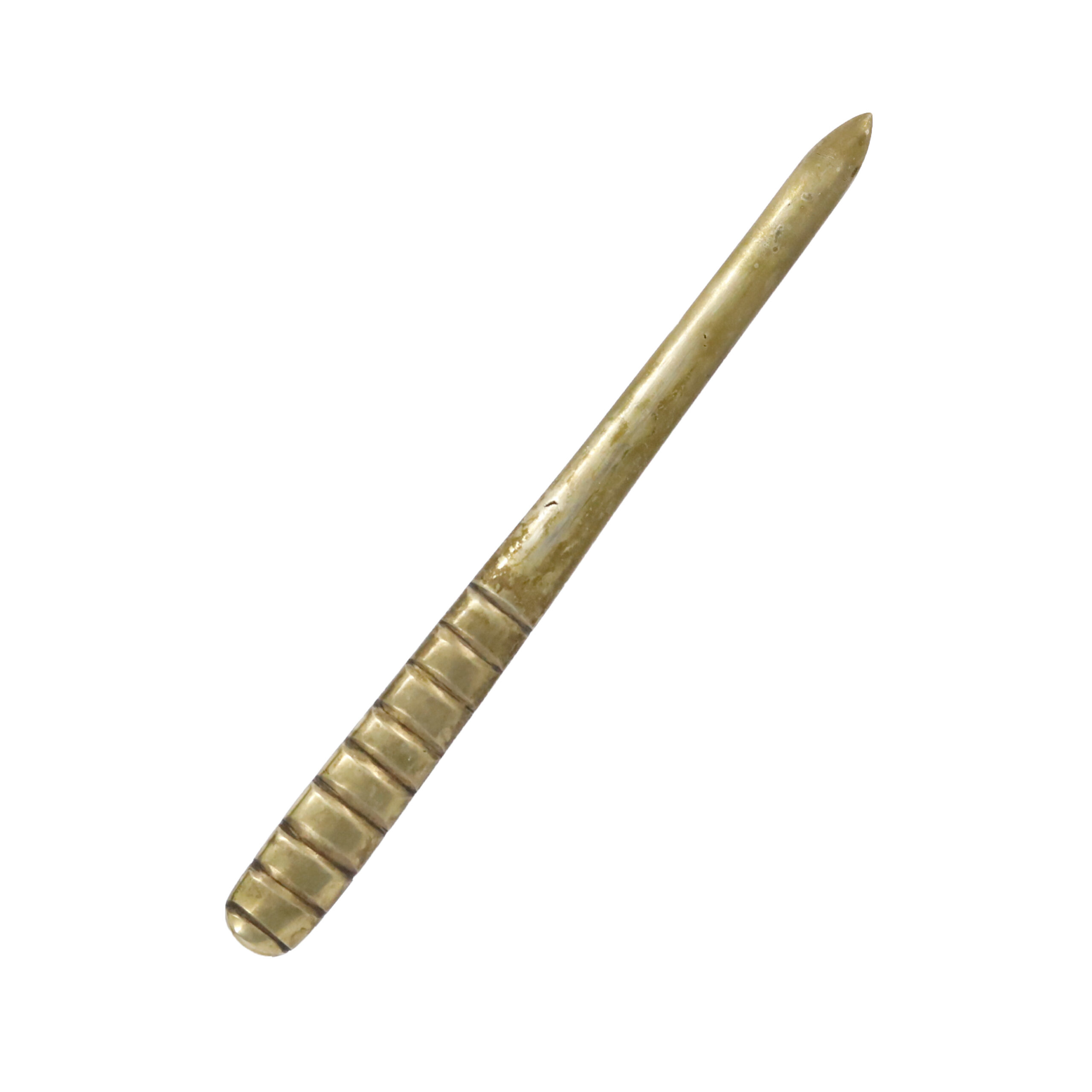
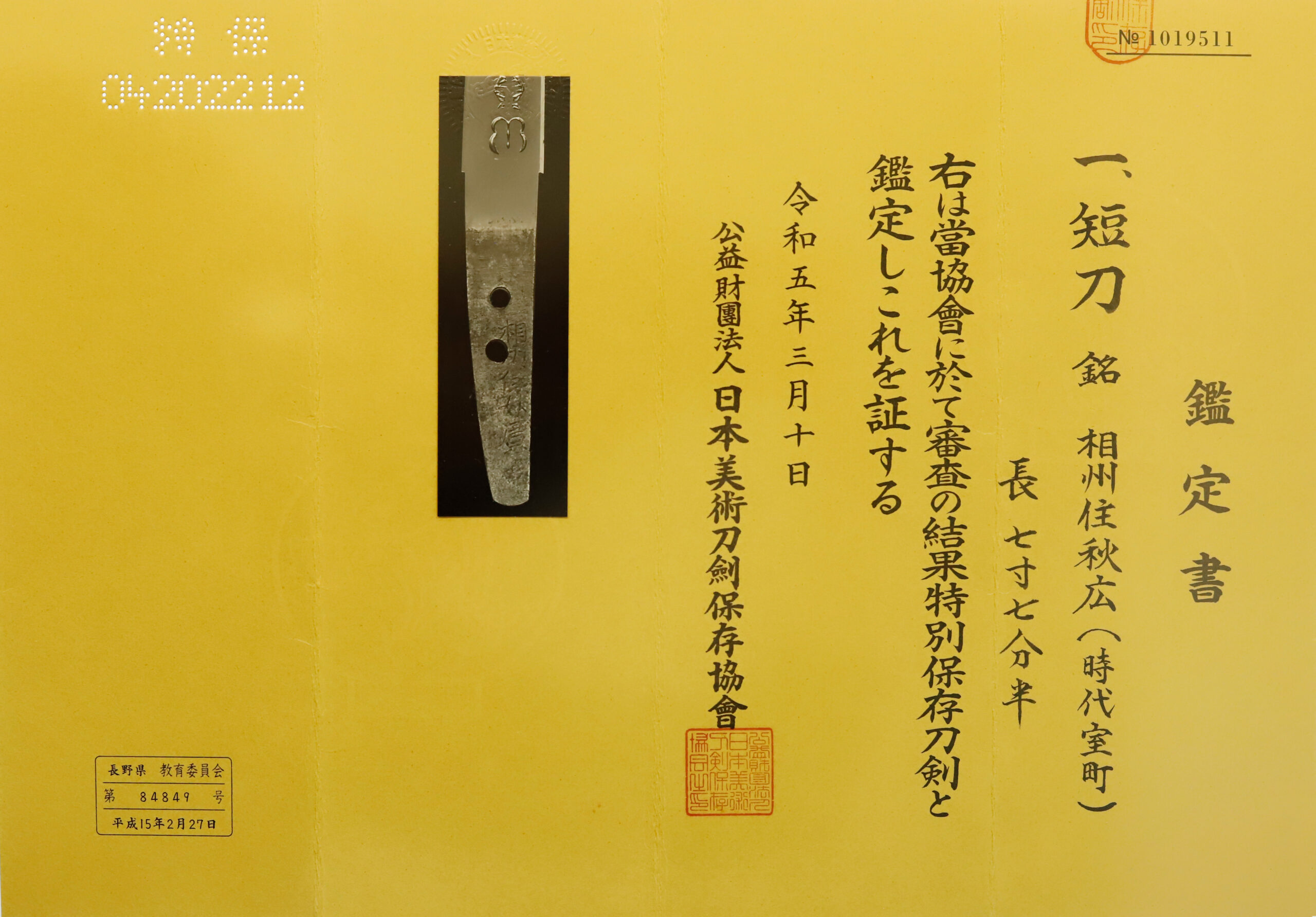
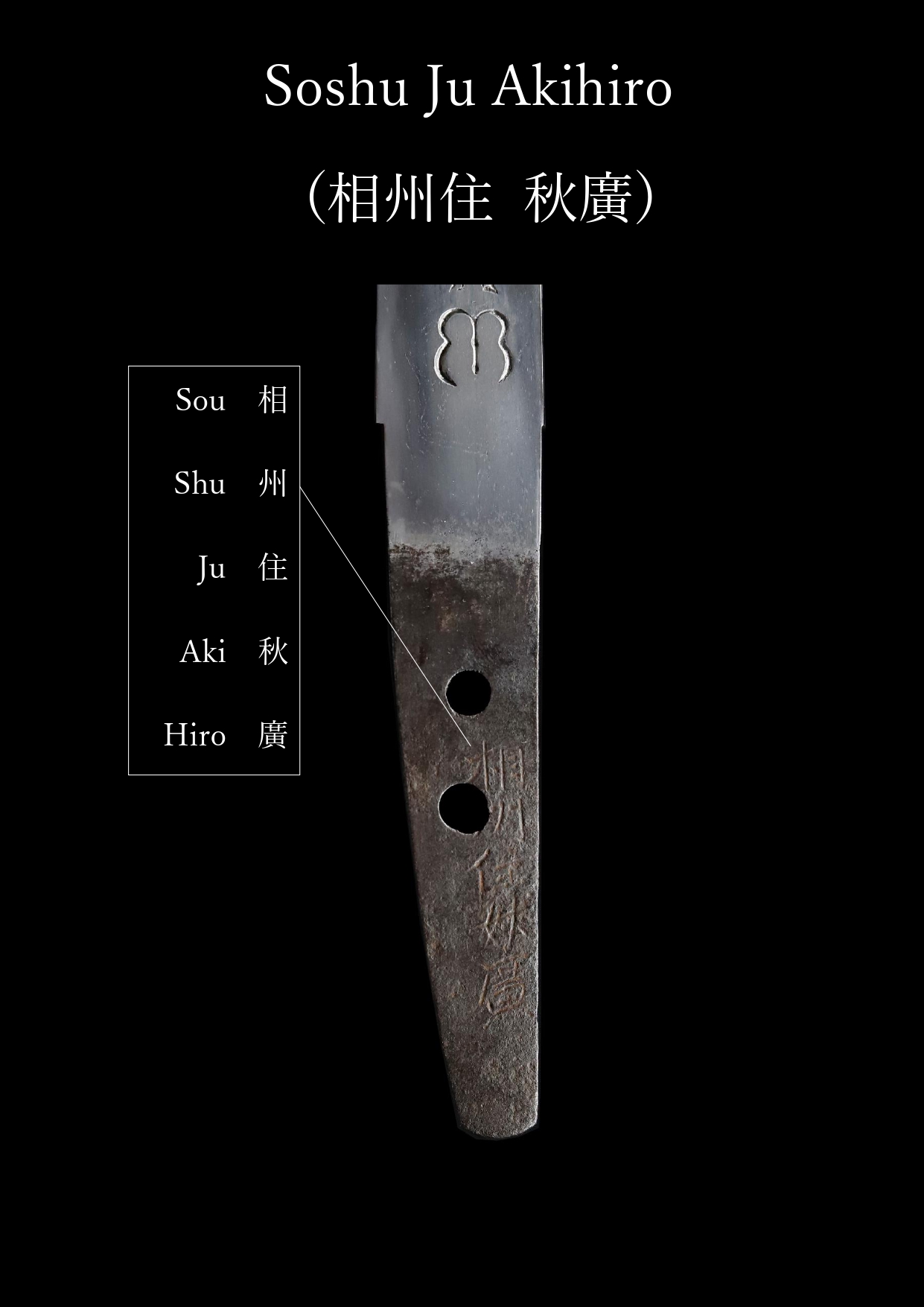
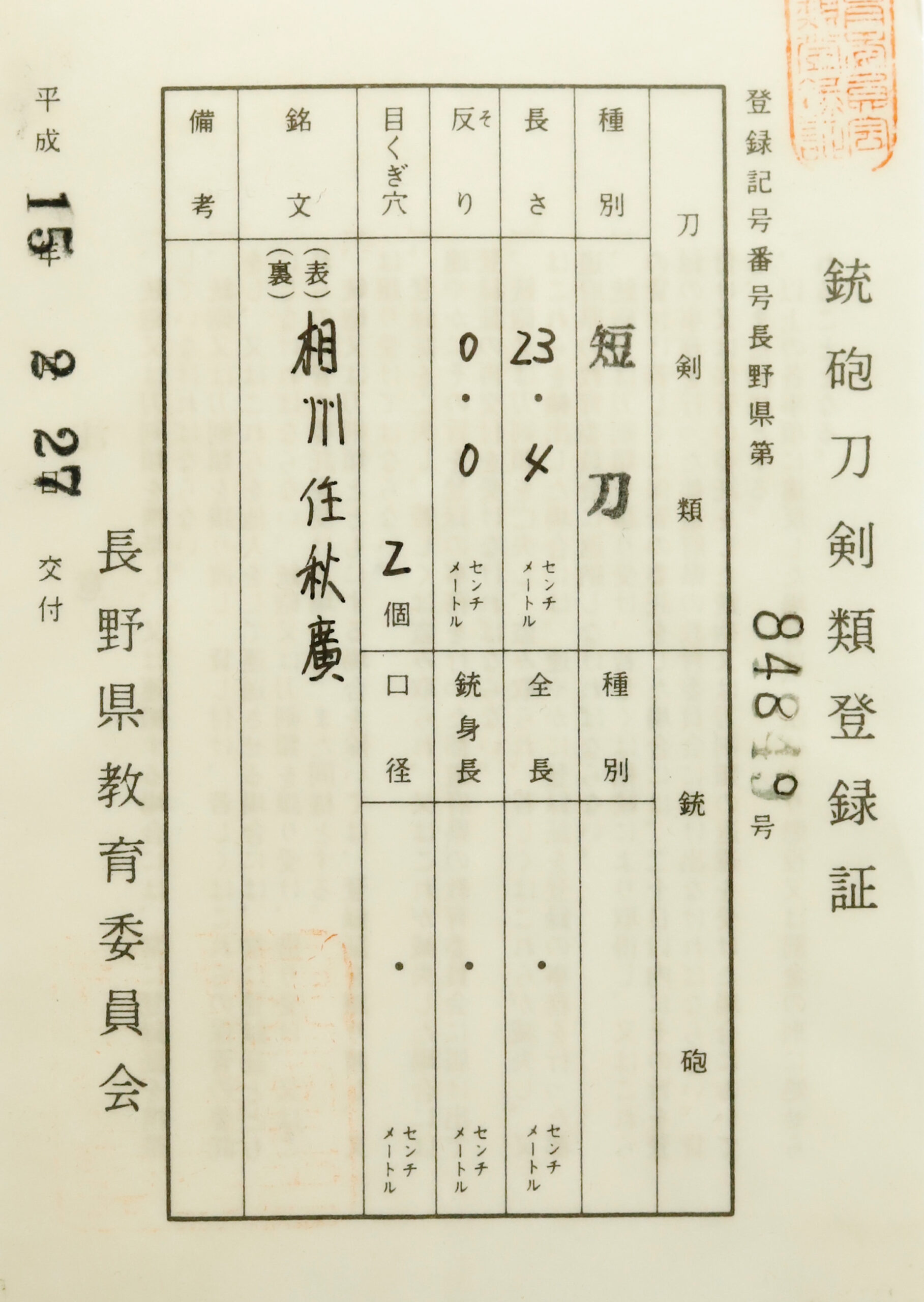
This tanto was signed by Soshu Jyu Akihiro during the Muromachi period. The NBTHK Tokubetsu Hozon certificate attributes it to either the second or third generation of Akihiro, a smith from Soshu province. The blade features an engraving of a Tsurugi (Kurikaraken) and a Sanskrit letter, and comes with a koshirae featuring a Nami Chidori motif.
 NihontoWatchBETA
mei · Soshu · Muromachi · nagasa 23.4cm
Soshu-den · Sagami
42 pieces on the market now
The Soshu school took root in Kamakura, the seat of the Hojo regents in Sagami province, where the demand of the warrior government drew the country's leading smiths to a single town. The published sources count Awataguchi Kunitsuna of Yamashiro and the Bizen masters Kunimune and Sukezane among the immigrant pioneers of Kamakura sword-making, but the first native smith of Sagami, the man who cut his Kamakura residence and his dates into the nakago, was Shintogo Kunimitsu, reckoned the de facto founder of the Soshu-den. Learn more →
| Smith | Era | Designated |
|---|---|---|
| Masamune正宗 | 1288-1293 | 88 |
| Sadamune貞宗 | 1329-1331 | 87 |
| Akihiro秋廣 | 1346-1370 | 28 |
| Go Yoshihiro義弘 | 1299-1302 | 55 |
| Kunimitsu國光 | 1293-1322 | 72 |
A Hozon-certified blade judged to show notably superior workmanship and a better state of preservation. The bar is higher: re-tempered blades and most unsigned Muromachi/Edo works are excluded.
The NBTHK (Nihon Bijutsu Tōken Hozon Kyōkai, the Society for the Preservation of Japanese Art Swords) is a public-interest incorporated foundation founded in 1948 and supervised by Japan’s Agency for Cultural Affairs (Bunkachō); it is based at the Japanese Sword Museum in Tokyo. Its expert panels physically examine each submitted work (shinsa) and issue a certificate (kanteishō) ranking it by artistic and historical merit. NBTHK papers are the most widely recognized standard of authentication for Japanese swords and fittings.
NBTHK official siteReturns/exchanges limited to defects caused by shipping (except willful misconduct or gross negligence by the company); customers must contact within 72 hours of receiving the product.
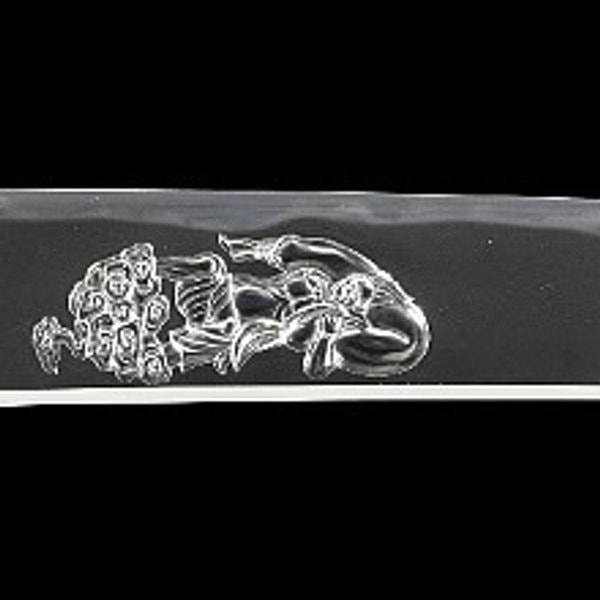
This tanto was signed by Soshu Jyu Akihiro during the Muromachi period. The NBTHK Tokubetsu Hozon certificate attributes it to either the second or third generation of Akihiro, a smith from Soshu province. The blade features an engraving of a Tsurugi (Kurikaraken) and a Sanskrit letter, and comes with a koshirae featuring a Nami Chidori motif.
NihontoWatchBETAmei · Soshu · Muromachi · nagasa 23.4cm
Soshu-den · Sagami
42 pieces on the market now
The Soshu school took root in Kamakura, the seat of the Hojo regents in Sagami province, where the demand of the warrior government drew the country's leading smiths to a single town. The published sources count Awataguchi Kunitsuna of Yamashiro and the Bizen masters Kunimune and Sukezane among the immigrant pioneers of Kamakura sword-making, but the first native smith of Sagami, the man who cut his Kamakura residence and his dates into the nakago, was Shintogo Kunimitsu, reckoned the de facto founder of the Soshu-den. Learn more →
| Smith | Era | Designated |
|---|---|---|
| Masamune正宗 | 1288-1293 | 88 |
| Sadamune貞宗 | 1329-1331 | 87 |
| Akihiro秋廣 | 1346-1370 | 28 |
| Go Yoshihiro義弘 | 1299-1302 | 55 |
| Kunimitsu國光 | 1293-1322 | 72 |
A Hozon-certified blade judged to show notably superior workmanship and a better state of preservation. The bar is higher: re-tempered blades and most unsigned Muromachi/Edo works are excluded.
The NBTHK (Nihon Bijutsu Tōken Hozon Kyōkai, the Society for the Preservation of Japanese Art Swords) is a public-interest incorporated foundation founded in 1948 and supervised by Japan’s Agency for Cultural Affairs (Bunkachō); it is based at the Japanese Sword Museum in Tokyo. Its expert panels physically examine each submitted work (shinsa) and issue a certificate (kanteishō) ranking it by artistic and historical merit. NBTHK papers are the most widely recognized standard of authentication for Japanese swords and fittings.
NBTHK official siteReturns/exchanges limited to defects caused by shipping (except willful misconduct or gross negligence by the company); customers must contact within 72 hours of receiving the product.