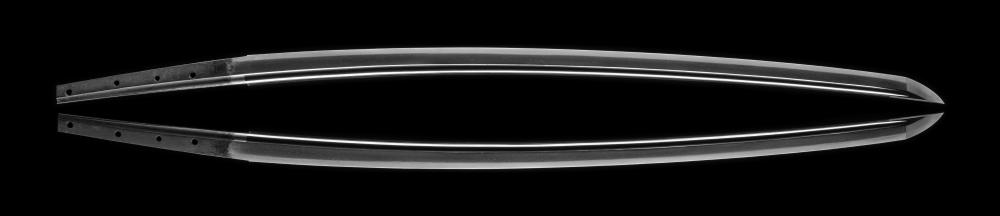
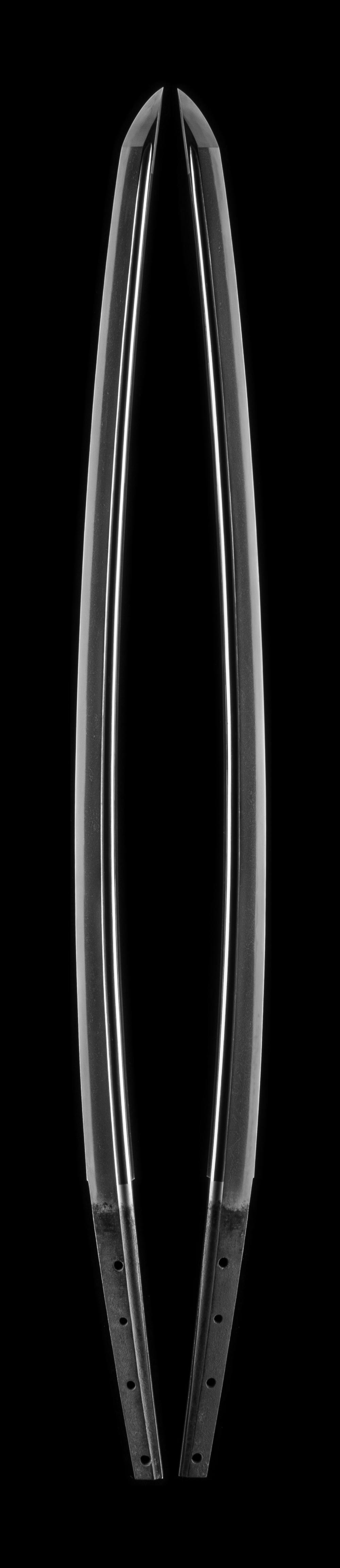
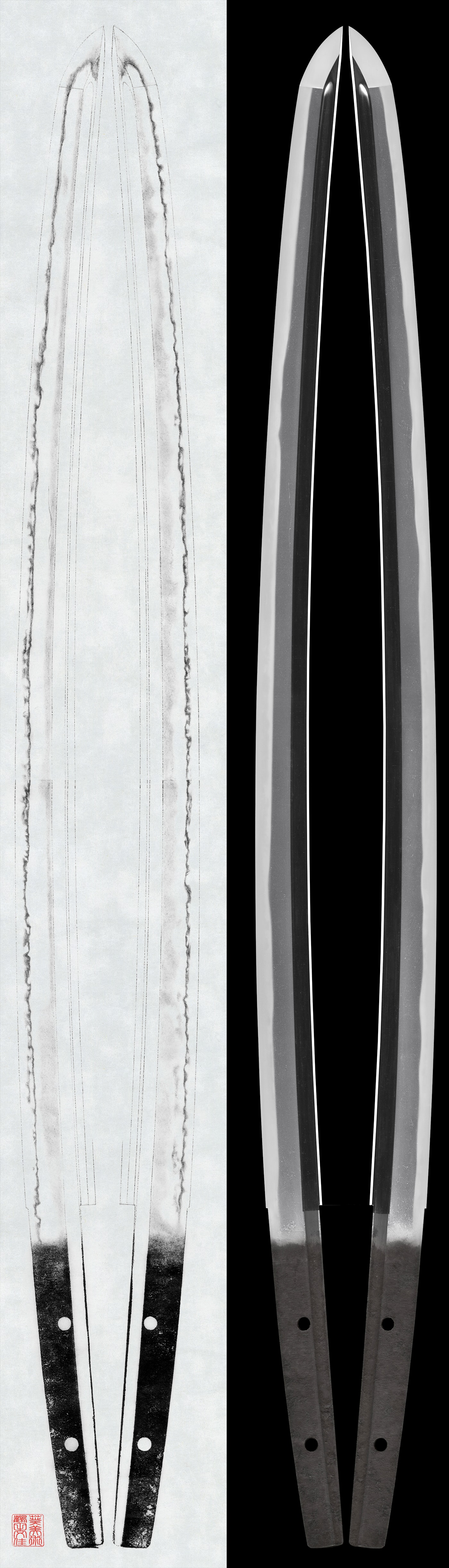
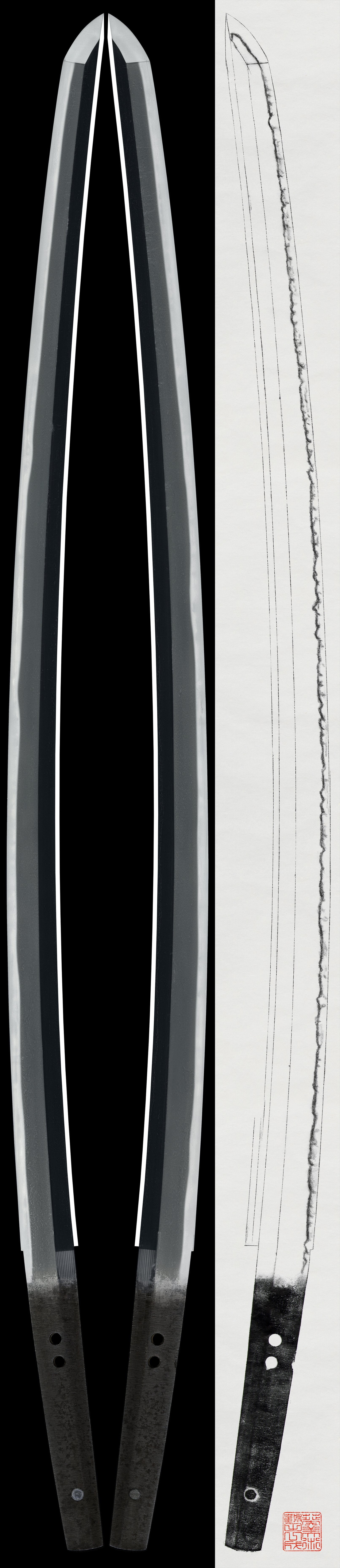
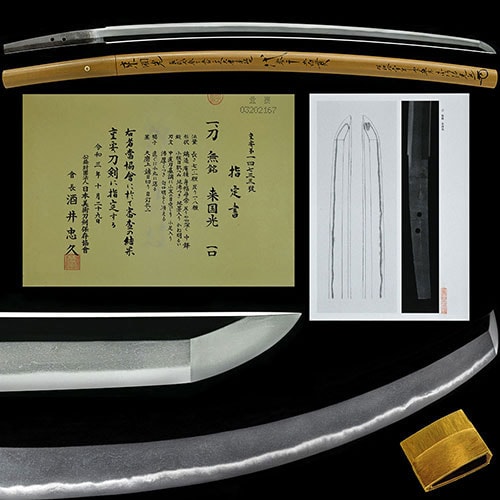
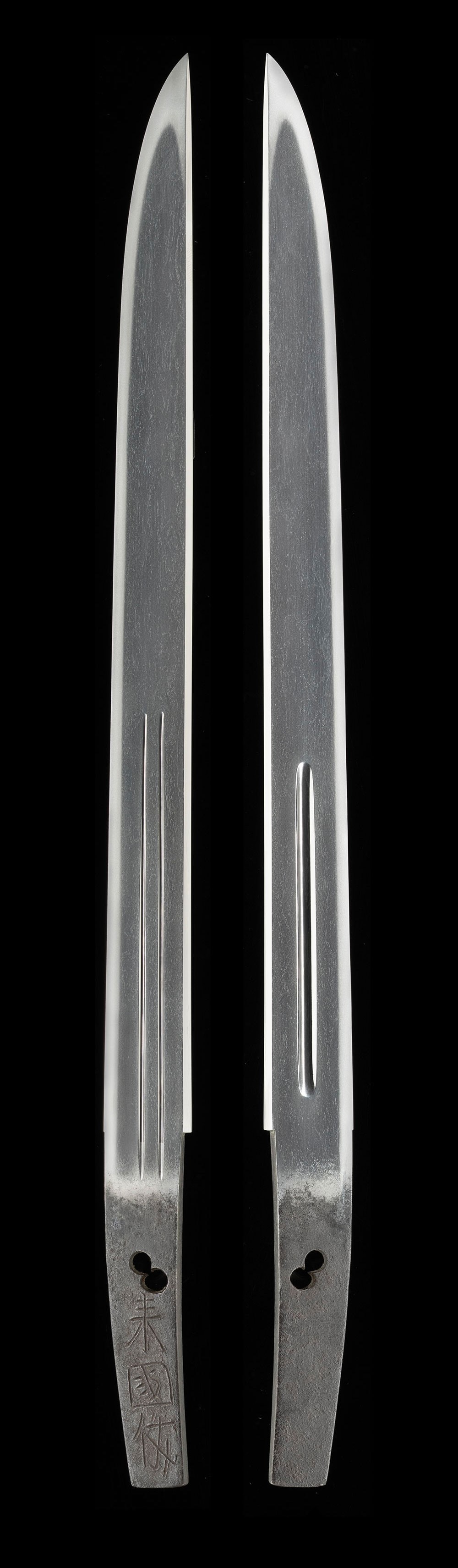
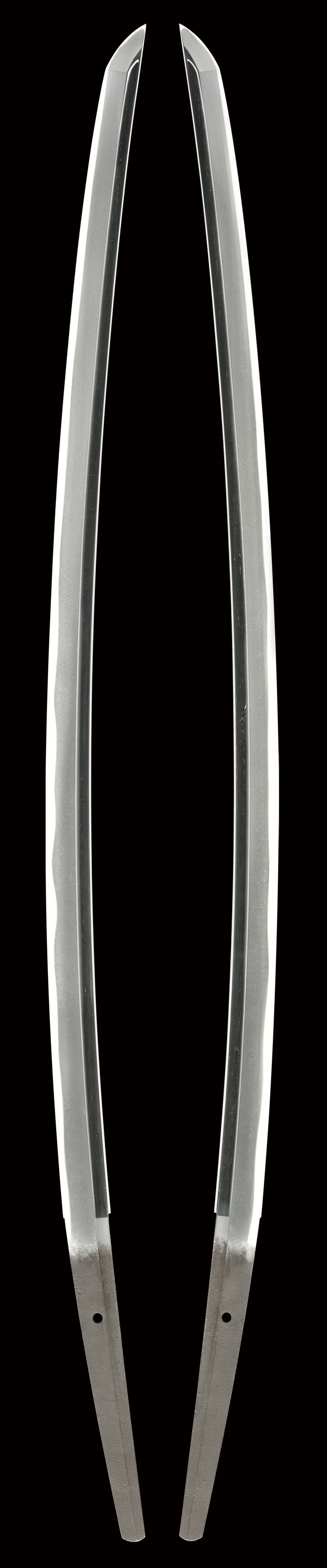
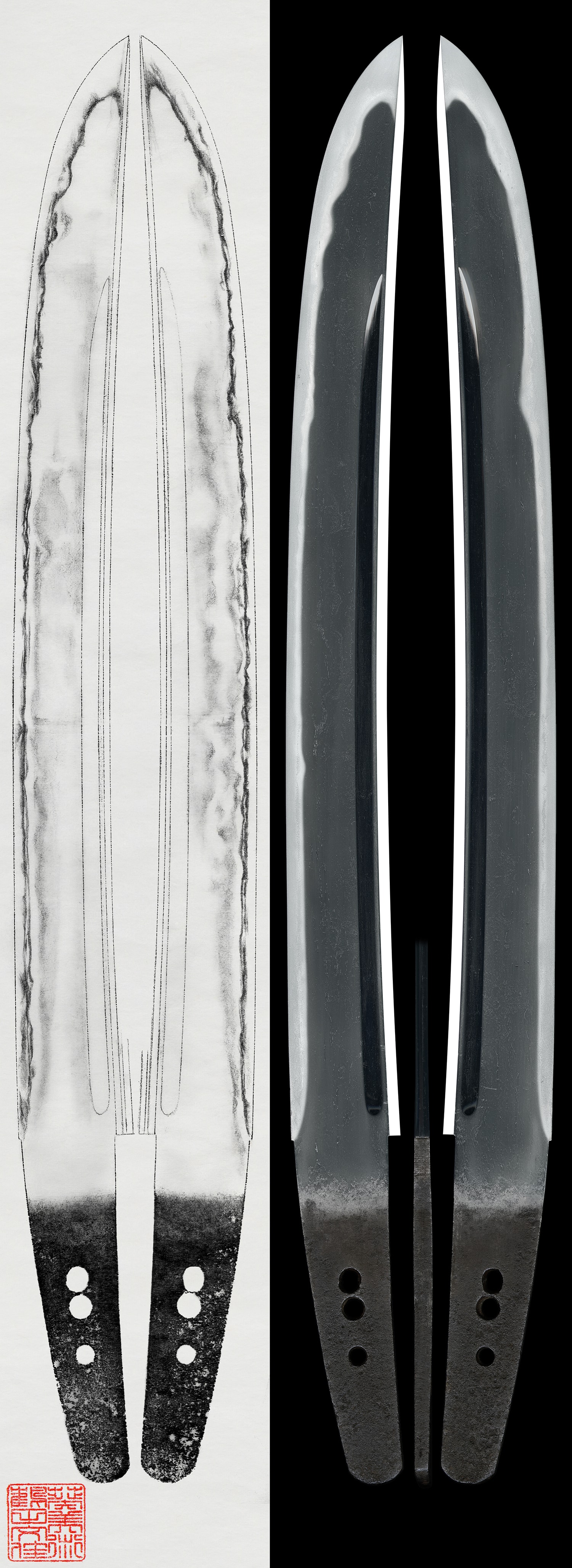
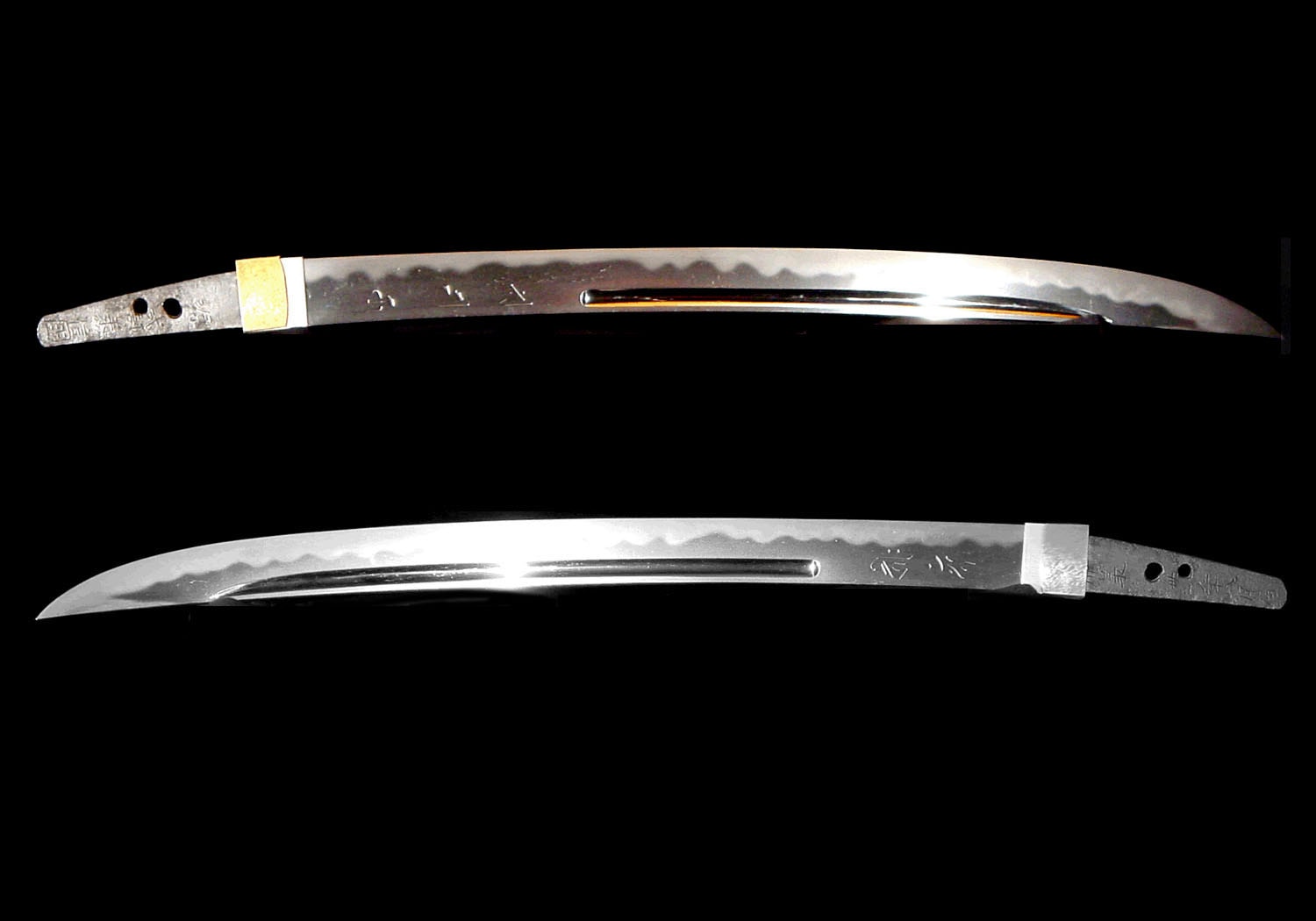
A calm, lustrous steel is the first thing the connoisseur's eye is meant to settle on with the Rai school: a finely forged ko-itame (小板目) worked until it is dense and refined, over which the ji-nie lies thickly in minute particles, fine chikei (地景) enter, and a nie-utsuri rises in the ji. This bright, refined jihada, the surface the trade reads as Rai-hada when its softer, looser patches intrude, is the constant beneath every manner the house produced. The school took shape in Kyoto in the mid-Kamakura period around the workshop of Rai Kuniyuki (來國行), the de facto founder of the line, whose chronology is reckoned from the Koan 1 (1278) tachi of his transmitted son. From Kuniyuki the Yamashiro-den tradition of late Kamakura was built, carried by Niji Kunitoshi, the two-character 國俊, traditionally his son and the nearest of the house to his hand; by the three-character Rai Kunitoshi, the first to crown his name with the character Rai, a practice all who followed took from him; and onward through Rai Kunimitsu (來國光), Rai Kunitsugu (來國次) and the lesser names Kunizane, Tomokuni, Kunihide and Mitsukane into the early Nanbokucho period. Whether the two Kunitoshi are one smith or two remains the classic open question of the school, argued from a span of dated work running about forty years from Koan 1 to Genko 1 (1321). What unites the house is a temper of restraint and activity at once, its life carried in the nie rather than in the height of the pattern. Against Kuniyuki's wide, suguha-toned ha and against the refined chu- or hoso-suguha of the three-character line, the smiths mix ko-choji, ko-gunome and small midare; ashi and yo enter densely, often as the Kyoto-style kyo-sakaashi (京逆足) that slants back toward the nakago, the opposite of the Bizen direction; the nioiguchi runs deep and bright, ko-nie attaches thickly, and kinsuji and sunagashi move through the body of the ha. The boshi is the school's most misjudged trait: a ko-maru drawn out by hakikake, the brushed nie of the point continuing the work of the ji below, often falling into midare-komi with a pointing tip. Muneyaki along the back recurs often enough that the records name it a habit of the Rai hand, and carving in the groove, suken or gomabashi with an added side hi, is a practice the texts call peculiar to Rai work. The strength of the nie within the ha, the utsuri rising as a nie-utsuri, and the kyo-sakaashi are precisely the marks that part Niji Kunitoshi's choji-dominant midare, which the old books said resembles the Bizen Ichimonji, from the Ichimonji itself.
Where the early masters keep this calm Kyoto register, the late line bends toward Soshu-den: Kunitsugu, counted among the Ten Brilliant Pupils of Masamune and named Kamakura-Rai, shows the strongest nie of ji and ha in the whole school, a notare mixed with gunome the earlier Rai never had. For a collector the house style is the recognition tool. An unsigned, o-suriage katana settles to Rai when the packed ko-itame, the fine nie over it, the standing utsuri and the kyo-sakaashi read together; the named smith is then fixed by degree. Niji Kunitoshi and the three-character Kunitoshi, both graded Sai-jo saku by Fujishiro, anchor the canon, the latter unusually approachable because his signed work is abundant and roughly half of it tanto, late Yamashiro work in its purest form. Kunimitsu, the most prolific and most versatile of the house, gives the impression of surpassing his father in force; Kunitsugu, graded Jo-jo saku, is the Soshu-facing edge whose signed tachi are scarce. Mitsukane, the Chudo Rai who withdrew to forge on Mt. Hiei, stands apart as the strong pole, his ji-nie laid thicker than Kunitoshi's or Kunimitsu's and likened upward to Awataguchi Yoshimitsu; the smaller Kunizane, Tomokuni and Kunihide carry the jigane a step into the Nanbokucho. The provenance roll is of the first rank, with blades worn by Ieyasu and held beside the Honjo Masamune, meibutsu such as the Aizen Kunitoshi, the Torikai Kunitsugu and the Midare-Mitsukane, and descent through the Owari and Kishu Tokugawa, the Maeda, Uesugi and Shimazu houses. Much sits locked as National Treasure and patrimony, yet the Juyo tier of the major names, and the whole record of the minor hands, remains a goal a serious collector can actually reach. Learn more →